21-21
21-22
SOLUTION EXHIBIT 21-24
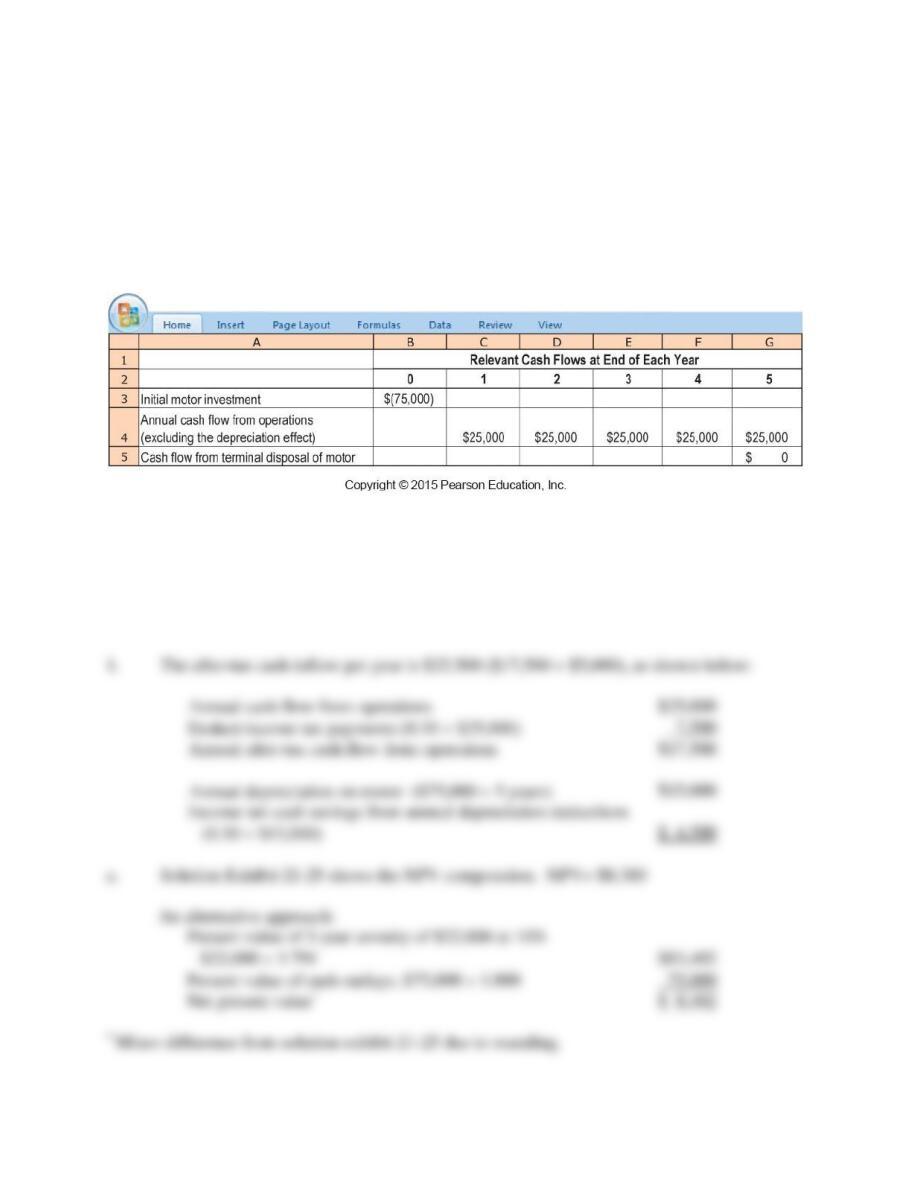
21-23
21-25 (40 min.) New equipment purchase, income taxes.
Nikola Inc. is considering the purchase of a new industrial electric motor to improve efficiency at
its Rochester plant. The motor has an estimated useful life of 5 years. The estimated pretax cash
flows for the motor are shown in the table that follows, with no anticipated change in working
capital. Nikola has a 10% after-tax required rate of return and a 30% income tax rate. Assume
depreciation is calculated on a straight-line basis for tax purposes. Assume all cash flows occur
at year-end except for initial investment amounts.
Required:
1. Calculate (a) net present value, (b) payback period, (c) discounted payback period, and (d)
internal rate of return.
2. Compare and contrast the capital budgeting methods in requirement 1.
SOLUTION
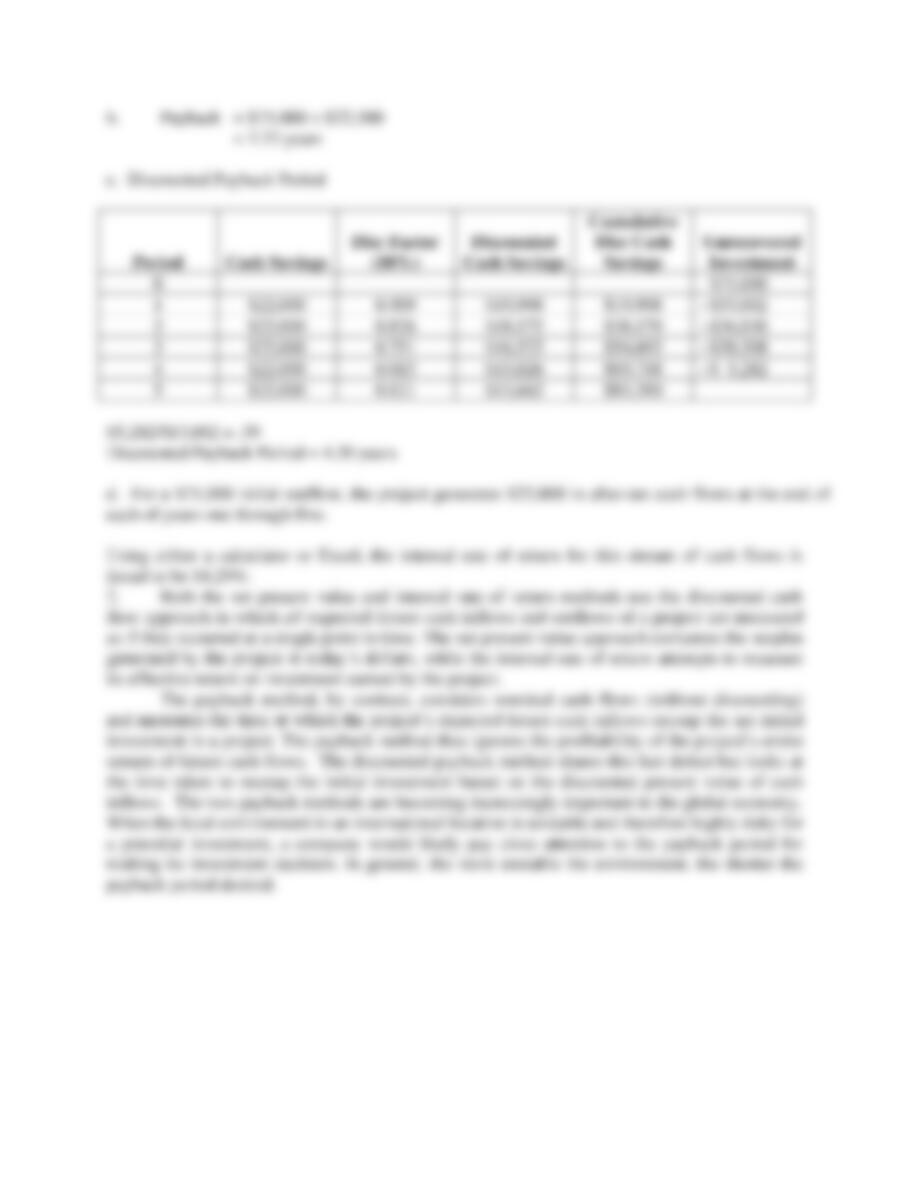
21-24
21-25
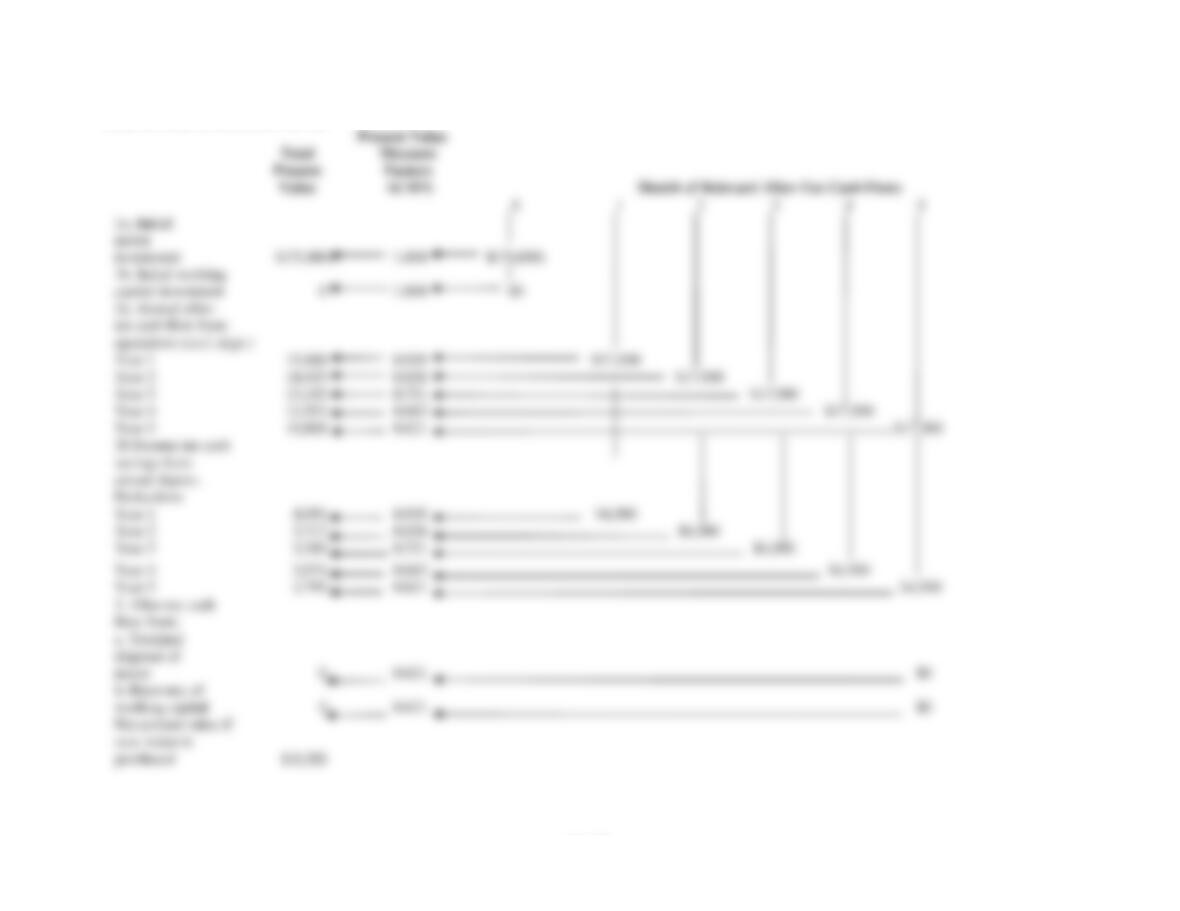
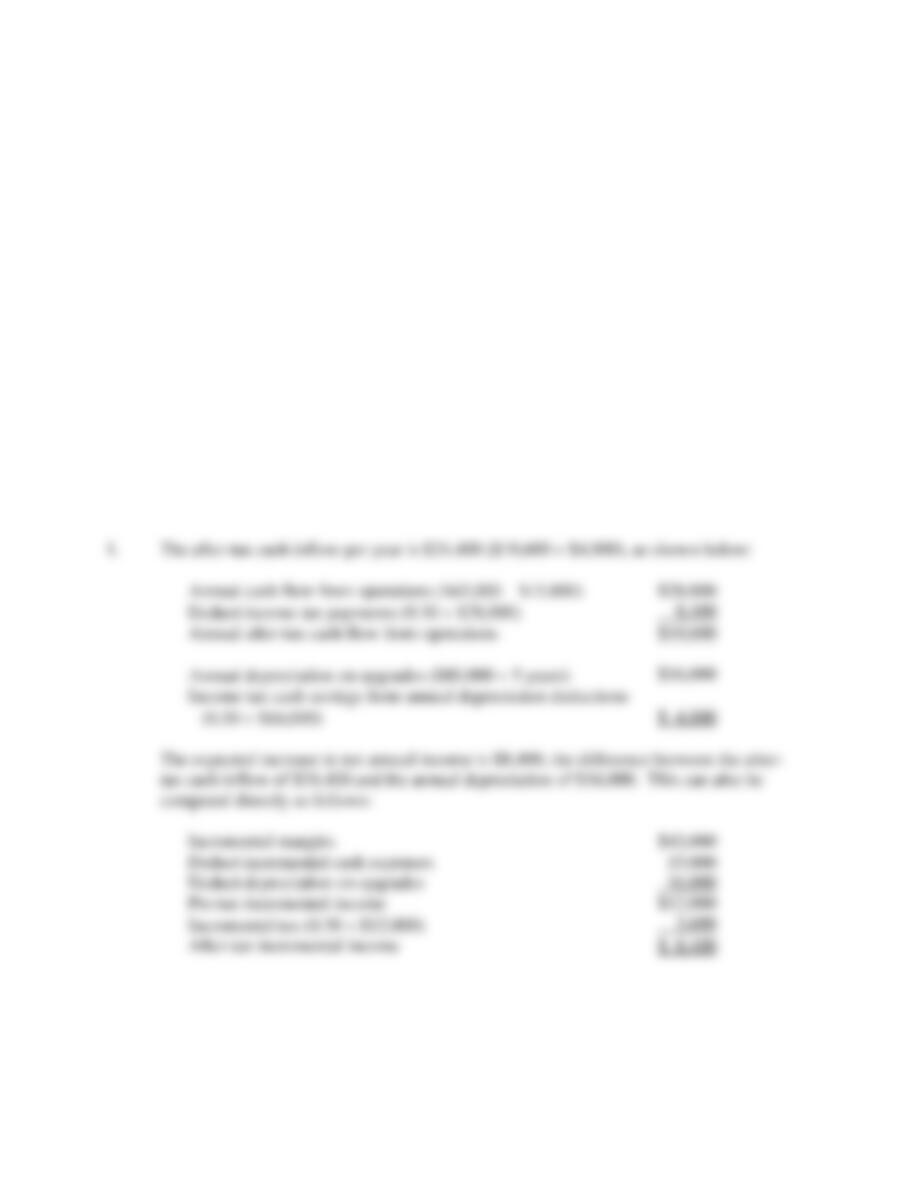
SOLUTION EXHIBIT 21-25
21-26
21-26 (20 min.) Project choice, taxes.
Harrison Ventures has invested in a variety of retail outlets in key mall locations. Harrison is
contemplating an investment in upgrading the furnishings and fittings of these properties. The
upgrades will require an up-front investment of $100,000. Harrison estimates that they will yield
incremental margins of $43,000 annually due to higher foot traffic and sales and require
incremental cash maintenance costs of $15,000 annually. Harrison expects the life span of these
improvements at 5 years and estimates a terminal disposal value of $20,000.
Harrison faces a 30% income tax rate. It depreciates assets on a straight-line basis (to terminal
value) for tax purposes. The required rate of return on investments is 12%.
Required:
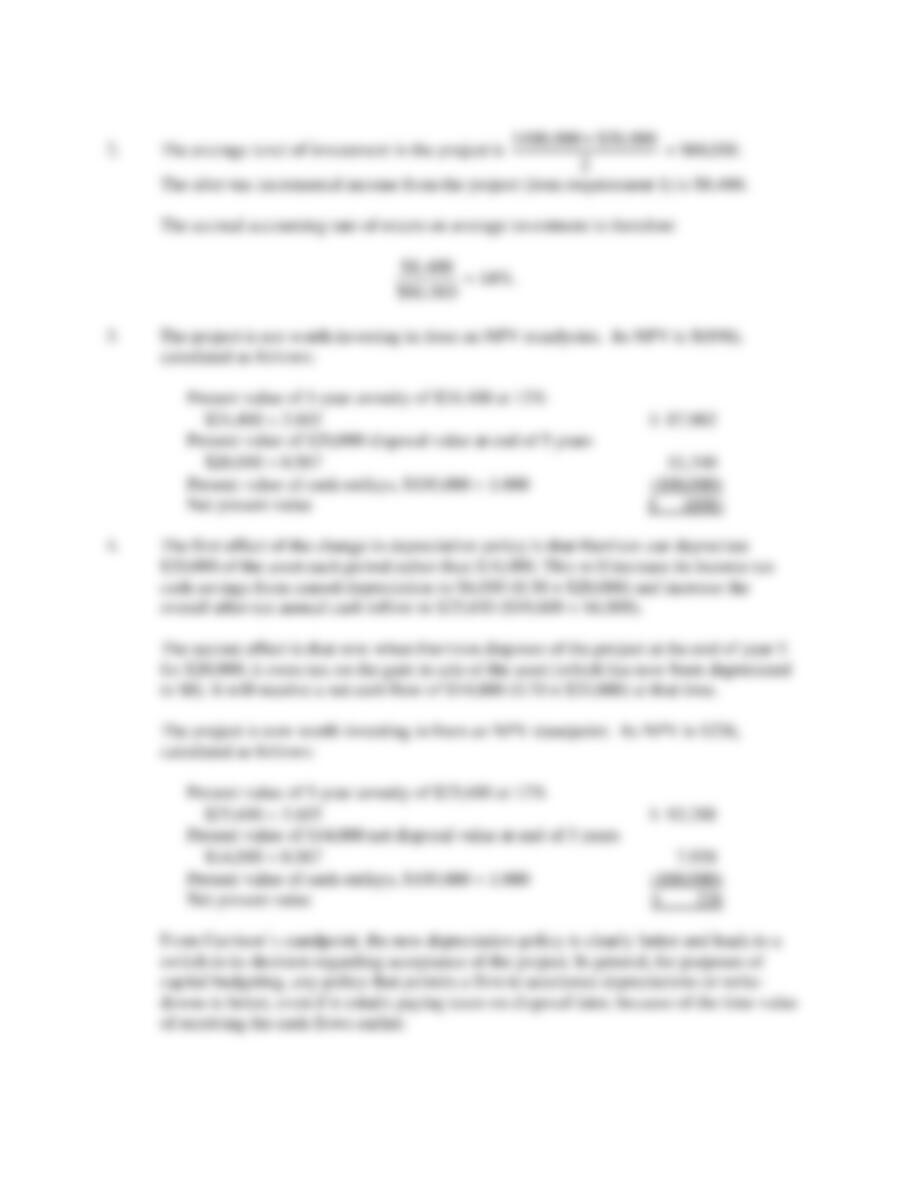
1. What is the expected increase in annual net income from investing in the improvements?
2. Calculate the accrual accounting rate of return based on average investment.
3. Is the project worth investing in from an NPV standpoint?
4. Suppose the tax authorities are willing to let Harrison depreciate the project down to zero
over its useful life. If Harrison plans to liquidate the project in 5 years, should it take this
option? Quantify the impact of this choice on the NPV of the project.
SOLUTION
21-27
21-28
21-27 (40 min.) Customer value.
Ortel Telecom sells telecommunication products and services to a variety of small businesses.
Two of Ortel’s key clients are Square and Cloudburst, both fast-growing technology start- ups
located in New York City. Ortel has compiled information regarding its transactions with Square
and Cloudburst for 2014, as well as its expectations regarding their interactions for the next 3
years:
Ortel’s transactions with Square and Cloudburst are in cash. Assume that they occur at year-end.
Ortel is headquartered in the Cayman Islands and pays no income taxes. The owners of Ortel
insist on a required rate of return of 12%.
Required:
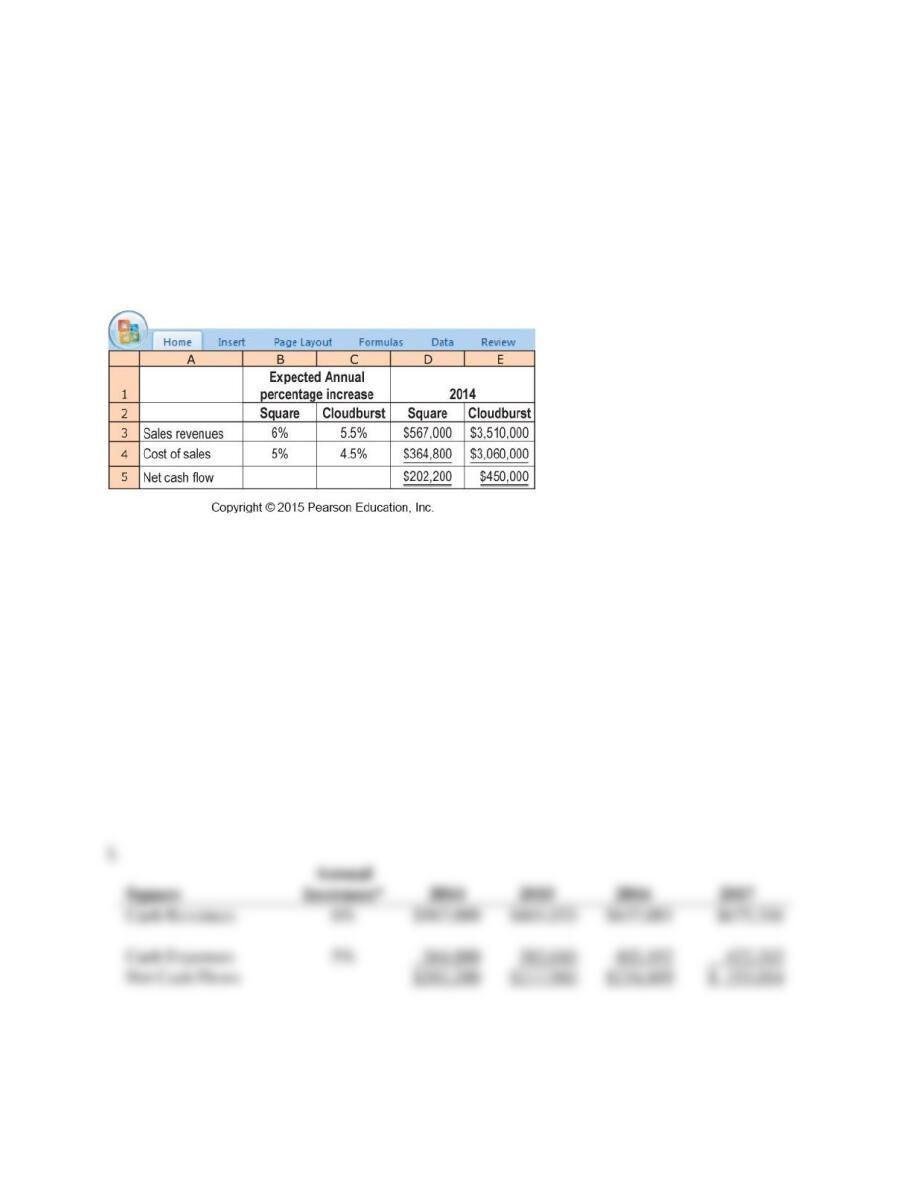
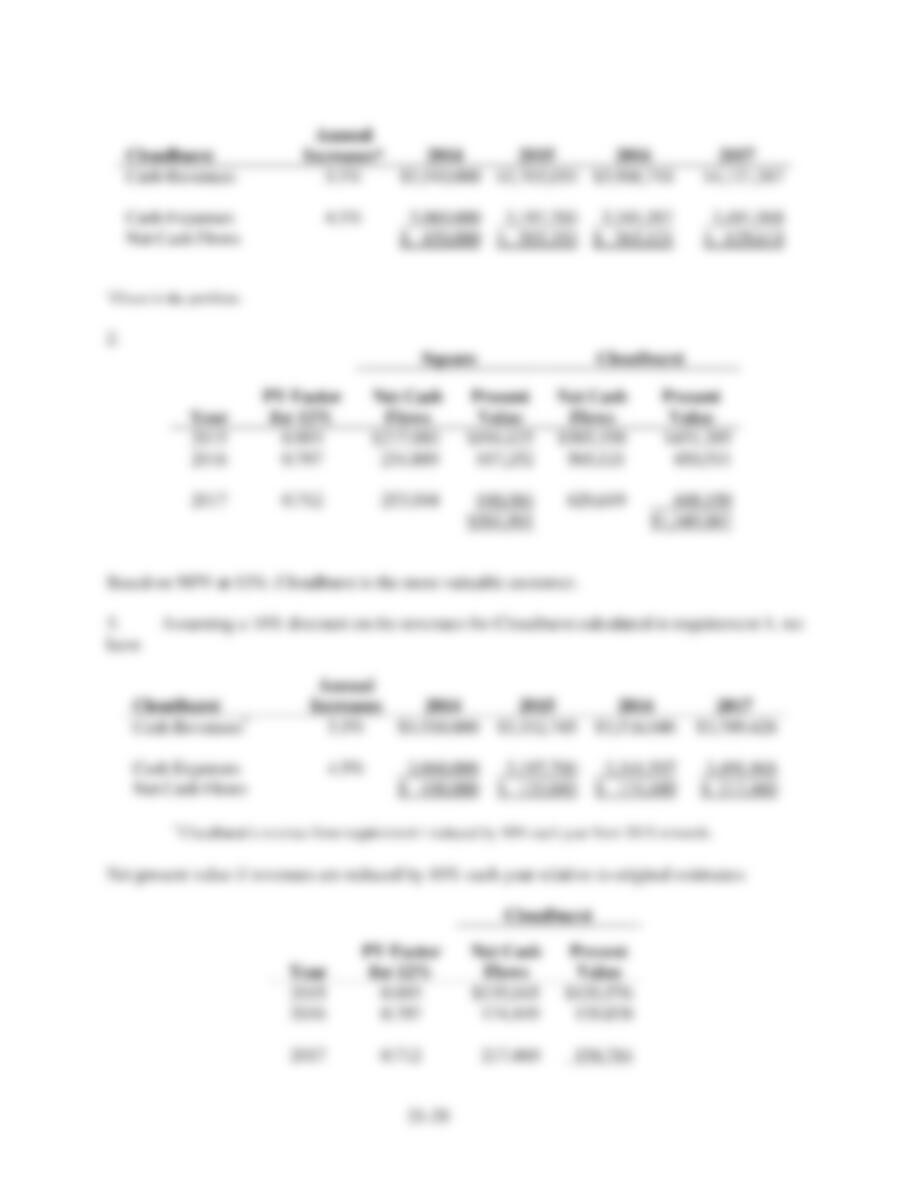
1. What is the expected net cash flow from Square and Cloudburst for the next 3 years?
2. Based on the net present value from cash flows over the next 3 years, is Cloudburst or Square
a more valuable customer for Ortel?
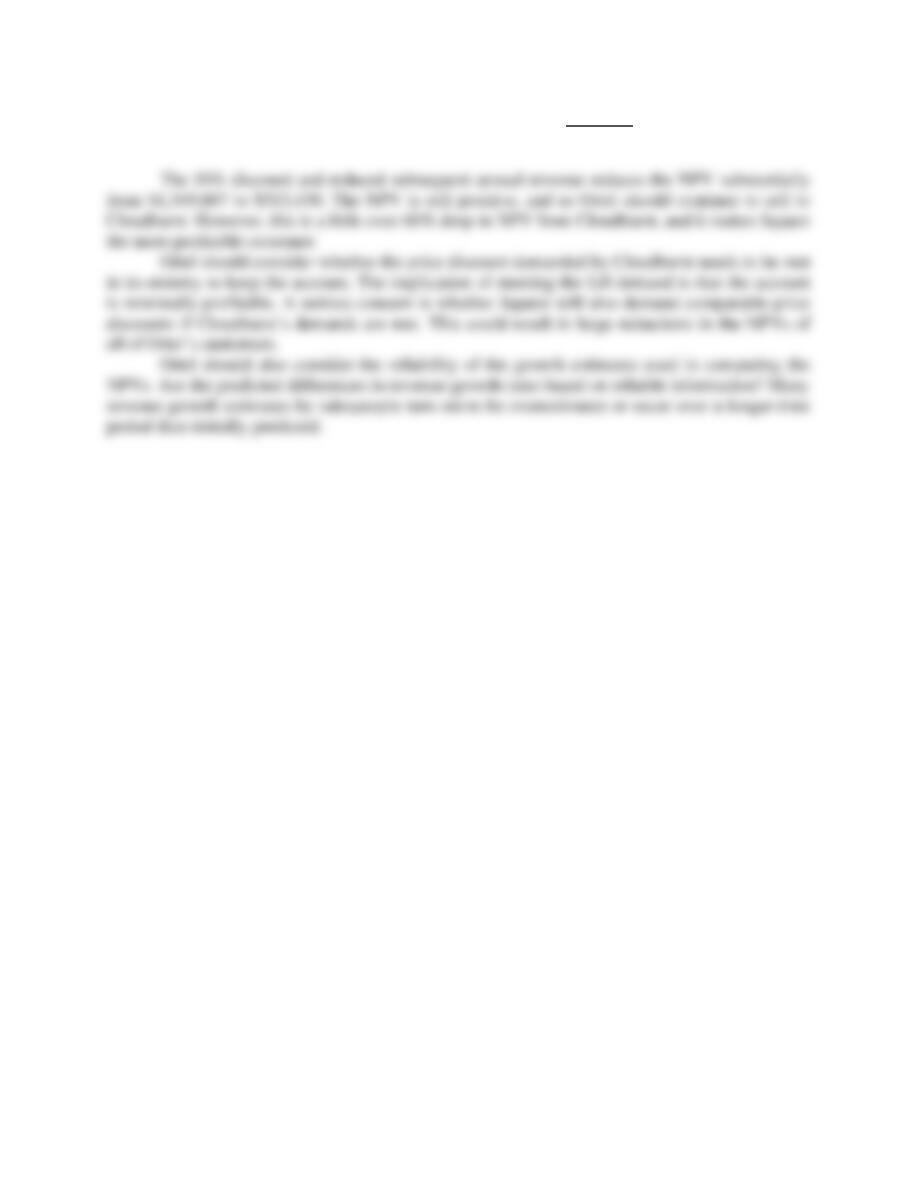
3. Cloudburst threatens to switch to another supplier unless Ortel gives a 10% price reduction
on all sales starting in 2015. Calculate the 3-year NPV of Cloudburst after incorporating the
10% discount. Should Ortel continue to transact with Cloudburst? What other factors should
it consider before making its final decision?
SOLUTION
21-30
$513,430
21-28 (60 min.) Selling a plant, income taxes.
(CMA, adapted) The Lucky Seven Company is an international clothing manufacturer. Its
Redmond plant will become idle on December 31, 2014. Peter Laney, the corporate controller,
has been asked to look at three options regarding the plant:
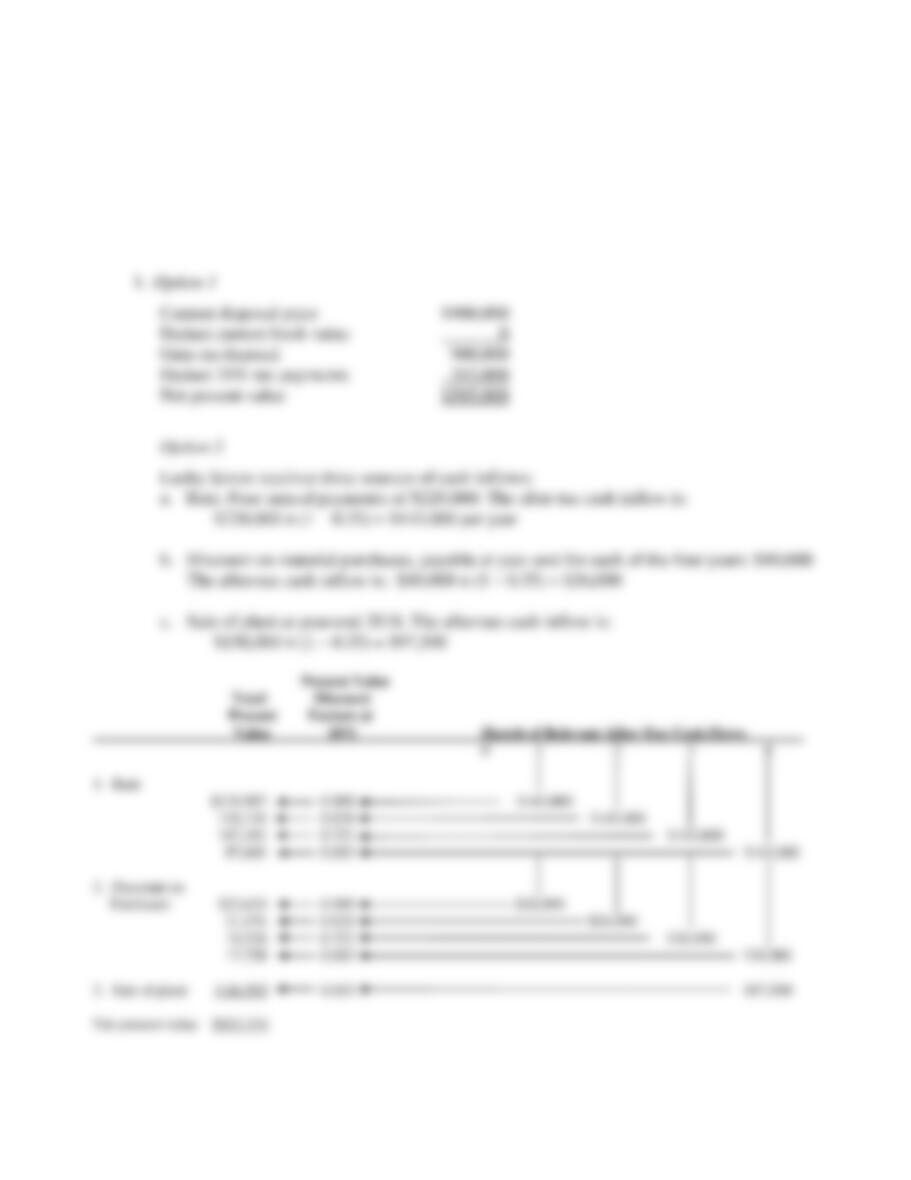
▪ Option 1: The plant, which has been fully depreciated for tax purposes, can be sold
immediately for $900,000.
▪ Option 2: The plant can be leased to the Preston Corporation, one of Lucky Seven’s
suppliers, for 4 years. Under the lease terms, Preston would pay Lucky Seven $220,000
rent per year (payable at year-end) and would grant Lucky Seven a $40,000 annual
discount off the normal price of fabric purchased by Lucky Seven. (Assume that the
discount is received at year-end for each of the 4 years.) Preston would bear all of the
plant’s ownership costs. Lucky Seven expects to sell this plant for $150,000 at the end of
the 4-year lease.
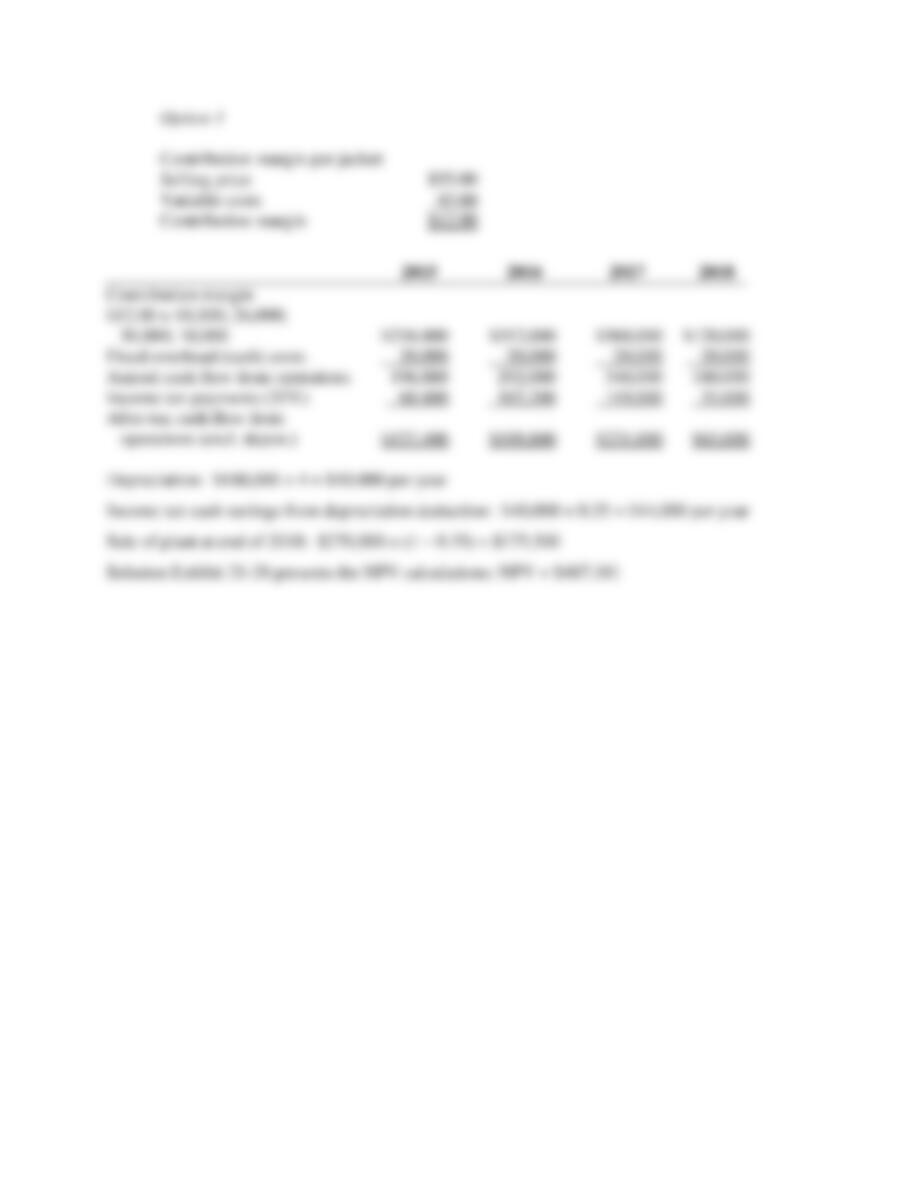
▪ Option 3: The plant could be used for 4 years to make souvenir jackets for the Olympics.
Fixed over- head costs (a cash outflow) before any equipment upgrades are estimated to be
$20,000 annually for the 4-year period. The jackets are expected to sell for $55 each.
Variable cost per unit is expected to be $43. The following production and sales of jackets
are expected: 2015, 18,000 units; 2016, 26,000 units; 2017, 30,000 units; 2018, 10,000
units. In order to manufacture the jackets, some of the plant equipment would need to be
upgraded at an immediate cost of $160,000. The equipment would be depreciated using the
straight-line depreciation method and zero terminal disposal value over the 4 years it would
be in use. Because of the equipment upgrades, Lucky Seven could sell the plant for
$270,000 at the end of 4 years. No change in working capital would be required.
Lucky Seven treats all cash flows as if they occur at the end of the year, and it uses an after-tax
required rate of return of 10%. Lucky Seven is subject to a 35% tax rate on all income, including
capital gains.
21-31
Required:
1. Calculate net present value of each of the options and determine which option Lucky Seven
should select using the NPV criterion.
2. What nonfinancial factors should Lucky Seven consider before making its choice?
SOLUTION
21-32
21-33
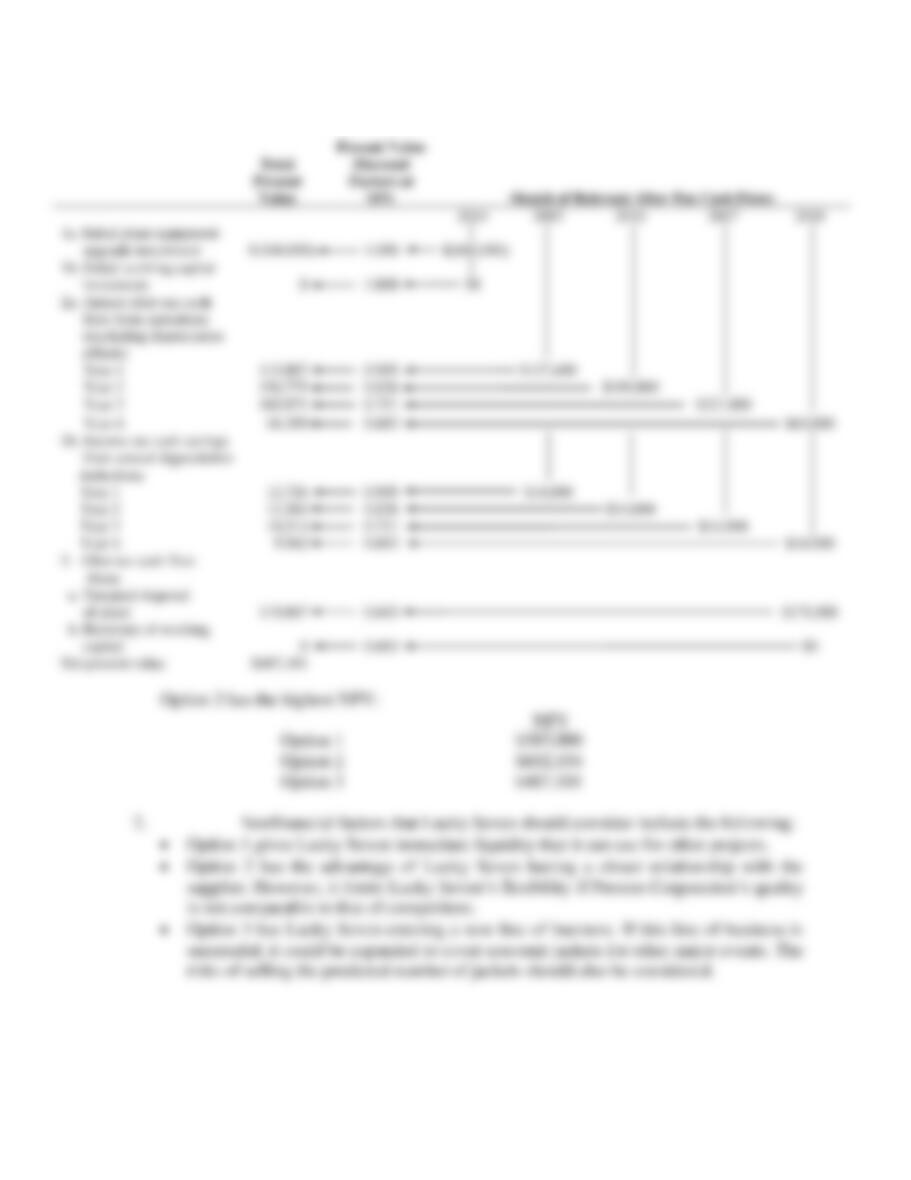
SOLUTION EXHIBIT 21-28
21-34
21-29 (60 min.) Equipment replacement, no income taxes.
Clean Chips is a manufacturer of prototype chips based in Dublin, Ireland. Next year, in 2015,
Clean Chips expects to deliver 535 prototype chips at an average price of $55,000. Clean Chips’
marketing vice president forecasts growth of 65 prototype chips per year through 2021. That is,
demand will be 535 in 2015, 600 in 2016, 665 in 2017, and so on.
The plant cannot produce more than 525 prototype chips annually. To meet future demand,
Clean Chips must either modernize the plant or replace it. The old equipment is fully depreciated
and can be sold for $4,300,000 if the plant is replaced. If the plant is modernized, the costs to
modernize it are to be capitalized and depreciated over the useful life of the updated plant. The
old equipment is retained as part of the modernize alternative. The following data on the two
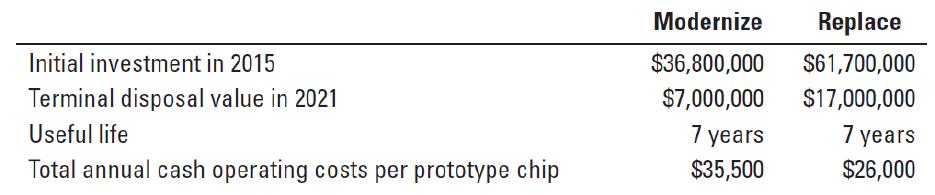
options are available:
Clean Chips uses straight-line depreciation, assuming zero terminal disposal value. For
simplicity, we assume no change in prices or costs in future years. The investment will be made
at the beginning of 2015, and all transactions thereafter occur on the last day of the year. Clean
Chips’ required rate of return is 10%.
There is no difference between the modernize and replace alternatives in terms of required
working capital. Clean Chips has a special waiver on income taxes until 2021.
Required:
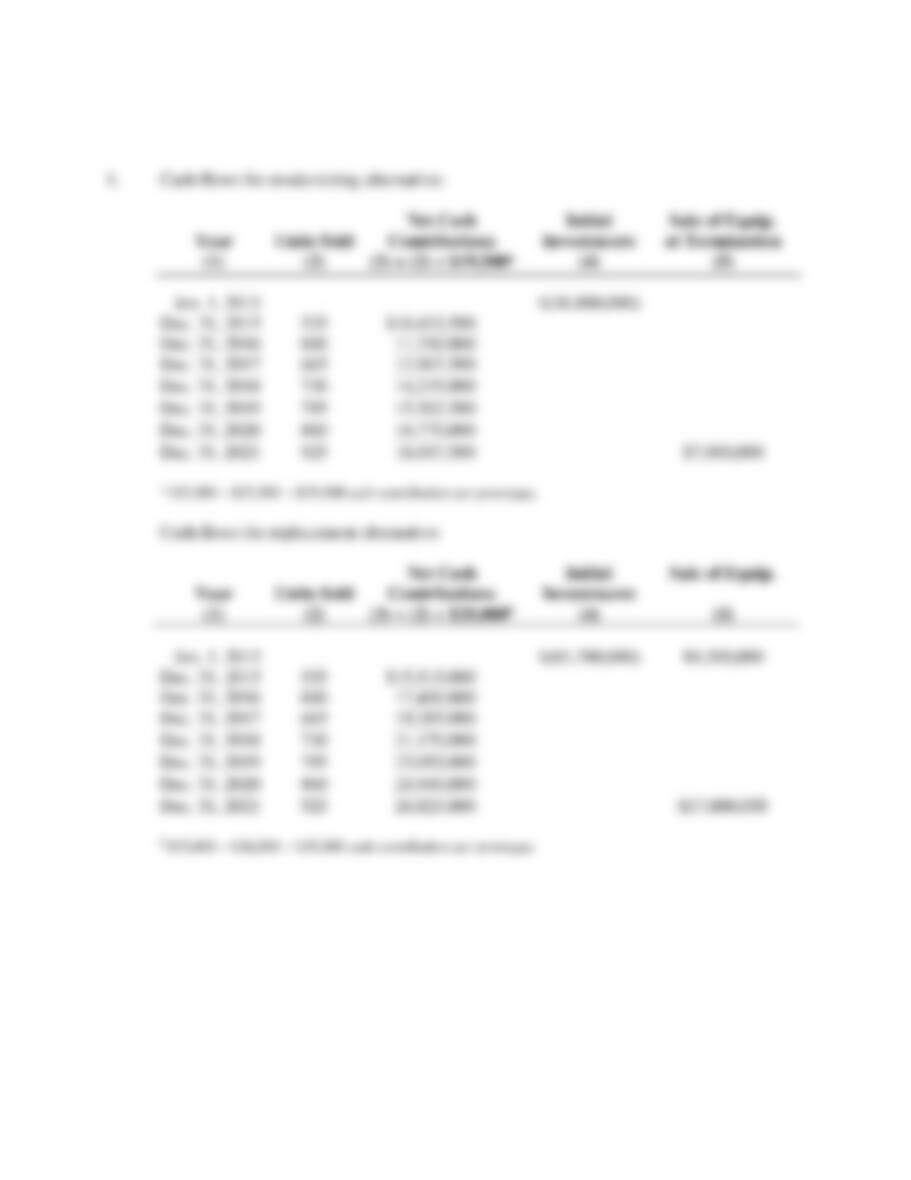
1. Sketch the cash inflows and outflows of the modernize and replace alternatives over the
2015–2021 period.
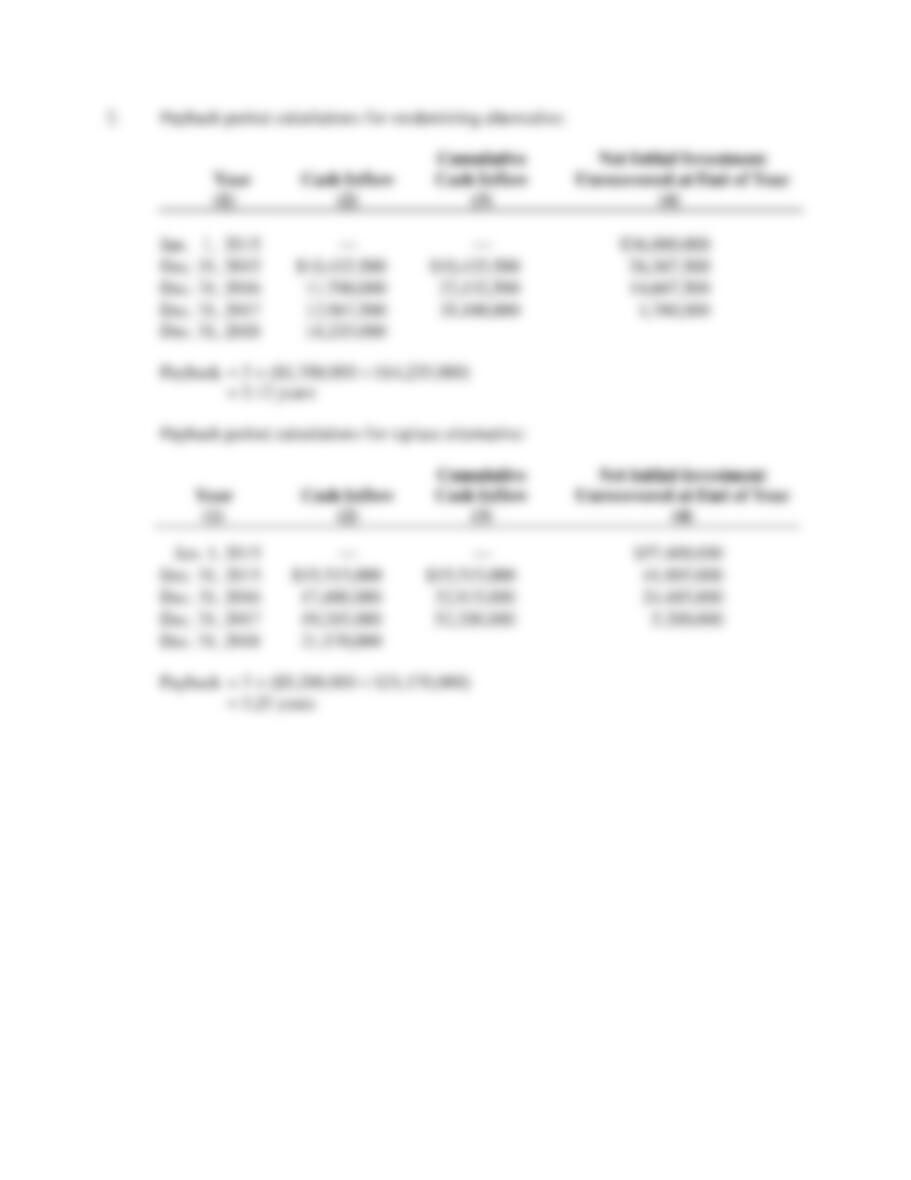
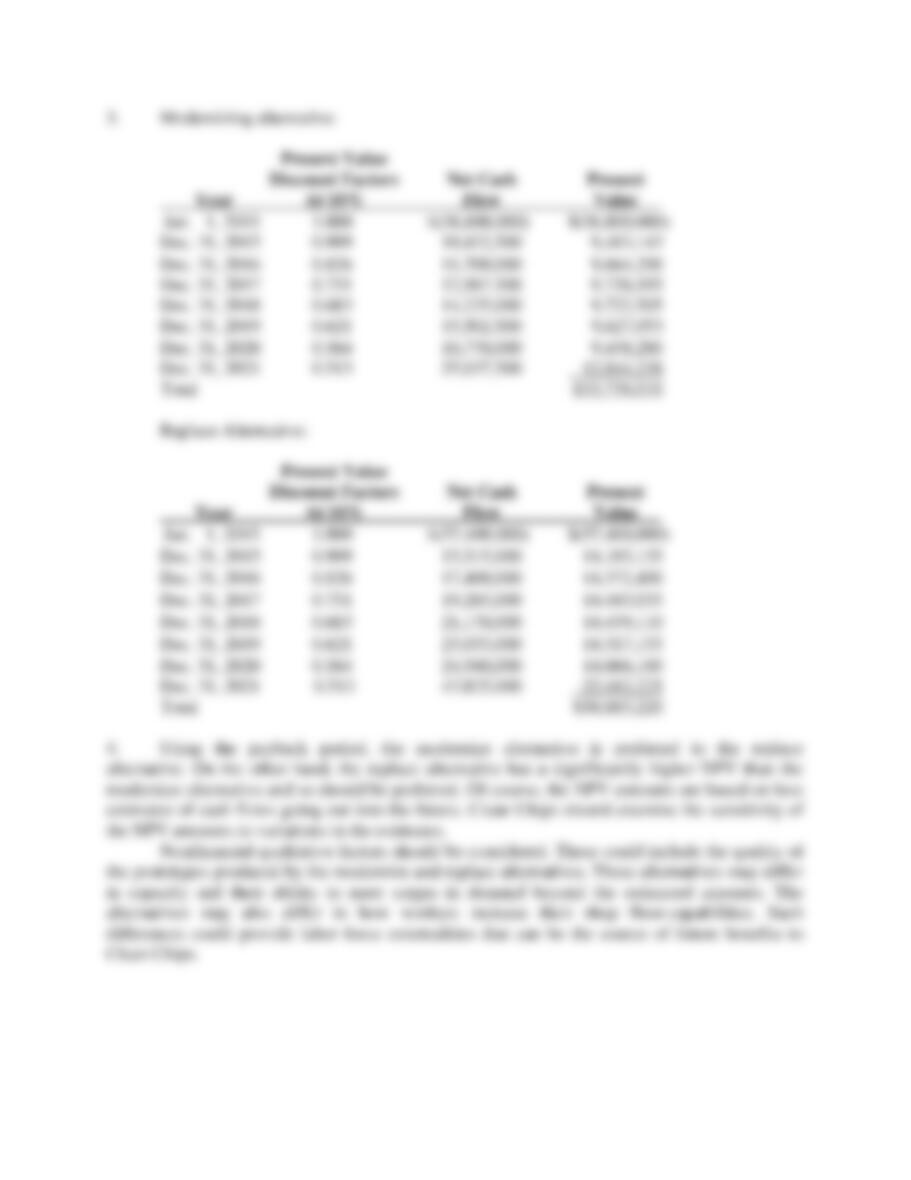
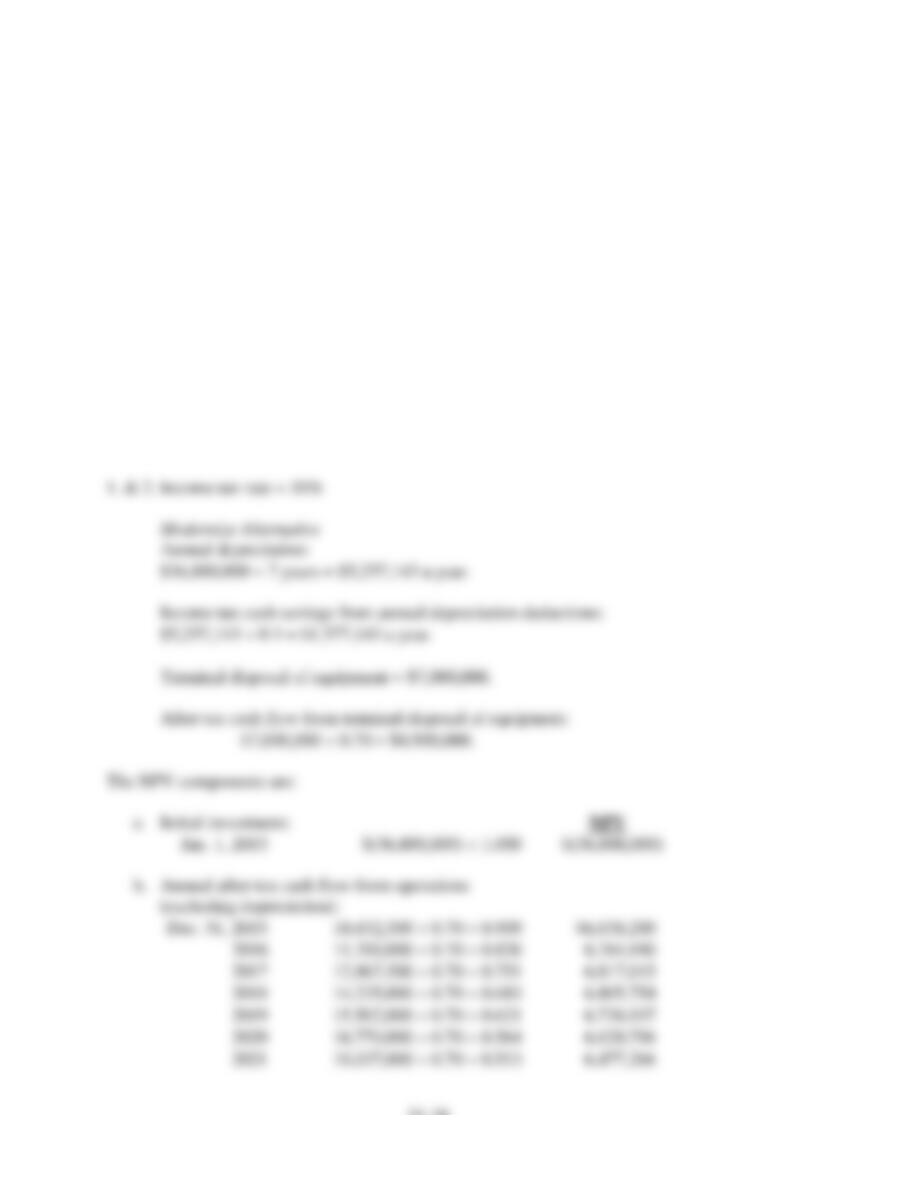
2. Calculate payback period for the modernize and replace alternatives.
3. Calculate net present value of the modernize and replace alternatives.
4. What factors should Clean Chips consider in choosing between the alternatives?
21-35
SOLUTION
21-36
21-37
21-38
21-30 (40 min.) Equipment replacement, income taxes (continuation of 21-29).
Assume the same facts as in Problem 21-29, except that the plant is located in Austin, Texas.
Clean Chips has no special waiver on income taxes. It pays a 30% tax rate on all income.
Proceeds from sales of equipment above book value are taxed at the same 30% rate.
Required:
1. Sketch the after-tax cash inflows and outflows of the modernize and replace alternatives over
the 2015–2021 period.
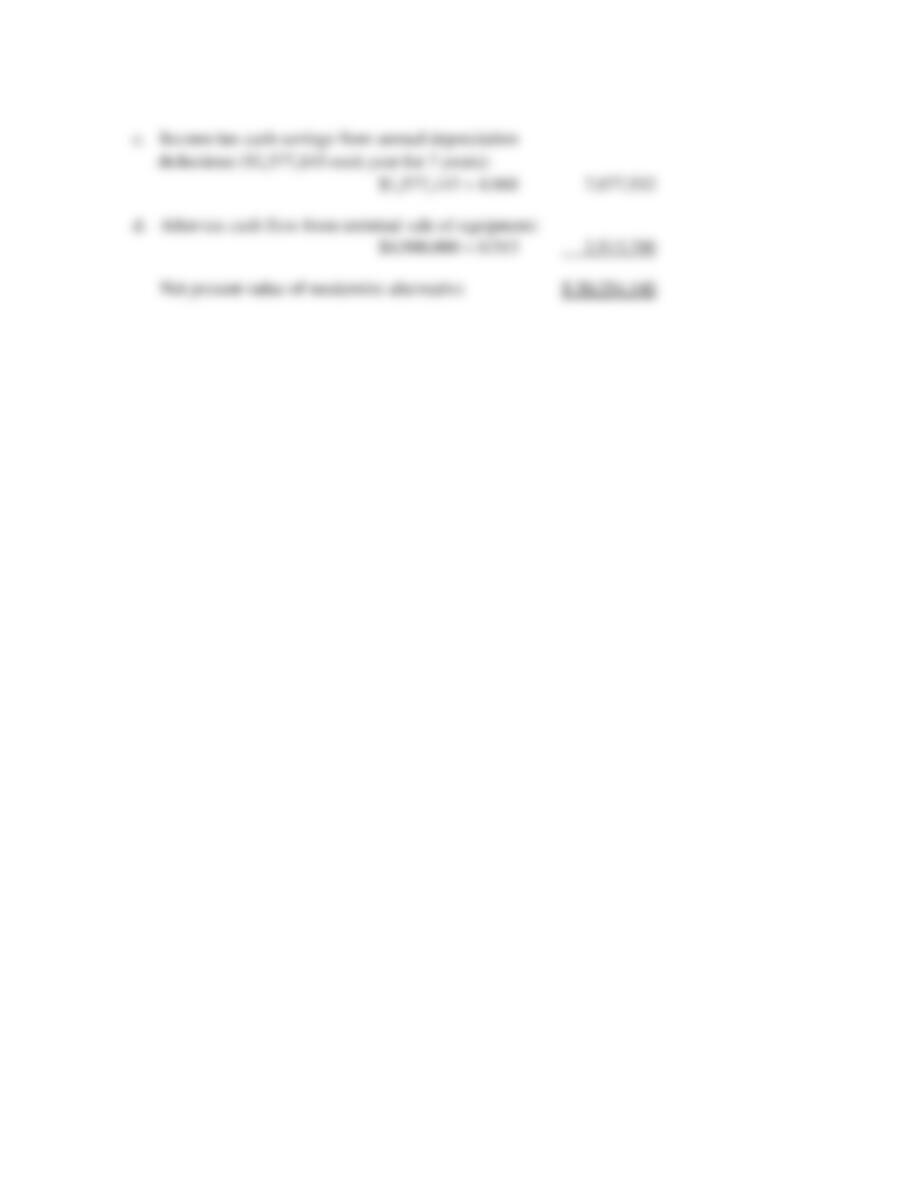
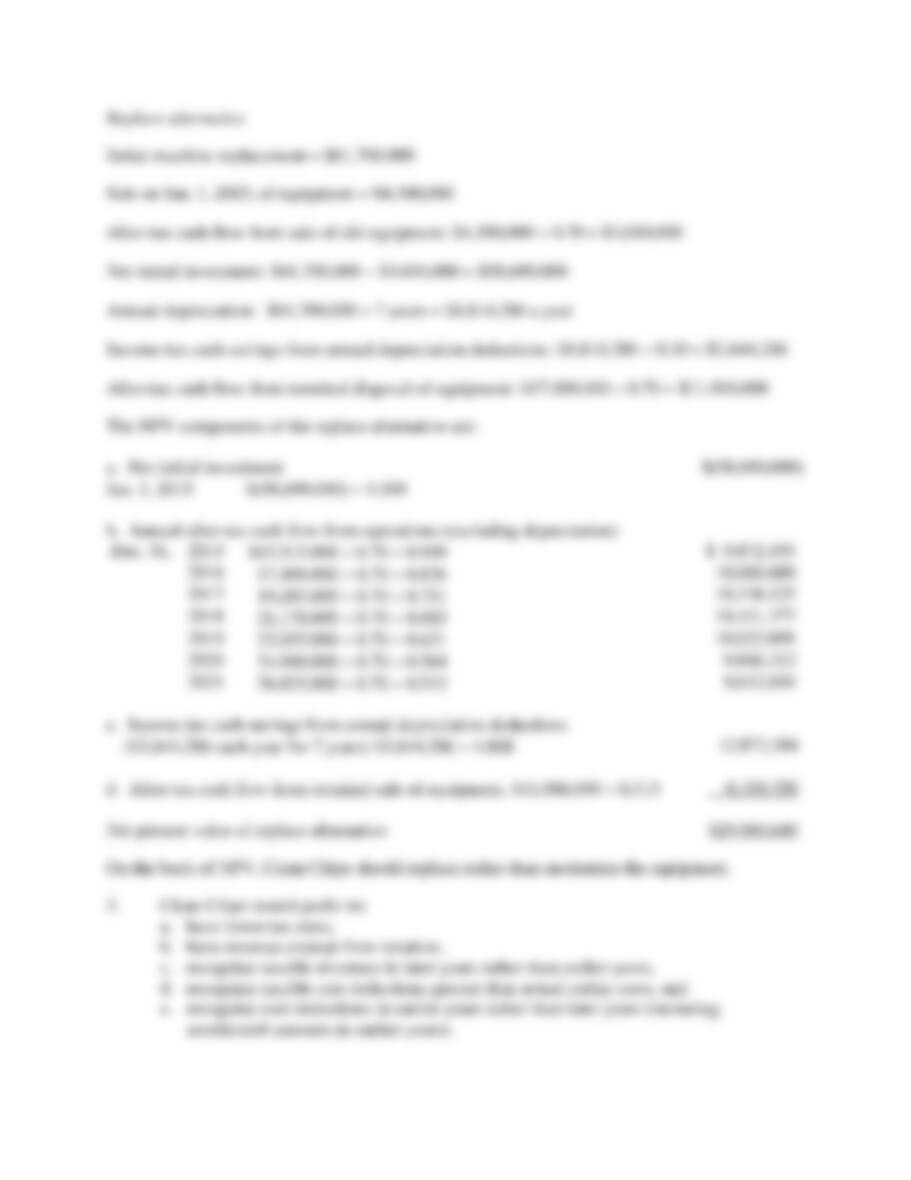
2. Calculate the net present value of the modernize and replace alternatives.
3. Suppose Clean Chips is planning to build several more plants. It wants to have the most
advantageous tax position possible. Clean Chips has been approached by Spain, Malaysia,
and Australia to construct plants in their countries. Use the data in Problem 21-29 and this
problem to briefly describe in qualitative terms the income tax features that would be
advantageous to Clean Chips.
SOLUTION
21-39
21-40