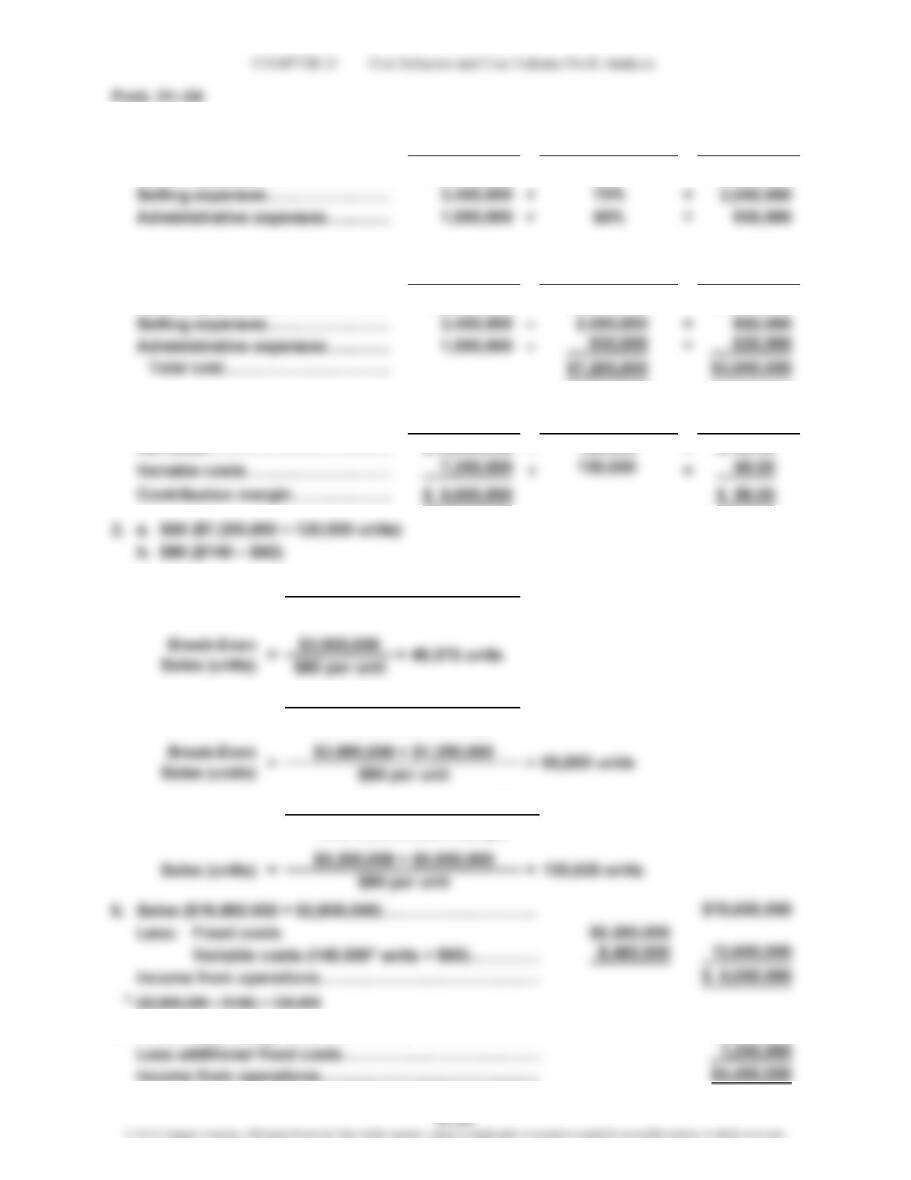
1. Variable Variable
Total Cost Cost Percentage Cost
Cost of goods sold………………
…
$6,200,000 × 60% = $3,720,000
…
Variable Fixed
Total Cost Cost Cost
Cost of goods sold………………
…
$6,200,000 – $3,720,000 = $2,480,000
…
Total Number
Amount of Units Per Unit
Net sales……………………………
…
$16,800,000 ÷ 120,000 = $140.00
7. Present operating income………………………………
…
…
$5,650,000
4. Break-Even
Sales (units) =Fixed Costs
Unit Contribution Margin
Sales (units) Fixed Costs + Target Profit
Unit Contribution Margin
3. Fixed Costs
Unit Contribution Margin
5.
Break-Even
Sales (units) =
=
CHAPTER 21 Cost Behavior and Cost-Volume-Profit Analysis
Prob. 21–2A (Concluded)
8. In favor of the proposal is the possibility of increasing income from operations
from $5,650,000 to $6,000,000. However, there are many points against the
proposal, including:
CHAPTER 21 Cost Behavior and Cost-Volume-Profit Analysis
Prob. 21–3A
3.
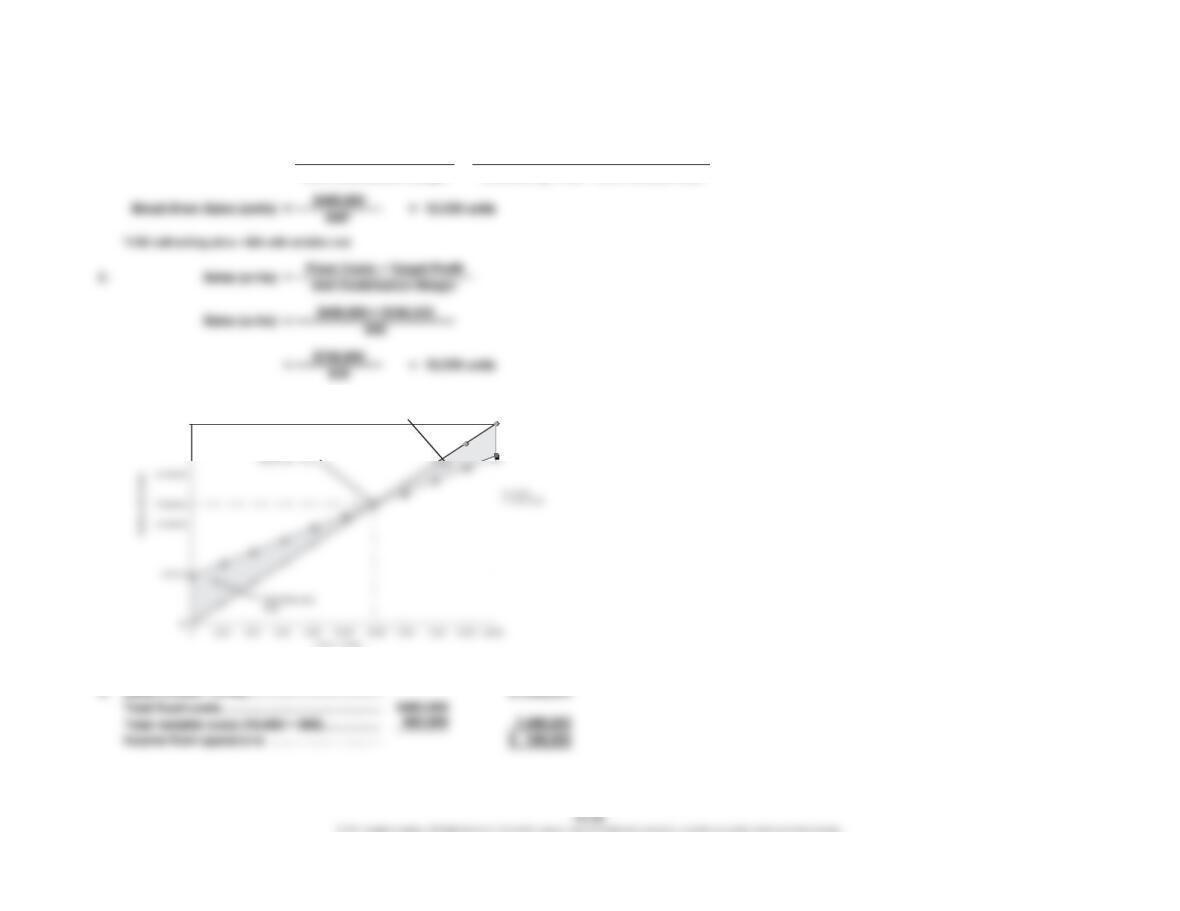
1. Break-Even Sales (units) = Total Fixed Costs
Unit Contribution Margin
=Total Fixed Costs
Unit Selling Price – Unit Variable Cost
$2,000,000
Operating Profit Area
CHAPTER 21 Cost Behavior and Cost-Volume-Profit Analysis
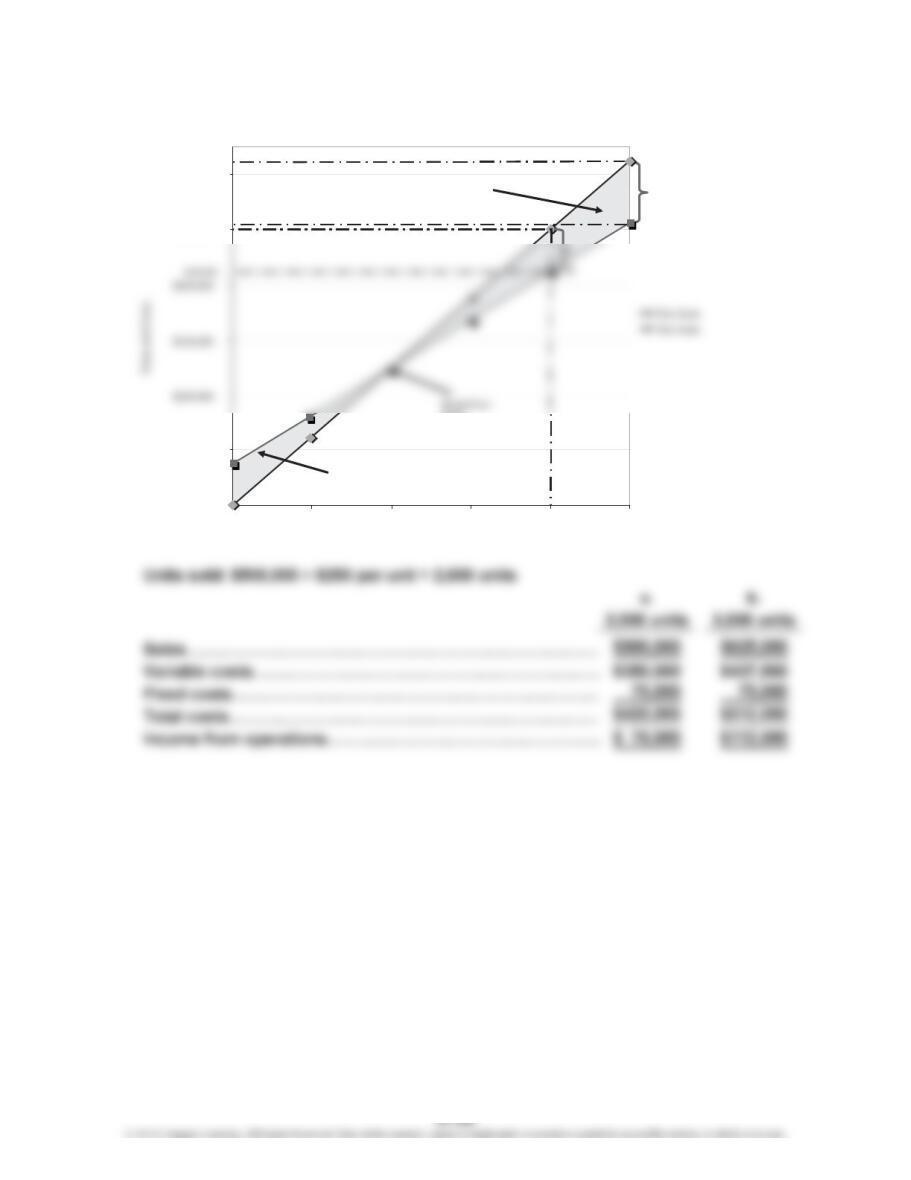
Prob. 21–4A
1.
Break-Even Units:
Break-Even Sales (units) = =
Total Fixed Costs
Unit Selling Price – Unit Variable Cost
Total Fixed Costs
Unit Contribution Margin
$500,000
$600,000
$700,000
Units of Sales
Operating
Profit Area
CHAPTER 21 Cost Behavior and Cost-Volume-Profit Analysis
Prob. 21–4A (Continued)
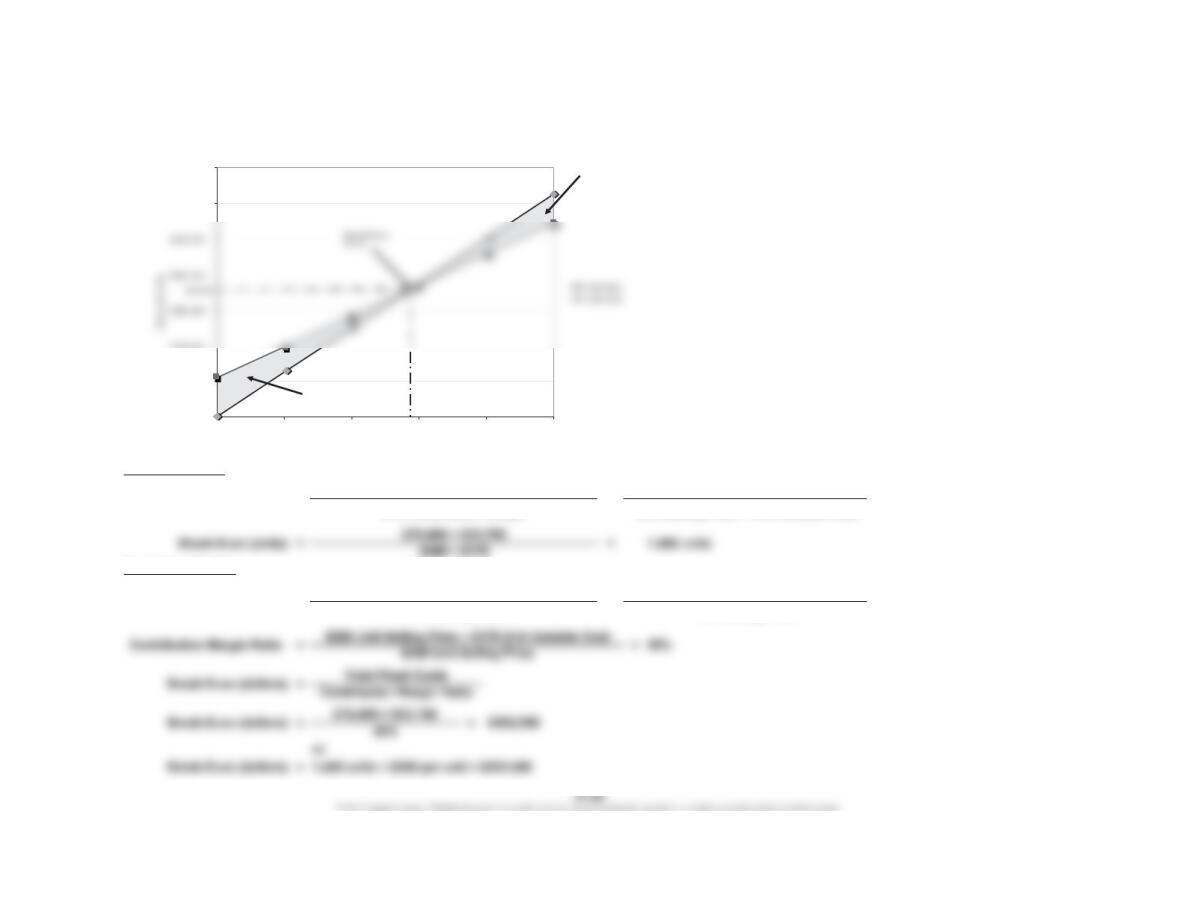
2.
$0
$100,000
$500,000
$600,000
0 500 1,000 1,500 2,000 2,500
Units of Sales
Operating
Profit Area
Point
Operating Loss
Area
$512,500
$625,000
b.
$75,000
CHAPTER 21 Cost Behavior and Cost-Volume-Profit Analysis
Prob. 21–4A (Continued)
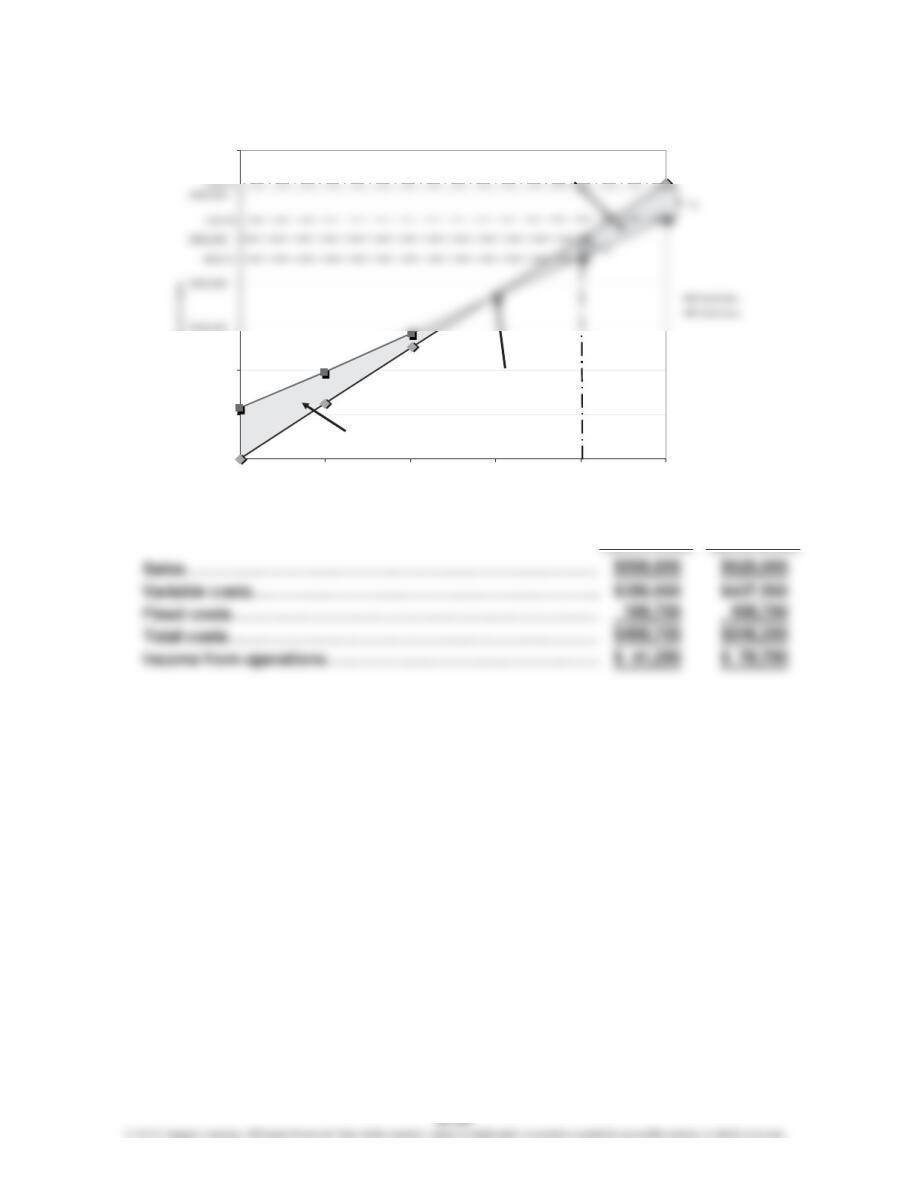
3.
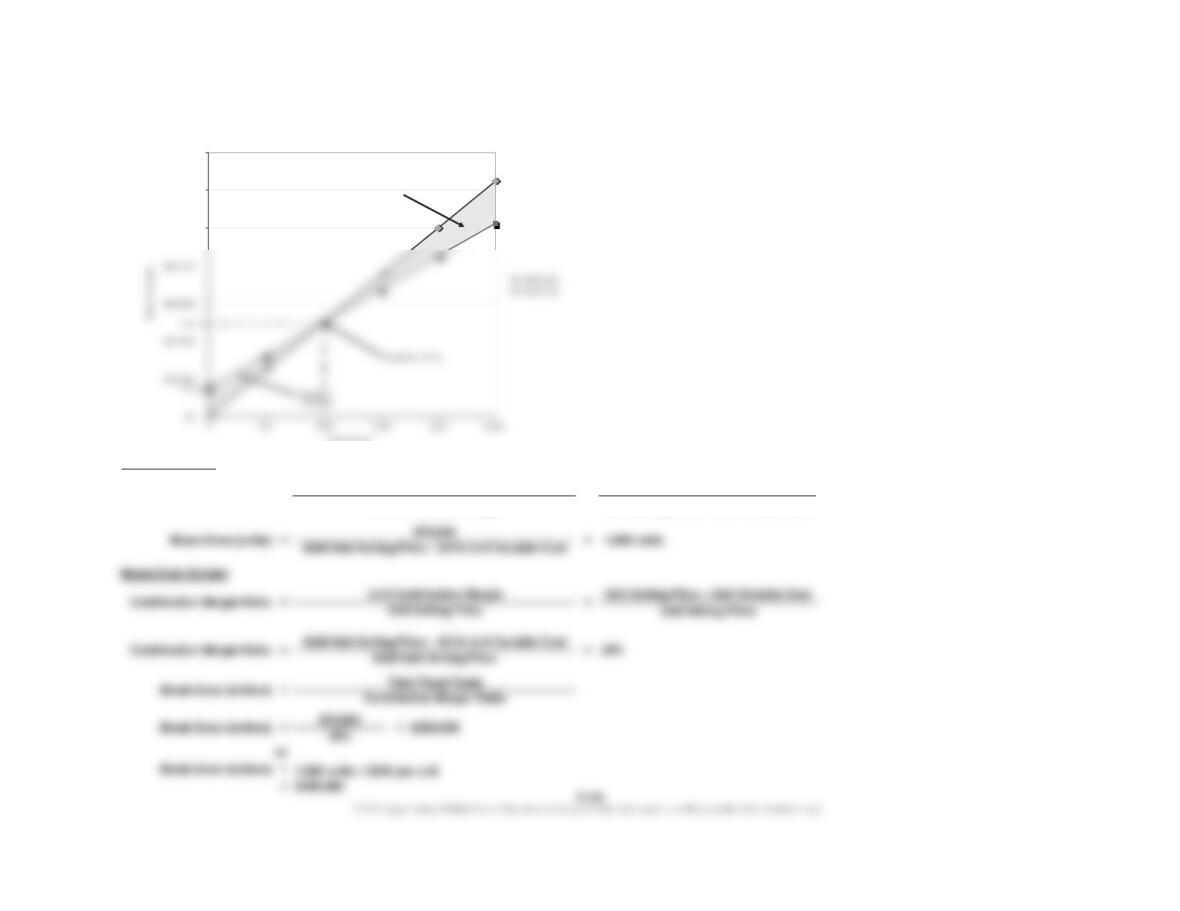
Break-Even Units:
Break-Even Dollars:
Unit Contribution Margin
Break-Even Sales (units) = Total Fixed Costs =
==
Contribution Margin Ratio Unit Contribution Margin
Unit Selling Price
Total Fixed Costs
Unit Selling Price – Unit Variable Cost
Unit Selling Price – Unit Variable Cost
Unit Selling Price
$0
$100,000
$600,000
$700,000
0 500 1,000 1,500 2,000 2,500
Units of Sales
Operating
Profit Area
Operating Loss
Area
1,450
$108,750
CHAPTER 21 Cost Behavior and Cost-Volume-Profit Analysis
Prob. 21–4A (Concluded)
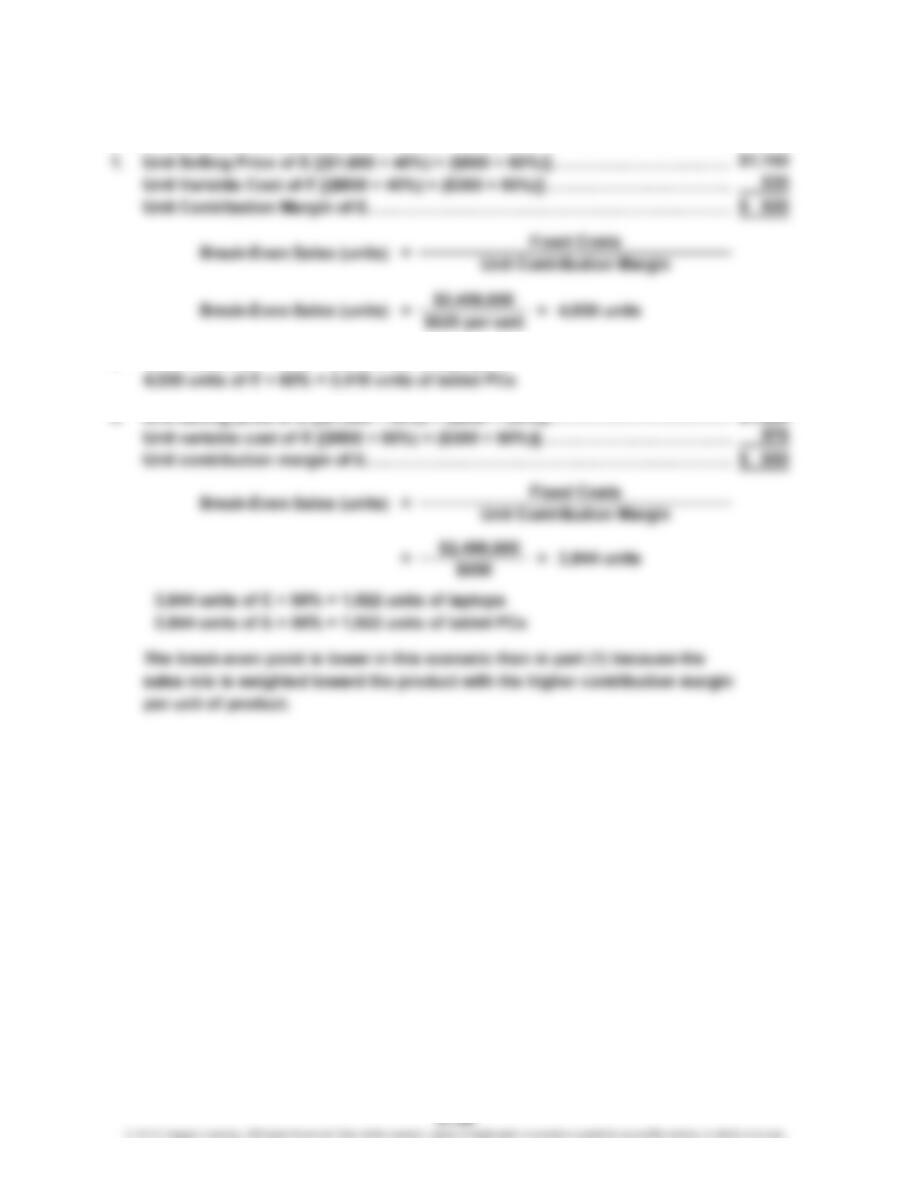
4.
a. b.
2,000 units 2,500 units
$0
$100,000
$200,000
$700,000
0 500 1,000 1,500 2,000 2,500
Sales and Costs
Units of Sales
Operating
Profit Area
Break-Even
Point
Operating
Loss Area
$108,750
CHAPTER 21 Cost Behavior and Cost-Volume-Profit Analysis
Prob. 21–5A
(Overall product is labeled E.)
2. 4,030 units of E × 40% = 1,612 units of laptops
3. Unit selling price of E [($1,600 × 50%) + ($850 × 50%)]……………………………
…
$1,225
CHAPTER 21 Cost Behavior and Cost-Volume-Profit Analysis
Prob. 21–6A
1.
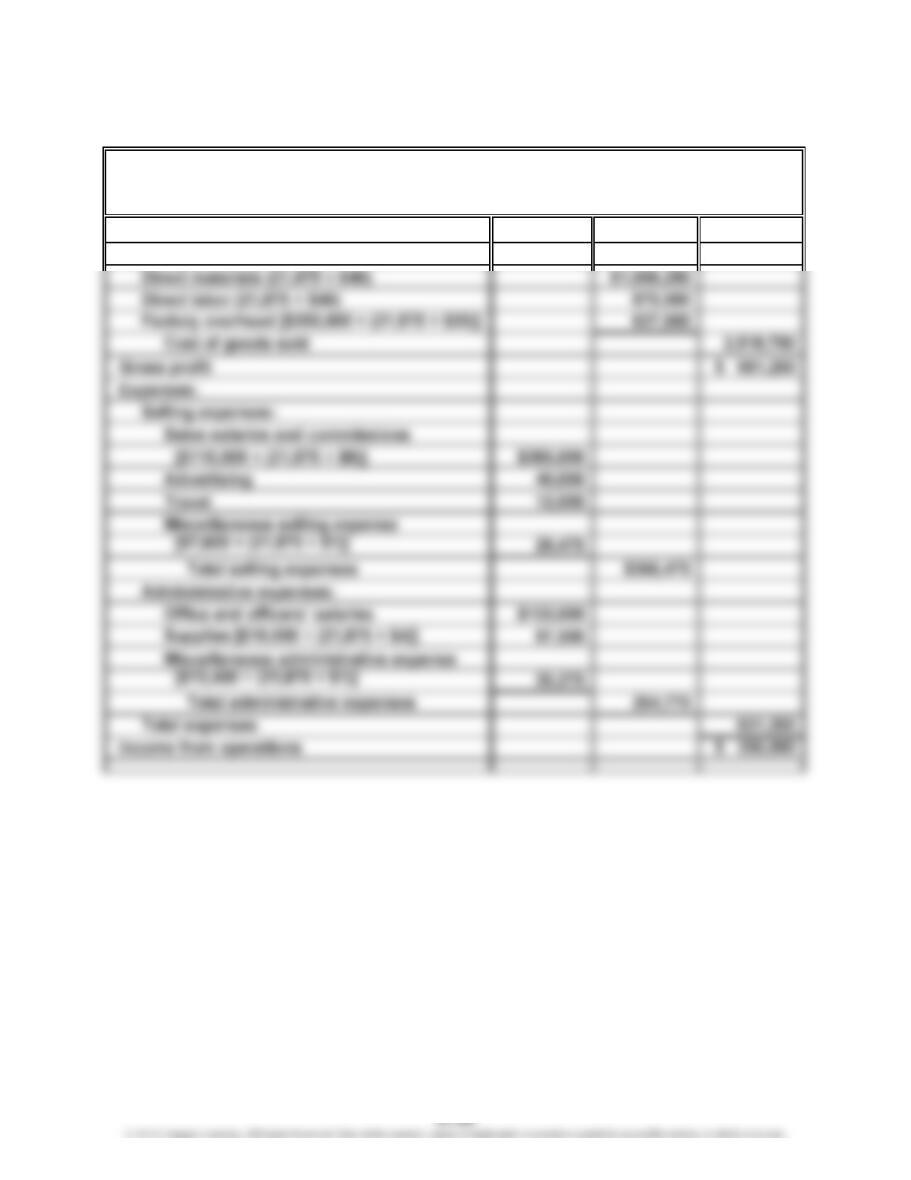
Sales (21,875 × $160) $3,500,000
Cost of goods sold:
WOLSEY INDUSTRIES INC.
Estimated Income Statement
For the Year Ended December 31, 2014
CHAPTER 21 Cost Behavior and Cost-Volume-Profit Analysis
Prob. 21–6A (Continued)
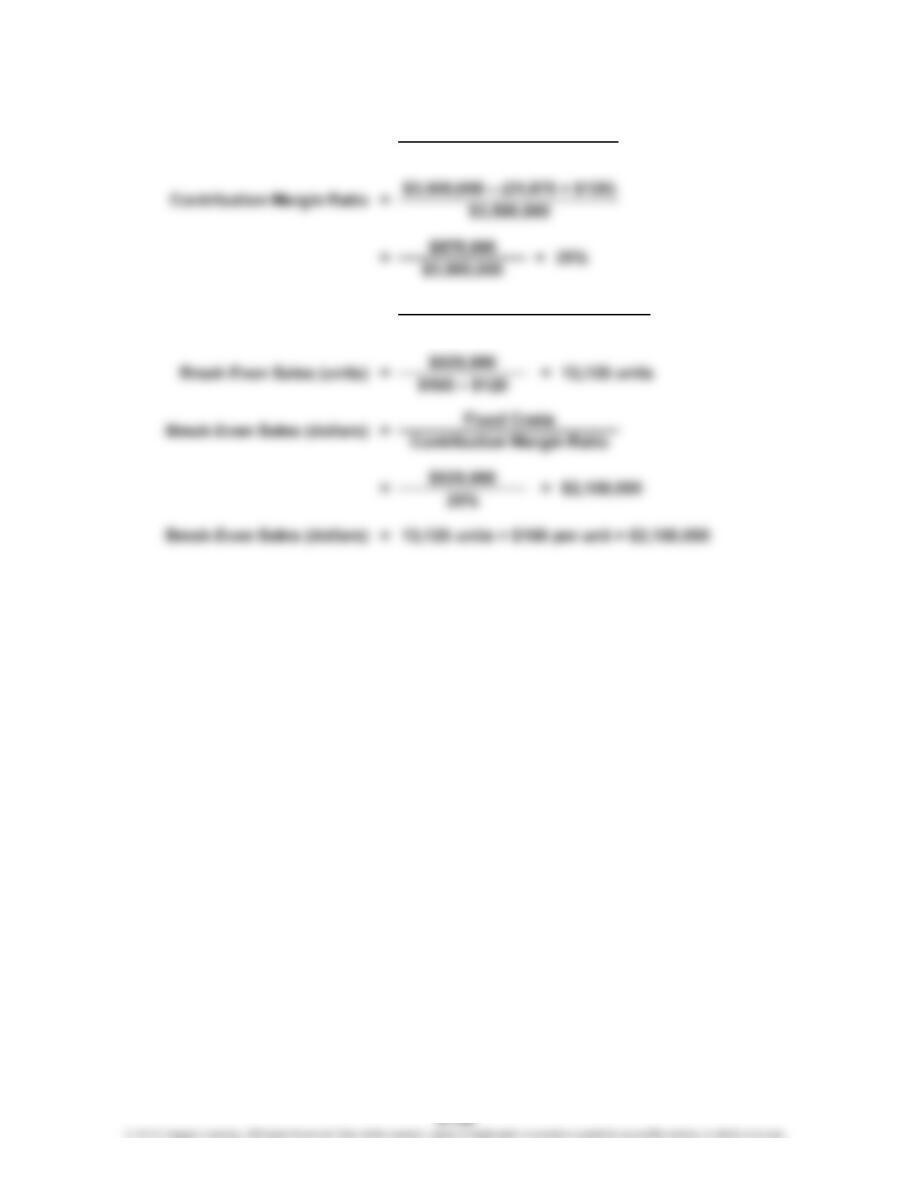
2. Contribution Margin Ratio = Sales – Variable Costs
Sales
3. Break-Even Sales (units) = Fixed Costs
Unit Contribution Margin
CHAPTER 21 Cost Behavior and Cost-Volume-Profit Analysis
Prob. 21–6A (Concluded)
4.
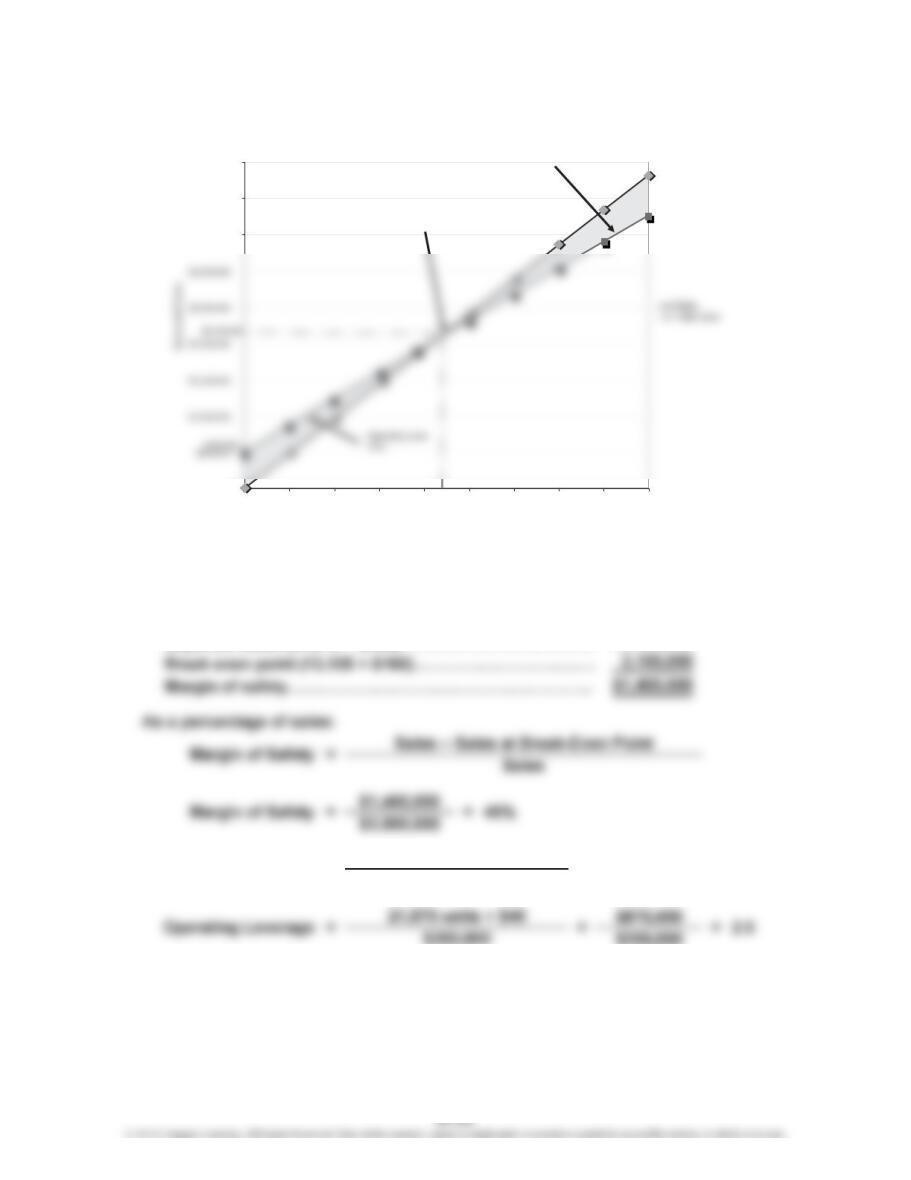
5. Margin of safety:
In dollars:
Expected sales (21,875 × $160)………………………………
…
$3,500,000
Contribution Margin
Income from Operations
6. Operating Leverage =
$0
$3,500,000
$4,000,000
$4,500,000
0 3,000 6,000 9,000 12,000 15,000 18,000 21,000 24,000 27,000
Units
Operating Profit
Area
Break-Even Point
13,125
CHAPTER 21 Cost Behavior and Cost-Volume-Profit Analysis
Prob. 21–1B
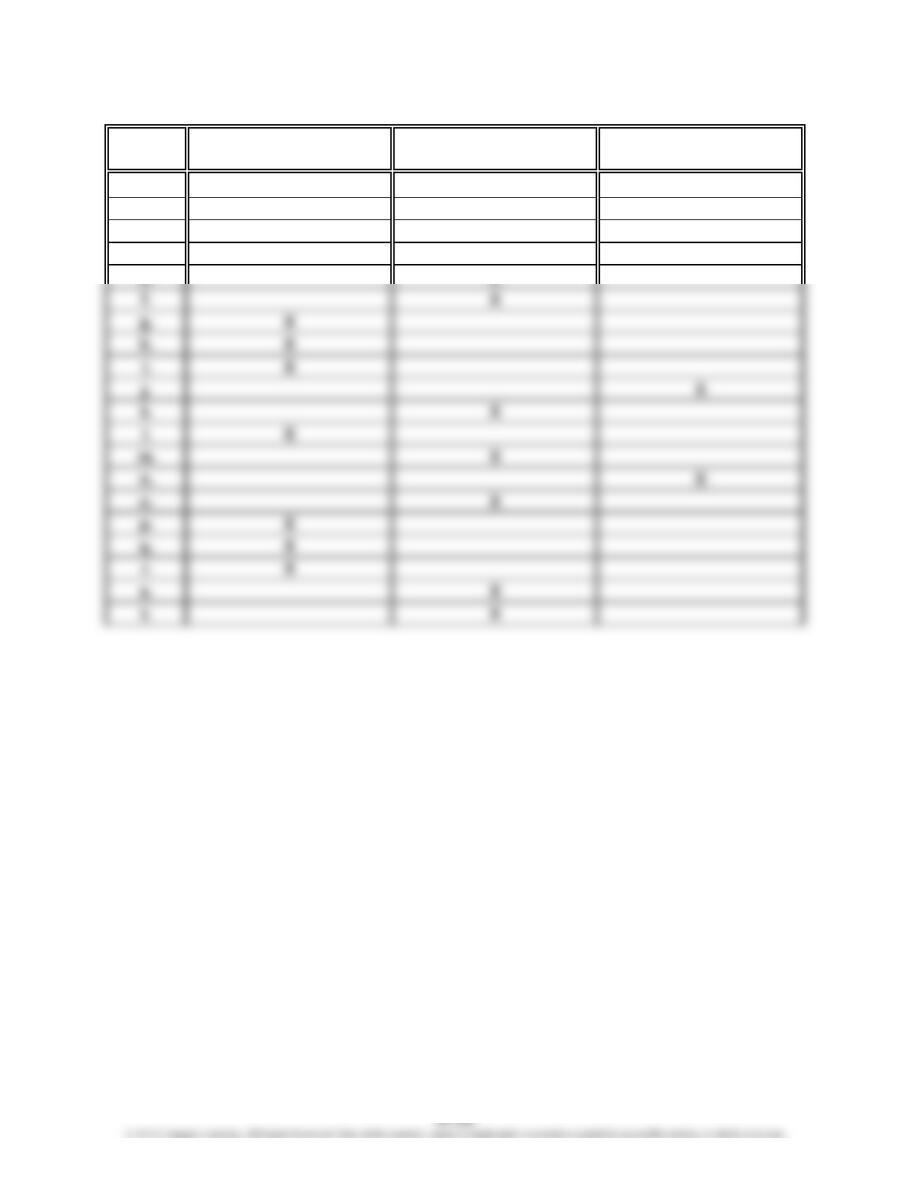
Fixed Variable Mixed
Cost Cost Cost Cost
a. X
b. X
c. X
d. X
e. X
CHAPTER 21 Cost Behavior and Cost-Volume-Profit Analysis
Prob. 21–2B
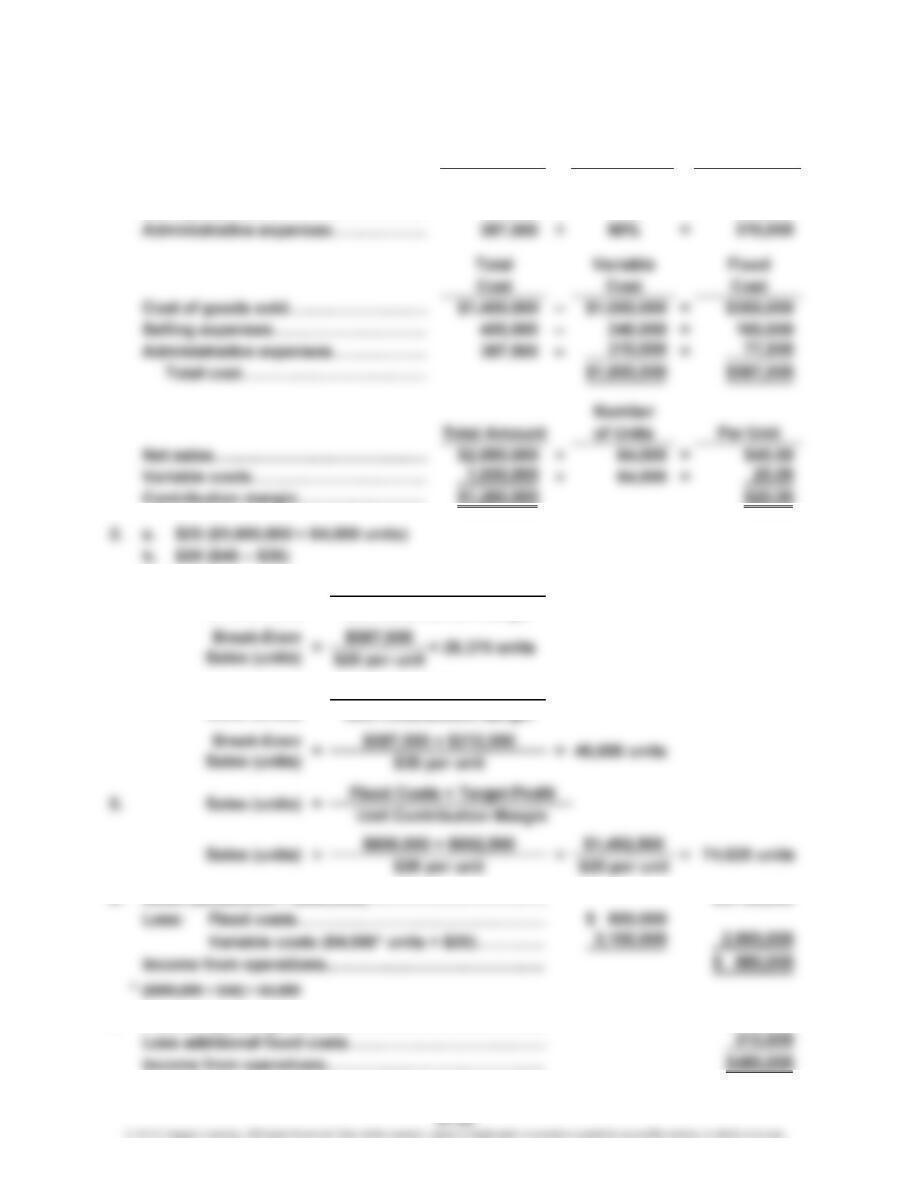
1. Total Variable Cost Variable
Cost Percentage Cost
Cost of goods sold……………………
…
$1,400,000 × 75% = $1,050,000
Selling expenses………………………
…
400,000 × 60% = 240,000
6. Sales ($2,880,000 + $900,000)……………………………
…
7. Present operating income………………………………
…
…
$692,500
Break-Even
Sales (units)
4. Break-Even
Sales (units) =
3. Fixed Costs
Unit Contribution Margin
$3,780,000
=
Fixed Costs
Unit Contribution Margin
…
…
CHAPTER 21 Cost Behavior and Cost-Volume-Profit Analysis
Prob. 21–2B (Concluded)
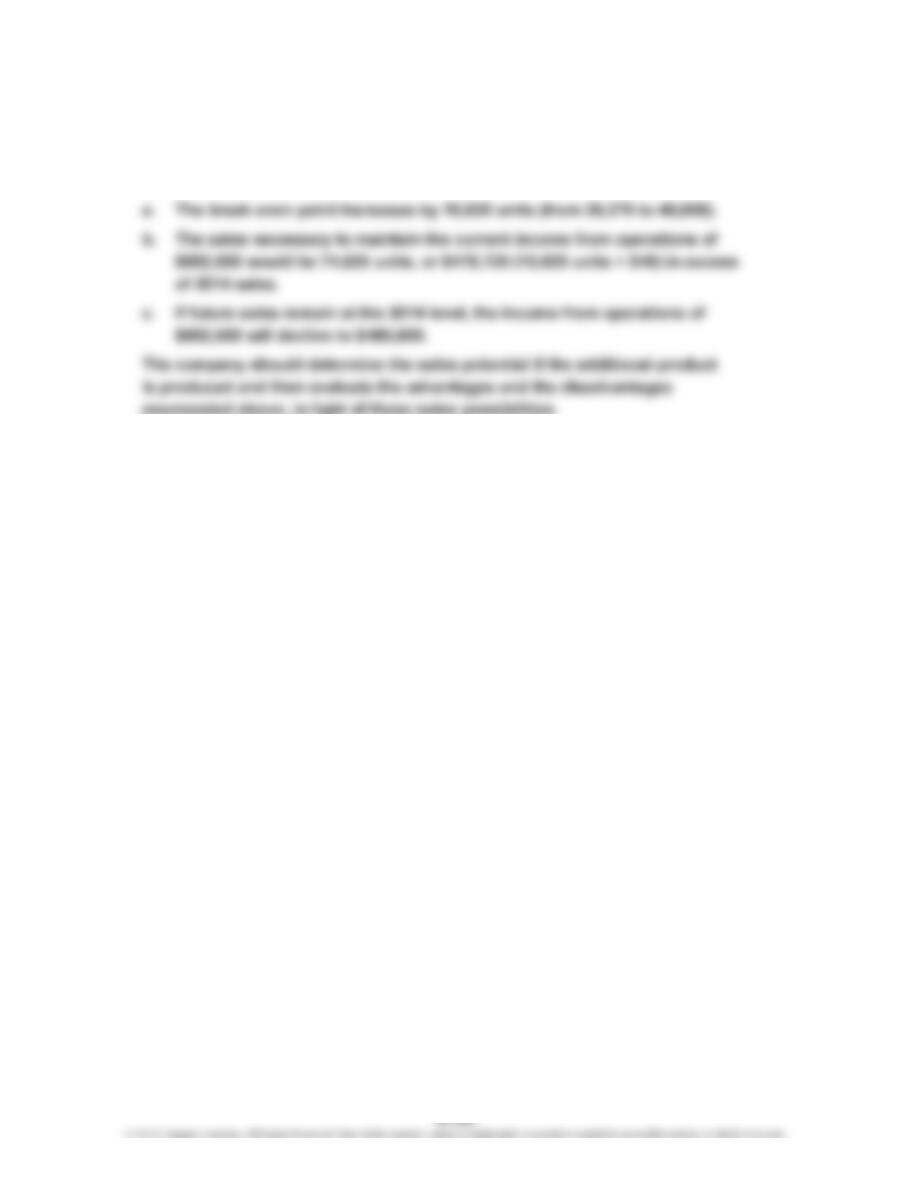
8. In favor of the proposal is the possibility of increasing income from operations
from $692,500 to $880,000. However, there are many points against the
proposal, including: