CA 20.5
1. This situation can exist because companies vary as to which assumption they are using when
interest rates are disclosed. In the implicit approach, two or more assumptions do not individually
represent the best estimate of the plan’s future experience with respect to these assumptions,
but the aggregate effect of their combined use is presumed to be approximately the same as that
2. This situation will occur because the net funded position of the plan is required to be reported.
3. This statement is questionable. If a financial measure purports to represent a phenomenon that is
volatile, the measure must show that volatility or it will not be representationally faithful. Never-
theless, many argue that volatility is inappropriate when dealing with such long-term measures as
4. (a) In a defined-contribution plan, the amount contributed is the amount expensed. No significant
reporting problems exist here. On the other hand, defined benefit plans involve many difficult
reporting issues which may lead to additional expense and liability recognition.
Significant amendments will generally increase prior service cost which may lead to
5. The corridor method is an approach which requires that only gains and losses in excess of 10%
of the greater of the projected benefit obligation or market related plan asset value be allocated.
LO: 5, Bloom: AN, Difficulty: Complex, Time: 50–60, AACSB: Analytic, Communication, AICPA BB: None, AICPA FC: Reporting, AICPA PC: Communication
CA 20.6
To: Vickie Plato, Accounting Clerk
From: Good Student, Manager of Accounting
Date: January 3, 2022
Subject: Amortization of gains and losses in pension expense
Pension expense includes several components; one occasionally included is the amortization of
cumulative gains/losses. These gains/losses occur for two reasons. First, the plan assets may provide a
Thus, in the attached schedule, no amortization of the $280,000 loss in 2019 was required because the
balance in the gain/loss account at the beginning of that year was zero. However, at the beginning
of 2019, the balance in that account was $280,000. The 10 percent corridor is $250,000, so the loss
exceeds this corridor by $30,000. Since the remaining service life of employees is 10 years, you derive
the amortized portion by dividing $30,000 by 10: $3,000 [see (b) on the schedule below].
Corridor and Minimum Loss Amortization Schedule
Year
Projected Benefit
Obligation (a)
Plan Assets
Value (a)
10% Corridor
Accumulated
OCI (G/L) (a)
Minimum
Amortization
of Loss
2019
$2,200,000
$1,900,000
$220,000
$ 0
$ 0
CA 20.6 (Continued)
(a) As of the beginning of the year.
CA 20.7
While Habbe may be correct in assuming that the termination of nonvested employees would decrease its
pension-related liabilities and associated expenses, she is callous to suggest that firing employees is a
reasonable approach to correcting the underfunding of College Electronix’s pension plan. Arbitrarily dismiss–
FINANCIAL REPORTING PROBLEM
(a) P&G offers various postretirement benefits to its employees.
Defined Contribution Retirement Plans: We have defined contribution
plans, which cover the majority of our U.S. employees, as well as
employees in certain other countries. These plans are fully funded. We
(b)
2017
Pension expense
$528,000,000
$349,000,000
2015
Pension expense
(c) In 2017, P&G reports the following on its balance sheet related to its
pension plan.
June 30
Pension Benefits
Classification of net amount recognized
2017
2016
Noncurrent assets
Current liabilities
Noncurrent liabilities
Net amount recognized
Net actuarial loss
Prior service cost /(credit)
Net amounts recognized in AOCI
FINANCIAL REPORTING PROBLEM (Continued)
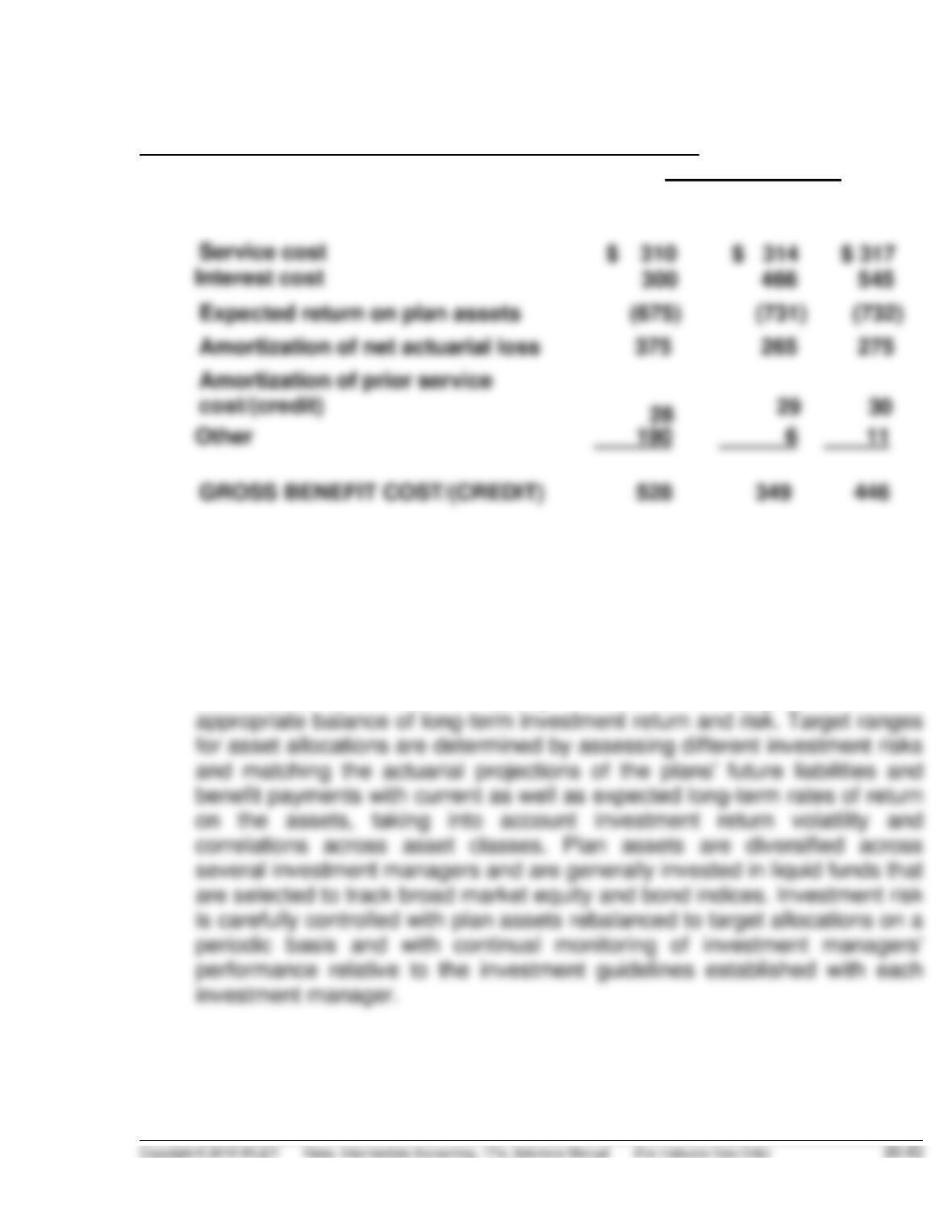
Pension expense components are as follows:
Years ended June 30
Pension Benefits
Amounts recognized in net periodic
benefit cost
2017
2016
2015
(d) P&G provides the following disclosure of its asset allocations for the
pension fund and the fund for Other Retiree Benefits.
Plan Assets. Our investment objective for defined benefit retirement plan
assets is to meet the plans’ benefit obligations and to improve plan self–
sufficiency for future benefit obligations. The investment strategies focus on
asset class diversification, liquidity to meet benefit payments and an
FINANCIAL REPORTING PROBLEM (Continued)
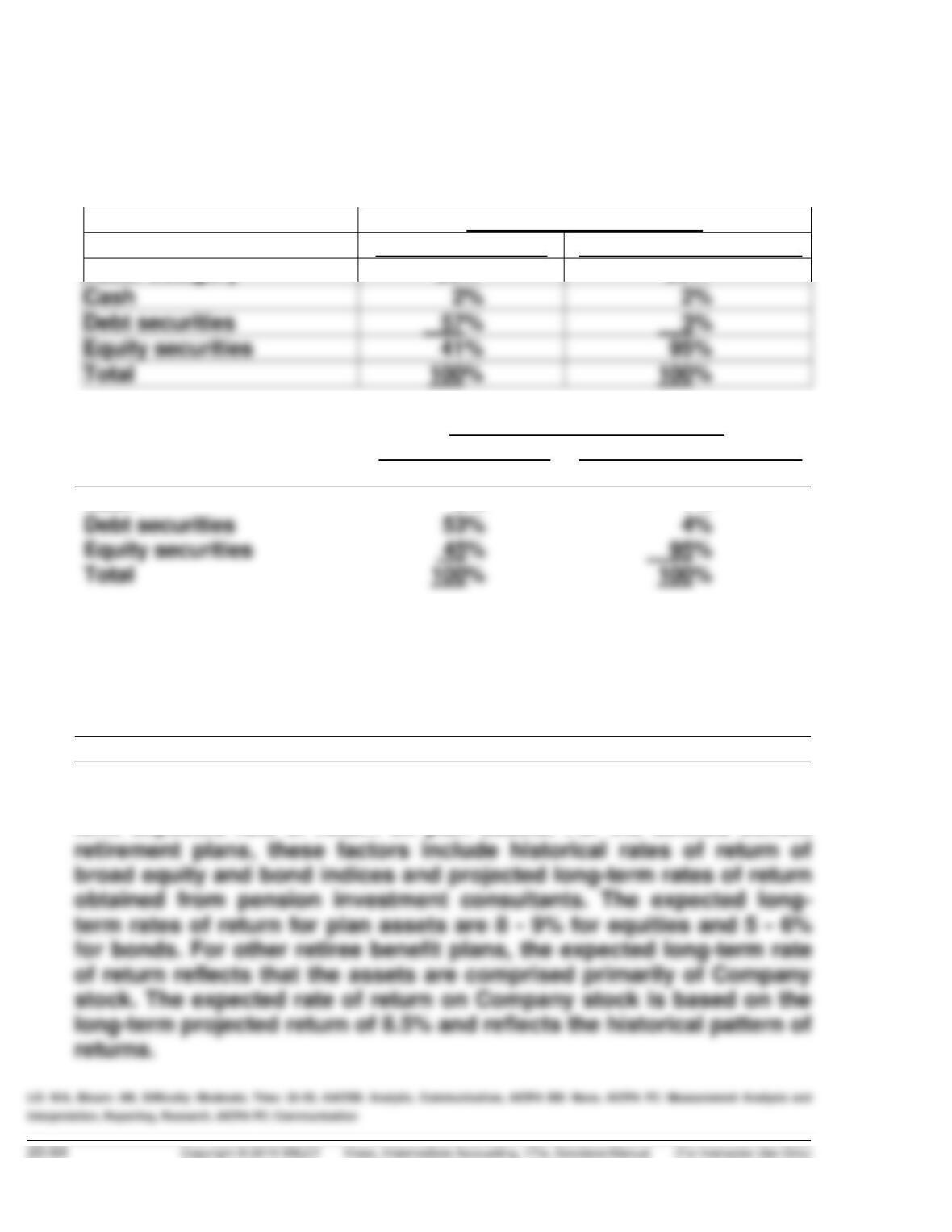
Plan Assets. The Company’s target asset allocation for the year ending
June 30, 2017 and actual asset allocation by asset category as of June 30,
2017, are as follows:
Target Asset Allocation
Pension Benefits
Other Retiree Benefits
Asset Category
2017
2017
Cash
Debt securities
Equity securities
Asset Allocation at June 30
Pension Benefits
Other Retiree Benefits
Asset Category
2017
2017
Cash
2%
1%
Debt securities
4%
Total
These allocations appear in-line with the expected return assumptions
for these two funds:
2017 Assumptions used to
determine net periodic cost
Pensions
Other Retiree
Expected return on plan assets
6.9%
8.3%
Several factors are considered in developing the estimate for the long–
term expected rate of return on plan assets. For the defined benefit
COMPARATIVE ANALYSIS CASE
(a) Coca-Cola sponsors and/or contributes to pension plans covering
substantially all U.S. employees and certain employees in international
(b) Coca-Cola reported “net periodic benefit cost” of $368 million in 2017.
PepsiCo reported “pension expense” of $280 million in 2017 for U.S. and
international plans.
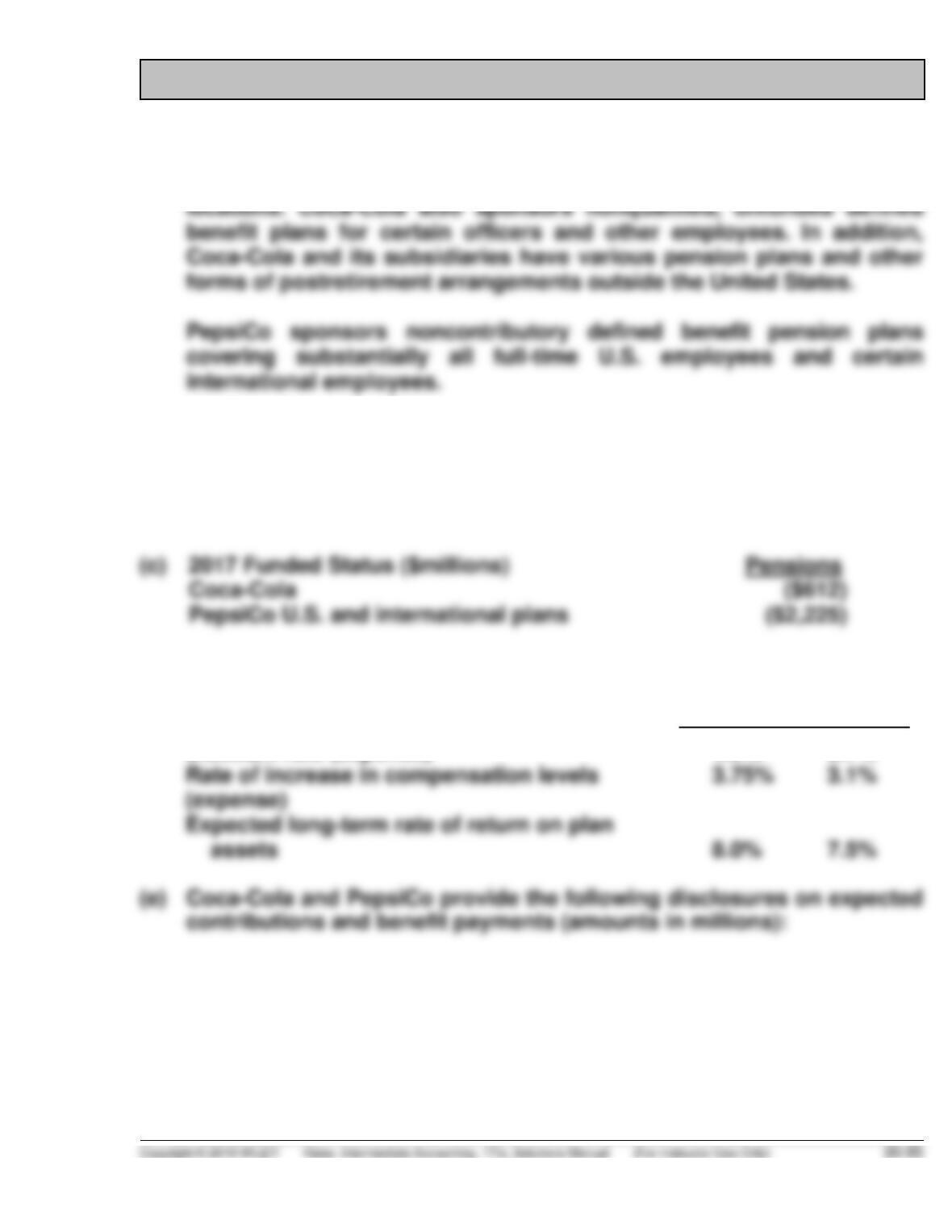
(d) Relevant rates used to compute pension information:
Coca-Cola
PepsiCo
Discount rate (expense)
4.0%
3.7%
COMPARATIVE ANALYSIS CASE (Continued)
Coca-Cola
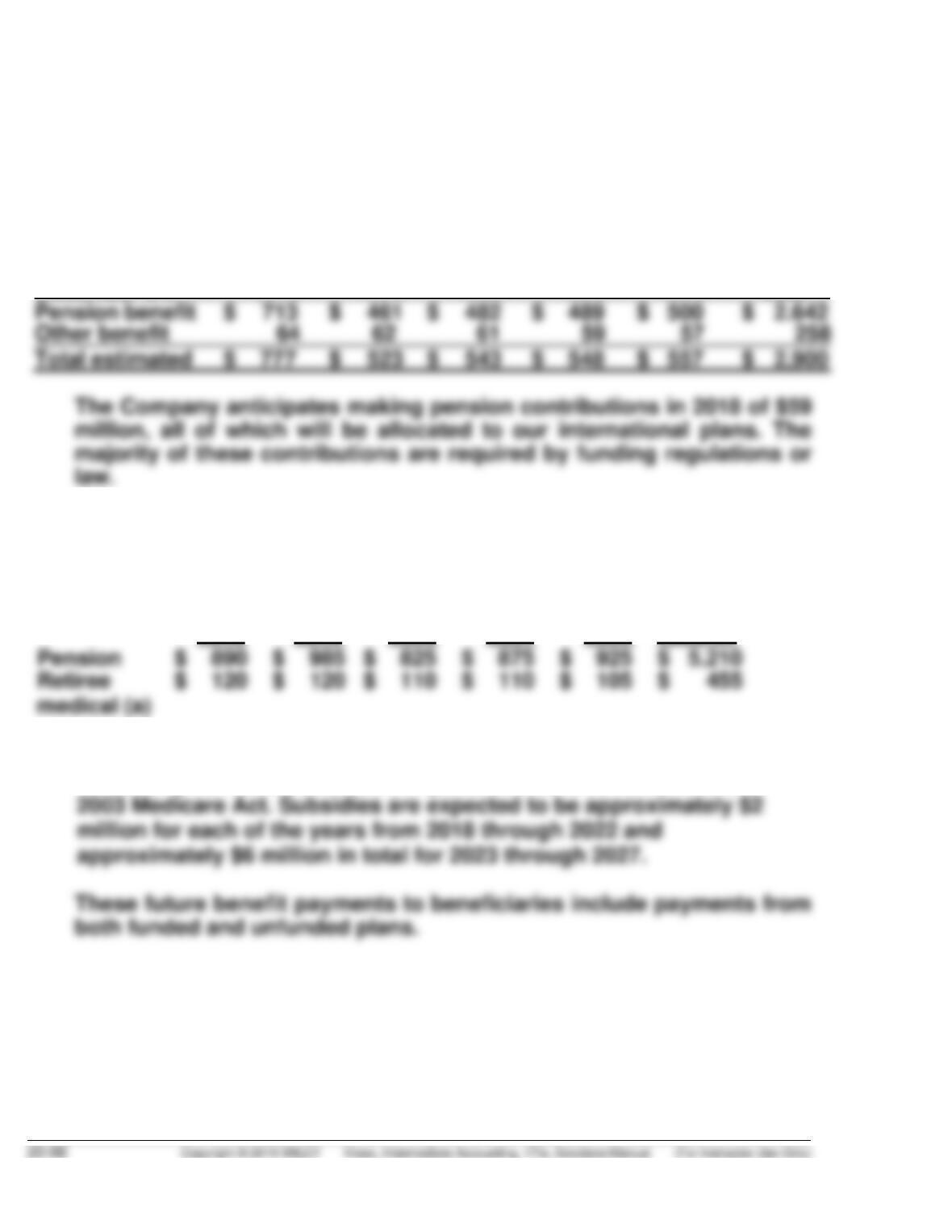
Cash Flows
Our estimated future benefit payments for funded and unfunded plans
are as follows (in millions):
Year Ended
December 31,
2018
2019
2020
2021
2022
2023–
2027
PepsiCo
Future Benefit Payments
Our estimated future benefit payments are as follows:
2018
2019
2020
2021
2022
2023–27
Pension
$ 890
$ 985
$ 825
$ 875
$ 925
(a) Expected future benefit payments for our retiree medical plans do not
reflect any estimated subsidies expected to be received under the
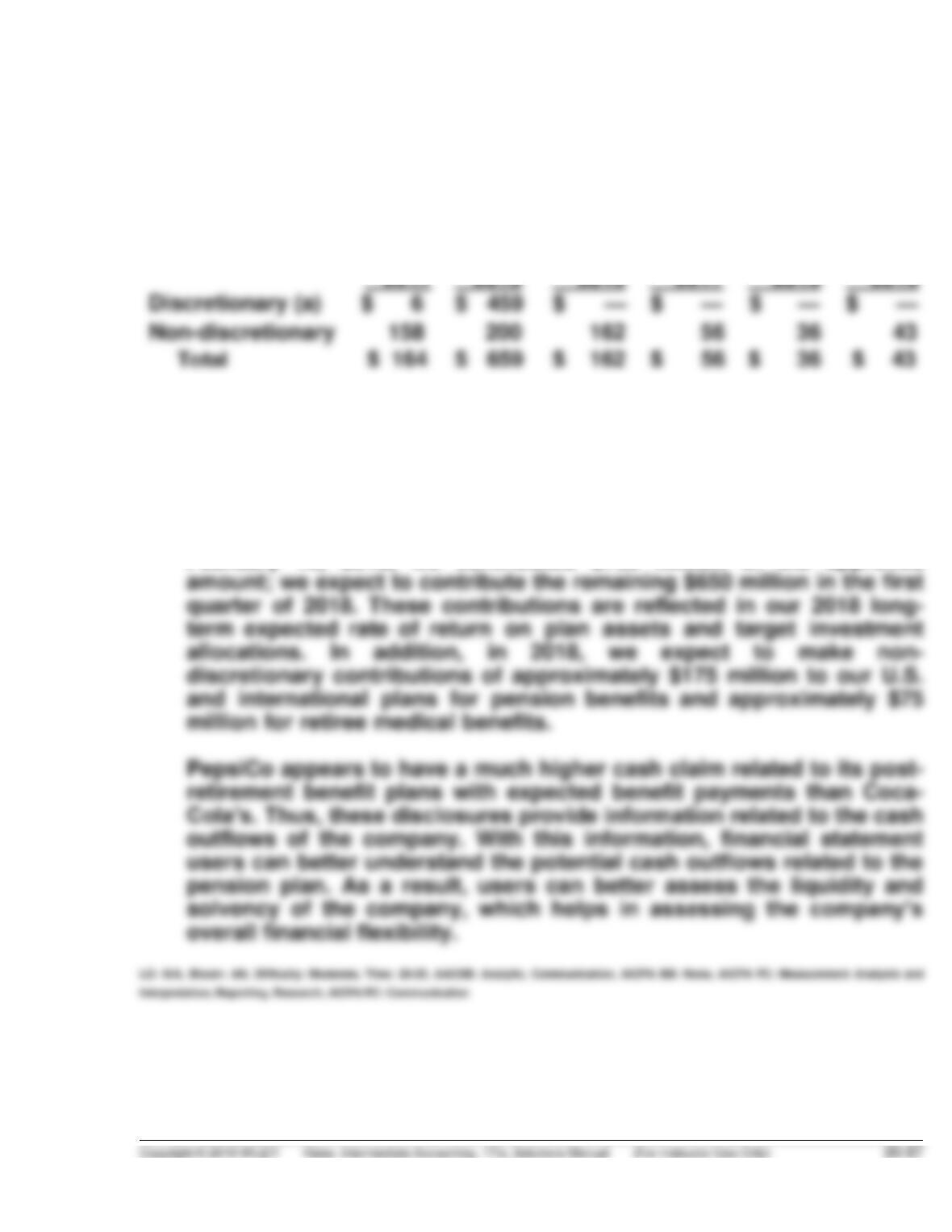
COMPARATIVE ANALYSIS CASE (Continued)
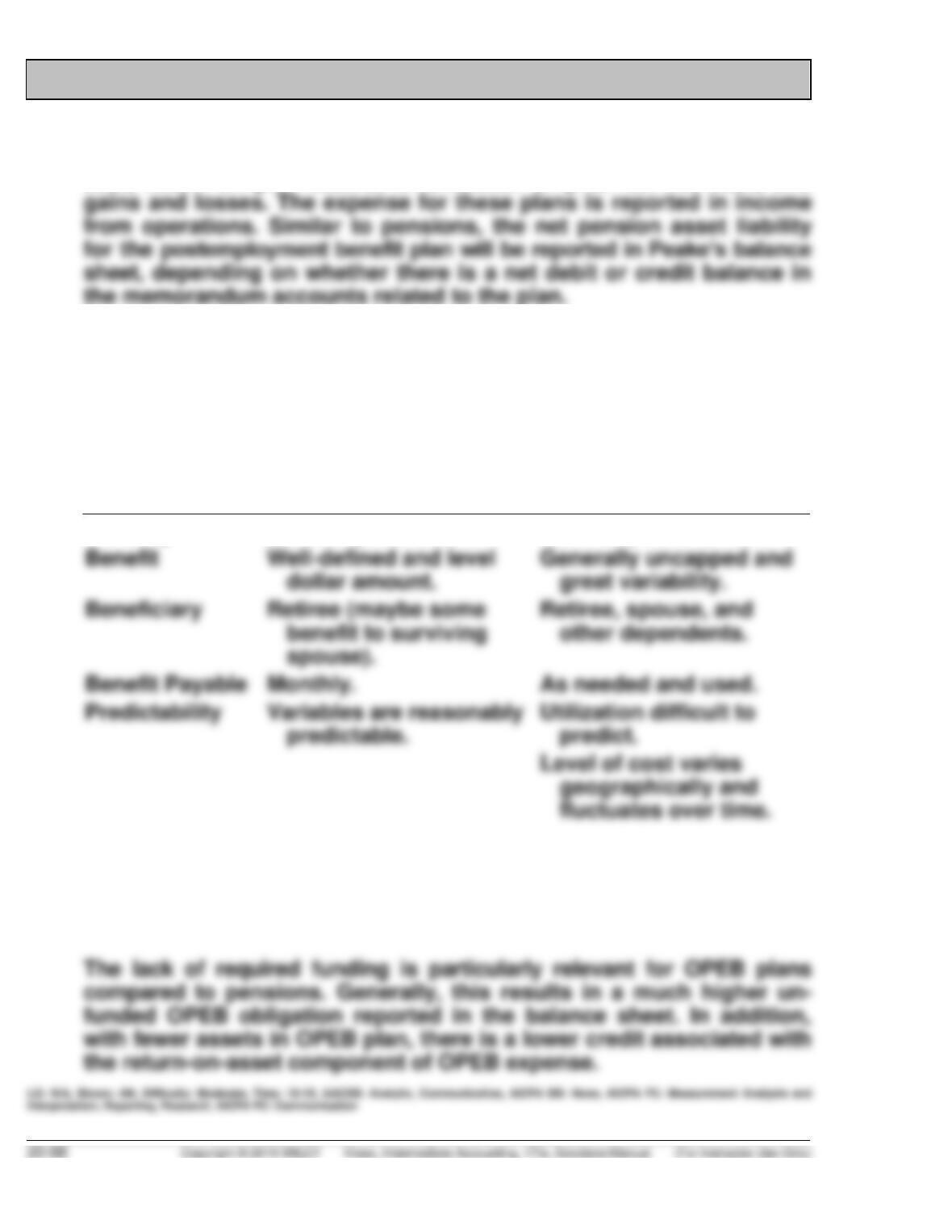
Funding
Contributions to our pension and retiree medical plans were as
follows:
Pension Retiree Medical
$ 659
$ 43
(a) Includes $452 million in 2016 relating to the funding of the group
annuity contract purchase from an unrelated insurance company.
In February 2018, we received approval from our Board of Directors to
make discretionary contributions of $1.4 billion to Plan A in the United
States that we intend to invest in fixed income securities. As of
February
13, 2018, we contributed $750 million of the approved
FINANCIAL STATEMENT ANALYSIS CASE
(a) The components of postretirement expense are service cost, interest
cost, return on plan assets, amortization of prior service cost, and
(b) The accounting for defined-benefit plans and OPEBs is very similar.
For example, the measures of the obligation are similar and the com–
ponents of expense and their calculation are the same (with similar
smoothing mechanisms employed for both types of plans with respect to
gains and losses.) There are, however, a number of differences between
Postretirement Healthcare Benefits and Pensions:
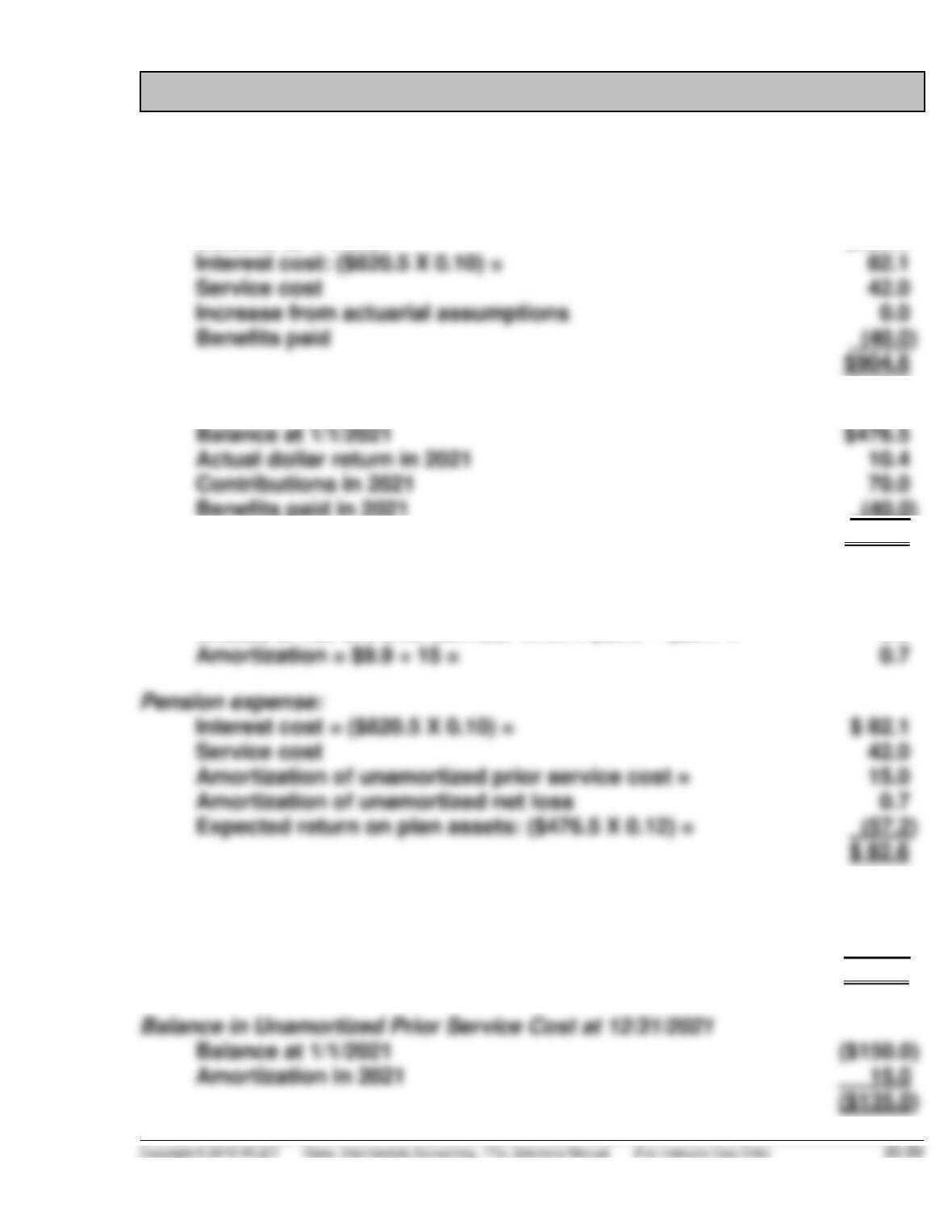
Item
Pensions
Healthcare Benefits
Funding
Generally funded.
Generally NOT funded.
Benefit Payable
Monthly.
As needed and used.
Additionally, although healthcare benefits are generally covered by
the fiduciary and reporting standards for employee benefit funds under
ERISA, the stringent minimum vesting, participation, and funding
standards that apply to pensions do not apply to healthcare benefits.
ACCOUNTING, ANALYSIS, AND PRINCIPLES
Accounting
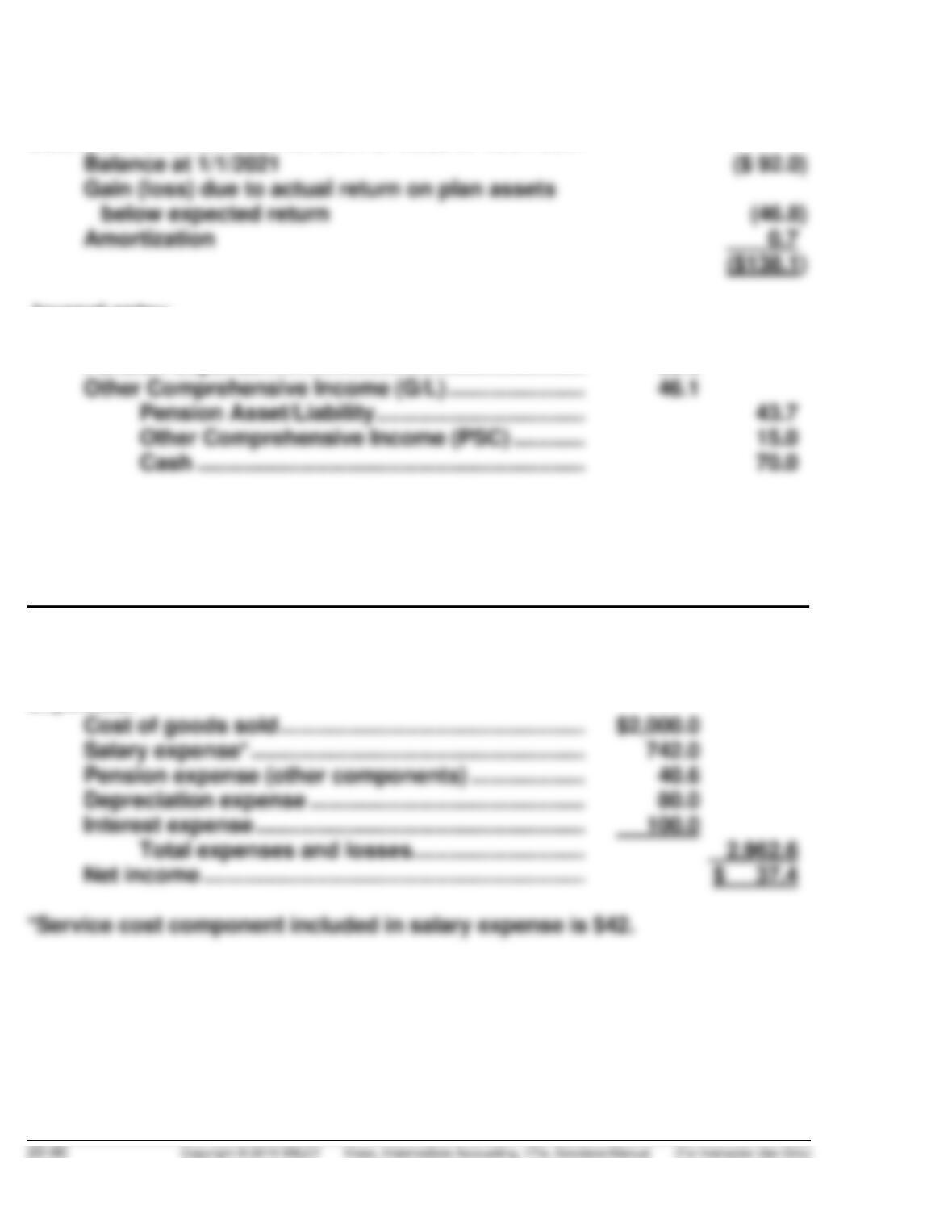
Balance in PBO at 12/31/2021
Balance at 1/1/2021 $820.5
Amount of plan assets at 12/31/2021
$516.9
Corridor test and amortization of net gain/loss
Corridor limit: 10% times greater of $820.5 and $476.5 = $ 82.1
Excess of net G/L over corridor limit = $92.0 – $82.1 = 9.9
Balance in pension liability
Projected benefit obligation $904.6
Plan assets (516.9)
Pension liability $387.7
ACCOUNTING, ANALYSIS, AND PRINCIPLES (Continued)
Balance in Unamortized Net Gain or Loss at 12/31/2021
Journal entry:
Pension Expense ……………………………………………… 82.6
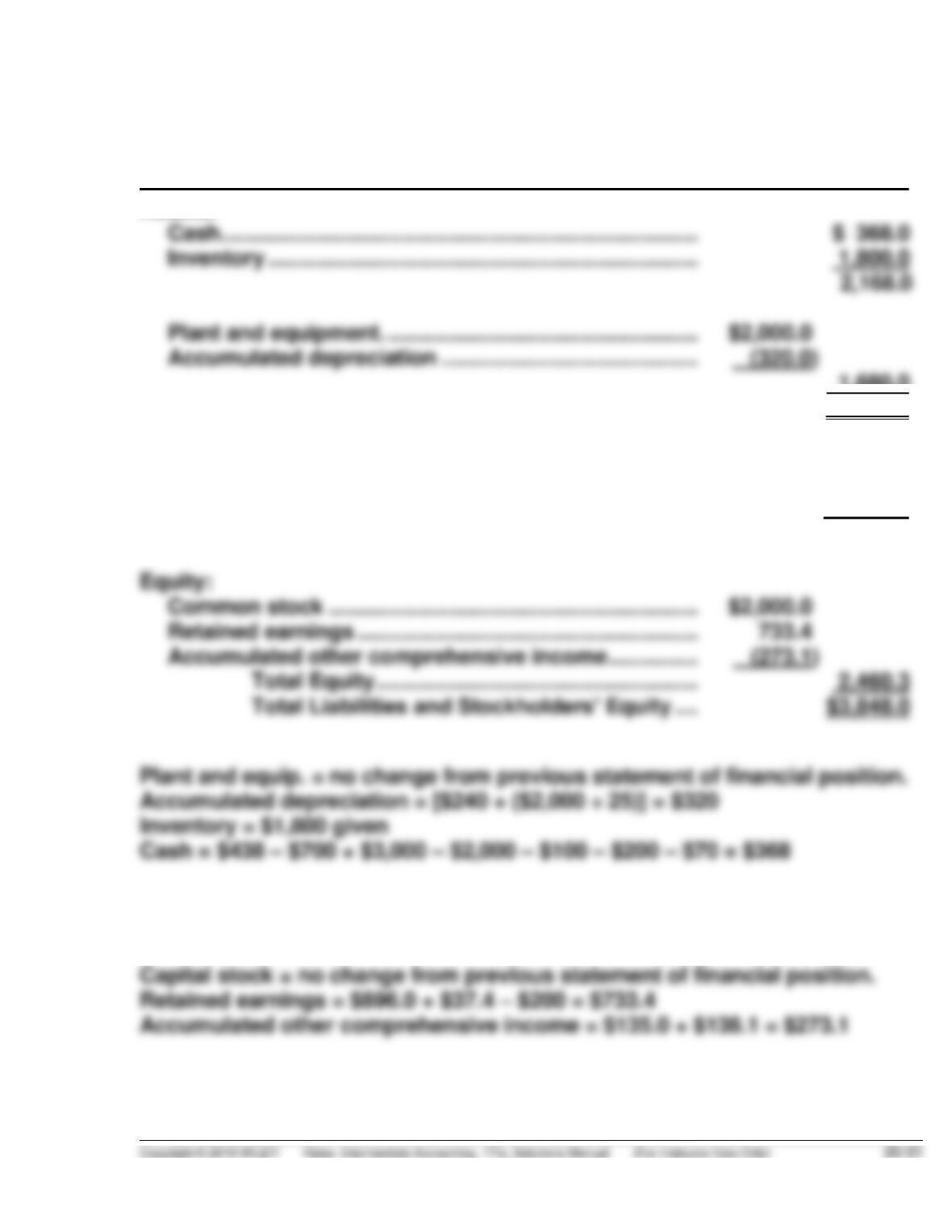
PENCOMP, INC.
Income Statement
for the year ended Dec. 31, 2021
Revenues:
Sales ……………………………………………………………….. $3,000.0
Expenses:
ACCOUNTING, ANALYSIS, AND PRINCIPLES (Continued)
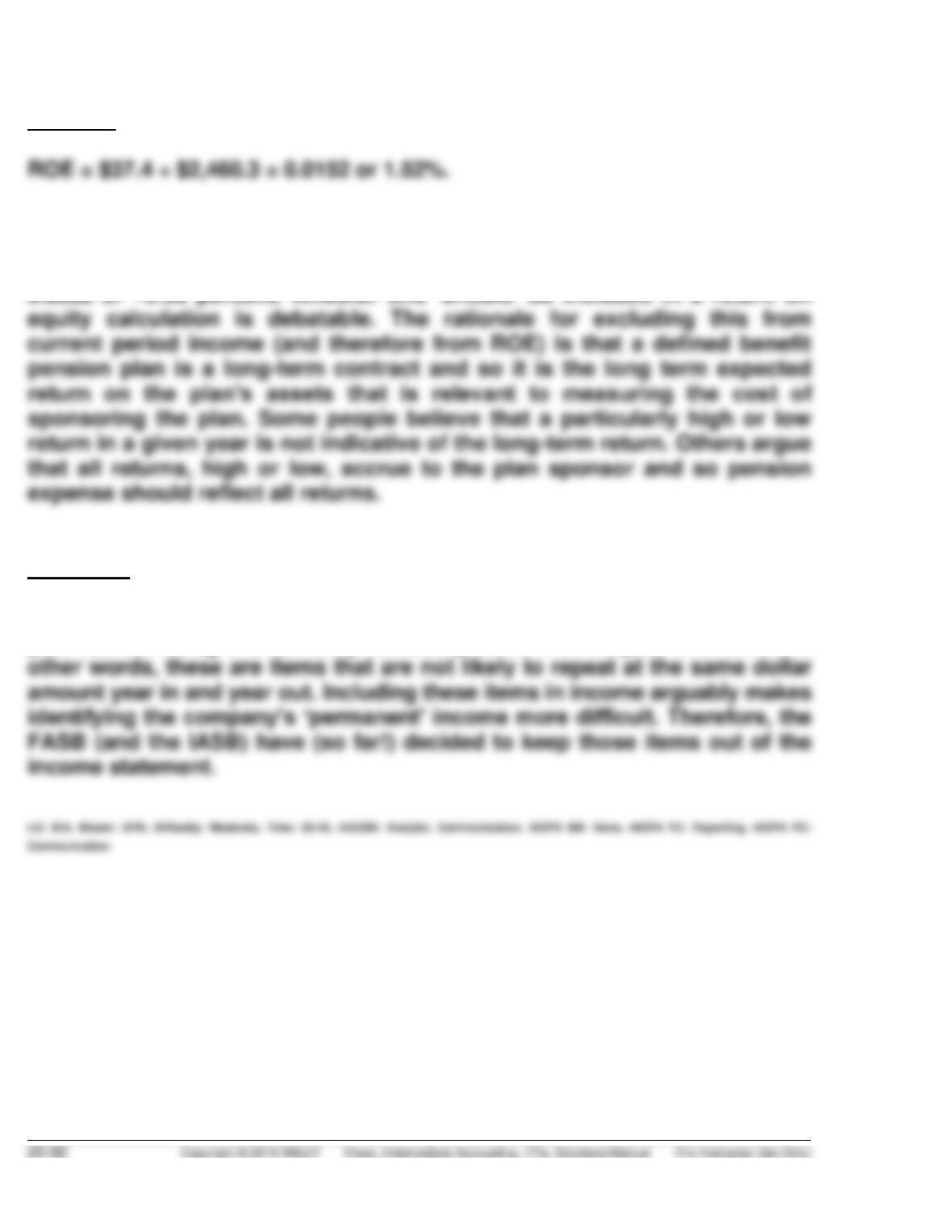
PENCOMP, INC.
Balance Sheet
at Dec. 31, 2021
Assets:
1,680.0
Total Assets …………………………………………….. $3,848.0
Liabilities:
Note payable ………………………………………………………… $1,000.0
Pension liability ……………………………………………………. 387.7
Total Liabilities ………………………………………… 1,387.7
Note payable = no change from previous statement of financial position.
Pension liability = $387.7 per above analysis
ACCOUNTING, ANALYSIS, AND PRINCIPLES (Continued)
Analysis
In this example, the unexpected return on plan assets ‘skipped’ the income
statement and went to other comprehensive income. Had this item been
included in income, ROE would have been = ($37.4 – $46.8) ÷ $2,460.3 = –
Principles
The effects of plan amendments and actuarial gains and losses in a given
year can be thought of as fairly transitory items with respect to income. In
CODIFICATION EXERCISES
CE20.1
Master Glossary
(a) The actuarial present value of benefits (whether vested or nonvested) attributed, generally by the
pension benefit formula, to employee service rendered before a specified date and based on
(c) The value, as of a specified date, of an amount or series of amounts payable or receivable
thereafter, with each amount adjusted to reflect the time value of money (through discounts for
interest) and the probability of payment (for example, by means of decrements for events such
as death, disability, or withdrawal) between the specified date and the expected date of payment.
CE20.2
According to FASB ASC 715-30–35-43 (Defined-Benefit Plans – Pension – Discount Rates):
Assumed discount rates shall reflect the rates at which the pension benefits could be effectively settled.
It is appropriate in estimating those rates to look to available information about rates implicit in current