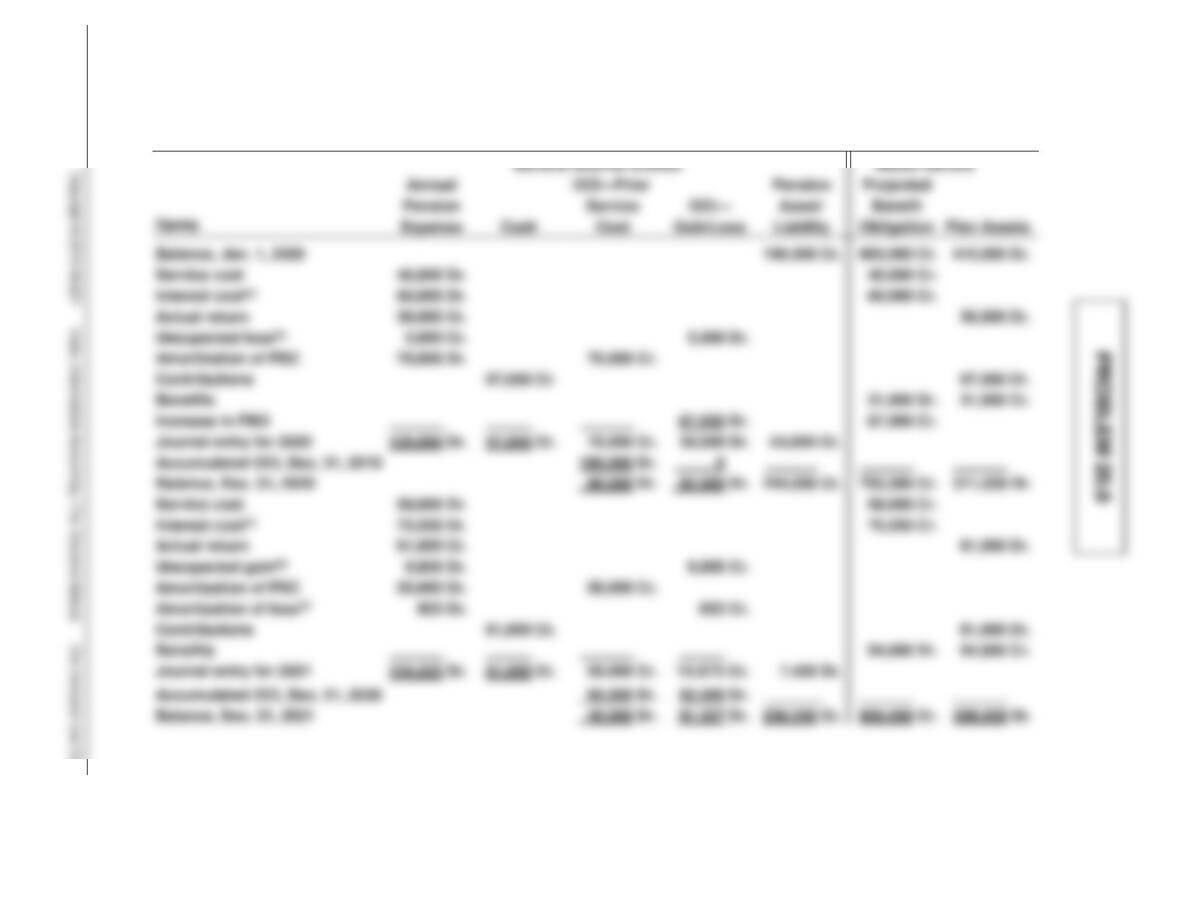
(a) LEMKE COMPANY
Pension Worksheet—2020 and 2021
20–60 Copyright © 2019 WILEY Kieso, Intermediate Accounting, 17/e, Solutions Manual (For Instructor Use Only)
PROBLEM 20.8 (Continued)
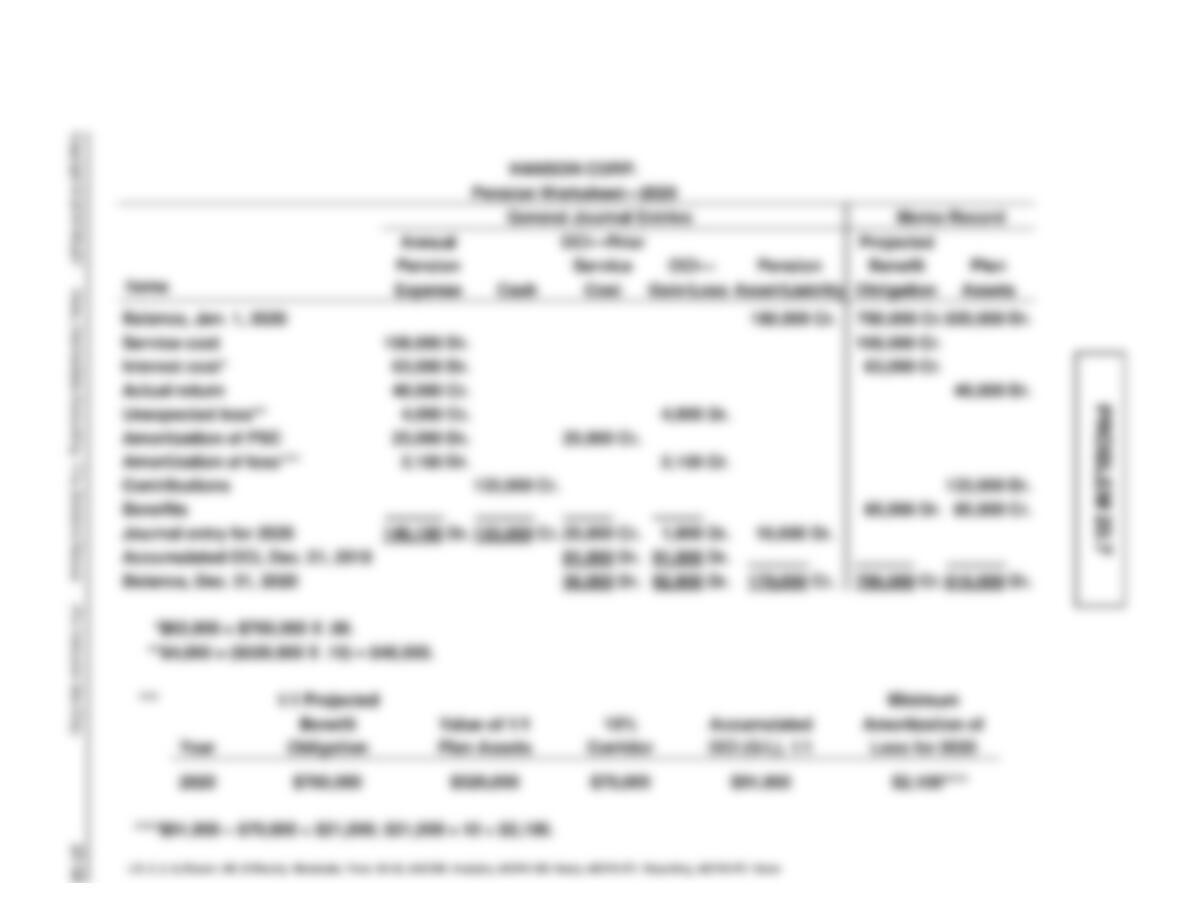
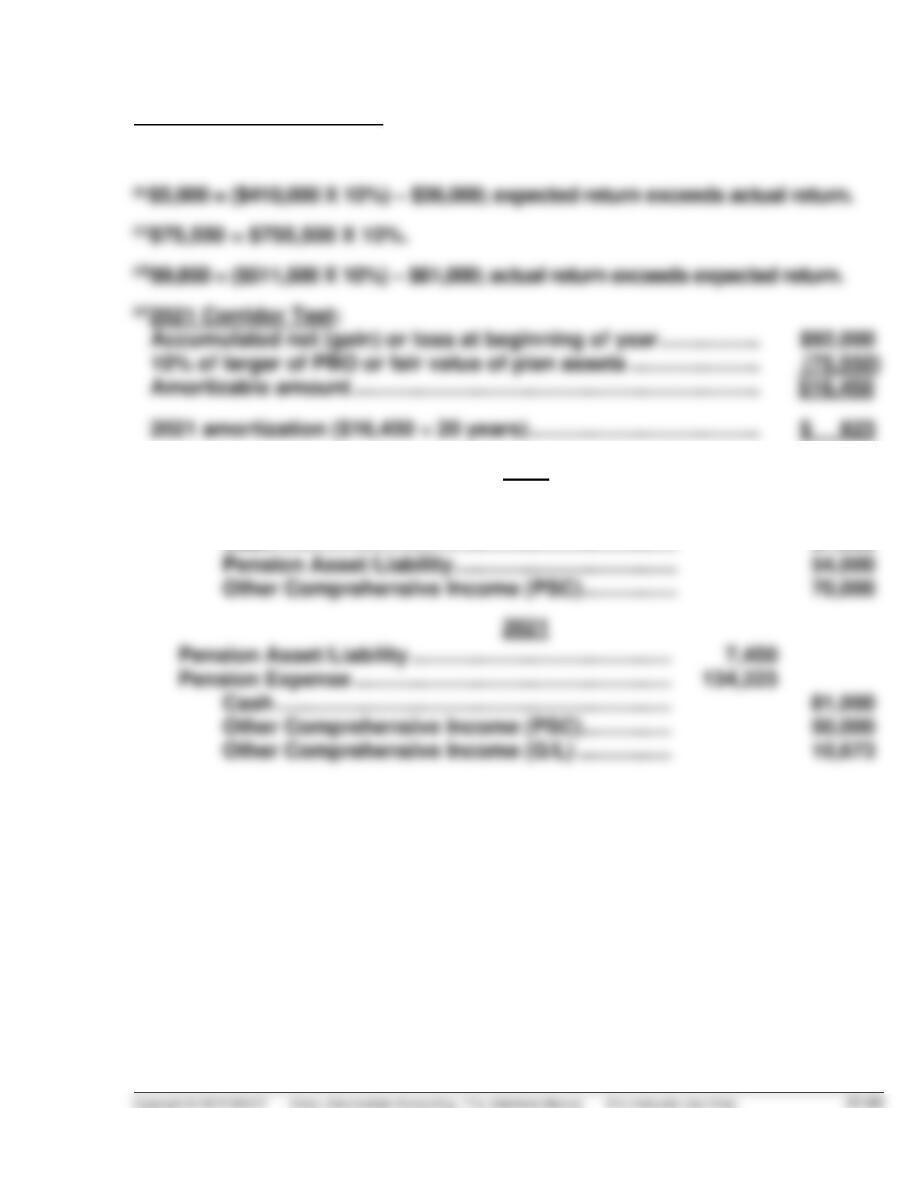
Worksheet computations:
(a)$60,000 = $600,000 X 10%.
(b) 2020
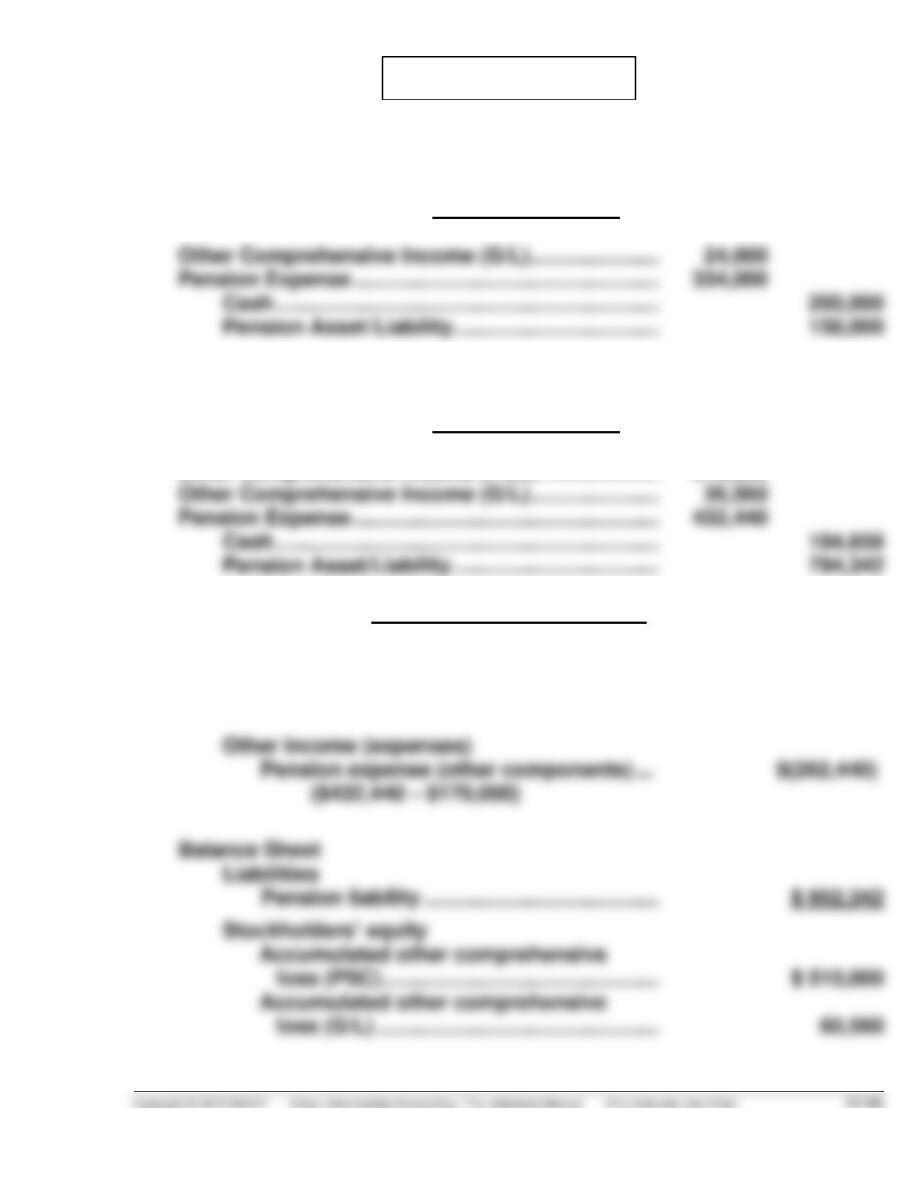
Pension Expense ………………………………………………. 129,000
Other Comprehensive Income (G/L) ……………………. 92,000
Cash ………………………………………………………….. 97,000
PROBLEM 20.8 (Continued)
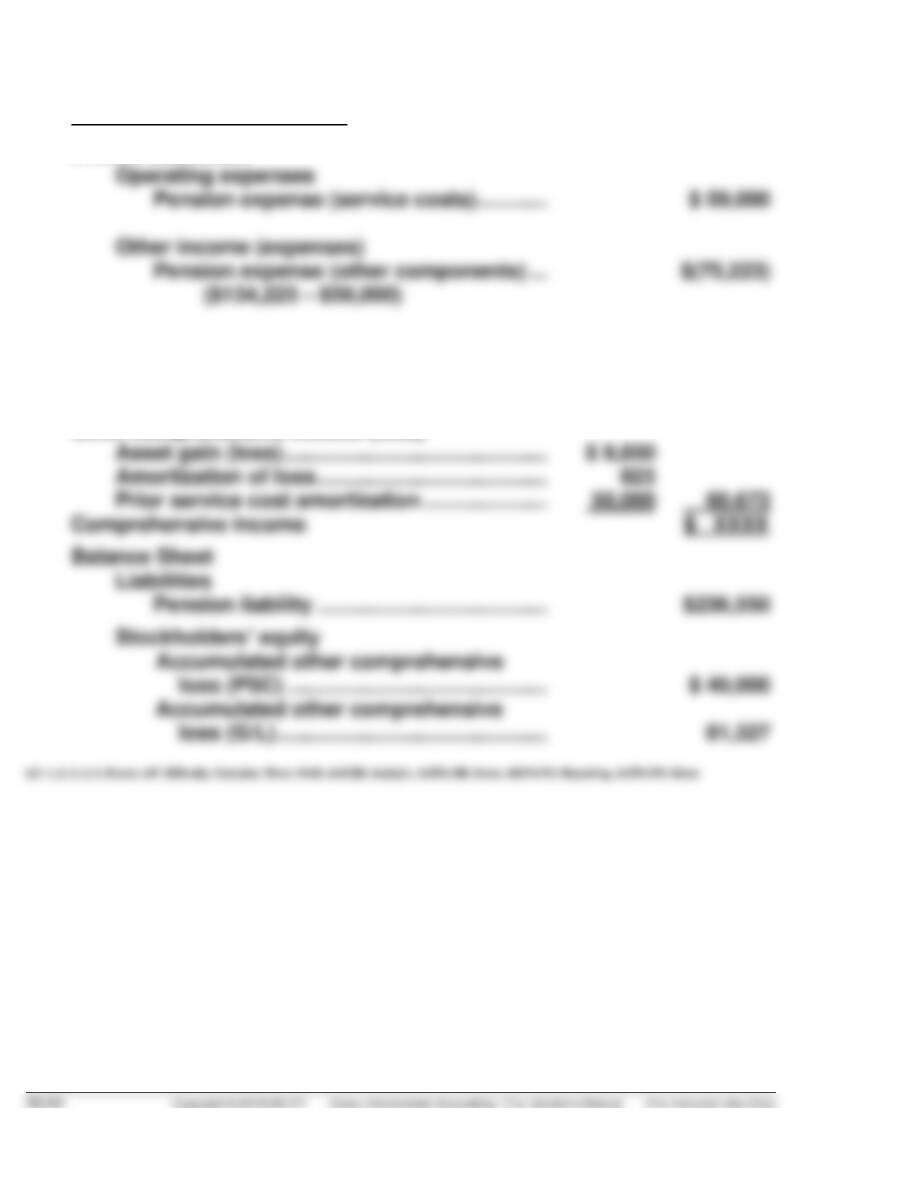
(c) Financial Statements—2021
Income Statement
Comprehensive Income Statement
Net Income ……………………………………………………. $ XXXX
Other comprehensive income (loss)
PROBLEM 20.9
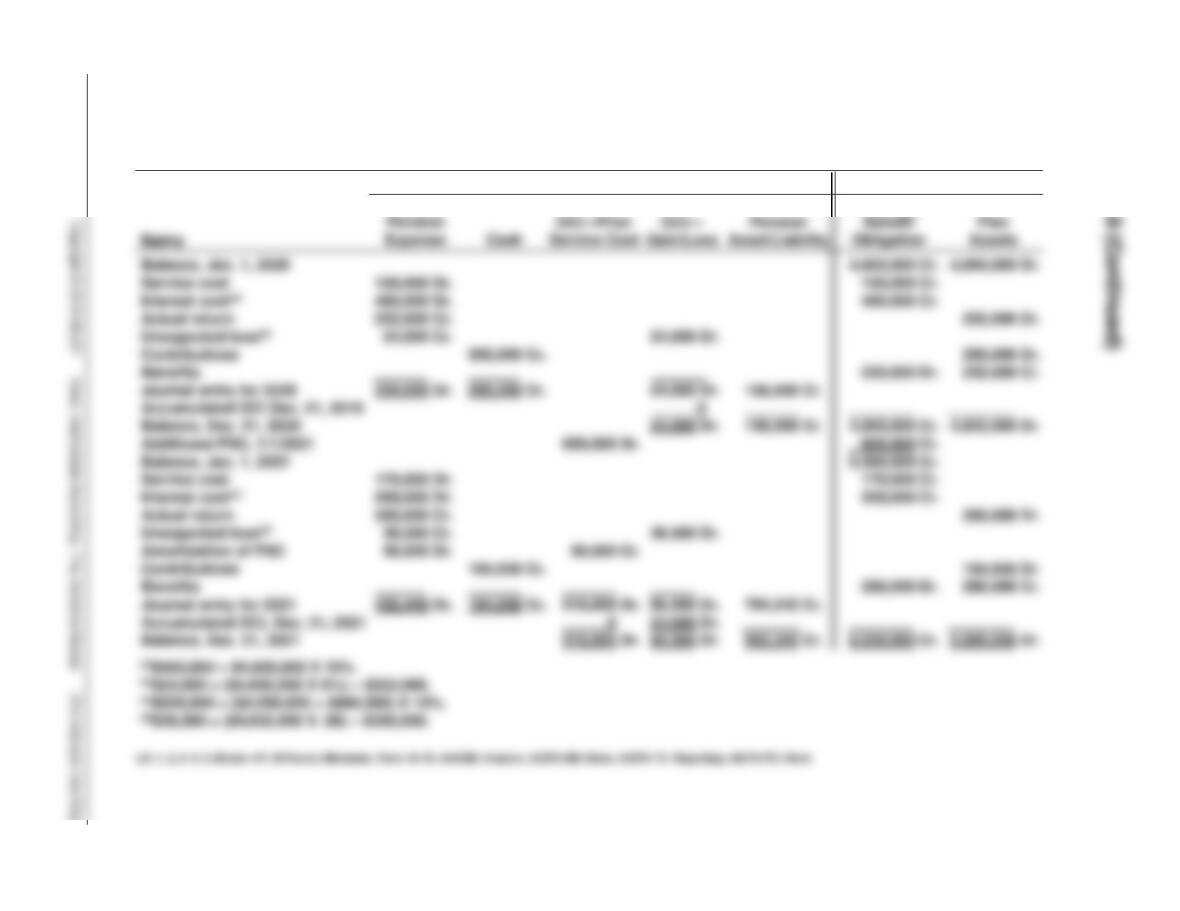
(a) See worksheet on next page.
(b) December 31, 2020
(c) See worksheet on next page. The entry is below.
December 31, 2021
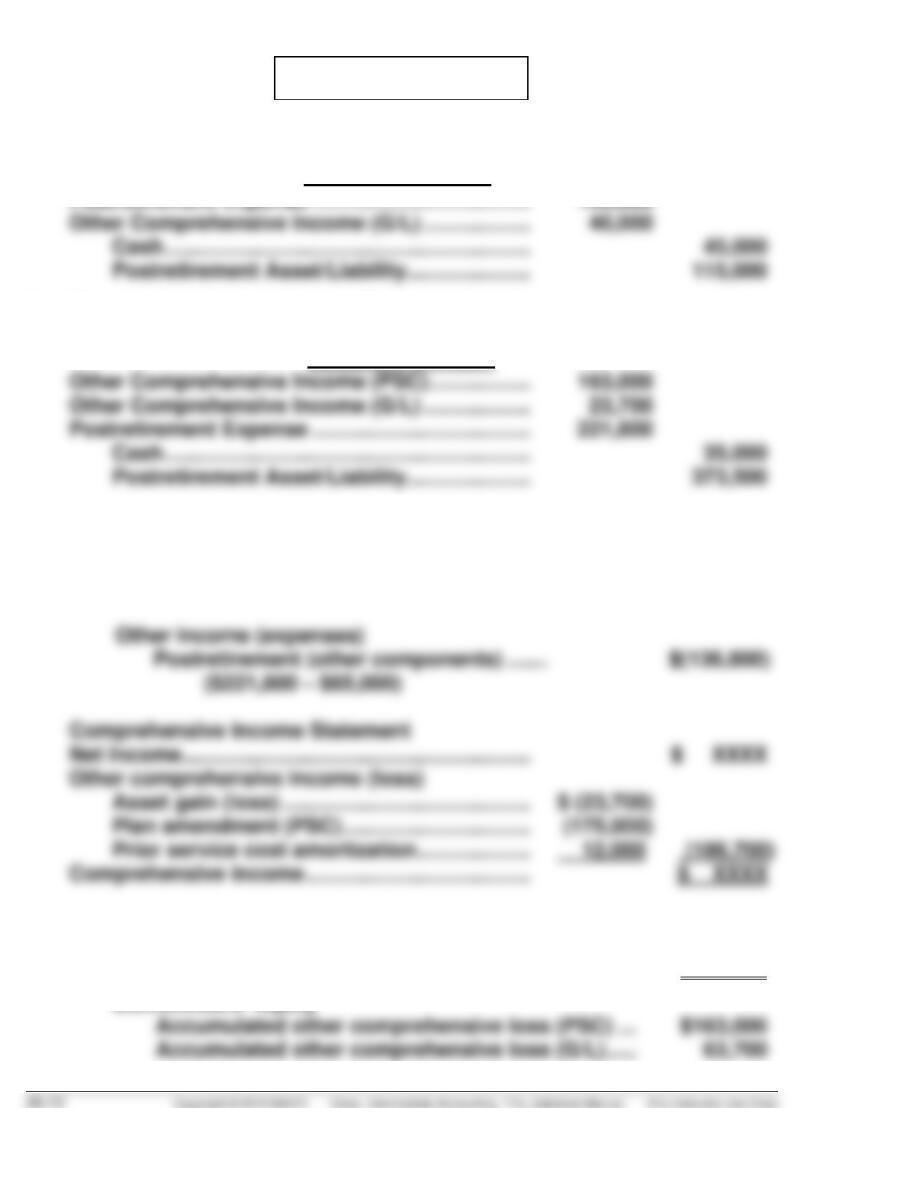
Other Comprehensive Income (PSC) ……………….. 510,000
(d) Financial Statements—2021
Income Statement
Operating expenses
Pension expense (service costs) ………… $ 170,000
PROBLEM 20.9 (Continued)
20-64 Copyright © 2019 WILEY Kieso, Intermediate Accounting, 17/e, Solutions Manual (For Instructor Use Only)
(a) HOBBS COMPANY
Pension Worksheet—2020 and 2021
General Journal Entries Memo Record
Annual
Projected
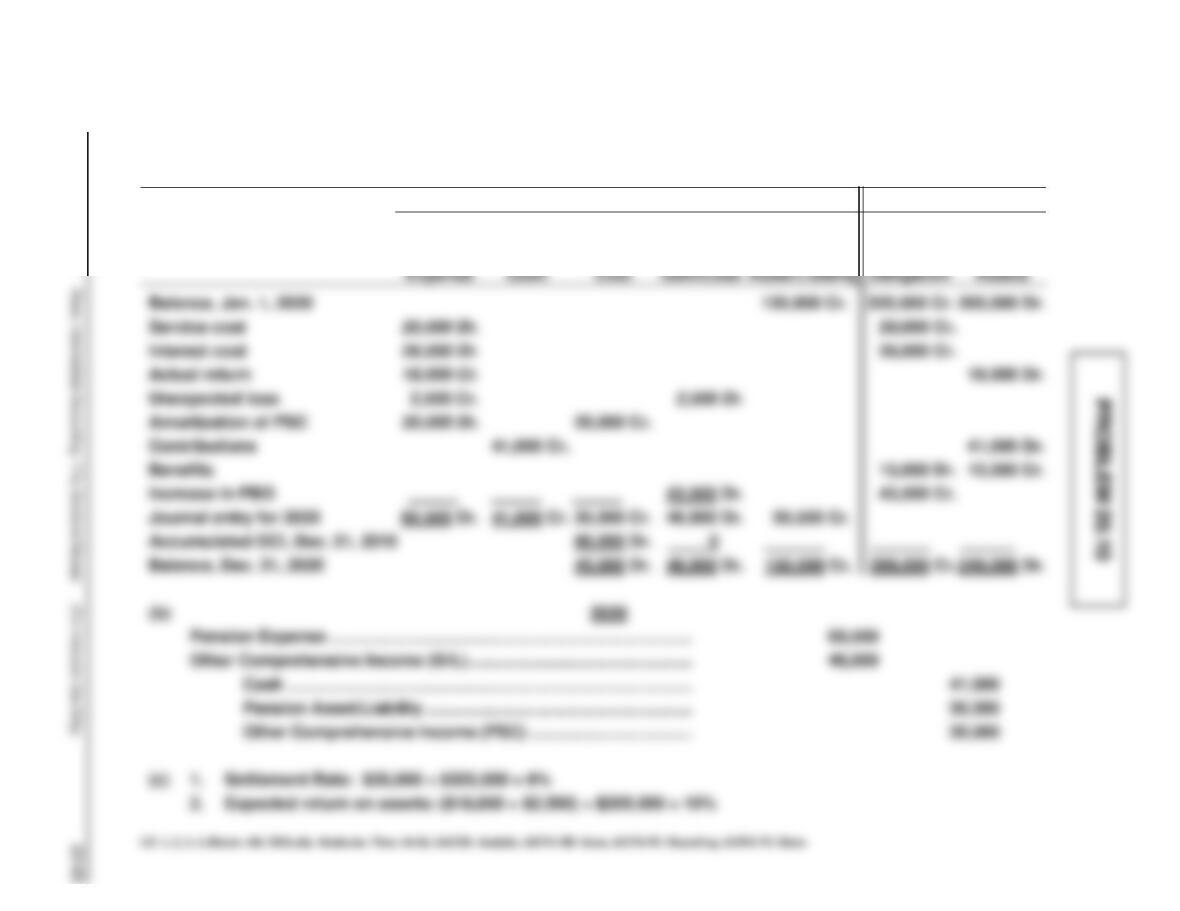
KRAMER COMPANY
(a) Completed Worksheet—2020
General Journal Entries Memo Record
Annual
Pension
OCI—Prior
Service
OCI—
Pension
Projected
Benefit
Plan
Copyright © 2019 WILEY Kieso, Intermediate Accounting, 17/e, Solutions Manual (For Instructor Use Only) 20-65
Service cost
Interest cost
Actual return
Unexpected loss
Amortization of PSC
Contributions
Increase in PBO
43,500 Dr.
Journal entry for 2020
46,000 Dr.
Accumulated OCI, Dec. 31, 2019
Balance, Dec. 31, 2020
46,000 Dr.
20-66 Copyright © 2019 WILEY Kieso, Intermediate Accounting, 17/e, Solutions Manual (For Instructor Use Only)
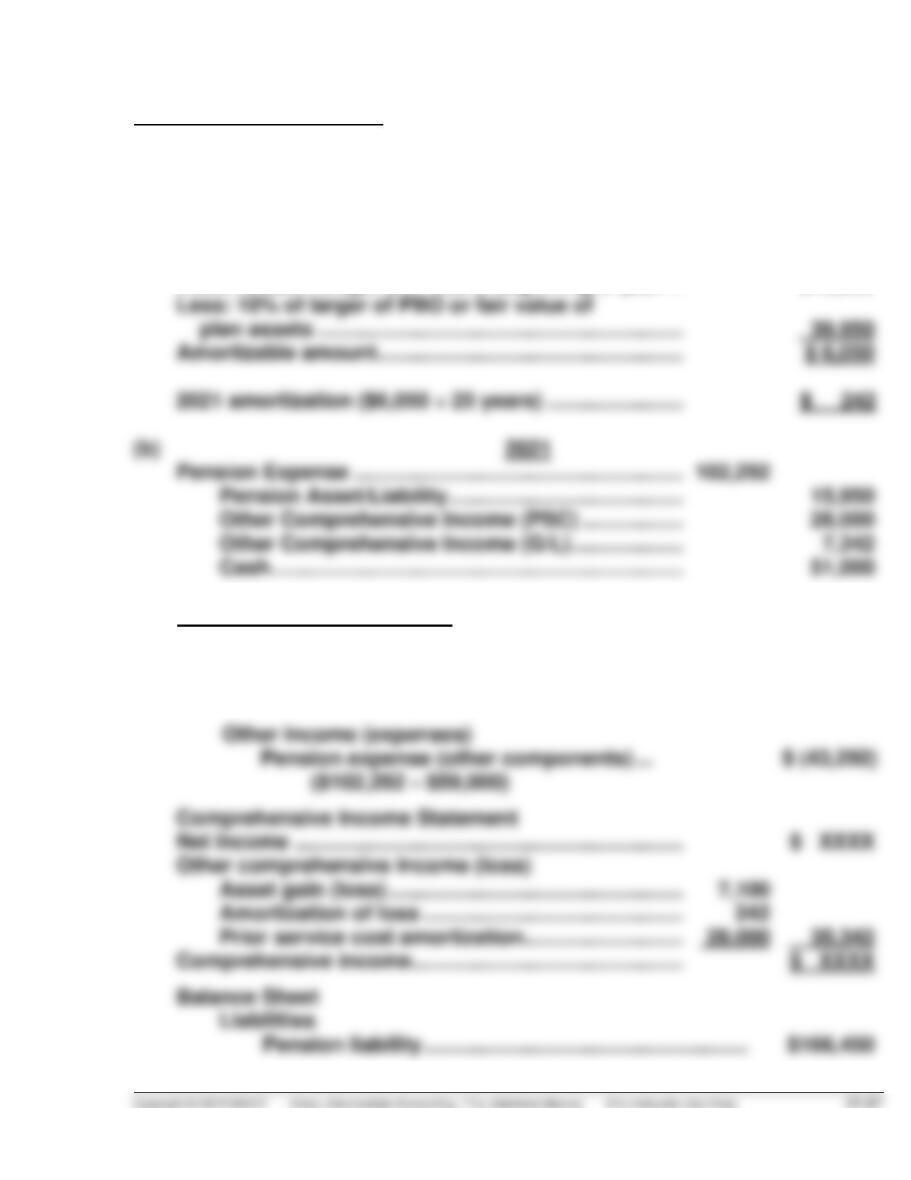
PROBLEM 20.11 (Continued)
Worksheet computations:
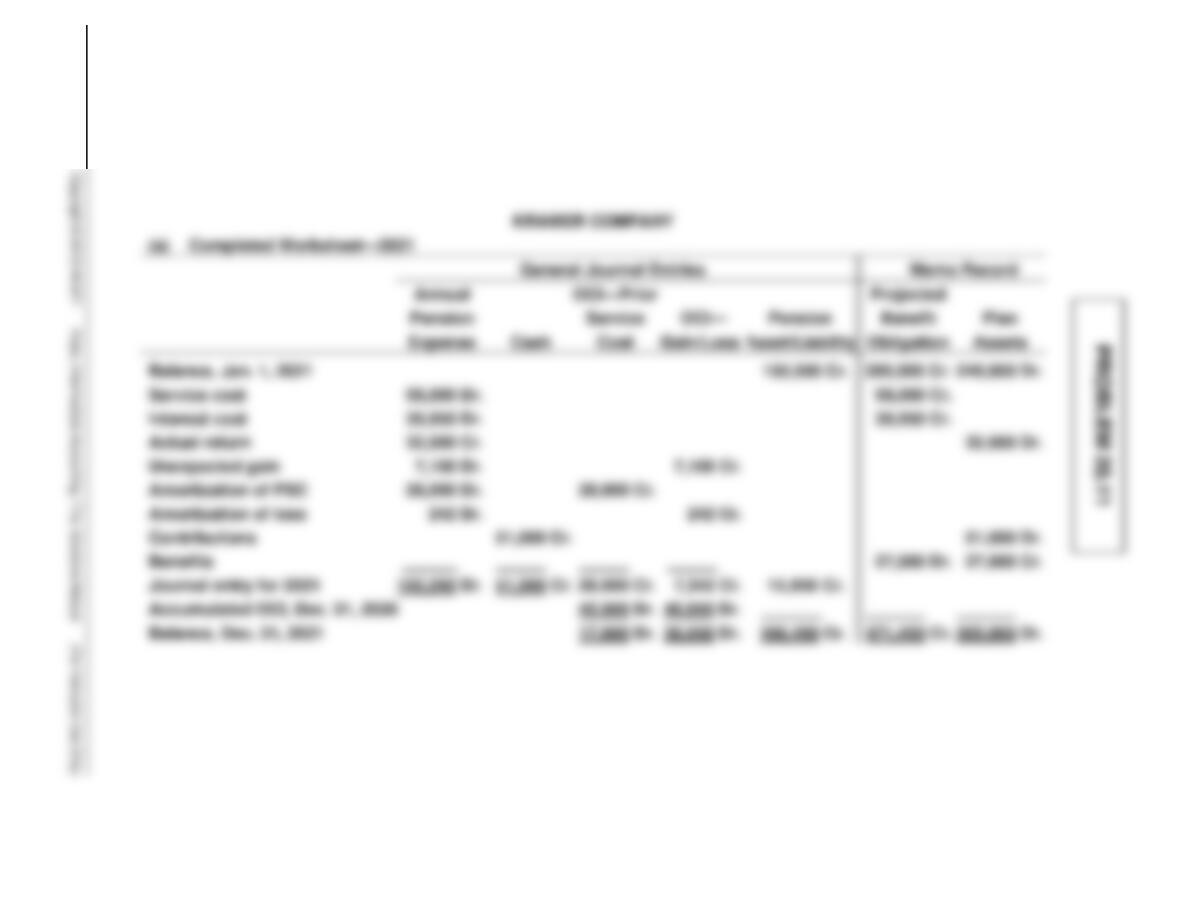
Interest cost: $39,950 = $399,500 X 10%
Unexpected gain: $7,100 = ($249,000 X 10%) – $32,000; actual return
exceeds expected return.
2021 Corridor Test:
Accumulated net (gain) or loss at beginning of year … $46,000
(c) Financial Statements—2021
Income Statement
Operating expenses
Pension expense (service costs) ………… $ 59,000
Stockholders’ equity
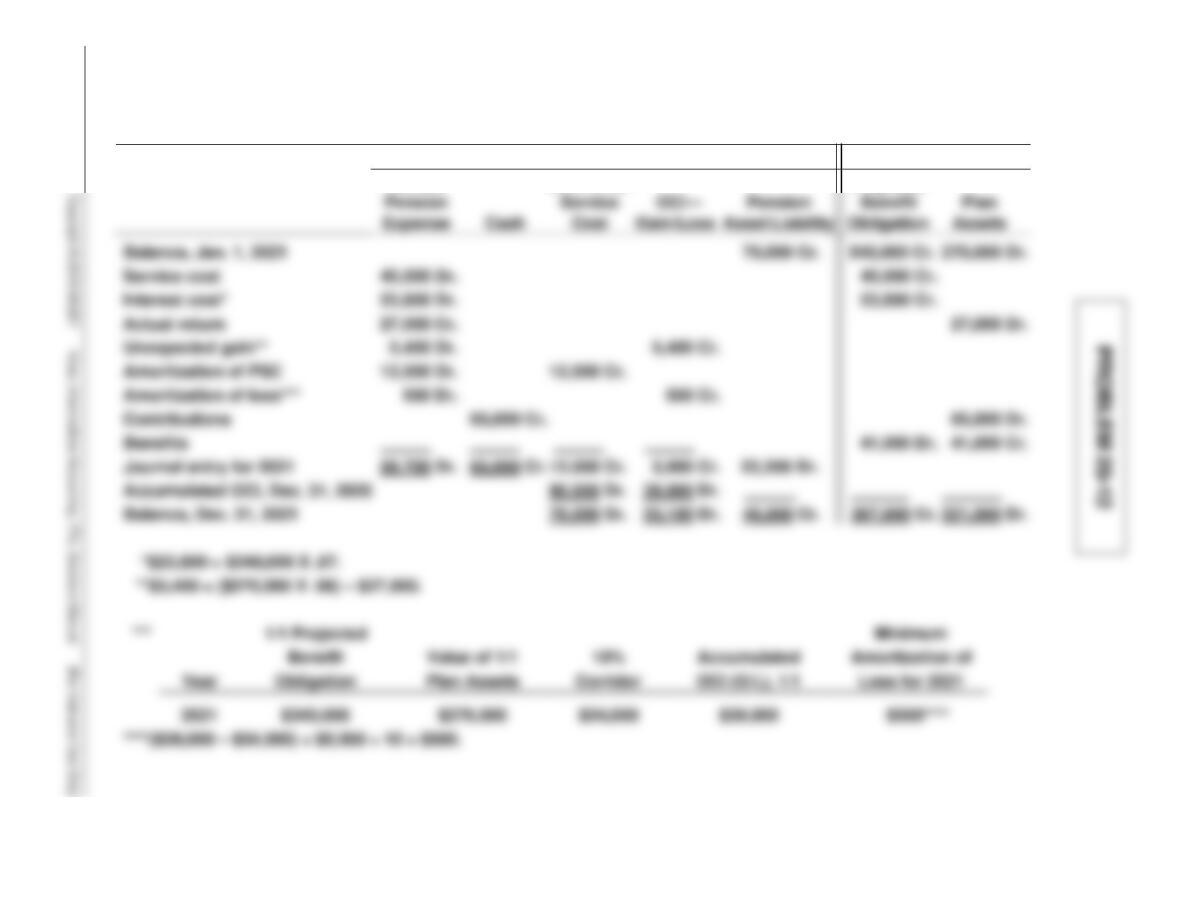
(a) LARSON CORP.
Pension Worksheet—2021
General Journal Entries Memo Record
Annual
OCI—Prior
Projected
20-68 Copyright © 2019 WILEY Kieso, Intermediate Accounting, 17/e, Solutions Manual (For Instructor Use Only)
Actual return
Unexpected gain**
Amortization of loss***
Contributions
65,000 Cr.
Accumulated OCI, Dec. 31, 2020
PROBLEM 20.12 (Continued)
2021
(b) Financial Statements—2021
Income Statement
Operating expenses
Pension expense (service costs) ………… $ 45,000
Balance Sheet
Liabilities
Pension liability ……………………………………………… $ 46,800
Stockholders’ equity
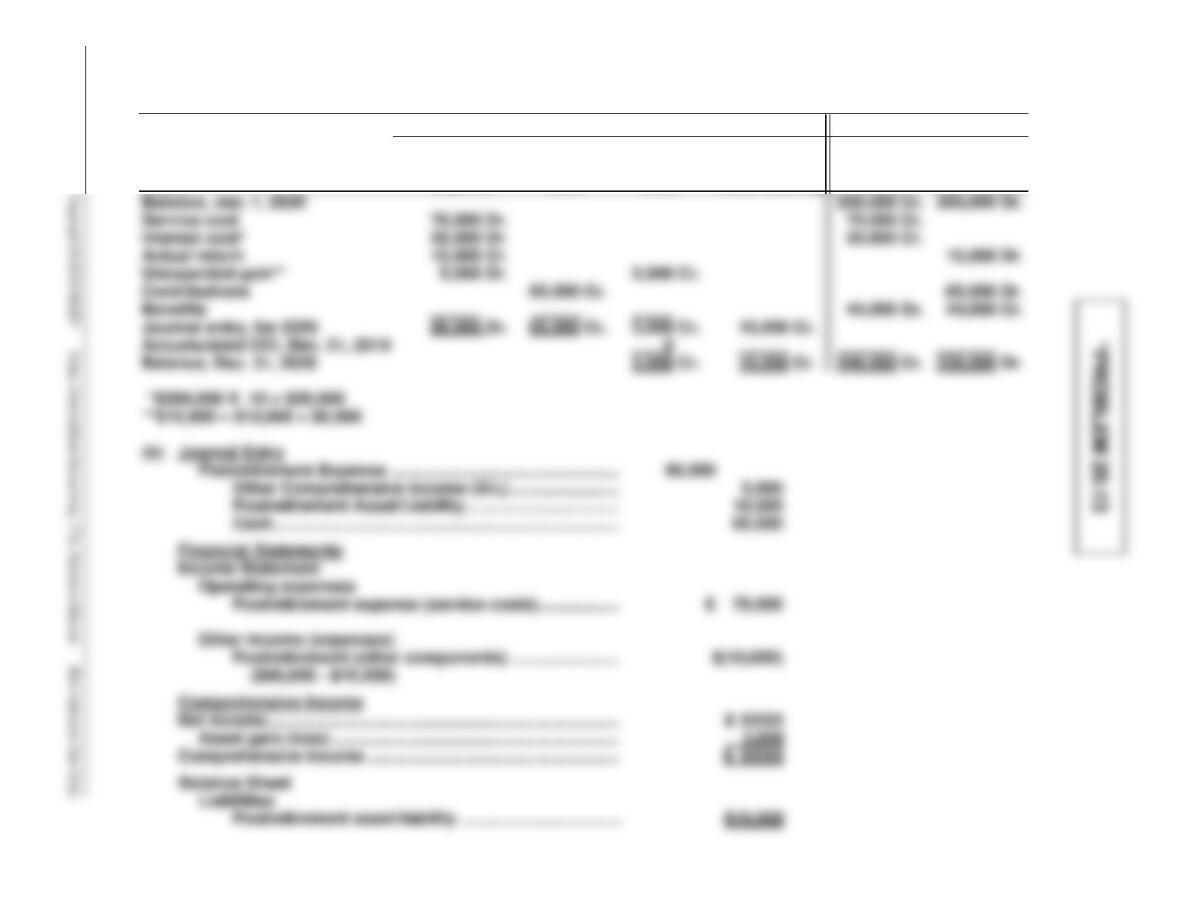
(a) HOLLENBECK FOODS INC.
Postretirement Benefit Worksheet—2020
General Journal Entries
Memo Record
Items
Annual
Postretirement
Expense
Cash
OCI—Gain/
Loss
Postretirement
Asset/Liability
APBO
Plan Assets
Stockholders’ Equity
20–70 Copyright © 2019 WILEY Kieso, Intermediate Accounting, 17/e, Solutions Manual (For Instructor Use Only)
Balance, Jan. 1, 2020
Service cost
Interest cost*
Actual return
Unexpected gain**
Contributions
Benefits
Journal entry, for 2020
Accumulated OCI, Dec. 31, 2019
Balance, Dec. 31, 2020
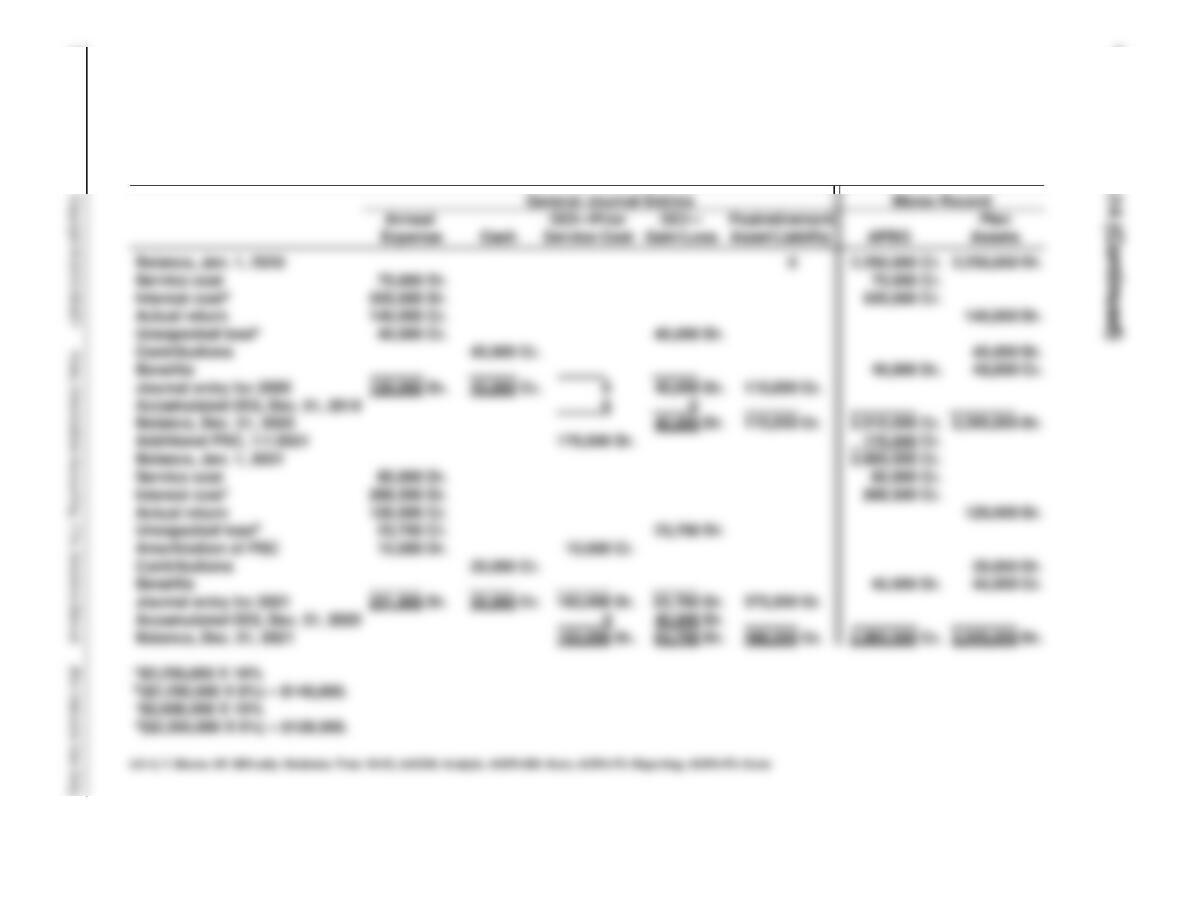
*PROBLEM 20.14
(a) See worksheet on next page.
(b) December 31, 2020
(c) See worksheet on next page. The entry is below.
December 31, 2021
(d) Financial Statements—2021
Income Statement
Operating expenses
Postretirement expense (service costs) . $ 85,000
Balance Sheet
Liabilities
Postretirement liability ……………………………………. $488,500
Stockholders’ equity
*PROBLEM 20-14 (Continued)
20–72 Copyright © 2019 WILEY Kieso, Intermediate Accounting, 17/e, Solutions Manual (For Instructor Use Only)
TIME AND PURPOSE OF CONCEPTS FOR ANALYSIS
CA 20.1 (Time 30–35 minutes)
CA 20.2 (Time 25–30 minutes)
Purpose—to provide the student with the opportunity to discuss the terminology employed in GAAP
related to pension accounting.
CA 20.3 (Time 20–25 minutes)
CA 20.4 (Time 30–35 minutes)
Purpose—to provide the student with the opportunity to study some of the implications of GAAP as it
CA 20.5 (Time 50–60 minutes)
CA 20.6 (Time 30–40 minutes)
Purpose—to provide the student with the opportunity to explain gains and losses, including the use of
CA 20.7 (Time 20–30 minutes)
SOLUTIONS TO CONCEPTS FOR ANALYSIS
CA 20.1
(a) A private pension plan is an arrangement whereby a company undertakes to provide its retired
employees with benefits that can be determined or estimated in advance from the provisions of a
document or from the company’s practices.
(c) (1) Relative to the pension fund the term “funded” refers to the relationship between pension
fund assets and the present value of expected future pension benefit payments; thus, the
pension fund may be fully funded or underfunded. Relative to the employer, the term
“funded” refers to the relationship of the contributions made by the employer to the pension
(d) (1) The theoretical justification for accrual recognition of pension costs is based on the matching
concept. Pension costs are incurred during the period over which an employee renders
services to the enterprise; these costs may be paid upon the employee’s retirement, over a
CA 20.1 (Continued)
(e) Terms and their definitions as they apply to accounting for pension plans follow:
(1) Service cost is the actuarial present value of benefits attributed by the pension benefit formula
(2) Prior service costs are the retroactive benefits granted in a plan amendment (or initiation).
(3) Vested benefits are benefits that are not contingent on the employee continuing in the service
of the employer. In some plans the payment of the benefits will begin only when the
employee reaches the normal retirement date; in other plans the payment of the benefits
CA 20.2
1. Pension asset/liability in the asset section is the excess of the fair value of pension plan assets
over the projected benefit obligation.
3. Accumulated OCI—PSC arises when an additional liability is recognized in the PBO due to prior
service cost. Prior service costs are the retroactive benefits granted in a pension plan
4. Pension expense is the amount recognized in an employer’s financial statements as the expense
for a pension plan for the period. Components of pension expense are service cost, interest cost,
CA 20.3
(a) (1) The theoretical justification for accrual recognition of pension costs is based on the matching
concept. Pension costs are incurred during the period over which an employee renders
(b) Terms and their definitions as they apply to accounting for pensions follow:
(1) Market-related asset value, when based on a calculated value, is a moving average of
pension plan asset values over a period of time. Considerable flexibility is permitted in
computing this amount. In many cases, companies will undoubtedly use the actuarial asset
(c) The following disclosures about a company’s pension plans should be made in financial
statements or their notes:
1. A description of the plan including employee groups covered, type of benefit formula,
funding policy, types of assets held, and the nature and effect of significant matters affecting
comparability of information for all periods presented.
2. The components of net periodic pension expense for the period.
CA 20.4
(a) Pension benefits are part of the compensation received by employees for their services. The
actual payment of these benefits is deferred until after retirement. The net periodic pension
expense measures this compensation and consists of the following five elements:
1. The service cost component is the present value of the benefits earned by the employees
during the current period.
(b) The major similarity between the accumulated benefit obligation and the projected benefit
obligation is that they both represent the present value of the benefit attributed by the pension
(c) (1) Pension gains and losses, sometimes called actuarial gains and losses, result from changes
in the value of the projected benefit obligation or the fair value of the plan assets. These
changes arise from the deviations between the estimated conditions and the actual
experience, and from changes in assumptions. The volatility of these gains and losses may