1. a. An assembly-type industry using mass production methods, such as TV assembly, would
use the process cost system because the products are somewhat standard and lose their
identities as individual items. In such industries, it is neither practical nor necessary to
identify output by jobs.
b. A job order cost system would be used by a building contractor to accumulate the costs
for each building because the costs can be identified with each job without great difficulty.
2. Because all goods produced in a process cost system are identical units, it is not necessary to
classify production costs into job orders.
3. In a process cost system, the direct labor and factory overhead applied are debited to the
work in process accounts of the individual production departments in which they occur. The
reason is that all products produced by the department are similar. Thus, there is no need to
charge these costs to individual jobs. For the process manufacturer, the direct materials and
the conversion costs are charged to the department and divided by the completed production
5. The cost per equivalent unit is used to allocate direct materials and conversion costs between
completed and partially completed units.
6. The transferred-in cost from Blending to Filling includes the materials costs, direct labor, and
applied factory overhead incurred to complete units in Blending.
CHAPTER 20
PROCESS COST SYSTEMS
DISCUSSION QUESTIONS

CHAPTER 20 Process Cost Systems
DISCUSSION QUESTIONS (Continued)
9. Yield is a measure of the materials usage efficiency of a process manufacturer. It is determined by
dividing the output volume of product by the input volume of product. For example, if 950 tons of
aluminum were rolled from 1,000 tons of ingot, the yield would be said to be 95%. Five percent
of the ingot was scrapped during the rolling process.
CHAPTER 20 Process Cost Systems
PE 20-1A
Steel manufacturing Process costing
Business consulting Job order costing
PE 20-1B
Dentist Job order costing
Gasoline refining Process costing
PE 20-2A
62,000 ounces started and completed (68,000 ounces completed – 6,000 ounces
beginning WIP), or (72,000 ounces started – 10,000 ounces ending WIP)
PE 20-2B
11,900 tons started and completed (12,700 tons completed – 800 tons beginning
WIP), or (13,900 tons started – 2,000 tons ending WIP)
PE 20-3A
Percent
Total Materials Equivalent
Whole Added In Units fo
r
Units Period Materials
Inventory in process, beginning of period………
…
6,000 0% 0
Started and completed during the period…………
…
62,000 100% 62,000
…
…
PRACTICE EXERCISES
*
CHAPTER 20 Process Cost Systems
PE 20-3B
Percent
Total Materials Equivalent
Whole Added In Units fo
r
Units Period Materials
Inventory in process, beginning of period………
…
800 0% 0
Started and completed during the period…………
…
11,900 100% 11,900
PE 20-4A
Percent
Total Conversion Equivalent
Whole Completed Units fo
r
Units in Period Conversion
Inventory in process, beginning of period………
…
6,000 40% 2,400
Started and completed during the period…………
…
62,000 100% 62,000
…
…
PE 20-4B
Percent
Total Conversion Equivalent
Whole Completed Units fo
r
Units in Period Conversion
Inventory in process, beginning of period………
…
800 80% 640
Started and completed during the period…………
…
11,900 100% 11,900
Transferred out of Rolling (completed)……………
…
12,700 12,540
…
…
*
*
*
…
…
…
CHAPTER 20 Process Cost Systems
PE 20-5A
$43,200
72,000
$16,725
66,900
PE 20-5B
PE 20-6A
Direct
Materials Conversion Total
Costs Costs Costs
Inventory in process, beginning balance…………
…
$ 4,500
Inventory in process, to complete…………………
…
0 + 2,400 × $0.25 600
Started and completed during the period…………
…
62,000 × $0.60 + 62,000 × $0.25 52,700
…
…
PE 20-6B
Direct
Materials Conversion Total
Costs Costs Costs
Inventory in process, beginning balance…………
…
$ 38,020
Inventory in process, to complete…………………
…
0 + 640 × $12 7,680
Started and completed during the period…………
…
11,900 × $45 + 11,900 × $12 678,300
Transferred out of Rolling (completed)……………
…
$724,000
…
2,000 × $45 + 600 × $12 97,200
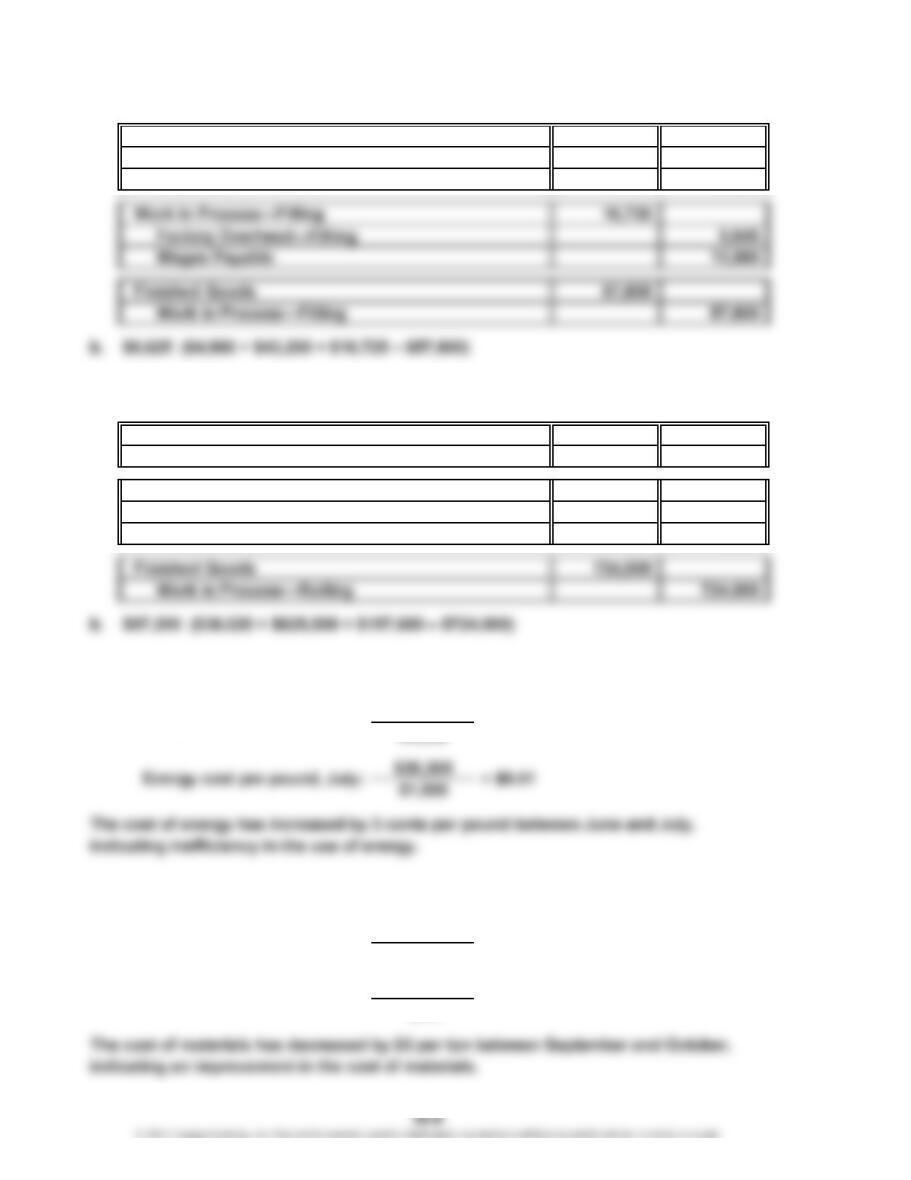
= $0.60 per ounce
= $0.25 per ounce
Equivalent units of direct materials:
Equivalent units of conversion:
CHAPTER 20 Process Cost Systems
PE 20-7A
a. Work in Process—Filling 43,200
Work in Process—Blending 30,300
Materials 12,900
PE 20-7B
a. Work in Process—Rolling 625,500
Work in Process—Casting 625,500
Work in Process—Rolling 157,680
Factory Overhead—Rolling 94,600
Wages Payable 63,080
PE 20-8A
$26,160
PE 20-8B
$129,600
1,200
$132,500
1,250
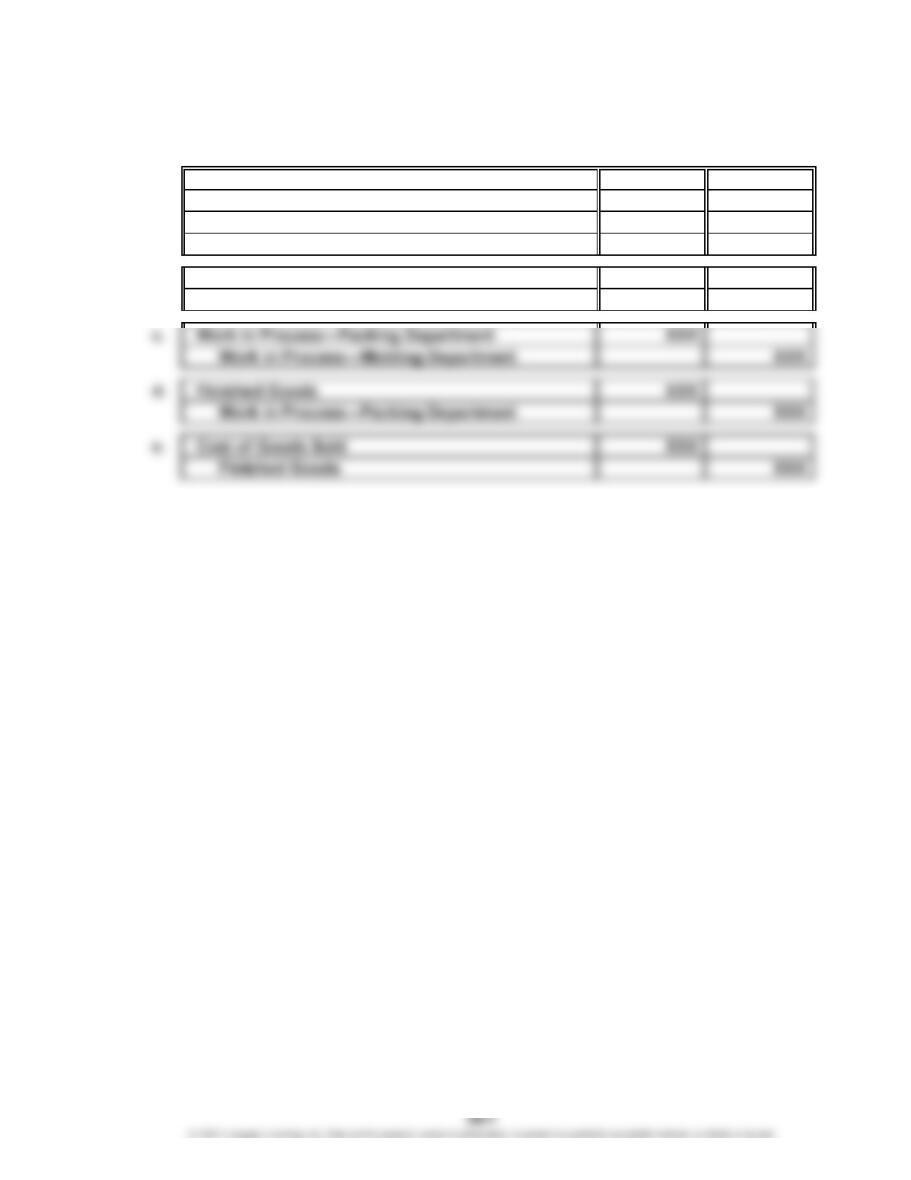
Energy cost per pound, June:
Material cost per ton, September:
Material cost per ton, October: = $106
= $108
= $0.48
CHAPTER 20 Process Cost Systems
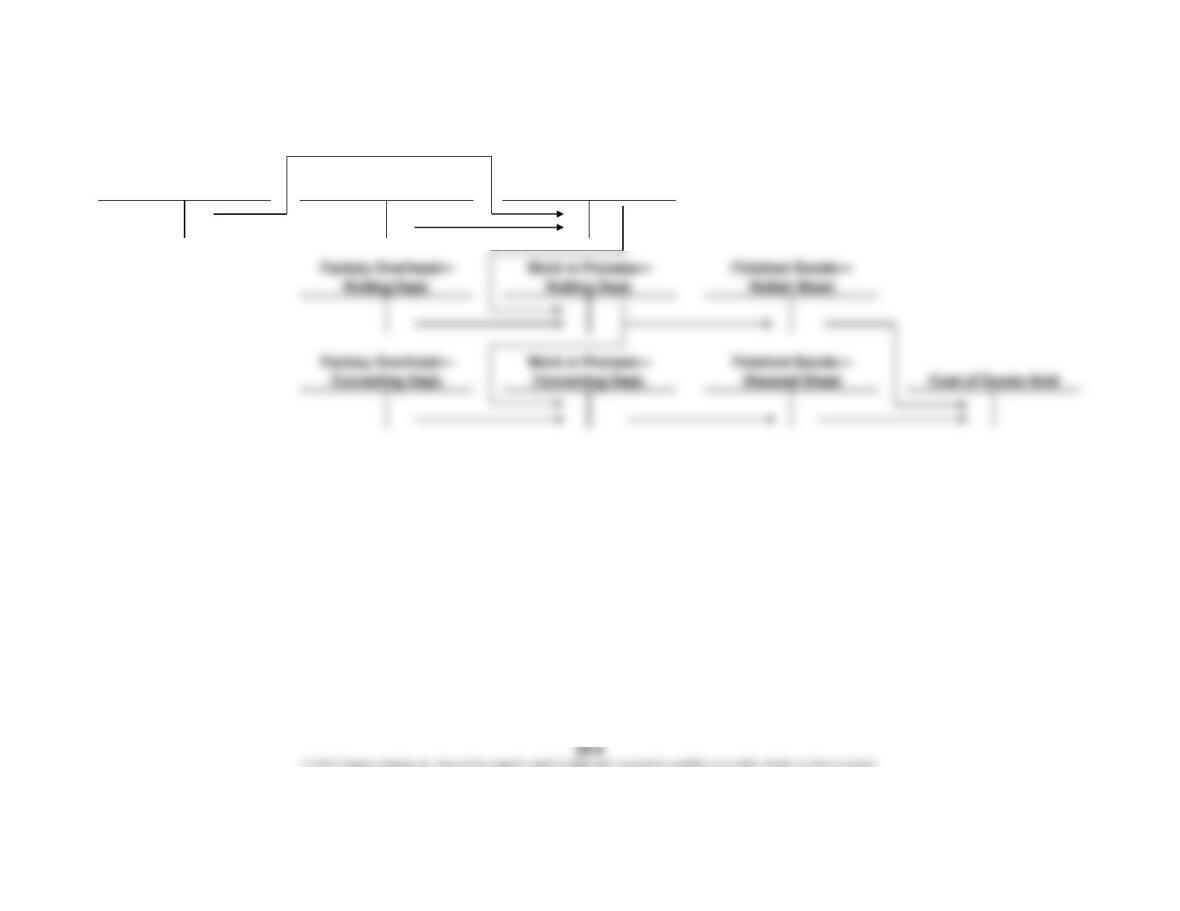
Ex. 20-1
a. Work in Process—Blending Department XXX
Materials—Cocoa XXX
Materials—Sugar XXX
Materials—Dehydrated Milk XXX
b. Work in Process—Molding Department XXX
Work in Process—Blending Department XXX
EXERCISES
CHAPTER 20 Process Cost Systems
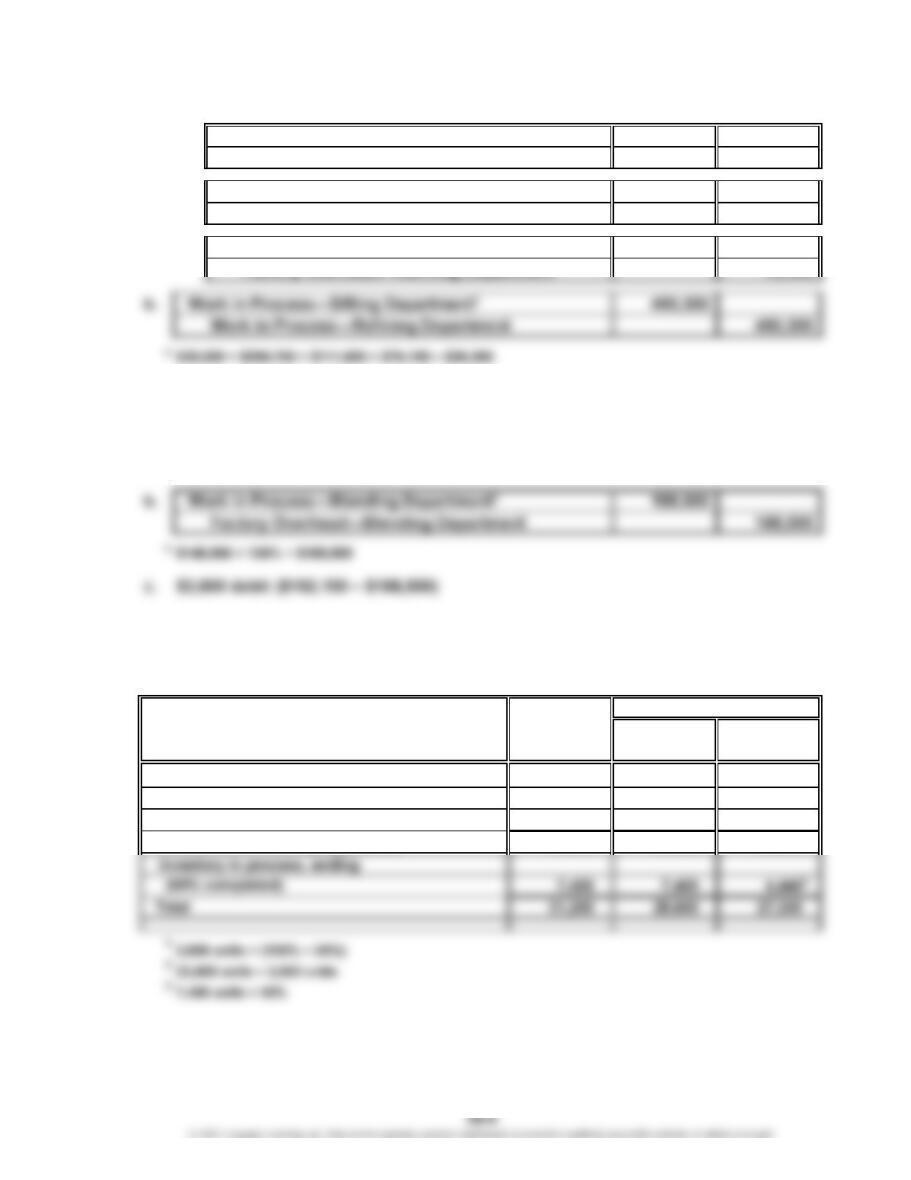
Ex. 20-2
Factory Overhead—
Smelting Dept. Smelting Dept.
Work in Process—
Materials
CHAPTER 20 Process Cost Systems
Ex. 20-3
a. 1. Work in Process—Refining Department 298,700
Materials 298,700
2. Work in Process—Refining Department 111,500
Wages Payable 111,500
3. Work in Process—Refining Department 76,100
Ex. 20-4
a. Factory overhead rate based on direct labor cost:
$2,340,000 ÷ $1,800,000 = 130%
d. Underapplied factory overhead
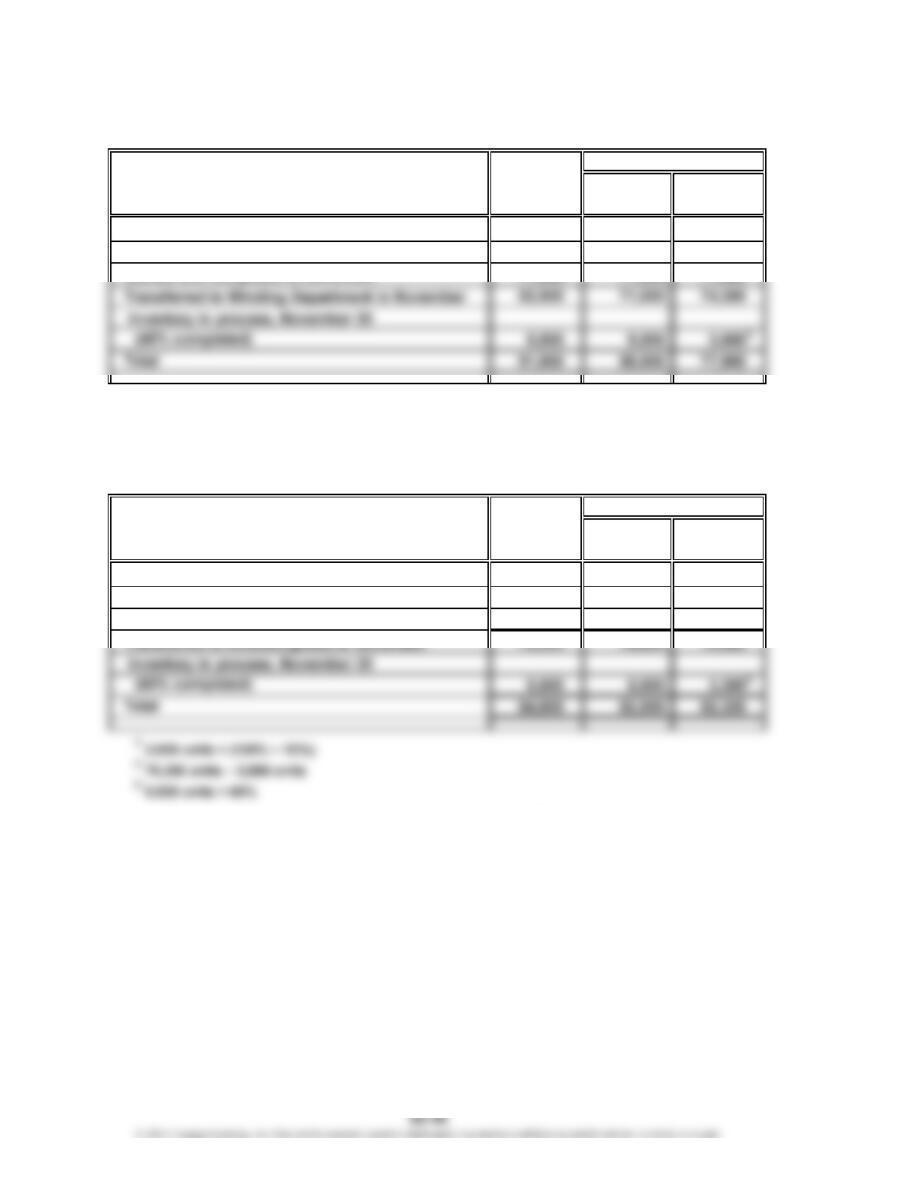
Ex. 20-5
Whole Direct
Units Materials Conversion
Inventory in process, beginning
(35% completed) 2,600 0 1,690
Started and completed 21,200 21,200 21,200
Transferred to Packing Department 23,800 21,200 22,890
Equivalent Units
1
2
CHAPTER 20 Process Cost Systems
Ex. 20-6
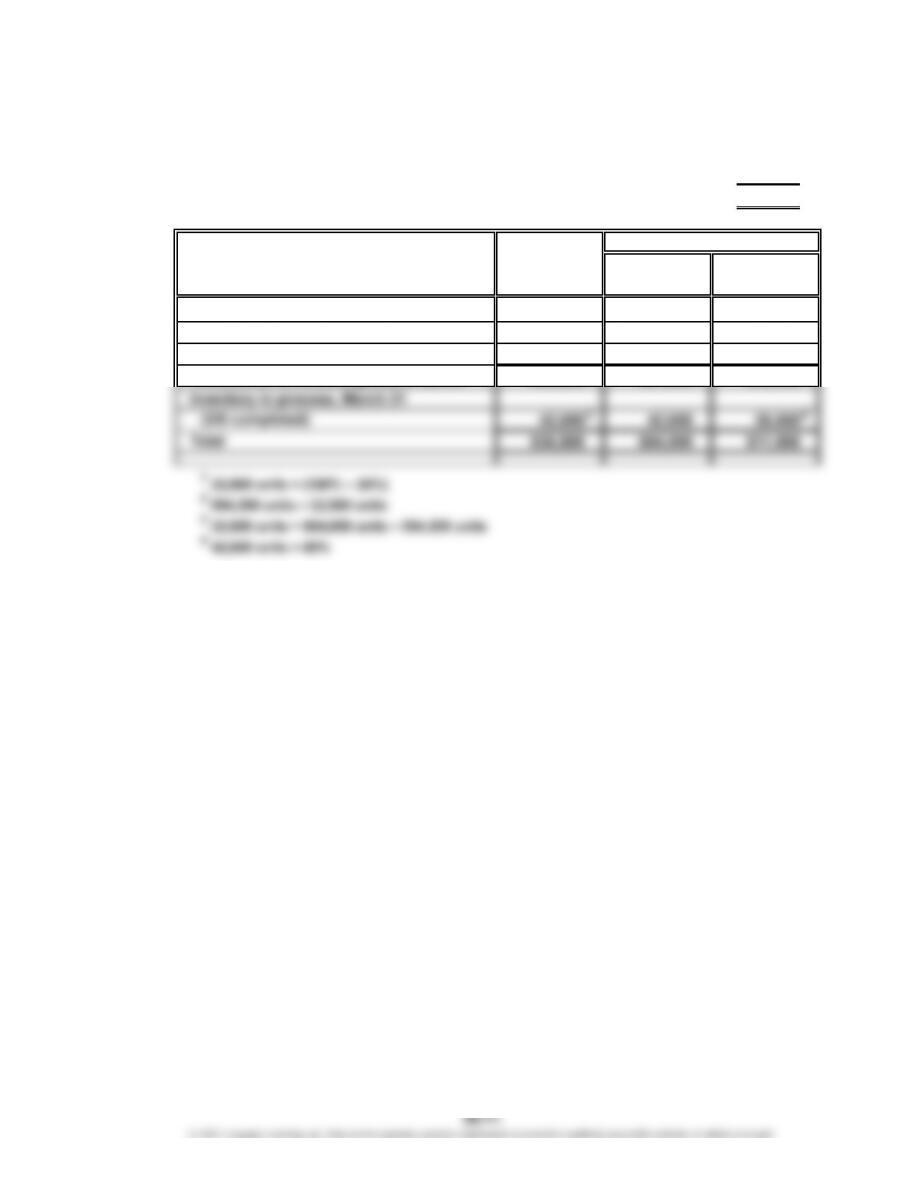
a. Drawing Department
Whole Direct
Units Materials Conversion
Inventory in process, November 1
(70% completed) 11,000 0 3,300
1
11,000 units × (100% – 70%)
2
82,000 units – 11,000 units
3
9,000 units × 40%
b. Winding Department
Whole Direct
Units Materials Conversion
Inventory in process, November 1
(10% completed) 2,800 0 2,520
Started and completed in November 76,500 76,500 76,500
1
2
3
Note: Of the 82,000 units transferred in from Drawing, 76,500 units were started and
completed in Winding and 5,500 units are in Winding ending work in process.
Equivalent Units
Equivalent Units
1
2
1
2
CHAPTER 20 Process Cost Systems
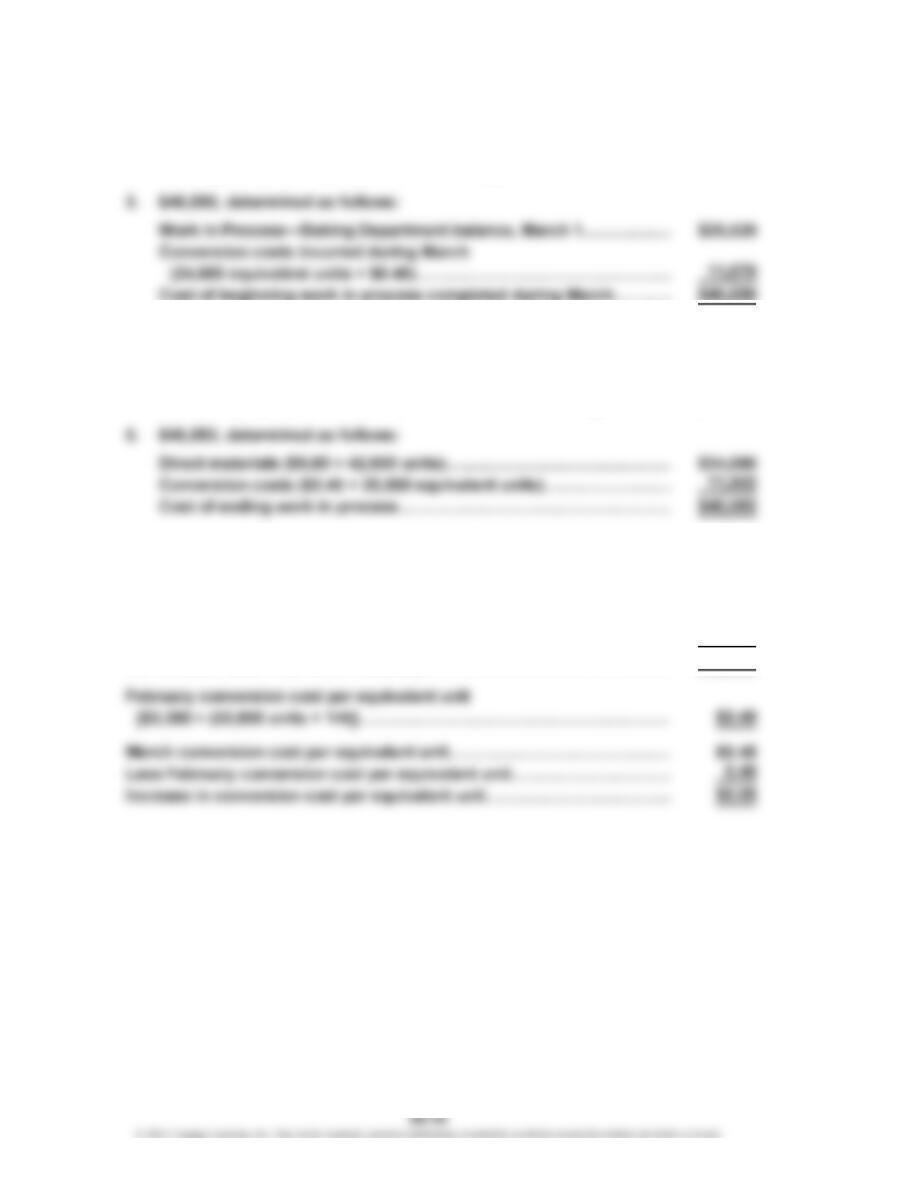
Ex. 20-7
a. Units in process, March 1……………………………………………………… 32,800
Units placed into production for March……………………………………
…
604,000
Less units finished during March……………………………………………
…
(594,200)
Units in process, March 31……………………………………………………
…
42,600
b.
Whole Direct
Units Materials Conversion
Inventory in process, March 1
(1/4 completed) 32,800 0 24,600
Started and completed in March 561,400 561,400 561,400
Equivalent Units
1
2
CHAPTER 20 Process Cost Systems
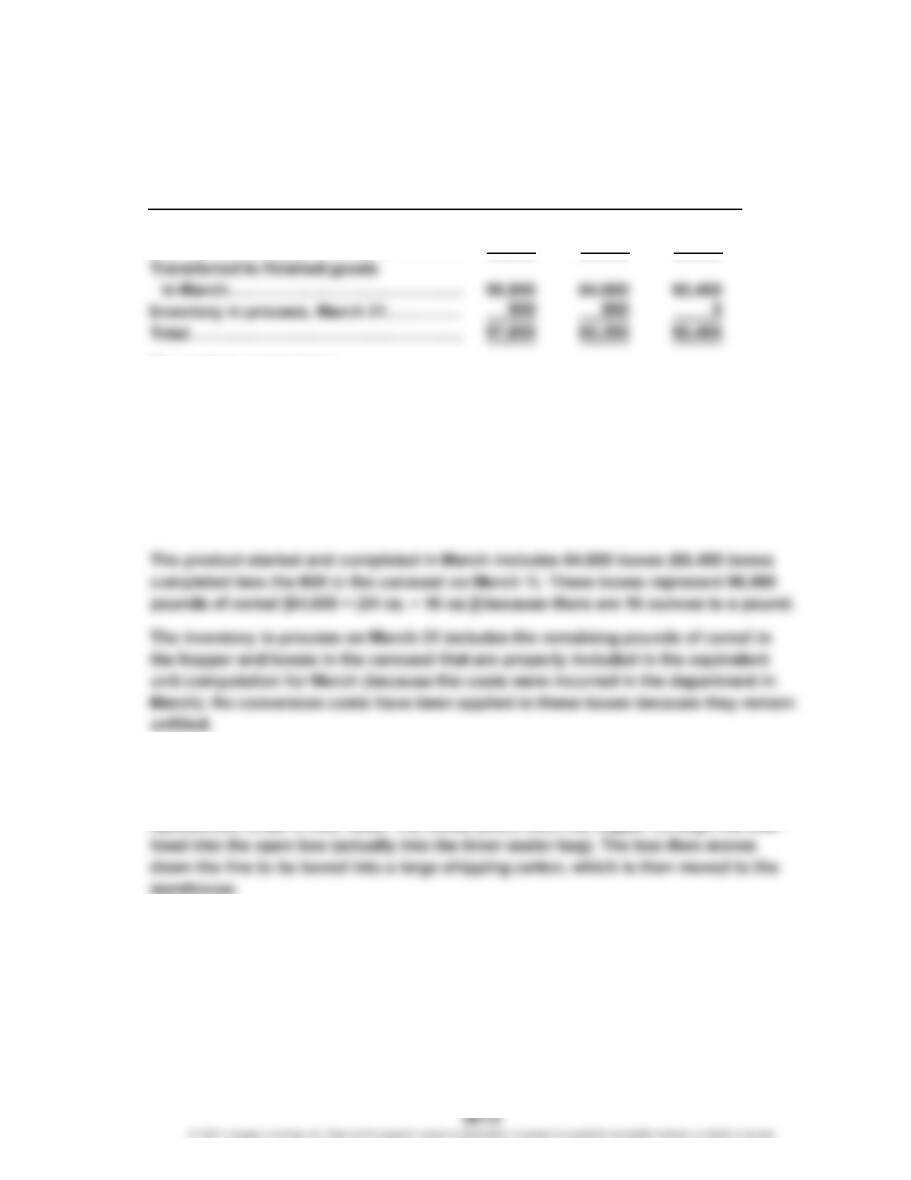
Ex. 20-8
a. 1. $0.80 ($483,200 ÷ 604,000 units)
2. $0.45 [($110,180 + $165,022) ÷ 611,560 units]
Cost of beginning work in process completed during March………
…
4. $701,750 [($0.80 + $0.45) × 561,400 units]
Note: The cost of the beginning work in process completed during March,
$40,590 (a. 3) plus the cost of the units started and completed during March,
$701,750 (a. 4) equals the cost of the units finished during March, $742,340.
b. The conversion costs in March increased by $0.05 per equivalent unit,
determined as follows:
Work in Process—Baking Department balance, March 1…………………
…
$29,520
Deduct direct materials cost incurred in February
($0.80 × 32,800 units, same cost per unit as March)………………………
…
26,240
Conversion costs incurred in February………………………………………
…
$ 3,280
…
…
CHAPTER 20 Process Cost Systems
Ex. 20-9
Equivalent units of production:
Conversion
Cereal Boxes Cost
(in pounds) (in boxes) (in boxes)
Inventory in process, March 1……………
…
0 0 800
Started and completed in March…………
…
96,900 64,600 64,600
Supporting explanation:
The whole unit inventory in process on March 1 includes both the cereal in the
hopper and the boxes in the carousel and thus includes no equivalent units for
the material during the current period. The reason is because the costs for the
cereal and boxes were introduced to the Packing Department in February. Because
conversion costs are incurred only when the cereal is filled into boxes, all 800
boxes of the March 1 inventory in process will have conversion costs incurred
in March.
Note to Instructors: An actual cereal-filling line begins with the empty box
carousel. The box carousel holds flattened boxes that are fed into a high-speed
line that opens the box up and places it on a conveyor. The conveyor brings the
CHAPTER 20 Process Cost Systems
Ex. 20-10
a. Direct labor…………………………………………………………………………
…
$104,130
Factory overhead applied………………………………………………………
…
51,630
Total conversion cost……………………………………………………………
…
$155,760
b. Equivalent units of production for conversion costs:
Conversion cost per equivalent unit:
$155,760
129,800
c. Equivalent units of production for direct materials costs:
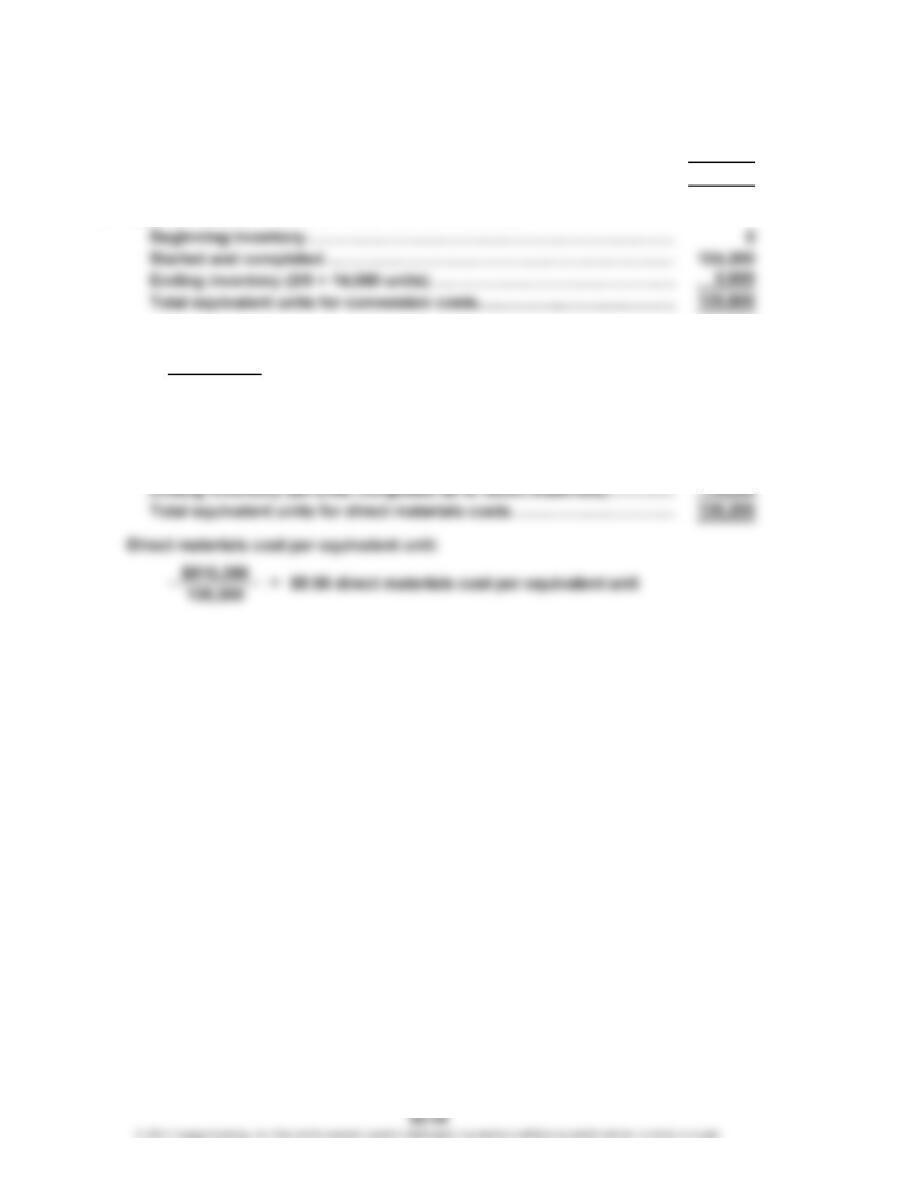
Beginning inventory…………………………………………………………… 0
Started and completed………………………………………………………
…
124,200
= $1.20 conversion cost per equivalent unit
…
CHAPTER 20 Process Cost Systems
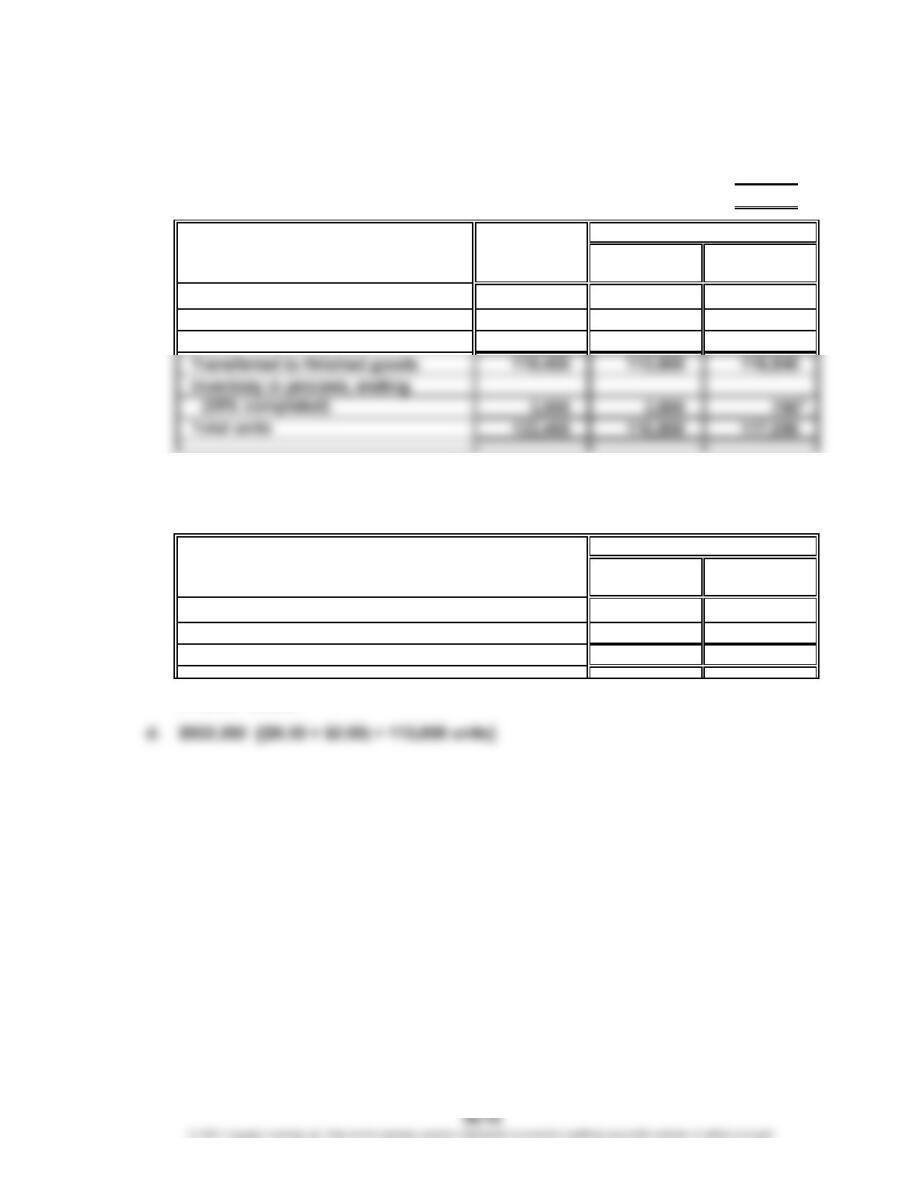
Ex. 20-11
a. Units in process at beginning of period…………………………………… 6,400
Units placed in production during period…………………………………
…
116,000
Less units finished during period…………………………………………
…
(119,400)
Units in process at end of period…………………………………………… 3,000
b.
Whole Direct
Units Materials Conversion
Inventory in process, beginning
(40% completed) 6,400 0 3,840
Started and completed 113,000 113,000 113,000
1
6,400 units × (100% – 40%)
2
119,400 units – 6,400 units
3
3,000 units × 25%
c.
Direct
Materials Conversion
Total costs for period in Assembly Department $725,000 $235,180
Total equivalent units (from above) 116,000 117,590
Cost per equivalent unit $ 6.25 $ 2.00
*
$145,160 + $90,020
Equivalent Units
Costs
1
2
÷÷
*
CHAPTER 20 Process Cost Systems
Ex. 20-12
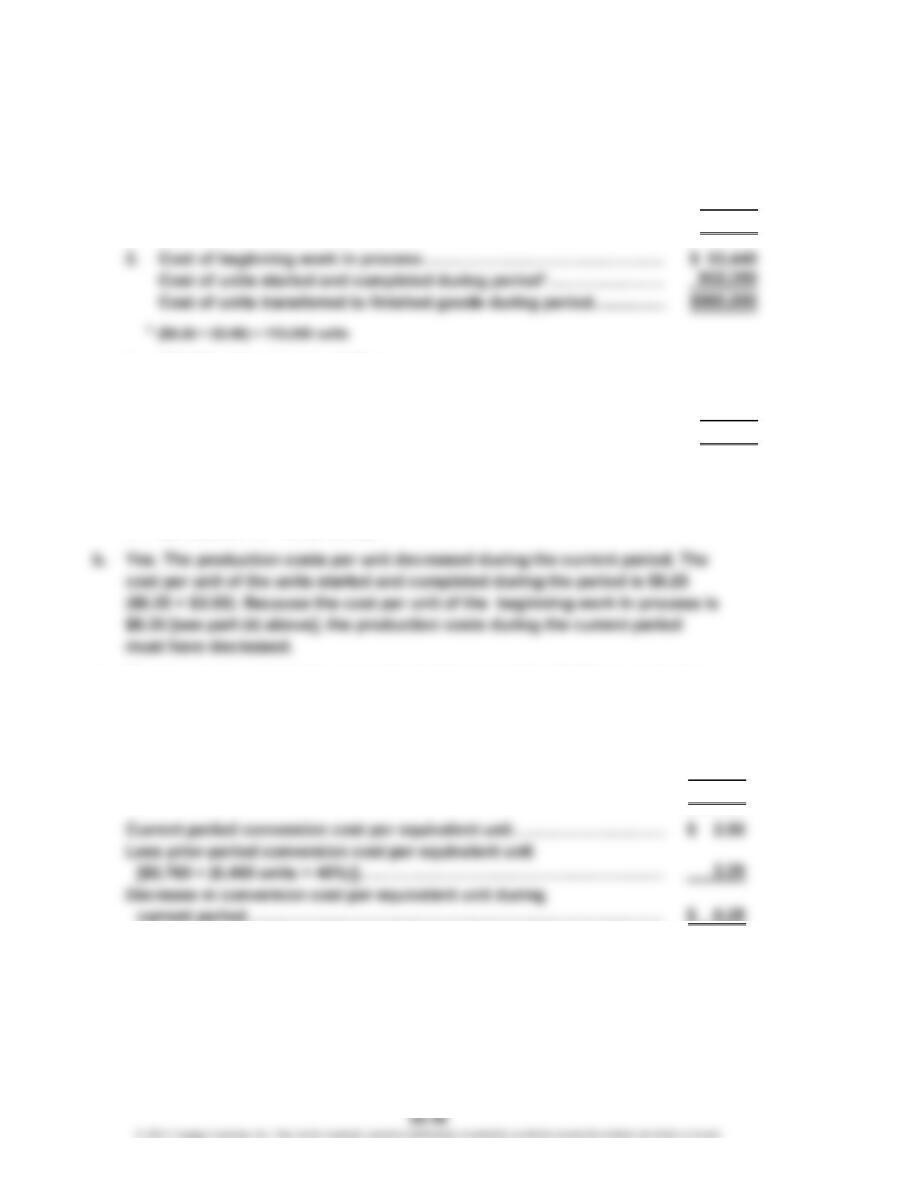
a. 1. $53,440; determined as follows:
Beginning work in process balance……………………………………
…
$45,760
Conversion costs incurred during period
(3,840 equivalent units × $2.00)………………………………………… 7,680
Cost of beginning work in process completed during period………
…
$53,440
3. $20,250; determined as follows:
Direct materials ($6.25 × 3,000 units)……………………………………
…
$18,750
Conversion costs ($2.00 × 750 equivalent units)……………………… 1,500
Cost of ending work in process inventory……………………………
…
$20,250
Note: The cost of the ending work in process is also the ending balance of
Work in Process—Assembly Department.
4. $8.35 ($53,440 ÷ 6,400 units)
c. The conversion cost in the current period decreased by $0.10 per equivalent
unit, determined as follows:
Beginning work in process……………………………………………………
…
$45,760
Deduct direct materials cost incurred in prior period
($6.25 × 6,400 units, cost per unit unchanged)……………………………
…
40,000
Conversion costs incurred in prior period…………………………………
…
$ 5,760
…
…
CHAPTER 20 Process Cost Systems
Ex. 20-13
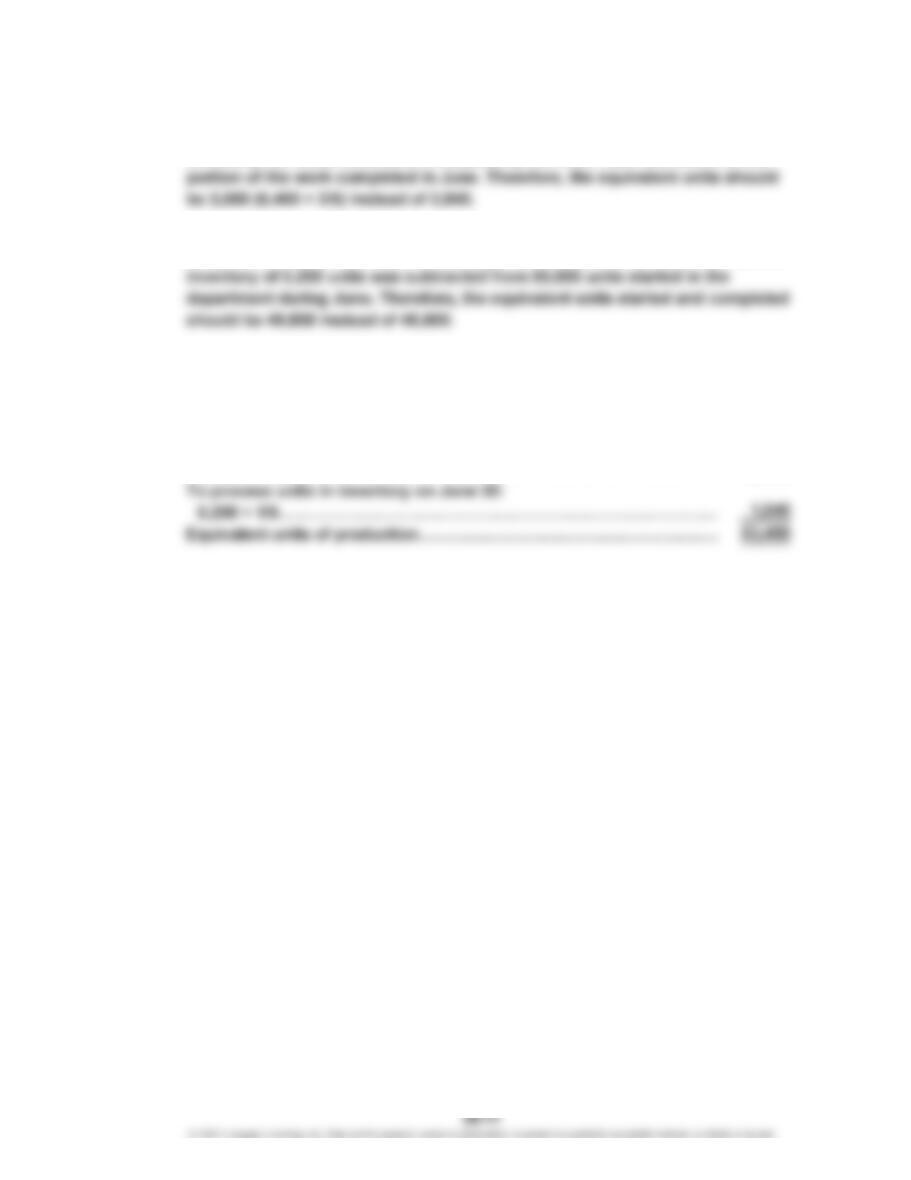
1. In computing the equivalent units for conversion costs applicable to the June 1
inventory, the 6,400 units were multiplied by 3/5 rather than 2/5, which is the
2. In computing the equivalent units for conversion costs for units started and
completed in June, the June 1 inventory of 6,400 units rather than the June 30
3. The correct equivalent units for conversion costs should be 53,400, determined
as follows:
To process units in inventory on June 1:
6,400 × 2/5………………………………………………………………………
…
2,560
To process units started and completed in June:
55,000 – 5,200…………………………………………………………………
…
49,800
…
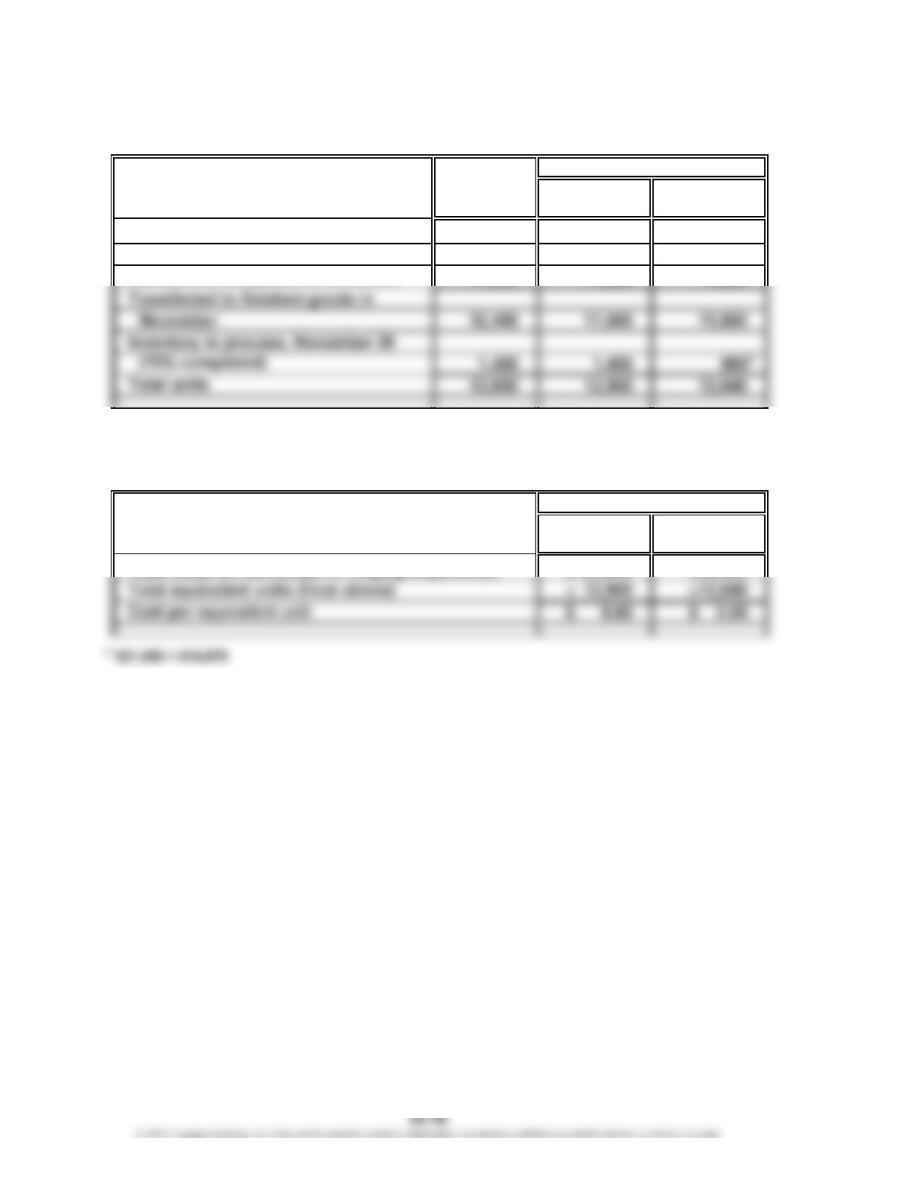
CHAPTER 20 Process Cost Systems
Ex. 20-14
a. 12,400 units (900 + 12,900 – 1,400)
b.
Whole Direct
Units Materials Conversion
Inventory in process, November 1
(60% completed) 900 0 360
1
2
12,400 units – 900 units
3
1,400 units × 70%
Direct
Materials Conversion
c. $144,900 [11,500 units × ($9.60 + $3.00)]
Equivalent Units
Costs
900 units × (100% – 60%)
1
2
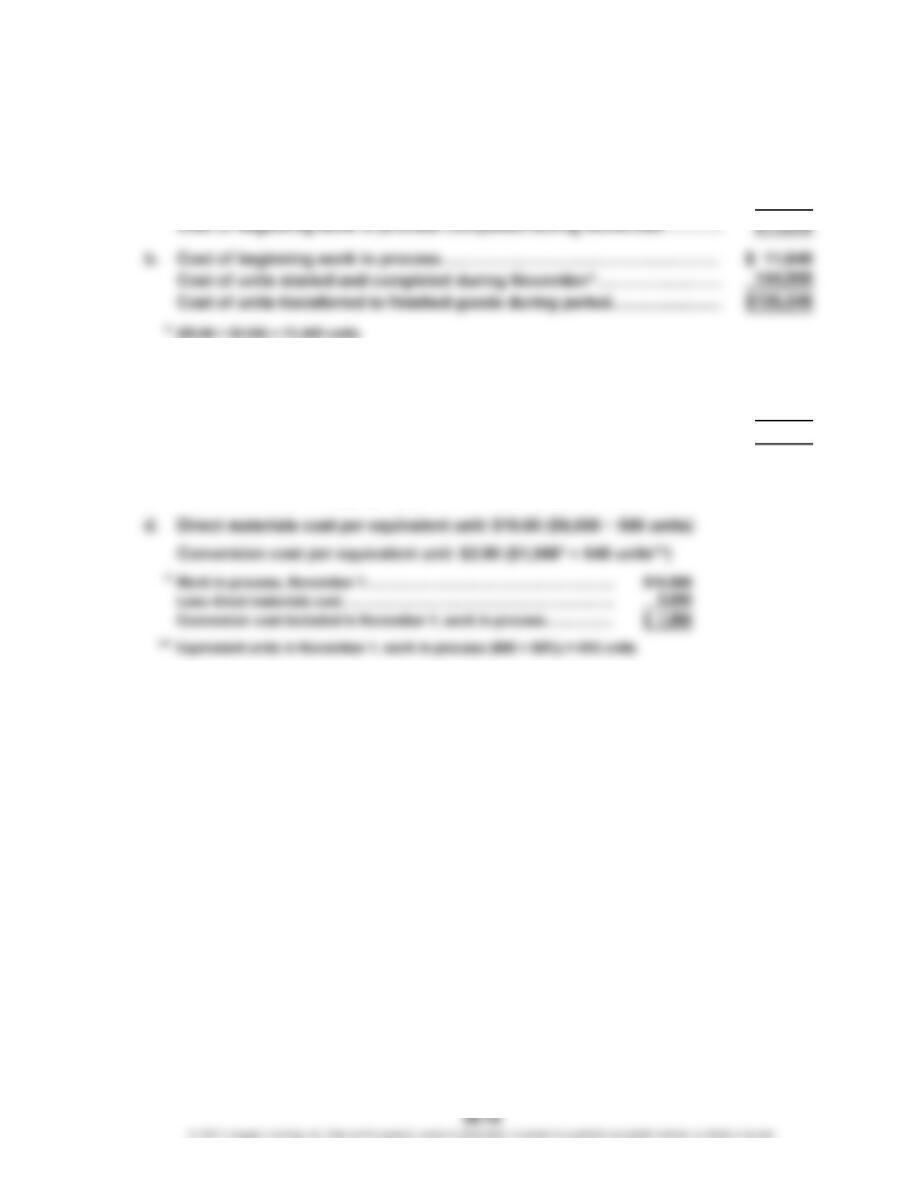
CHAPTER 20 Process Cost Systems
Ex. 20-15
a. $11,646; determined as follows:
Beginning work in process balance…………………………………………… $10,566
Conversion costs incurred during November
(360 equivalent units × $3.00)…………………………………………………
…
1,080
*($9.60 + $3.00) × 11,500 units
c. $16,380; determined as follows:
Direct materials ($9.60 × 1,400 units)…………………………………………
…
$13,440
Conversion costs ($3.00 × 980 equivalent units)……………………………
…
2,940
Cost of ending work in process inventory……………………………………
…
$16,380
Note: The cost of the ending work in process is also the ending balance of the
Work in Process—Forging Department as of November 30.
e. Direct materials: Decrease of $0.40 ($9.60 – $10.00)
Conversion: Increase of $0.10 ($3.00 – $2.90)
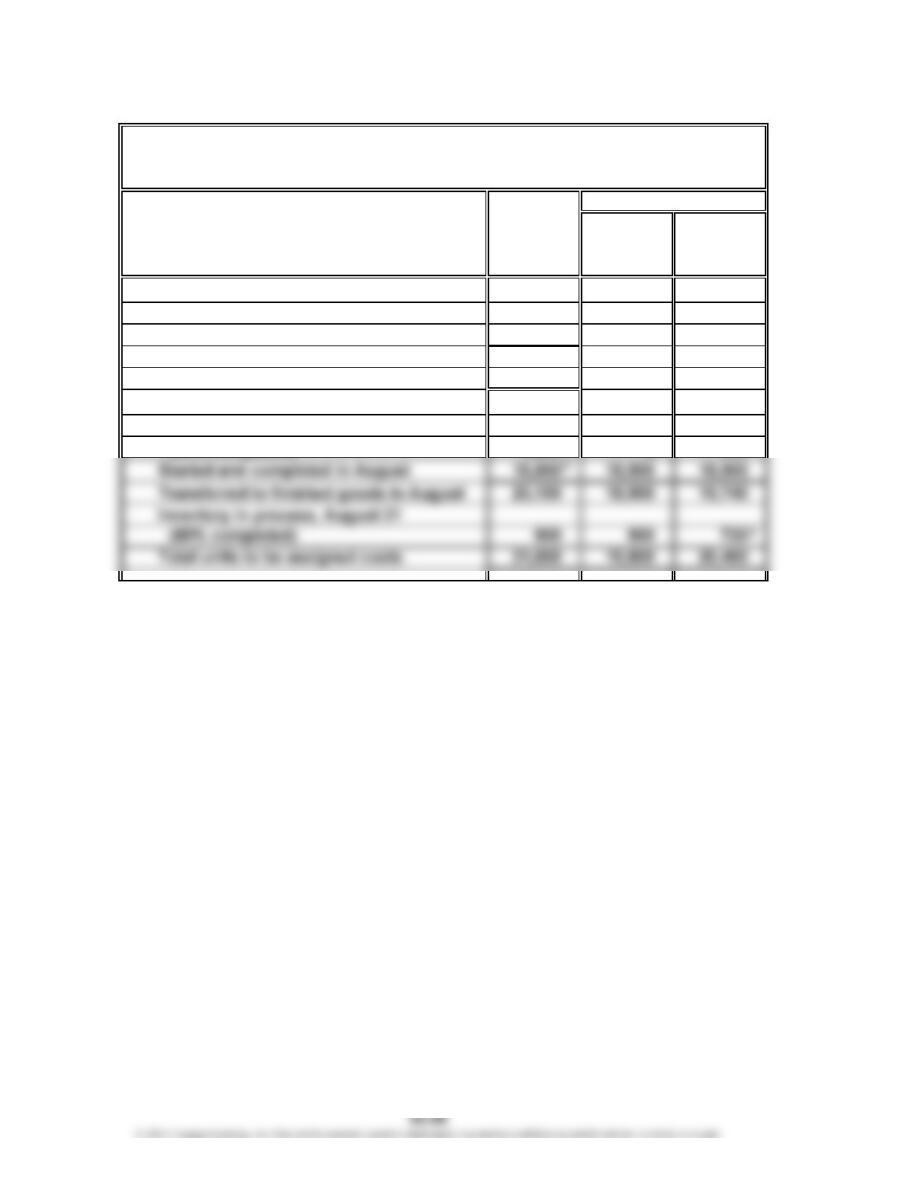
CHAPTER 20 Process Cost Systems
Ex. 20-16
a.
Direct
Whole Materials Conversion
UNITS Units (1) (1)
Units charged to production:
Inventory in process, August 1 1,200
Received from materials storeroom 19,800
Total units accounted for by the
Roasting Department 21,000
Units to be assigned costs:
Inventory in process, August 1
1
1,200 units × (100% – 30%)
2
19,800 units – 900 units
3
900 units × 80%
Daybreak Brew Coffee Company
Cost of Production Report—Roasting Department
For the Month Ended August 31
Equivalent Units
1