Chapter 20
Master Budgets and Performance
Planning
QUESTIONS
1. A written budget helps managers plan and control a business by 1) communicating
plans to employees, 2) coordinating the activities of different parts of the
organization, and 3) providing a basis for deciding whether actual performance is
acceptable (through benchmarking). Budgeting also helps 4) focus on the future,
and 5) motivate employees.
2. Management controls operations by benchmarking against some norm. A
comparison of actual to budgeted performance is useful as budgets consider
important company, industry, and economic factors.
3. Continuous budgeting provides managers a full set of updated budgets each time a
budget period goes by. In a changing environment, continuous budgeting should
provide superior information for effective planning.
4. Three common short-term horizons for planning and budgeting purposes are:
monthly, quarterly, and annually. A semiannual planning horizon is also popular.
5. Budgeting can be a strong positive motivating force if employees are involved or
consulted in the process. This participation promotes their commitment to reaching
the specified goals—such a process is called participatory budgeting. Alternatively,
if employees are not consulted, budgets may produce negative attitudes and
dysfunctional behavior in an organization.
10. A cash budget shows the planned cash receipts and cash payments for each budget
period, including any loans to be received or repaid. Since the operating budgets
and the capital expenditures budget reflect transactions and events that produce
cash inflows and cash outflows, the cash budget can be completed only after these
companion budgets are completed.
11. A production budget shows the number of units to be produced each budget period.
Based on the number of units to be produced (taken from the production budget),
the manufacturing budget shows the budgeted costs for direct materials, direct
labor, and factory overhead.
14.
Budget Participant
Description
Sales manager ………………..
Information on estimated sales (units and dollars).
Production manager ………..
Number of units to produce based on estimated sales.
Manufacturing manager …..
Amount of direct materials, direct labor, and
manufacturing overhead to produce the estimated level
of production.
Sales manager ………………..
Cost of selling the estimated sales level.
General & admini-
strative managers ……………
Cost to support operations; most often are fixed costs.
Capital expenditures
committee ……………………….
Prepare plans to have available plant assets necessary
to carry on business activities.
Cash managers ……………….
Working with the above budgets, this team will prepare
cash flow analysis.
Accounting & finance staff ..
Financial budgets prepared from above information.
QUICK STUDIES
Quick Study 20-1 (10 minutes)
1. Yes 2. No 3. Yes 4. No 5. Yes
Quick Study 20-2 (10 minutes)
1. Yes 2. No 3. Yes 4. No 5. No 6. Yes
Quick Study 20-3 (10 minutes)
ZAHN Co.
Production Budget
For Month Ended May 31
Next month’s budgeted sales (units) ……………………………………………
240
Ratio of inventory to future sales …………………………………………………
x 25%
Budgeted ending inventory (units) ………………………………………………
60
Add budgeted sales for the month (units) ……………………………………
Required units of available production ………………………………………..
280
Deduct beginning inventory (units) ……………………………………………..
Quick Study 20-4 (10 minutes)
Grace
Sales Budget
For Month Ended June 30
Prior month’s unit sales ………………………………………………………………
1,000
Plus 4% growth in unit sales ……………………………………………………….
40
Projected June sales (units) ……………………………………………………….
1,040
Selling price per unit …………………………………………………………………..
x $250
Projected dollar sales for June ……………………………………………………
$260,000
Quick Study 20-5 (10 minutes)
Zilly Co.
Selling Expense Budget
For Month Ended June 30
Budgeted sales …………………………..………………………………………………
$400,000
Sales commission percent ………………………………………………………….
Sales commissions …………………………………………………………………….
6,000
Projected selling expense for June ……………………………………………..
$ 38,000
Quick Study 20-6 (10 minutes)
Liza’s
Budgeted Cash Receipts
For Month Ended June 30
Budgeted sales …………………………..………………………………………………
$52,000
Less ending accounts receivable ($52,000 x 0.40) ………………………..
20,800
Cash sales ($52,000 x 0.60) ………………………………………………………….
31,200
16,000
Quick Study 20-7 (10 minutes)
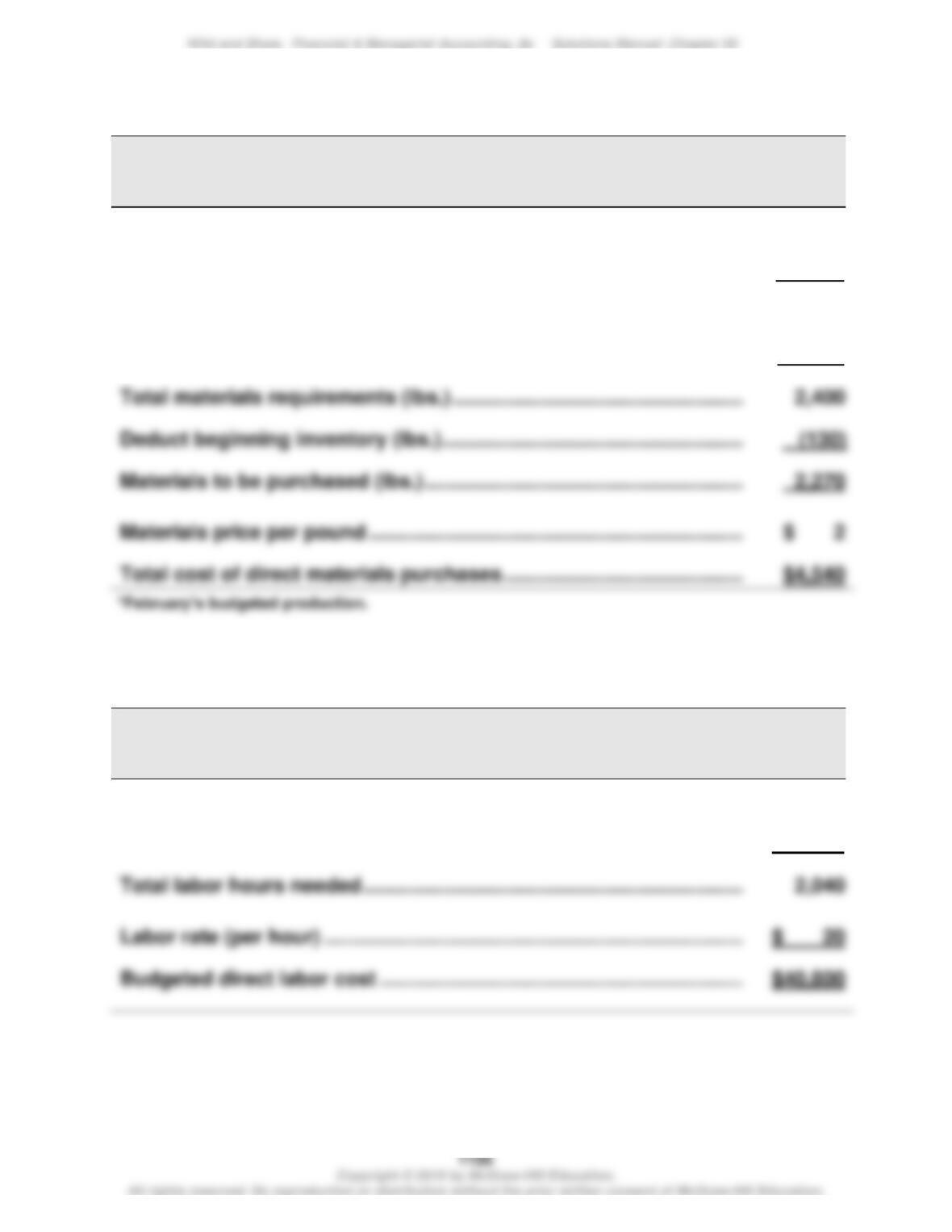
ZORTEK CORP.
Direct Materials Budget
For Month Ended January 31
Budget production (units) ……………………………………………………………
400
Materials requirements per unit …………………………………………………..
x 5 lbs.
Materials needed for production (lbs.) …………………………………………
2,000
Add budgeted ending inventory (200* units x 5 lbs. per unit x 40%) ….
400
Total materials requirements (lbs.) ………………………………………………
2,400
Deduct beginning inventory (lbs.) ………………………………………………..
Materials to be purchased (lbs.) …………………………………………………..
Materials price per pound ……………………………………………………………
Quick Study 20-8 (5 minutes)
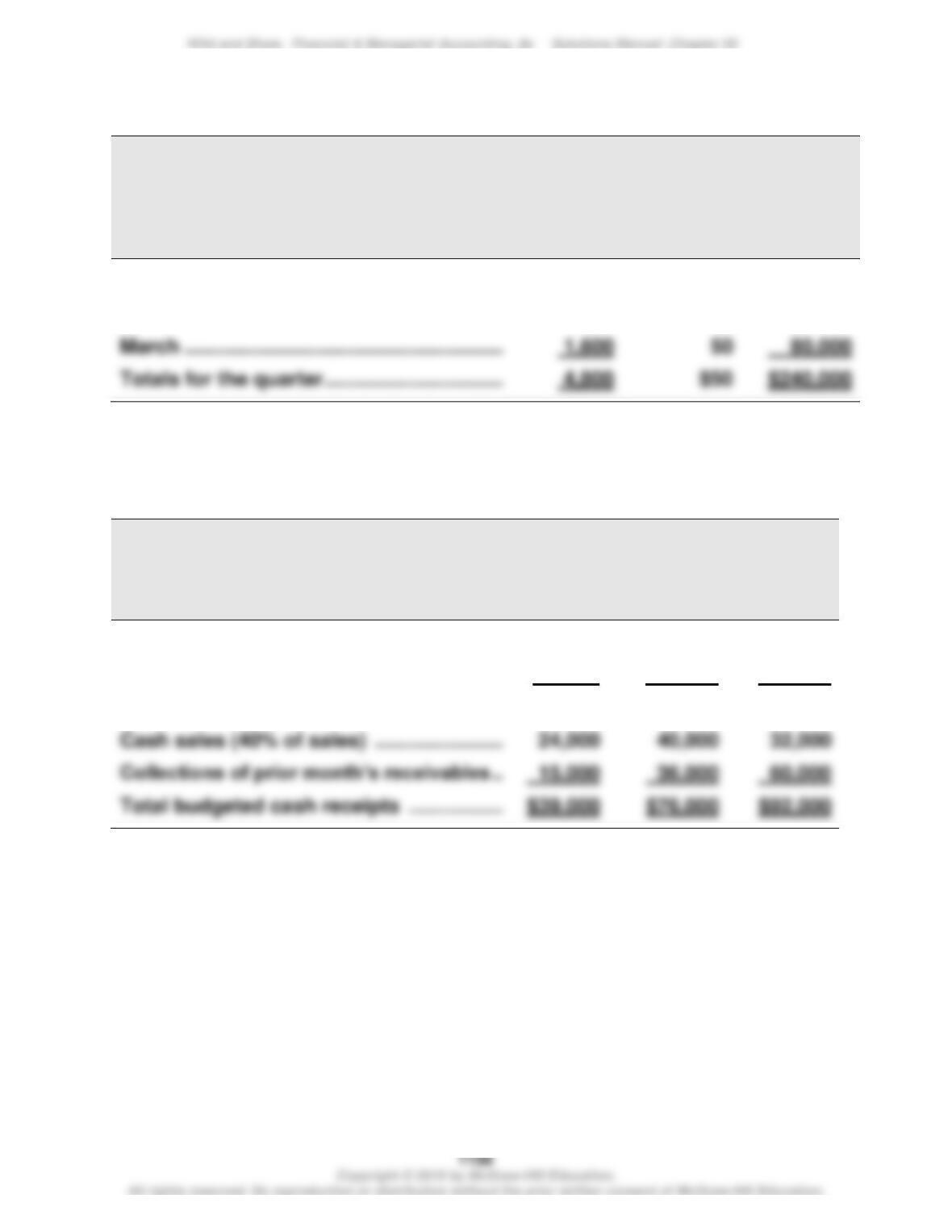
TORA CO.
Direct Labor Budget
For Month Ended July 31
Budget production (units) ……………………………………………………………
1,020
Labor requirements per unit (hours) ……………………………………………
x 2
Total labor hours needed …………………………………………………………….
2,040
Labor rate (per hour) …………………………..………………………………………
Quick Study 20-9 (10 minutes)
SCORA INC.
Sales Budget
For January, February, and March
Budgeted
Unit Sales
Budgeted
Unit Price
Budgeted
Total Sales
January …………………………………………………
1,200
$50
$ 60,000
February ………………………………………………..
2,000
50
100,000
March ……………………………………………………
Quick Study 20–10 (10 minutes)
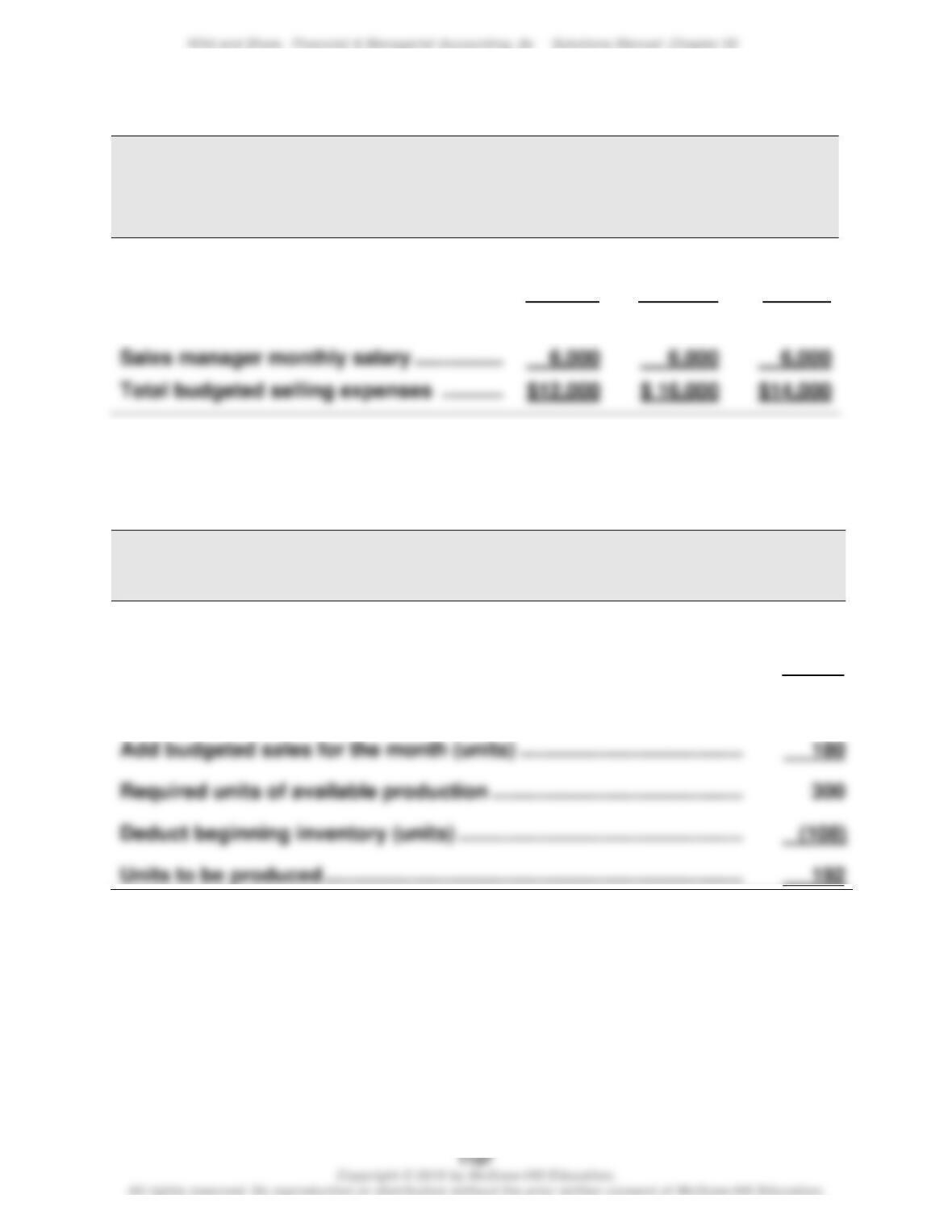
X-TEL
Cash Receipts Budget
For April, May, and June
April
May
June
Sales ……………………………………………………..
$60,000
$100,000
$80,000
Less ending accts. receivable (60%) ………
36,000
60,000
48,000
Cash receipts from:
Cash sales (40% of sales) ……………………..
40,000
36,000
60,000
Quick Study 20–11 (10 minutes)
X-TEL
Selling Expense Budget
For April, May, and June
April
May
June
Budgeted sales …………………………..…………
$60,000
$100,000
$80,000
Sales commission percent …………………….
x 10%
x 10%
x 10%
Sales commissions ………………………………
6,000
10,000
8,000
Sales manager monthly salary ……………….
Quick Study 20–12 (10 minutes)
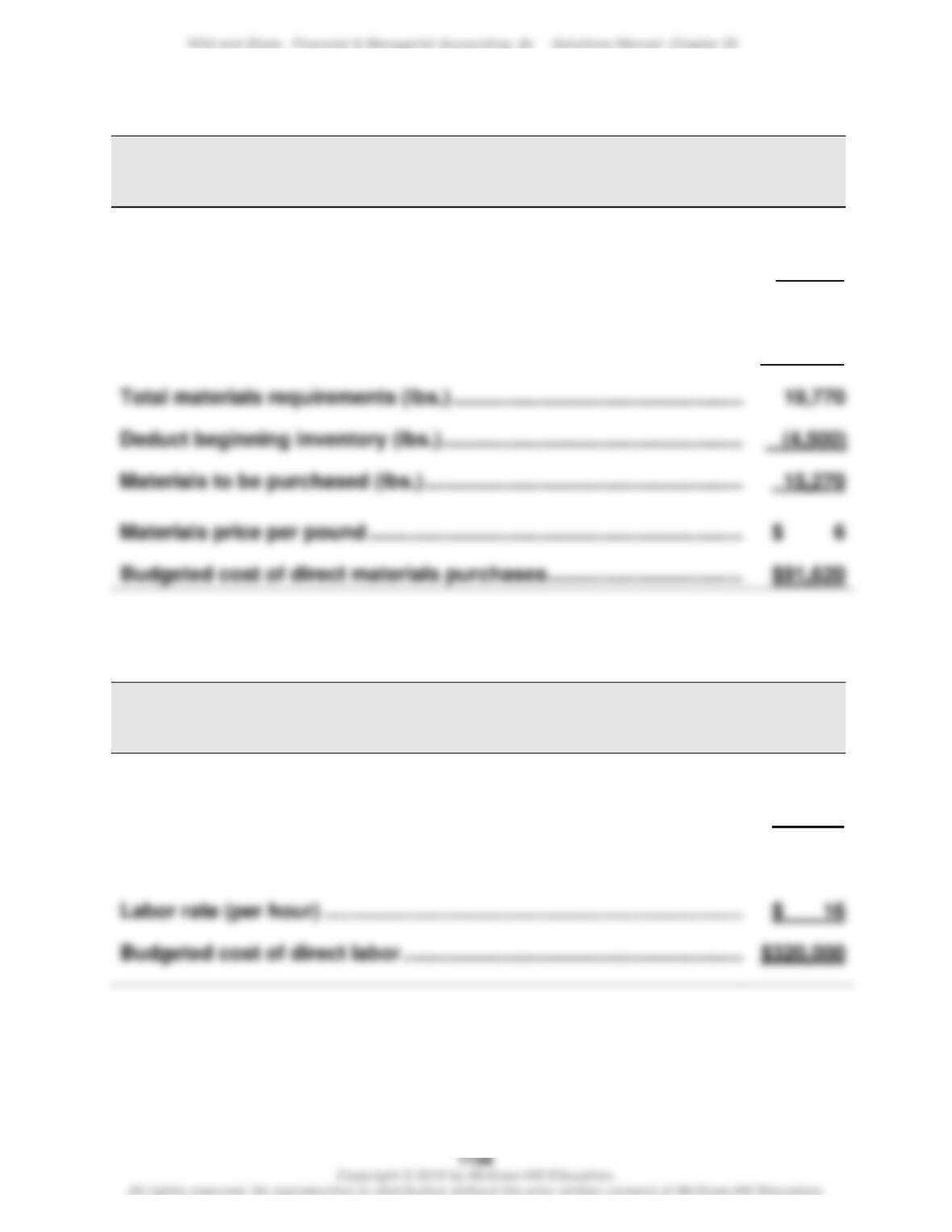
CHAMP, INC.
Production Budget
For Month Ended May 31
Next month’s budgeted sales (units) ……………………………………………
200
Ratio of inventory to future sales …………………………………………………
x 60%
Budgeted ending inventory (units) ………………………………………………
120
Add budgeted sales for the month (units) ……………………………………
Quick Study 20–13 (10 minutes)
MIAMI SOLAR
Direct Materials Budget
For Month Ended July 31
Budgeted production (units, given) ……………………………………………..
5,000
Materials requirements per unit …………………………………………………..
x 3 lbs.
Materials needed for production (lbs.) …………………………………………
15,000
Add budgeted ending inventory (5,300 units x 3 lbs./unit x 30%)………
4,770
Total materials requirements (lbs.) ………………………………………………
19,770
Deduct beginning inventory (lbs.) ………………………………………………..
Materials to be purchased (lbs.) …………………………………………………..
Materials price per pound ……………………………………………………………
$ 6
Quick Study 20–14 (10 minutes)
MIAMI SOLAR
Direct Labor Budget
For Month Ended July 31
Budgeted production…………………………………………………………………..
5,000
Labor requirements per unit (hours) ……………………………………………
x 4
Total labor hours needed …………………………………………………………….
20,000
Quick Study 20–15 (10 minutes)
MIAMI SOLAR
Factory Overhead Budget
For Month Ended August 31
Total budgeted direct labor* ……………………………………………
$339,200
Variable overhead rate (% of DL cost) …………………………..
x 70%
Budgeted variable overhead ……………………………………………
$237,440
Budgeted fixed overhead ………………………………………………..
Quick Study 20-16 (15 minutes)
ATLANTIC SURF
Production Budget
July and August
July
August
Budgeted ending inventories
July (40% x 6,500) ……………………………………………………….
2,600
August (40% x 3,500) …………………………………………………….
1,400
Add budgeted sales ……………………………………………………….
4,000
6,500
Required units of available production …………………………..
6,600
7,900
Less actual or budgeted beginning inventories ……………….
Quick Study 20–17 (15 minutes)
Forrest Company
Production Budget
For Month Ended November 30
Next month’s budgeted sales ………………………………………………………
350,000
Ratio of inventory to future sales …………………………………………………
x 10%
Budgeted ending inventory ……………………………………………………….
35,000
Add budgeted sales for the month ………………………………………………
400,000
Required units of available production ………………………………………..
435,000
Less beginning inventory ……………………………………………………………
Quick Study 20–18 (15 minutes)
Hockey Pro
Factory Overhead Budget
For Month Ended May 31
Units to be produced ………………………………………………………………….
3,900
Variable factory overhead rate per unit ………………………………………..
x $1.50
Budgeted variable overhead ……………………………………………………….
$ 5,850
Budgeted fixed overhead …………………………………………………………….
Budgeted total overhead ……………………………………………………………..
Quick Study 20-19 (10 minutes)
MUSIC WORLD
Cash Receipts Budget
For Month Ended September 30
Cash receipts from September cash sales (40% x $170,000) …………
$ 68,000
Collection of prior month’s receivables (60% x $150,000) …………….
90,000
Total budgeted cash receipts ………………………………………………………
$158,000
Quick Study 20–20 (10 minutes)
THE GUITAR SHOPPE
Cash Receipts Budget
For Month Ended September 30
Cash receipts from August sales (55% x $150,000) ………………………
$ 82,500
Cash receipts from September sales (40% x $170,000) …………………
68,000
Total budgeted cash receipts ………………………………………………………
$150,500
Quick Study 20–21 (10 minutes)
WELLS COMPANY
Budgeted Cash Receipts
For Month Ended November 30
Cash receipts from November cash sales (25% x $80,000) ……………
$ 20,000
Collection of September’s sales (10% x $55,000) ………………………….
Total budgeted cash receipts ………………………………………………………
$ 65,100
Quick Study 20–22 (15 minutes)
Computation of budgeted Accounts Receivable balance as of July 31
Sales month
Total Sales
Credit
Sales*
Percent Still
Uncollected*
Amount
Uncollected
June …………………
$420,000
$168,000
10%
$ 16,800
July ………………….
398,000
159,200
80%
127,360
Total ………………..
$144,160
* Credit sales are 40% of total sales—of these credit sales, 20% are collected in the sale month,
70% are collected in the month after sale, and 10% are collected in the second month after sale.
Quick Study 20–23 (10 minutes)
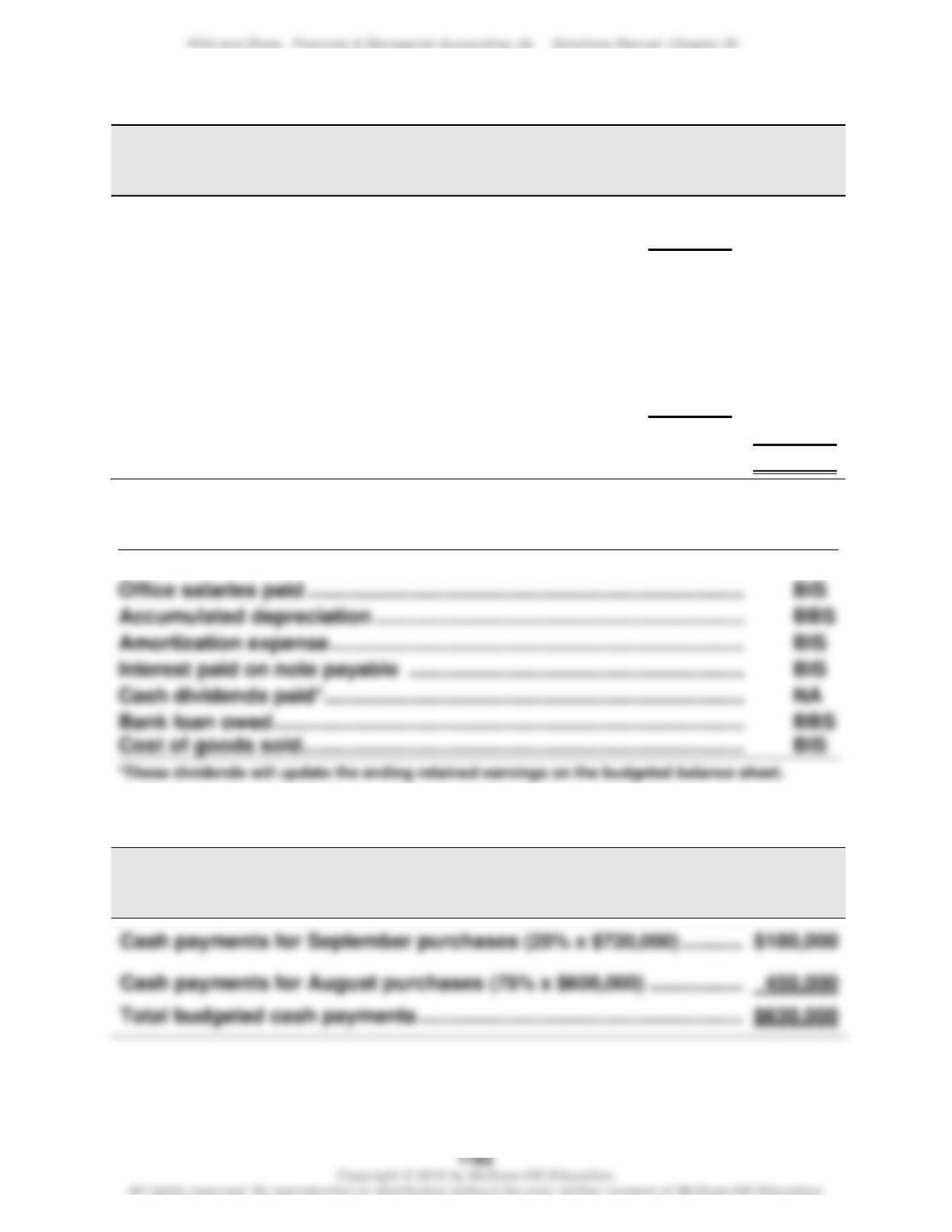
SANTOS CO.
Cash Budget
For Month Ended February 28
Beginning cash balance ……………………………………………………….……..
$ 20,000
Cash receipts …………………………..…………………………………………………
75,000
Total cash available ……………………………………………………….……………
Cash payments ……………………………………………………….………………….
Additional loan from bank …………………………………………………………..
Quick Study 20–24 (15 minutes)
GADO COMPANY
Cash Budget
For Month Ended March 31
Beginning cash balance ………………………………………………….
$ 72,000
Cash receipts from sales ………………………………………………..
300,000
Total cash available ……………………………………………………….
$372,000
Cash payments for
Direct materials …………………………..…………………………..
140,000
Direct labor ……………………………………………………………………
80,000
Other expenses …………………………..…………………………..
45,000
Repayment of bank loan ………………………………………………..
20,000
Total cash payments …………………………..…………………………
285,000
Ending cash balance ………………………………………………………
$ 87,000
Quick Study 20-25 (10 minutes)
Sales ………………………………………………………………………………………… BIS
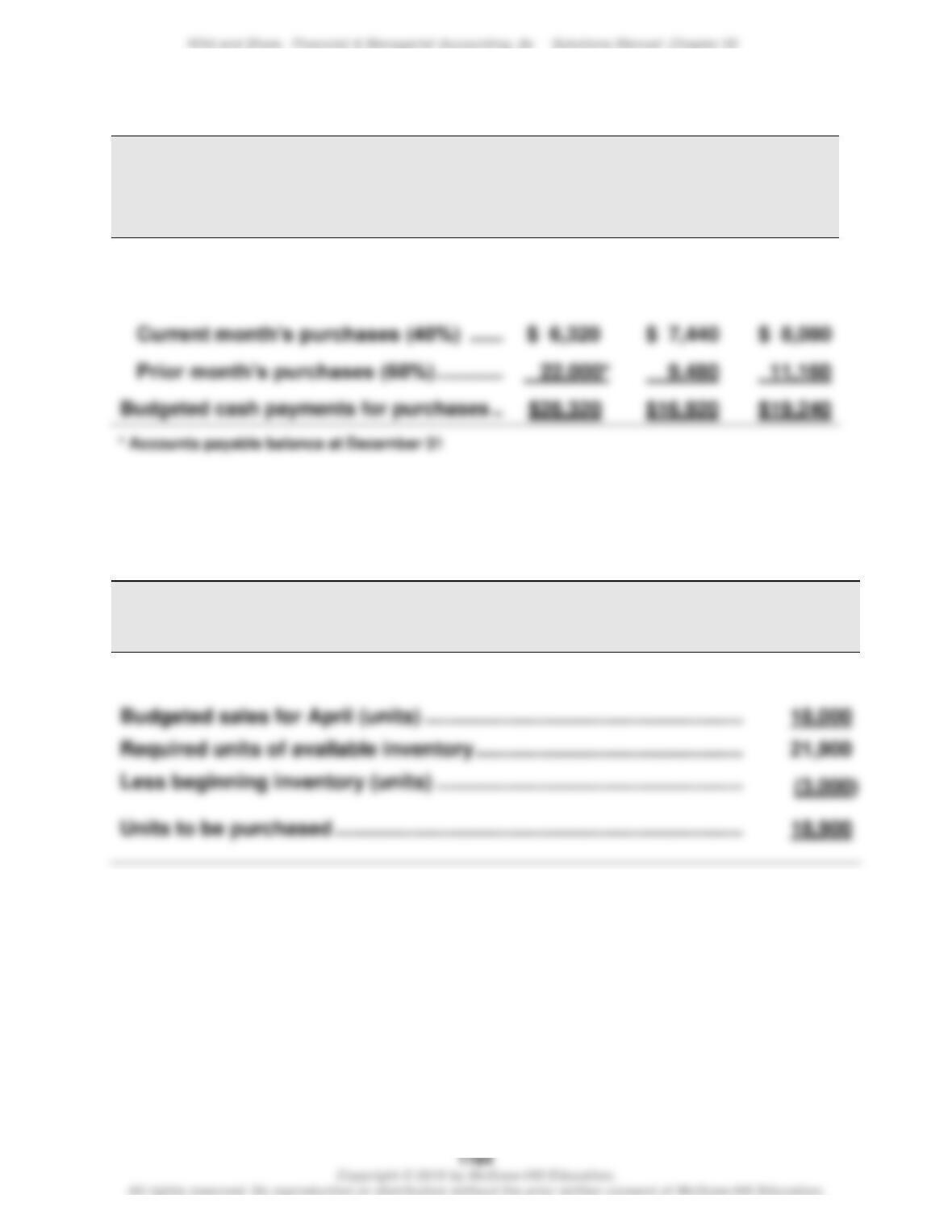
Quick Study 20-26 (10 minutes)
GARDA
Cash Payments for Merchandise (Budgeted)
For Month Ended September 30
Quick Study 20-27 (10 minutes)
TORRES CO.
Cash Payments for Merchandise (Budgeted)
For January, February, and March
January
February
March
Purchases ……………………………………………..
$15,800
$18,600
$20,200
Cash payments for
$ 6,320
$ 7,440
$ 8,080
Quick Study 20-28 (10 minutes)
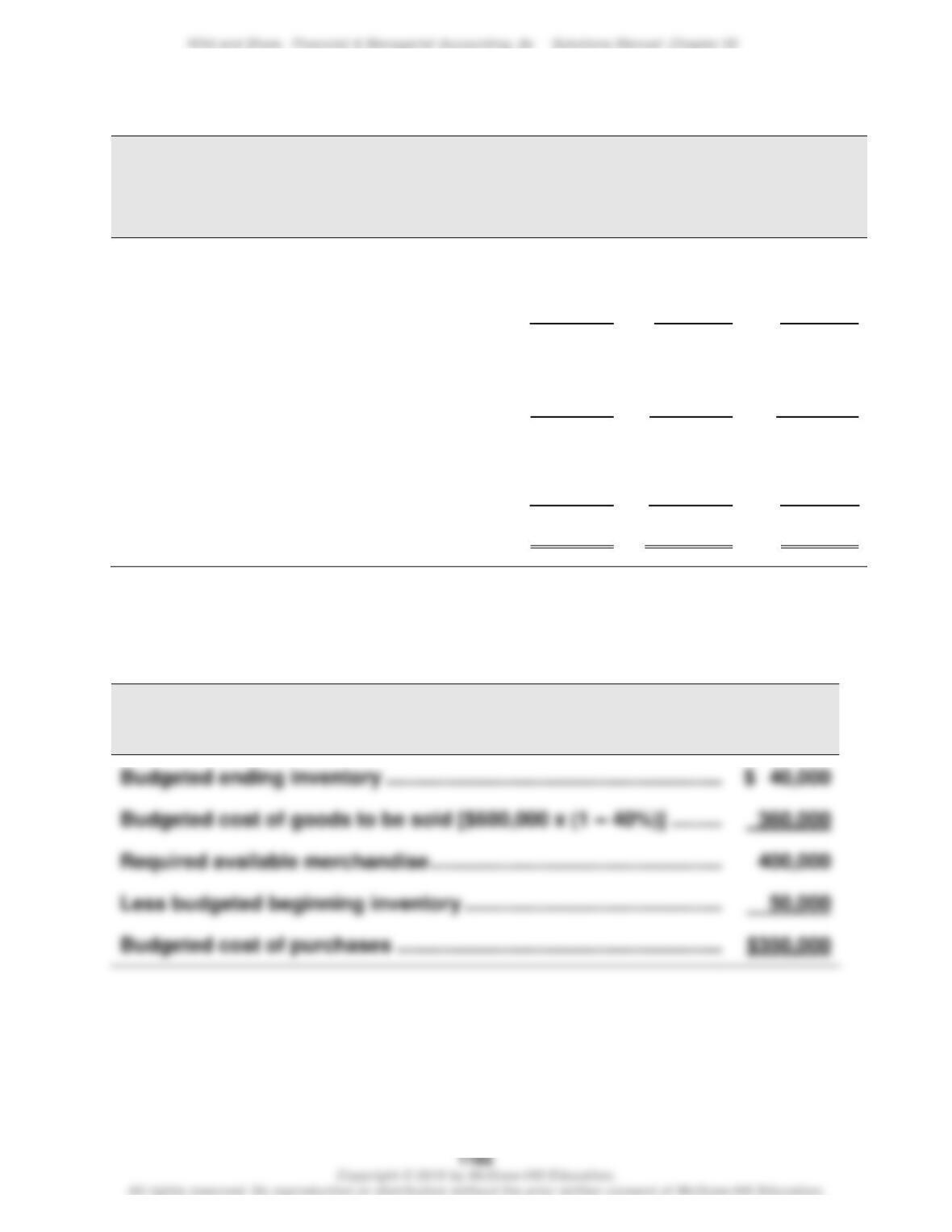
RAIDER-X COMPANY
Purchases Budget (in units)
For Month Ended April 30
Budgeted ending inventory (130% x 3,000) …………………………………..
3,900
Quick Study 20-29 (15 minutes)
LEXI COMPANY
Merchandise Purchases Budget
For April, May, and June
April
May
June
Next month’s budgeted sales (units) ………
1,220,000
980,000
1,020,000
Ratio of inventory to future sales ……………
x 30%
x 30%
x 30%
Budgeted ending inventory (units) …………
366,000
294,000
306,000
Add budgeted sales (units) …………………….
1,040,000
1,220,000
980,000
Required units of available merch. ………..
1,406,000
1,514,000
1,286,000
Deduct beginning inventory (units) ………..
(280,000)
(366,000)
(294,000)
Units to be purchased …………………………..
1,126,000
1,148,000
992,000
Quick Study 20-30 (15 minutes)
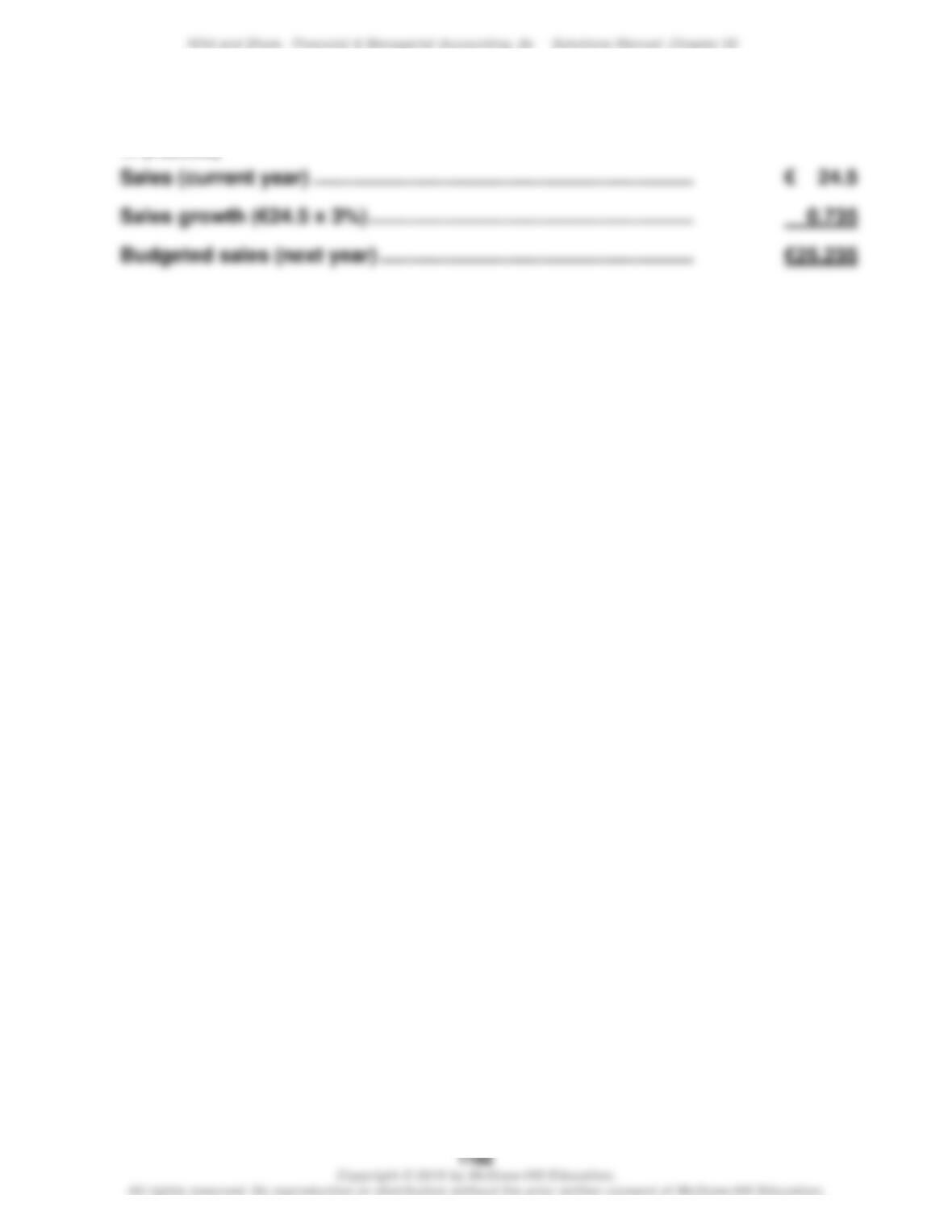
MONTEL COMPANY
Computation of Budgeted Cost of Purchases
For Month Ended July 31
Quick Study 20-31 (10 minutes)
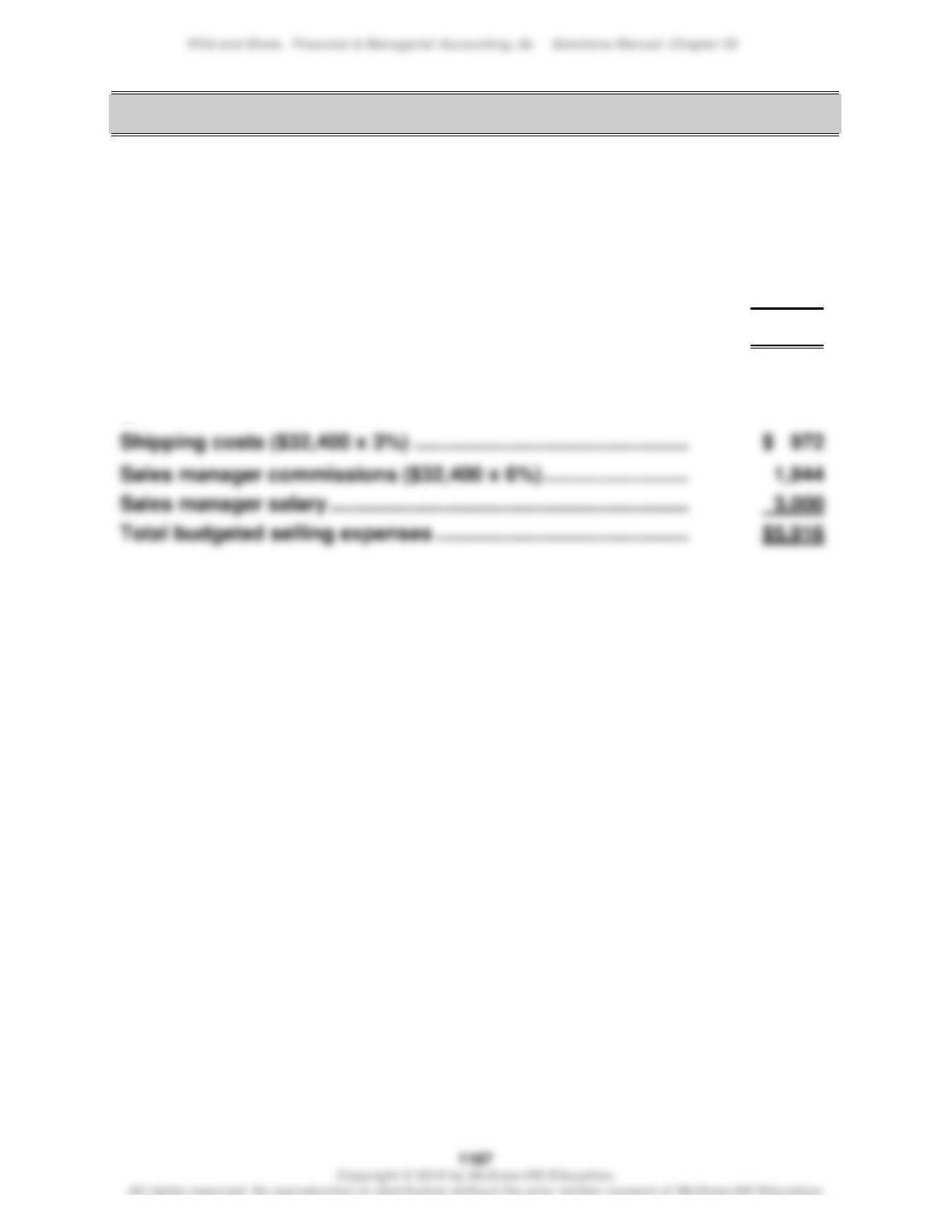
Sales growth (€24.5 x 3%) ………………………………………………….
2. (€ billions)
Note: Assume budgeted sales of €25 billion for this question.
Budgeted selling expenses (€25 billion x 20%) …………………..
€ 5
Budgeted general and admin. expenses (€25 billion x 4%) ….
1
EXERCISES
Exercise 20-1 (10 minutes)
1.
Sales (before packaging redesign) ……………………………………
$30,000
Sales growth with packaging redesign ($30,000 x 8%) ……….
2,400
Budgeted sales with packaging redesign ………………………….
$32,400
2.
Exercise 20-2 (10 minutes)
(1) d (2) g (3) h (4) a (5) b (6) f (7) e (8) c
Exercise 20-3 (15 minutes)
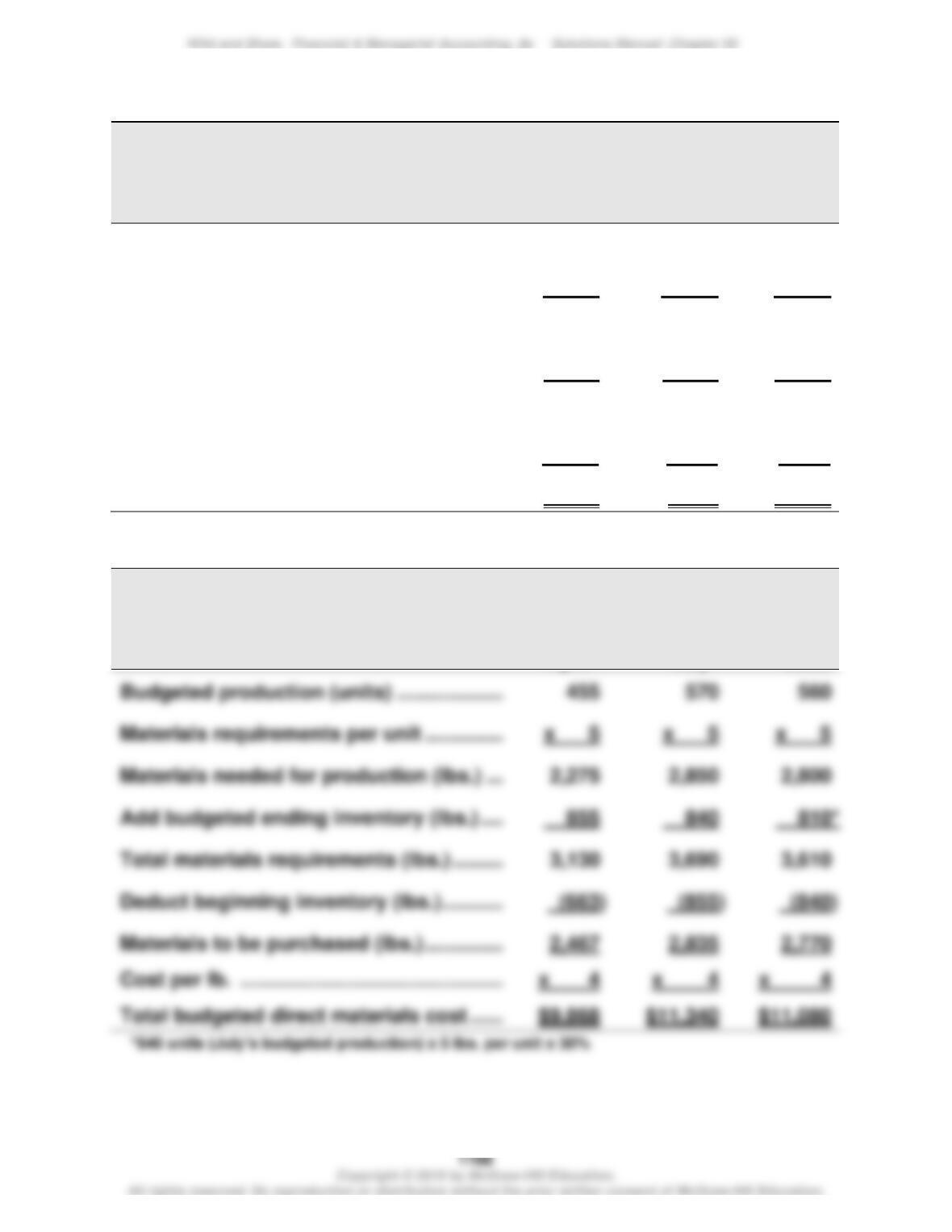
RUIZ CO.
Production Budget
For April, May, and June
April
May
June
Next month’s budgeted sales (units) ………
580
540
620
Ratio of inventory to future sales ……………
x 25%
x 25%
x 25%
Budgeted ending inventory (units) ………..
145
135
155
Add budgeted sales for the month …………
500
580
540
Required units of available production …..
645
715
695
Deduct beginning inventory (units) ………..
(190)
(145)
(135)
Units to be produced …………………………..
455
570
560
Exercise 20-4 (15 minutes)
ZIRA CO.
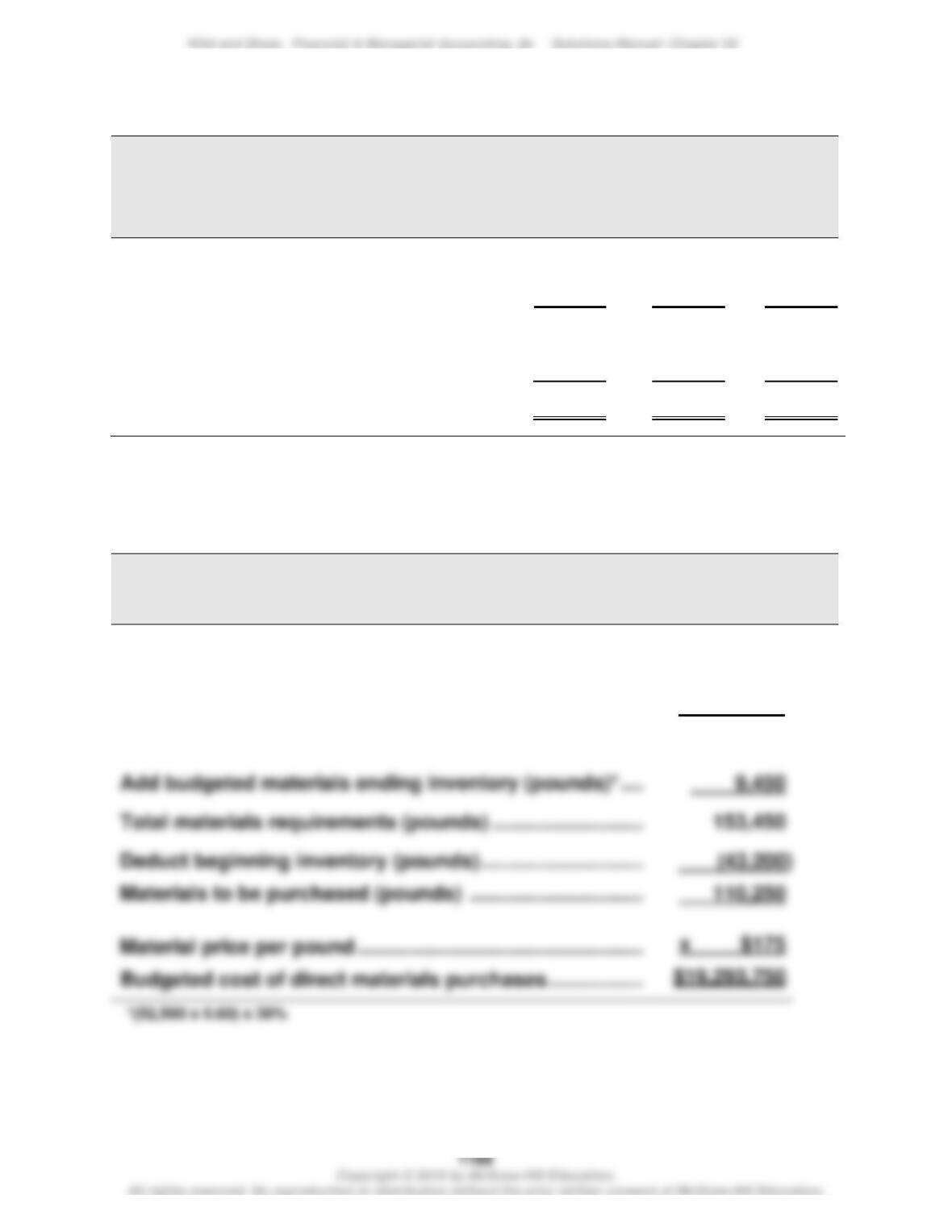
Direct Materials Budget
For April, May, and June
April
May
June
Budgeted production (units) ………………….
455
570
560
Materials needed for production (lbs.) ……
Add budgeted ending inventory (lbs.) …….
3,130
Exercise 20-5 (10 minutes)
MANNER COMPANY
Direct Labor Budget
For July, August, and September
July
August
Sept.
Budgeted production (units) ………………….
620
680
540
Labor requirements per unit (hours) ………
x 2
x 2
x 2
Total labor hours needed ……………………….
1,240
1,360
1,080
Labor rate per hour ………………………………..
$ 20
$ 20
$ 21
Budgeted direct labor cost …………………….
$24,800
$27,200
$22,680
Exercise 20-6 (15 minutes)
RIDA INC.
Direct Materials Budget
Second Quarter
Units to be produced …………………………..………………………….
240,000
Materials requirement per unit ………………………………………..
x 0.60
Materials needed for production (pounds) ……………………….
144,000
Total materials requirements (pounds) …………………………..
1.
ADDISON CO.
Direct Labor Budget
Second Quarter
Units to be produced …………………………..………………………….
2,400
Labor requirements per unit (hours) …………………………..
x 4
Total labor hours needed ………………………………………………..
9,600
Labor rate (per hour) …………………………..………………………….
x $20
Budgeted direct labor cost ……………………………………………..
$192,000
2.
ADDISON CO.
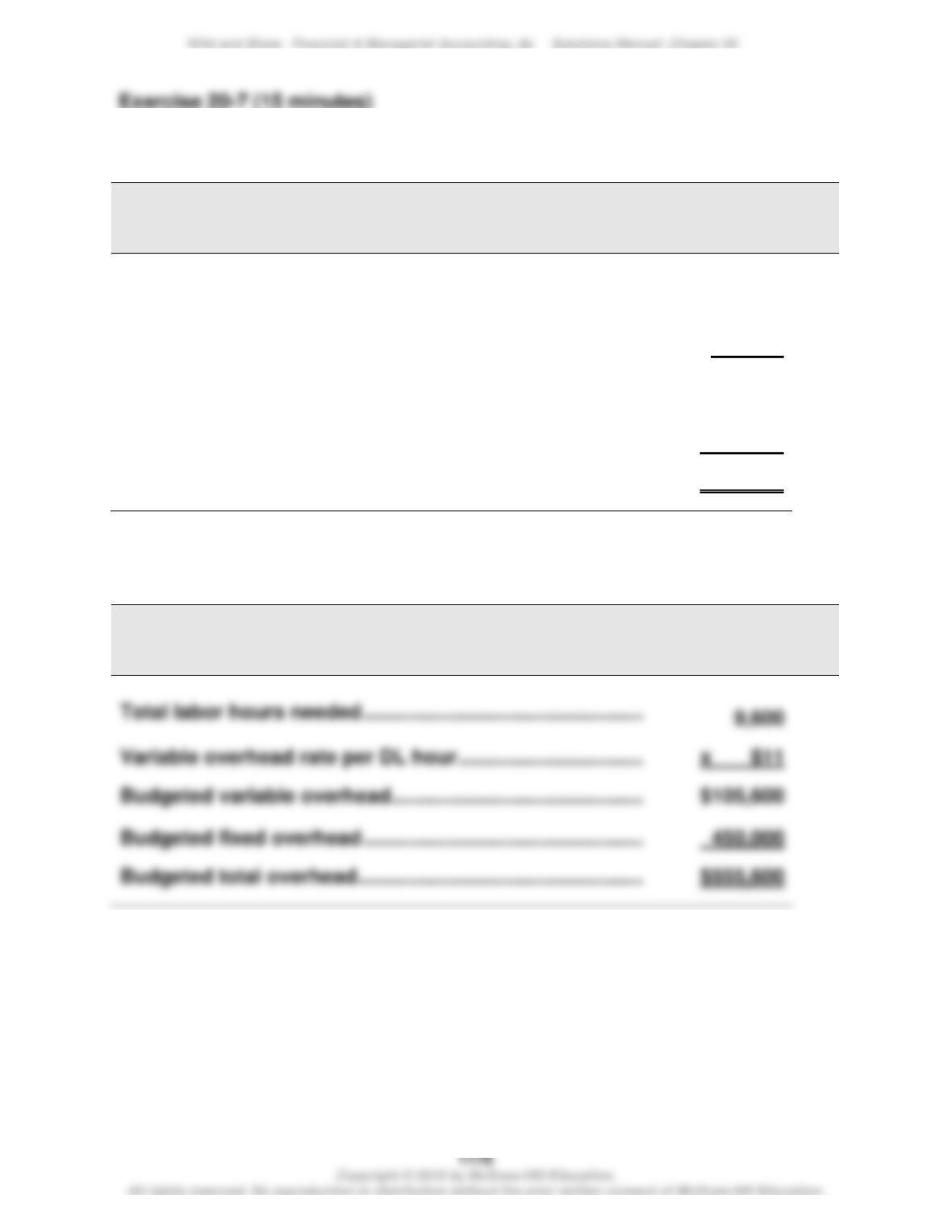
Factory Overhead Budget
Second Quarter
Variable overhead rate per DL hour …………………………………
Budgeted fixed overhead ………………………………………………..
Budgeted total overhead …………………………………………………