20-32
SOLUTION
20-33
20-32 (20 min.) Blackflush costing and JIT production.
The Grand Meter Corporation manufactures electrical meters. For August, there were no
beginning inventories of direct materials and no beginning or ending work in process. Grand
Meter uses a JIT production system and backflush costing with three trigger points for making
entries in the accounting system:
▪ Purchase of direct materials and incurring of conversion costs
▪ Completion of good finished units of product
▪ Sale of finished goods
Grand Meter’s August standard cost per meter is direct materials, $25, and conversion cost, $20.
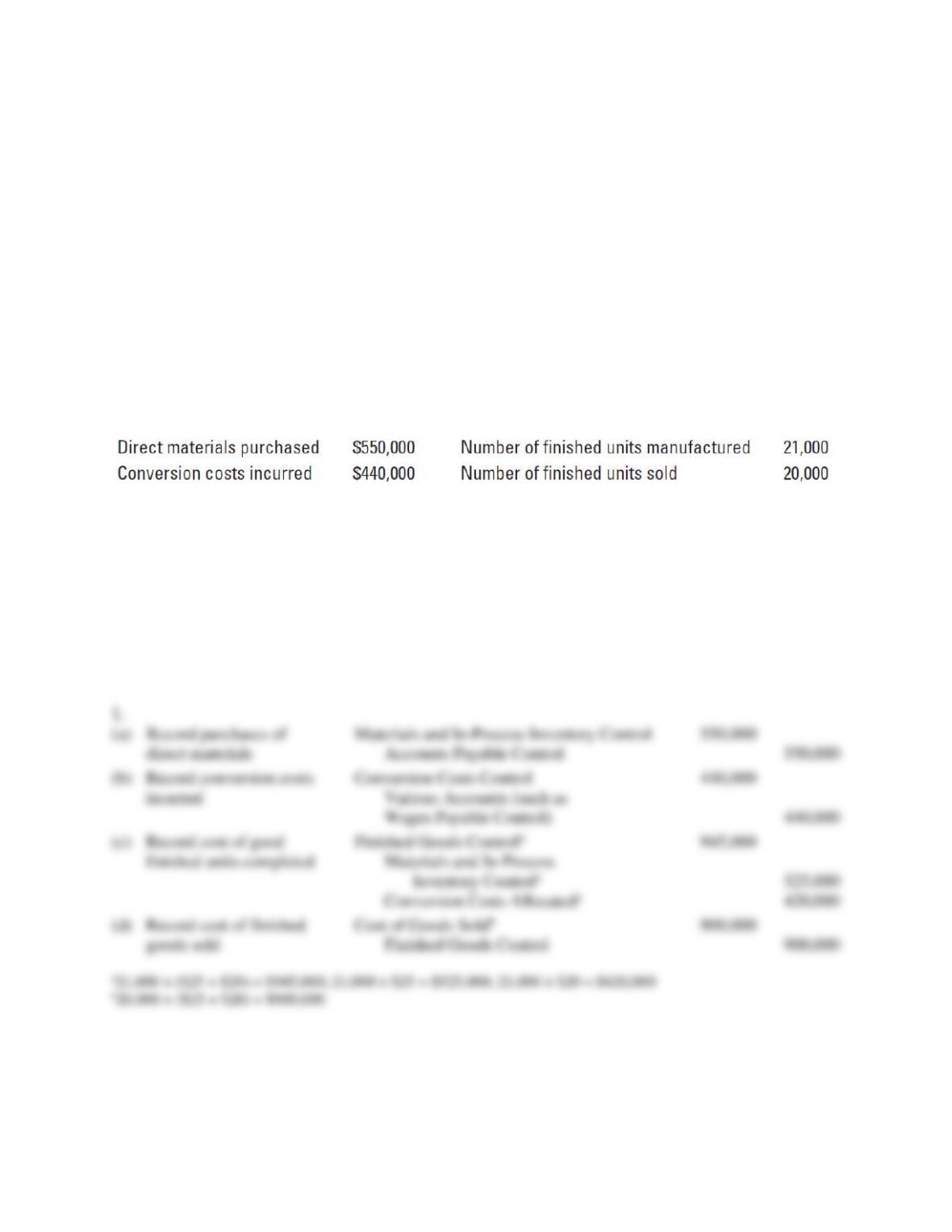
Grand Meter has no direct materials variances. The following data apply to August
manufacturing:
Required:
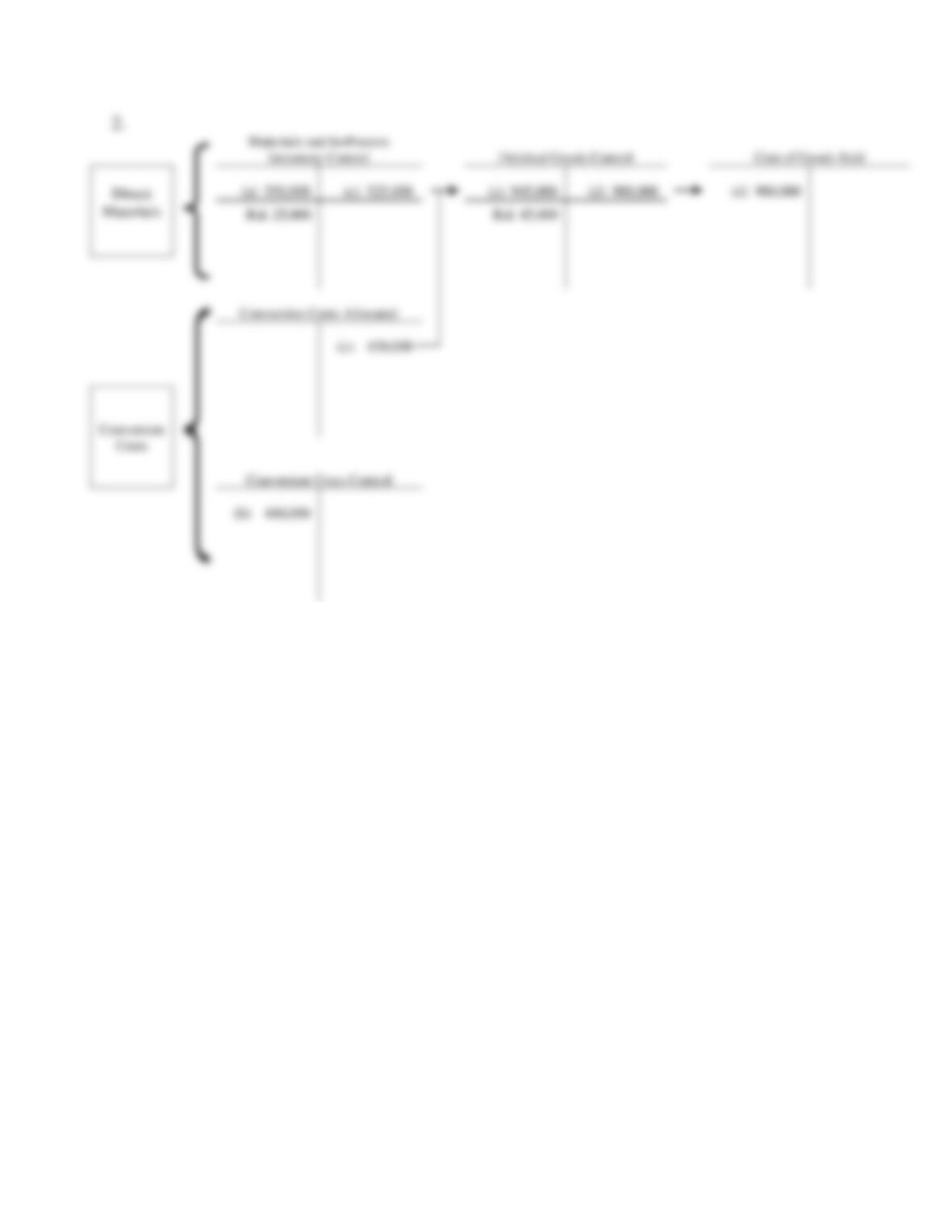
1. Prepare summary journal entries for August (without disposing of under- or overallocated
conversion costs). Assume no direct materials variances.
2. Post the entries in requirement 1 to T-accounts for Materials and In-Process Inventory
Control, Finished Goods Control, Conversion Costs Control, Conversion Costs Allocated,
and Cost of Goods Sold.
SOLUTION
20-34
20-33 (20 min.) Backflush, two trigger points, materials purchase and sale
(continuation of 20-32).
Assume that the second trigger point for Grand Meter Corporation is the sale—rather than the
completion—of finished goods. Also, the inventory account is confined solely to direct
materials, whether these materials are in a storeroom, in work in process, or in finished goods.
No conversion costs are inventoried. They are allocated to the units sold at standard costs. Any
under- or overallocated conversion costs are written off monthly to Cost of Goods Sold.
Required:
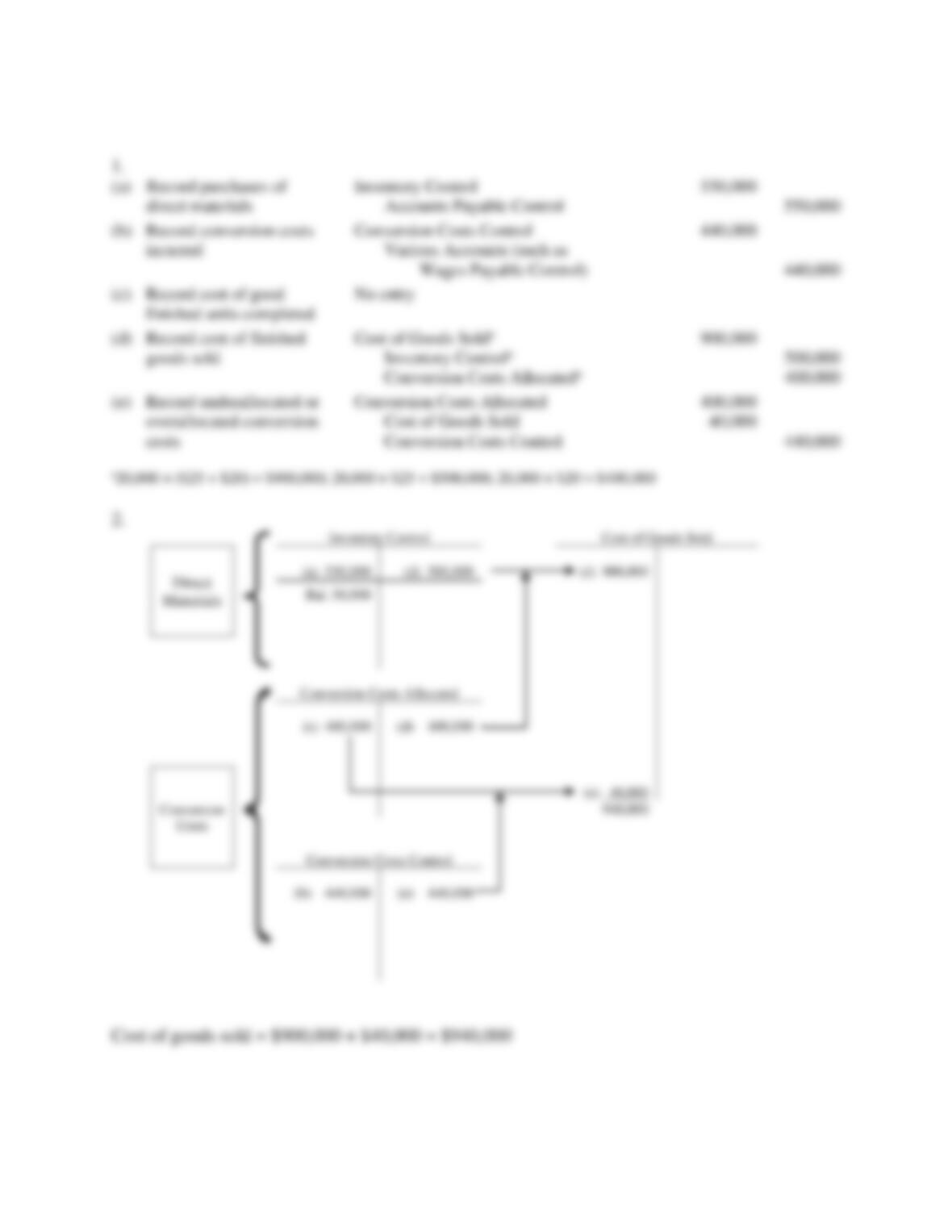
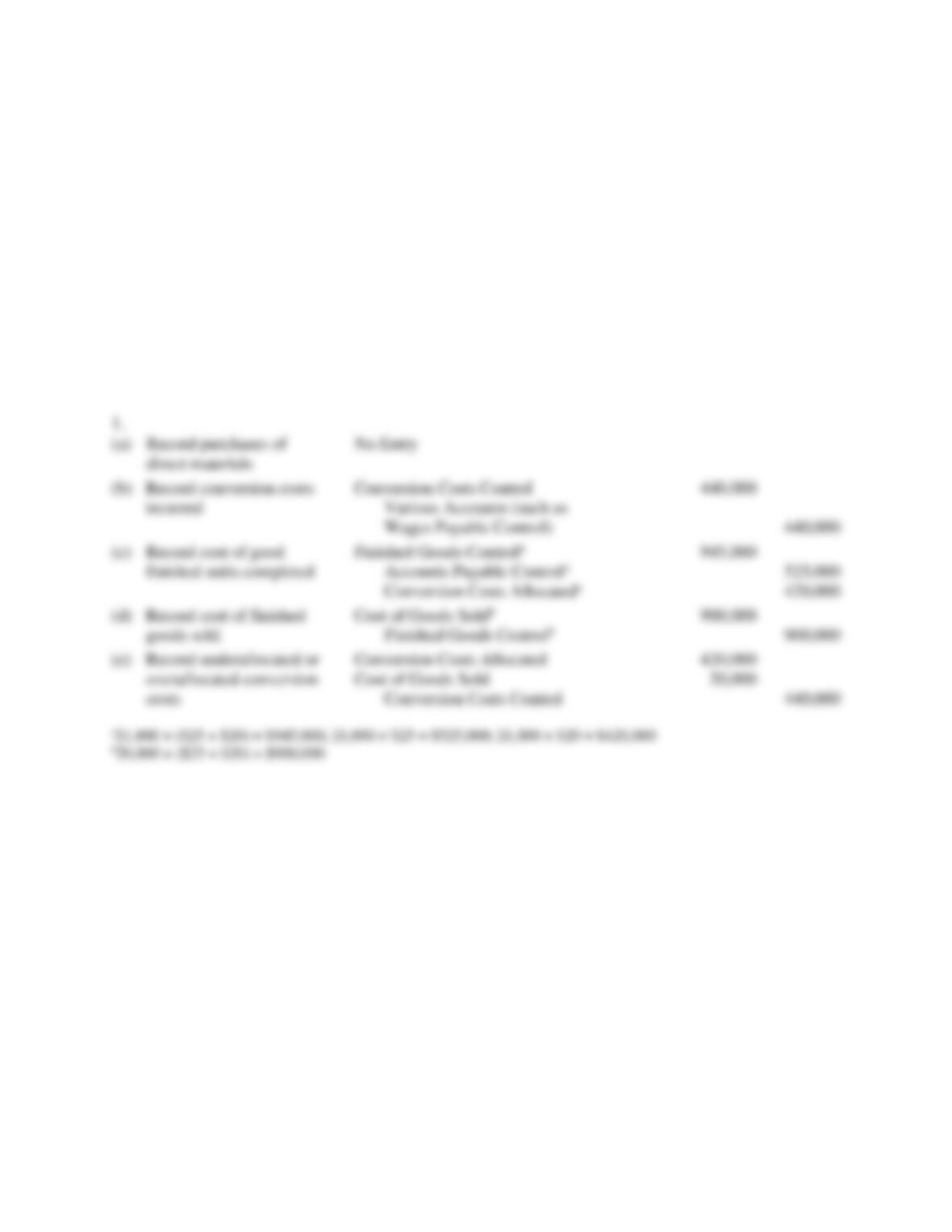
1. Prepare summary journal entries for August, including the disposition of under- or
overallocated conversion costs. Assume no direct materials variances.
2. Post the entries in requirement 1 to T-accounts for Inventory Control, Conversion Costs
Control, Conversion Costs Allocated, and Cost of Goods Sold.
20-35
SOLUTION
20-36
20-34 (20 min.) Backflush, two trigger points, completion of production and sale
(continuation of 20-32).
Assume the same facts as in Problem 20-33 except now there are only two trigger points:
Completion of good finished units of product and Sale of finished goods.
Required:
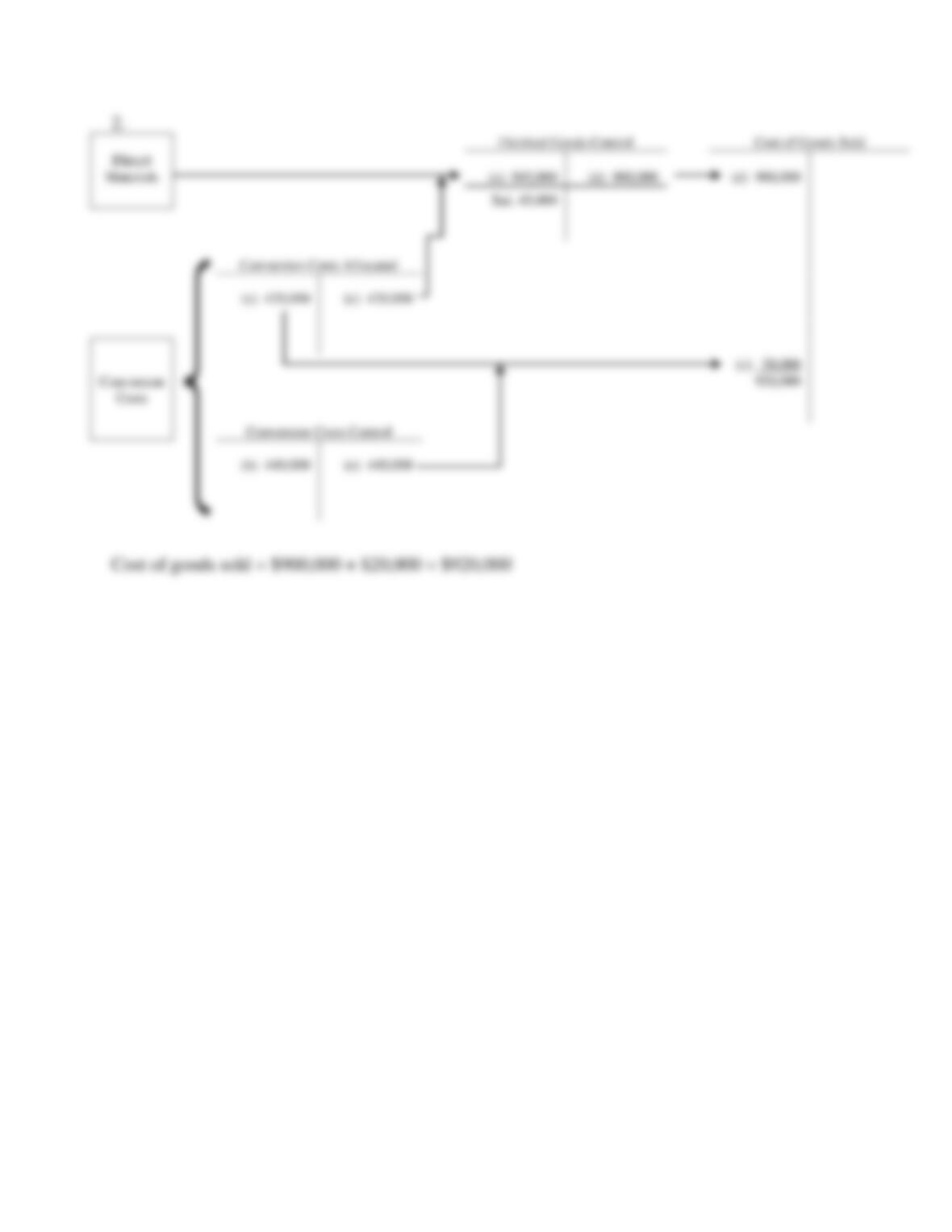
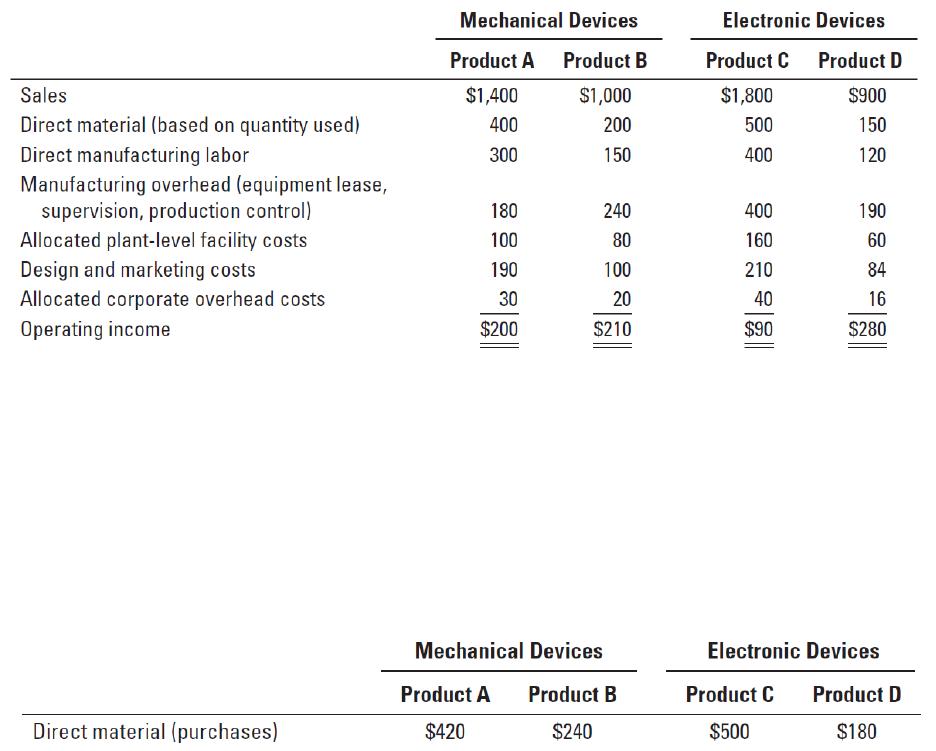
1. Prepare summary journal entries for August, including the disposition of under– or
overallocated conversion costs. Assume no direct materials variances.
2. Post the entries in requirement 1 to T-accounts for Finished Goods Control, Conversion
Costs Control, Conversion Costs Allocated, and Cost of Goods Sold.
SOLUTION
20-37
20-38
20-35 (20 min.) Lean accounting.
Reliable Security Devices (RSD) has introduced a just-in-time production process and is
considering the adoption of lean accounting principles to support its new production philosophy.
The company has two product lines: Mechanical Devices and Electronic Devices. Two
individual products are made in each line. Product–line manufacturing overhead costs are traced
directly to product lines and then allocated to the two individual products in each line. The
company’s traditional cost-accounting system allocates all plant-level facility costs and some
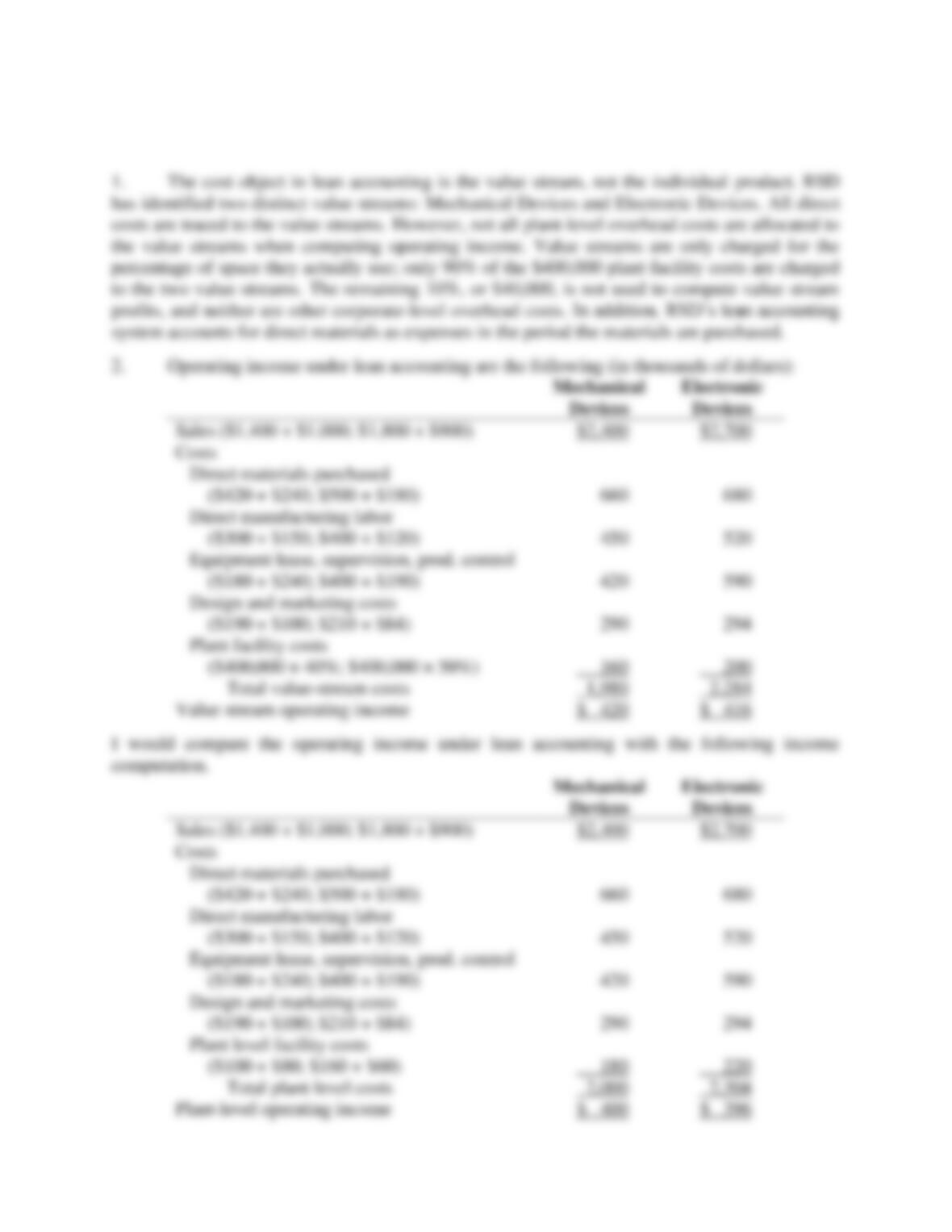
corporate overhead costs to individual products. The latest accounting report using traditional
cost accounting methods included the following information (in thousands of dollars):
RSD has determined that each of the two product lines represents a distinct value stream. It has
also determined that out of the $400,000 ($100,000 + $80,000 + $160,000 + $60,000) plant-level
facility costs, product A occupies 22% of the plant’s square footage, product B occupies 18%,
product C occupies 36%, and product D occupies 14%. The remaining 10% of square footage is
not being used. Finally, RSD has decided that in order to identify inefficiencies, direct material
should be expensed in the period it is purchased, rather than when the material is used.
According to purchasing records, direct material purchase costs during the period were as
follows:
Required:
1. What are the cost objects in RSD’s lean accounting system?
2. Compute operating income for the cost objects identified in requirement 1 using lean
accounting principles. What would you compare this operating income against? Comment on
your results.
20-39
SOLUTION
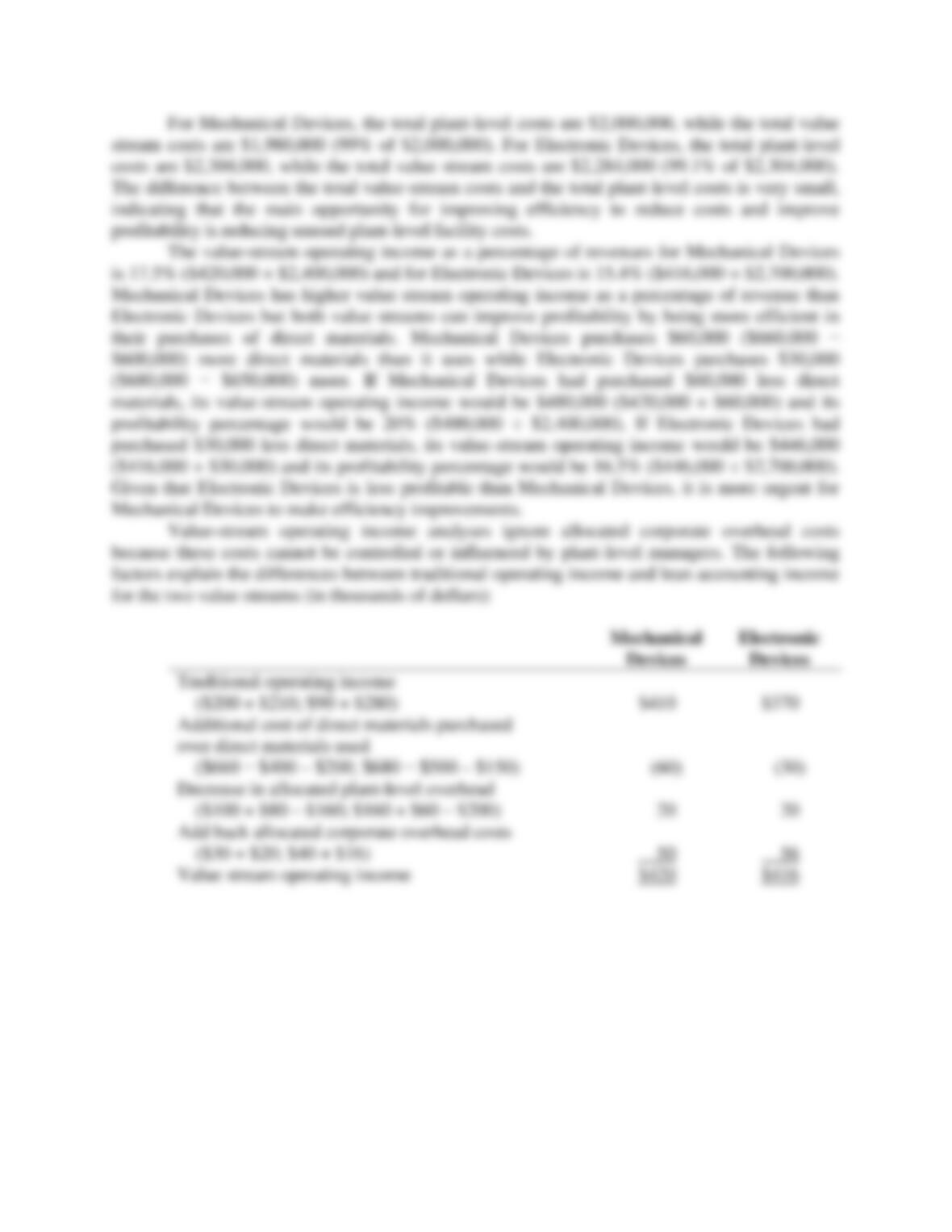
20-40
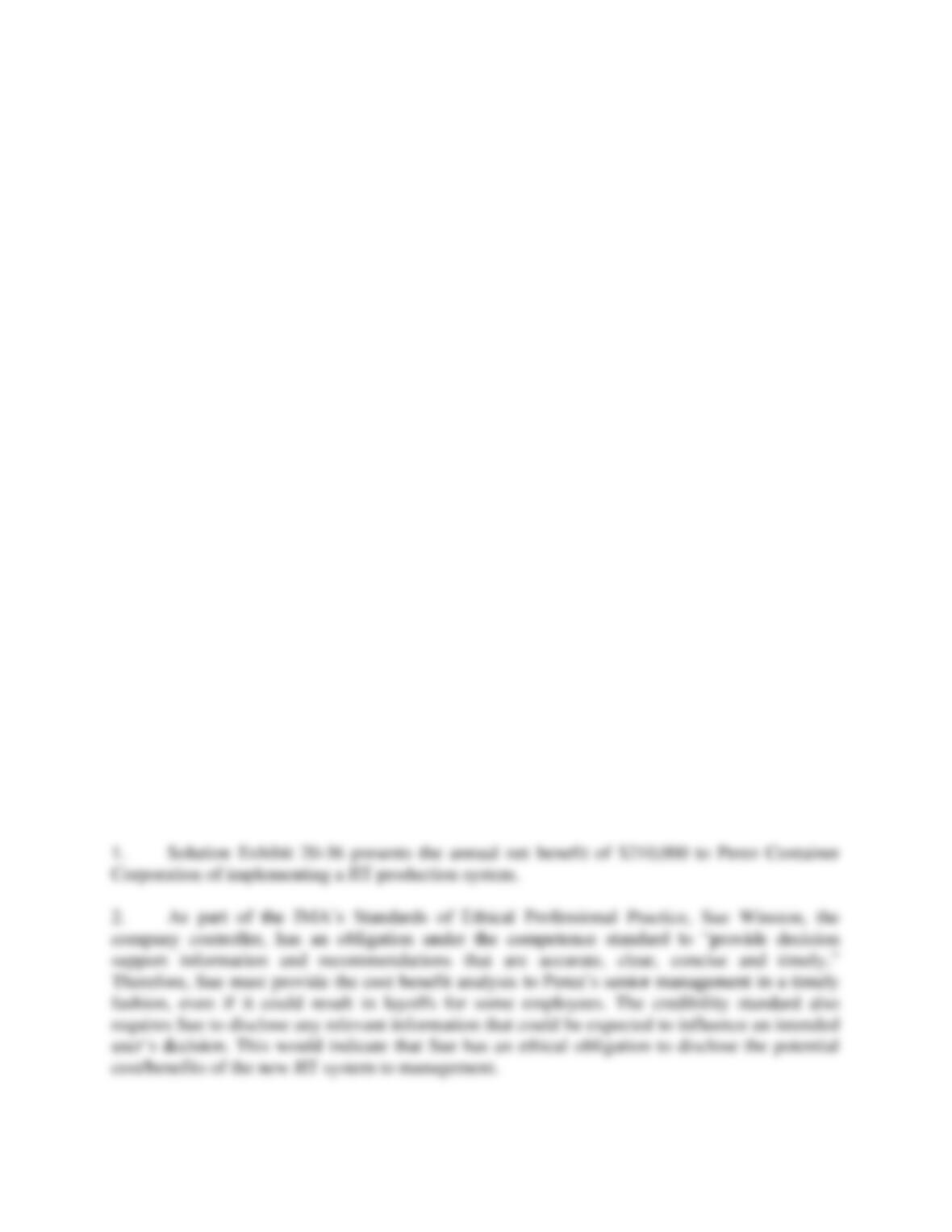
20-41
20-36 (20 min.) JIT production, relevant benefits, relevant costs, ethics.
Perez Container Corporation is considering implementing a JIT production system. The new
system would reduce current average inventory levels of $4,000,000 by 75%, but it would
require a much greater dependency on the company’s core suppliers for on-time deliveries and
high-quality inputs. The company’s operations manager, Jim Ingram, is opposed to the idea of a
new JIT system because he is concerned that the new system (a) will be too costly to manage; (b)
will result in too many stockouts; and (c) will lead to the layoff of his employees, several of
whom are currently managing inventory. He believes that these layoffs will affect the morale of
his entire production department. The management accountant, Sue Winston, is in favor of the
new system because of its likely cost savings. Jim wants Sue to rework the numbers because he
is concerned that top management will give more weight to financial factors and not give due
consideration to nonfinancial factors such as employee morale. In addition to the reduction in
inventory described previously, Sue has gathered the following information for the upcoming
year regarding the JIT system:
▪ Annual insurance and warehousing costs for inventory would be reduced by 60% of current
budgeted level of $700,000.
▪ Payroll expenses for current inventory management staff would be reduced by 15% of the
budgeted total of $1,200,000.
▪ Additional annual costs for JIT system implementation and management, including
personnel costs, would equal $440,000.
▪ The additional number of stockouts under the new JIT system is estimated to be 5% of the
total number of shipments annually. Ten thousand shipments are budgeted for the
upcoming year. Each stockout would result in an average additional cost of $500.
▪ Perez’s required rate of return on inventory investment is 10% per year.
Required:
1. From a financial perspective, should Perez adopt the new JIT system?
2. Should Sue Winston rework the numbers?
3. How should she manage Jim Ingram’s concerns?
SOLUTION
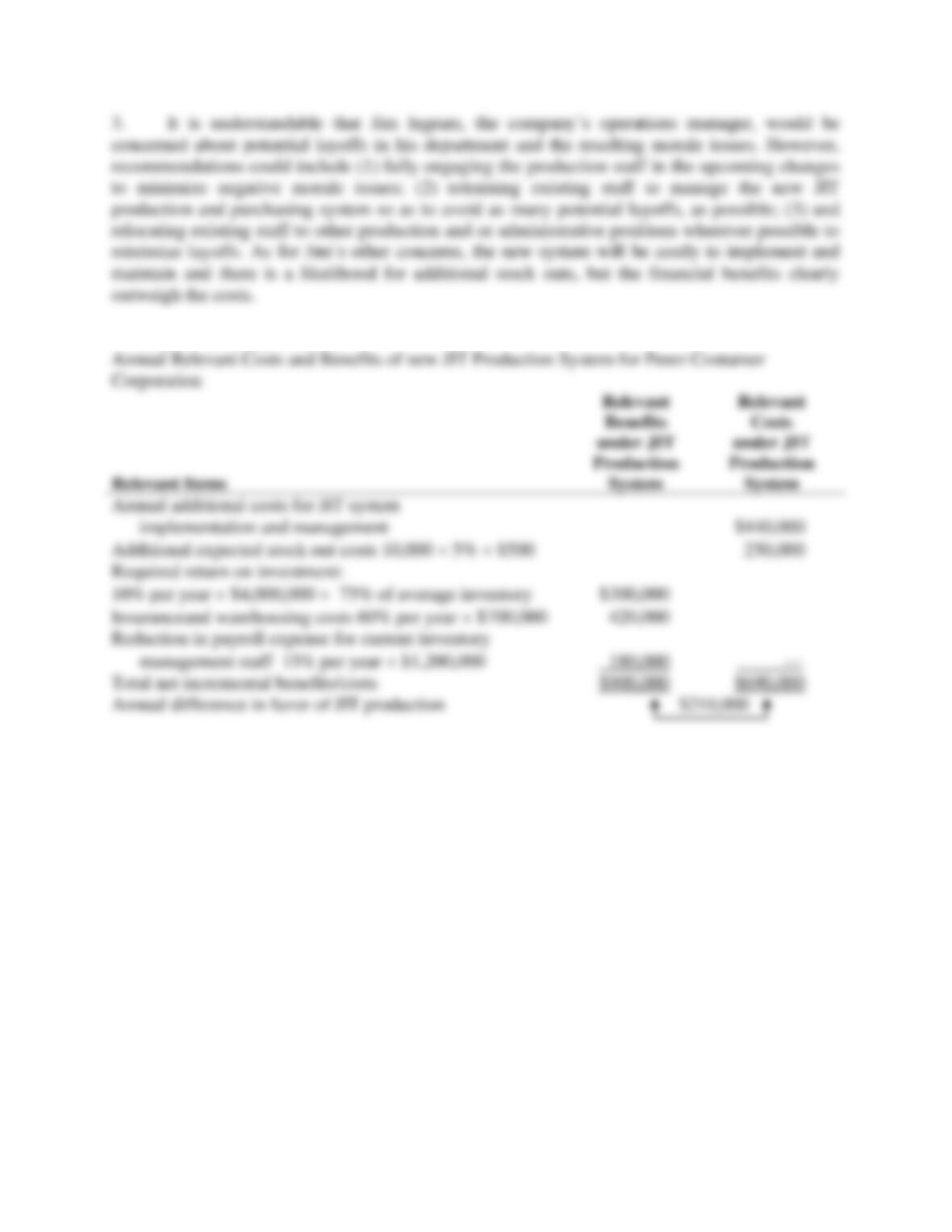
20-42
SOLUTION EXHIBIT 20-36