Chapter 20 Accounting for Inventory • 605
Name Perfect
Score
Your
Score
Identifying Accounting Terms 9 Pts.
Analyzing Inventory Systems 10 Pts.
Analyzing LIFO, FIFO, and Weighted-Average Methods 12 Pts.
Total 31 Pts.
Part One—Identifying Accounting Terms
Directions: Select the one term in Column I that best fits each definition in
Column II. Print the letter identifying your choice in the Answers column.
Answers
1.
2.
Column I
A. first-in, first-out
inventory costing
method (FIFO)
B. gross profit method of
estimating inventory
Column II
1. A form used during a physical inventory to record
information about each item of merchandise on hand.
(p. 622)
2. A form used to show the kind of merchandise, quantity
received, quantity sold, and balance on hand. (p. 623)
Study
Guide
20
C
H
Part Two—Analyzing Inventory Systems
Directions: Place a T for True or an F for False in the Answers column to show whether
each of the following statements is true or false.
1. Merchandise inventory on hand is typically the largest asset of a merchandising business.
(p. 620)
2. The only financial statement on which the value of merchandise on hand is reported is the
income statement. (p. 620)
3. The net income of a business can be increased by maintaining a merchandise inventory that
is larger than needed. (p. 621)
4. A merchandise inventory evaluated at the end of a fiscal period is known as a periodic
inventory. (p. 621)
Answers
1.
2.
3.
4.
T
F
F
T
Chapter 20 Accounting for Inventory • 607
Name Date Class
Part Three—Analyzing LIFO, FIFO and Weighted-Average Methods
Directions: For each of the following items, select the choice that best completes the statement.
Print the letter identifying your choice in the Answers column.
1. Calculating an accurate inventory cost to assure that gross profit and net income are reported
correctly on the income statement is an application of the accounting concept (A) Consistent
Reporting (B) Perpetual Inventory (C) Adequate Disclosure (D) none of the above. (p. 620)
2. When the FIFO method is used, cost of merchandise sold is valued at (A) the average
cost (B) the most recent cost (C) the earliest cost (D) none of these. (p. 626)
3. The FIFO method is based on the assumption that the merchandise purchased first is the
merchandise (A) sold first (B) sold last (C) in ending inventory (D) none of these. (p. 626)
4. When the FIFO method is used, cost of merchandise sold is priced at (A) the average
cost (B) the earliest cost (C) the most recent cost (D) none of these. (p. 626)
5. Using an inventory costing method to charge costs of merchandise against current
revenue is an application of the accounting concept (A) Adequate Disclosure
(B) Consistent Reporting (C) Matching Expenses with Revenue (D) none of these. (p. 627)
Answers
1.
2.
3.
4.
5.
C
C
A
B
C

608 • Working Papers
Across
3. A form used to show the kind of merchandise,
quantity received, quantity sold, and balance on
hand.
Down
1. The amount that must be paid to replace an asset.
2. A file of stock records for all merchandise on hand.
1
3
5
4
2
TE
1
3
5
4
2
M
A
R
KCOTSRE
E
T
V
ABYTIVITCA
L
S
T
O
CORD
K
L
E
F
A
C
DCOST
O
INGES
G
Chapter 20 Accounting for Inventory • 609
Name Date Class
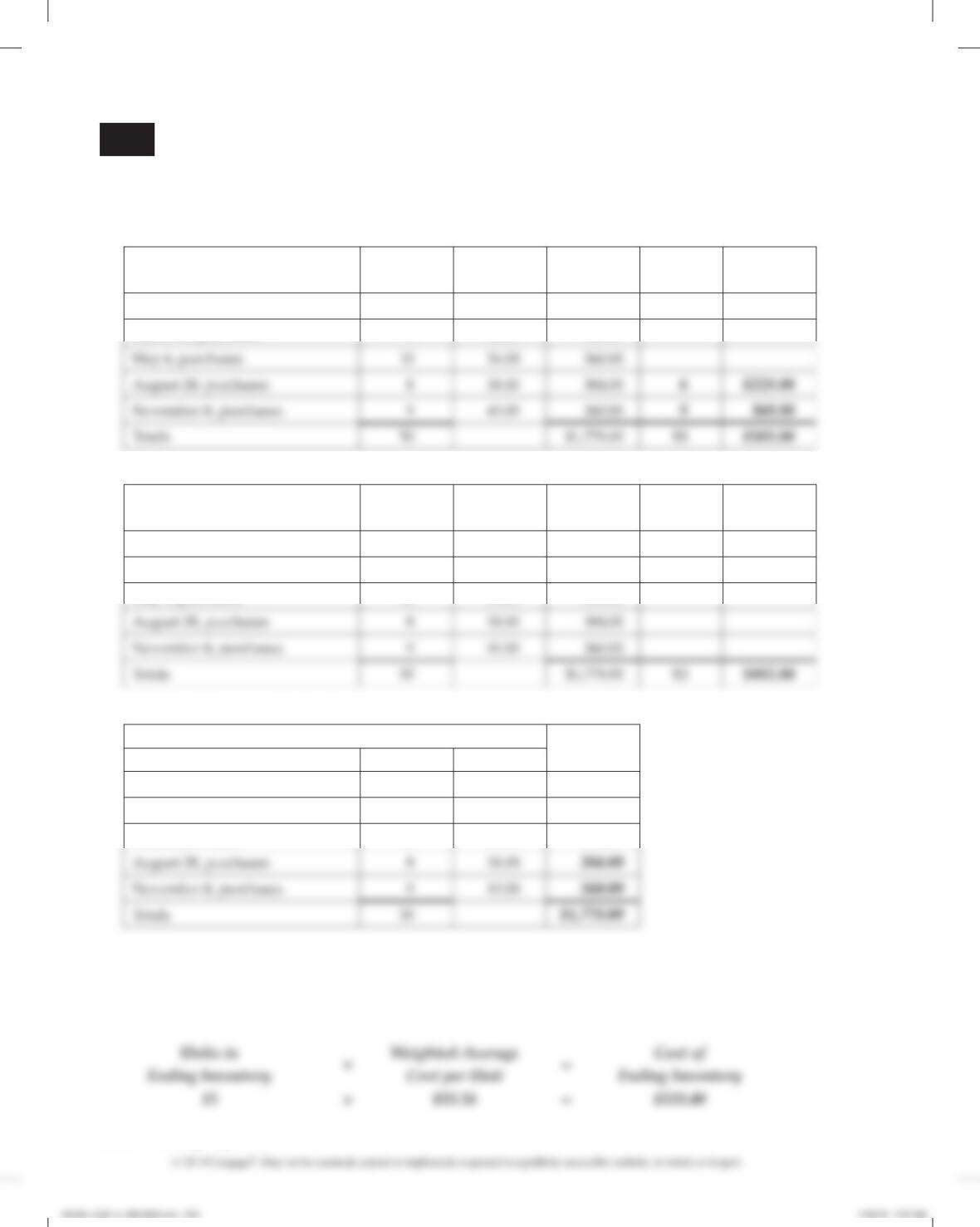
20-1 WORK TOGETHER, p. 625
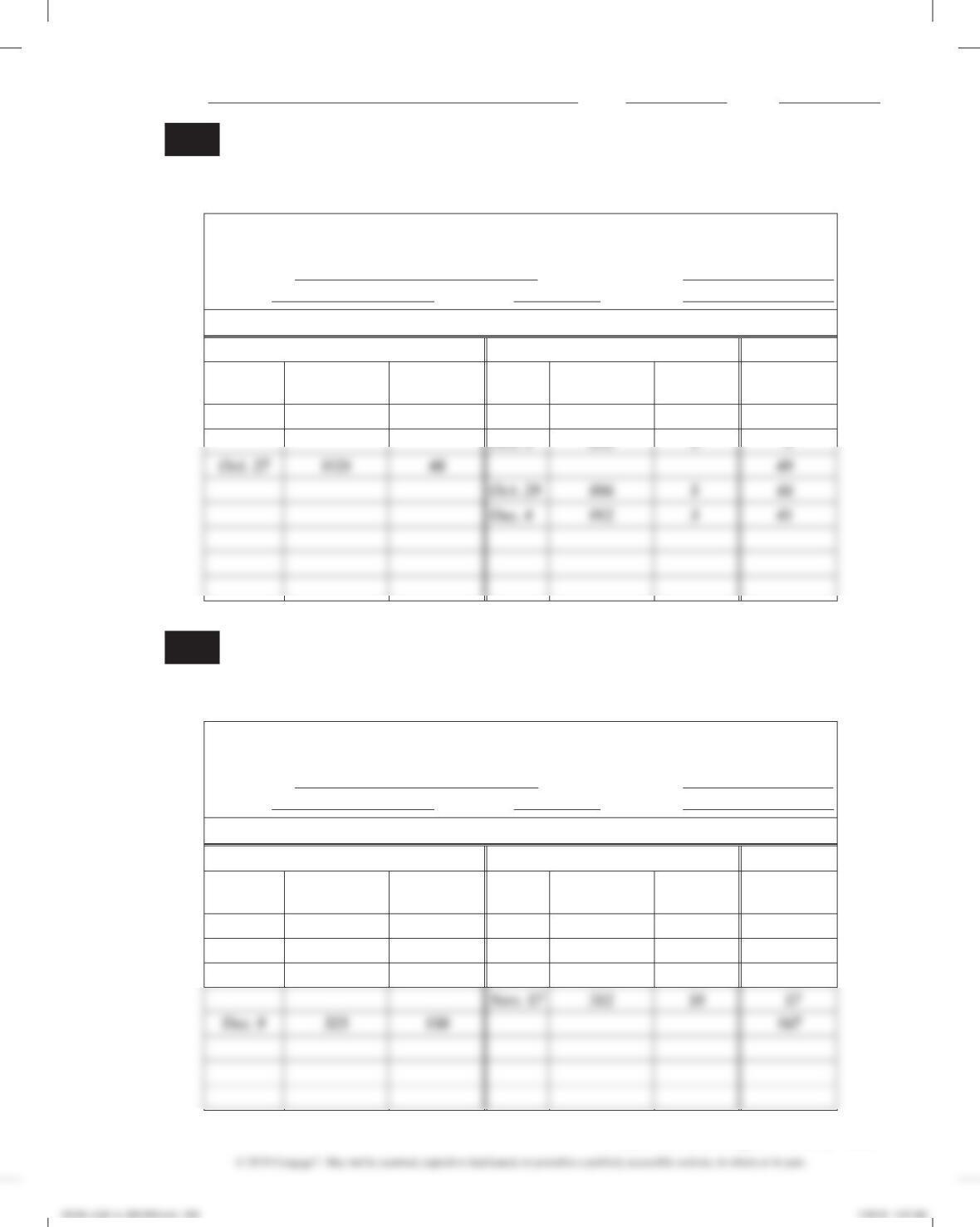
Preparing a stock record
1.
20-1 ON YOUR OWN, p. 625
Preparing a stock record
1.
STOCK RECORD
Description Soaker Hose Stock No. GL764-3
Reorder 40 Minimum 10 Location Bin 41
1 2 3 4 5 6 7
INCREASES DECREASES BALANCE
DATE
PURCHASE
INVOICE NO. QUANTITY DATE
SALES
INVOICE NO. QUANTITY QUANTITY
Sept. 15 715 2 12
STOCK RECORD
Description O-rings Stock No. 7461XG
Reorder 150 Minimum 20 Location Rack 22
1 2 3 4 5 6 7
INCREASES DECREASES BALANCE
DATE
PURCHASE
INVOICE NO. QUANTITY DATE
SALES
INVOICE NO. QUANTITY QUANTITY
Oct. 30 215 15 65
Nov. 4 237 10 55
Nov. 16 286 20 35
610 • Working Papers
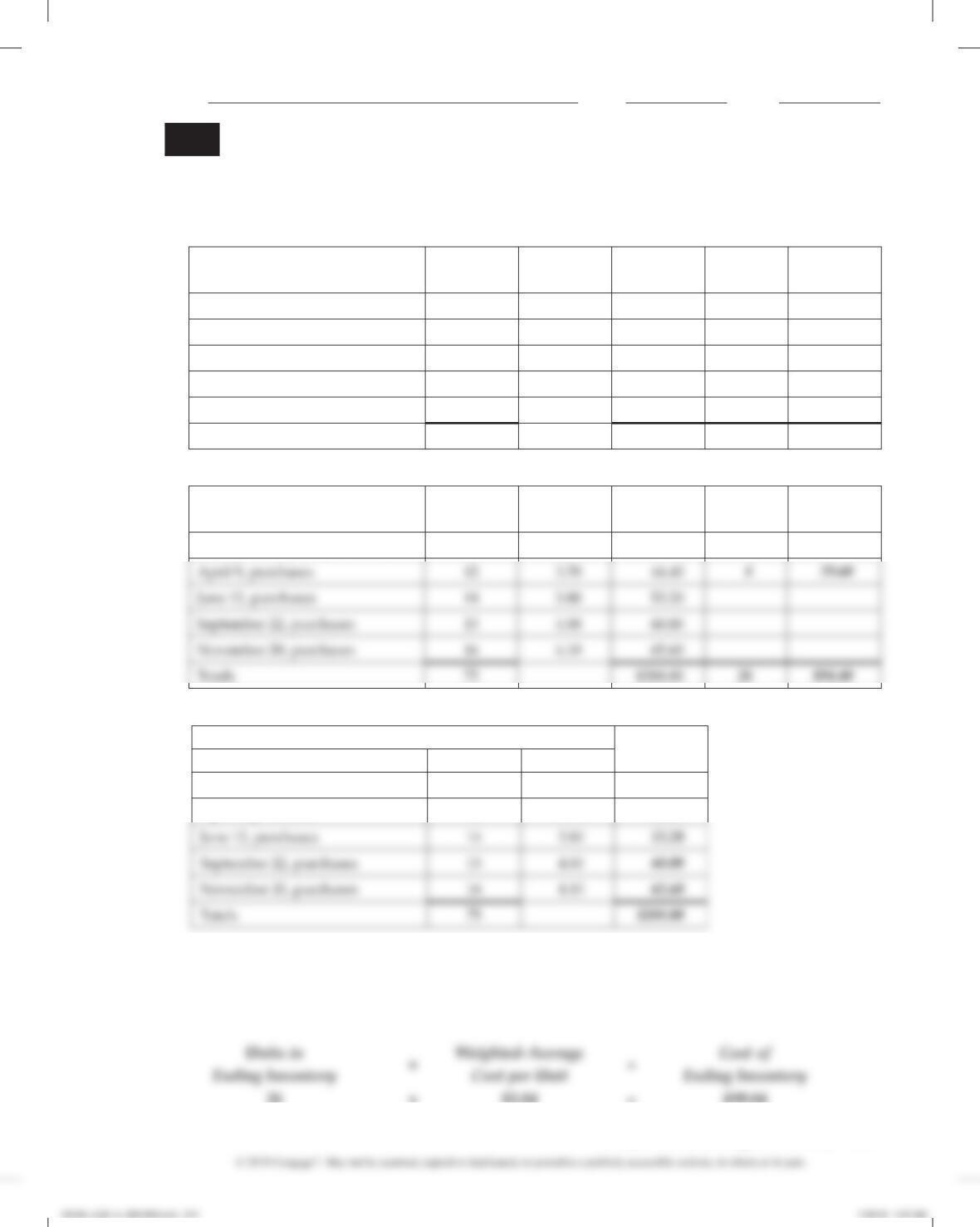
20-2 WORK TOGETHER, p. 632
Determining the cost of inventory using the FIFO, LIFO, and weighted-average inventory
costing methods
FIFO Method
LIFO Method
Weighted-Average Method
Purchase Dates
Units
Purchased Unit Cost Total Cost
FIFO Units
on Hand FIFO Cost
January 1, beginning inventory 14 $32.00 $ 448.00
March 29, purchases 9 34.00 306.00
Purchase Dates
Units
Purchased Unit Cost Total Cost
LIFO Units
on Hand LIFO Cost
January 1, beginning inventory 14 $32.00 $ 448.00
March 29, purchases 9 34.00 306.00
Purchases Total
Cost
Date Units Unit Cost
January 1, beginning inventory 14 $32.00
March 29, purchases 9 34.00
May 6, purchases 10 36.00
TE
Total of Beginning ÷ Total Units = Weighted-Average
Inventory and Purchases Cost per Unit
$1,778.00 ÷ 50 = $35.56
$ 448.00
306.00
360.00
14 $448.00
1 34.00
Chapter 20 Accounting for Inventory • 611
Name Date Class
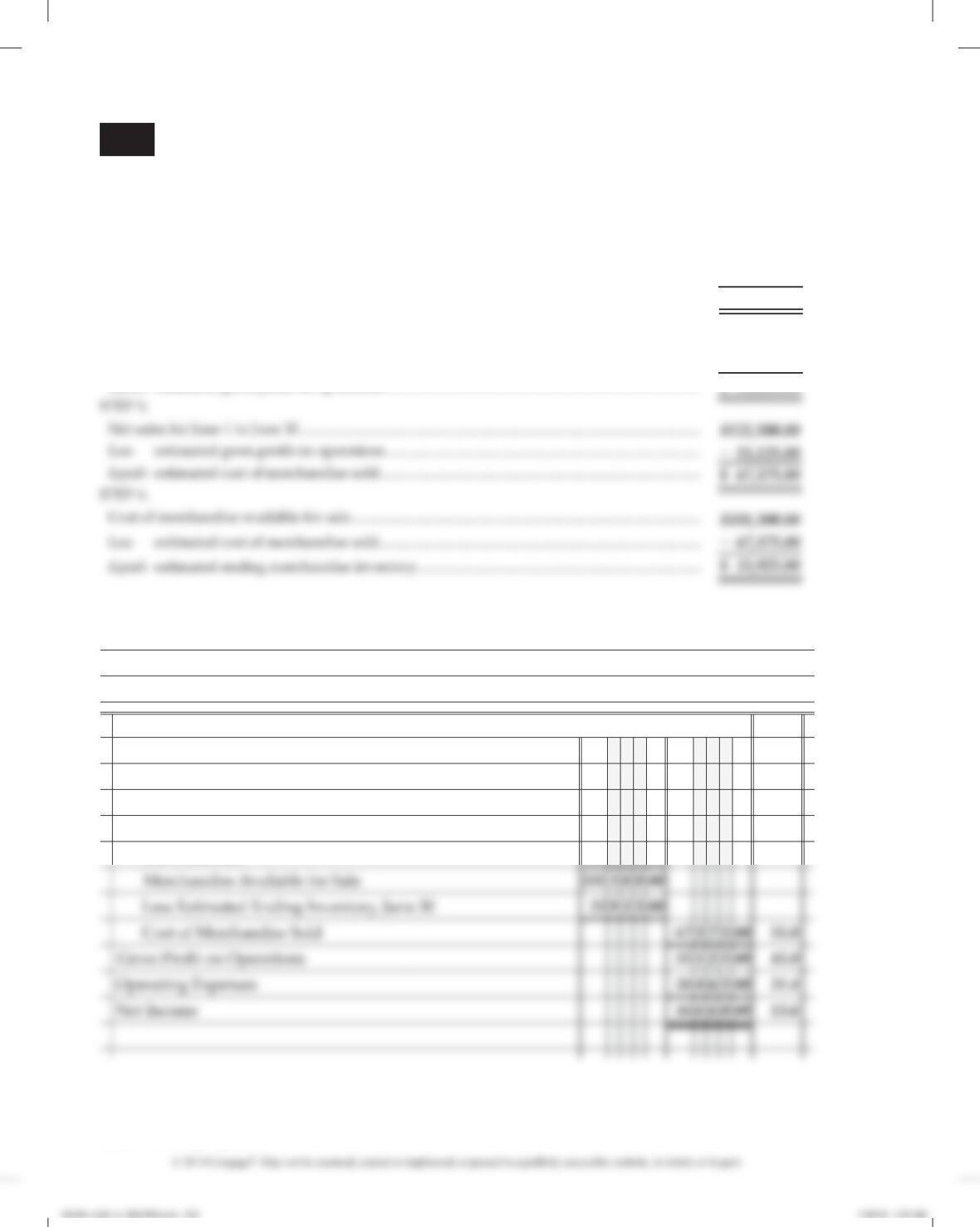
20-2 ON YOUR OWN, p. 632
Determining the cost of inventory using the FIFO, LIFO, and weighted-average inventory
costing methods
Purchase Dates
Units
Purchased Unit Cost Total Cost
FIFO Units
on Hand FIFO Cost
January 1, beginning inventory 18 $3.60 $ 64.80
April 9, purchases 12 3.70 44.40
June 12, purchases 14 3.80 53.20
September 22, purchases 15 4.00 60.00
November 20, purchases 16 4.10 65.60
Totals 75 $288.00
Purchase Dates
Units
Purchased Unit Cost Total Cost
LIFO Units
on Hand LIFO Cost
January 1, beginning inventory 18 $3.60 $ 64.80
Purchases Total
Cost
Date Units Unit Cost
January 1, beginning inventory 18 $3.60
April 9, purchases 12 3.70
FIFO Method
LIFO Method
Weighted-Average Method
Total of Beginning ÷ Total Units = Weighted-Average
Inventory and Purchases Cost per Unit
$288.00 ÷ 75 = $3.84
26 × $3.84 = $99.84
$ 64.80
44.40
18 $64.80
10 $ 40.00
16 65.60
26 $105.60
612 • Working Papers
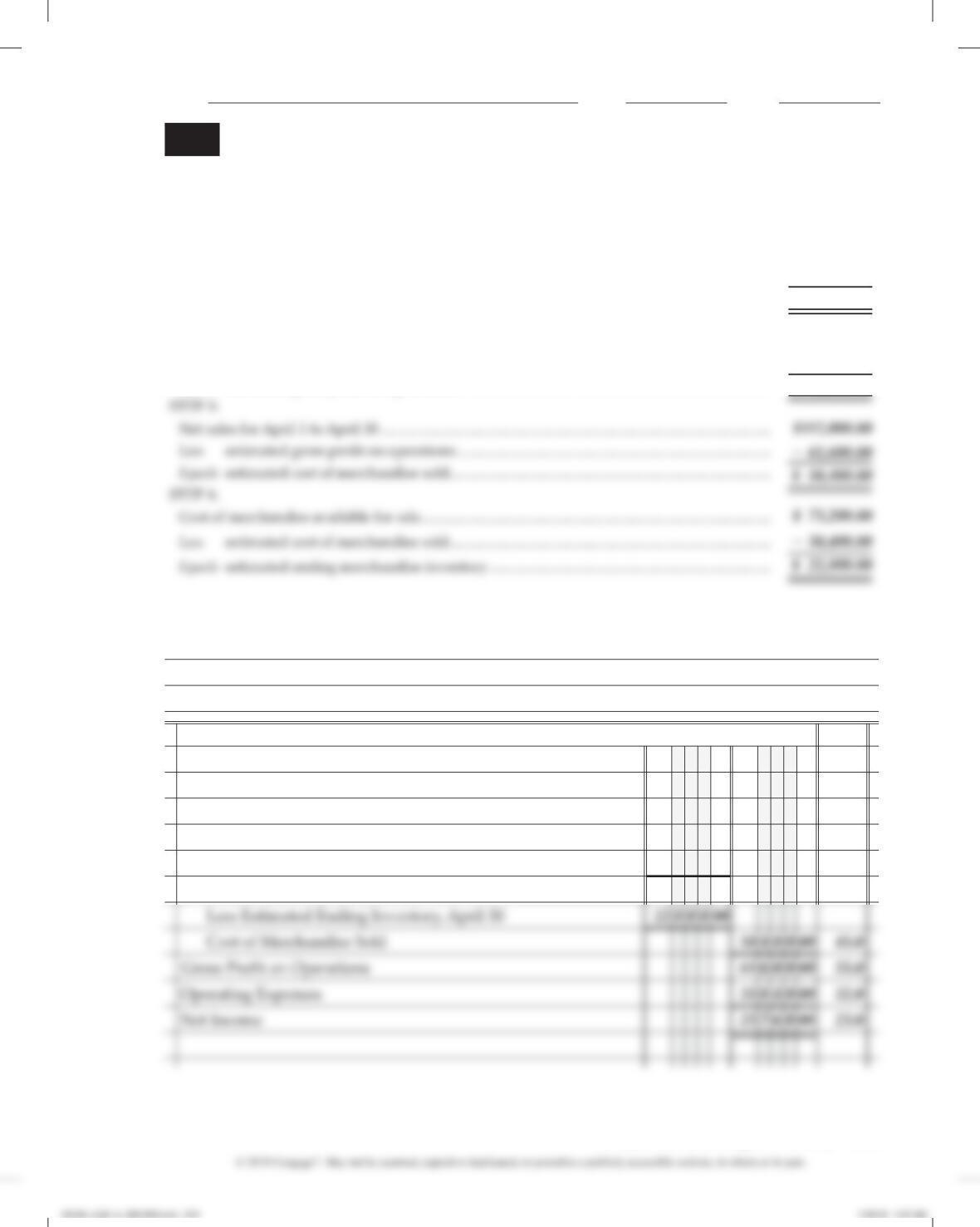
20-3 WORK TOGETHER, p. 635
Estimating ending inventory using the gross profit method
STEP 1:
Beginning inventory, June 1 …………………………………………………………………………………………………….
Plus net purchases for June 1 to June 30 ……………………………………………………………………………..
Equals cost of merchandise available for sale ………………………………………………………………………….
STEP 2:
Net sales for June 1 to June 30 …………………………………………………………………………………………………
Times previous year’s gross prot percentage ……………………………………………………………………….
1.
2.
Goldsmith Company
Income Statement
For Month Ended June 30, 20–
% OF NET
SALES
Operating Revenue:
Net Sales
Cost of Merchandise Sold:
Beginning Inventory, June 1
Net Purchases
TE
$ 77,400.00
+ 23,900.00
$101,300.00
$122,500.00
× 45.0%
122 5 0 0 00 100.0
77 4 0 0 00
23 9 0 0 00
Chapter 20 Accounting for Inventory • 613
Name Date Class
STEP 1:
Beginning inventory, April 1 …………………………………………………………………………………………………..
Plus net purchases for April 1 to April 30 ……………………………………………………………………………
Equals cost of merchandise available for sale ………………………………………………………………………….
STEP 2:
Net sales for April 1 to April 30 ………………………………………………………………………………………………
Times previous year’s gross prot percentage ……………………………………………………………………….
Equals estimated gross prot on operations ……………………………………………………………………………
20-3 ON YOUR OWN, p. 635
Estimating ending inventory using the gross profit method
1.
2.
Leah Enterprises
Income Statement
For Month Ended April 30, 20–
% OF NET
SALES
Operating Revenue:
Net Sales
Cost of Merchandise Sold:
Beginning Inventory, April 1
Net Purchases
Merchandise Available for Sale
$ 49,000.00
+ 24,200.00
$ 73,200.00
$112,000.00
× 55.0%
$ 61,600.00
112 0 0 0 00 100.0
49 0 0 0 00
24 2 0 0 00
73 2 0 0 00
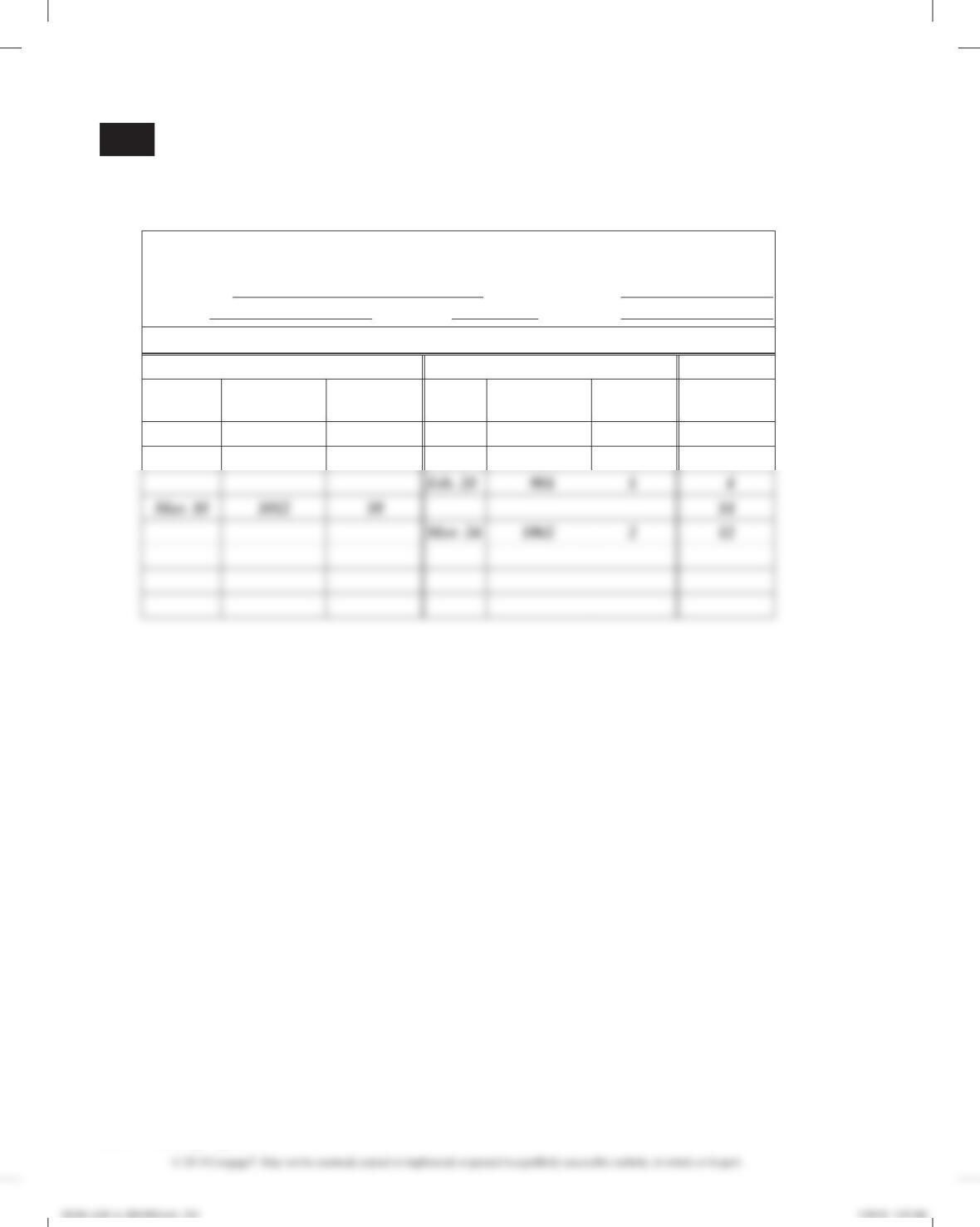
614 • Working Papers
20-1 APPLICATION PROBLEM (LO1), p. 639
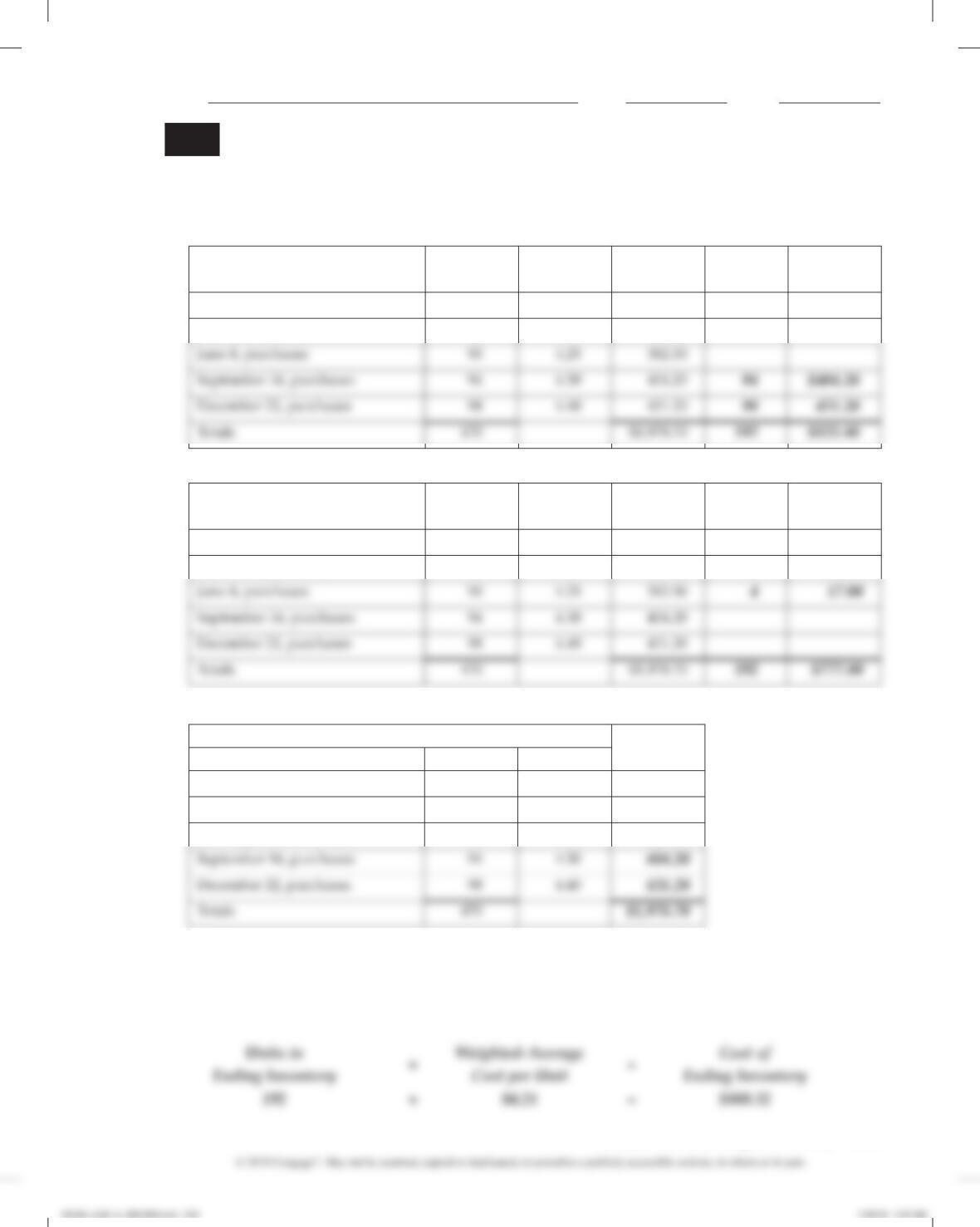
Preparing a stock record
STOCK RECORD
Description 42-inch Flat-Screen Television Stock No. 891DC-5
Reorder 10 Minimum 4 Location Shelf B17
1 2 3 4 5 6 7
INCREASES DECREASES BALANCE
DATE
PURCHASE
INVOICE NO. QUANTITY DATE
SALES
INVOICE NO. QUANTITY QUANTITY
Jan. 3 872 1 7
TE
Feb. 4 910 2 5
Chapter 20 Accounting for Inventory • 615
Name Date Class
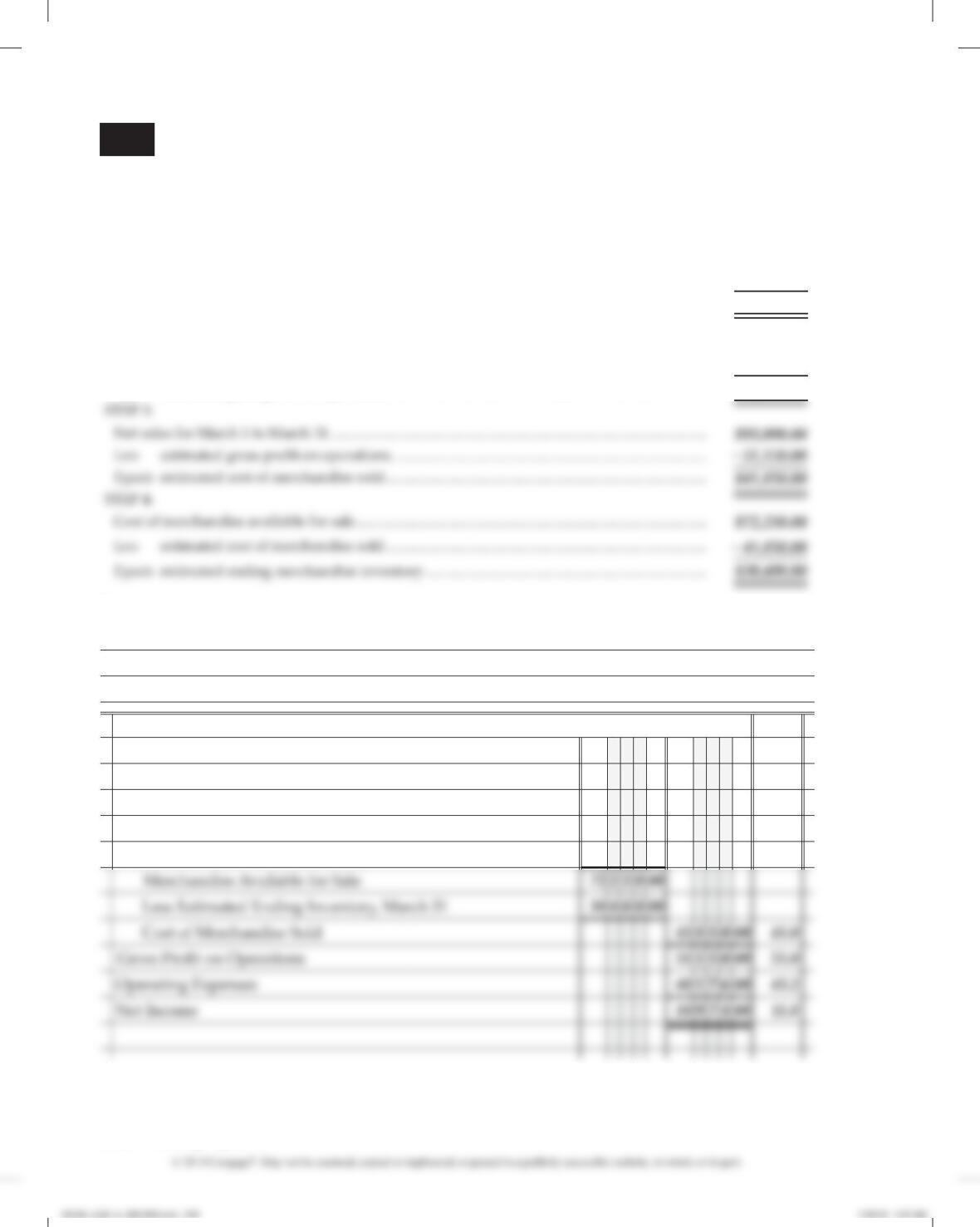
20-2 APPLICATION PROBLEM (LO2, 3, 4), p. 639
Determining the cost of inventory using the FIFO, LIFO, and weighted-average inventory
costing methods
Purchase Dates
Units
Purchased Unit Cost Total Cost
FIFO Units
on Hand FIFO Cost
January 1, beginning inventory 100 $4.00 $ 400.00
March 13, purchases 88 4.10 360.80
Purchase Dates
Units
Purchased Unit Cost Total Cost
LIFO Units
on Hand LIFO Cost
January 1, beginning inventory 100 $4.00 $ 400.00
March 13, purchases 88 4.10 360.80
Purchases Total
Cost
Date Units Unit Cost
January 1, beginning inventory 100 $4.00
March 13, purchases 88 4.10
June 8, purchases 90 4.25
FIFO Method
LIFO Method
Weighted-Average Method
Total of Beginning ÷ Total Units = Weighted-Average
Inventory and Purchases Cost per Unit
$1,978.70 ÷ 470 = $4.21
100 $400.00
88 360.80
$ 400.00
360.80
382.50
616 • Working Papers
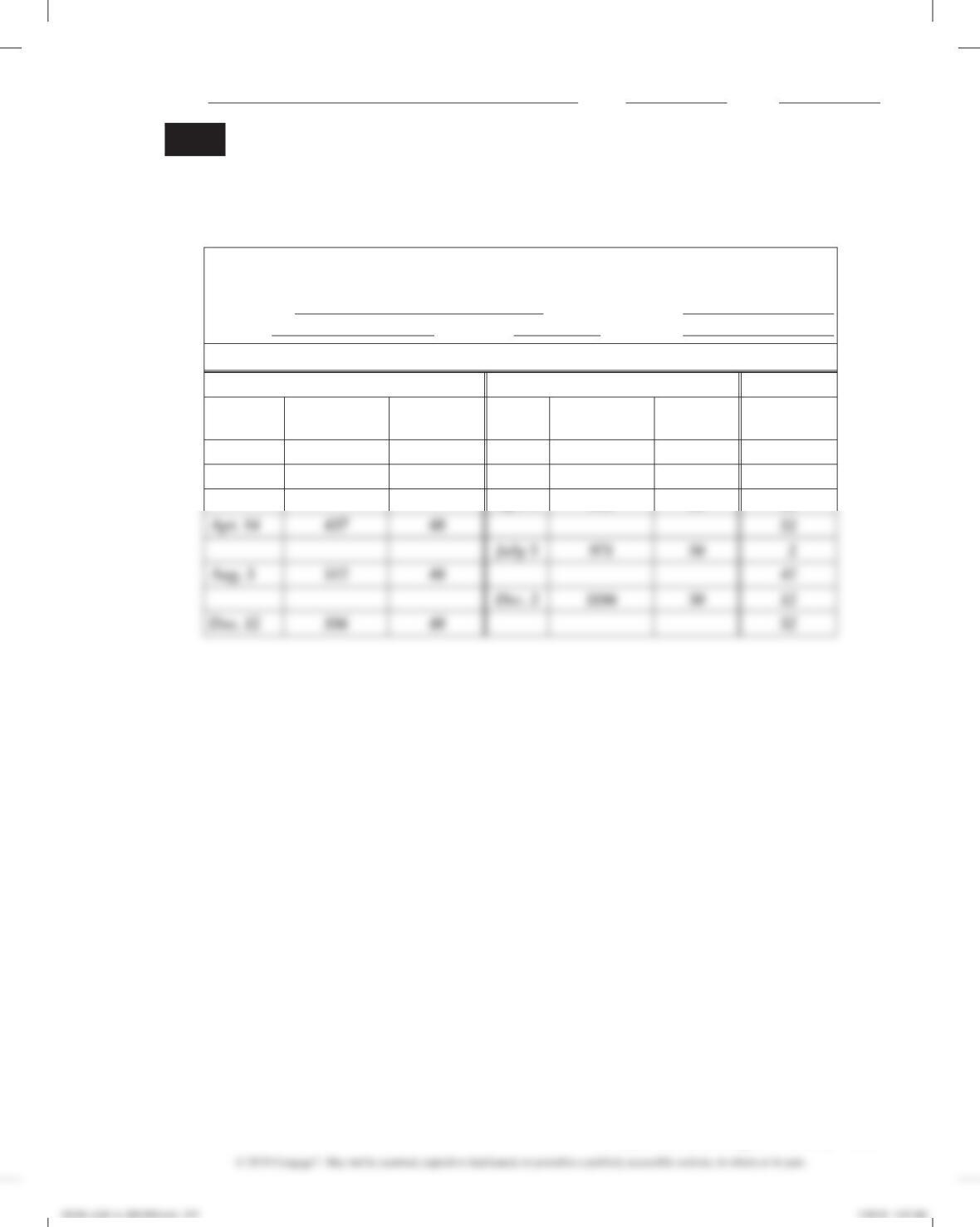
20-3 APPLICATION PROBLEM (LO5), p. 639
Estimating ending inventory using the gross profit method
1.
2.
STEP 1:
Beginning inventory, March 1 ………………………………………………………………………………………………..
Plus net purchases for March 1 to March 31 ………………………………………………………………………..
Equals cost of merchandise available for sale ………………………………………………………………………….
STEP 2:
Net sales for March 1 to March 31 …………………………………………………………………………………………..
Times previous year’s gross prot percentage ……………………………………………………………………….
Equals estimated gross prot on operations ……………………………………………………………………………
Lee Industries
Income Statement
For Month Ended March 31, 20–
% OF NET
SALES
Operating Revenue:
Net Sales
Cost of Merchandise Sold:
Beginning Inventory, March 1
Net Purchases
TE
$49,350.00
+22,900.00
$72,250.00
$93,000.00
× 55.0%
$51,150.00
93 0 0 0 00 100.0
49 3 5 0 00
22 9 0 0 00
Chapter 20 Accounting for Inventory • 617
Name Date Class
20-M MASTERY PROBLEM (LO2, 3, 4), p. 640
Determining the cost of inventory using the FIFO, LIFO, and weighted-average inventory
costing methods
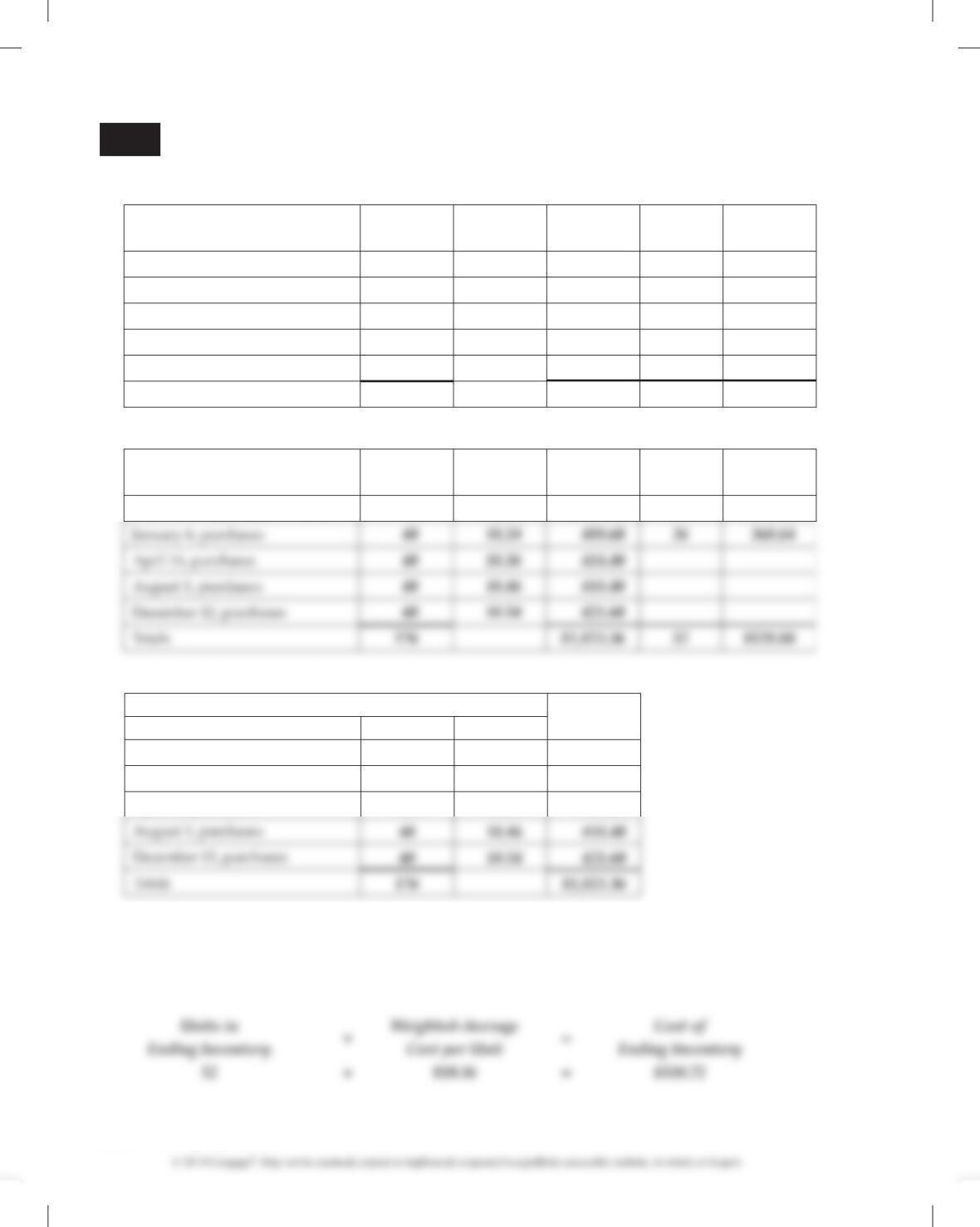
1.
STOCK RECORD
Description Print Cartridge Stock No. 120-HP
Reorder 40 Minimum 20 Location Bin 27-X
1 2 3 4 5 6 7
INCREASES DECREASES BALANCE
DATE
PURCHASE
INVOICE NO. QUANTITY DATE
SALES
INVOICE NO. QUANTITY QUANTITY
Jan. 1 16 16
Jan. 6 361 40 56
Apr. 5 812 44 12
618 • Working Papers
20-M MASTERY PROBLEM (continued)
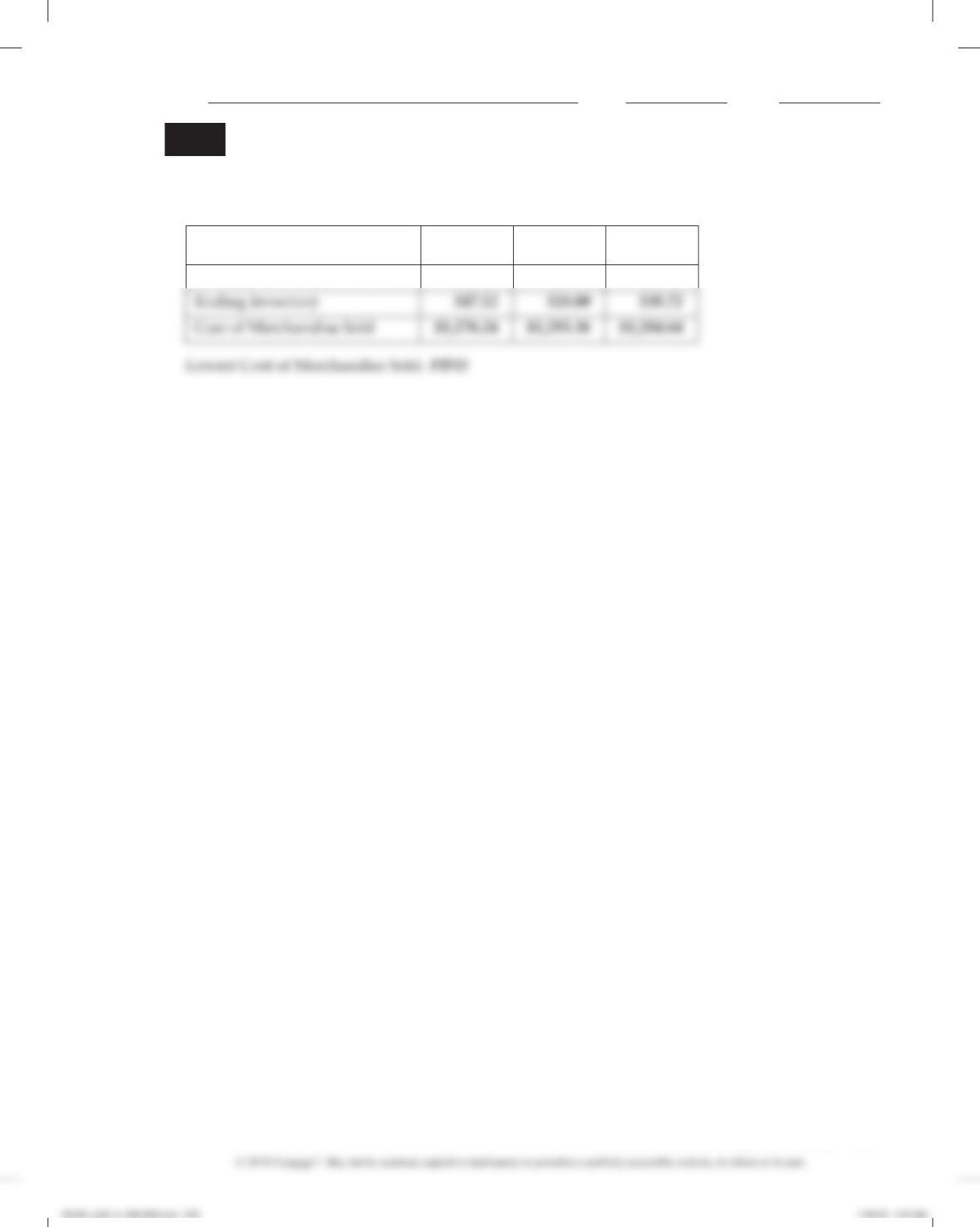
Purchase Dates
Units
Purchased Unit Cost Total Cost
FIFO Units
on Hand FIFO Cost
January 1, beginning inventory 16 $ 9.96 $ 159.36
January 6, purchases
April 14, purchases
August 3, purchases
December 12, purchases
Totals
Purchase Dates
Units
Purchased Unit Cost Total Cost
LIFO Units
on Hand LIFO Cost
January 1, beginning inventory 16 $ 9.96 $ 159.36
Purchases Total
Cost
Date Units Unit Cost
January 1, beginning inventory 16 $ 9.96
January 6, purchases
April 14, purchases
2. FIFO Method
LIFO Method
Weighted-Average Method
TE
Total of Beginning ÷ Total Units = Weighted-Average
Inventory and Purchases Cost per Unit
$1,823.36 ÷ 176 = $10.36
40 10.24 409.60
40 10.36 414.40
40 10.46 418.40 12 $125.52
40 10.54 421.60 40 421.60
176 $1,823.36 52 $547.12
16 $159.36
$ 159.36
40 10.24 409.60
40 10.36 414.40
23148_ch20_hr_605-656.indd 618 1/18/18 1:37 AM
Chapter 20 Accounting for Inventory • 619
Name Date Class
20-M MASTERY PROBLEM (concluded)
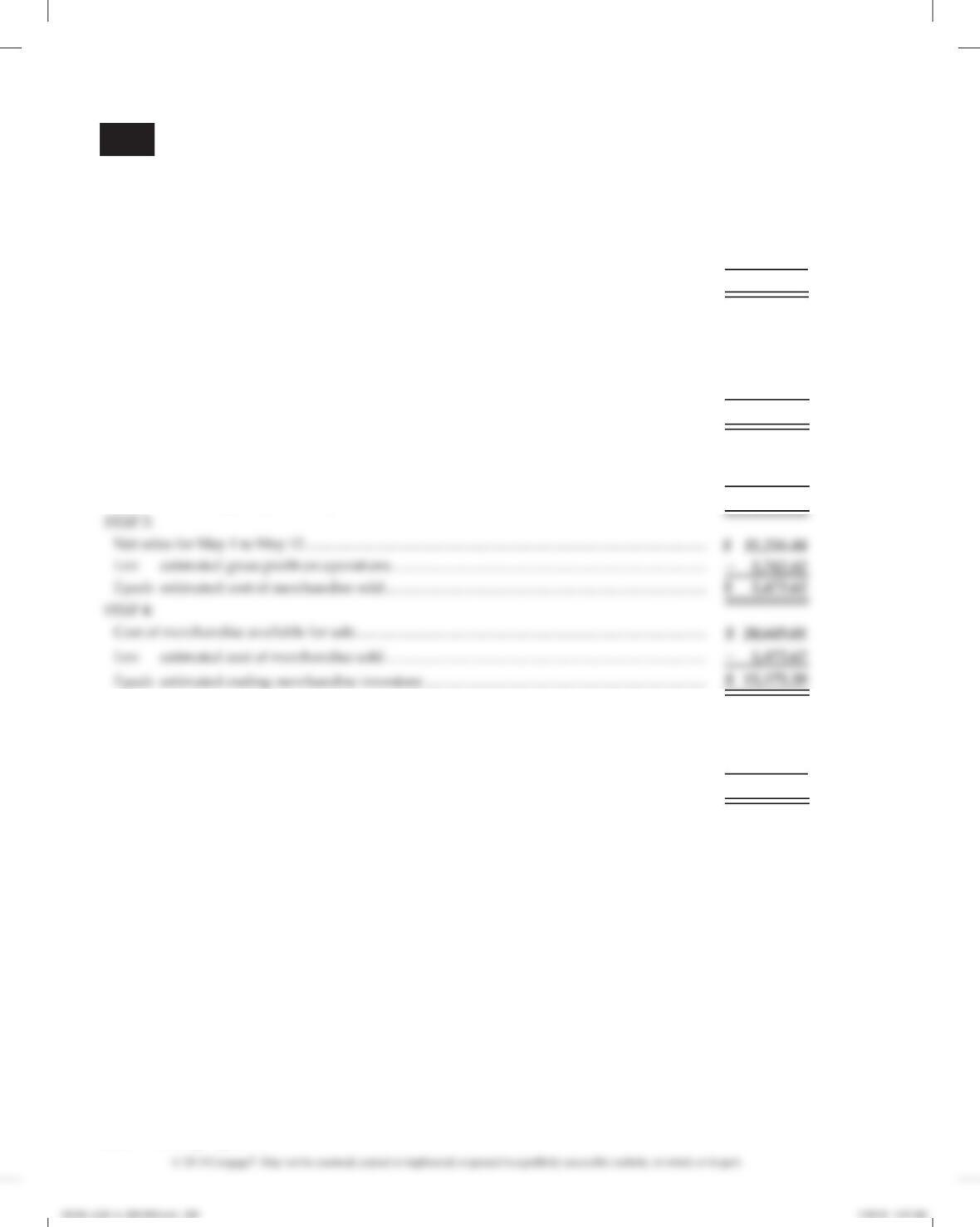
3.
FIFO LIFO
Weighted-
Average
Merchandise Available for Sale
$1,823.36 $1,823.36 $1,823.36
620 • Working Papers
20-C CHALLENGE PROBLEM (LO5), p. 640
Determining the cost of merchandise inventory destroyed in a fire
2.
1.
3.
Gross prot on operations ………………………………………………………………………………………………………..
Divided by net sales ………………………………………………………………………………………………………………….
Equals gross prot percentage of net sales (prior year) …………………………………………………………..
Estimated merchandise inventory, May 12 ……………………………………………………………………………….
Less cost of merchandise inventory not destroyed ………………………………………………………………
Equals estimated cost of merchandise inventory destroyed …………………………………………………….
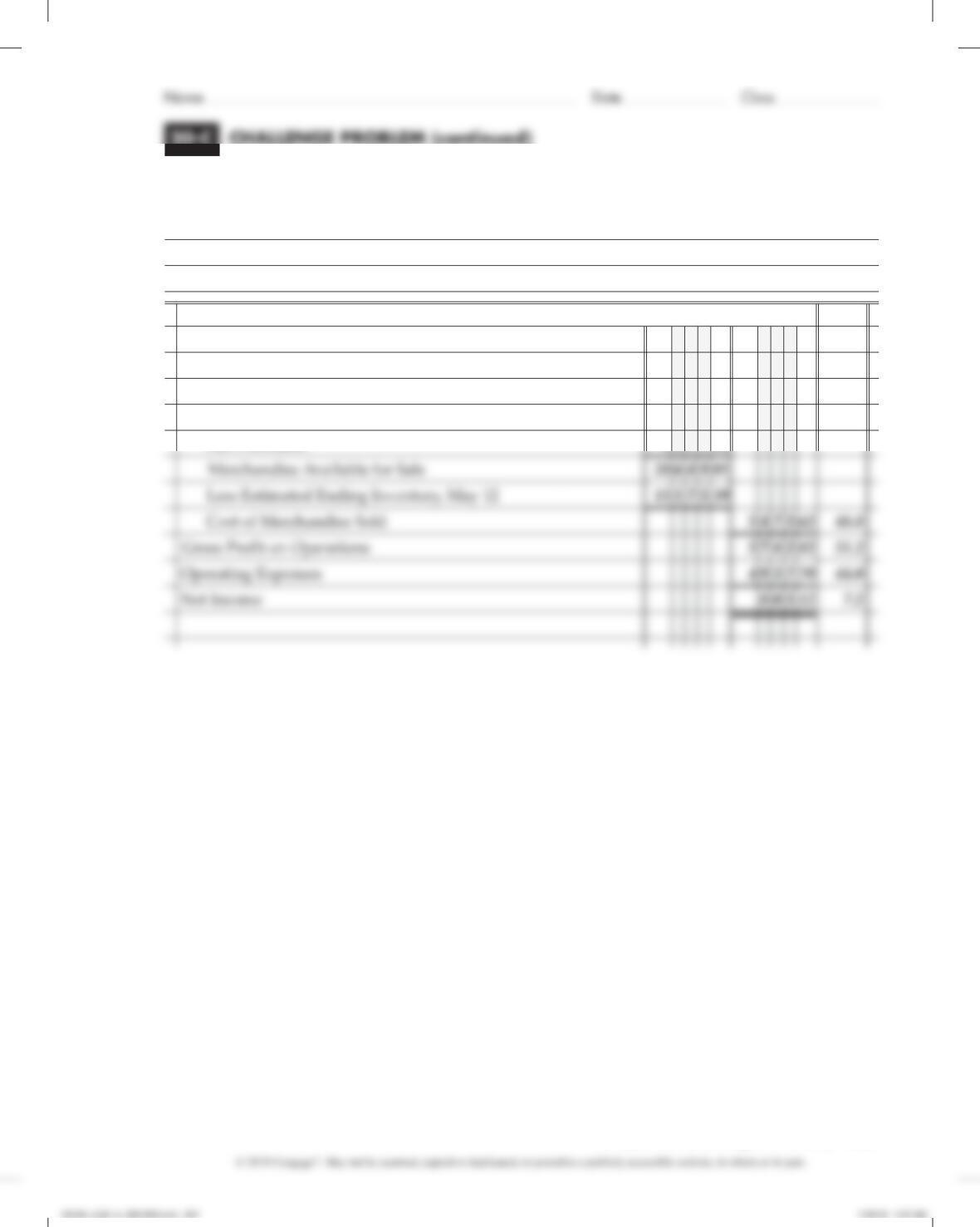
STEP 1:
Beginning inventory, May 1 …………………………………………………………………………………………………….
Plus net purchases for May 1 to May 12 ……………………………………………………………………………..
Equals cost of merchandise available for sale ………………………………………………………………………….
STEP 2:
Net sales for May 1 to May 12 …………………………………………………………………………………………………
Times previous year’s gross prot percentage ……………………………………………………………………….
Equals estimated gross prot on operations ……………………………………………………………………………
TE
$ 17,271.99
+ 3,377.02
$ 20,649.01
$ 11,216.44
× 51.2%
$ 5,742.82
$ 161,949.70
÷316,308.00
51.2%
$ 15,175.39
− 945.00
$ 14,230.39
Chapter 20 Accounting for Inventory • 621
4.
Albertson Painting Company
Income Statement
For the Period May 1 to May 12, 20–
% OF NET
SALES
Operating Revenue:
Net Sales
Cost of Merchandise Sold:
Beginning Inventory, May 1
11 2 1 6 44 100.0
17 2 7 1 99
622 • Working Papers
20-C CHALLENGE PROBLEM (concluded)
TE
Book value of the inventory is the value shown on Albertson Painting’s financial records.
Since Albertson Painting does not maintain a perpetual inventory, the book value is the
amount of estimated ending inventory on May 12.
Replacement value of the inventory is the amount Albertson Painting would have to pay to
replace the inventory at current prices.
5.
Name Date Class
Reinforcement Activity 3, Part A • 623
Name Date Class
REINFORCEMENT ACTIVITY 3, Part A, p. 643-645
An Accounting Cycle for a Corporation: Journalizing and Posting Transactions
1.
GENERAL JOURNAL PAGE 12
DATE ACCOUNT TITLE DOC.
NO.
POST.
REF. DEBIT CREDIT
1
20X4
Dec. 6 Supplies M25 1140 7 2 4 80 1
2Accounts Payable/Dreyfus Company 2105
220 7 2 4 80 2
37Notes Receivable NR30 1125 7 2 0 0 00 3
13 Medicare Tax Payable 2140 8 1 78 13
14 Unemployment Tax Payable—State 2150 6 0 48 14
15 Unemployment Tax Payable—Federal 2155 8 96 15
16 22 Sales Returns and Allowances CM8 4115 2 4 0 00 16
17 Sales Tax Payable 2110 1 4 40 17
18 Accounts Receivable/Rao Deli 1115160 2 5 4 40 18
19 19
20 20
21 21
31 31
32 32
28 Depreciation Expense—Office Equipment M29 6120 4 8 0 00
Accum. Depreciation—Office Equipment 1210 4 8 0 00
28 Accounts Receivable/Bakery Depot M30 1115 110 1 8 9 6 00
624 • Working Papers
REINFORCEMENT ACTIVITY 3, Part A (continued)
1., 2.
SALES JOURNAL PAGE 12
123
DATE ACCOUNT DEBITED SALE
NO.
POST.
REF.
ACCOUNTS
RECEIVABLE
DEBIT
SALES
CREDIT
SALES TAX
PAYABLE
CREDIT
1
20X4
Dec. 5Huang Restaurant 425 140 1 0 6 0 00 1 0 0 0 00 6 0 00 1
29Rao Deli 426 160 1 0 1 7 60 9 6 0 00 5 7 60 2
320 Hilltop Hospital 427 130 3 1 2 0 00 3 1 2 0 00 3
7 7
8 8
9 9
10 10
11 11
12 12
13 13
14 14
15 15
16 16
17 17
18 18
19 19
20 20
21 21
22 22
23 23
24 24
25 25
26 26
27 27
28 28
29 29
30 30
31 31
32 32
TE