Problem 2-25A (continued)
5. The amount of overhead cost in Work in Process was:
$24,000 direct materials cost × 160% = $38,400
The amount of direct labor cost in Work in Process is:
1.
a.
Raw Materials ………………………………
200,000
Accounts Payable …………………….
200,000
b.
Work in Process …………………………...
185,000
Raw Materials ………………………….
185,000
Manufacturing Overhead ………………..
63,000
Utilities Expense …………………………..
Accounts Payable …………………….
d.
Work in Process …………………………...
Manufacturing Overhead ………………..
90,000
Salaries Expense …………………………..
110,000
Salaries and Wages Payable ……….
430,000
e.
Manufacturing Overhead ………………..
54,000
Accounts Payable …………………….
54,000
f.
Advertising Expense ………………………
136,000
Accounts Payable …………………….
136,000
g.
Manufacturing Overhead ………………..
76,000
Depreciation Expense…………………….
19,000
Accumulated Depreciation ………….
95,000
Manufacturing Overhead ………………..
102,000
Rent Expense ………………………………
18,000
Accounts Payable …………………….
120,000
Work in Process …………………………...
390,000
Manufacturing Overhead ……………
390,000
Problem 2-26A (continued)
j.
Finished Goods …………………………….
770,000
Work in Process ……………………….
770,000
Accounts Receivable ………………………
Sales ……………………………………..
Cost of Goods Sold ………………………..
800,000
Problem 2-26A (continued)
2.
Accounts Receivable
Sales
(k)
1,200,000
(k)
1,200,000
Bal.
30,000
185,000
(k)
800,000
(a)
(b)
Bal.
45,000
Bal.
21,000
(j)
770,000
(c)
63,000
(b)
(d)
(d)
230,000
(e)
54,000
390,000
(g)
76,000
Bal.
56,000
(h)
102,000
Bal.
Finished Goods
Advertising Expense
Bal.
60,000
(k)
800,000
(f)
136,000
(j)
770,000
Bal.
30,000
Accumulated Depreciation
Utilities Expense
(g)
95,000
(c)
7,000
(a)
200,000
(d)
110,000
(c)
(e)
54,000
(f)
(g)
(h)
120,000
(d)
430,000
(h)
18,000
Problem 2-26A (continued)
3.
Froya Fabrikker A/S
Schedule of Cost of Goods Manufactured
Direct materials:
Raw materials inventory, beginning ……..
$ 30,000
Purchases of raw materials …………………
Materials available for use ………………….
Raw materials inventory, ending ………….
$185,000
Direct labor ……………………………………….
Total manufacturing costs …………………….
Add: Work in process, beginning ……………
Deduct: Work in process, ending ……………
Cost of goods manufactured …………………
4.
Manufacturing Overhead ………………………
5,000
Cost of Goods Sold …………………………
5,000
Schedule of cost of goods sold:
Finished goods inventory, beginning …….
$ 60,000
Add: Cost of goods manufactured ………..
Goods available for sale …………………….
Deduct: Overapplied overhead …………….
Adjusted cost of goods sold ………………..
Problem 2-26A (continued)
5.
Froya Fabrikker A/S
Income Statement
Sales ……………………………………………..
$1,200,000
Cost of goods sold …………………………….
795,000
Gross margin …………………………………..
405,000
Selling and administrative expenses:
Net operating income ………………………..
6.
Direct materials …………………………………………………
$ 8,000
Direct labor ………………………………………………………
9,200
Total manufacturing cost …………………………………….
Add markup (60% × $32,800) ……………………………..
Total billed price of Job 412 …………………………..…….
Problem 2-27A (60 minutes)
1.
a.
Raw Materials ………………………………….
275,000
Cash …………………………………………
275,000
b.
Work in Process ……………………………….
220,000
Manufacturing Overhead ……………………
60,000
Raw Materials ……………………………..
280,000
Work in Process ……………………………….
180,000
Manufacturing Overhead ……………………
Salaries Expense ………………………………
90,000
Cash …………………………………………
405,000
d.
Manufacturing Overhead ……………………
13,000
Rent Expense ………………………………….
Manufacturing Overhead ……………………
f.
Advertising Expense ………………………….
140,000
Cash …………………………………………
140,000
g.
Manufacturing Overhead ……………………
88,000
Depreciation Expense ………………………..
12,000
Accumulated Depreciation ……………..
100,000
Work in Process ……………………………….
297,000
Manufacturing Overhead ……………….
297,000
Problem 2-27A (continued)
i.
Finished Goods ………………………………..
675,000
Cash ………………………………………………
Cost of Goods Sold …………………………...
700,000
2.
Raw Materials
Work in Process
Bal.
25,000
(b)
280,000
Bal.
10,000
(i)
675,000
(a)
275,000
(b)
220,000
Bal.
20,000
(c)
180,000
(h)
297,000
Bal.
32,000
Bal.
40,000
(j)
(b)
60,000
(h)
(i)
675,000
(c)
72,000
Bal.
15,000
(d)
13,000
(e)
57,000
(g)
88,000
Bal.
(j)
700,000
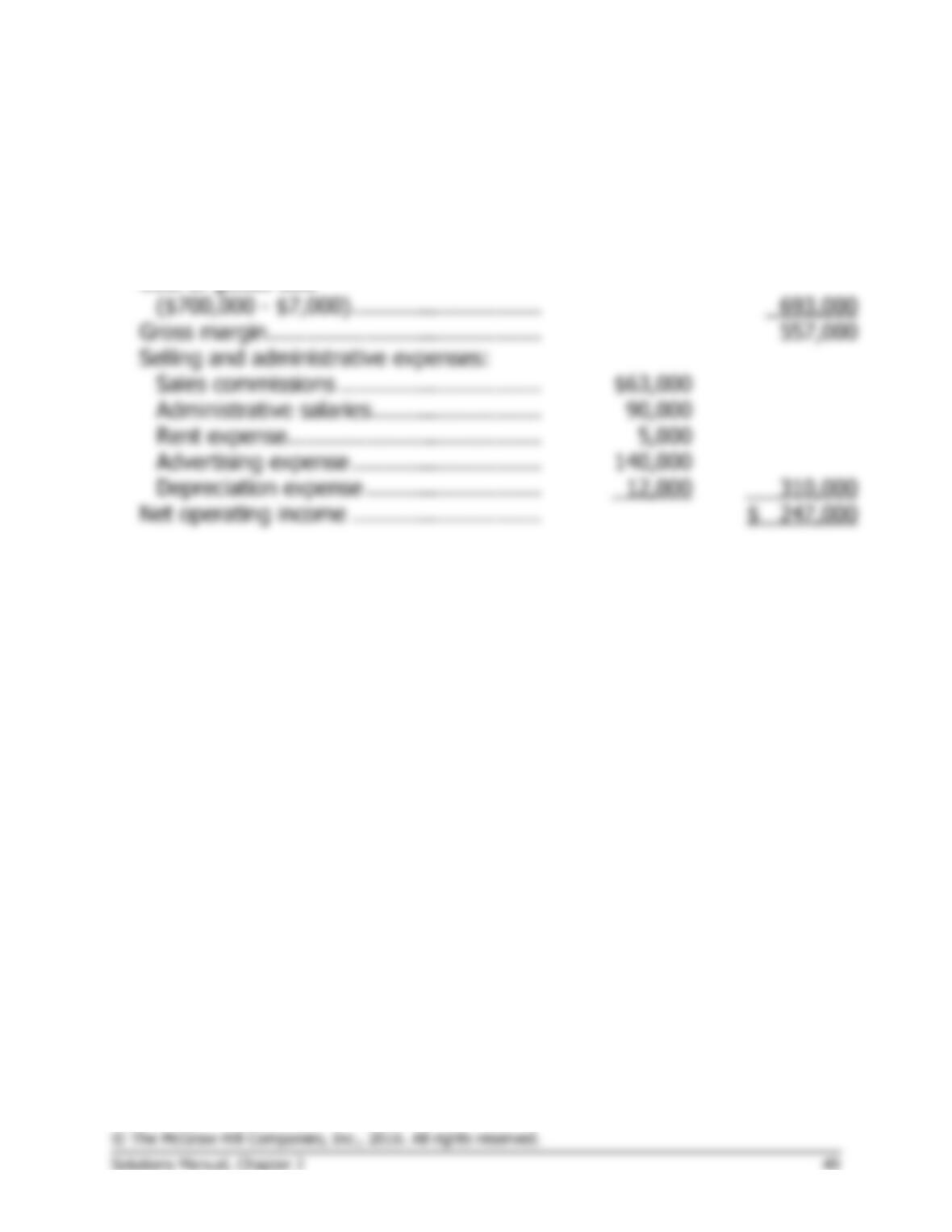
3. Manufacturing overhead is overapplied by $7,000 for the year. The en-
try to close this balance to Cost of Goods Sold would be:
Problem 2-27A (continued)
4.
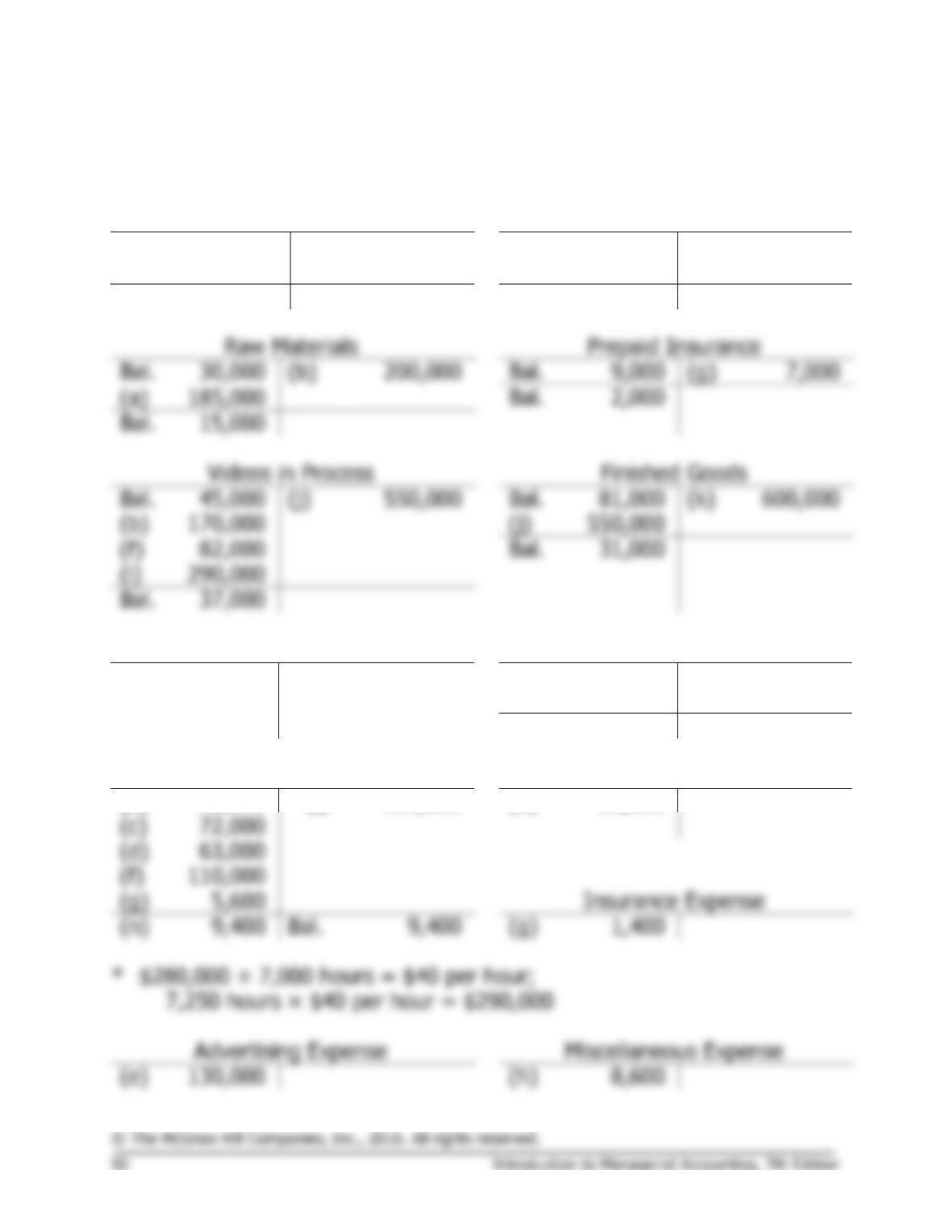
Gold Nest Company
Income Statement
Sales ……………………………………………..
$1,250,000
Selling and administrative expenses:
Net operating income ………………………..
Cost of goods sold
Problem 2-28A (60 minutes)
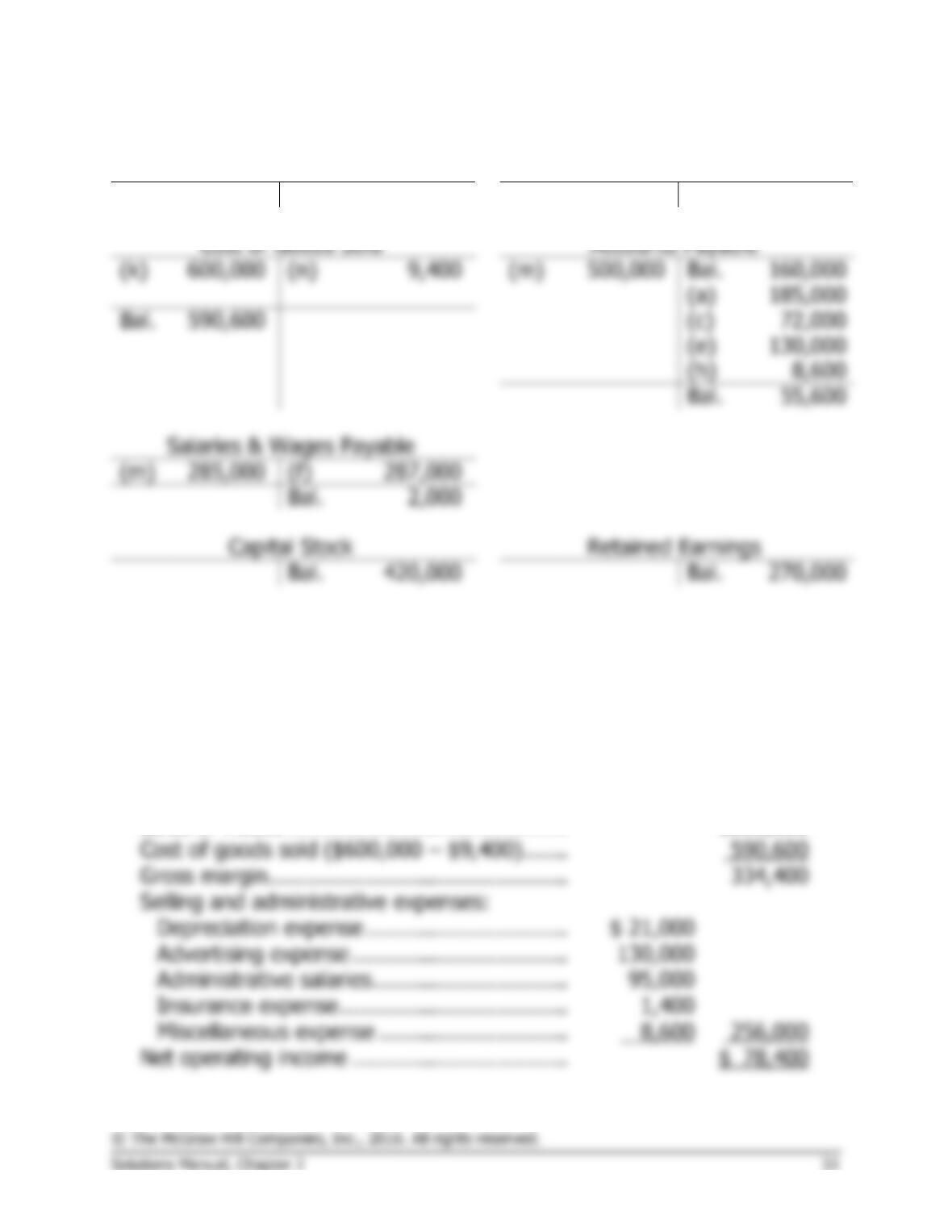
1. and 2.
Cash
Accounts Receivable
Bal.
63,000
(m)
785,000
Bal.
102,000
(l)
850,000
(l)
850,000
(k)
925,000
Bal.
128,000
Bal.
177,000
(a)
Bal.
Bal.
15,000
Videos in Process
Bal.
45,000
(j)
Bal.
(k)
(b)
(j)
550,000
(f)
82,000
Bal.
31,000
(i)
Bal.
37,000
Studio and Equipment
Accumulated Depreciation
Bal.
730,000
Bal.
210,000
(d)
84,000
Bal.
294,000
Studio Overhead
Depreciation Expense
(b)
30,000
* (i)
290,000
(d)
21,000
(c)
72,000
(d)
63,000
(f)
110,000
(g)
(n)
9,400
Bal.
(g)
Problem 2-28A (continued)
Administrative Salaries Expense
Sales
(f)
95,000
(k)
925,000
(k)
(n)
(m)
500,000
Bal.
185,000
Bal.
(c)
130,000
Bal.
Bal.
Bal.
3. Overhead is overapplied for the year by $9,400. Entry (n) above records
the closing of this overapplied overhead balance to Cost of Goods Sold.
4.
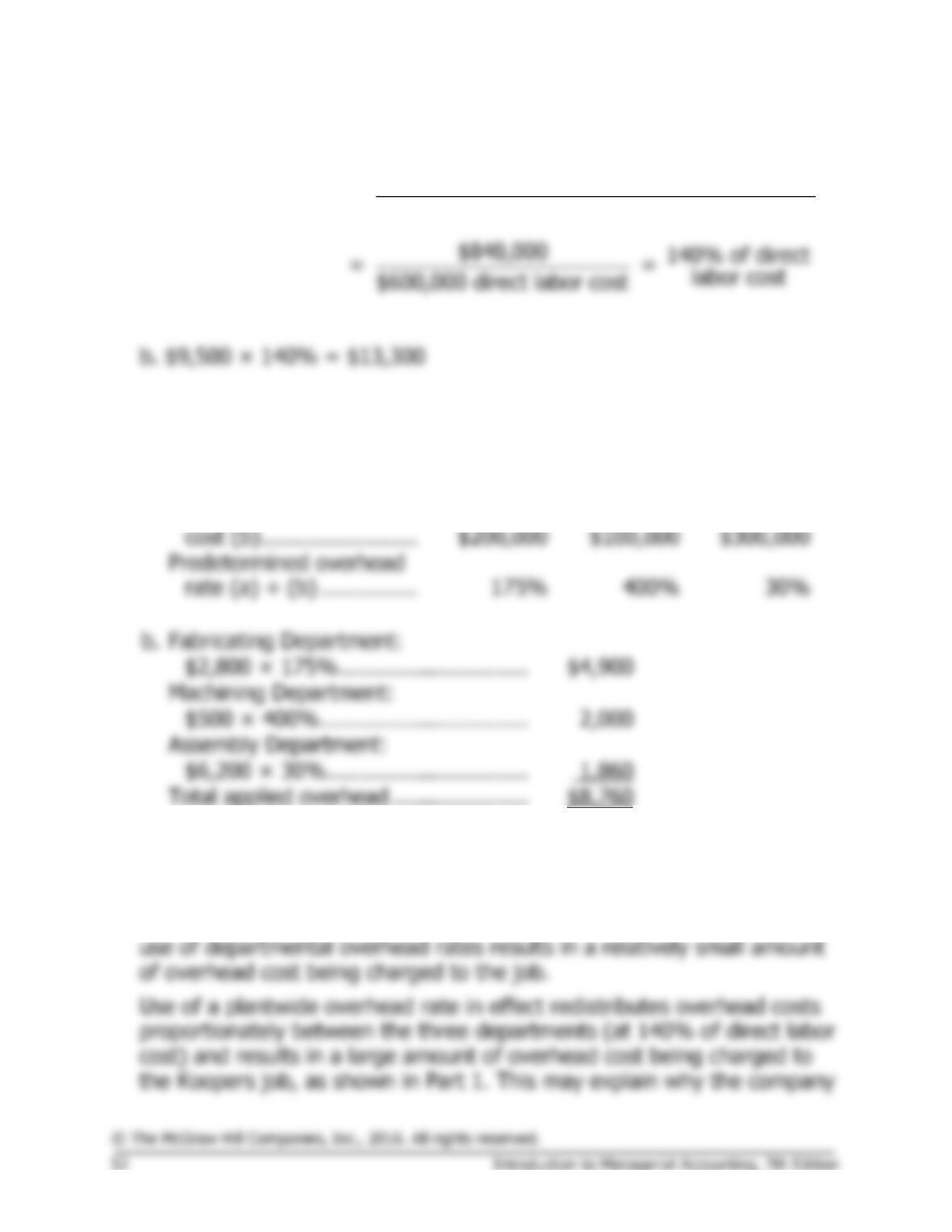
Supreme Videos, Inc.
Income Statement
For the Year Ended December 31
Sales of videos …………………………………….
$925,000
Cost of goods sold ($600,000 – $9,400) …….
130,000
Administrative salaries …………………………
Insurance expense ……………………………..
Case (60 minutes)
1.
a.
Estimated total manufacturing overhead cost
Predetermined =
overhead rate Estimated total amount of the allocation base
2.
a.
Fabricating
Department
Machining
Department
Assembly
Department
Estimated manufacturing
overhead cost (a) ………
$350,000
$400,000
$ 90,000
Predetermined overhead
rate (a) ÷ (b) ……………
Fabricating Department:
Machining Department:
Assembly Department:
Total applied overhead …………………
Estimated direct labor
3. The bulk of the labor cost on the Koopers job is in the Assembly De-
partment, which incurs very little overhead cost. The department has an
overhead rate of only 30% of direct labor cost as compared to much
higher rates in the other two departments. Therefore, as shown above,
Case (continued)
bid too high and lost the job. Too much overhead cost was assigned to
the job for the kind of work being done on the job in the plant.
4. The company’s bid was:
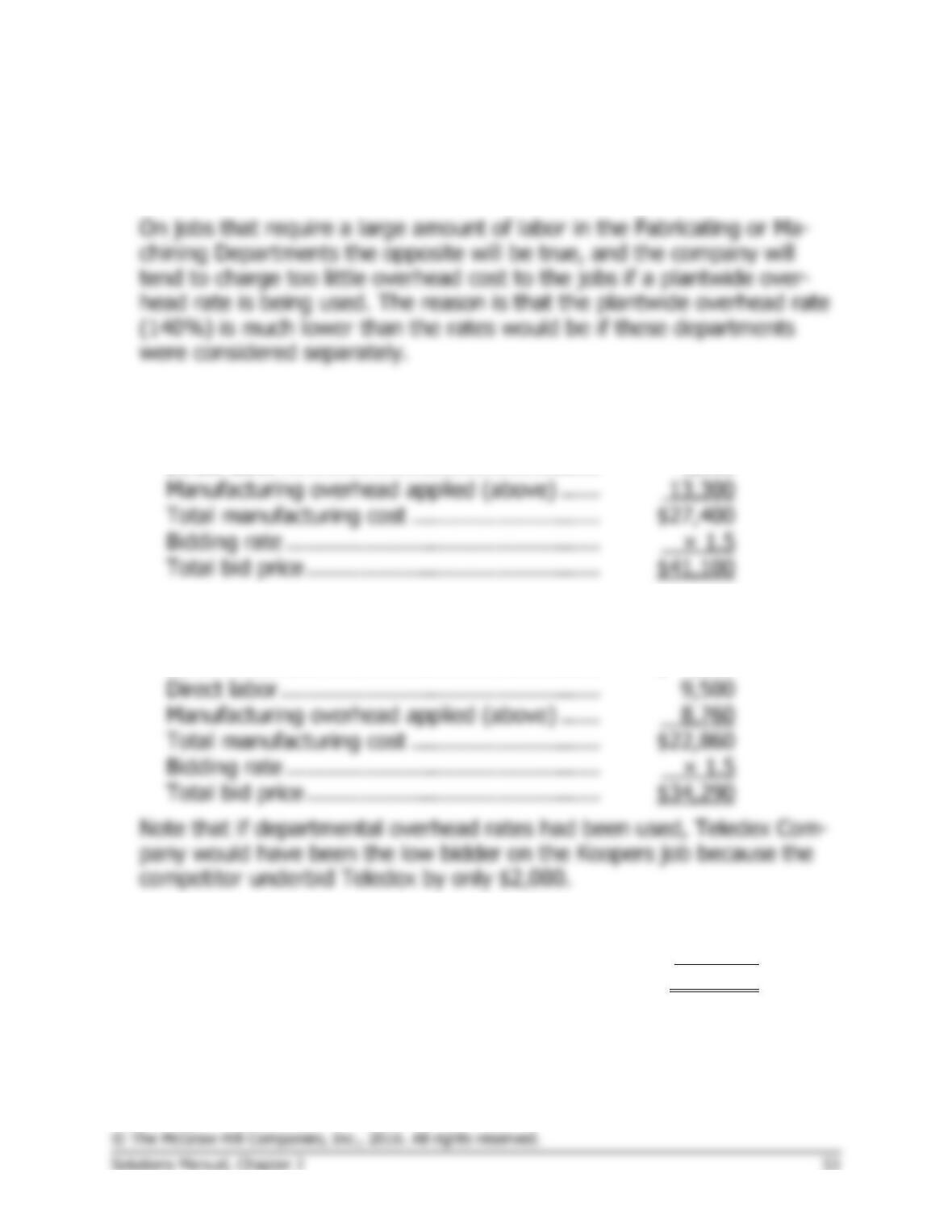
Direct materials …………………………………….
$ 4,600
Direct labor ………………………………………….
9,500
Manufacturing overhead applied (above) ……
Total manufacturing cost ………………………..
$27,400
Bidding rate …………………………………………
Total bid price ………………………………………
$41,100
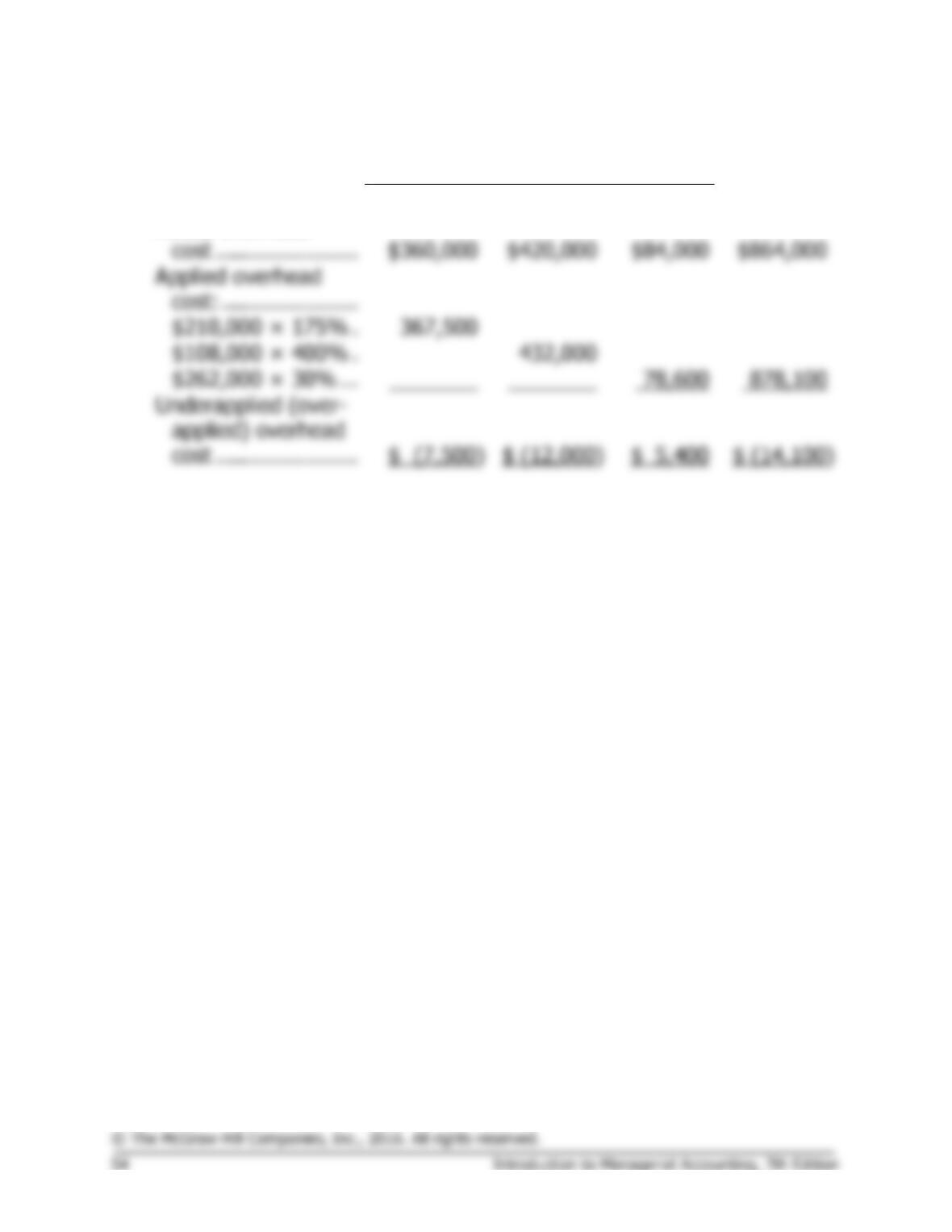
If departmental overhead rates had been used, the bid would have
been:
Direct materials …………………………………….
$ 4,600
Direct labor ………………………………………….
9,500
Manufacturing overhead applied (above) ……
Total manufacturing cost ………………………..
$22,860
Bidding rate …………………………………………
Total bid price ………………………………………
$34,290
5.
a.
Actual overhead cost …………………………………
$864,000
Applied overhead cost ($580,000 × 140%) …….
812,000
Underapplied overhead cost ………………………..
$ 52,000
Case (continued)
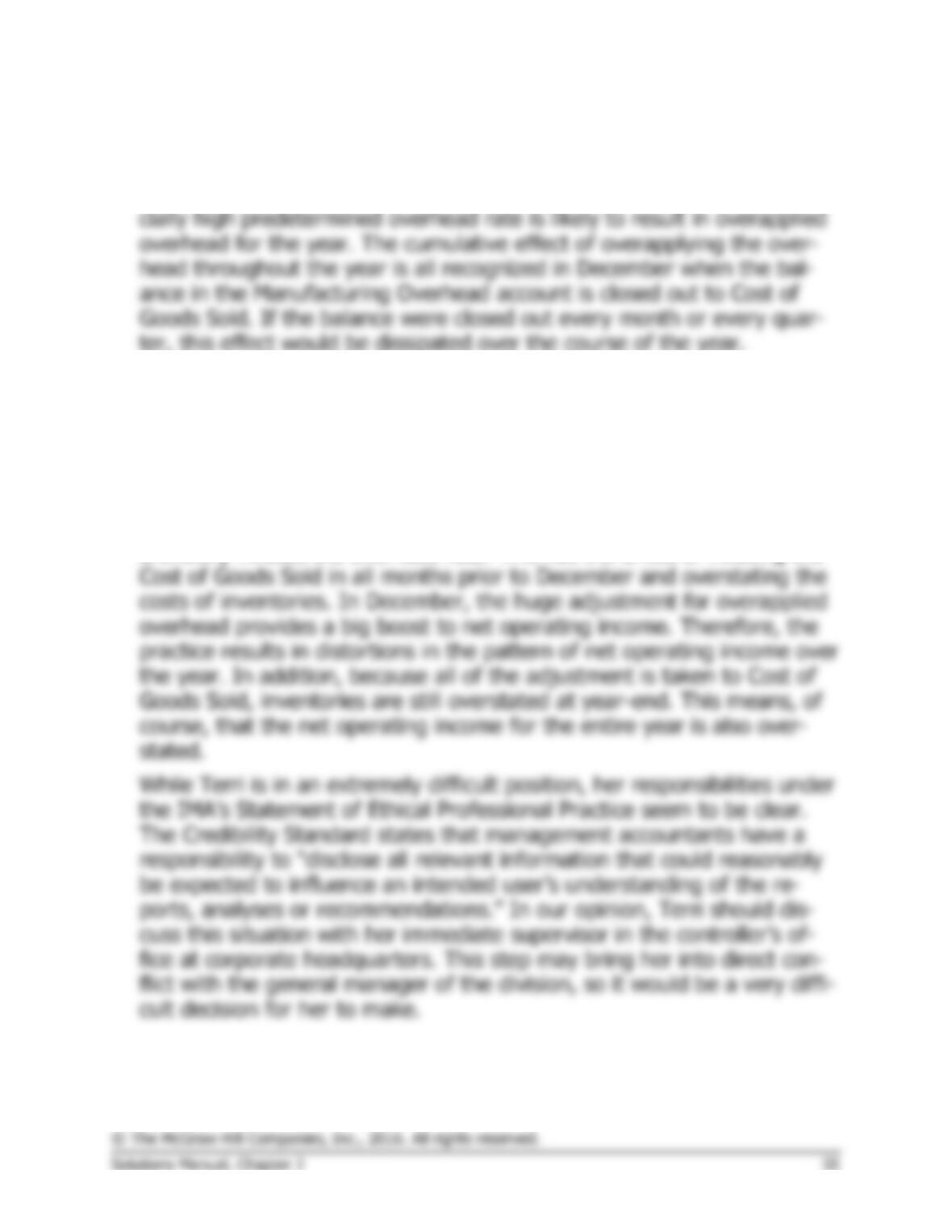
b.
Department
Fabricating
Machining
Assembly
Total Plant
Actual overhead
Ethics Challenge (45 minutes)
1. Shaving 5% off the estimated direct labor-hours in the predetermined
overhead rate will result in an artificially high overhead rate. The artifi–
2. This question may generate lively debate. Where should Terri Ronsin’s
loyalties lie? Is she working for the general manager of the division or
for the corporate controller? Is there anything wrong with the “Christ-
mas bonus”? How far should Terri go in bucking her boss on a new job?
While individuals can certainly disagree about what Terri should do,
some of the facts are indisputable. First, understating direct labor-hours
artificially inflates the overhead rate. This has the effect of inflating the
Ethics Challenge (continued)
In the actual situation that this case is based on, the corporate control-
ler’s staff were aware of the general manager’s accounting tricks, but