10
1. 5.
1. 5.
Chapter 2, SE 1.
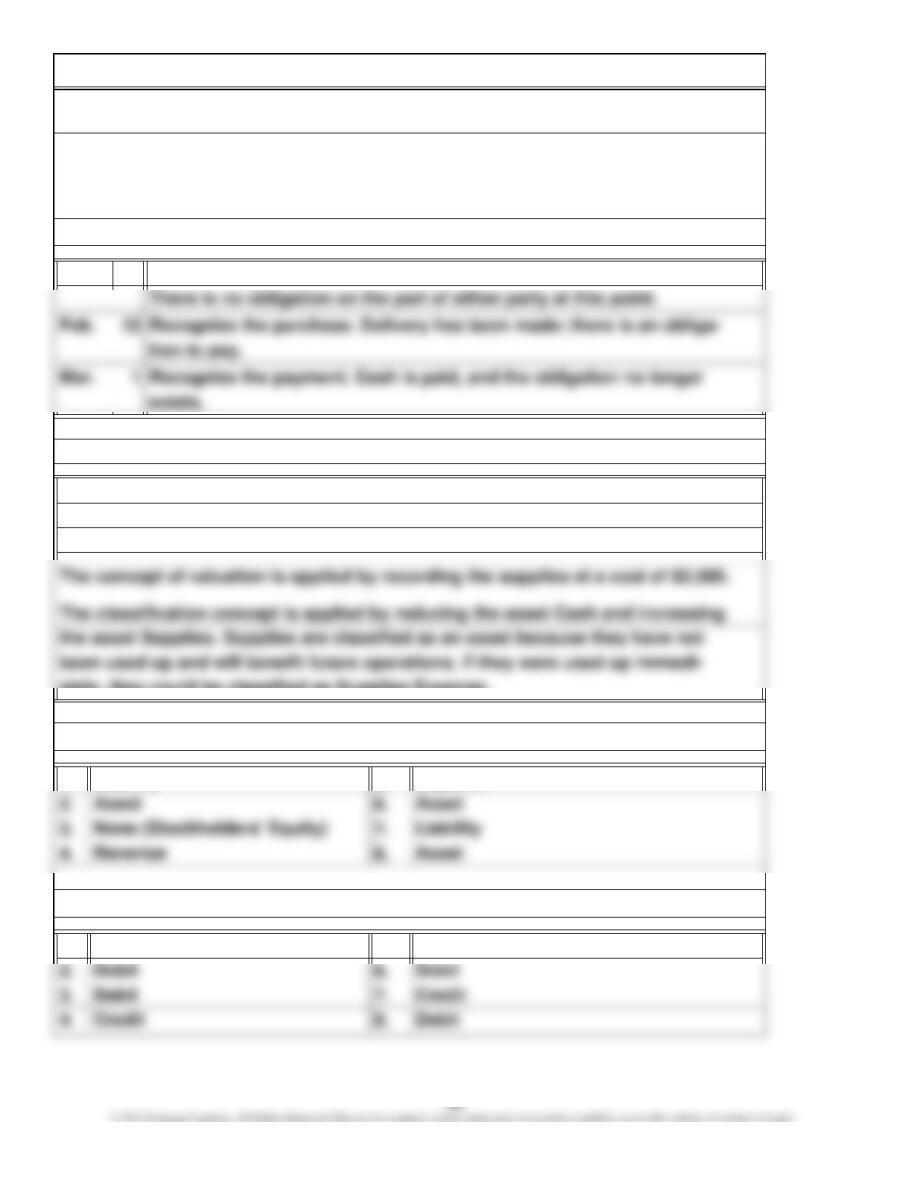
Jan. Do not recognize because an order is not a complete transaction.
The concept of recognition is applied by recording the transaction at the recog-
Chapter 2, SE 3.
Liability
Chapter 2, SE 4.
Expense
Chapter 2, SE 2.
Credit Debit
ately, they could be classified as Supplies Expense.
with cash, and the buyer takes title to the supplies.
ANALYZING BUSINESS TRANSACTIONS
CHAPTER 2—Solutions
nition point on June 1 when the transaction takes place. Supplies are purchased
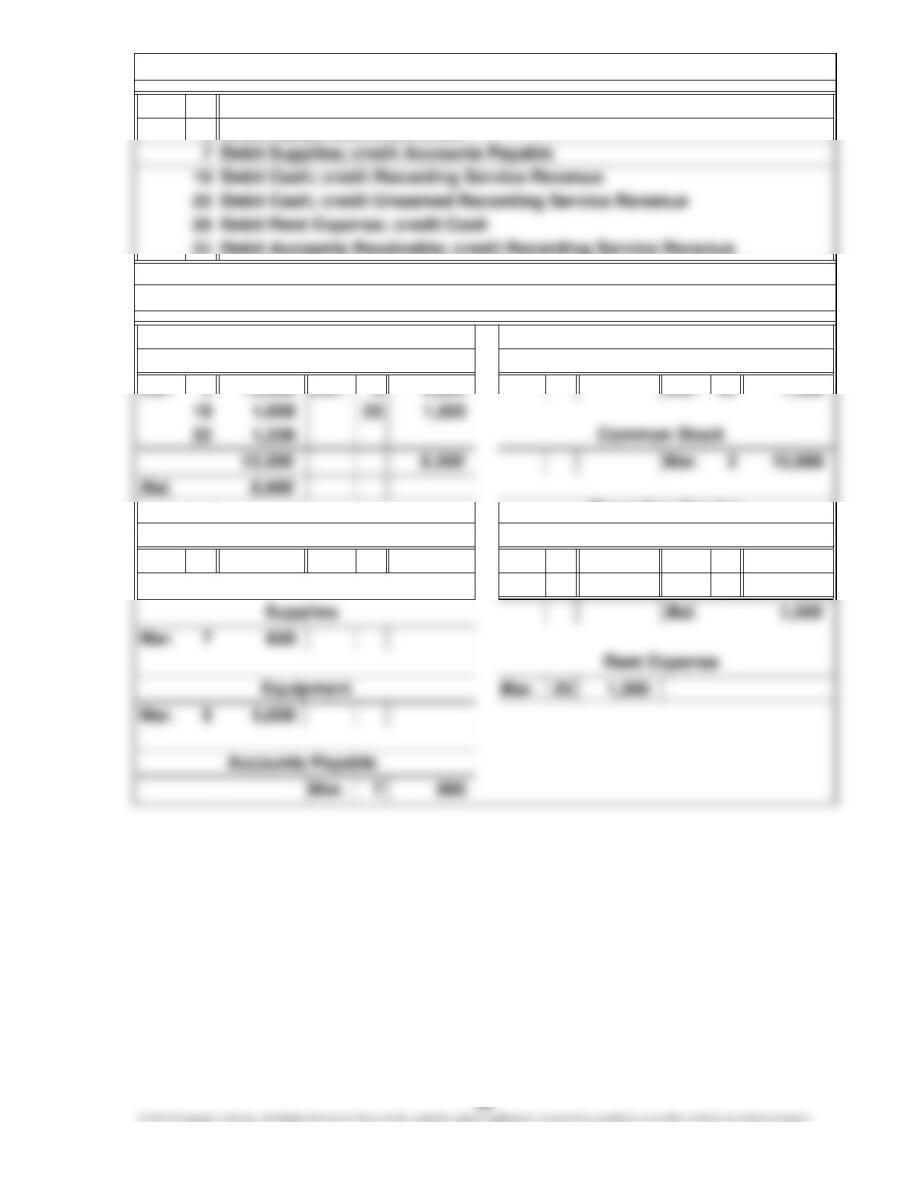
Mar. 2
5
31
Mar. 31 500 Mar. 19 1,000
31 500
Accounts Receivable
Revenue
Recording Service
Debit Equipment; credit Cash
Chapter 2, SE 6.
Chapter 2, SE 5.
Service Revenue
Debit Cash; credit Common Stock
Cash
Unearned Recording
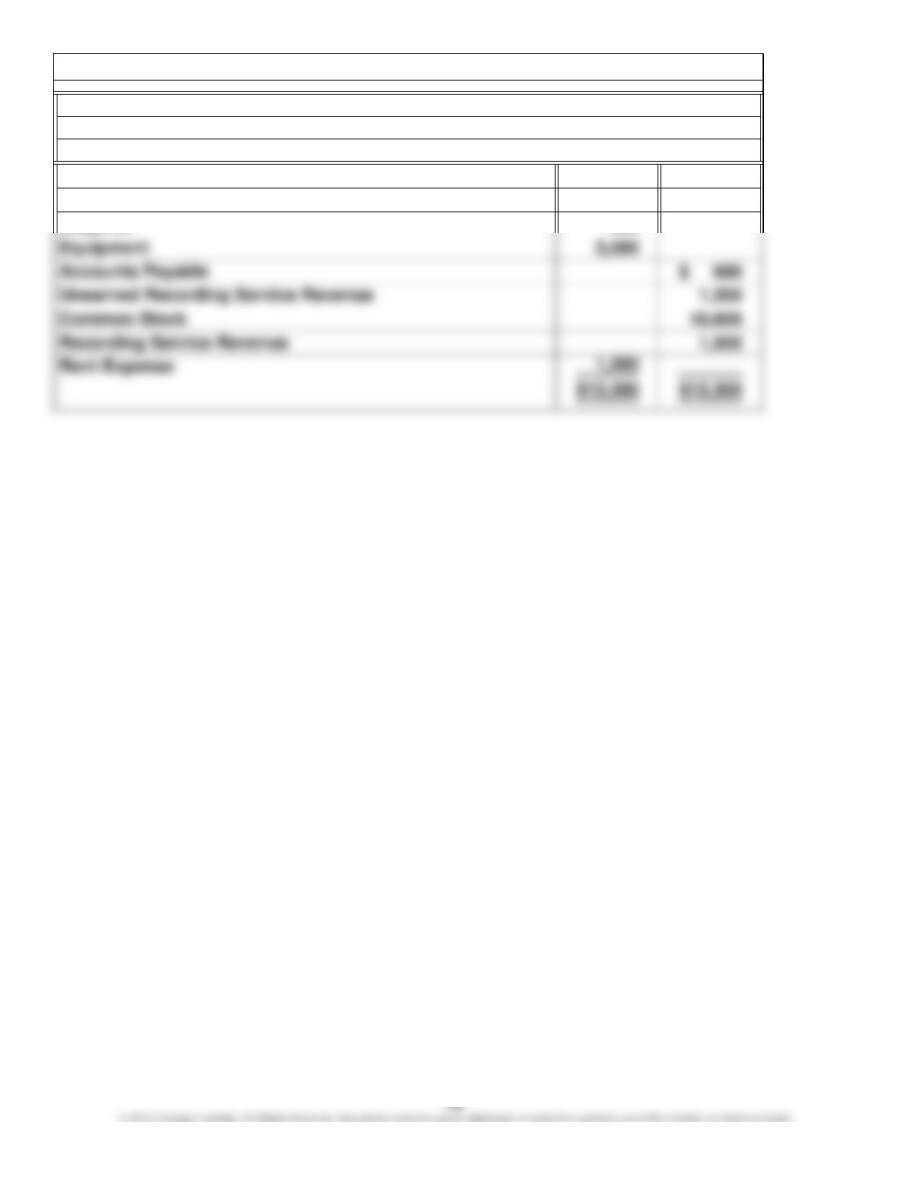
$ 5,900
500
600
Chapter 2, SE 7.
Accounts Receivable
Supplies
March 31, 2011
Cash
Smile’s Recordings, Inc.
Trial Balance
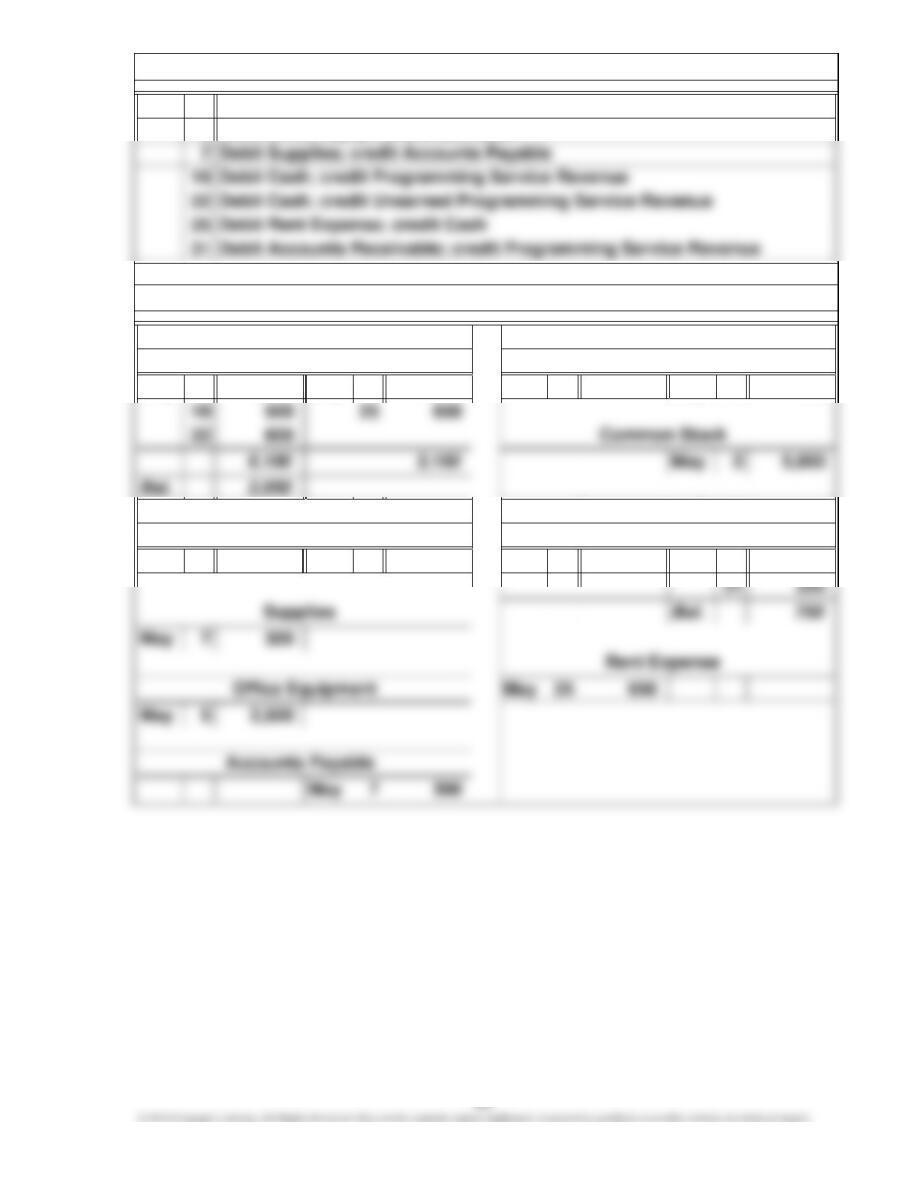
May 2
5
May 2 5,000 May 5 2,500 May 22 600
May 31 250 May 19 500
Chapter 2, SE 8.
Service Revenue
Debit Cash; credit Common Stock
Debit Office Equipment; credit Cash
Revenue
Chapter 2, SE 9.
Cash
Unearned Programming
Programming Service
Accounts Receivable
$2,950
250
300
Supplies
Cash
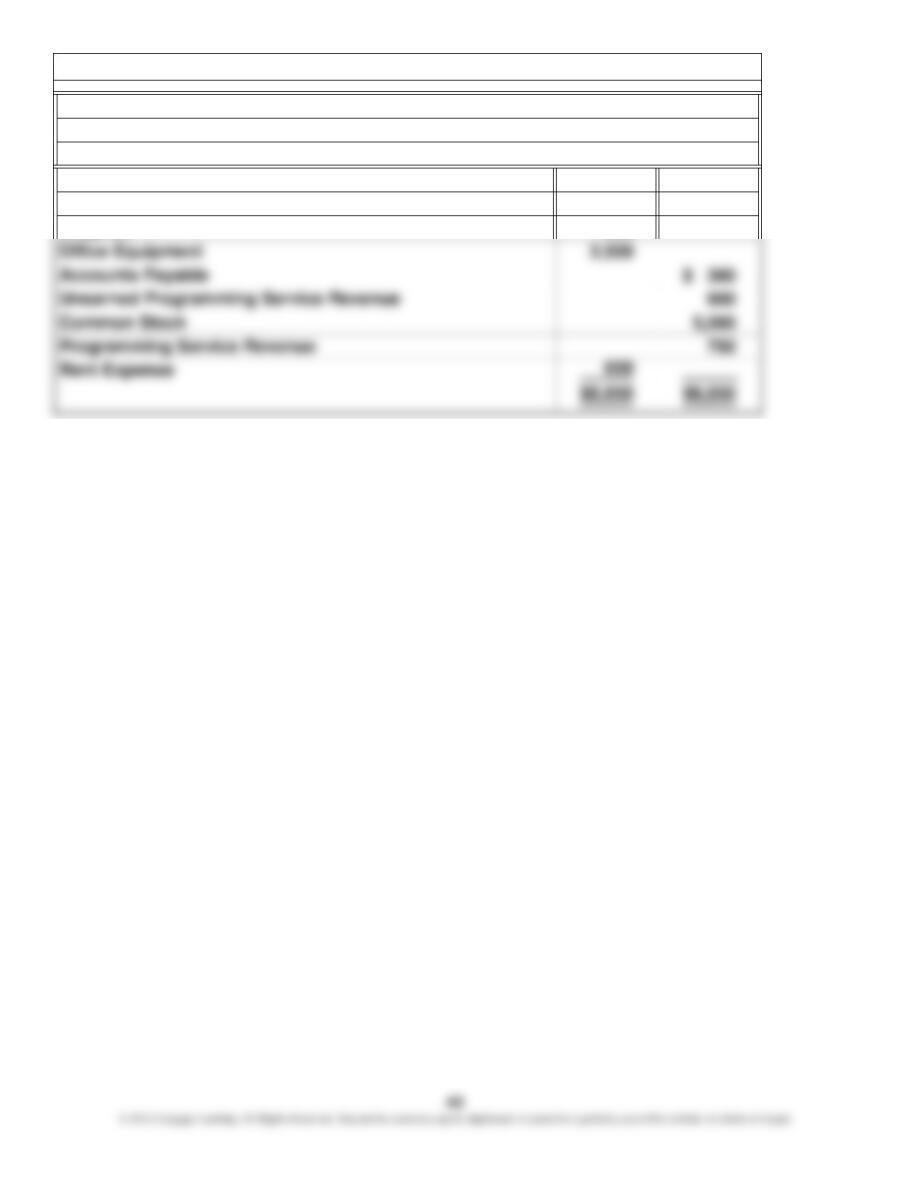
Bear’s Programming Service, Inc.
Trial Balance
Chapter 2, SE 10.
May 31, 2011
Accounts Receivable
Page 4
Post.
Ref. Debit Credit
Sept. 6 3,800
3,800
Service Revenue
Date
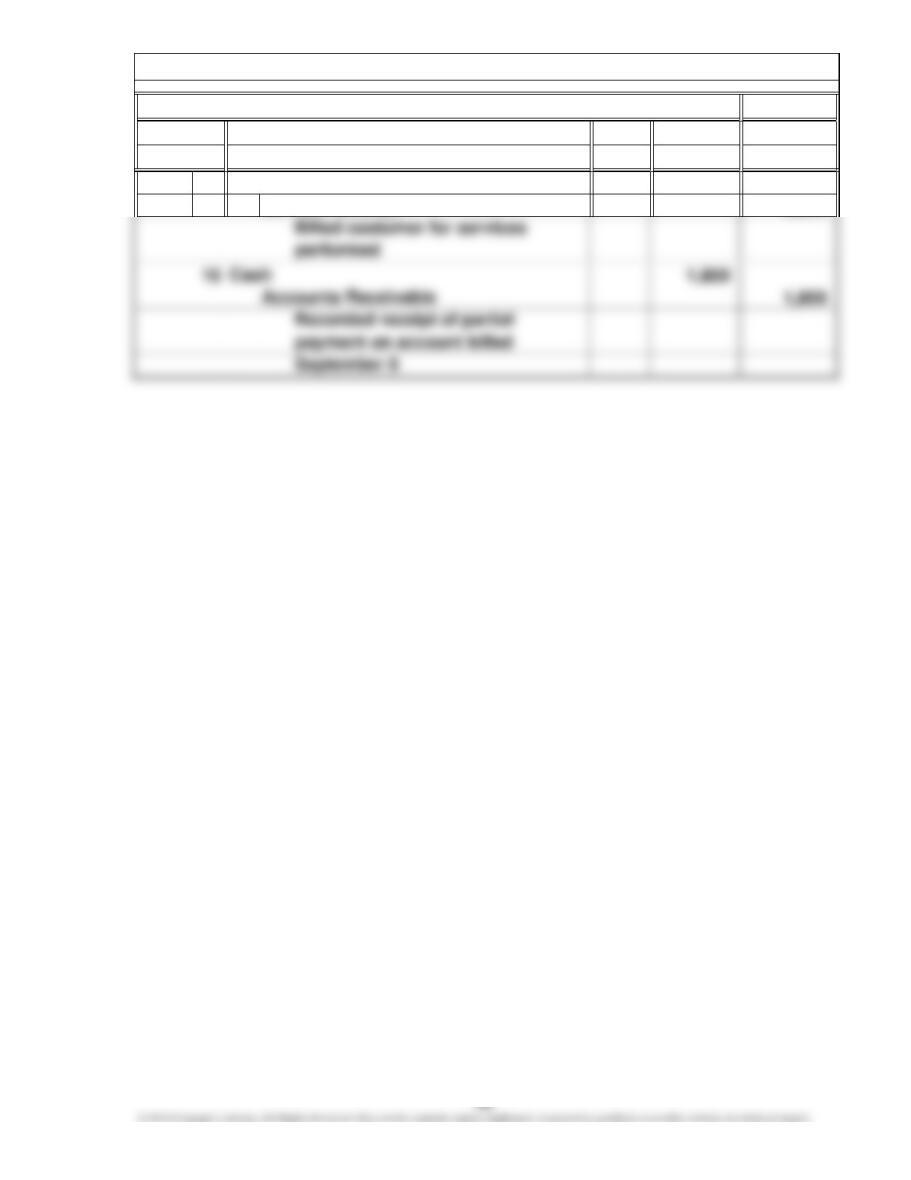
General Journal
Description
Accounts Receivable
Chapter 2, SE 11.
Item Ref. Debit Credit Debit Credit
the general journal in SE 11.
Note: At this point, the account numbers would also be posted to the accounts in
Date
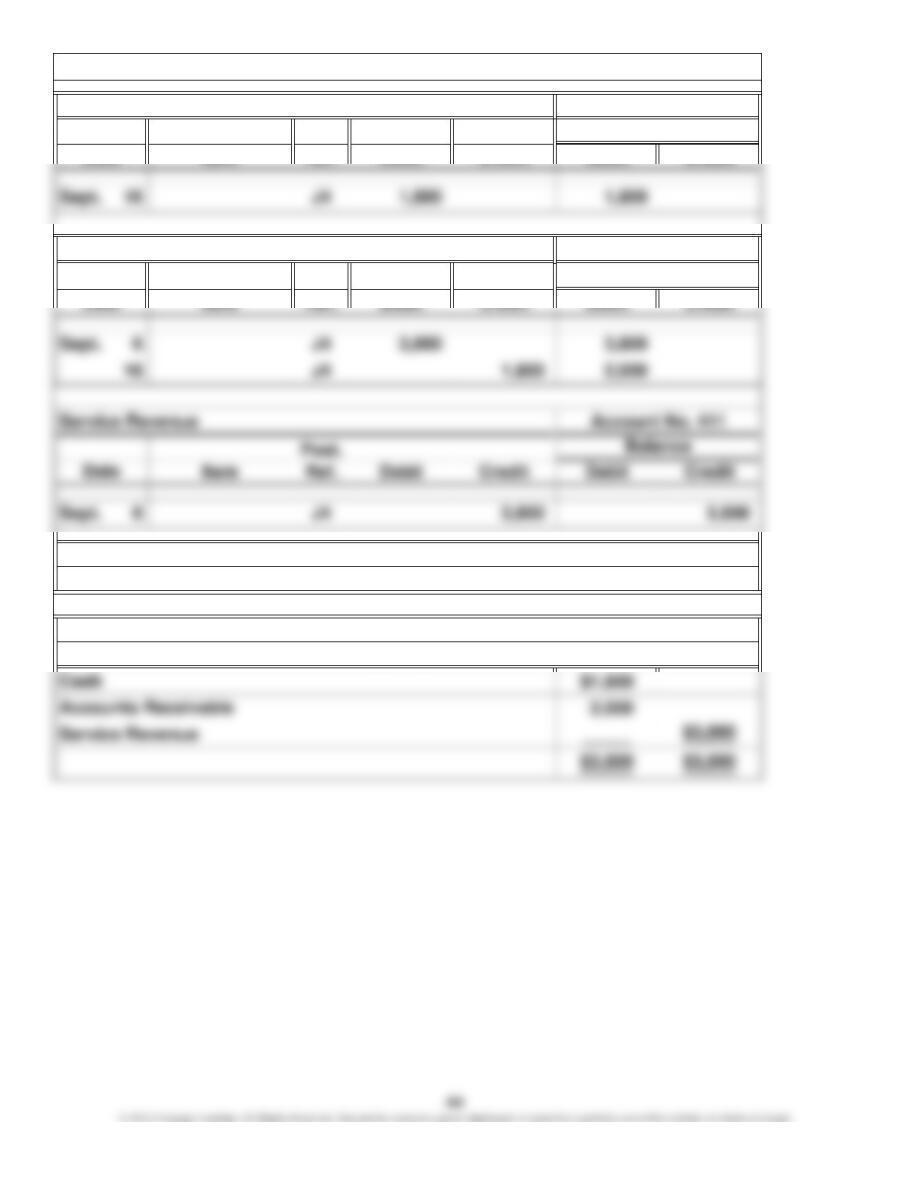
Cash Account No. 111
Balance
Chapter 2, SE 12.
Post.
Date
Accounts Receivable
Balance
Post.
Trial Balance
September 16
Account No. 113
Credit
2
10,000
5
5,000
22
1,200
Mar.
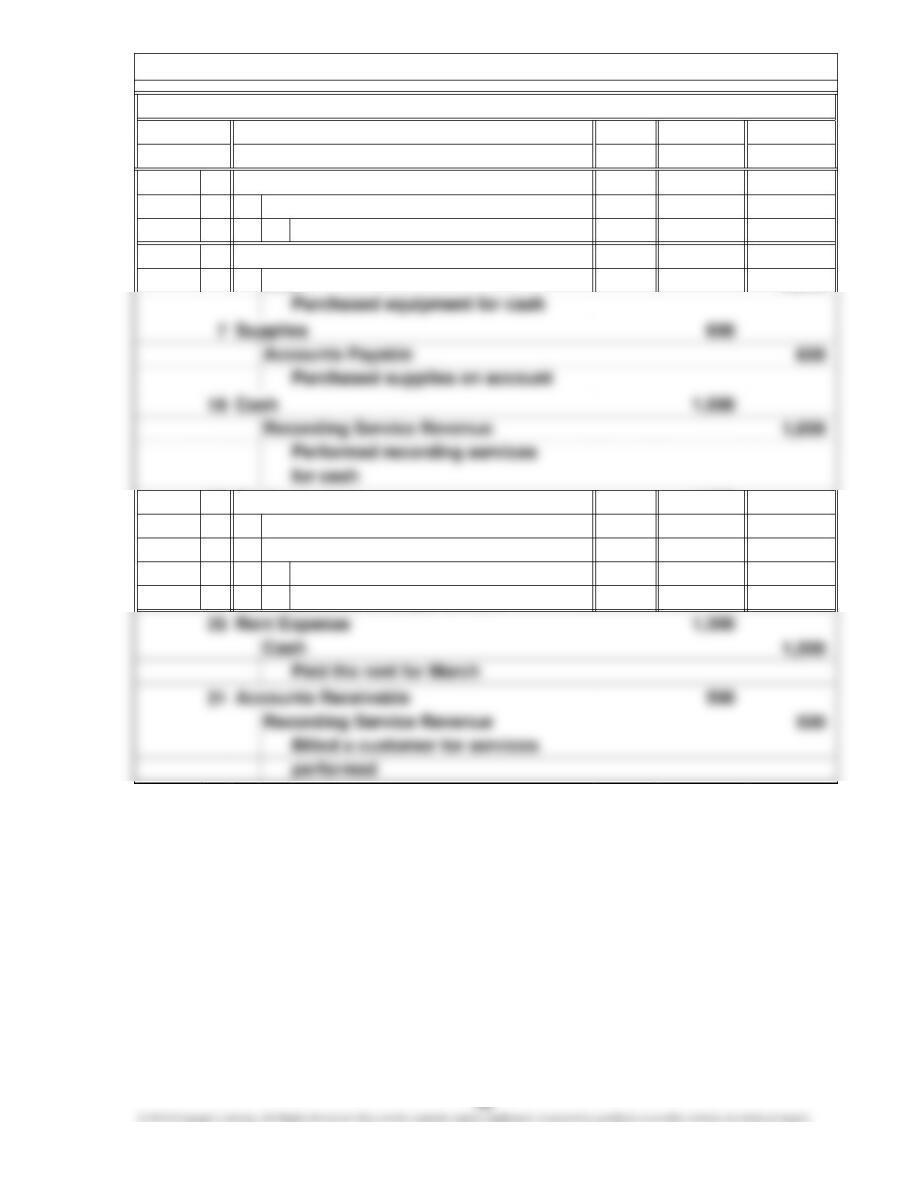
Issued common stock
Cash
Common Stock
Cash
Equipment
Cash
Received payment for recording
services to be performed
Revenue
Unearned Recording Service
Chapter 2, SE 13.
5,000
1,200
Debit
10,000
Post.
Ref.Date Description
General Journal
1,200 Jan. 4 700
Cash
Jan. 2
Chapter 2, SE 14.
Chapter 2, SE 15.
Financial ratio calculated
Asset Turnover Revenues
=Average Total Assets
1.
2.
3.
4.
1.
2.
No issue is more important than another. Each must be resolved satisfactorily
Chapter 2, E 1.
It is unusual for any other account to have an abnormal balance.
The most common violation of the recognition concept is when a revenue is
Assets and expenses are closely related because many assets are expenses
that have not yet been used. Examples are prepaid assets and plant and
for a transaction to be recorded correctly.
All equipment needs normal repairs. These are considered an ongoing cost
Chapter 2, E 2.
vance of receiving a service.
Retained Earnings is the most likely account to have an abnormal balance
(debit) because of situations in which expenses exceed revenues (net loss).
With unearned revenues (a liability), cash is received in advance for a service
to be performed later. With prepaid expenses (an asset), cash is paid in ad-
15
2
Amount
$1,500
Amount
$ 600
Chapter 2, E 4.
Date ReceivedOrder
Purchases recognized on date shipped
Purchases recognized on date received
July
2.
Date Received
a
5
Chapter 2, E 3.
b
Feb.
Jan.
1.
July
Date Shipped
July10
Not recorded. An offer is not a completed transaction.
Not recorded. Notice of a price increase is not a transaction.
15
Order Date Shipped
26June
+
+Stockholders’ Equity
Revenues Expenses– Common
Stock
– Dividends
=
Cash
Retained
Earnings
+
Chapter 2, E 5.
Accounts
Payable
Retained
Earnings
LiabilitiesAssets
Dividends
Common
Stock
Service
Revenue
Rent
Expense
Common
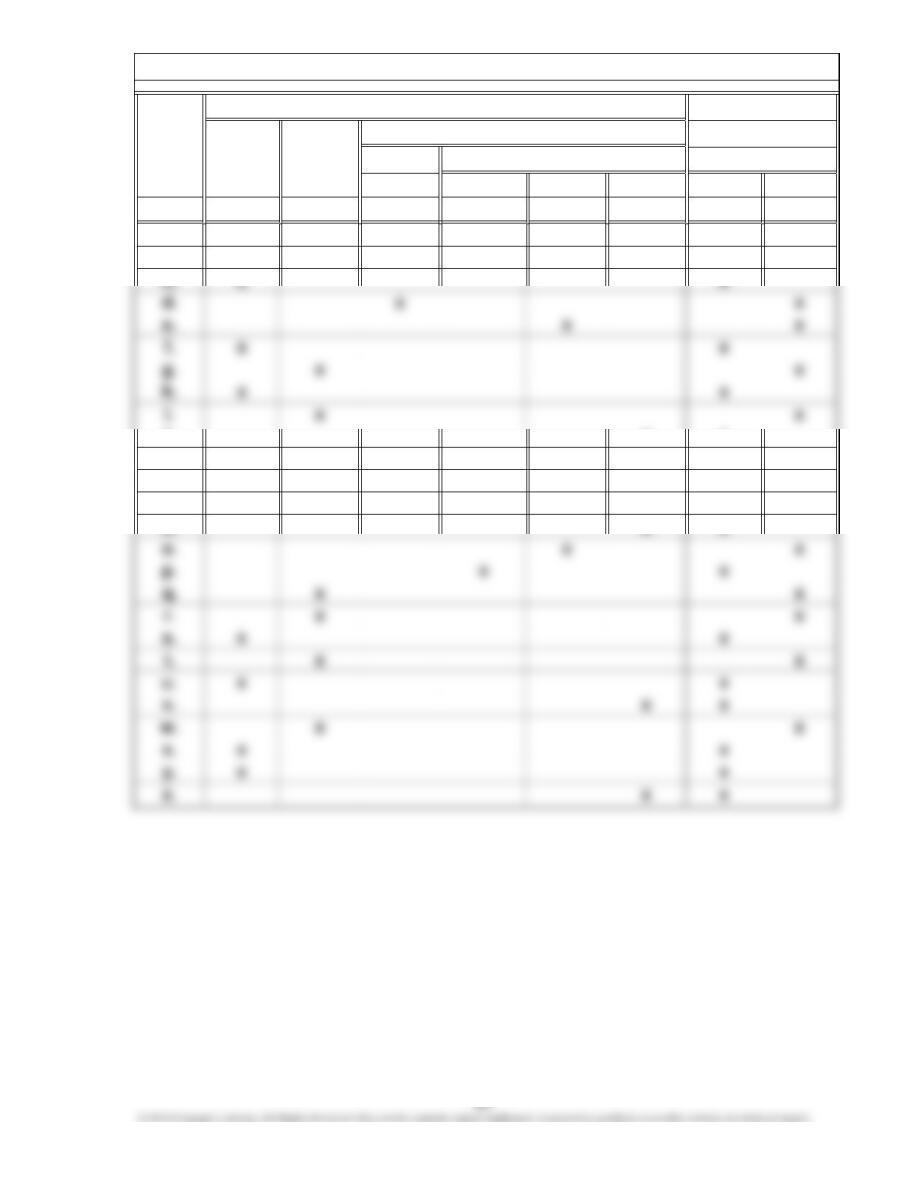
Item Asset Liability Stock Dividends Revenue Expense Debit Credit
a. x x
b. x x
j. x x
k. x x
l. x x
m. x x
n. x x
Type of Account
Stockholders’ Equity Normal Balance
Chapter 2, E 6.
Retained Earnings (increases balance)
a.
d.
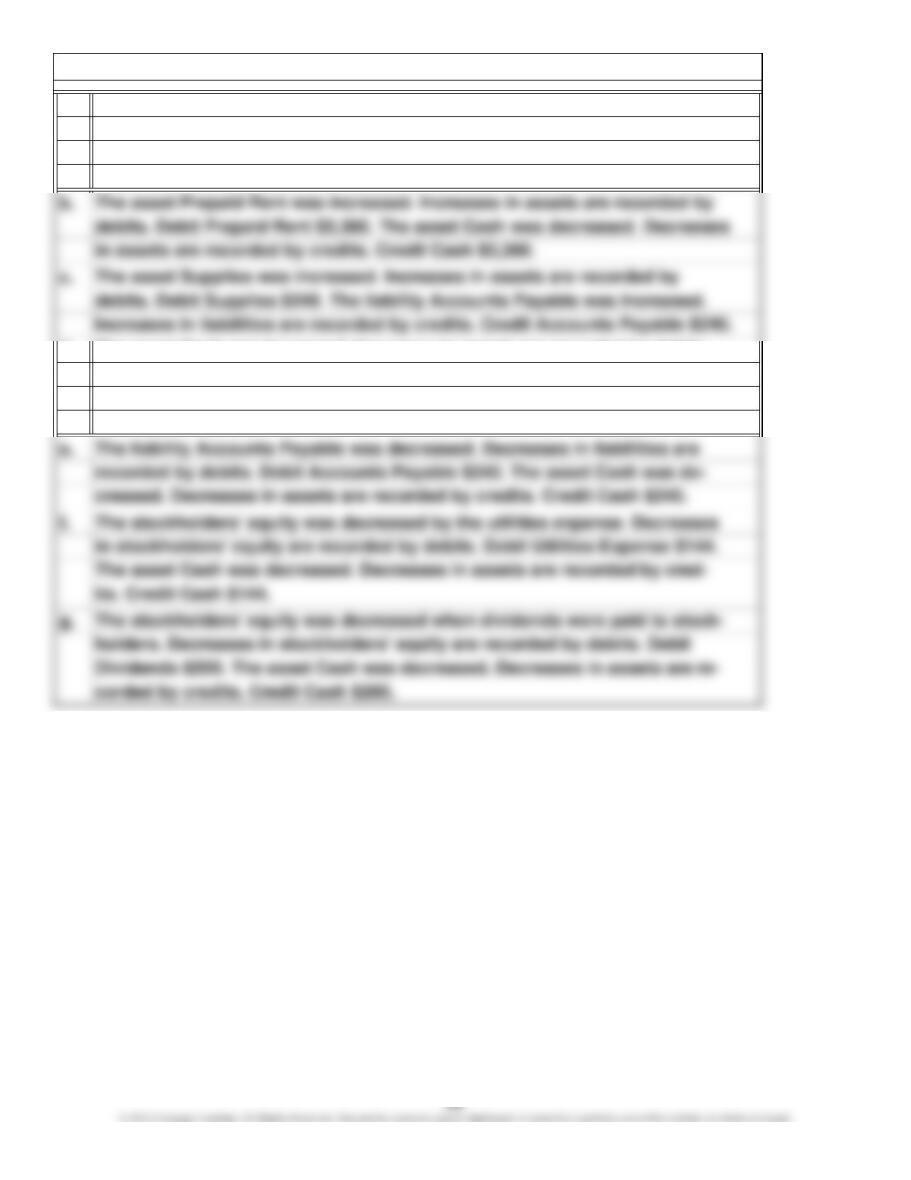
Increases in stockholders’ equity are recorded by credits. Credit Hair Cutting
Fees Earned $1,400.
Chapter 2, E 7.
Debit Cash $1,400. Stockholders’ equity was increased by the fees earned.
The asset Cash was increased. Increases in assets are recorded by debits.
The asset account Cash was increased. Increases in assets are recorded by
debits. Debit Cash $5,000. A component of stockholders’ equity, Common
Stock, was increased. Increases in stockholders’ equity are recorded by
credits. Credit Common Stock $5,000.
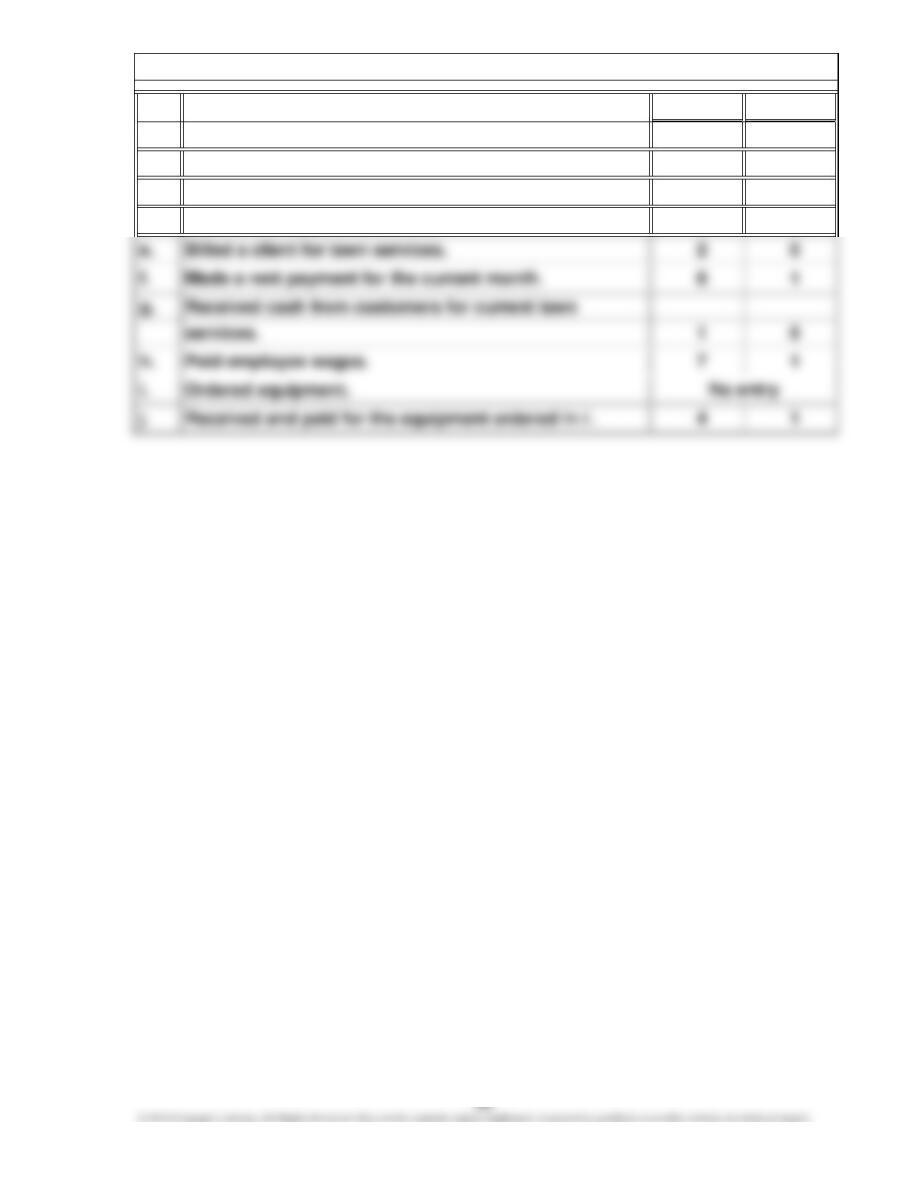
Debit Credit
a. Paid for supplies purchased on credit last month. 5 1
b. Received cash from customers billed last month. 1 2
c. Made a payment on accounts payable. 5 1
d. Purchased supplies on credit. 3 5
Chapter 2, E 8.
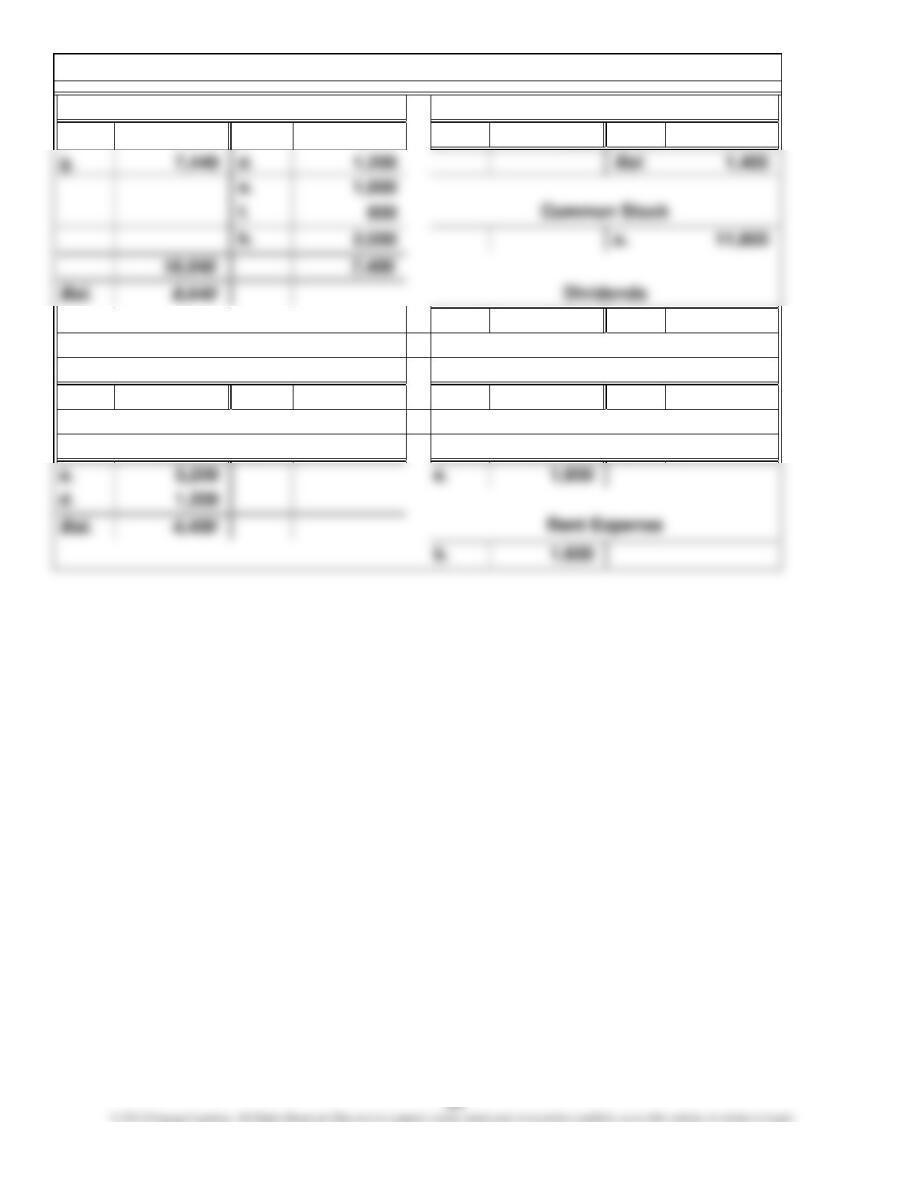
f. 800 c. 2,200
h. 2,000
c. 2,200 g. 7,440
b.
8,600a.
Salaries Expense
Cash
Repair Supplies
Repair Equipment
Chapter 2, E 9.
1,600
Repair Fees Earned
Accounts Payable
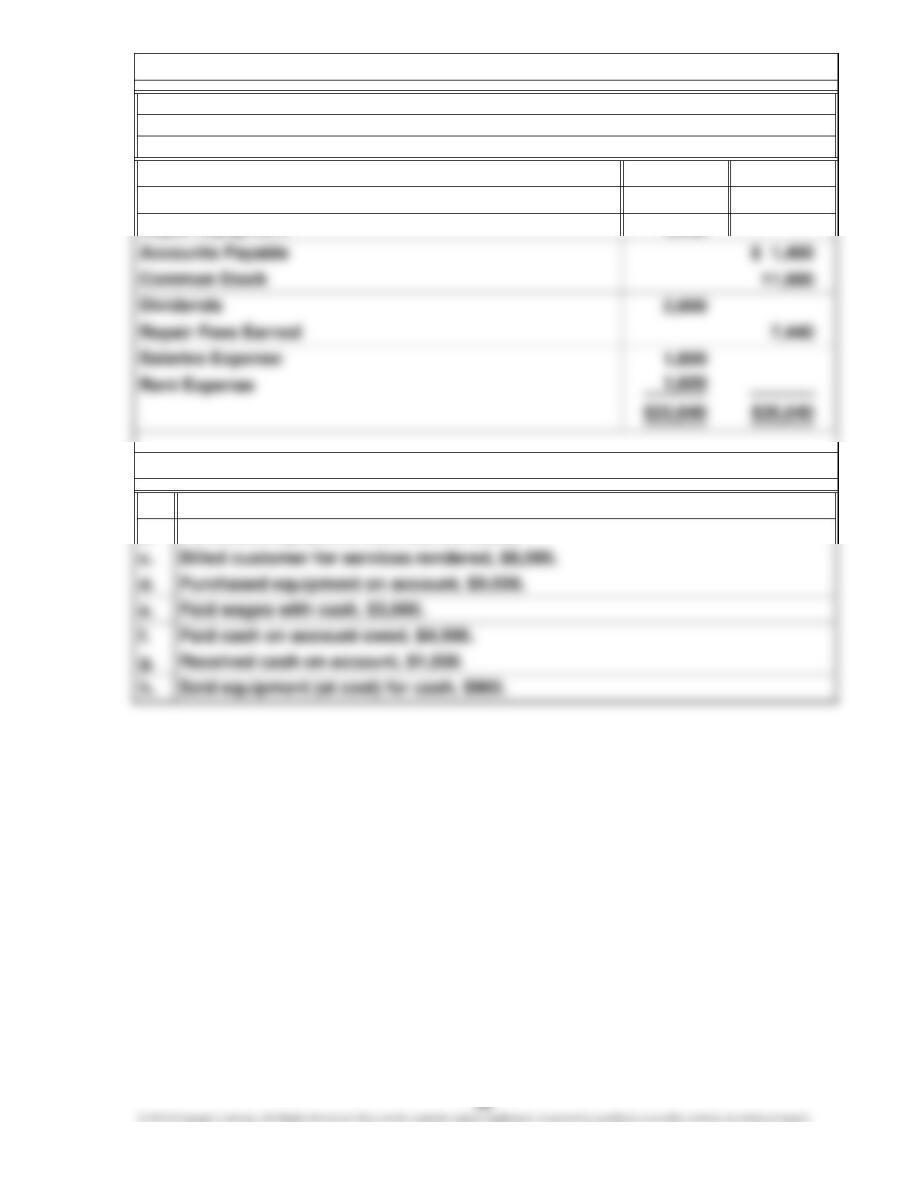
$ 8,640
2,200
4,400
a.
b.
Chapter 2, E 11.
Issued common stock for cash, $40,000.
Purchased equipment with cash, $15,000.
Trial Balance
Cash
Repair Supplies
Repair Equipment
Chapter 2, E 10.
Change Repair Service, Inc.
June 30, 2011
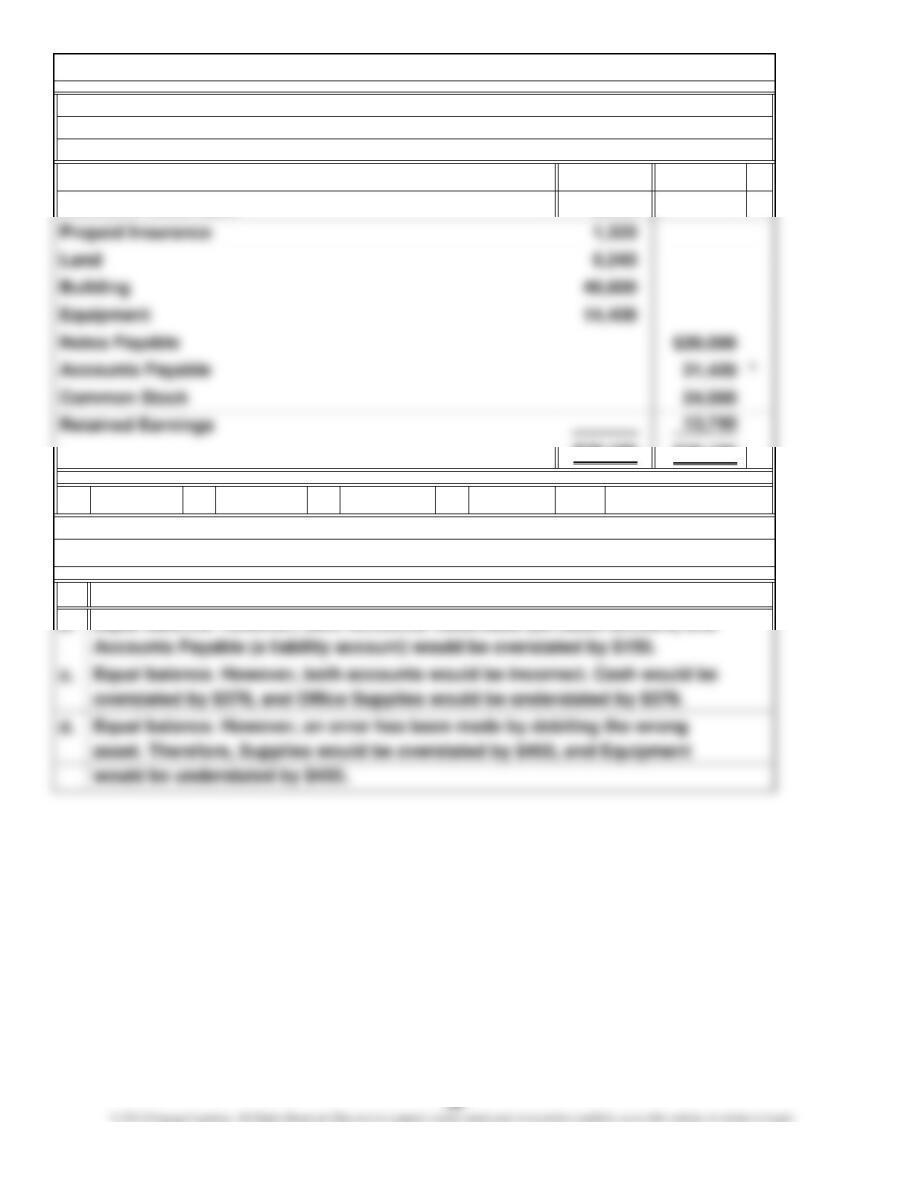
$79,160
$79,160 – ( $20,000 + $24,000 +
a.
b.
) =
Equal balance. However, both Accounts Receivable (an asset account) and
Unequal totals. The total debits would be $27 more than the total credits.
$21,420$13,740
Chapter 2, E 13.
$10,800
Cash
5,600
$79,160
Accounts Receivable
Chapla Corporation
Trial Balance
March 31, 2011
Chapter 2, E 12.
*
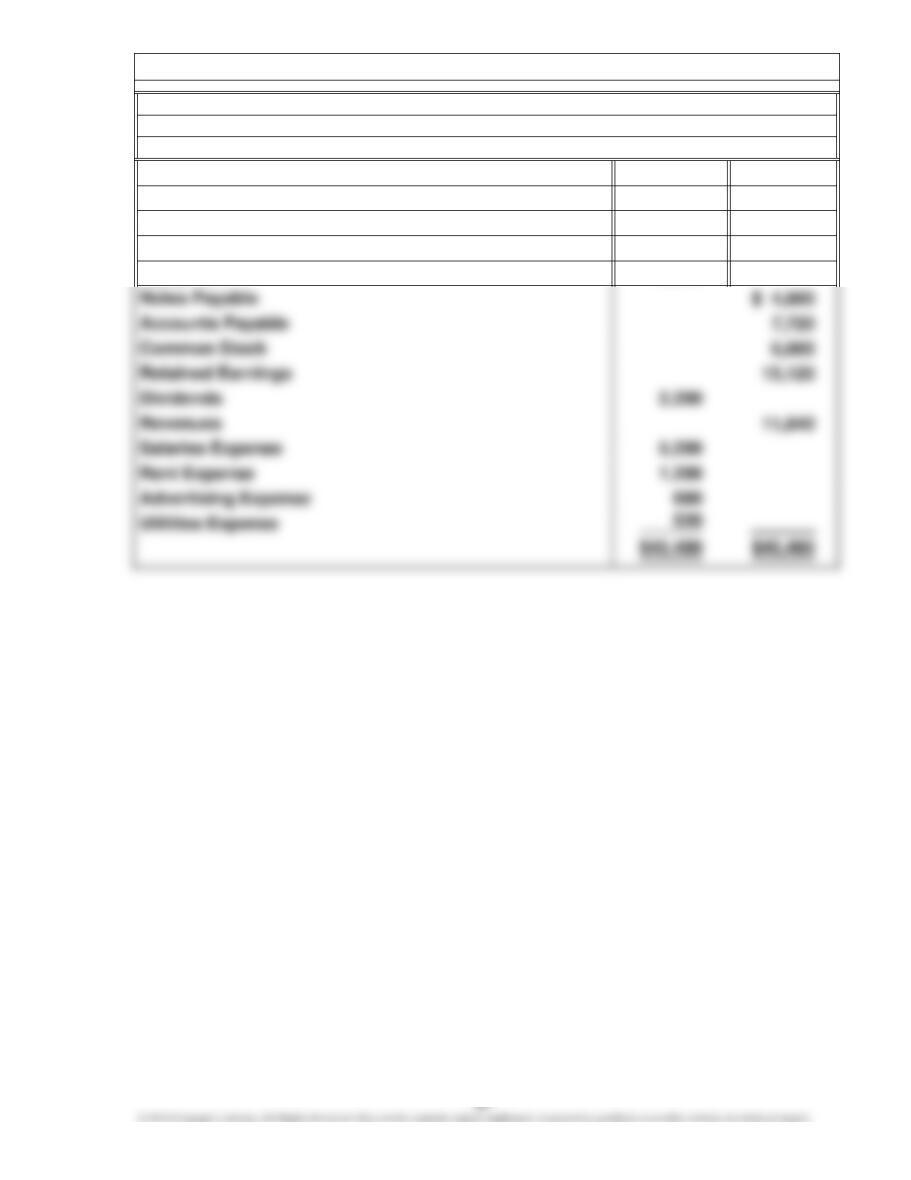
11,560
Supplies 480
Prepaid Insurance 720
Accounts Receivable
Chapter 2, E 14.
Kilda Services, Inc.
Trial Balance
July 31, 2011
Cash $ 8,120
Equipment 14,800