2
Cost Concepts and Behavior
Solutions to Review Questions
2-1.
Cost is a more general term that refers to a sacrifice of resources and may be either an
2-2.
2-7.
Both accounts represent the cost of the goods acquired from an outside supplier, which
include all costs necessary to ready the goods for sale (in merchandising) or production
2-8.
Direct materials:
converting the materials into finished product. Assembly workers,
Materials in their raw or unconverted form, which become an integral
part of the finished product are considered direct materials. In some
2-9.
2-13.
A value income statement typically uses a contribution margin framework, because the
contribution margin framework is more useful for managerial decision-making. In
Solutions to Critical Analysis and Discussion Questions
2-15.
The statement is not true. Materials can be direct or indirect. Indirect materials include
2-16.
2-17.
Marketing and administrative costs are treated as period costs and expensed for
2-21.
Answers will vary. The major cost categories include servers (mostly fixed), personnel
2-22.
2-23.
Answers will vary. Common suggestions are number of students in each program,
2-24.
No, R&D costs are relevant for many decisions. For example, should a program of
2-25.
This question can create a good discussion of the different roles of financial and
Solutions to Exercises
2-26. (15 min.) Basic Concepts.
2-27. (15 min.) Basic Concepts.
Cost Item
Fixed (F)
Variable (V)
Period (P)
Product (M)
a.
Depreciation on buildings for administrative staff offices ……
F
P
b.
Cafeteria costs for the factory ……………………………………….
F
M
Overtime pay for assembly workers ……………………………….
d.
Transportation-in costs on materials purchased ………………
V
M
e.
F
P
Sales commissions for sales personnel ………………………….
g.
Assembly line workers’ wages ………………………………………
V
M
h.
Controller’s office rental ……………………………………………….
F
P
Administrative support for sales supervisors ……………………
j.
Energy to run machines producing units of output in the
V
M
2-28. (10 min.) Basic Concepts.
a.
Assembly line worker’s salary. ……………………………………………………………
B
Direct materials used in production process. ………………………………………..
Property taxes on the factory. …………………………………………………………….
C
d.
Lubricating oil for plant machines. ………………………………………………………
C
Transportation-in costs on materials purchased. …………………………………..
2-29. (15 min.) Basic Concepts.
Concept
Definition
9
Period cost ……………………
Cost that can more easily be attributed to
time intervals.
2
Indirect cost …………………..
cost object.
Fixed cost ……………………..
Cost that does not vary with the volume of
activity.
8
Opportunity cost …………….
Lost benefit from the best forgone
alternative.
Outlay cost ……………………
Past, present, or near-future cash flow.
6
Direct cost …………………….
Cost that can be directly related to a cost
object.
5
Expense ……………………….
Cost charged against revenue in a
particular accounting period.
Cost ……………………………..
Sacrifice of resources.
4
Full absorption cost ………..
Cost used to compute inventory value
according to GAAP.
Product cost ………………….
Cost that is part of inventory.
2-30. (15 min.) Basic Concepts.
Cost Item
Fixed (F)
Variable (V)
Period (P)
Product (M)
a.
Power to operate factory equipment …………………………..
V
M
Commissions paid to sales personnel …………………………
V
Office supplies for the human resources manager ………..
F
2-31. (15 min.) Basic Concepts.
a.
Variable production cost per unit: ($360 + $60 + $15 + $30) …………………..
$465
b.
Variable cost per unit: ($465 + $45) …………………………………………………….
$510
d.
Full absorption cost per unit: [$465 + ($135,000 ÷ 1,500)] ………………………
$555
e.
Prime cost per unit. (materials + labor + outsource) ………………………………
$435
g.
Contribution margin per unit: ($900 – $510)………………………………………..
$390
h.
Gross margin per unit: ($900 – full absorption cost of $555)…………………..
$345
h. Gross margin = $900 – $573 = $327
2-32. (15 min.) Basic Concepts: Intercontinental, Inc.
a.
Prime cost per unit: (materials + labor) ………………………………………………..
$40
Gross margin per unit: ($100 – full absorption cost of $74)…………………….
Conversion cost per unit: (labor + overhead) ………………………………………..
Full absorption cost per unit: [$60 + ($4,200,000 ÷ 300,000)] ………………….
g.
Variable production cost per unit: ($16 + $24 + $20) ……………………………..
2-33. (15 min.) Cost Allocation—Ethical Issues
This problem is based on the experience of the authors’ research at several companies.
a. Answers will vary as there are several defensible bases on which to allocate the
product development costs. As an example, many government-purchasing contracts
2-34. (15 min.) Cost Allocation—Ethical Issues
This problem is based on the experience of the authors’ research at several companies.
a. Answers will vary as there are several defensible bases on which to allocate the
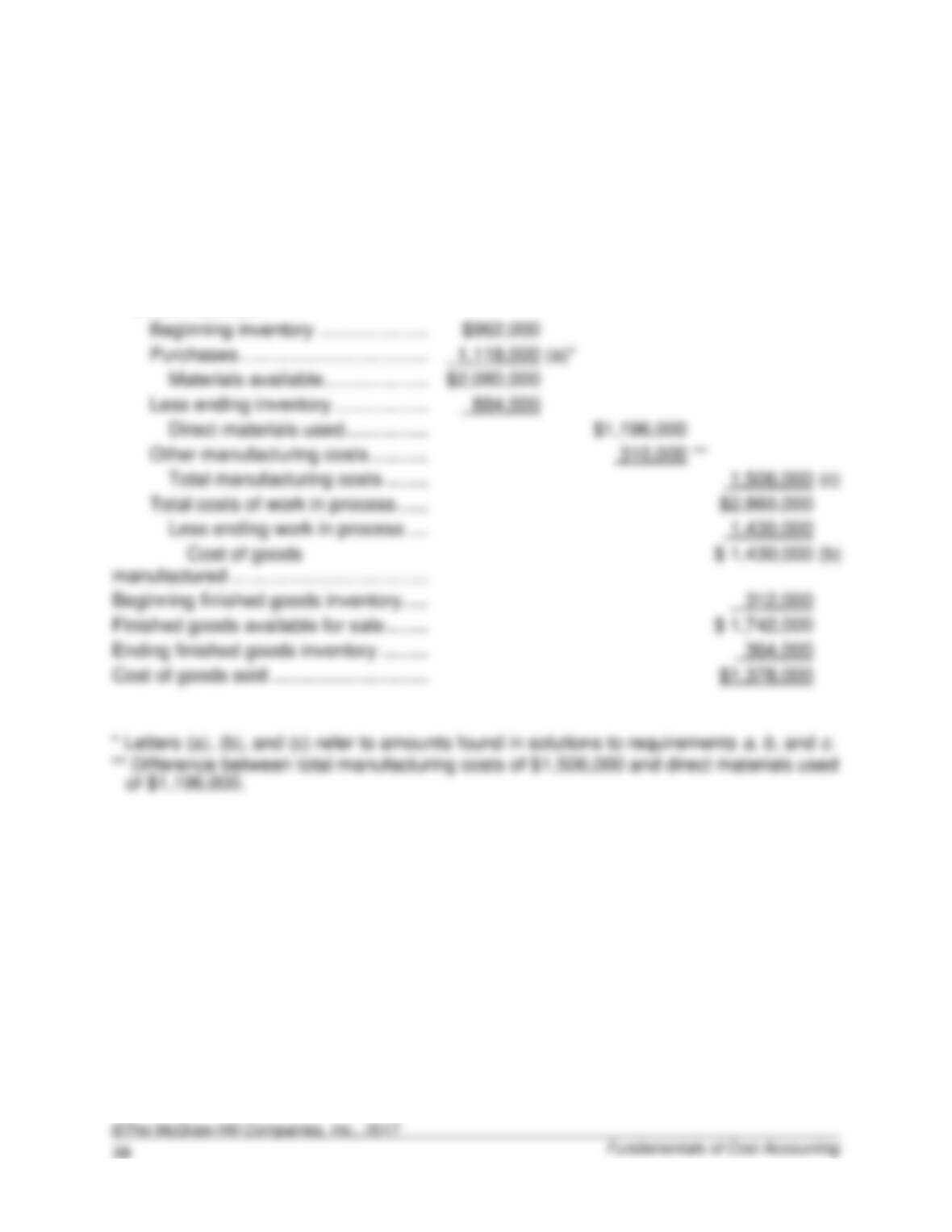
2-35. (30 min.) Prepare Statements for a Manufacturing Company: Tappan
Parts.
Tappan Parts
Cost of Goods Sold Statement
For the Year Ended December 31
Beginning work in process inventory …………..
$1,354,000
Manufacturing costs:
Direct materials:
Materials available ………………………….
$1,196,000
Other manufacturing costs ………………….
(c)
$2,860,000
Less ending work in process ……………
manufactured ………………………………………….
Beginning finished goods inventory …………….
Finished goods available for sale ……………….
Ending finished goods inventory ………………..
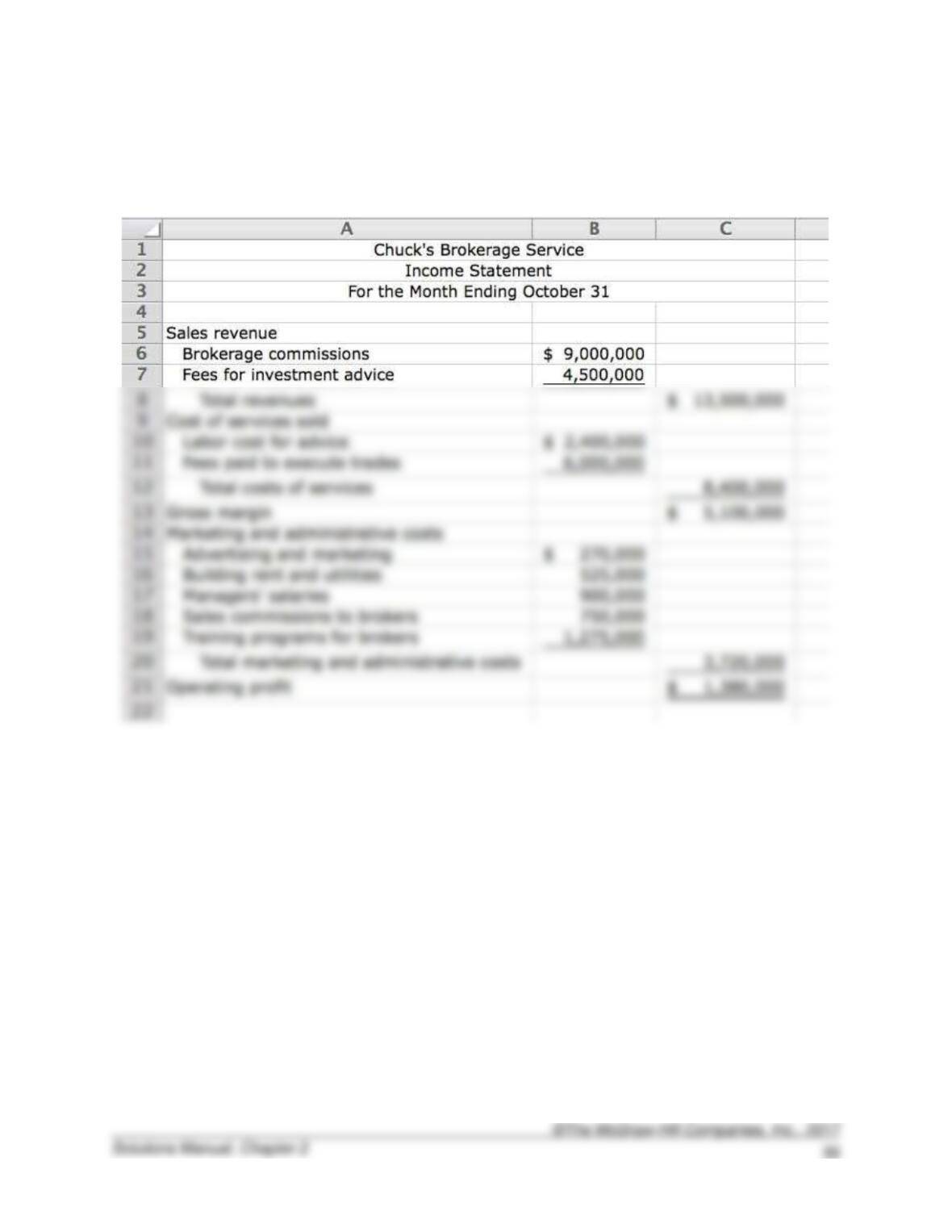
2-36. (10 min.) Prepare Statements for a Service Company: Chuck’s Brokerage
Service.
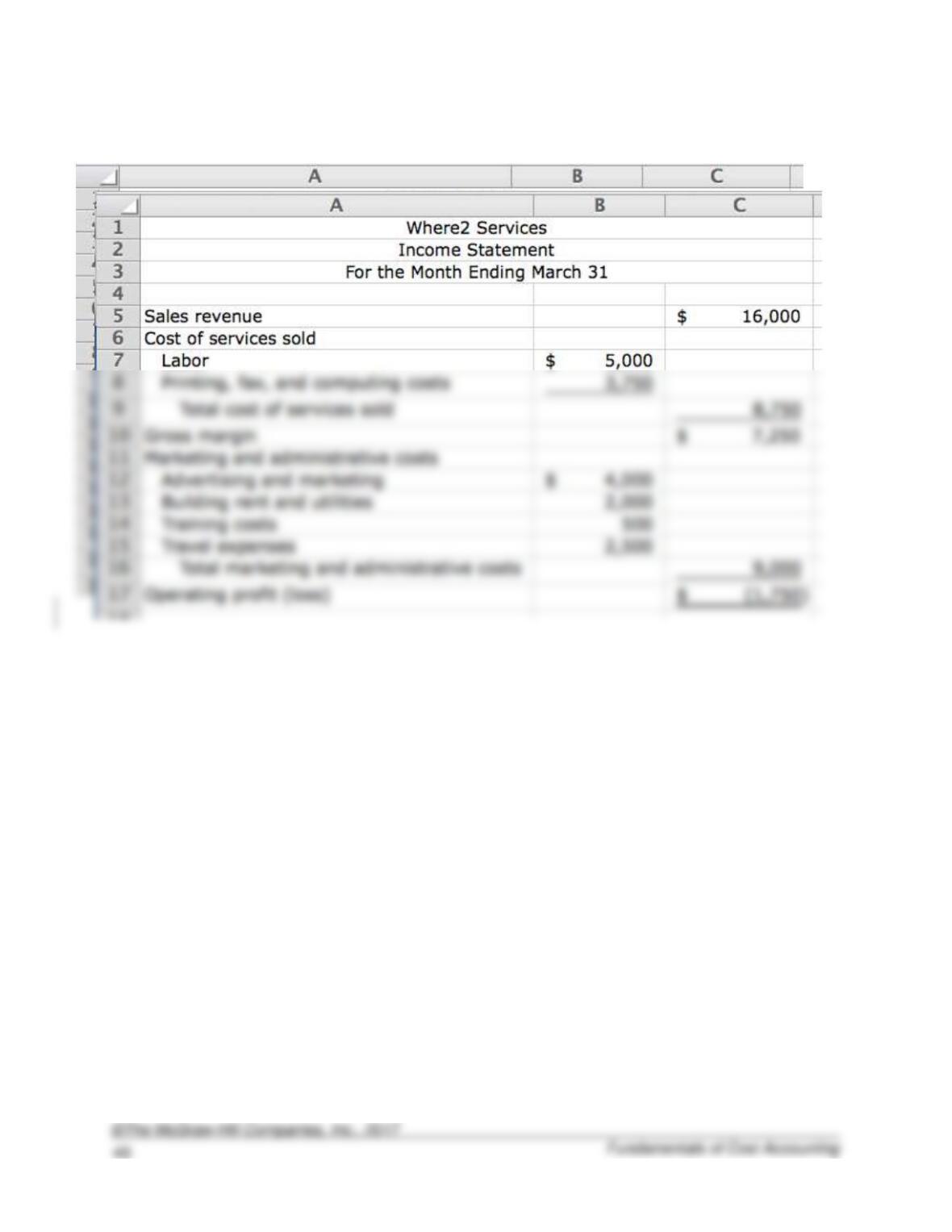
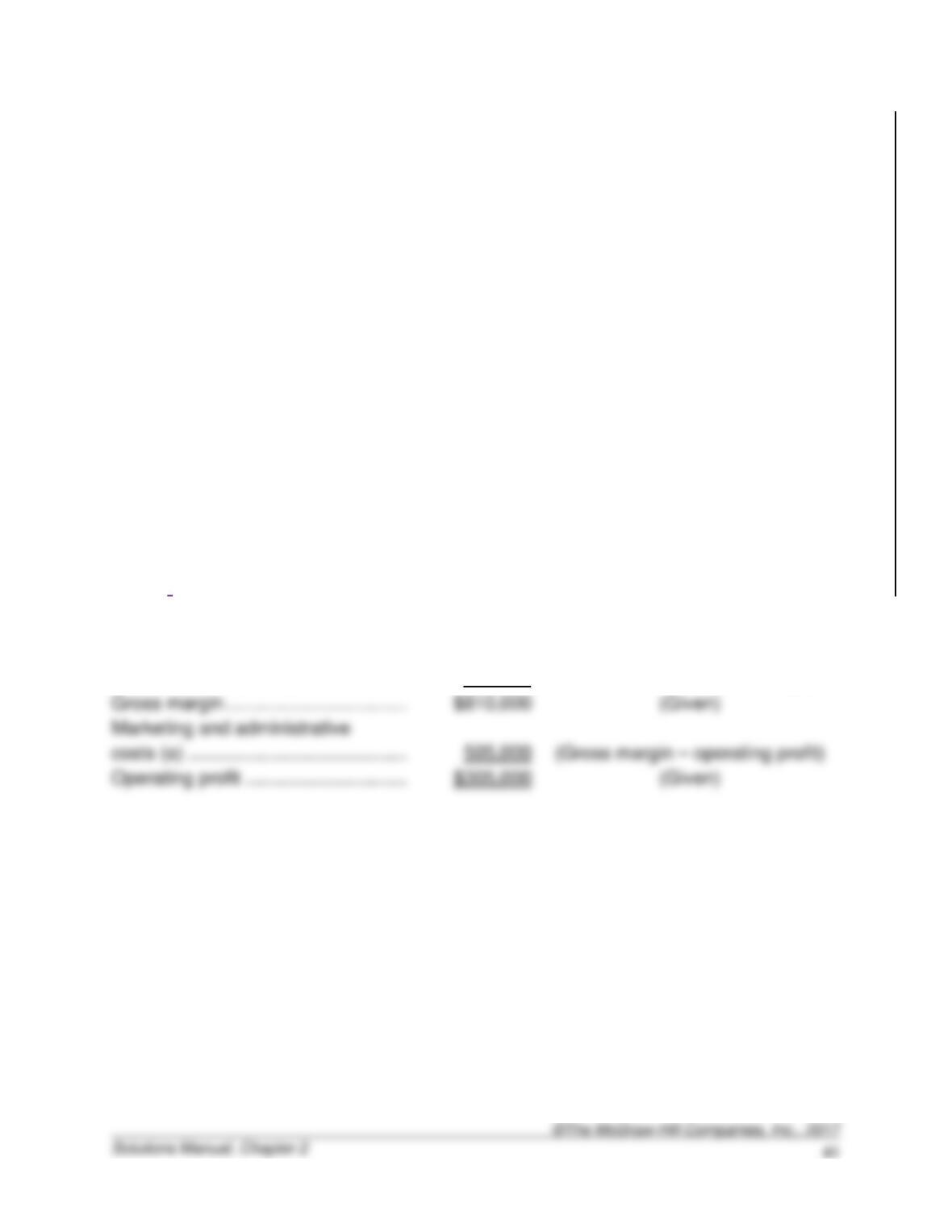
2-37. Prepare Statements for a Service Company: Where2 Services.
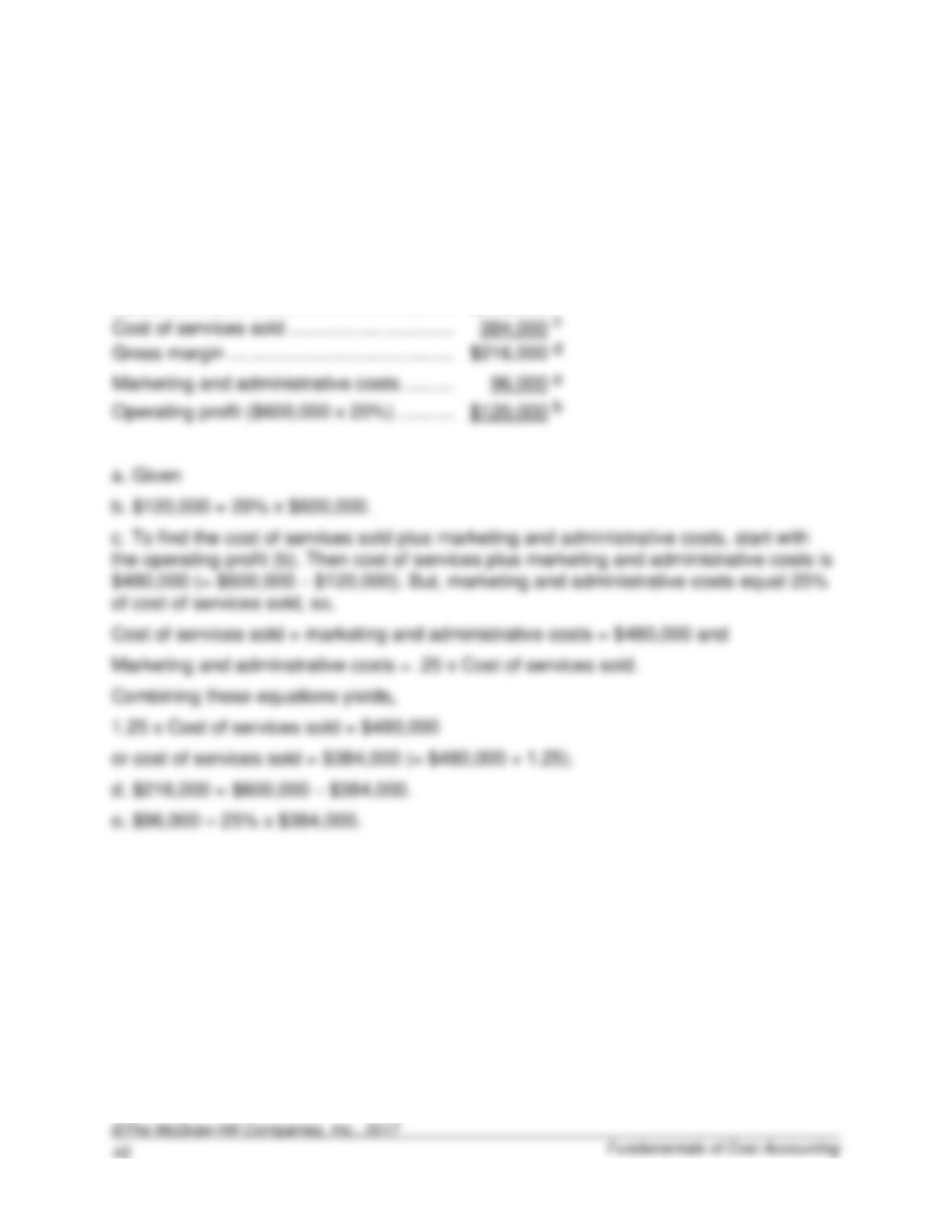
2-38. (10 min.) Prepare Statements for a Service Company: Remington
Advisors
Sales revenue ……………………………..
$1,700,000
(Given)
Cost of services sold (b) ………………..
890,000
(Sales revenue – gross margin)
Gross margin ……………………………….
(Given)
costs (a) ……………………………………..
505,000
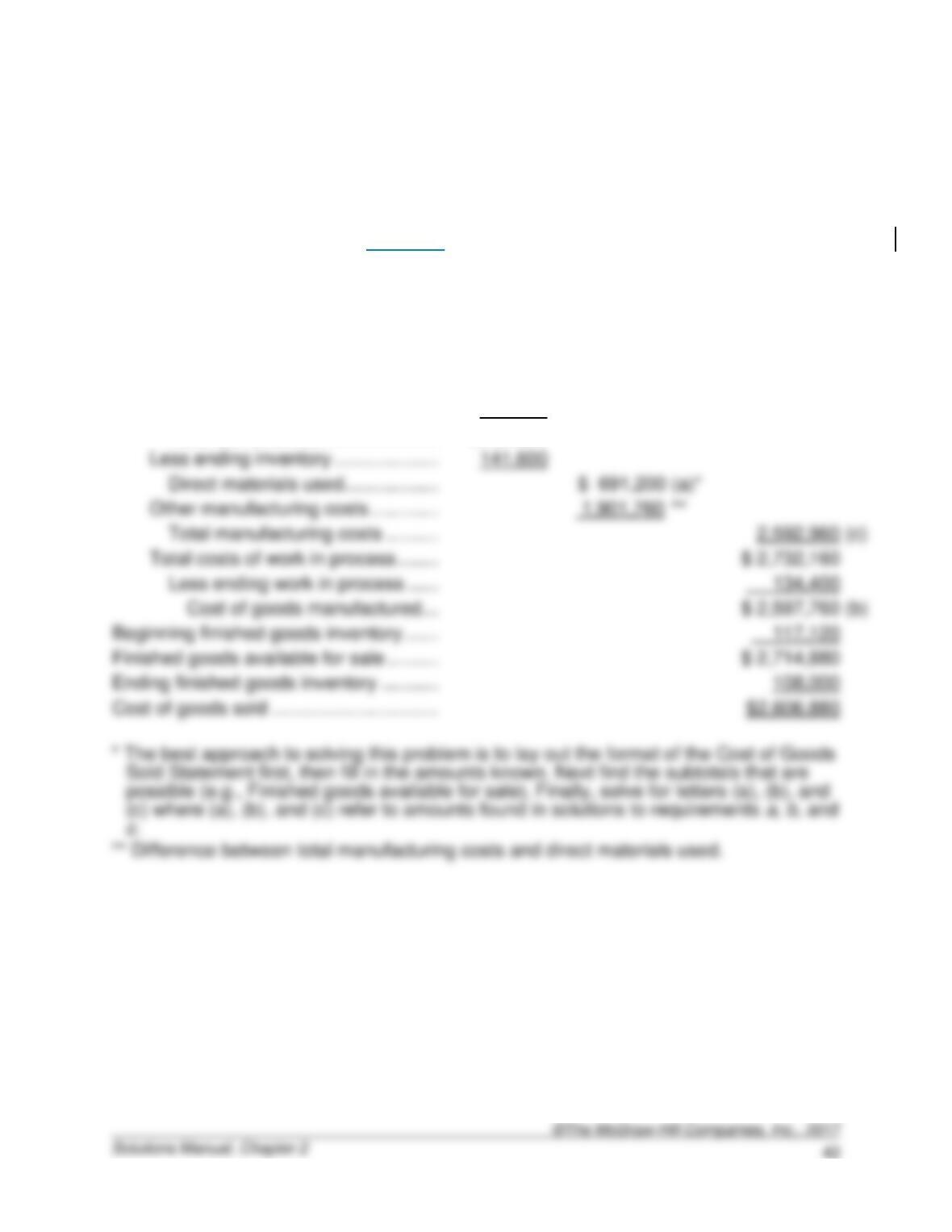
2-39. (20 min.) Prepare Statements for a Service Company: Lead! Inc.
You can solve this in the order shown below.
Lead!, Inc.
Income Statement
For the Month Ended April 30
Sales revenue ……………………………………………………………………………..
$600,000
a
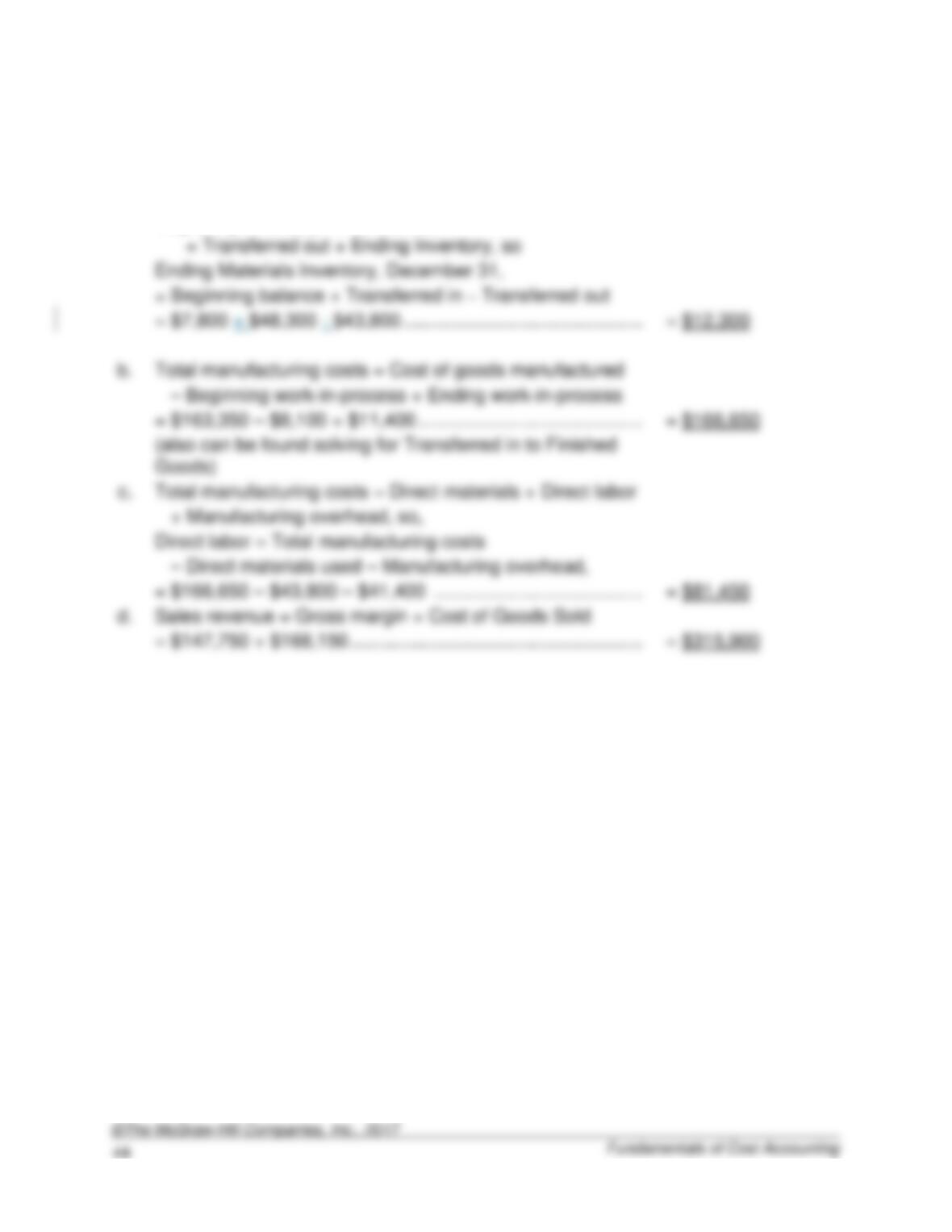
2-40. (30 min.) Prepare Statements for a Manufacturing Company: Crabtree
Machining Company.
Crabtree Machining Company
Cost of Goods Sold Statement
For the Year Ended December 31
Beginning work-in-process inventory ….
$ 139,200
Manufacturing costs:
Direct materials:
Beginning inventory …………………..
$115,200
Purchases ………………………………..
717,600
Materials available ………………….
$832,800
Less ending inventory ………………..
Direct materials used ………………
(a)*
Other manufacturing costs ………….
Total manufacturing costs ……….
(c)
Total costs of work in process ……..
Less ending work in process ……
Cost of goods manufactured …
(b)
Beginning finished goods inventory …….
Finished goods available for sale ……….
Ending finished goods inventory ………..
2-41. (15 min.) Basic Concepts: Monroe Fabricators
a.
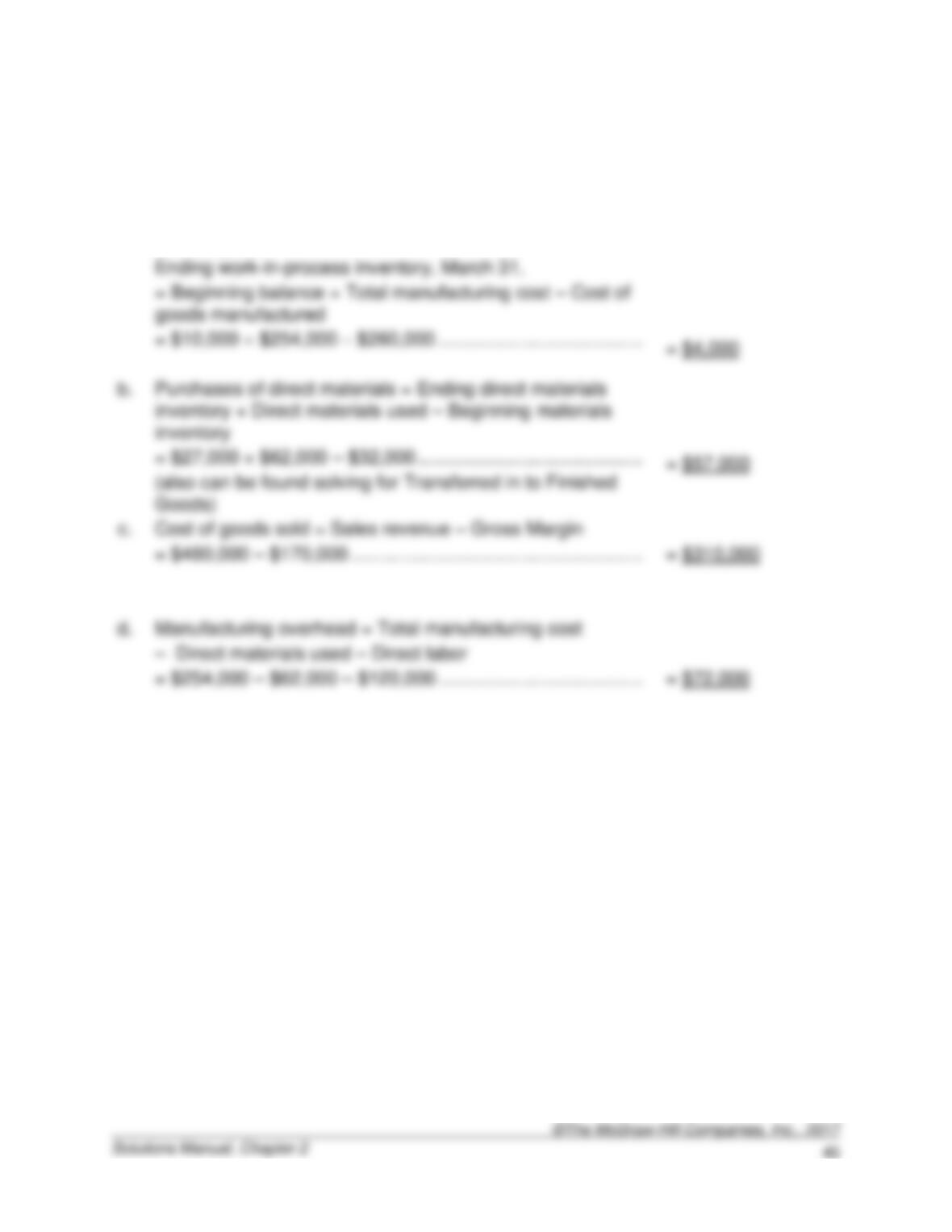
From the basic inventory equation,
Beginning Inventory + Transferred in
2-42. (15 min.) Basic Concepts: Talmidge Co.
a.
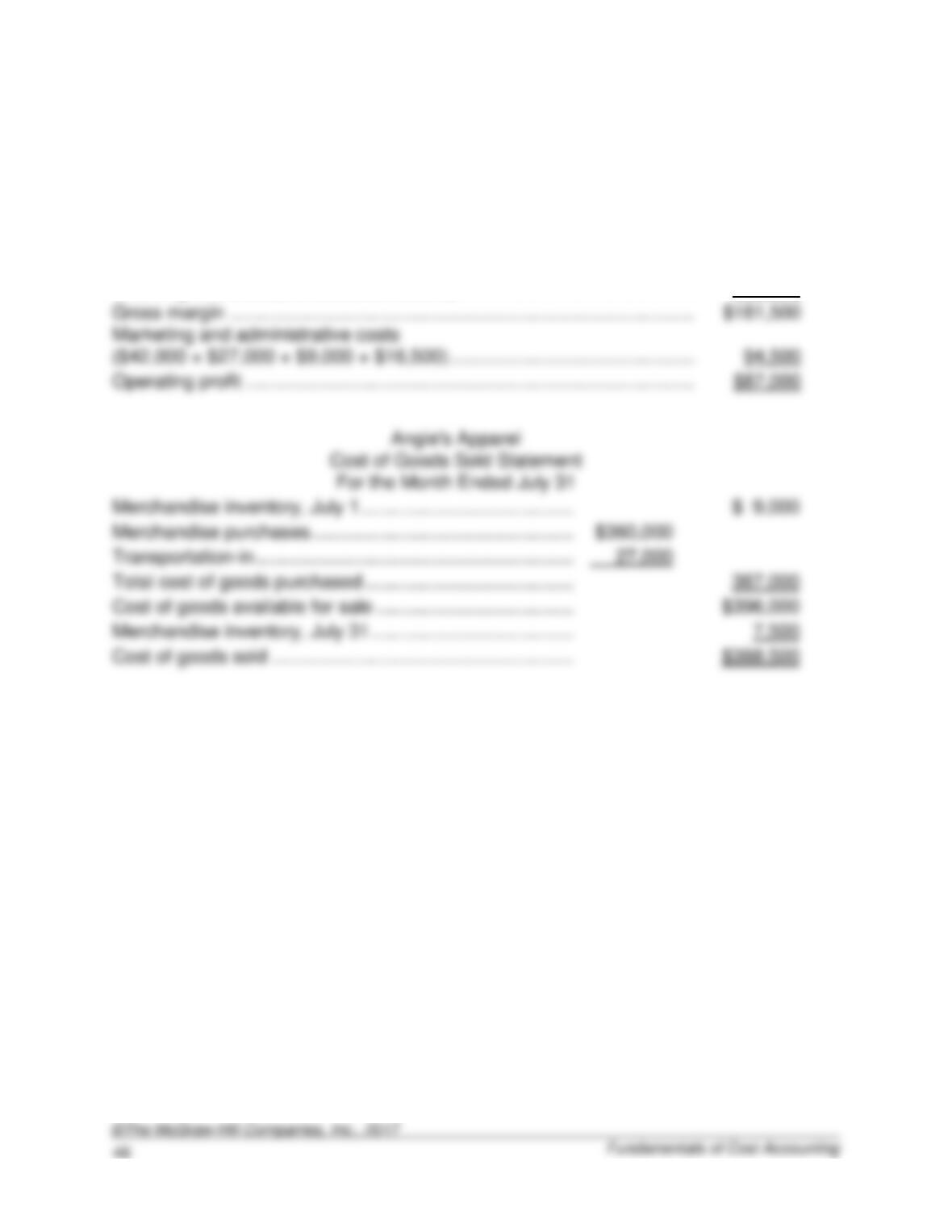
Purchases of direct materials = Ending direct materials
From the basic inventory equation,
Beginning work-in-process inventory + Total manufacturing
cost
= Cost of goods manufactured + Ending work-in-process
inventory, so
2-43. (15 min.) Prepare Statements for a Merchandising Company: Angie’s
Apparel.
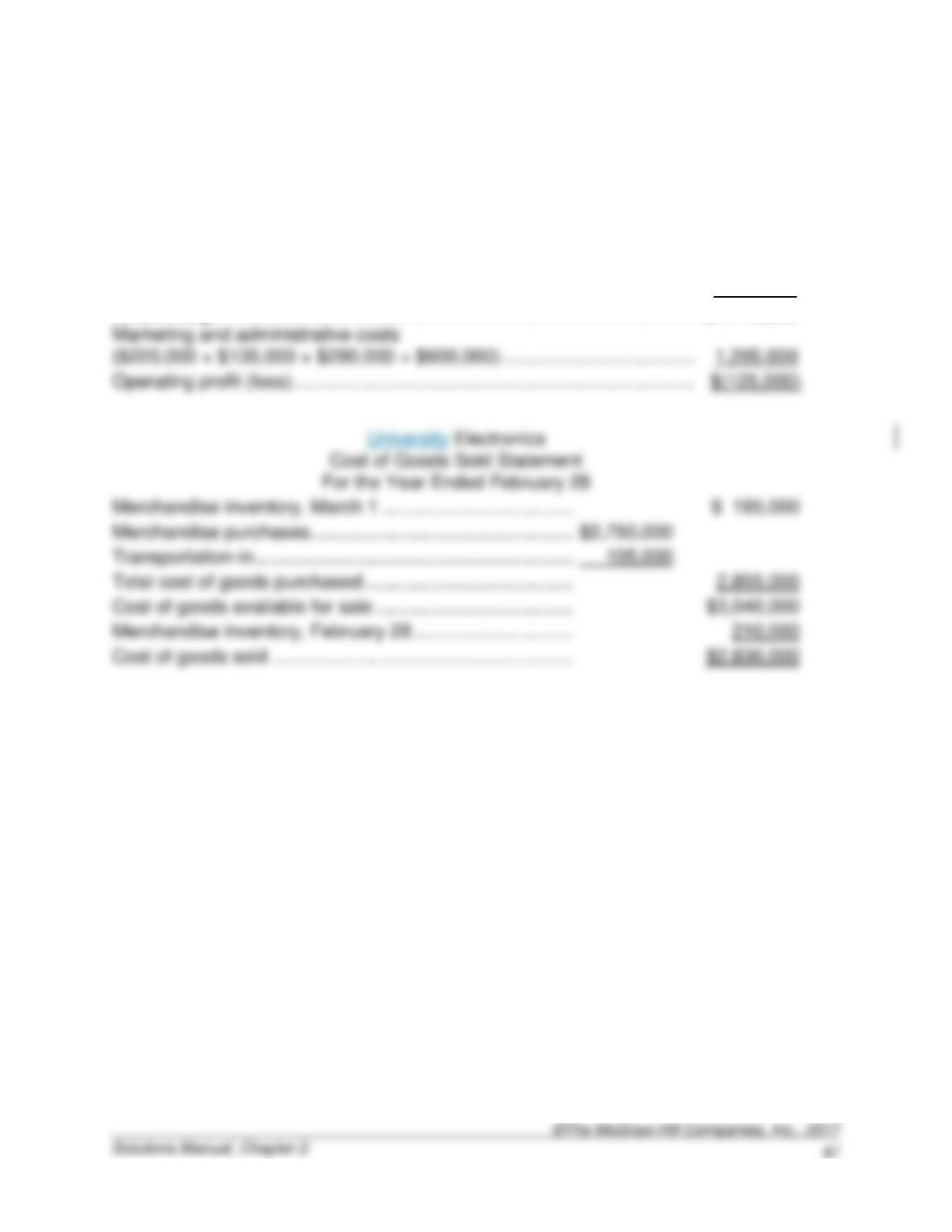
Angie’s Apparel
Income Statement
For the Month Ended July 31
Sales revenue ……………………………………………………………………………..
$570,000
Cost of goods sold (see statement below) ……………………………………….
388,500
Gross margin ………………………………………………………………………………
For the Month Ended July 31
Merchandise inventory, July 1 ……………………………………….
Merchandise purchases ……………………………………………….
Total cost of goods purchased ………………………………………
Cost of goods available for sale …………………………………….
Merchandise inventory, July 31 ……………………………………..
2-44. (15 min.) Prepare Statements for a Merchandising Company: University
Electronics.
University Electronics
Income Statement
For the Year Ended February 28
Sales revenue ……………………………………………………………………………..
$4,000,000
Cost of goods sold (see statement below) ……………………………………….
2,830,000
Gross margin ………………………………………………………………………………
$1,170,000
1,295,000
For the Year Ended February 28
Merchandise inventory, March 1 ……………………………………
Merchandise purchases ……………………………………………….
Total cost of goods purchased ………………………………………
Cost of goods available for sale …………………………………….
Merchandise inventory, February 28 ………………………………
2-45. (10 min.) Cost Behavior for Forecasting: Dayton, Inc.
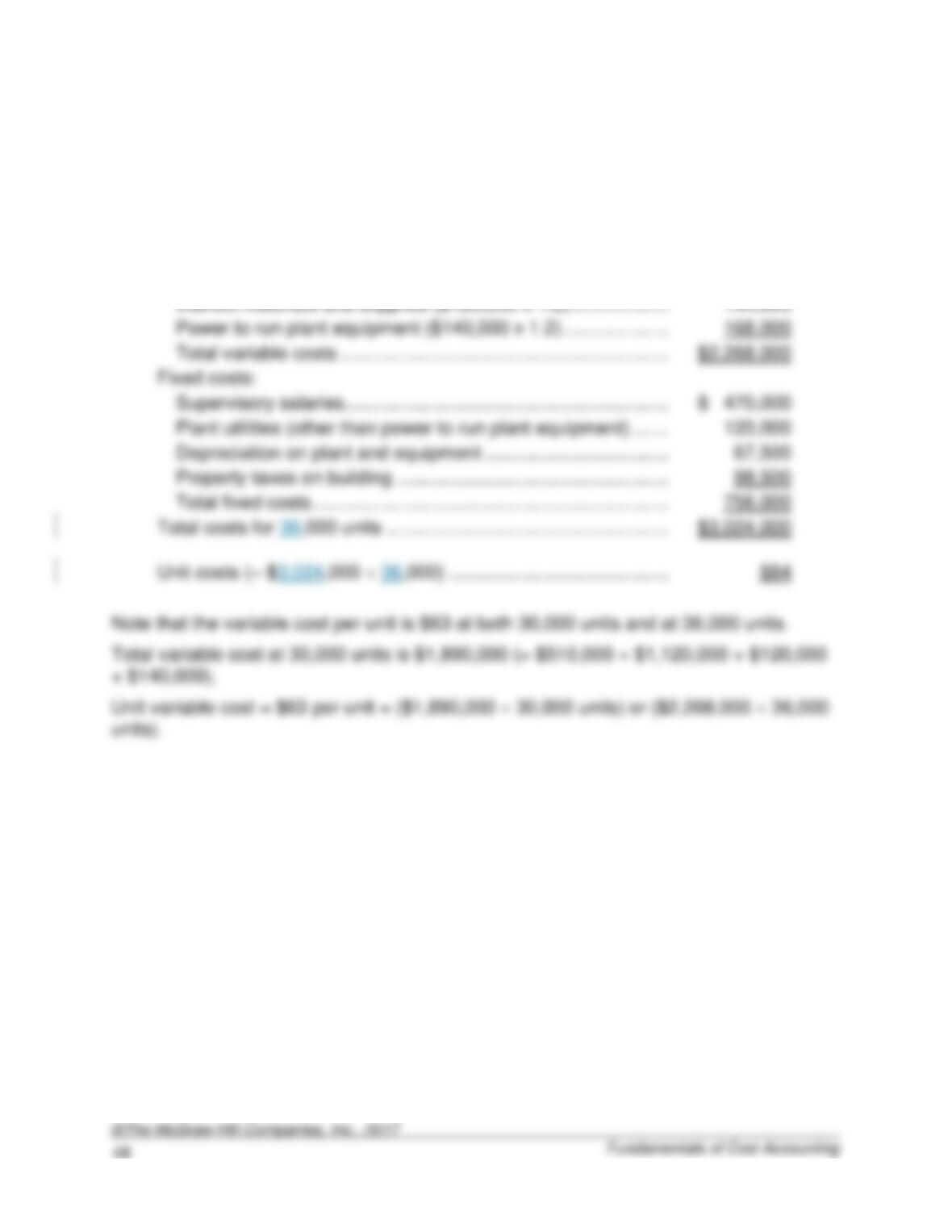
The variable costs will be 20 percent higher because there will be an increase of 36,000
– 30,000 = 6,000 units (20% = 6,000 ÷ 30,000).
Variable costs:
Direct materials used ($510,000 x 1.2) …………………………...
$ 612,000
Direct labor ($1,120,000 x 1.2)……………………………………….
1,344,000
Indirect materials and supplies ($120,000 x 1.2) ……………….
Power to run plant equipment ($140,000 x 1.2) ………………..
Total variable costs ………………………………………………………
Fixed costs:
Supervisory salaries ……………………………………………………..
Plant utilities (other than power to run plant equipment) …….
Depreciation on plant and equipment ……………………………..
Property taxes on building …………………………………………….
Total fixed costs …………………………………………………………..
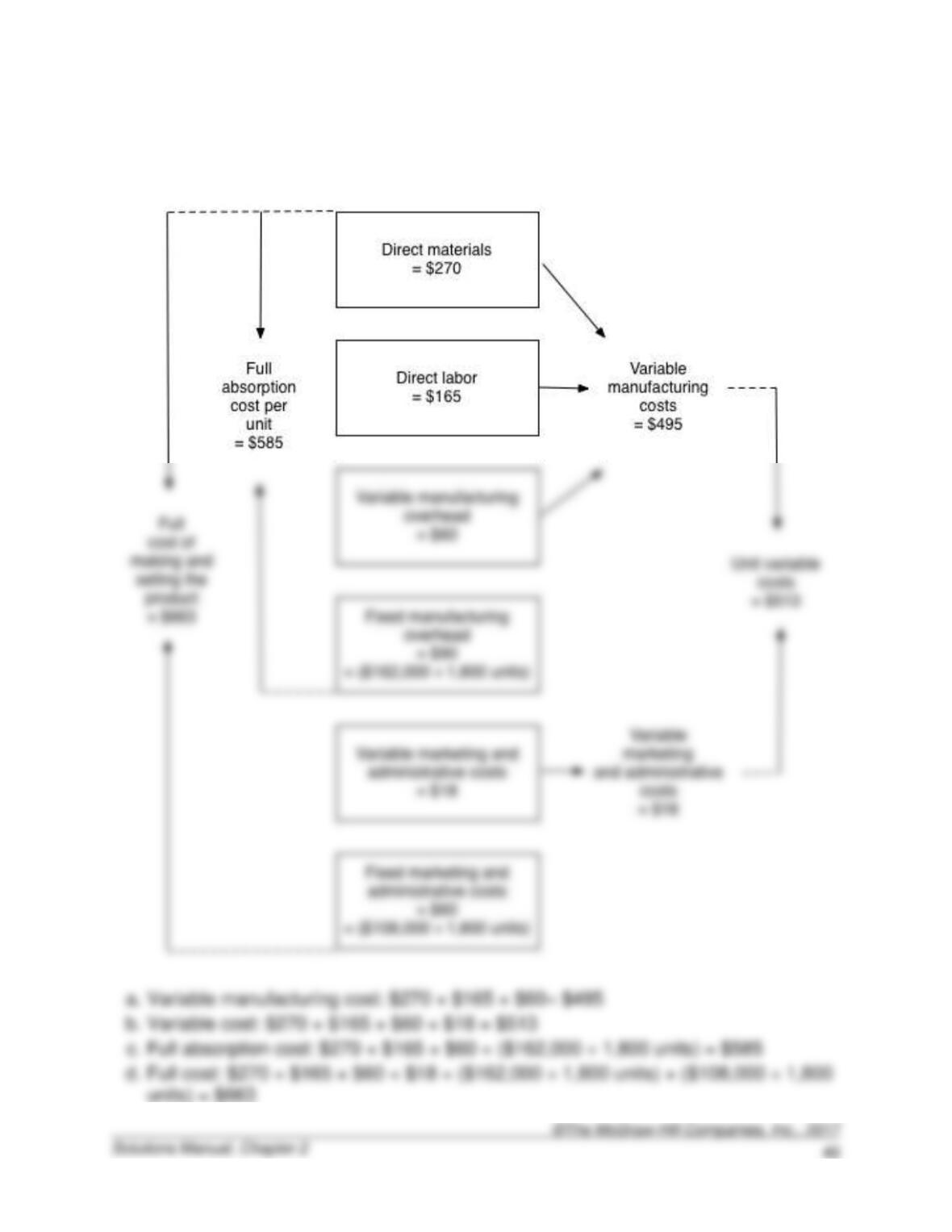
2-46. (30 min.) Components of Full Costs: Madrid Corporation
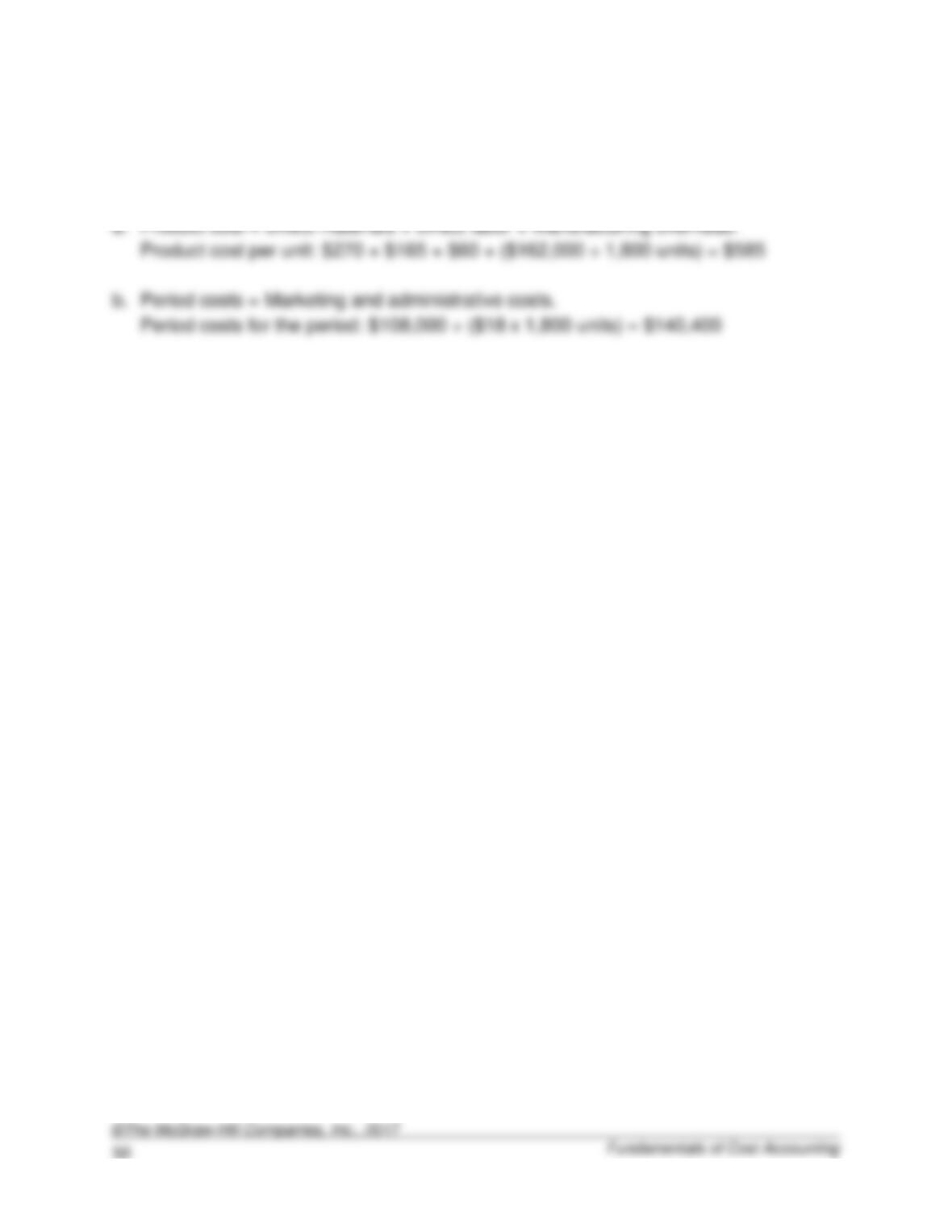
2-47. (15 min.) Components of Full Costs: Madrid Corporation.
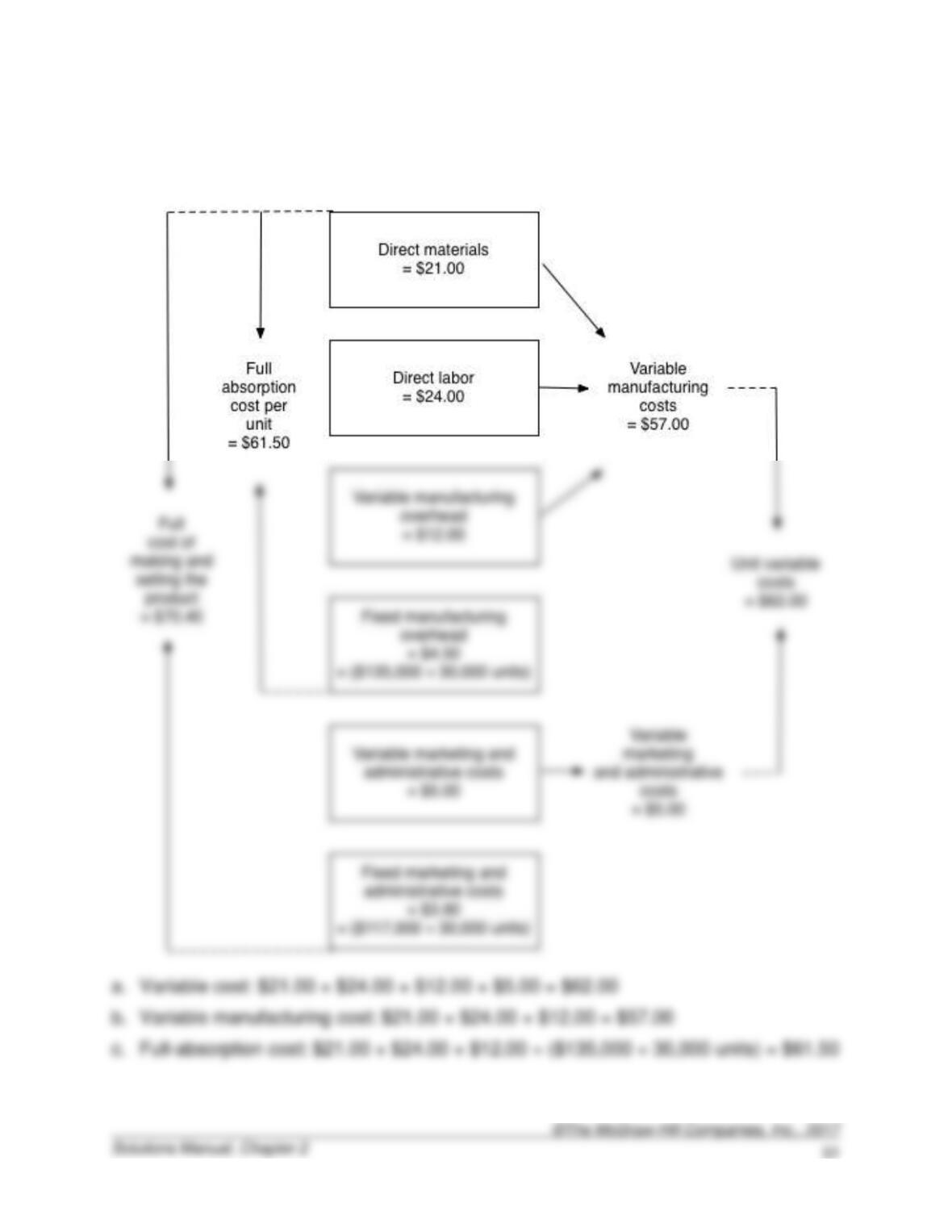
2-48. (30 min.) Components of Full Cost: Larcker Manufacturing.
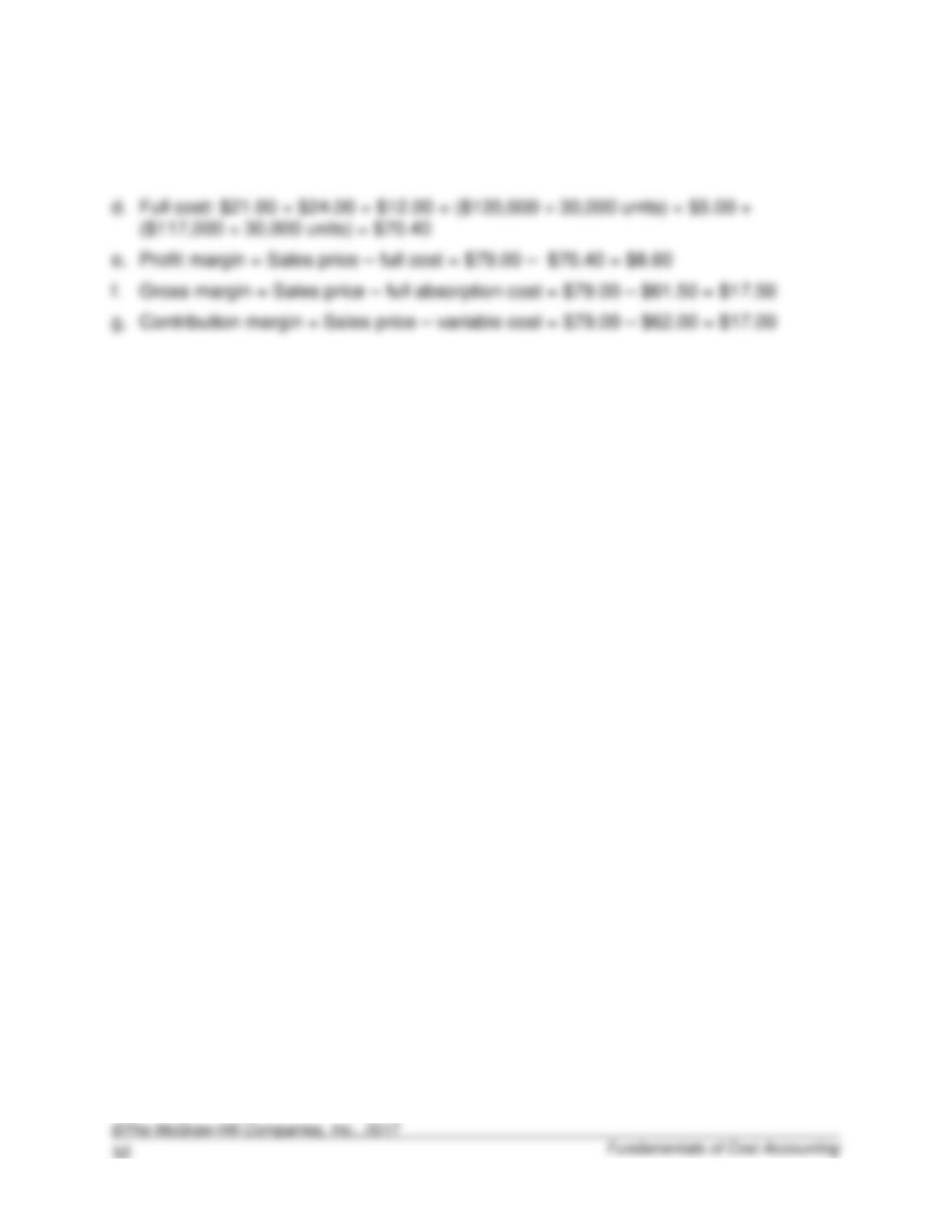
2-48. (continued)
2-49. (20 Min.) Gross Margin and Contribution Margin Income Statements:
Larcker Manufacturing.
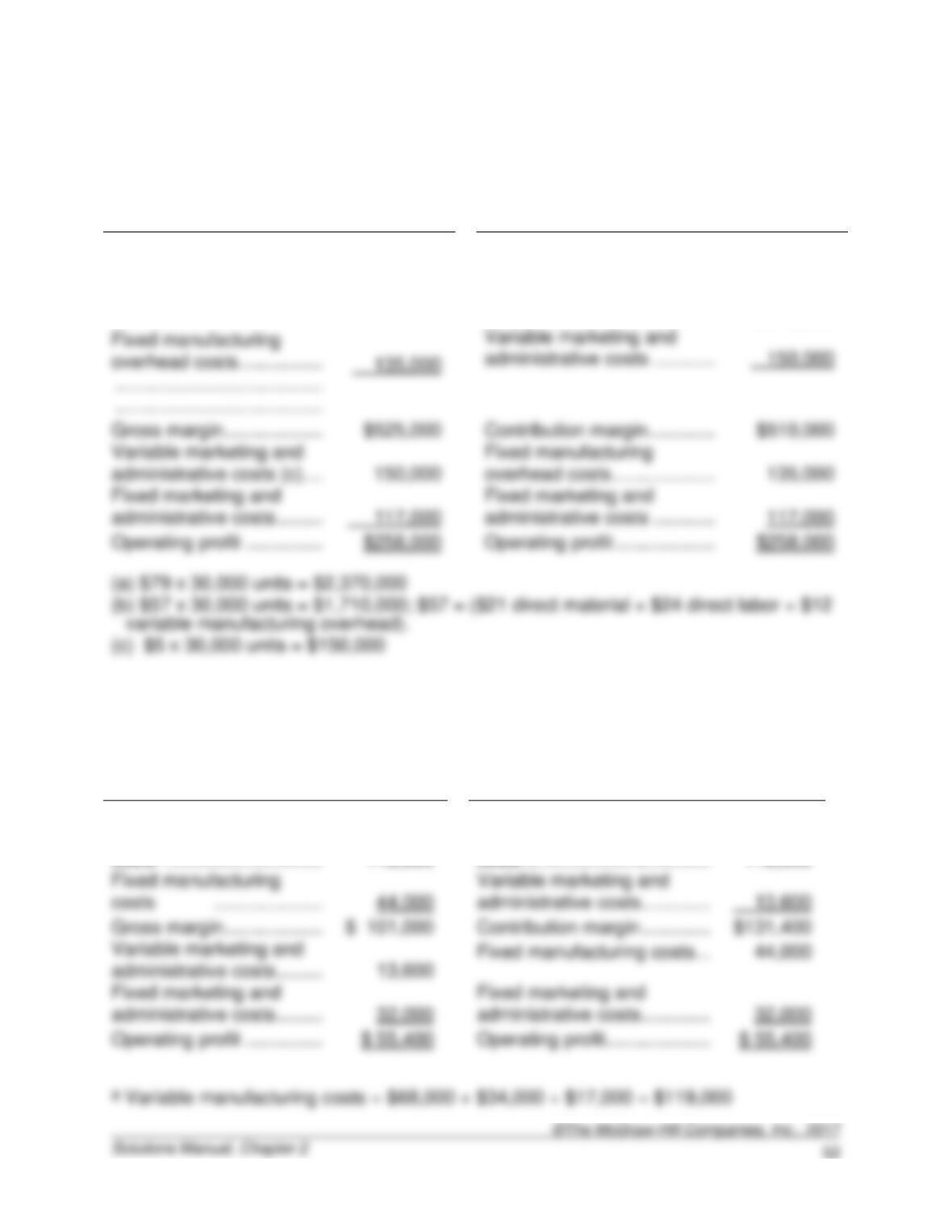
Gross Margin Income Statement
Contribution Margin Income Statement
Sales revenue(a) ………….
………………………………….
$2,370,000
Sales revenue …………………
$2,370,000
Variable manufacturing
costs (b) ……………………..
1,710,000
Variable manufacturing
costs ……………………………..
1,710,000
………………………………….
Gross margin ……………….
Contribution margin ………….
Variable marketing and
administrative costs (c) ….
Fixed manufacturing
overhead costs ………………..
Fixed marketing and
administrative costs ………
Fixed marketing and
administrative costs …………
2-50. (20 Min.) Gross Margin and Contribution Margin Income Statements: Niles
Castings.
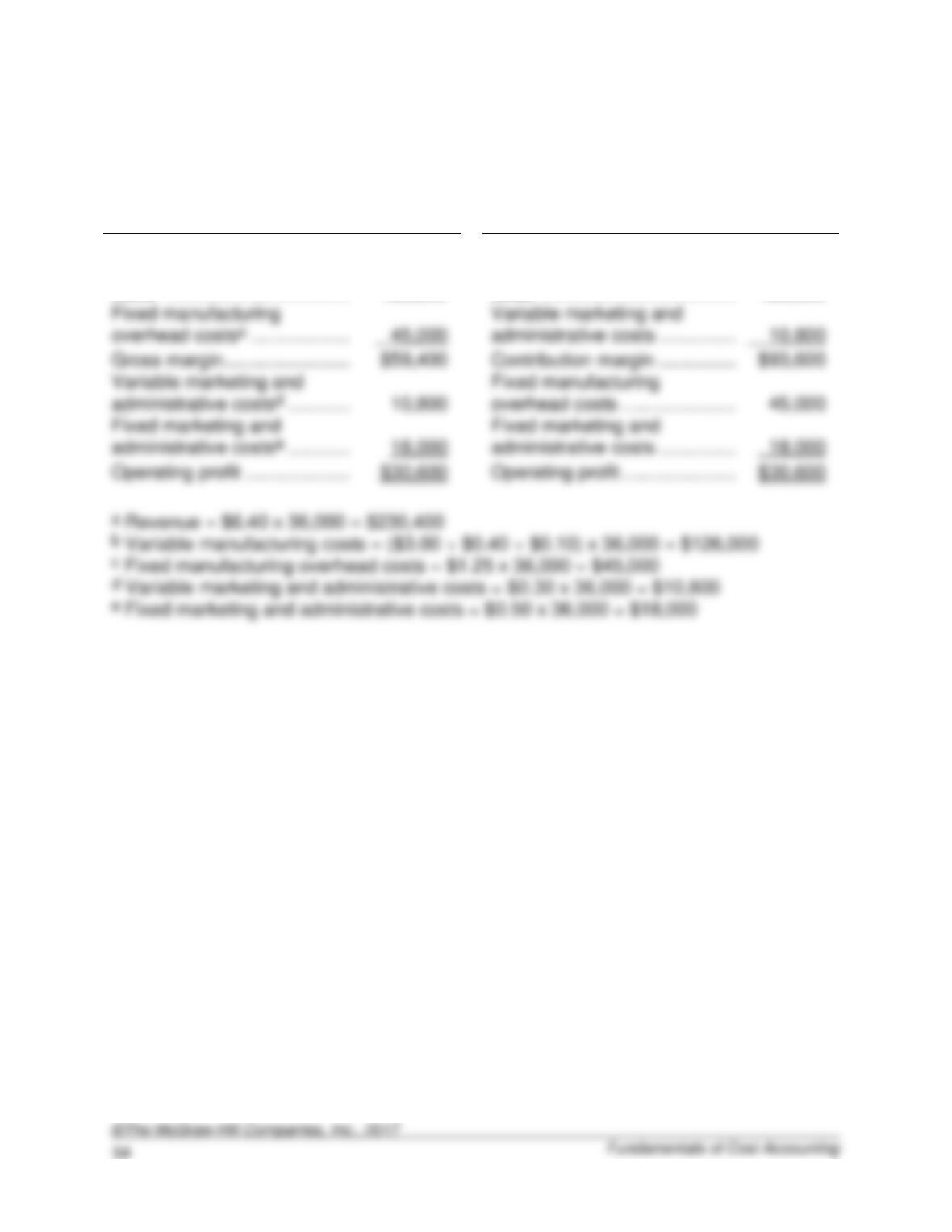
Gross Margin Income Statement
Contribution Margin Income Statement
Sales revenue …………….
$264,000
Sales revenue …………………
$264,000
Variable manufacturing
costsa …………………………
119,000
Variable manufacturing
costs ………………………………
119,000
Gross margin ……………….
Contribution margin ………….
$131,400
Variable marketing and
administrative costs ………
Fixed marketing and
administrative costs ………
Fixed marketing and
administrative costs ………….
2-51. (20 Min.) Gross Margin and Contribution Margin Income Statements: Alpine
Coffee Roasters.
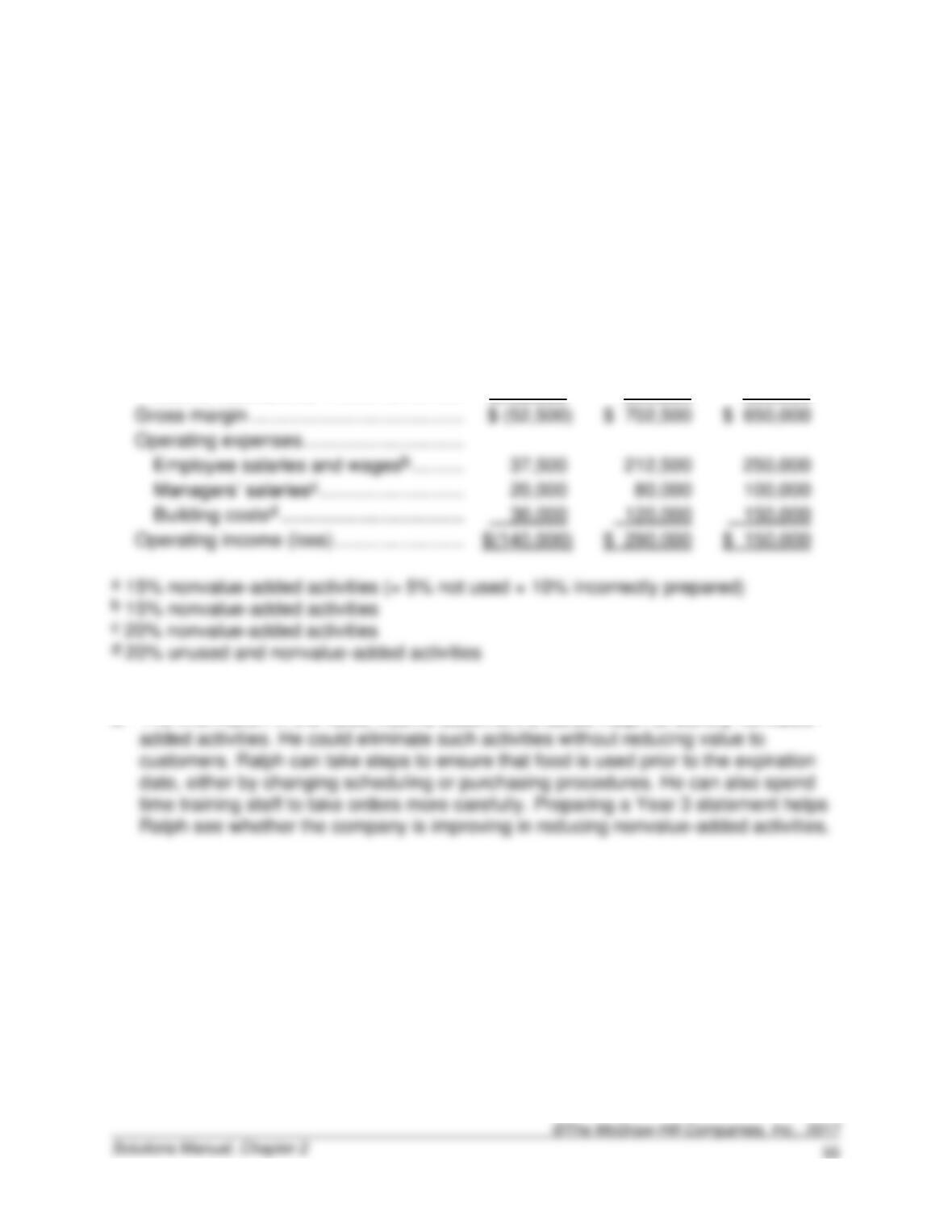
Gross Margin Income Statement
Contribution Margin Income Statement
Sales revenuea ………………….
$230,400
Sales revenue ……………………
$230,400
Variable manufacturing
costsb ………………………………
126,000
Variable manufacturing
costs ………………………………..
126,000
administrative costs ……………
Gross margin …………………….
Contribution margin ……………
overhead costs ………………….
administrative costs ……………
2-52. (30 min.) Value Income Statement: Ralph’s Restaurant.
a.
Ralph’s Restaurant
Value Income Statement
For the year 2 ending December 31
Nonvalue-
added
activities
Value-
added
activities
Total
Sales revenue ………………………………….
$1,000,000
$1,000,000
Cost of merchandise …………………………
Cost of food serveda ……………………..
$ 52,500
297,500
350,000
Gross margin …………………………………..
$ (52,500)
$ 702,500
Operating expenses ………………………….
Employee salaries and wagesb ……….
212,500
250,000
Managers’ salariesc ……………………….
100,000
b. The information in the value income statement enables Ralph to identify nonvalue-
2-53. (30 min.) Value Income Statement: DeLuxe Limo Service.
a.
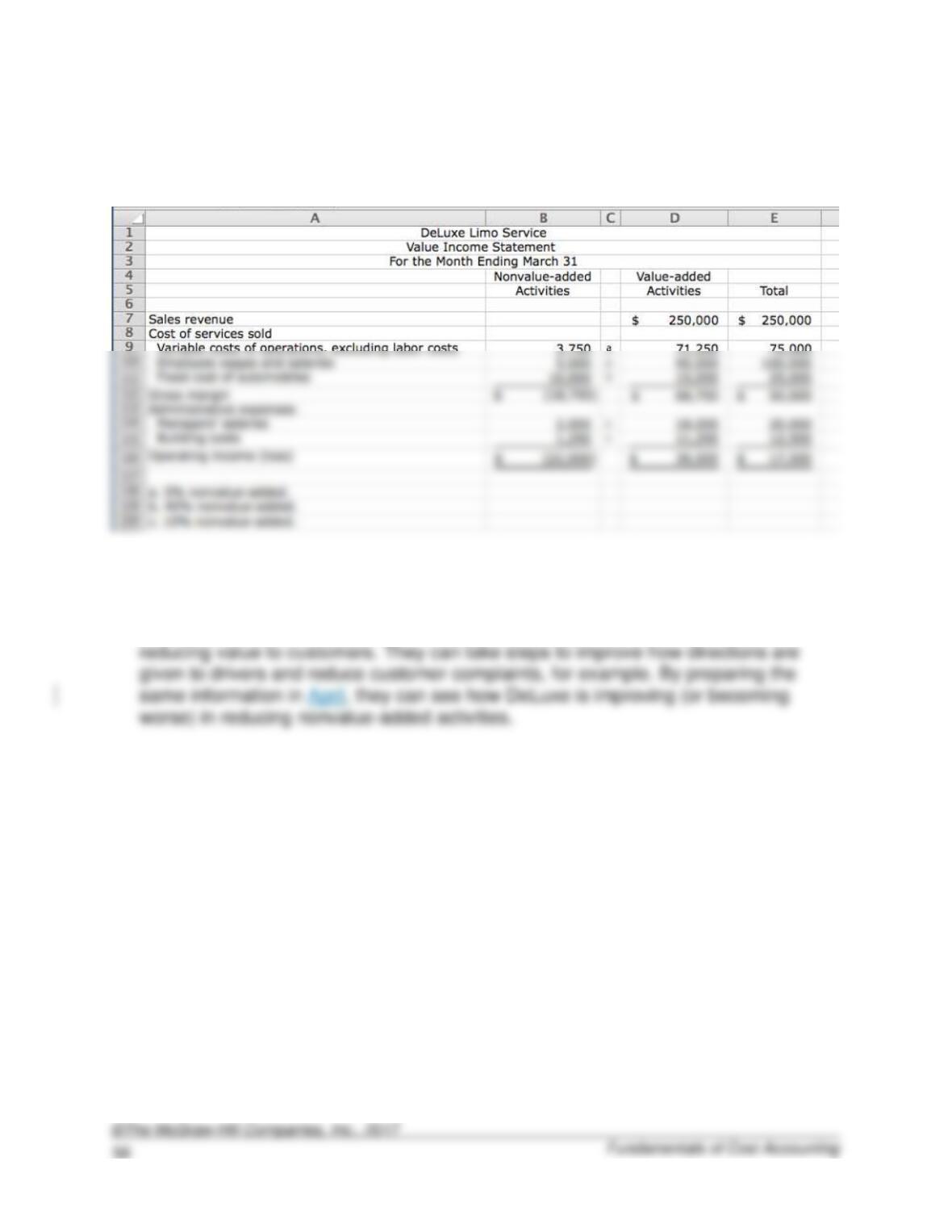
b. The information in the value income statement enables the managers at DeLuxe to
identify nonvalue-added activities. They could eliminate such activities without
Solutions to Problems
2-54. (30 min.) Cost Concepts: Chelsea, Inc.
a.
Prime costs = direct materials + direct labor
b.
e.
Cost of
Goods
=
Cost of
Goods
+
Beginning
Finished
–
Ending
Finished
2-55. (30 Minutes) Cost Concepts: Lawrence Components.
a. $58,000.
Prime costs
=
Direct materials used + Direct labor costs
Direct materials used
=
Prime costs – Direct labor costs
=
=
b. $12,000.
Direct materials used
=
Beginning inventory + purchases – ending inventory
beginning inventory
=
$12,000
c. $120,000.
costs
Conversion cost
=
Total manufacturing costs – Prime costs + Direct labor
cost
=
$178,000 – $98,000 + $40,000
=
$120,000
=
$6,000 + $178,000 – $180,000
=
$4,000
Conversion cost
=
Direct labor costs + Manufacturing overhead
Manufacturing overhead
=
Conversion costs – Direct labor costs
=
$120,000 – $40,000
=
$80,000
Total manufacturing
=
Prime costs + Conversion costs – Direct labor cost
2-55. (continued)
f. $10,000.
Cost of goods sold
=
Finished goods, beginning + Cost of goods
manufactured – Finished goods, ending
Finished goods,
beginning
=
Cost of goods sold – Cost of goods manufactured +
Finished goods, ending
$142,000 – $180,000 + $48,000
=
$10,000
2-56. (30 minutes) Cost Concepts: Columbia Products.
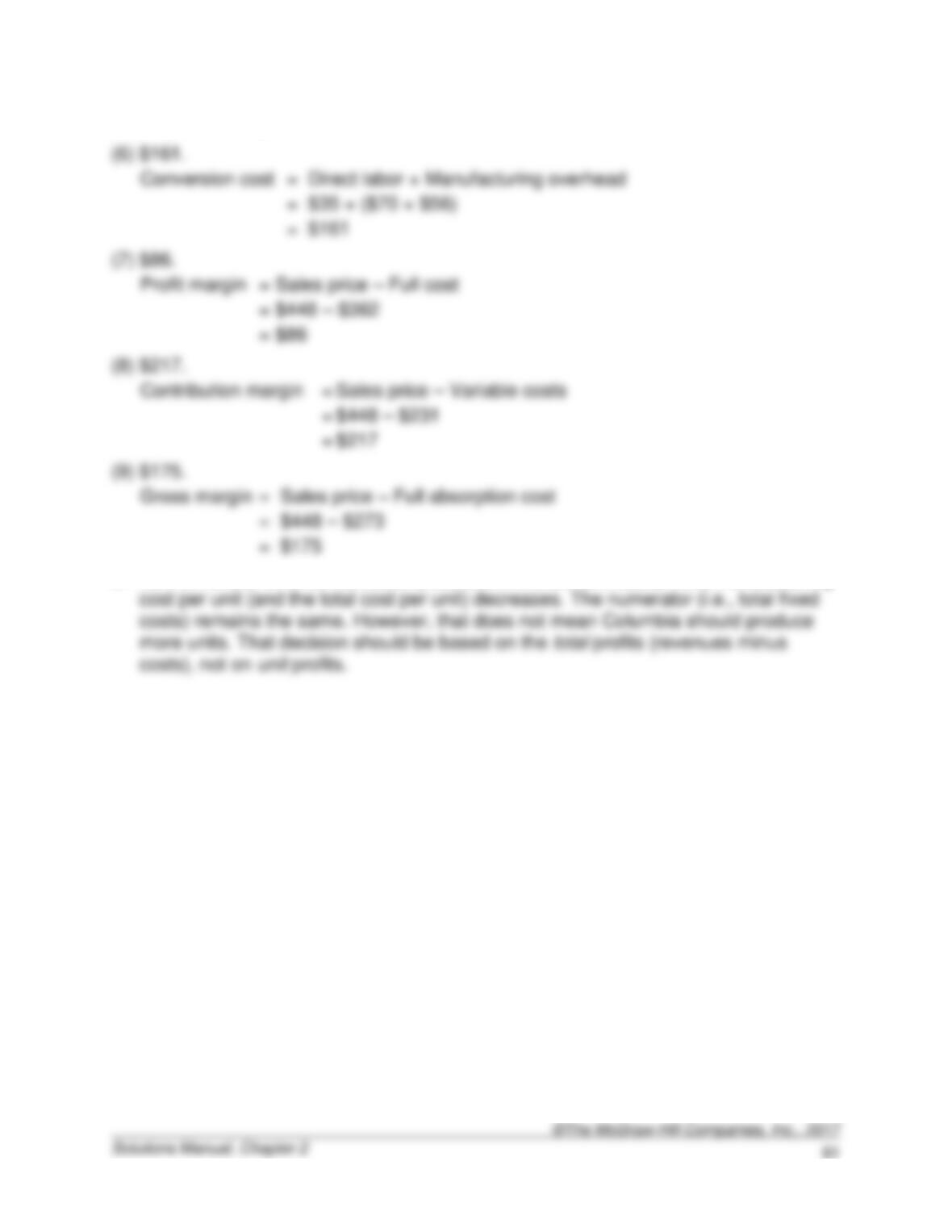
a. Amounts per unit:
(1) $217.
2-56. (continued)
b. As the number of units increases (reflected in the denominator), fixed manufacturing
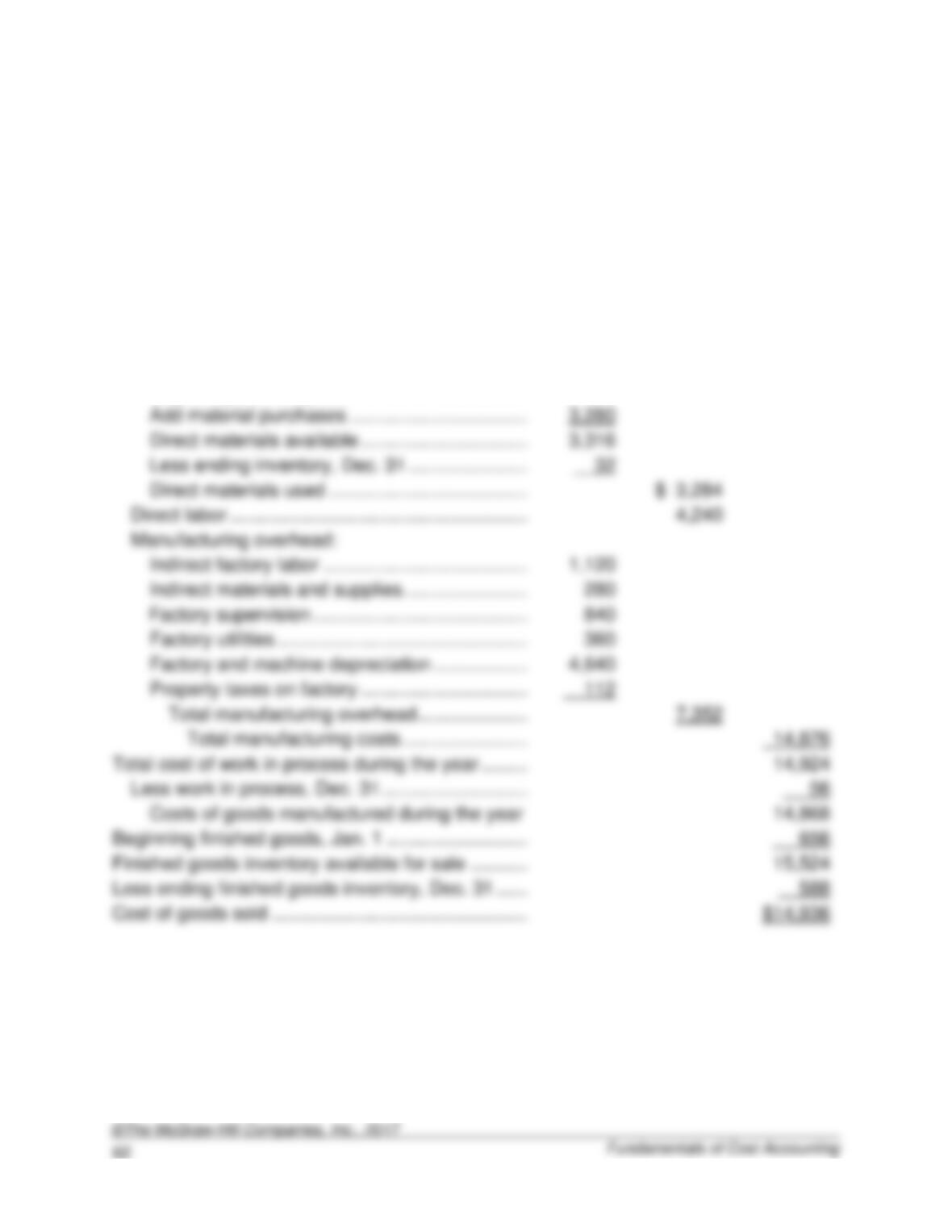
2-57. (30 min.) Prepare Statements for a Manufacturing Company: Yolo
Windows.
Yolo Windows
Statement of Cost of Goods Sold
For the Year Ended December 31
($000)
Work in process, Jan. 1 ……………………………………
$ 48
Manufacturing costs:
Direct materials:
Beginning inventory, Jan. 1 ………………………..
$ 36
Add material purchases …………………………….
Direct materials available …………………………..
Less ending inventory, Dec. 31 …………………..
Direct materials used ………………………………..
Direct labor …………………………………………………
Manufacturing overhead:
Indirect factory labor …………………………………
Indirect materials and supplies ……………………
Factory supervision …………………………………..
Factory utilities …………………………………………
Factory and machine depreciation ………………
Property taxes on factory …………………………..
Total manufacturing overhead …………………
Total manufacturing costs ……………………
Total cost of work in process during the year ………
14,924
Less work in process, Dec. 31 ……………………….
Costs of goods manufactured during the year
Beginning finished goods, Jan. 1 ………………………
Finished goods inventory available for sale ………..
15,524
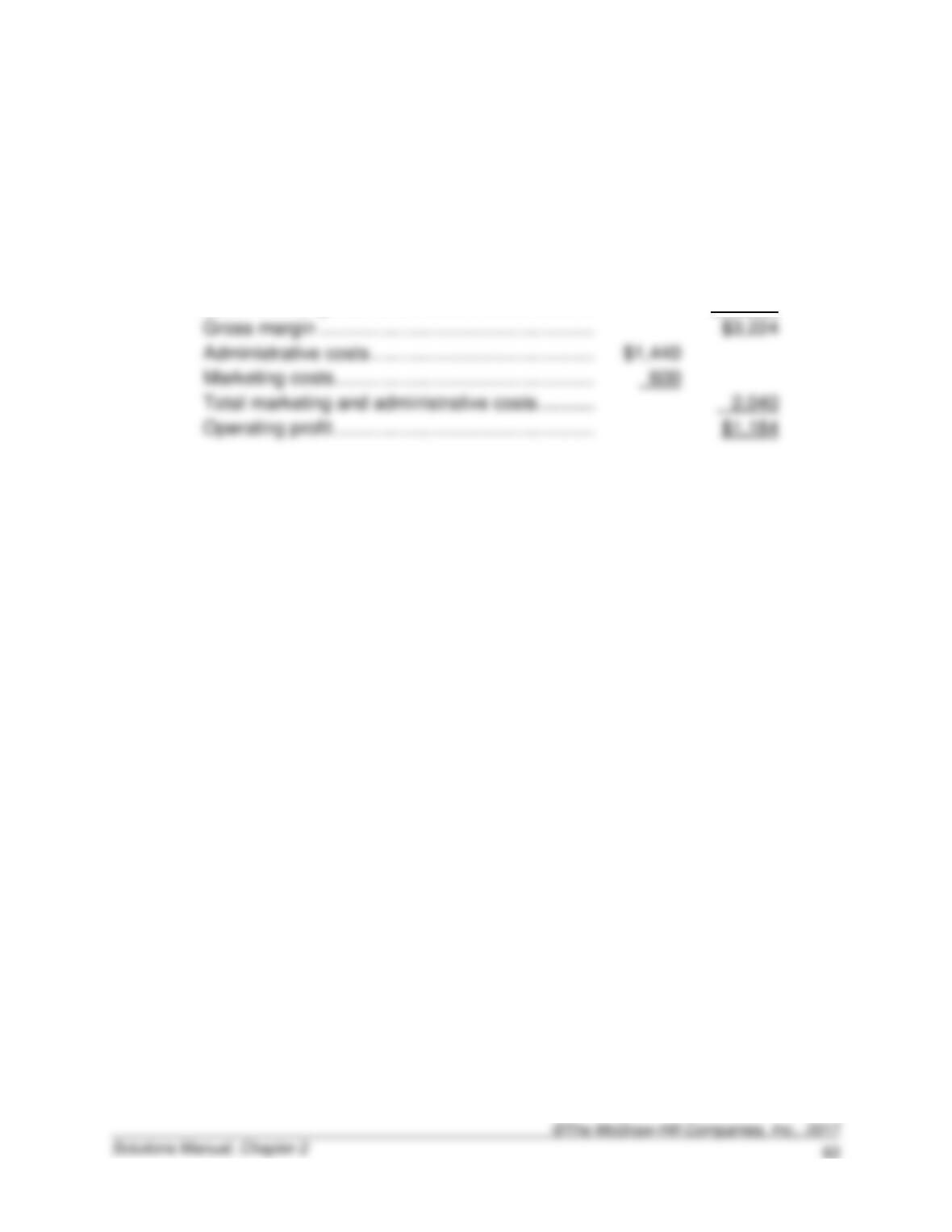
2-57. (continued)
Yolo Windows
Income Statement
For the Year Ended December 31
($000)
Sales revenue ………………………………………………………………….
$18,160
Less: Cost of goods sold …………………………………………………..
14,936
Administrative costs ………………………………………………………….
Marketing costs ………………………………………………………………..
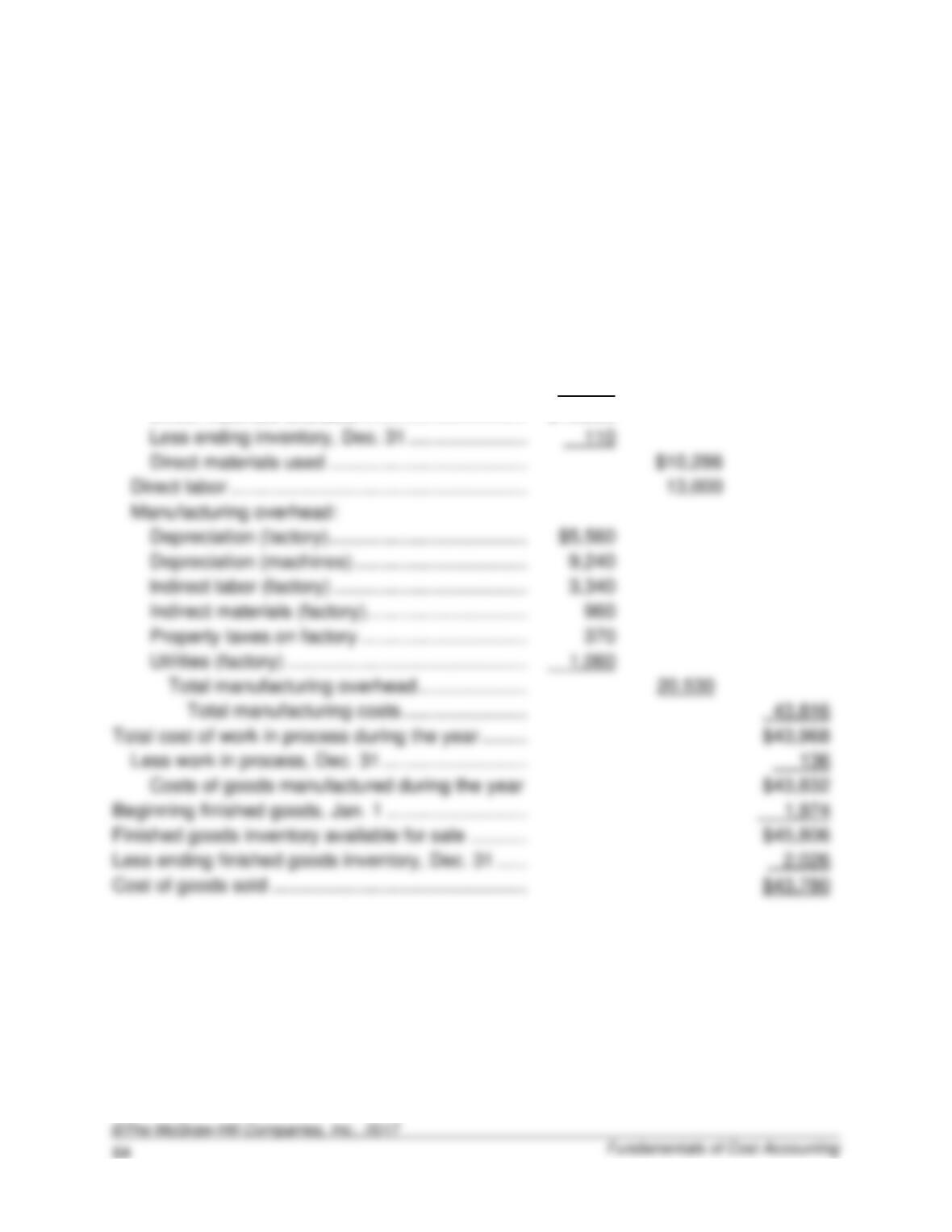
2-58. (30 min.) Prepare Statements for a Manufacturing Company: Mesa
Designs.
Mesa Designs
Statement of Cost of Goods Sold
For the Year Ended December 31
($000)
Work in process, Jan. 1 ……………………………………
$ 152
Manufacturing costs:
Direct materials:
Beginning inventory, Jan. 1 ………………………..
$ 96
Add materials purchases …………………………..
10,300
Direct materials available …………………………..
$10,396
Less ending inventory, Dec. 31 …………………..
Direct materials used ………………………………..
Direct labor …………………………………………………
Manufacturing overhead:
Depreciation (factory) ………………………………..
$5,560
Depreciation (machines) …………………………...
Indirect labor (factory) ……………………………….
Indirect materials (factory)………………………….
Property taxes on factory …………………………..
Utilities (factory) …………………………..…………..
Total manufacturing overhead …………………
Total manufacturing costs ……………………
Total cost of work in process during the year ………
Less work in process, Dec. 31 ……………………….
Costs of goods manufactured during the year
$43,832
Beginning finished goods, Jan. 1 ………………………
Finished goods inventory available for sale ………..
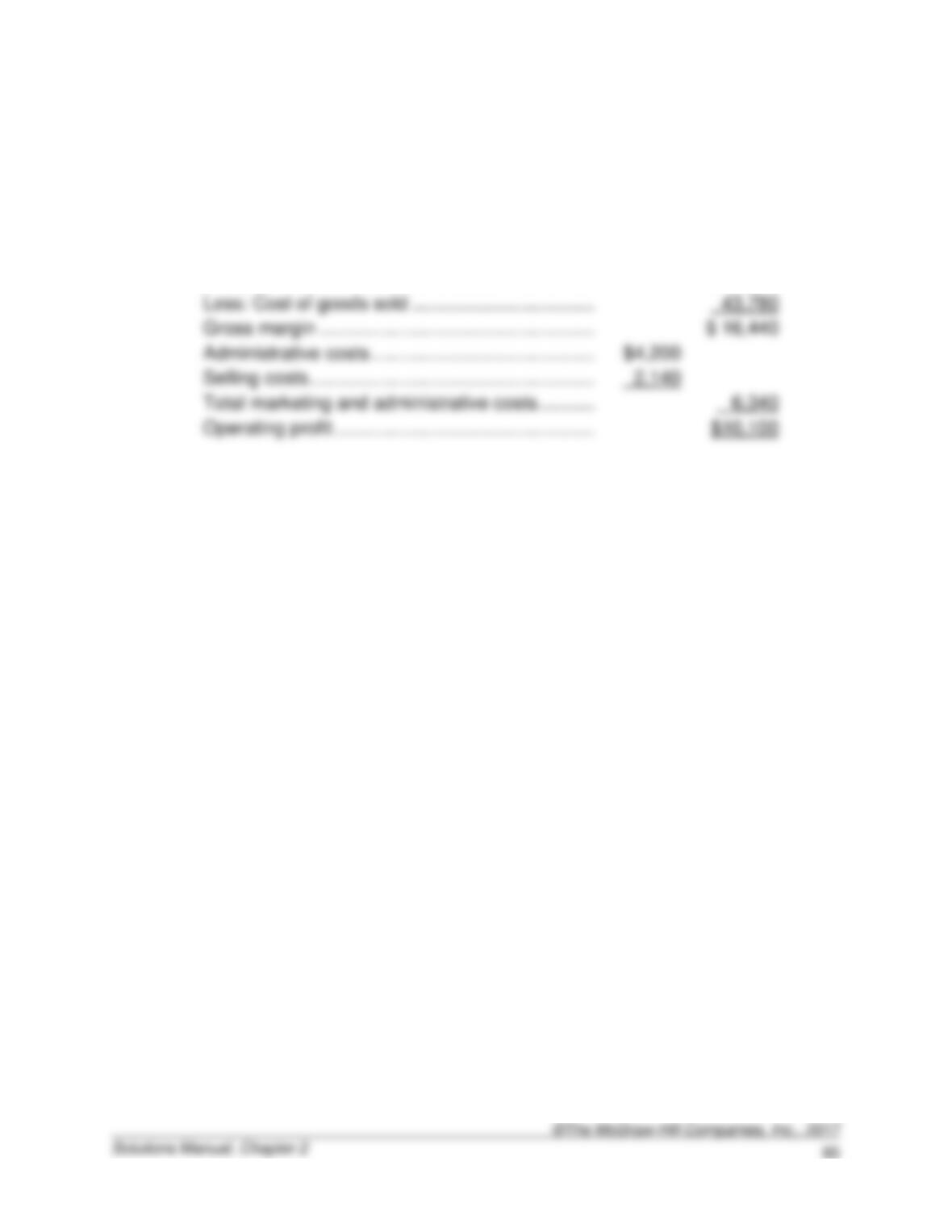
2-58. (continued)
Mesa Designs
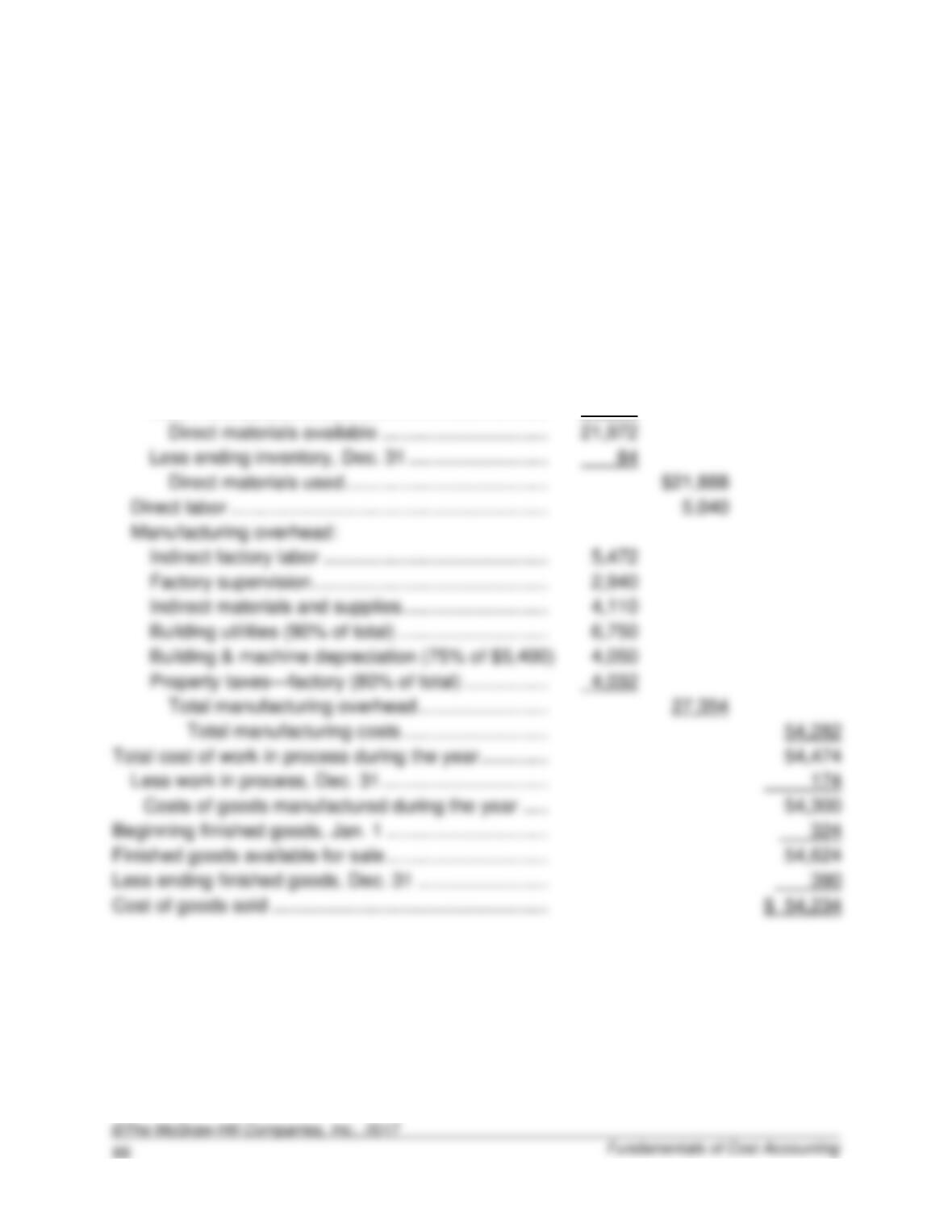
Income Statement
For the Year Ended December 31
($000)
Sales revenue ………………………………………………………………….
$60,220
Less: Cost of goods sold …………………………………………………..
Administrative costs ………………………………………………………….
Selling costs…………………………………………………………………….
2-59. (30 min.) Prepare Statements for a Manufacturing Company: Billings Tool
& Die.
.
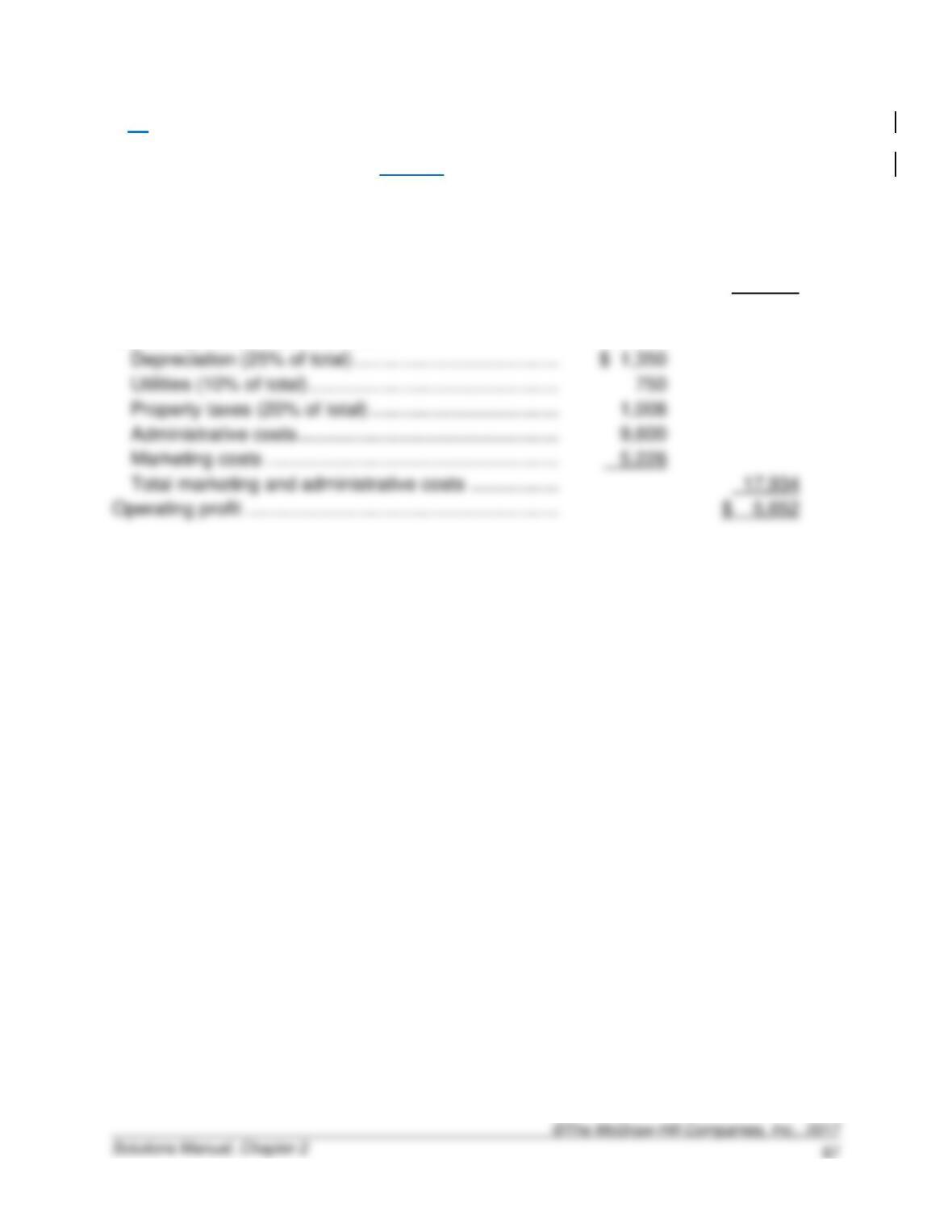
Billings Tool & Die
Statement of Cost of Goods Sold
For the Year Ended December 31
($ 000)
Beginning work in process, Jan. 1…………………………
$ 192
Manufacturing costs:
Direct materials:
Beginning inventory, Jan. 1 …………………………...
$ 72
Add: Purchases ……………………………………………
21,900
Direct materials available …………………………..
Less ending inventory, Dec. 31 ………………………
Direct materials used …………………………………
Direct labor …………………………………………………….
Manufacturing overhead:
Indirect factory labor …………………………………….
Factory supervision ………………………………………
Indirect materials and supplies ……………………….
Building utilities (90% of total) ………………………..
Building & machine depreciation (75% of $5,400)
Property taxes—factory (80% of total) …………….
Total manufacturing overhead …………………….
27,354
Total manufacturing costs ……………………….
Total cost of work in process during the year ………….
Less work in process, Dec. 31 …………………………..
Beginning finished goods, Jan. 1 ………………………….
Finished goods available for sale ………………………….
Less ending finished goods, Dec. 31 …………………….
2-59. (continued)
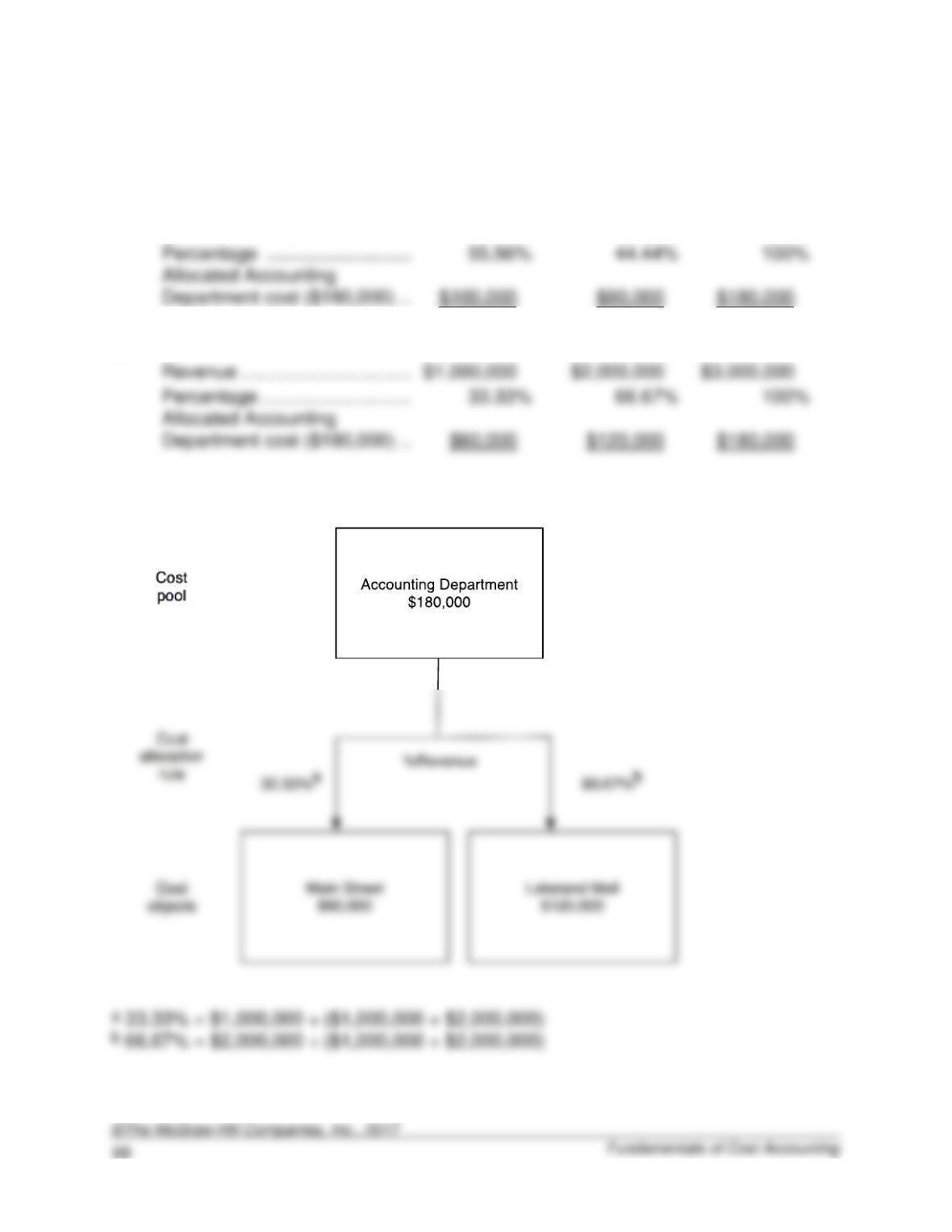
Billings Tool & Die
Income Statement
For the Year Ended December 31
($ 000)
Sales revenue ……………………………………………………..
$77,820
Less: Cost of goods sold (per statement) …………………
54,234
Gross profit …………………………..…………………………….
$ 23,586
Marketing and administrative costs:
17,934
2-60. (10 Min.) Cost Allocation with Cost Flow Diagram: Coastal Computer.
a.
(1)
Main Street
Lakeland Mall
Total
Number of computers sold ……..
2,000
1,600
3,600
Percentage …………………………
Department cost ($180,000) …..
(2)
Main Street
Lakeland Mall
Total
Revenue ……………………………..
$3,000,000
Percentage ………………………….
b.
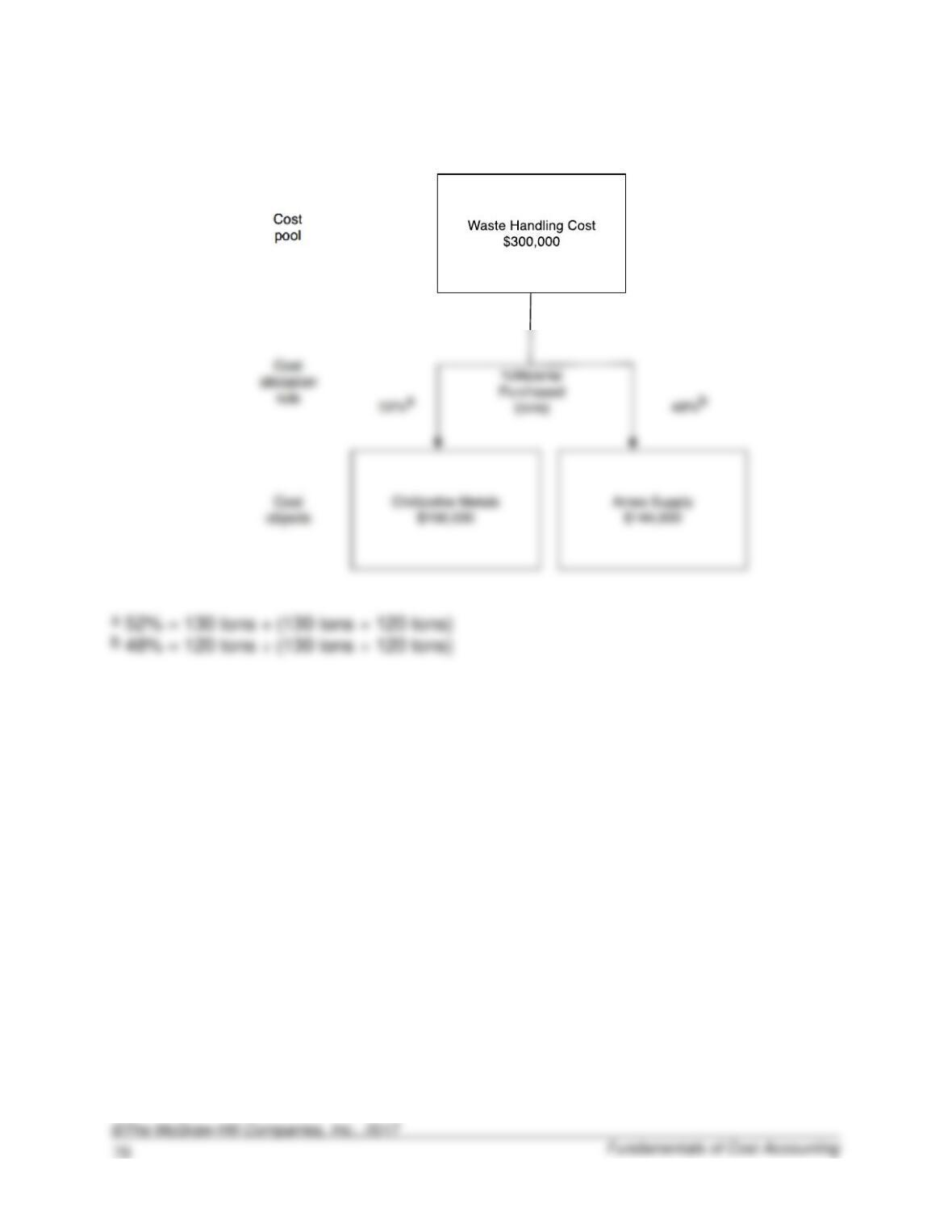
2-61. (20 Min.) Cost Allocation with Cost Flow Diagram: Wayne Casting, Inc.
a.
(1)
Chillicothe
Metals
Ames
Supply
Total
Material purchased (tons) ………
130
120
250
Percentage …………………………
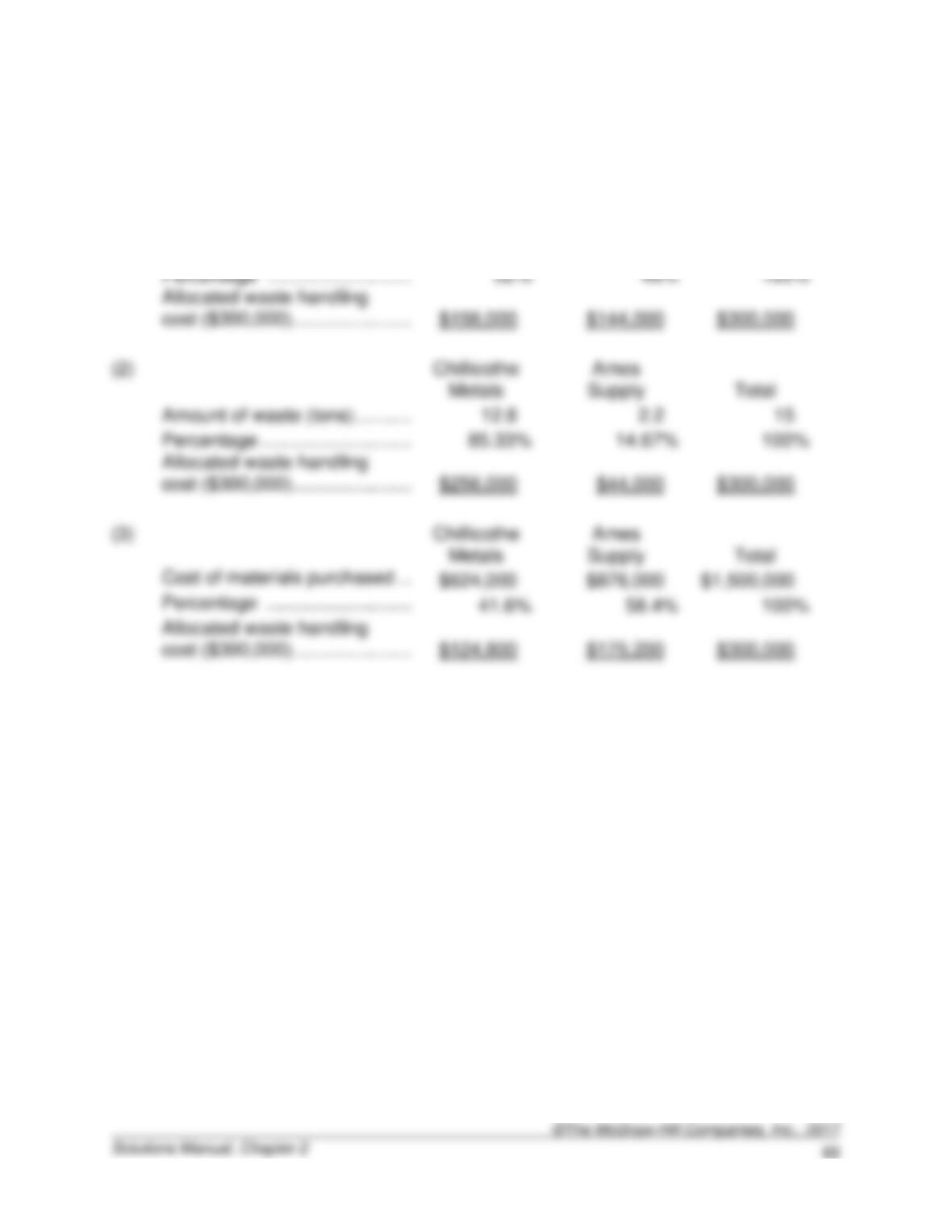
Allocated waste handling
cost ($300,000) …………………….
$144,000
Metals
Supply
Total
Amount of waste (tons) ………….
Allocated waste handling
cost ($300,000) …………………….
(3)
Chillicothe
Metals
Ames
Supply
Total
2-61. (continued)
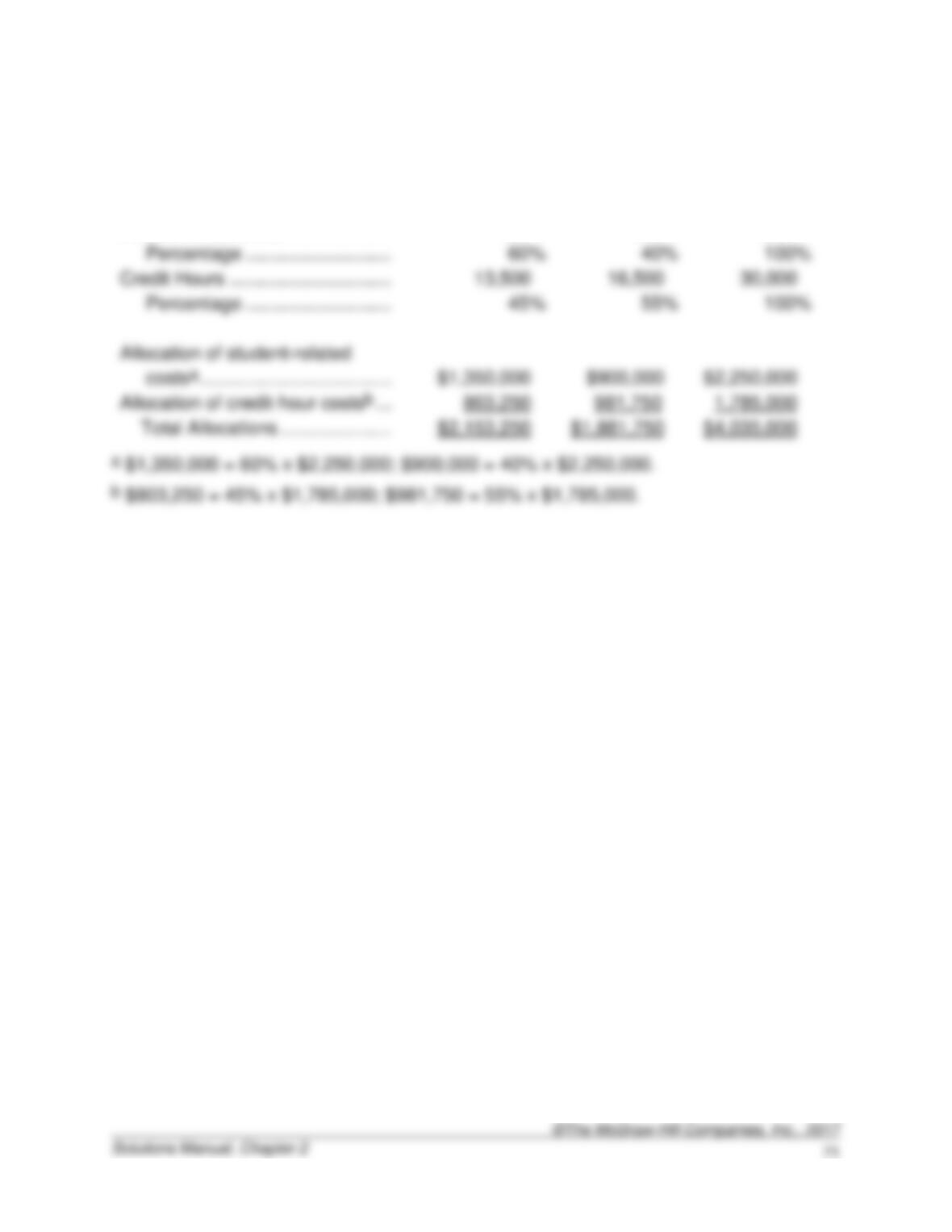
b.
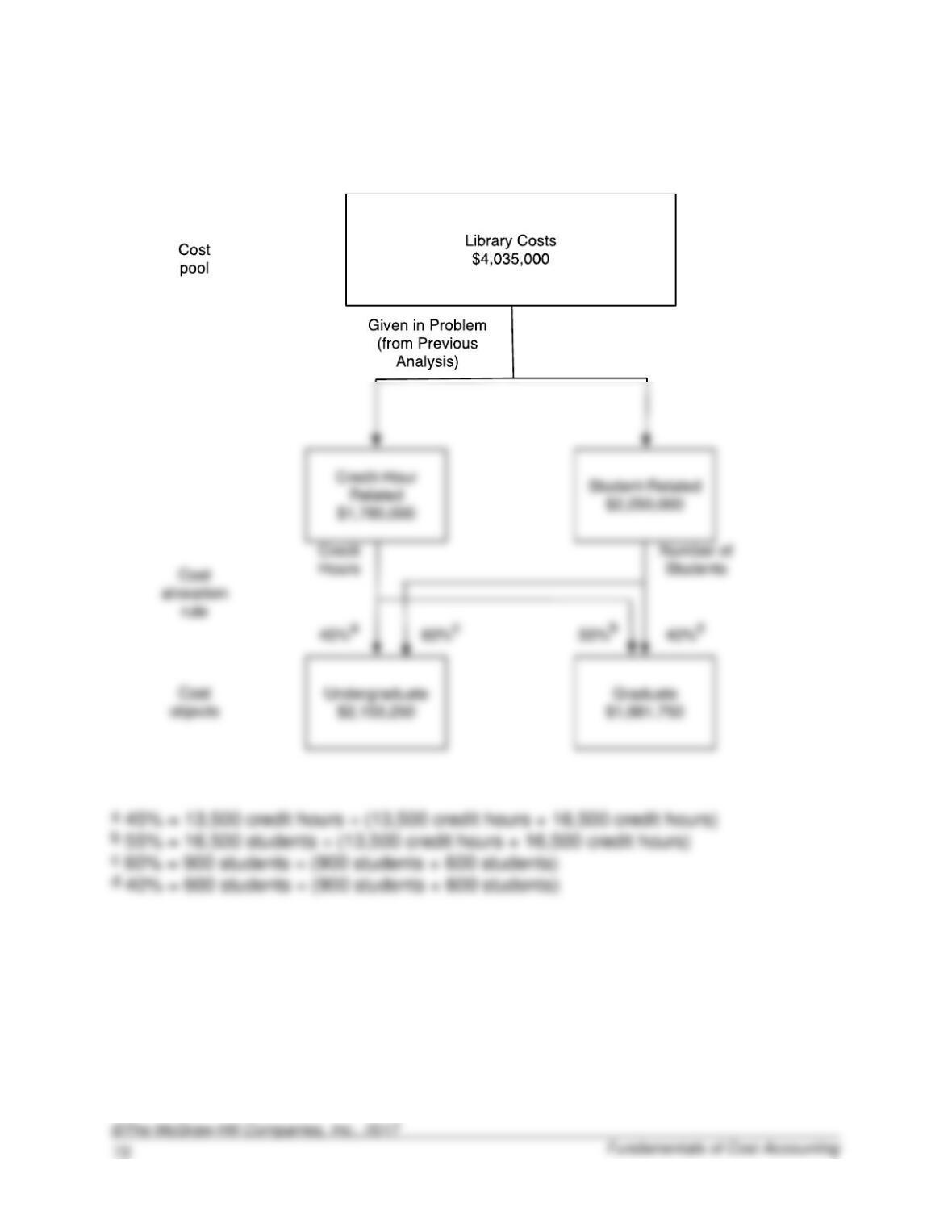
2-62. (20 Min.) Cost Allocation with Cost Flow Diagram: Pacific Business School.
a.
Undergraduate
Graduate
Total
Number of students ………………….
900
600
1,500
Credit Hours …………………………...
2-62. (continued)
b.
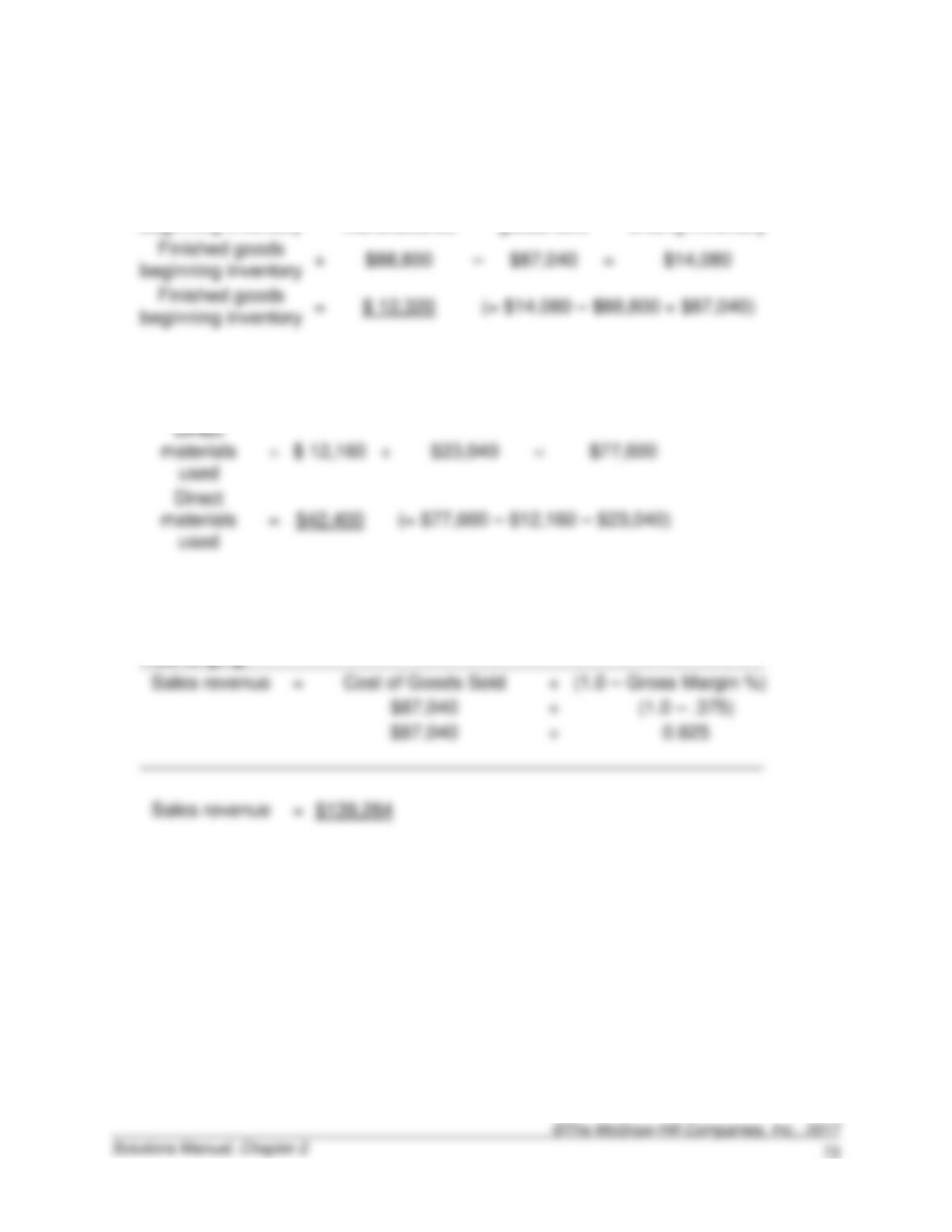
2-63. (40 Min.) Find the Unknown Information.
a.
Finished goods
beginning inventory
+
Cost of goods
manufactured
–
Cost of
goods sold
=
Finished goods
ending inventory
Finished goods
beginning inventory
Finished goods
beginning inventory
b.
Direct
materials
used
+
Direct
labor
+
Manufacturing
overhead
=
Total
manufacturing
costs
used
+
+
used
=
c.
Gross margin %
=
Gross margin
÷
Sales revenue
=
(Sales revenue – COGS)
÷
Sales revenue
Rearranging,
Sales revenue
=
(1.0 – Gross Margin %)
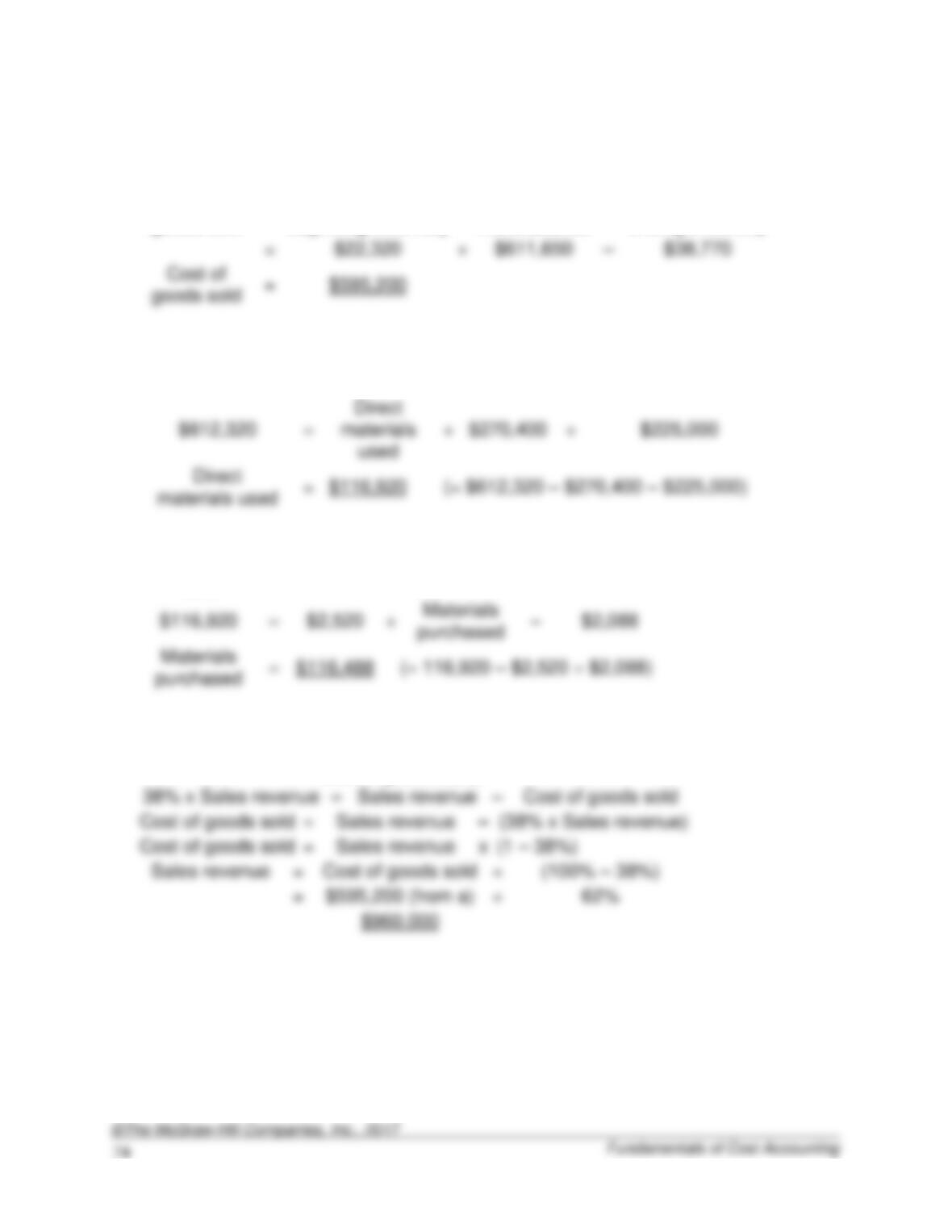
2-64. (40 Min.) Find the Unknown Information.
a.
Cost of
goods sold
=
Finished goods
beginning inventory
+
Cost of goods
manufactured
–
Finished goods
ending inventory
=
+
Cost of
goods sold
b.
Total
manufacturing
costs
=
Direct
materials
used
+
Direct
labor
+
Manufacturing
overhead
materials
+
=
$116,920
c.
Direct
materials
used
=
Beginning
inventory
+
Materials
purchased
–
Ending
inventory
$116,920
Materials
$2,088
Materials
d.
Gross margin %
=
Gross margin
÷
Sales revenue
38%
=
(Sales revenue –
Cost of goods sold)
÷
Sales revenue
Sales revenue
Cost of goods sold
Cost of goods sold
=
x
(1 – 38%)
Sales revenue
$595,200 (from a)
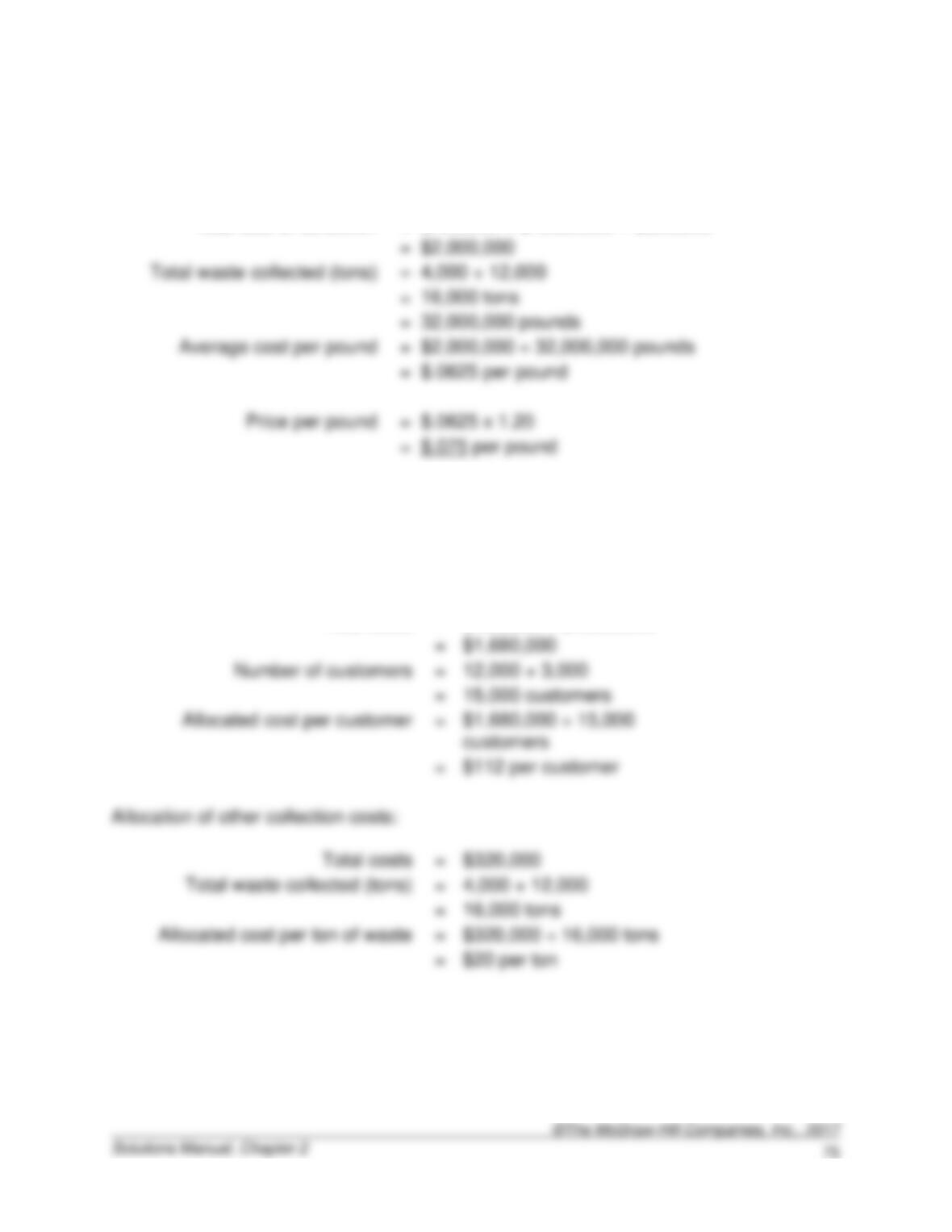
2-65. (40 min.) Cost Allocation and Regulated Prices: The City of Imperial Falls.
a. The rate is 20 percent above the average cost of collection:
Total cost of collection
=
$400,000 + $1,280,000 + $320,000
=
$2,000,000
=
16,000 tons
=
=
$.0625 per pound
b.
First, allocate costs to the two cost objects: households and businesses:
Allocation of administrative costs and truck costs:
Total costs
=
$400,000 + $1,280,000
=
=
15,000 customers
customers
=
4,000 + 12,000
=
16,000 tons
=
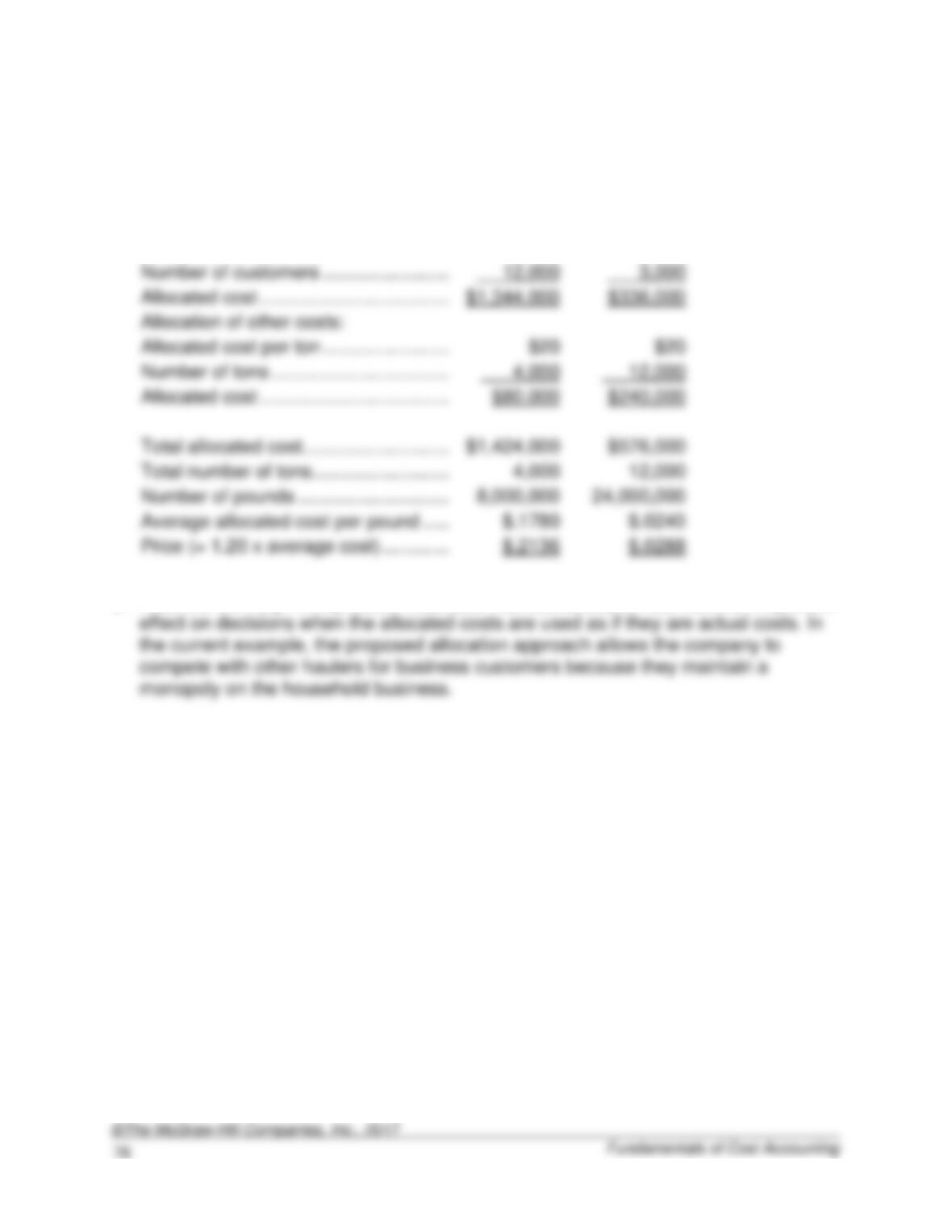
2-65. (continued)
Allocation to customer types:
Households
Business
Allocation of customer cost:
Allocated cost per customer …………….
$112
$112
Number of customers ……………………..
Allocated cost ………………………………..
Allocation of other costs:
Allocated cost per ton ……………………..
Number of tons ………………………………
Allocated cost ………………………………..
Total allocated cost …………………………
Total number of tons ……………………….
Number of pounds ………………………….
Average allocated cost per pound …….
c. Answers will vary. This problem illustrates that cost allocation can have an important
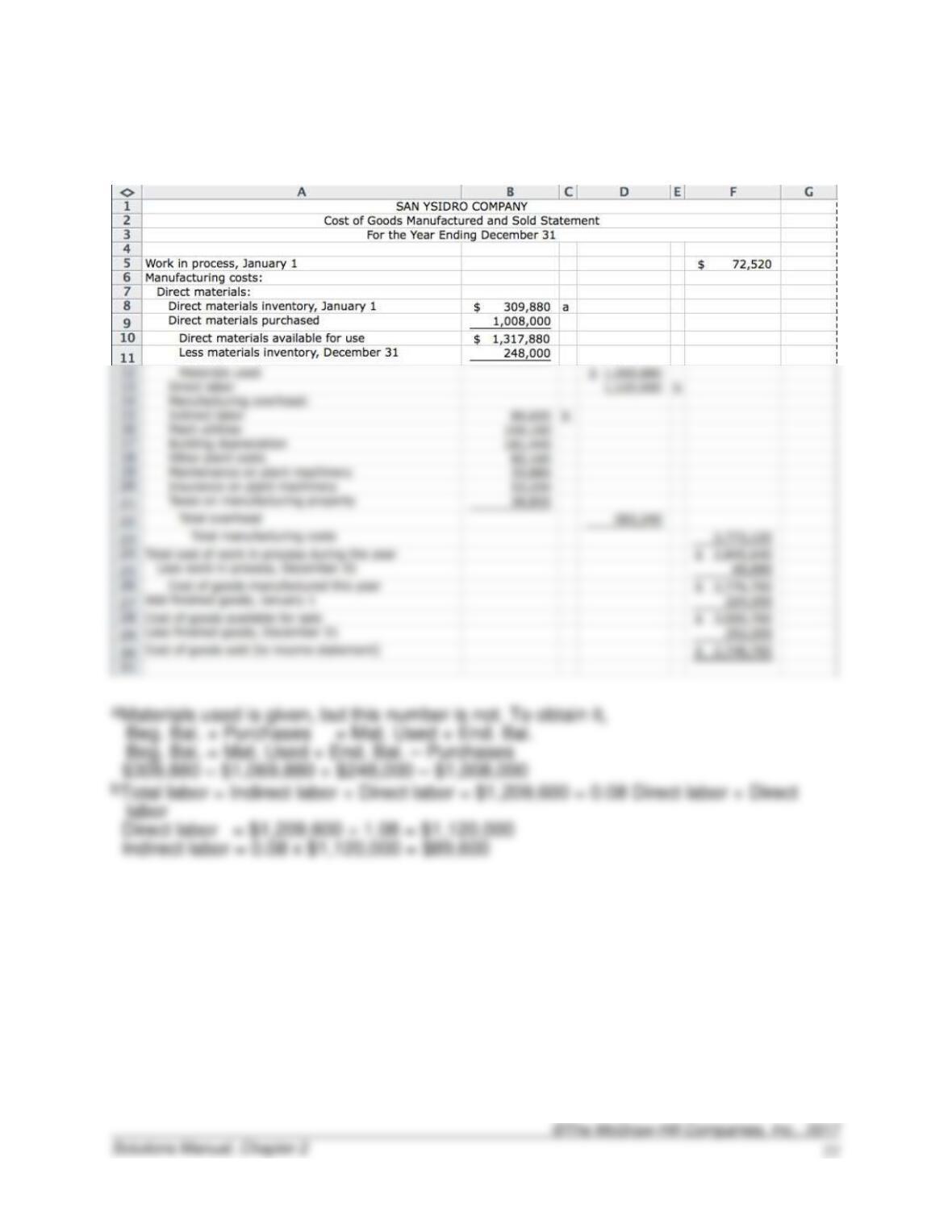
2-66. (30 min.) Reconstruct Financial Statements: San Ysidro Company.
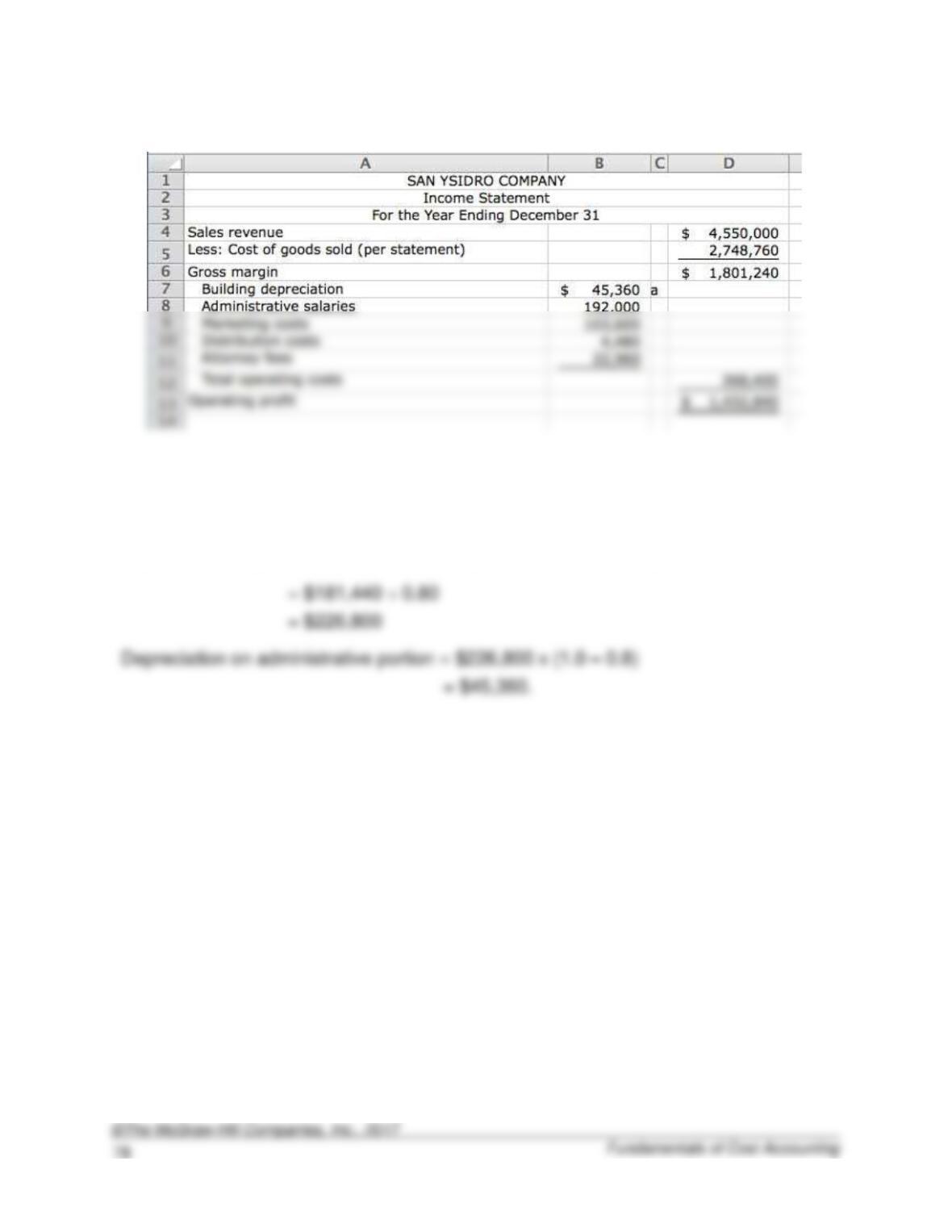
2-66 (continued)
a Total depreciation = Depreciation on plant + Depreciation on administrative building
portion
Depreciation on plant is 80% of the total depreciation, so total depreciation is,
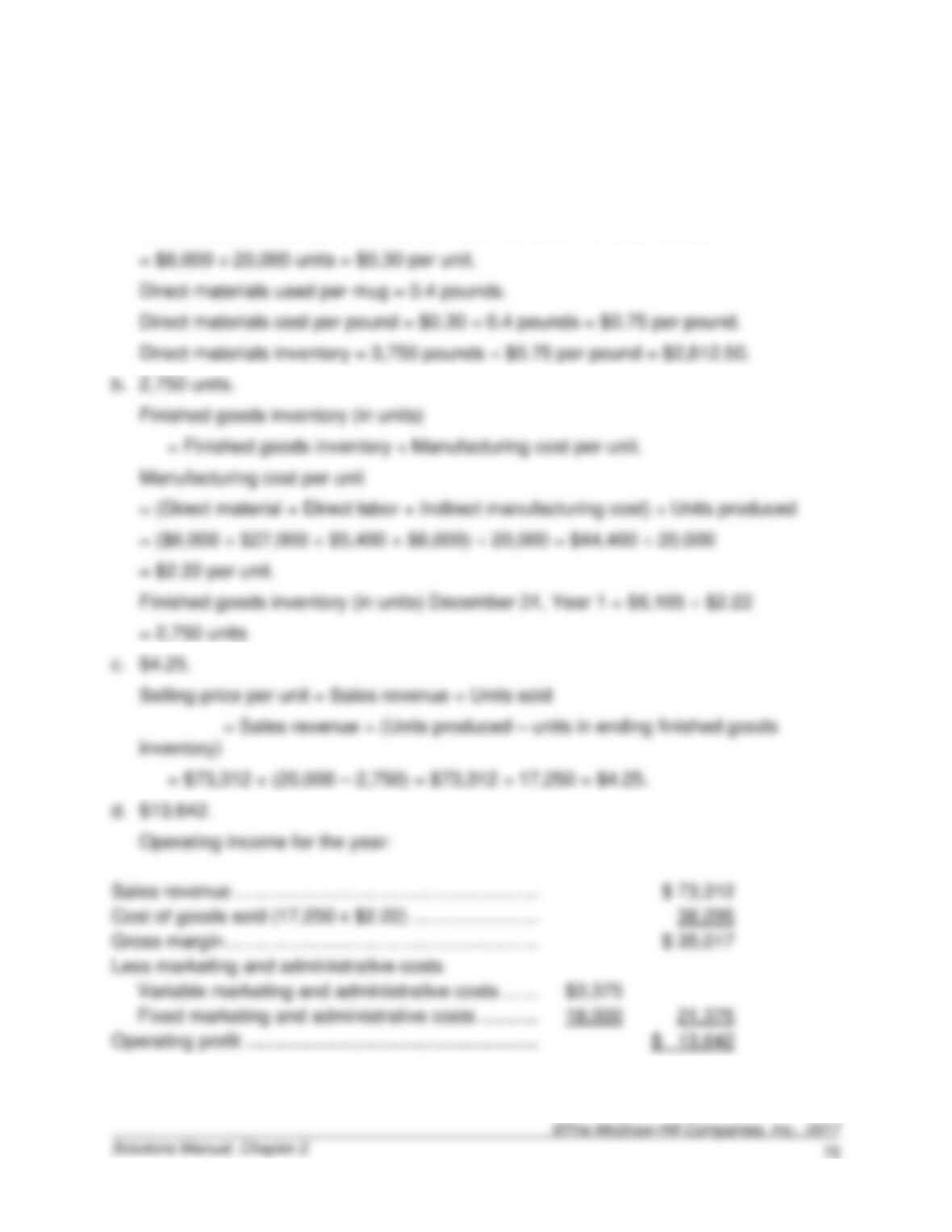
2-67. (20 Min.) Finding Unknowns: Mary’s Mugs.
a. $2,812.50.
Direct materials cost per unit = Direct materials cost ÷ Units produced
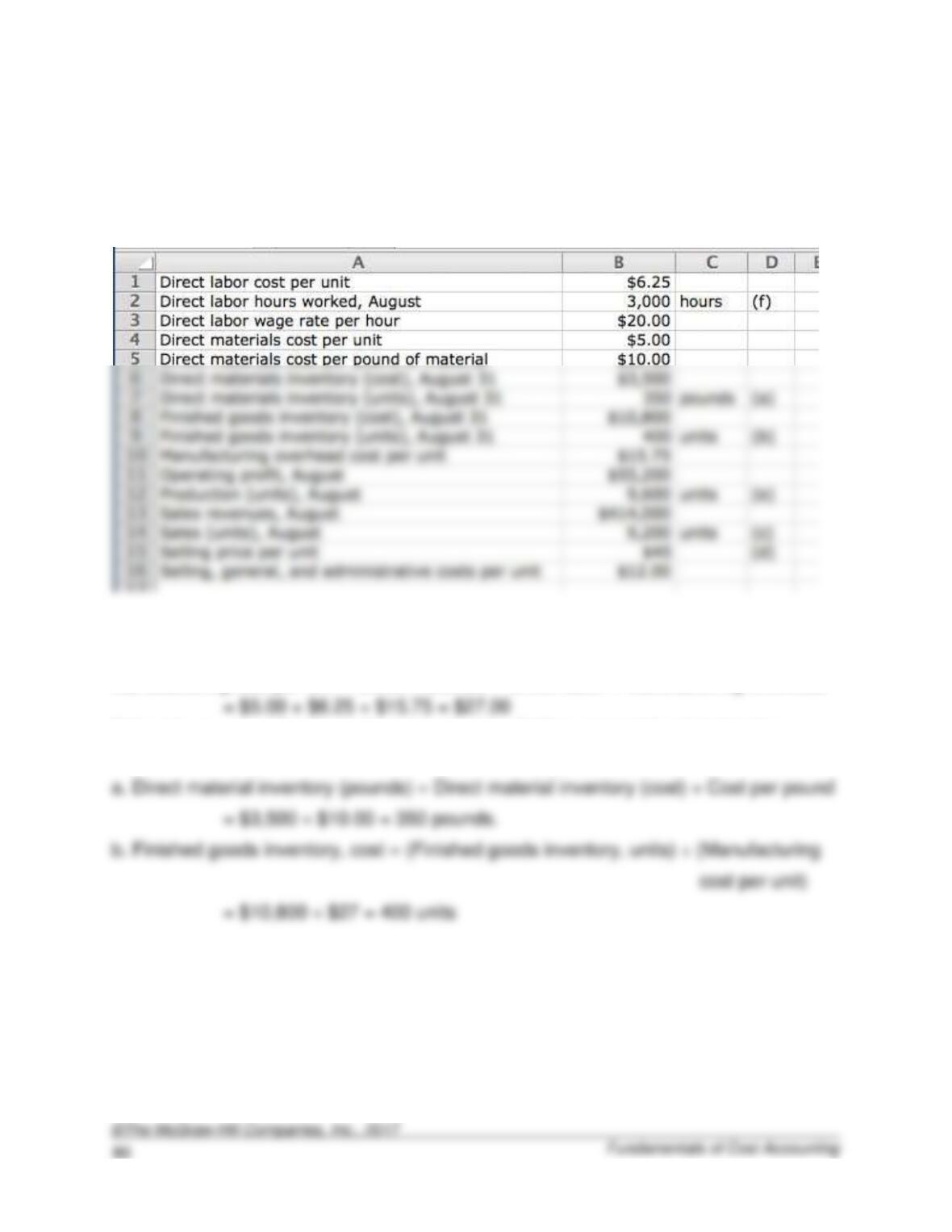
2-68. (40 Min.) Finding Unknowns: BS&T Partners.
Note: This problem is challenging, because there is no indication of how to begin or the
order in which to solve for the unknowns.
We begin by computing the following unit costs:
Manufacturing cost per unit = Direct materials + Direct labor + Manufacturing overhead
Full cost per unit = Manufacturing cost per unit + Selling, general & administrative
= $27.00 + $12.00 = $39.00
2-68 (continued)
c. Full costs = Cost of goods sold + Selling, general, and administrative costs
Then,
Operating profit = Sales revenue – Cost of goods sold – Selling, general, and
d. Sales revenue = Selling price per unit x Units sold
e. Finished goods ending (units) = Finished goods beginning (units) + Units produced
– Units sold
Solutions to Integrative Case
2-69. (30 min.) Analyze the Impact of a Decision on Income Statements:
Tunes2Go.
a. This year’s income statement:
Baseline
(Status Quo)
Rent
Equipment
Difference
Sales revenue …………………………..
$4,800,000
$4,800,000
0
Operating costs:
Fixed (cash expenditures) ……….
(2,250,000)
Equipment depreciation …………..
Other depreciation ………………….
Loss from equipment write-off ….
lower
b. Next year’s income statement:
Baseline
(Status Quo)
Rent
Equipment
Difference
Sales revenue …………………………..
$4,800,000
$5,136,000
a
$336,000
higher
Operating costs:
Equipment rental ……………………
0
(690,000)
690,000
higher
Variable ………………………………..
(600,000)
(600,000)
0
Fixed cash expenditures ………….
(2,250,000)
135,000
lower
Equipment depreciation …………..
450,000
lower
Other depreciation ………………….
0