MTC2-1
MAKING THE CONNECTION: INTEGRATIVE EXERCISE
PART 2: CHAPTERS 5–10
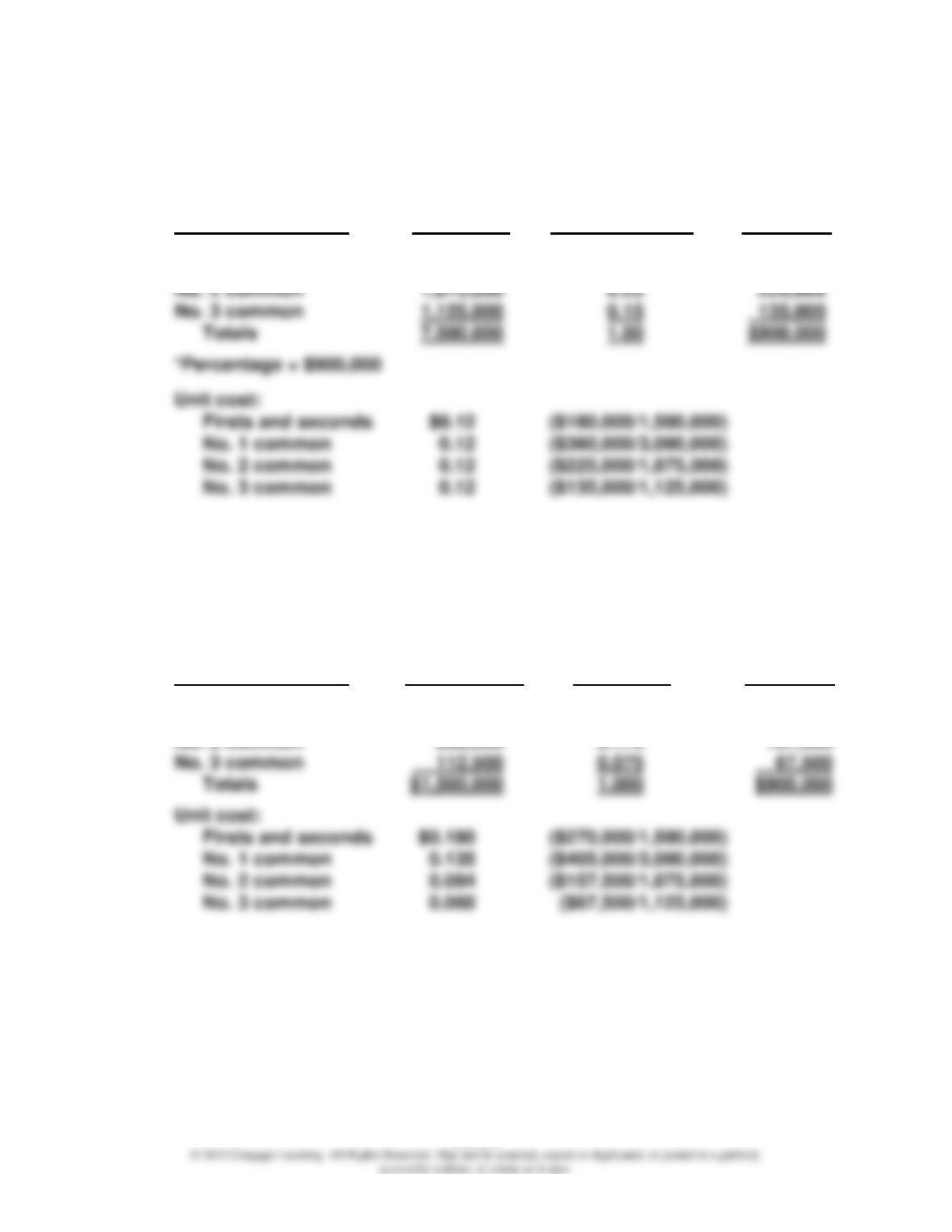
1. a. Physical units method of allocation:
Grades Board Feet Percent of Units Allocation*
Firsts and seconds 1,500,000 0.20 $180,000
No. 1 common 3,000,000 0.40 360,000
b. Sales-value-at-split-off method:
Note: Market value is calculated by dividing board feet produced by 1,000
and multiplying by the sales price (e.g., [(1,500,000/1,000) × $300] =
$450,000). Next, the percentage of market value is multiplied by $900,000
for the allocation.
Market Value Percentage
Grades (MV) of MV Allocation
Firsts and seconds $ 450,000 0.300 $270,000
No. 1 common 675,000 0.450 405,000
MTC2-2
Comp. Prob. 2 (Continued)
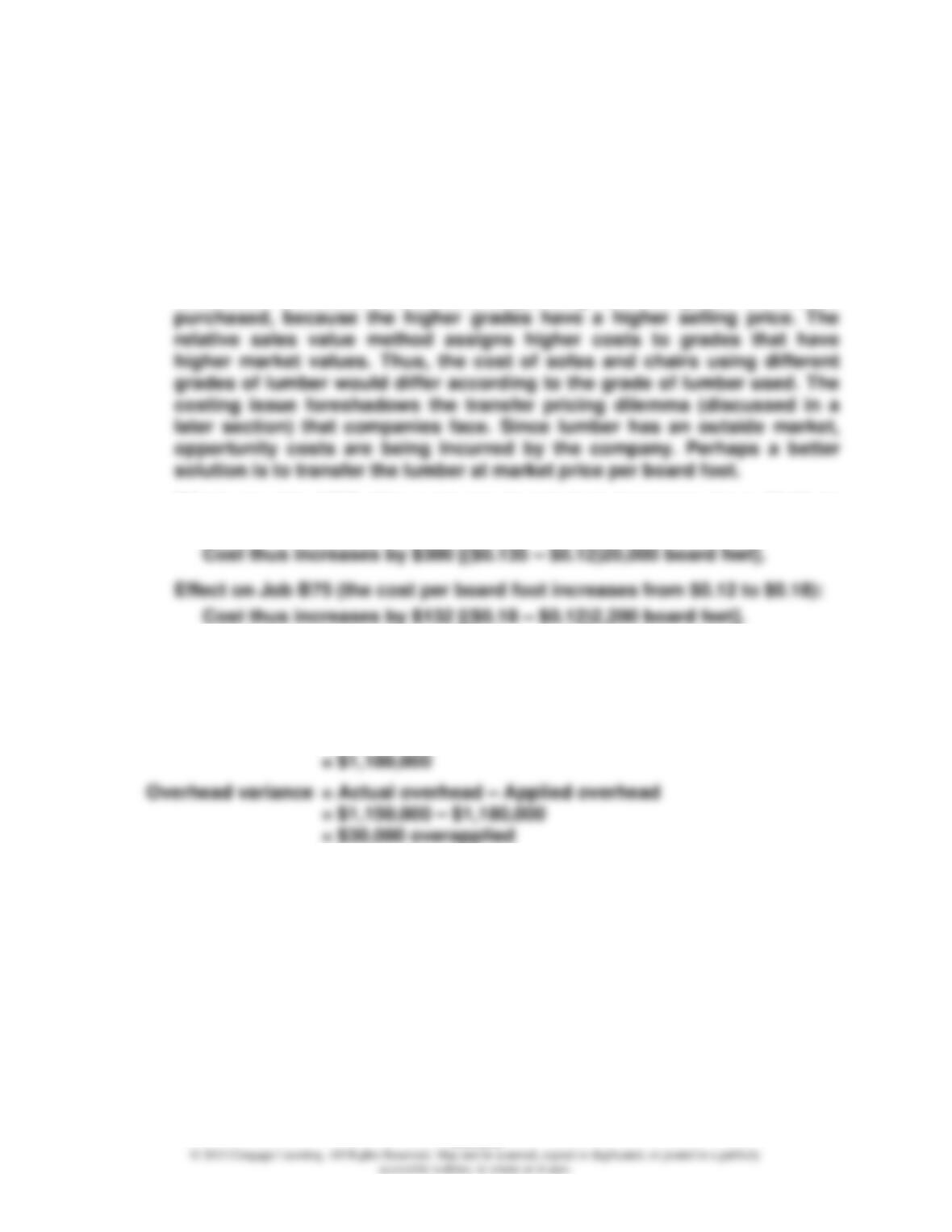
The physical units method, often used in the lumber industry, essentially
assumes that it costs the same to produce each board foot of lumber
regardless of grade. Thus, the same cost of lumber would be assigned to a
sofa or chair regardless of which grade is used. This approach has some
drawbacks. Intuitively, the higher grades should cost more. Certainly, if
the company was buying this input from suppliers, there would be a cost
difference for sofas and chairs depending on the grade of lumber
Effect on Job A500 (the cost per board foot increases from $0.12 to
$0.135):
2. Rate = $1,200,000/120,000 hours = $10/hour
3. Applied overhead = Rate × Actual hours
= $10 × 118,000 hours
MTC2-3
Comp. Prob. 2 (Continued)
4. Weaving and Pattern Department:
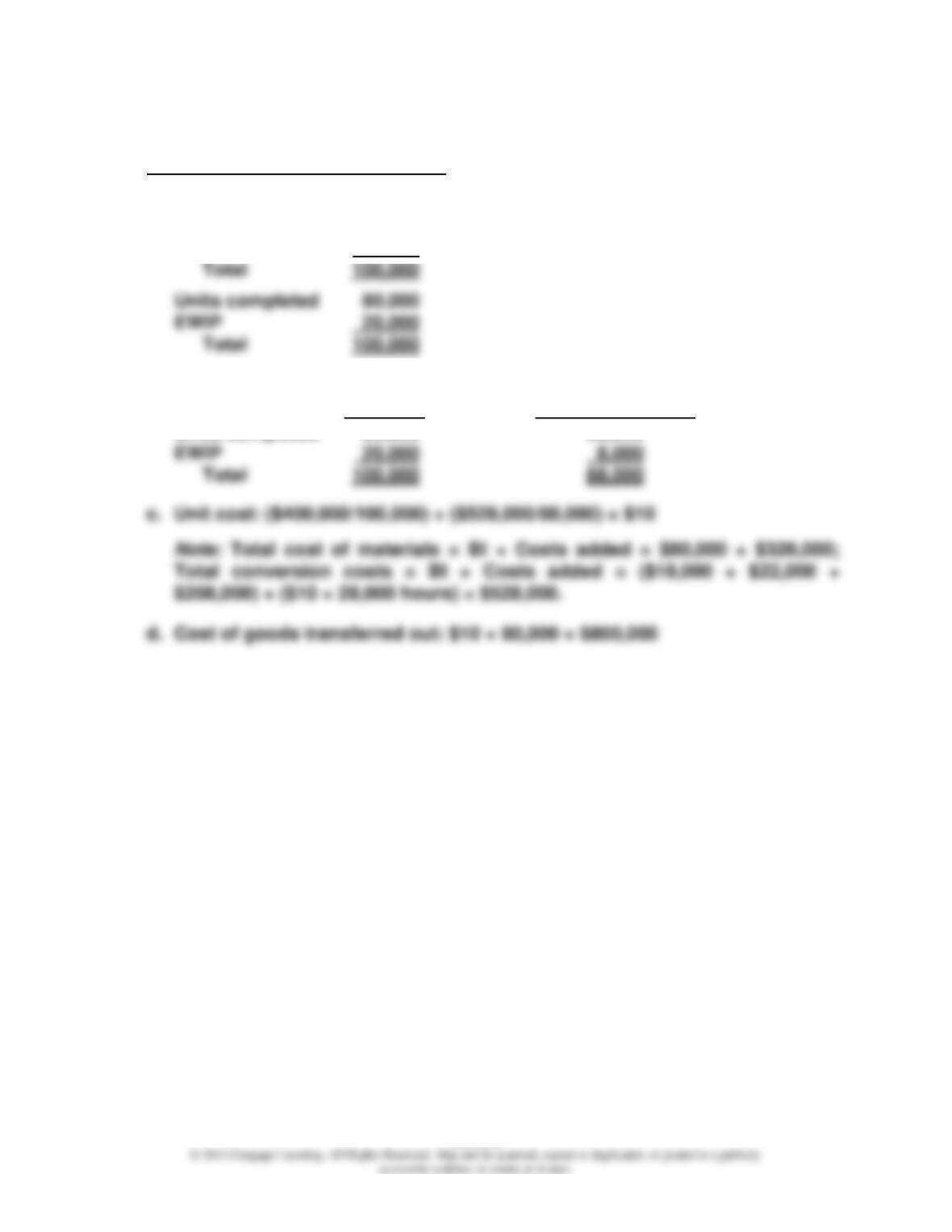
a. Physical flow schedule (measured in yards):
BWIP 20,000
Units started 80,000
b. Equivalent units schedule:
Materials Conversion Costs
Units completed 80,000 80,000
MTC2-4
Comp. Prob. 2 (Continued)
Coloring and Bolting Department:
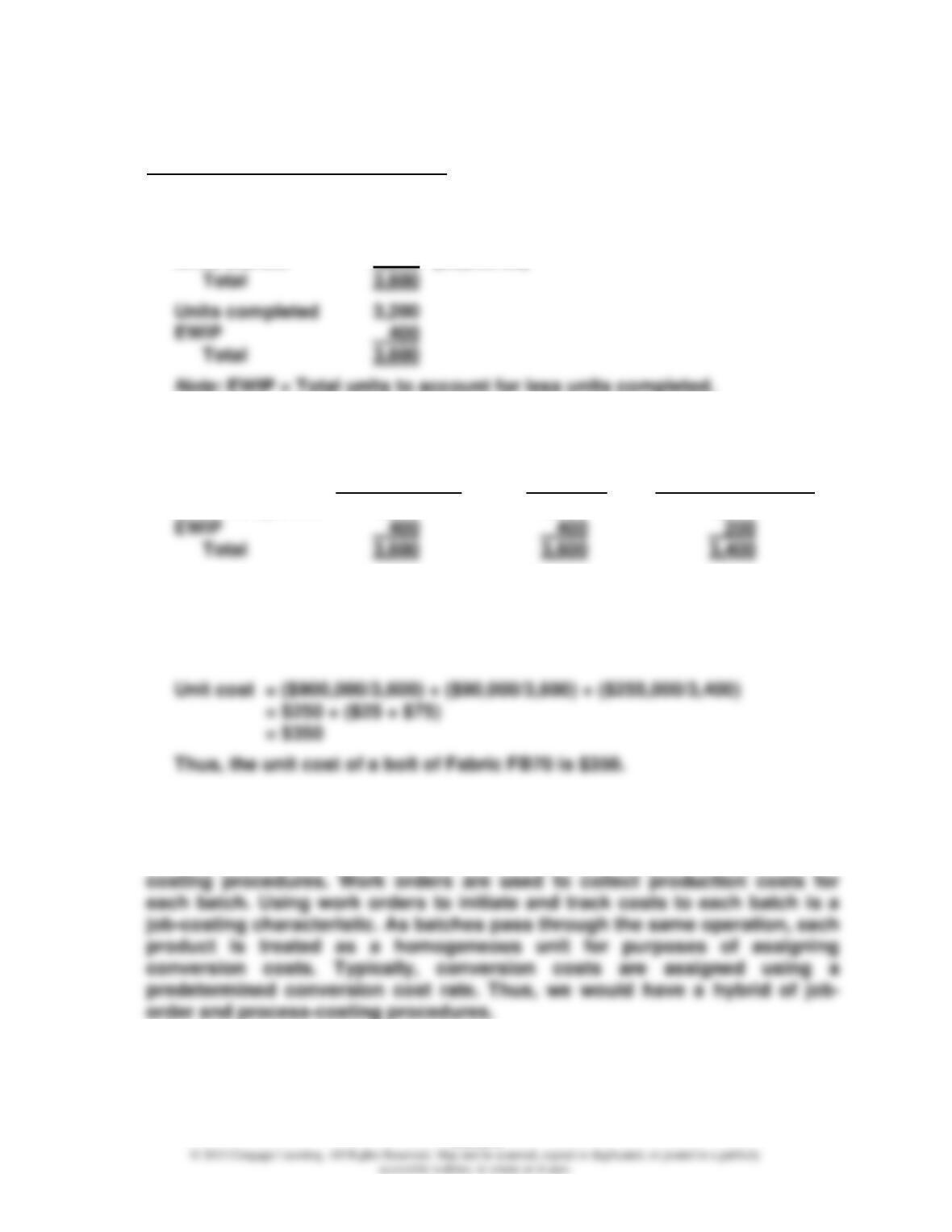
a. Physical flow schedule (measured in bolts):
BWIP 400
Units started 3,200 (80,000/25)
Note: EWIP = Total units to account for less units completed.
b. Equivalent units schedule:
Transferred-in
Materials Materials Conversion Costs
Units completed 3,200 3,200 3,200
c. Note: Transferred-in cost = BI + Costs added = $100,000 + $800,000 =
$900,000; Materials = BI + Costs added = $8,000 + $82,000 = $90,000;
Conversion costs = BI + Costs added = ($15,600 + $99,400) + ($10 × 14,000)
= $255,000.
5. Process costing would not be appropriate. Operation costing is the approach
that should be used. Operation costing assigns material costs to batches
using job-order procedures. Conversion costs are assigned using process–
MTC2-5
Comp. Prob. 2 (Continued)
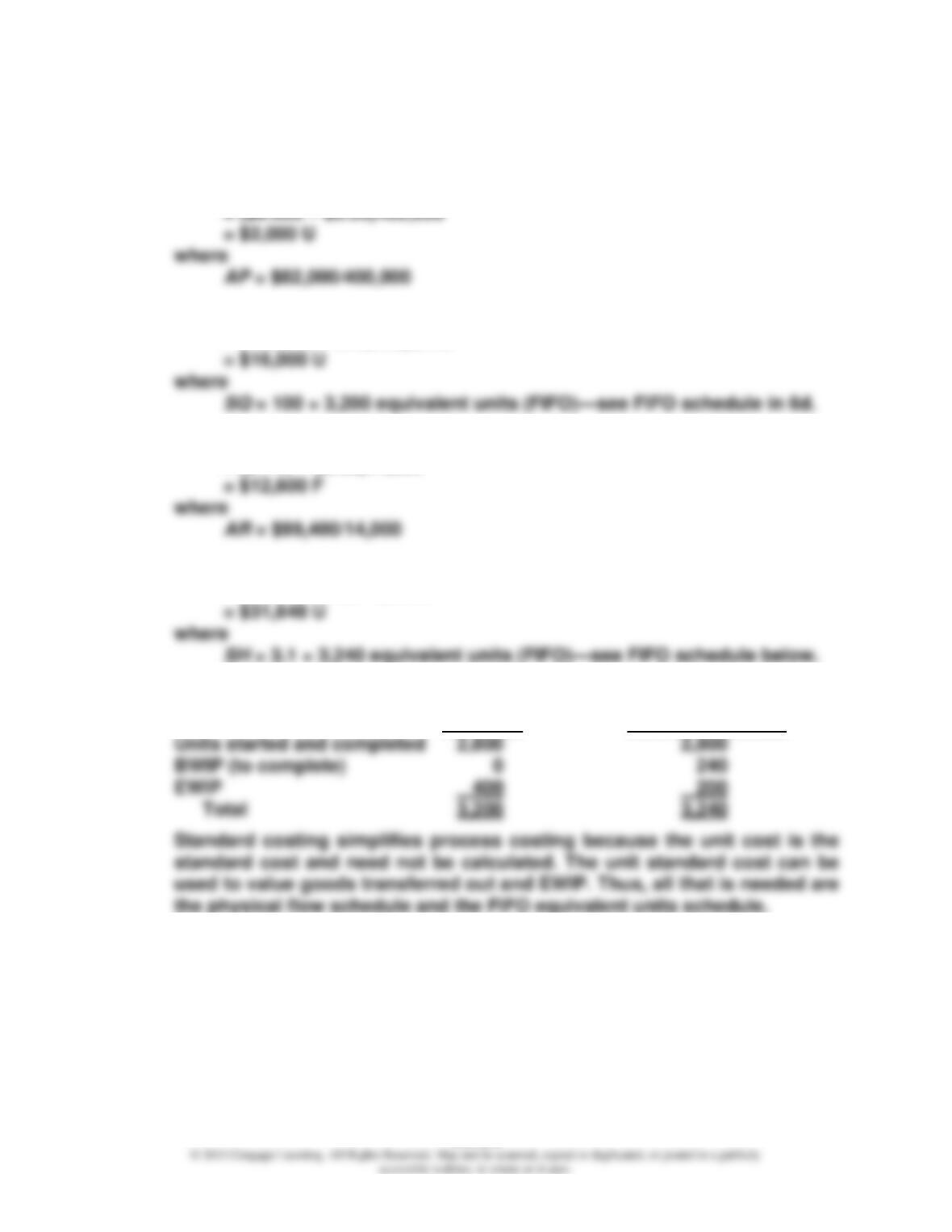
6. a. MPV = (AP – SP)AQ
b. MUV = (AQ – SQ)SP
= (400,000 – 320,000)$0.20
c. LRV = (AR – SR)AH
= ($7.10 – $8.00)14,000
d. LEV = (AH – SH)SR
= (14,000 – 10,044)$8.00
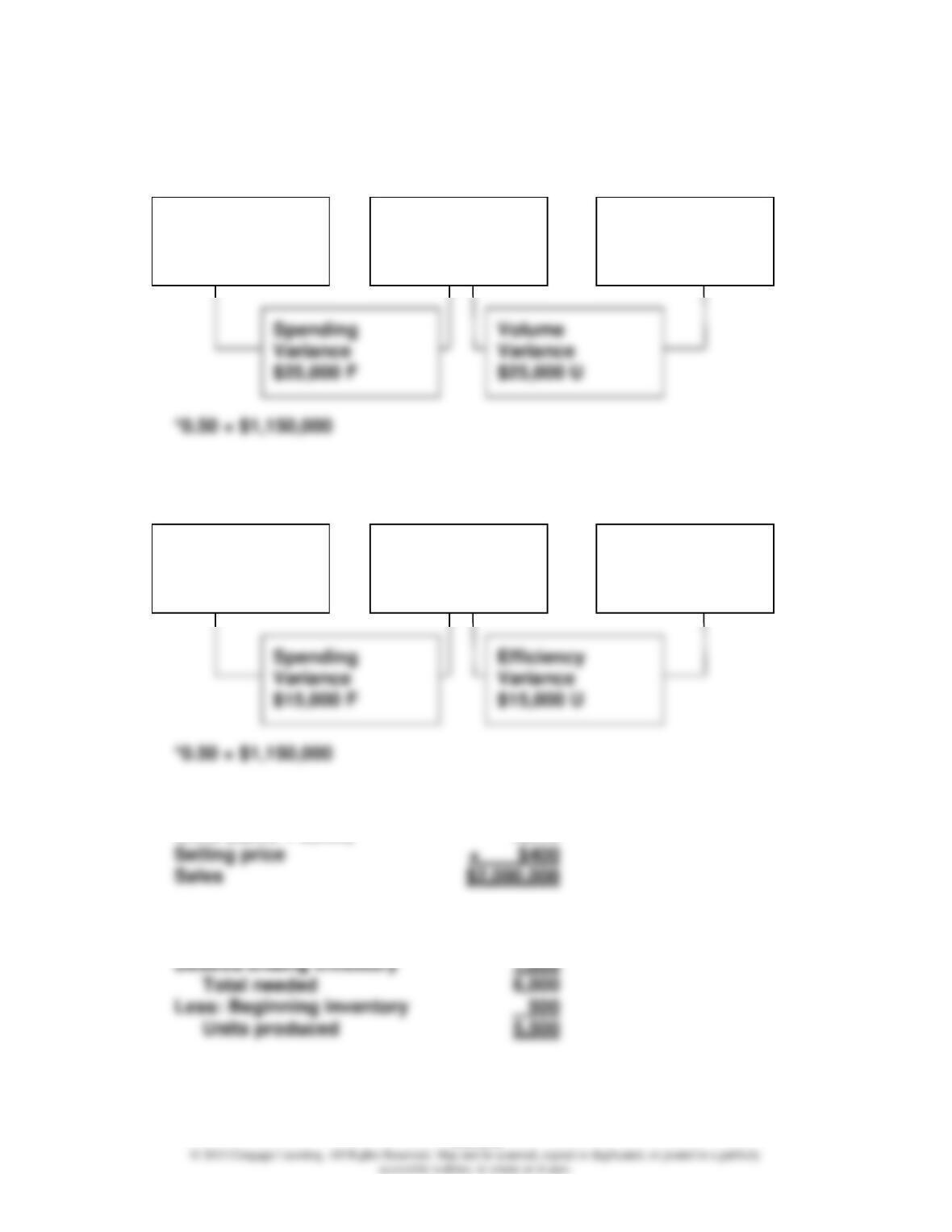
FIFO must be used because it measures output of the period:
Materials Conversion Costs
Spending
Variance
$15,000 F
Efficiency
Variance
$15,000 U
MTC2-6
Comp. Prob. 2 (Continued)
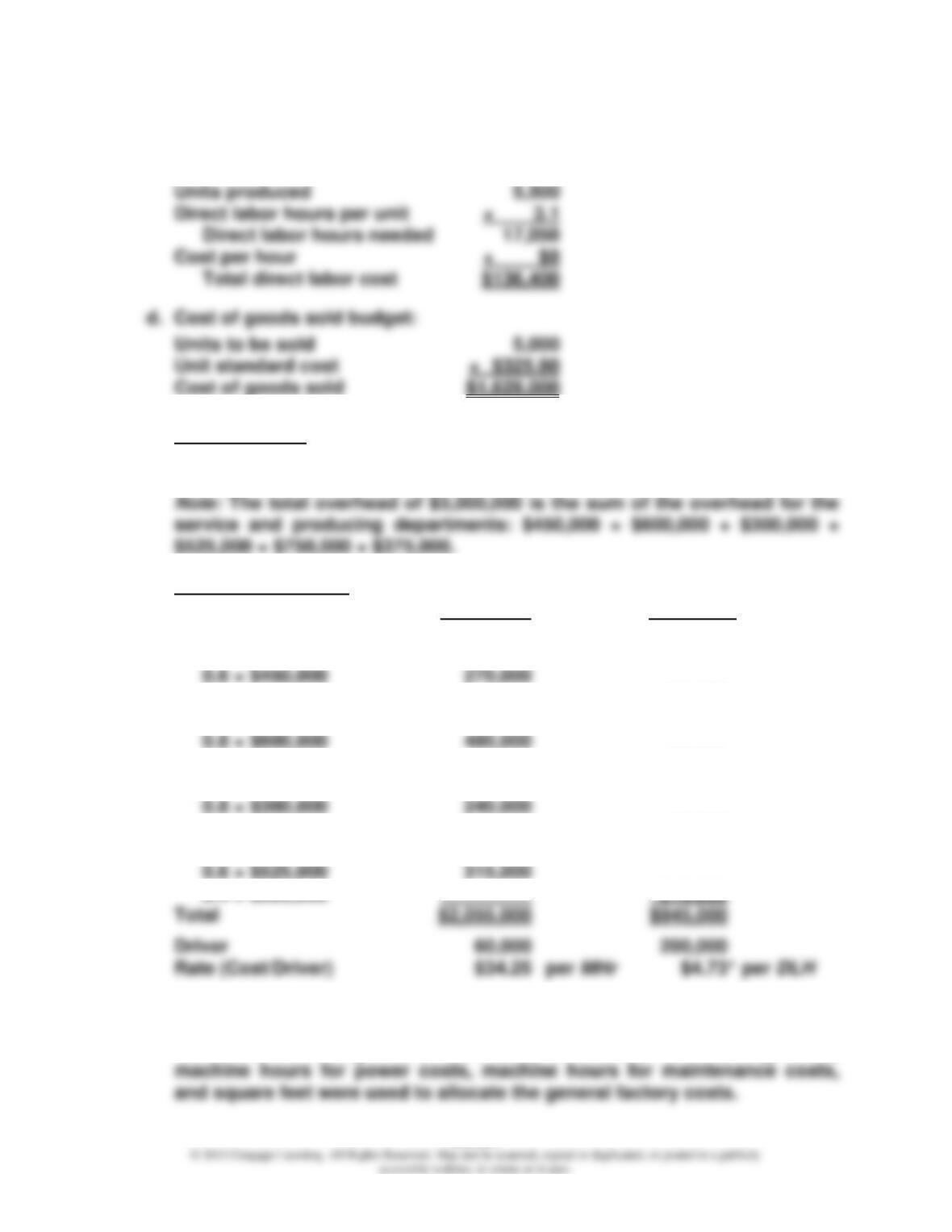
7. a. and b. Fixed overhead variances:
c. and d. Variable overhead variances:
8. a. Sales budget:
Units (3,000 + 2,000) 5,000
b. Production budget:
Unit sales 5,000
Actual Fixed
Overhead
= $575,000*
BFOH
= $600,000
SFOR × SH
= $5 × 115,000
Actual Variable
Overhead
= $575,000*
SVOR × AH
= $5 × 118,000
SVOR × SH
= $5 × 115,000
MTC2-7
Comp. Prob. 2 (Continued)
c. Direct labor budget:
9. (1) Plantwide rate:
OH rate = $3,000,000/250,000 hrs. = $12 per DLH
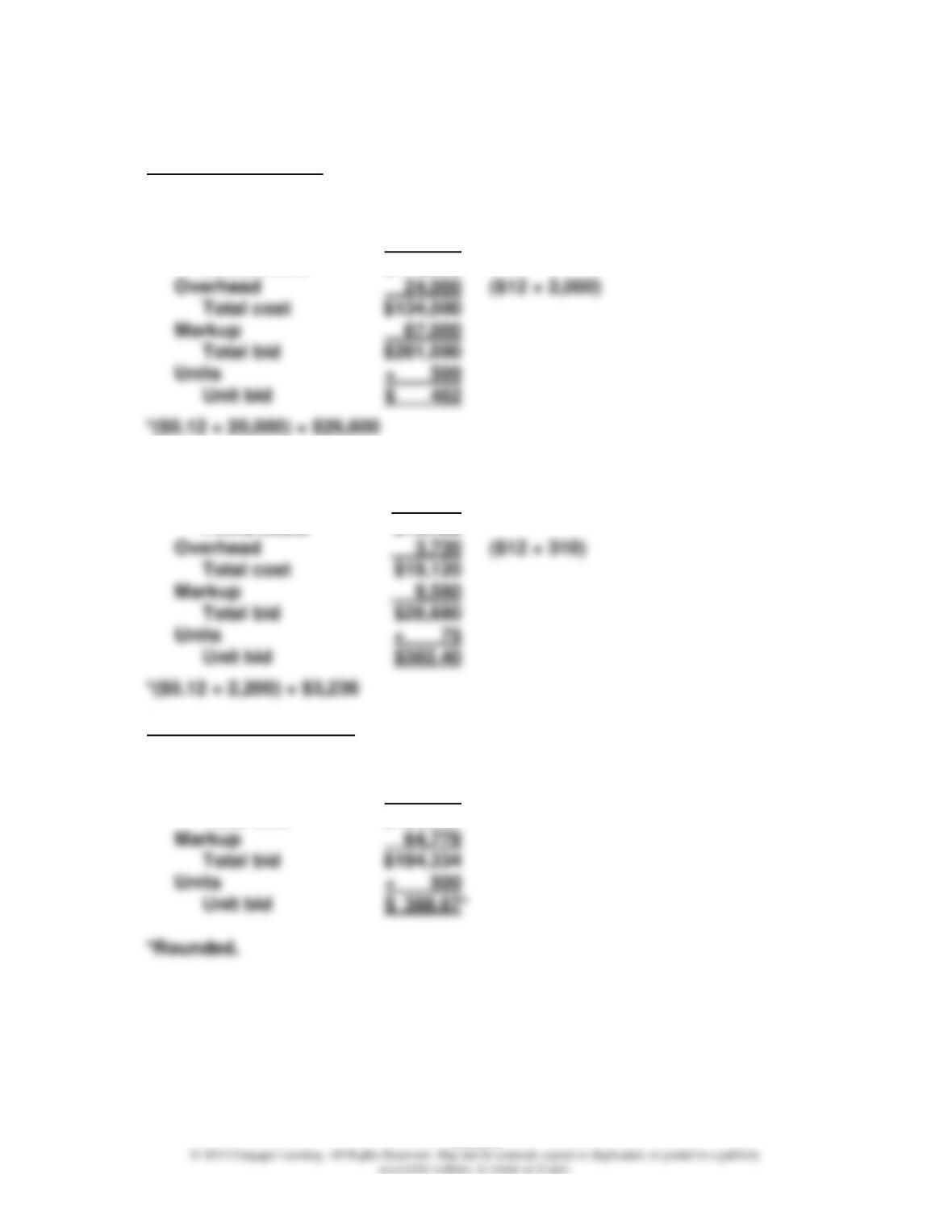
(2) Departmental rates:
Cutting Assembly
Direct cost $ 750,000 $375,000
Receiving:
0.4 × $450,000 180,000
Power:
0.2 × $600,000 120,000
Maintenance:
0.2 × $300,000 60,000
General Factory:
0.4 × $525,000 210,000
*Rounded.
Comment: Receiving orders were used to allocate the receiving costs,
MTC2-8
Comp. Prob. 2 (Continued)
10. Plantwide rate bids:
Job A500:
Direct materials $ 92,000 [($350 × 180) + $29,000]*
Direct labor 18,000 [($10 × 400) + ($8.75 × 1,600)]
Prime costs $110,000
Job B75:
Direct materials $12,600 [($350 × 26) + $3,500]*
Direct labor 2,800 [($10 × 70) + ($8.75 × 240)]
Prime costs $15,400
Departmental rate bids:
Job A500:
Prime costs $110,000
Overhead 19,556* [($34.25 × 350) + ($4.73 × 1,600)]
Total cost $129,556
Comp. Prob. 2 (Concluded)
Job B75:
Prime costs $15,400
Overhead 4,218* [($34.25 × 90) + ($4.73 × 240)]
Total cost $19,618
*Rounded.
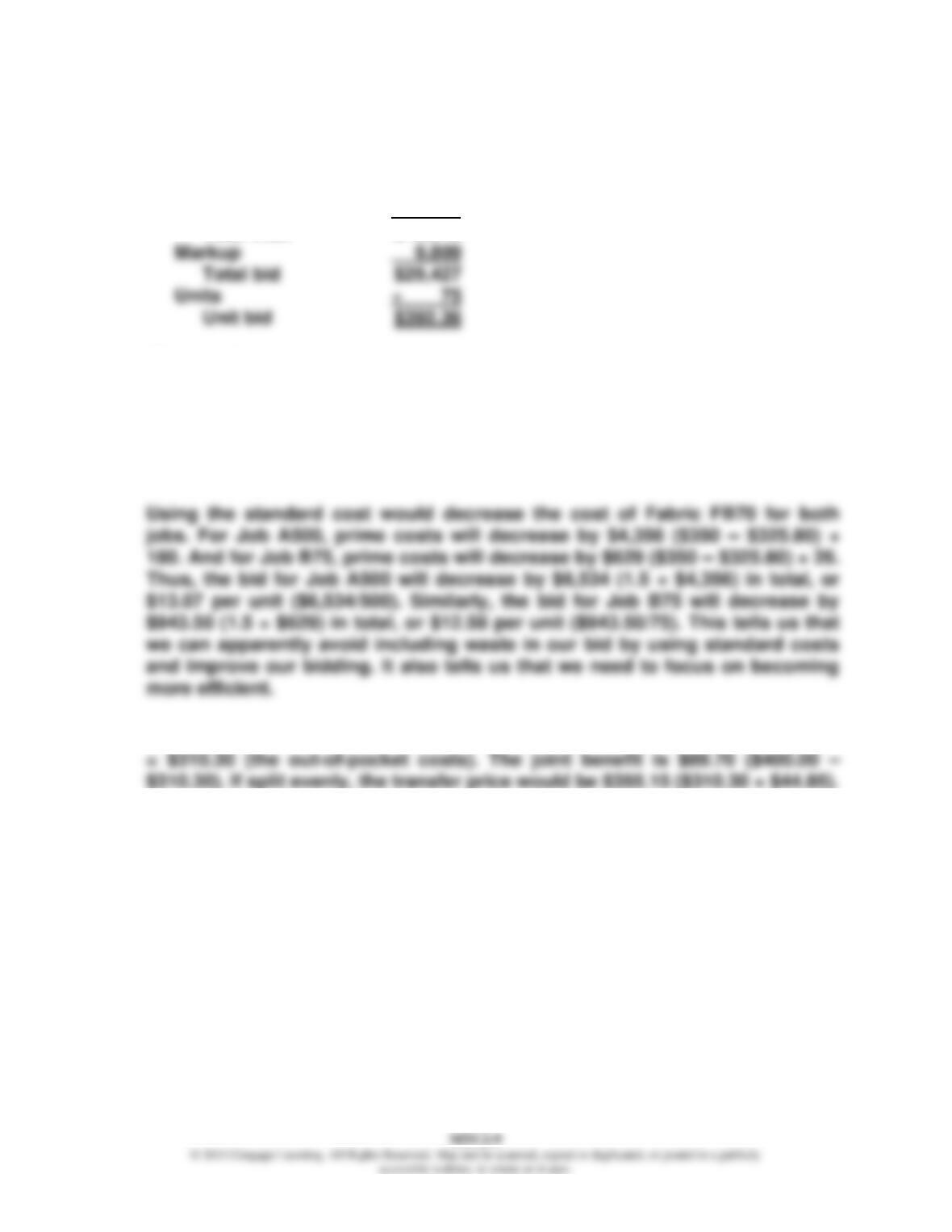
Departmental rates decrease the bid for the more easily produced Job A500
and increase the bid for the more difficult to produce Job B75. This appears
to be in the right direction. (It makes sense that the more demanding job
ought to cost more.) We would recommend using the departmental rates in
place of the plantwide rate.
11. The minimum transfer price would be standard variable cost: $325.80 – $15.50

MTC2-10