Wild, Shaw, Financial & Managerial Accounting, 8e Solutions Manual: Chapter 2
Chapter 2
Accounting for Business Transactions
QUESTIONS
1. a. Common asset accounts: cash, accounts receivable, notes receivable, prepaid
expenses (rent, insurance, etc.), office supplies, store supplies, equipment,
building, and land.
b. Common liability accounts: accounts payable, notes payable, and unearned
revenue, wages payable, and taxes payable.
c. Common equity accounts: common stock and dividends.
2. A note payable is formal promise, usually denoted by signing a promissory note to
pay a future amount. A note payable can be short-term or long-term, depending on
when it is due. An account payable also references an amount owed to an entity. An
account payable can be oral or implied, and often arises from the purchase of
inventory, supplies, or services. An account payable is usually short-term.
3. There are several steps in processing transactions: (1) Identify and analyze the
transaction or event, including the source document(s), (2) apply double-entry
accounting, (3) record the transaction or event in a journal, and (4) post the journal
entry to the ledger. These steps would be followed by preparation of a trial balance
and then with the reporting of financial statements.
4. A general journal can be used to record any business transaction or event.
5. Debited accounts are commonly recorded first. The credited accounts are commonly
indented.
10. The four financial statements are: income statement, balance sheet, statement of
retained earnings, and statement of cash flows.
11. The balance sheet provides information that helps users understand a company’s
financial position at a point in time. Accordingly, it is often called the statement of
financial position. The balance sheet lists the types and dollar amounts of assets,
liabilities, and equity of the business.
13. An income statement user must know what time period is covered to judge whether
14. (a) Assets are probable future economic benefits obtained or controlled by a specific
entity as a result of past transactions or events. (b) Liabilities are probable future
sacrifices of economic benefits arising from present obligations of a particular entity
to transfer assets or provide services to other entities in the future as a result of past
transactions or events. (c) Equity is the residual interest in the assets of an entity
that remains after deducting its liabilities.
15. The balance sheet is sometimes referred to as the statement of financial position.
16. Debit balance accounts on the Apple balance sheet include: Cash and cash
equivalents; Short-term marketable securities; Accounts receivable; Inventories;
17. The asset accounts with receivable in its account title are: Accounts receivable, net;
Income taxes receivable, net. The liabilities with payable in the account title are:
Accounts payable; Income taxes payable, net; Income taxes payable, non-current.
18. Samsung’s balance sheet lists the following current liabilities: Trade payables;
Short-term borrowings; Other payables; Advances received; Withholdings; Accrued
Wild, Shaw, Financial & Managerial Accounting, 8e Solutions Manual: Chapter 2
QUICK STUDIES
Quick Study 2-1 (10 minutes)
The likely source documents include:
Quick Study 2-2 (5 minutes)
a. A Asset
b. A Asset
c. A Asset
Quick Study 2-3 (5 minutes)
a. E Expense 655
b. R Revenue 406
c. A Asset 110
d. A Asset 169
Quick Study 2-4 (10 minutes)
a.
Credit
d.
Debit
g.
Credit
b.
Debit
e.
Debit
h.
Debit
c.
Debit
f.
Debit
i.
Credit
Quick Study 2-5 (10 minutes)
a.
Debit
e.
Debit
i.
Credit
b.
Debit
f.
Credit
j.
Debit
d.
Credit
h.
Debit
l.
Credit
Quick Study 2-6 (15 minutes)
a.
1) Analyze:
Assets
=
Liabilities
+
Equity
Cash Equipment
Common Stock
7,000 + 3,000
=
0
+
10,000
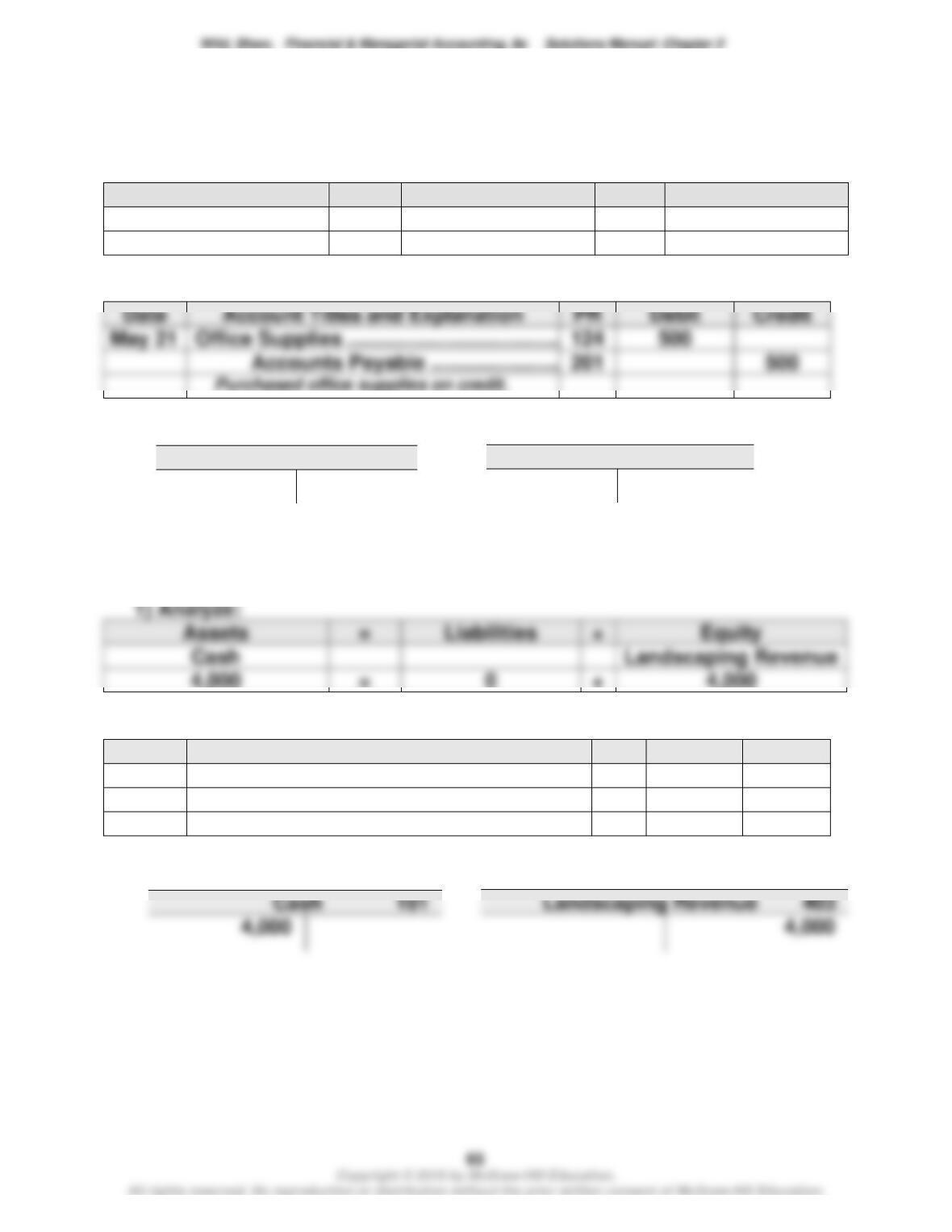
2) Record:
Cash ……………………………………………………….
101
Equipment ……………………………………………………
167
307
3) Post
Cash 101
7,000
Common Stock 307
10,000
Equipment 167
3,000
Quick Study 2-6 (Continued)
b.
1) Analyze:
Assets
=
Liabilities
+
Equity
Office Supplies
Accounts Payable
500
=
500
+
0
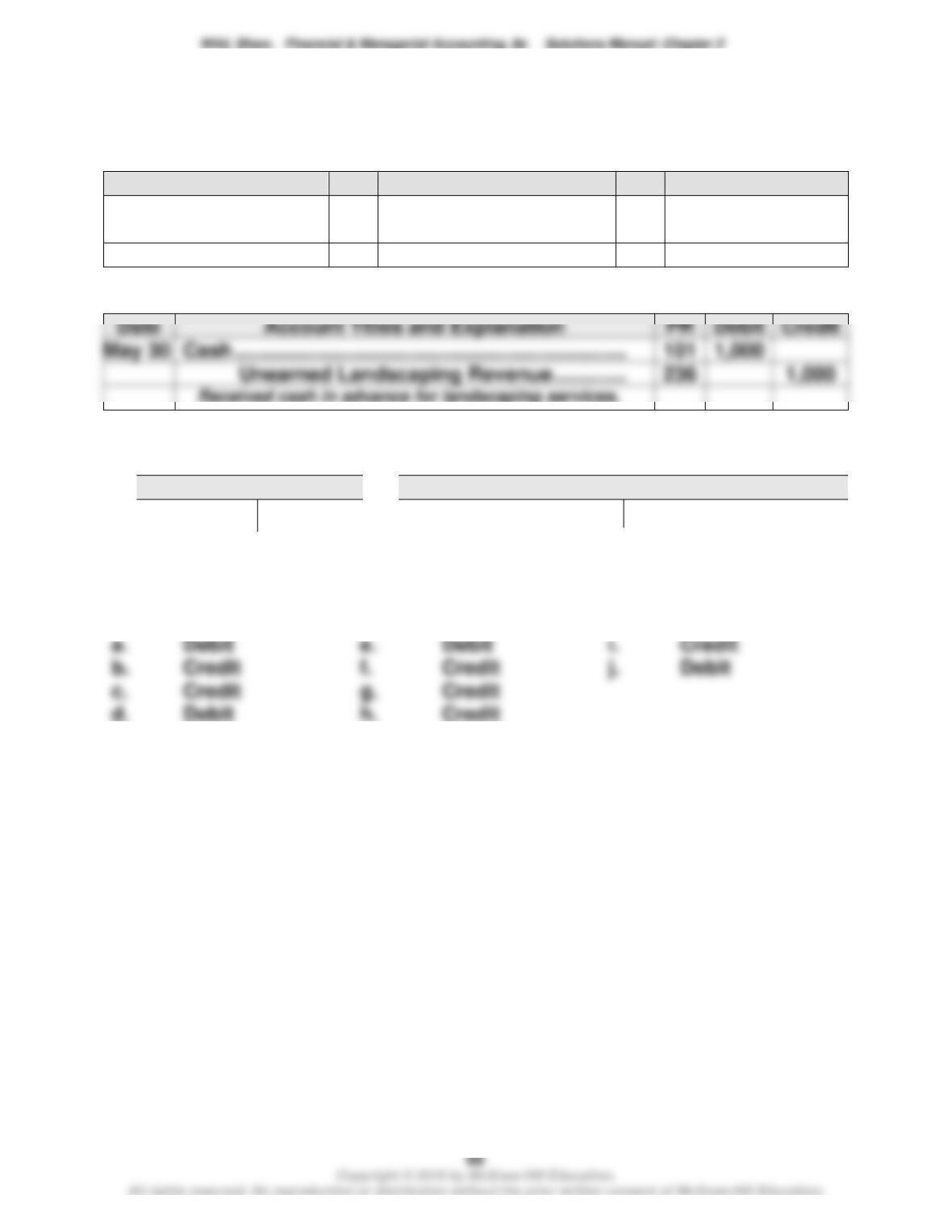
2) Record:
Date
May 21
Office Supplies …………………………………………….
Accounts Payable …………………………..
3) Post
Office Supplies 124
500
c.
Assets
Landscaping Revenue
2) Record:
Date
Account Titles and Explanation
PR
Debit
Credit
May 25
Cash ……………………………………………………….
101
4,000
Landscaping Revenue …………………………
403
4,000
Received cash for landscaping services.
3) Post
Accounts Payable 201
500
Quick Study 2-6 (Continued)
d.
1) Analyze:
Assets
=
Liabilities
+
Equity
Cash
Unearned Landscaping
Revenue
1,000
=
1,000
+
0
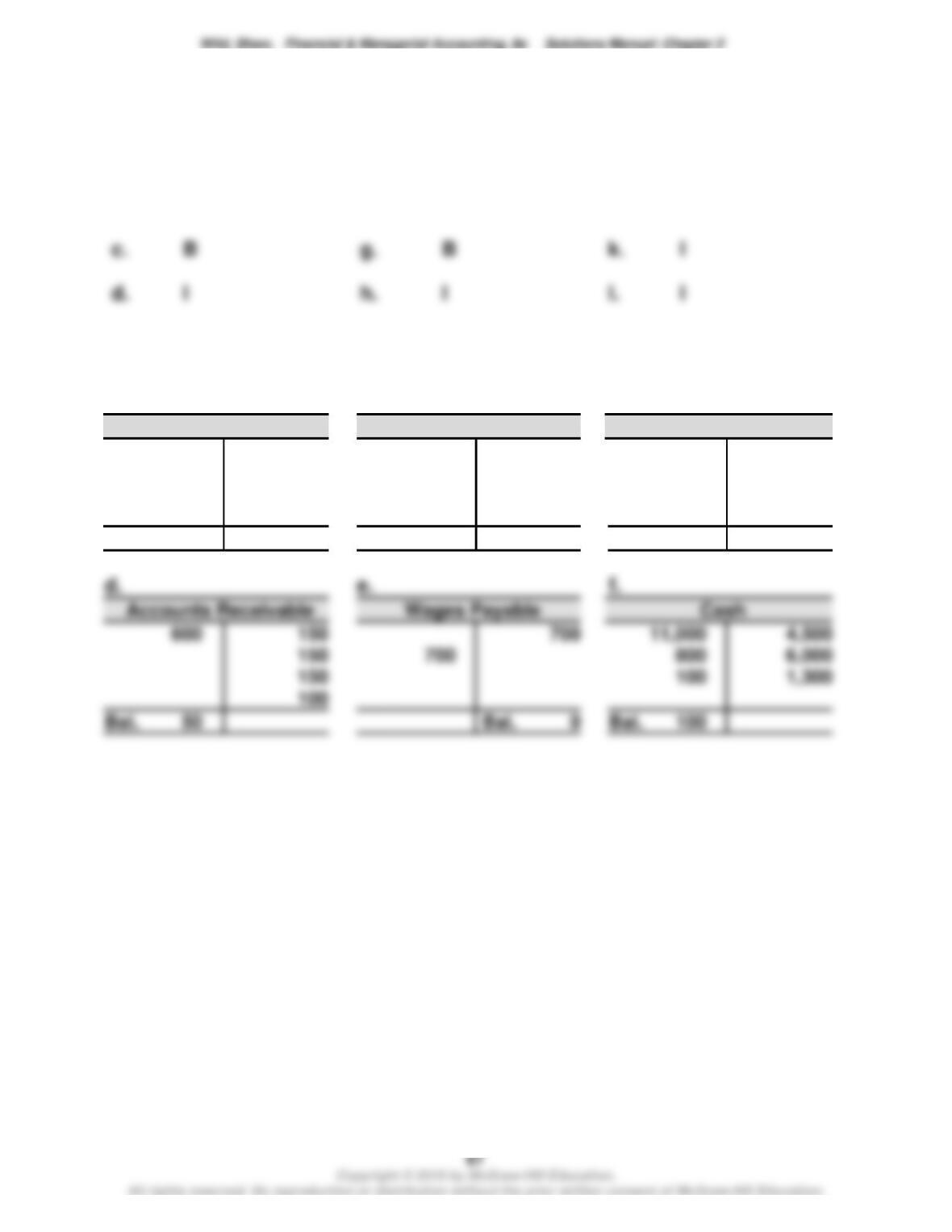
2) Record:
3) Post
Quick Study 2-7 (10 minutes)
Quick Study 2-8 (10 minutes)
The correct answer is a.
Explanation: If a $2,250 debit to Utilities Expense is incorrectly posted as a
credit, the effect is to understate the Utilities Expense debit balance by
$4,500. This causes the Debit column total on the trial balance to be $4,500
less than the Credit column total.
Cash 101
1,000
Unearned Landscaping Revenue 236
1,000
Quick Study 2-9 (10 minutes)
a.
I
e.
B
i.
E
b.
B
f.
B
j.
B
d.
I
h.
I
l.
I
Quick Study 2-10 (10 minutes)
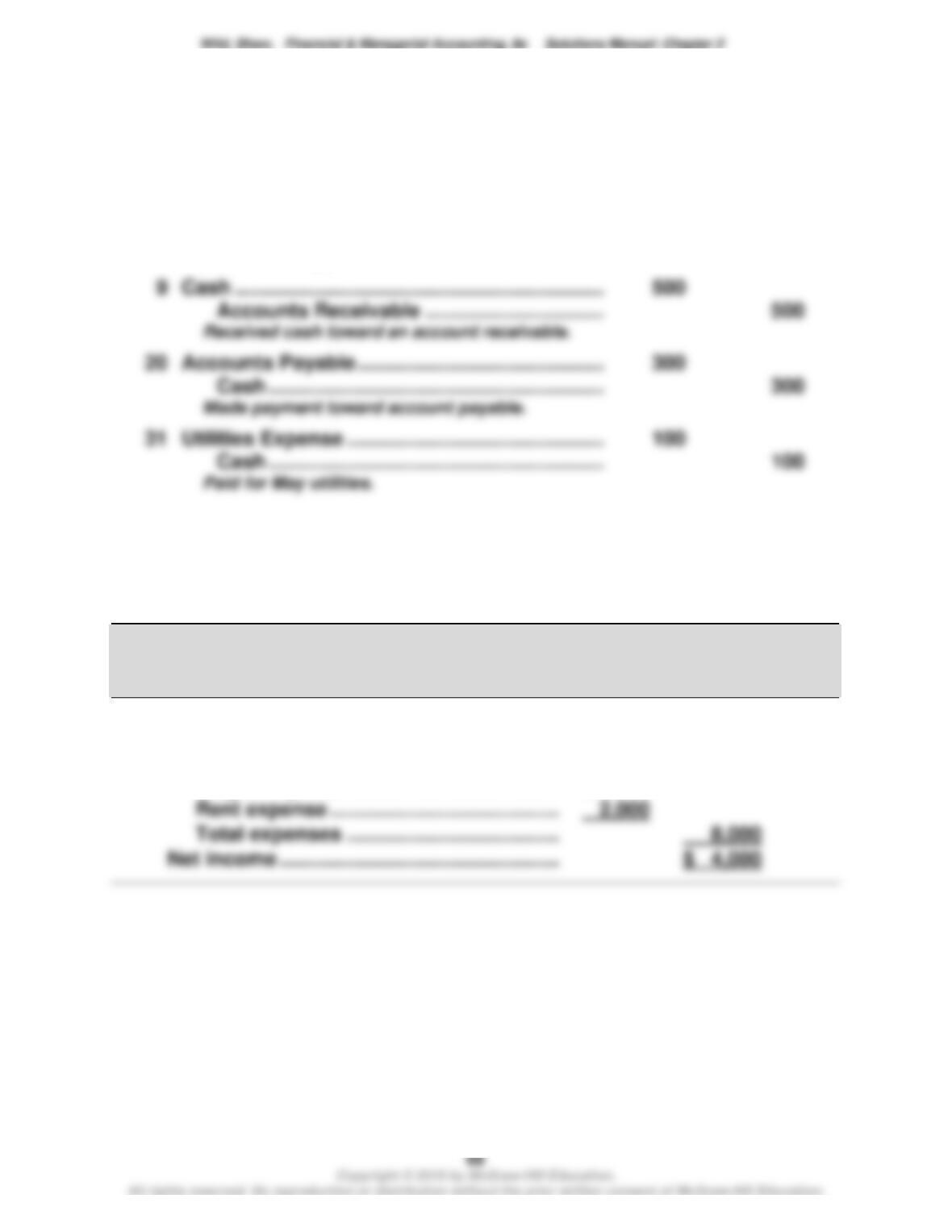
a. b. c.
Cash
Accounts Payable
Supplies
100
50
2,000
8,000
10,000
3,800
300
60
2,700
1,100
20
Bal.
310
Bal.
3,300
Bal.
7,300
600
150
700
700
800
150
100
Bal.
50
Bal.
Bal.
100
Quick Study 2-11 (15 minutes)
May 1 Accounts Receivable ………………………………… 2,000
Consulting Revenue ……………………………. 2,000
Billed customer for services provided.
3 Supplies …………………………………………………… 300
Accounts Payable ……………………………….. 300
Purchased supplies on credit.
Quick Study 2-12 (15 minutes)
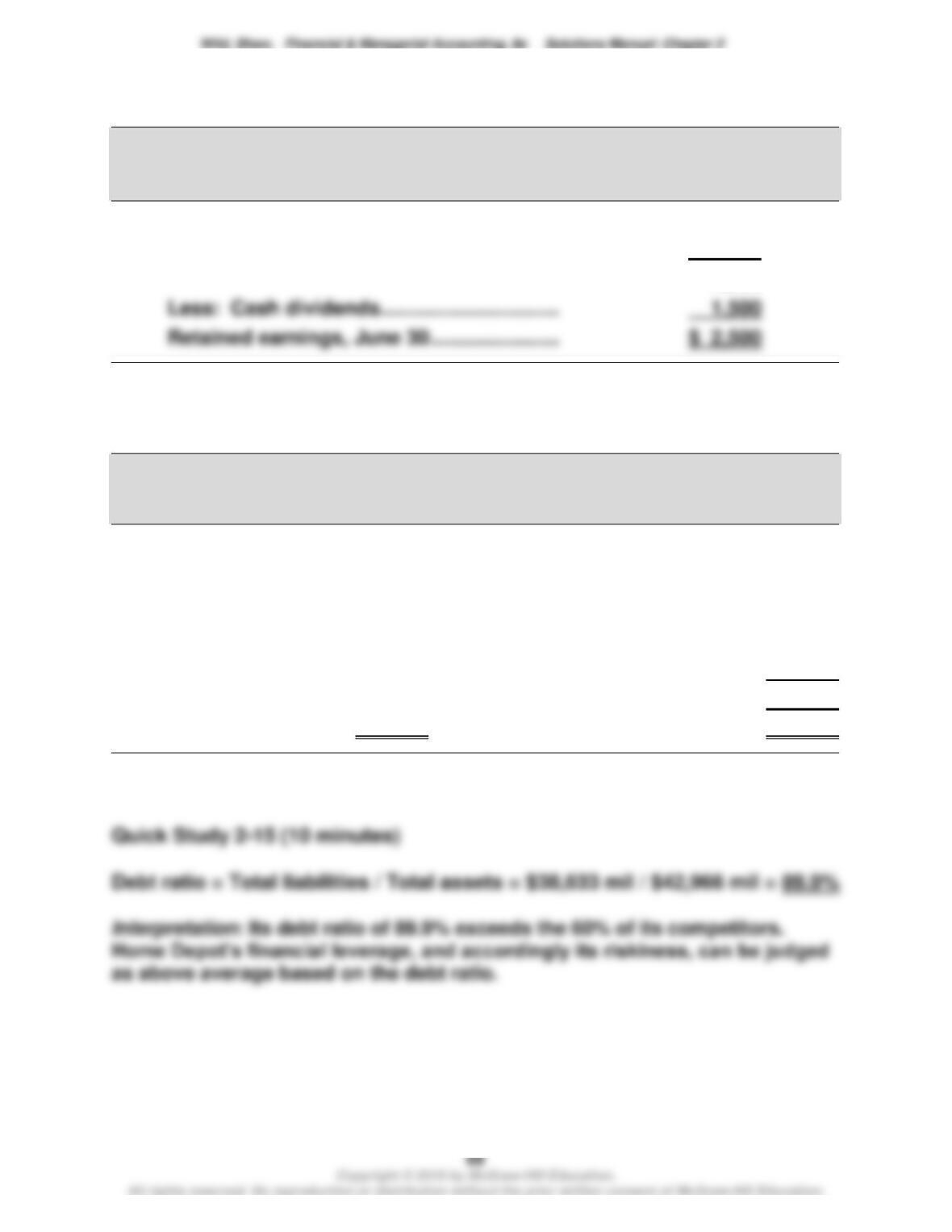
LAWSON CONSULTING
Income Statement
For Month Ended June 30
Revenues
Service revenue ………………………………. $ 12,000
Expenses
Wages expense ………………………………. $ 6,000
Quick Study 2-13 (15 minutes)
LAWSON CONSULTING
Statement of Retained Earnings
For Month Ended June 30
Retained earnings, June 1 ……………………. $ 0
Add: Net income (from QS 2-12) …………….. 4,000
4,000
Quick Study 2-14 (15 minutes)
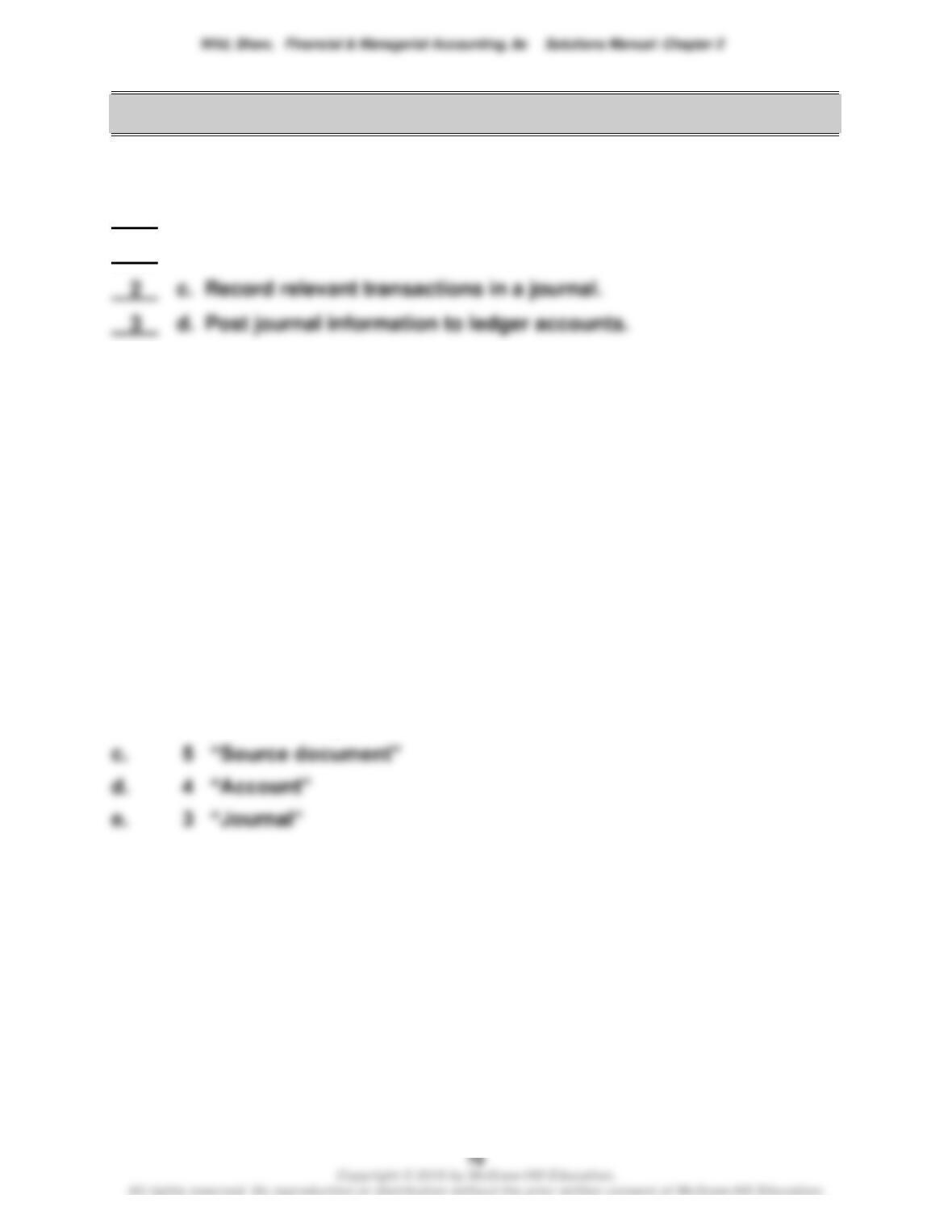
LAWSON CONSULTING
Balance Sheet
June 30
Assets Liabilities
Cash …………………………. $ 5,000 Accounts payable ……………. $ 3,000
Accounts receivable …. 4,500 Equity
Equipment ………………… 6,500 Common stock ……………….. 10,500
Retained earnings* ………….. 2,500
______ Total equity …………………….. 13,000
Total assets ………………. $16,000 Total liabilities & equity …… $16,000
* Amount from Quick Study 2-13.
EXERCISES
Exercise 2-1 (10 minutes)
4 a. Prepare and analyze the trial balance.
1 b. Analyze each transaction from source documents.
Exercise 2-2 (10 minutes)
a.
5 “Three”
d.
1 “Asset”
b.
2 “Equity”
e.
3 “Account”
c.
4 “Liability”
Exercise 2-3 (5 minutes)
a.
1 “Chart”
b.
2 “General ledger”
c.
5 “Source document”
d.
4 “Account”
e.
3 “Journal”
Exercise 2-4 (15 minutes)
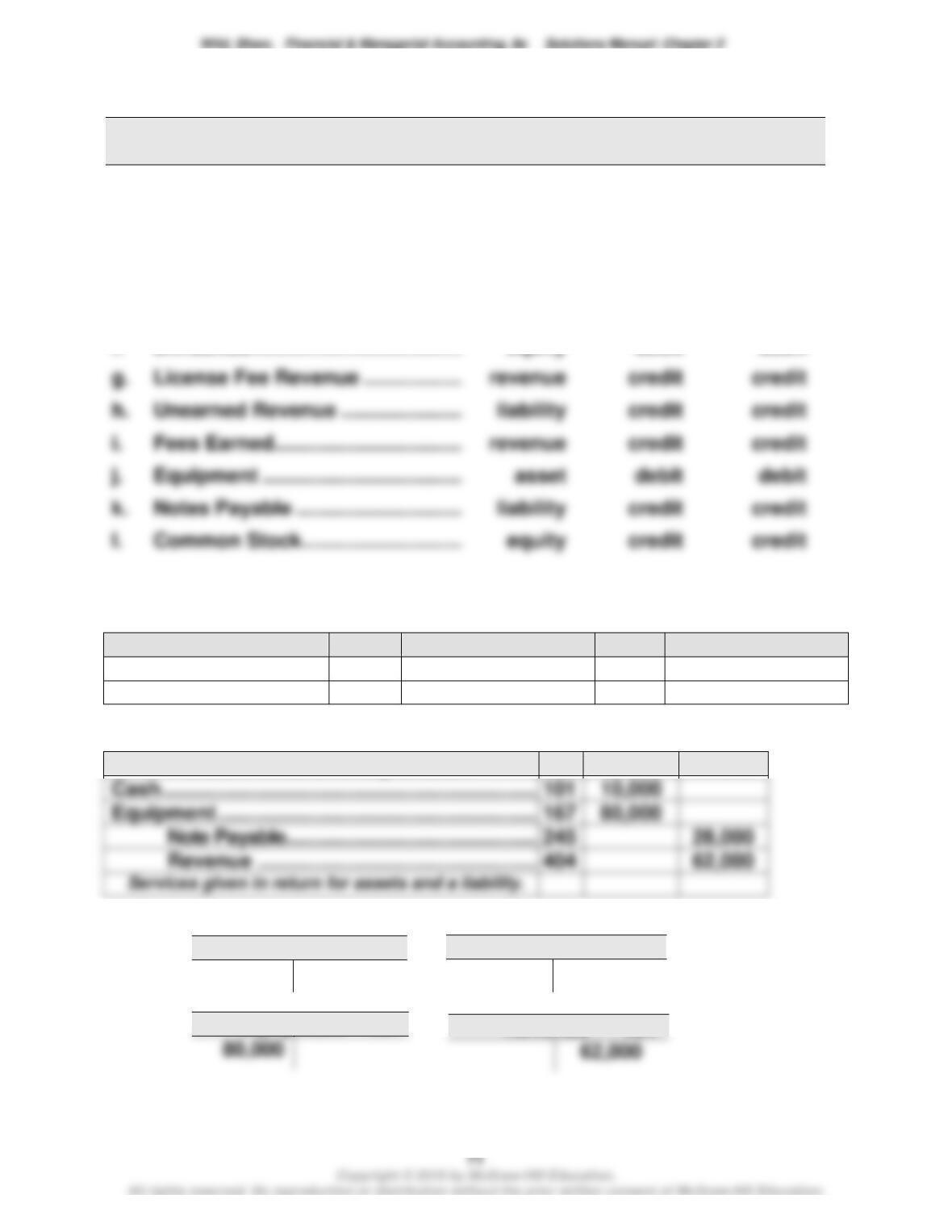
Type of
Normal
Increase
Account
Account
Balance
(Dr. or Cr.)
a.
Land ……………………………………….
asset
debit
debit
b.
Cash ……………………………………….
asset
debit
debit
c.
Legal Expense …………………………
expense
debit
debit
d.
Prepaid Insurance ……………………
asset
debit
debit
e.
Accounts Receivable ……………….
asset
debit
debit
Dividends ………………………………..
debit
debit
h.
Unearned Revenue ………………….
Fees Earned …………………………….
Equipment ………………………………
asset
debit
debit
Notes Payable …………………………
Common Stock………………………..
Exercise 2-5 (15 minutes)
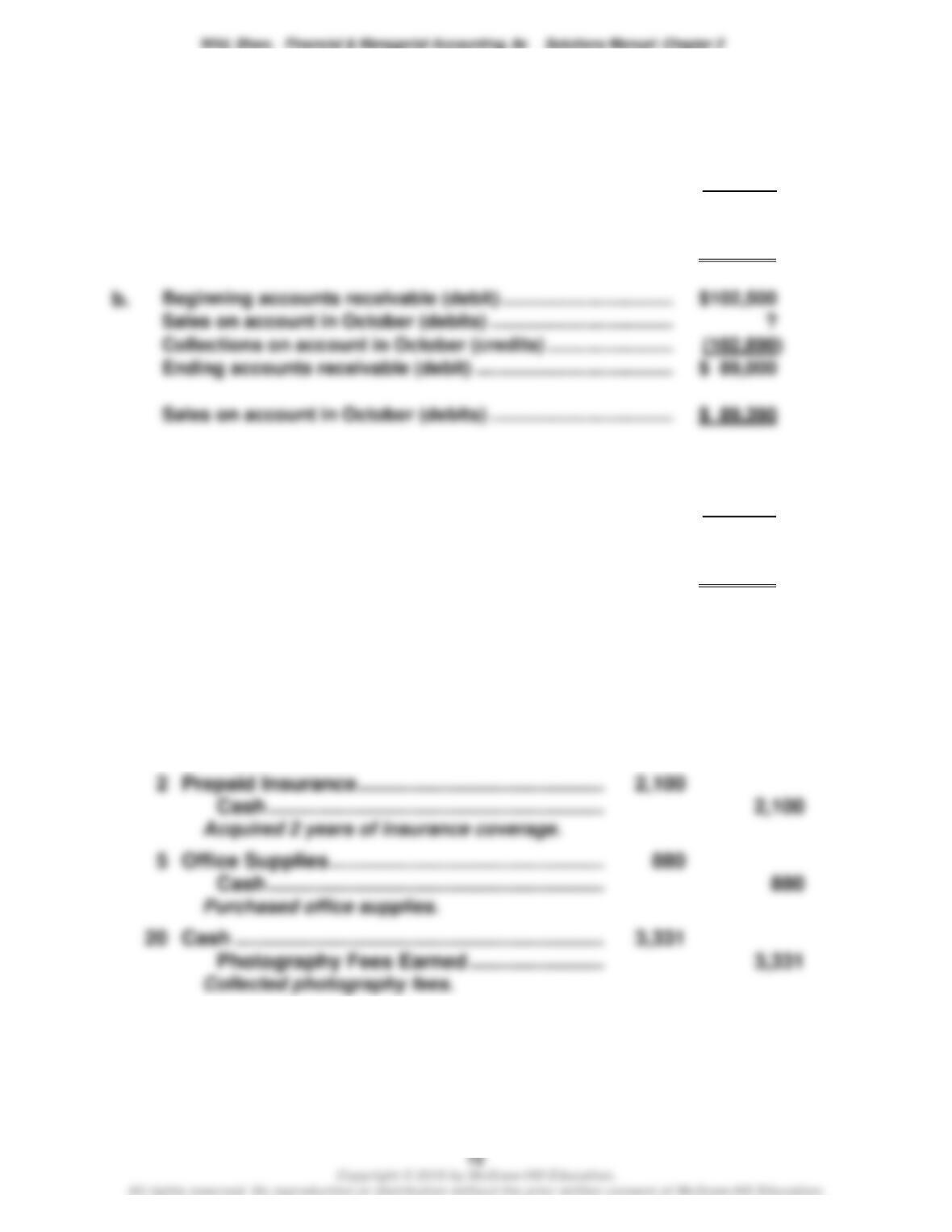
a. Analyze:
Assets
=
Liabilities
+
Equity
Cash Equipment
Note Payable
Revenue
10,000 + 80,000
=
28,000
+
62,000
b. Record:
Account Titles and Explanation
PR
Debit
Credit
Equipment …………………………………………………….
c. Post
Cash 101
10,000
Note Payable 245
28,000
Revenue 404
Equipment 167
Exercise 2-6 (15 minutes)
a.
Beginning accounts payable (credit) …………………………..………….
$152,000
Purchases on account in October (credits) …………………………..
281,000
Payments on accounts in October (debits) …………………………..
( ?)
Ending accounts payable (credit) …………………………………………..
$132,500
Payments on accounts in October (debits) …………………………..
$300,500
Beginning accounts receivable (debit) ……………………………………
$102,500
Sales on account in October (debits) ……………………………………..
Collections on account in October (credits) …………………………..
(102,890)
Ending accounts receivable (debit) ………………………………………..
$ 89,000
Sales on account in October (debits) ……………………………………..
$ 89,390
c.
Beginning cash balance (debit) ………………………………………………
$ ?
Cash received in October (debits) ………………………………………….
102,500
Cash disbursed in October (credits) ……………………………………….
(103,150)
Ending cash balance (debit) …………………………………………………..
$ 18,600
Beginning cash balance (debit) ………………………………………………
$ 19,250
Exercise 2-7 (25 minutes)
Aug. 1 Cash ………………………………………………………… 6,500
Photography Equipment …………………………... 33,500
Common Stock …………………………………… 40,000
Owner investment in exchange for stock.
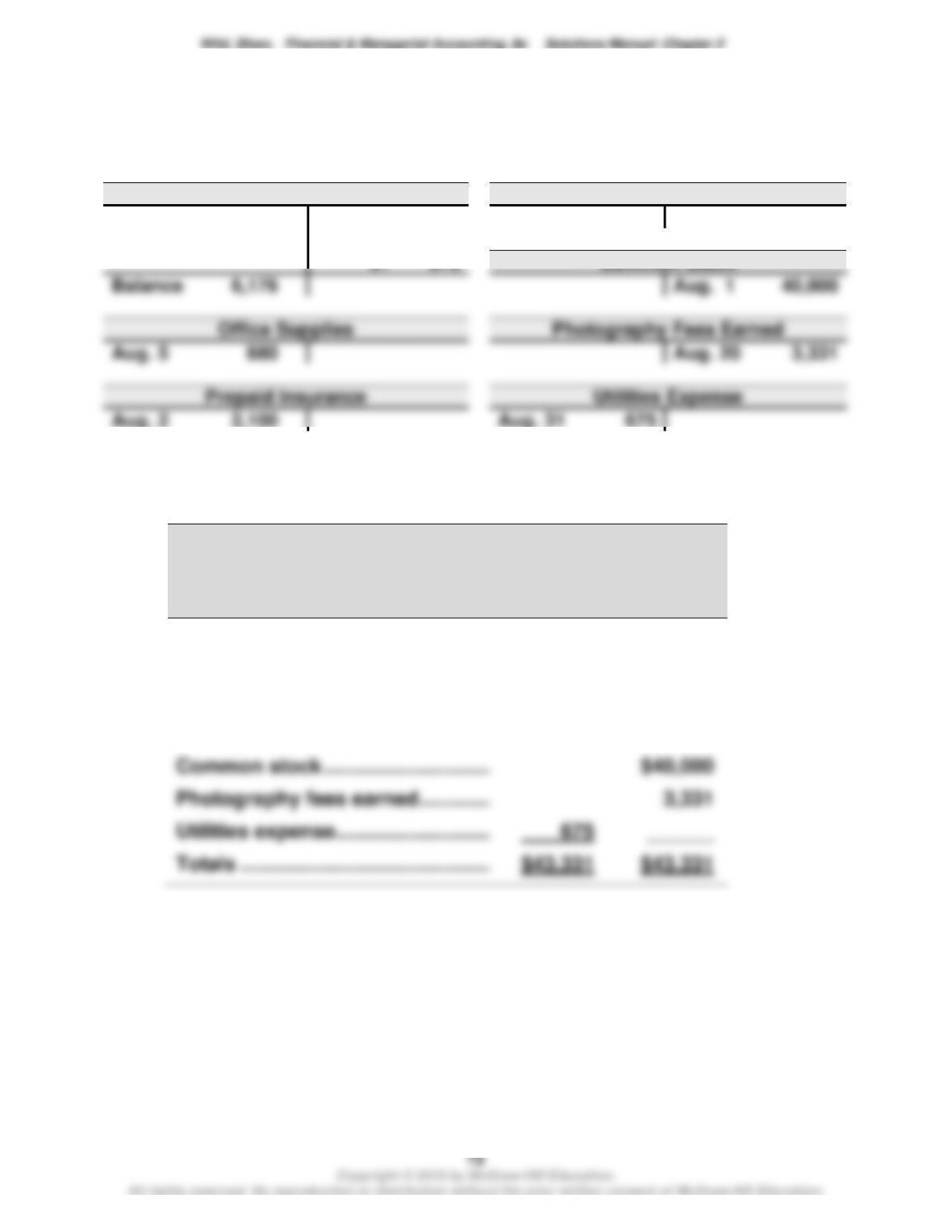
31 Utilities Expense ………………………………………. 675
Cash …………………………………………………… 675
Paid for August utilities.
Exercise 2-8 (30 minutes)
Part 1
Cash
Photography Equipment
Aug. 1
6,500
Aug. 2
2,100
Aug. 1
33,500
20
3,331
5
880
675
Balance
6,176
Aug. 1
Aug. 5
Aug. 20
Aug. 2
2,100
Aug. 31
675
Part 2
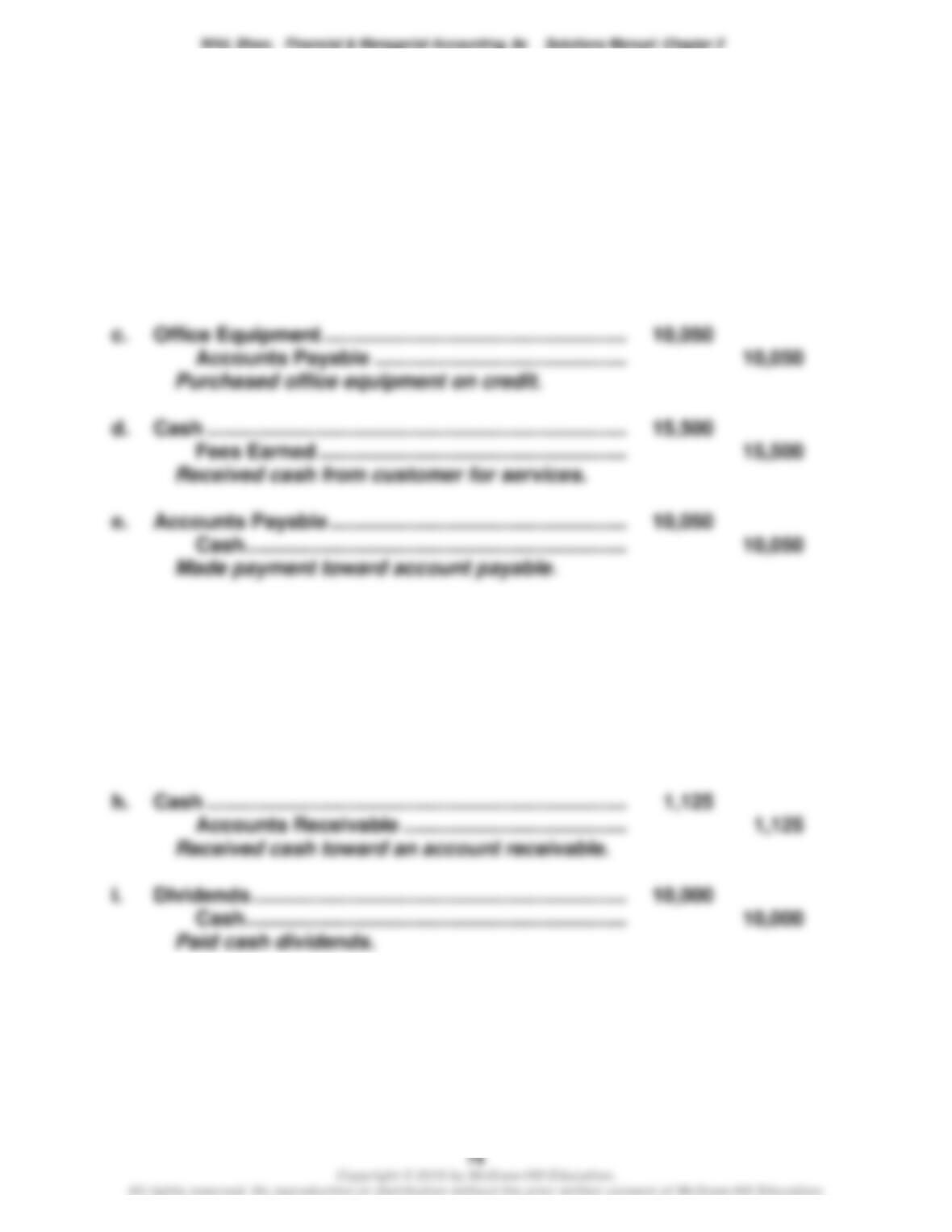
POSE-FOR-PICS
Trial Balance
August 31
Debit
Credit
Cash …………………………………………..
$ 6,176
Office supplies …………………………..
880
Prepaid insurance ……………………….
2,100
Photography equipment ……………..
33,500
Photography fees earned …………….
Exercise 2-9 (30 minutes)
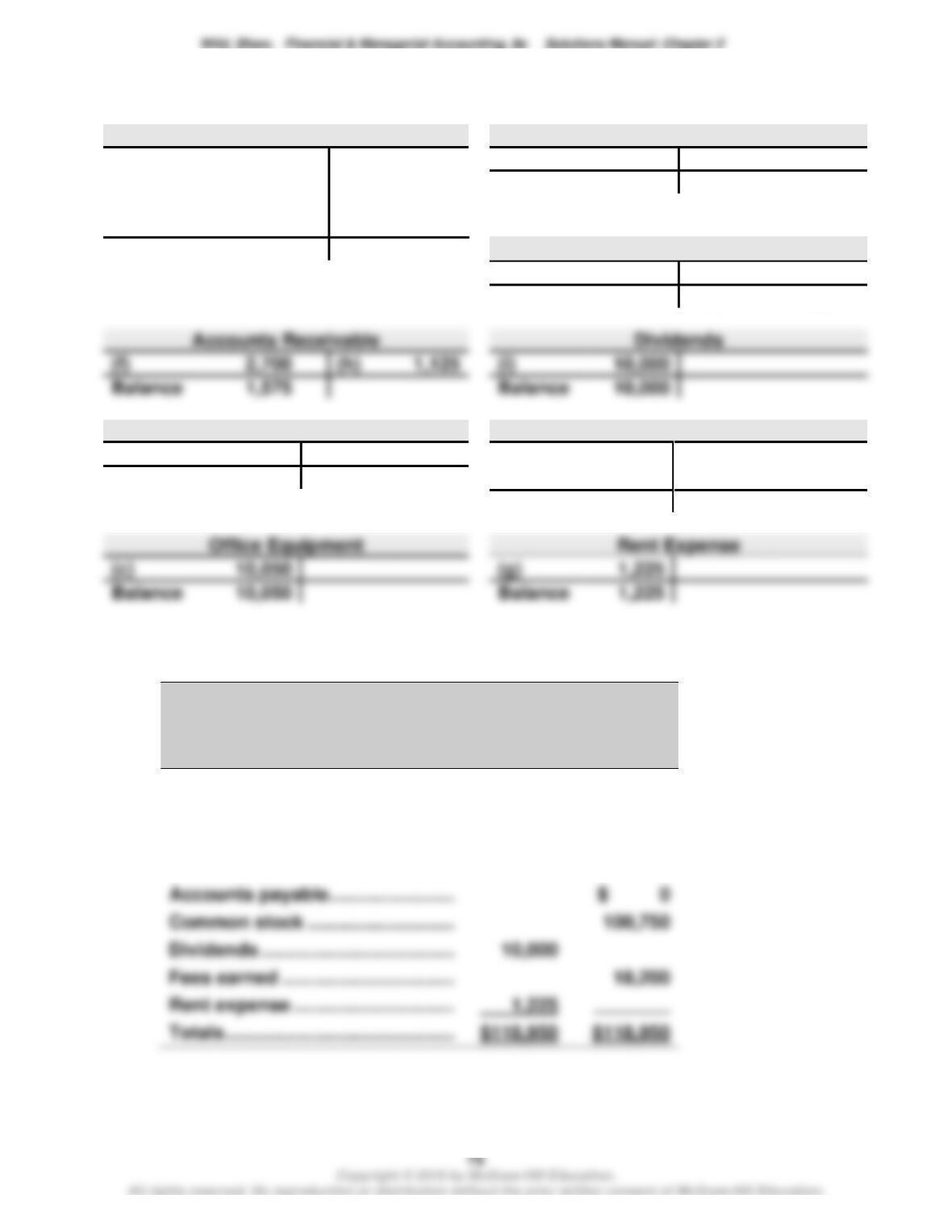
a. Cash ………………………………………………………………… 100,750
Common Stock ………………………………………….. 100,750
Owner investment in exchange for stock.
b. Office Supplies …………………………………………………. 1,250
Cash ………………………………………………………….. 1,250
Purchased supplies with cash.
f. Accounts Receivable ………………………………………… 2,700
Fees Earned ………………………………………………. 2,700
Billed customer for services provided.
g. Rent Expense …………………………………………………… 1,225
Cash ………………………………………………………….. 1,225
Paid for this period’s rental charge.
Exercise 2-9 (concluded)
Cash
Accounts Payable
(a)
100,750
(b)
1,250
(e)
10,050
(c)
10,050
(d)
15,500
(e)
10,050
Balance
0
(h)
1,125
(g)
1,225
(i)
10,000
Balance
94,850
Common Stock
(a)
100,750
Balance
100,750
(f)
2,700
(h)
(i)
10,000
Balance
1,575
Balance
10,000
Office Supplies
Fees Earned
(b)
1,250
(d)
15,500
Balance
1,250
(f)
2,700
Balance
18,200
(c)
10,050
(g)
Balance
10,050
Balance
Exercise 2-10 (15 minutes)
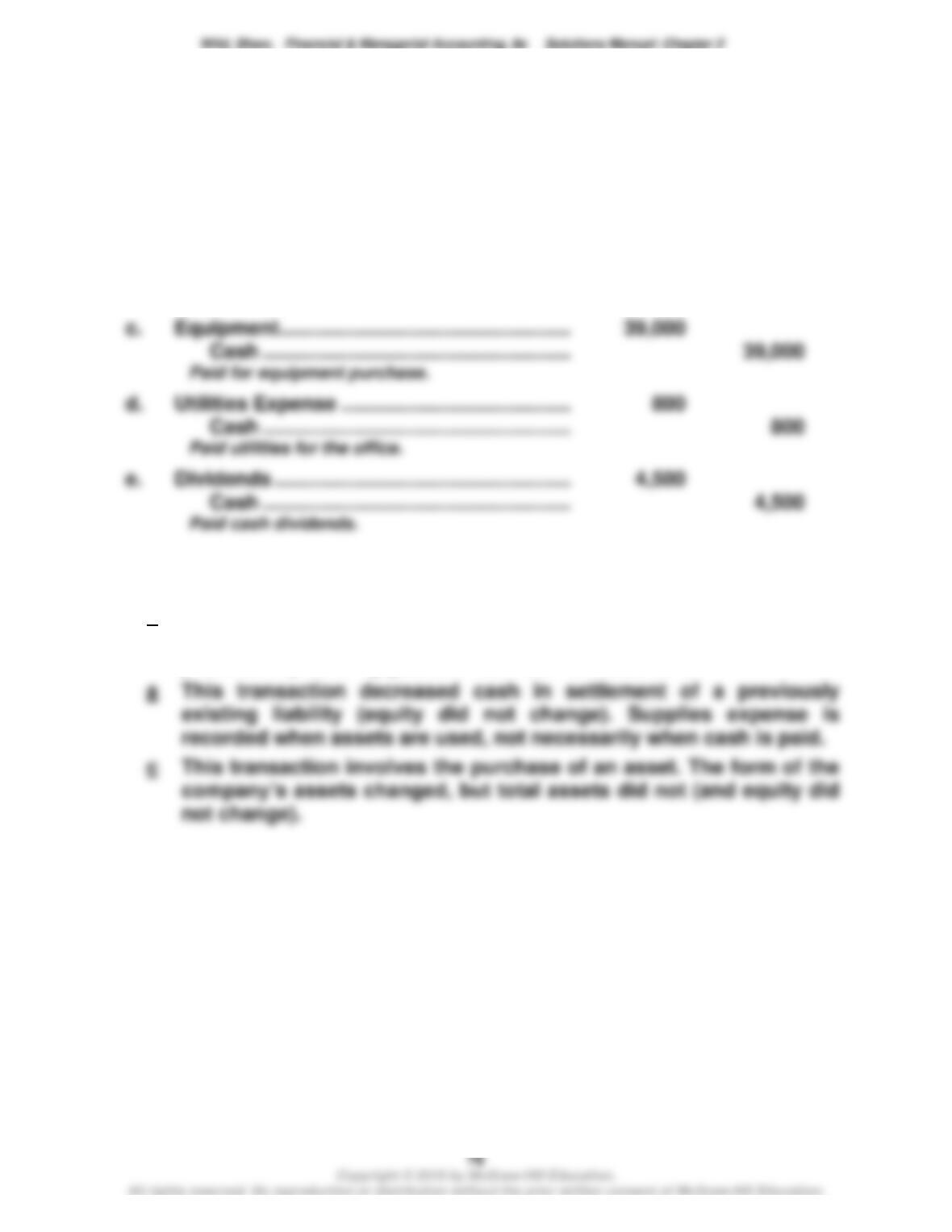
SPADE COMPANY
Trial Balance
May 31
Debit
Credit
Cash ………………………………………
$ 94,850
Accounts receivable ……………….
1,575
Office supplies………………………..
1,250
Office equipment …………………….
10,050
Accounts payable ……………………
Common stock ……………………….
Dividends …………………………………………………
10,000
Fees earned …………………………...
18,200
Rent expense …………………………..
Exercise 2-11 (20 minutes)
1.
a. Account Payable ………………………………….. 2,000
Cash ………………………………………………. 2,000
Paid amount owed.
b. Salaries Expense ………………………………….. 1,200
Cash ………………………………………………. 1,200
Paid salary of receptionist.
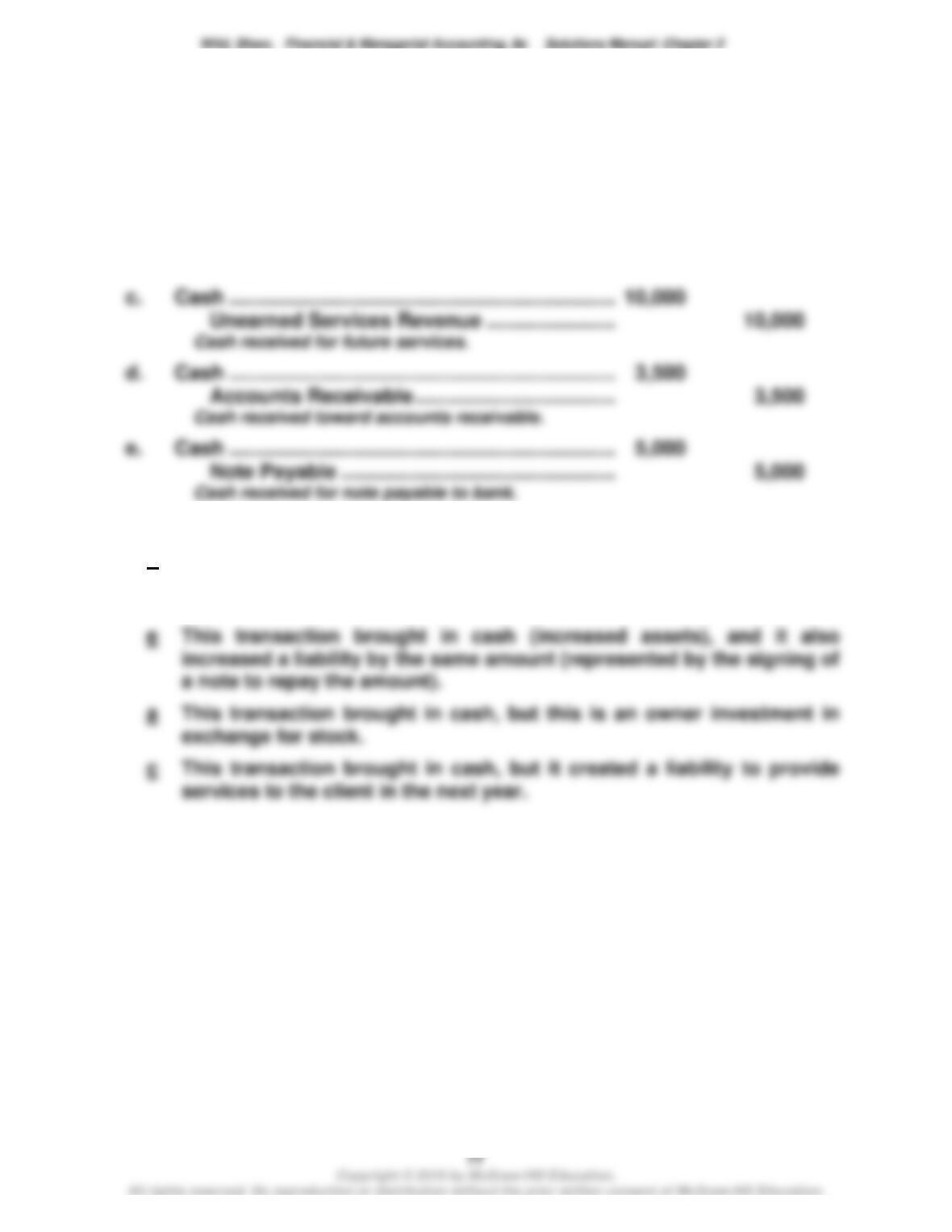
2. Transactions a, c, and e did not yield an expense for the following reasons:
e This transaction is a distribution of cash to the owner (shareholder).
Even though equity decreased, that decrease did not occur in the
process of providing goods or services to customers.
Exercise 2-12 (20 minutes)
1.
a. Cash …………………………………………………………… 20,000
Common Stock………………………………………. 20,000
Owner investment in exchange for stock.
b. Cash …………………………………………………………… 900
Services Revenue ………………………………….. 900
Provided services for cash.
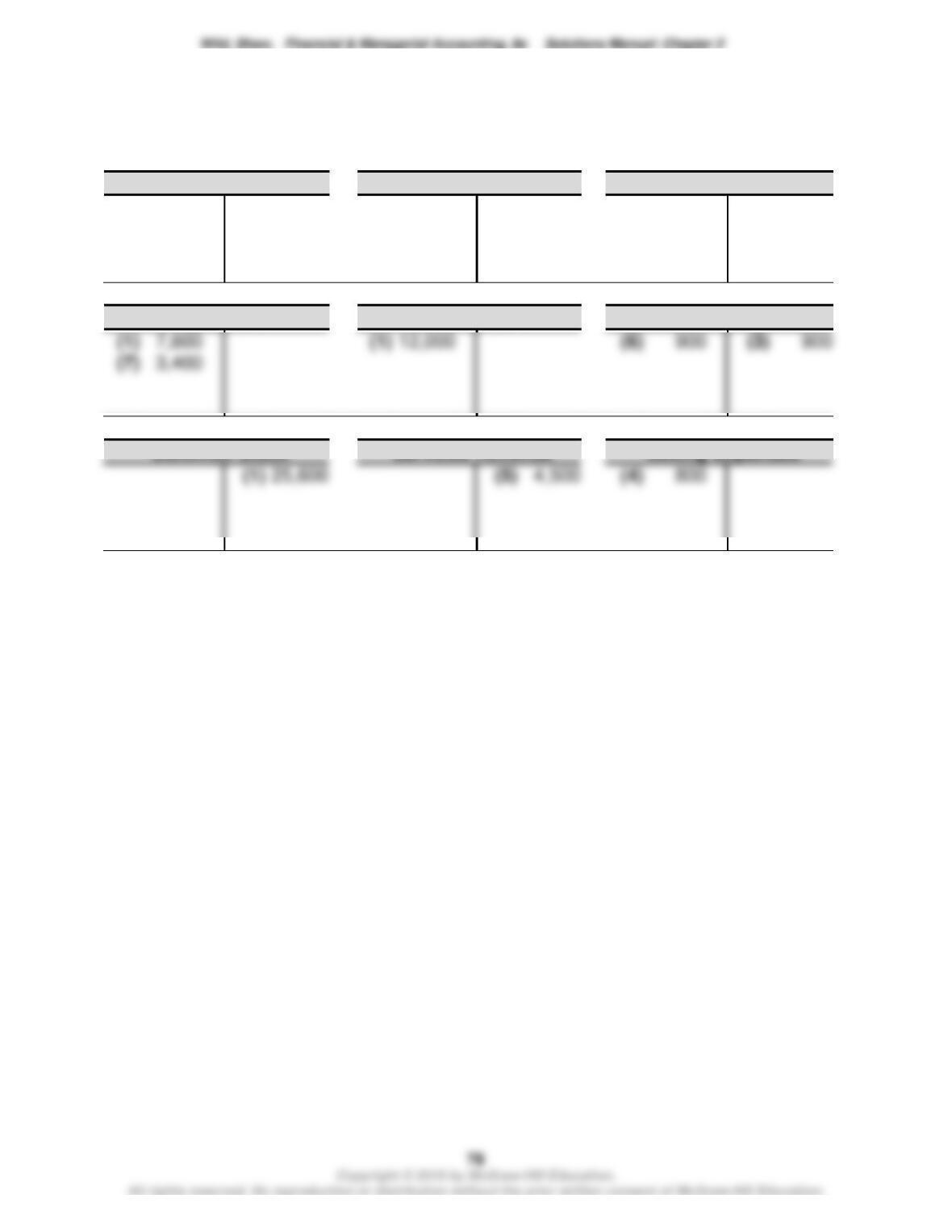
2. Transactions a, c, d, and e did not yield revenue for the following reasons:
d This transaction changed the form of an asset from receivable to cash.
Total assets were not increased (revenue was recognized when the
services were originally provided).
Exercise 2-13 (25 minutes)
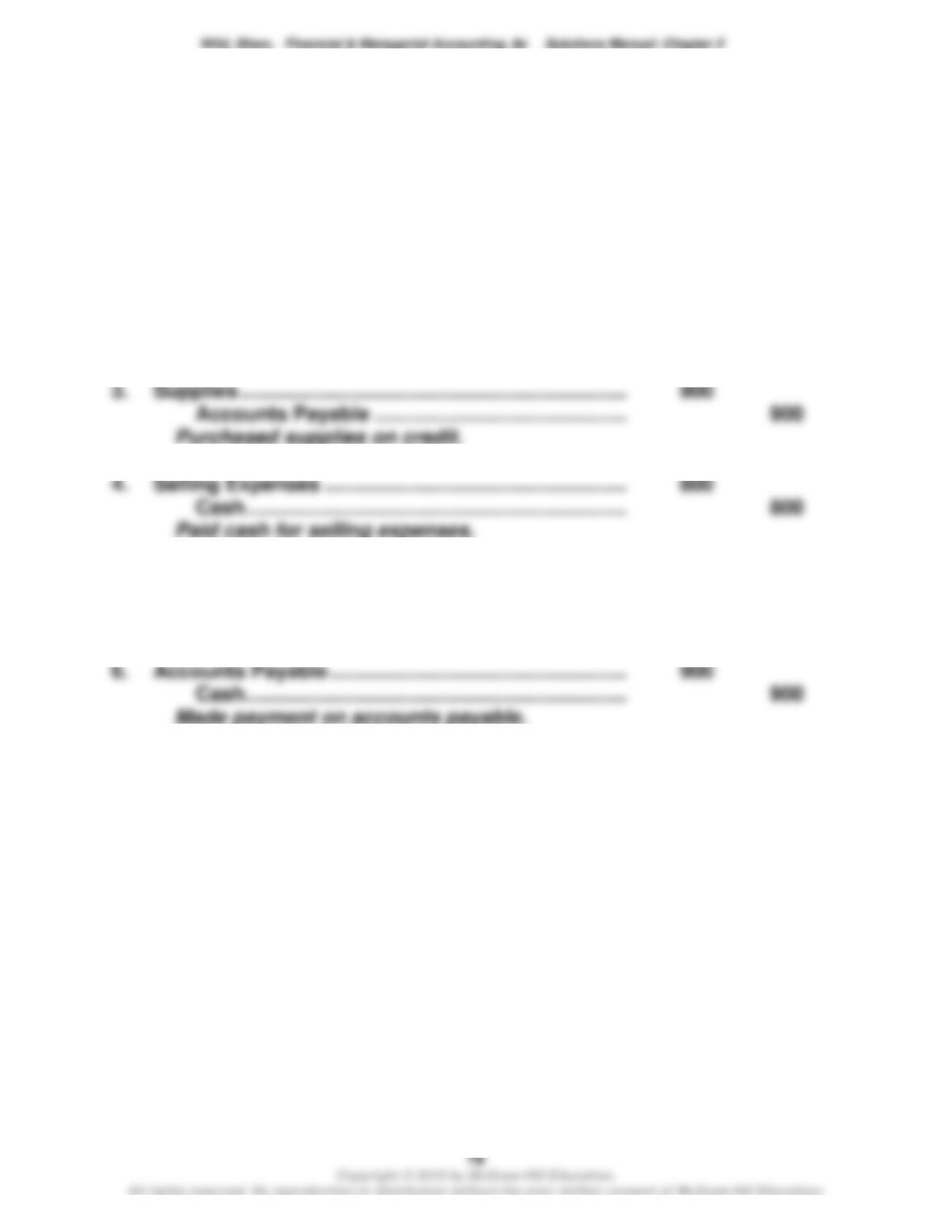
Cash
Supplies
Prepaid Insurance
(1)
6,000
(2)
4,800
(3)
900
(2)
4,800
(5)
4,500
(4)
800
(6)
900
(7)
3,400
Equipment
Web Servers
Accounts Payable
(1)
7,600
(1)
(6)
(3)
(7)
3,400
Services Revenue
Selling Expenses
(1)
(5)
4,500
(4)
800
Exercise 2-14 (30 minutes)
1. Cash ………………………………………………………………… 6,000
Equipment ……………………………………………………….. 7,600
Web Servers …………………………………………………….. 12,000
Common Stock ………………………………………….. 25,600
Owner investment in exchange for stock.
2. Prepaid Insurance …………………………..………………… 4,800
Cash ………………………………………………………….. 4,800
Purchased insurance coverage.
5. Cash ………………………………………………………………… 4,500
Services Revenue …………………………..………….. 4,500
Received cash for services provided.
7. Equipment ……………………………………………………….. 3,400
Cash ………………………………………………………….. 3,400
Paid cash for equipment.
Exercise 2-15 (20 minutes)
Calculation of change in equity for part a through part d
Assets
–
Liabilities
=
Equity
Beginning of the year ……….
$ 60,000
–
$20,000
=
$40,000
End of the year …………………
105,000
–
36,000
=
69,000
Net increase in equity ……….
$29,000
$ ?
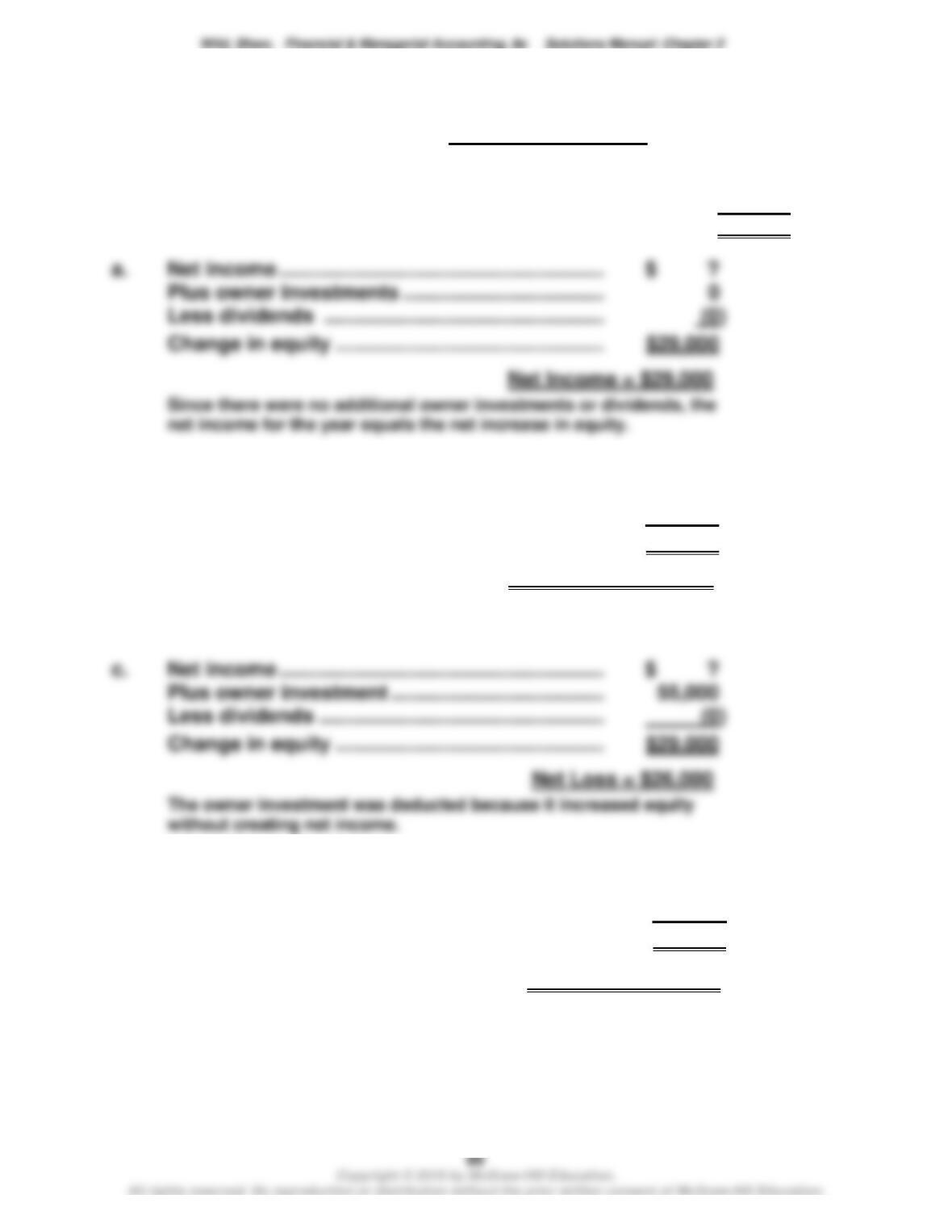
Plus owner investments ………………………………
0
Less dividends …………………………………………..
Change in equity …………………………………………
$29,000
b. Net income ………………………………………………….
$ ?
Plus owner investments ………………………………
0
Less dividends ($1,250/mo. x 12 mo.) …………..
(15,000)
Change in equity …………………………………………
$29,000
Net Income = $44,000
The dividends were added back because they reduced equity
without reducing net income.
Plus owner investment ………………………………..
Less dividends ……………………………………………
Change in equity …………………………………………
d. Net income ………………………………………………….
$ ?
Plus owner investment ………………………………..
35,000
Less dividends ($1,250/mo. X 12 mo.) …………..
(15,000)
Change in equity …………………………………………
$29,000
Net Income = $9,000
The dividends were added back because they reduced equity
without reducing net income and the owner investments were
deducted because they increased equity without creating net
income.