CHAPTER 2
Job Order Costing
ASSIGNMENT CLASSIFICATION TABLE
Learning Objectives
Questions
Brief
Exercises
Do It!
Exercises
A
Problems
1. Describe cost systems and
the flow of costs in a job
order system.
1, 2, 3, 4, 5,
6, 7, 8
1, 2
1
1, 2, 3, 4, 6,
7, 8, 9, 11
1A, 2A, 3A,
5A
2. Use a job cost sheet to
assign costs to work in
process.
9, 10, 11, 12
3, 4, 5
2
1, 2, 3, 6, 7,
8, 10, 12
1A, 2A, 3A,
5A
predetermined overhead
rate.
8, 11, 12, 13
4A, 5A
4. Prepare entries for
manufacturing and service
jobs completed and sold.
16
4
2, 3, 6, 7, 8,
10, 11, 12
1A, 2A, 3A,
5A
5. Distinguish between under–
manufacturing overhead.
17, 18
5
1A, 2A, 3A,
4A, 5A
ASSIGNMENT CHARACTERISTICS TABLE
Problem
Number
Description
Difficulty
Level
Time
Allotted (min.)
1A
Prepare entries in a job order cost system and job cost
sheets.
Simple
30 40
2A
Prepare entries in a job order cost system and partial
income statement.
Moderate
30 40
3A
Prepare entries in a job order cost system and cost of
goods manufactured schedule.
Simple
30 40
5A
Analyze manufacturing accounts and determine missing
amounts.
30 40
BLOOM’ S TAXONOMY TABLE
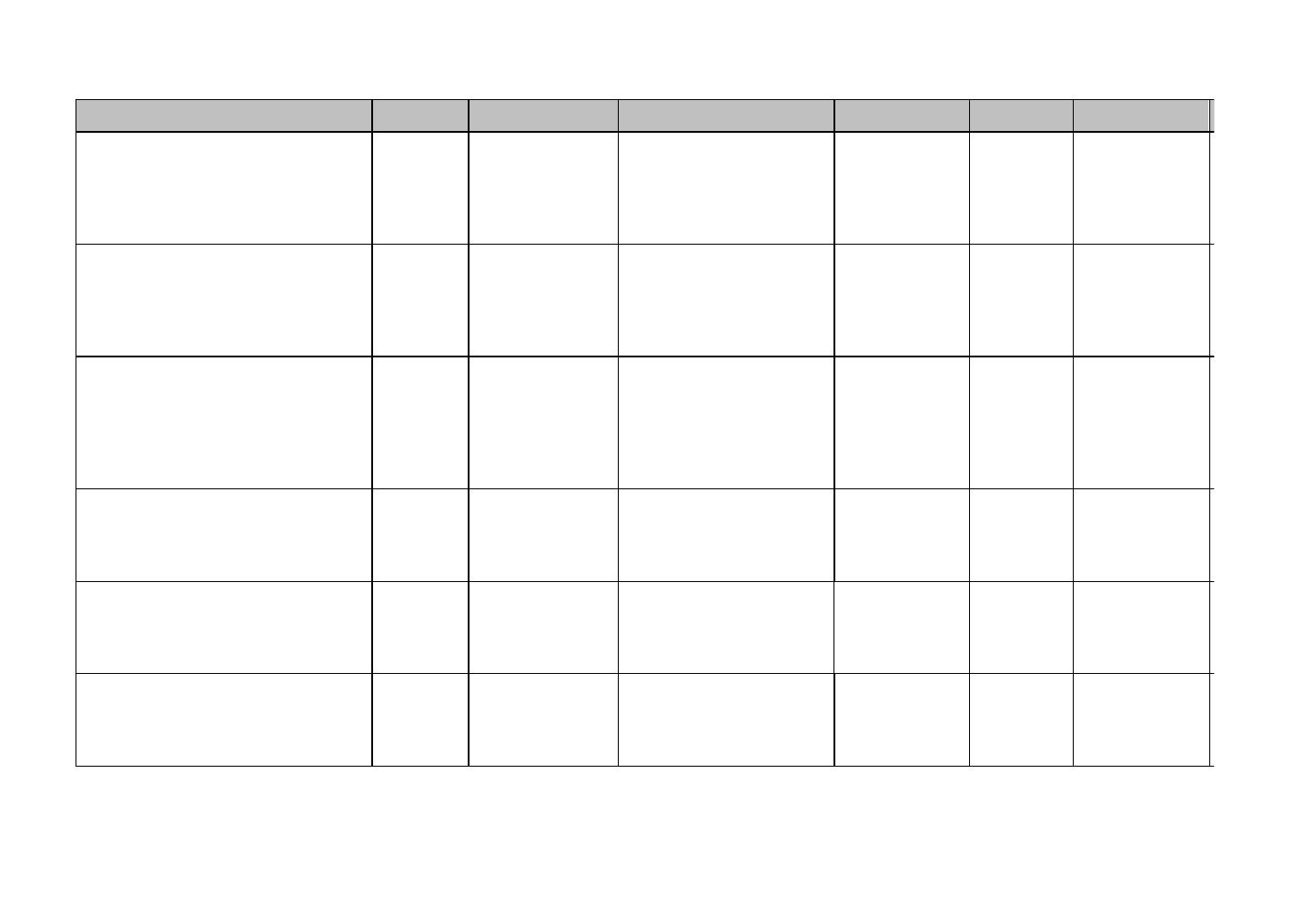
Correlation Chart between Bloom’s Taxonomy, Learning Objectives and End–of-Chapter Exercises and Problems
Learning Objective
Knowledge
Comprehension
Application
Analysis
Synthesis
Evaluation
1. Describe cost systems and the
flow of costs in a job order
system.
Q2-5
Q2-7
Q2-8
Q2-1 Q2-4
Q2-2 Q2-6
Q2-3 BE2-1
BE2-2
DI2-1
E2-1
E2-2
E2-3
E2-6
E2-7
E2-8
E2-9
E2–11
P2–1A
P2–3A
E2-4
P2–2A
P2–5A
2. Use a job cost sheet to assign
costs to work in process.
Q2–11
Q2–12
Q2-9
Q2–10
BE2-3
BE2-4
BE2-5
DI2-2
E2-1
E2-2
E2-3
E2-6
E2-7
E2-8
E2–10
E2–12
P2–1A
P2–3A
P2–2A
P2–5A
3. Demonstrate how to determine
and use the predetermined
overhead rate.
Q2–15
Q2–13
Q2–14
BE2-6
BE2-7
DI2-3
E2-2
E2-3
E2-6
E2-7
E2-8
E2–11
E2–12
E2–13
P2–1A
P2–3A
P2–4A
E2-5
P2–2A
P2–5A
4. Prepare entries for
manufacturing and service jobs
completed and sold.
Q2–16
BE2-9
BE2-8
DI2-4
E2-2
E2-3
E2-6
E2-7
E2-8
E2–10
E2–11
E2–12
P2–1A
P2–3A
P2–2A
P2–5A
5. Distinguish between under- and
overapplied manufacturing
overhead.
Q2–17
Q2–18
E2-9
BE2-10
E2–13
P2–1A
P2–3A
P2–4A
DI2-5
E2-4
E2-5
P2-2A
P2–5A
Broadening Your Perspective
BYP2-3
BYP2-4
CD-2
BYP2-2
BYP2-1
BYP2-5
BYP2-6
BYP2-7
ANSWERS TO QUESTIONS
1. (a) Cost accounting involves the measuring, recording, and reporting of product costs. A cost
accounting system consists of manufacturing cost accounts that are fully integrated into the
general ledger of a company.
2. (a) The two principal types of cost accounting systems are: (1) job order cost system and
(2) process cost system. Under a job order cost system, costs are assigned to each job or
batch of goods; at all times each job or batch of goods can be separately identified. A job
order cost system measures costs for each completed job, rather than for set time periods.
Under a process cost system, product-related costs are accumulated by or assigned to
3. A job order cost system is most likely to be used by a company that receives special orders, or
custom builds, or produces heterogeneous items or products; that is, the product manufactured or
the service rendered is tailored to the customer or client’s requests, needs, or situation. Examples
4. A process cost system is most likely to be used by manufacturing firms with continuous production
flows usually found in mass production, assembly line, large-volume, uniform, or relatively similar
product industries. Companies producing appliances, chemicals, pharmaceuticals, rubber and tires,
plastics, cement, petroleum, and automobiles utilize process cost systems.
7. The source documents used in accumulating direct labor costs are time tickets and time cards.
8. Disagree. Entries to Manufacturing Overhead are also made at the end of an accounting period.
For example, there will be adjusting entries for factory depreciation, property taxes, and insurance.
Questions Chapter 2 (Continued)
10. The purpose of a job cost sheet is to record the costs chargeable to a specific job and to determine
the total and unit costs of the completed job.
11. The source documents for charging costs to specific jobs are materials requisition slips for direct
13. Disagree. Actual manufacturing overhead cannot be determined until the end of a period of time.
Consequently, there could be a significant delay in assigning overhead and in determining the
15. At any point in time, the balance in Work in Process Inventory should equal the sum of the costs
shown on the job cost sheets of unfinished jobs. Alternatively, posting to Work in Process Inventory
17. Underapplied overhead means that the overhead assigned to work in process is less than the
overhead incurred. Overapplied overhead means that the overhead assigned to work in process
SOLUTIONS TO BRIEF EXERCISES
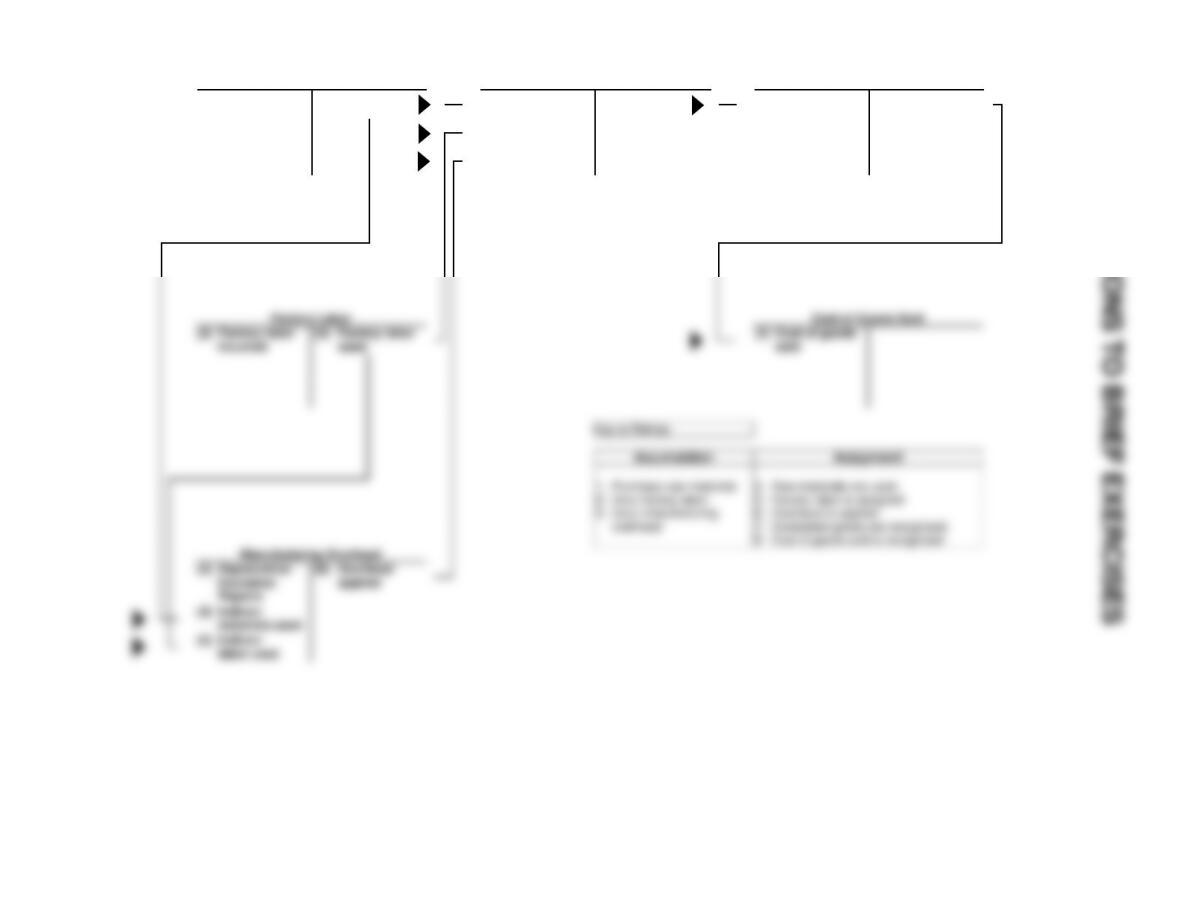
BRIEF EXERCISE 2-1
Raw Materials Inventory
Work in Process Inventory
Finished Goods Inventory
(1) Purchases
(4) Materials
used
(4) Direct
materials used
(7) Cost of com-
pleted jobs
(7) Cost of com-
pleted jobs
(8) Cost of goods
sold
(5) Direct labor
used
(6) Overhead
applied
(2) Factory labor
(8) Cost of goods
(4) Indirect
materials used
(5) Indirect
labor used
BRIEF EXERCISE 2-2
Jan. 31 Raw Materials Inventory ……………………………….. 4,000
Accounts Payable ………………………………….. 4,000
31 Factory Labor ………………………………………………. 6,000
Factory Wages Payable ………………………….. 5,200
Employer Payroll Taxes Payable …………….. 800
31 Manufacturing Overhead …………………………..….. 2,000
Utilities Payable …………………………………….. 2,000
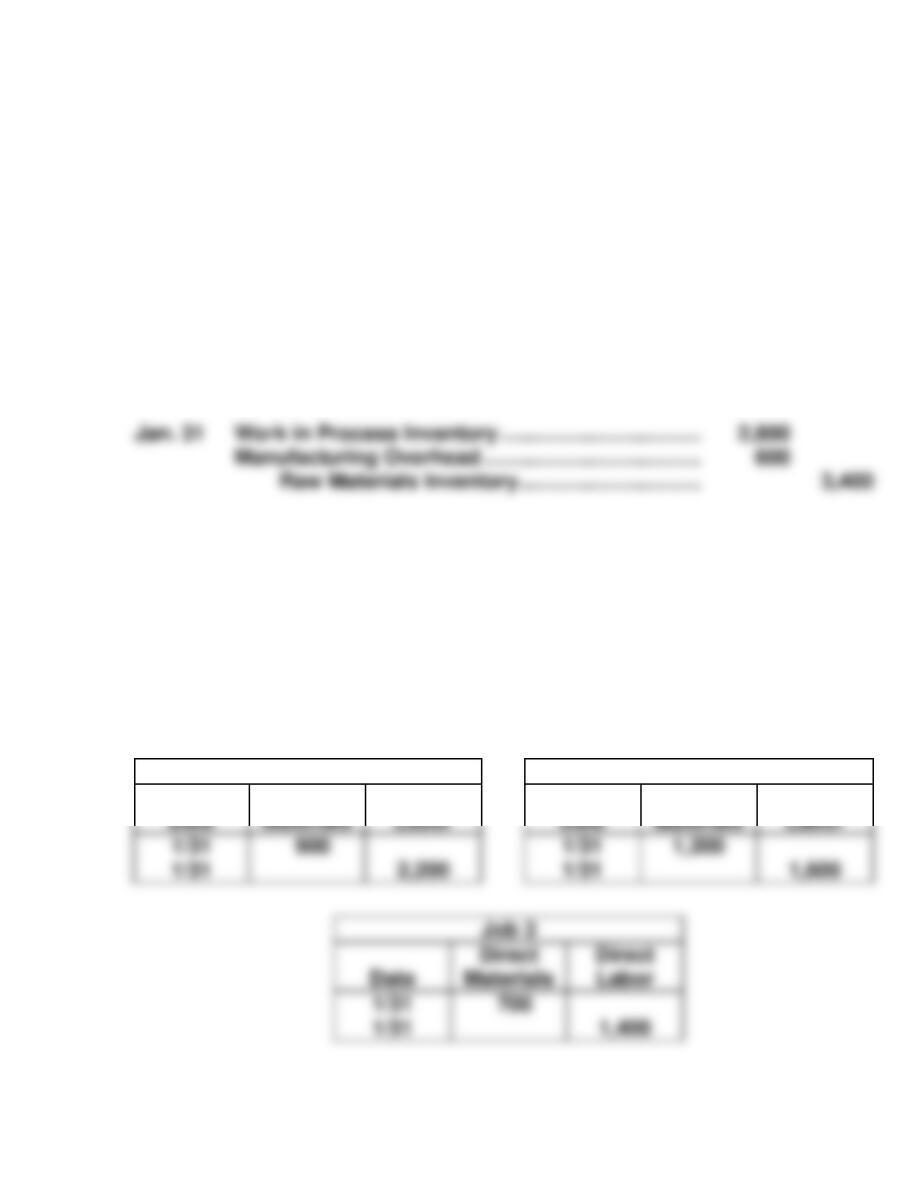
BRIEF EXERCISE 2-3
BRIEF EXERCISE 2-4
Jan. 31 Work in Process Inventory ……………………………. 5,200
Manufacturing Overhead …………………………..….. 800
Factory Labor ……………………………………….. 6,000
BRIEF EXERCISE 2-5
Job 1
Job 2
Direct
Direct
Direct
Direct
BRIEF EXERCISE 2-6
Overhead rate per direct labor cost is 180%, or ($900,000 ÷ $500,000).
Overhead rate per direct labor hour is $18, or ($900,000 ÷ 50,000 DLH).
Overhead rate per machine hour is $9, or ($900,000 ÷ 100,000 MH).
BRIEF EXERCISE 2-7
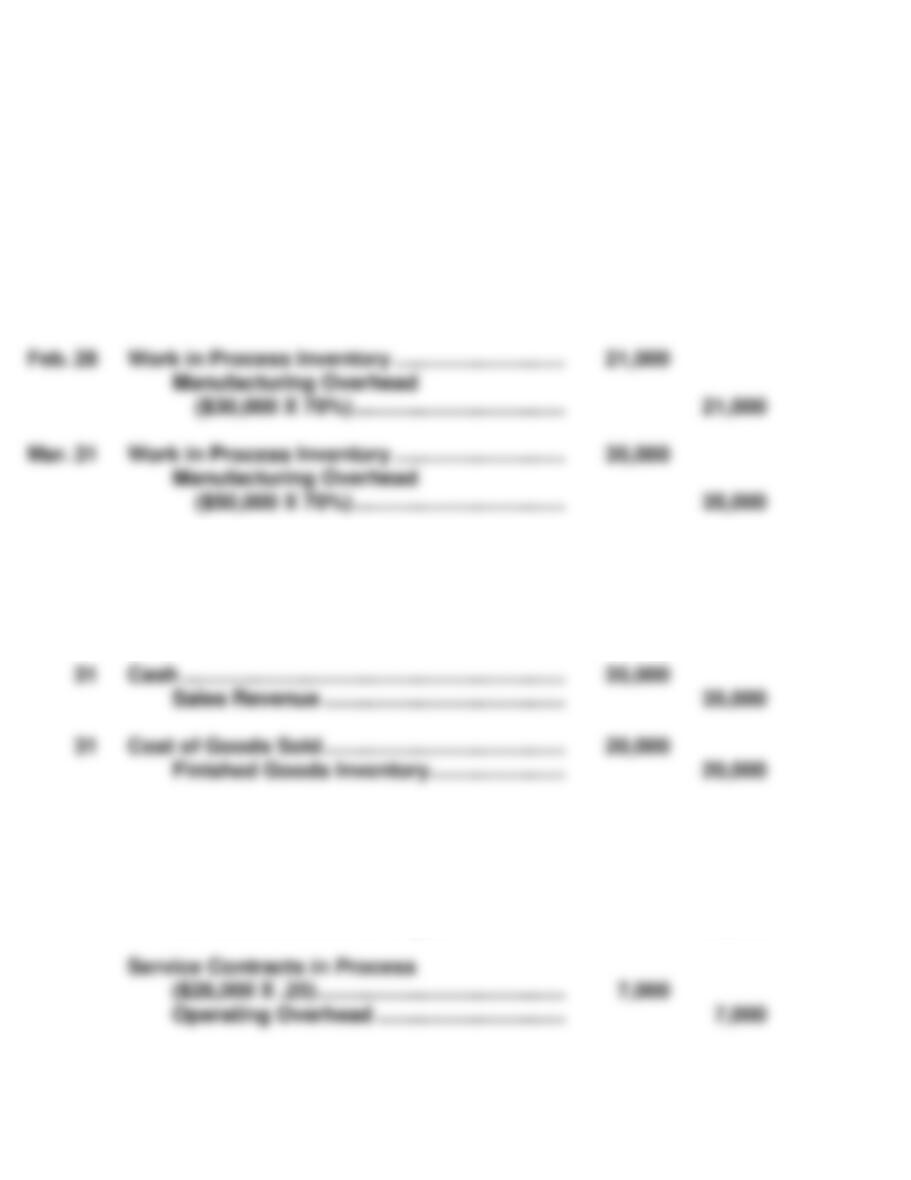
Jan. 31 Work in Process Inventory ……………………….. 28,000
Manufacturing Overhead
($40,000 X 70%) ……………………………… 28,000
BRIEF EXERCISE 2-8
Mar. 31 Finished Goods Inventory ………………………… 50,000
Work in Process Inventory …………………. 50,000
BRIEF EXERCISE 2-9
Service Contracts in Process ……………………. 28,000
Operating Overhead …………………………………. 8,000
Service Salaries and Wages ………………. 36,000
BRIEF EXERCISE 2-10
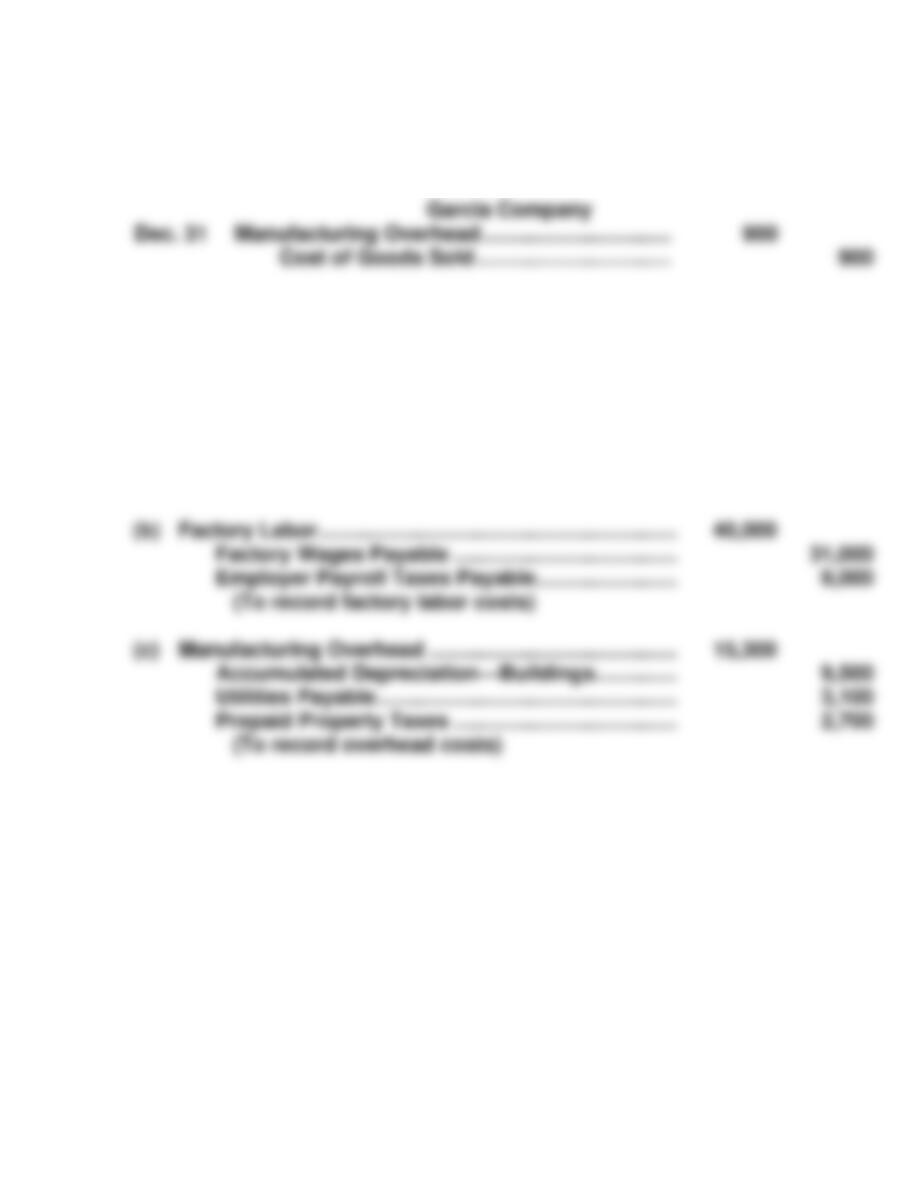
Shimeca Company
Dec. 31 Cost of Goods Sold ………………………………….. 1,200
Manufacturing Overhead …………………… 1,200
Garcia Company
SOLUTIONS FOR DO IT! REVIEW EXERCISES
DO IT! 2-1
(a) Raw Materials Inventory …………………………………….. 18,000
Accounts Payable ……………………………………….. 18,000
(Purchases of raw materials on account)
DO IT! 2-2
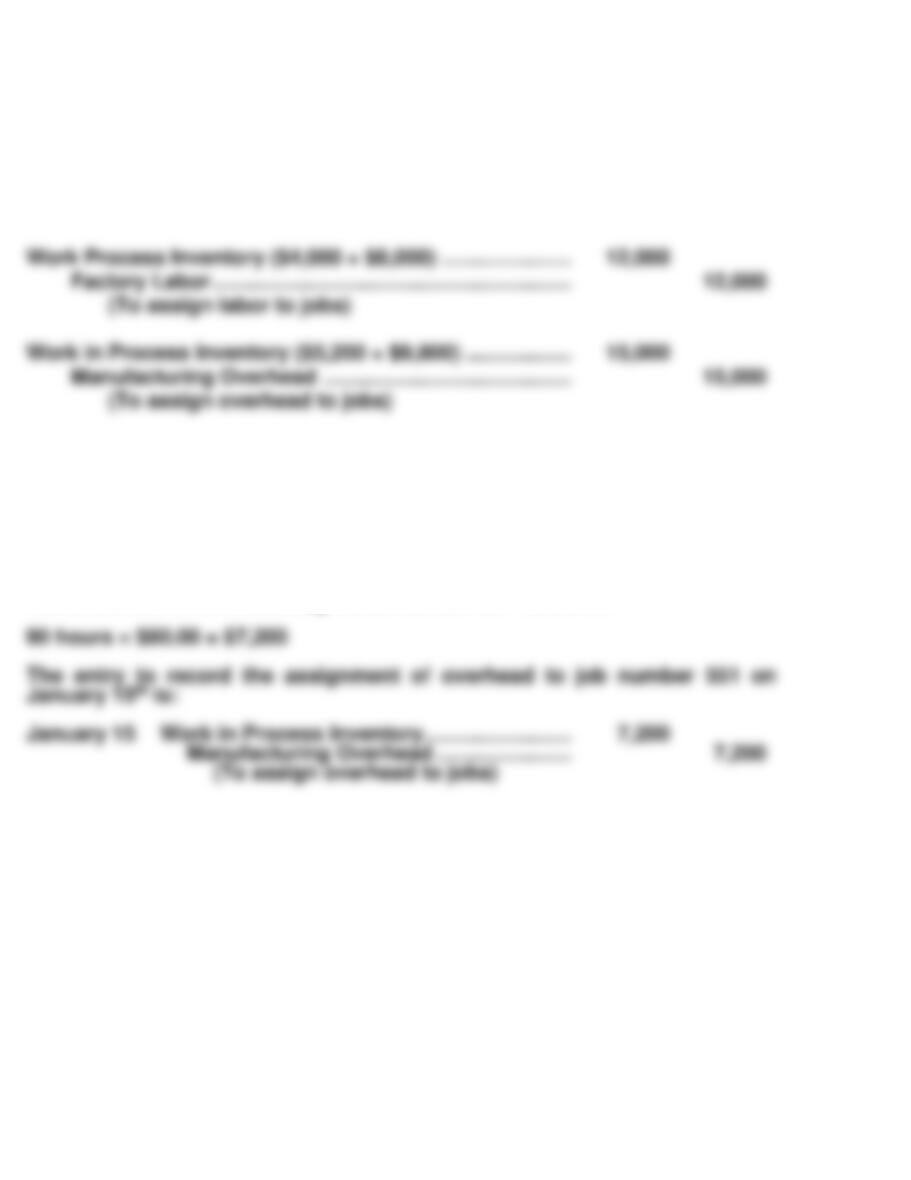
The three summary entries are:
Work in Process Inventory ($7,200 + $9,000) ……………… 16,200
Raw Materials Inventory …………………………………….. 16,200
(To assign materials to jobs)
DO IT! 2-3
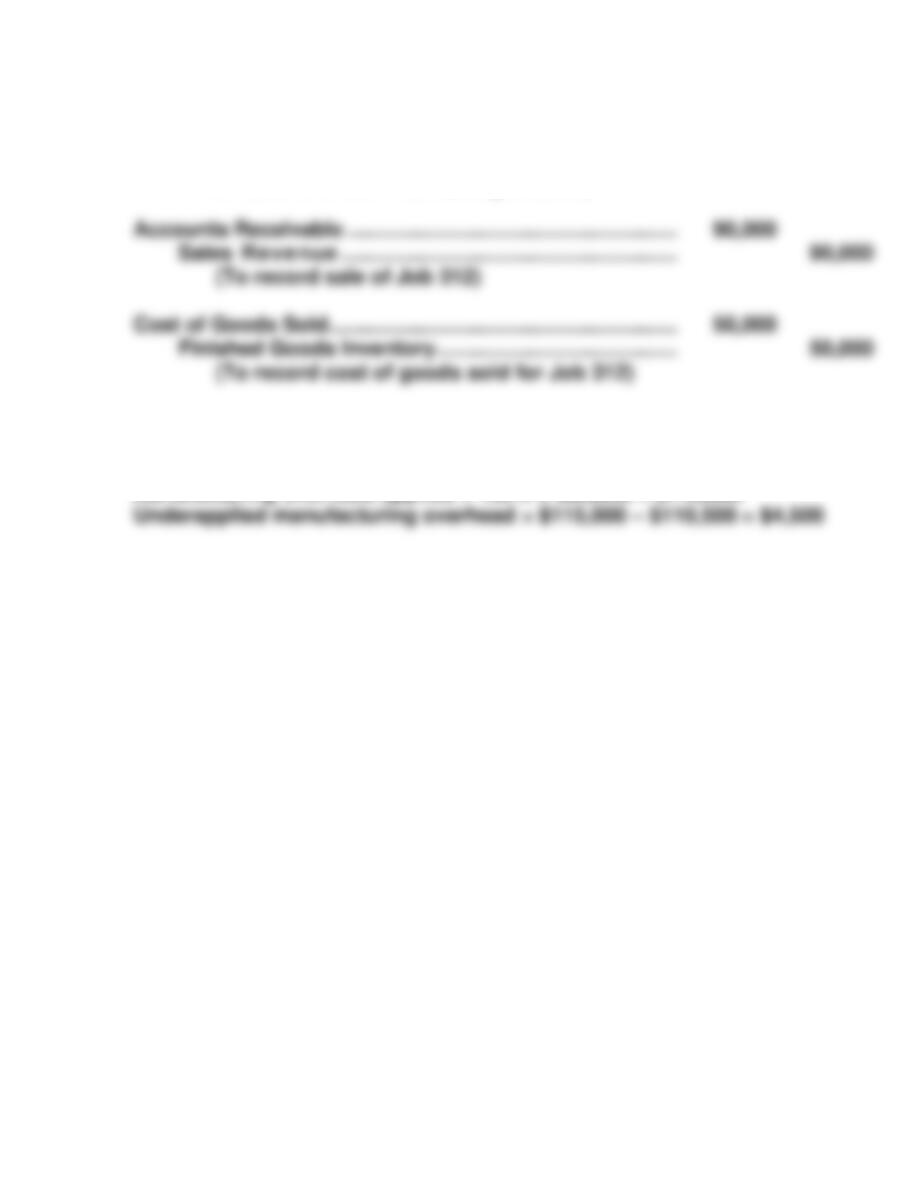
The predetermined overhead for Washburn Company is:
$200,000 2,500 hours = $80.00
The amount of overhead assigned to number 551 would be:
DO IT! 2-4
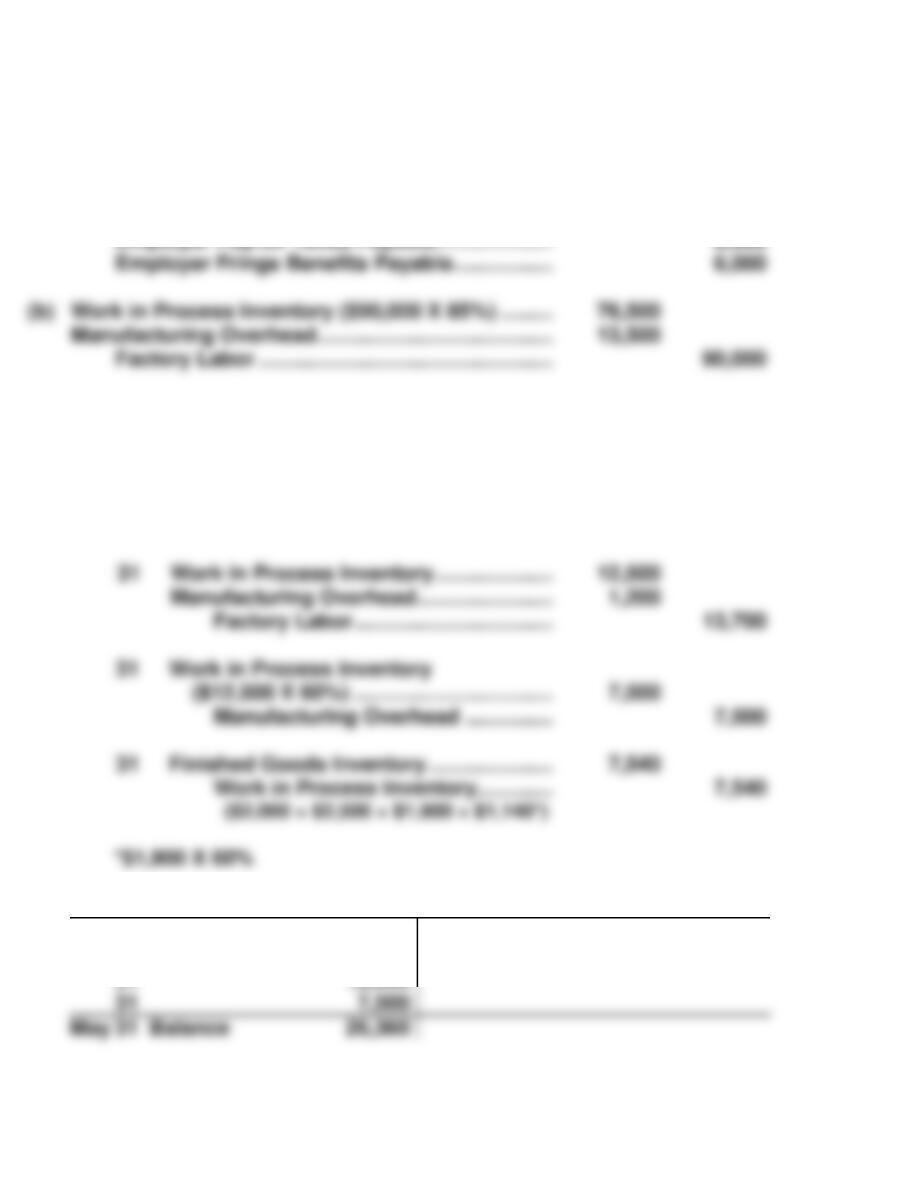
Finished Goods Inventory ………………………………………… 120,000
Work in Process Inventory …………………………………. 120,000
(To record completion of Job 310, costing
$70,000 and Job 312, costing $50,000)
DO IT! 2-5
Manufacturing overhead applied = 130% X $85,000 = $110,500
SOLUTIONS TO EXERCISES
EXERCISE 2-1
(a) Factory Labor …………………………………………………. 90,000
Factory Wages Payable ……………………………. 76,000
EXERCISE 2-2
(a) May 31 Work in Process Inventory ……………….. 10,400
Manufacturing Overhead ………………….. 800
Raw Materials Inventory ……………. 11,200
(b)
Work in Process Inventory
May 1 Balance 3,500
31 10,400
31 12,500
May 31 7,540
EXERCISE 2-2 (Continued)
Job Cost Sheets
Job
No.
Beginning Work
in Process
Direct
Material
Direct
Labor
Manufacturing*
Overhead
Total
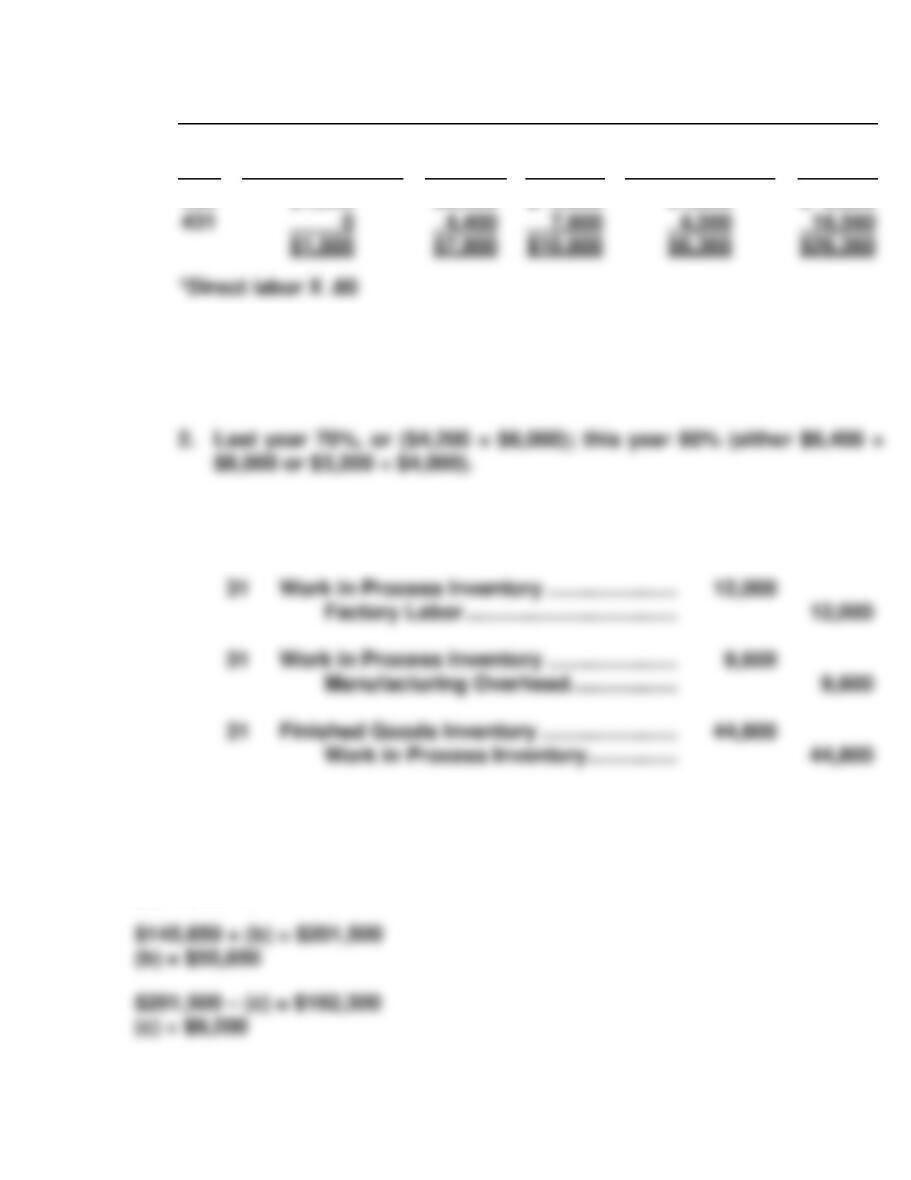
430
$1,500
$3,500
$ 3,000
$1,800
$ 9,800
EXERCISE 2-3
(a) 1. $15,200, or ($5,000 + $6,000 + $4,200).
(b) Jan. 31 Work in Process Inventory …………………. 8,000
Raw Materials Inventory ………………. 8,000
EXERCISE 2-4
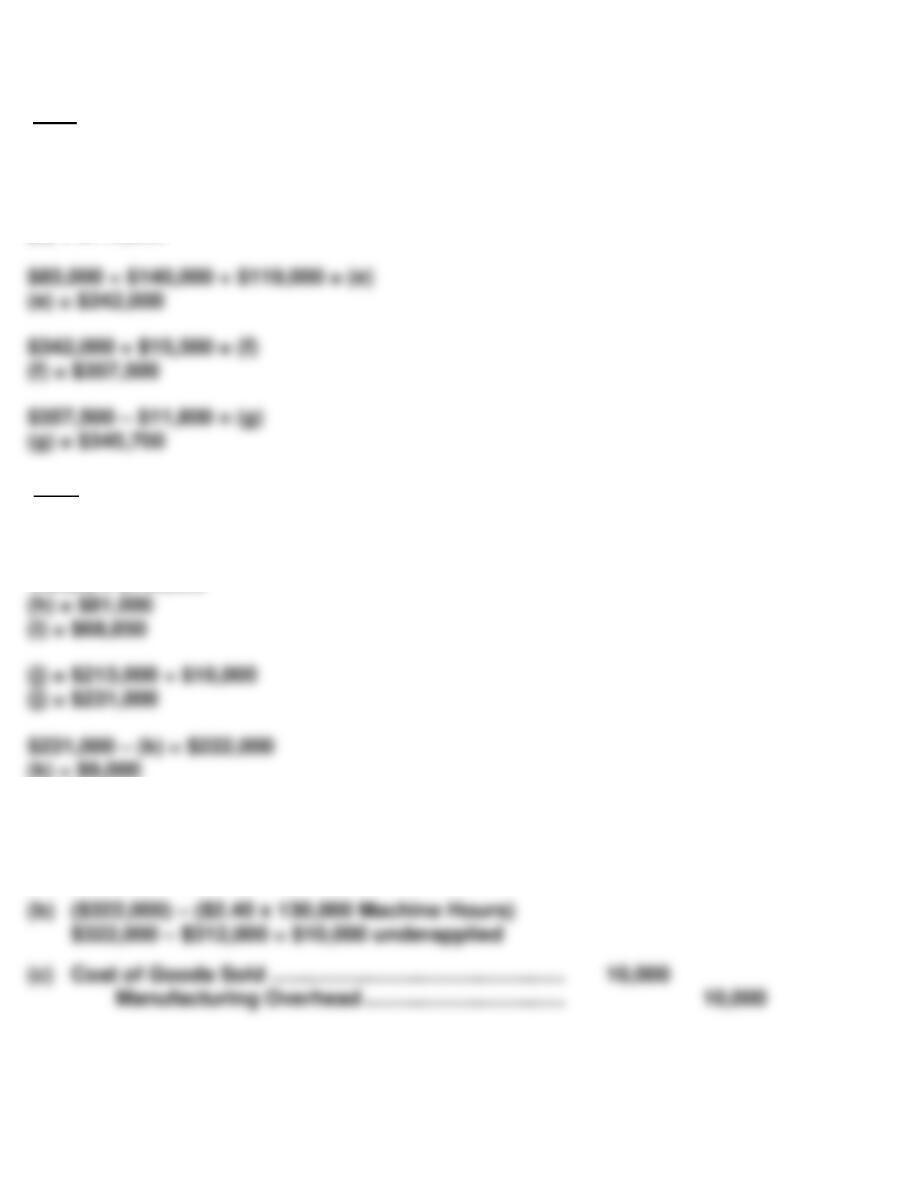
(a) + $50,000 + $42,500 = $145,650
(a) = $53,150
EXERCISE 2-4 (Continued)
[Note: The instructions indicate that manufacturing overhead is applied on the
basis of direct labor cost, and the rate is the same in all cases. From Case A,
a student should note the overhead rate to be 85%, or ($42,500 ÷ $50,000).]
(d) = .85 X $140,000
(d) = $119,000
[Note: (h) and (i) are solved together.]
(i) = .85(h)
$63,150 + (h) + .85(h) = $213,000
1.85(h) = $149,850
(k) = $9,000
EXERCISE 2-5
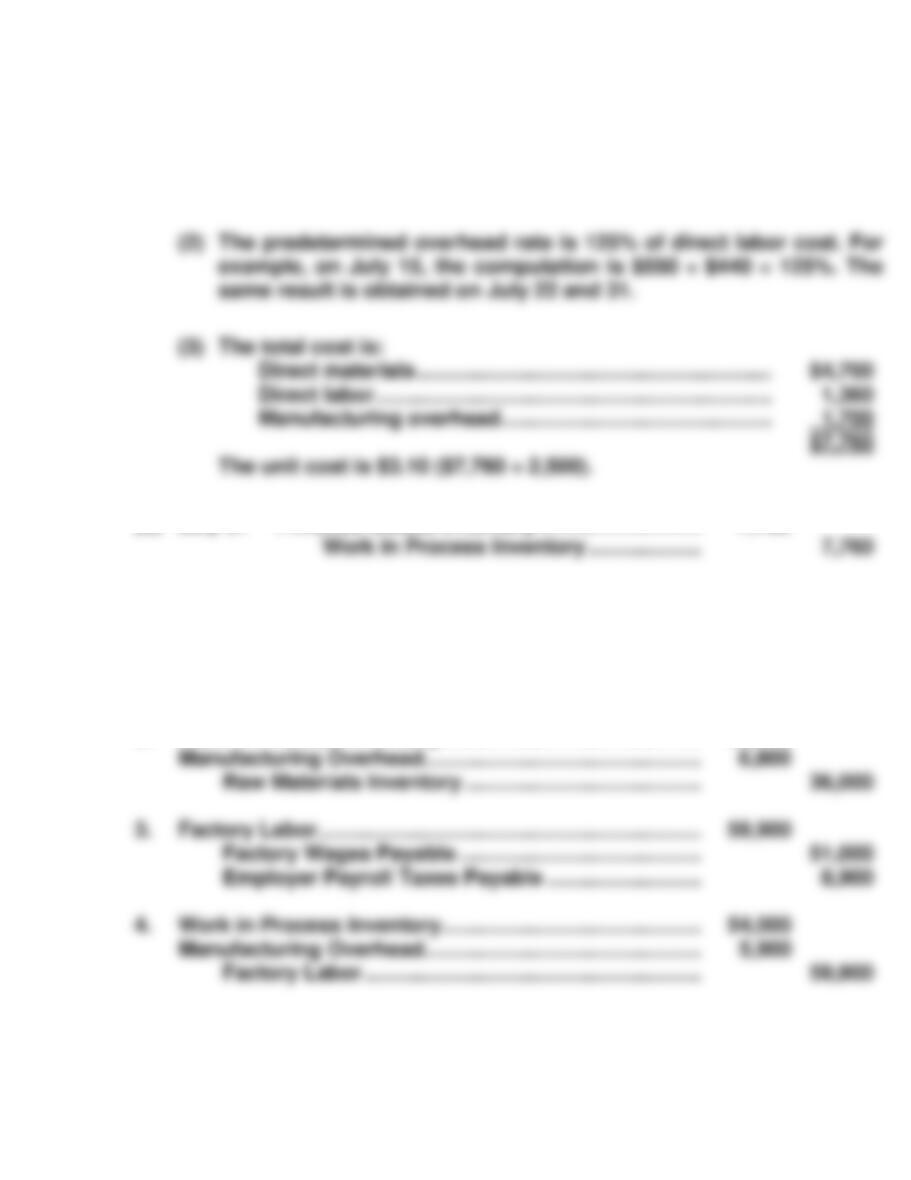
(a) $2.40 per machine hour ($300,000 ÷ 125,000 MH).
EXERCISE 2-6
(a) (1) The source documents are:
Direct materials—Materials requisition slips.
Direct labor—Time tickets.
Manufacturing overhead—Predetermined overhead rate.
(b) July 31 Finished Goods Inventory ………………………. 7,760
EXERCISE 2-7
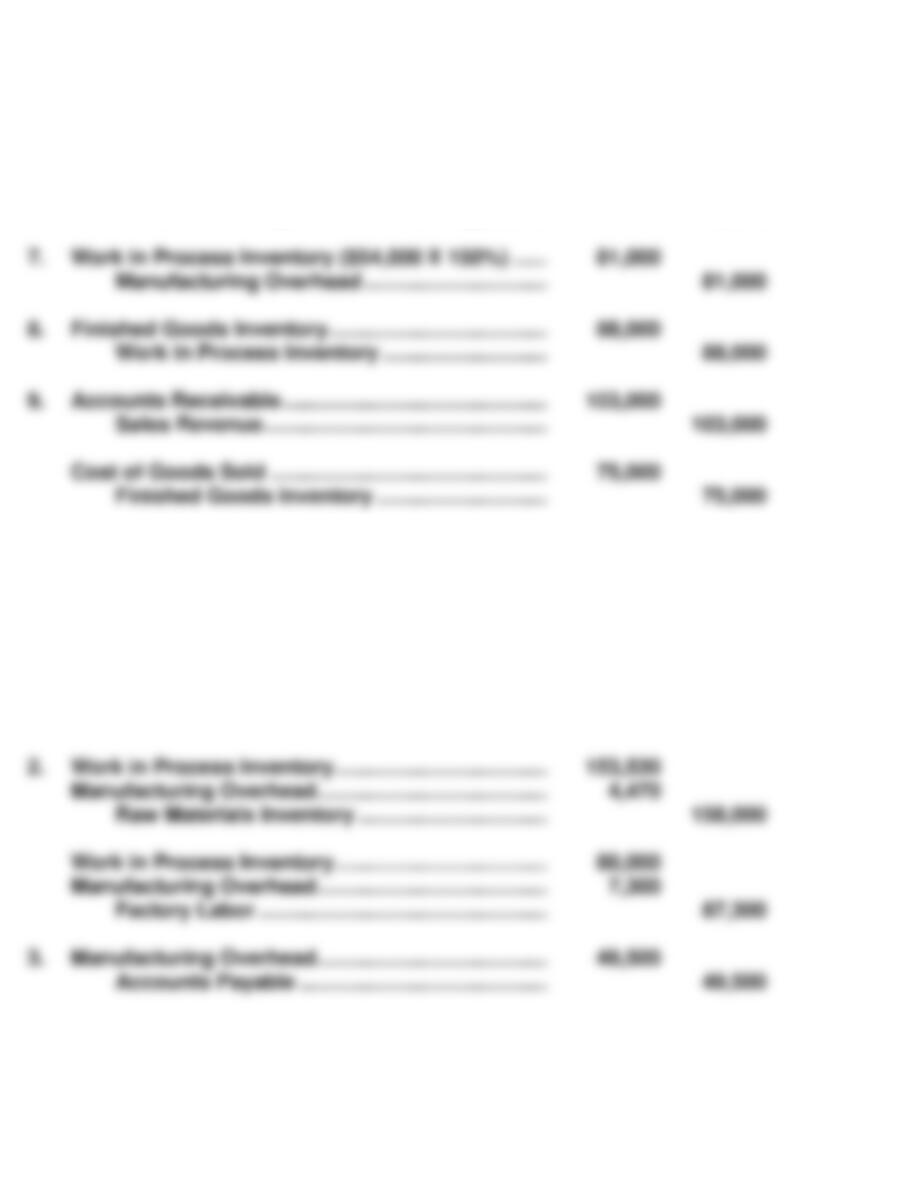
1. Raw Materials Inventory ………………………………………… 46,300
Accounts Payable ………………………………………….. 46,300
2. Work in Process Inventory …………………………………….. 29,200
EXERCISE 2-7 (Continued)
5. Manufacturing Overhead ………………………………… 80,500
Accounts Payable …………………………………… 80,500
6. Depreciation Expense ……………………………………. 8,100
Accumulated Depreciation—Building ……….. 8,100
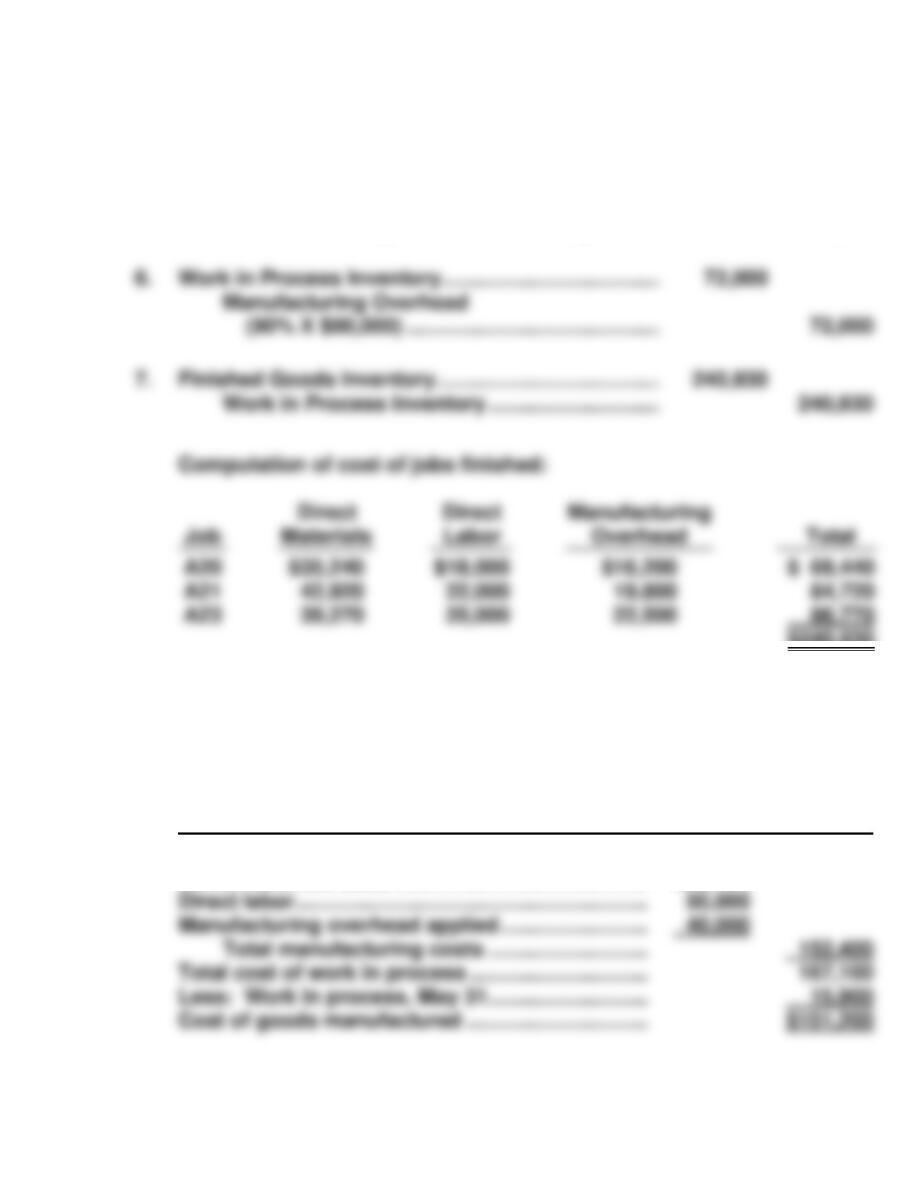
EXERCISE 2-8
1. Raw Materials Inventory …………………………………. 192,000
Accounts Payable …………………………………… 192,000
Factory Labor …………………………..……………………. 87,300
Factory Wages Payable …………………………... 87,300
EXERCISE 2-8 (Continued)
4. Manufacturing Overhead ………………………………… 14,550
Accumulated Depreciation—Equipment …… 14,550
5. Depreciation Expense …………………………………….. 14,300
Accumulated Depreciation—Building ……….. 14,300
$240,930
EXERCISE 2-9
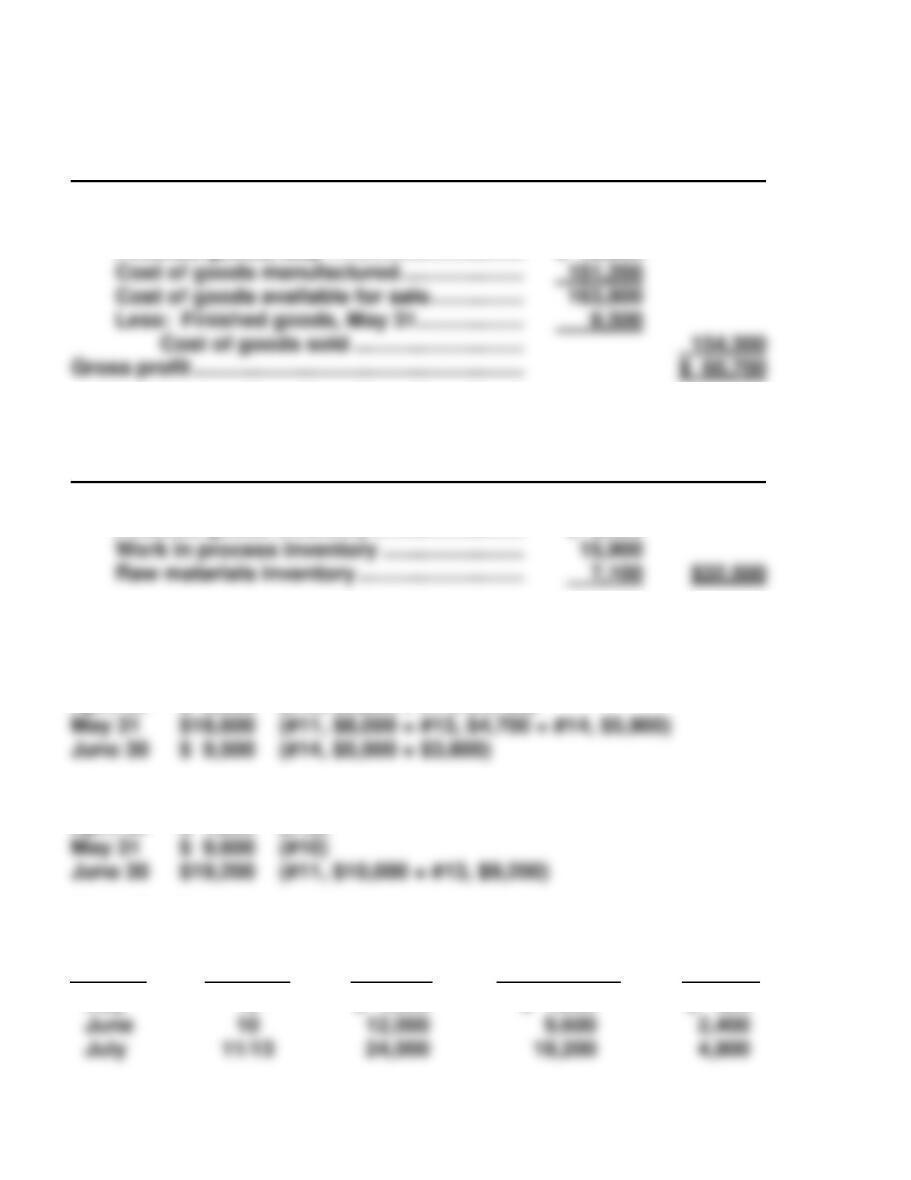
(a) LOPEZ COMPANY
Cost of Goods Manufactured Schedule
For the Month Ended May 31, 2017
Work in process, May 1 …………………………………. $ 14,700
Direct materials used ……………………………………. $62,400
EXERCISE 2-9 (Continued)
(b) LOPEZ COMPANY
(Partial) Income Statement
For the Month Ended May 31, 2017
Sales revenue …………………………………………….. $215,000
Cost of goods sold
Finished goods, May 1 …………………………. $ 12,600
(c) LOPEZ COMPANY
(Partial) Balance sheet
May 31, 2017
Current assets:
Finished goods inventory …………………….. $ 9,500
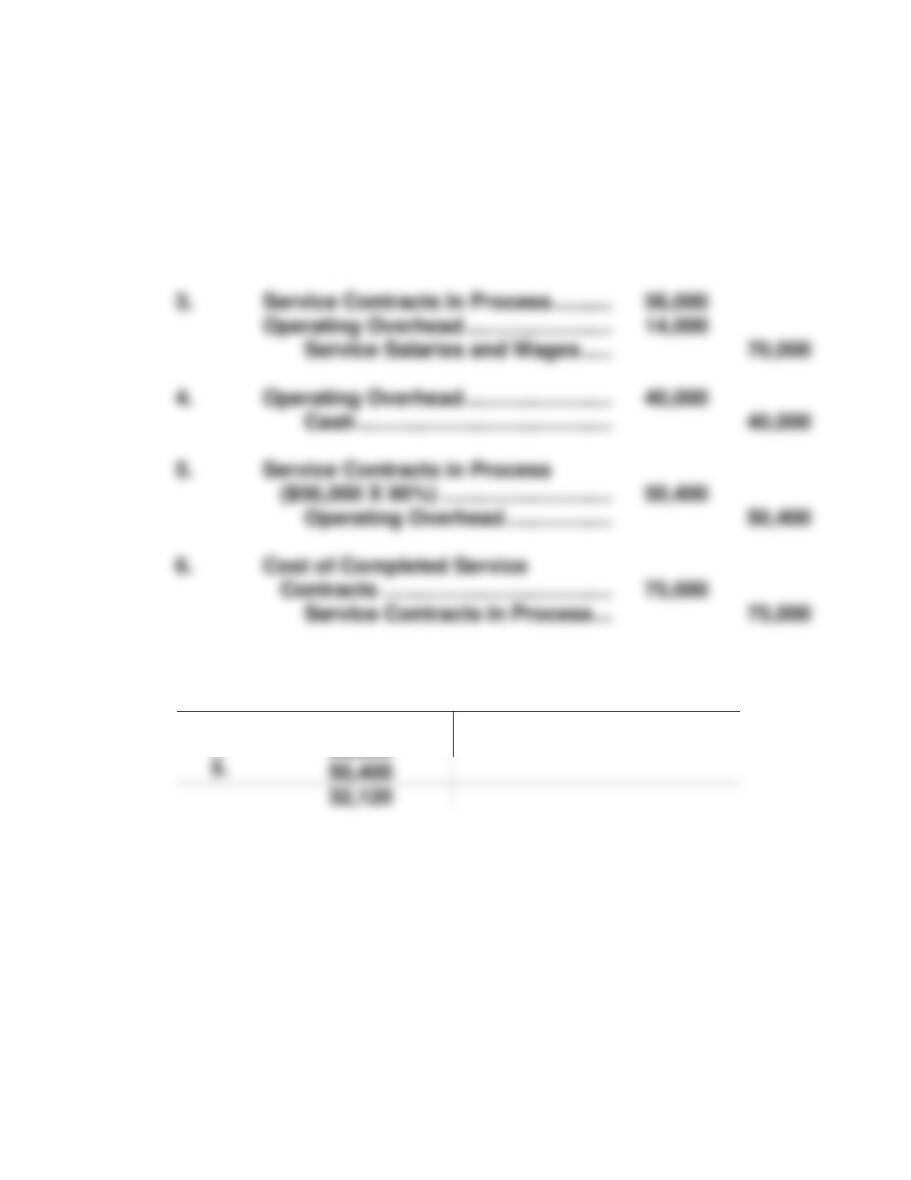
EXERCISE 2-10
(a) Work in Process Inventory
April 30 $ 9,300 (#10, $5,200 + #11, $4,100)
(b) Finished Goods Inventory
April 30 $ 1,200 (#12)
(c) Gross Profit
Month
Job
Number
Sales
Cost of
Goods Sold
Gross
Profit
May
12
$ 1,500
$ 1,200
$ 300
EXERCISE 2-11
(a)
1.
Supplies ……………………………………..
1,800
Accounts Payable …………………
1,800
2.
Service Contracts in Process ……….
720
Operating Overhead …………………….
480
Supplies ……………………………….
1,200
(b)
Service Contracts in Process
2.
720
75,000
(6)
3.
56,000
5.
50,400
32,120
3.
Service Contracts in Process ……….
Operating Overhead …………………….
Service Salaries and Wages …..
4.
Operating Overhead …………………….
Cash …………………………………….
($56,000 X 90%) ………………………..
Operating Overhead ………………
Contracts …………………………..…….
Service Contracts in Process …
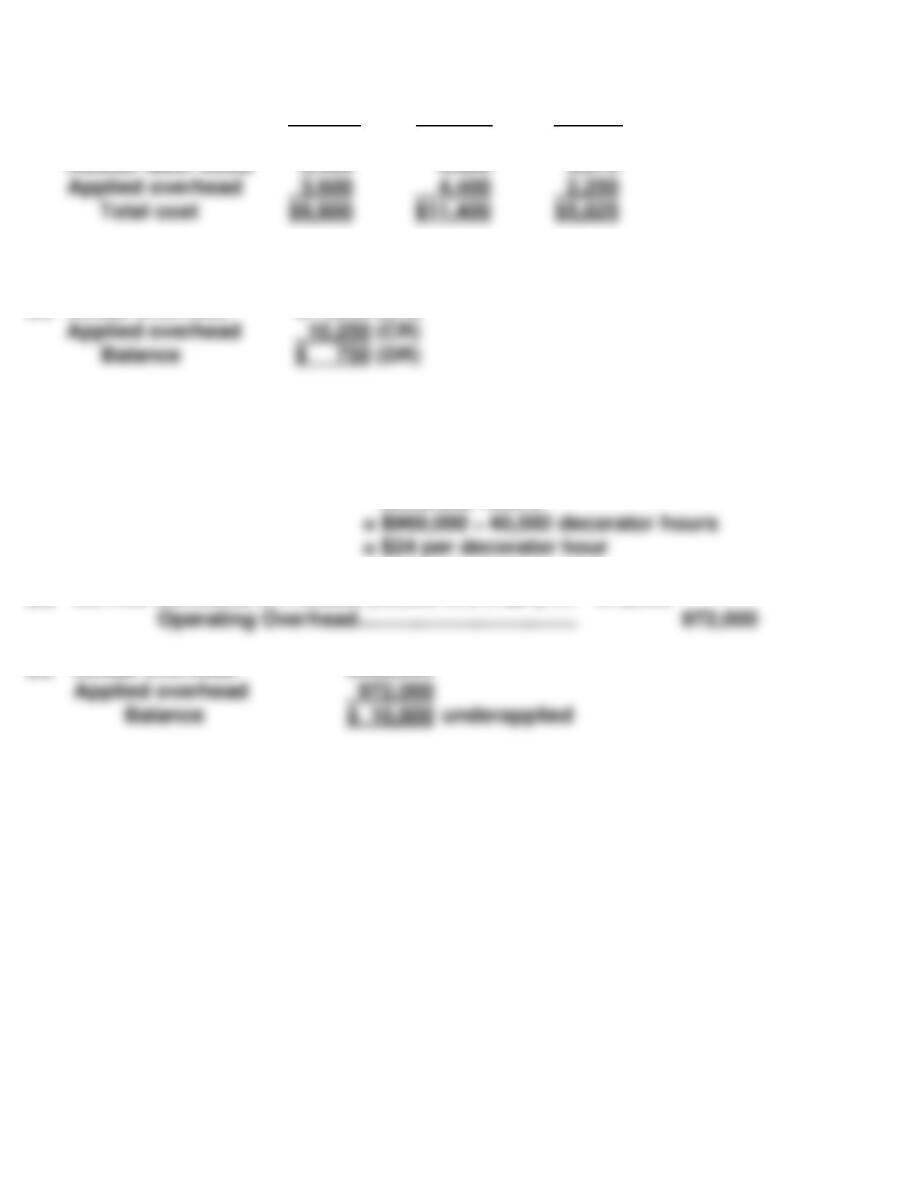
EXERCISE 2-12
(a)
Lynn
Brian
Mike
Direct materials
$ 600
$ 400
$ 200
(b) The Lynn job is the only incomplete job, therefore, $9,600.
(c) Actual overhead
$11,000 (DR)
Applied overhead
Balance
$ 750 (DR)
EXERCISE 2-13
(a) Predetermined overhead rate = Estimated overhead ÷ Estimated
decorator hours
(b) Service Contracts in Process (40,500 hrs X $24) …..
972,000
Operating Overhead ……………………………….
(c)
Actual overhead
$982,800
Balance
underapplied
Auditor labor costs
Applied overhead
4,400
Total cost
$9,600
$11,400
$5,825
SOLUTIONS TO PROBLEMS
PROBLEM 2-1A
(a) $840,000 ÷ $700,000 direct labor costs = 120% of direct labor costs
(c) Raw Materials Inventory …………………………………….. 90,000
Accounts Payable ………………………………………. 90,000
(d) Work in Process Inventory …………………………………. 79,000
Raw Materials Inventory
($10,000 + $39,000 + $30,000) …………………… 79,000
PROBLEM 2-1A (Continued)
(b)&(e) Job Cost Sheets
Job No. 50
Date
Direct Materials
Direct Labor
Manufacturing Overhead
Beg.
$20,000
$12,000
*$16,000*
Job No. 51
Date
Direct Materials
Direct Labor
Manufacturing Overhead
Jan.
$39,000
$25,000
$39,000
$25,000
**$30,000**
Direct labor …………………………………………………………… 25,000
Manufacturing overhead ……………………………………….. 30,000
Total cost …………………………..……………………………………….. $94,000
Cost of completed job
Direct materials …………………………………………………….. $39,000
Job No. 52
Date
Direct Materials
Direct Labor
Manufacturing Overhead
Jan.
$30,000
$20,000
***$24,000***
$30,000
$17,000
Total cost …………………………..……………………………………….. $69,000
PROBLEM 2-1A (Continued)
Finished Goods Inventory ……………………………….. 163,000
(f) Accounts Receivable ………………………………………. 280,000
Sales Revenue ($122,000 + $158,000) ………… 280,000
(g)
Finished
Goods Inventory
Beginning balance
90,000
159,000
Cost of jobs 49 and 50 sold
(h)
Manufacturing Overhead
Actual
Applied
PROBLEM 2-2A
(a)
Work in Process Inventory
1/1 Balance (1) 128,400
Direct materials (2) 131,000
Direct labor (3) 139,000
Manufacturing overhead (4) 166,800
Completed work (5) (c) 386,200
12/31 Balance 179,000
(1)
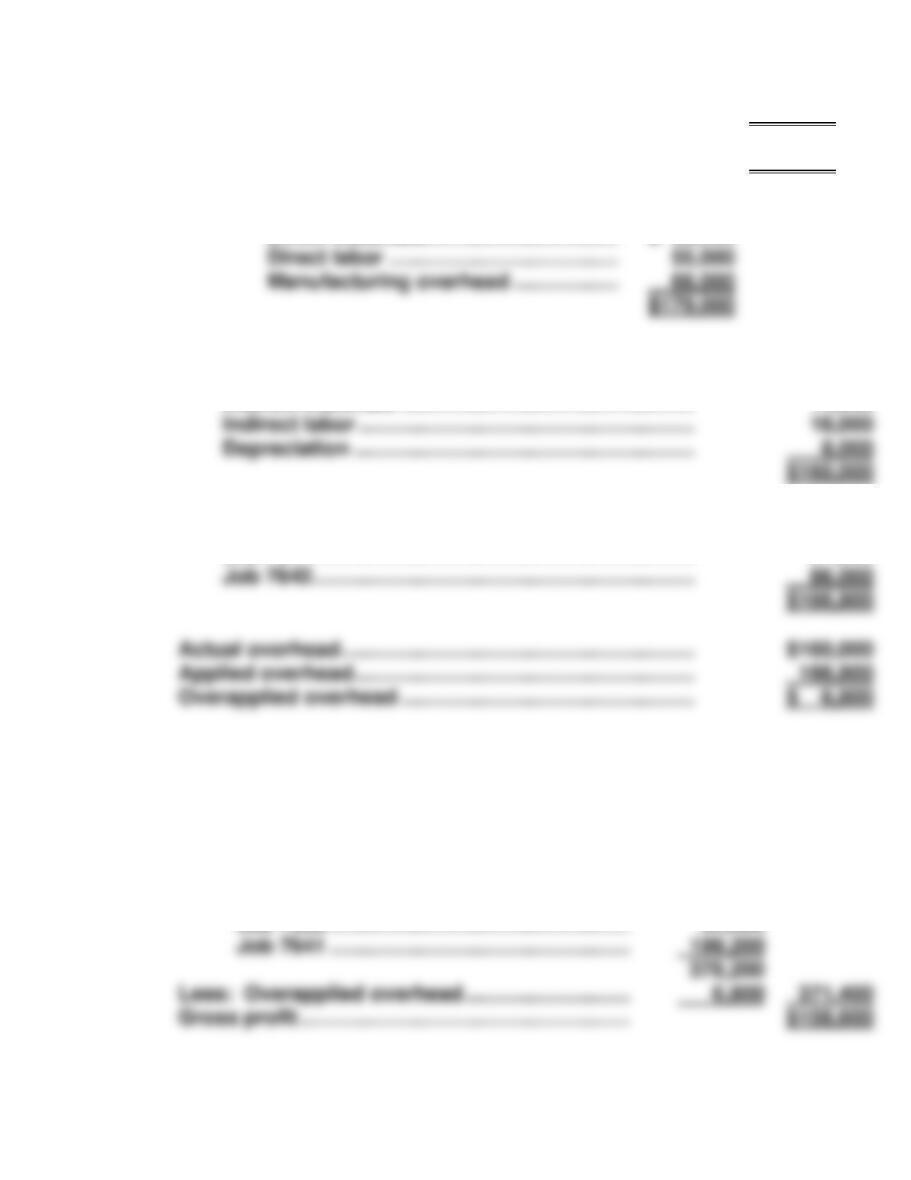
Job 7640
$ 77,800
(3)
Job 7640
$ 36,000
(2)
Job 7640
Job 7641
$ 30,000
43,000
(4)
Job 7640
Job 7641
$ 43,200
57,600
(5) (a) Job 7640
Beginning balance ………………………………………… $ 77,800
Direct materials …………………………………………….. 30,000
(b) Job 7641
Beginning balance ………………………………………… $ 50,600
(c) Total cost of completed work
Job 7640 ………………………………………………………. $187,000
PROBLEM 2-2A (Continued)
Work in process balance ………………………………………. $179,000
Unfinished job No. 7642 ……………………………………….. $179,000 (a)
(a) Current year’s cost
Direct materials…………………………... $ 58,000
(b) Actual overhead costs
Incurred on account …………………………..………….. $120,000
Indirect materials ………………………………………….. 14,000
Applied overhead costs
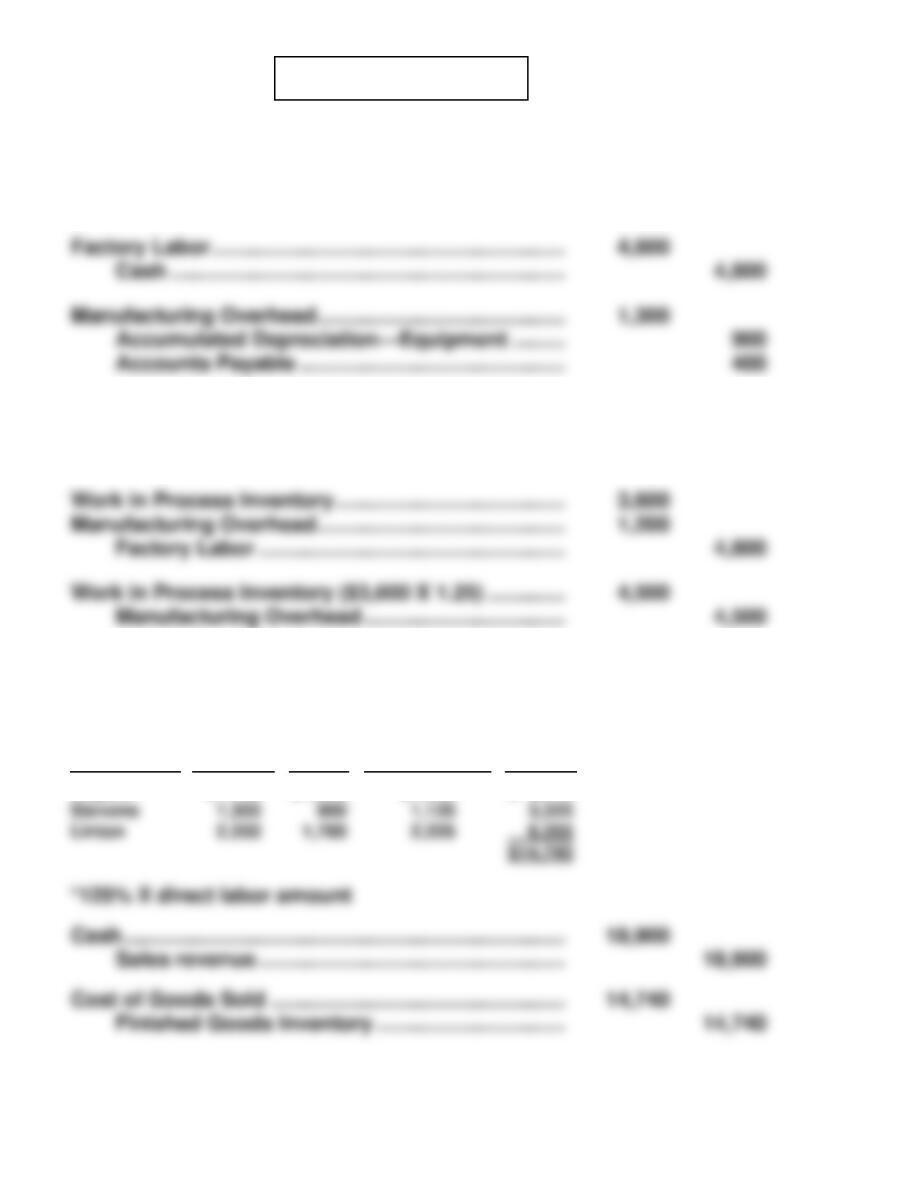
Job 7640……………………………………………………….. $ 43,200
Job 7641……………………………………………………….. 57,600
Manufacturing Overhead ………………………………………. 6,800
Cost of Goods Sold ……………………………………….. 6,800
(c) Sales revenue (given) …………………………………. $530,000
Cost of goods sold
Add: Job 7638 …………………………………………… $ 87,000
Job 7639 …………………………………………… 92,000
PROBLEM 2-3A
(a)
(1) Raw Materials Inventory ……………………………………. 4,900
Accounts Payable ……………………………………… 4,900
(2) Work in Process Inventory ………………………………… 4,900
Manufacturing Overhead …………………………………… 1,500
Raw Materials Inventory …………………………….. 6,400
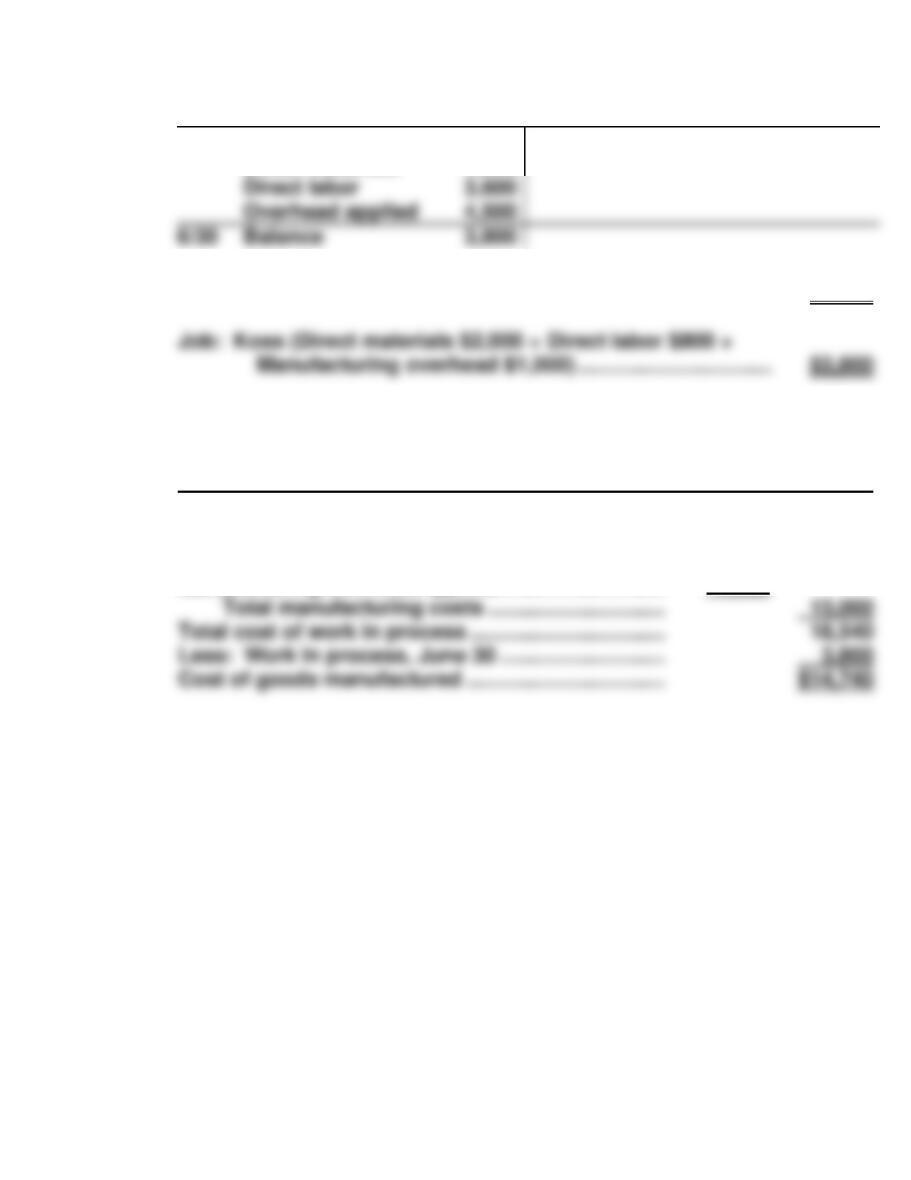
(3) Finished Goods Inventory …………………………………. 14,740
Work in Process Inventory …………………………. 14,740
Job
Direct
Materials
Direct
Labor
Manufacturing
Overhead*
Total
Costs
Linton
6,205
Rogers
$1,700
$1,560
$1,950
$ 5,210
PROBLEM 2-3A (Continued)
(b)
Work in Process Inventory
6/1 Balance 5,540
Direct materials 4,900
June Completed work 14,740
(c) Work in Process Inventory ……………………………………………….. $3,800
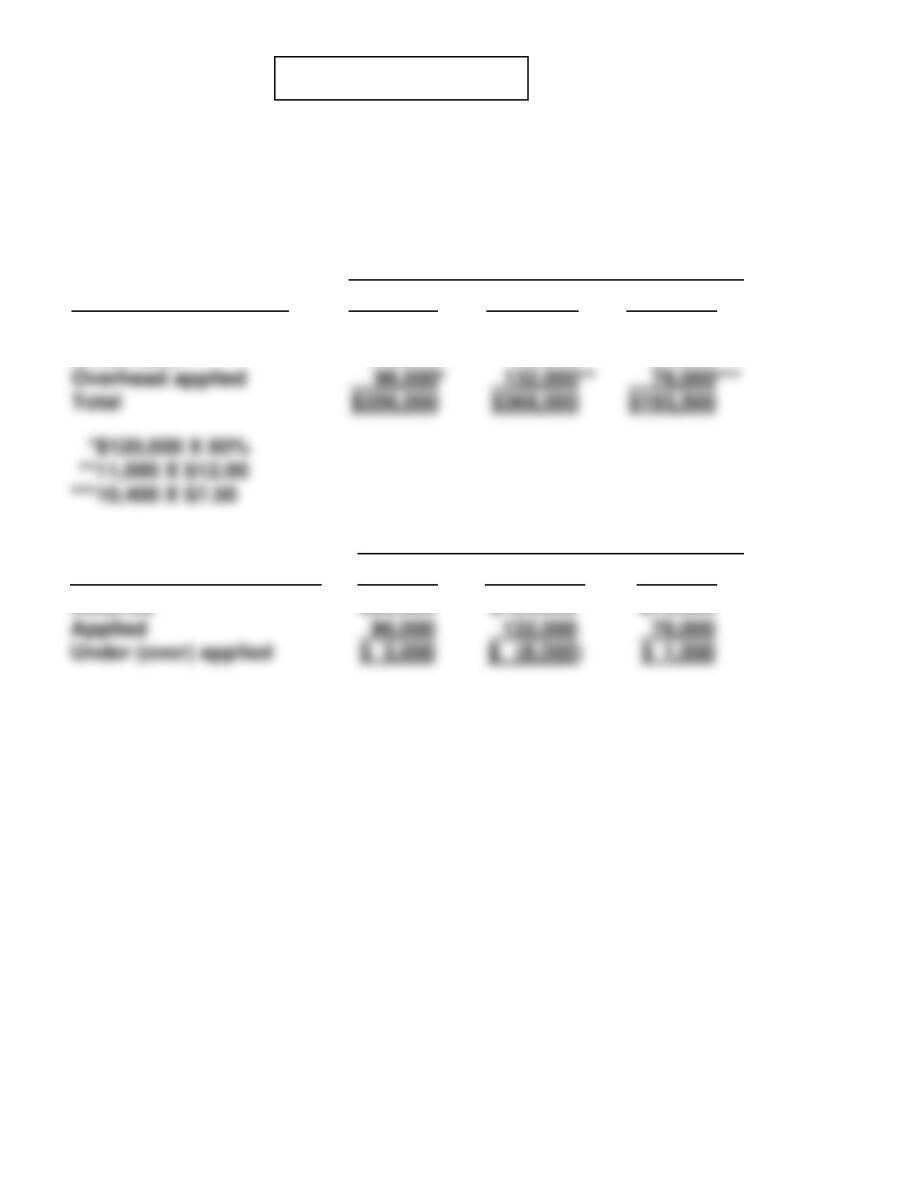
(d) CASE INC.
Cost of Goods Manufactured Schedule
For the Month Ended June 30, 2017
Work in process, June 1…………………………………… $ 5,540
Direct materials used ………………………………………. $4,900
Direct labor ……………………………………………………… 3,600
Manufacturing overhead applied ………………………. 4,500
PROBLEM 2-4A
(a) Department D: $1,200,000 ÷ $1,500,000 = 80% of direct labor cost.
Department E: $1,500,000 ÷ 125,000 = $12.00 per direct labor hour.
Department K: $900,000 ÷ 120,000 = $7.50 per machine hour.
(b)
Department
Manufacturing Costs
D
E
K
Direct materials
Direct labor
$140,000
120,000
$126,000
110,000
$ 78,000
37,500
(c)
Department
Manufacturing Overhead
D
E
K
Under (over) applied
Incurred
$99,000
$124,000
$79,000
Total
PROBLEM 2-5A
(a) $7,600 ($16,850 + $7,975 – $17,225).
(b) $36,000 [$9,750 + $15,000 + (75% X $15,000)]. (Given in other data).
(c) $13,950 ($16,850 – $2,900).
(d) $6,300 ($8,400 X 75%).
CD2 CURRENT DESIGNS
Cost for one kayak:
Direct Materials
Polyethylene powder 54 pounds @ $1.50 per pound $ 81
Finishing kit 1 kit @ $170 170
Direct Labor
BYP 2-1 DECISION-MAKING ACROSS THE ORGANIZATION
(a) The manufacturing cost element that is responsible for the fluctuating
unit costs is manufacturing overhead. Manufacturing overhead is being
(b) The solution is to apply overhead using a predetermined overhead rate
based on a relevant basis of production activity. Based on actual overhead
incurred and using batches of product TC-1 as the activity base, the
(c) The quarterly results using a predetermined overhead rate based on
batches produced are as follows:
Quarter
Costs
1
2
3
4
Direct materials
Direct labor
Manufacturing overhead
$100,000
60,000
$220,000
132,000
$ 80,000
48,000
$200,000
120,000
BYP 2-2 MANAGERIAL ANALYSIS
1. (a) Work in Process Inventory ……………………….. 25,000
Raw Materials Inventory…………………….. 25,000
(b) Both the income statement and the balance sheet are affected. In the
income statement, Sales Bonus Expense is understated, Income Tax
Expense is overstated, and net income is overstated. The error
causes the underapplied overhead to be overstated or the overapplied
3. (a) Factory Labor ………………………………………….. 120,000
Factory Wages Payable……………………… 102,000
(b) If not corrected, both the income statement and the balance sheet
are affected. On the income statement, Cost of Goods Sold is under-
BYP 2-2 (Continued)
4. (a) Manufacturing Overhead …………………………... 3,000
(b) Both the income statement and balance sheet are affected. If units
that were in process during the month have been sold, then in the
income statement Cost of Goods Sold is overstated, Income Tax
Expense is understated, and net income is understated. This causes
BYP 2-3 REAL-WORLD FOCUS
(a) Candidates for the CMA or CFM Certificate must complete two continuous
years of professional experience in management accounting or financial
(b) CMAs, CFMs, and candidates who have completed the CMA and/or
the CFM examination but have not yet met the experience requirement,
are required to maintain their proficiency in the fields of management
A broad range of subjects may be included in the programs for which
hours of credit will be given. The subjects should be related to the
topics covered on the CMA/CFM examination and/or to an individual’s
BYP 2-4 COMMUNICATION ACTIVITY
Williams Company
Date
Nancy Kopay
123 Cedar Lane
Altoona, Kansas 66651
Dear Ms. Kopay:
Thank you for your prompt payment! I am very glad that you found the cost
information helpful.
Thank you also for your questions about our overhead costs. We do try to
provide our customers with as much information as possible, but we cannot
give detailed information on overhead costs. The cost of providing such
information is prohibitive.

BYP 2-4 (Continued)
I hope this answers some of your questions. I’m glad you are interested in
BYP 2-5 ETHICS CASE
(a) The stakeholders in this situation are:
Alice Reiley, controller for LRF Printing.
The president of LRF Printing.
The customers of LRF Printing.
The competitors of LRF Printing.
BYP 2-6 ALL ABOUT YOU
(a) Your chances of success in small business are increased if you have
the following characteristics: You are a self-starter, you get along with
many different kinds of people, you are good at making decisions, you
(b) The top ten reasons why businesses fail as cited in the books Small
Business Management by Michael Ames, and The Do it Yourself
Business Book by Gustav Berle are:
1. Lack of experience
2. Insufficient capital (money)
3. Poor location
BYP 2-7 CONSIDERING YOUR COSTS AND BENEFITS
Discussion guide: The situation presented is a difficult one because you are
presently receiving some help for free. It would seem that the best strategy
is to price your services based on what it would cost you to do the landscape
business without any free help. In the long run, it is going to be impossible
to continue unless you can cover these costs. In addition, if you underprice
So what to do? Let’s address your old truck first. You should treat the truck
as an asset owned by your business. Put it on your books at its fair value,
and depreciate it over a reasonable life. This will result in an overhead
charge. You need to cover the cost of that truck, as you will have to buy
another one some day. The land, barn, and your mother’s services are a little