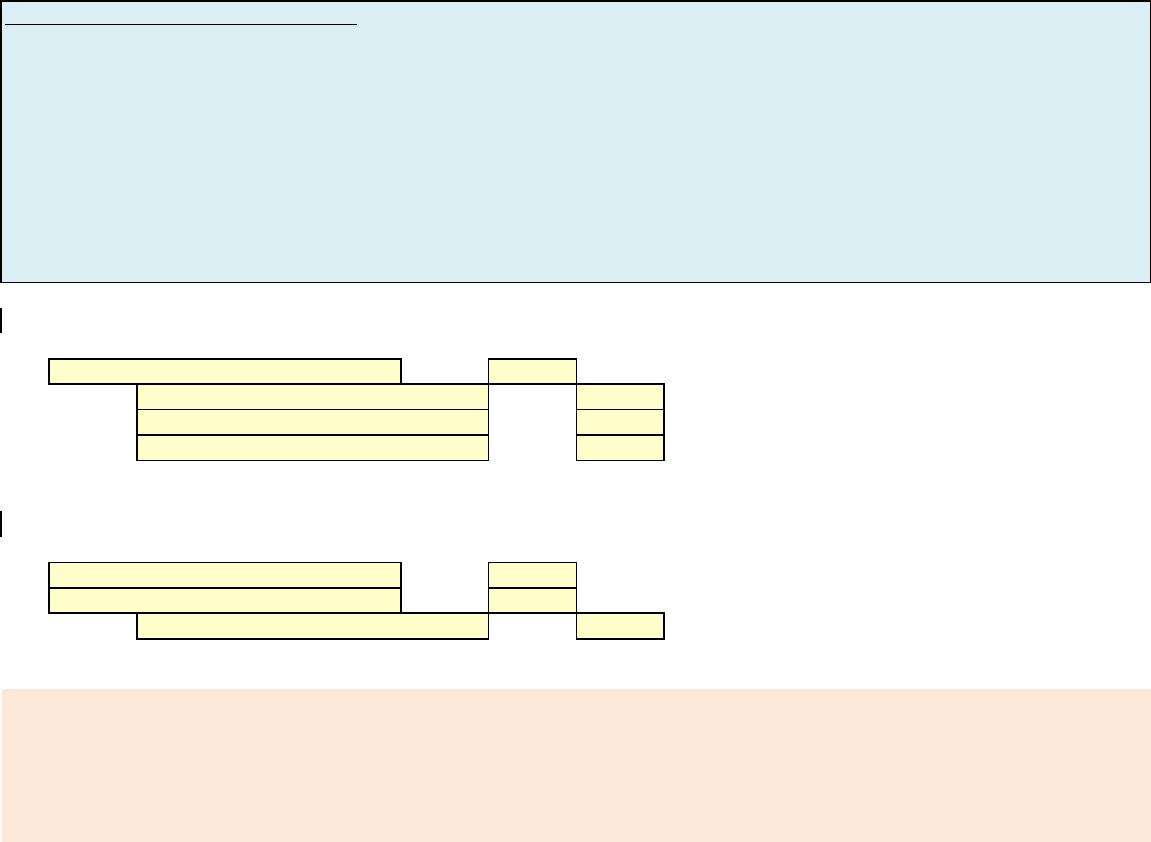
E2-1 Prepare entries for factory labor
The gross earnings of the factory workers for Larkin Company during the month of January are $76,000.
The employer’s payroll taxes for the factory payroll are $8,000. The fringe benefits to be paid by the employer
on this payroll are $6,000. Of the total accumulated cost of factory labor, 85% is related to direct labor and
15% is attributable to indirect labor.
Instructions
(a)
Prepare the entry to record the factory labor costs for the month of January
(b) Prepare the entry to assign the factory labor to production.
NOTE: Enter a number in cells requesting a value; enter either a number or a formula in cells with a “?” .
(a)
Prepare the entry to record the factory labor costs for the month of January
Value Value
Value
Value
(b) Prepare the entry to assign the factory labor to production.
?
?Value
After you have completed E2-1, consider the following additional question.
1. Assume that factory wages changed and employer’s payroll taxes changed to $78,000 and $9,360 respectively.
Also assume that 80% of total labor costs is related to direct labor. Revise the journal entries to reflect these
changes.
Account
Account
Account
Account
Account
Account
Account
Factory labor
Manufacturing Overhead
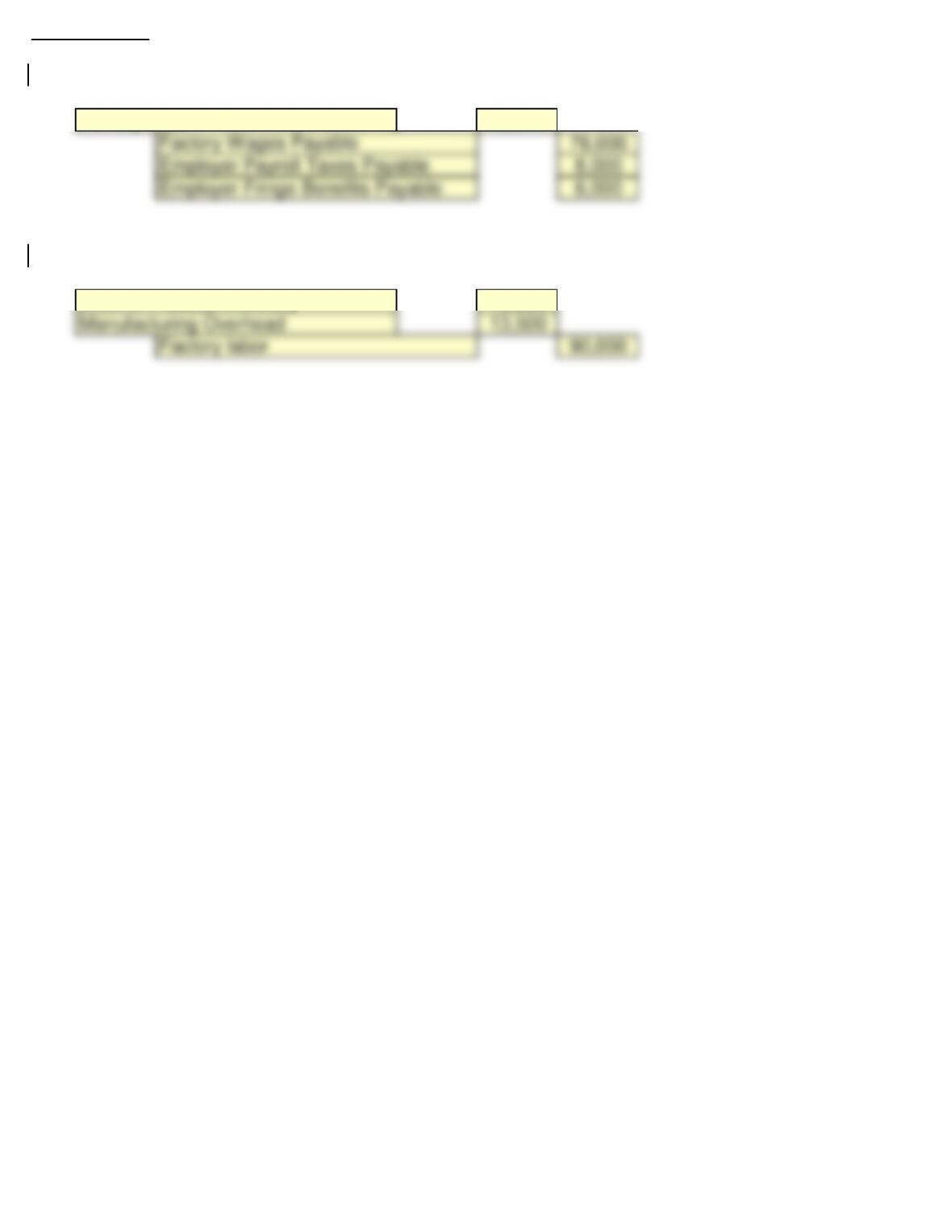
E2-1 Solution
(a) Prepare the entry to record the factory labor costs for the month of January
90,000 76,000
(b) Prepare the entry to assign the factory labor to production.
76,500
Factory labor
Work in Process Inventory
Factory Wages Payable
Employer Payroll Taxes Payable
Employer Fringe Benefits Payable
Factory labor
Manufacturing Overhead
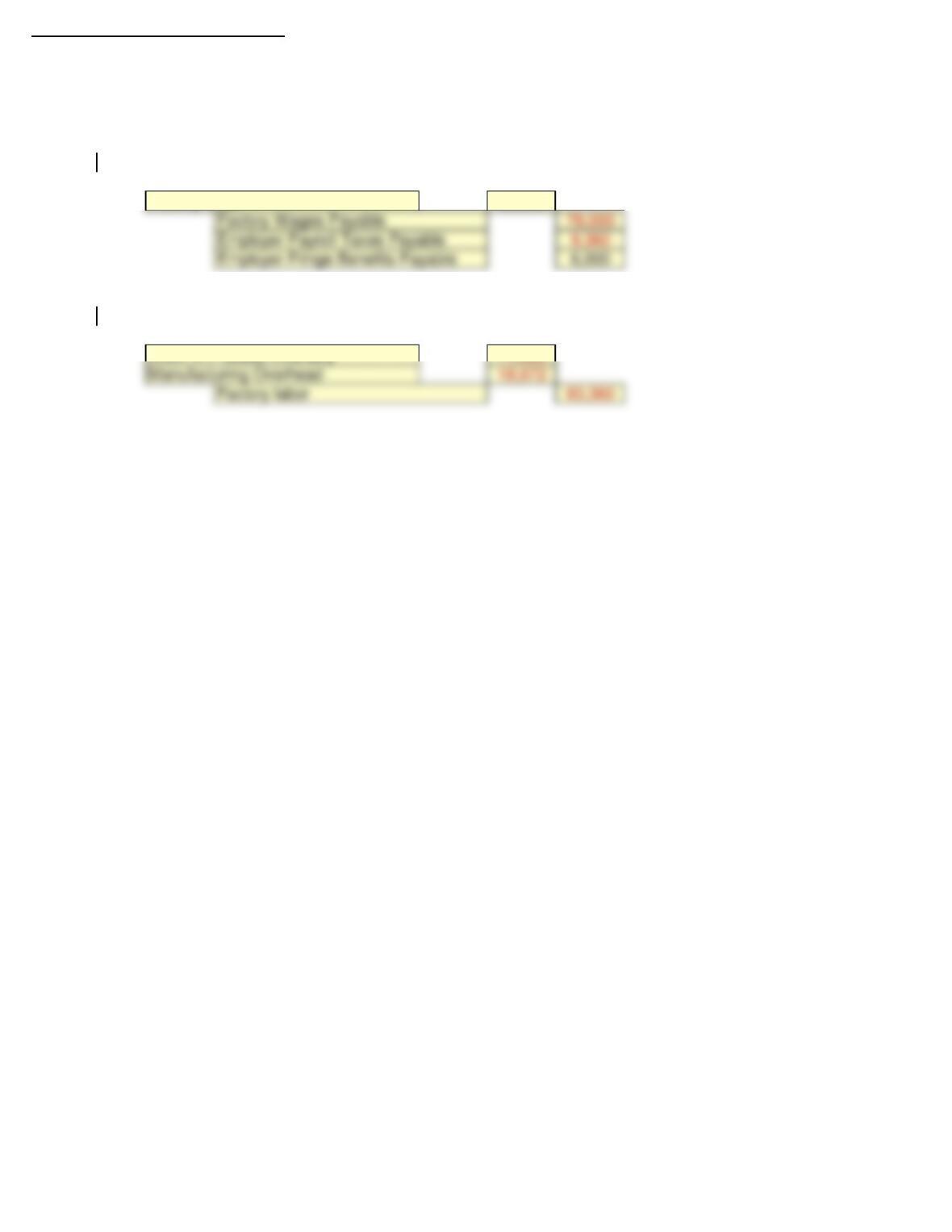
E2-1 Solution to additional question
1. Assume that factory wages changed and employer‘s payroll taxes changed to $78,000 and $9,360 respectively.
Also assume that 80% of total labor costs is related to direct labor. Revise the journal entries to reflect these
changes.
(a) Prepare the entry to record the factory labor costs for the month of January
93,360 78,000
(b) Prepare the entry to assign the factory labor to production.
74,688
Factory labor
Work in Process Inventory
Factory Wages Payable
Employer Payroll Taxes Payable
Employer Fringe Benefits Payable
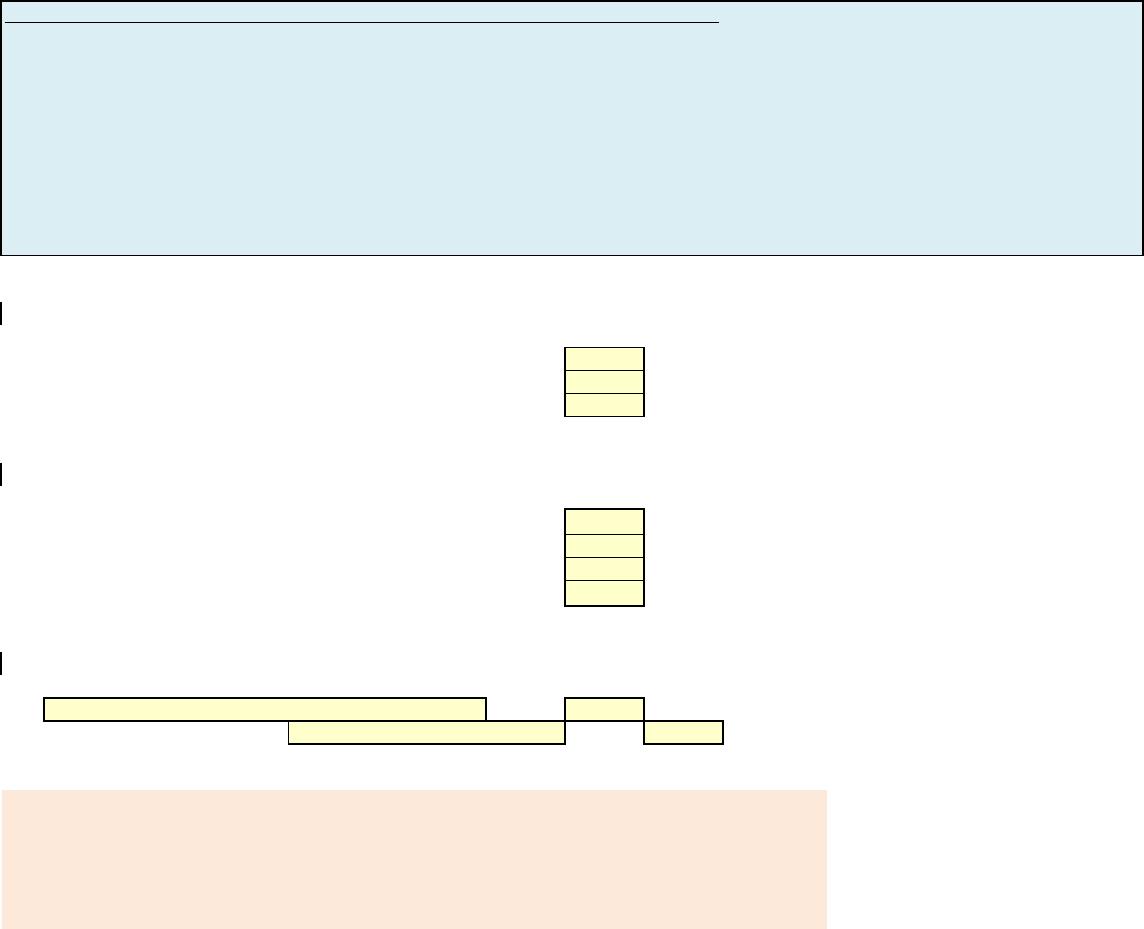
E2-5 Compute the manufacturing overhead rate and under- or overapplied overhead
Ikerd Company applies overhead to jobs on the basis of machine hours used. Overhead costs are expected to total
$300,000 for the year, and machine usage is estimated at 125,000 hours. For the year, $322,000 of overhead costs
are incurred and 130,000 hours are used.
Instructions
(a) Compute the manufacturing overhead rate for the year.
(b) What is the amount of under-or overapplied overhead at December 31?
(c ) Prepare the adjusting entry to assign the under- or overapplied overhead for the year to cost of goods sold.
NOTE: Enter a number in cells requesting a value; enter either a number or a formula in cells with a “?” .
(a) Compute the manufacturing overhead rate for the year.
Estimated total overhead cost Value
Estimated machine hours Value
Overhead rate ?
(b) What is the amount of under-or overapplied overhead at December 31?
Value
?
Value
?
(c ) Prepare the adjusting entry to assign the under- or overapplied overhead for the year to cost of goods sold.
Value
Value
After you have completed E2-5, consider the following additional question.
1. Assume that the estimated total overhead for the year changed to $350,000. Determine
the impact on this change on the overhead rate, the amount of manufacturing overhead
over(under) applied. Revise the journal to dispose of over (under) applied overhead.
Account
Account
Actual machine hours used
Manufacturing overhead applied
Manufacturing overhead incurred
Manufacturing overhead over (under applied)
Manufacturing overhead applied
Manufacturing overhead incurred
Manufacturing overhead over (underapplied)
Manufacturing Overhead
Cost of Goods Sold
E2-5 Solution
(a) Compute the manufacturing overhead rate for the year.
Estimated total overhead cost $300,000
(b) What is the amount of under-or overapplied overhead at December 31?
130,000
(c ) Prepare the adjusting entry to assign the under- or overapplied overhead for the year to cost of goods sold.
Actual machine hours used
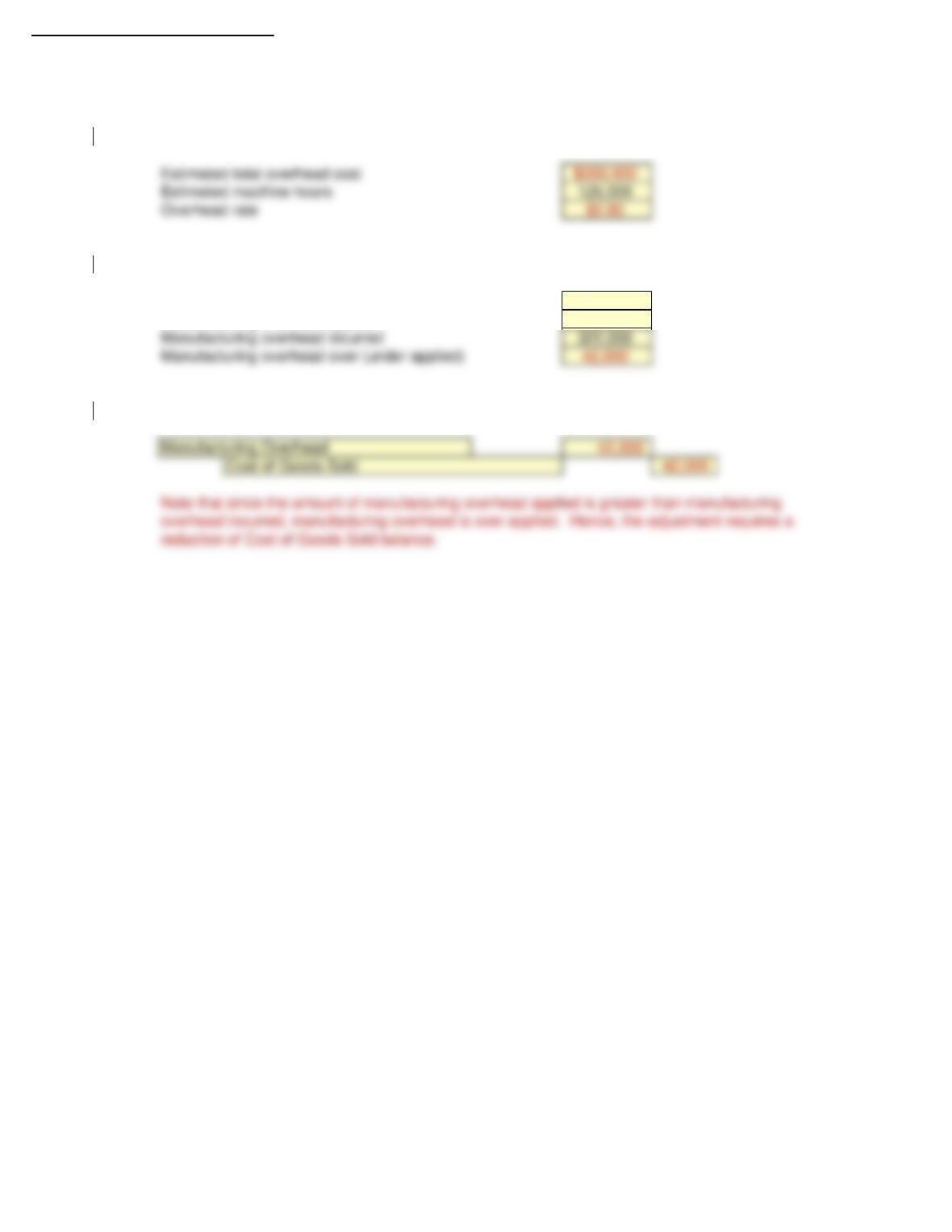
Manufacturing overhead incurred
Manufacturing overhead over (under applied)
Cost of Goods Sold
Manufacturing Overhead
E2-5 Solution to additional question
1. Assume that the estimated total overhead for the year changed to $350,000. Determine
the impact on this change on the overhead rate, the amount of manufacturing overhead
over (under) applied. Revise the journal to dispose of over (under) applied overhead.
(a) Compute the manufacturing overhead rate for the year.
(b) What is the amount of under-or overapplied overhead at December 31?
130,000
364,000
(c ) Prepare the adjusting entry to assign the under- or overapplied overhead for the year to cost of goods sold.
Actual machine hours used
Manufacturing overhead applied
E2-9 Prepare a cost of goods manufactured schedule and partial financial statements
At May 31, 2017, the accounts of Lopez Company show the following.
1. May 1 inventories – finished goods $12,600, work in process $14,700 and raw
materials $8,200.
2. May 31 inventories – finished goods $9,500, work in process, $15,900, and raw
materials $7,100.
3. Debit postings to work in process were direct materials, $62,400, direct labor $50,000,
and manufacturing overhead applied $40,000.
4. Sales revenue totaled $215,000.
Instructions
(a) Prepare a condensed cost of goods manufactured schedule.
(b) Prepare an income statement for May through gross profit.
(c ) Indicate the balance sheet presentation of the manufacturing inventories at May 31, 2017.
NOTE: Enter a number in cells requesting a value; enter either a number or a formula in cells with a “?” .
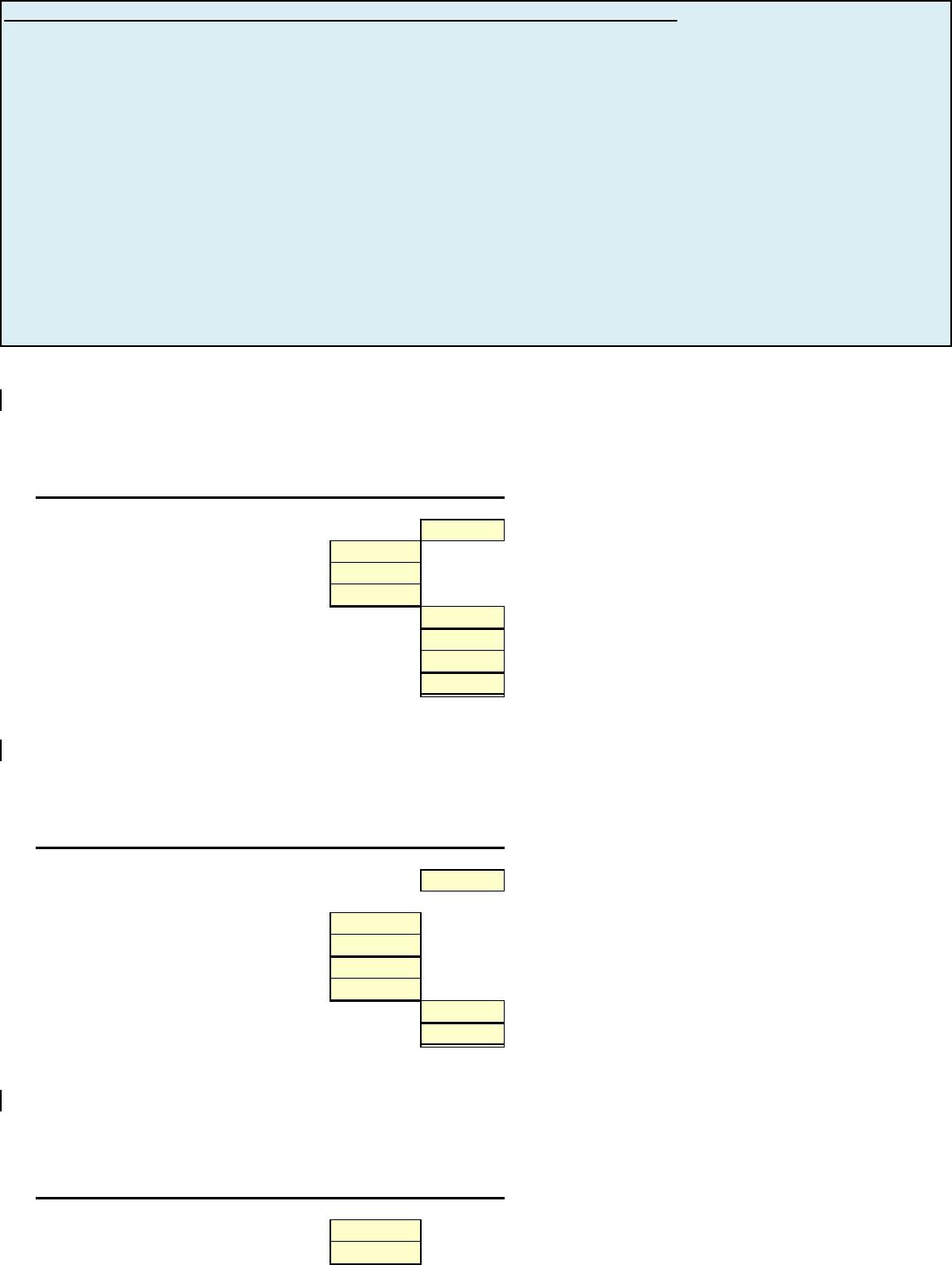
(a) Prepare a condensed cost of goods manufactured schedule.
Work in process, May 1 Value
Direct materials used Value
Direct labor Value
Manufacturing overhead applied Value
Total manufacturing costs ?
Total cost of work in process ?
Less: Work in process, May 31 Value
Cost of goods manufactured ?
(b) Prepare an income statement for May through gross profit.
Sales revenue Value
Cost of goods sold
Finished goods, May 1 Value
Cost of goods manufactured ?
Cost of goods available for sale ?
Less: Finished goods, May 31 Value
Cost of goods sold ?
Gross profit ?
(c ) Indicate the balance sheet presentation of the manufacturing inventories at May 31, 2017.
Current Assets:
Finished goods inventory Value
Work in process inventory Value
LOPEZ COMPANY
(Partial) Balance Sheet
May 31, 2017
LOPEZ COMPANY
Cost of Goods Manufactured Schedule
For the Month Ended May 31, 2017
LOPEZ COMPANY
(Partial) Income Statement
For the Month Ended May 31, 2017

Raw materials inventory Value ?
After you have completed E2-9, consider the following additional question.
1. Assume that the total costs for direct materials, direct labor and overhead
changed to $81,400, 63,600 and $45,000 respectively. Show the impact of
these changes on the cost of goods manufactured schedule, income statement
and balance sheet.
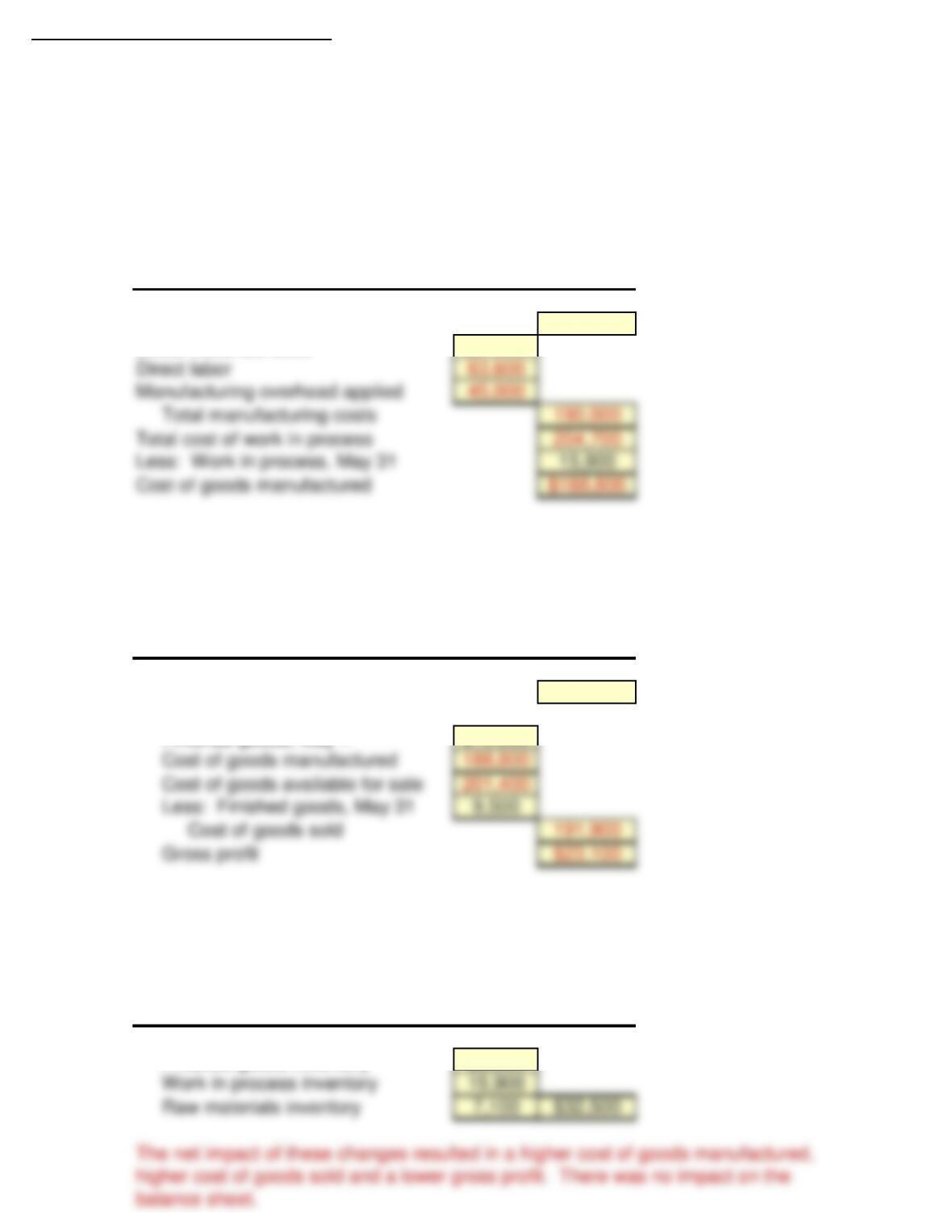
E2-9 Solution
(a) Prepare a condensed cost of goods manufactured schedule.
Work in process, May 1 $14,700
Direct materials used $62,400
(b) Prepare an income statement for May through gross profit.
Sales revenue $215,000
Cost of goods sold
(c ) Indicate the balance sheet presentation of the manufacturing inventories at May 31, 2017.
Current Assets:
Finished goods inventory $9,500
LOPEZ COMPANY
(Partial) Balance Sheet
May 31, 2017
LOPEZ COMPANY
Cost of Goods Manufactured Schedule
For the Month Ended May 31, 2017
LOPEZ COMPANY
(Partial) Income Statement
For the Month Ended May 31, 2017
E2-9 Solution to additional question
1. Assume that the total costs for direct materials, direct labor and overhead
changed to $81,400, 63,600 and $45,000 respectively. Show the impact of
these changes on the cost of goods manufactured schedule, income statement
and balance sheet.
(a) Prepare a condensed cost of goods manufactured schedule.
Work in process, May 1 $14,700
Direct materials used $81,400
(b) Prepare an income statement for May through gross profit.
Sales revenue $215,000
Cost of goods sold
Finished goods, May 1 $12,600
(c ) Indicate the balance sheet presentation of the manufacturing inventories at May 31, 2017.
Current Assets:
Finished goods inventory $9,500
LOPEZ COMPANY
(Partial) Balance Sheet
May 31, 2017
LOPEZ COMPANY
Cost of Goods Manufactured Schedule
For the Month Ended May 31, 2017
LOPEZ COMPANY
(Partial) Income Statement
For the Month Ended May 31, 2017
P2-3A Prepare entries for a job order cost system and cost of goods manufactured schedule
Case Inc. is a construction company specializing in custom patios. The patios are constructed of
concrete, brick, fiberglass, and lumber, depending upon customer preference. On June 1, 2017,
the general ledger for Case Inc. contains the following data.
Raw Materials Inventory $4,200 Manufacturing Overhead Applied $32,640
Work in Process Inventory $5,540 Manufacturing Overhead Incurred $31,650
Subsidiary data for Work in Process Inventory on June 1 are as follows.
Cost Element Rodgers Stevens Linton
Direct materials $600 $800 $900
Direct labor 320 540 580
Manufacturing overhead 400 675 725
$1,320 $2,015 $2,205
During June, raw materials purchased on account were $4,900, and all wages were paid. Additional
overhead costs consisted of depreciation on equipment $900 and miscellaneous costs of $400 incurred
on account.
A summary of materials requisition slips and time tickets for June show the following.
Custo
mer
Job
Materials
Requisition
slips
Time tickets
Rodgers 800$ $850
Koss 2,000 800
Stevens 500 360
Linton 1,300 1,200
Rodgers 300 390
4,900 3,600
General use 1,500 1,200
6,400$ $4,800
Overhead was charged to jobs at the same rate of $1.25 per dollar of direct labor cost. The patios for
customers Rodgers, Stevens, and Linton were completed during June and sold for a total of $18,900.
Each customer paid in full.
Instructions
(a) Journalize the June transactions: (1) for purchase of raw materials, factory labor costs incurred,
and manufacturing overhead costs incurred; (2) assignment of direct materials, labor, and overhead to
production; and (3) completion of jobs and sale of goods.
(b) Post the entries to Work in Process Inventory.
(c ) Reconcile the balance in Work in Process Inventory with the costs of unfinished jobs.
(d) Prepare a cost of goods manufactured schedule for June.
NOTE: Enter a number in cells requesting a value; enter either a number or a formula in cells with a “?” .
(a)(1)
Journalize the June transactions for purchase of raw materials, factory labor costs incurred,
and manufacturing overhead costs incurred
Value
Value
Value
Value
Value
Value
Account
Account
Account
Customer Job
Job Cost Sheets
Account
Account
Account
Value
(a)(2) Journalize the June transactions for assignment of direct materials, labor, and overhead to production
Value
Value
Value
Value
Value
Value
Value
Value
(a)(3) Journalize the June transactions for completion of jobs and sale of goods.
Value
Value
Value
Value
Value
Value
(b) Post the entries to Work in Process Inventory.
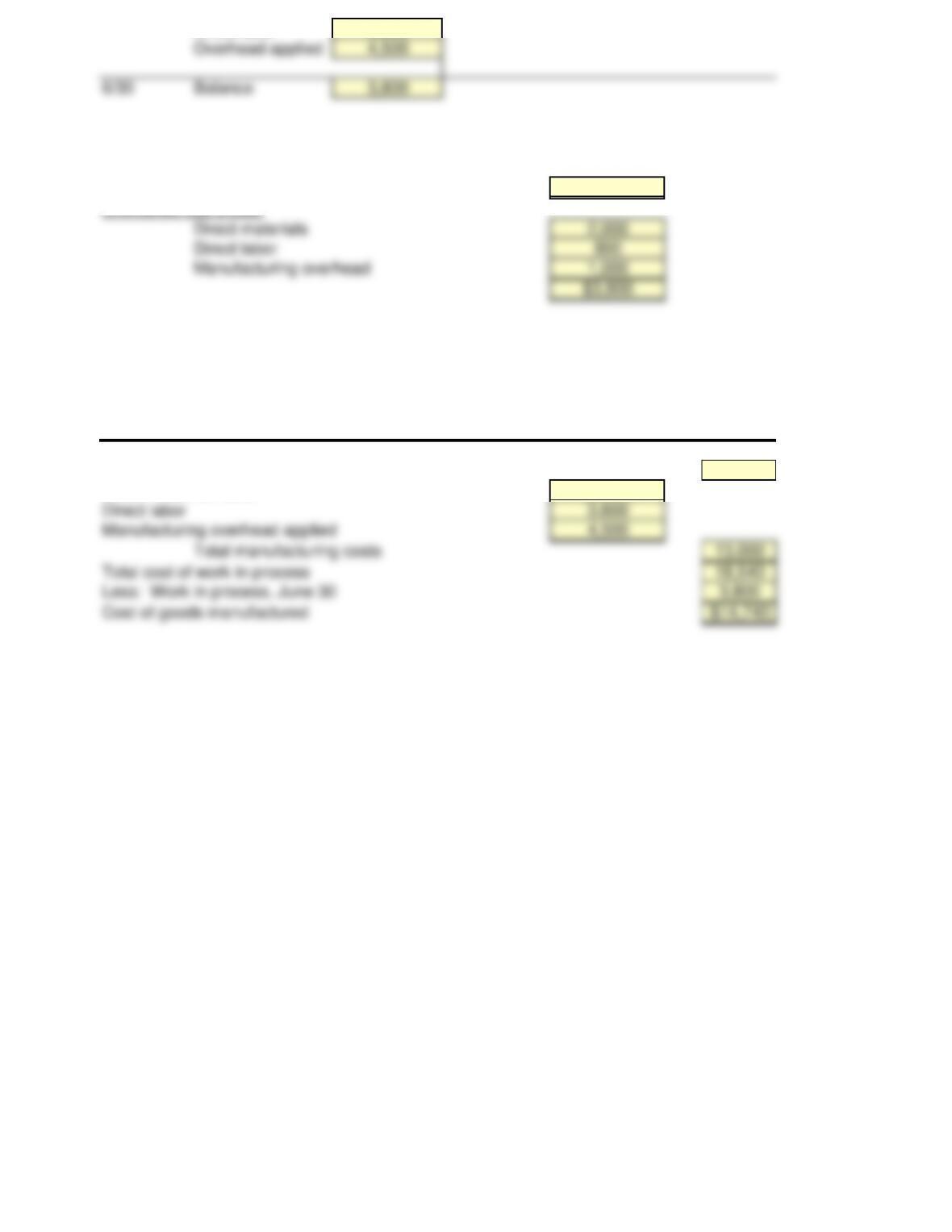
6/1 Balance Value June Completed work Value
Direct Materials Value
Direct labor Value
Overhead applied Value
6/30 Balance ?
(c ) Reconcile the balance in Work in Process Inventory with the costs of unfinished jobs.
6/30 balance in Work in Process Inventory Value
Unfinished Job (Koss)
Direct materials Value
Direct labor Value
Manufacturing overhead Value
?
(d) Prepare a cost of goods manufactured schedule for June.
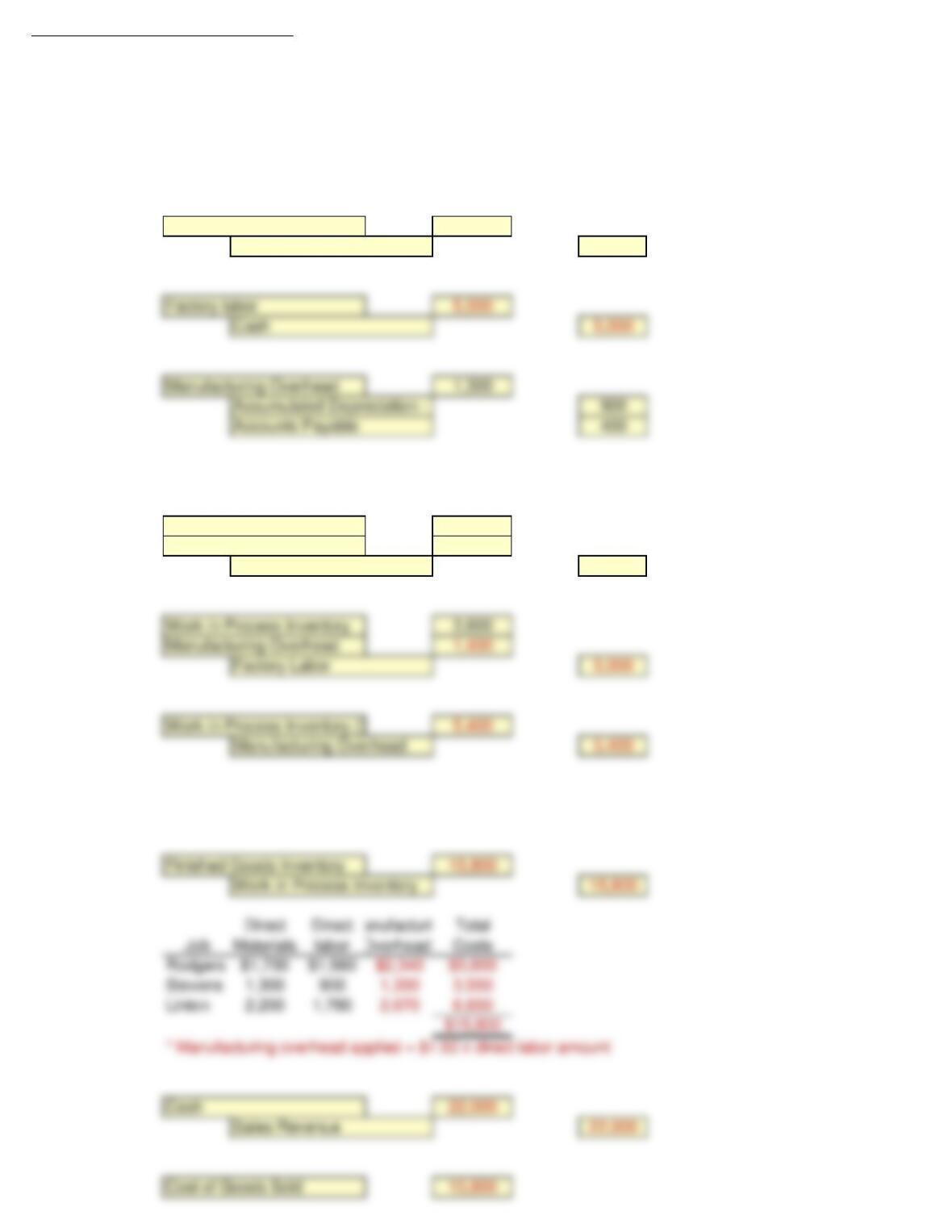
Work in process, June 1 Value
Direct materials used Value
Direct labor Value
Manufacturing overhead applied Value
Cost of Goods Manufactured Schedule
For the Month Ended June 30, 2017
Account
Account
Account
Work in Process Inventory
CASE INC.
Account
Account
Account
Account
Account
Account
Account
Account
Account
Account
Account
Account

Total manufacturing costs ?
Total cost of work in process ?
Less: Work in process, June 30 Value
Cost of goods manufactured ?
After you have completed P2-3A, consider the following additional question.
1.
Assume that indirect labor and raw materials purchases changed to $1,400 and $6,800 respectively.
Also assume that overhead is applied at the rate of $1.50 per dollar of direct labor. The three
completed jobs were sold for $22,000 cash. Revise the journal entries to reflect these changes.
Work in Process Inventory
Manufacturing Overhead
Factory Labor
Work in Process Inventory ($3,600 x 1.25)
Manufacturing Overhead
Sales Revenue
Cost of Goods Sold
Finished Goods Inventory
P2-3A Solution
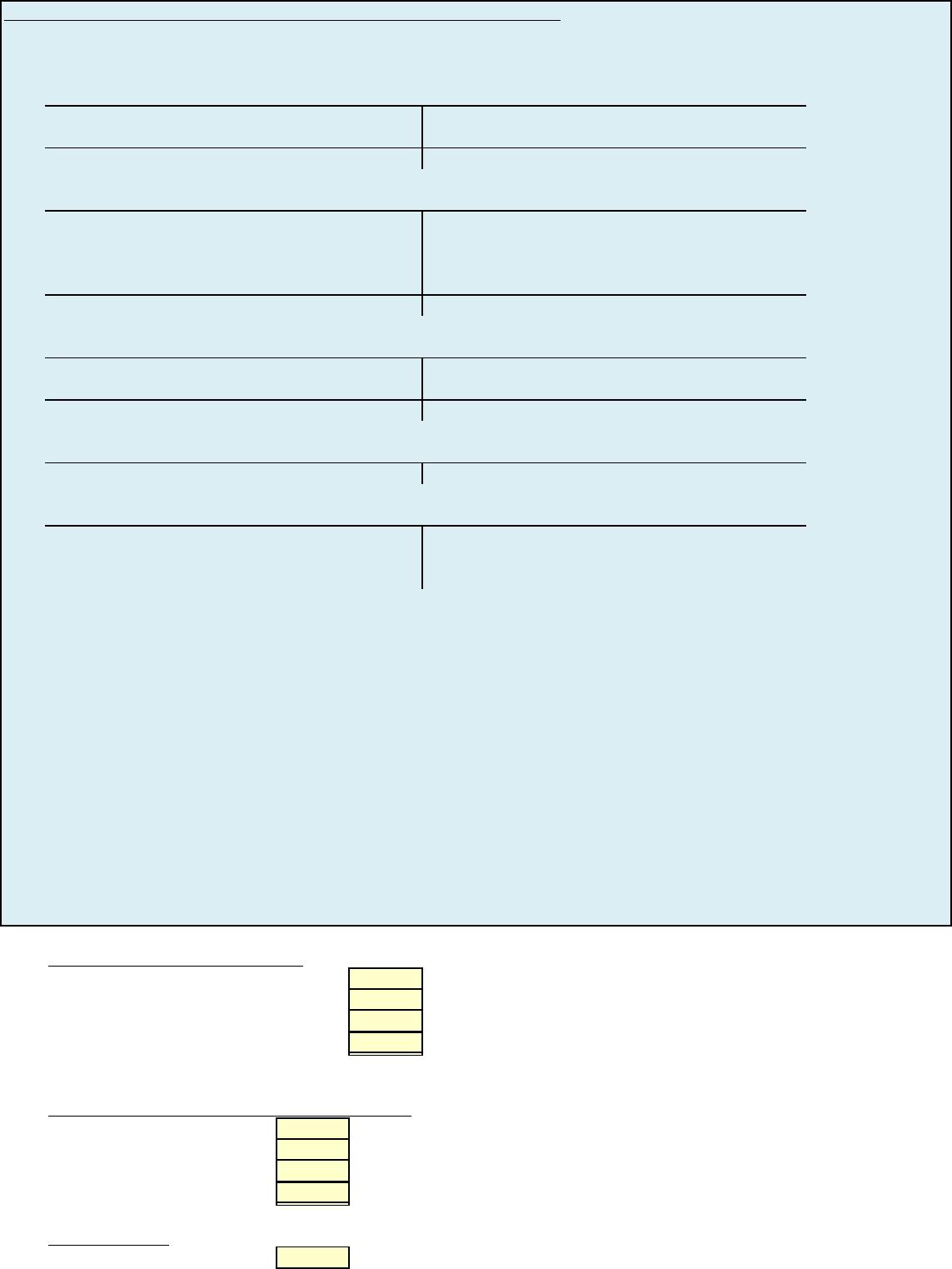
(a)(1) Journalize the June transactions for purchase of raw materials, factory labor costs incurred,
and manufacturing overhead costs incurred
4,900 4,900
(a)(2) Journalize the June transactions for assignment of direct materials, labor, and overhead to production
4,900
1,500 6,400
(a)(3) Journalize the June transactions for completion of jobs and sale of goods.
14,740 14,740
Direct Direct Manufacturing Total
Job Materials labor Overhead Costs
Rodgers $1,700 $1,560 $1,950 $5,210
(b) Post the entries to Work in Process Inventory.
Work in Process Inventory
Work in Process Inventory
Manufacturing Overhead
Raw Materials Inventory
Finished Goods Inventory
Work in Process Inventory
Raw Materials Inventory
Accounts Payable
Accounts Payable
Accumulated Depreciation – Equipment
Factory labor
Manufacturing Overhead
Direct labor 3,600
(c ) Reconcile the balance in Work in Process Inventory with the costs of unfinished jobs.
Work in Process Inventory $3,800
(d) Prepare a cost of goods manufactured schedule for June.
Work in process, June 1 $5,540
Direct materials used $4,900
For the Month Ended June 30, 2017
CASE INC.
Cost of Goods Manufactured Schedule
P2-3A Solution to additional question
Factory Labor
Work in Process Inventory (3,600 x 1.5)
Manufacturing Overhead
Work in Process Inventory
Work in Process Inventory
1. Assume that indirect labor and raw materials purchases changed to $1,400 and $6,800 respectively.
Also assume that overhead is applied at the rate of $1.50 per dollar of direct labor. The three
completed jobs were sold for $22,000 cash. Revise the journal entries to reflect these changes.
(a)(1) Journalize the June transactions for purchase of raw materials, factory labor costs incurred,
and manufacturing overhead costs incurred
6,800
6,800
(a)(2) Journalize the June transactions for assignment of direct materials, labor, and overhead to production
4,900
1,500
6,400
(a)(3) Journalize the June transactions for completion of jobs and sale of goods.
Cost of Goods Sold
Work in Process Inventory
Manufacturing Overhead
Raw Materials Inventory
Accounts Payable
Raw Materials Inventory
Accounts Payable
Factory labor

P2-5A Analyze manufacturing accounts and determine missing amounts
Phillips Corporation’s fiscal year ends on November 30. The following accounts are found in its job
order cost accounting system for the first month of the new fiscal year.
Dec. 1 Beginning balance (a) Dec. 31 Requisitions $16,850
31 Purchases 17,225
Dec.31 Ending balance 7,975
Dec. 1 Beginning balance (b) Dec. 31 Jobs completed (f)
31 Direct materials (c)
31 Direct labor 8,400
31 Overhead (d)
Dec. 31 Ending balance (e)
Dec. 1 Beginning balance (g) Dec. 31 Cost of goods sold (i)
Dec. 31 Jobs completed (h)
Dec. 31 Ending balance (j)
Dec. 31 Factory wages 12,025 Dec. 31 Wages assigned (k)
Dec. 31 Indirect materials 2,900 Dec. 31 Overhead applied (m)
31 Indirect labor (l)
31 Other overhead 1,245
Other data:
1. On December 1, two jobs were in process: Job No. 154 and Job No.155. These jobs had combined direct
materials costs of $9,750 and direct labor costs of $15,000. Overhead was applied at a rate that was 75%
of direct labor cost.
2. During December, Job Nos. 156, 157 and 158 were started. On December 31, Job No. 158 was unfinished.
This job had charges for direct materials $3,800 and direct labor $4,800 plus manufacturing overhead. All
jobs, except for Job No. 158, were completed in December.
3. On December 1, Job No. 153 was in the finished goods warehouse. It had a total cost of $5,000. On
December 31, Job No. 157 was the only job finished that was not sold. It had a cost of $4,000.
4. Manufacturing overhead was $1,470 underapplied in December.
Instructions
List the items (a) through (m) and indicate the amount pertaining to each letter.
NOTE: Enter a number in cells requesting a value; enter either a number or a formula in cells with a “?” .
(a) Beginning balance, raw materials
Total requisitions Value
Ending balance, raw materials Value
Less: purchases Value
Beginning balance, raw materials ?
(b) Beginning work in process (Job 154 & Job 155)
Direct materials Value
Direct labor Value
Overhead applied ?
?
(c ) Direct materials
Requisitions of raw materials Value
Raw Materials Inventory
Work in Process Inventory
Finished Goods Inventory
Factory Labor
Manufacturing Overhead
Less: indirect materials Value
Direct materials ?
(d) Overhead applied
Direct labor Value
Overhead applied ?
(75% of DL)
(e) Ending work in process (Job No. 158)
Direct materials Value
Direct labor Value
Overhead applied ?
?
(f) Completed Jobs (Jobs 154 -157)
Beginning balance, work in process Value
Direct materials Value
Direct labor Value
Overhead applied Value
Less: ending work in process Value
Jobs completed ?
(g) Beginning balance, finished goods (Job 153) Value
(h) Jobs completed Value
(i) Cost of goods sold
Beginning finished goods Value
Jobs completed Value
Less: ending finished goods Value
Cost of goods sold ?
(j) Ending finished goods (Job 157) Value
(k) Wages assigned to work in process Value
(l) Indirect labor
Factory wages Value
Less: direct labor Value
Indirect labor Value
(m) Overhead applied
Direct labor Value
Overhead applied ?
When you have completed P2-5A, consider the following additional question.

1. Assume that requisitions changed to $17,600. Show the impact of this
change on the items listed.
P2-5A Solution
(a) Beginning balance, raw materials
Total requisitions $16,850
(b) Beginning work in process (Job 154 & Job 155)
Direct materials $9,750
(c ) Direct materials
Requisitions of raw materials $16,850
Less: indirect materials 2,900
(d) Overhead applied
(e) Ending work in process (Job No. 158)
Direct materials $3,800
Direct labor 4,800
(f) Completed Jobs (Jobs 156 & 157)
Beginning balance, work in process $36,000
Direct materials 13,950
(h) Jobs completed $52,450 See (f) above
(j) Ending finished goods (Job 157) $4,000
P2-5A Solution to additional question
1. Assume that requisitions changed to $17,600. Show the impact of this
change on the items listed.
(a) Beginning balance, raw materials
(b) Beginning work in process (Job 154 & Job 155)
Direct materials $9,750
Direct labor 15,000
(d) Overhead applied
Direct labor $8,400
Overhead applied $6,300
(e) Ending work in process (Job No. 158)
Direct materials $3,800
Direct labor 4,800
(f) Completed Jobs (Jobs 156 & 157)
Beginning balance, work in process $36,000
(g) Beginning balance, finished goods (Job 153) $5,000
(i)
Cost of goods sold
Beginning finished goods $5,000
(j) Ending finished goods (Job 157) $4,000
(k) Wages assigned to work in process $12,025 (Equal to factory labor incurred.)