Chapter 2 – The Accounting Cycle: During the Period
Chapter 2
The Accounting Cycle: During the Period
REVIEW QUESTIONS
Question 2-1 (LO 2-1)
Question 2-2 (LO 2-1)
1. Use source documents to identify accounts affected by external transactions.
2. Analyze the impact of the transaction on the accounting equation.
4. Record the transaction in the journal using debits and credits.
5. Post the transaction to the T-accounts in the general ledger.
6. Prepare a trial balance.
Question 2-3 (LO 2-2)
Dual effect refers to each transaction having an effect on at least two accounts of the accounting
Question 2-4 (LO 2-2)
Assets
=
Liabilities
+
Stockholders’ equity
(a)
Increase
=
Increase
+
No change
=
+
(c)
Increase
=
+
(d)
=
+
Question 2-5 (LO 2-2)
Jerry is not correct. While it is possible for a transaction to increase one account and decrease
Chapter 2 – The Accounting Cycle: During the Period
Answers to Review Questions (continued)
Question 2-6 (LO 2-3)
Accounts
Normal balance
Assets
Debit
Liabilities
Credit
Credit
Revenues
Credit
Expenses
Debit
Question 2-7 (LO 2-3)
Jenny is not correct. Any account can be debited or credited. Since an asset has a normal debit
Question 2-8 (LO 2-3)
Accounts
Increase
(a) Cash
Debit
(b) Salaries payable
Credit
(d) Service revenue
Credit
Question 2-9 (LO 2-3)
Accounts
Decrease*
(a) Cash
Credit
(b) Salaries payable
Debit
(c) Utilities expense
Credit
(d) Service revenue
Debit
Chapter 2 – The Accounting Cycle: During the Period
Answers to Review Questions (continued)
Question 2-10 (LO 2-3)
Question 2-11 (LO 2-4)
Question 2-12 (LO 2-4)
Account Name . . . . . . . . . . . . . . . . . . . . . .
Amount
Account Name . . . . . . . . . . . . . . .
Amount
Question 2-13 (LO 2-4)
Question 2-14 (LO 2-4)
(a)
Debit
Credit
Cash
1,200
Service Revenue
1,200
(b)
Debit
Credit
Rent Expense
Cash
(c)
Debit
Credit
Building
Notes Payable
Date
Debit
Credit
Chapter 2 – The Accounting Cycle: During the Period
Answers to Review Questions (continued)
Question 2-15 (LO 2-4)
Question 2-16 (LO 2-5)
Question 2-17 (LO 2-5)
Posting is the process of transferring the debit and credit information from the journal to
individual accounts in the general ledger.
(a)
Supplies
Cash
(c)
Cash
Question 2-18 (LO 2-6)
Question 2-19 (LO 2-6)
Question 2-20 (LO 2-6)
Not necessarily. While total debits equaling total credits is a good indication that all accounts
Chapter 2 – The Accounting Cycle: During the Period
BRIEF EXERCISES
Brief Exercise 2-1 (LO 2-1)
Proper order:
(c) Use source documents to identify accounts affected by external
Brief Exercise 2-2 (LO 2-2)
Assets
=
Liabilities
+
Stockholders’ Equity
Possible
(Yes/No)
=
+
No change
=
Increase
+
(Salaries Payable ↑)
=
+
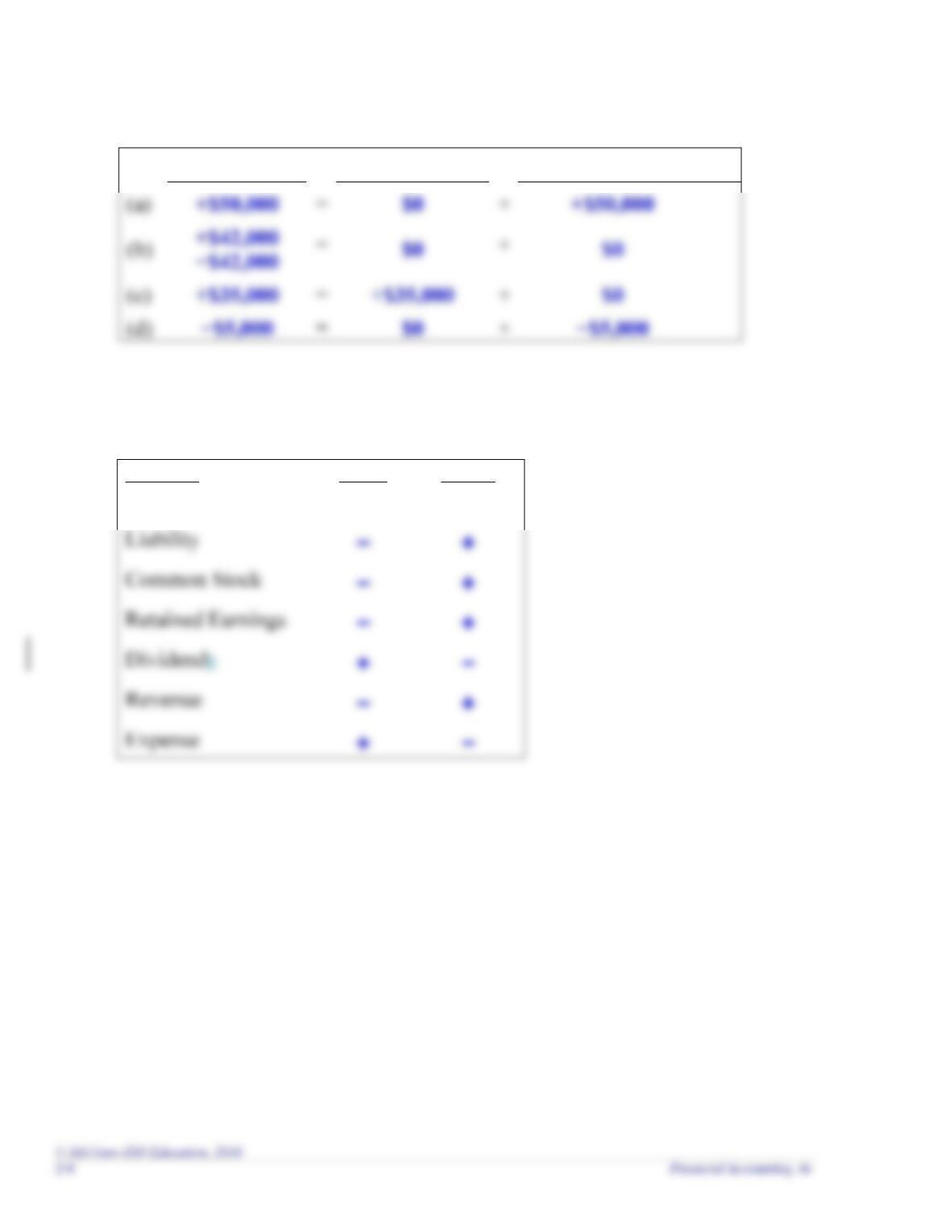
Brief Exercise 2-3 (LO 2-2)
Total Assets
Total Liabilities and
Stockholders’ Equity
Cash
$ 7,200
Accounts Payable
$ 1,700
Supplies
Salaries Payable
Prepaid Rent
Notes Payable
Land
Equipment
Chapter 2 – The Accounting Cycle: During the Period
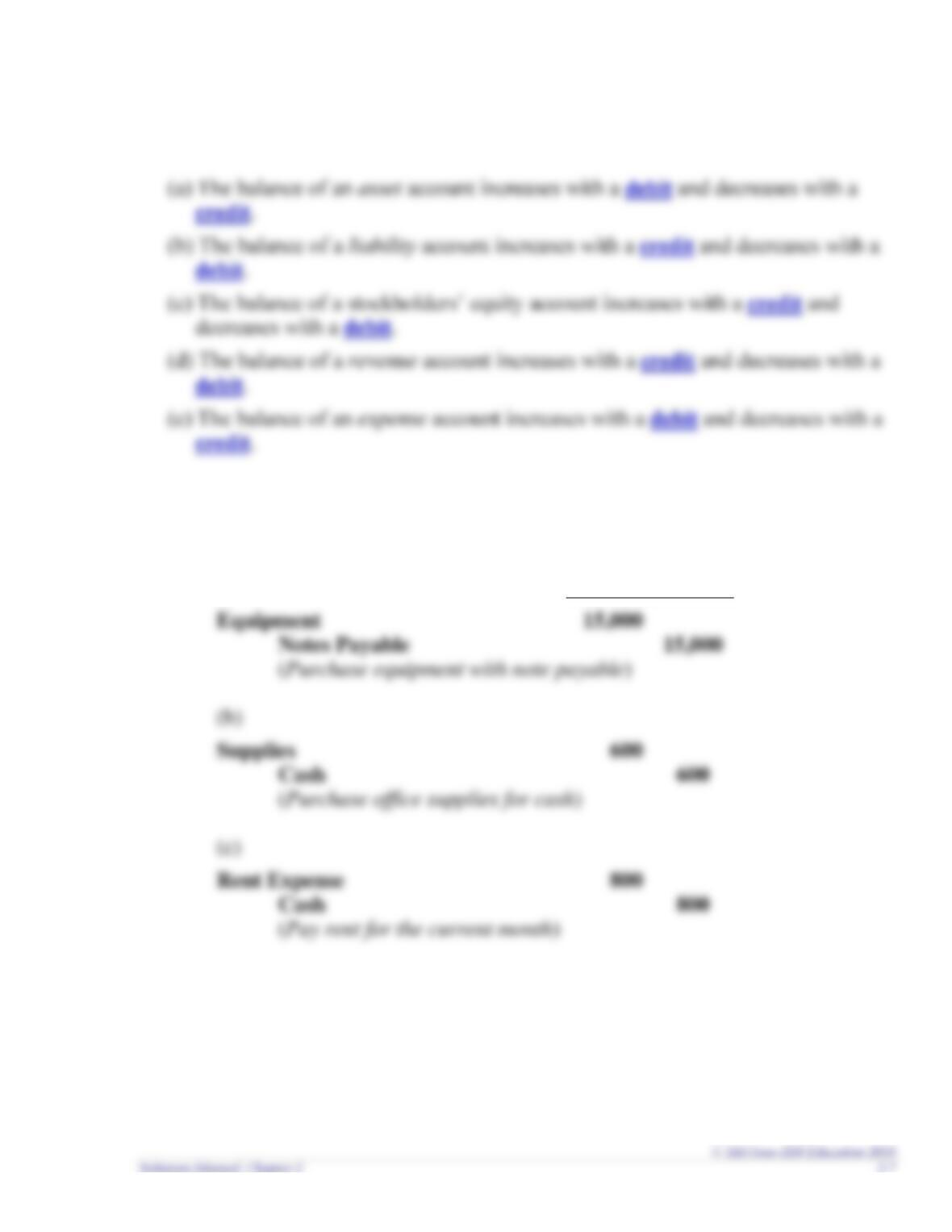
Brief Exercise 2-4 (LO 2-2)
Assets
=
Liabilities
+
Stockholders’ Equity
=
+
=
+
(d)
=
+
Brief Exercise 2-5 (LO 2-3)
Account
Debit
Credit
Asset
+
−
Chapter 2 – The Accounting Cycle: During the Period
Brief Exercise 2-6 (LO 2-3)
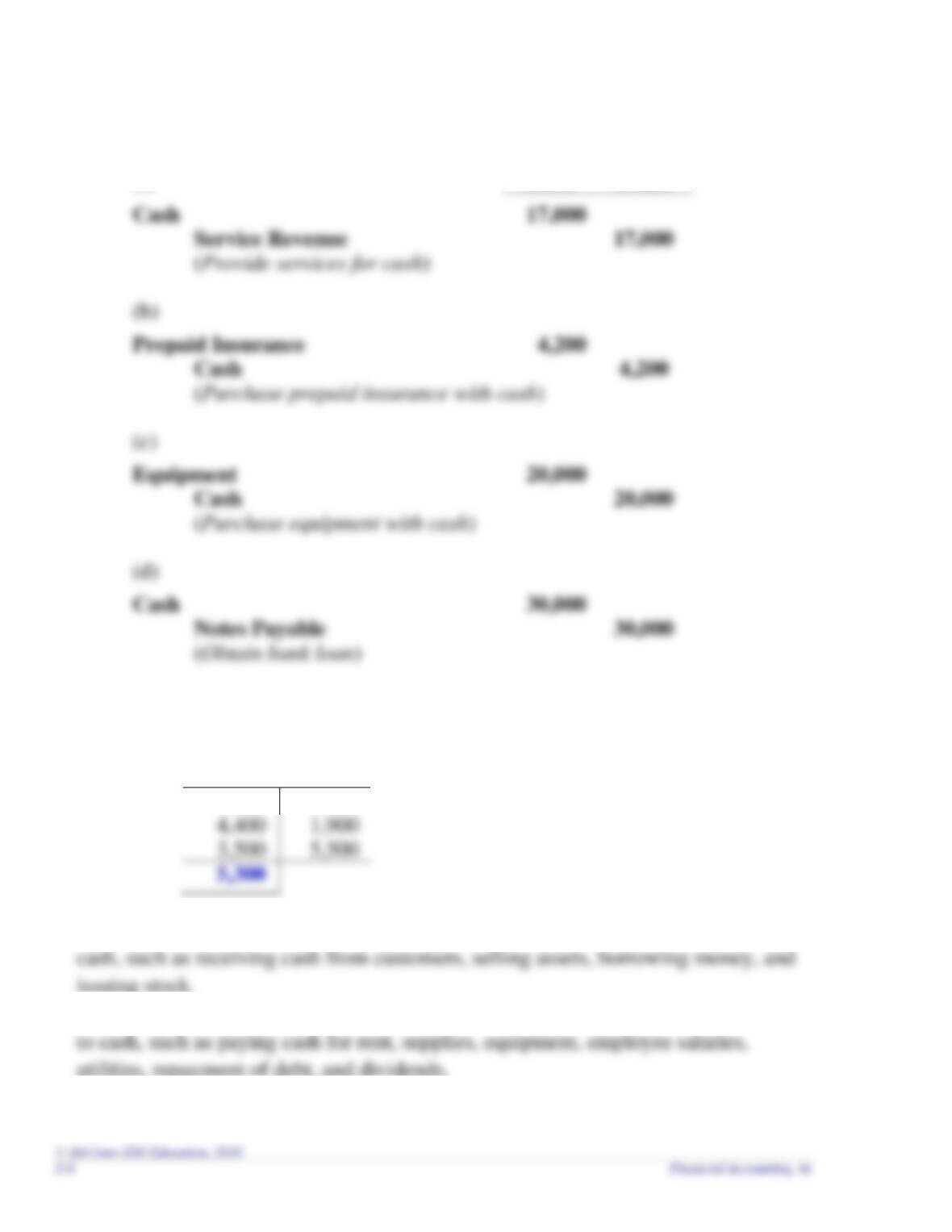
Brief Exercise 2-7 (LO 2-4)
(a)
Debit
Credit
(c)
Chapter 2 – The Accounting Cycle: During the Period
Brief Exercise 2-8 (LO 2-4)
(a)
Debit
Credit
(c)
Brief Exercise 2-9 (LO 2-5)
1.
Cash
13,000
8,200
2. Postings on the left side (or debit side) of the cash T-account represent increases to
3. Postings on the right side (or credit side) of the cash T-account represent decreases
Chapter 2 – The Accounting Cycle: During the Period
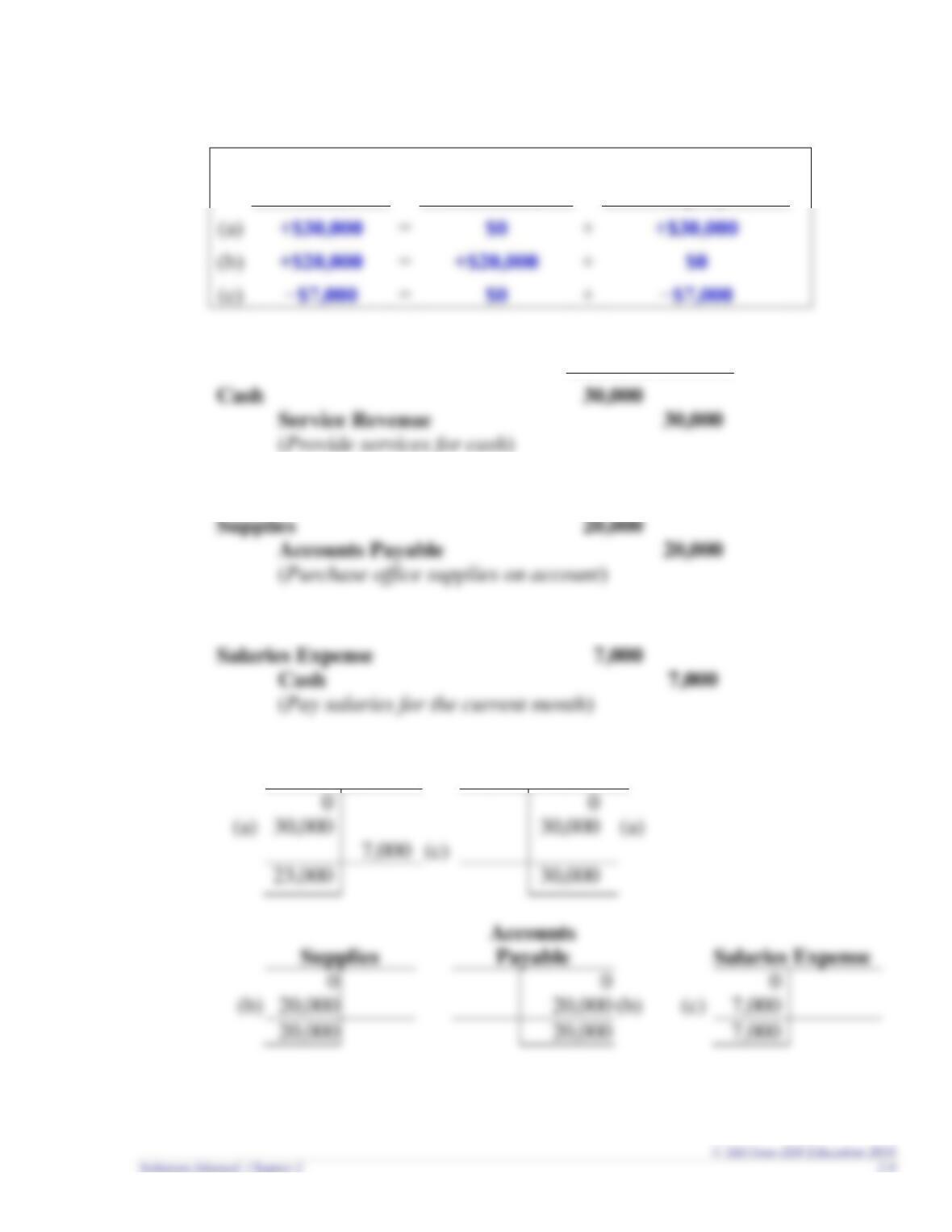
Brief Exercise 2-10 (LO 2-2, 2-3, 2-4, 2-5)
Assets
=
Liabilities
+
Stockholders’
Equity
(a)
Debit
Credit
(b)
(c)
Cash
Service Revenue
7,000
Chapter 2 – The Accounting Cycle: During the Period
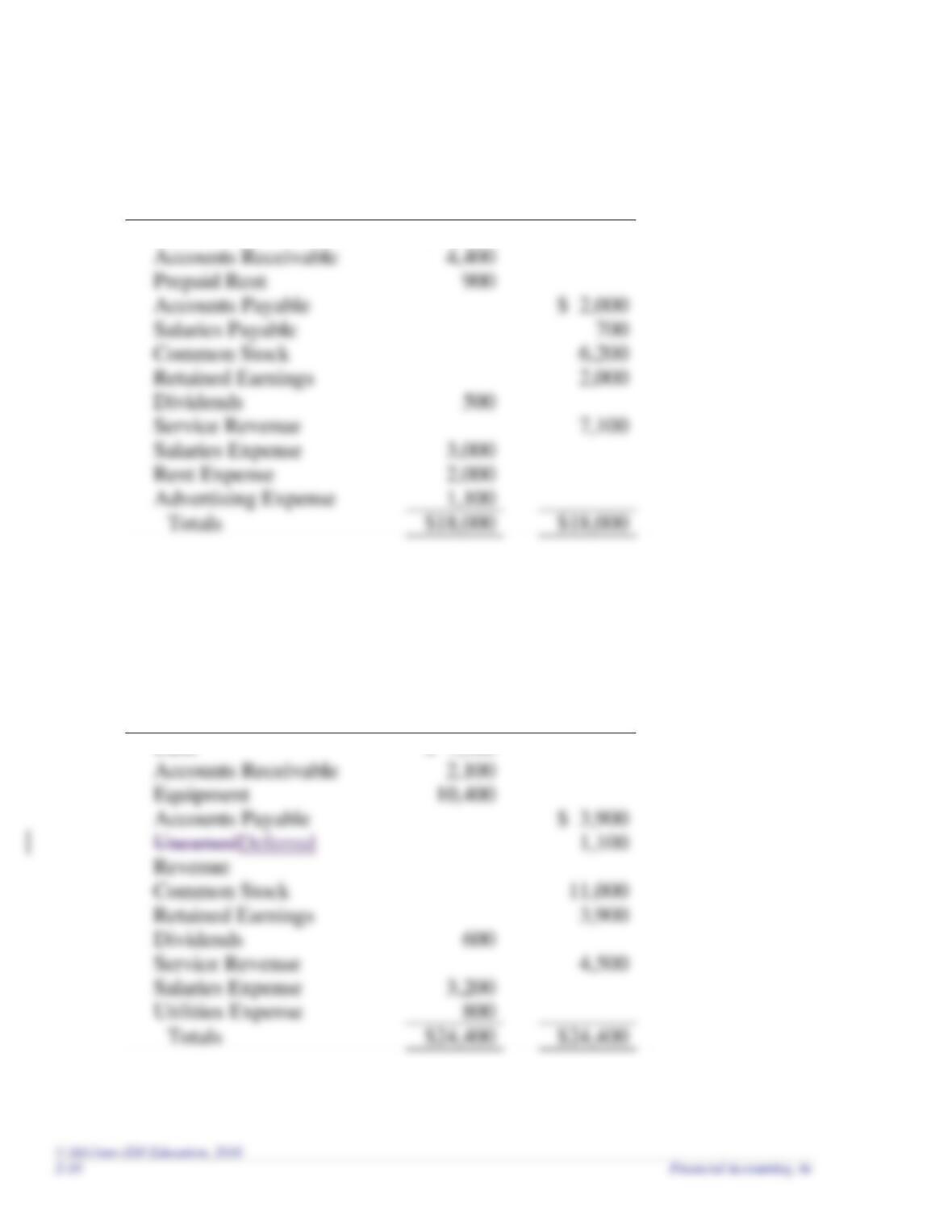
Brief Exercise 2-11 (LO 2-6)
Trial Balance
Accounts
Debit
Credit
Cash
$ 6,100
Accounts Receivable
4,400
Prepaid Rent
Accounts Payable
Salaries Payable
Common Stock
Retained Earnings
Dividends
Service Revenue
Salaries Expense
Rent Expense
Advertising Expense
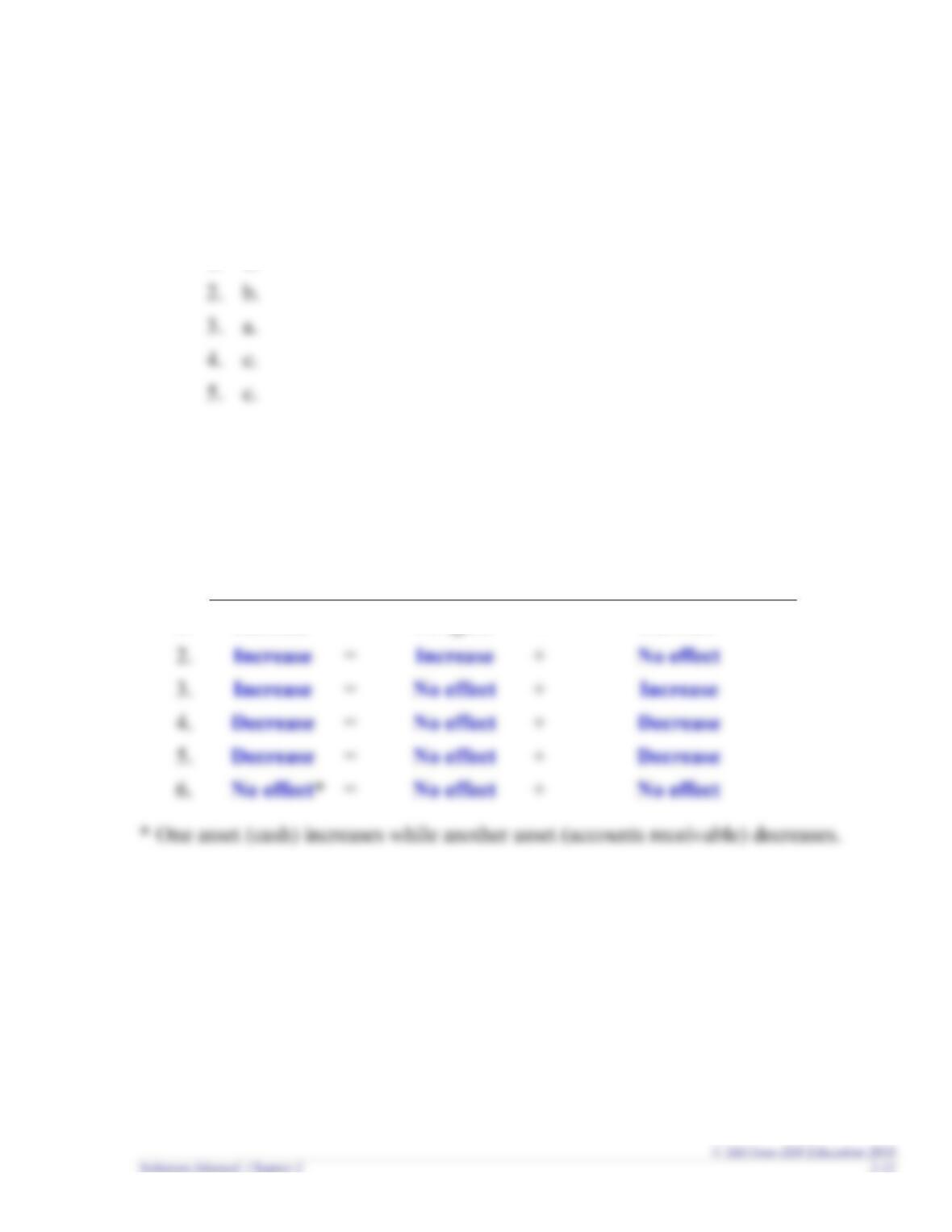
Brief Exercise 2-12 (LO 2-6)
Trial Balance
Accounts
Debit
Credit
Cash
$ 7,300
Accounts Receivable
Equipment
Accounts Payable
$ 3,900
Revenue
Common Stock
Retained Earnings
Dividends
Service Revenue
Salaries Expense
Utilities Expense
Chapter 2 – The Accounting Cycle: During the Period
EXERCISES
Exercise 2-1 (LO 2-1)
1.
d.
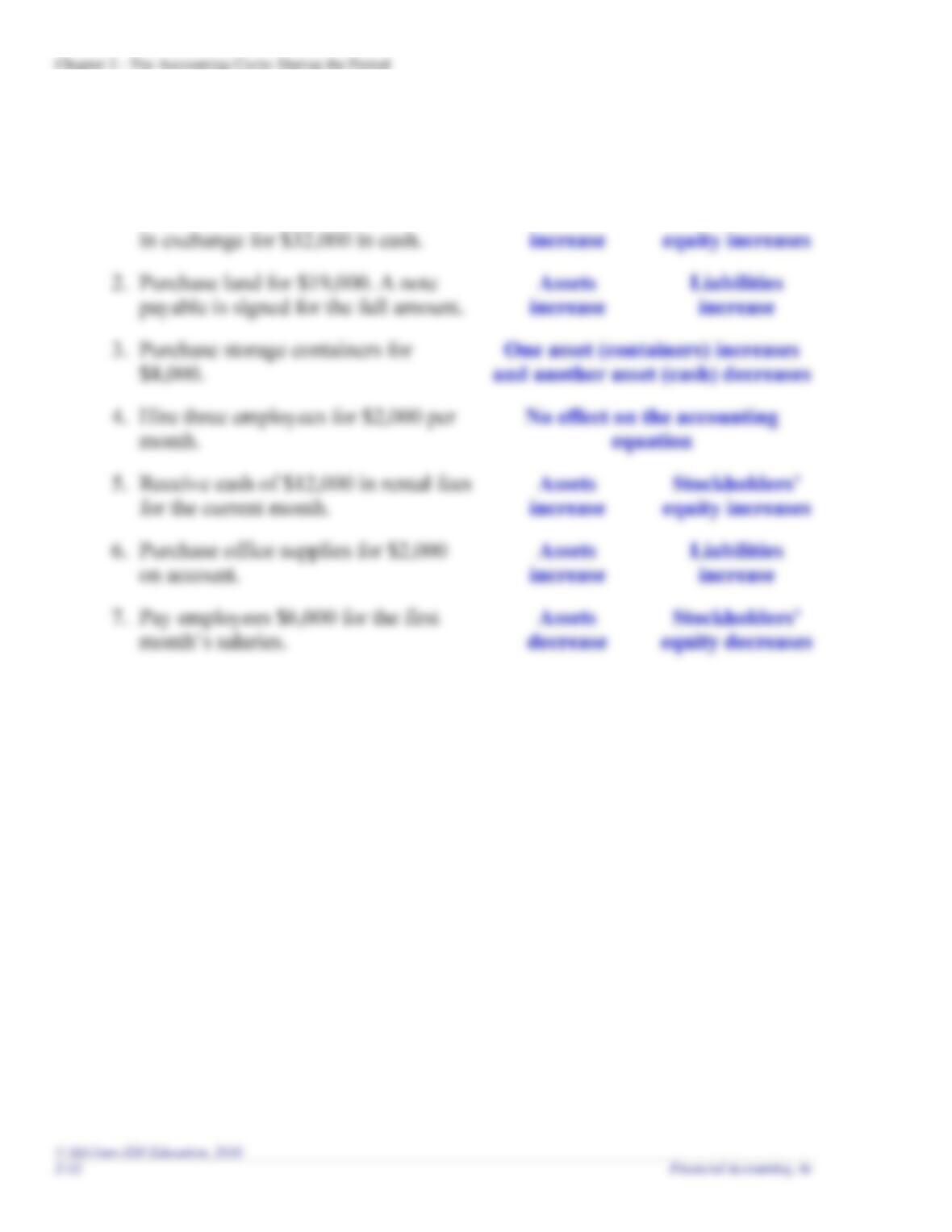
Exercise 2-2 (LO 2-2)
Assets
=
Liabilities
+
Stockholders’ Equity
1.
Increase
=
No effect
+
Increase
=
+
=
+
4.
=
+
=
+
Exercise 2-3 (LO 2-2)
Dual Effect
4. Hire three employees for $2,000 per
6. Purchase office supplies for $2,000
Assets
1. Issue 10,000 shares of common stock
Assets
Stockholders’
Exercise 2-4 (LO 2-2)
Dual Effect
4. Pay employee salaries of $3,200 for
Assets
Stockholders’
6. Pay office rent of $4,400 for the
Assets
Stockholders’
1. Paint houses in the current month for
Assets
Stockholders’
Exercise 2-5 (LO 2-2)
Transaction
Balance
Retained earnings, April 1
$13,000
Retained earnings, April 30
$18,100
Exercise 2-6 (LO 2-3)
Debit or Credit
Account
1.
Debit
Cash
3.
Salaries Expense
4.
Accounts Payable
6.
Retained Earnings
7.
Utilities Expense
8.
Accounts Receivable
9.
Dividends
Chapter 2 – The Accounting Cycle: During the Period
Exercise 2-7 (LO 2-3)
Account
Debited
Account
Credited
Example: Purchase equipment in exchange for cash.
Equipment
Cash
3. Provide services to customers on account.
5. Pay salaries for the current month.
10. Pay for office supplies purchased in (4) above.
Exercise 2-8 (LO 2-4)
(1)
Debit
Credit
(2)
(3)
(4)
(5)
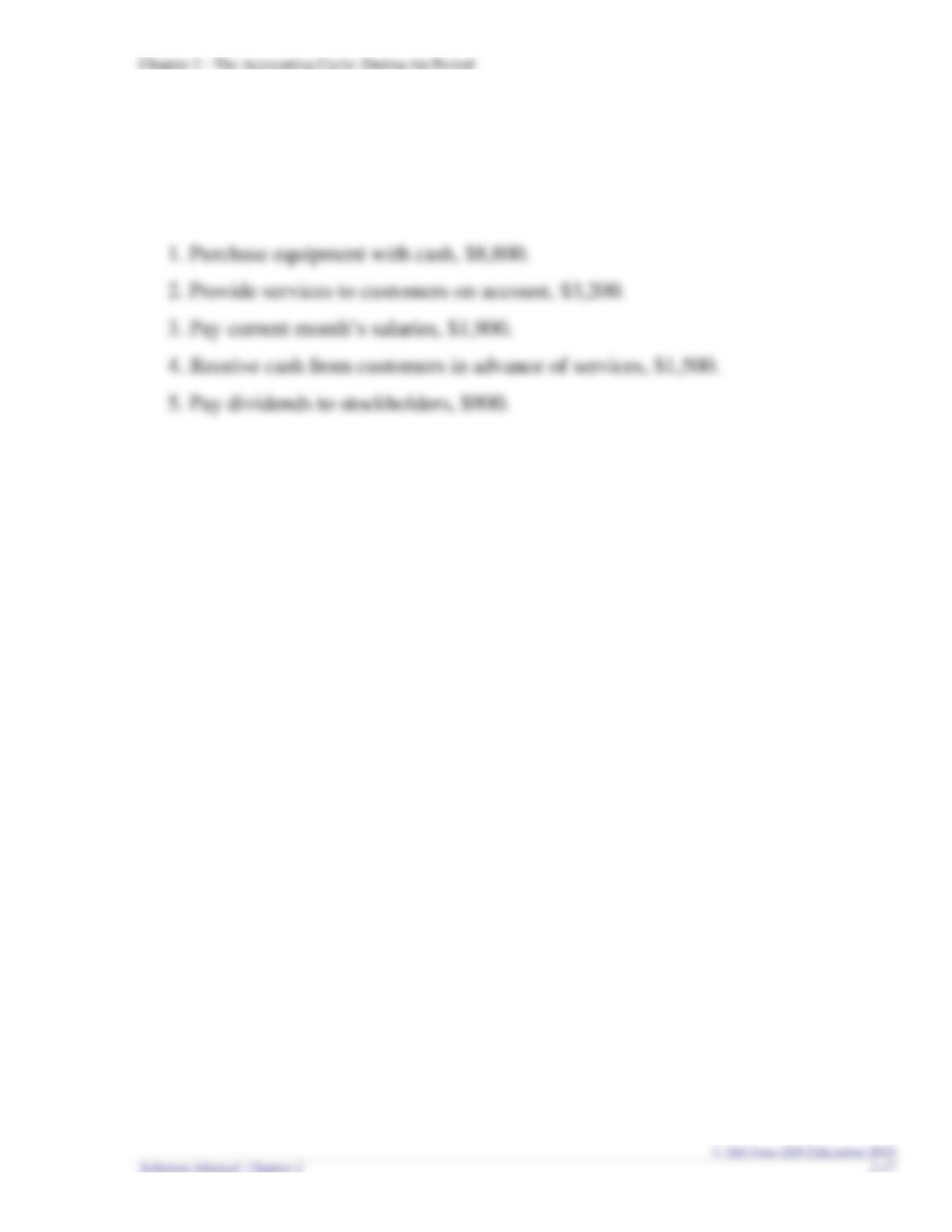
Exercise 2-9 (LO 2-4)
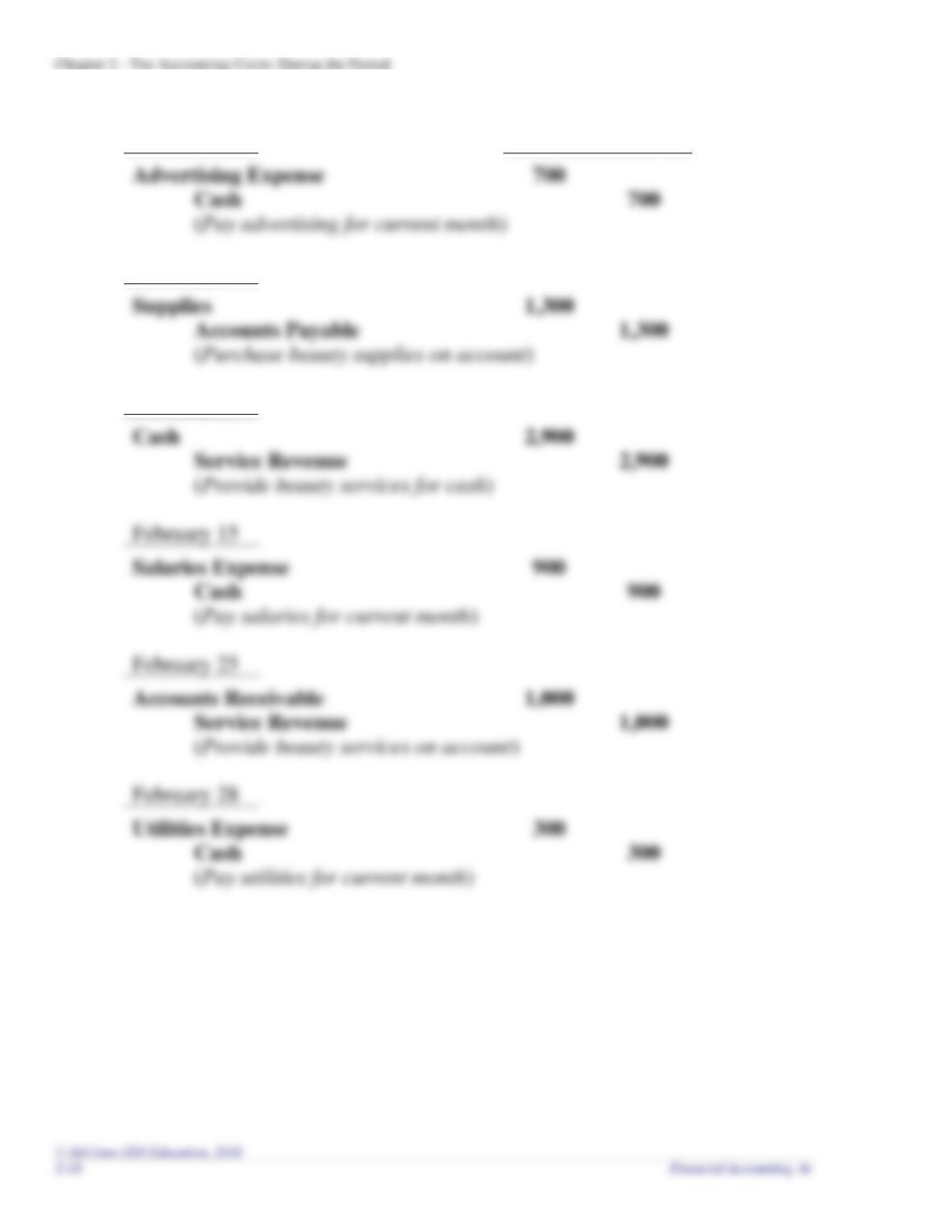
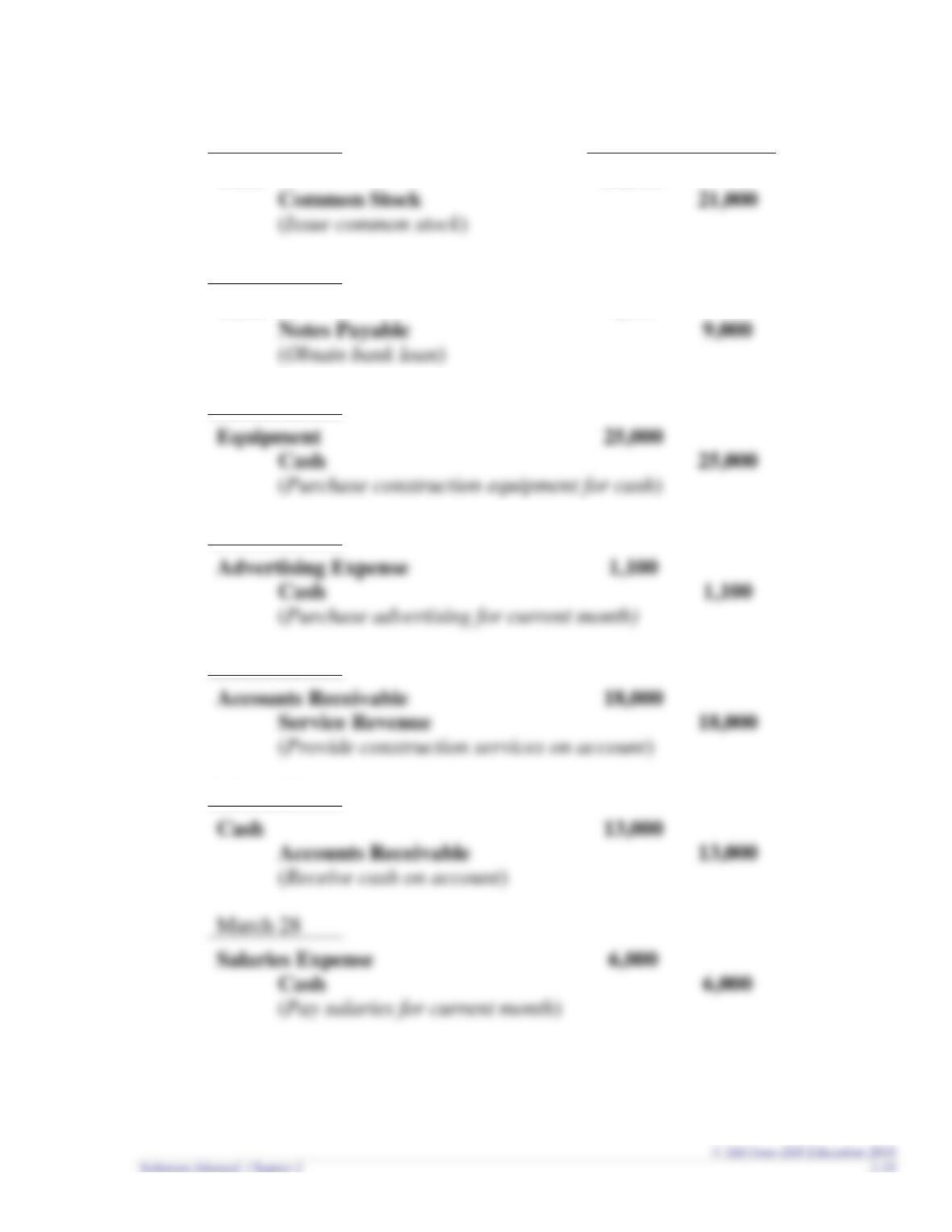
Exercise 2-10 (LO 2-4)
February 2
Debit
Credit
February 7
February 14
February 15
February 25
February 28
Chapter 2 – The Accounting Cycle: During the Period
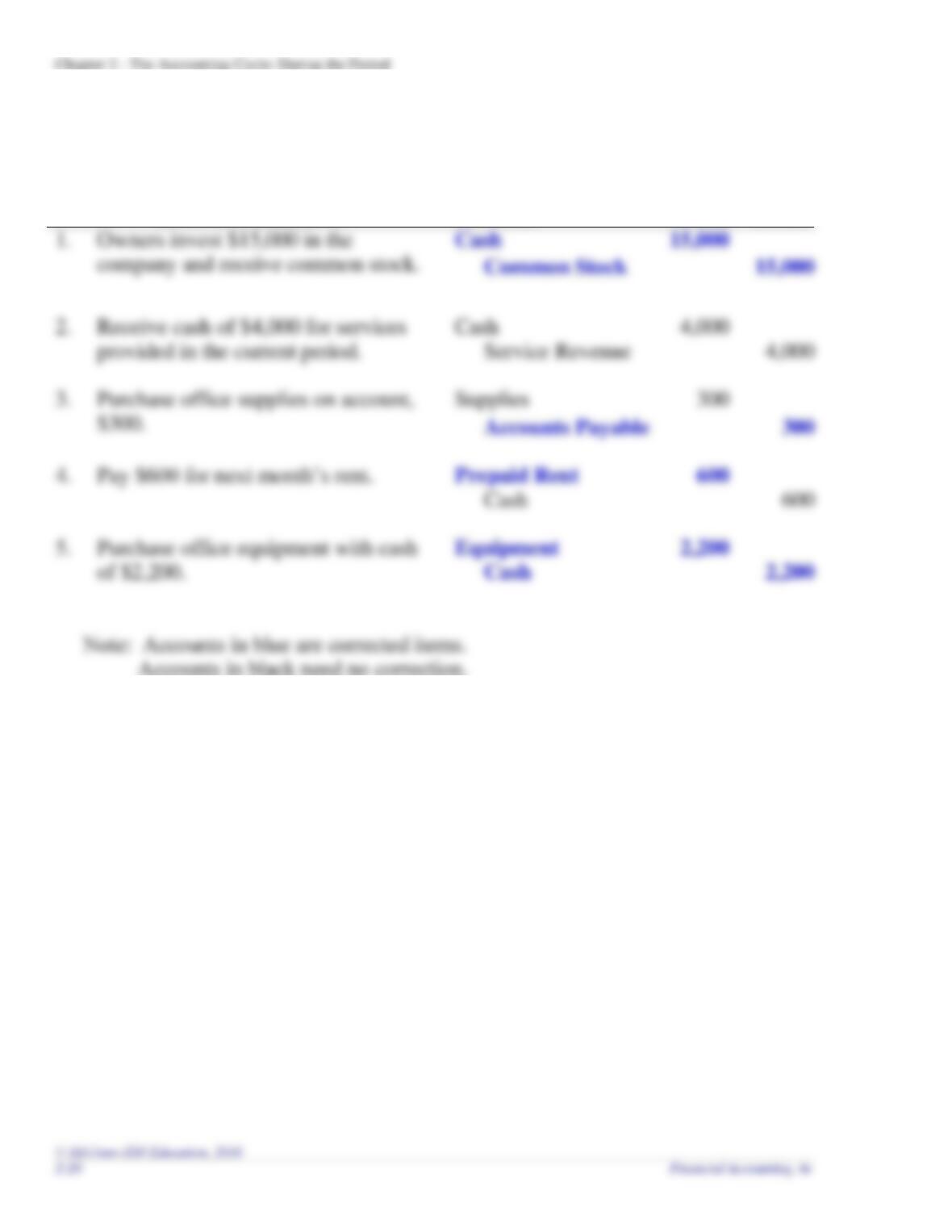
Exercise 2-11 (LO 2-4)
March 1
Debit
Credit
Cash
21,000
March 5
Cash
9,000
March 10
Equipment
March 15
Advertising Expense
March 22
Accounts Receivable
March 27
Cash
March 28
Salaries Expense
Exercise 2-12 (LO 2-4)
Corrections
External Transaction
Accounts
Debit
Credit
Cash
Pay $600 for next month’s rent.
Accounts in black need no correction.