FINANCIAL ACCOUNTING – Eleventh Edition Solutions Manual
Decision Case 1
(40-50 min.)
Requirements
Solution:
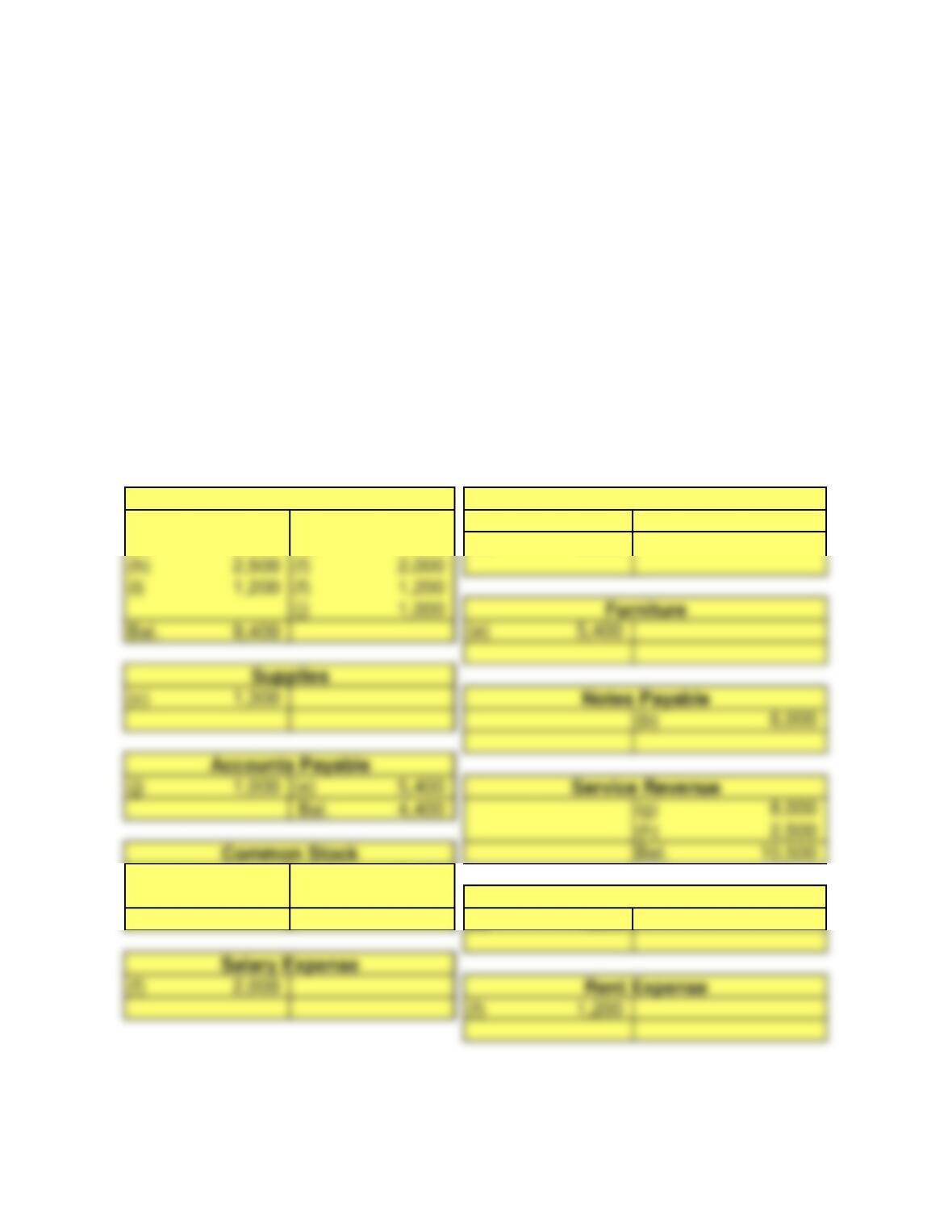
(a) 7,000 (c) 1,300 (g) 8,000 (i) 1,200
(b) 6,000 (d) 1,800 Bal. 6,800
(a) 7,000
(d) 1,800
1. Set up the following T-accounts: Cash, Accounts Receivable, Supplies, Furniture,
Accounts Payable, Notes Payable, Common Stock, Service Revenue, Salary
Expense, Advertising Expense, and Rent Expense.
2. Record the transactions directly in the accounts without using a journal. Key each
transaction by letter.
3. Construct a trial balance for Barlow Networks, Inc., at the current date. List
expenses with the largest amount first, the next largest amount second, and so on.
4. Compute the amount of net income or net loss for this first month of operations.
Why or why not would you recommend that Barlow continue in business?
Cash
Accounts Receivable
Reqs. 1 and 2
Advertising Expense
Chapter 2: Transaction Analysis Page 76 of 90
FINANCIAL ACCOUNTING – Eleventh Edition Solutions Manual
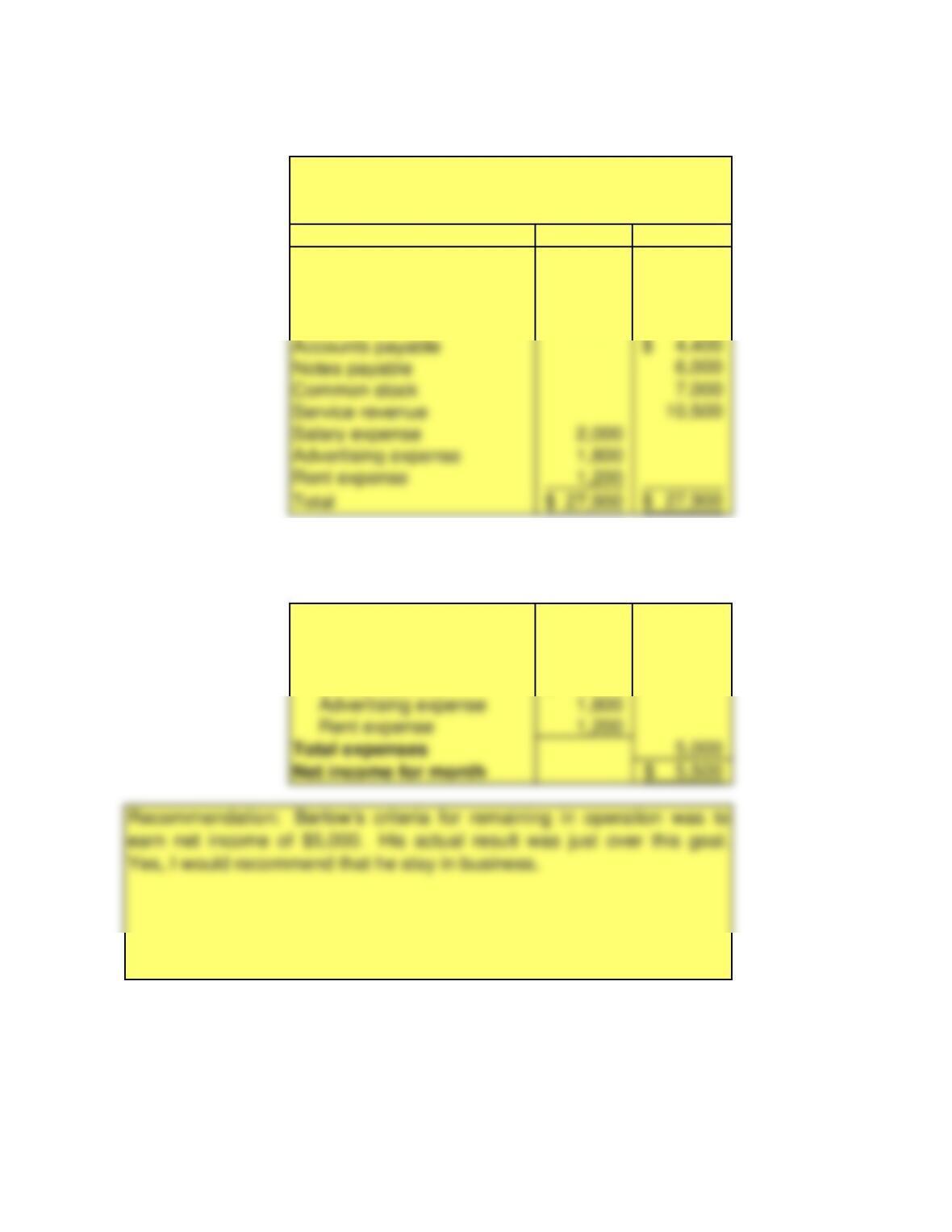
Req. 3
DEBIT CREDIT
Cash 9,400$
Accounts receivable 6,800
Supplies 1,300
Furniture 5,400
Req. 4
10,500$
2,000$
Advertising expense
Rent expense
(net income or loss for first month of operations)
Expenses:
Salary expense
Service revenue
Trial Balance
Current Date
ACCOUNT
Revenues:
Barlow Networks, Inc.
Chapter 2: Transaction Analysis Page 77 of 90
Salary expense 2,000
FINANCIAL ACCOUNTING – Eleventh Edition Solutions Manual
Decision Case 2
(20-30 min.)
Requirement
Solution:
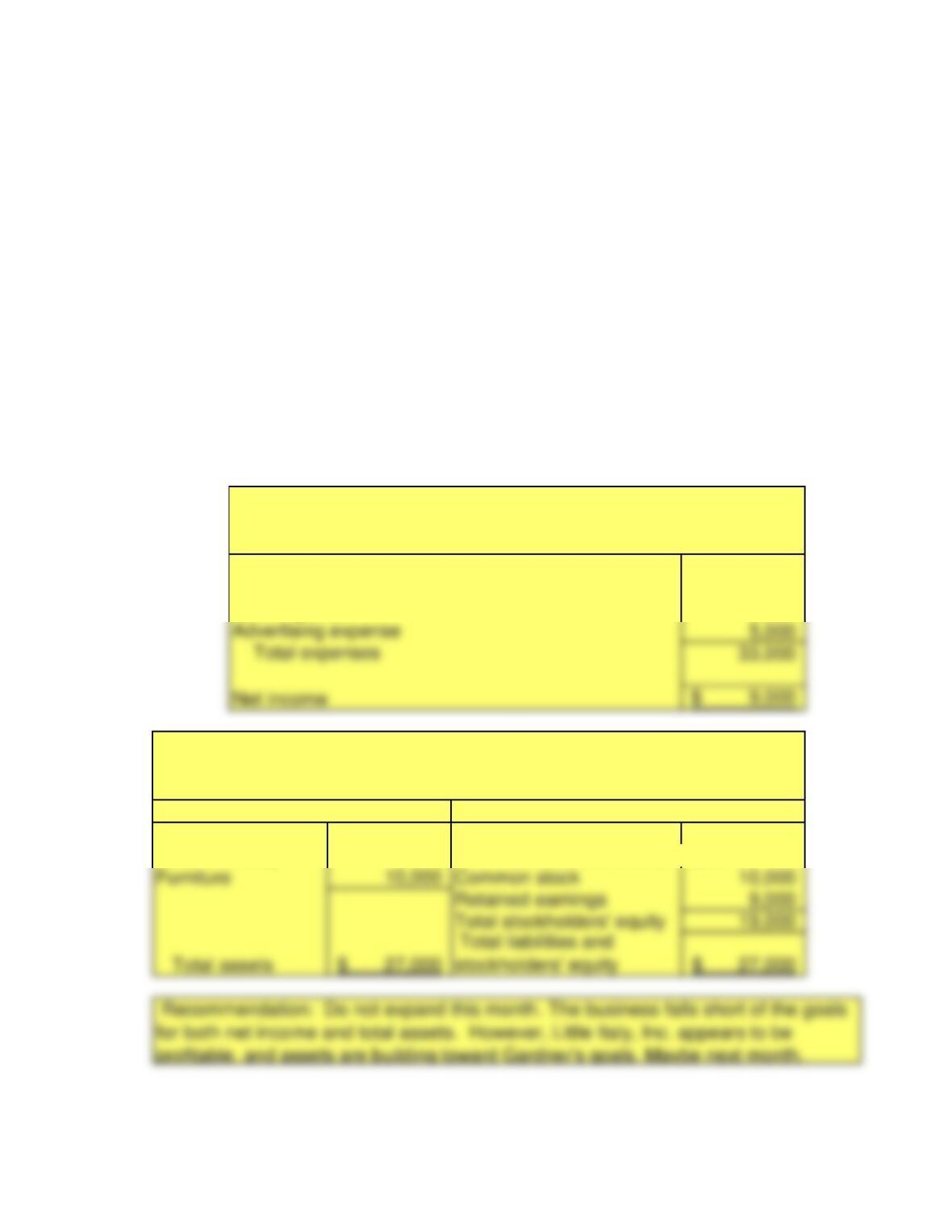
42,000$
22,000
6,000
Cash Accounts payable 8,000$
Food inventory
Furniture Common stock 10,000
Total assets
27,000$
27,000$
STOCKHOLDERS’ EQUITY
12,000$
5,000
December 31, 2016
Little Italy, Inc.
Income Statement
Month Ended December 31, 2016
Sales revenue
Cost of goods sold (expense)
Balance Sheet
1. Will Gardner has asked whether he should expand the restaurant. His banker says
Gardner may be wise to expand if (a) net income for the first month reached $10,000
and (b) total assets are at least $35,000. It appears that the business has reached
these milestones, but Gardner doubts whether his financial statements tell the true
story. He needs your help in making this decision. Prepare a corrected income
statement and balance sheet. (Remember that Retained Earnings, which was omitted
from the balance sheet, should equal net income for the first month; there were no
dividends.) After preparing the statements, give Will Gardner your recommendation as
to whether he should expand the restaurant.
Rent expense
ASSETS
LIABILITIES
Little Italy, Inc.
Chapter 2: Transaction Analysis Page 78 of 90
33,000
Advertising expense
Total expenses
Net income
FINANCIAL ACCOUNTING – Eleventh Edition Solutions Manual
Ethical Issues 1
Requirements
Solution:
Use the ethical decision model in Chapter 1 to answer the following questions:
1. What is the ethical issue?
2. Who are the stakeholders? What are the possible consequences to each?
3. Analyze the alternatives from the following standpoints: (a) economic, (b)
legal, and (c) ethical.
4. What would you do? How would you justify your decision? How would your
decision make you feel afterward?
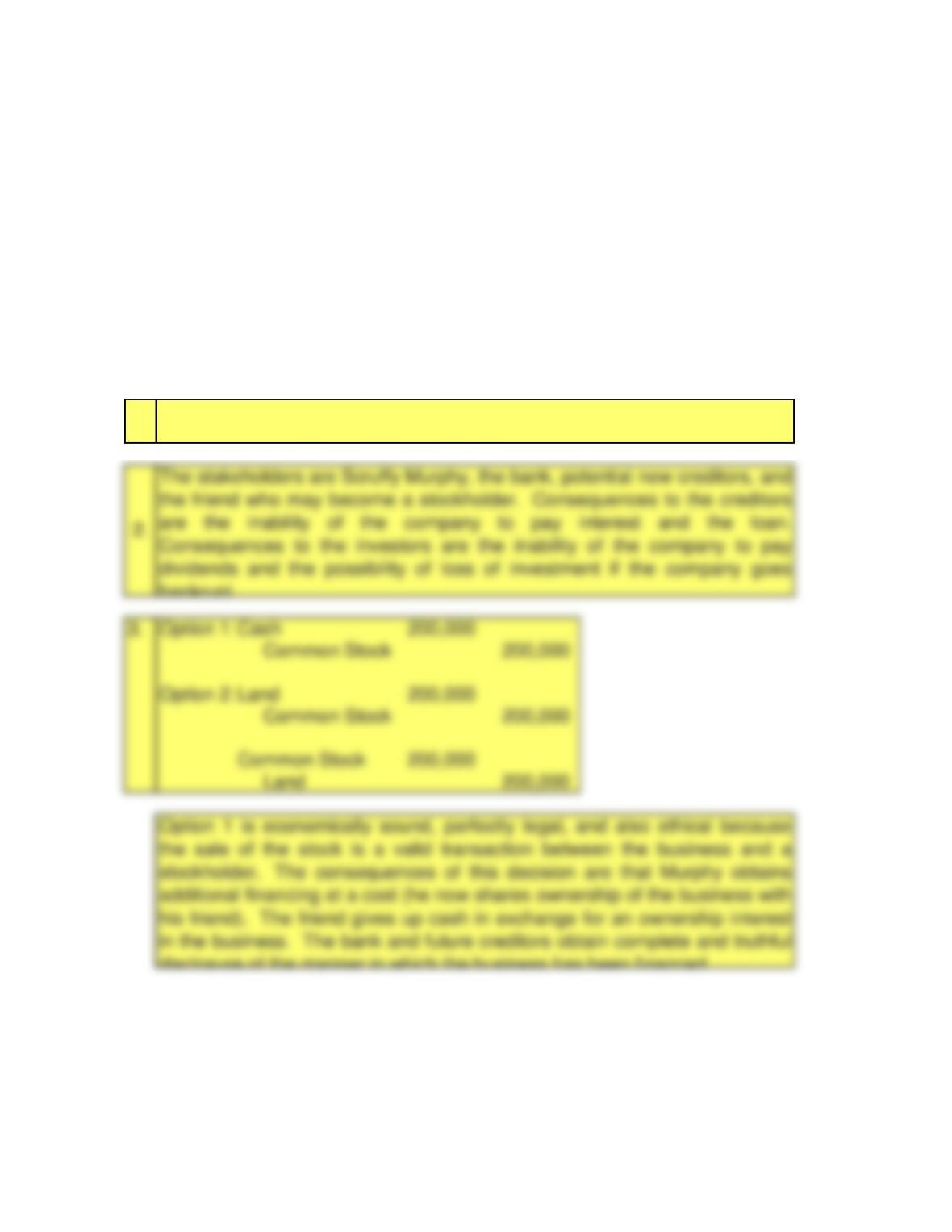
The ethical issue is whether these alternatives of financing the business are
proper from an economic, legal, and ethical standpoint.
1.
Chapter 2: Transaction Analysis Page 79 of 90
FINANCIAL ACCOUNTING – Eleventh Edition Solutions Manual
Option 2 represents “window dressing” (making the company look like an
entity that it is not). Although it might be legal in the strictest sense of the
word (and it might not), this option does not faithfully represent economic
Chapter 2: Transaction Analysis Page 80 of 90
FINANCIAL ACCOUNTING – Eleventh Edition Solutions Manual
Ethical Issue 2
Part A.
Requirements
Solution:
1.
1. What is the ethical issue?
2. Who are the stakeholders? What are the possible consequences to each?
3. Analyze the alternatives from the following standpoints: (a) economic, (b)
legal, and (c) ethical.
4. What would you do? How would you justify your decision? How would it make
you feel afterward?
The ethical issue is whether you should question your grade, which is
higher than you expected. Your choices are (a) discuss the grade with the
professor; and (b) do not discuss the grade with the professor.
Chapter 2: Transaction Analysis Page 81 of 90
FINANCIAL ACCOUNTING – Eleventh Edition Solutions Manual
Part B.
Requirements
Solution:
1.
The ethical issue in this case is whether you should question your grade,
which is now lower than you expected. Your choices are (a) discuss the
1. What is the ethical issue?
2. Who are the stakeholders and what are the consequences to each?
3. Analyze the alternatives from the following standpoints: (a) economic, (b)
legal, and (c) ethical.
4. What would you do? How would you justify your decision? How would it make
you feel?
Chapter 2: Transaction Analysis Page 82 of 90
4.
FINANCIAL ACCOUNTING – Eleventh Edition Solutions Manual
Part C.
Solution:
How is this situation like a financial accounting misstatement? How is it
different?
Both course grades and financial statements report results that people
use in order to make decisions that can carry both positive and
Chapter 2: Transaction Analysis Page 83 of 90
FINANCIAL ACCOUNTING – Eleventh Edition Solutions Manual
Apple, Inc.
(20-30 min.)
Requirement 1
Requirement 3
Solution:
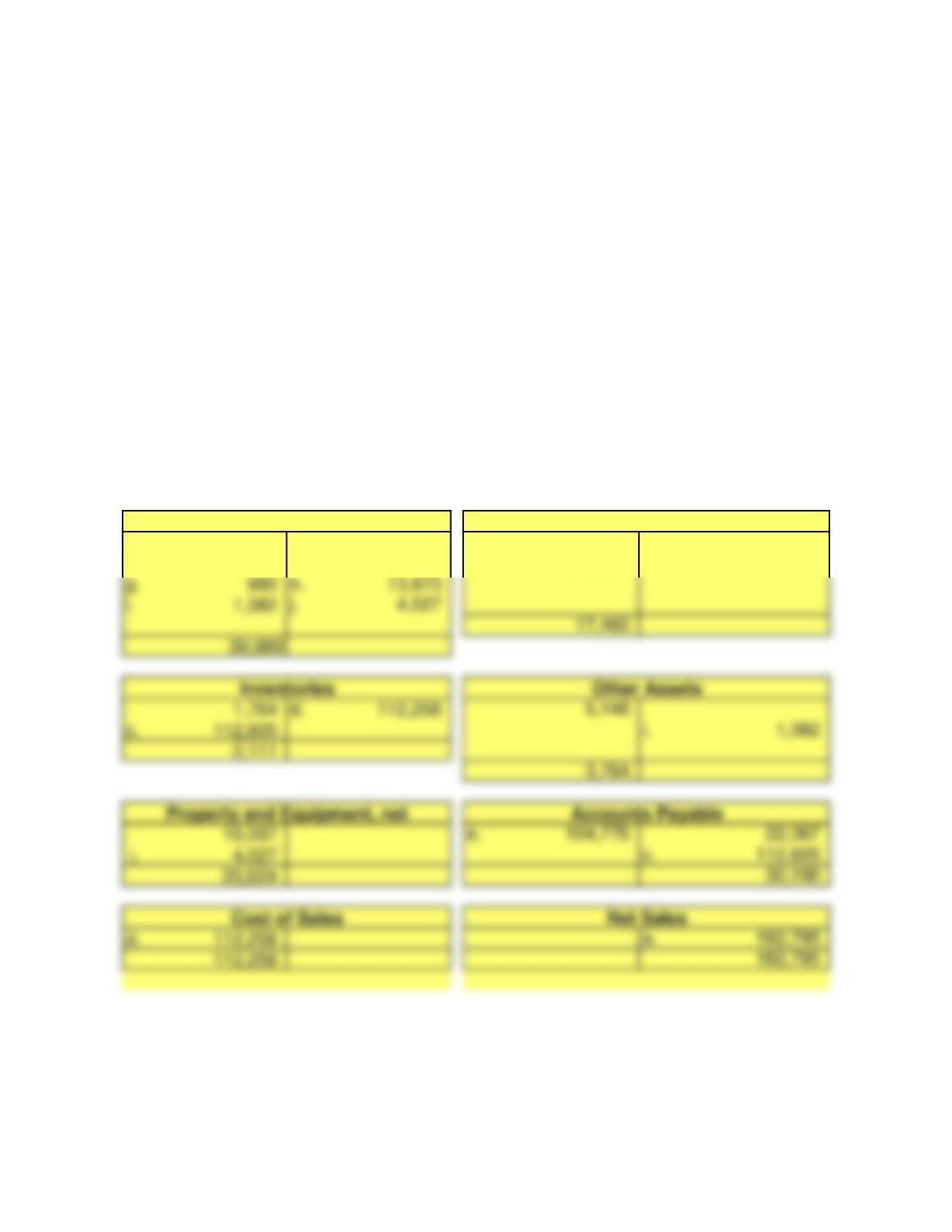
0 e. 104,776 13,102 b. 178,437
b. 178,437 f. 18,034 a. 182,795
Set up T-accounts for beginning balances of Cash ($0* balance); Accounts Receivable,
net (debit balance of $13,102 million); Inventories (debit balance of $1,764 million);
Property, Plant, and Equipment, net (debit balance of $16,597 million); Other Assets
(debit balance of $ 5,146 million); Accounts Payable (credit balance of $22,367 million);
Net Sales ($0 balance); Cost of Sales ($0 balance); Operating Expenses ($0 balance);
Other Income/(Expense), net ($0 balance); Provision for Income Taxes ($0 balance).
Post to the T-accounts, and compute the balance for each account. Key postings by
transaction letters a–j.
Cash
Accounts Receivable, net
Chapter 2: Transaction Analysis Page 84 of 90
c. 112,605 i. 1,382
2,111
j. 4,027 c. 112,605
20,624 30,196
d. 112,258 a. 182,795
112,258 182,795
FINANCIAL ACCOUNTING – Eleventh Edition Solutions Manual
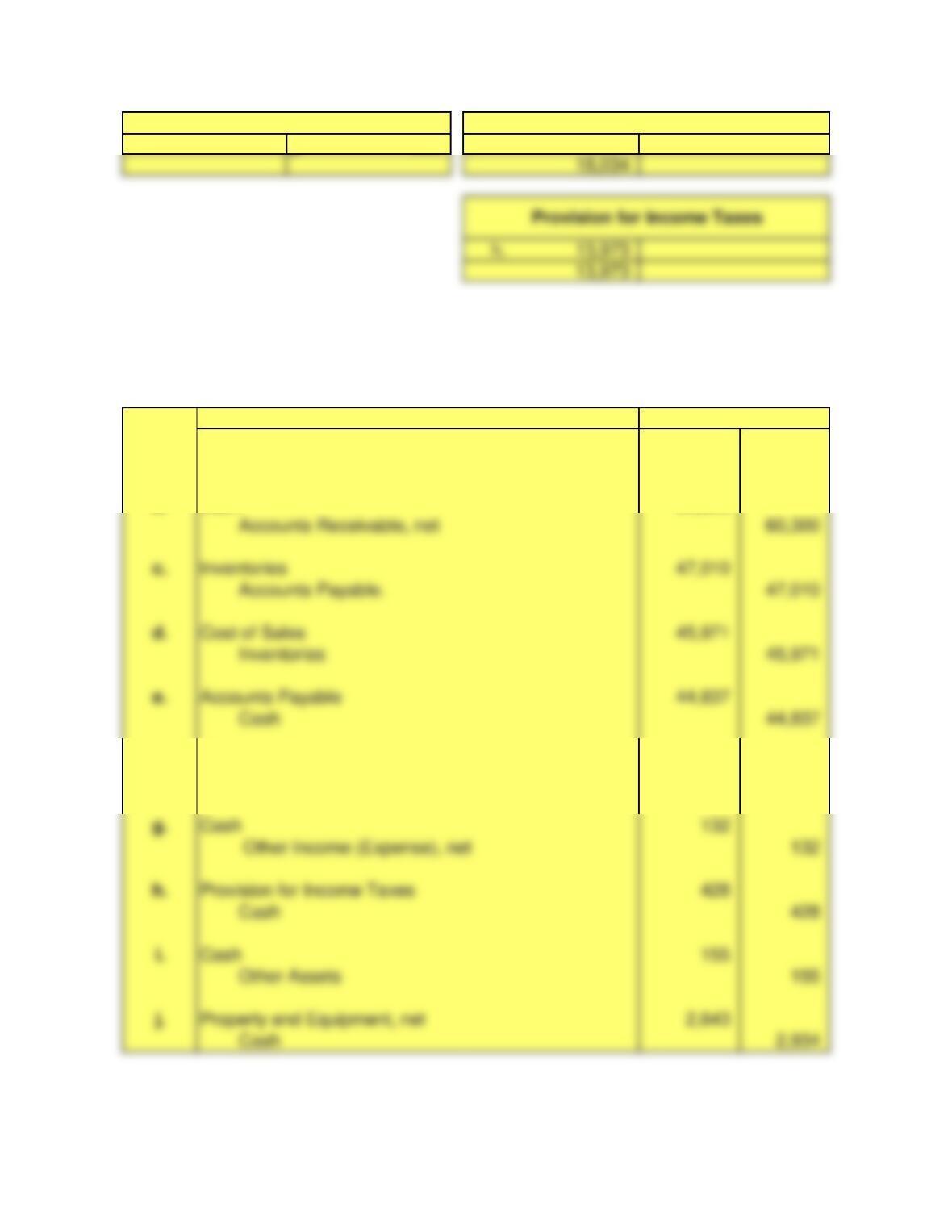
g. 980 f. 18,034
Requirement 2
Solution:
a. Accounts Receivable, net and other 61,093
Net Sales (Revenue) 61,093
b. Cash 60,300
Accounts Payable. 47,010
d. Cost of Sales 45,971
Cash 44,837
f. Operating Expenses 14,446
Cash 14,446
g. Cash 132
Other Income (Expense), net 132
h. Provision for Income Taxes 428
Other Income (Expense), net
Operating Expenses
Journalize Apple’s transactions a–j. Explanations are not required.
(Millions)
Chapter 2: Transaction Analysis Page 85 of 90
FINANCIAL ACCOUNTING – Eleventh Edition Solutions Manual
Requirement 4
Solution:
Requirement 5
Solution:
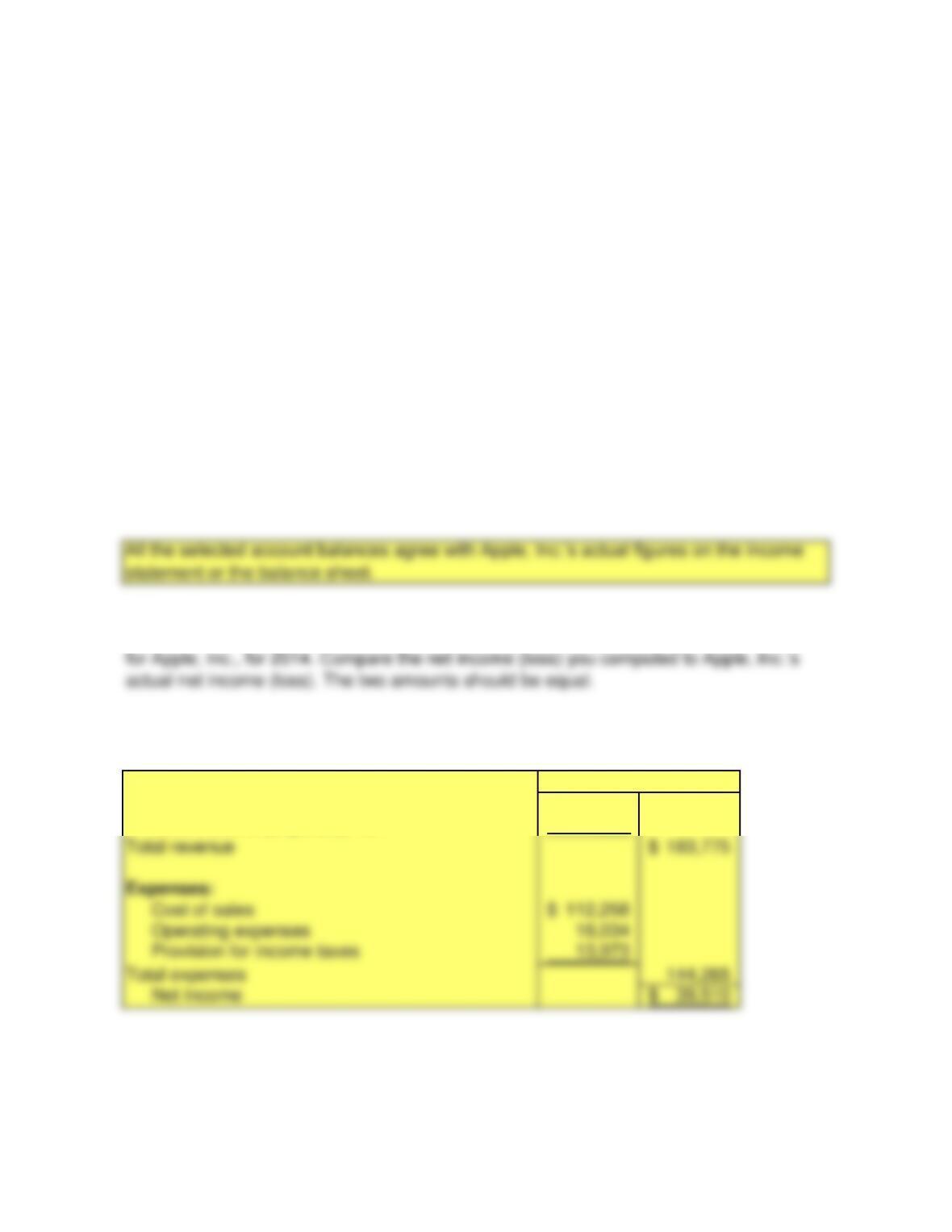
Revenue:
Net sales 182,795$
Other Income (Expense), net 980
(Millions)
Use the relevant accounts from requirement 4 to prepare a summary income statement
For each of the following accounts, compare your computed balance to Apple, Inc.’s
actual balance as shown on its 2014 Consolidated Statement of Operations or
Consolidated Balance Sheet in Appendix A at the end of the book. Your amounts should
agree with the actual figures.
a. Accounts Receivable, net
b. Inventories
c. Property and Equipment, net (assume no other activity in fixed assets than given in the
problem)
d. Other Assets
e. Accounts Payable
f. Net Sales
g. Cost of Sales
h. Operating Expenses
i. Other Income (Expense), net
j. Provision for Income Taxes
Chapter 2: Transaction Analysis Page 86 of 90
Expenses:
Cost of sales 112,258$
Operating expenses 18,034
Net Income 39,510$
FINANCIAL ACCOUNTING – Eleventh Edition Solutions Manual
Under Armour, Inc.
(20-30 min.)
Solution:
Req. 1
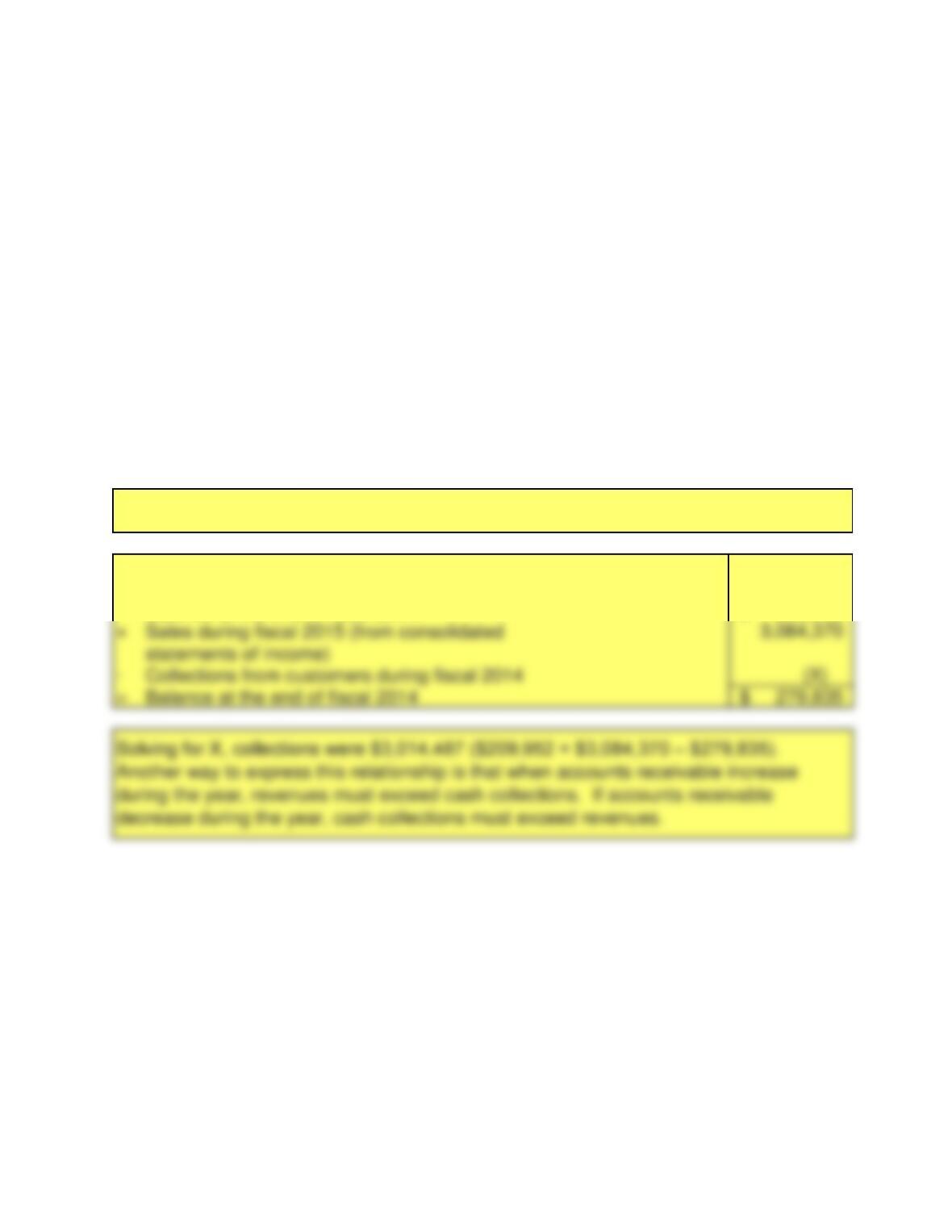
Net receivables: (Thousands)
Balance at the end of fiscal 2014 209,952$
1. Which was larger for Under Armour, Inc. during 2014: (1) sales revenue, or (2) cash
collected from customers? Why? Show computation. (Challenge)
2. Investors are vitally interested in a company’s sales and profits and its trends of sales
and profits over time. Consider Under Armour, Inc.’s sales and net income (net loss)
during the period from 2012 through 2014. Compute the percentage increase or
decrease in net sales and also in net income (net loss) from 2012 to 2014. Which item
grew faster during this two-year period—net sales or net income (net loss)? Can you
offer a possible explanation for these changes? (Challenge)
During fiscal 2014, Under Armour, Inc. had more net revenues than cash collections.
This is determined by analyzing net receivables, as follows:
Chapter 2: Transaction Analysis Page 87 of 90
statements of income)
FINANCIAL ACCOUNTING – Eleventh Edition Solutions Manual
Req. 2
2014 2013 2012
Sales (millions) 3,084,370$ 2,332,051$ 1,834,921$
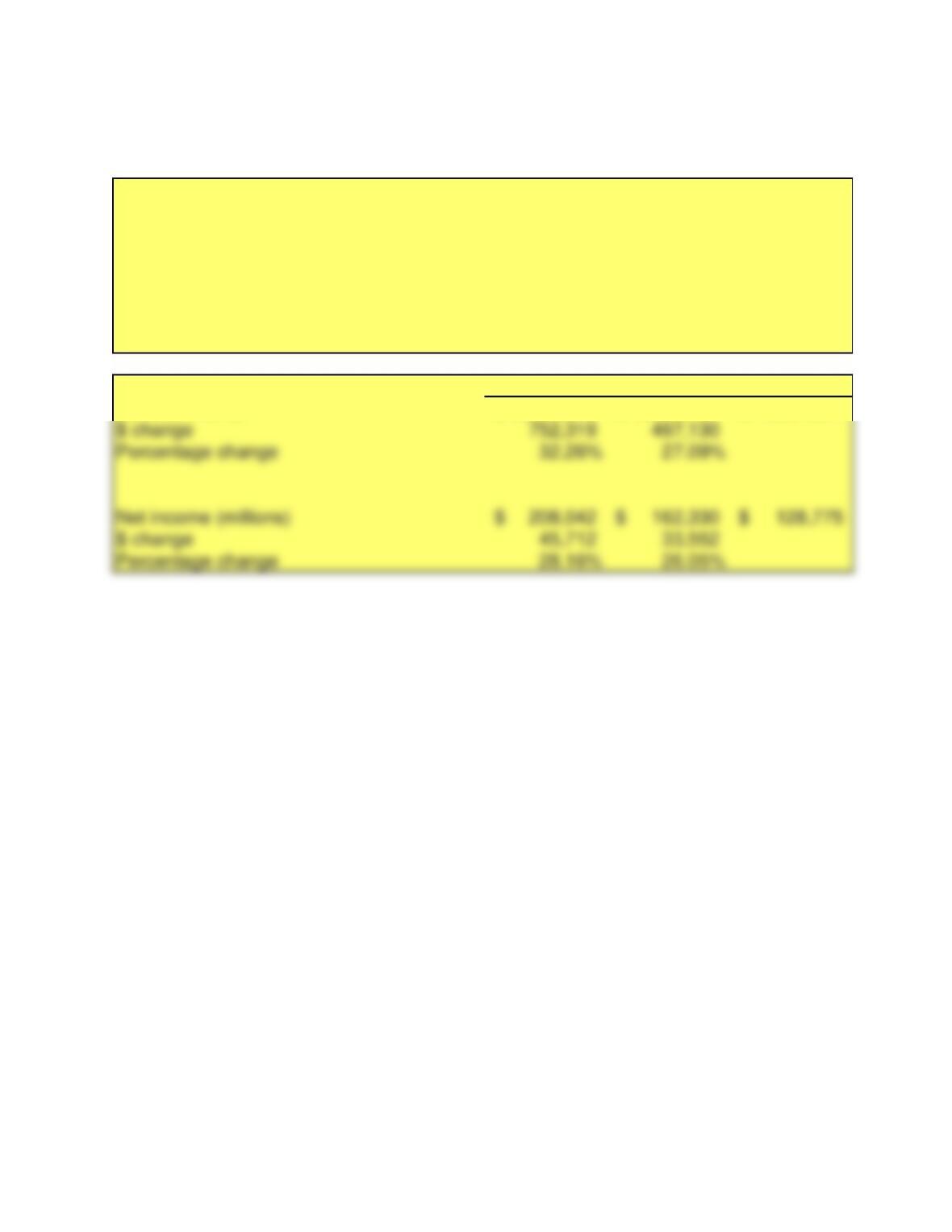
Net revenues increased 32.26% in 2014, which is better than in 2013 (27.09%) perhaps
due to a better strategic alignment. Net income increased more in 2014 (28.16%) than
in 2013 (26.05%). Net income grew slower than net revenues during the two year period
due to a larger tax bill and additional sources of expenses due to expansion. For
example, interest expense increased 81.90% in 2014 and selling, general and
administrative expenses increased 32.89% in 2014.
Chapter 2: Transaction Analysis Page 88 of 90
$ change 752,319 497,130
Percentage change 32.26% 27.09%
Net income (millions) 208,042$ 162,330$ 128,775$
$ change 45,712 33,552
Percentage change 28.16% 26.05%

FINANCIAL ACCOUNTING – Eleventh Edition Solutions Manual
Group project 1
Requirements
Solution:
1. Make a detailed list of 10 factors you must consider as you establish the
business.
2. Describe 10 of the items your business must arrange to promote and stage the
rock concert.
3. Identify the transactions that your business can undertake to organize, promote,
and stage the concert. Journalize the transactions, and post to the relevant T-
accounts. Set up the accounts you need for your business ledger. Refer to the chart
of accounts in Appendix C at the end of the book if needed.
4. Prepare the income statement, statement of retained earnings, and balance
sheet immediately after the rock concert—that is, before you have had time to pay
all the business bills and to collect all receivables.
5. Assume that you will continue to promote rock concerts if the venture is
successful. If it is unsuccessful, you will terminate the business within three months
after the concert. Discuss how to evaluate the success of your venture and how to
decide whether to continue in business.
Chapter 2: Transaction Analysis Page 89 of 90

FINANCIAL ACCOUNTING – Eleventh Edition Solutions Manual
Group project 2
Requirements
Solution:
Student responses will vary.
1. Obtain a copy of the business’s chart of accounts.
2. Prepare the company’s financial statements for the most recent month, quarter,
or year. You may use either made-up account balances or balances supplied by the
owner.
Chapter 2: Transaction Analysis Page 90 of 90