1. Cost is the amount of cash or cash equivalent sacrificed for goods and/or services that are
expected to bring a current or future benefit to the organization. An expense is an expired cost;
the benefit has been used up.
3. A cost object is something for which you want to know the cost. For example, a cost object may be
the human resources department of a company. The costs related to that cost object might include
salaries of employees of that department, telephone costs for that department, and depreciation on
office equipment. Another example is a customer group of a company. Atlantic City and Las Vegas
casinos routinely treat heavy gamblers to free rooms, food, and drink. The casino owners know the
benefits yielded by these high rollers and need to know the costs of keeping them happy, such as
the opportunity cost of lost revenue from the rooms, the cost of the food, and so on.
convenience or some assumed linkage.
6. A product is tangible in that you can see, feel, and take it with you. Examples of products include a
tube of toothpaste, a car, or an orange. A service is a task or an activity performed for a customer.
For example, the dental hygienist who cleans your teeth provides a service.
7. Manufacturing overhead includes all product costs other than direct materials and direct labor. It is
because the remaining manufacturing (product) costs are gathered into one category that
overhead is often thought of as a “catchall.”
8. Direct materials purchases are first entered into the materials inventory. They may or may not be
used during the month. Only when the materials are withdrawn from inventory for use in production
are they known as “direct materials.”
2BASIC MANAGERIAL
A
CCOUNTING CONCEPTS
DISCUSSION QUESTIONS
CHAPTER 2 Basic Managerial Accounting Concepts
10. A period cost is one that is expensed immediately, rather than being inventoried like a product
cost.
13. The cost of goods manufactured is the cost of direct materials, direct labor, and overhead for the
units produced (completed) during a time period. The cost of goods sold is the cost of direct
materials, direct labor, and overhead for the units sold during a time period. The number of units
produced is not necessarily equal to the number of units sold during a period. For example, a
company may produce 1,000 pairs of jeans in a month but sell only 900 pairs.
14. The income statement for a manufacturing firm includes the cost of goods sold, which is the sum
of direct materials, direct labor, and manufacturing overhead. The income statement for a service
firm contains no cost of goods sold because there is no product to purchase or to manufacture
and, thus, there is no inventory account to expense as cost of goods sold. In addition, because
there is no cost of goods sold on the income statement of a service firm, there is no gross margin,
unlike a manufacturing firm.
CHAPTER 2 Basic Managerial Accounting Concepts
2-1. c
2-2. d
2-3. b Conversion Cost per Unit = $6 + $19 = $25
2-8. d
2-9. b
2-10. a
2-11. e Prime Cost per Unit = $8.65 + $1.10 = $9.75
2-12. b
2-13. a Total Prime Cost = $50,000 + $20,000 = $70,000
2-16. b Sales = $31 × 10,000 = $310,000
Gross Margin = $310,000 – $200,000 = $110,000
Gross Margin per Unit = $110,000/10,000 units = $11.00
MULTIPLE-CHOICE QUESTIONS
CHAPTER 2 Basic Managerial Accounting Concepts
BE 2-19
1. Direct materials…………………………………………………
…
$ 32,000
Direct labor………………………………………………………
…
28,000
2. Per-Unit Product Cost = $120,000 = $240
500 units
Therefore, one hockey stick costs $240 to produce.
BE 2-20
1. Direct materials…………………………………………………
…
$32,000
Direct labor………………………………………………………
…
28,000
Total prime cost………………………………………………… $60,000
2. Per-Unit Prime Cost = $60,000 = $120
500 units
…
BE 2-21
Materials inventory, June 1…………………………………………………………
…
$ 48,000
Purchases………………………………………………………………………………
…
132,000
BRIEF EXERCISES: SET
A
CHAPTER 2 Basic Managerial Accounting Concepts
BE 2-22
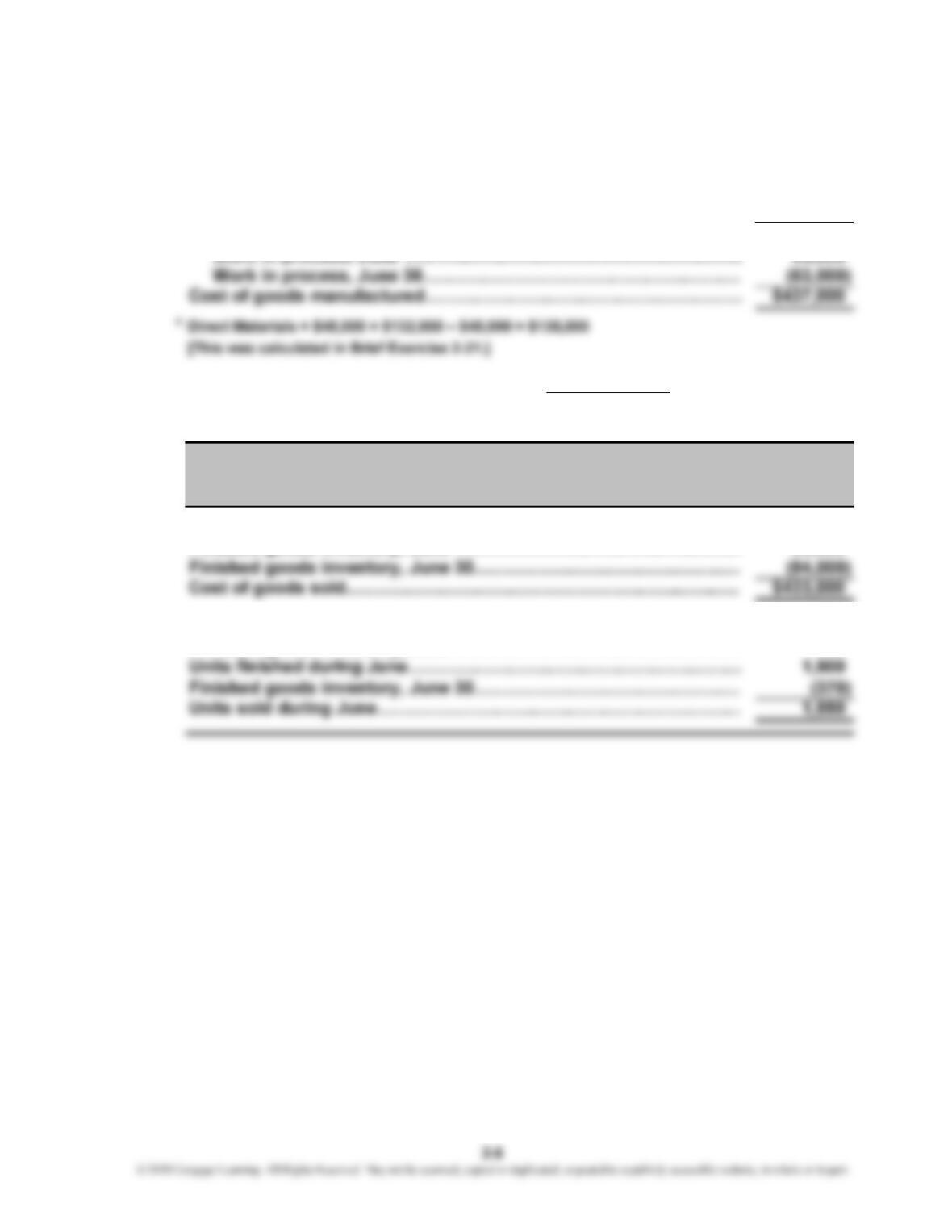
1. Direct materials*……………………………………………………………… $135,000
Direct labor……………………………………………………………………
…
113,000
Manufacturing overhead……………………………………………………
…
187,000
Total manufacturing cost for June………………………………………
…
$435,000
2. Per-Unit Cost of Goods Manufactured = = $230
BE 2-23
1.
Cost of goods manufactured………………………………….…………… $437,000
…
2. Number of units sold:
Finished goods inventory, June 1…………………………………….…
…
350
For the Month of June
$437,000
1,900 units
Slapshot Company
Cost of Goods Sold Statement
…
CHAPTER 2 Basic Managerial Accounting Concepts
BE 2-24
Sales revenue (1,880 × $400)……………………………………… $752,000
Cost of goods sold ……………………………………..…………
…
433,000
Gross margin……………………………………………………
…
$319,000
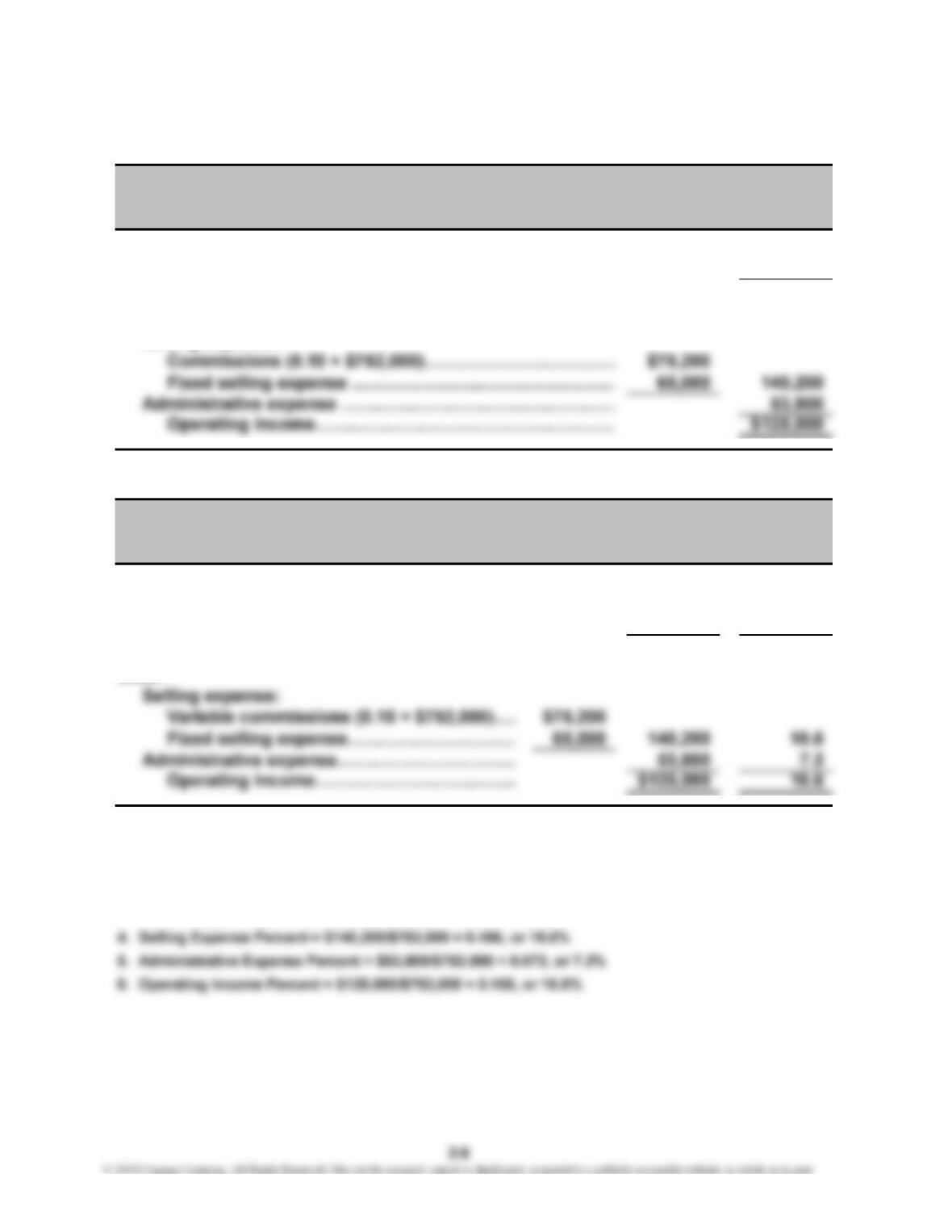
Less:
Selling expense:
BE 2-25
Percent*
Sales revenue (1,880 × $400)………………………
…
$752,000 100.0
Cost of goods sold …………………………………
…
433,000 57.6
Gross margin……………………………………… $319,000 42.4
*
Steps in calculating the percentages (the percentages are rounded):
1. Sales Revenue Percent = $752,000/$752,000 = 1.00, or 100% (sales revenue is
always 100% of sales revenue)
2. Cost of Goods Sold Percent = $433,000/$752,000 = 0.576, or 57.6%
3. Gross Margin Percent = $319,000/$752,000 = 0.424, or 42.4%
Slapshot Company
Income Statement
For the Month of June
Slapshot Company
Income Statement
For the Month of June
…
BE 2-26
1.
Sales revenues………………………………………………
…
$410,000
Less operating expenses:
Sales commissions……………………………………… $ 50,000
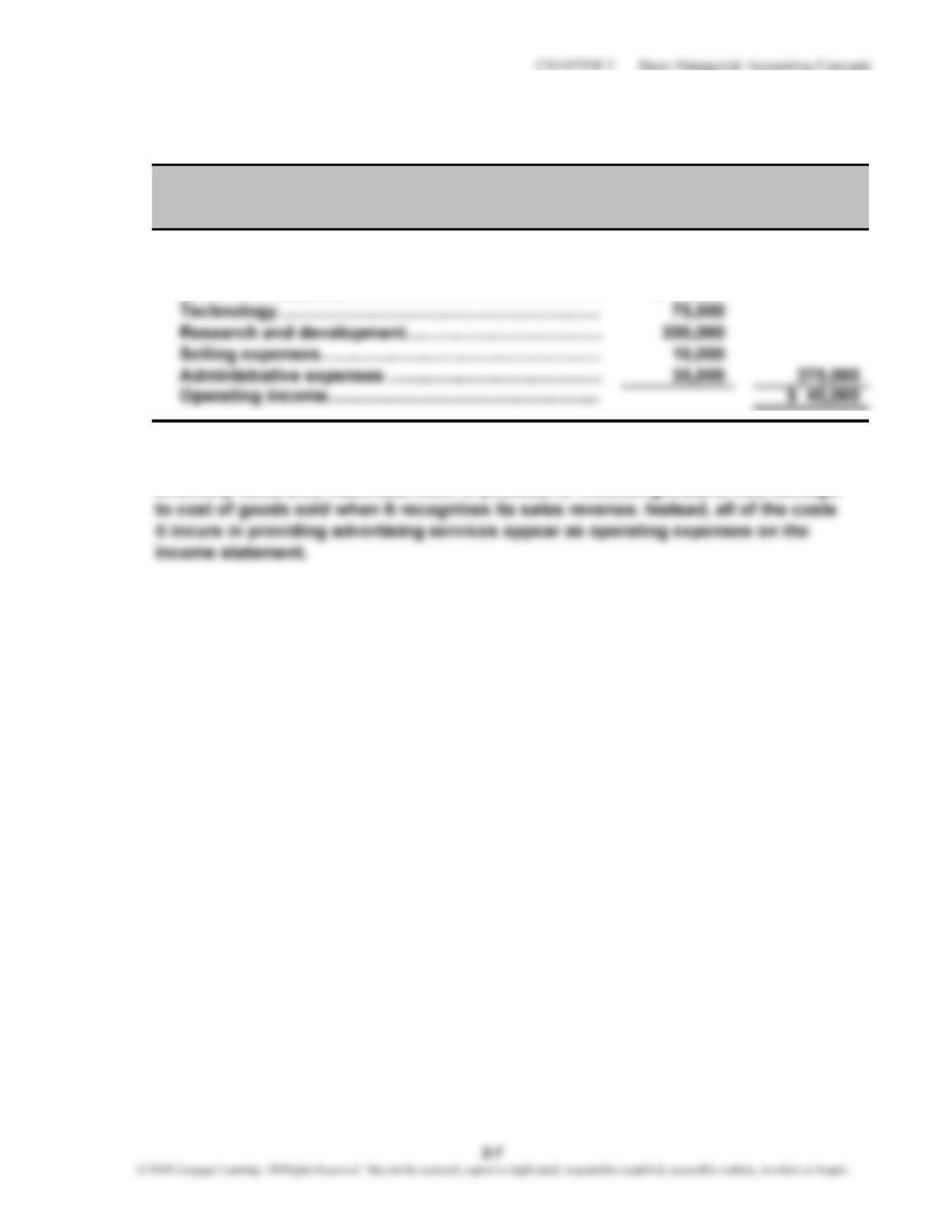
2. Allstar has no cost of goods sold line item because the company is a service
provider, rather than a manufacturer. Therefore, as a service provider, Allstar has no
For the Past Month
Allstar Exposure
Income Statement
CHAPTER 2 Basic Managerial Accounting Concepts
BE 2-27
1. Direct materials…………………………………………………
…
$100,000
Direct labor………………………………………………………
…
18,000
2. Per-Unit Product Cost = $168,000 = $84
2,000 units
Therefore, one coffee maker costs $84 to produce.
BE 2-28
1. Direct materials…………………………………………………
…
$100,000
Direct labor………………………………………………………
…
18,000
Total prime cost………………………………………………… $118,000
2. Per-Unit Prime Cost = $118,000 = $59
2,000 units
…
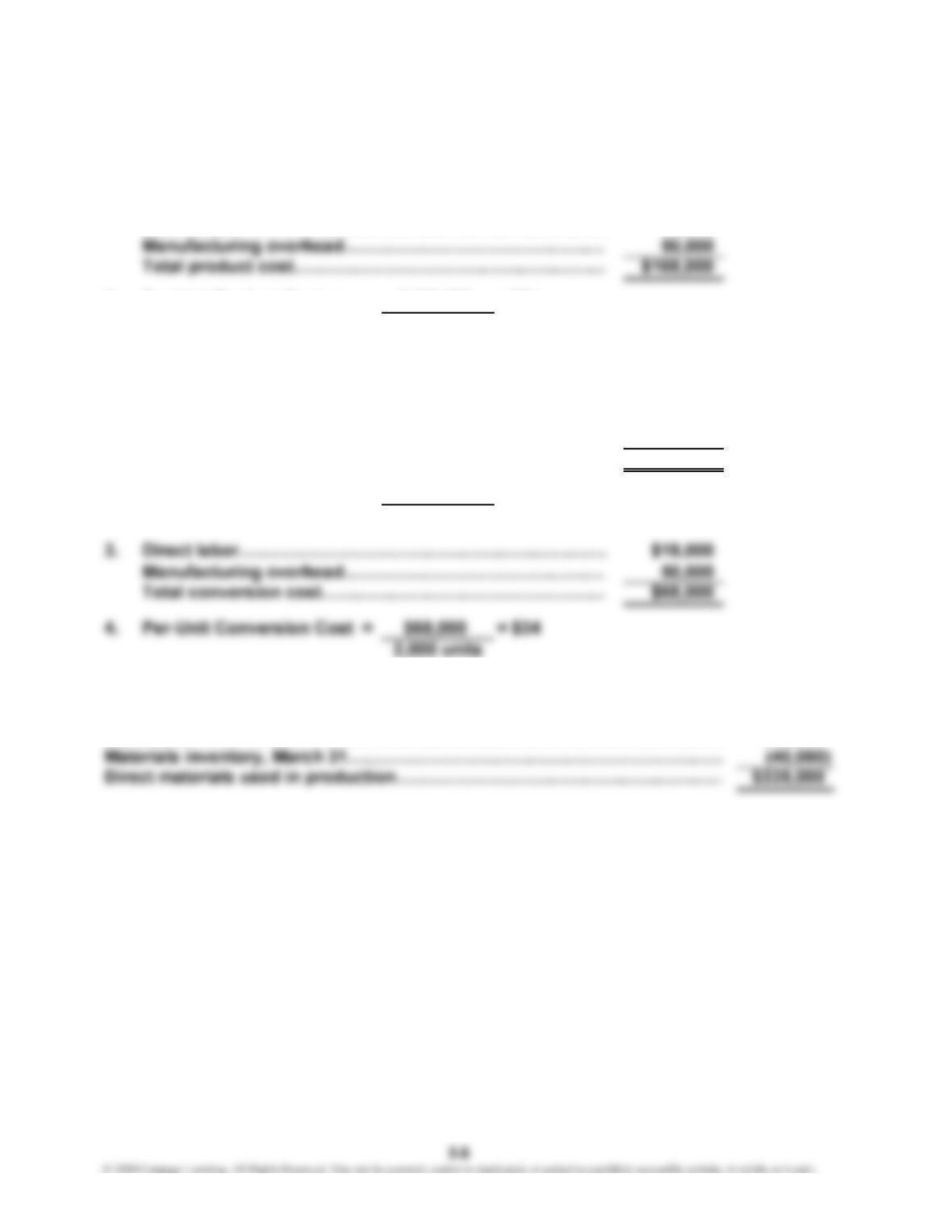
BE 2-29
Materials inventory, March 1…………………………………………………………
…
$ 25,000
Purchases………………………………………………………………………………
…
350,000
BRIEF EXERCISES: SET B
CHAPTER 2 Basic Managerial Accounting Concepts
BE 2-30
1. Direct materials*……………………………………………………………… $335,000
Direct labor……………………………………………………………………
…
74,000
Manufacturing overhead……………………………………………………
…
190,000
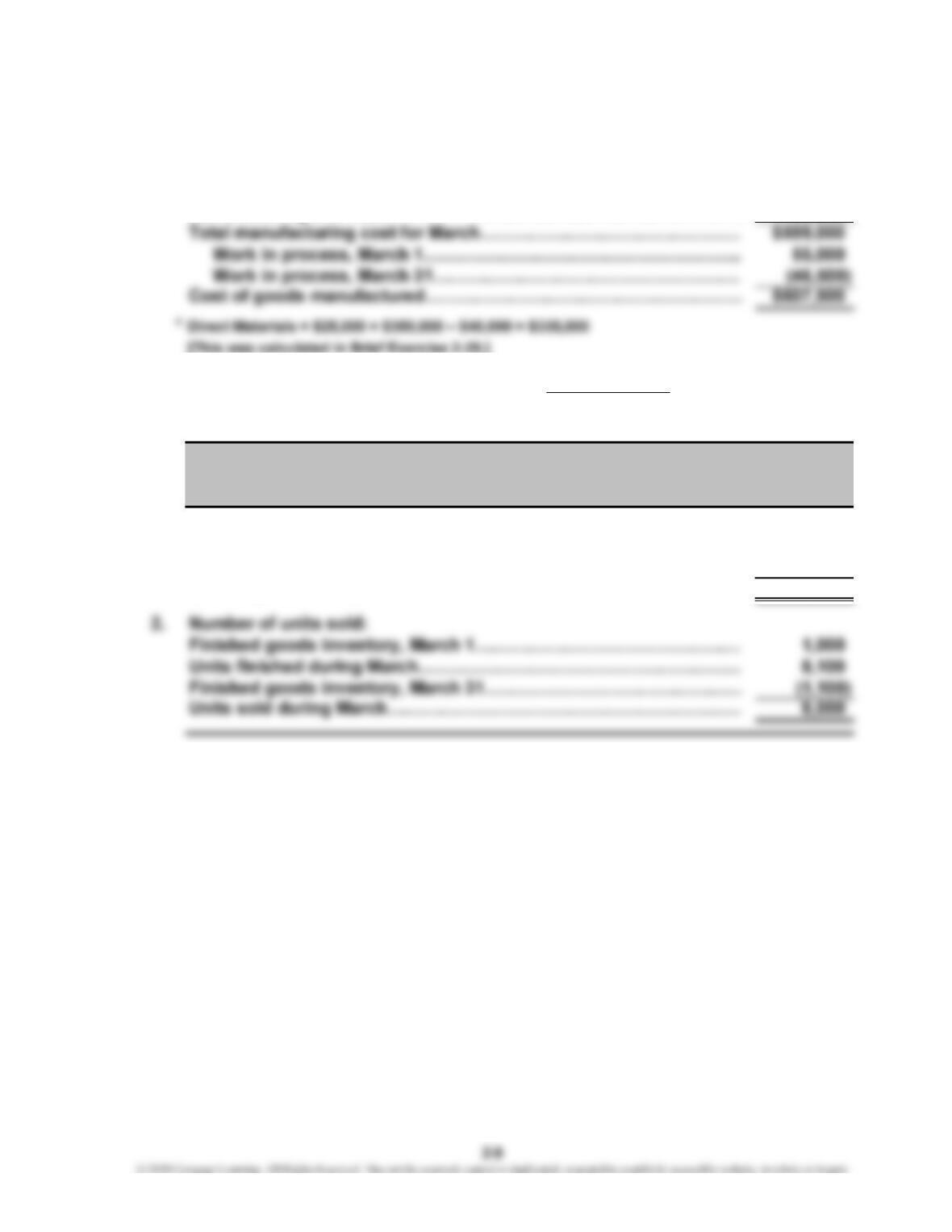
2. Per-Unit Cost of Goods Manufactured = = $75
BE 2-31
1.
Cost of goods manufactured………………………………….…………… $607,500
Finished goods inventory, March 1…………………………………….… 70,000
Finished goods inventory, March 31…………………………………….
…
(65,000)
Cost of goods sold…………………………………………………………
…
$612,500
…
$607,500
8,100 units
Morning Smiles Coffee Company
Cost of Goods Sold Statement
For the Month of March
…
CHAPTER 2 Basic Managerial Accounting Concepts
BE 2-32
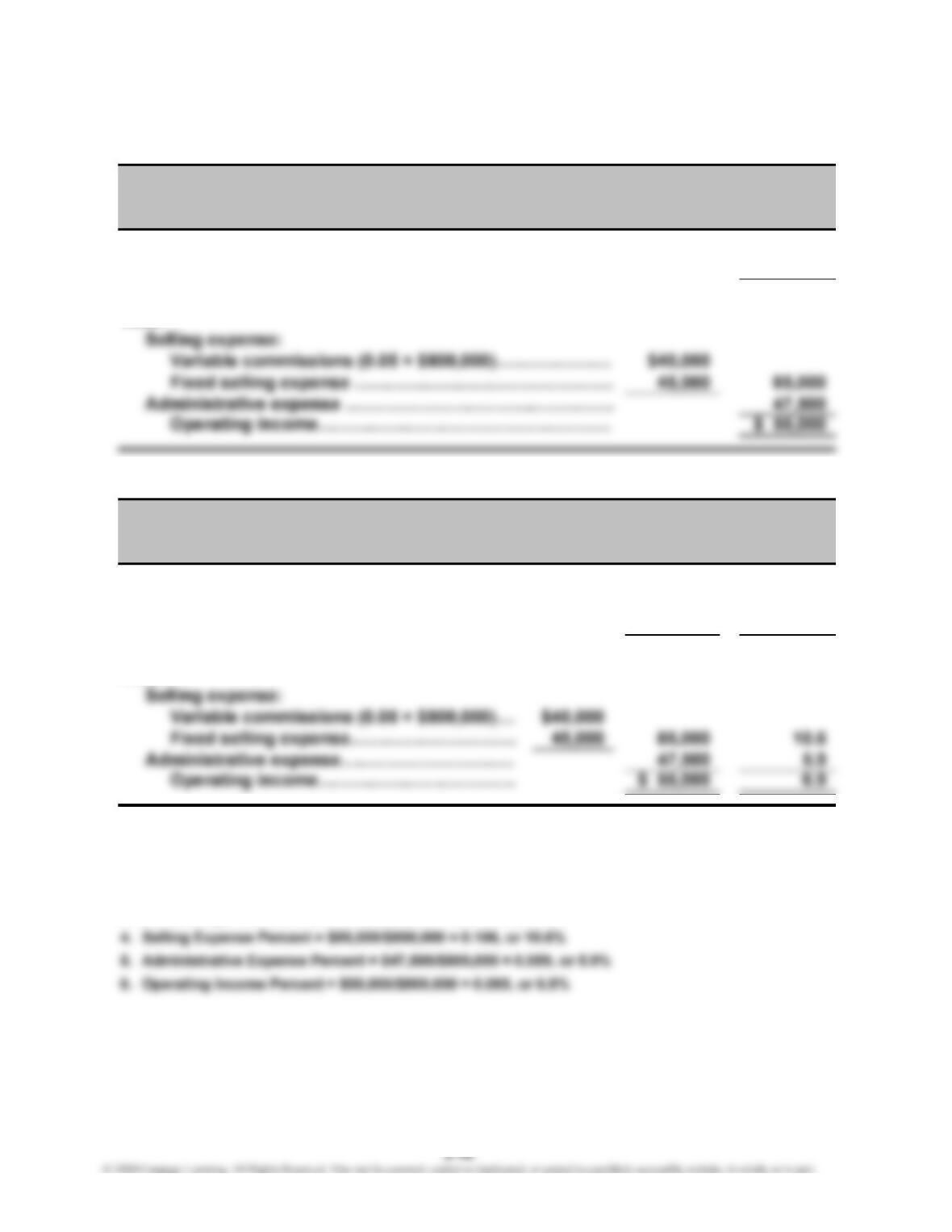
Sales revenue (8,000 × $100)……………………………………
…
$800,000
Cost of goods sold ……………………………………..…………
…
612,500
Gross margin……………………………………………………
…
$187,500
BE 2-33
Percent*
Sales revenue (8,000 × $100)………………………
…
$800,000 100.0
Cost of goods sold …………………………………
…
612,500 76.6
Gross margin……………………………………
…
$187,500 23.4
Less:
*Steps in calculating the percentages (the percentages are rounded):
1. Sales Revenue Percent = $800,000/$800,000 = 1.00, or 100% (sales revenue is
always 100% of sales revenue)
2. Cost of Goods Sold Percent = $612,500/$800,000 = 0.766, or 76.6%
3. Gross Margin Percent = $187,500/$800,000 = 0.234, or 23.4%
For the Month of March
Morning Smiles Coffee Company
Income Statement
For the Month of March
Morning Smiles Coffee Company
Income Statement
…
CHAPTER 2 Basic Managerial Accounting Concepts
BE 2-34
1.
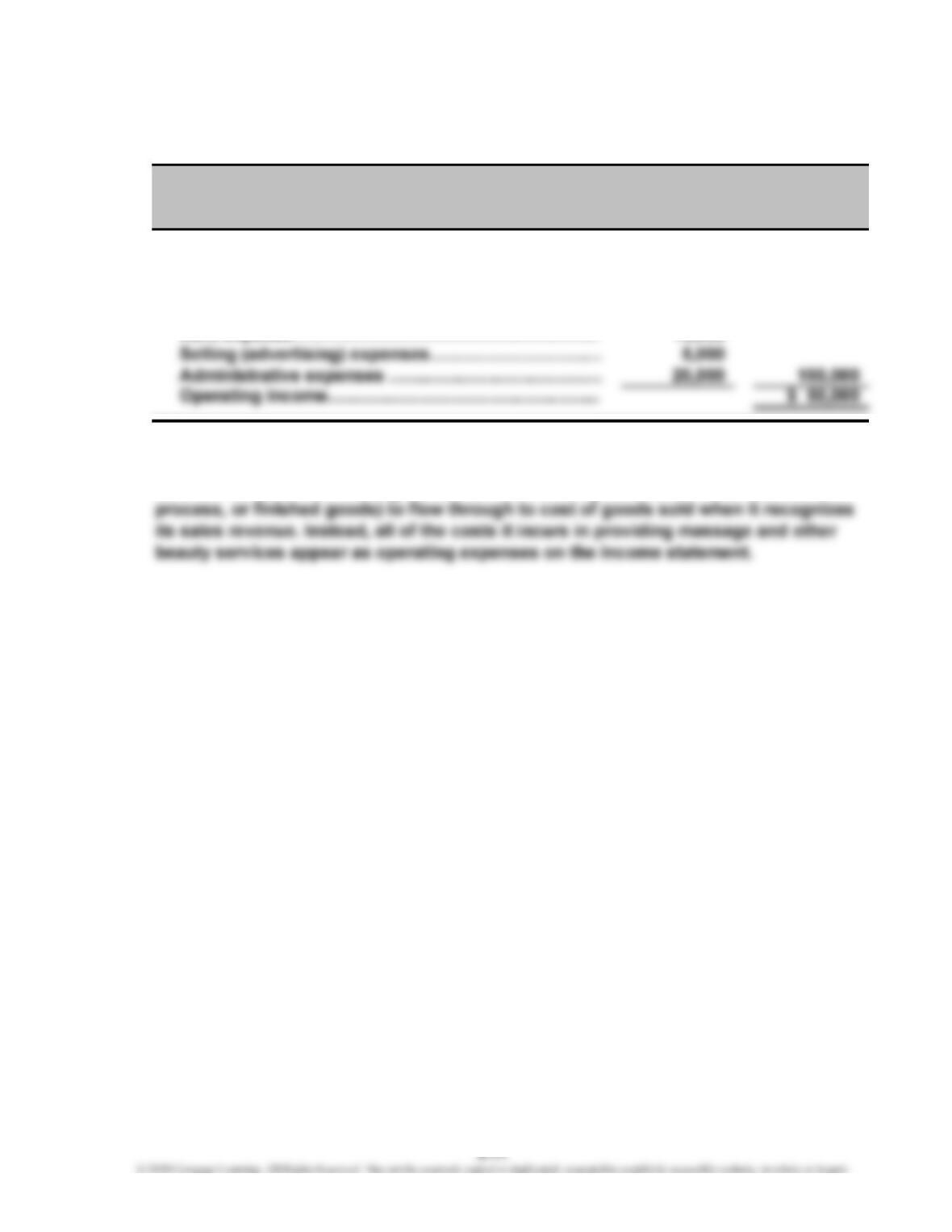
Sales revenues………………………………………………
…
$200,000
Less operating expenses:
Technology………………………………………………
…
$ 10,000
Wages expense…………………………………………
…
100,000
2. Healing Hands has no cost of goods sold line item because the company is a service
provider (i.e., of massage therapy activities), rather than a manufacturer. Therefore,
as a service provider, Healing Hands has no inventory costs (raw materials, work in
Healing Hands Massage Hut
Income Statement
For the Past Month
…
…
CHAPTER 2 Basic Managerial Accounting Concepts
E 2-35
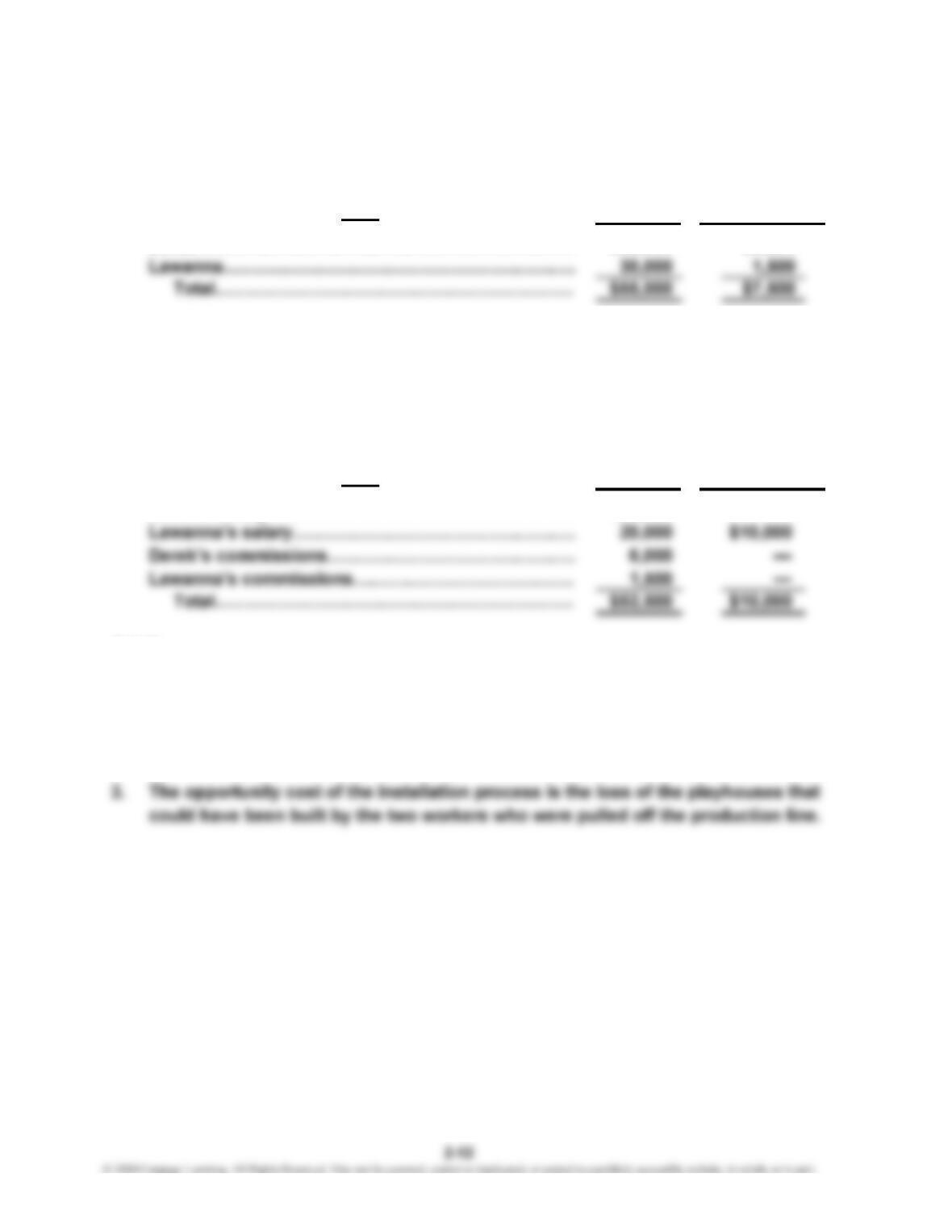
1. Salaries
Derek………………………………………………………
…
$25,000 $6,000
2. All of Derek’s time is spent selling, so all of his salary cost is selling cost.
Lawanna spends two-thirds of her time selling, so $20,000 ($30,000 × 2/3) of
her salary is selling cost. The remainder is administrative cost. All commissions
are selling costs.
Selling Administrative
Costs
Derek’s salary……………………………………………
…
$25,000 —
…
E 2-36
1. The two products that Holmes sells are playhouses and the installation of
playhouses. The playhouse itself is a product, and the installation is a service.
2. Holmes could assign the costs to production and to installation, but if the
installation is a minor part of its business, it probably does not go to the trouble.
Costs
Cost Commissions
EXERCISES
Cost
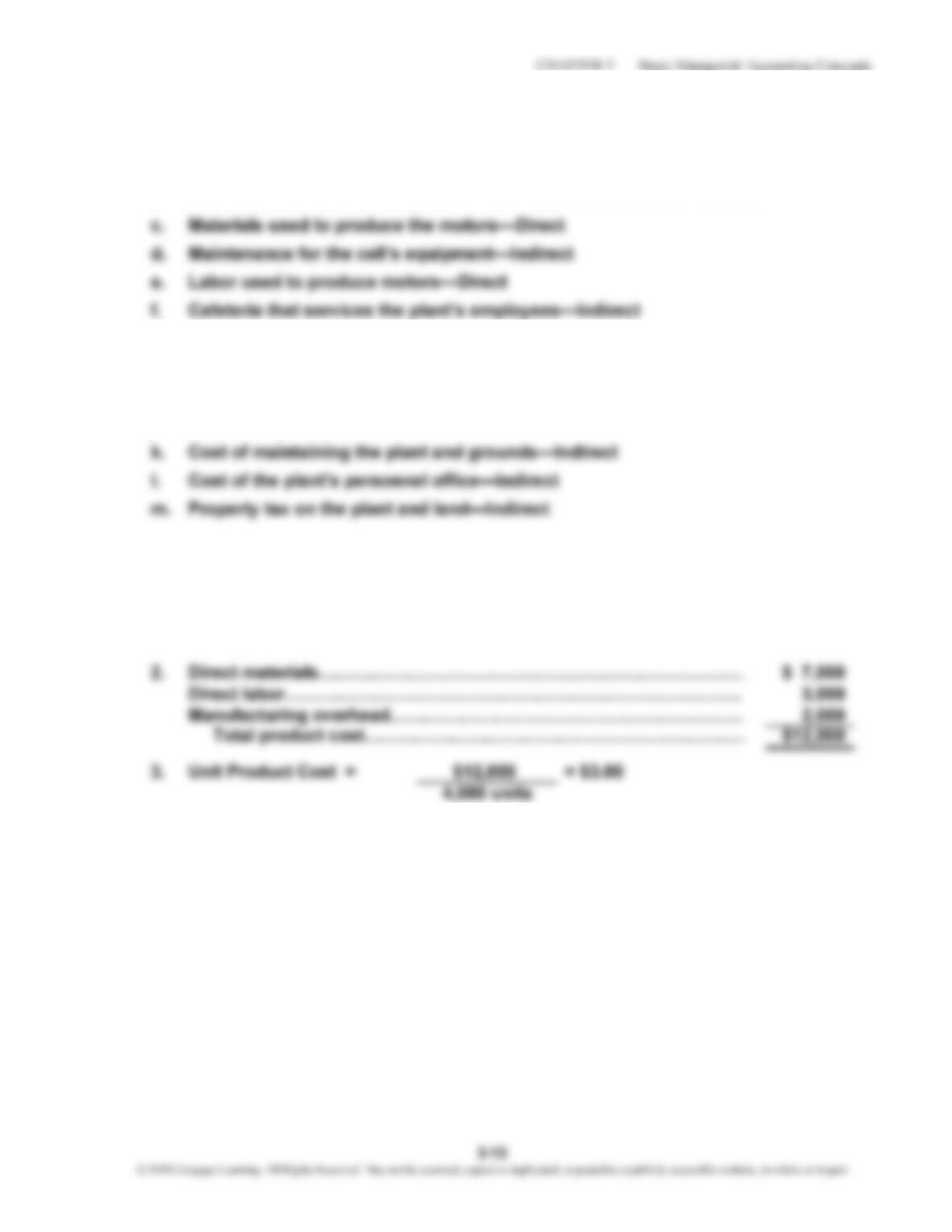
E 2-37
a. Salary of cell supervisor—Direct
b. Power to heat and cool the plant in which the cell is located—Indirect
g. Depreciation on the plant—Indirect
h. Depreciation on equipment used to produce the motors—Direct
i. Ordering costs for materials used in production—Indirect
j
. Engineering support—Indirect
E 2-38
1. Direct materials—Product cost
Direct labor—Product cost
Manufacturing overhead—Product cost
Selling expense—Period cost
CHAPTER 2 Basic Managerial Accounting Concepts
E 2-39
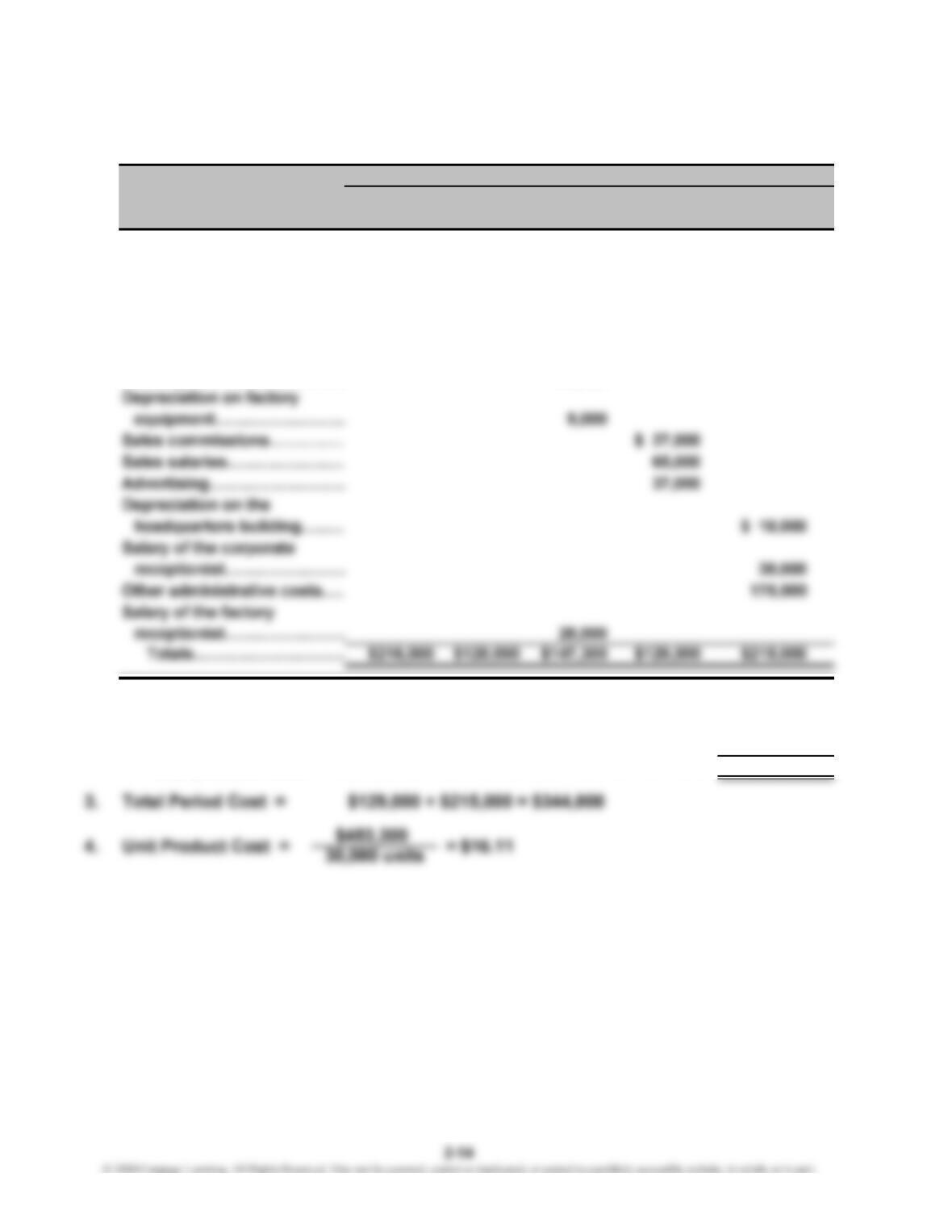
1.
Direct Direct Manufact. Selling
Materials Labo
r
Overhead Expense
Direct materials………………
…
$216,000
Factory rent……………………
…
$ 24,000
Direct labor……………………
…
$120,000
Factory utilities………………
…
6,300
Supervision in the factory…
…
50,000
Indirect labor in the
factory………………………
…
30,000
2. Direct materials…………………………………………………………………… $216,000
Direct labor………………………………………………………………………
…
120,000
Manufacturing overhead………………………………………………………
…
147,300
Total product cost……………………………………………………………
…
$483,300
ExpenseCosts
Product Cost Period Cost
Administrative
…
…
CHAPTER 2 Basic Managerial Accounting Concepts
E 2-40
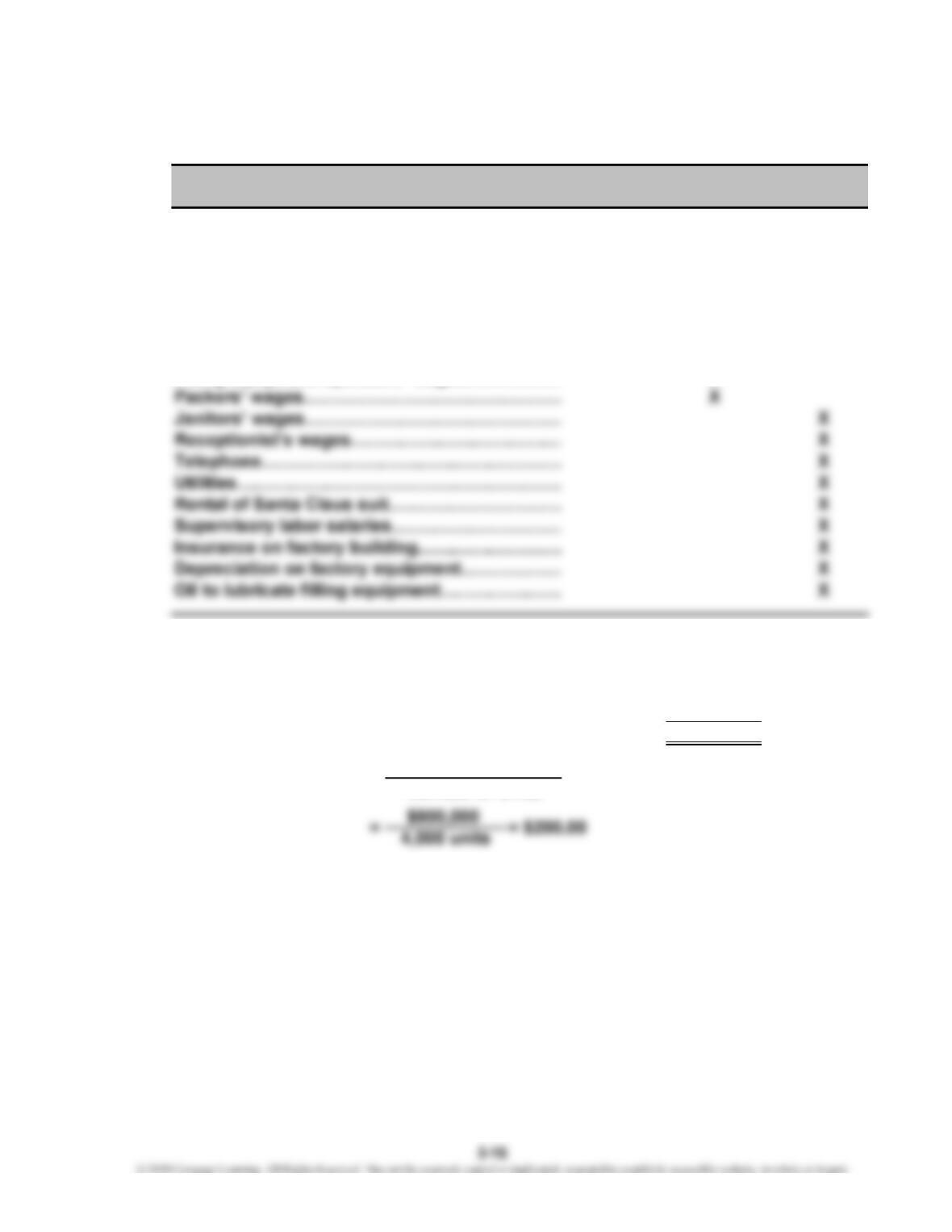
Direct Direct Manufact.
Materials Labor Overhead
Jars……………………………………………………
…
X
Sugar…………………………………………………
…
X
Fruit……………………………………………………
X
Pectin…………………………………………………
…
X
Boxes…………………………………………………
…
X
Depreciation on the factory building……………
…
X
Cooking equipment operators’ wages…………
…
X
Filling equipment operators’ wages……………
…
X
E 2-41
1. Direct materials…………………………………………………
…
$400,000
Direct labor………………………………………………………
…
80,000
Manufacturing overhead………………………………………
…
320,000
Total product cost……………………………………………
…
$800,000
2.
Costs
Total Product Cost
Number of Units
=Product Cost per Unit
X
X
…
X
X
X
X
…
X
X
X
CHAPTER 2 Basic Managerial Accounting Concepts
E 2-42
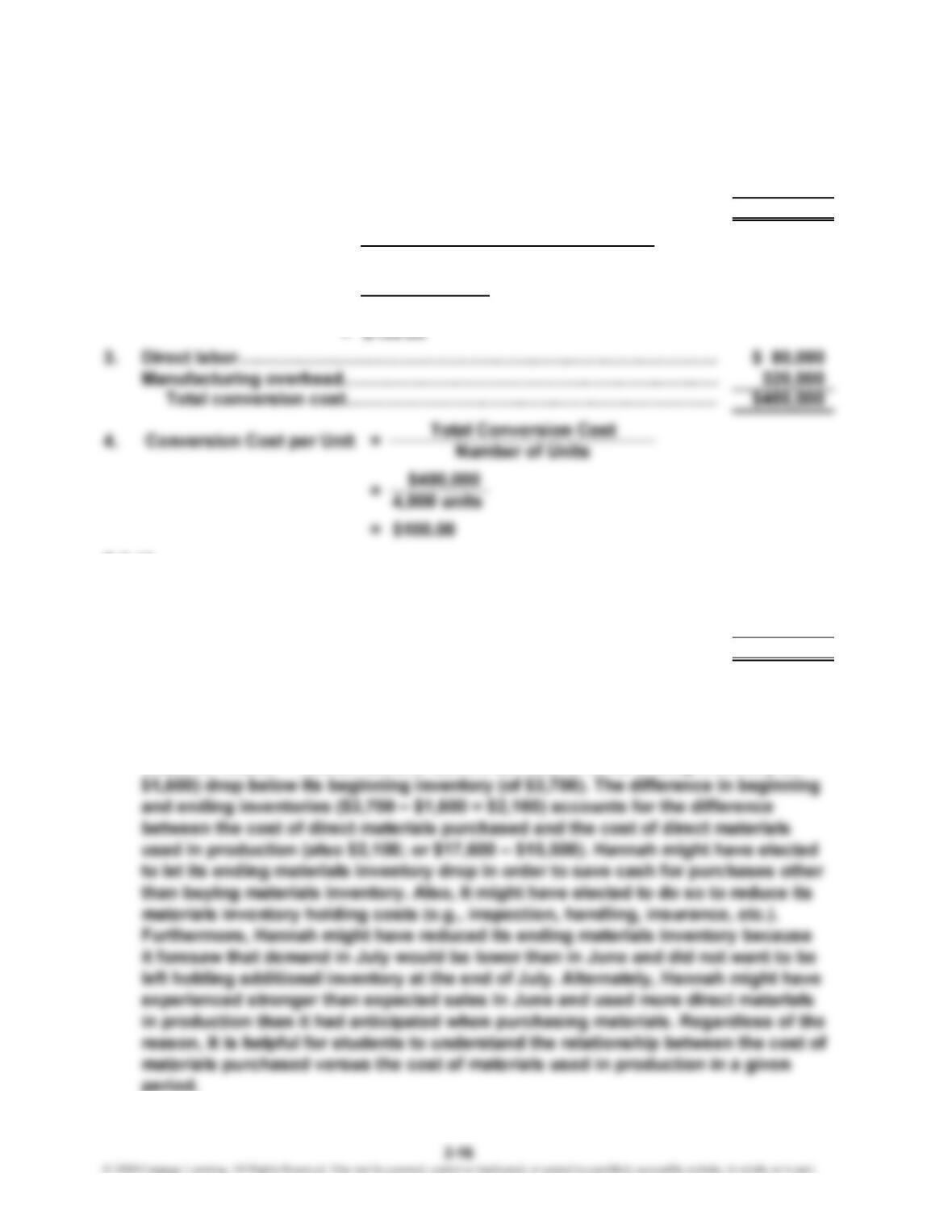
1. Direct materials…………………………………………………………………
…
$400,000
Direct labor………………………………………………………………………
…
80,000
Total prime cost…………………………………………………………………
…
$480,000
E 2-43
1. Materials inventory, June 1……………………………………………………
…
$ 3,700
Materials purchases in June…………………………………………………
…
15,500
Materials inventory, June 30…………………………………………………
…
(1,600)
Direct materials used in June……………………………………………… $17,600
2. As shown in the exercise, the cost of direct materials purchased in June is $15,500.
Also, as calculated in response to Requirement 1, the cost of direct materials used
in production in June is $17,600. Therefore, in this case, the cost of direct materials
used is greater than the cost of direct material purchased, which means that—for
whatever reason—Hannah Banana Bakers decided to let its ending inventory (of
=Prime Cost per Unit 2.
Total Prime Cost
Number of Units
$480,000
4,000 units
=
…
CHAPTER 2 Basic Managerial Accounting Concepts
E 2-44
1. Finished goods inventory, January 1………………………………
…
6,800
Units completed during the year……………………………………
…
94,000
Finished goods inventory, December 31……………………………
…
(7,200)
Units sold……………………………………………………………
…
93,600
E 2-45
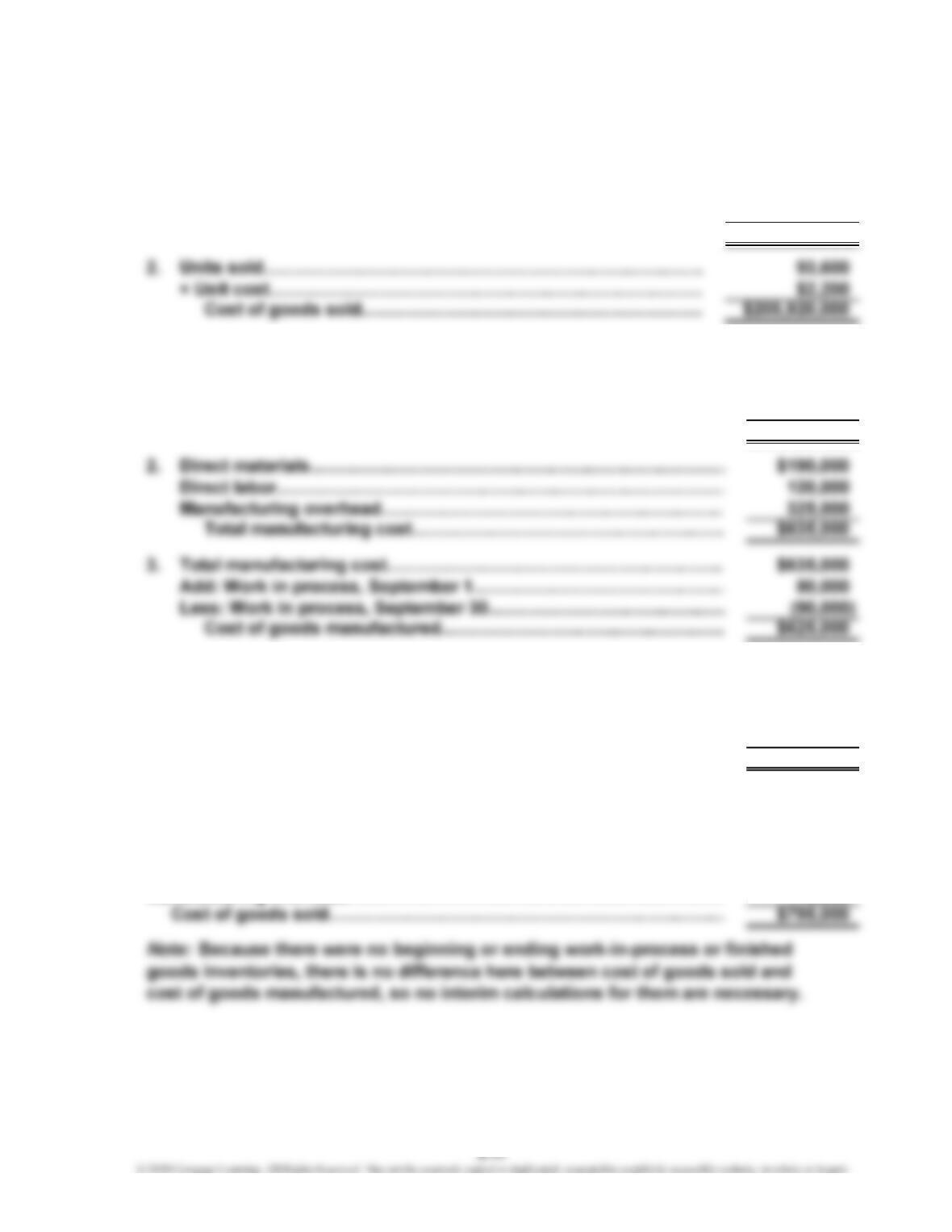
1. Materials inventory, September 1………………………………………
…
$ 120,000
Materials purchases in September………………………………………
…
200,000
Materials inventory, September 30………………………………………
…
(130,000)
Direct materials used in September…………………………………
…
$ 190,000
E 2-46
Cost of goods manufactured*…………………………………………………
…
$625,000
Finished goods, September 1…………………………………………………
…
70,000
Finished goods, September 30………………………………………………
…
(65,000)
Cost of goods sold…………………………………………………………
…
$630,000
*See solution to Exercise 2-45.
E 2-47
Direct materials…………………………………………………………………
…
$180,000
Direct labor………………………………………………………………………
…
505,000
…