2-63. (continued)
Billings Tool & Die
Income Statement
For the Year Ended December 31
($ 000)
Sales revenue ……………………………………………………..
$77,820
Less: Cost of goods sold (per statement) …………………
54,234
Gross profit …………………………………………………………
$ 23,586
Marketing and administrative costs:
Depreciation (25% of total) …………………………………
$ 1,350
Utilities (10% of total) …………………………………………
750
Property taxes (20% of total) ………………………………
1,008
Administrative costs …………………………………………..
9,600
Marketing costs ………………………………………………..
Total marketing and administrative costs ……………..
17,934
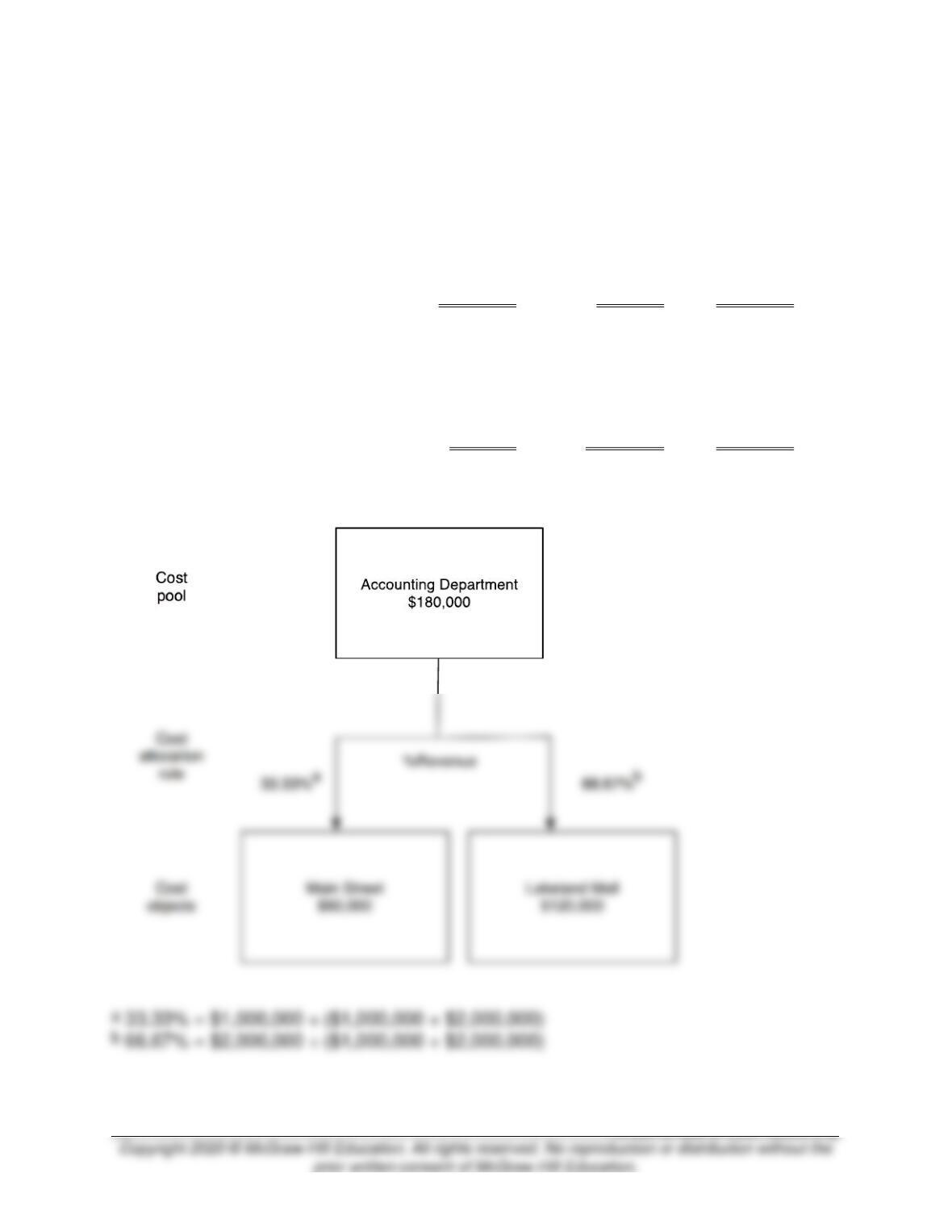
2-64. (10 Min.) Cost Allocation with Cost Flow Diagram: Coastal Computer.
a.
(1)
Main Street
Lakeland Mall
Total
Number of computers sold
2,000
1,600
3,600
Percentage
55.56%
44.44%
100%
Allocated Accounting
Department cost ($180,000) …..
$100,000
$80,000
$180,000
(2)
Main Street
Lakeland Mall
Total
Revenue
$1,000,000
$2,000,000
$3,000,000
Percentage
33.33%
66.67%
100%
Allocated Accounting
Department cost ($180,000) …..
$60,000
$120,000
$180,000
b.
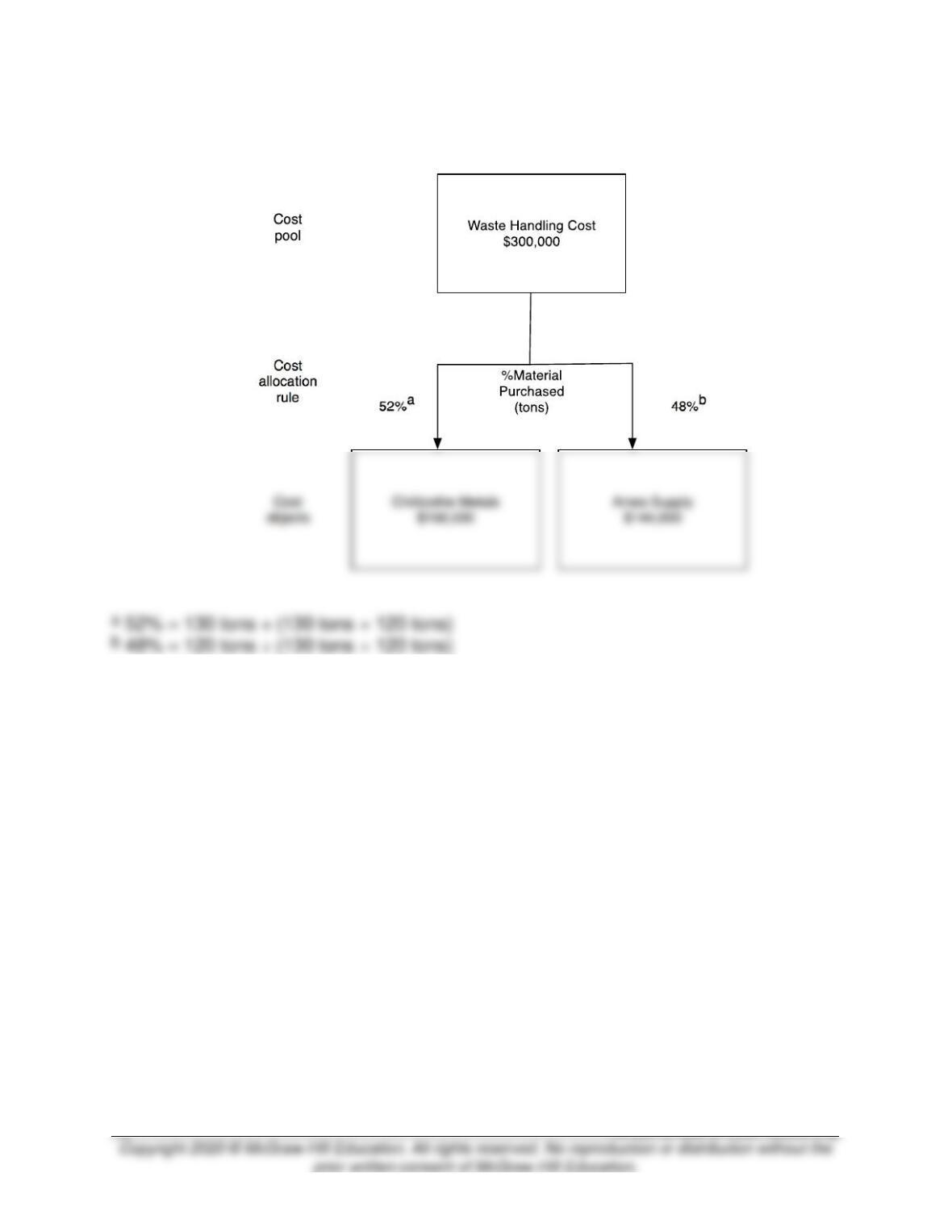
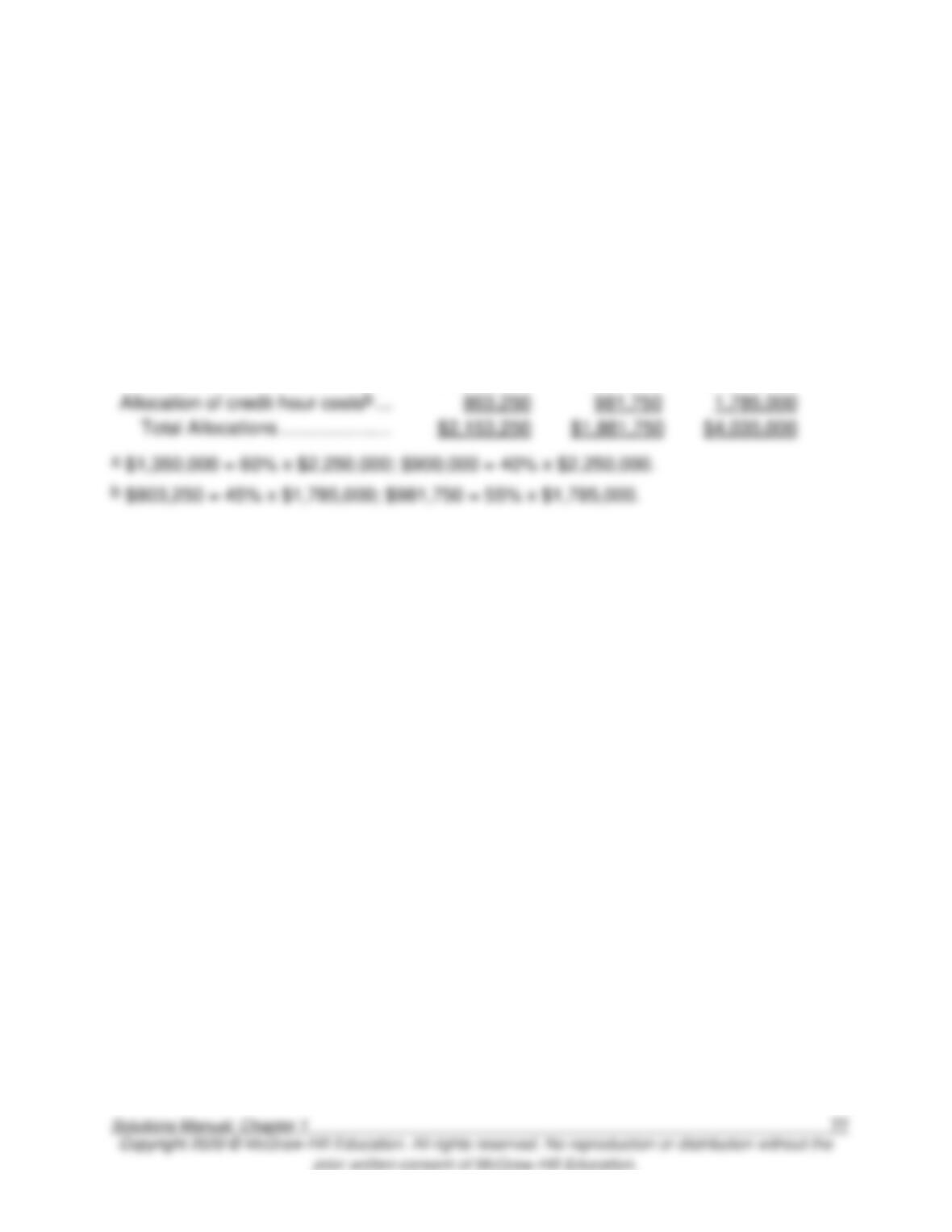
2-65. (20 Min.) Cost Allocation with Cost Flow Diagram: Wayne Casting, Inc.
a.
(1)
Chillicothe
Metals
Ames
Supply
Total
Material purchased (tons)
130
120
250
Percentage
52%
48%
100%
Allocated waste handling
cost ($300,000) …………………….
$156,000
$144,000
$300,000
(2)
Chillicothe
Metals
Ames
Supply
Total
Amount of waste (tons)
15
Allocated waste handling
cost ($300,000) …………………….
$300,000
(3)
Chillicothe
Metals
Ames
Supply
Total
Cost of materials purchased
$624,000
$876,000
$1,500,000
Percentage
41.6%
58.4%
100%
Allocated waste handling
cost ($300,000) …………………….
$124,800
$175,200
$300,000
2-65. (continued)
b.
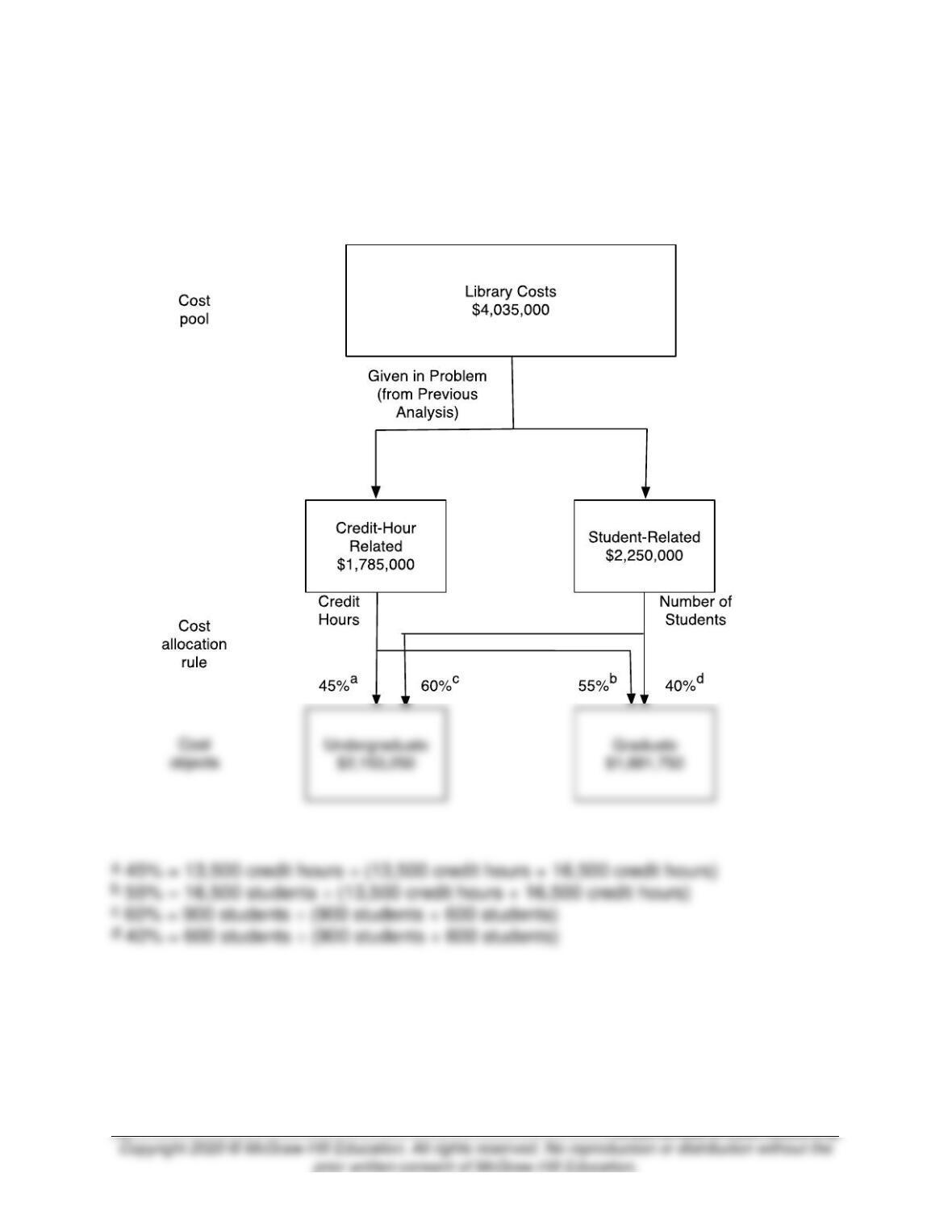
2-66. (20 Min.) Cost Allocation with Cost Flow Diagram: Pacific Business School.
a.
Undergraduate
Graduate
Total
Number of students
900
600
1,500
Percentage …………………………
60%
40%
100%
Credit Hours
13,500
16,500
30,000
Percentage …………………………
45%
55%
100%
Allocation of student-related
costsa…………………………………
$1,350,000
$900,000
$2,250,000
2-66. (continued)
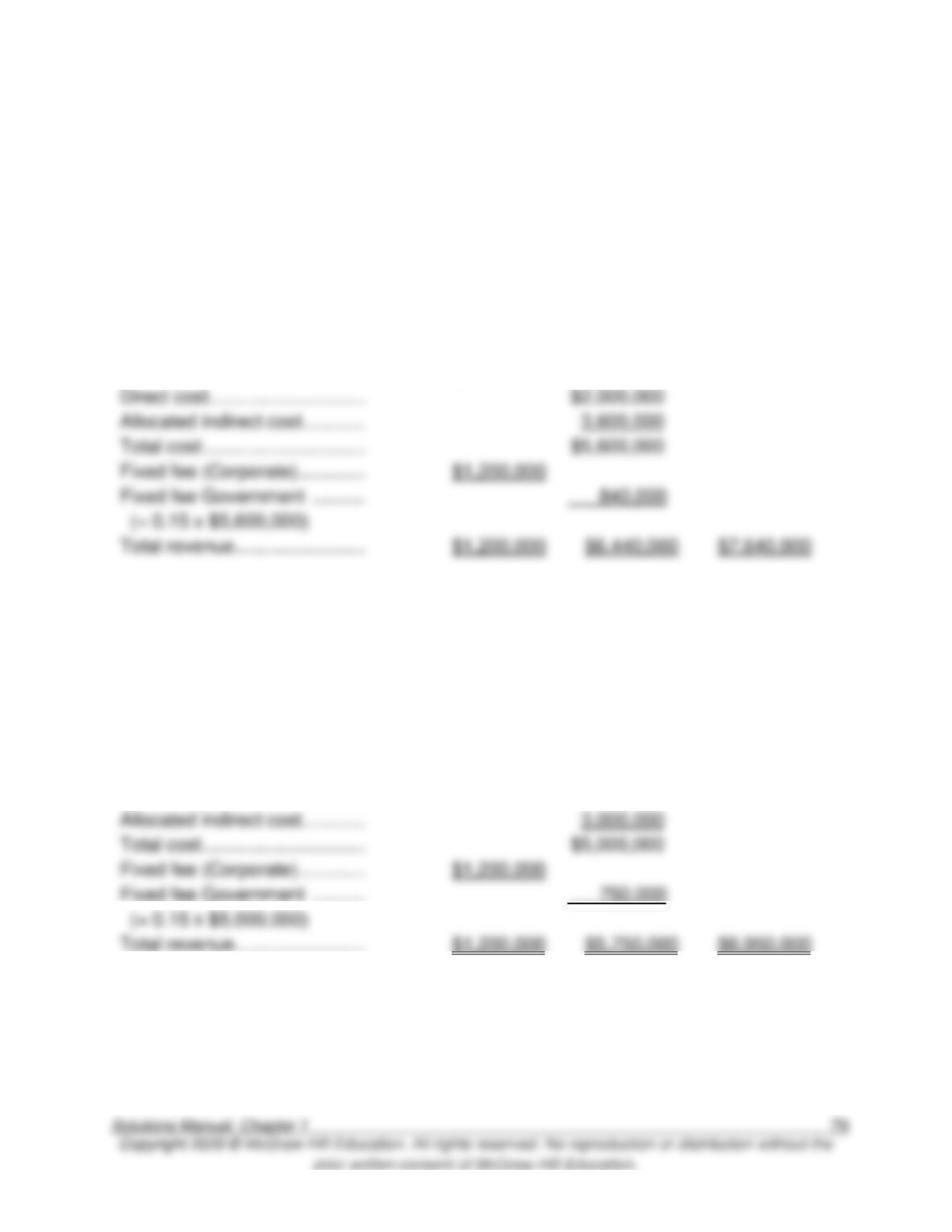
b.
2-67. (20 Min.) Cost Allocation and Pricing: Greenfield Consultants.
a.
1.
Corporate
Government
Total
Direct cost
$500,000
$2,000,000
$2,500,000
Percentage …………………..
20%
80%
100%
Allocation of indirect cost …….
$900,000
$3,600,000
$4,500,000
($4,500,000)
20%
80%
100%
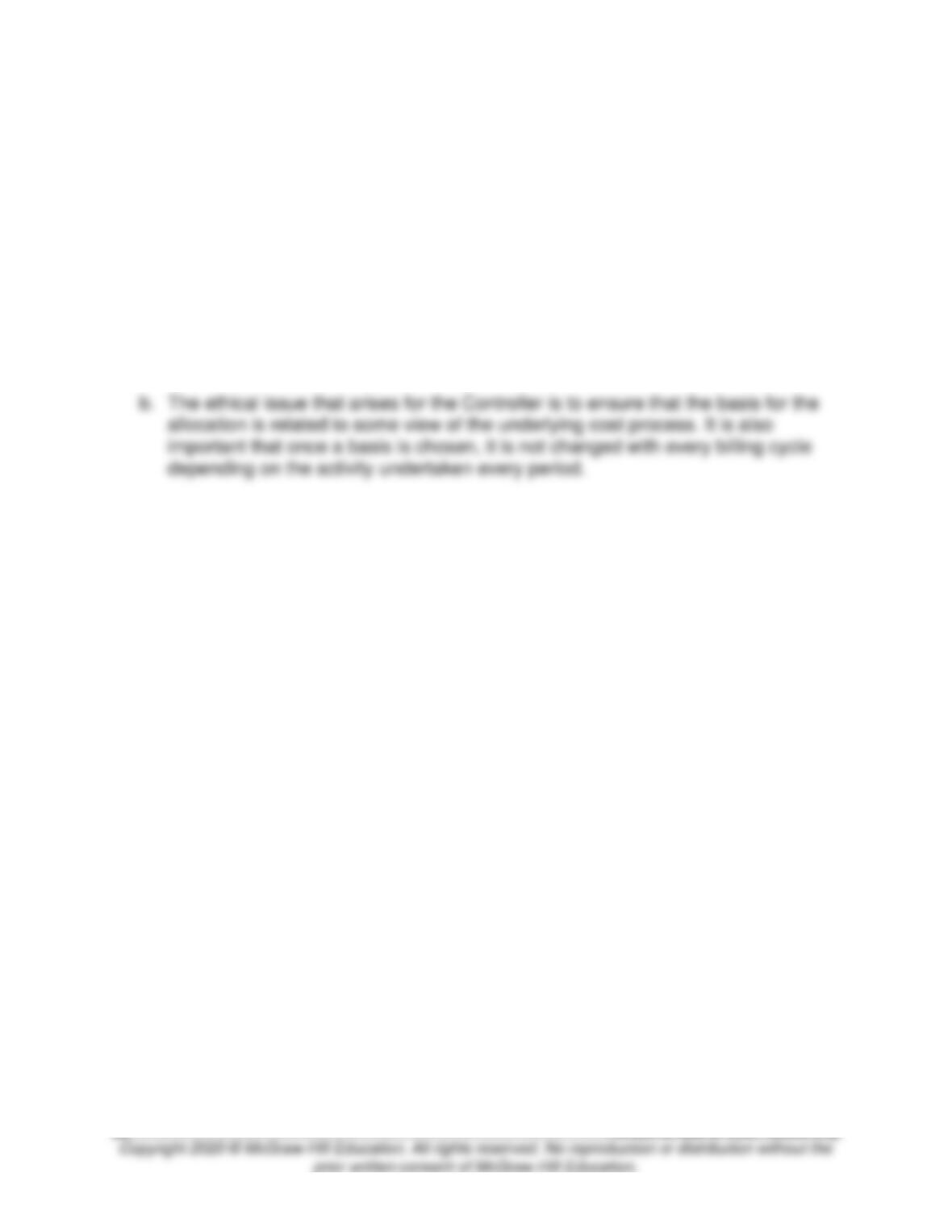
2.
Corporate
Government
Total
Direct cost …………………………
$2,000,000
Allocated indirect cost …………
Total cost ………………………….
$5,600,000
Fixed fee (Corporate) ………….
Fixed fee Government ……….
840,000
(= 0.15 x $5,600,000)
Total revenue …………………….
b.
1.
Corporate
Government
Total
Direct contract hours…………..
$1,000
2,000
3,000
Percentage …………………..
33.33%
66.67%
100%
Allocation of indirect cost …….
$1,500,000
$3,000,000
$4,500,000
($4,500,000) …………………
33.33%
66.67%
100%
2.
Corporate
Government
Total
Direct cost …………………………
$2,000,000
Allocated indirect cost …………
Total cost ………………………….
$5,000,000
Fixed fee (Corporate) ………….
Fixed fee Government ……….
750,000
(= 0.15 x $5,000,000)
2-68. (20 Min.) Cost Allocation and Pricing: Greenfield Consultants.
a. Answers will vary. Either allocation of the indirect costs in this case can be
justified on some sort of cause-and-effect basis. Indirect costs are likely related
to (though not necessarily caused by) a number of things related to the activity of
the consultants (direct contract hours) and the direct costs incurred (travel costs,
for example).
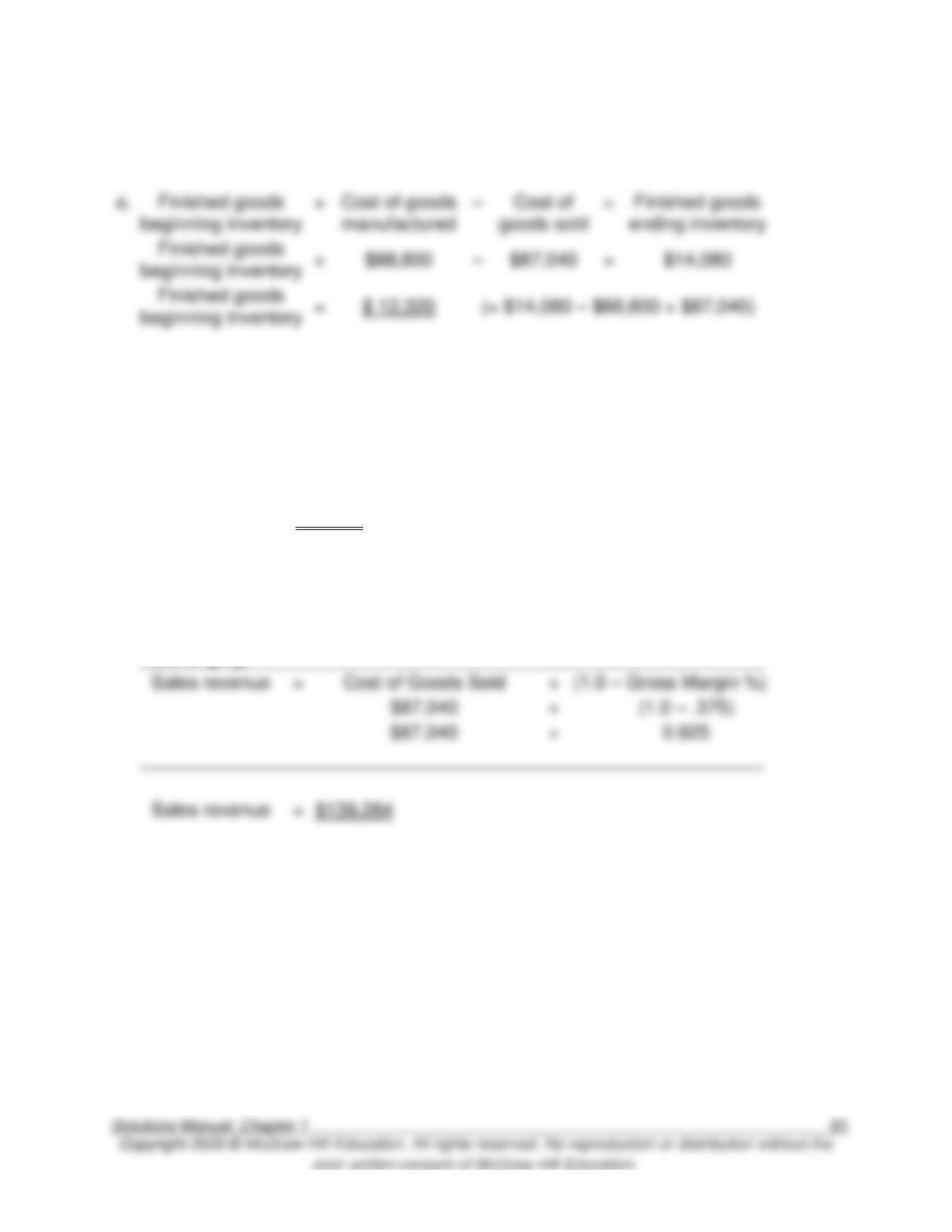
2-69. (40 Min.) Find the Unknown Information.
+
=
b.
Direct
materials
used
+
Direct
labor
+
Manufacturing
overhead
=
Total
manufacturing
costs
Direct
materials
used
+
$ 12,160
+
$23,040
=
$77,600
Direct
materials
used
=
$42,400
(= $77,600 – $12,160 – $23,040)
c.
Gross margin %
=
Gross margin
÷
Sales revenue
=
(Sales revenue – COGS)
÷
Sales revenue
Rearranging,
Sales revenue
=
(1.0 – Gross Margin %)
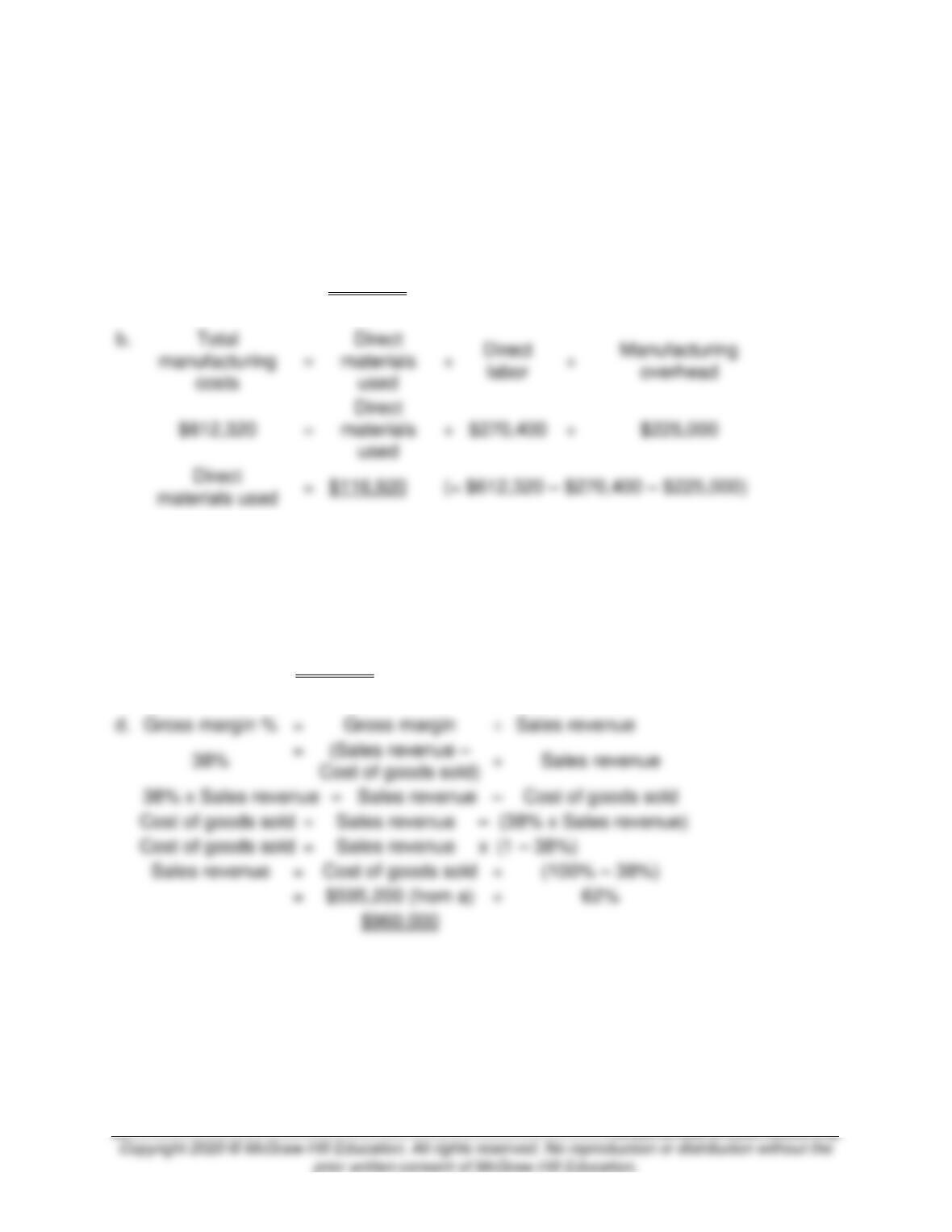
2-70. (40 Min.) Find the Unknown Information.
a.
Cost of
goods sold
=
Finished goods
beginning inventory
+
Cost of goods
manufactured
–
Finished goods
ending inventory
=
$22,320
+
$611,650
–
$38,770
Cost of
goods sold
=
$595,200
+
c.
Direct
materials
used
=
Beginning
inventory
+
Materials
purchased
–
Ending
inventory
$116,920
=
$2,520
+
Materials
purchased
–
$2,088
Materials
purchased
=
$116,488
(= 116,920 – $2,520 + $2,088)
=
÷
=
Cost of goods sold)
=
Sales revenue
$595,200 (from a)
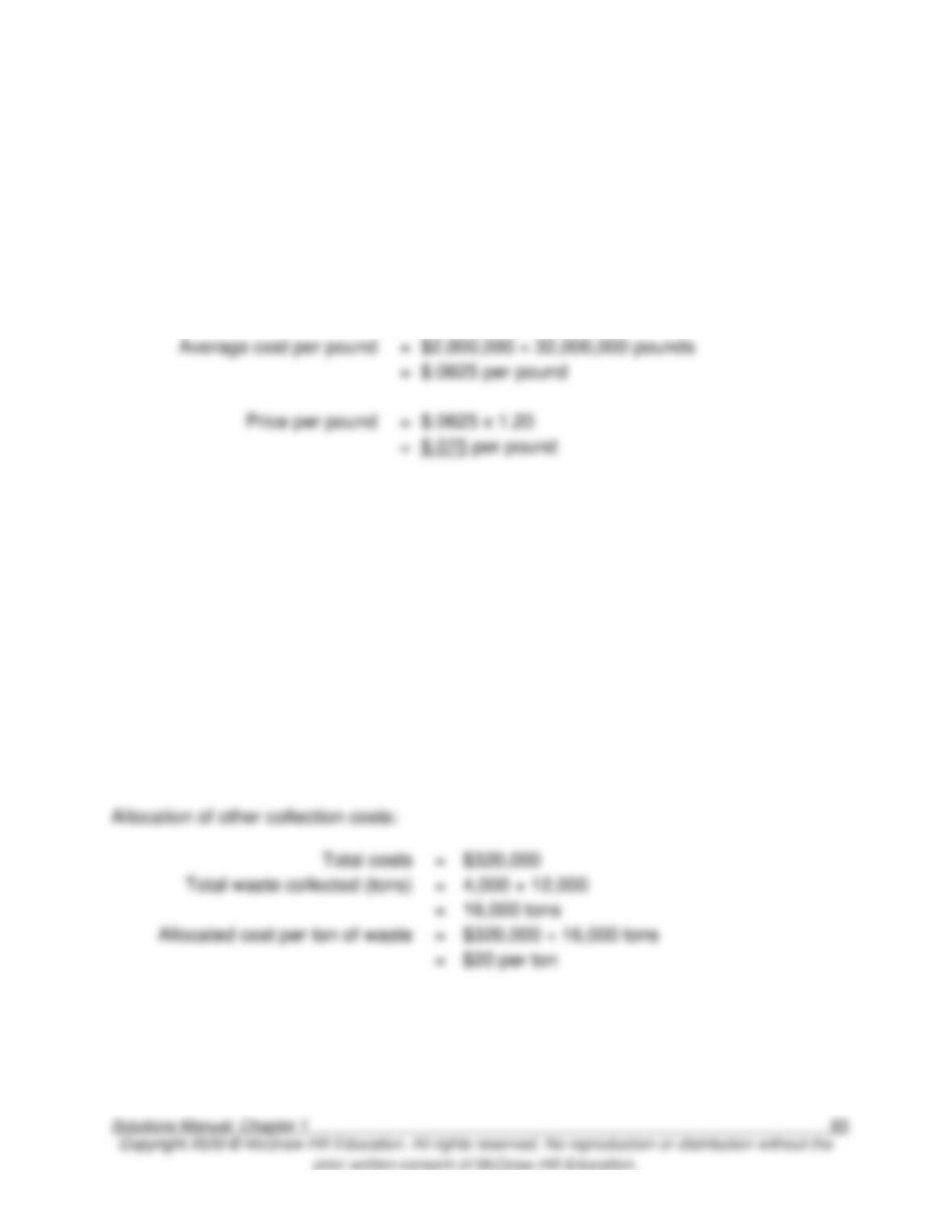
2-71. (40 min.) Cost Allocation and Regulated Prices: The City of Imperial Falls.
a. The rate is 20 percent above the average cost of collection:
Total cost of collection
=
$400,000 + $1,280,000 + $320,000
=
$2,000,000
Total waste collected (tons)
=
4,000 + 12,000
=
16,000 tons
=
32,000,000 pounds
=
$2,000,000 ÷ 32,000,000 pounds
=
$.0625 per pound
=
$.0625 x 1.20
b.
First, allocate costs to the two cost objects: households and businesses:
Allocation of administrative costs and truck costs:
Total costs
=
$400,000 + $1,280,000
=
$1,680,000
Number of customers
=
12,000 + 3,000
=
15,000 customers
Allocated cost per customer
=
$1,680,000 ÷ 15,000
customers
=
$112 per customer
=
$320,000
=
4,000 + 12,000
=
16,000 tons
=
=