Part a.
7,800$
48,300
43,800
12,300$
Correct!
Part b.
163,350$
8,100
11,400
166,650$
Correct!
Part c.
166,650$
Direct materials used 43,800$
41,400
81,450$
Part d.
147,750$
315,900$
Cost of goods sold
Gross margin
Transferred Out
Transferred In
Direct labor
Manufacturing overhead
Total manufacturing cost
Total Manufacturing cost
Beginning work-in-process inventory
Cost of goods manufactured
Ending direct materials inventory
Beginning direct materials inventory
MONROE FABRICATORS
Ending work-in-process inventory
Exercise 02-43
7,800$
a. ?
8,100
11,400
5,700
900
48,300
163,350
Sales revenue
Manufacturing overhead
Direct materials used
Direct labor
Gross margin
Cost of goods sold
Total manufacturing cost
Finished goods inventory, January 1
Work-in-process inventory, December 31
Given Data E02-43:
MONROE FABRICATORS
Direct materials inventory, January 1
Cost of goods manufactured during the year
Work-in-process inventory, January 1
Direct materials inventory, December 31
Purchases of direct materials
Finished goods inventory, December 31
270$
165
60
495$ «- Correct!
18
513$ «- Correct!
Fixed Manufacturing overhead:
Full-absorption Cost
Fixed Marketing and Administrative Cost
Full Cost of Making and Selling Product
MADRID CORPORATION
Exercise 02-50
Direct Materials
Direct Labor
Variable Manufacturing Overhead
Variable Manufacturing Costs
Variable Marketing and Administrative Cost
Unit Variable Cost
900$
108,000$
162,000$
Units produced and sold (for the month)
Direct labor
Manufacturing overhead
Direct materials
Marketing and administrative
Given Data E02-50:
Information provided by accounting system:
Fixed costs (for the month)
Sales price (per unit)
MADRID CORPORATION
Variable costs (per unit)
Manufacturing overhead
Marketing and administrative
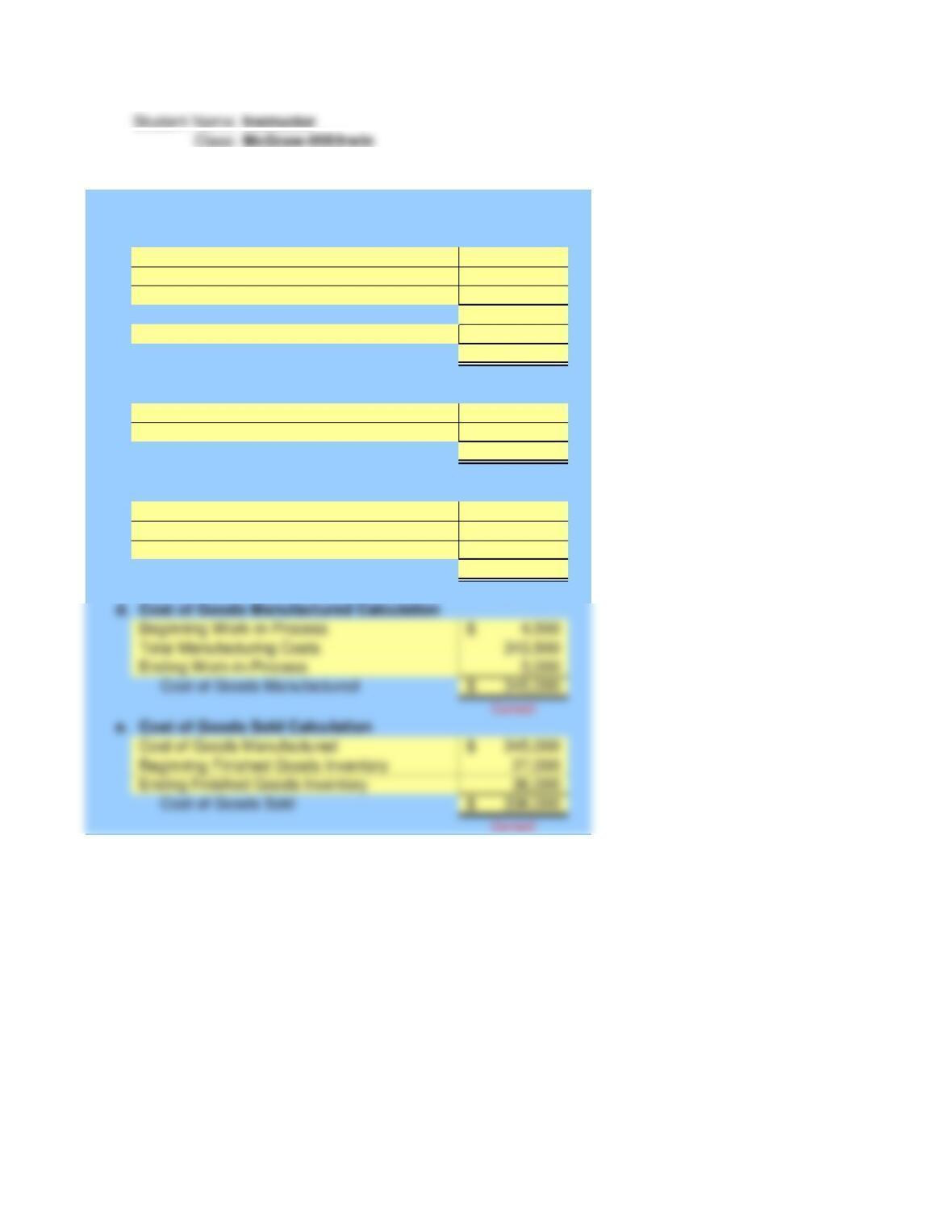
a.
9,000$
120,000
7,500
121,500
96,000
217,500$
Correct!
b.
96,000$
126,000
222,000$
Correct!
c.
121,500$
96,000
126,000
343,500$
Correct!
d.
4,500$
345,000$
e.
345,000$
336,000$
Cost of Goods Sold
Ending Finished Goods Inventory
Beginning Finished Goods Inventory
Cost of Goods Manufactured
Cost of Goods Manufactured Calculation
Cost of Goods Sold Calculation
Cost of Goods Manufactured
Ending Work-in-Process
Total Manufacturing Costs
Beginning Work-in-Process
Prime Cost
Direct Labor
Direct materials
Total Conversion Cost Computation
Problem 02-58
Total Manufacturing Costs
Manufacturing Overhead
CHELSEA, INC.
Total Prime Cost Computation
Direct Labor
Direct materials
Conversion Cost
Manufacturing Overhead
Total Manufacturing Costs Computation
Minus Ending Inventory
Plus Purchases
Beginning Inventory
Direct Labor
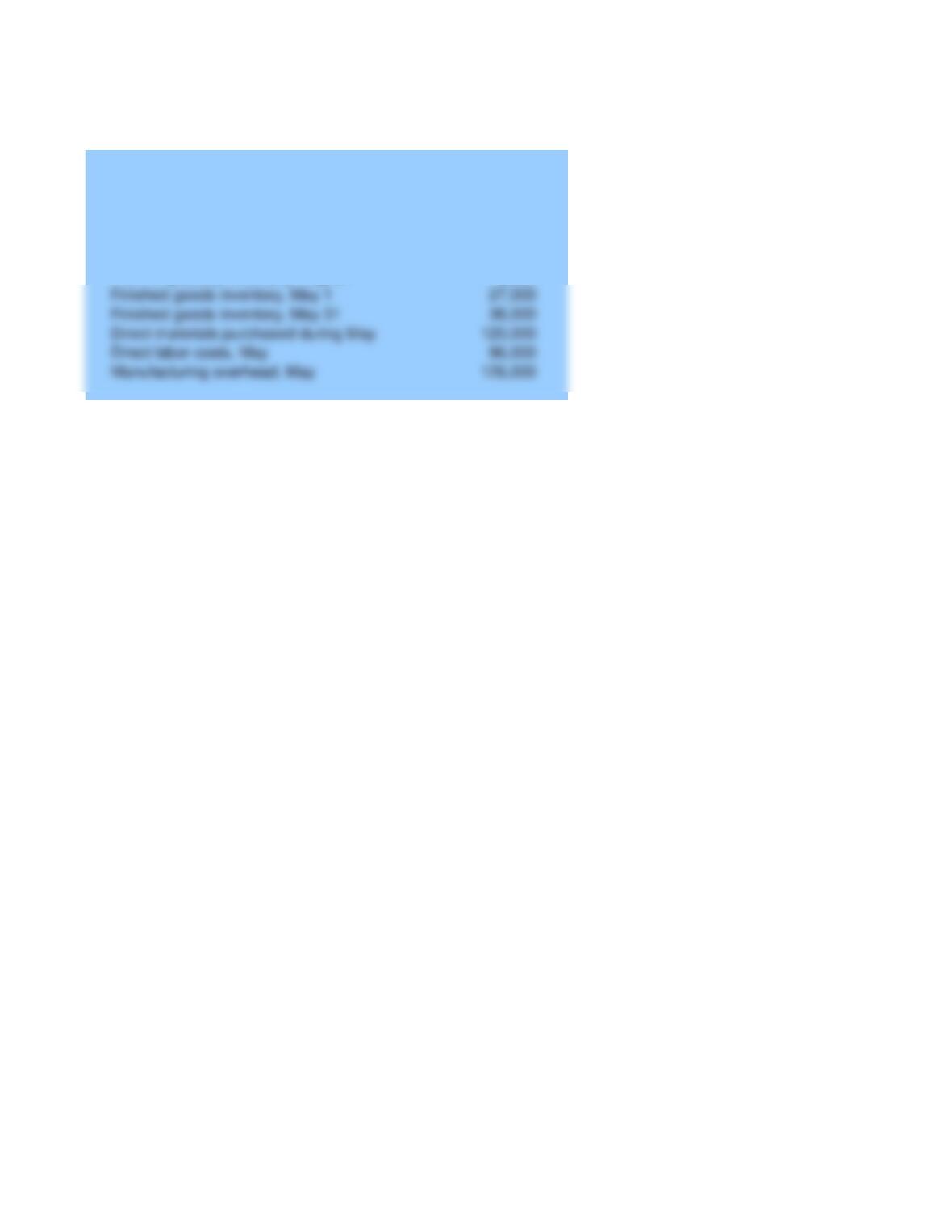
9,000$
7,500
4,500
3,000
Manufacturing overhead, May
Direct materials purchased during May
Direct labor costs, May
Finished goods inventory, May 1
Finished goods inventory, May 31
Given Data P02-58:
Information provided by accounting records:
Work-in-process inventory, May 1
Work-in-process inventory, May 31
CHELSEA, INC.
Direct materials inventory, May 1
Direct materials inventory, May 31
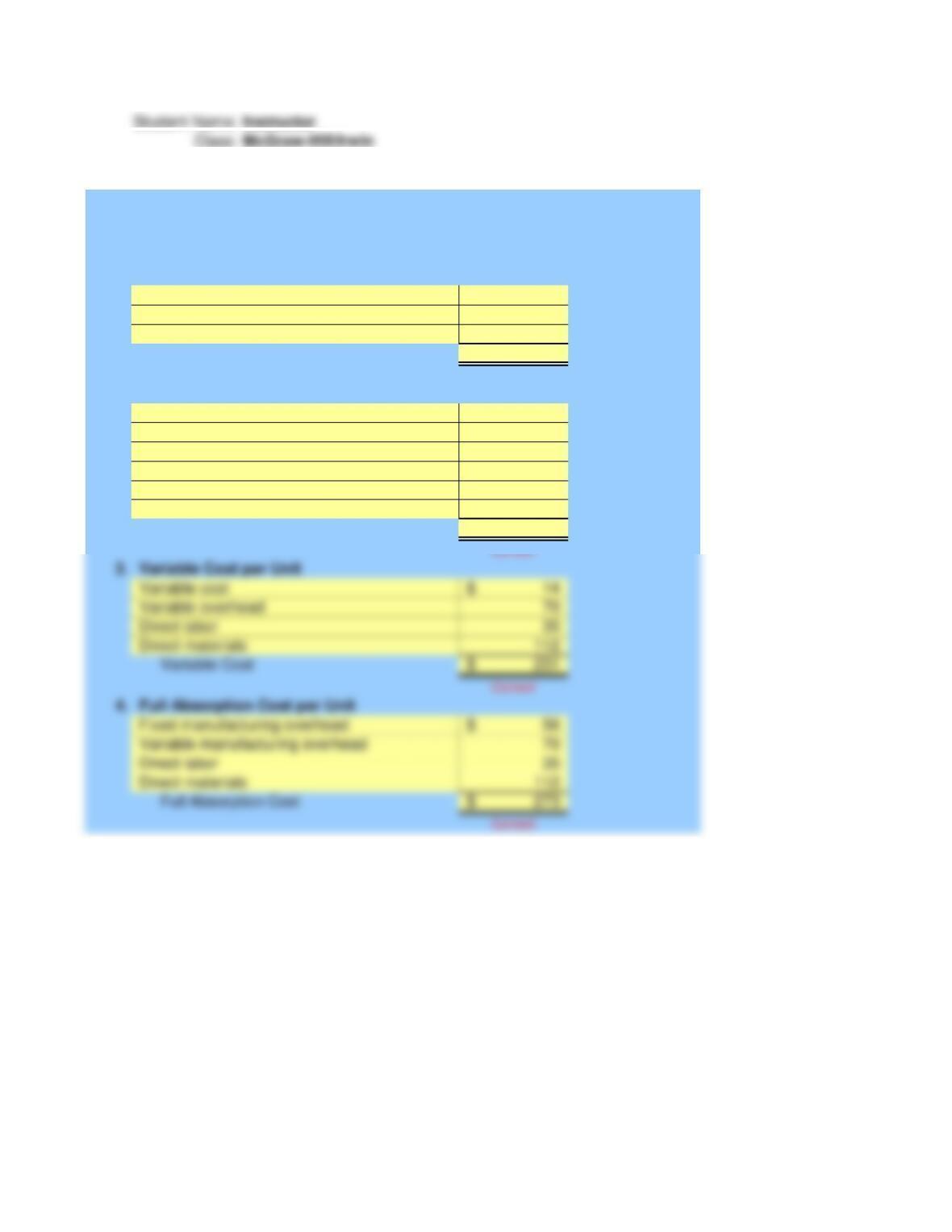
a.
Computations
1.
70$
35
112
217$
Correct!
2.
56$
75
35
112
70
14
362$
3.
14$
231$
4.
56$
273$
Full Absorption Cost
Direct labor
Variable overhead
Variable cost
Variable Cost per Unit
Fixed manufacturing overhead
Full Absorption Cost per Unit
Variable Cost
Direct materials
Direct labor
Variable manufacturing overhead
Direct materials
Variable Manufacturing Cost
Variable Manufacturing Cost
Direct materials
Direct labor
Manufacturing overhead
Direct labor
Fixed marketing and administrative cost
Fixed manufacturing
Full Unit Cost
Full Unit Cost
Variable costs
Variable overhead
Direct materials
Problem 02-60
COLUMBIA PRODUCTS
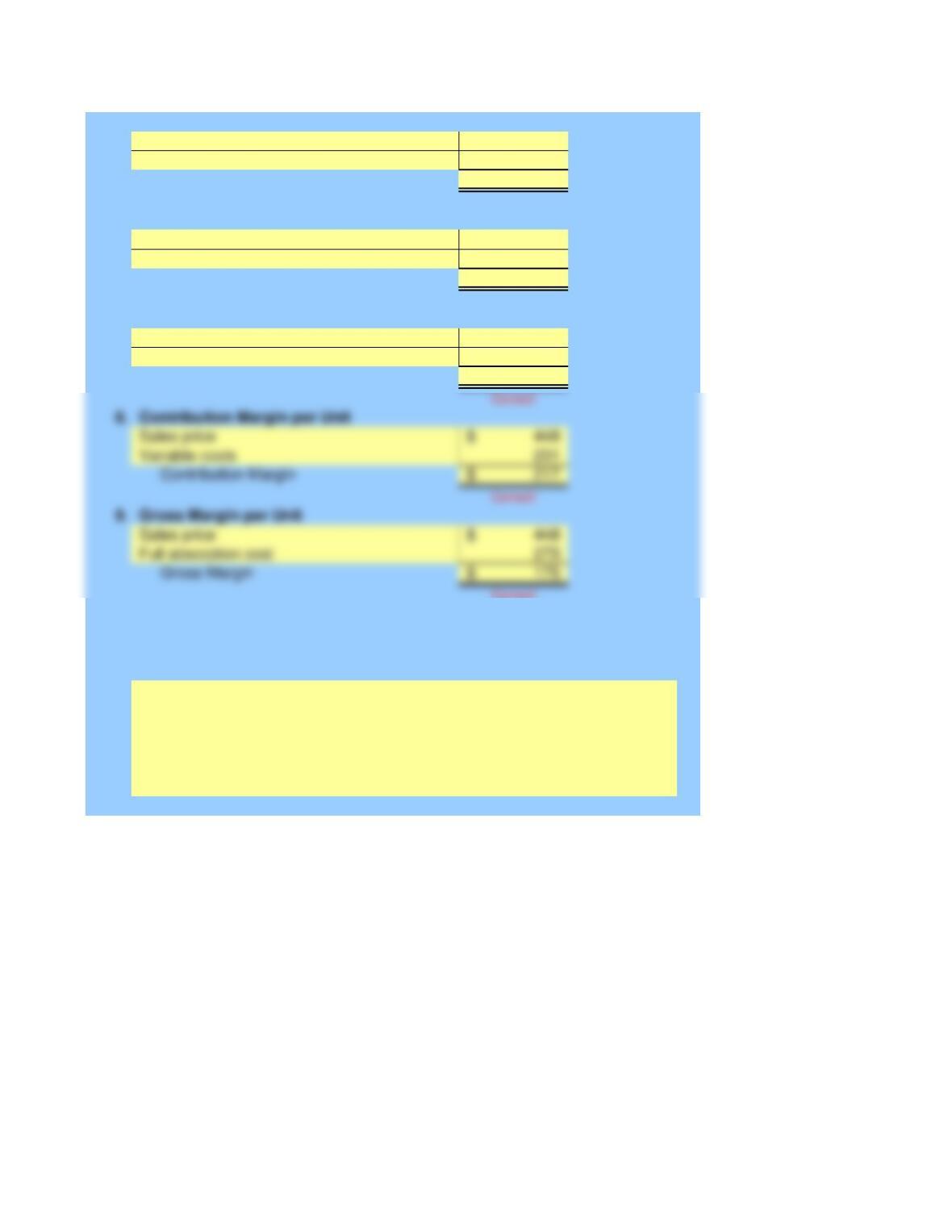
5.
35$
112
147$
Correct!
6.
35$
126
161$
Correct!
7.
448$
362
86$
8.
448$
217$
9.
448$
175$
Gross Margin
Full absorption cost
Sales price
Gross Margin per Unit
Contribution Margin
Variable costs
Sales price
Contribution Margin per Unit
Correct!
b.
If the number of units decreases from 1,200 to 800, which is within the
relevant range, will the fixed manufacturing cost per unit increase,
decrease, or remain the same? Explain.
As the number of units increases (reflected in the denominator), fixed
manufacturing cost per unit (and the total cost per unit) decreases. The
numerator (i.e., total fixed costs) remains the same. However, that does not
mean Columbia should produce more units. That decision should be based on
the total profits (revenues minus costs), not on unit profits.
Prime Cost
Direct materials
Direct labor
Prime Cost per Unit
Profit Margin
Full cost
Sales price
Conversion Cost per Unit
Profit Margin per Unit
Conversion Cost
Manufacturing overhead
Direct labor

448$
Manufacturing costs:
50,400$
35
112
70
Fixed costs (for the month)
Variable costs (per unit)
Marketing and administrative costs:
Information provided by accounting system:
Variable overhead (per unit)
Given Data P02-60:
Direct labor (per unit)
Direct materials (per unit)
COLUMBIA PRODUCTS
Sales price (per unit)
Fixed overhead (for the month)
Baseline Rent
(status quo) Equipment Difference Change
4,800,000$ 4,800,000$ –$ No Change
(600,000) (600,000) – No Change
(2,250,000) (2,250,000) – No Change
(450,000) (450,000) – No Change
(375,000) (375,000) – No Change
– (2,550,000) 2,550,000 Lower
1,125,000$ (1,425,000)$ 2,550,000$ Lower
Correct! Correct! Correct!
Baseline Rent
(status quo) Equipment Difference
4,800,000$ 5,136,000$ 336,000$ Higher
– (690,000) 690,000 Higher
(600,000) (600,000) – No Change
1,125,000$ 1,356,000$ 231,000$ Higher
Other depreciation
Equipment depreciation
Fixed cash expenditures
Operating profit
c. Would you rent the new equipment? Why or why not?
Drive Systems Division (DSD)
Tunes2Go
Variable
Equipment rental
Operating costs:
Sales Revenue
b. Next year’s income statement
Operating profit (before taxes)
Loss from equipment write-off
Other depreciation
Equipment depreciation
Fixed (cash expenditures)
Variable
Operating costs:
Sales Revenue
Integrative Case 2-77
a. This year’s income statement

3,000,000$
690,000$
7%
6%
4,800,000$
Variable operating costs
Fixed operating costs
Equipment depreciation
Other depreciation
Sales revenue
No salvage value
Given Data IC2-77:
Tunes2Go
Percentage decrease in fixed cash expenditures
Percentage increase in DSD’s annual revenue
Annual rental charge for new testing machine
Cost of existing automated testing equipment
Drive Systems Division (DSD)