Chapter 2 Analyzing Transactions into Debit and Credit Parts • 19
Study
Guide
2
Part One—Identifying Accounting Terms
Directions: Select the one term in Column I that best fits each definition in
Column II. Print the letter identifying your choice in the Answers column.
Answers
1.
2.
3.
Column I
A. accounts payable
B. accounts receivable
C. chart of accounts
Column II
1. An accounting device used to analyze transactions. (p. 33)
2. An amount recorded on the left side of an account. (p. 33)
3. An amount recorded on the right side of an account. (p. 33)
Name Perfect
Score Your
Score
Identifying Accounting Terms 7 Pts.
Analyzing Transactions into Debit and Credit Parts 20 Pts.
Identifying Changes in Accounts 18 Pts.
Total 45 Pts.
G
E
D
20 • Working Papers
Part Two—Analyzing Transactions into Debit and
Credit Parts
Directions: Analyze each of the following transactions into debit and credit parts. Print the
letter identifying your choice in the proper Answers columns.
Account Titles
A. Cash
D. Prepaid Insurance
H. Sales
1–2. Received cash from owner as an investment. (p. 36)
3–4. Paid cash for supplies. (p. 37)
5–6. Paid cash for insurance. (p. 38)
Answers
Debit Credit
1. 2.
3. 4.
5. 6.
TE
A
C
D
F
A
A
Chapter 2 Analyzing Transactions into Debit and Credit Parts • 21
Name Date Class
Part Three—Identifying Changes in Accounts
Directions: For each of the following items, select the choice that best completes
the statement. Print the letter identifying your choice in the Answers column.
1. The values of all things owned (assets) are on the accounting equation’s (A) left side
(B) right side (C) credit side (D) none of these. (p. 32)
2. The values of all equities or claims against the assets (liabilities and owner’s equity) are on
the accounting equation’s (A) left side (B) right side (C) debit side (D) none of these. (p. 32)
3. An amount recorded on the left side of a T account is a (A) debit (B) credit (C) normal
balance (D) none of these. (p. 33)
4. An amount recorded on the right side of a T account is a (A) debit (B) credit (C) normal
balance (D) none of these. (p. 33)
5. The normal balance side of any asset account is the (A) debit side (B) credit side (C) right
side (D) none of these. (p. 33)
Answers
1.
2.
3.
4.
5.
A
B
A
B
A
22 • Working Papers
1
4
3
2
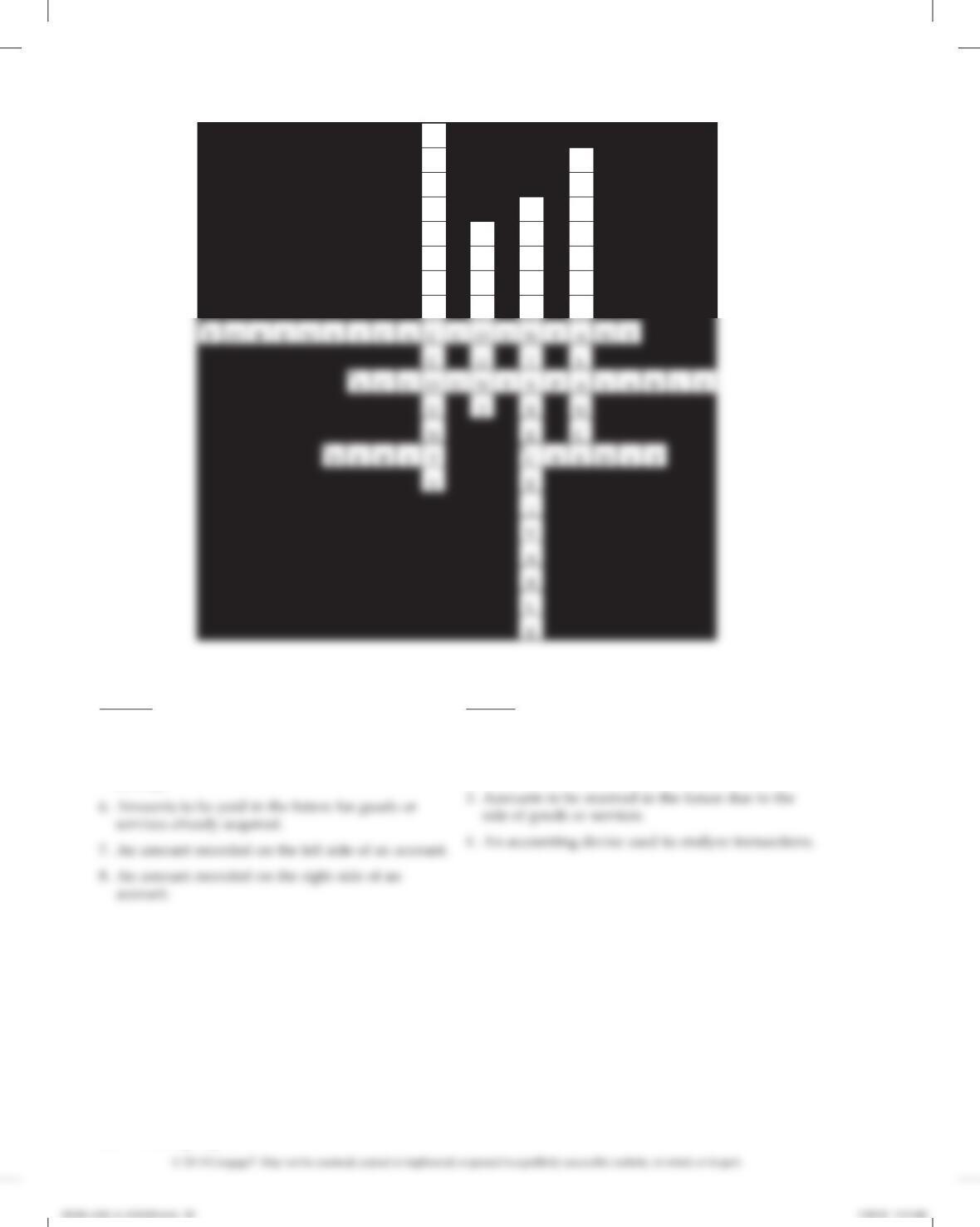
Across
5. An accountant who combines accounting and
investigating skills to uncover suspected
fraudulent business activity, or to prevent such
activity.
Down
1. A list of accounts used by a business.
2. The side of an account that is increased is called
the normal balance of the account.
TE
1
4
3
2
C
H
A
R
T
O
F
T
A
C
L
A
M
R
O
N
C
C
O
A
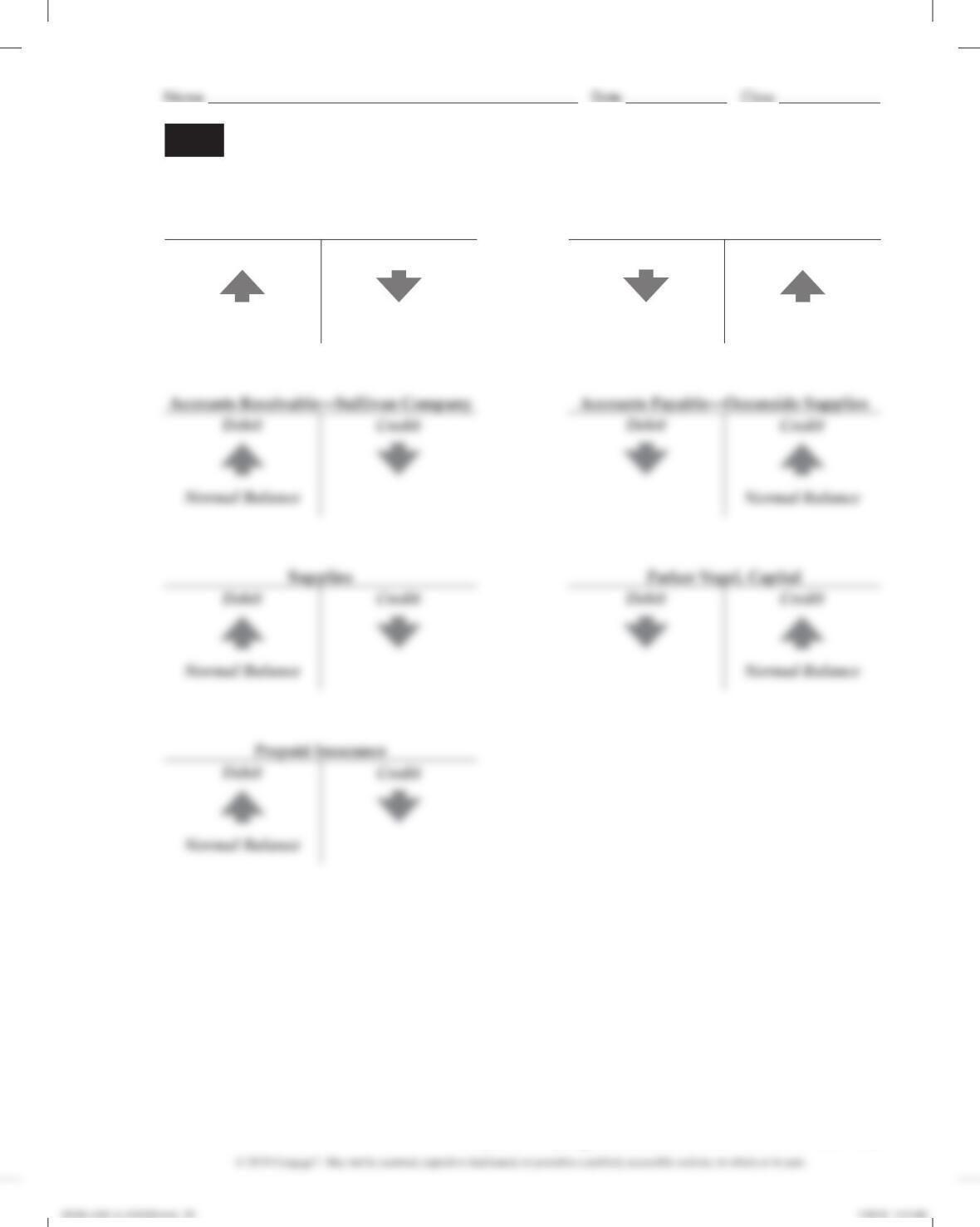
Chapter 2 Analyzing Transactions into Debit and Credit Parts • 23
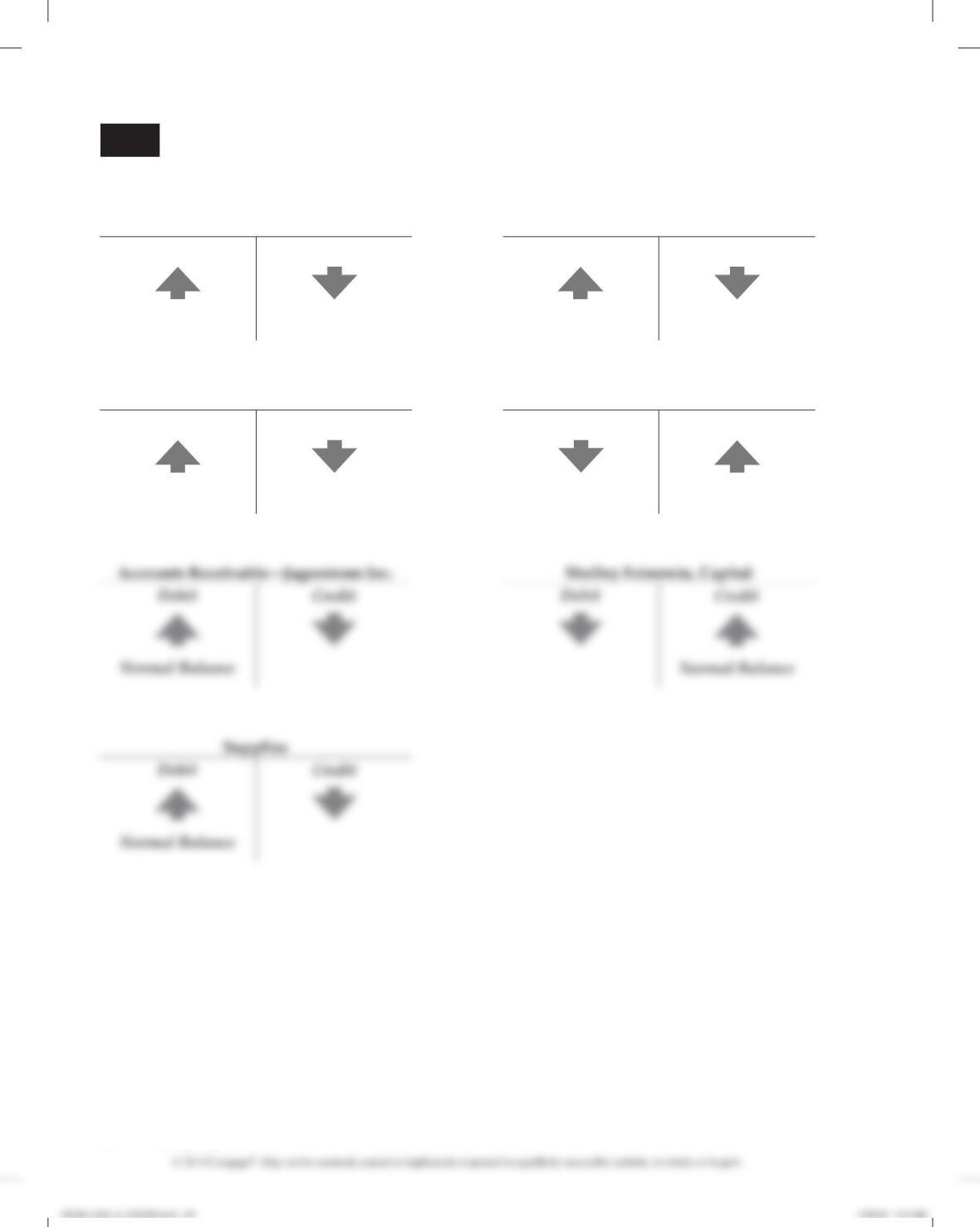
2-1 WORK TOGETHER, p. 35
Determining the increase and decrease and the normal balance sides for accounts
Debit
Normal Balance
Debit
Cash Accounts Payable—Sawyer Supplies
Credit Credit
Normal Balance
24 • Working Papers
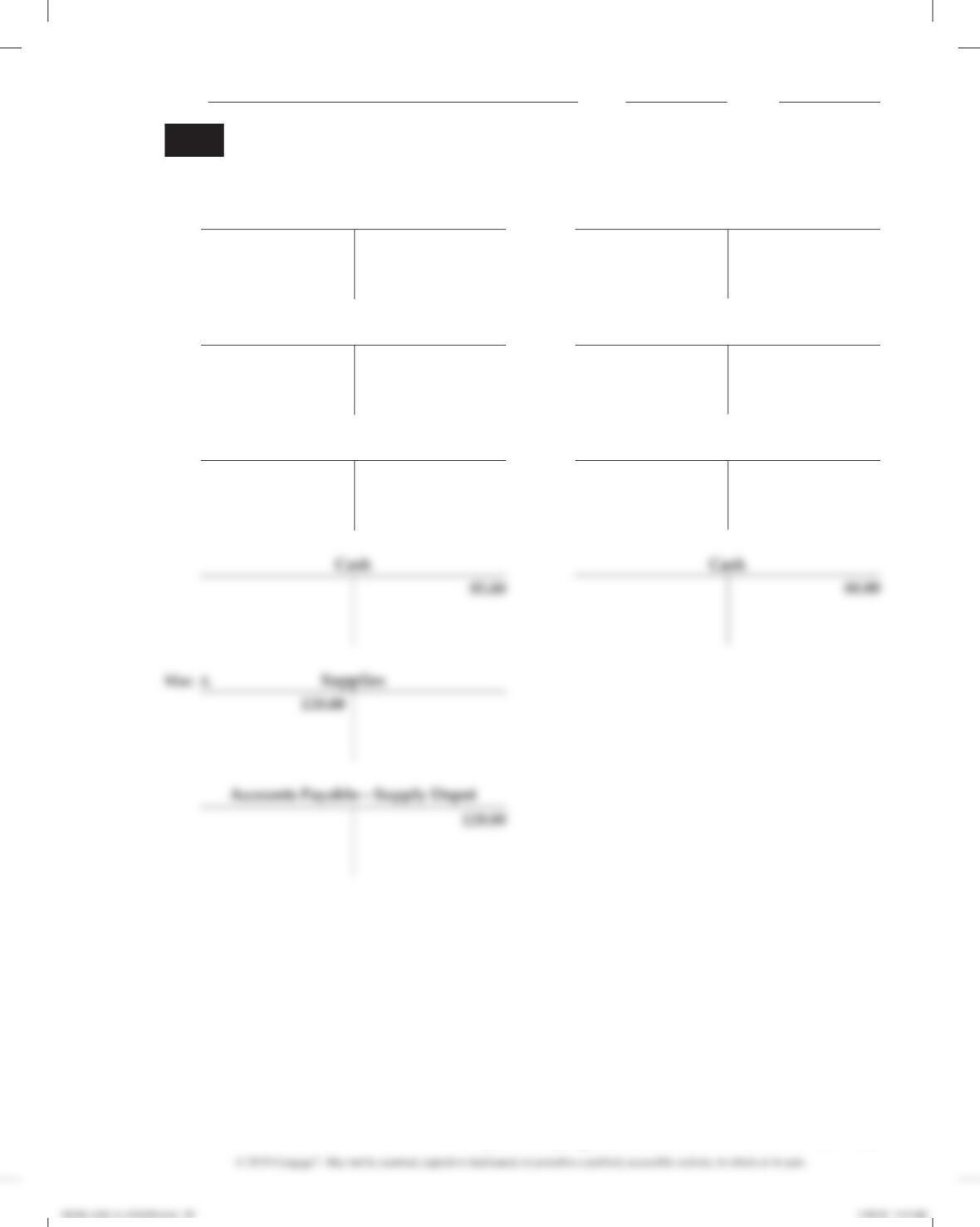
2-1 ON YOUR OWN, p. 35
Determining the increase and decrease and the normal balance sides for accounts
TE
Debit
Normal Balance
Debit
Normal Balance
Debit
Normal Balance
Debit
Cash Prepaid Insurance
Accounts Receivable—White Company Accounts Payable—West End Hardware
Credit Credit
Credit Credit
Normal Balance
Chapter 2 Analyzing Transactions into Debit and Credit Parts • 25
Mar. 1.
Mar. 3.
Mar. 6.
Mar. 9.
Name Date Class
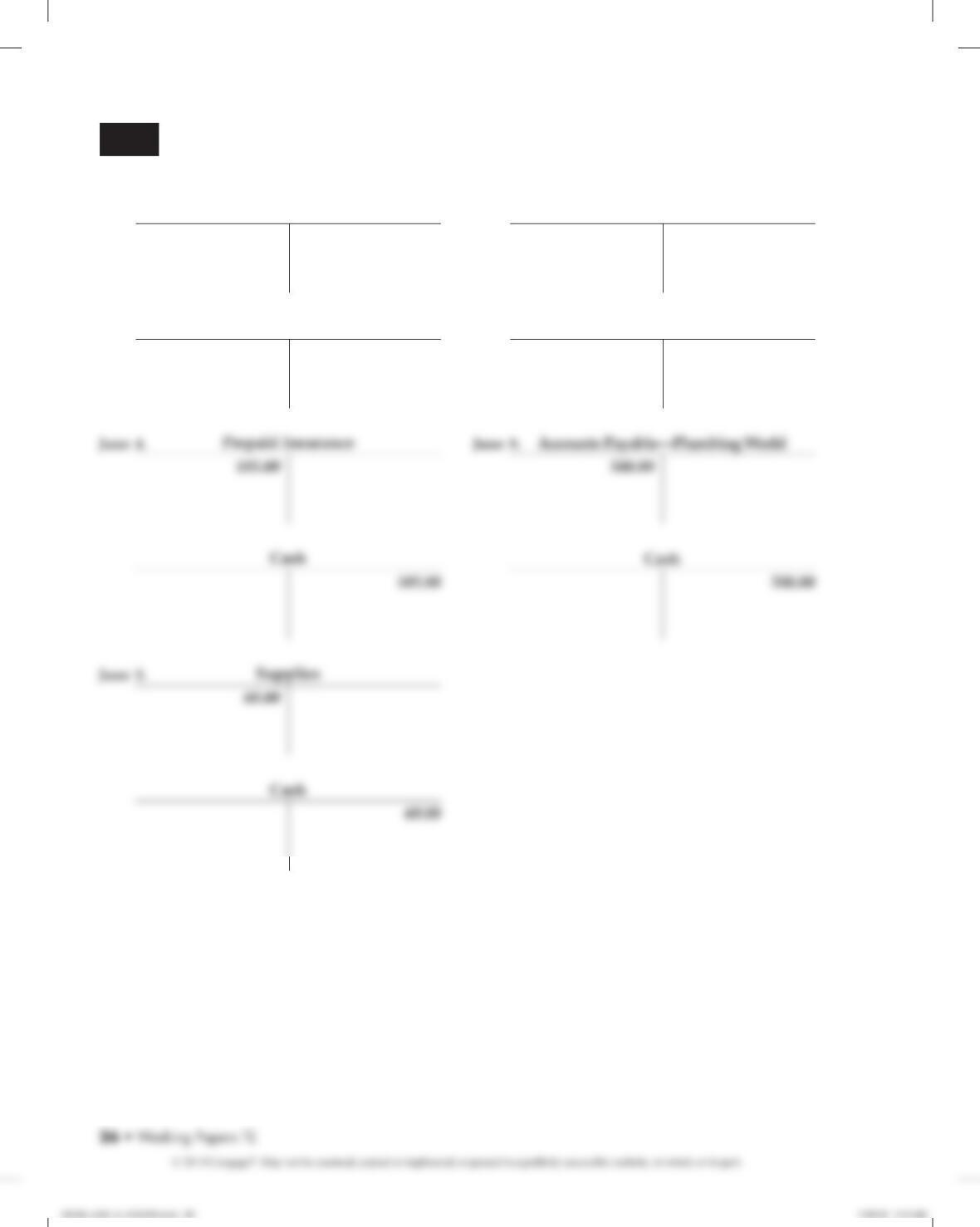
2-2 WORK TOGETHER, p. 42
Analyzing transactions into debit and credit parts
Cash Prepaid Insurance
John Jensen, Capital Cash
Supplies Accounts Payable—Supply Depot
4,000.00 250.00
4,000.00 250.00
95.00 80.00
2-2 ON YOUR OWN, p. 42
Analyzing transactions into debit and credit parts
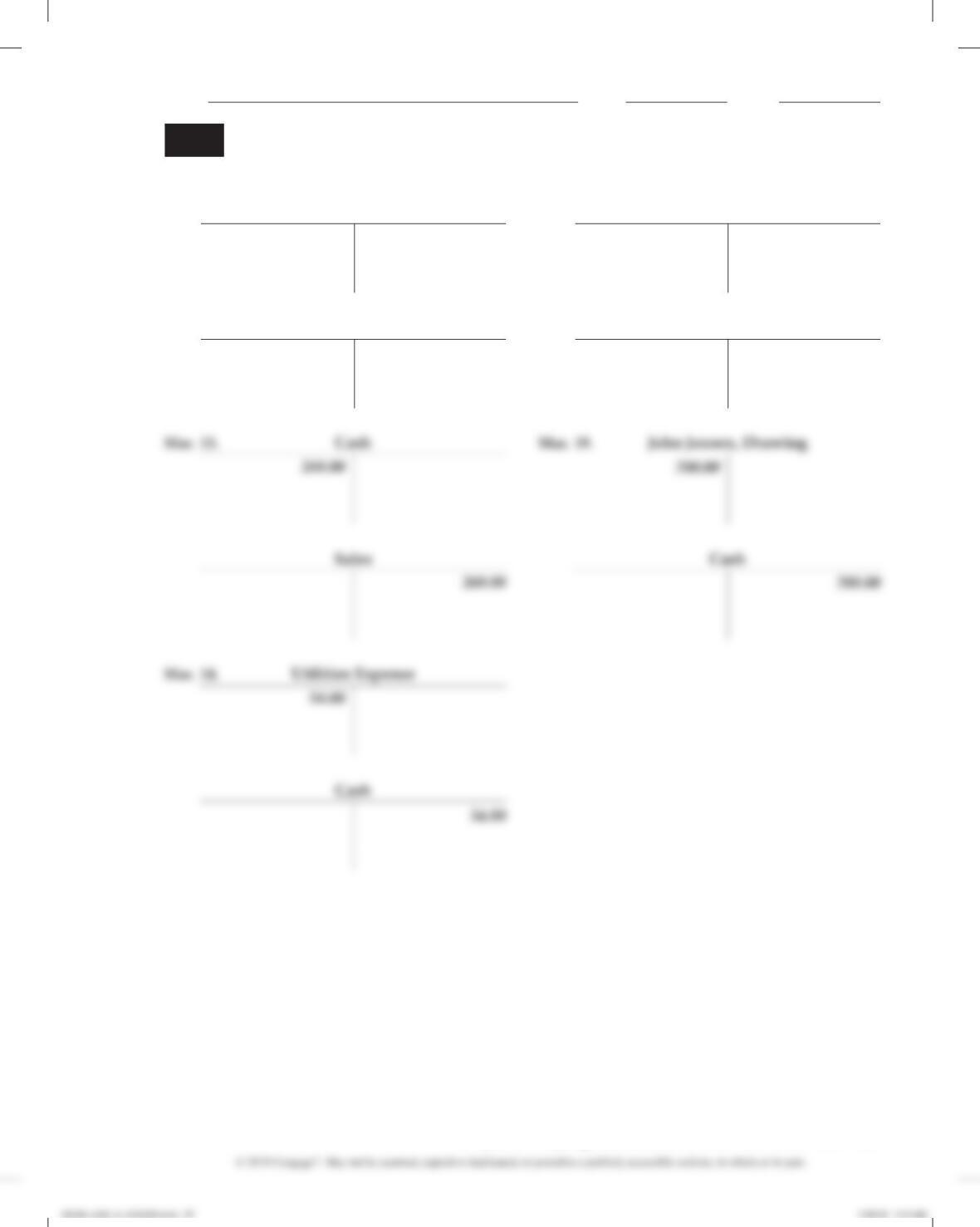
June 2.
June 8.
Supplies
800.00
Accounts Payable—Plumbing World
800.00
Cash
Brian Helfrey, Capital
3,500.00
3,500.00
Chapter 2 Analyzing Transactions into Debit and Credit Parts • 27
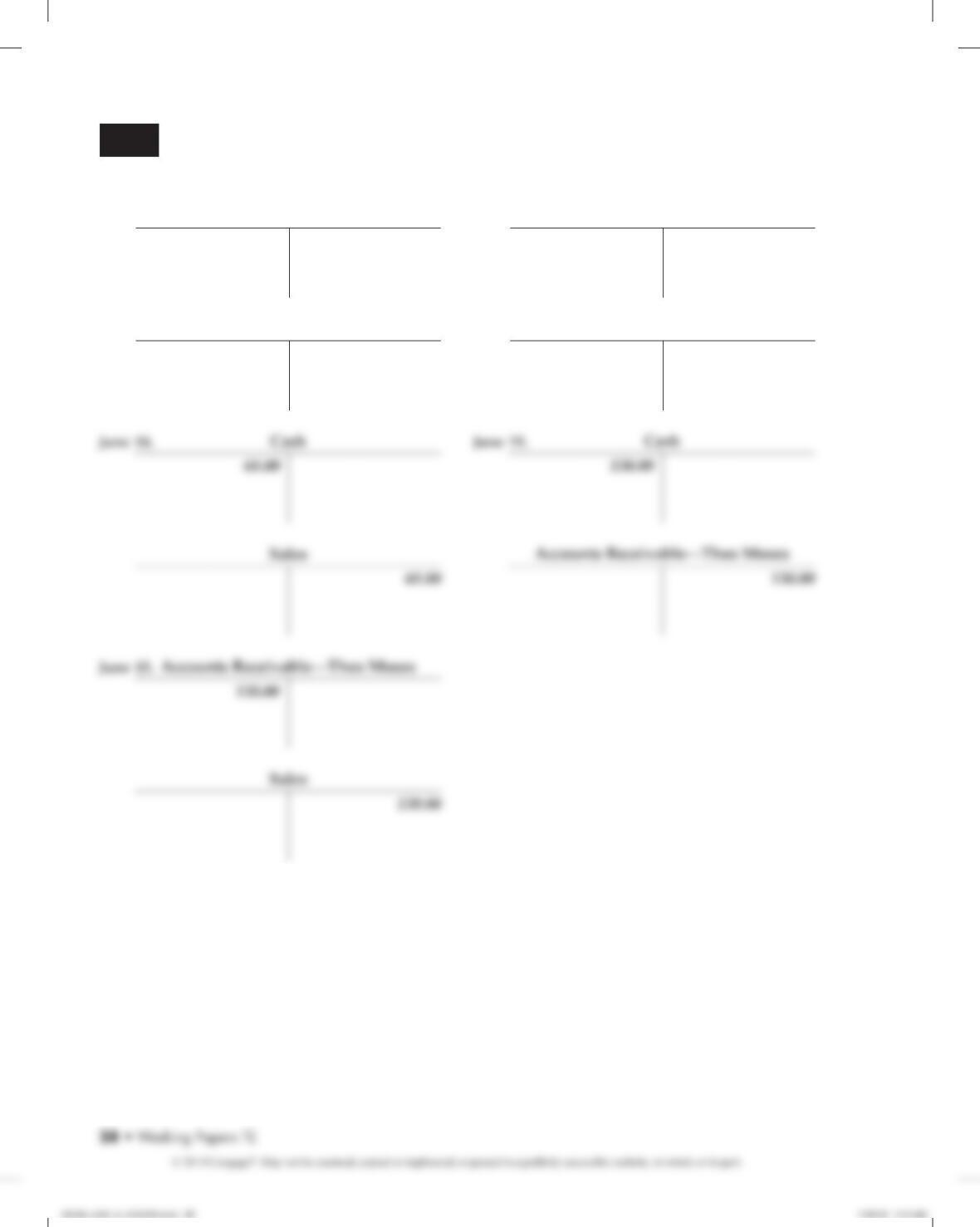
Mar. 11.
Name Date Class
2-3 WORK TOGETHER, p. 49
Analyzing revenue, expense, and withdrawal transactions into debit and credit parts
Mar. 16.
Accounts Receivable—Johannes Erickson Cash
Accounts Receivable—Johannes Erickson
125.00 125.00
125.00
Sales
125.00
2-3 ON YOUR OWN, p. 49
Analyzing revenue, expense, and withdrawal transactions into debit and credit parts
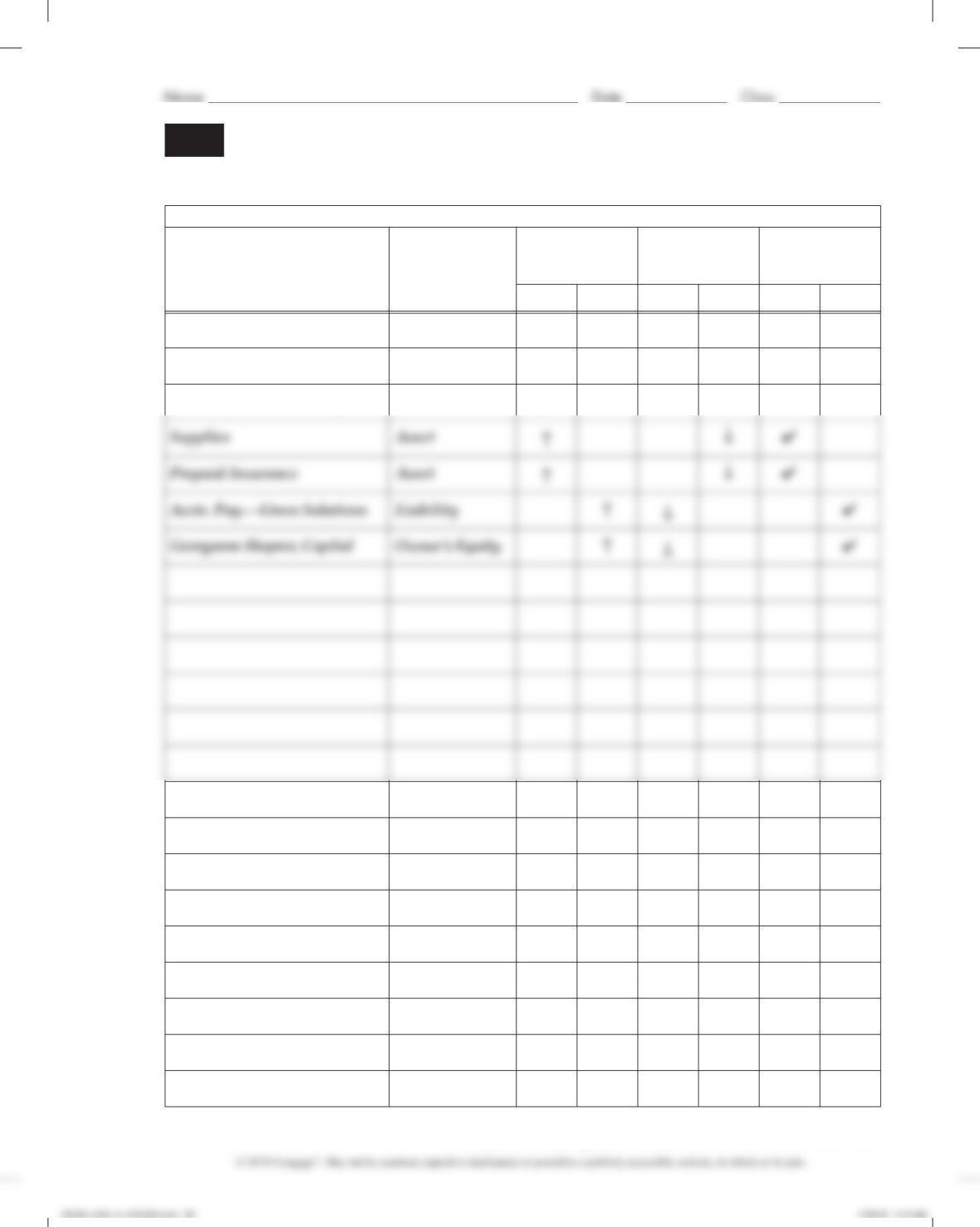
June 12.
June 18.
Rent Expense
Cash
Brian Helfrey, Drawing
Cash
800.00
800.00
280.00
280.00
Chapter 2 Analyzing Transactions into Debit and Credit Parts • 29
1 2 345678
Account Account
Classification
Increase
Side
Decrease
Side
Account’s
Normal
Balance
Debit Credit Debit Credit Debit Credit
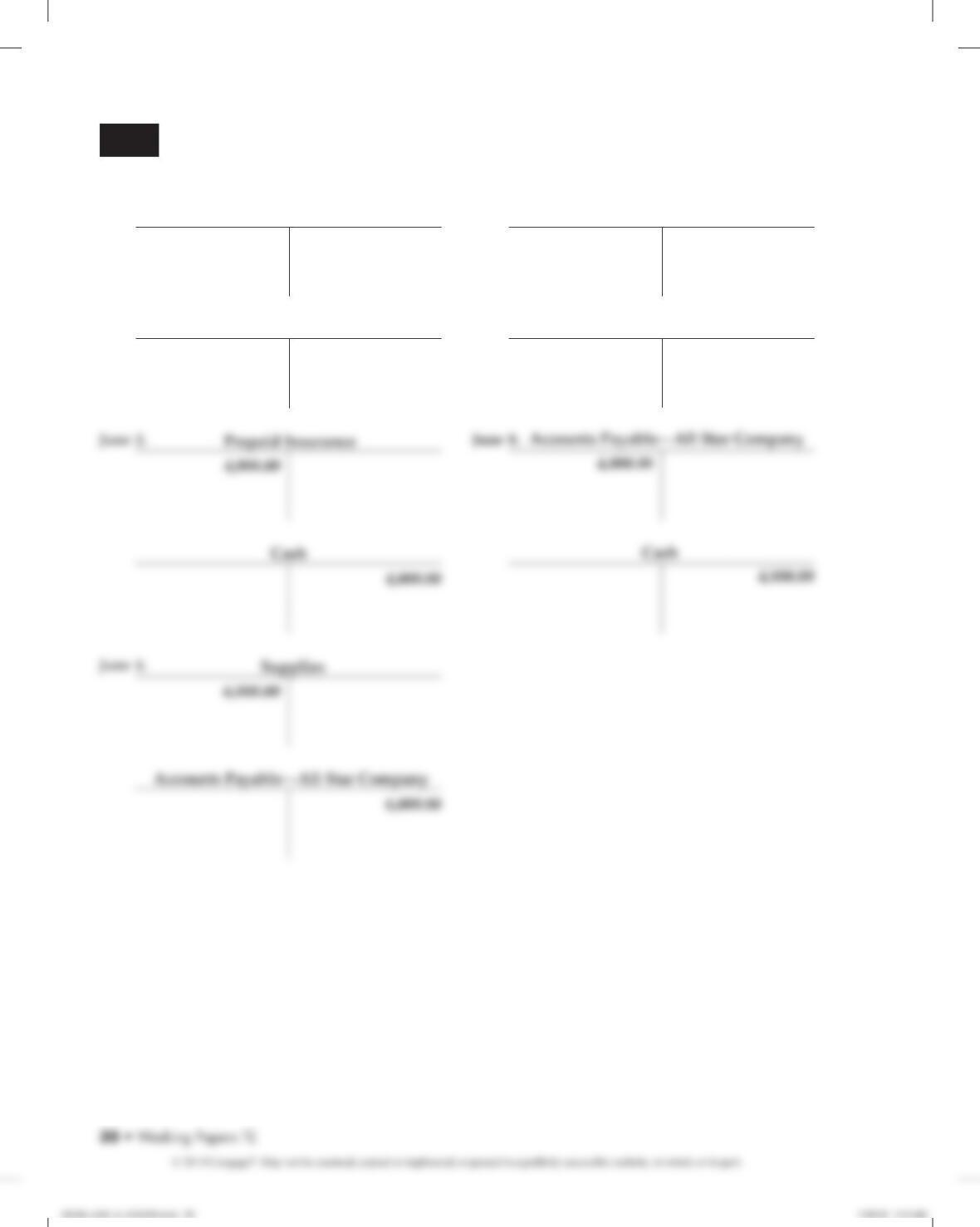
Cash Asset ↑↓✔
2-1 APPLICATION PROBLEM (LO2, 3), p. 52
Determining the increase, decrease, and normal balance side for accounts
Accts. Rec.—Tyler Choi Asset ä
ä
å
å
✔
✔
Asset
Accts. Rec.—Nolan Esby
2-2 APPLICATION PROBLEM (LO4), p. 52
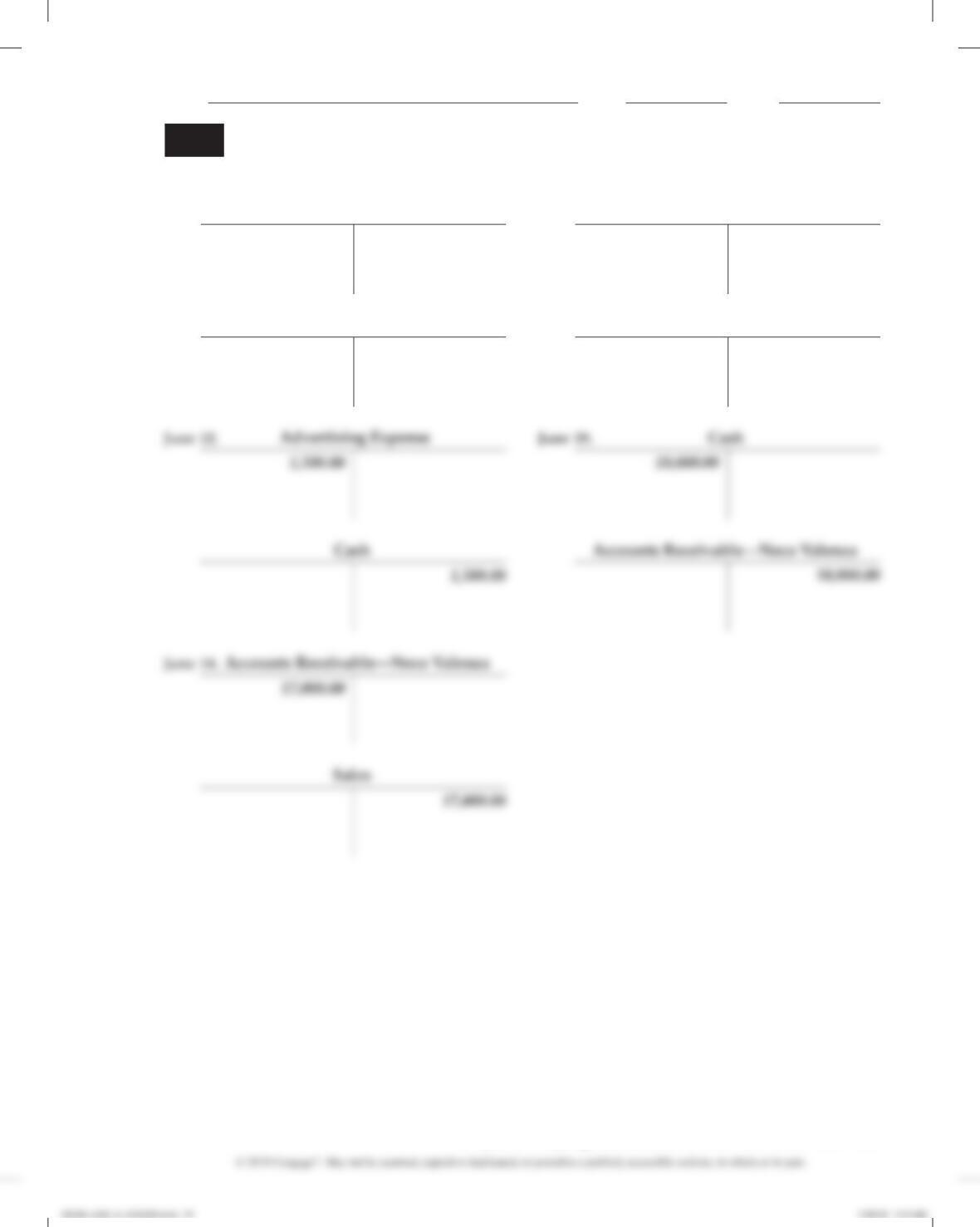
Analyzing transactions into debit and credit parts
June 1. Cash
10,000.00
Sawyer Helfrey, Capital
10,000.00
June 5.
Supplies
Cash
1,000.00
1,000.00
Chapter 2 Analyzing Transactions into Debit and Credit Parts • 31
Name Date Class
2-3 APPLICATION PROBLEM (LO5), p. 53
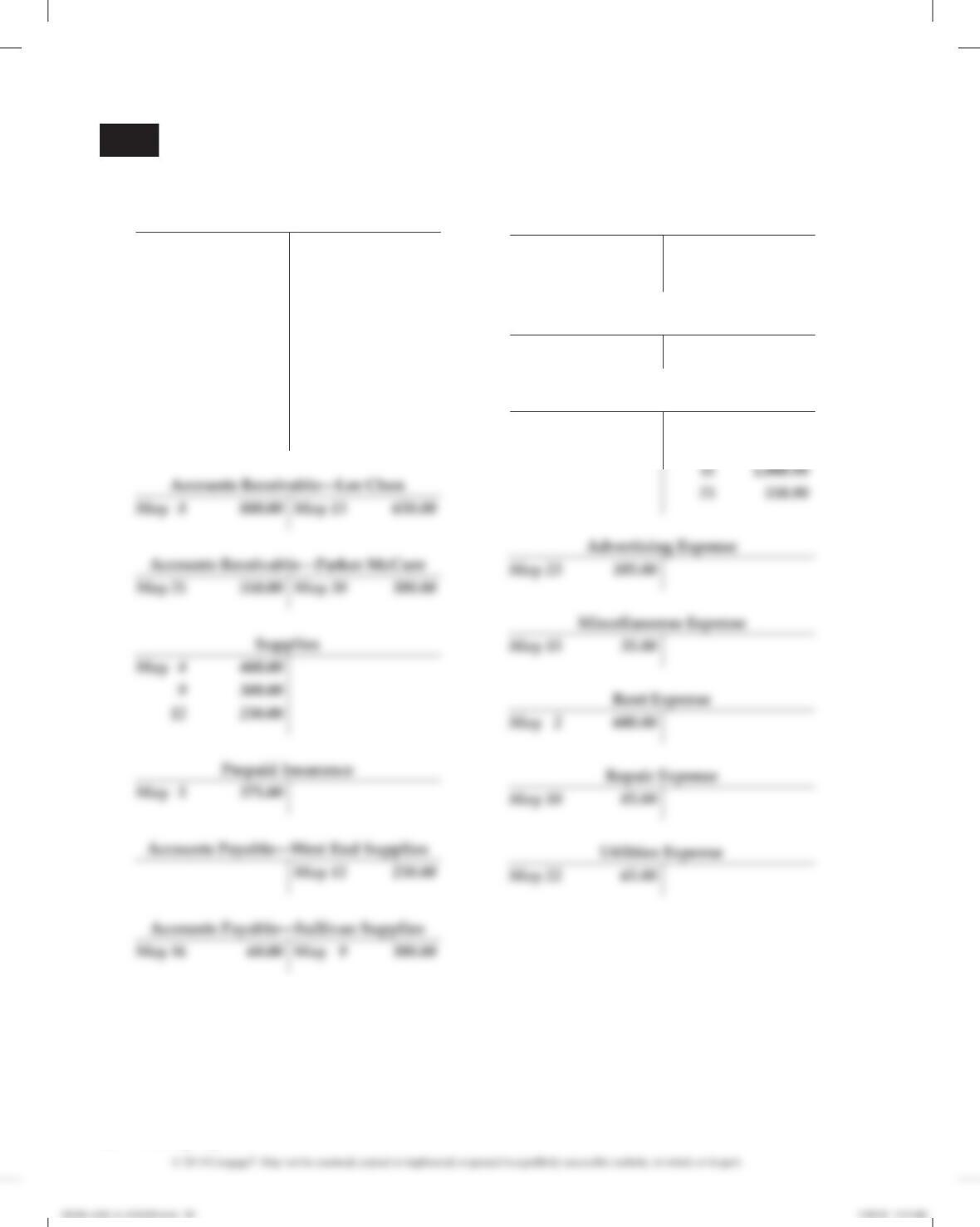
Analyzing revenue, expense, and withdrawal transactions into debit and credit parts
June 11.
June 18.
Cash
Sales
22,000.00
Cash
Sawyer Helfrey, Drawing
5,000.00
5,000.00
22,000.00
32 • Working Papers
2-M MASTERY PROBLEM (LO4, 5), p. 53
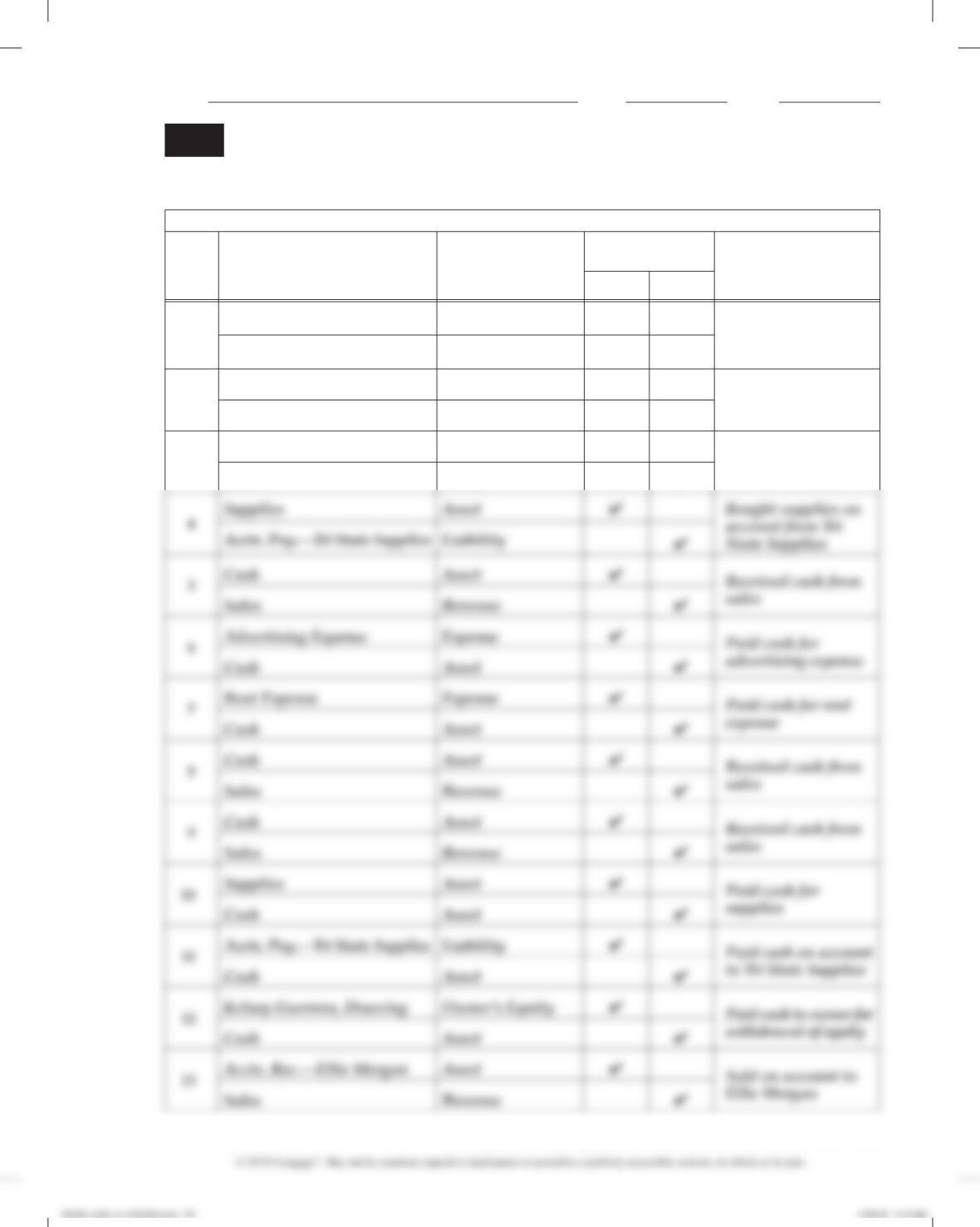
Analyzing transactions into debit and credit parts
TE
Cash
May 1 3,700.00 May 2 600.00
4 950.00 4 400.00
11 2,900.00 5 375.00
11 1,000.00 10 85.00
13 650.00 15 35.00
30 300.00 16 60.00
22 65.00
23 105.00
26 500.00
Sadie Dirks, Capital
May 1 3,700.00
11 2,900.00
Sadie Dirks, Drawing
May 26 500.00
Sales
May 4 950.00
8 800.00
Chapter 2 Analyzing Transactions into Debit and Credit Parts • 33
1 2 3 4 5 6
Trans.
No.
Accounts
Affected
Account
Classification
Entered in
Account as a Description
of
Transaction
Debit Credit
1Cash Asset ✔Received cash
from owner as an
investment
Kelsey Guerrero, Capital Owner’s Equity ✔
2
3
Name Date Class
2-C CHALLENGE PROBLEM (LO4, 5), p. 54
Analyzing transactions recorded in T accounts
Utilities Expense Expense ✔Paid cash for utilities
expense
Cash Asset ✔
Miscellaneous Expense Expense ✔Paid cash for
miscellaneous expense
Cash Asset ✔