1. a. Job order cost system and process cost system.
b. The job order cost system provides a separate record of each quantity of product that
p
asses through the factory.
c. Process cost systems accumulate costs for each department or process within a factory.
5. A job cost sheet is the subsidiary ledger to the work in process control account. The cost of
materials, labor, and overhead are listed on each separate job cost sheet for each job. A summary
of all the job cost sheets during an accounting period is the basis for journal entries to the control
accounts.
6. The clock card is a means of recording the hours spent by employees in the factory. The
time ticket is a means of recording the time the employee spends on a specific job.
p
8. a. The predetermined factory overhead rate is determined by dividing the estimated total factory
overhead costs for the forthcoming year by an estimated activity base, one that reflects the
consumption or use of factory overhead costs.
b. Direct labor cost, direct labor hours, and machine hours.
CHAPTER 19
JOB ORDER COSTING
DISCUSSION QUESTIONS

CHAPTER 19 Job Order Costing
DISCUSSION QUESTIONS (Continued)
10. Job order cost accumulation would be most appropriate for professional service firms that
p
rovide extended, project-type services for clients. Examples would be architectural,
consulting, advertising, and legal services. Job cost sheets would accumulate all direct costs of
servicing the client. Such costs would include labor, materials, travel, and subcontracted
CHAPTER 19 Job Order Costing
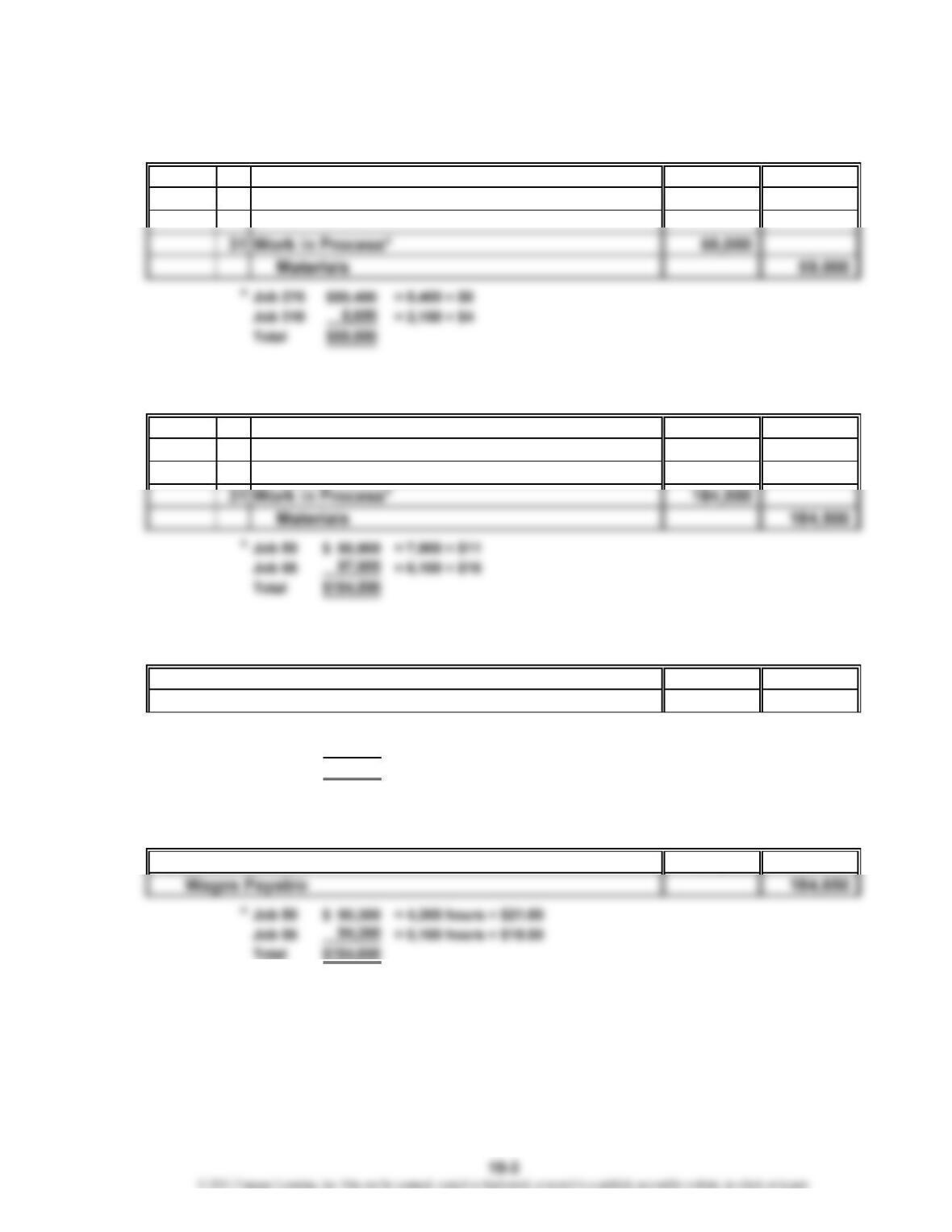
PE 19-1A
7 Materials (12,000 units × $6) 72,000
Accounts Payable 72,000
PE 19-1B
4 Materials (31,000 units × $16) 496,000
Accounts Payable 496,000
PE 19-2A
Work in Process* 132,200
Wages Payable 132,200
*Job 275 $ 64,600 = 1,900 hours × $34
Job 310 67,600 = 2,600 hours × $26
Total $132,200
PE 19-2B
Work in Process* 184,650
Aug.
PRACTICE EXERCISES
May
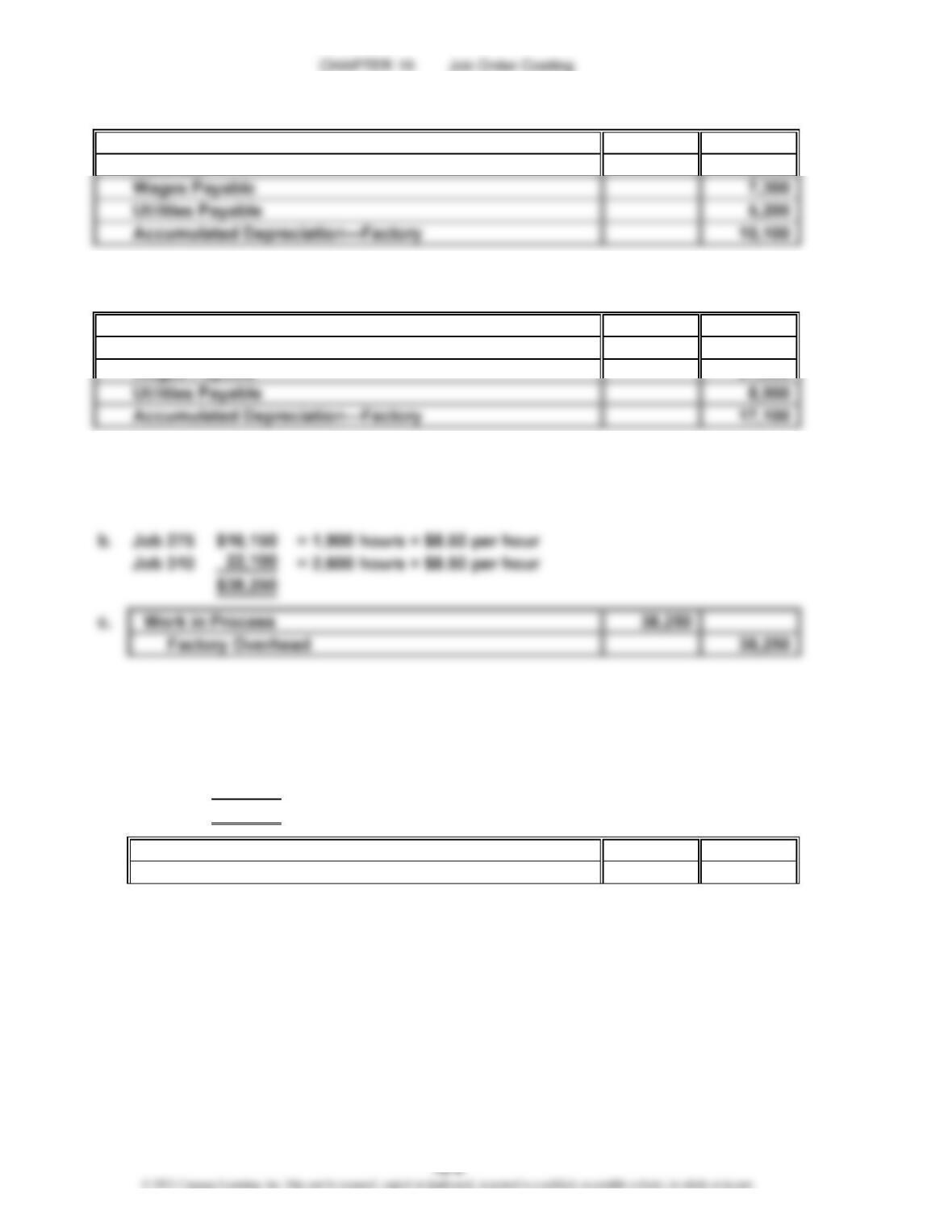
PE 19-3A
Factory Overhead 32,300
Materials 9,700
PE 19-3B
Factory Overhead 63,700
Materials 16,400
PE 19-4A
a. $8.50 per direct labor hour = $867,000 ÷ 102,000 direct labor hours
PE 19-4B
a. $12.00 per direct labor hour = $960,000 ÷ 80,000 direct labor hours
b. $ 51,600 = 4,300 hours × $12.00 per hour
61,200 = 5,100 hours × $12.00 per hour
$112,800
c. Work in Process 112,800
Factory Overhead 112,800
Job 50
Job 56
CHAPTER 19 Job Order Costing
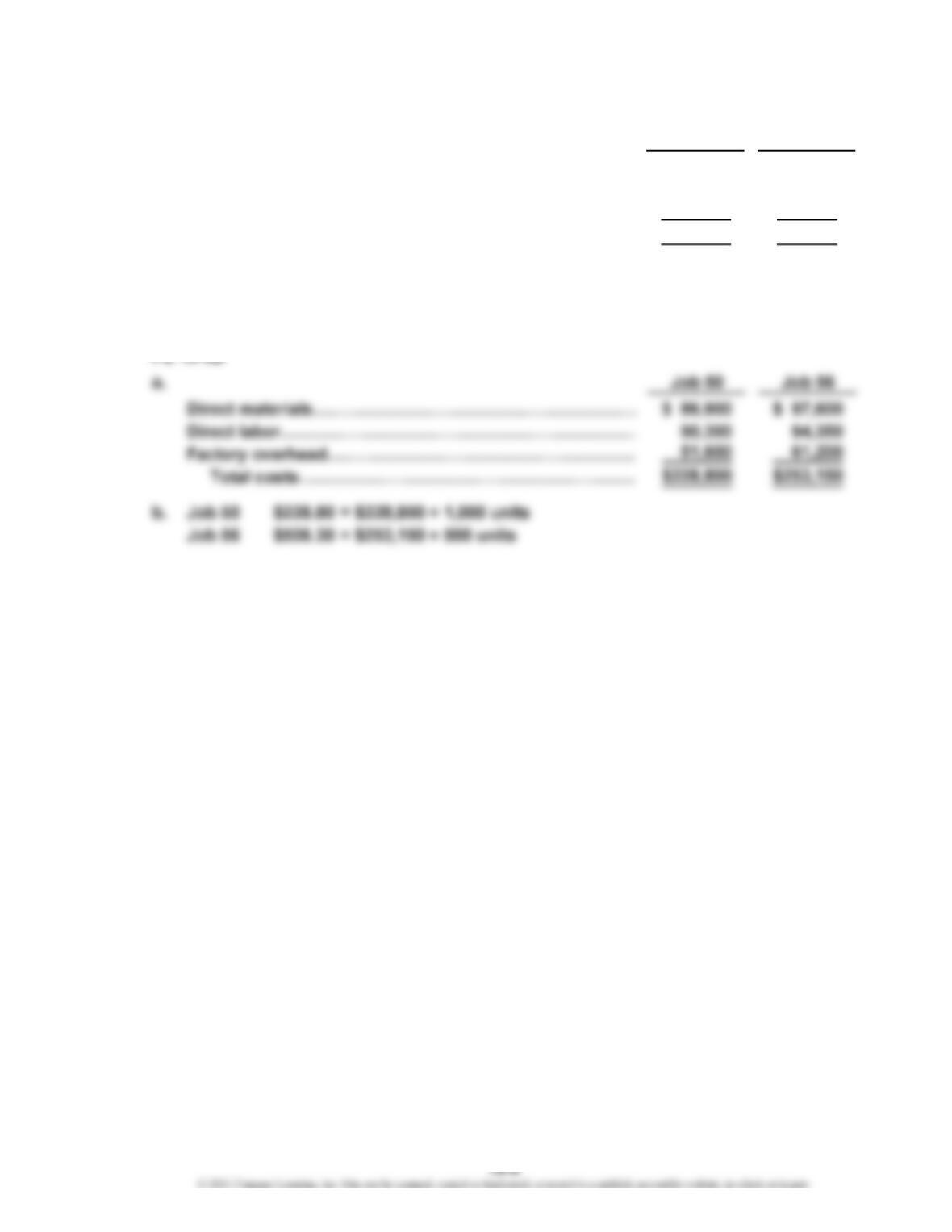
PE 19-5A
a. Job 275 Job 310
Direct materials…………………………………………………
…
$ 50,400 $ 8,600
Direct labor………………………………………………………
…
64,600 67,600
Factory overhead………………………………………………
…
16,150 22,100
Total costs…………………………………………………… $131,150 $98,300
b. = $131,150 ÷ 5,000 units
= $98,300 ÷ 2,000 units
$26.23
$49.15
Job 275
Job 310
…
…
…
CHAPTER 19 Job Order Costing
Ex. 19-1
a. Materials requisitioned for use (both direct and indirect)
b. Factory labor used (both direct and indirect)
Ex. 19-2
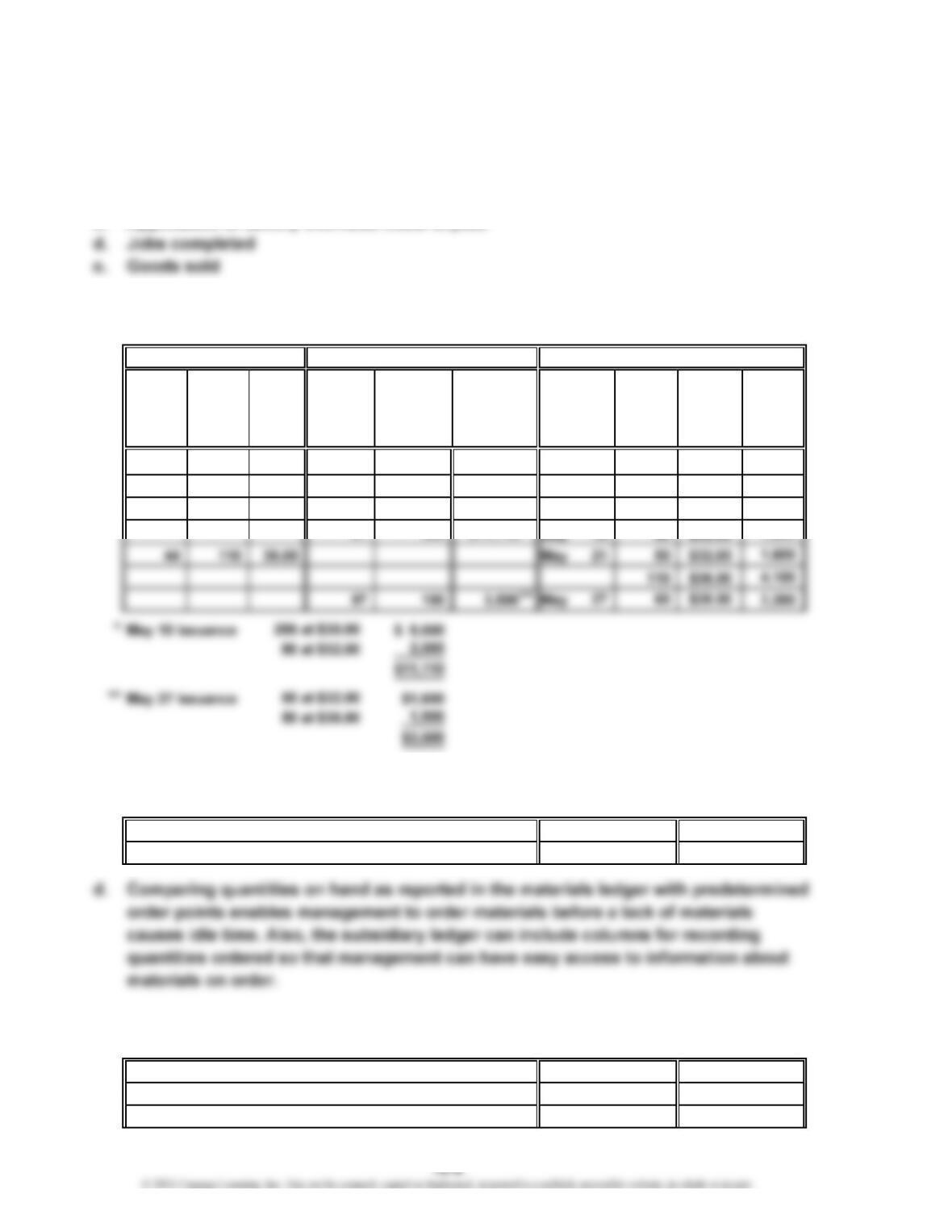
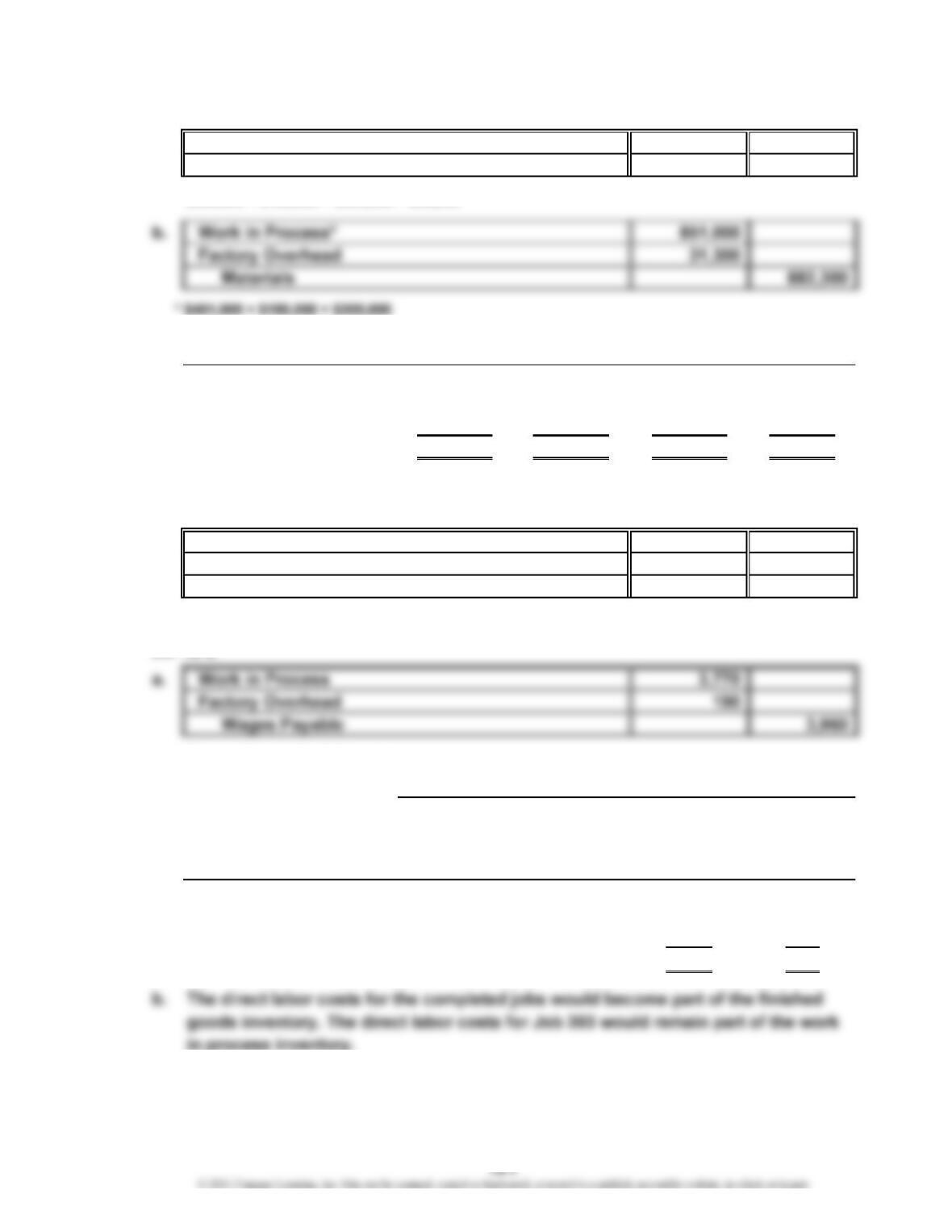
a.
Materials
Receiving Requi-
Report Unit sition Unit
Number Quantity Price Number Quantity Amount Quantity Price Amount
May 1 285 $30.00 $8,550
40 130 $32.00 May 4 285 $30.00 8,550
130 $32.00 4,160
b. Ending inventory balance:
60 at $38.00……………………………………………………………………
…
c. Work in Process ($11,110 + $3,500)
Materials
Ex. 19-3
Work in Process
Factory Overhead
Materials
EXERCISES
RECEIVED ISSUED
61,600
1,620
63,220
14,610
$2,280
14,610
BALANCE
Date
CHAPTER 19 Job Order Costing
Ex. 19-4
a. Materials* 918,000
Accounts Payable 918,000
*$396,000 + $162,000 + $324,000 + $36,000
c.
Lumber Glue
Balance, June 1…………… $ 56,200 $ 5,900
June purchases…………… 324,000 36,000
Less June requisitions…
…
(300,000) (31,300)
Balance, June 30…………
…
$ 80,200 $ 10,600
Ex. 19-5
Work in Process 88,800
Factory Overhead 8,500
Wages Payable 97,300
Supporting calculations:
Direct
Labor
Hourly Job Job (sum of Indirect
Rate 301 303 job costs) Labor
Landon Vincent…
…
$35 $315 $385 $1,330 $ 70
Fahad Hamad……
…
36 396 468 1,404 36
Ivory Argo………
…
28 224 252 1,036 84
$3,770 $190
$630
540
560
Polyester
Labor Costs (Hourly Rate × Hours)
Fabric
$ 36,500
396,000
(401,000)
$ 31,500
Filling
$ 25,700
162,000
(150,000)
$ 37,700
Job
302
CHAPTER 19 Job Order Costing
Ex. 19-7
a. Work in Process 25,200
Factory Overhead 4,000
Wages Payable 29,200
Ex. 19-8
a. Factory 1: $37.50 per machine hour ($12,000,000 ÷ 320,000 machine hours)
c. Factory 1:
Work in Process 1,031,250
Factory Overhead 1,031,250
($37.50 × 27,500).
Factory 2:
Ex. 19-9
The estimated shop overhead is determined as follows:
Shop and repair equipment depreciation………………………………………
…
$ 64,000
Shop supervisor salaries…………………………………………………………
…
212,000
Shop property taxes………………………………………………………………… 35,000
Shop supplies………………………………………………………………………
…
18,000
Total shop overhead……………………………………………………………
…
$329,000
CHAPTER 19 Job Order Costing
Ex. 19-9 (Concluded)
35,000 hours
Ex. 19-10
a. Estimated number of operating room hours:
Hours per day…………………………………………………
…
8
Days per week…………………………………………………
…
7
Hours per week………………………………………………
…
56
Weeks per year (net of two maintenance weeks)………
…
50
Estimated annual operating room hours…………………
…
2,800
c. Conrad Goldsmith’s procedure:
Number of surgical room hours……………………………
…
6
Predetermined surgical room overhead rate……………
…
$340
Procedure overhead…………………………………………
…
$2,040
×
×
×
CHAPTER 19 Job Order Costing
Ex. 19-11
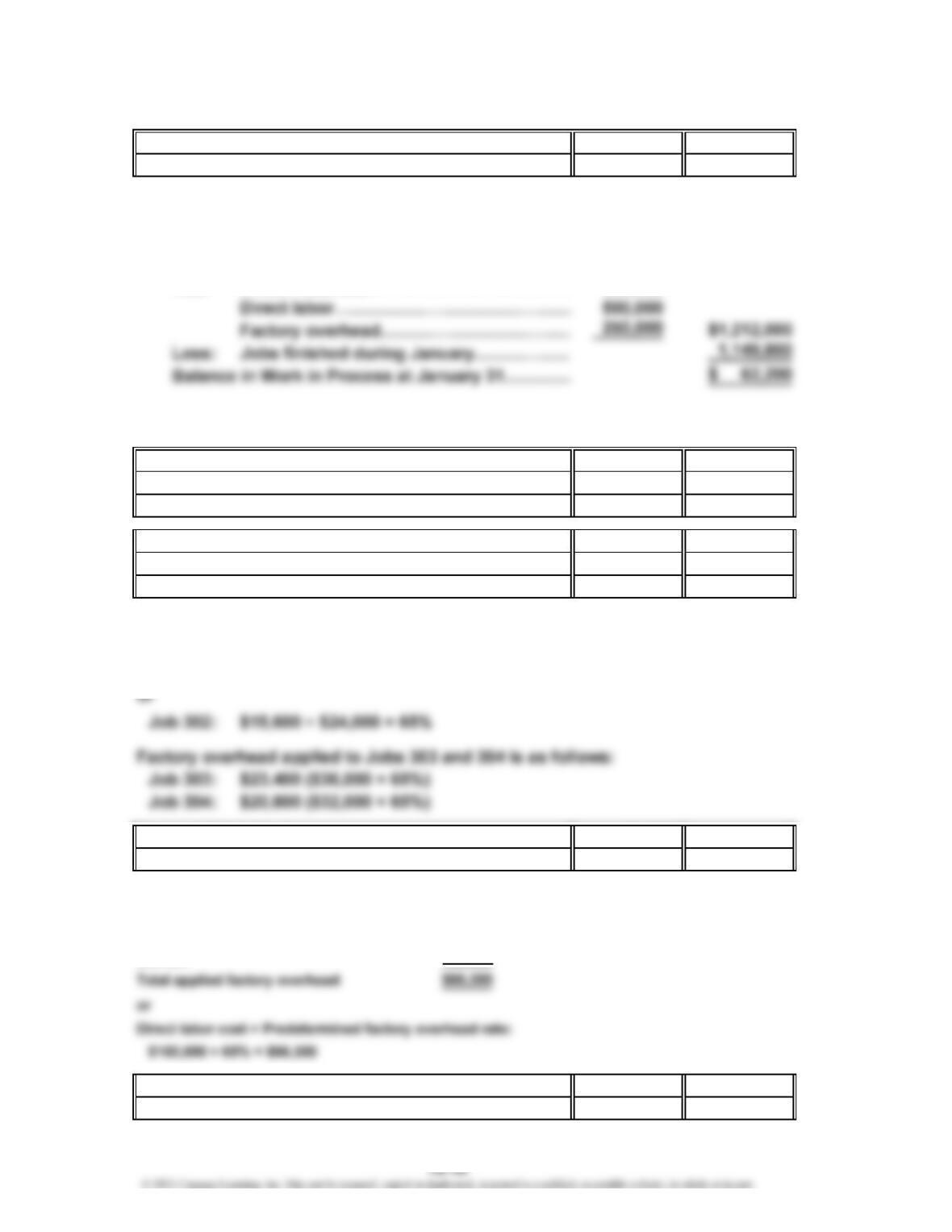
a. Finished Goods* 1,149,800
Work in Process 1,149,800
*$200,000 + $288,000 + $225,000 + $436,800
b. Cost of unfinished jobs at January 31:
Balance in Work in Process at January 1…………
…
$ 72,000
Add: Direct materials………………………………
…
390,000
Ex. 19-12
a. Work in Process 93,500
Factory Overhead 7,600
Materials 101,100
b. Work in Process 102,000
Factory Overhead 15,100
Wages Payable 117,100
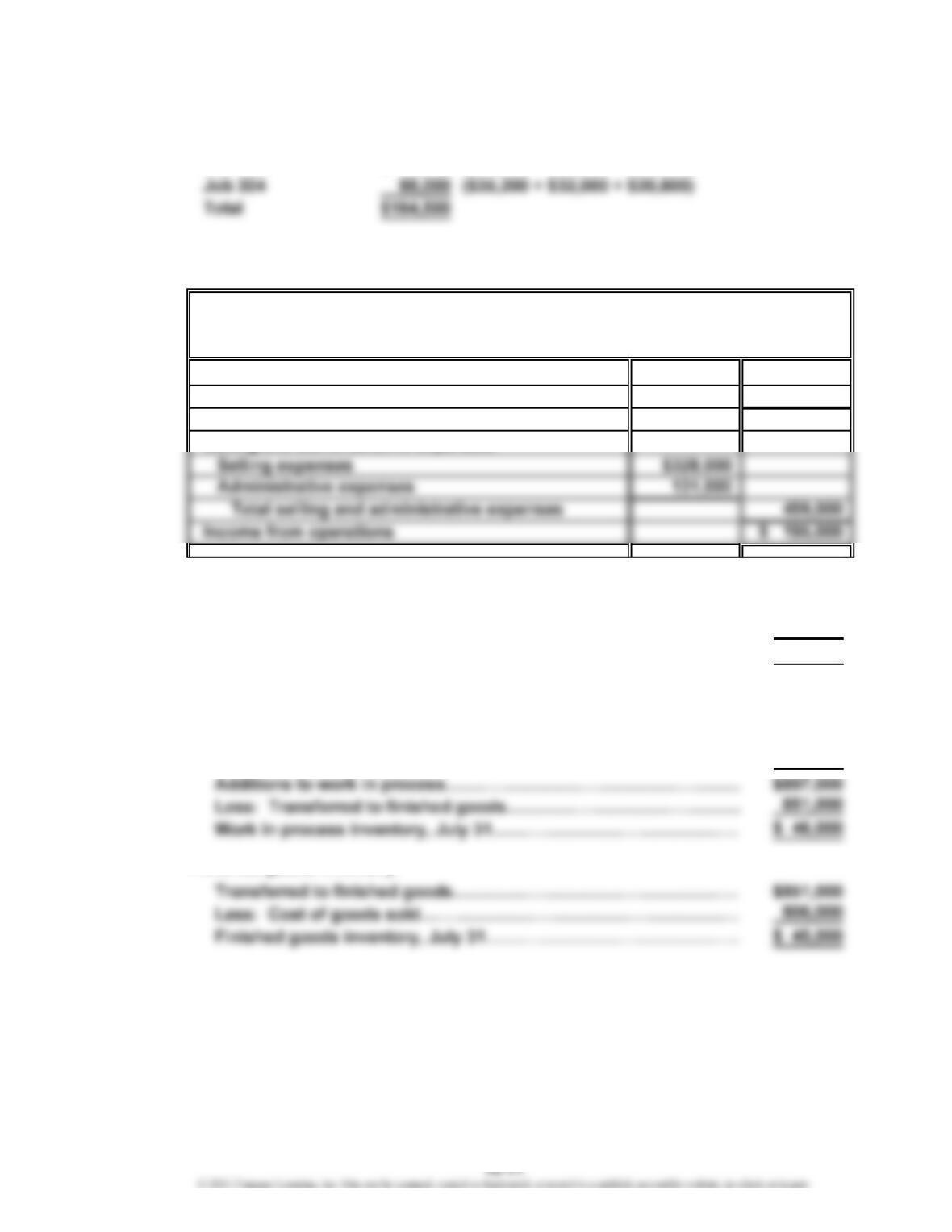
c. Predetermined overhead rate based upon direct labor cost is 65%, computed
as follows:
Job 301: $6,500 ÷ $10,000 = 65%
d. Work in Process* 66,300
Factory Overhead 66,300
*Job 301 $ 6,500
Job 302 15,600
Job 303 23,400
Job 304 20,800
e. Finished Goods* 97,300
Work in Process 97,300
*$30,800 + $66,500
CHAPTER 19 Job Order Costing
Ex. 19-12 (Concluded)
f. Work in process on January 31:
Job 303 $ 76,500 ($17,100 + $36,000 + $23,400)
Ex. 19-13
a.
Revenues $1,460,000
Cost of goods sold 806,000
Gross profit $ 654,000
b. Materials inventory:
Purchased materials………………………………………………………
…
$416,000
Less: Materials used in production……………………………………
…
358,000
Materials inventory, July 31………………………………………………
…
$ 58,000
Work in process inventory:
Materials used in production……………………………………………
…
$358,000
Direct labor…………………………………………………………………
…
308,000
Factory overhead (75% × $308,000)……………………………………
…
231,000
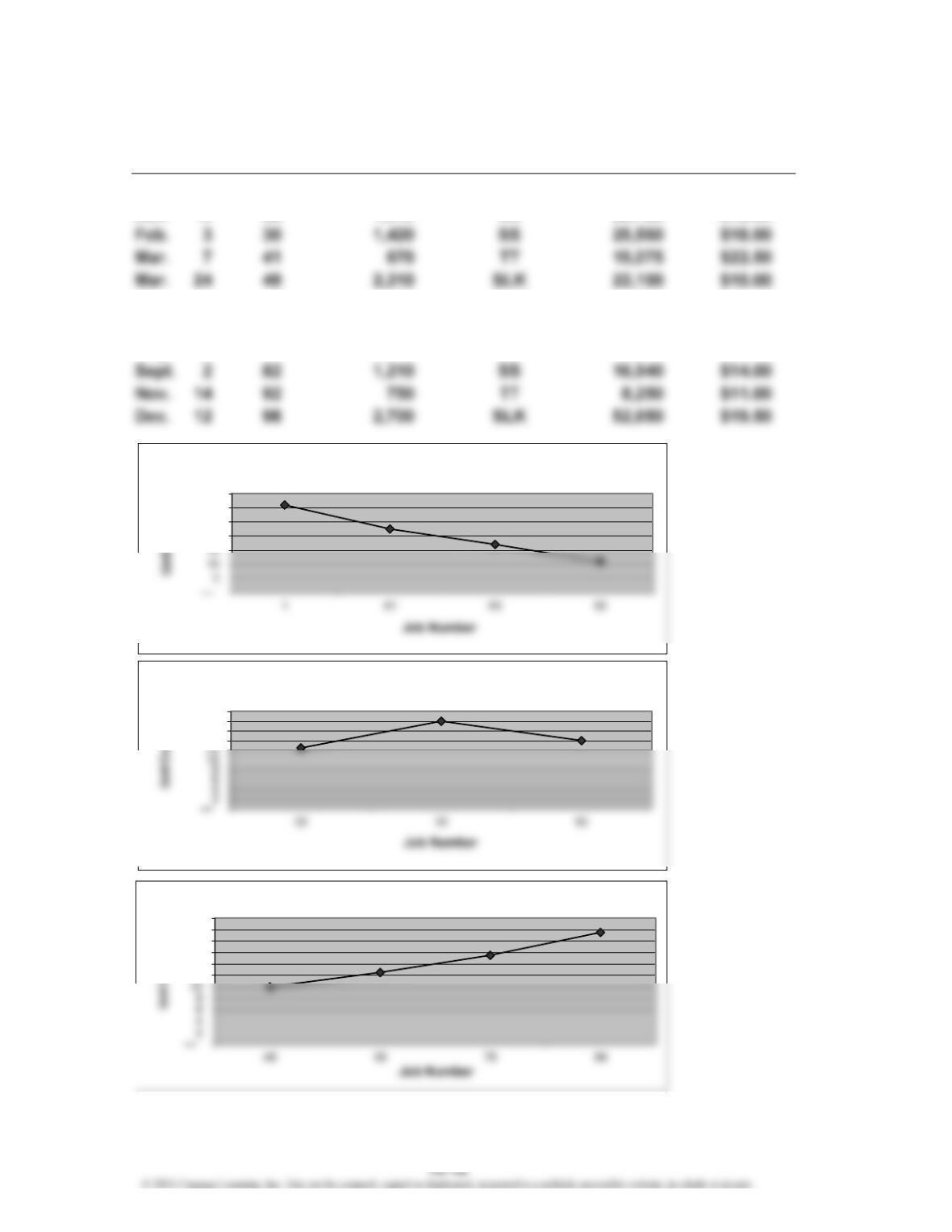
Finished goods inventory:
Migliozzi Inc.
Income Statement
For the Month Ended July 31
CHAPTER 19 Job Order Costing
Ex. 19-14
a.
Unit
Date Job. No. Quantity Product Amount Cost
Jan. 2 1 520 TT $16,120 $31.00
May 19 58 2,550 SLK 31,875 $12.50
June 12 65 620 TT 10,540 $17.00
Aug. 18 78 3,110 SLK 48,205 $15.50
20
25
30
35
Unit Costs for TT
14
16
18
20
Unit Costs for SS
12
14
16
18
20
22
Unit Costs for SLK
CHAPTER 19 Job Order Costing
Ex. 19-14 (Concluded)
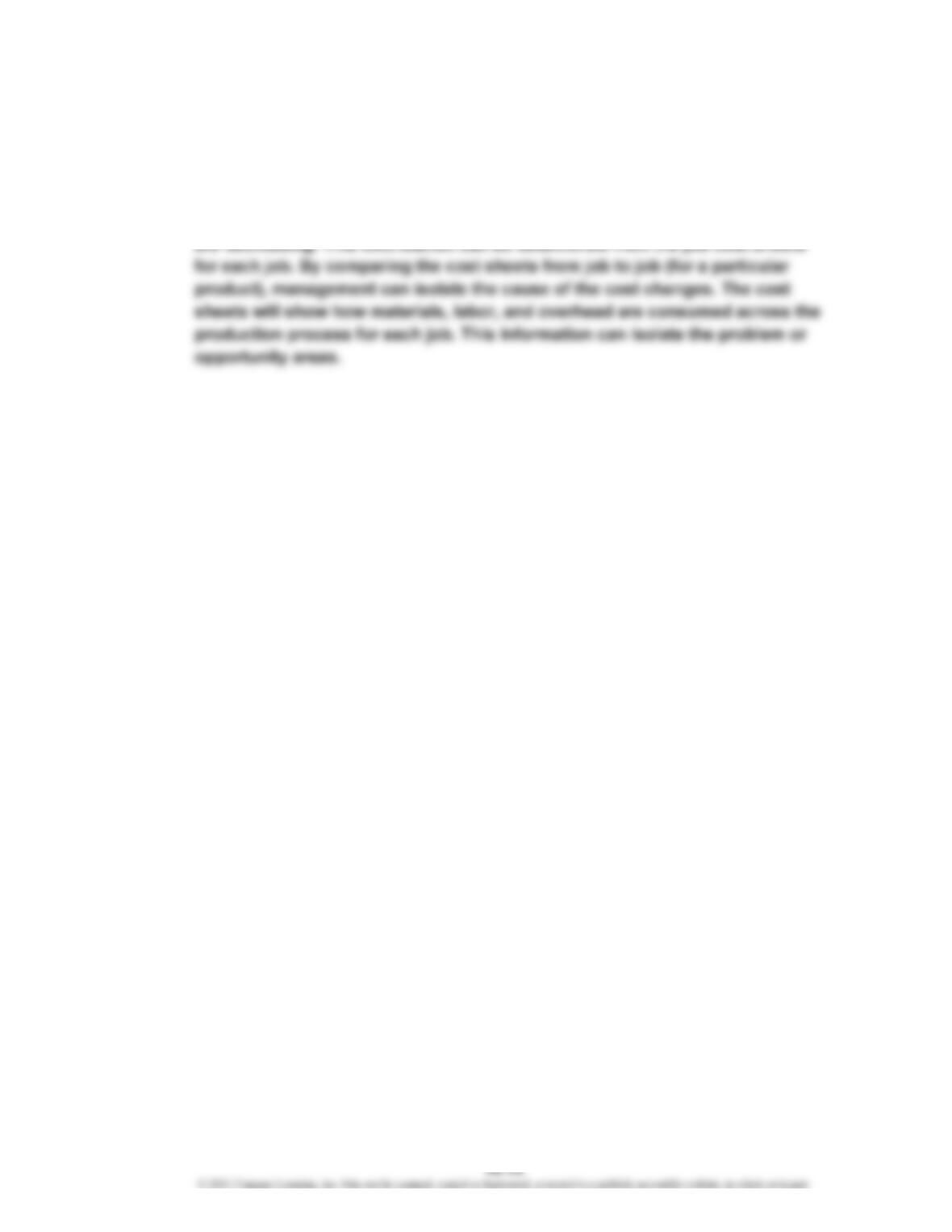
As can be seen, the unit costs behave differently for each product. SLK has
increasing unit costs during the year, SS is steady, and TT has decreasing
unit costs during the year.
b. Management should determine why SLK costs are increasing and why TT costs
CHAPTER 19 Job Order Costing
Ex. 19-15
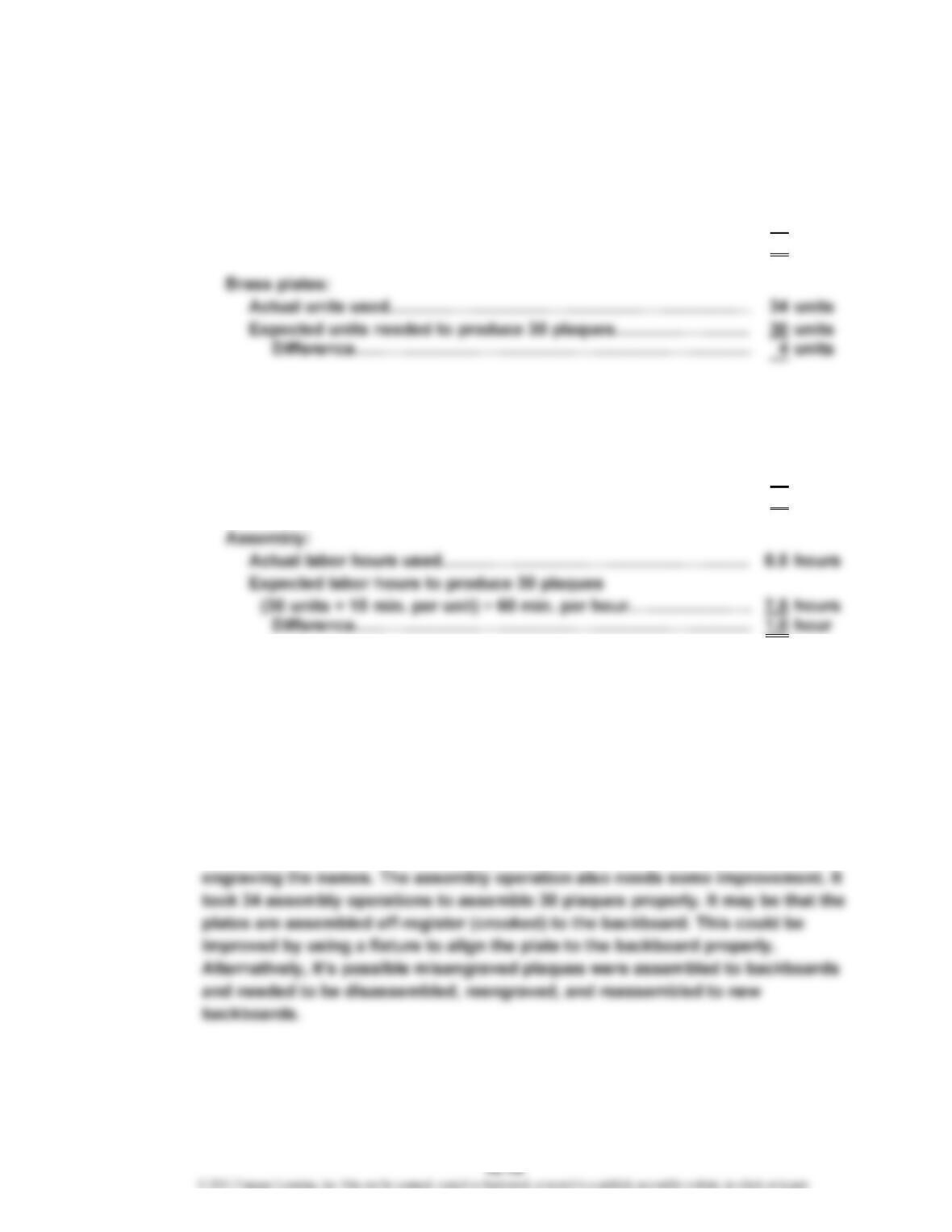
a. The first item to note is that the cost did not go up due to any increases in the
cost of labor or materials. Rather, the cost of the plaques increased because
Job 105 used more labor and materials per unit than did Job 101. Specifically,
Job 101 required the same number of backboards and brass plates as
the number of actual plaques shipped. However, Job 105 required four more
backboards and brass plates than the number actually shipped (34 versus 30).
This is illustrated as follows:
Job 101:
Materials
Walnut plaques:
Actual units used………………………………………………………
…
40 units
Expected units needed to produce 40 plaques……………………
…
40 units
Difference………………………………………………………………………
…
0 units
Labor
Engraving:
Actual labor hours used………………………………………………
…
20 hours
Expected labor hours to produce 40 plaques
(40 units × 30 min. per unit) ÷ 60 min. per hour…………………
…
20 hours
Difference……………………………………………………………
…
0 hours
Assembly:
…
…
…
…
…
…
CHAPTER 19 Job Order Costing
Ex. 19-15 (Concluded)
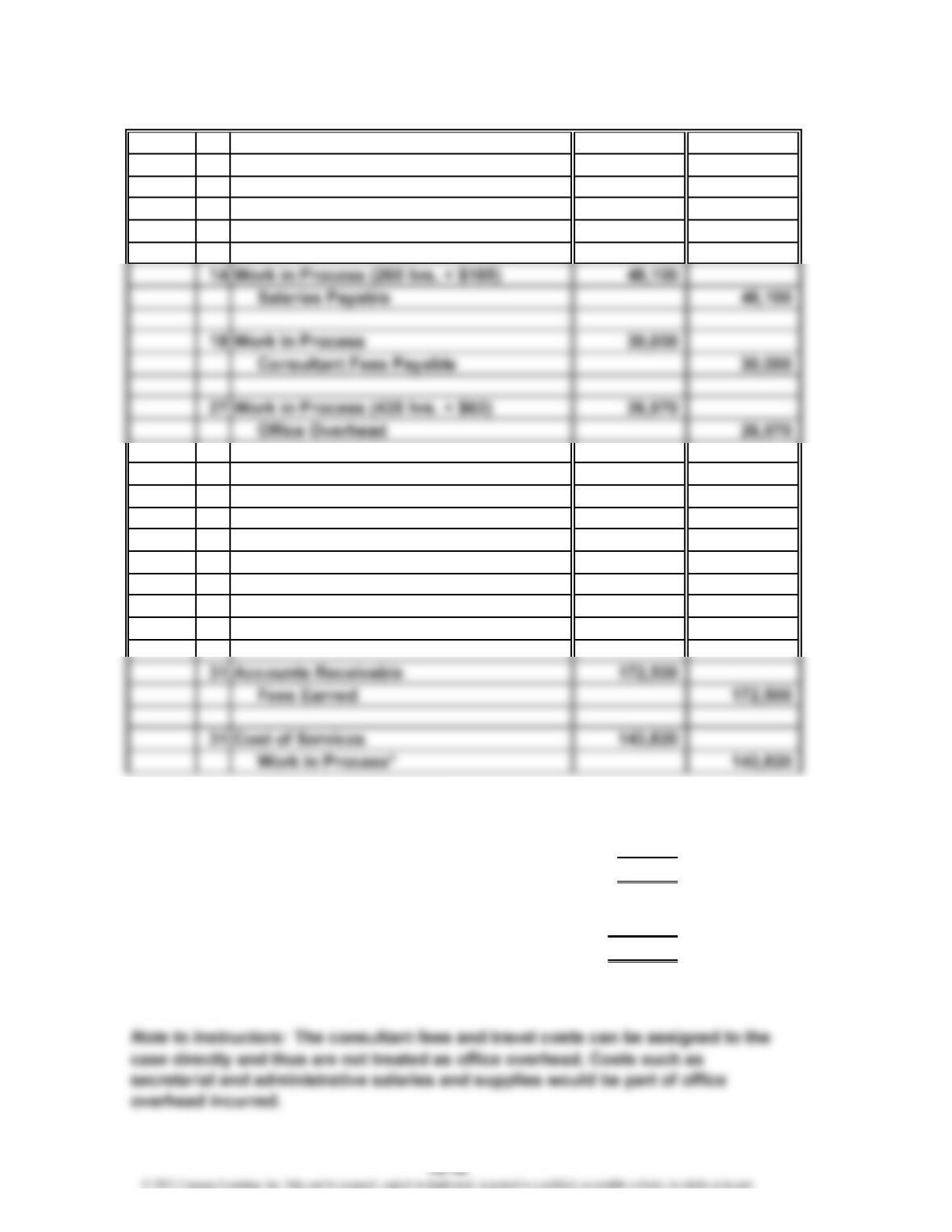
Job 105:
Materials
Walnut plaques:
Actual units used………………………………………………………
…
34 units
Expected units needed to produce 30 plaques…………………… 30 units
Difference………………………………………………………………………
…
4 units
Labor
Engraving:
Actual labor hours used………………………………………………
…
17 hours
Expected labor hours to produce 30 plaques
(30 units × 30 min. per unit) ÷ 60 min. per hour…………………
…
15 hours
Difference……………………………………………………………
…
2 hours
…
…
…
Job 105’s 25.5 labor hours are 3.0 more (25.5 hrs. – 22.5 hrs.) than should have
been expected for a job of 30 plaques [(30 × 45 min.) ÷ 60 min. = 22.5 hrs.]. As a
result, the additional hours of labor cost, applied factory overhead, and direct
materials cost cause the unit cost of Job 105 to increase.
b. Apparently, the engraving and assembly work is becoming sloppy. Job 105
required 34 engraved brass plates in order to get 30 with acceptable quality. It is
likely that the engraver is not being careful in spelling the names correctly. The
names should be supplied to the engraver, using large typewritten fonts, so that
it is easy to read the names. The engraver should be instructed to be careful in
…
…
CHAPTER 19 Job Order Costing
Ex. 19-16
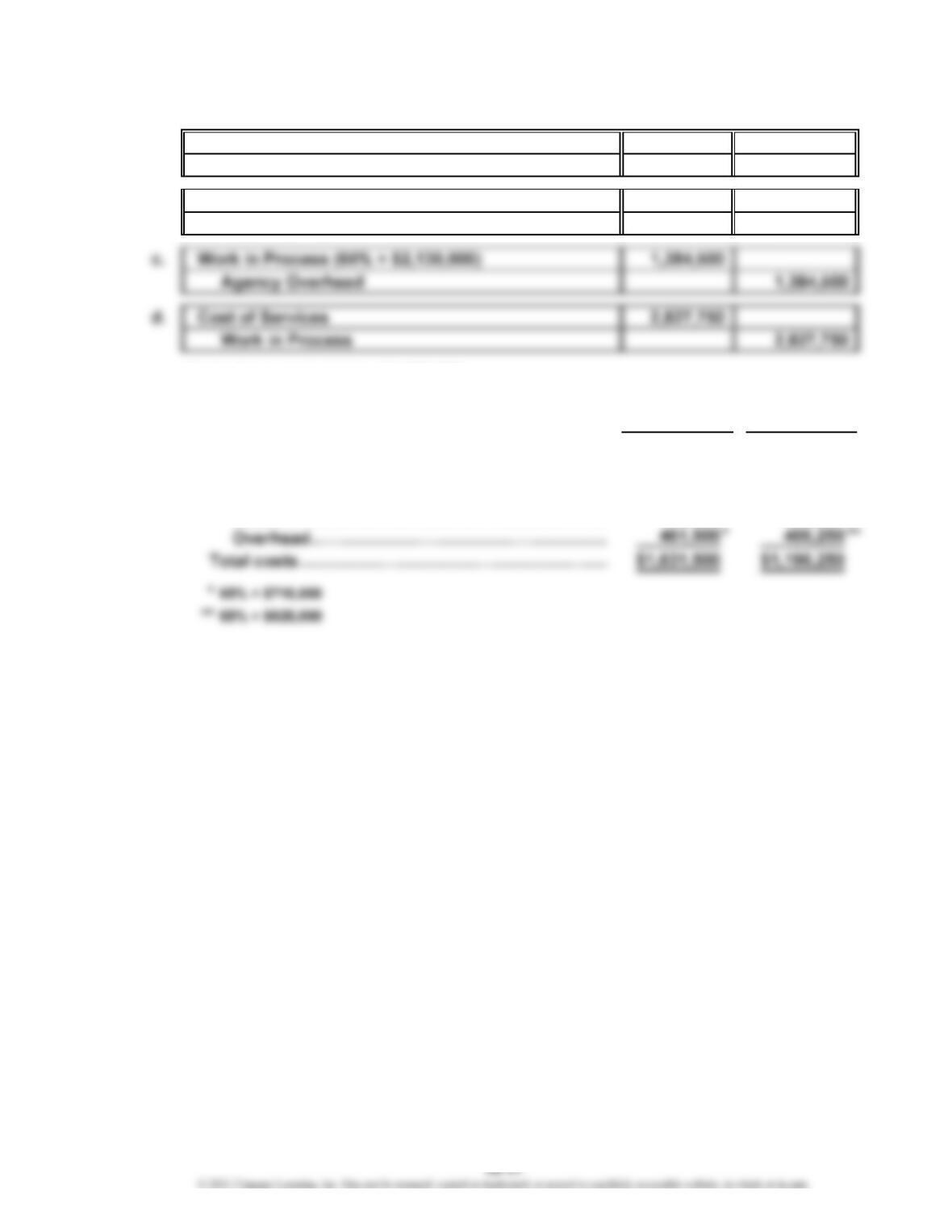
a. July 3 Work in Process (175 hrs. × $150) 26,250
Salaries Payable 26,250
10 Work in Process 12,500
Cash 12,500
31 Office Overhead 28,500
Cash 28,500
31 Office Overhead 4,000
Supplies 4,000
31 Salaries Payable 74,350
Cash 74,350
*$26,250 + $12,500 + $48,100 + $30,000 + $26,970
b. Office overhead incurred ($28,500 + $4,000)……………
…
$32,500
Office overhead applied……………………………………… 26,970
Underapplied overhead………………………………………
…
$ 5,530
c. Fees earned……………………………………………………
…
$172,500
Cost of services*………………………………………………
…
149,350
Gross profit……………………………………………………
…
$ 23,150
*$143,820 + $5,530. Assumes the over- or underapplied office overhead is
closed to cost of services monthly.
CHAPTER 19 Job Order Costing
Ex. 19-17
a. Work in Process 1,068,000
Salaries Payable
b. Work in Process 2,130,000
Accounts Payable
Cost of completed jobs, $2,827,750:
Vault Take Off
Bank Airlines
August 1 balance………………………………………
…
$ 270,000 $ 80,000
August costs:
Direct labor…………………………………………
…
190,000 85,000
Media…………………………………………………
…
710,000 625,000
…
1,068,000
2,130,000
CHAPTER 19 Job Order Costing
Prob. 19-1A
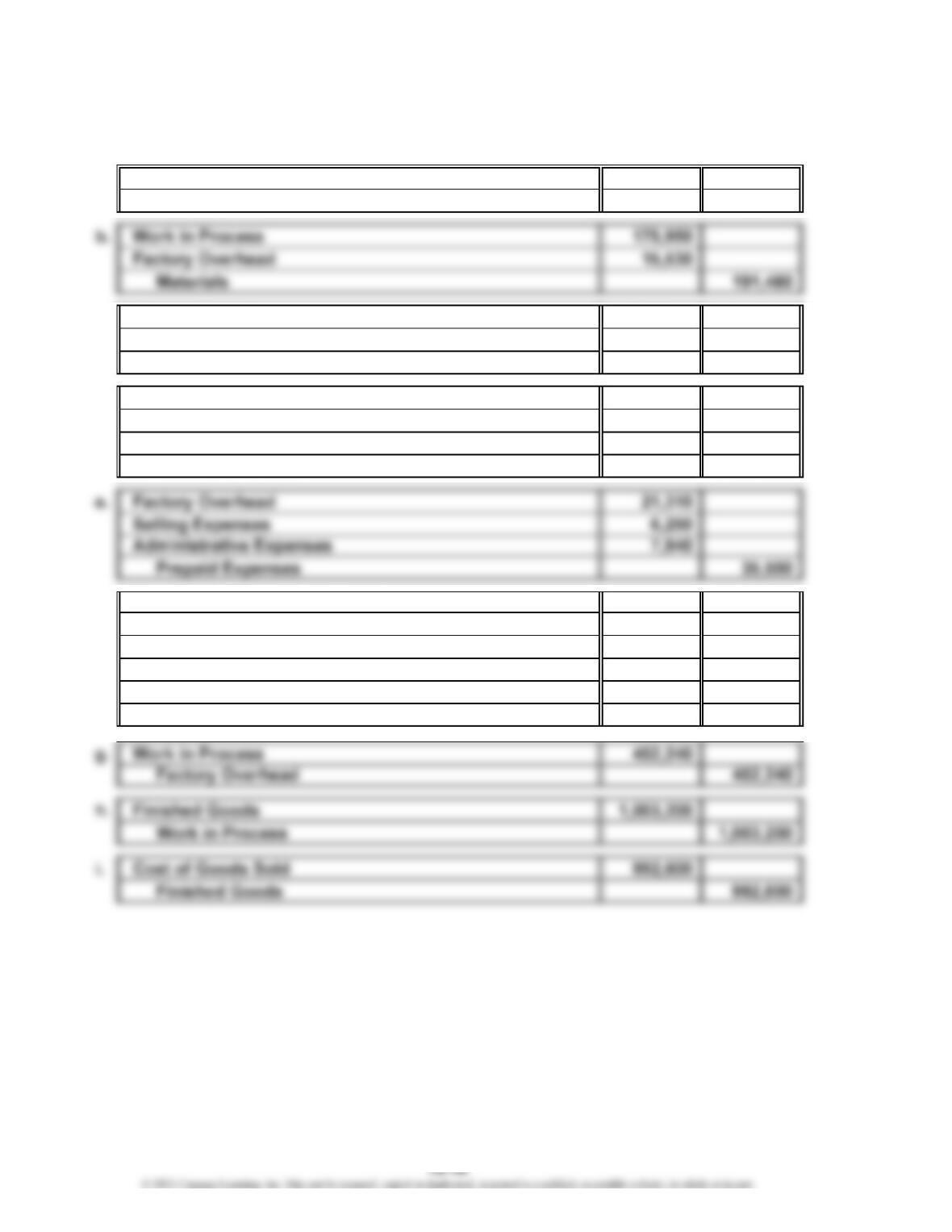
a. Materials 203,940
Accounts Payable 203,940
c. Work in Process 534,780
Factory Overhead 63,620
Wages Payable 598,400
d. Factory Overhead 290,400
Selling Expenses 158,300
Administrative Expenses 110,900
Accounts Payable 559,600
f. Depreciation Expense—Office Building 40,100
Depreciation Expense—Office Equipment 13,500
Factory Overhead 51,200
Accumulated Depreciation—Office Building 40,100
Accumulated Depreciation—Office Equipment 13,500
Accumulated Depreciation—Factory Equipment 51,200
PROBLEMS