1. a. An assembly-type industry using mass production methods, such as TV assembly, would
use the process cost system because the products are somewhat standard and lose their
identities as individual items. In such industries, it is neither practical nor necessary to
identify output by jobs.
b. A job order cost system would be used by a building contractor to accumulate the costs
for each individual building because the costs can be identified with each job without
great difficulty.
d. A process cost system would be best suited for a paper manufacturer because the
p
rocesses are continuous and the products are homogeneous.
e. A job order cost system is best suited for a custom jewelry manufacturer because most of
the production consists of job orders and costs can be reasonably identified with each
job.
3. In a process cost system, the direct labor and factory overhead applied are debited to the
work in process accounts of the individual production departments in which they occur. The
4. The cost per equivalent unit is frequently determined separately for direct materials and
p
p
5. The cost per equivalent unit is used to allocate direct materials and conversion costs between
completed and partially completed units.
7. The most important purpose of the cost of production report is to assist in the control of
8. Cost of production reports can provide detailed data about the process. The reports can
p
CHAPTER 18 (FIN MAN); CHAPTER 3 (MAN)
PROCESS COST SYSTEMS
DISCUSSION QUESTIONS
b

CHAPTER 18 Process Cost Systems
DISCUSSION QUESTIONS (Continued)
9. Yield is a measure of the materials usage efficiency of a process manufacturer. It is
10. Lean manufacturing emphasizes combining process functions into manufacturing cells,
CHAPTER 18 Process Cost Systems
PE 18–1A (FIN MAN); PE 3–1A (MAN)
Dentist Job order
Gasoline refining Process
PE 18–1B (FIN MAN); PE 3–1B (MAN)
Steel manufacturing Process
Business consulting Job order
PE 18–2A (FIN MAN); PE 3–2A (MAN)
PE 18–2B (FIN MAN); PE 3–2B (MAN)
PRACTICE EXERCISES
CHAPTER 18 Process Cost Systems
PE 18–3A (FIN MAN); PE 3–3A (MAN)
Percent
Total Materials Equivalent
Whole Added In Units for
Units Period Materials
Inventory in process, beginning of period………
…
4,000 0% 0
38,800 100% 38,800
*
42,800 – 4,000
PE 18–3B (FIN MAN); PE 3–3B (MAN)
Percent
Total Materials Equivalent
Whole Added In Units for
Units Period Materials
Inventory in process, beginning of period………
…
400 0% 0
…
7,500 100% 7,500
*
*
…
PE 18–4A (FIN MAN); PE 3–4A (MAN)
Percent
Total Conversion Equivalent
Whole Completed Units for
Units in Period Conversion
Inventory in process, beginning of period…………
…
4,000 30% 1,200
Started and completed during the period…………
…
38,800 100% 38,800
…
…
PE 18–4B (FIN MAN); PE 3–4B (MAN)
Percent
Total Conversion Equivalent
Whole Completed Units for
Units in Period Conversion
Inventory in process, beginning of period…………
…
400 80% 320
Started and completed during the period…………
…
7,500 100% 7,500
…
…
…
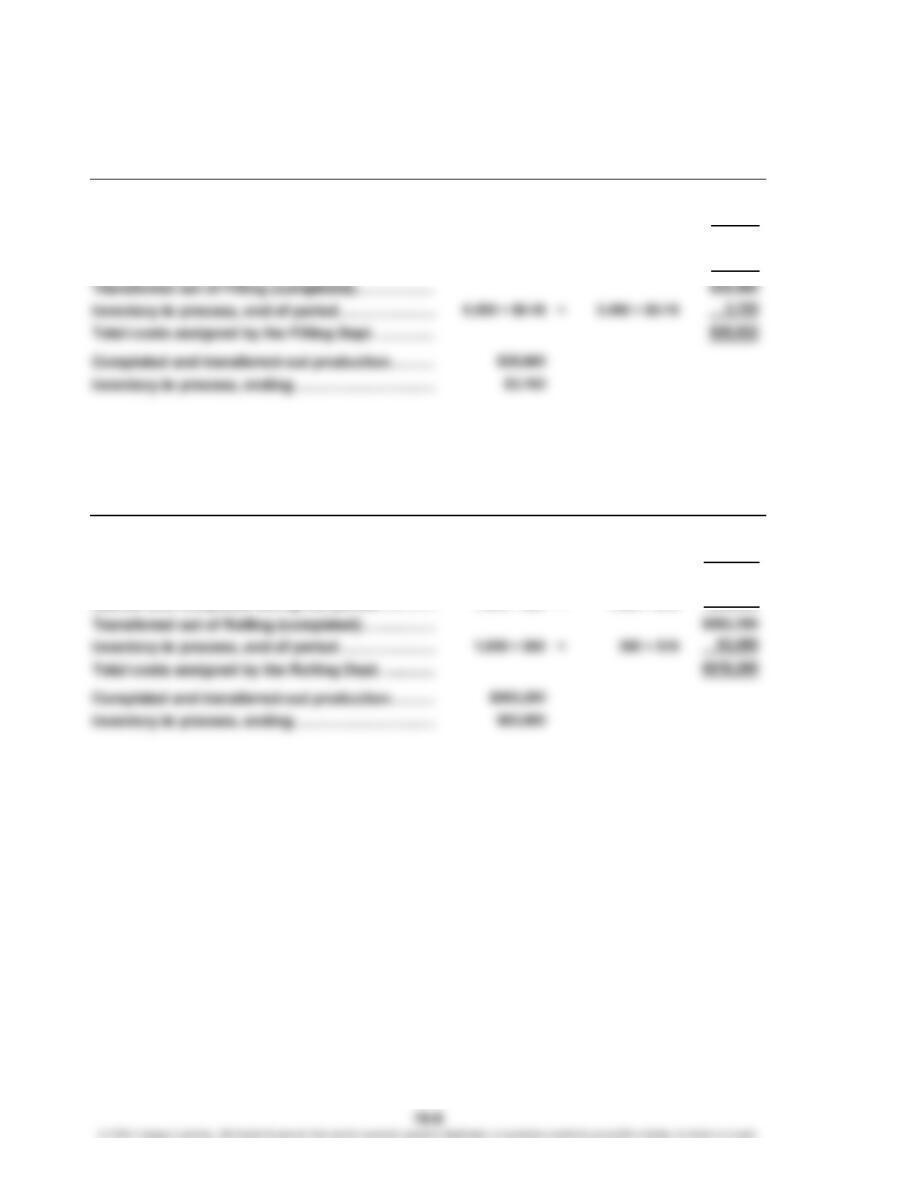
PE 18–5A (FIN MAN); PE 3–5A (MAN)
PE 18–5B (FIN MAN); PE 3–5B (MAN)
**
**
**
CHAPTER 18 Process Cost Systems
PE 18–6A (FIN MAN); PE 3–6A (MAN)
Direct
Materials Conversion Total
Costs Costs Costs
Inventory in process, balance………………………
…
$ 2,200
Inventory in process, beginning of period………
…
0 + 1,200 × $0.15 180
Cost of completed beginning work in process…
…
$ 2,380
Started and completed during the period…………
38,800 × $0.45 + 38,800 × $0.15 23,280
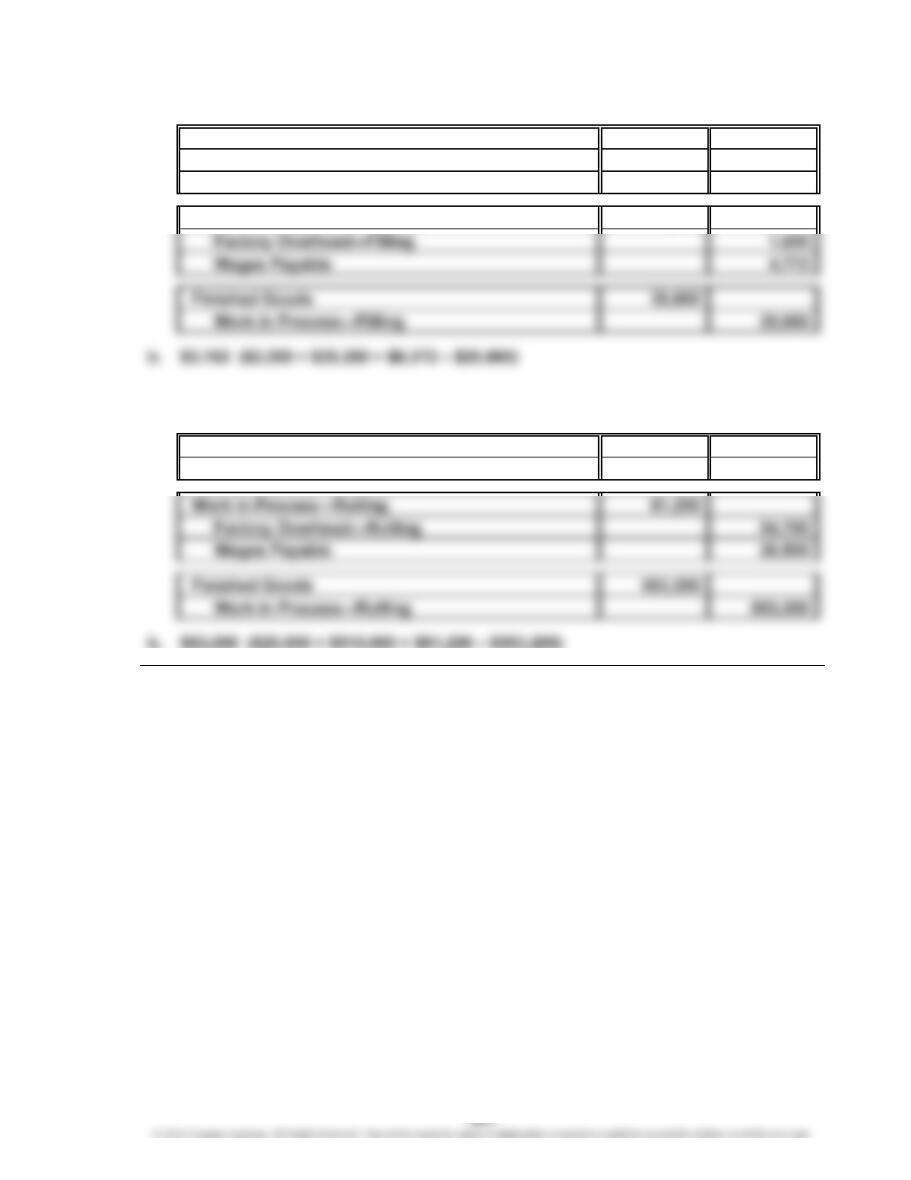
PE 18–6B (FIN MAN); PE 3–6B (MAN)
Direct
Materials Conversion Total
Costs Costs Costs
Inventory in process, balance………………………
…
$ 25,000
Inventory in process, beginning of period………
…
0 + 320 × $10 3,200
Cost of completed beginning work in process…
…
$ 28,200
Started and completed during the period…………
7,500 × $60 + 7,500 × $10 525,000
…
…
…
…
CHAPTER 18 Process Cost Systems
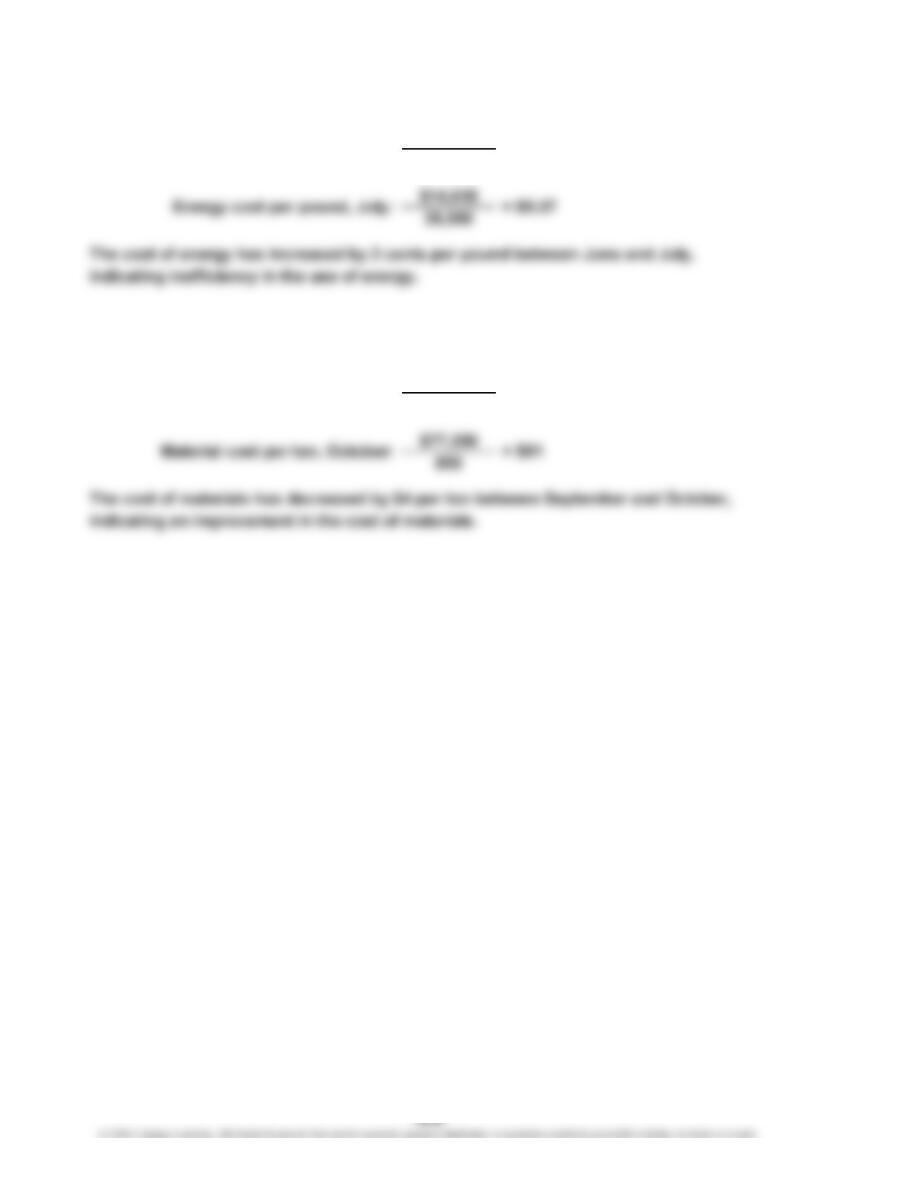
PE 18–7A (FIN MAN); PE 3–7A (MAN)
a. Work in Process—Filling 20,250
Work in Process—Blending 6,000
Materials 14,250
Work in Process—Filling 6,372
PE 18–7B (FIN MAN); PE 3–7B (MAN)
a. Work in Process—Rolling 510,000
Work in Process—Casting 510,000
CHAPTER 18 Process Cost Systems
PE 18–8A (FIN MAN); PE 3–8A (MAN)
$14,875
42,500
PE 18–8B (FIN MAN); PE 3–8B (MAN)
$76,000
800
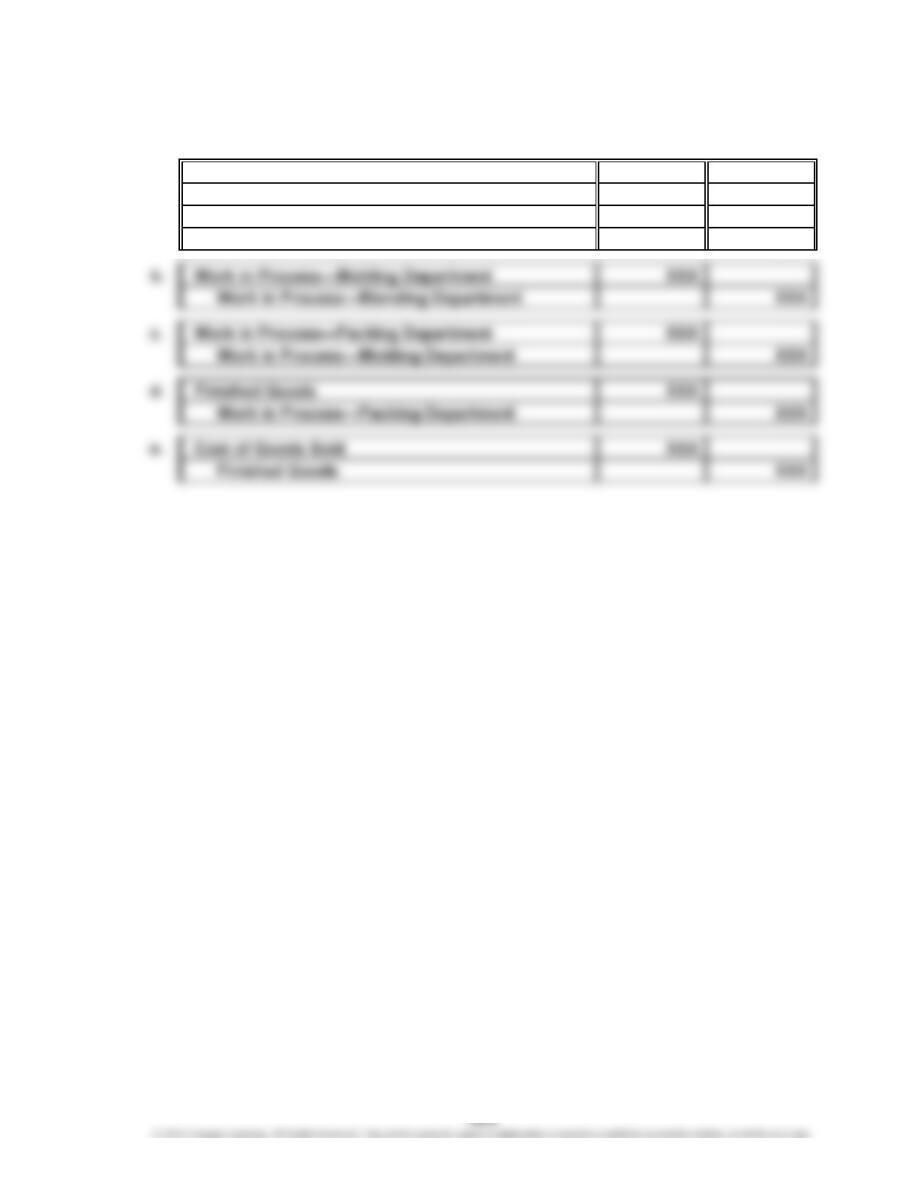
Energy cost per pound, June: = $0.35
Material cost per ton, September: = $95
CHAPTER 18 Process Cost Systems
Ex. 18–1 (FIN MAN); Ex. 3–1 (MAN)
a. Work in Process—Blending Department XXX
Materials—Cocoa XXX
Materials—Sugar XXX
Materials—Dehydrated Milk XXX
EXERCISES
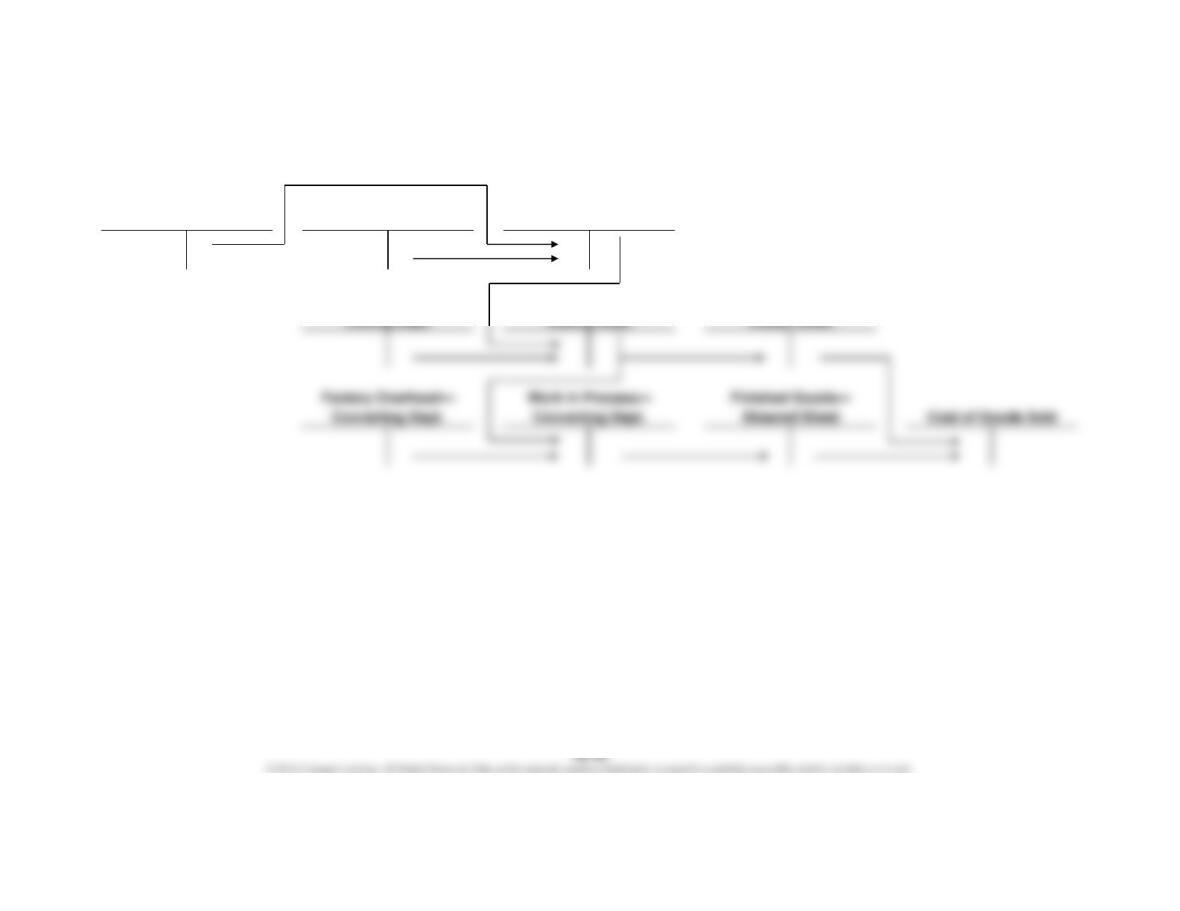
CHAPTER 18 Process Cost Systems
Ex. 18–2 (FIN MAN); Ex. 3–2 (MAN)
Factory Overhead—
Smelting Dept. Smelting Dept.
Work in Process—
Materials
Rolled Sheet
Factory Overhead— Work in Process— Finished Goods—
Rolling Dept. Rolling Dept.
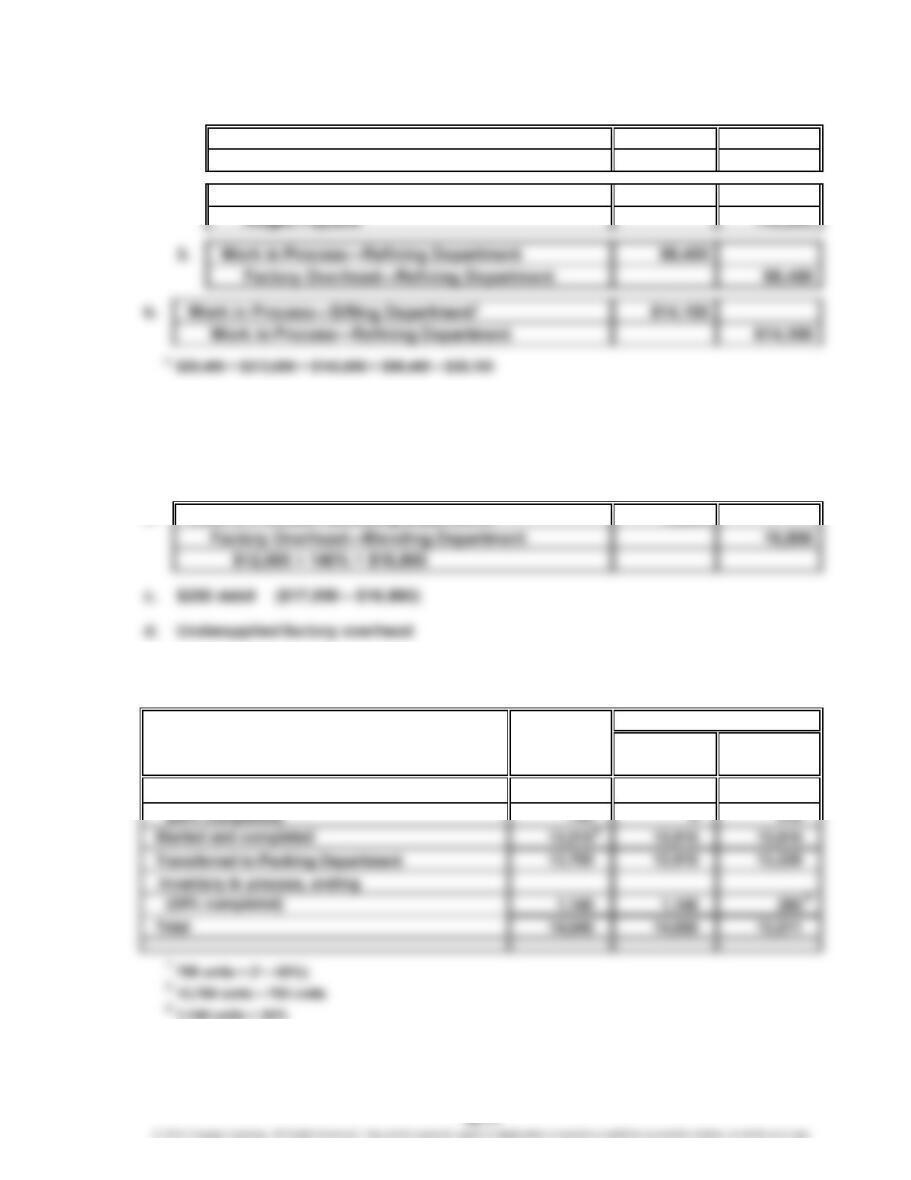
CHAPTER 18 Process Cost Systems
Ex. 18–3 (FIN MAN); Ex. 3–3 (MAN)
a. 1. Work in Process—Refining Department 372,000
Materials 372,000
2. Work in Process—Refining Department 143,000
Ex. 18–4 (FIN MAN); Ex. 3–4 (MAN)
a. Factory overhead rate:
$147,000 ÷ $105,000 = 140%
b. Work in Process—Blending Department 16,800
Ex. 18–5 (FIN MAN); Ex. 3–5 (MAN)
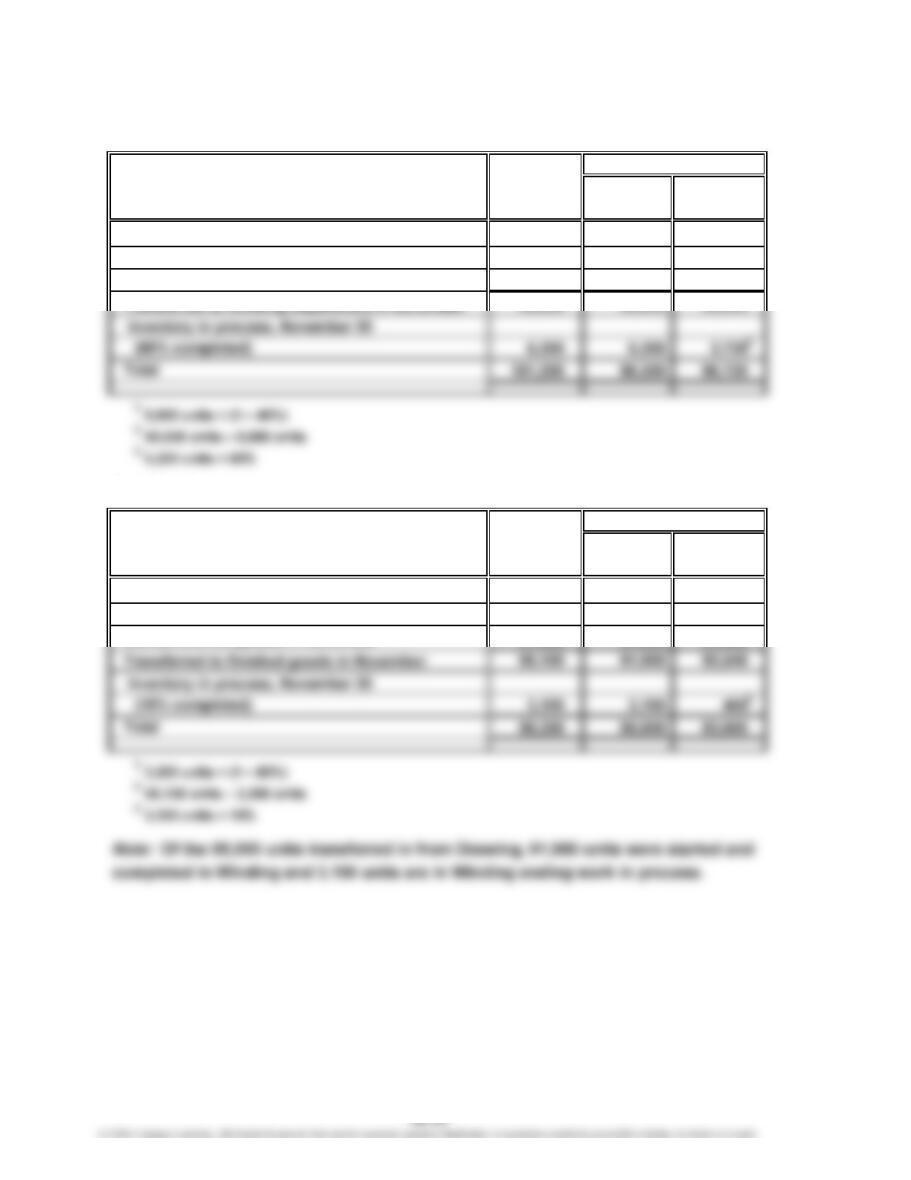
Whole Direct
Units Materials Conversion
Inventory in process, beginning
Equivalent Units
1
CHAPTER 18 Process Cost Systems
Ex. 18–6 (FIN MAN); Ex. 3–6 (MAN)
a. Drawing Department
Whole Direct
Units Materials Conversion
Inventory in process, November 1
(40% completed) 5,000 0 3,000
Started and completed in November 90,000 90,000 90,000
Transferred to Winding Department in November 95,000 90,000 93,000
b. Winding Department
Whole Direct
Units Materials Conversion
Inventory in process, November 1
(80% completed) 3,200 0 640
Started and completed in November 91,900 91,900 91,900
Equivalent Units
Equivalent Units
1
2
1
2
CHAPTER 18 Process Cost Systems
Ex. 18–7 (FIN MAN); Ex. 3–7 (MAN)
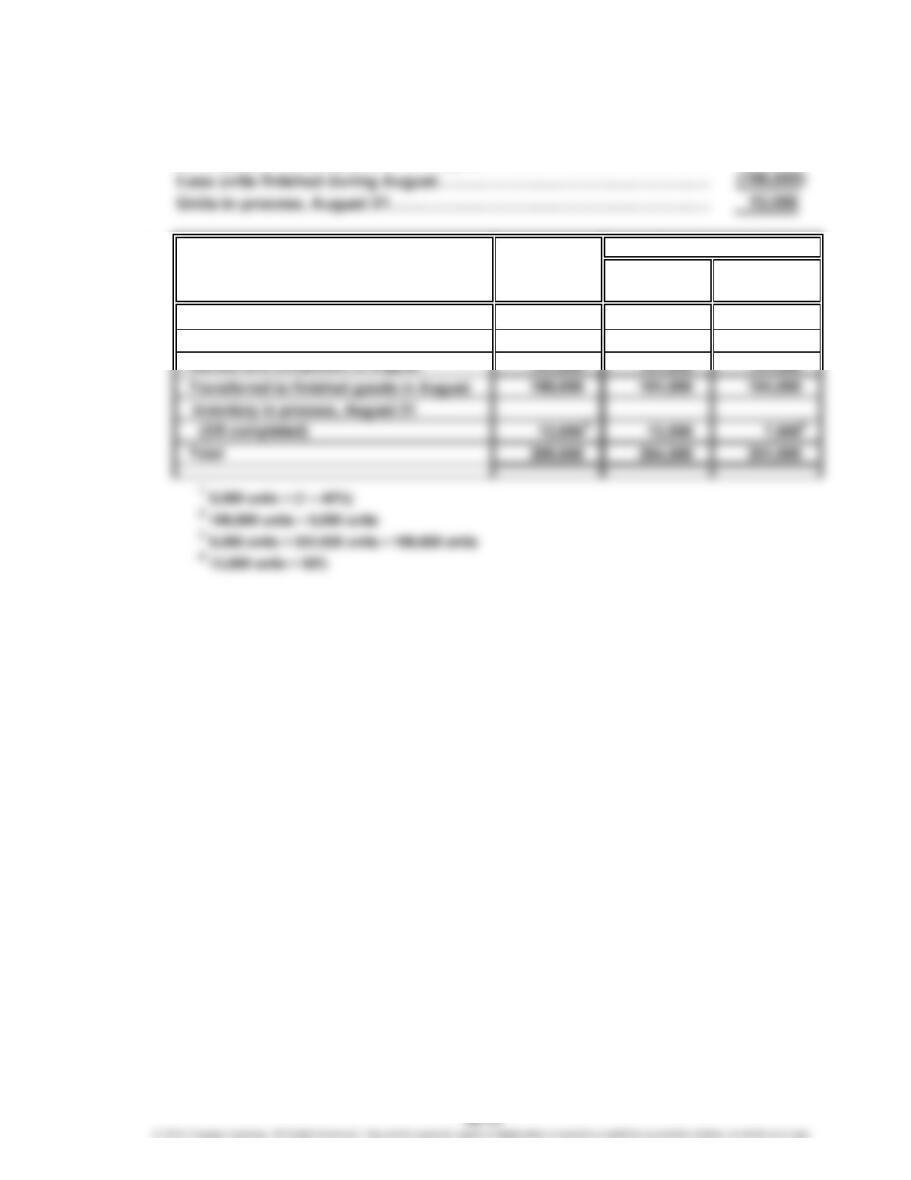
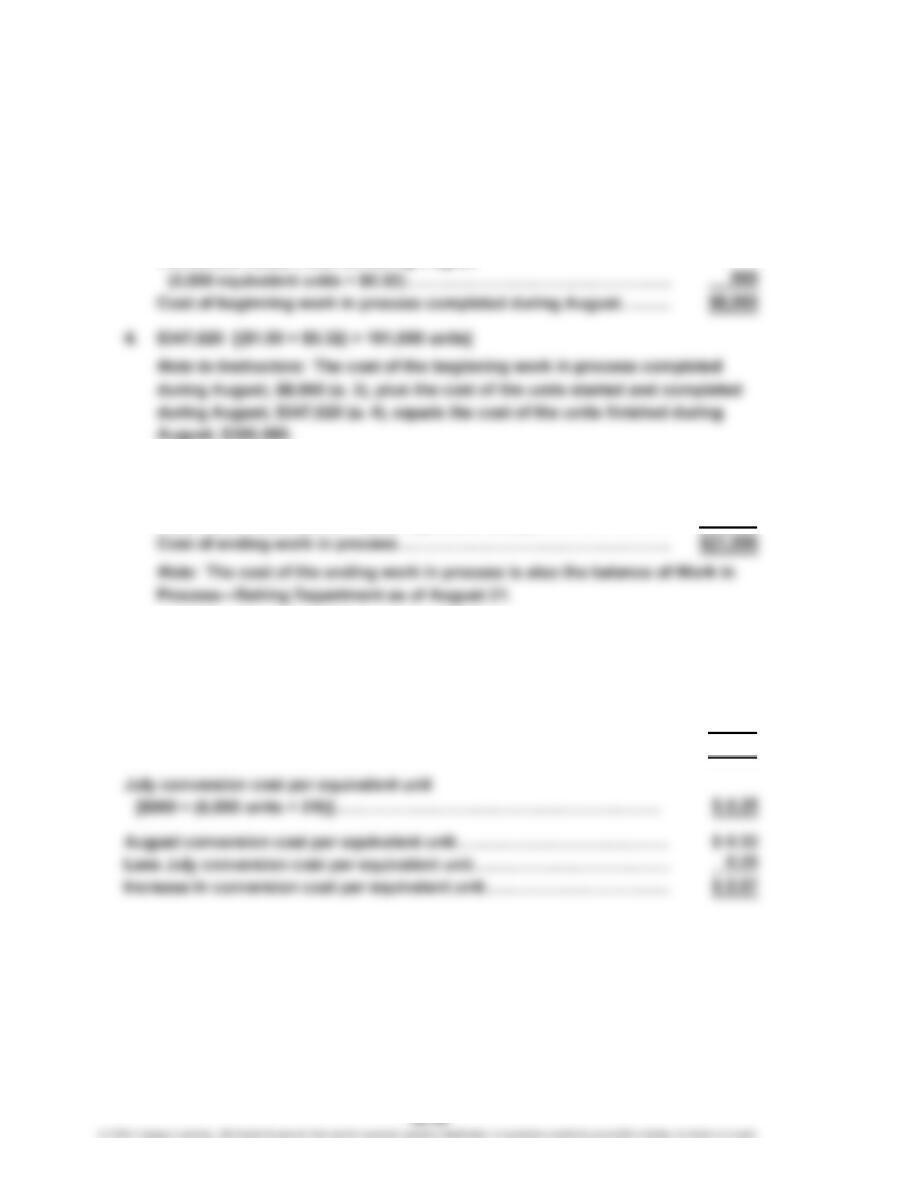
a. Units in process, August 1……………………………………………………
…
5,000
Units placed into production for August……………………………………
…
204,000
b.
Whole Direct
Units Materials Conversion
Inventory in process, August 1
(2/5 completed) 5,000 0 3,000
Started and completed in August 191,000 191,000 191,000
Equivalent Units
1
2
CHAPTER 18 Process Cost Systems
Ex. 18–8 (FIN MAN); Ex. 3–8 (MAN)
a. 1. $1.50 ($306,000 ÷ 204,000 units)
2. $0.32 [($35,500 + $29,076) ÷ 201,800 units]
3. $8,960, determined as follows:
Work in Process—Baking Department balance, August 1……………
…
$8,000
Conversion costs incurred during August
5. $21,996, determined as follows:
Direct materials ($1.50 × 13,000 units)……………………………………
…
$19,500
Conversion costs ($0.32 × 7,800 equivalent units)……………………
…
2,496
b. The conversion costs in August increased by $0.07 per equivalent unit,
determined as follows:
Work in Process—Baking Department balance, August 1…………………
…
$8,000
Deduct direct materials cost incurred in July
($1.50 × 5,000 units, same cost per unit as August)………………………
…
7,500
Conversion costs incurred in June $ 500
…
CHAPTER 18 Process Cost Systems
Ex. 18–9 (FIN MAN); Ex. 3–9 (MAN)
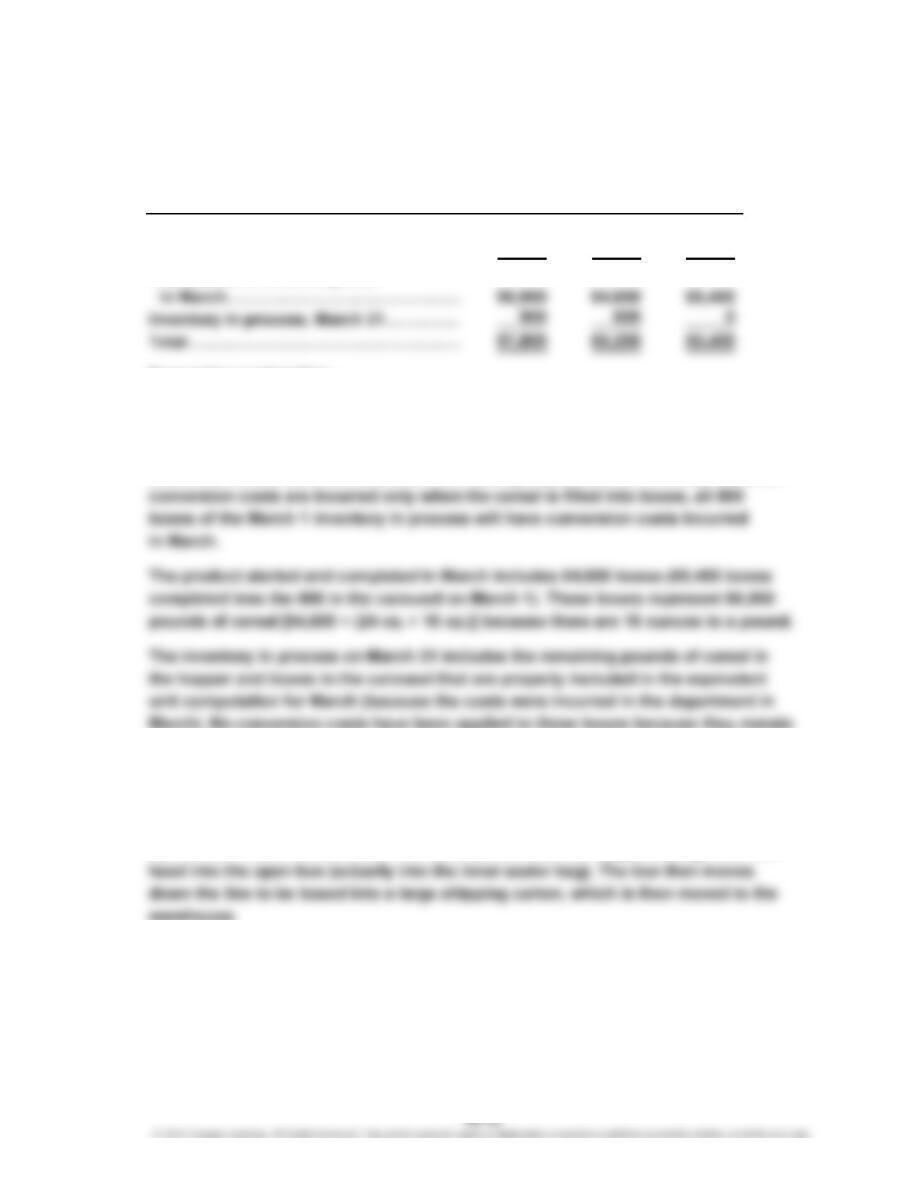
Equivalent units of production:
Conversion
Cereal Boxes Cost
(in pounds) (in boxes) (in boxes)
Inventory in process, March 1……………
…
0 0 800
Started and completed in March…………
…
96,900 64,600 64,600
Transferred to finished goods
Supporting explanation:
The whole unit inventory in process on March 1 includes both the cereal in the
hopper and the boxes in the carousel, and thus includes no equivalent units for
the material during the current period. The reason is because the costs for the
cereal and boxes were introduced to the Packing Department in February. Because
unfilled.
Note to Instructors: An actual cereal-filling line begins with the empty box
carousel. The box carousel holds flattened boxes that are fed into a high-speed
line that opens the box up and places it on a conveyor. The conveyor brings the
opened box under a filler head. The cereal pours from the hopper through the filler
CHAPTER 18 Process Cost Systems
Ex. 18–10 (FIN MAN); Ex. 3–10 (MAN)
a. Direct labor…………………………………………………………………………
…
$28,100
Factory overhead applied…………………………………………………………
…
12,598
Total conversion cost……………………………………………………………… $40,698
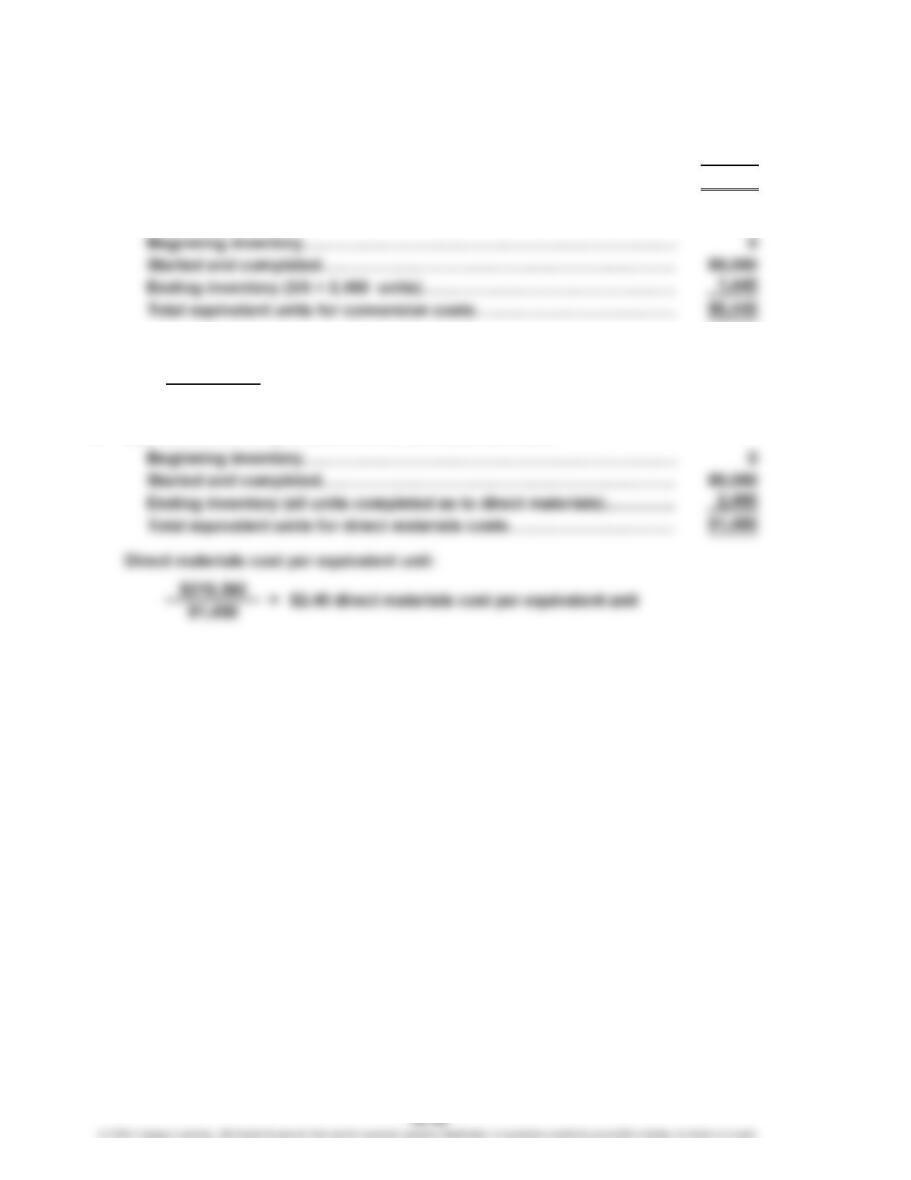
b. Equivalent units of production for conversion costs:
Conversion cost per equivalent unit:
$40,698
90,440
c. Equivalent units of production for direct materials costs:
= $0.45 conversion cost per equivalent unit
CHAPTER 18 Process Cost Systems
Ex. 18–11 (FIN MAN); Ex. 3–11 (MAN)
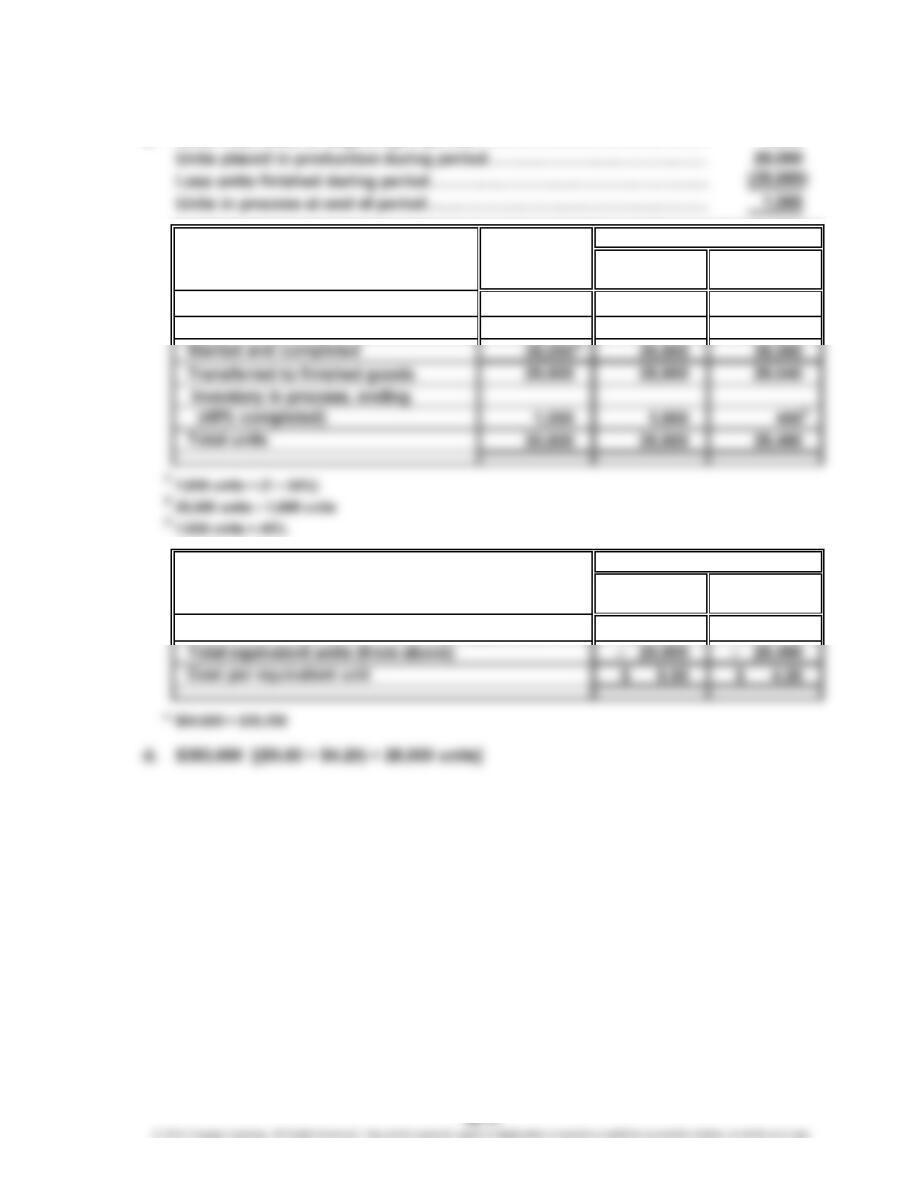
a. Units in process at beginning of period……………………………………
…
1,600
b.
Whole Direct
Units Materials Conversion
Inventory in process, beginning
(35% completed) 1,600 0 1,040
c.
Direct
Materials Conversion
Total costs for period in Assembly Department $275,500 $123,858
Equivalent Units
Costs
1
*
…
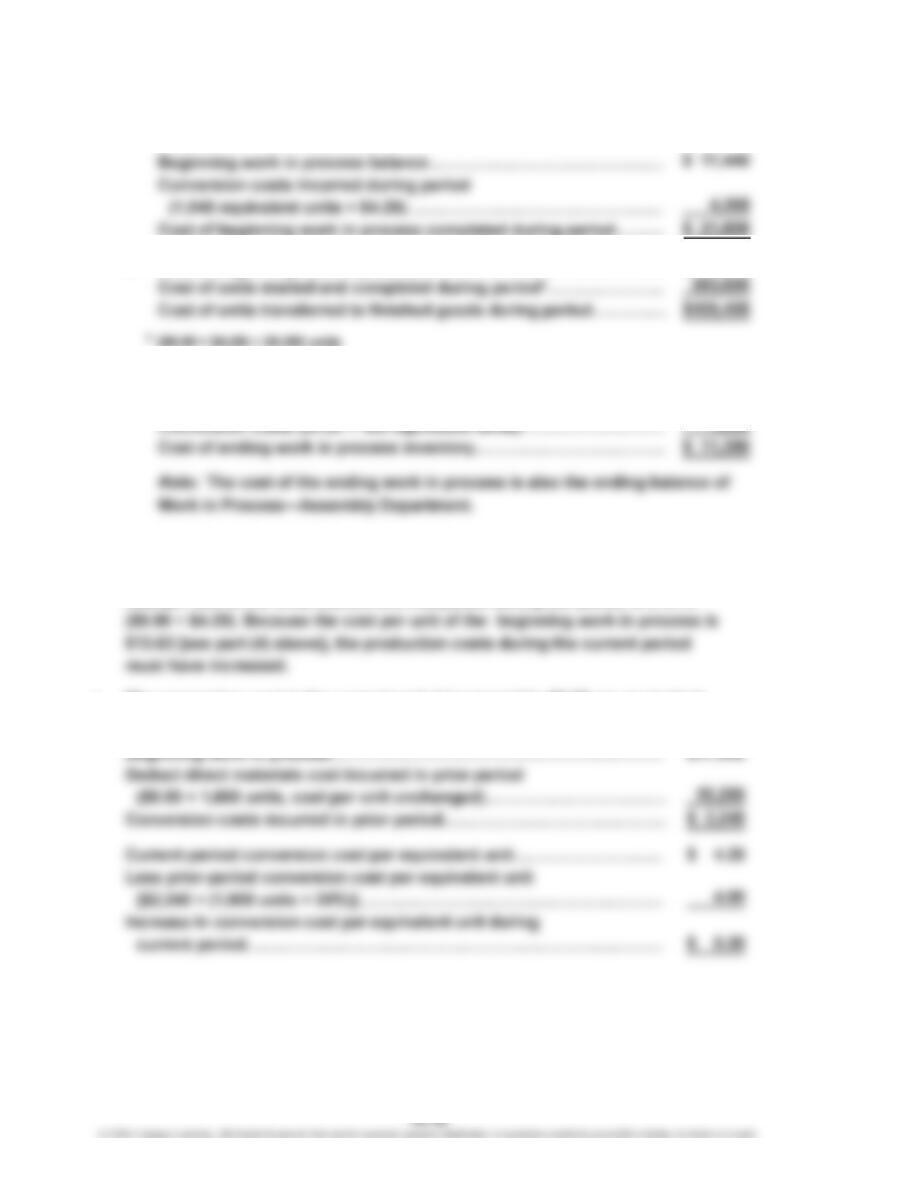
CHAPTER 18 Process Cost Systems
Ex. 18–12 (FIN MAN); Ex. 3–12 (MAN)
a. 1. $21,808; determined as follows:
2. Cost of beginning work in process………………………………………
…
$ 21,808
3. $11,390; determined as follows:
Direct materials ($9.50 × 1,000 units)……………………………………
…
$ 9,500
4. $13.63 rounded ($21,808 ÷ 1,600 units)
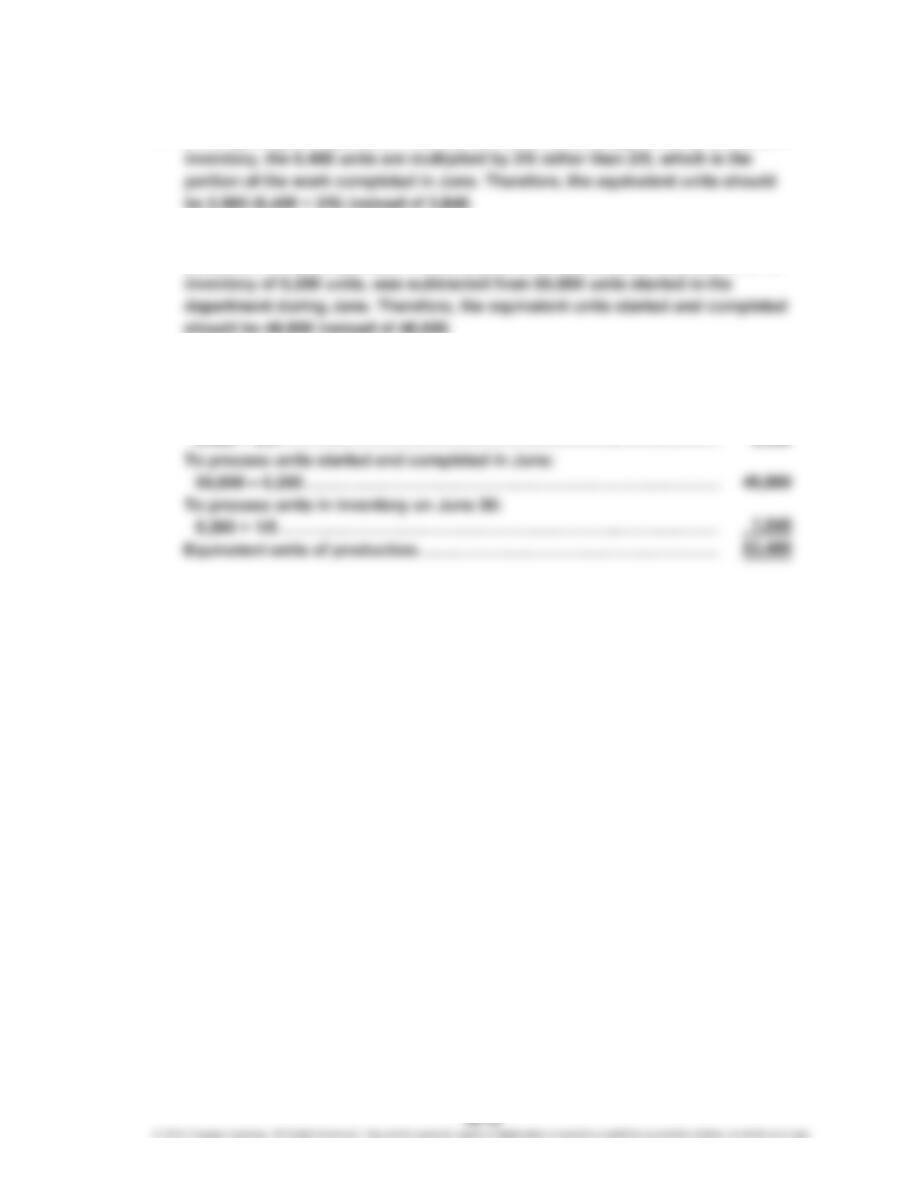
b. Yes. The production costs per unit increased during the current period. The
cost per unit of the units started and completed during the period is $13.70
c. The conversion cost in the current period increased by $0.20 per equivalent
unit, determined as follows:
…
CHAPTER 18 Process Cost Systems
Ex. 18–13 (FIN MAN); Ex. 3–13 (MAN)
1. In computing the equivalent units for conversion costs applicable to the June 1
2. In computing the equivalent units for conversion costs for units started and
completed in June, the June 1 inventory of 6,400 units, rather than the June 30
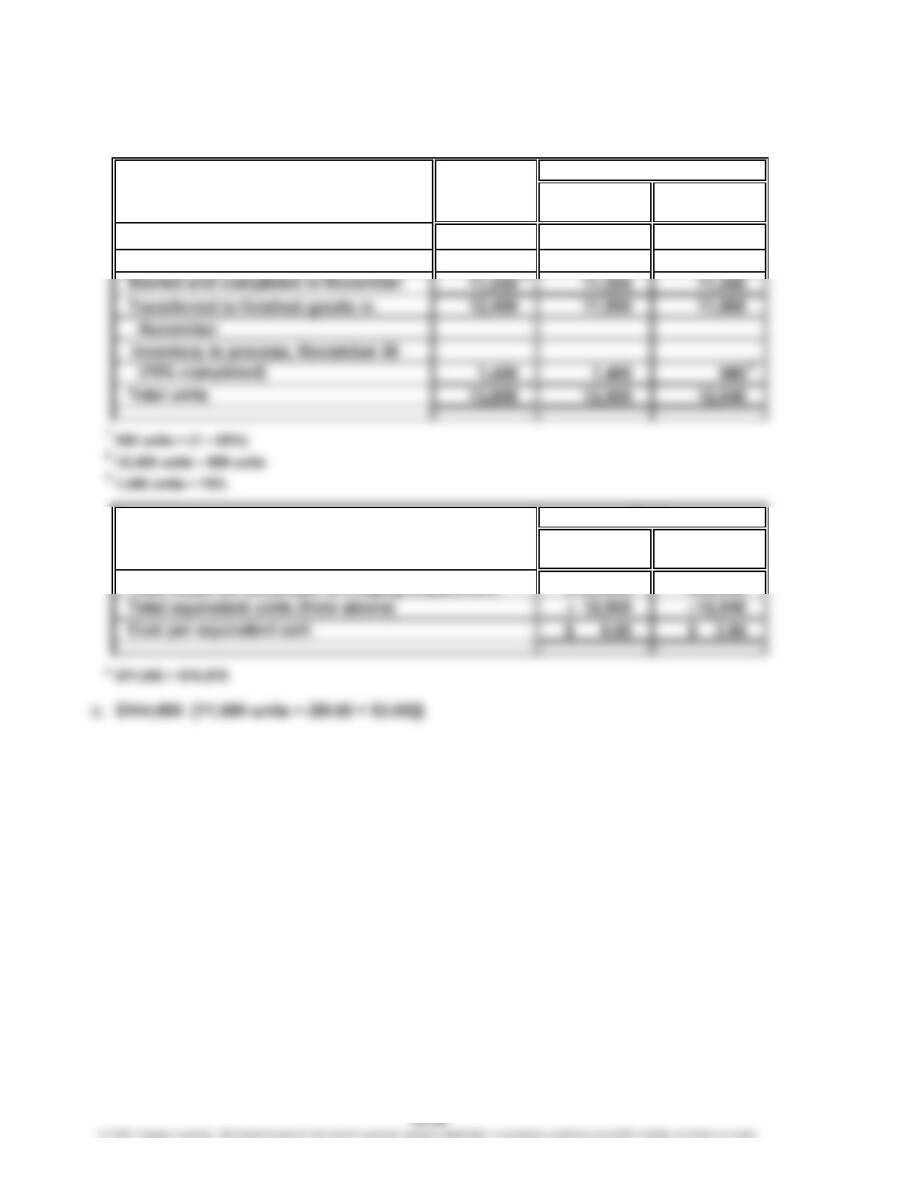
3. The correct equivalent units for conversion costs should be 53,400, determined
as follows:
To process units in inventory on June 1:
6,400 × 2/5………………………………………………………………………
…
2,560
…
CHAPTER 18 Process Cost Systems
Ex. 18–14 (FIN MAN); Ex. 3–14 (MAN)
a. 12,400 units (900 + 12,900 – 1,400)
b.
Whole Direct
Units Materials Conversion
Inventory in process, November 1
(60% completed) 900 0 360
Direct
Materials Conversion
Total costs for November in Forging Department $123,840 $38,520
Equivalent Units
Costs
1
*