CHAPTER 18 Introduction to Managerial Accounting
Prob. 18-4A (Concluded)
3.
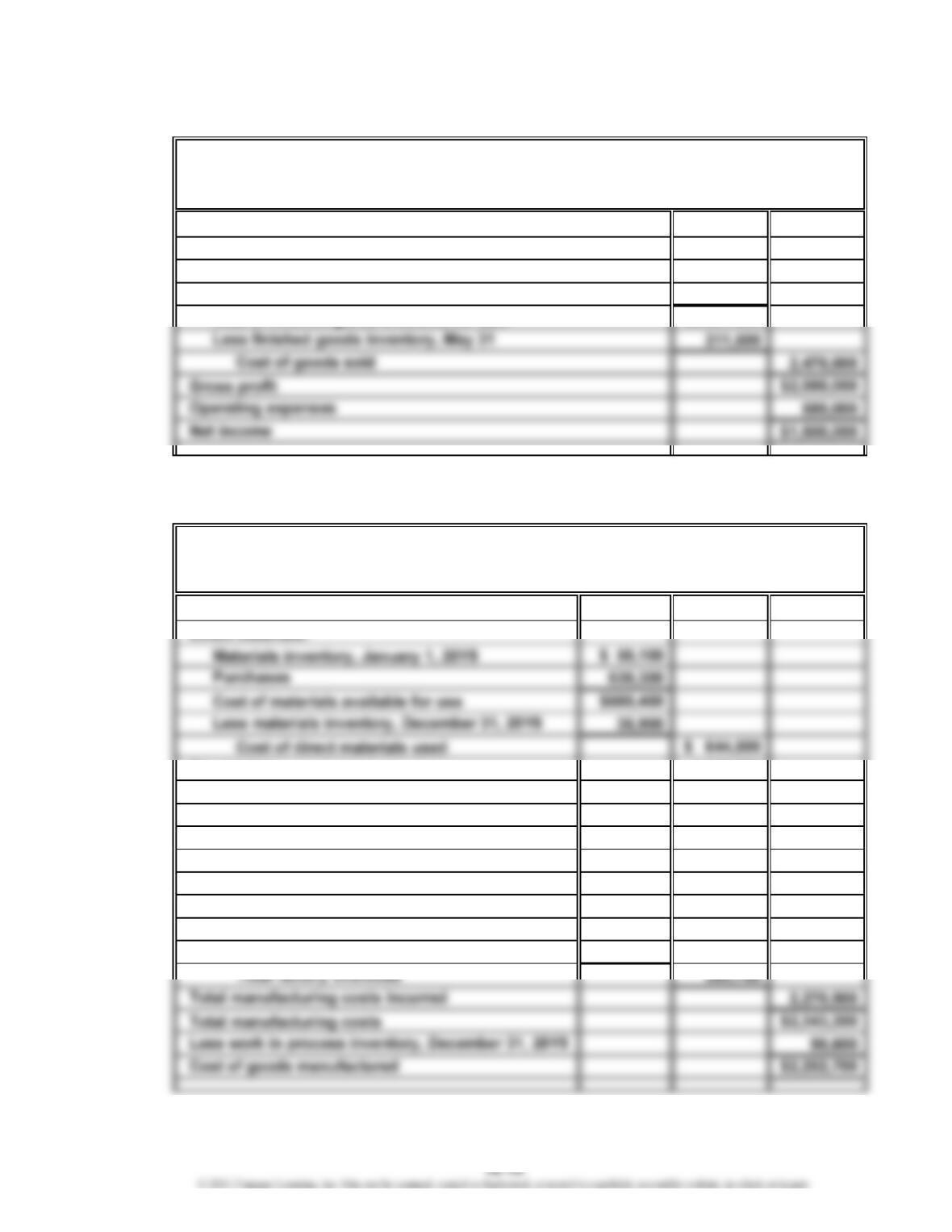
Sales $4,550,000
Cost of goods sold:
Finished goods inventory, May 1 $ 190,000
Cost of goods manufactured 2,491,500
Cost of finished goods available for sale $2,681,500
Prob. 18-5A
1.
Work in process inventory, January 1, 20Y8 $ 72,400
Direct labor 1,245,700
Factory overhead:
Indirect labor $130,200
Depreciation expense—factory equipment 90,500
Heat, light, and power—factory 60,400
Property taxes—factory 45,300
Rent expense—factory 30,600
Supplies—factory 10,800
Miscellaneous costs—factory 12,900
Lagakos Corporation
Statement of Cost of Goods Manufactured
For the Year Ended December 31, 20Y8
Yakima Company
Income Statement
For the Month Ended May 31
CHAPTER 18 Introduction to Managerial Accounting
Prob. 18-5A (Concluded)
2.
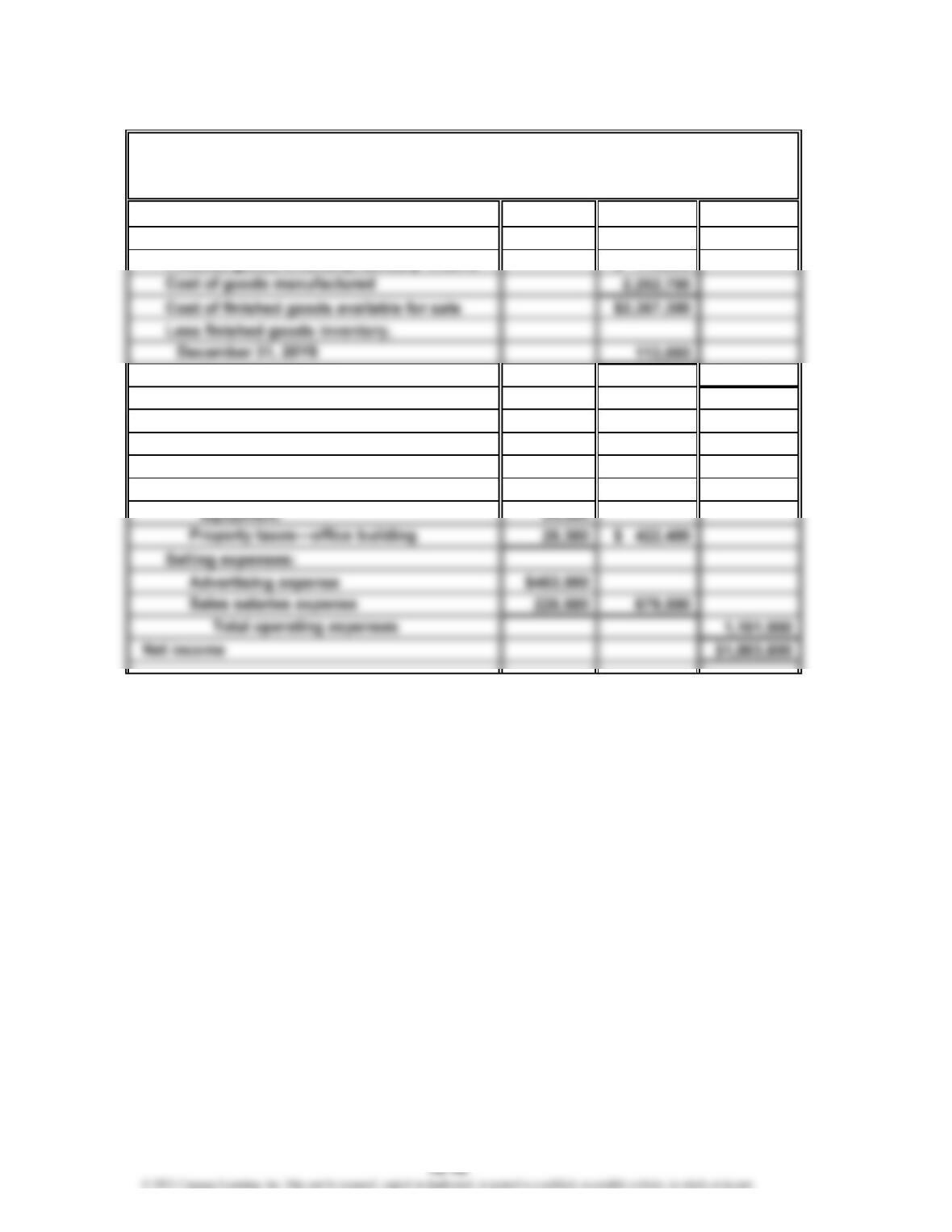
Sales $4,360,000
Cost of goods sold:
Cost of goods sold 2,254,300
Gross profit $2,105,700
Operating expenses:
Administrative expenses:
Office salaries expense $360,100
Depreciation expense—office
Lagakos Corporation
Income Statement
For the Year Ended December 31, 20Y8
CHAPTER 18 Introduction to Managerial Accounting
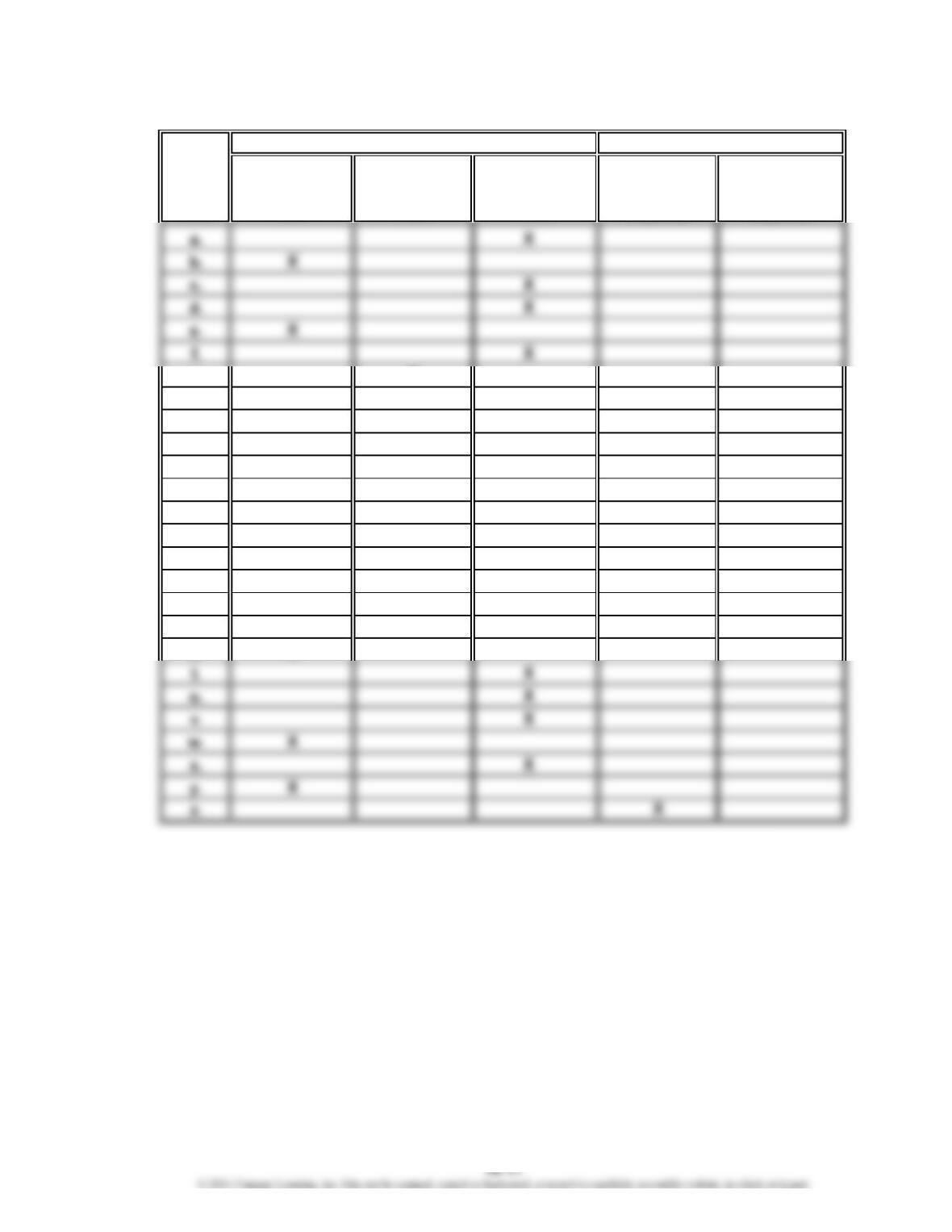
Prob. 18-1B
Direct Direct Factory
Materials Labor Overhead Selling Administrative
Cost Cost Cost Expense Expense
X
X*
X
X
X
X
X
X
X
X
X
X
X
*Item h might also be classified as direct material cost if the cost is significant because it
can be traced directly to the end product.
Product Costs Period Costs
Cost
g.
h.
i.
j.
k.
l.
m.
n.
o.
p.
q.
r.
s.
CHAPTER 18 Introduction to Managerial Accounting
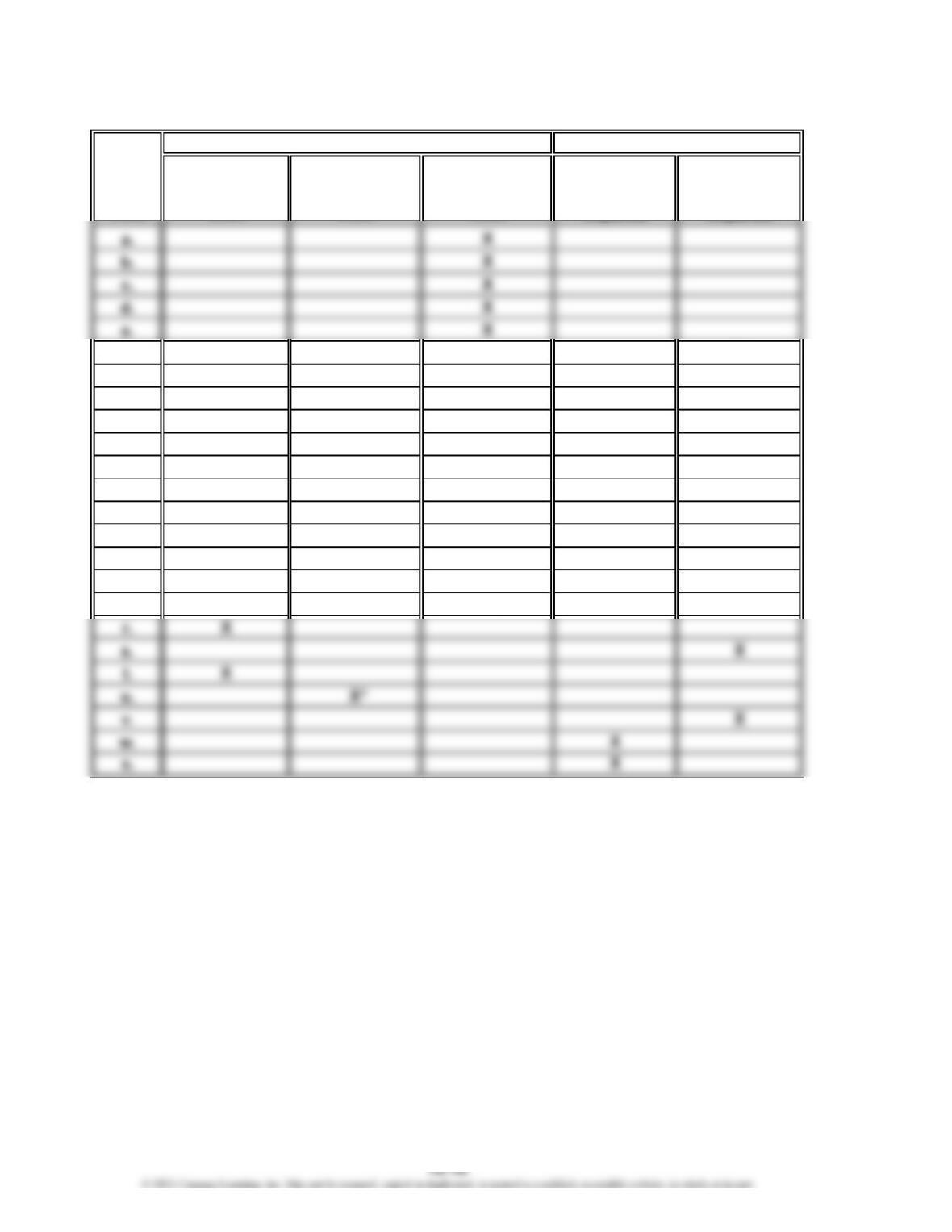
Prob. 18-2B
Direct Direct Factory
Materials Labor Overhead Selling Administrative
Cost Cost Cost Expense Expense
X
X
X
X
X
X
X
X
X
X
X
X
*Health insurance premiums are employment benefits for direct labor and are included as part of the
direct labor cost.
o.
p.
q.
j.
k.
l.
m.
n.
f.
g.
h.
i.
Cost
Product Costs Period Costs
CHAPTER 18 Introduction to Managerial Accounting
Prob. 18-3B
1. The most logical definition for the final cost object would be a hotel guest. Guests
consume services such as a meal, a night’s stay in a hotel room, room service, and
a telephone call.
2. Cost Direct Indirect
a. X
h. X
i. X
j. X
k. X
l. X
m. X
n. X
o. X
p. X
q. X
CHAPTER 18 Introduction to Managerial Accounting
Prob. 18-4B
1. On Company
a. $30,800 ($282,800 + $65,800 – $317,800)
b. $854,000 ($317,800 + $387,800 + $148,400)
c. $800,800 ($854,000 + $119,000 – $172,200)
Off Company
a. $581,560 ($685,720* + $91,140 – $195,300)
b. $685,720 ($1,519,000 – $256,060 – $577,220)
*Note: The student must determine part (b) prior to computing part (a) because
the solution to part (b) is needed as an input to part (a).
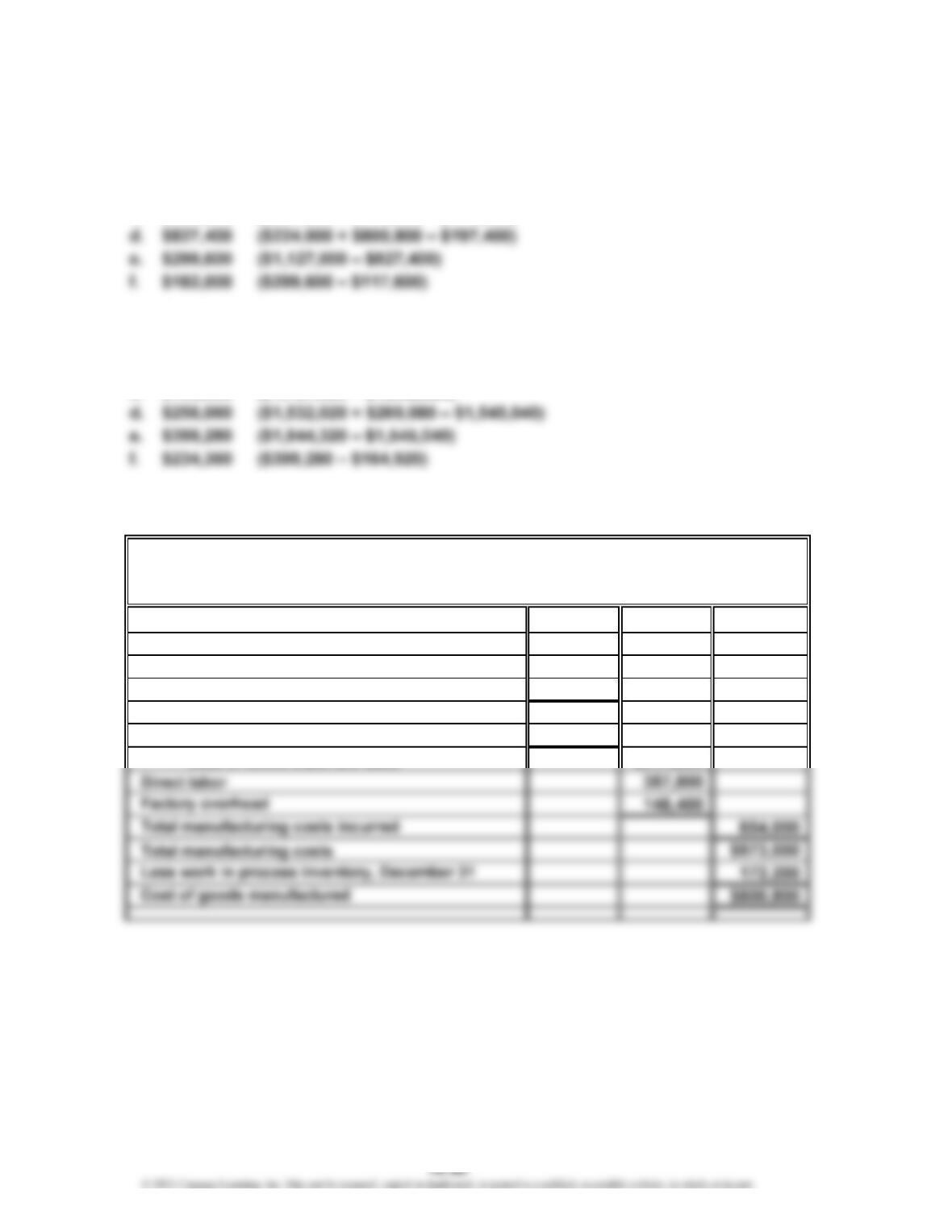
2.
Work in process inventory, December 1 $119,000
Direct materials:
Materials inventory, December 1 $ 65,800
Purchases 282,800
Cost of materials available for use $348,600
Less materials inventory, December 31 30,800
On Company
Statement of Cost of Goods Manufactured
For the Month Ended December 31
CHAPTER 18 Introduction to Managerial Accounting
Prob. 18-4B (Concluded)
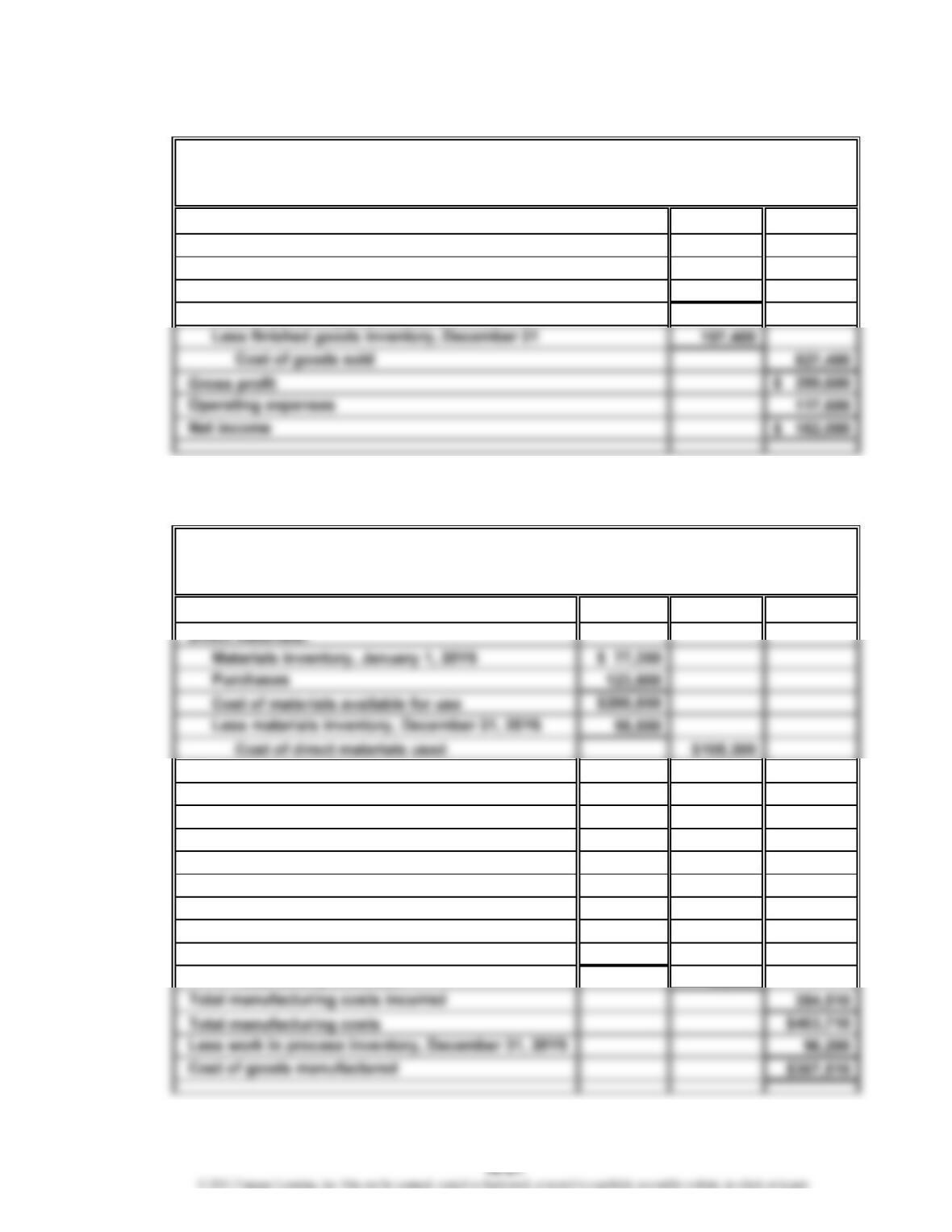
3.
Sales $1,127,000
Cost of goods sold:
Finished goods inventory, December 1 $ 224,000
Cost of goods manufactured 800,800
Cost of finished goods available for sale $1,024,800
Prob. 18-5B
1.
Work in process inventory, January 1, 20Y6 $109,200
Direct labor 186,550
Factory overhead:
Indirect labor $ 23,660
Depreciation expense—factory equipment 14,560
Heat, light, and power—factory 5,850
Property taxes—factory 4,095
Rent expense—factory 6,825
Supplies—factory 3,250
Miscellaneous costs—factory 4,420
Total factory overhead 62,660
Shanika Company
Statement of Cost of Goods Manufactured
For the Year Ended December 31, 20Y6
On Company
Income Statement
For the Month Ended December 31
CHAPTER 18 Introduction to Managerial Accounting
Prob. 18-5B (Concluded)
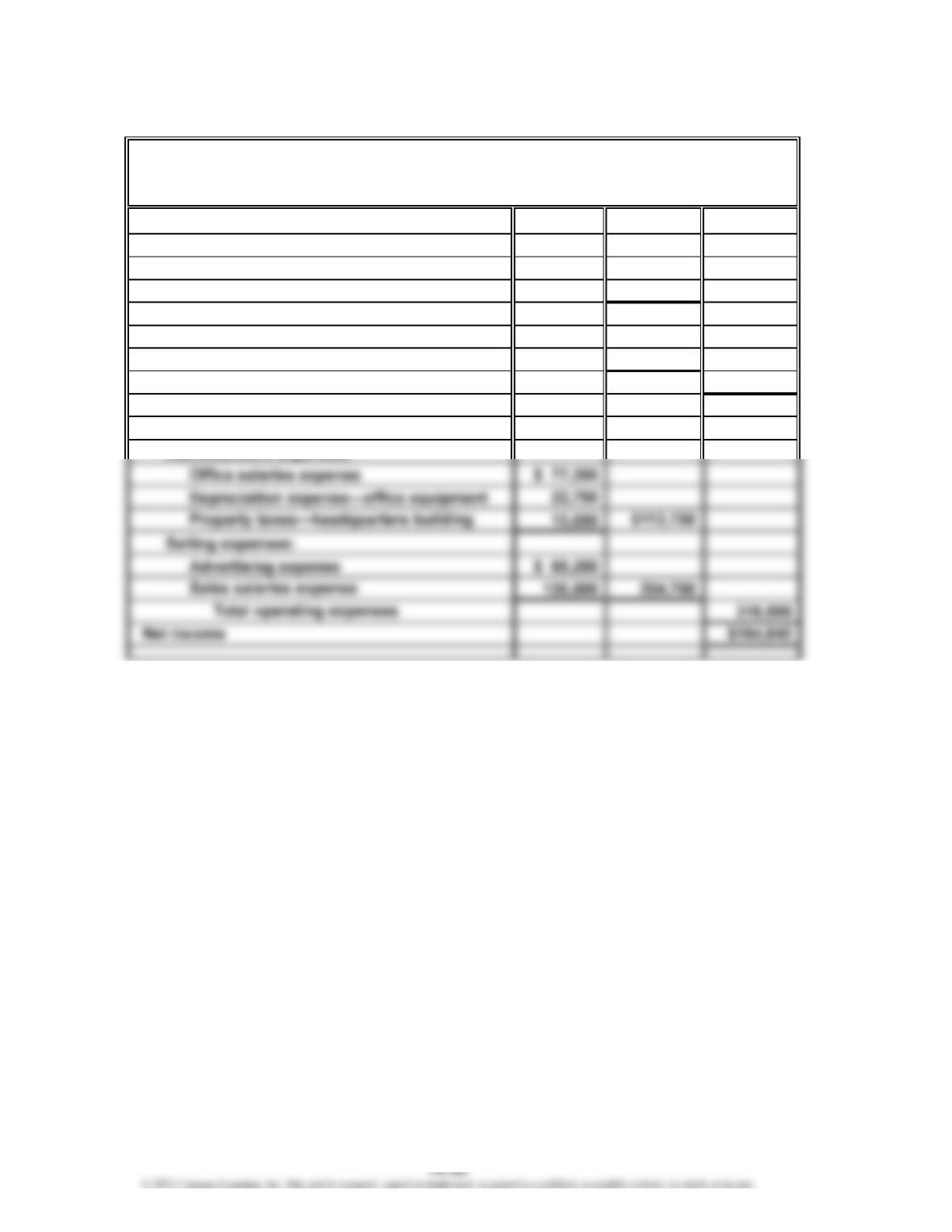
2.
Sales $864,500
Cost of goods sold:
Finished goods inventory, January 1, 20Y6 $113,750
Cost of goods manufactured 367,510
Cost of finished goods available for sale $481,260
Less finished goods inventory,
December 31, 20Y6 100,100
Cost of goods sold 381,160
Gross profit $483,340
Operating expenses:
Shanika Company
Income Statement
For the Year Ended December 31, 20Y6
CHAPTER 18 Introduction to Managerial Accounting
CP 18-1
Brian has behaved unethically and violated several of the IMA’s principles of ethical
conduct. By determining the price of the lumber he is buying, Brian has created
a conflict-of-interest situation that violates the principle of objectivity. For professionals
CP 18-2
Note to Instructors: Consider having the teams compete for the most examples.
Pizza Restaurant
Direct Direct Selling
Cost Materials Labor Overhead Expenses
Ingredients……………………………………
…
X
Cook wages…………………………………
…
X
…
…
…
Disposable plates, utensils, cups………
…
X
Nondisposable plates, utensils, cups…… X
Repair costs…………………………………
…
X
Property taxes………………………………
…
X
Store depreciation…………………………
…
X
Cashier salary………………………………
…
X
…
…
…
CASES & PROJECTS
CHAPTER 18 Introduction to Managerial Accounting
CP 18-3
Memo
To: Todd Johnson
From: A+ Student
Re: Financial vs. Managerial Accounting Information
The objectives of financial and managerial accounting are quite different, and your
statement does not fully consider these differences. In one sense, your statement may
be appropriate at high levels in the organization. For example, it is appropriate to
evaluate a division manager who is responsible for the overall performance of a division
using the same financial performance measures that shareholders use to evaluate the
company. However, these measures are not appropriate for evaluating managerial
decision making below the division level. At these levels, summary financial performance
CHAPTER 18 Introduction to Managerial Accounting
CP 18-4
1. The vice president of the Information Systems Division can use managerial
accounting information in a number of ways. For example, the vice president might
use these data to determine resources that will be needed based on a projection of
amount and type of work required for the next period. Managerial accounting
2. The hospital administrator can use managerial accounting information in a number
of ways. One way is for cost planning and control. The administrator could use
managerial information to keep costs commensurate with services provided and to
plan for staffing and nursing levels. This information can be used to determine the
3. The CEO of the food company will use managerial accounting information to support
the control of the three divisions. Each of the three divisions will be subject to a
number of financial goals. The CEO also needs to support strategic decision making.
4. The copy shop manager needs fairly simple managerial accounting information. At
the most basic level, the copy shop manager needs to know the costs of performing
various copy tasks, such as one-sided copy, two-sided copy, collating, and binding.
These activities will have some direct costs, such as paper, and some indirect costs,
such as copy machine time. The manager will need to estimate the impact of both of
CHAPTER 18 Introduction to Managerial Accounting
CP 18-5
1. Obie’s bill has a number of points that should be considered. Some of the
points, with the appropriate argument, are identified below.
a. The trip back to the shop resulted in an $80 labor charge. Obie should
argue that the whole hour should not be billed. The hour is the result of
stocking out of a circuit board on the truck. The circuit board should
have been with the repair person. There was a board for the previous
b. The overtime premium should not have been charged to Obie. What if
Obie was the first appointment in the morning? If he was, there would be
no overtime premium. It’s only random misfortune that Obie was the last
client of the day and therefore received the overtime premium. Add to
this the fact that the overtime would not have been necessary without
Thus, the labor portion of the bill should only be $70 + $60 + $60 = $190.
There are other parts of the bill that should not be in dispute.
●The materials storage and handling charge is a normal charge of
maintaining a parts inventory for the benefit of clients that need parts.
●The fringe benefits and overhead added to the hourly rate are both
reasonable. The fringe benefit attaches directly to the direct labor. Fringe
benefits are just another form of compensation. The overhead must be
covered by all customers. Therefore, including overhead in the hourly rate
CP 18-5 (Concluded)
Direct Direct
2. Cost Materials Labor Overhead
Circuit board………………………………
…
X
Storage and handling……………………
…
X
Straight-time labor…………………………
…
X
*Could be considered overhead.
CP 18-6
1. The High Times manager will use managerial accounting information to
accumulate the costs associated with different menu items. The costs,
direct and indirect, will help in determining the pricing strategy.
2. The plant manager is going to use cost information on scrap and rework to
identify the amount of waste occurring in the plant. This measure of waste is
fairly common in fabrication-type facilities. The measures can guide the plant
manager to locations or products where significant waste is occurring. The
plant manager can use the scrap and rework measures to guide operational
3. The cost of ending inventory must be determined as financial statements
are prepared. The division controller will likely require inventory valuation
at the close of every month in order to have a good understanding of the
4. The Maintenance Department manager needs to be able to plan the resources
used by his department. The planning process involves identifying the
required resources to fulfill the department’s objective. For example, the
Maintenance Department manager may know the repair histories of various
machines. These histories can be used to forecast the repairs anticipated