1. Financial accounting and managerial accounting are different in several ways. Financial
accounting information is reported in statements that are useful to persons or groups outside
a company. These statements objectively report the results of operations for fixed periods of
time and the financial condition of the business under generally accepted accounting principles.
Managerial accounting information uses both subjective and objective information to meet the
specific needs of management. This non-GAAP information can be reported periodically or as
needed by management and can be reported for the entire entity or for segments of the organization.
This information includes (1) historical data, which provide objective measures of past operations,
and (2) estimated data, which provide subjective estimates about future decisions.
3. Direct materials cos
t
4. Prime costs are the combination of direct materials and direct labor costs, while conversion
costs are the combination of direct labor costs and factory overhead costs.
6. The three inventory accounts for a manufacturing business are as follows:
a. Finished goods inventory consists of completed (or finished) products that have not been sold.
b. Work in process inventory consists of the direct materials, direct labor, and factory overhead
costs for products that have entered the manufacturing process but are not yet completed.
c. Materials inventory consists of the costs of the direct and indirect materials that have not
entered the manufacturing process.
7. Finished goods, work in process, and materials
8. The cost of finished goods and the cost of work in process included the following:
a. Direct materials—the costs of materials that enter directly into the finished product
b. Direct labor—the wages of factory workers who convert materials into a finished product
c. Factory overhead—the costs, other than direct materials and direct labor, that are incurred in
the manufacturing process
CHAPTER 18
INTRODUCTION TO MANAGERIAL ACCOUNTING
DISCUSSION QUESTIONS
CHAPTER 18 Introduction to Managerial Accounting
PE 18-1A
Controlling (a)
Planning (c)
Decision making (b)
PE 18-1B
PE 18-2A
a. DL
b. FO
c. DM
d. FO
PE 18-2B
a. DM (or FO if the cost is immaterially small)
PE 18-3A
a. B
b. C
c. P
d. C
PE 18-3B
a. P
PRACTICE EXERCISES
CHAPTER 18 Introduction to Managerial Accounting
PE 18-4A
a. Product cost
b. Product cost
c. Period cost
d. Period cost
PE 18-4B
a. Period cost
PE 18-5A
a. Work in process inventory, May 1………………………………
…
$ 72,100
Cost of direct materials used in production…………………
…
$17,300
Direct labor…………………………………………………………
…
44,700
Factory overhead…………………………………………………
…
28,800
Total manufacturing costs incurred during May……………
…
90,800
Total manufacturing costs………………………………………
…
$162,900
Less work in process inventory, May 31………………………
…
76,400
Cost of goods manufactured……………………………………
…
$ 86,500
…
…
PE 18-5B
a. Work in process inventory, November 1………………………
…
$ 59,600
Cost of direct materials used in production…………………
…
$230,700
Direct labor…………………………………………………………
…
267,000
Factory overhead…………………………………………………
…
155,800
Total manufacturing costs incurred during November……
…
653,500
Total manufacturing costs………………………………………
…
$713,100
Less work in process inventory, November 30………………
…
63,300
Cost of goods manufactured……………………………………
…
$649,800
CHAPTER 18 Introduction to Managerial Accounting
Ex. 18-1
a. Direct materials cost e. Factory overhead cost
b. Direct materials cost f. Direct materials cost
Ex. 18-2
a. Direct materials cost f. Factory overhead cost
b. Direct materials cost g. Direct materials cost
Ex. 18-3
a, b, d, f, g
Ex. 18-4
a. Period cost j. Period cost
b. Product cost k. Product cost
c. Product cost l. Product cost
Ex. 18-5
a. period e. work in process inventory
b. improve f. conversion
EXERCISES
CHAPTER 18 Introduction to Managerial Accounting
Ex. 18-6
a. improving e. strategic
b. conversion f. materials inventory
Ex. 18-7
a. direct g. indirect
b. indirect h. indirect
c. direct i. indirect
Ex. 18-8
1. c., 2. d., 3. b., 4. a.
Ex. 18-9
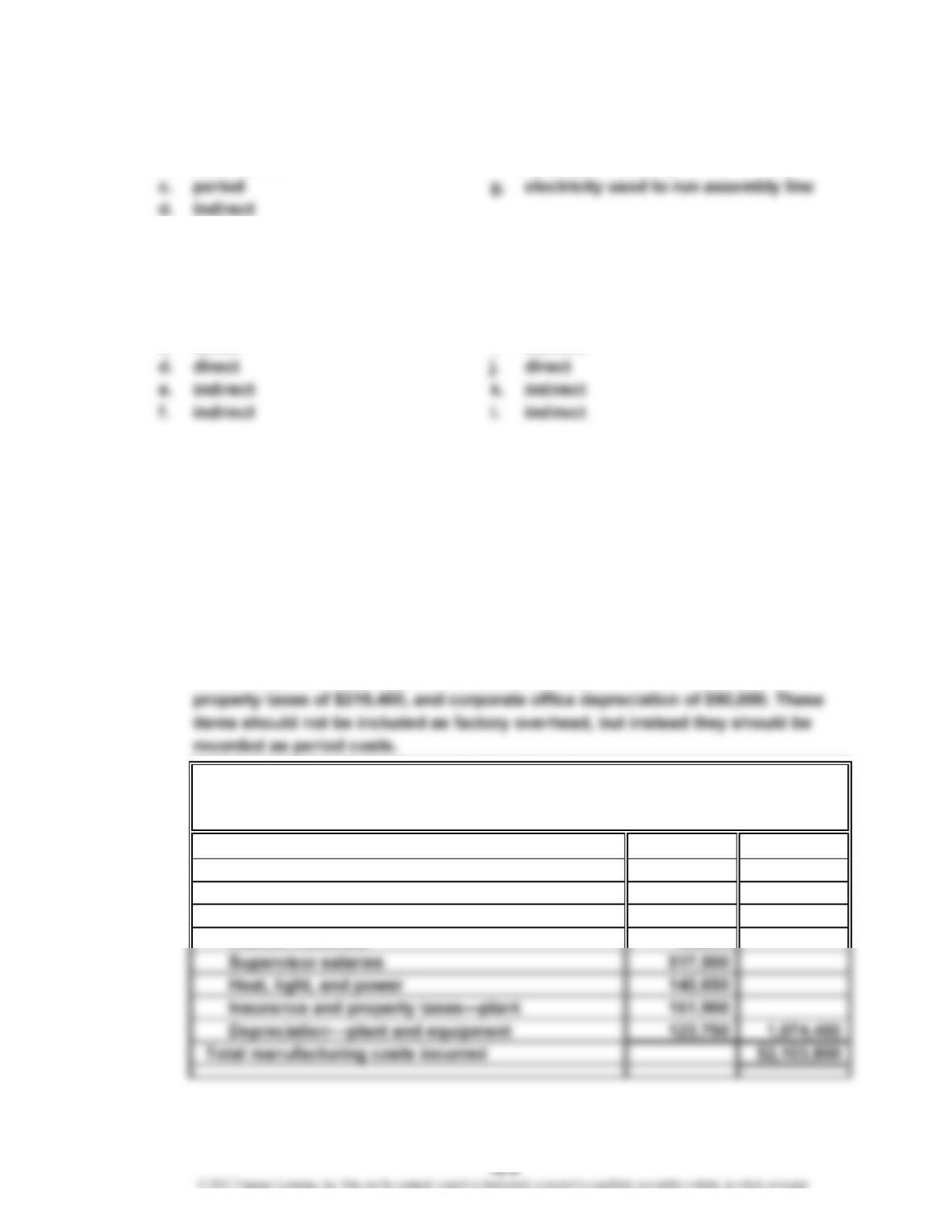
1. The maintenance salaries of $84,400 and indirect materials of $56,200 should be
included as factory overhead.
2. The factory overhead incorrectly includes the following items: sales salaries of
$348,750, promotional expenses of $315,000, corporate office insurance and
Cost of direct materials used in production $ 551,300
Direct labor 478,100
Factory overhead:
Maintenance salaries $ 84,400
Marching Ants Inc.
Manufacturing Costs
For the Quarter Ended June 30
CHAPTER 18 Introduction to Managerial Accounting
Ex. 18-10
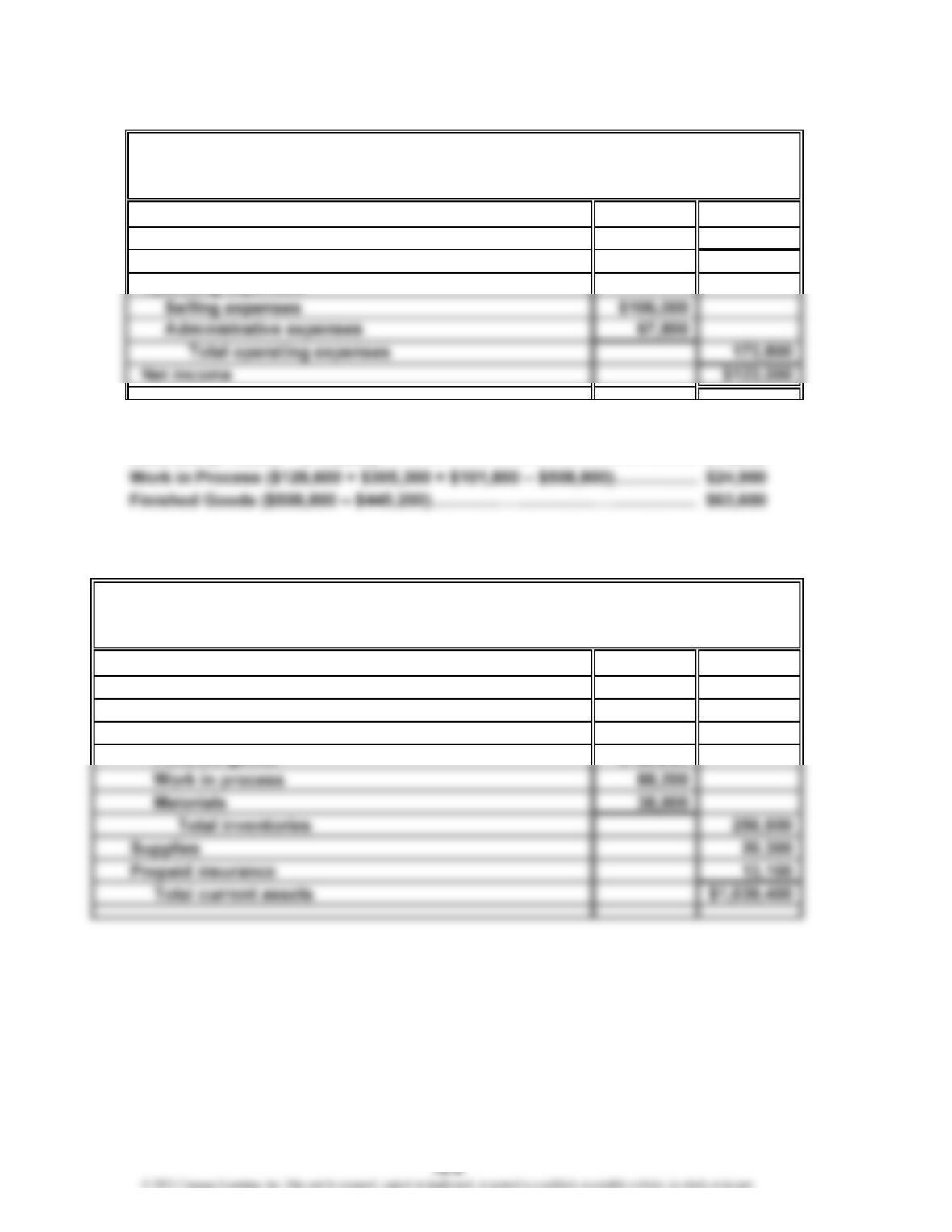
a.
Revenues $742,000
Cost of goods sold 445,200
Gross profit $296,800
b. Inventory balances on January 31:
Materials ($142,900 – $126,600)………………………………………………… $16,300
Ex. 18-11
Current assets:
Cash $ 243,400
Accounts receivable 505,700
Inventories:
Upper Crust Company
Balance Sheet
August 31
Technology Treasures Manufacturing Company
Income Statement
For the Month Ended January 31
CHAPTER 18 Introduction to Managerial Accounting
Ex. 18-12
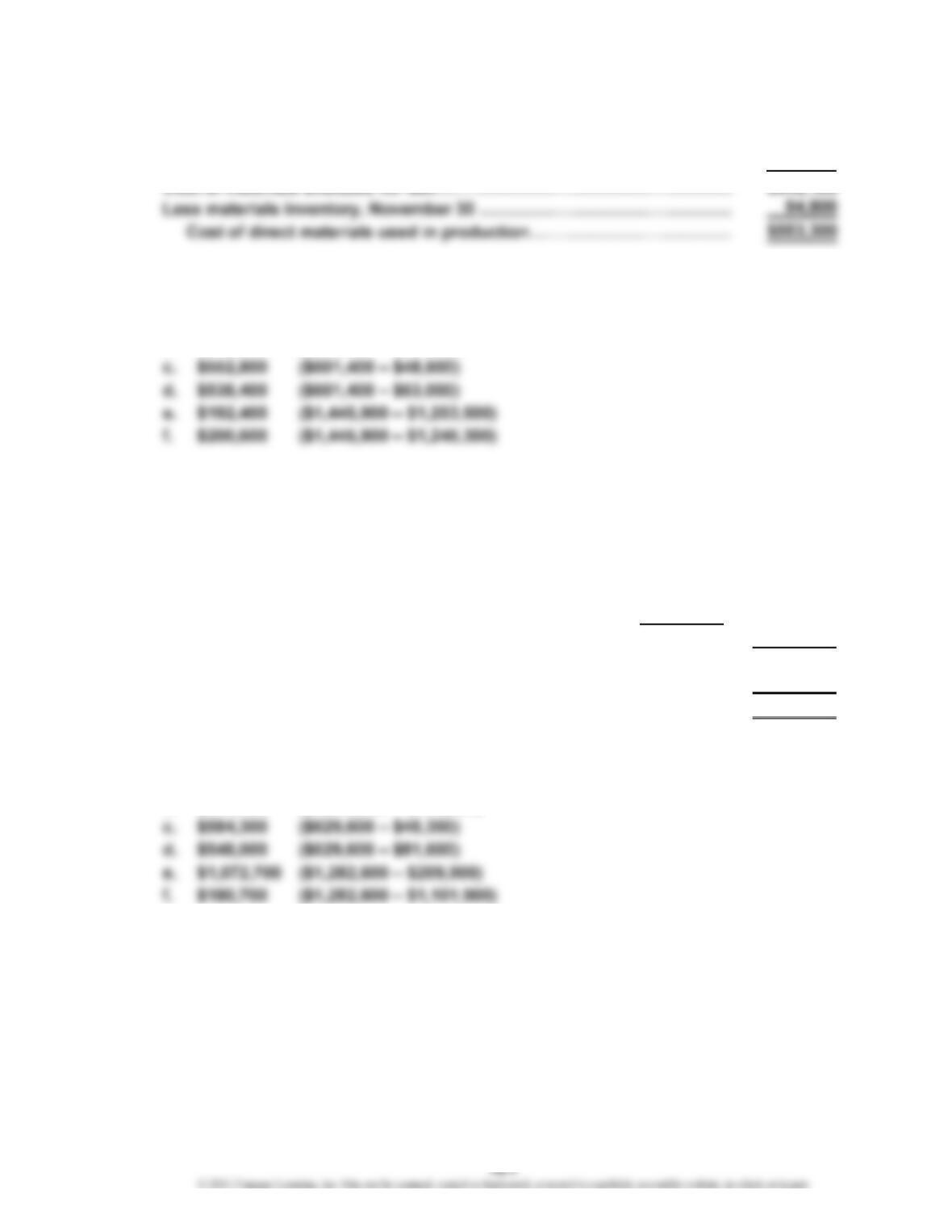
Materials inventory, November 1………………………………………………
…
$ 75,700
Purchases…………………………………………………………………………
…
572,400
Ex. 18-13
a. $410,900 ($22,900 + $388,000)
b. $383,500 ($410,900 – $27,400)
Ex. 18-14
Work in process inventory, July 1……………………………
…
$ 316,400
Add manufacturing costs incurred during July:
Cost of direct materials used ……………………………
…
$1,150,000
Direct labor……………………………………………………
…
966,000
Factory overhead……………………………………………
…
490,500
Total manufacturing costs incurred……………………… 2,606,500
Total manufacturing costs……………………………………
…
$2,922,900
Less work in process inventory, July 31……………………
…
355,500
Cost of goods manufactured…………………………………
…
$2,567,400
Ex. 18-15
a. $1,099,000 ($136,000 + $963,000)
b. $947,400 ($1,099,000 – $151,600)
CHAPTER 18 Introduction to Managerial Accounting
Ex. 18-16
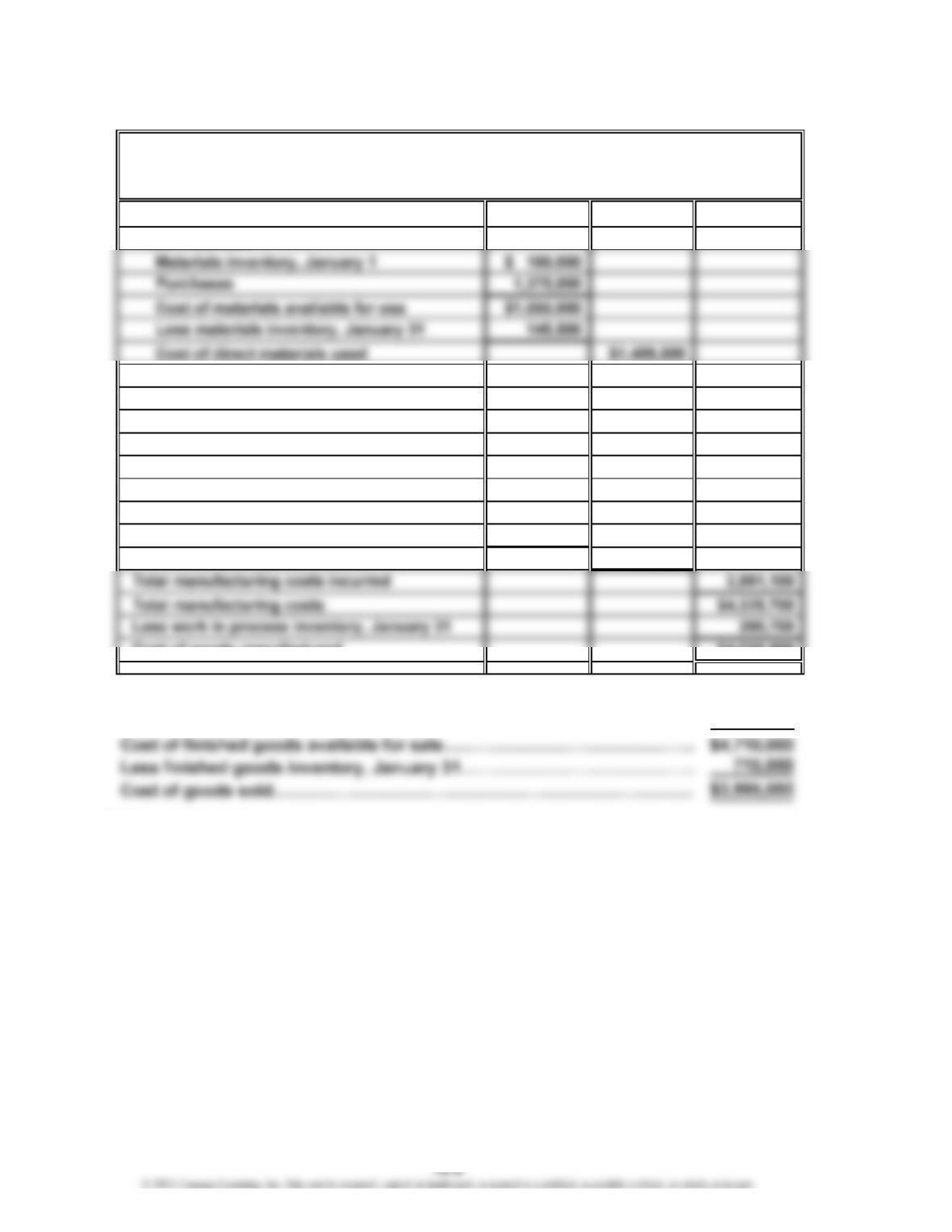
a.
Work in process inventory, January 1 $ 334,600
Direct materials:
Direct labor 2,260,000
Factory overhead:
Indirect labor $ 115,000
Machinery depreciation 90,000
Heat, light, and power 55,000
Supplies 18,500
Property taxes 10,000
Miscellaneous cost 33,100
Total factory overhead 321,600
Cost of goods manufactured $4,035,000
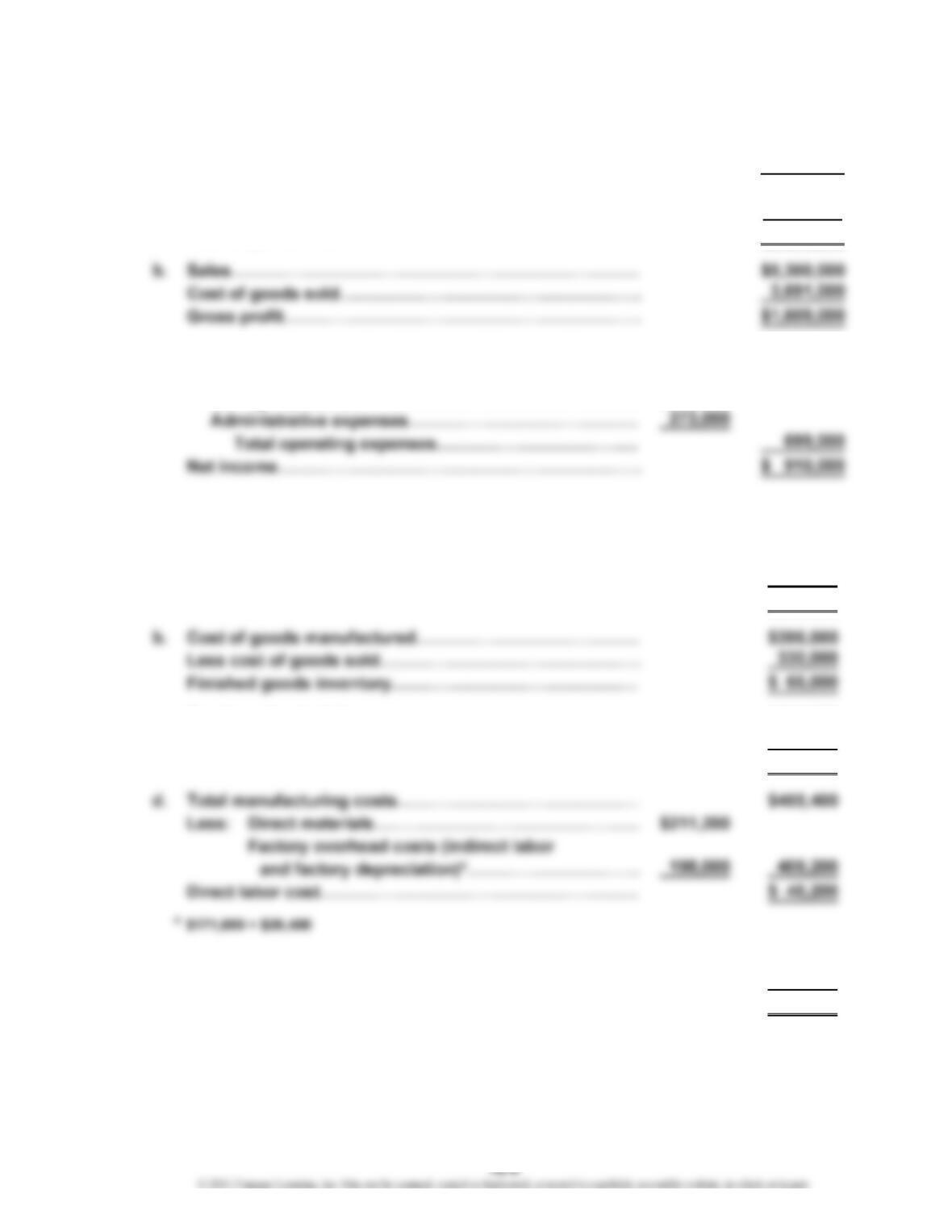
b. Finished goods inventory, January 1…………………………………………
…
$ 675,000
Cost of goods manufactured*……………………………………………………
…
4,035,000
*From part (a) above
Disksan Manufacturing Company
Statement of Cost of Goods Manufactured
For the Month Ended January 31
CHAPTER 18 Introduction to Managerial Accounting
Ex. 18-17
a. Finished goods inventory, January 1………………………
…
$ 707,000
Cost of goods manufactured…………………………………
…
3,606,000
Cost of finished goods available for sale…………………
…
$4,313,000
Less finished goods inventory, January 31………………
…
622,000
Cost of goods sold……………………………………………
…
$3,691,000
c. Gross profit………………………………………………………
…
$1,609,000
Operating expenses:
Selling expenses……………………………………………
…
$426,000
…
Ex. 18-18
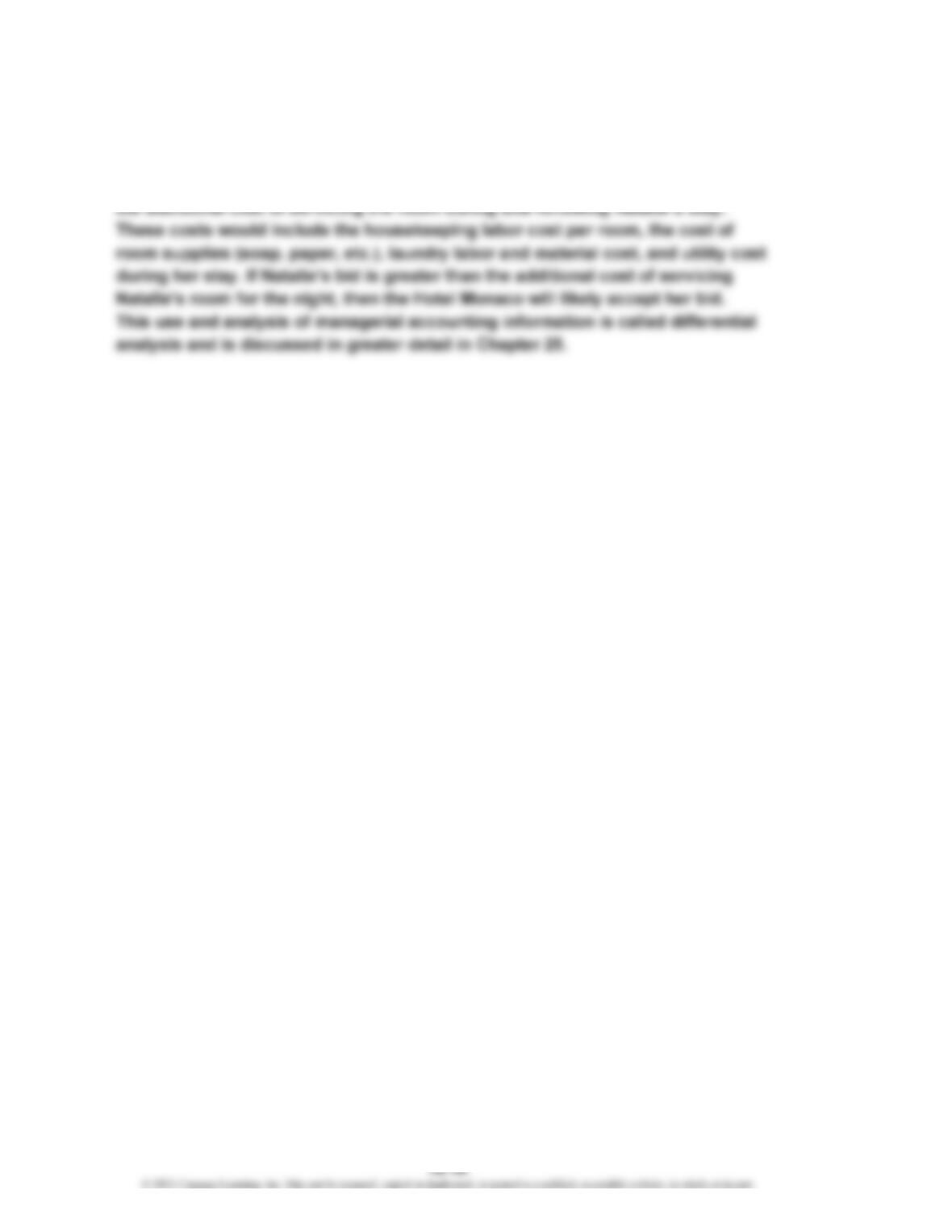
a. Sales………………………………………………………………
…
$792,000
Less gross profit………………………………………………
…
462,000
Cost of goods sold……………………………………………
…
$330,000
…
…
c. Purchased materials……………………………………………
…
$244,200
Less materials inventory………………………………………
…
33,000
Direct materials cost…………………………………………… $211,200
…
e. Total manufacturing costs……………………………………
…
$455,400
Less cost of goods manufactured…………………………… 396,000
Work in process inventory……………………………………
…
$ 59,400
…
…
…
CHAPTER 18 Introduction to Managerial Accounting
Ex. 18-19
The Hotel Monaco has excess capacity for this day, so it is willing to accept
additional customers. To determine whether or not to accept Natalie Mooney’s
bid, the Hotel Monaco could use managerial accounting information to determine
CHAPTER 18 Introduction to Managerial Accounting
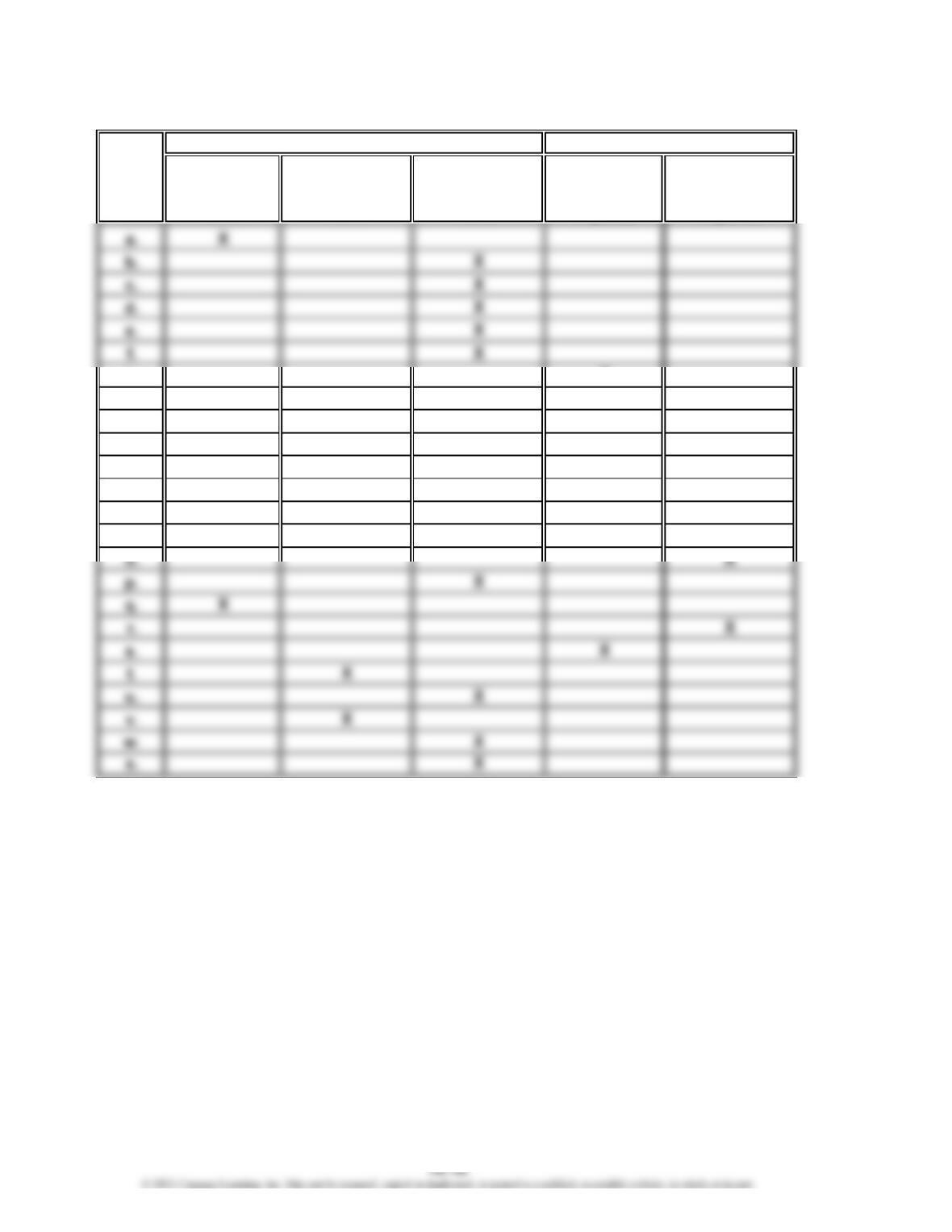
Prob. 18-1A
Direct Direct Factory
Materials Labor Overhead Selling Administrative
Cost Cost Cost Cost Expense Expense
a. X
b. X
c. X
k. X
l. X
m. X
n. X
o. X
p. X
q. X
r. X
s. X
t. X
PROBLEMS
Product Costs Period Costs
CHAPTER 18 Introduction to Managerial Accounting
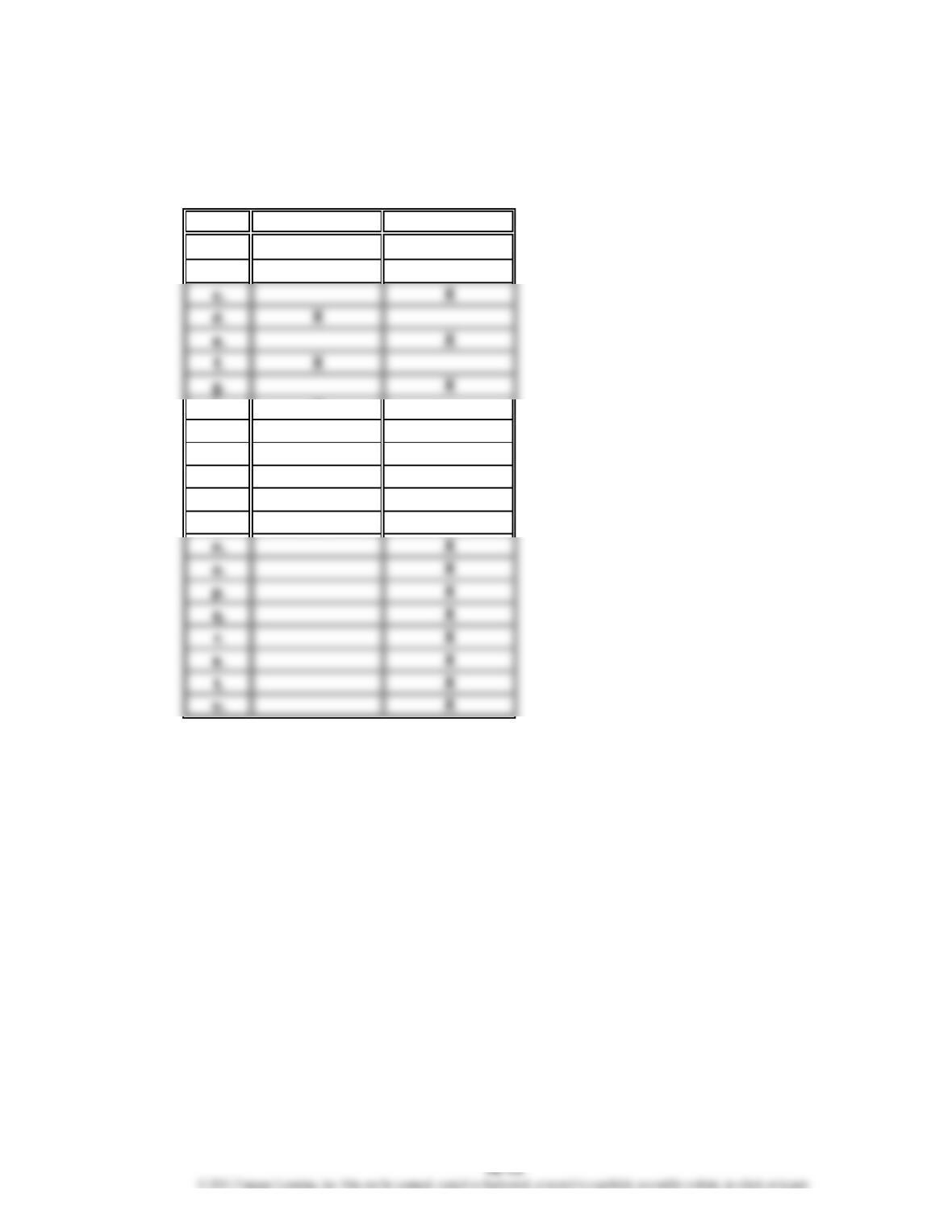
Prob. 18-2A
Direct Direct Factory
Materials Labor Overhead Selling Administrative
Cost Cost Cost Cost Expense Expense
g. X
hX
i. X
j. X
k. X
l. X
m. X
n. X
Product Costs Period Costs
CHAPTER 18 Introduction to Managerial Accounting
Prob. 18-3A
1. The most logical definition for the final cost object would be the patient. The
reason is that the cost can be accumulated at the patient level for billing and
insurance reimbursement.
2. Cost Direct Indirect
a. X
b. X
h. X
i. X
j. X
k. X
l. X
m. X
CHAPTER 18 Introduction to Managerial Accounting
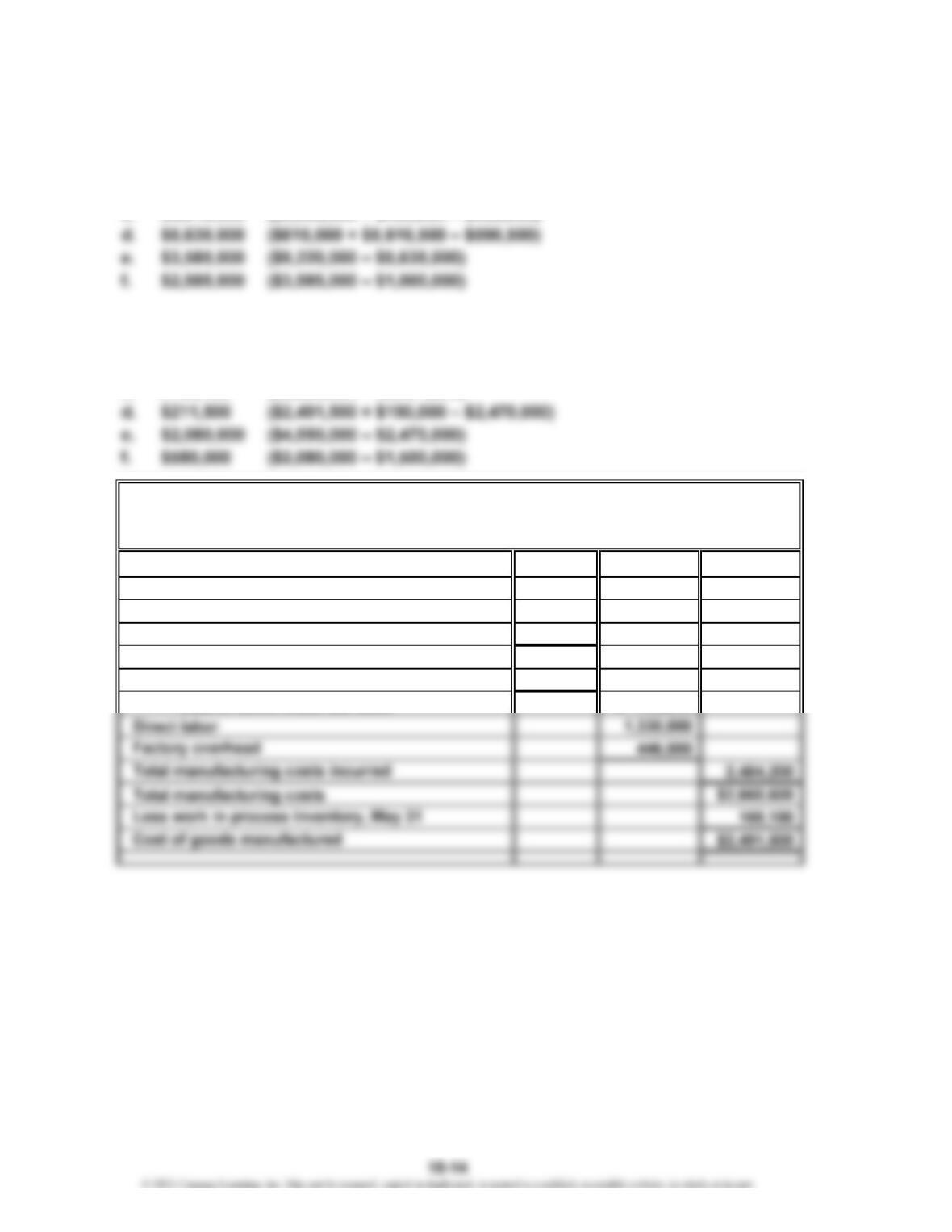
Prob. 18-4A
1. Rainier Company
a. $111,500 ($950,000 + $100,000 – $938,500)
b. $5,598,500 ($938,500 + $2,860,000 + $1,800,000)
Yakima Company
a. $708,200 ($48,200 + $710,000 – $50,000)
b. $1,330,000 ($2,484,200 – $708,200 – $446,000)
c. $169,100 ($2,660,600 – $2,491,500)
2.
Work in process inventory, May 1 $ 176,400
Direct materials:
Materials inventory, May 1 $ 48,200
Purchases 710,000
Cost of materials available for use $758,200
Less materials inventory, May 31 50,000
Cost of direct materials used $ 708,200
Yakima Company
Statement of Cost of Goods Manufactured
For the Month Ended May 31