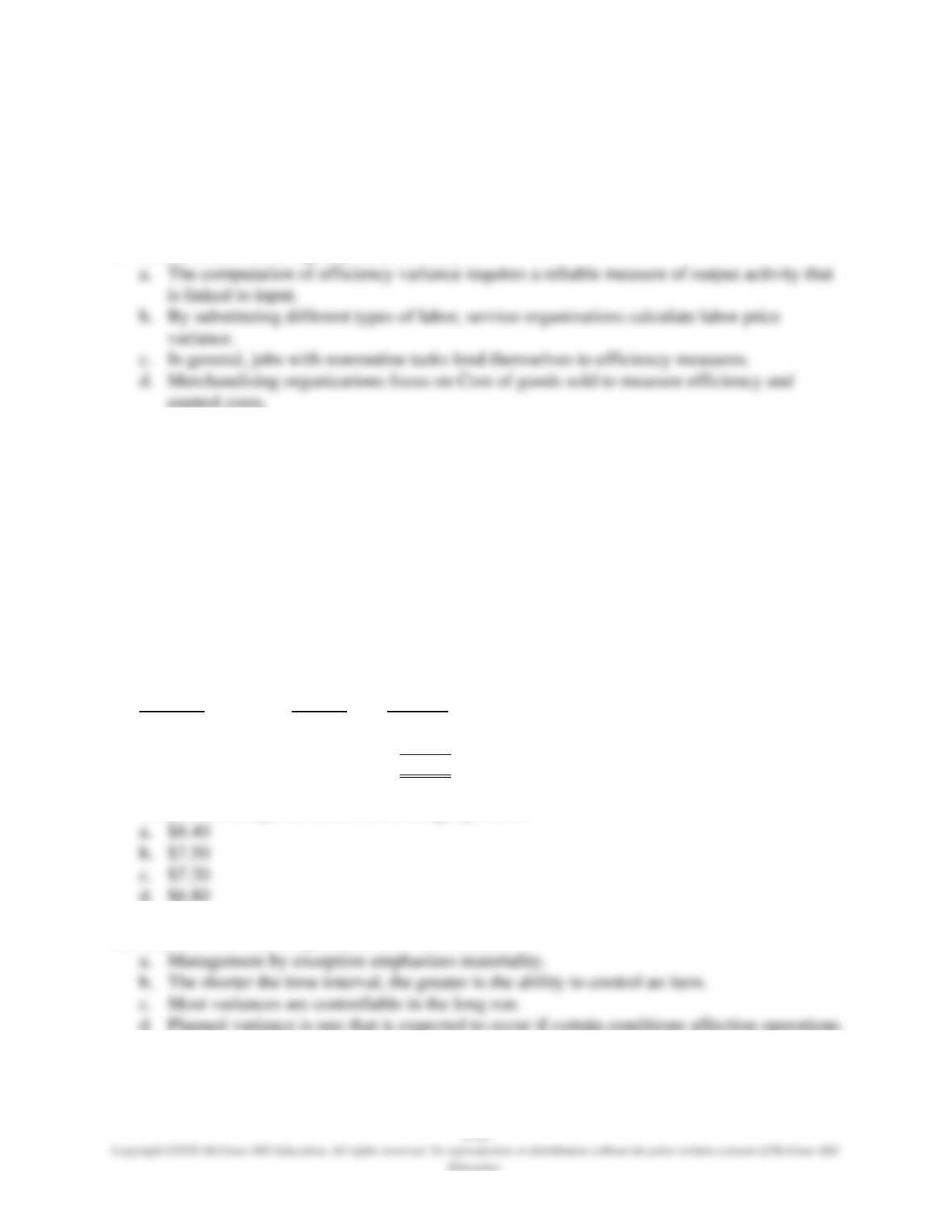
8. What is the production yield variance for Chemical B?
a. $1,600 U
b. $240 U
c. $1,180 F
d. $420 U
9. Which of the following statements is correct?
10. Which of the following statements is not correct?
a. Standards are estimates that require updating to reflect current conditions.
b. The issue of impact asks the question, “Can we do something about it?”
c. Only the variances for which the benefits of correction exceed the costs of follow-up
should be investigated.
d. Many variances occur because of errors in recording, bookkeeping adjustments, or timing
problems.
11. The following budget information is available for September.
Products
Unit
Contribution
Margin
Sales
Volume
Standard Set
$6
50,000
Deluxe Set
10
30,000
80,000
What is the composite contribution margin per unit?
12. Which of the following statements is not correct?
Multiple Choice Answers
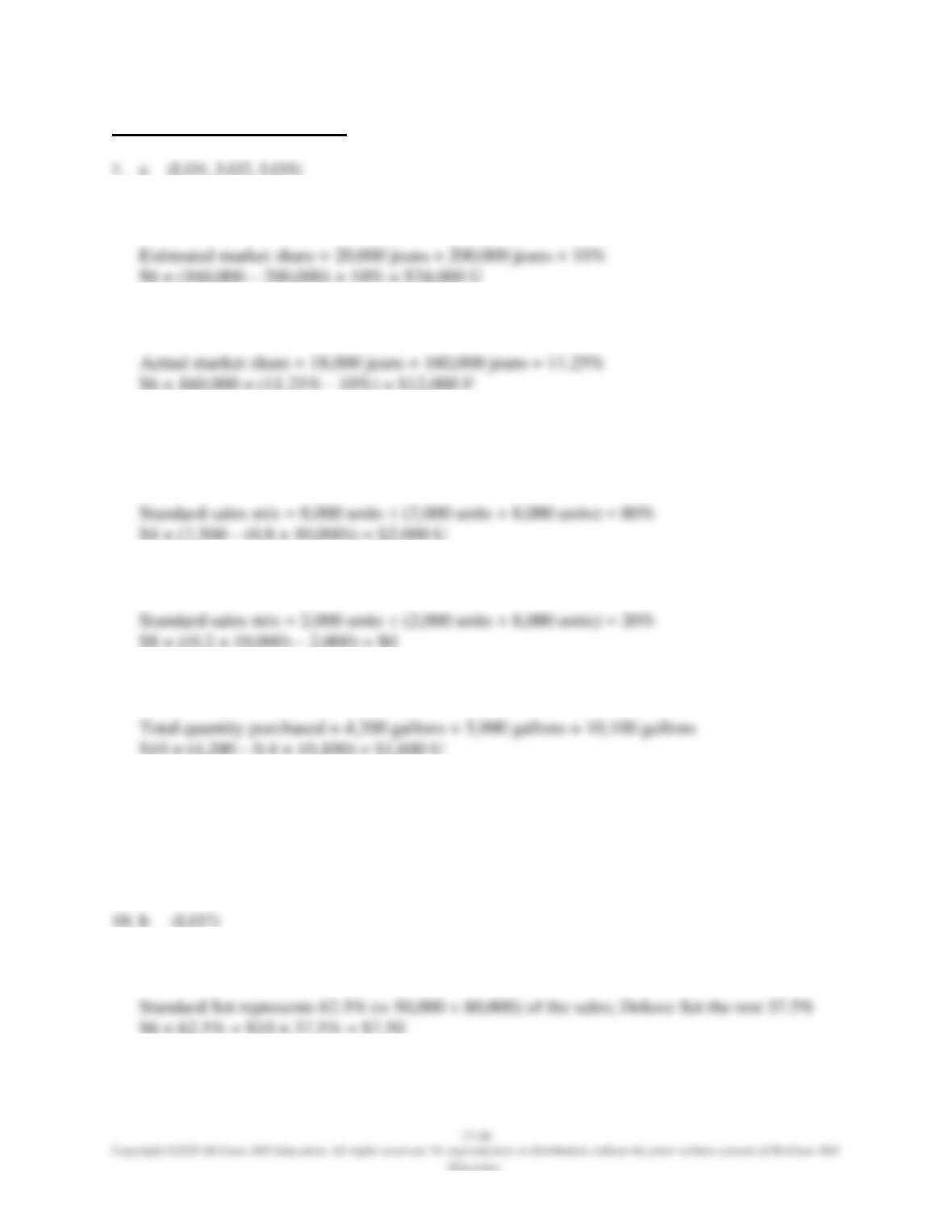
2. c (LO3)
3. d (LO3)
4. c (LO4)
5. c (LO4)
6. a (LO4)
7. b (LO5)
8. b (LO5)
$4 × (0.6 × 10,100 – 0.6 × 10,000) = $240 U
9. a (LO6)
11. b (LO3)
12. b (LO7)
Demonstration Problem 1
(Revised from Chapter 16 Demonstration Problem 1)
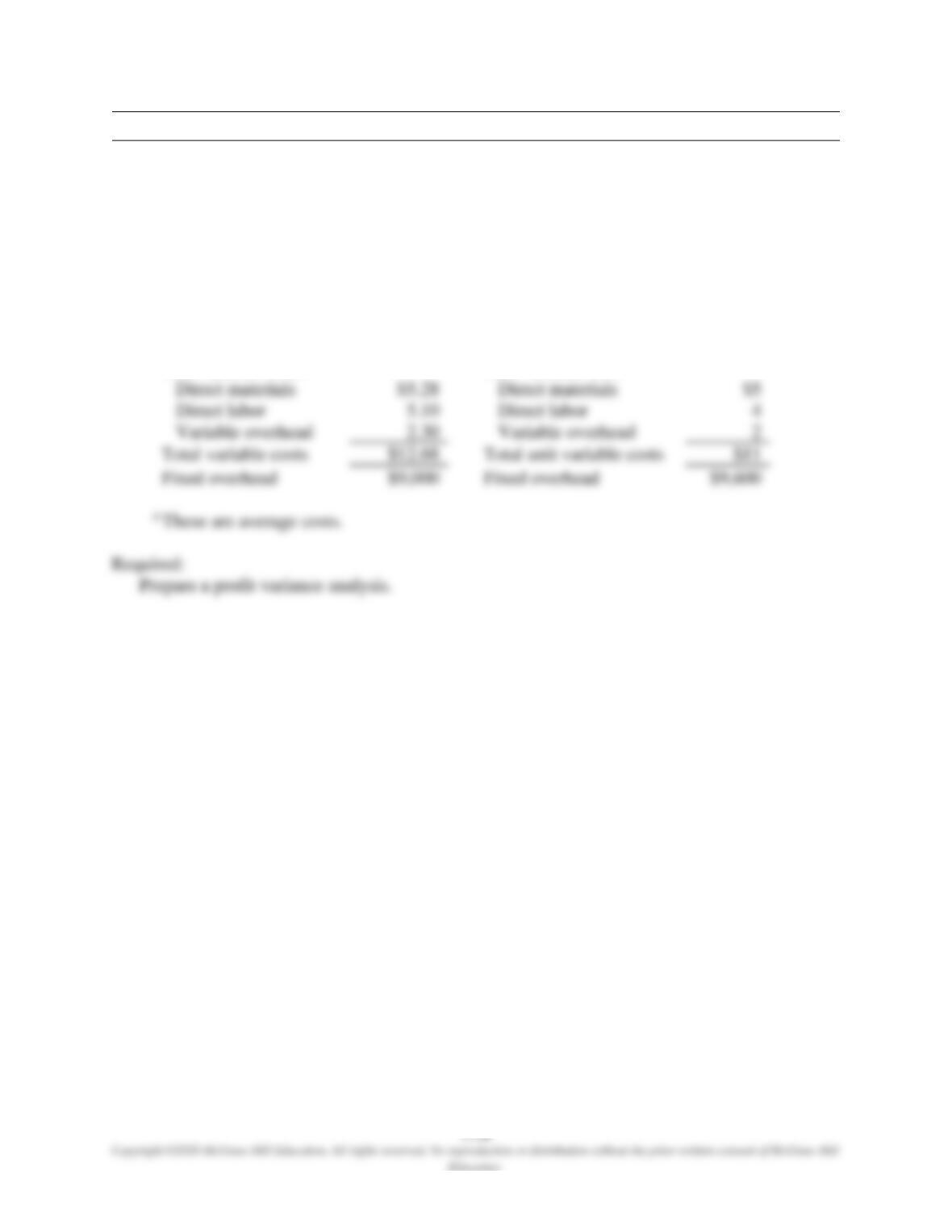
The accountant at EZ Toys, Inc. is analyzing the production and cost data for its Trucks Division.
For October, the actual results and the master budget data are presented below.
Actual results
Budget data
12,000 trucks produced
10,000 trucks sold
12,000 trucks planned
Unit selling price
$15
Unit selling price
$14
Unit variable costs:a
Unit variable cost:
Direct materials
$5.28
Direct materials
Direct labor
Direct labor
Variable overhead
Variable overhead
Total variable costs
Total unit variable costs
$11
Fixed overhead
Fixed overhead
Demonstration Problem 1 – Solution
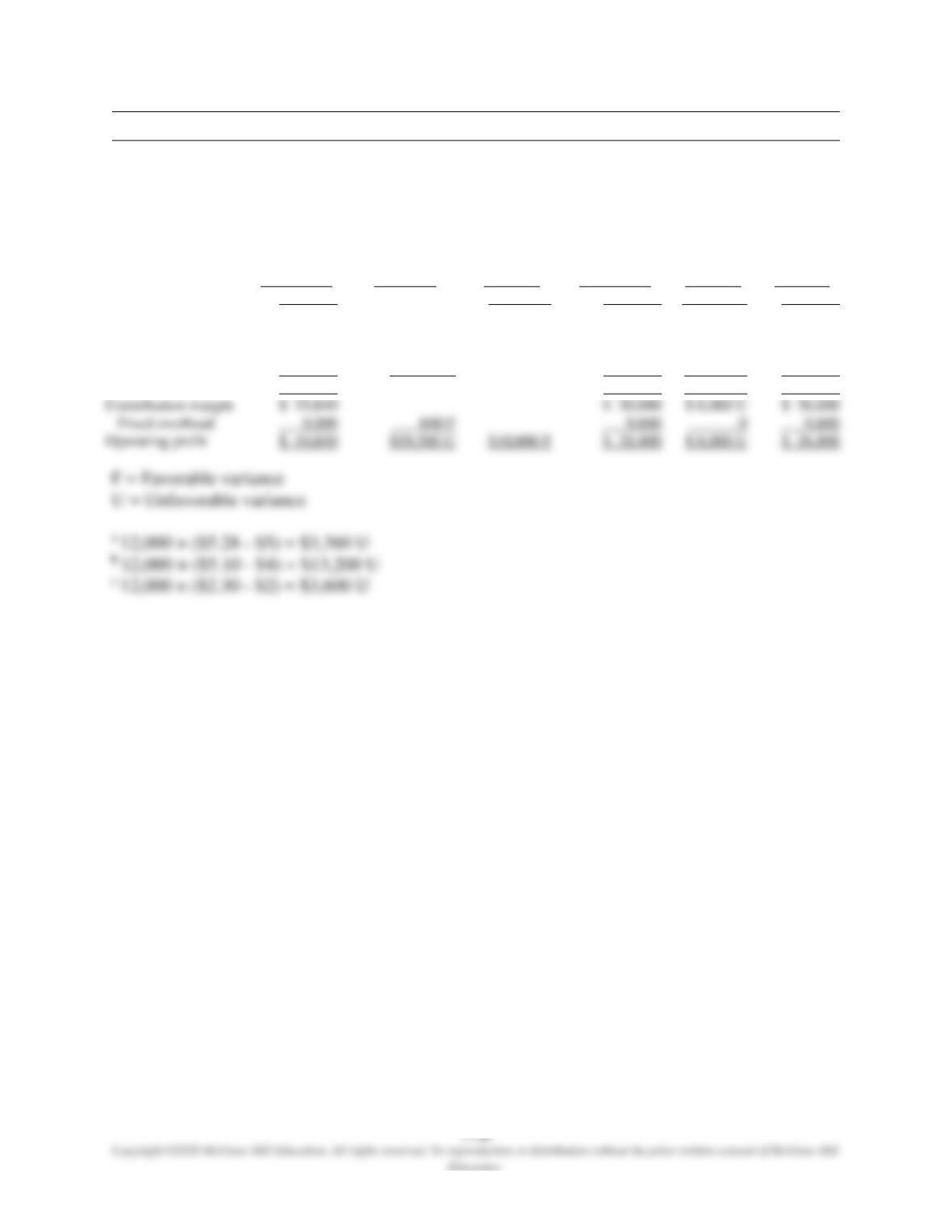
Actual
(Based On
Actual
Activity of
10,000
Units Sold)
Manufacturing
Variances
Sales Price
Variance
Flexible
Budget
(Based on
Actual
Activity of
10,000
Units Sold)
Sales
Activity
Variance
Master
Budget
(Based on
12,000
Units
Planned)
Sales revenue
$150,000
$10,000 F
$140,000
$28,000 U
$168,000
Variable costs
Direct materials
$53,360
$ 3,360 Ua
$50,000
$10,000 F
$60,000
Direct labor
53,200
13,200 Ub
40,000
8,000 F
48,000
Variable overhead
23,600
3,600 Uc
20,000
4,000 F
24,000
Total variable costs
$130,160
$110,000
$22,000 F
$132,000
Contribution margin
Fixed overhead
9,000
Operating profit
$10,000 F

Demonstration Problem 2
(Continued from Demonstration Problem 1)
Required:
Reconcile reported income using standard, full-absorption costing with that using standard,
variable costing for the Trucks Division of EZ Toys in October.
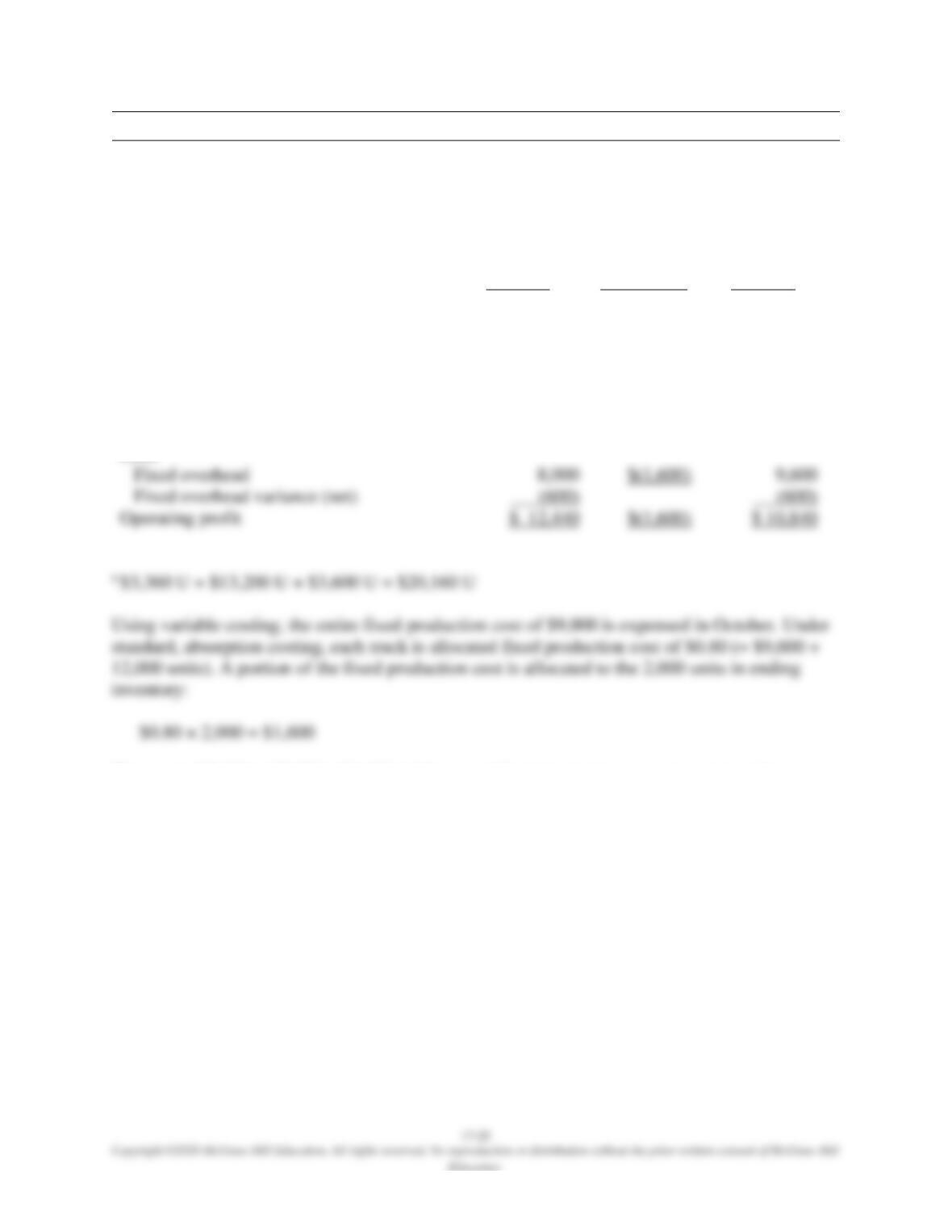
Demonstration Problem 2 – Solution
Actual
(Using
Standard, Full-
Absorption
Costing)
Inventory
Adjustment
Actual
(Using
Standard,
Variable
Costing)
Sales revenue
$150,000
$150,000
Less:
Variable costs
Direct materials (at standard)
50,000
50,000
Direct labor (at standard)
40,000
40,000
Variable overhead (at standard)
20,000
20,000
Variable production cost variances (net)
20,160a
20,160
Less:
Fixed overhead
Fixed overhead variance (net)
Operating profit
$ 12,440
$ 10,840
Thus, only $7,400 (= $9,000 – $1,600) of the actual fixed production cost are expensed in
October under standard, full-absorption costing. This includes $8,000 (= $0.80 × 10,000 units) of
fixed production cost in standard cost of goods sold plus a favorable budget variance of $600.
In this case, full-absorption operating profit would be $12,440, or $1,600 higher than variable
costing operating profit. The $1,600 difference in profits is due to the accounting system, not
because of operating activities.
Demonstration Problem 3
(Revised from Chapter 16 Demonstration Problem 3)
Information about the use of direct materials at EZ Toys’ Trucks Division for October is as
follows:
Standard costs:
2 units per truck @ $2.50 per unit
=
$5 per truck
Trucks produced in October
=
10,000
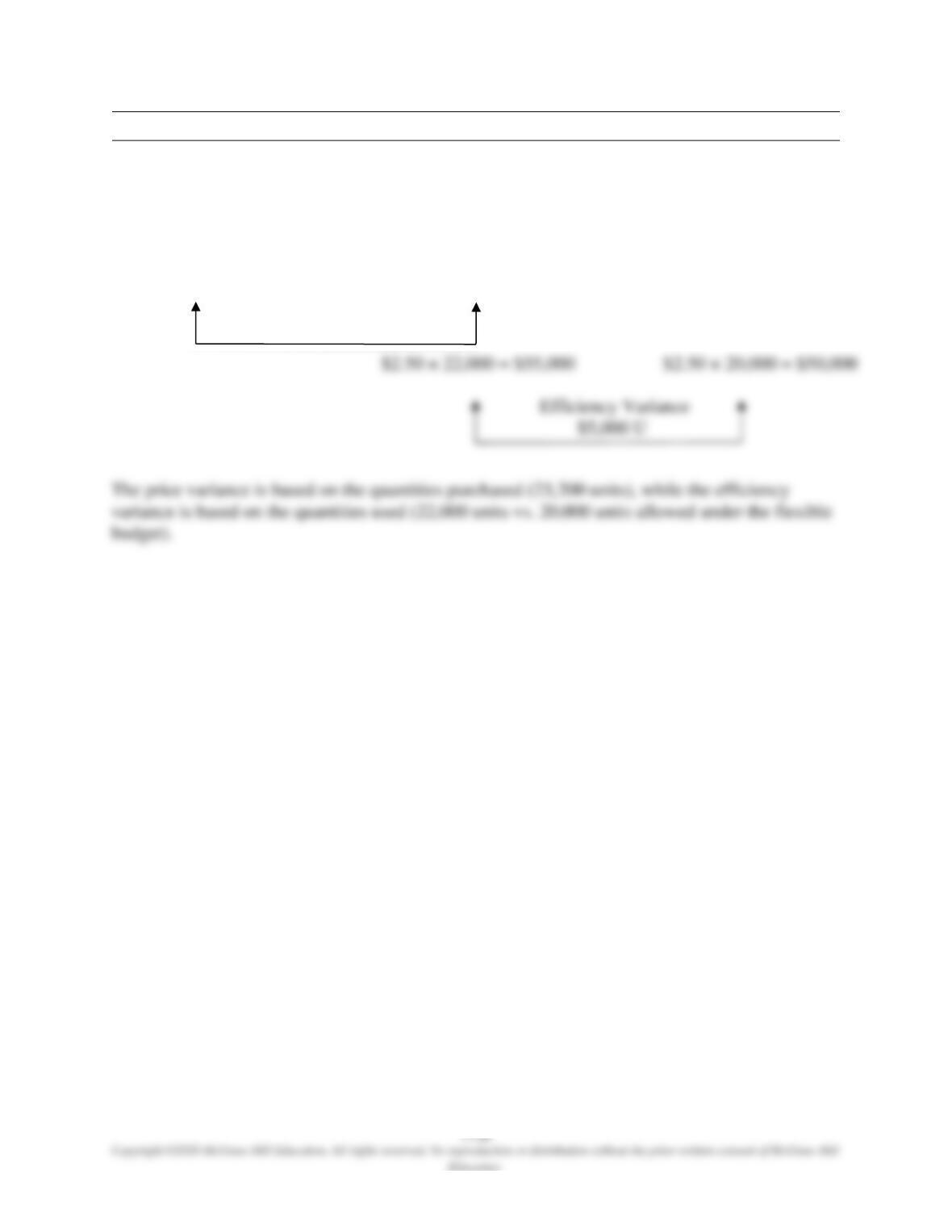
Actual materials purchased:
23,200 units @ $2.40 per unit
=
Actual materials used:
22,000 units @ $2.40 per unit
=
Demonstration Problem 3 – Solution
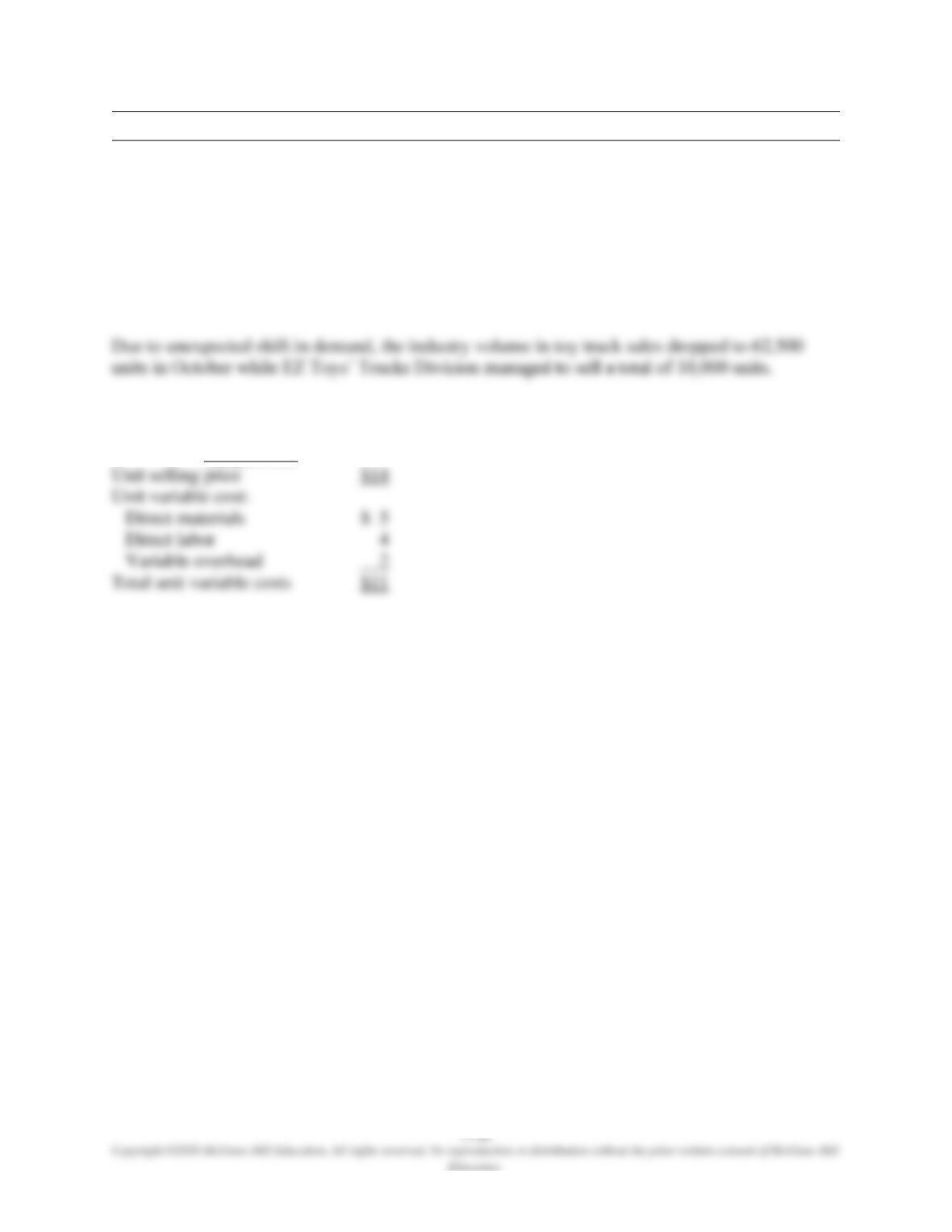
Actual Costs =
Actual Input Quantity
at Actual Input Price
$2.40 × 23,200 =
$55,680
Actual Input Quantity
at Standard Input Price
$2.50 × 23,200 =
$58,000
Flexible Production Budget =
Standard Input Quantity Allowed
for Actual Output
at Standard Input Price
Price Variance
$2,320 F
Demonstration Problem 4
(Continued from Demonstration Problem 1)
EZ Toys’ marketing manager estimated the sales of 12,000 trucks in October for the Trucks
Division based on an estimated industry volume of 80,000 trucks and on the Trucks Division’s
ability to maintain a market share of 15 percent in the past. That is,
80,000 trucks to be sold in the market × 15% of estimated market share = 12,000 trucks.
The following information is also available.
Budget Data
Unit selling price
Unit variable cost:
Direct materials
Direct labor
Variable overhead
Total unit variable costs
Required:
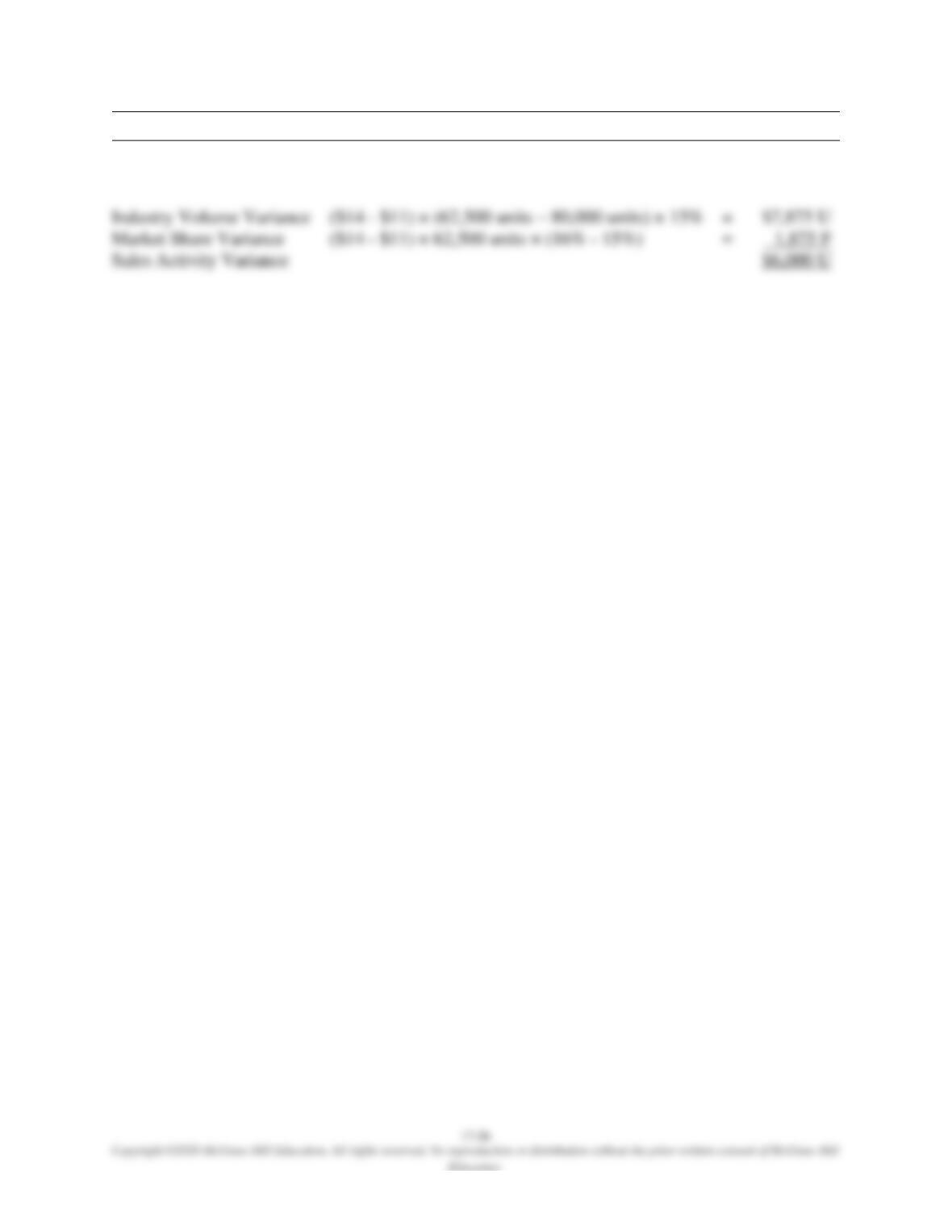
Prepare October’s industry volume and market share activity variances for the Trucks Division
of EZ Toys.
Demonstration Problem 4 – Solution
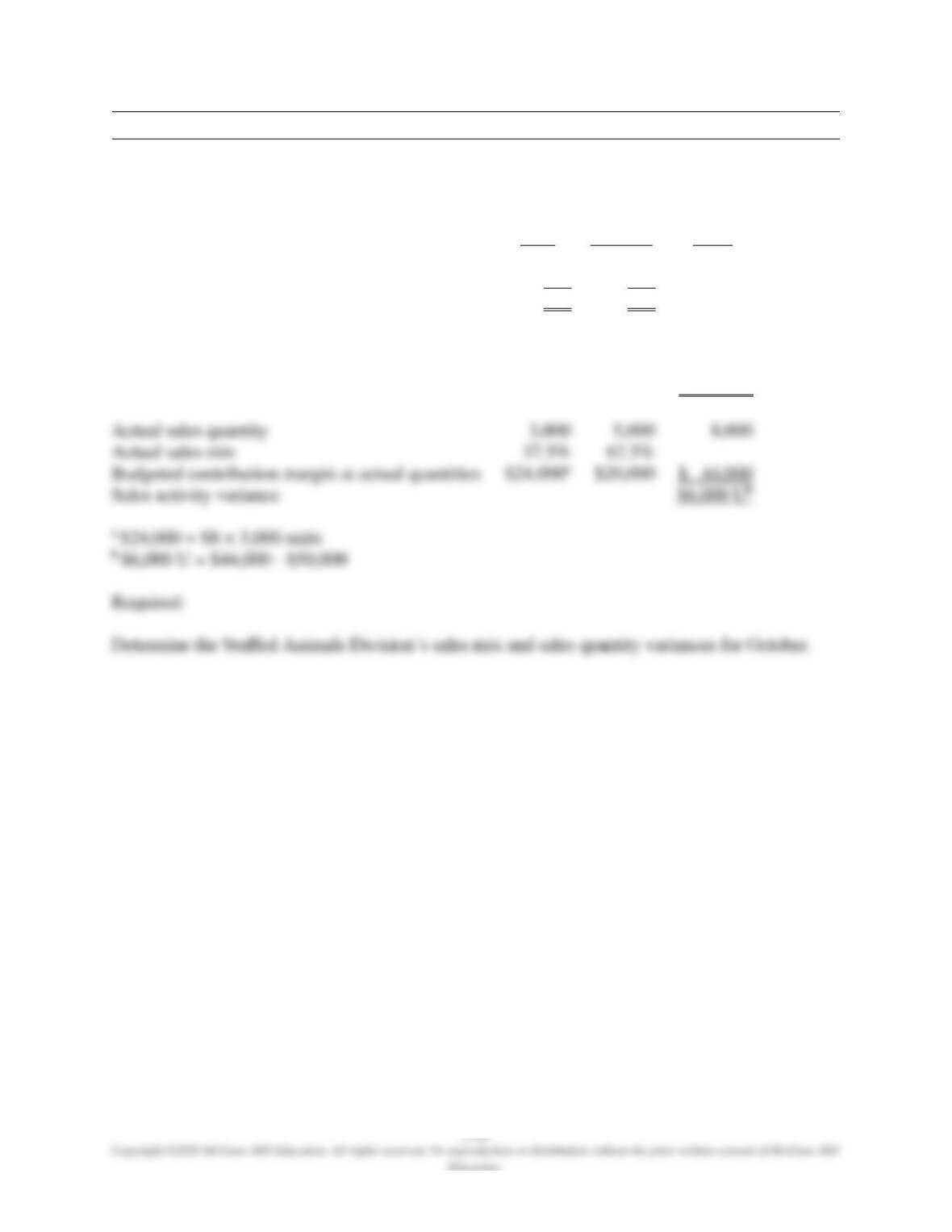
The Trucks Division’s actual market share for October was 16% (= 10,000 units ÷ 62,500 units).
Demonstration Problem 5
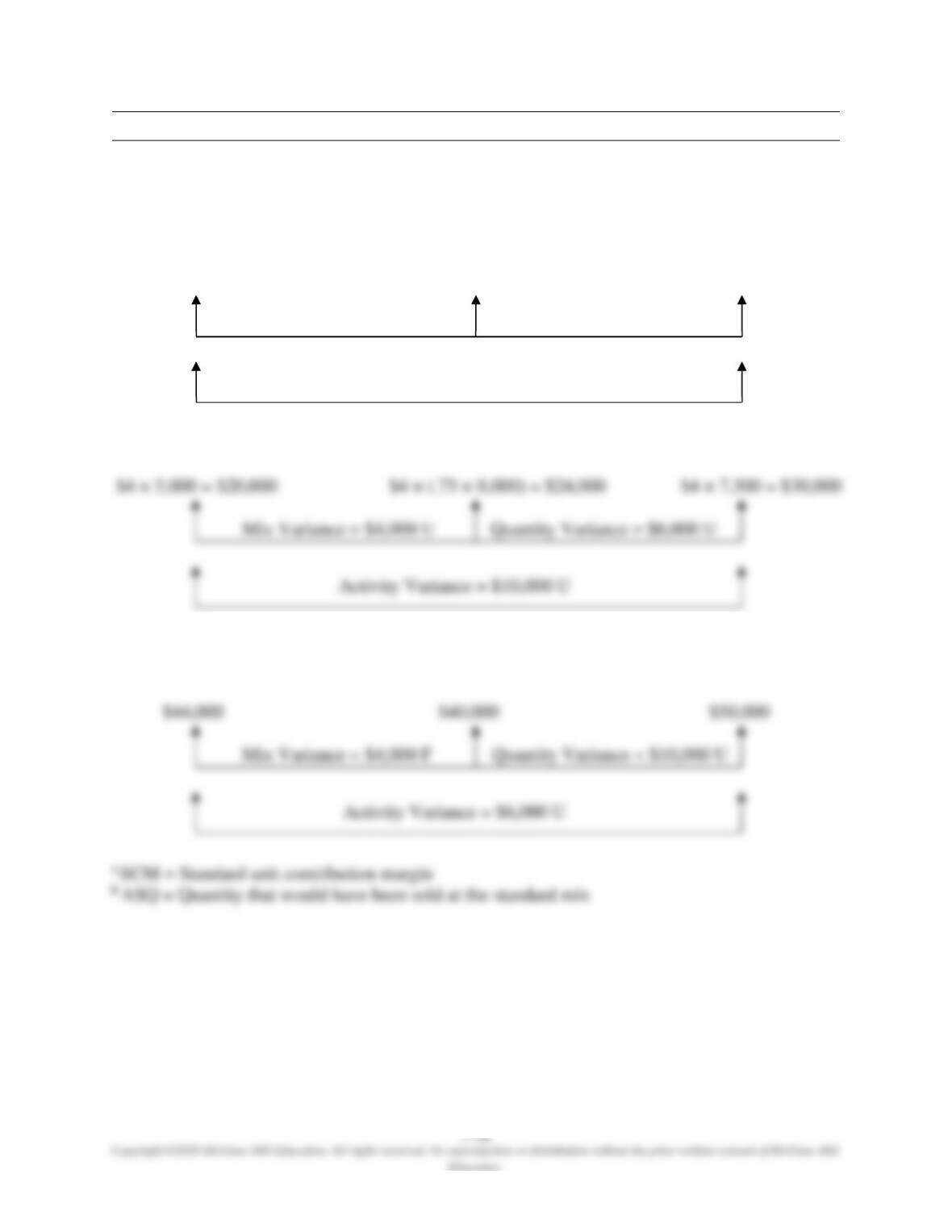
EZ Toys’ Stuffed Animals Division has two products: Bear and Monkey. Data on the two
products for October are as follows.
Bear
Monkey
Total
Standard selling price
$20
$12
Standard variable costs
12
8
Standard unit contribution margin
$ 8
$ 4
Budgeted sales quantity
2,500
7,500
10,000
Budgeted sales mix
25%
75%
Budgeted contribution margin
$20,000
$30,000
$ 50,000
Actual sales quantity
3,000
5,000
8,000
Actual sales mix
Budgeted contribution margin at actual quantities
$20,000
$ 44,000
Sales activity variance
Demonstration Problem 5 – Solution
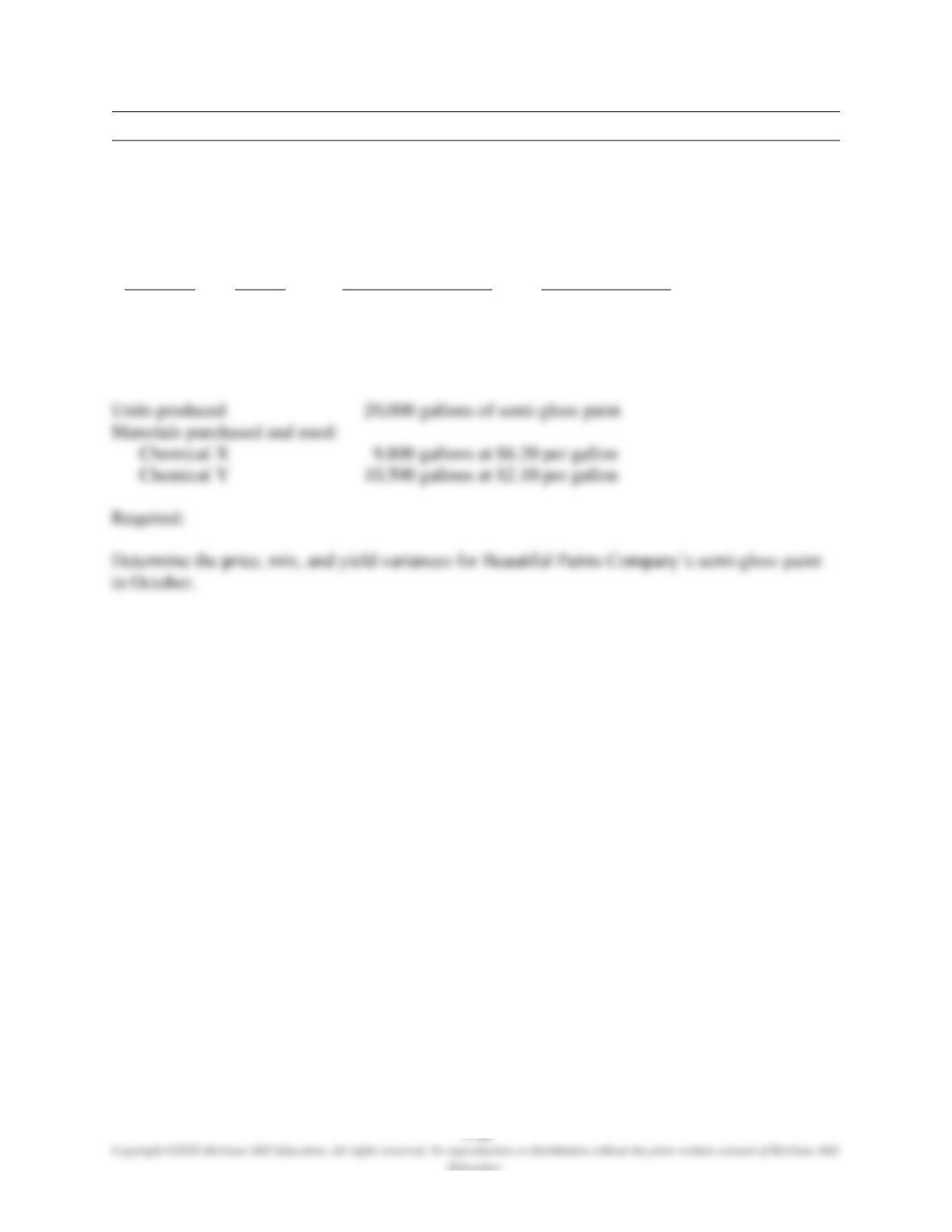
For Bear:
Flexible Budget
(SCMa × AQ)
(SCM x ASQb)
Master Budget
(SCM × SQ)
$8 × 3,000 = $24,000 $8 × (.25 × 8,000) = $16,000 $8 × 2,500 = $20,000
Mix Variance = $8,000 F Quantity Variance = $4,000 U
Activity Variance = $4,000 F
For Monkey:
$4 × 5,000 = $20,000 $4 × (.75 × 8,000) = $24,000 $4 × 7,500 = $30,000
For the Stuffed Animals Division as a whole:
$44,000 $40,000 $50,000
Demonstration Problem 6
Beautiful Paints Company makes different paints. Its semi-gloss paint product requires two
chemical ingredients, X and Y. The standard cost and quantity data follow.
Direct
Materials
Standard
Price per
Gallon
Standard Quantity (Gallon)
of Input per Gallon
of Semi-Gloss Paint
Standard Cost per
Gallon of
Semi-Gloss Paint
Chemical X
$8
0.5
$4
Chemical Y
2
0.5
1
During October, Beautiful Paints Company had the following results:
Units produced
20,000 gallons of semi-gloss paint
Materials purchased and used:
Chemical X
9,800 gallons at $8.20 per gallon
Chemical Y
10,500 gallons at $2.10 per gallon
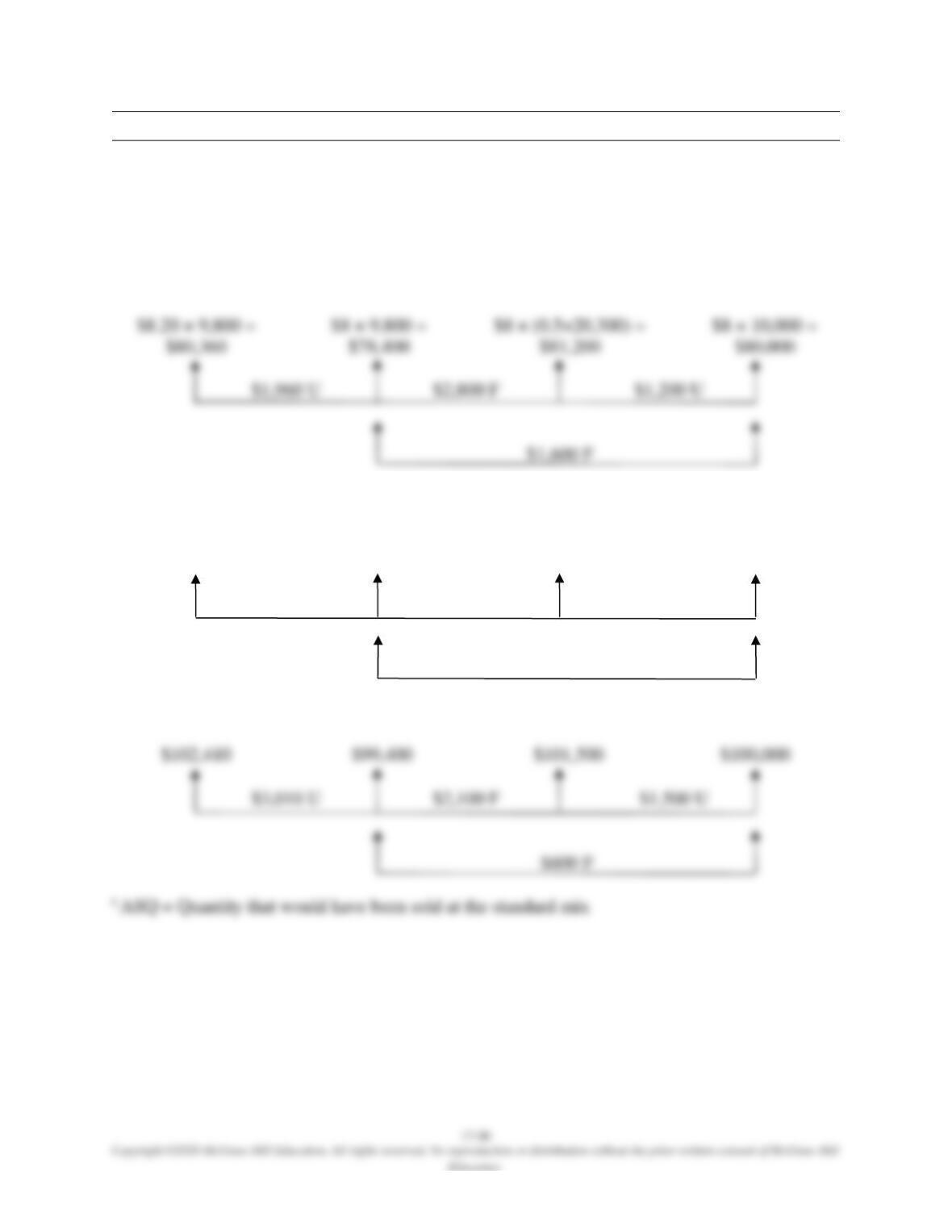
Demonstration Problem 6 – Solution
For Chemical X:
Actual
(AP × AQ)
(SP × AQ)
(SP × ASQa)
Flexible Budget
(SP × SQ)
Purchase Price Variance Mix Variance Yield Variance
$80,360
$78,400
$8 × (0.5×20,300) =
$81,200
$8 × 10,000 =
$80,000
$1,600 F
For Chemical Y:
$2.10 × 10,500 =
$22,050
$2 × 10,500 =
$21,000
$2 × (0.5×20,300) =
$20,300
$2 × 10,000 =
$20,000
$1,050 U $700 U $300 U
$1,000 U
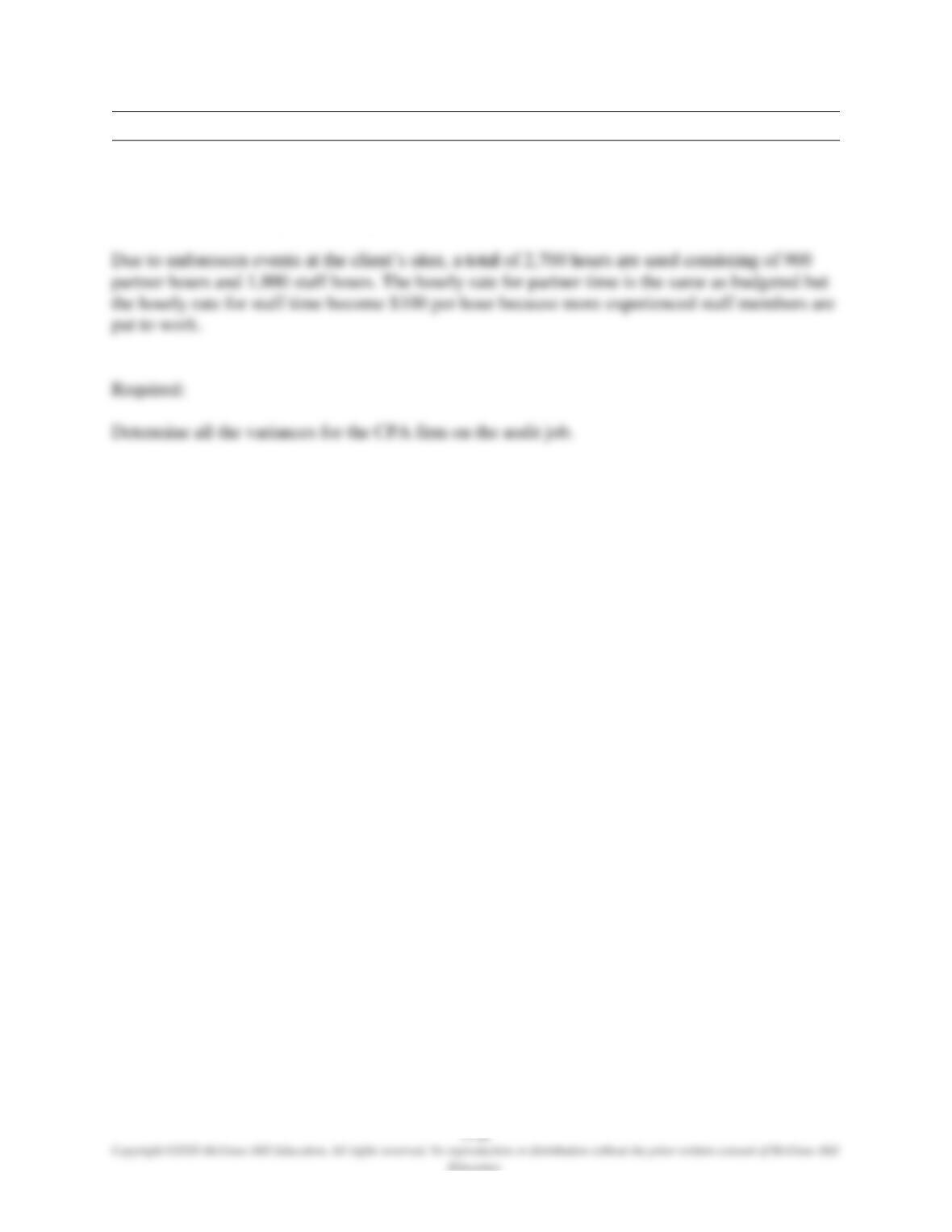
For the Semi-Gloss Paint:
$3,010 U $2,100 F $1,500 U
$600 F
Demonstration Problem 7
A CPA firm is to perform an audit job for a regular client. Based on past experiences working
with the client, 750 partner hours (at a cost of $200 per hour) and 2,250 staff hours (at a cost of
$75 per hour) are budgeted for the job.
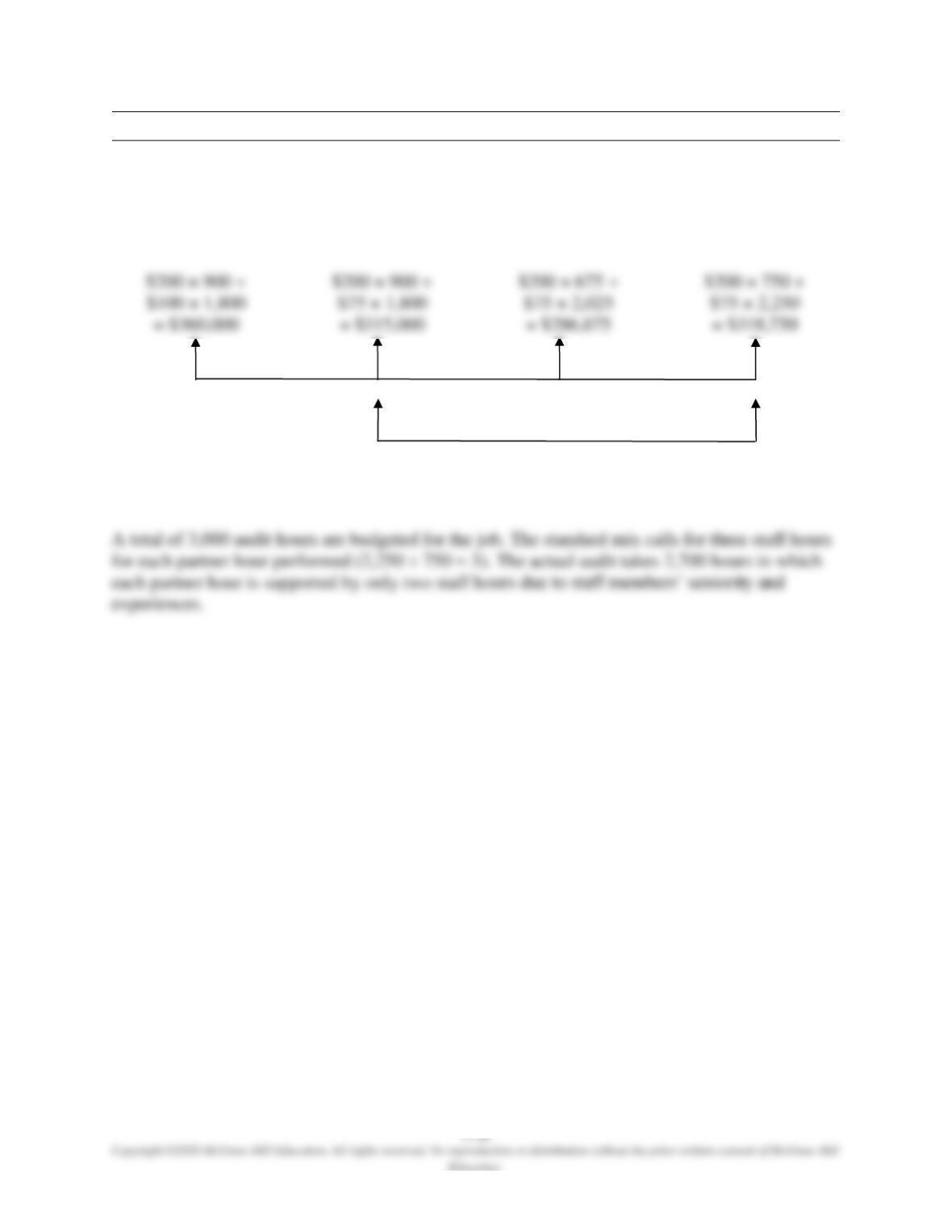
Demonstration Problem 7 – Solution
Actual
(AP × AQ)
(SP × AQ)
(SP × ASQa)
Flexible Budget
(SP × SQ)
Purchase Price Variance Mix Variance Yield Variance
$45,000 U $28,125 U $31,875 F
$3,750 F
a ASQ = Labor hours that would have been used at the standard mix.
2,700 × ¼ = 675; 2,700 × ¾ = 2,025