17-41
17-42
17-43
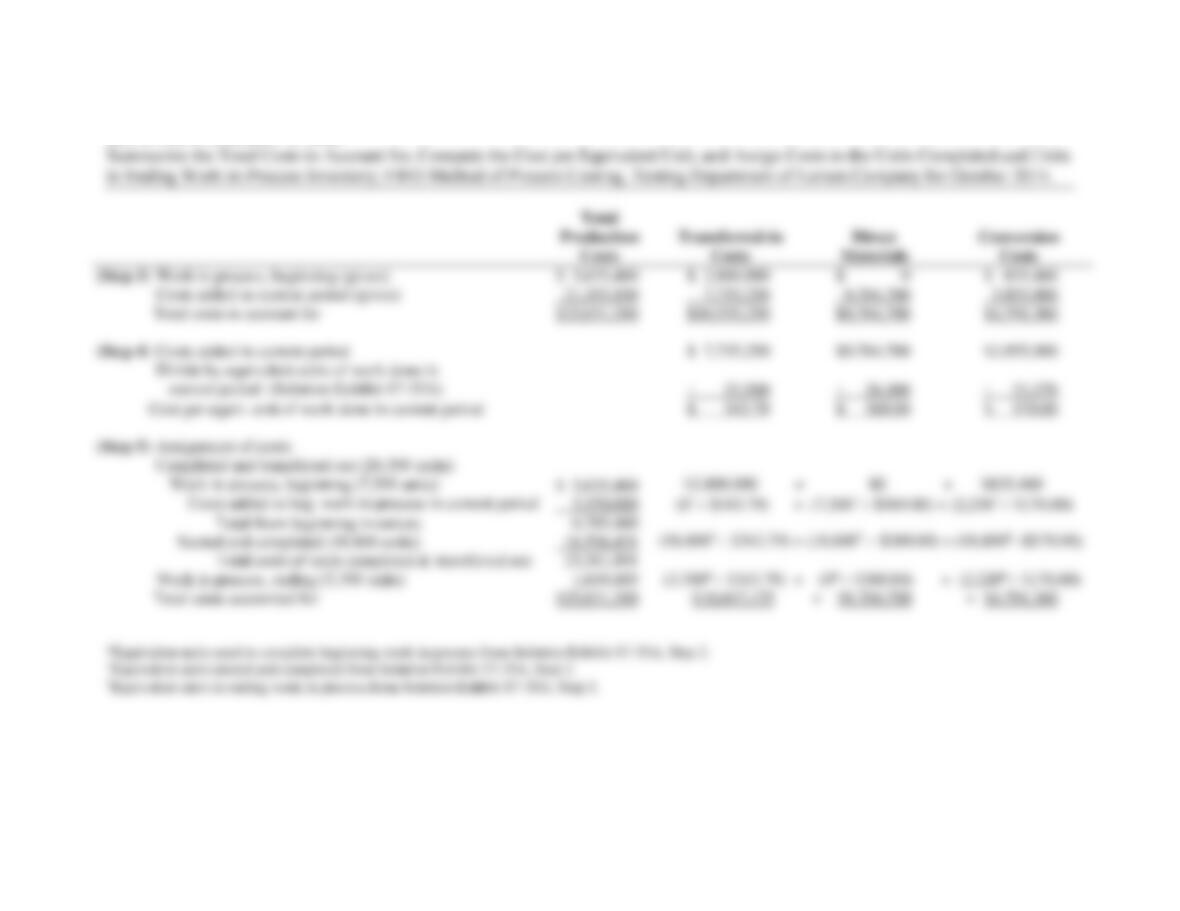
17-35 (30 min.) Transferred-in costs, FIFO method (continuation of 17-34).
Refer to the information in Problem 17-34. Suppose that Larsen Company uses the FIFO method
instead of the weighted-average method in all of its departments. The only changes to Problem
17-34 under the FIFO method are that total transferred-in costs of beginning work in process on
October 1 are $2,800,000 (instead of $2,932,500) and that total transferred-in costs added during
October are $7,735,250 (instead of $7,717,500).
Required:
Using the FIFO process-costing method, complete Problem 17-34.
SOLUTION
17-45
SOLUTION EXHIBIT 17-35A
17-46
SOLUTION EXHIBIT 17-35B
17-47
17-36 (25 min.) Weighted-average method.
McKnight Handcraft is a manufacturer of picture frames for large retailers. Every picture frame
passes through two departments: the assembly department and the finishing department. This
problem focuses on the assembly department. The process-costing system at McKnight has a
single direct-cost category (direct materials) and a single indirect-cost category (conversion
costs). Direct materials are added when the assembly department process is 10% complete.
Conversion costs are added evenly during the assembly department’s process.
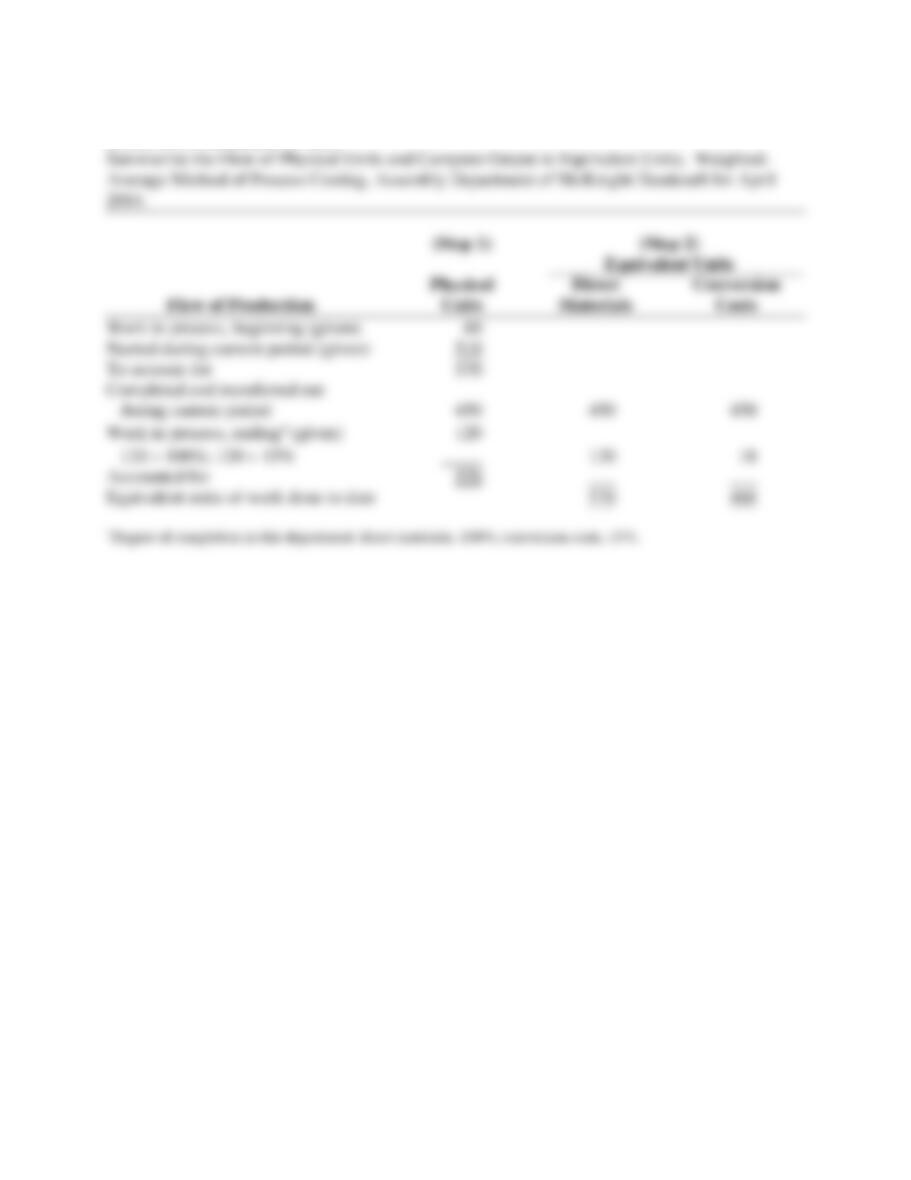
McKnight uses the weighted-average method of process costing. Consider the following data
for the assembly department in April 2014:
aDegree of completion: direct materials, 100%; conversion costs, 40%.
bDegree of completion: direct materials, 100%; conversion costs, 15%.
Required:
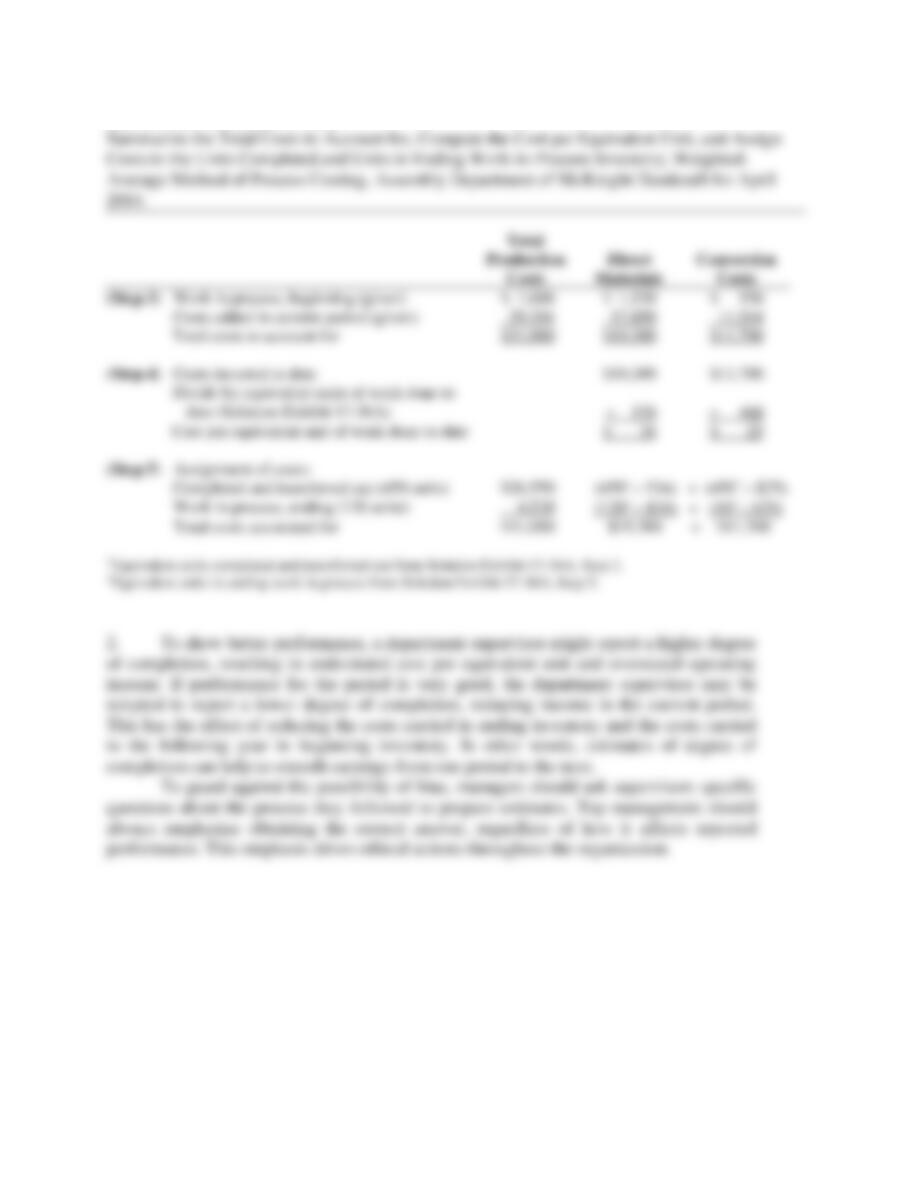
1. Summarize the total assembly department costs for April 2014, and assign them to units
completed (and transferred out) and to units in ending work in process.
2. What issues should a manager focus on when reviewing the equivalent units calculation?
SOLUTION
17-48
SOLUTION EXHIBIT 17-36A
17-49
SOLUTION EXHIBIT 17-36B
17-50
17-37 (20 min.) FIFO method (continuation of 17-36).
Required:
1. Complete Problem 17-36 using the FIFO method of process costing.
2. If you did Problem 17-36, explain any difference between the cost of work completed and
transferred out and the cost of ending work in process in the assembly department under the
weighted-average method and the FIFO method. Should McKnight’s managers choose the
weighted-average method or the FIFO method? Explain briefly.
SOLUTION
17-51
SOLUTION EXHIBIT 17-37A
17-52
SOLUTION EXHIBIT 17-37B
17-53
17-38 (30 min.) Transferred-in costs, weighted average.
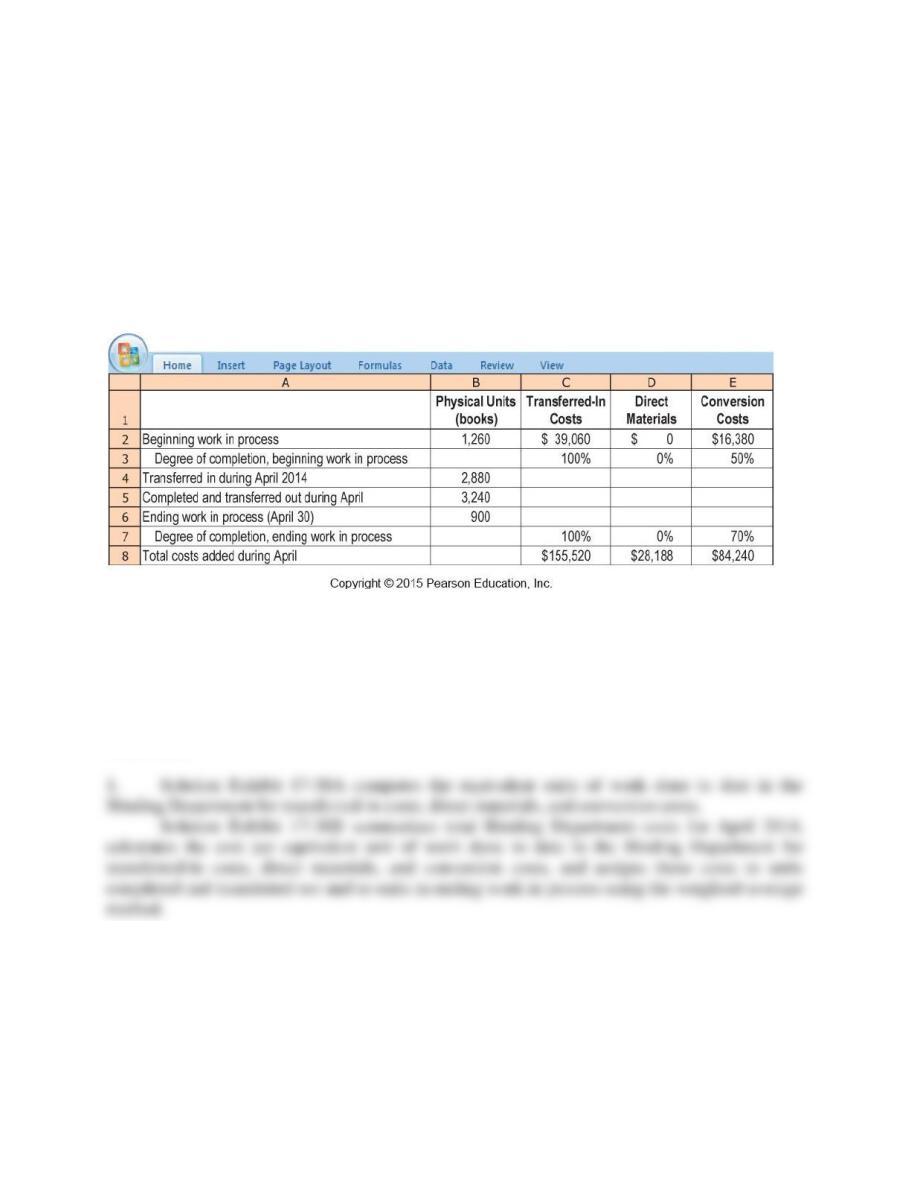
Publishers, Inc., has two departments: printing and binding. Each department has one direct-cost
category (direct materials) and one indirect-cost category (conversion costs). This problem
focuses on the binding department. Books that have undergone the printing process are
immediately transferred to the binding department. Direct material is added when the binding
process is 70% complete. Conversion costs are added evenly during binding operations. When
those operations are done, the books are immediately transferred to Finished Goods. Publishers,
Inc., uses the weighted-average method of process costing. The following is a summary of the
April 2014 operations of the binding department.
Required:
1. Summarize total binding department costs for April 2014, and assign these costs to units
completed (and transferred out) and to units in ending work in process.
2. Prepare journal entries for April transfers from the printing department to the binding
department and from the binding department to Finished Goods.
SOLUTION
17-54
SOLUTION EXHIBIT 17-38A
17-55
SOLUTION EXHIBIT 17-38B
17-56
17-39 (30 min.) Transferred-in costs, FIFO method (continuation of 17-38).
Refer to the information in Problem 17-38. Suppose that Publishers, Inc., uses the FIFO method
instead of the weighted-average method in all of its departments. The only changes to Problem
17-38 under the FIFO method are that total transferred-in costs of beginning work in process on
April 1 are $44,100 (instead of $39,060) and that total transferred-in costs added during April are
$149,760 (instead of $155,520).
Required:
1. Using the FIFO process-costing method, complete Problem 17-38.
2. If you did Problem 17-38, explain any difference between the cost of work completed and
transferred out and the cost of ending work in process in the binding department under the
weighted-average method and the FIFO method.
SOLUTION