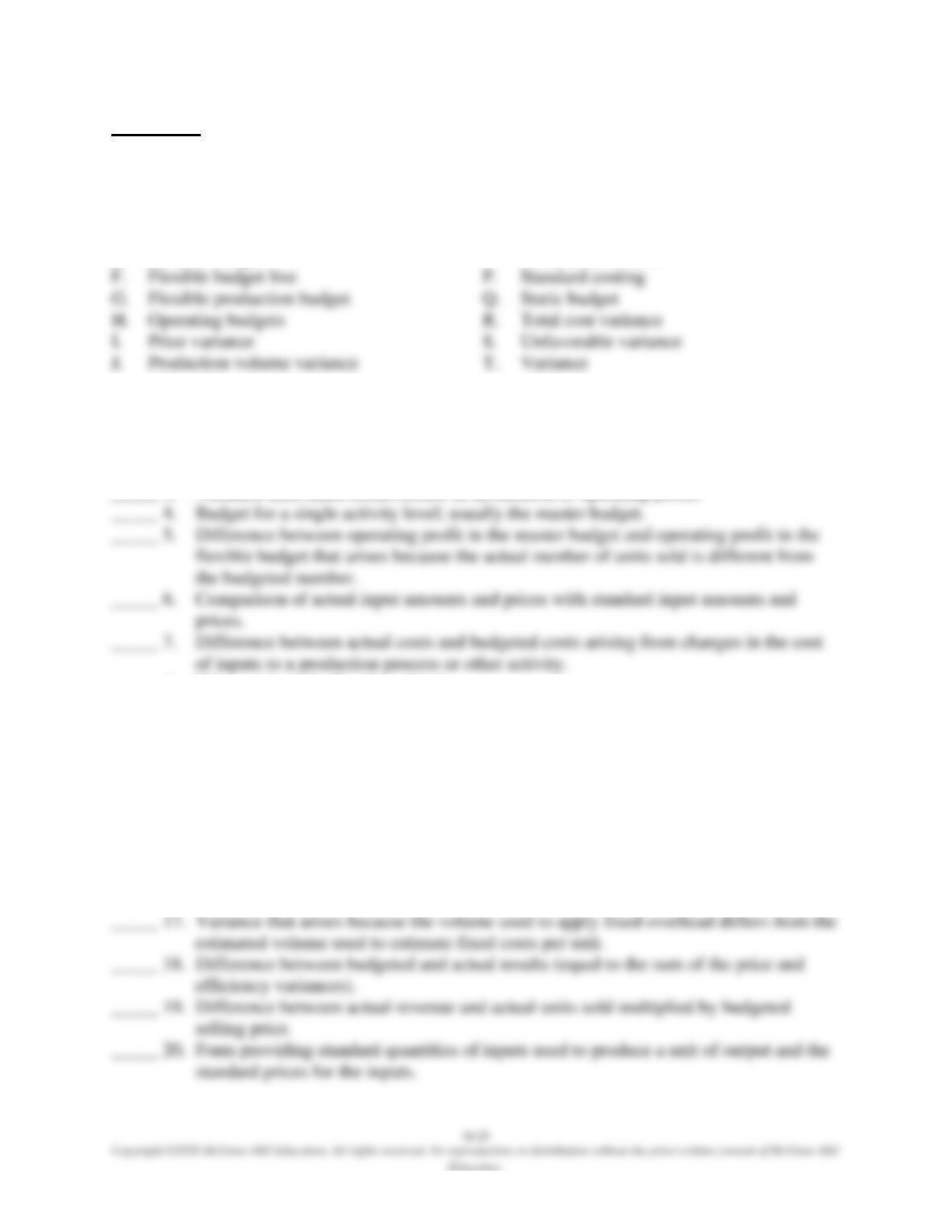
Matching
A.
Cost variance analysis
K.
Profit variance analysis
B.
Efficiency variance
L.
Sales activity variance
C.
Favorable variance
M.
Sales price variance
D.
Financial budgets
N.
Spending (or budget) variance
E.
Flexible budget
O.
Standard cost sheet
Flexible budget line
Standard costing
G.
Flexible production budget
Q.
Static budget
H.
Operating budgets
R.
Total cost variance
Price variance
Unfavorable variance
J.
Production volume variance
T.
Variance
_____ 1. Budgeted income statement, production budget, budgeted cost of goods sold, and
supporting budgets.
_____ 2. Budgets of financial resources—for example, the cash budget and the budgeted
balance sheet.
_____ 8. Price variance for fixed overhead.
_____ 9. Difference between planned result and actual outcome.
_____ 10. Budget that indicates revenues, costs, and profits for different levels of activity.
_____ 11. Accounting method that assigns costs to cost objects at predetermined amounts.
_____ 12. Difference between budgeted and actual results arising from differences between the
inputs that were budgeted per unit of output and the inputs actually used.
_____ 13. Expected monthly costs at different output levels.
_____ 14. Analysis of the causes of differences between budgeted profits and the actual profits
earned.
_____ 15. Standard input price times standard quantity of input allowed for actual good output.
_____ 16. Variance that, taken alone, reduces operating profit.
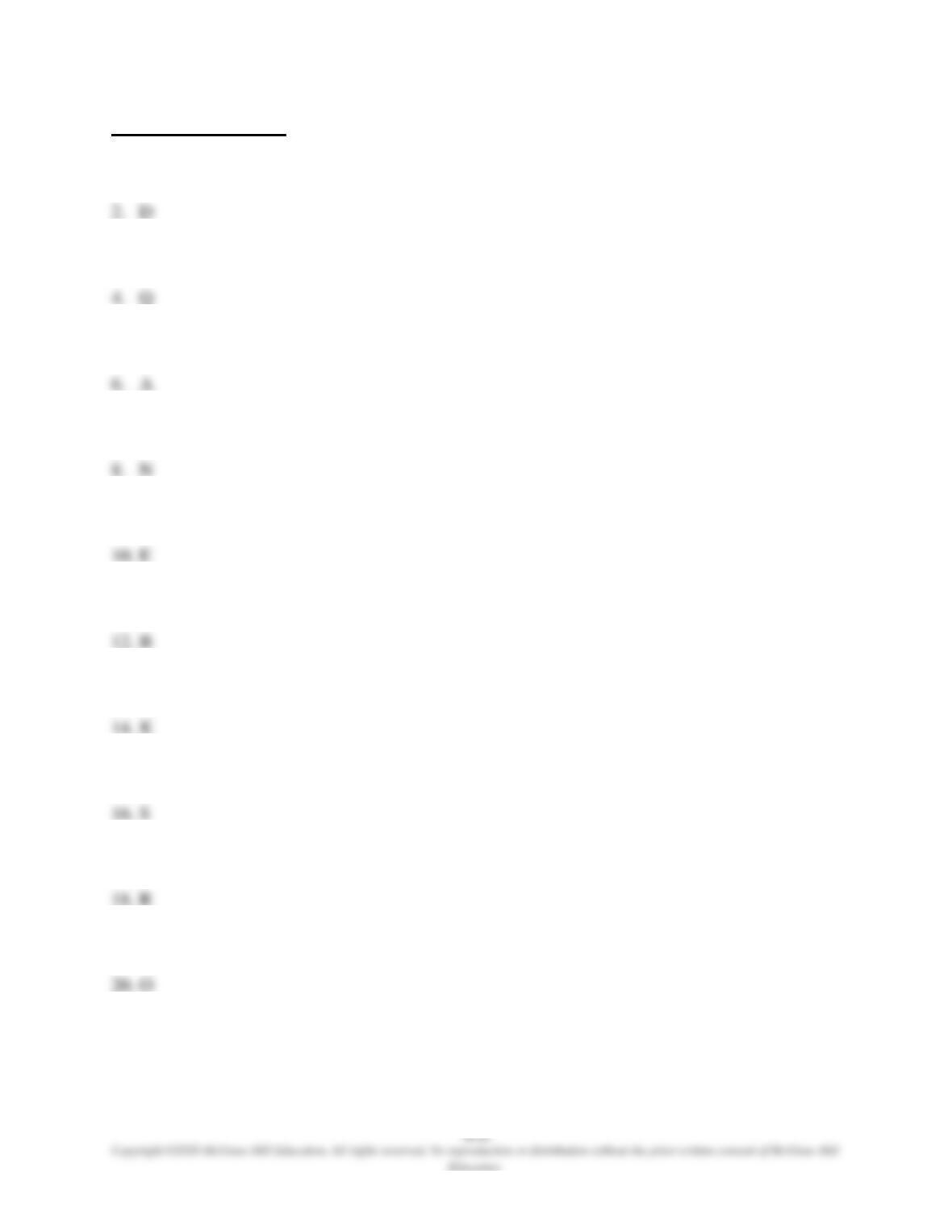
Matching Answers
1. H
3. C
5. L
7. I
9. T
11. P
13. F
15. G
17. J
19. M
Multiple Choice
1. Which of the following statements is not correct?
a. Unfavorable variance occurs when actual costs are lower than budgeted costs.
b. The labels “favorable” and “unfavorable” should not be considered as evaluations of
performance without additional investigation.
c. An important part of variance analysis is to understand what might cause a difference
between actual and budgeted results.
d. Variance = Actual result − Budgeted performance.
2. With a planned volume of 15,000 units, the master budget includes variable costs of
$450,000 and fixed costs of $350,000. If the actual volume is 12,000 units, what is the
amount of the total costs in the flexible budget?
a. $490,000
b. $560,000
c. $650,000
d. $710,000
3. Which of the following is correct regarding sales activity variance?
4. Which of the following statements is correct?
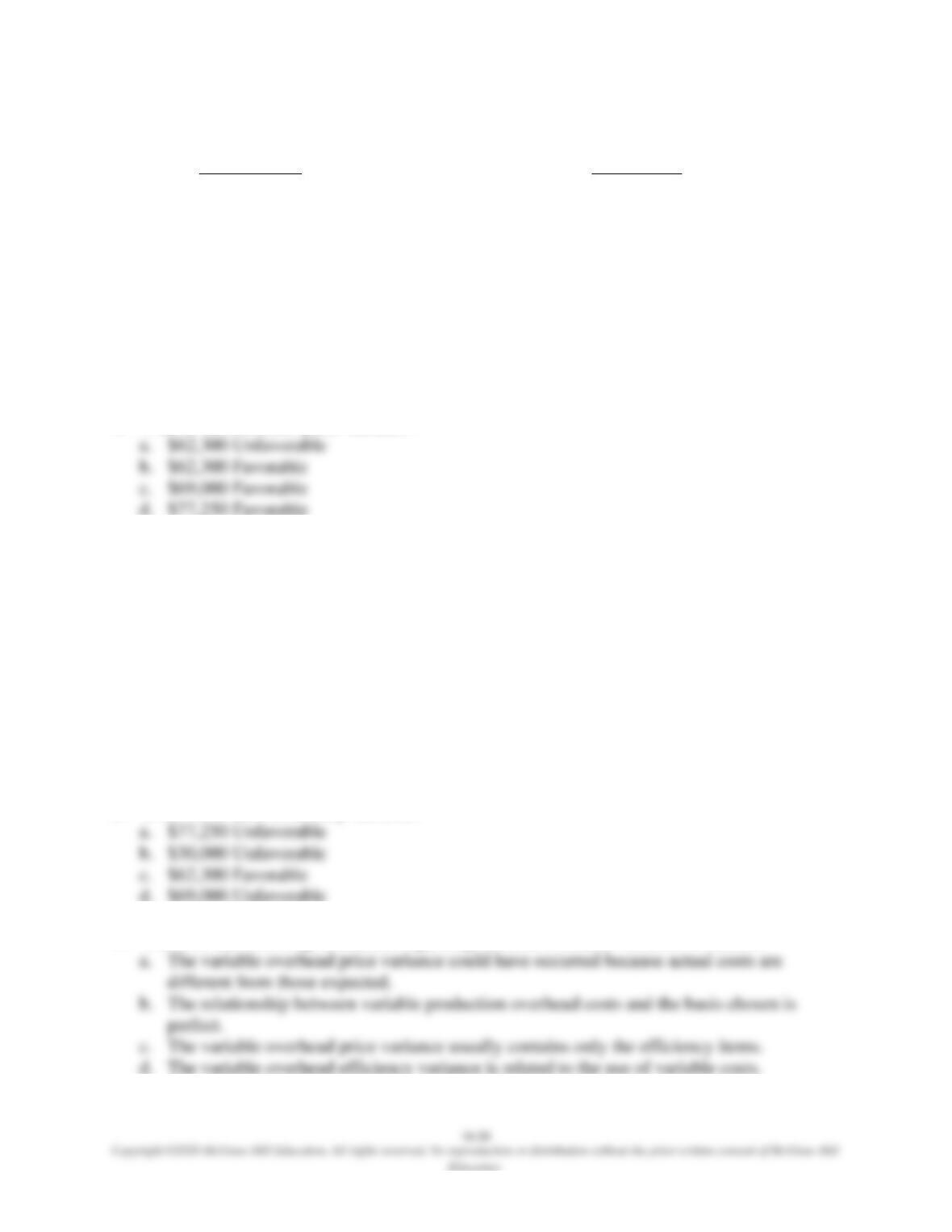
Use the following information to answer questions 5 through 8:
Actual results
Budget data
20,000 units produced and sold
19,000 units planned
Direct materials: 62,300 units of
input purchased and used @
$29 per input unit
$1,806,700
Direct materials: 3 units of input
allowed per output unit @ $30
per input unit
$90
Direct labor: 51,500 hours used
per output unit @ $21.50 per
hour
1,107,250
Direct labor: 2.5 hours of input
allowed per output unit @ $20
per hour
50
5. What is the materials price variance?
6. What is the materials total cost variance?
a. $7,500 Unfavorable
b. $11,250 Unfavorable
c. $7,500 Favorable
d. $6,700 Unfavorable
7. What is the labor price variance?
a. $77,250 Unfavorable
b. $30,000 Unfavorable
c. $62,300 Favorable
d. $69,000 Unfavorable
8. What is the labor efficiency variance?
9. Which of the following statements regarding variable overhead variances is correct?
10. Which of the following statements regarding fixed overhead is correct?
a. Production volume variance is the difference between the actual and applied fixed
overhead.
b. When the income statement is prepared using variable costing, there is no absorption of
the fixed costs by units of production.
c. Production volume variance applies only to fixed costs.
d. Both b and c are correct.
11. A company purchased and used 10,000 pounds of materials while incurring $2,000
unfavorable price variance. The standard cost for materials is $4.80 per pound. What was the
actual price of materials per pound?
12. Which of the following statements regarding standard costing system is incorrect?
Multiple Choice Answers
2. d (LO2)
3. c (LO3)
5. b (LO5)
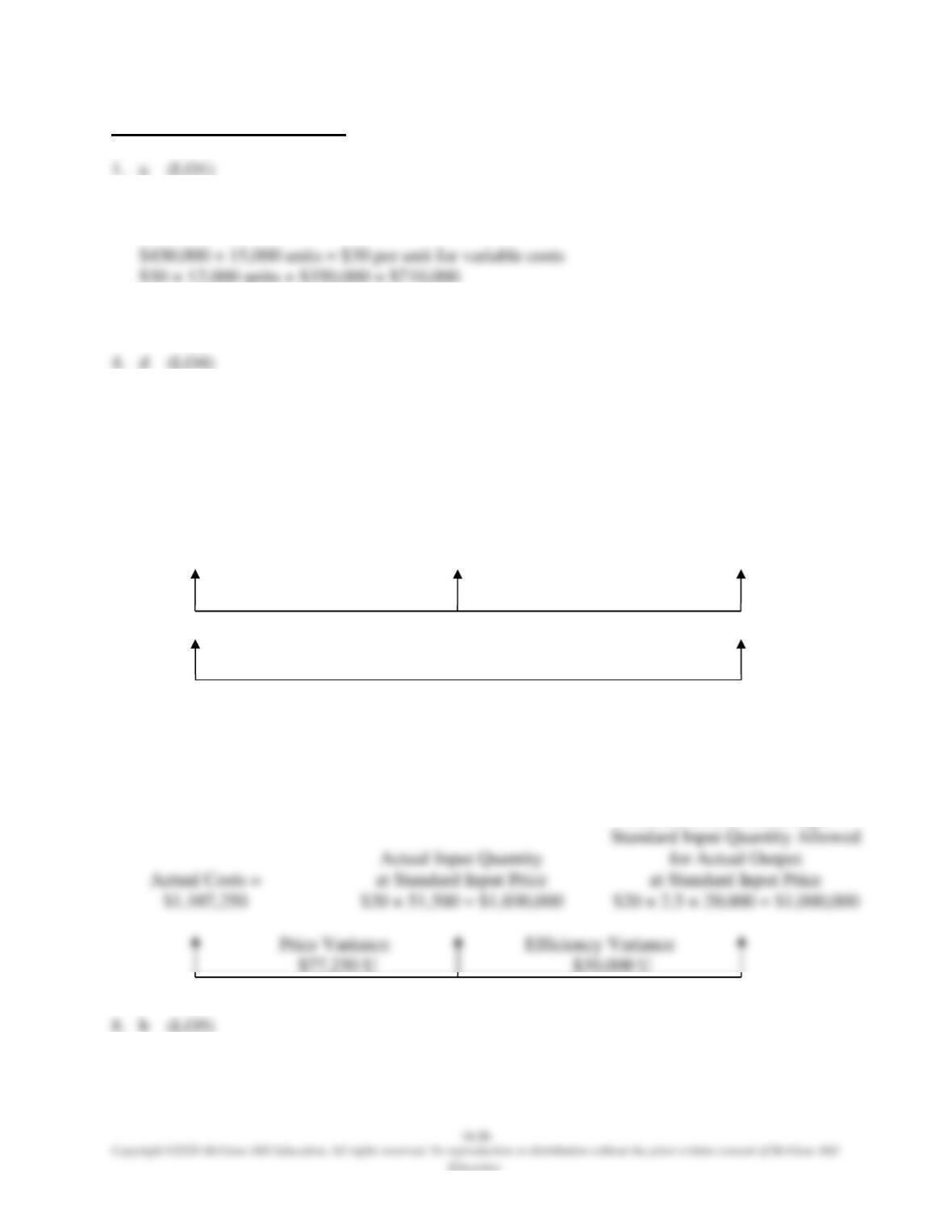
Actual Costs =
$1,806,700
Actual Input Quantity
at Standard Input Price
$30 × 62,300 = $1,869,000
Flexible Production Budget =
Standard Input Quantity Allowed
for Actual Output
at Standard Input Price
$30 × 3 × 20,000 = $1,800,000
Price Variance Efficiency Variance
$62,300 F $69,000 U
Total cost variance
$6,700 U
6. d (LO5)
7. a (LO5)
Flexible Production Budget =
9. a (LO5)
10. d (LO6)
11. a (LO5)
Demonstration Problem 1
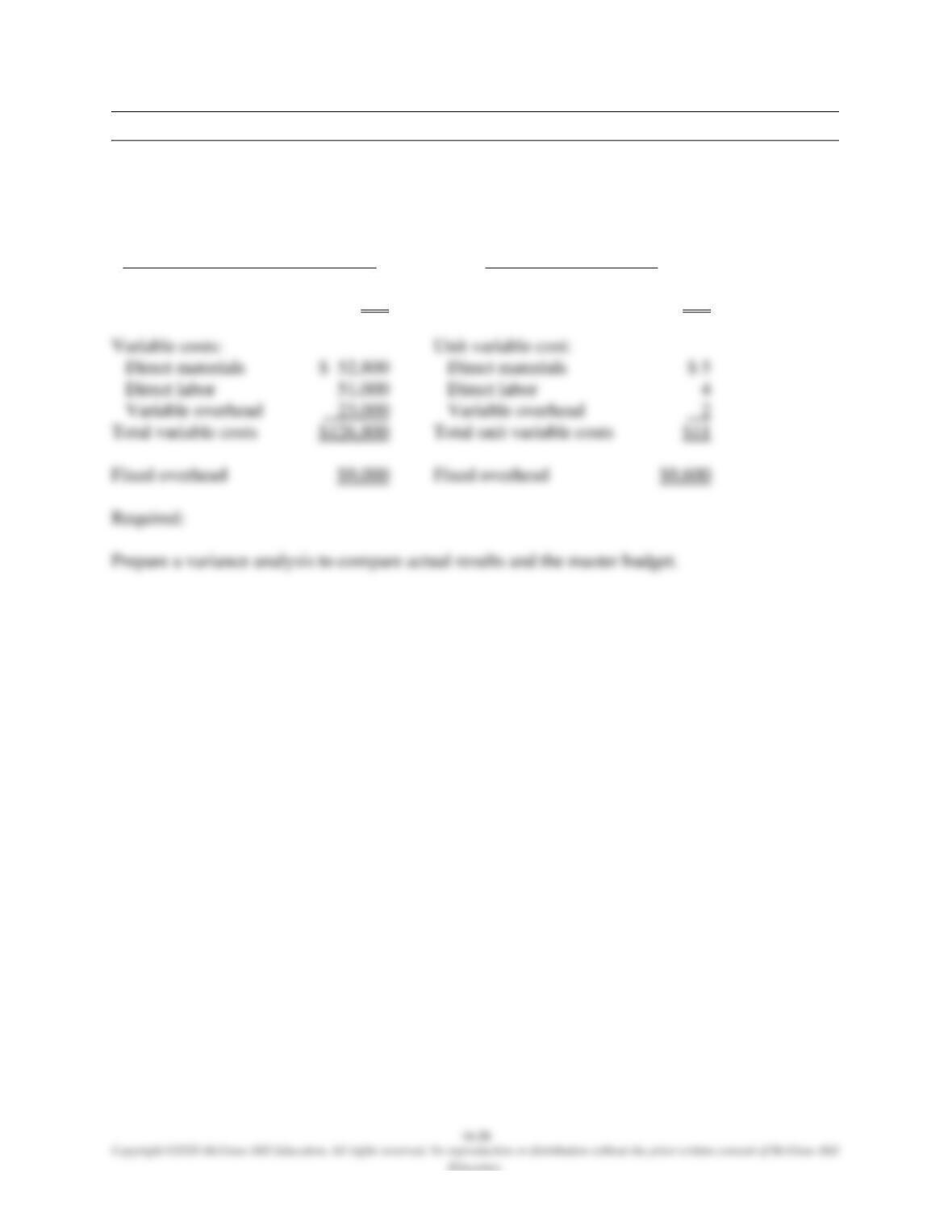
The accountant at EZ Toys, Inc. is analyzing the production and cost data for its Trucks Division.
For October, the actual results and the master budget data are presented below.
Actual Results:
Budget Data:
10,000 Trucks Produced and Sold
12,000 Trucks Planned
Unit selling price
$15
Unit selling price
$14
Variable costs:
Unit variable cost:
Direct materials
Direct materials
Direct labor
Direct labor
Variable overhead
Variable overhead
Total variable costs
Total unit variable costs
$11
Fixed overhead
Fixed overhead
Demonstration Problem 1 – Solution
(1)
Actual
(3) = (1) − (2)
Variance
(2)
Master Budget
Units
10,000
2,000 U
12,000
Sales revenue
$150,000
$18,000 U
$168,000a
Variable costs
Direct materials
52,800
7,200 F
60,000b
Direct labor
51,000
3,000 U
48,000c
Variable overhead
23,000
1,000 F
24,000d
Total variable costs
126,800
5,200 F
132,000
Contribution margin
23,200
12,800 U
36,000
Fixed overhead
9,000
600 F
Operating profit
$ 14,200
$12,200 U

Demonstration Problem 2 – Solution
(Continued from Demonstration Problem 1)
Required:
Prepare a profit variance analysis.
Demonstration Problem 2 – Solution
Actual
(Based on
Actual
Activity
of 10,000
Units
Sold)
Manufacturing
Variances
Sales
Price
Variance
Flexible
Budget
(Based on
Actual
Activity of
10,000
Units Sold)
Sales
Activity
Variance
Master
Budget
(Based
on 12,000
Units
Planned)
Sales revenue
$150,000
$10,000 F
$140,000a
$28,000 U
$168,000
Variable costs
Direct
materials
52,800
$ 2,800 U
50,000b
10,000 F
60,000
Direct labor
51,000
11,000 U
40,000c
8,000 F
48,000
Variable
overhead
23,000
3,000 U
20,000d
4,000 F
24,000
Total variable
costs
126,800
132,000
Contribution
margin
23,200
6,000 U
36,000
Fixed
overhead
9,000
600 F
$ 14,200
$16,200 U
$10,000 F
F = Favorable variance
U = Unfavorable variance
Demonstration Problem 3
(Continued from Demonstration Problem 1)
Information about the use of direct materials at EZ Toys’ Trucks Division for October follows:
There was no beginning inventory on October 1.
Required:
Prepare the Truck Division’s direct materials variances for October.
Demonstration Problem 3 – Solution
Actual Costs =
Actual Input Quantity
at Actual Input Price
Actual Input Quantity
at Standard Input Price
Flexible Production Budget =
Standard Input Quantity Allowed
for Actual Output
at Standard Input Price
Demonstration Problem 4
(Continued from Demonstration Problem 1)
Information about the use of direct labor at EZ Toys’ Trucks Division for October follows:
Standard costs:
0.4 hour per truck @ $10 per hour
=
$4 per truck
Trucks produced in October
=
10,000
Actual direct labor costs:
Actual hours worked
=
Total actual labor cost
=
Average cost per hour
=
$10.20
Demonstration Problem 4 – Solution
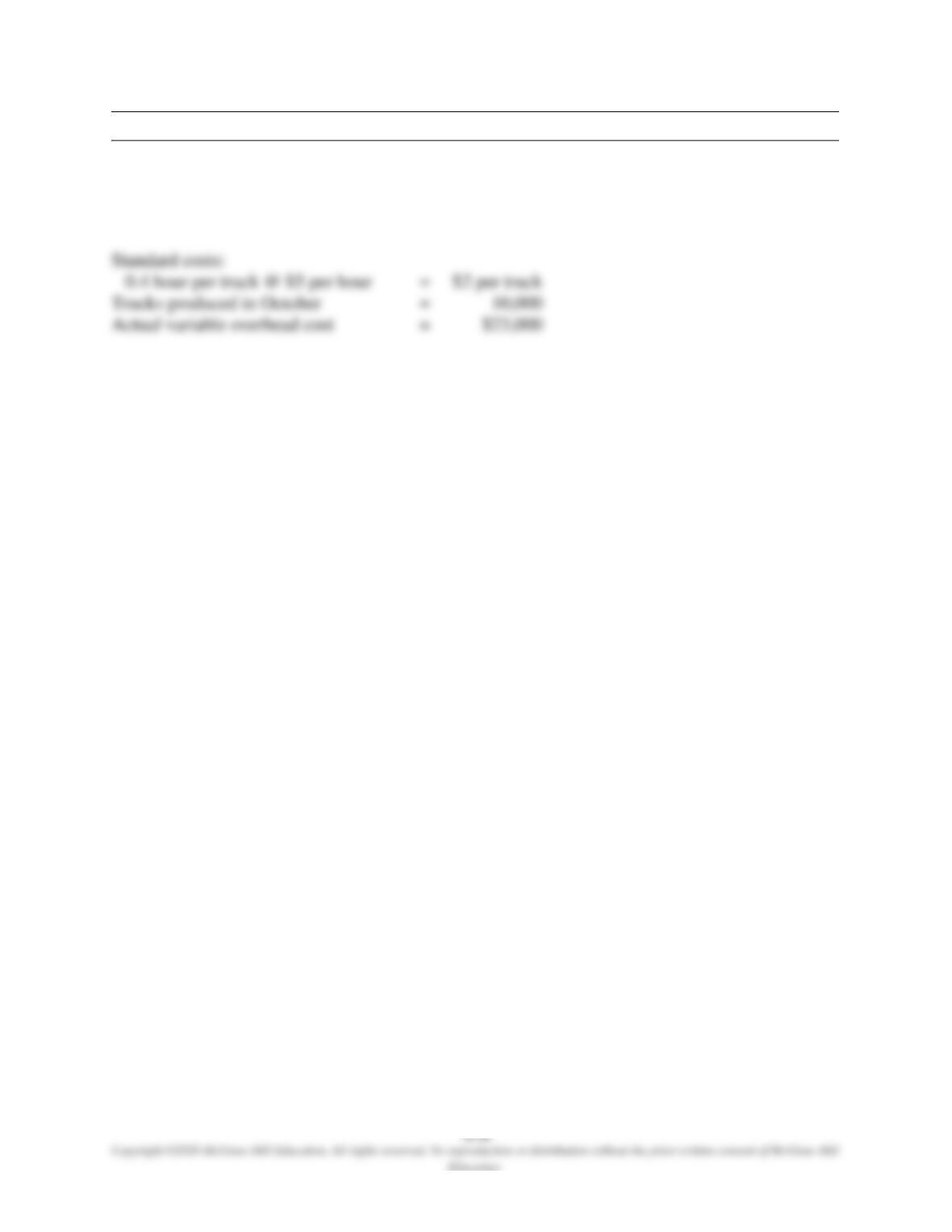
Actual Costs =
Actual Input Quantity
at Actual Input Price
$10.20 × 5,000 = $51,000
Actual Input Quantity
at Standard Input Price
$10 × 5,000 = $50,000
Flexible Production Budget =
Standard Input Quantity Allowed
for Actual Output
at Standard Input Price
$10 × 4,000 = $40,000
Demonstration Problem 5
(Continued from Demonstration Problem 1)
Information about the use of variable overhead at EZ Toys’ Trucks Division for October follows:
Required:
Prepare the Truck Division’s variable overhead variances for October.
Demonstration Problem 5 – Solution
Actual Costs =
Sum of Actual Variable
Overhead Costs
$23,000
Actual Input Quantity
at Standard Input Price
$5 × 5,000 = $25,000
Flexible Production Budget =
Standard Input Quantity Allowed
for Actual Output
at Standard Input Price
$5 × 4,000 = $20,000
Demonstration Problem 6
(Continued from Demonstration Problem 1)
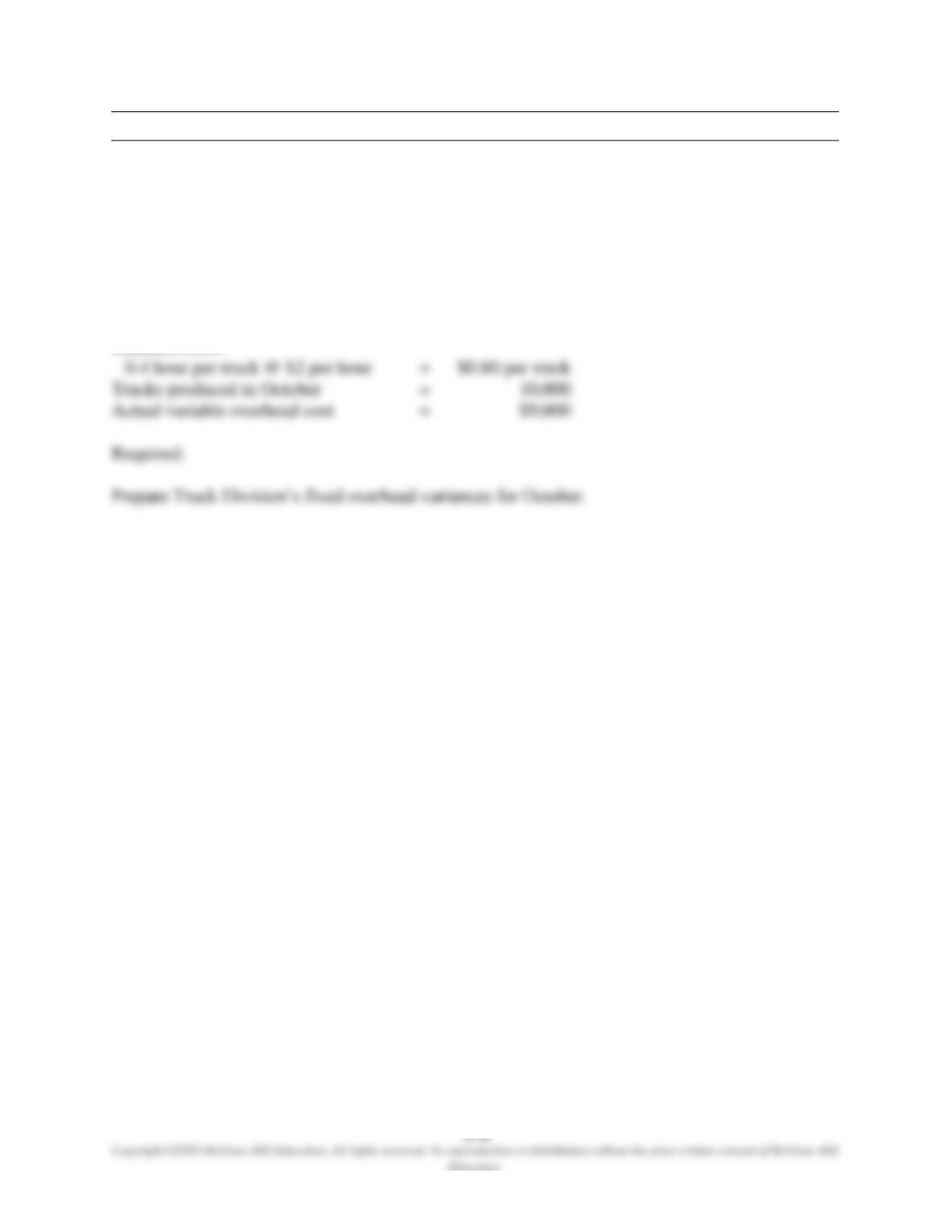
Information about the use of fixed overhead at EZ Toys’ Trucks Division follows:
Annual budget data:
Fixed overhead
=
$115,200
Direct labor hours
=
57,600
Standard fixed overhead rate
=
$2 per hour
Standard costs:
0.4 hour per truck @ $2 per hour
=
Trucks produced in October
=
10,000
Actual variable overhead cost
=
$9,000
Demonstration Problem 6 – Solution
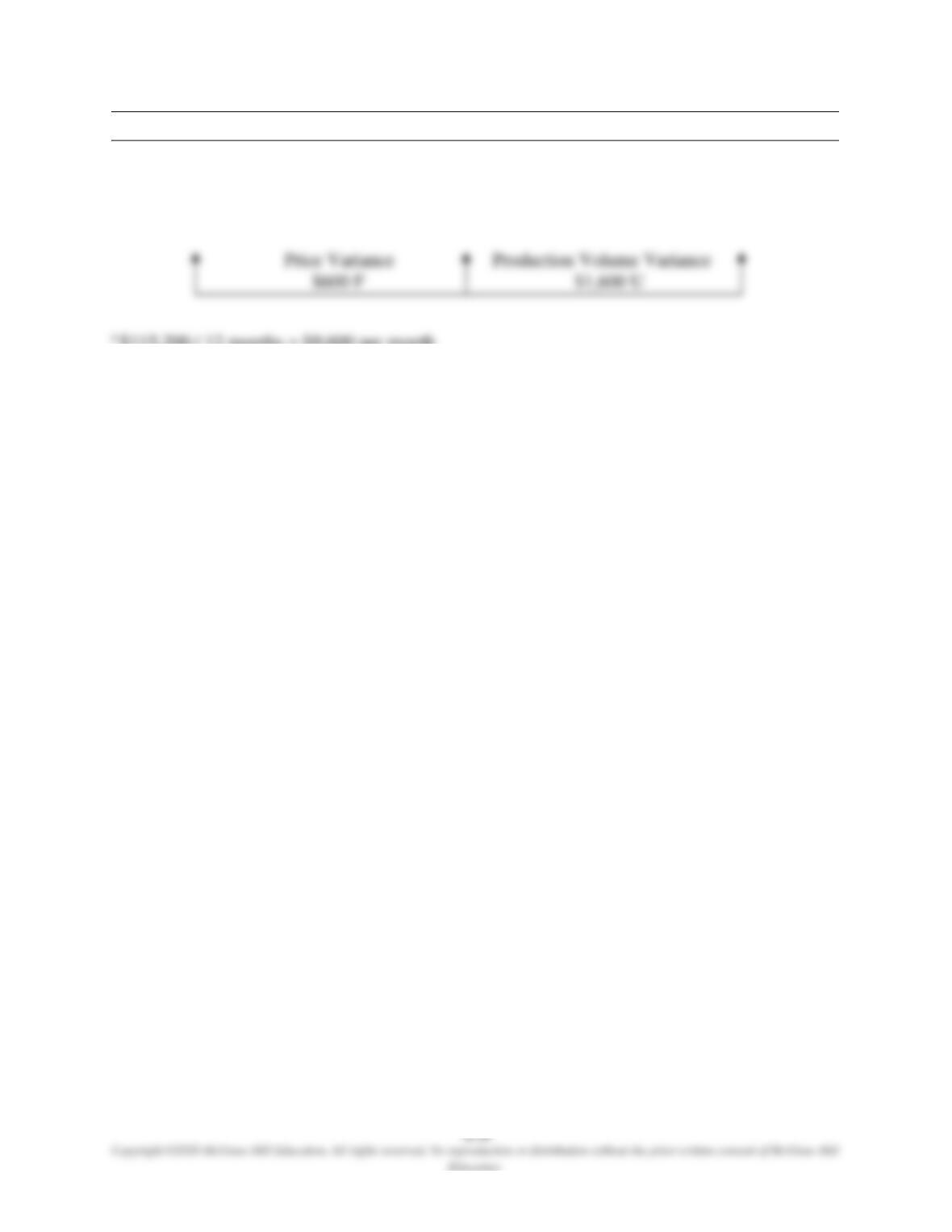
Actual costs
$9,000
Budget a
$9,600
Applied
$2 × 4,000 = $8,000