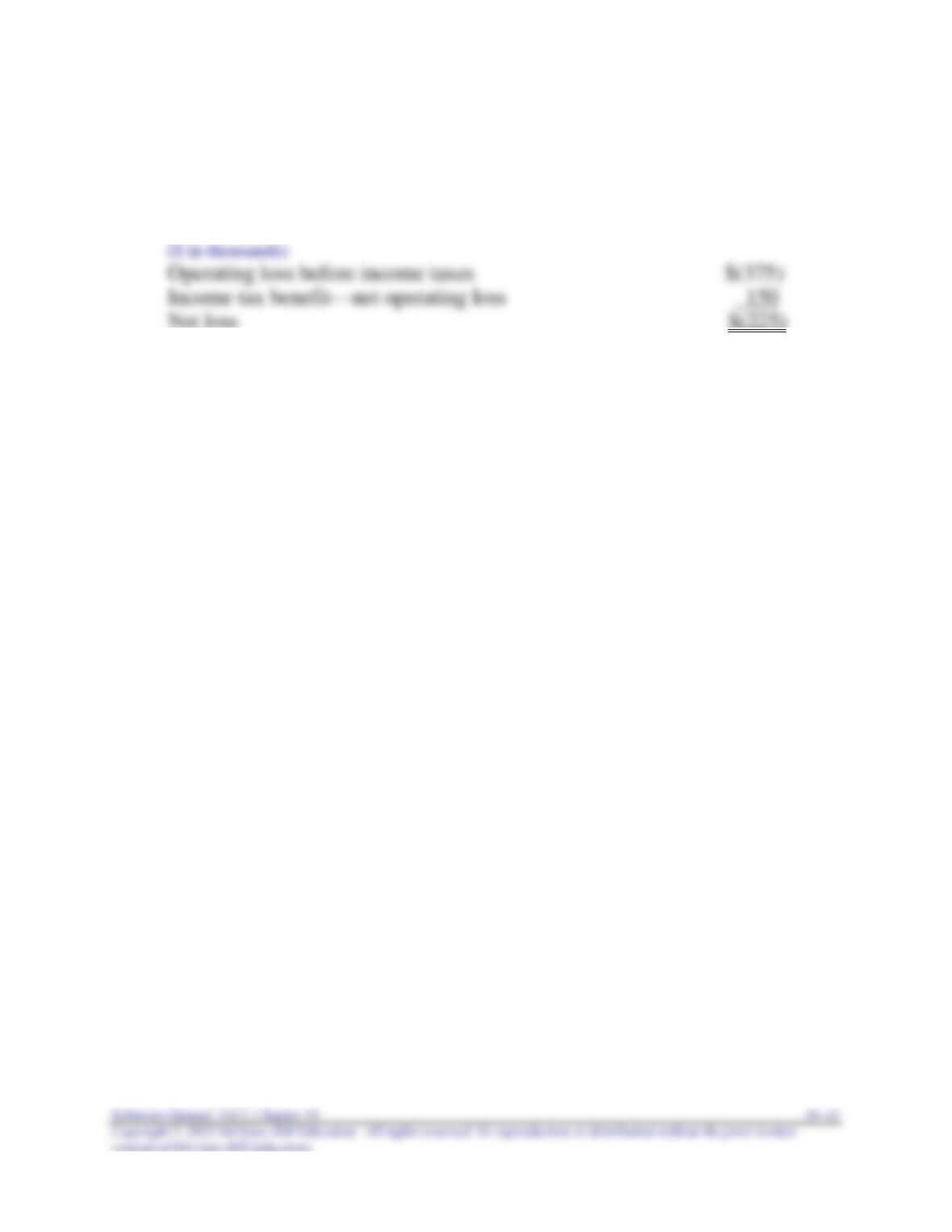
Exercise 16–20 (concluded)
Requirement 2
16–42 Intermediate Accounting, 8/e
Exercise 16–21
Requirement 1
($ in thousands)
Current
Prior Years Year
2014 2015 2016
Net operating loss (100)
Requirement 2
($ in thousands)
Operating loss before income taxes $(100)
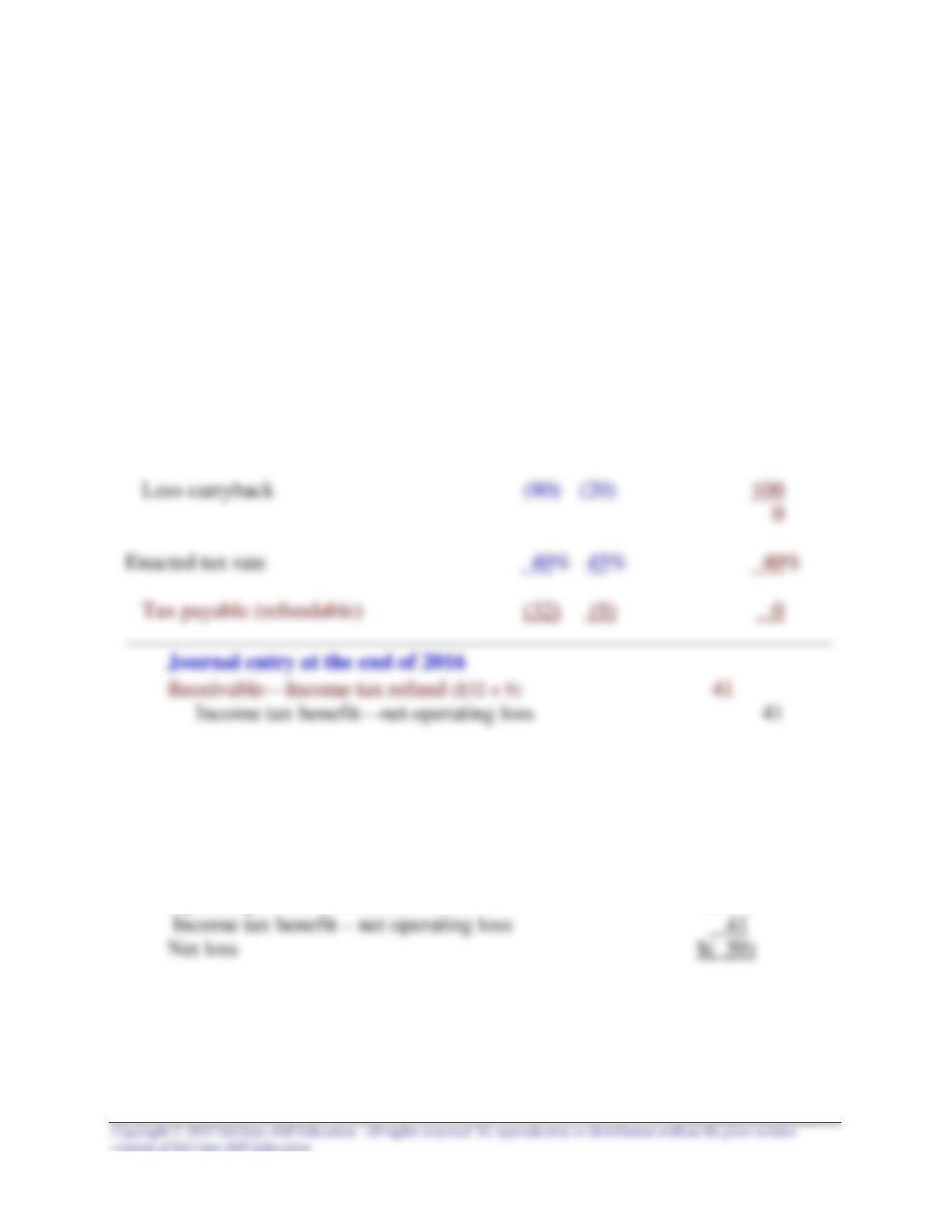
Exercise 16–22
Requirement 1
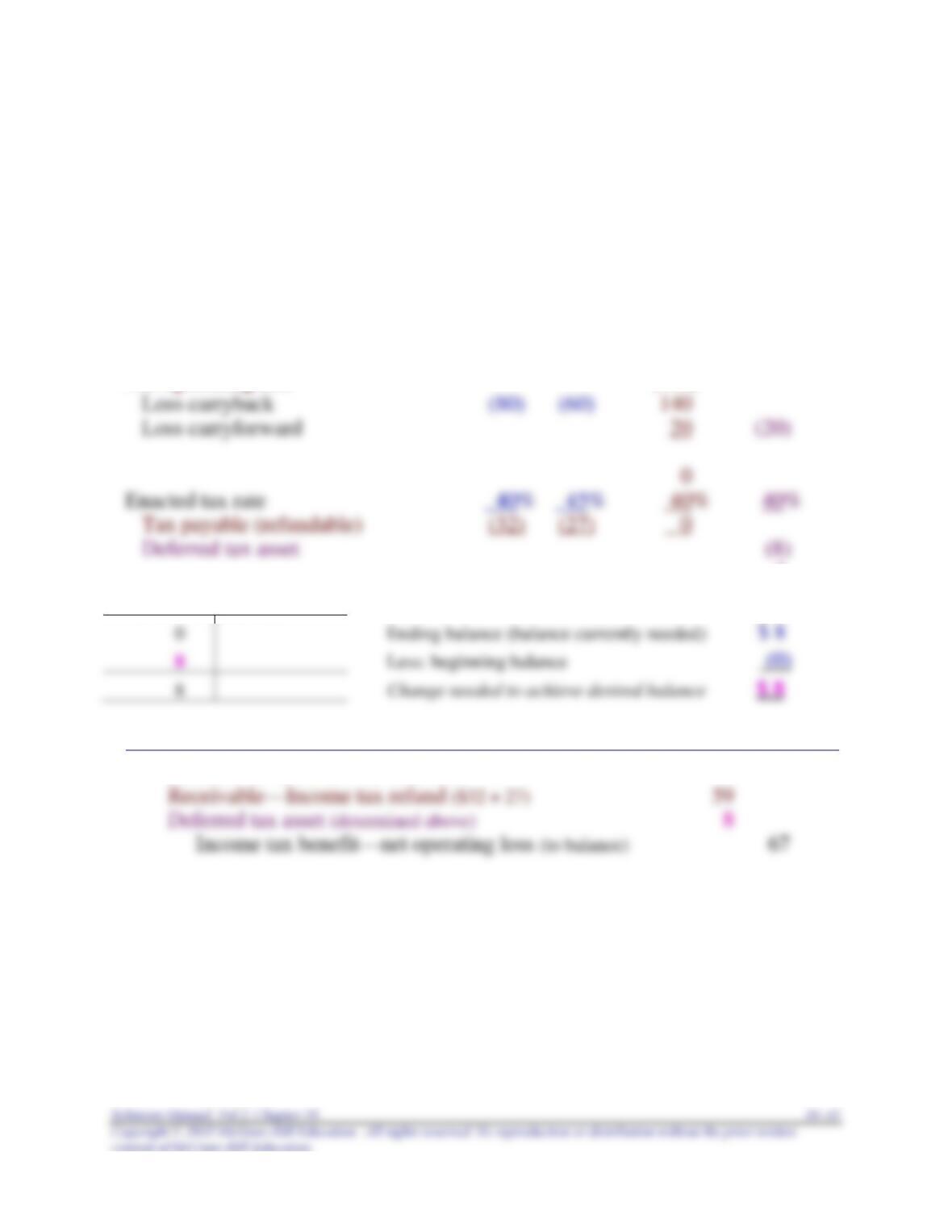
($ in thousands)
Current Future
Prior Years Year Deductible
2014 2015 2016 Amounts
[total]
Net operating loss (160)
Deferred Tax Asset
Deferred Tax Asset:
Journal entry at the end of 2016
16–44 Intermediate Accounting, 8/e
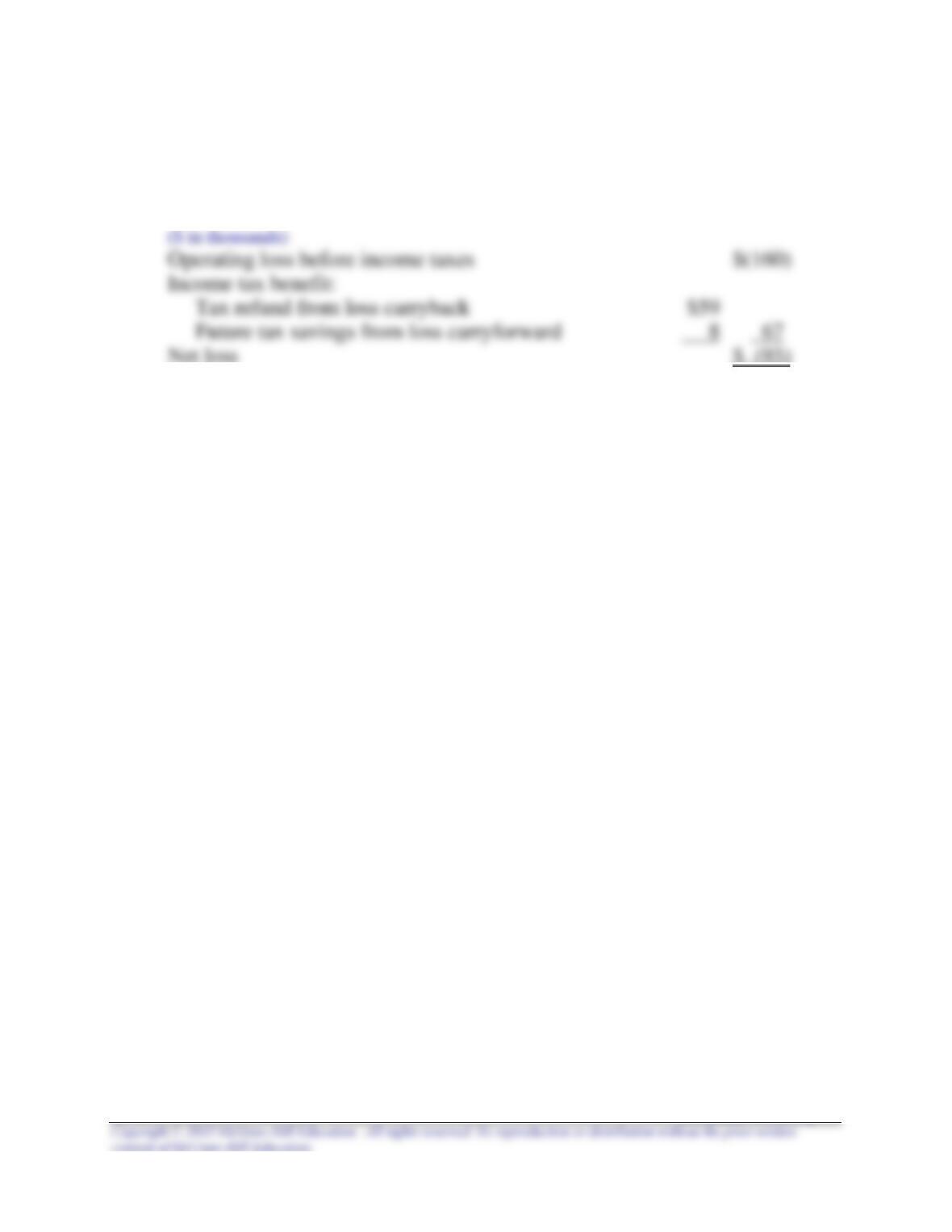
Exercise 16–22 (concluded)
Requirement 2
Exercise 16–23
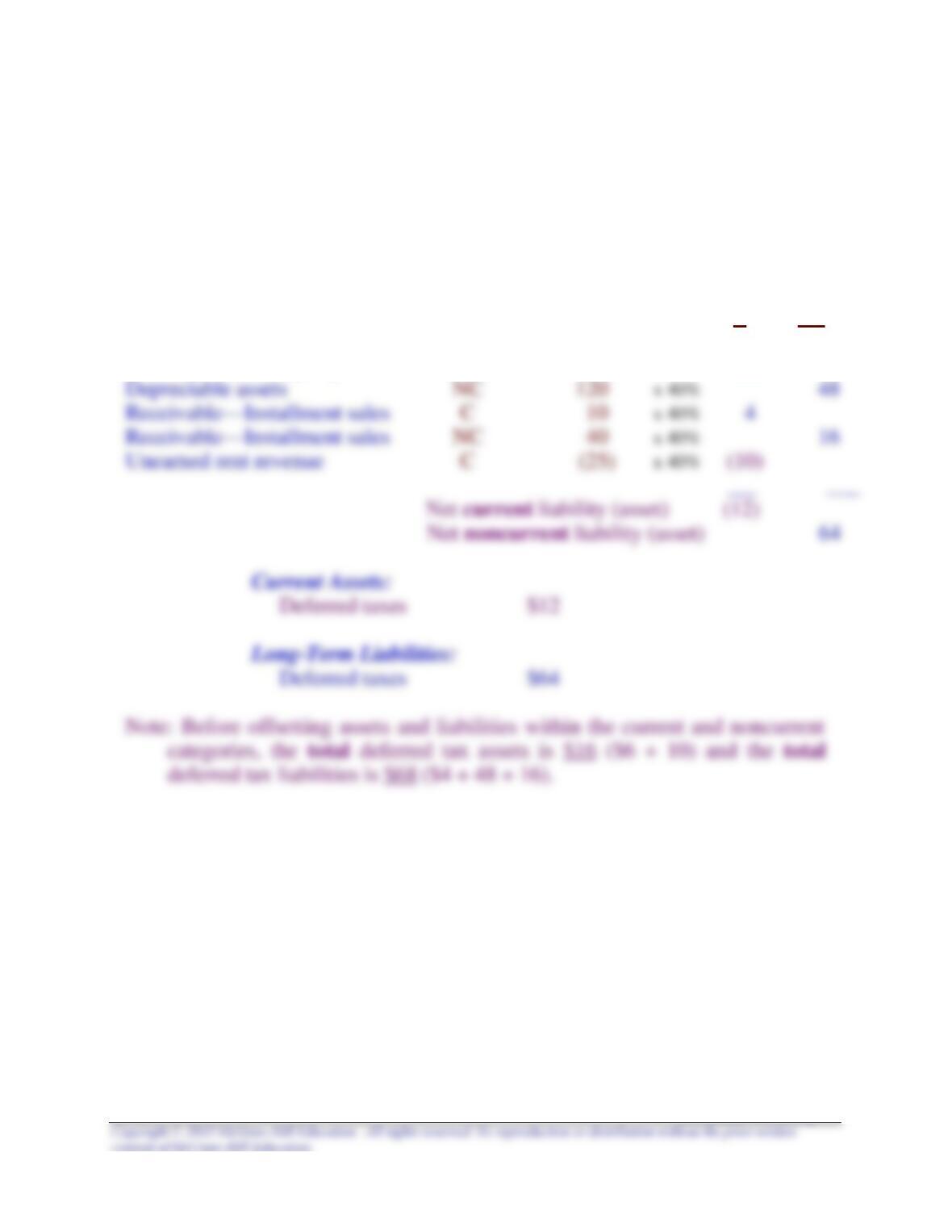
L 1. Advance payments on insurance; tax-deductible when paid.
A 2. Estimated warranty costs; tax-deductible when paid.
16–46 Intermediate Accounting, 8/e
Exercise 16–24
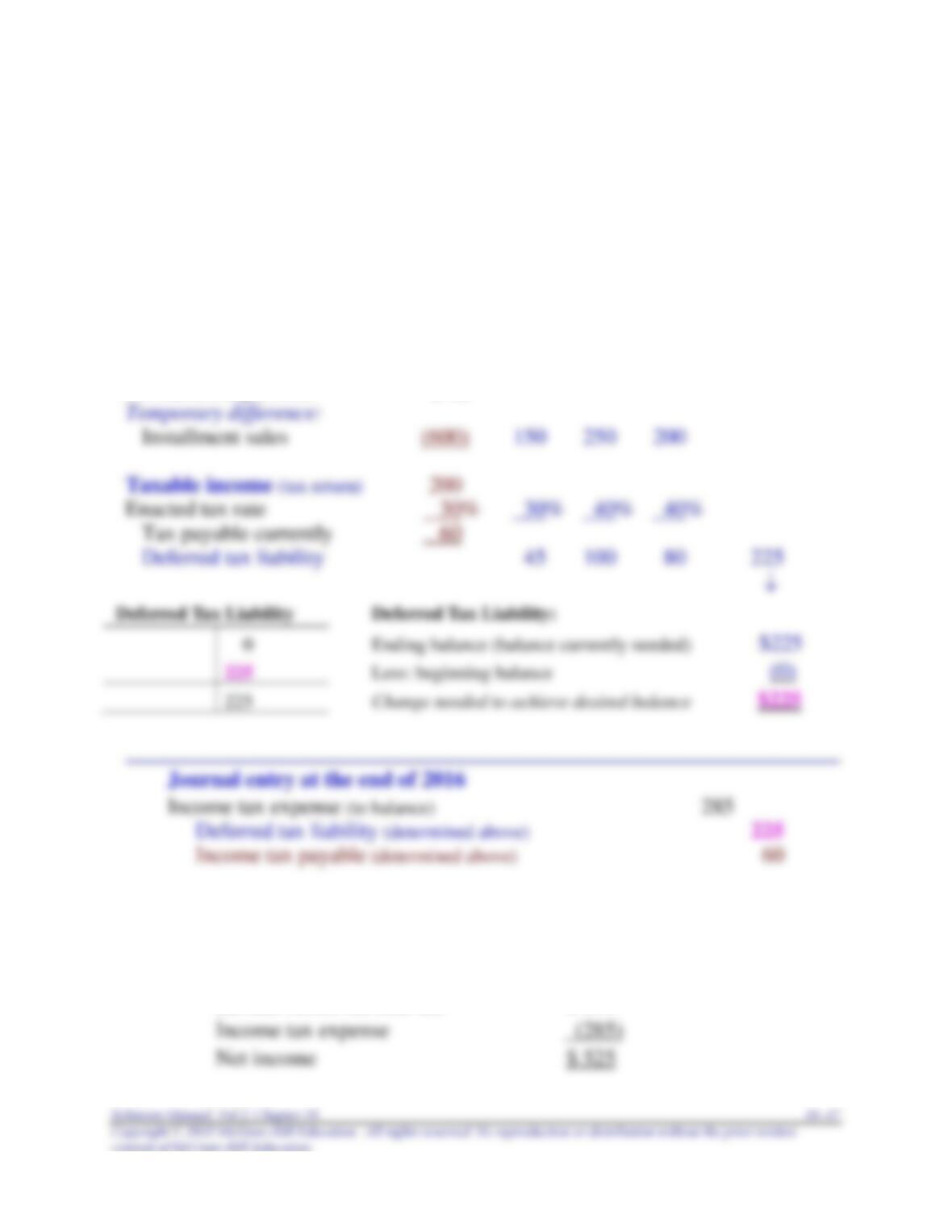
($ in millions)
Future Deferred
Classification Taxable Tax (Asset)
Related Balance current-C (Deductible) Tax Liability
Sheet Account noncurrent-NC Amounts Rate C NC
Liability—Warranty expense C (15) x 40% (6)
Exercise 16–25
Requirement 1
($ in thousands)
Current Future
Year Taxable
2016 Amounts
2017 2018 2019
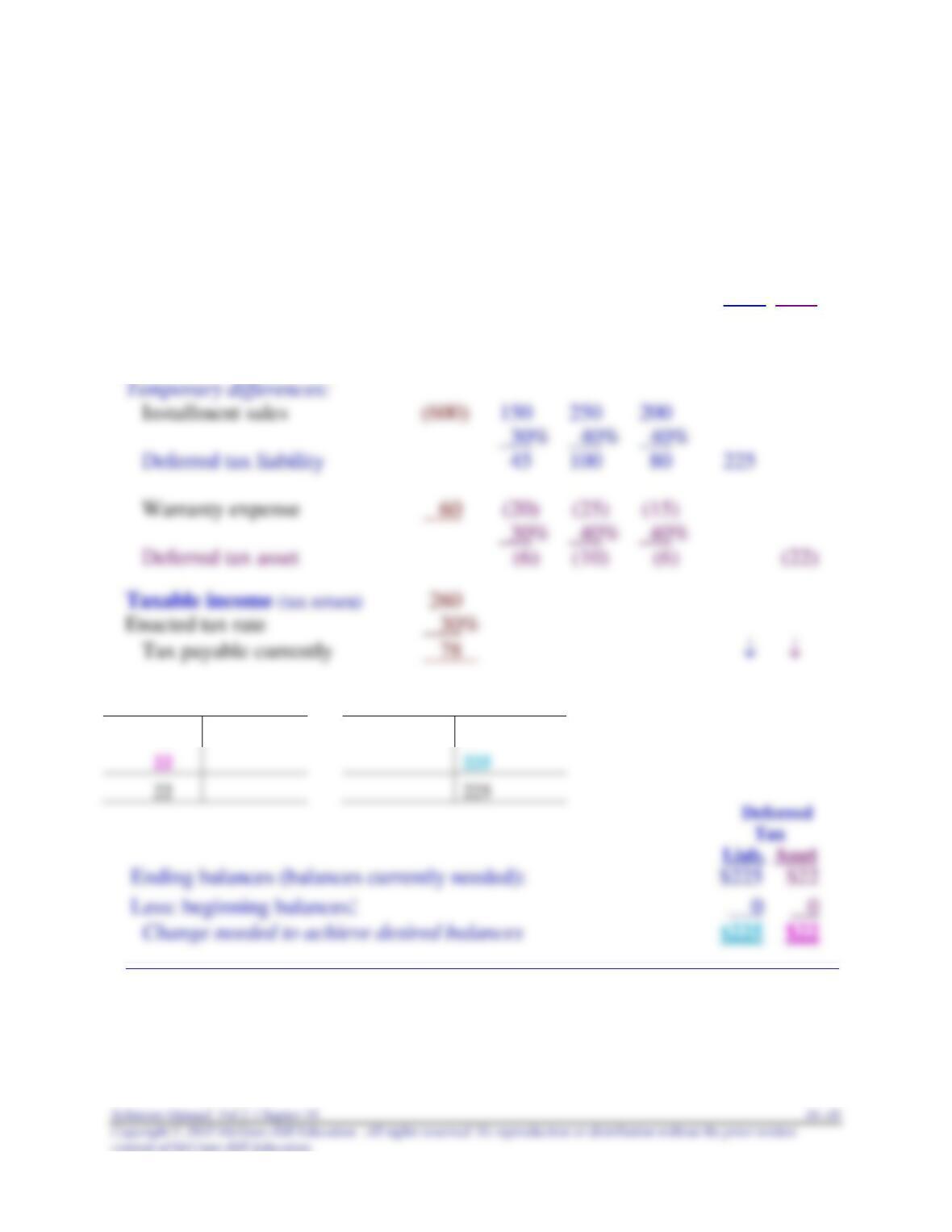
Pretax accounting income 810
Permanent difference (10)
Requirement 2
($ in thousands)
Income before income tax $ 810
16–48 Intermediate Accounting, 8/e
Exercise 16–25 (concluded)
Requirement 3
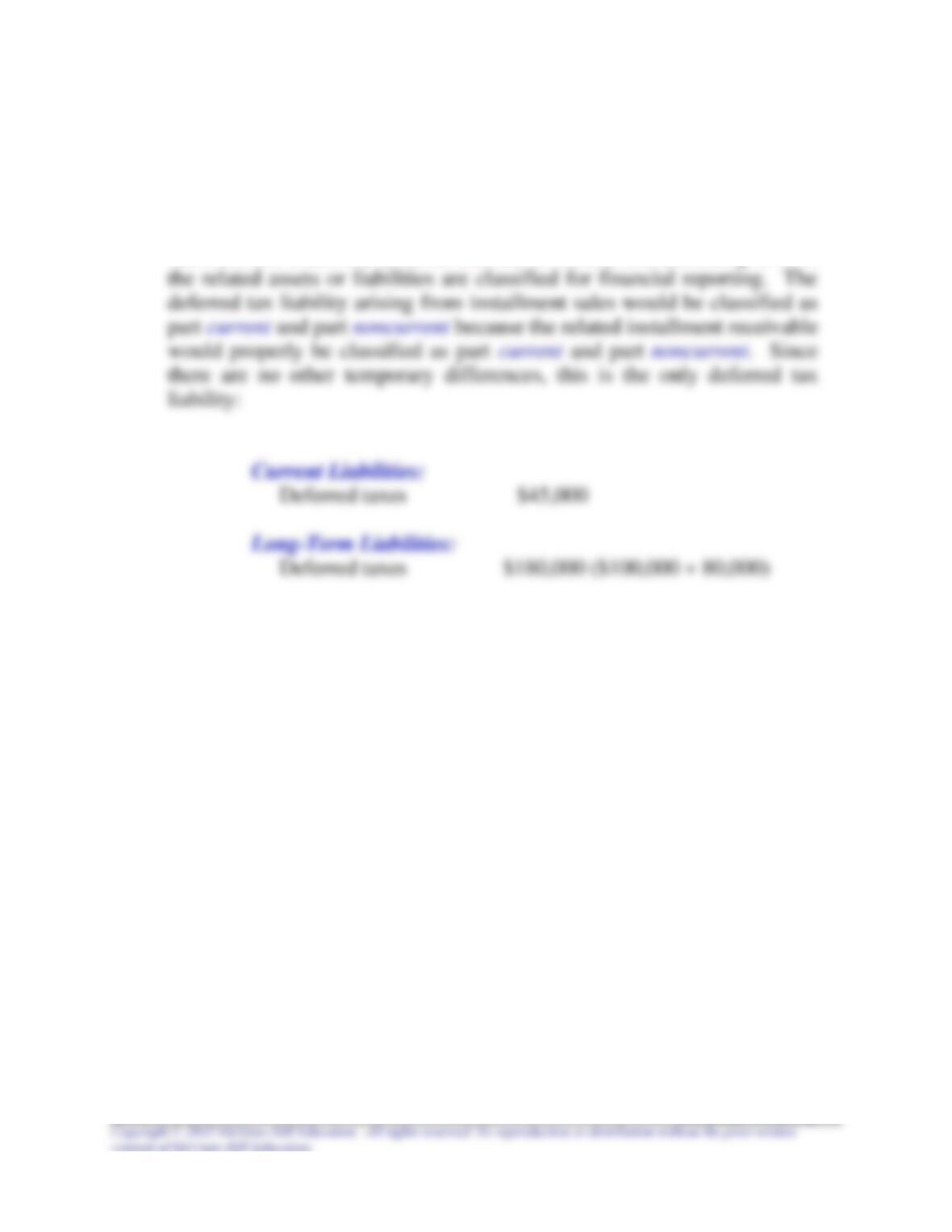
In a classified balance sheet, deferred tax assets and deferred tax
liabilities are classified as either current or noncurrent according to how
Exercise 16–26
Requirement 1
($ in thousands)
Current Future Taxable Deferred
Year (Deductible) Tax
2016 Amounts Liab. Asset
2017 2018 2019
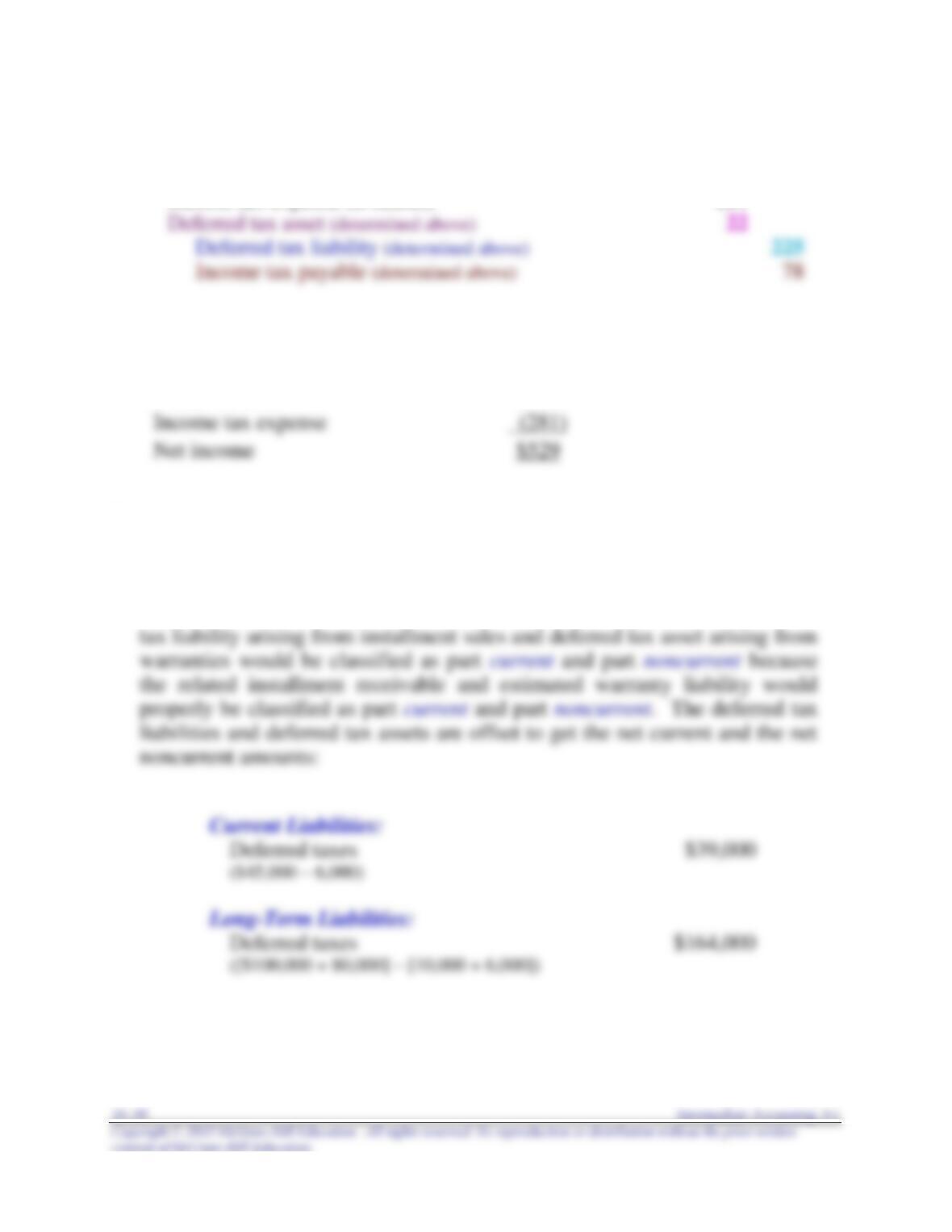
Pretax accounting income 810
Permanent difference (10)
Deferred Tax Asset
Deferred Tax Liability
0
0
225
Exercise 16–26 (concluded)
Journal entry at the end of 2016
Income tax expense (to balance) 281
Requirement 2
($ in thousands)
Pretax income $810
Requirement 3
In a classified balance sheet, deferred tax assets and deferred tax liabilities
are classified as either current or noncurrent according to how the related
assets or liabilities are classified for financial reporting. Both the deferred
Exercise 16–27
List A List B
g 1. No tax consequences a. Deferred tax liability
e 2. Originates, then reverses b. Deferred tax asset
16–52 Intermediate Accounting, 8/e
Exercise 16–28
Requirement 1
Probability table:
Amount of the tax benefit that management expects to
sustain
$10
$8
$6
$4
$2
Percentage likelihood that the tax position will be
sustained at this level
Requirement 2
Delta would record tax expense as if there is a $6 million tax credit, income tax
payable that reflects the entire $10 million credit, and a liability that represents the
potential obligation to pay the additional taxes if the deduction is not ultimately
upheld:
Exercise 16–29
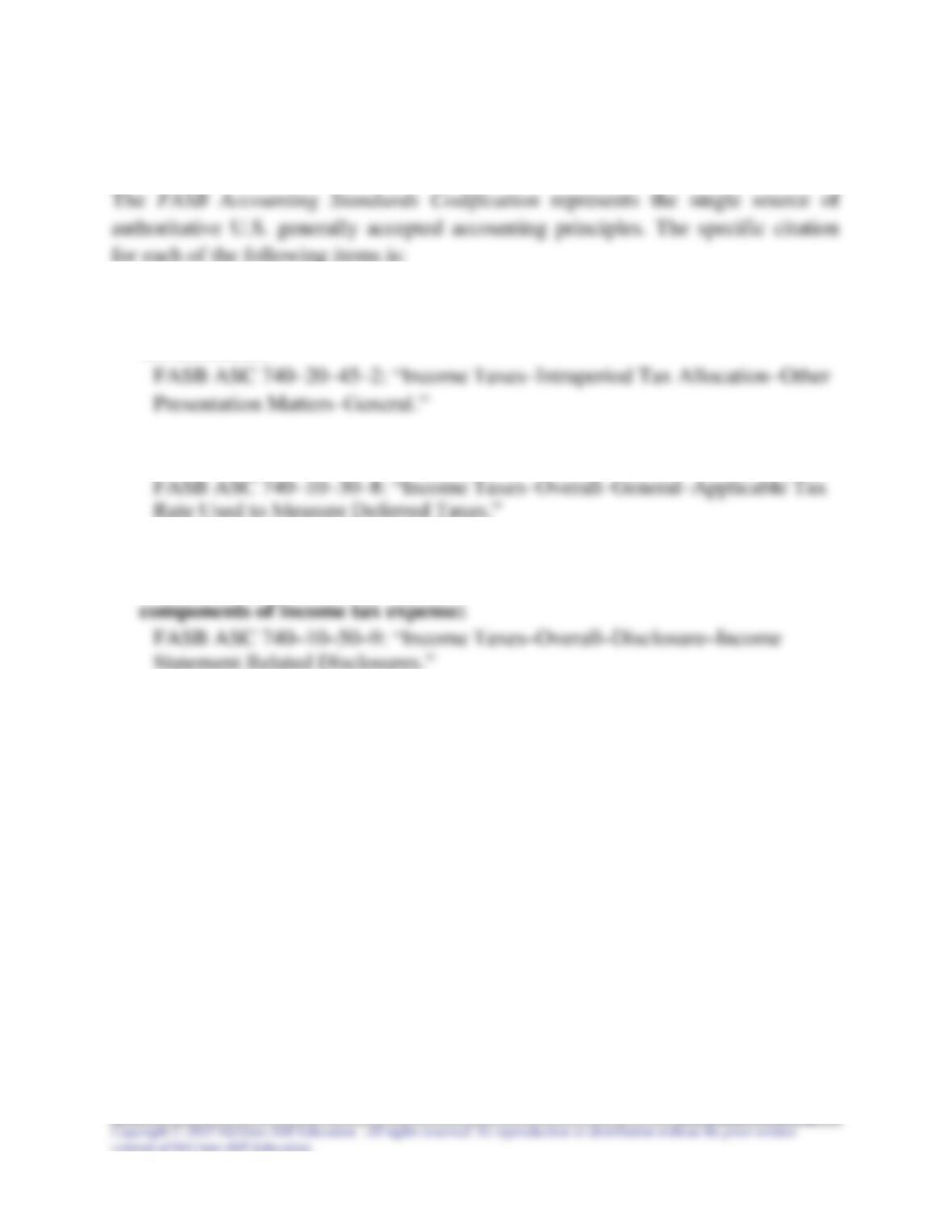
Income Statement
For the fiscal year ended March 31, 2016
($ in millions)
Revenues $ 830
Cost of goods sold (350)
16–54 Intermediate Accounting, 8/e
Exercise 16–30
1. The specific items to which income tax expense is allocated for intraperiod
tax allocation:
2. The tax rate used to calculate deferred tax assets and liabilities:
3. Required disclosures in the notes to financial statements for the
CPA / CMA REVIEW QUESTIONS
CPA Exam Questions
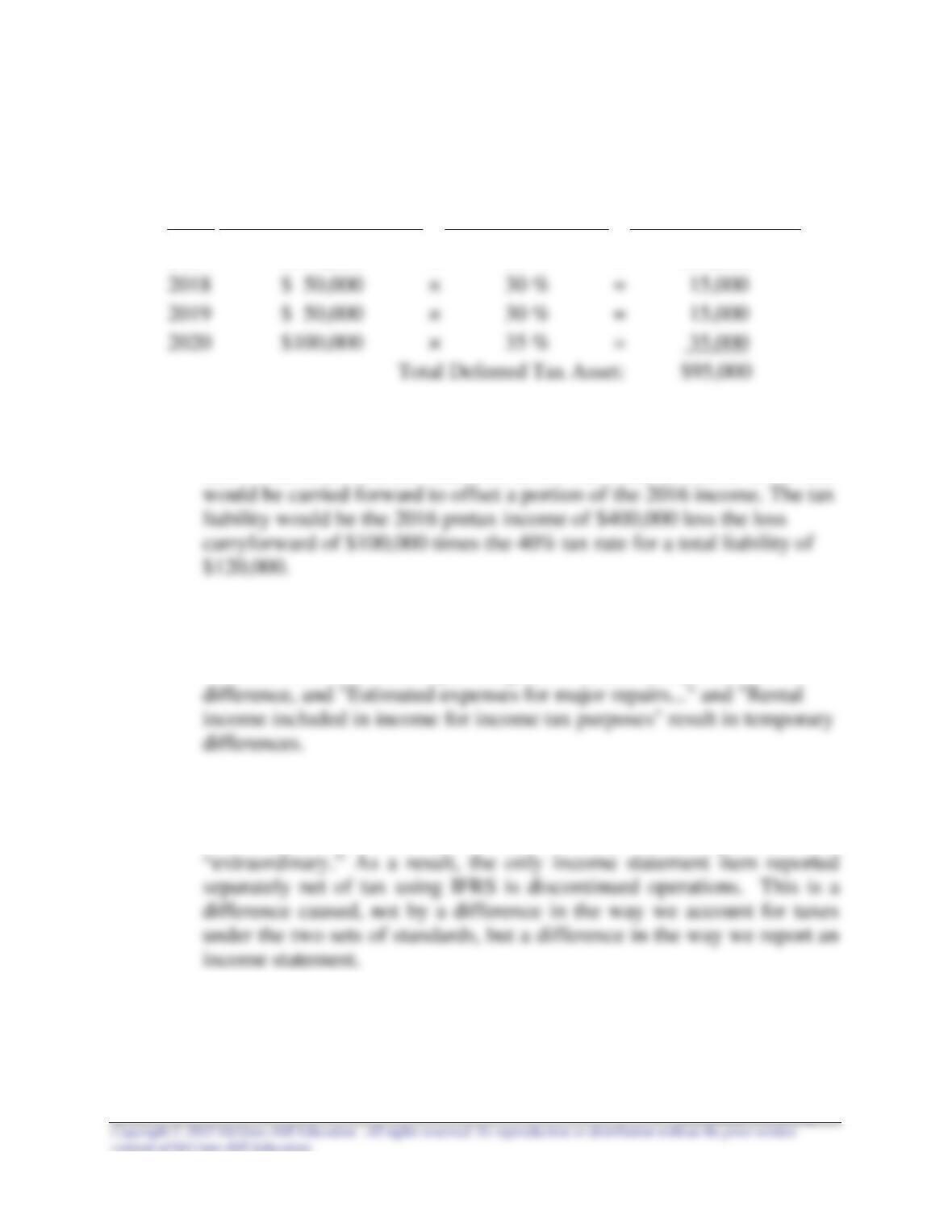
1. c. The deferred tax liability is recognized at the rate anticipated in the
2. b. The annual rent of $36,000 is taxable in 2016 but only $18,000 is
3. c. Total income tax expense is the total of the two journal entries or
$10,000:
A. The journal entry to record current taxes before the allowance
entry is as follows:
4. a. The nondeductible book expenses are permanent differences and do not
affect taxes. The temporary depreciation difference ($25,000) times the
16–56 Intermediate Accounting, 8/e
CPA Exam Questions (concluded)
5. d. $95,000. Deferred taxes are calculated using future enacted tax rates.
Year
Temporary Differences
×
Enacted Tax Rates
=
Deferred Tax Asset
2017
$100,000
×
30 %
=
$30,000
2018
$ 50,000
×
30 %
=
2019
$ 50,000
×
30 %
=
$95,000
6. c. The tax benefit of loss carryback would be $40,000 ($100,000 x 40%)
and would result in a tax refund for 2015. The other $100,000 of the loss
7. a. Only an extraordinary item requires intraperiod allocation of income tax.
“Interest income on municipal obligations” results in a permanent
8. a. IFRS. IAS No. 1, “Presentation of Financial Statements,” states that
neither the income statement nor any notes may contain any items called
CMA Exam Questions
1. c. A deferred tax asset records the deferred tax consequences attributable
to deductible temporary differences and carryforwards. Advance
2. d. For financial reporting purposes, the reported amount: cost –
accumulated depreciation of the machine at year-end, assuming
16–58 Intermediate Accounting, 8/e
CMA Exam Questions (concluded)
3. d. When one tax rate does not apply to all relevant years, a more
complex calculation is necessary. In this question, different rates
apply during the recovery period. During the years 2018–2020, book
PROBLEMS
Problem 16–1
Requirement 1
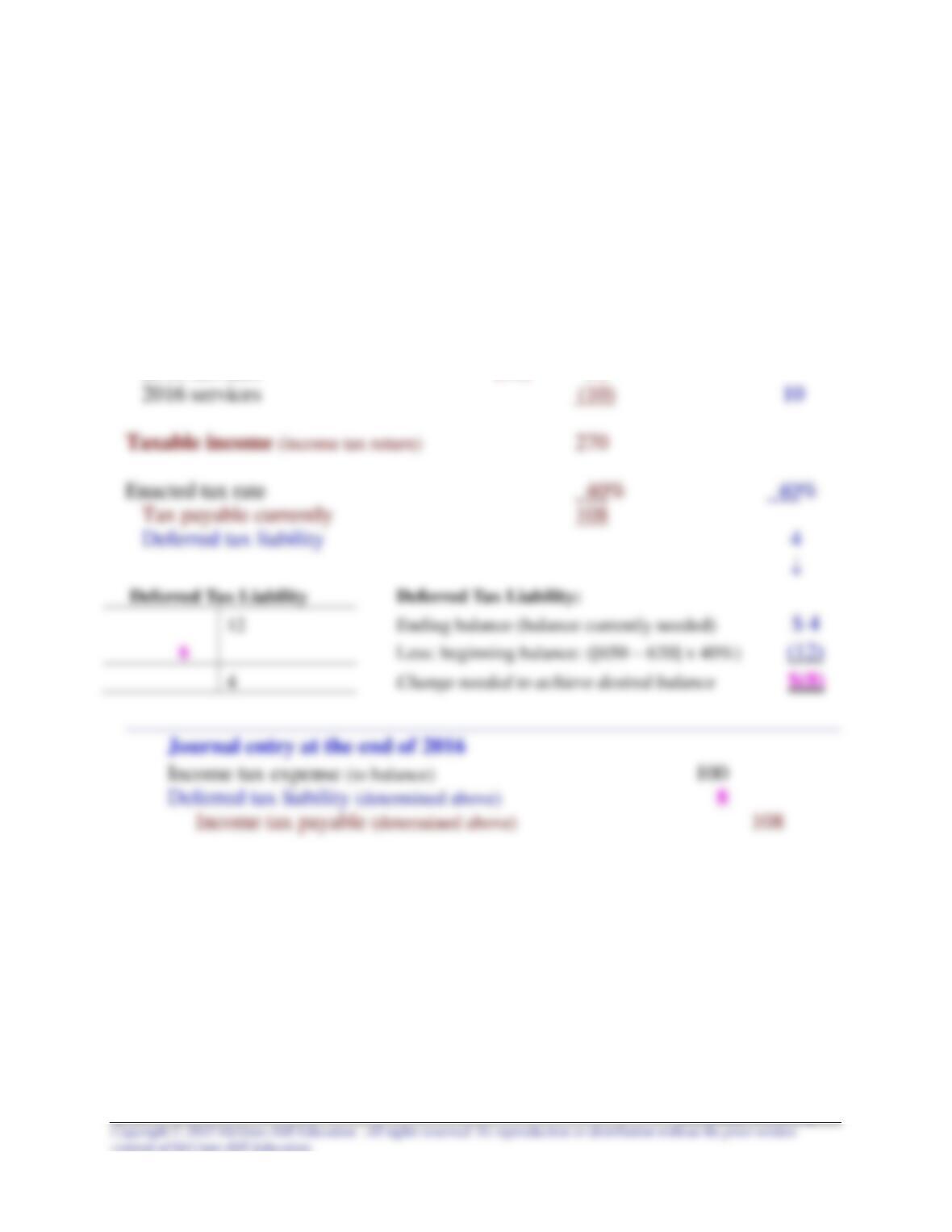
RELATED ASSET – CUMULATIVE BALANCE (NOT REQUIRED)
($ in thousands)
Collections Service Revenue
Service previous current Receivable
Revenue year year Balance
2015 $30
16–60 Intermediate Accounting, 8/e
Problem 16–1 (continued)
($ in thousands)
Current Future
Year Taxable
2016 Amount
Pretax accounting income 250
Temporary difference:
2015 services (30) 30