
Chapter 16—Management Accounting: A Business Partner
Financial and Managerial Accounting, 18e 16-1
16 MANAGEMENT ACCOUNTING: A BUSINESS PARTNER
Chapter Summary
The introduction to management accounting begins with an overview of the design
requirements of a managerial accounting system. The system must allocate decision-making
authority over a company’s resources. Second, it must furnish the information to support decision
making by managers. Finally, the system must generate the information needed to evaluate and
reward performance.
The chapter then proceeds to analyze the design of a system to account for manufacturing
operations. Manufacturing costs are first classified into direct material, direct labor, and
manufacturing overhead. With these definitions established, we introduce the critical distinction
between product and period costs. This discussion in turn lays the foundation for introducing the
manufacturing inventory accounts: raw materials, work-in-process, and finished goods.
The flow of costs through the inventory accounts is explained with the help of an extended
illustration. The illustration provides examples of the various manufacturing costs and their
associated classifications for a bicycle manufacturer.
The chapter closes with the development of financial statements for a manufacturing
company. The schedule of cost of goods manufactured is introduced as a supplement to the
financial statements intended to assist managers in evaluating the overall costs of manufactured
products.
Learning Objectives
1. Explain the three principles guiding the design of management accounting systems.
2. Describe the three basic types of manufacturing costs.
3. Distinguish between product costs and period costs.
4. Describe how manufacturing costs flow through perpetual inventory accounts.
5. Distinguish between direct and indirect costs.
6. Prepare a schedule of the cost of finished goods manufactured.
Chapter 16—Management Accounting: A Business Partner
16-2 Instructor’s Resource Manual
Brief Topical Outline
A. Management accounting: basic framework
1. Management accounting’s role in assigning decision-making authority
2. Management accounting’s role in decision making
3. Management accounting’s role in performance evaluation and rewards
4. Accounting systems: a business partner
B. Accounting for manufacturing operations
1. Classifications of manufacturing costs
2. Product costs versus period costs—see Ethics, Fraud, & Corporate
Governance (page 729)
3. Product costs and the matching principle
4. Inventories of a manufacturing business—see International Case in Point (page
730)
5. The flow of costs parallels the flow of physical goods
6. Accounting for manufacturing costs: an illustration
7. Direct materials
8. Direct labor
9. Manufacturing overhead
a. Recording overhead costs
10. Direct and indirect manufacturing costs
11. Work in process inventory, finished goods inventory, and the cost of goods
sold—see Your Turn (page 734)
12. The need for per-unit cost data
13. Determining the cost of finished goods manufactured—see Pathways
Connection (page 737)
a. Purpose of the schedule
14. Financial statements of a manufacturing company
C. Concluding remarks
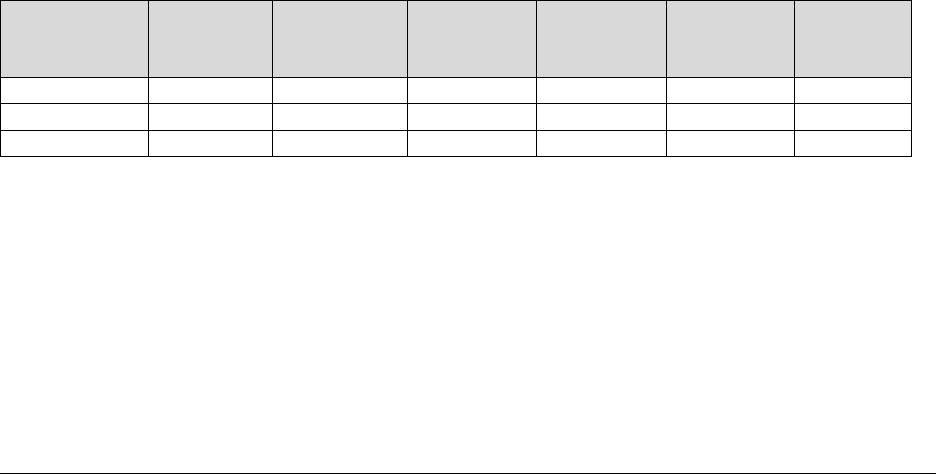
Topical Coverage and Suggested Assignment
Class
Meetings on
Chapter
Topical
Outline
Coverage
Discussion
Questions*
Brief
Exercises*
Exercises*
Problems*
Critical
Thinking
Cases*
1
A
1, 2, 3
1, 5, 10
2, 7
2
2
B
6, 9, 11
3, 6
1, 3, 4
4, 5
1
3
B – C
12, 14, 15
8, 10
6, 9, 13
8
*Homework assignment (to be completed prior to class)

Chapter 16—Management Accounting: A Business Partner
Financial and Managerial Accounting, 18e 16-3
Comments and Observations
Teaching Objectives for Chapter 16
Beginning with this chapter, we shift our focus from financial accounting to managerial
accounting. In presenting this first managerial chapter, our classroom objectives are to:
1. Introduce the design requirements for a management accounting system.
2. Introduce the concept of product costs, and explain how and when product costs ultimately
are deducted from revenue.
3. Describe the three basic types of manufacturing costs; equate manufacturing costs with
product costs.
4. Illustrate and explain the “flow” of manufacturing costs through perpetual inventory records.
5. Identify the three types of inventory that may be held by a manufacturing company. Show
students that the cost of the work in process and finished goods inventories consists of
manufacturing costs (product costs).
6. Identify manufacturing overhead as all manufacturing costs other than direct materials and
direct labor. Give various examples of costs classified as manufacturing overhead.
7. Distinguish between direct and indirect manufacturing costs; explain why manufacturing
overhead is an indirect cost.
8. Explain the purpose, content, and format of a schedule of cost of finished goods
manufactured. Illustrate the preparation of this statement, and explain its relationship to the
Work in Process Inventory account and to the income statement.
9. Explain how the total cost of finished goods manufactured is used to determine unit cost.
Explain the importance of knowing unit cost both to various managerial decisions and to the
preparation of financial statements.

Chapter 16—Management Accounting: A Business Partner
16-4 Instructor’s Resource Manual
General Comments
We cannot overstate the importance of students thoroughly comprehending the flow of
product costs through the perpetual inventory accounts. This concept is the foundation of the
following chapter. For this reason, we review in class the illustration from the chapter, at least one
“flow of costs” homework problem, and often the chapter Demonstration Problem as well.
In our discussion of the flow of costs, we have deliberately omitted transfers of the costs
of indirect materials and indirect labor from the Materials Inventory and Direct Labor accounts
into the Manufacturing Overhead account. We consider these cost flows to be an unnecessary
refinement in an introductory-level discussion. We have found that omitting these “special
treatment” items helps students to more quickly grasp the basic flow of manufacturing costs
through a perpetual inventory system.
We especially like Problems 3 and 4 as means of illustrating the “flow” of manufacturing
costs. These problems may either be assigned as homework or used as an in-class exercise or quiz.

Chapter 16—Management Accounting: A Business Partner
Financial and Managerial Accounting, 18e 16-5
Supplemental Exercises
Group Exercise
You are the chief executive officer of a multinational corporation that operates wholly
owned subsidiaries in several countries. One of the company’s manufacturing plants is located in
Utopia. Utopia provides a corporate income tax break related to the amount of Utopian labor
employed. Specifically, corporate income taxes are reduced by the company’s ratio of labor costs
of Utopian citizens to total manufacturing costs in Utopia. Discuss how management will
appropriately classify costs into the categories of direct material, direct labor, and manufacturing
overhead. Be sure to justify the approach for each cost classification.
Internet Exercise
Visit the website of a manufacturing company of your choice. Access a recent annual report
and review management’s letter to the shareholders. This is sometimes called the “Chairman’s
Message” and will generally begin with “Dear Shareholders.” In the letter find and report on
examples of decision making supported by information from the company’s management
accounting system.

Chapter 16—Management Accounting: A Business Partner
16-6 Instructor’s Resource Manual
CHAPTER 16 NAME #
10-MINUTE QUIZ A SECTION
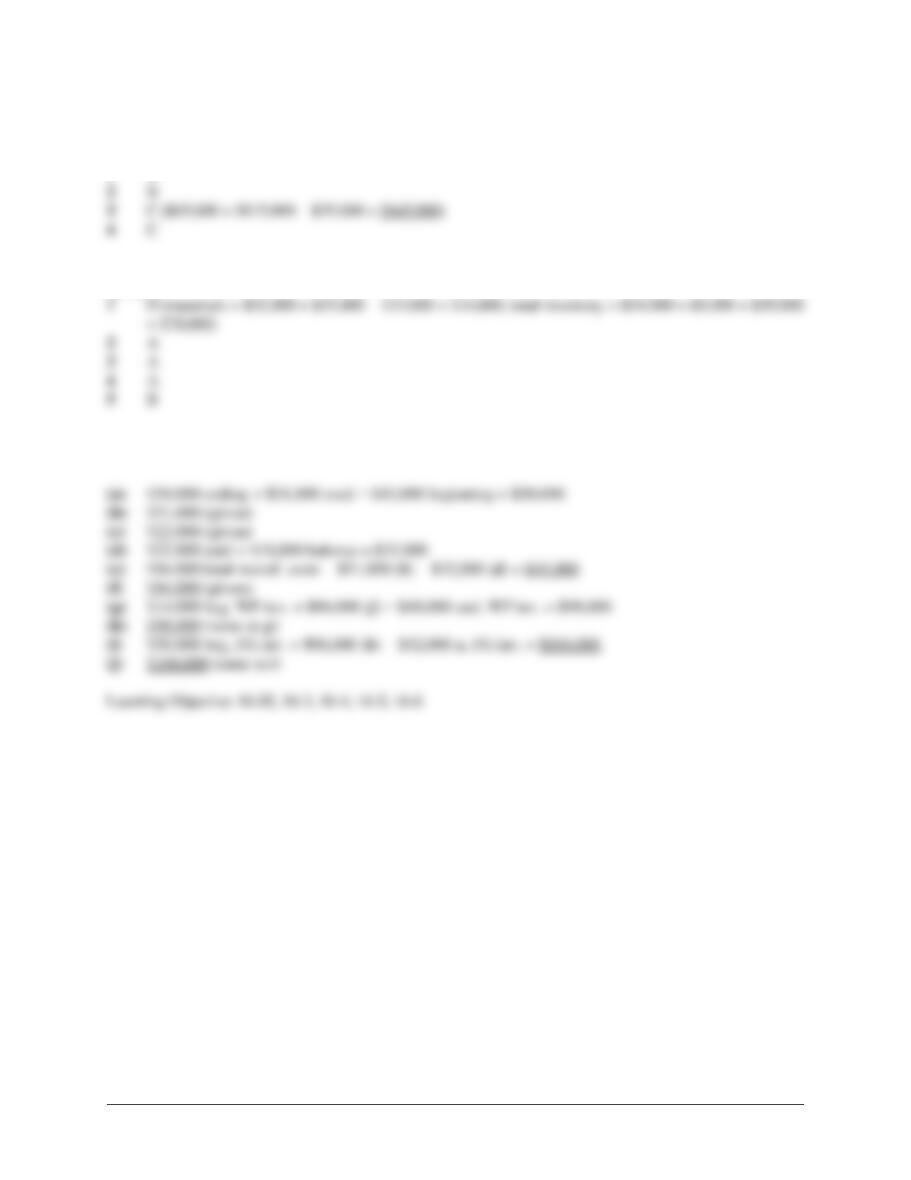
The manufacturing cost accounts of Varsity Manufacturing Co. provide the following information for the
year ended December 31, 2019:
Direct materials used ………………………………………………………………………… $500,000
Direct materials purchased ……………………………………………………………………… $520,000
Direct labor cost assigned to production …………………………………………………… $130,000
Wages paid to direct workers ………………………………………………………………….. $120,000
Manufacturing overhead costs applied to production …………………………………. $190,000
Cost of finished goods manufactured……………………………………………………….. $850,000
Inventories at the beginning and end of the year were as follows:
Dec. 31 Jan. 1
Materials …………………………………………………………….. $65,000 $ ?
Work in Process …………………………………………………… $15,000 $10,000
Finished Goods ……………………………………………………. $35,000 $65,000
Answer the following questions. If you select answer d, indicate the correct amount.
1. Refer to the above data. The total amount of inventory that should appear in the company’s balance
sheet at December 31, 2019 is:
a $115,000.
b $860,000.
c $85,000.
d Some other amount. $____________
2. Refer to the above data. The total manufacturing costs charged to the Work in Process Inventory
account during 2019 amounted to:
a $850,000.
b $820,000.
c $810,000.
d Some other amount. $____________
3. Refer to the above data. The total manufacturing costs deducted from revenue in 2019: amounted to:
a $890,000.
b $880,000.
c $845,000.
d Some other amount. $____________
4. Refer to the above data. The balance in the Materials Inventory account at the beginning of 2019: was:
a $65,000.
b $85,000.
c $45,000.
d Some other amount. $____________
Chapter 16—Management Accounting: A Business Partner
Financial and Managerial Accounting, 18e 16-7
CHAPTER 16 NAME #
10-MINUTE QUIZ B SECTION
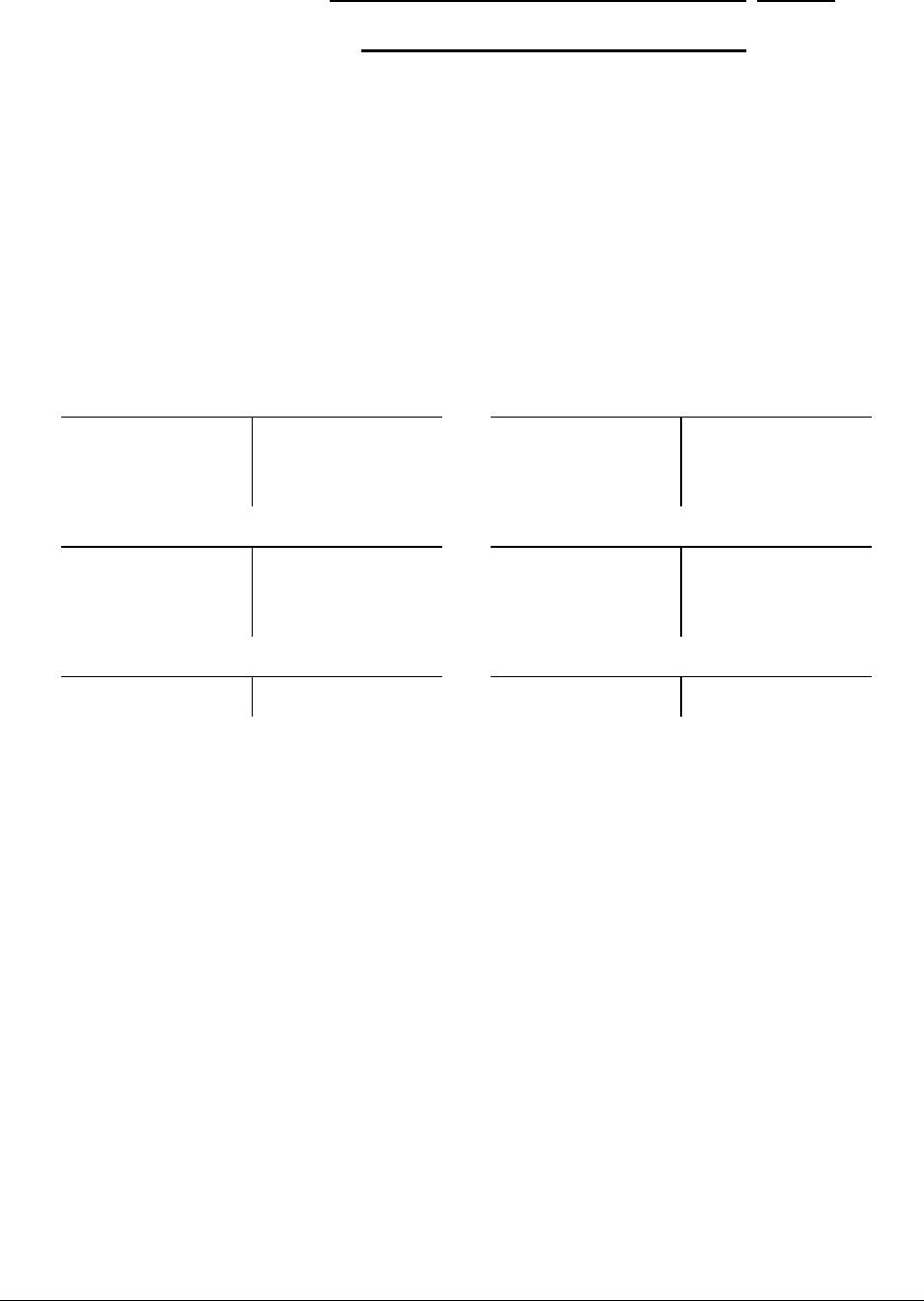
The “flow” of manufacturing costs through the ledger of Able Mfg. Co. during April is summarized in the
following T accounts. Certain amounts have been omitted and are represented by question marks.
Materials Inventory
Work in Process Inventory
Beg. Bal. 32,000
35,000
End. Bal. ?
33,000
Beg. Bal. 3,000
?
End. Bal. 5,000
72,000
Direct Labor
Finished Goods Inventory
13,000
Beg. Bal. 0
?
End. Bal. 1,000
Beg. Bal. 47,000
72,000
End. Bal. 39,000
?
Manufacturing Overhead
Cost of Goods Sold
27,000
27,000
?
Answer the following questions. If you select answer d, indicate the correct amount.
1. Refer to the above data. The total amount of inventory that should appear in the company’s balance
sheet at April 30 is:
a $39,000. c $73,000.
b $82,000. d Some other amount. $____________
2. Refer to the above data. The amount of wages paid to direct workers during April amounted to:
a $14,000. c $13,000.
b $12,000. d Some other amount. $____________
3. Refer to the above data. The total manufacturing costs charged to production during April were:
a $74,000. c $76,000.
b $72,000. d Some other amount. $____________
4. Refer to the above data. The cost of finished goods manufactured in April amounted to:
a $72,000. c $47,000.
b $80,000. d Some other amount. $____________
5. Refer to the above data. The cost of goods sold in April amounted to:
a $72,000. c $39,000.
b $80,000. d Some other amount. $____________
Chapter 16—Management Accounting: A Business Partner
16-8 Instructor’s Resource Manual
CHAPTER 16 NAME #
10-MINUTE QUIZ C SECTION
You are to summarize the “flow” of manufacturing costs through the ledger accounts of Berman Mfg. Co.
for the month of June. Complete the following T accounts by entering summary amounts for the month in
each of the blank spaces provided (lettered a through j). In addition to the amounts already shown in the T
accounts, the following information is available:
Direct materials used during June …………………………..………………………………………… $51,000
Wages paid during June to direct labor workers …………………………………………………. $22,000
Cost of finished goods manufactured ………………………………………………………………… $98,000
Total manufacturing costs charged to production (in the Work in
Process account, record this entire amount as
one entry) ………………………………………………………………………………………………………. $94,000
Materials Inventory
Work in Process Inventory
Beg. Bal. 43,000
a
End. Bal. 50,000
b
Beg. Bal. 14,000
f
End. Bal. 10,000
g
Direct Labor
Finished Goods Inventory
c
Beg. Bal. 0
d
End. Bal. 10,000
Beg. Bal. 58,000
h
End. Bal. 52,000
i
Manufacturing Overhead
Cost of Goods Sold
11,000
e
j
Chapter 16—Management Accounting: A Business Partner
Financial and Managerial Accounting, 18e 16-9
CHAPTER 16 NAME #
10-MINUTE QUIZ D SECTION
Information about the manufacturing costs and inventories of Tracy Mfg. Co. in 2011 is shown below:
Manufacturing Costs:
Direct materials used…………………………………………………………………………………………… $655,000
Direct labor charged to production ……………………………………………………………………….. $330,000
Manufacturing overhead ……………………………………………………………………………………… $455,000
Dec. 31, 2019 Jan. 1, 2019
Materials ………………………………………………………………………….. $65,000 $50,000
Work in process ……………………………………………………….………. $27,000 $32,000
Finished goods …………………………………………………………………. $75,000 $83,000
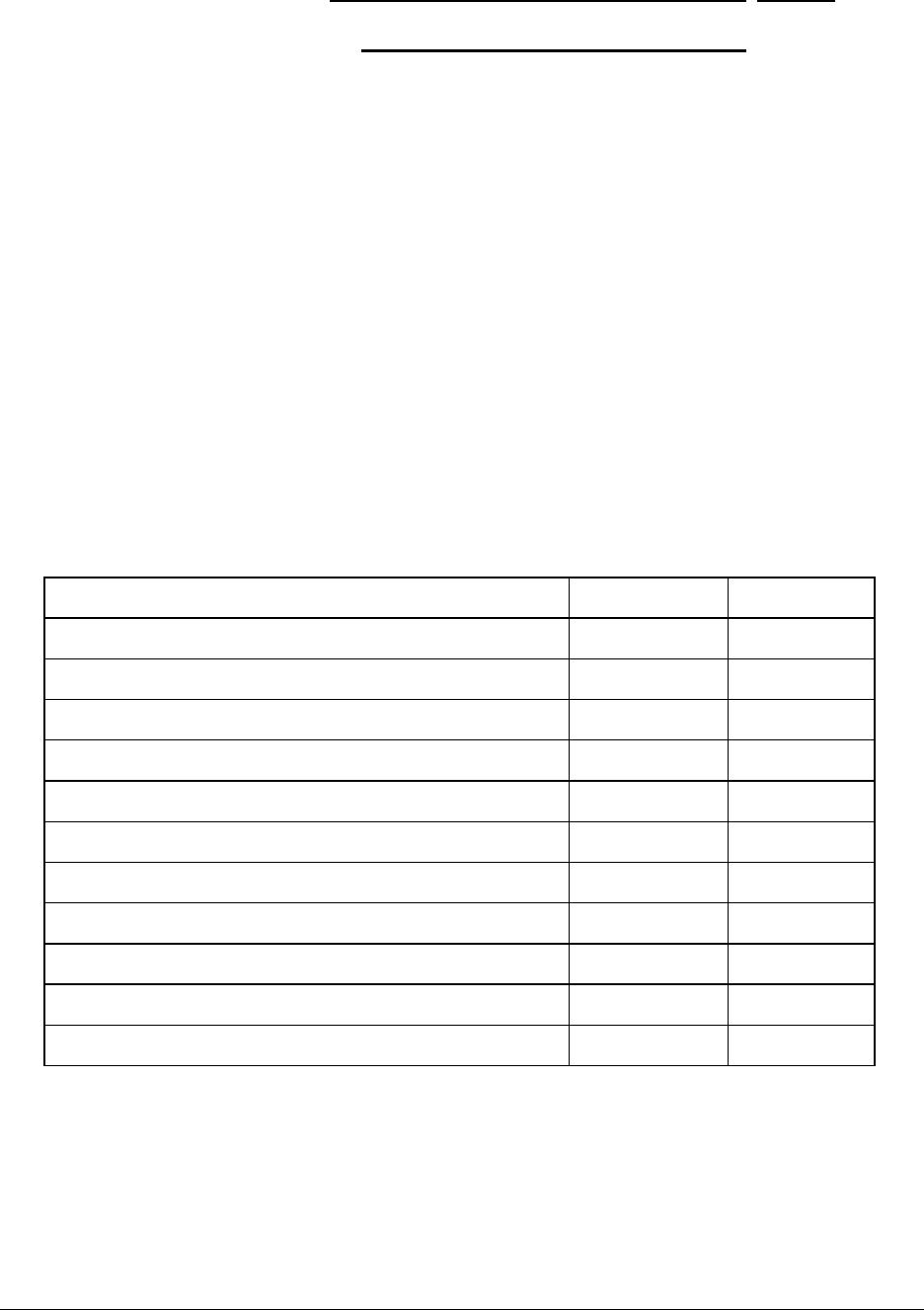
a Using the appropriate data, prepare a Schedule of Cost of Finished Goods Manufactured for the year ended
December 31, 2019
TRACY MFG. CO.
Schedule of Cost of Finished Goods Manufactured
For the Year Ended December 31, 2019
b Compute the cost of goods sold in 2011: $__________
Chapter 16—Management Accounting: A Business Partner
16–10 Instructor’s Resource Manual
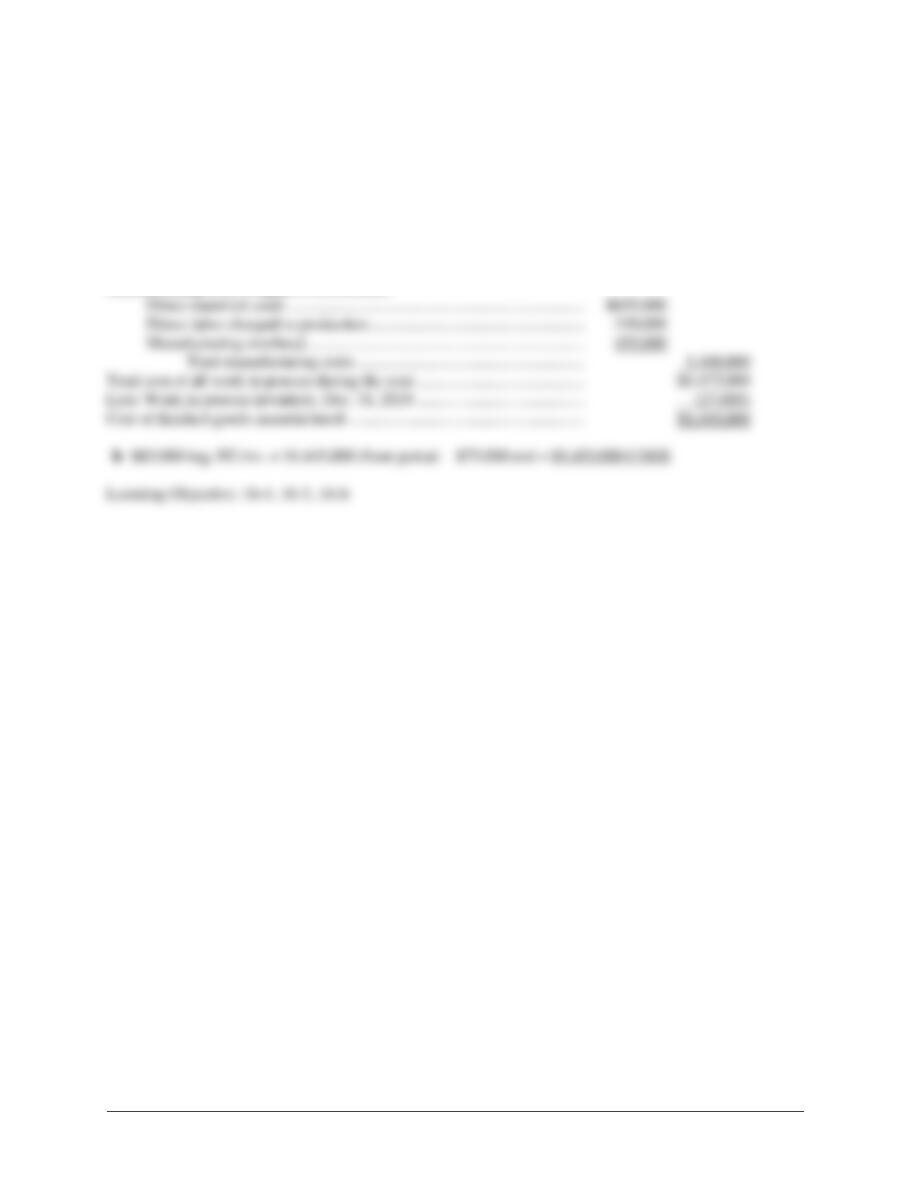
SOLUTIONS TO CHAPTER 16 10–MINUTE QUIZZES
QUIZ A
1 A
QUIZ B
QUIZ C
Chapter 16—Management Accounting: A Business Partner
Financial and Managerial Accounting, 18e 16–11
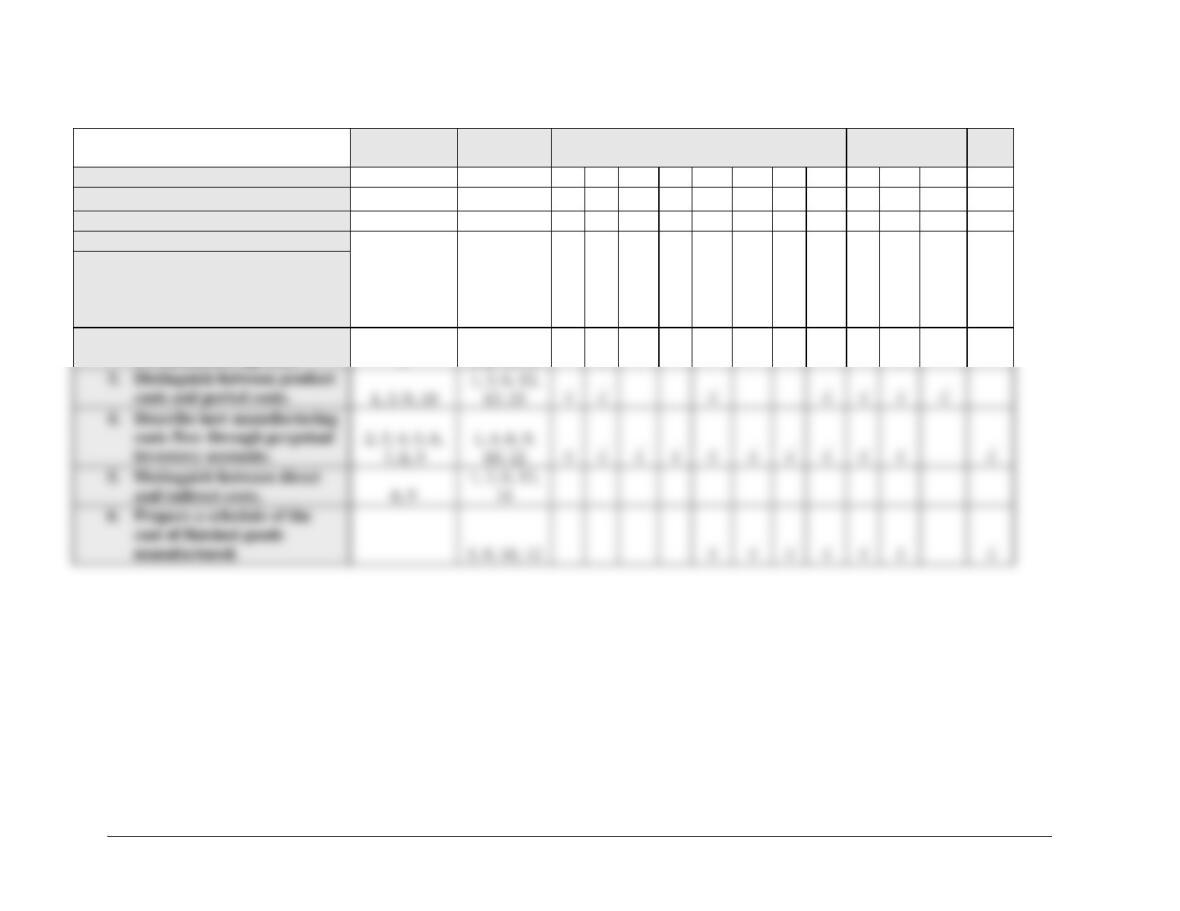
QUIZ D
a
TRACY MFG. CO.
Schedule of Cost of Finished Goods Manufactured
For the Year Ended December 31, 2019
Work in process inventory, Jan. 1, 2019 ……………………………………………….. $ 32,000
Manufacturing costs assigned to production:
Chapter 16—Management Accounting: A Business Partner
16–12 Instructor’s Resource Manual
Assignment Guide to Chapter 16
Brief
Exercises
Exercises
Problems
Cases
Net
Item number
1 – 10
1 – 15
1
2
3
4
5
6
7
8
1
2
4
3
Time estimate (in minutes)
< 15
< 15
20
15
20
20
35
35
25
40
40
40
45
15
Difficulty rating
E
E
E
E
E
E
M
S
M
S
S
S
M
E
Learning Objectives:
1, 7, 8, 11
1. Explain the three principles
guiding the design of
management accounting
systems.
2. Describe the three basic types
of manufacturing costs.
5
1, 2, 13, 14
3. Distinguish between product
costs and period costs.
1, 3, 9, 10
13, 15
manufactured.
5, 9, 10, 12