Time and Purpose of Problems (Continued)
Problem 15.10 (Time 35–45 minutes)
Purpose—to provide the student with an understanding of the differences between a stock dividend and
Problem 15.11 (Time 25–35 minutes)
Purpose—to provide the student with an understanding of the proper accounting for the declaration and
Problem 15.12 (Time 35–45 minutes)
Purpose—to provide the student a comprehensive problem involving all facets of the stockholders’
SOLUTIONS TO PROBLEMS
PROBLEM 15.1
(a)
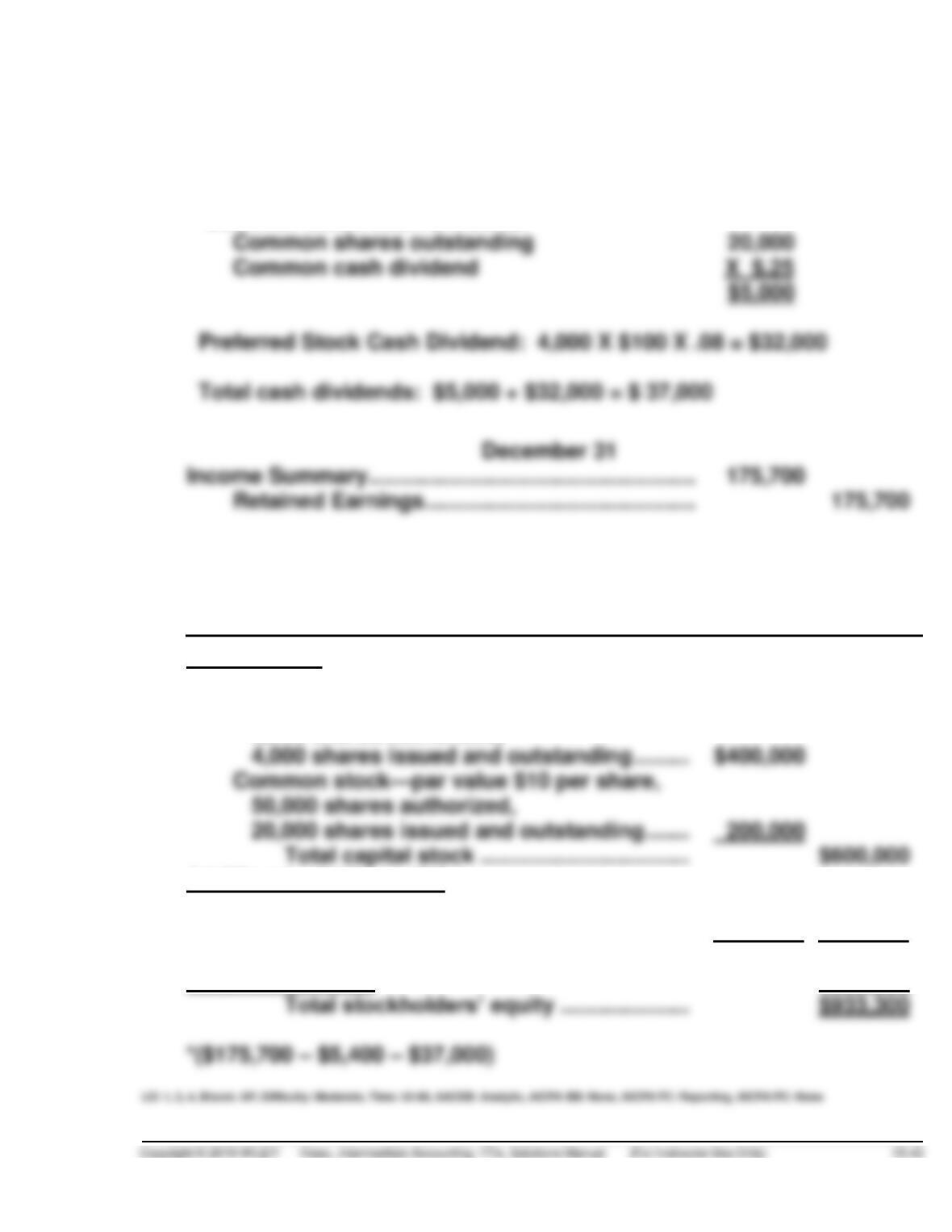
January 11
Cash (20,000 X $16) …………………………………………. 320,000
February 1
Equipment ………………………………………………………. 50,000
July 29
Treasury Stock (1,800 X $17) ……………………………. 30,600
Cash ………………………………………………………… 30,600
August 10
PROBLEM 15.1 (Continued)
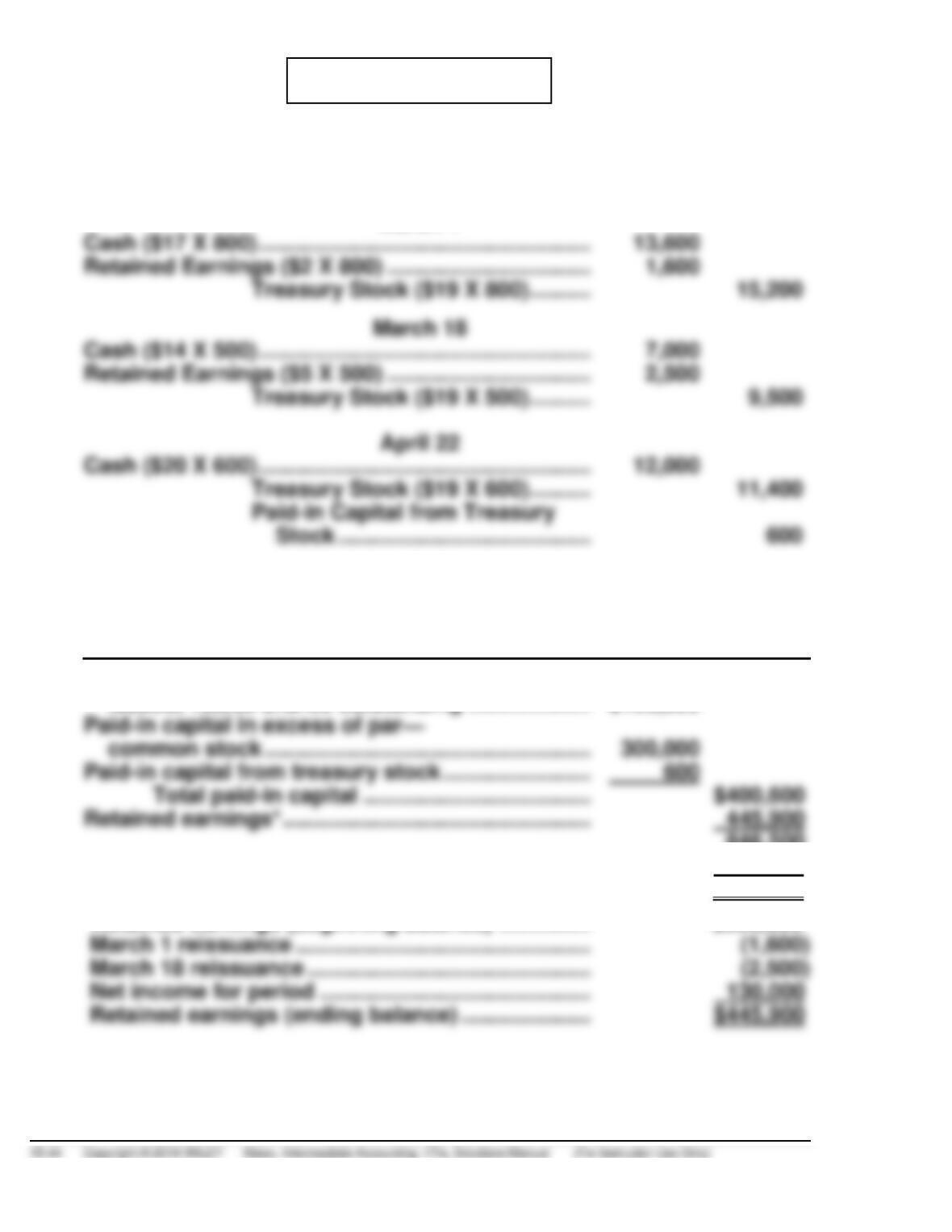
December 31
Retained Earnings …………………………………………… 37,000
Dividend Payable ……………………………………… 37,000*
*Common Stock Cash Dividend:
(b) PHELPS CORPORATION
Stockholders’ Equity
December 31, 2020
Capital stock
Preferred stock—par value $100 per share,
8% cumulative and nonparticipating,
5,000 shares authorized,
Additional paid-in capital
In excess of par—preferred ………………………. 80,000
In excess of par—common ……………………….. 120,000 200,000
Total paid-in capital ………………………….. 800,000
Retained earnings 133,300*
PROBLEM 15.2
February 1
(a) Treasury Stock ($19 X 2,000) ……………………………. 38,000
Cash ………………………………………. 38,000
March 1
(b) CLEMSON COMPANY
Stockholders’ Equity
April 30, 2020
Common stock, $5 par value, 20,000 shares
issued, 19,900 shares outstanding ……………….. $100,000
846,500
Less: Treasury stock (100 shares)** ………………… 1,900
Total stockholders’ equity ……………………… $844,600
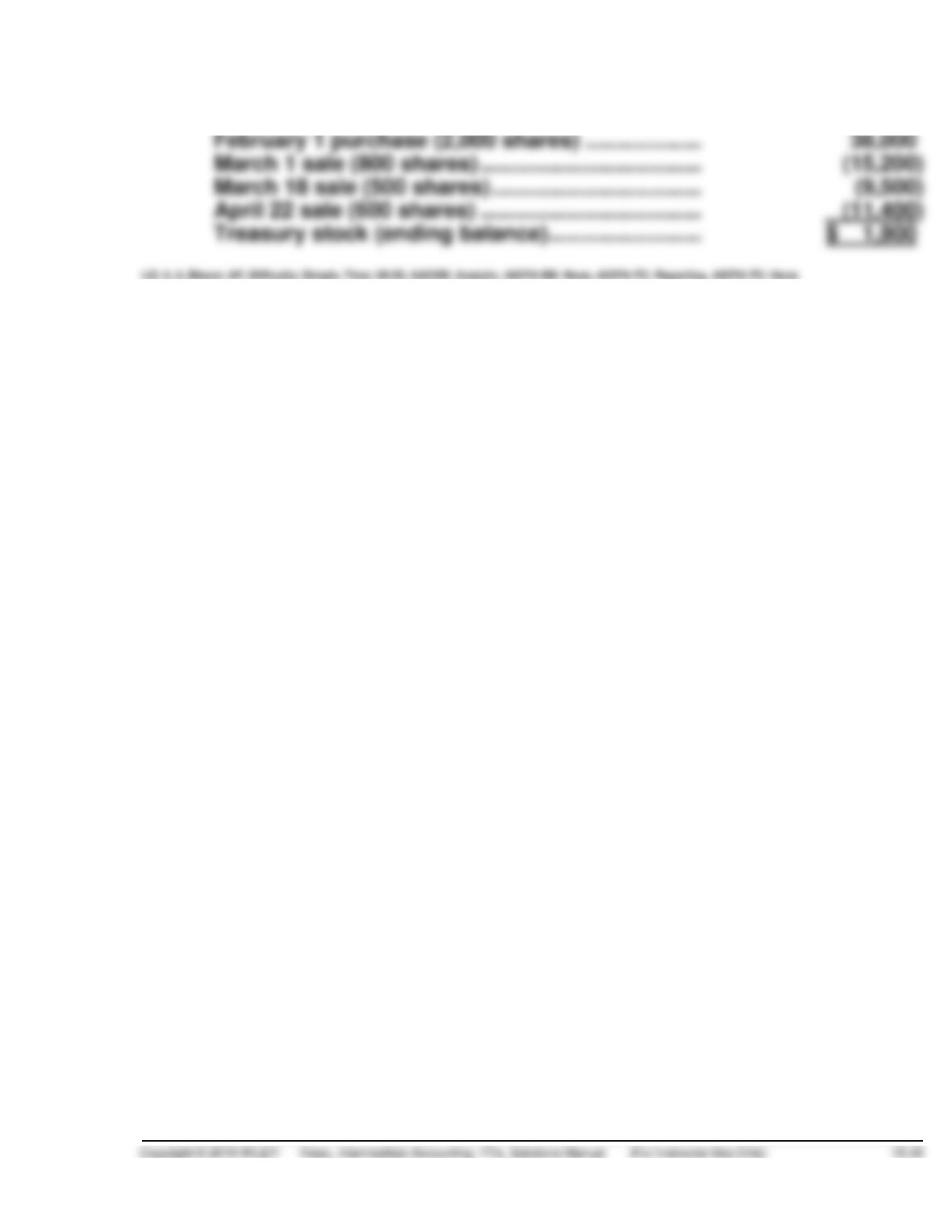
*Retained earnings (beginning balance) …………… $320,000
PROBLEM 15.2 (Continued)
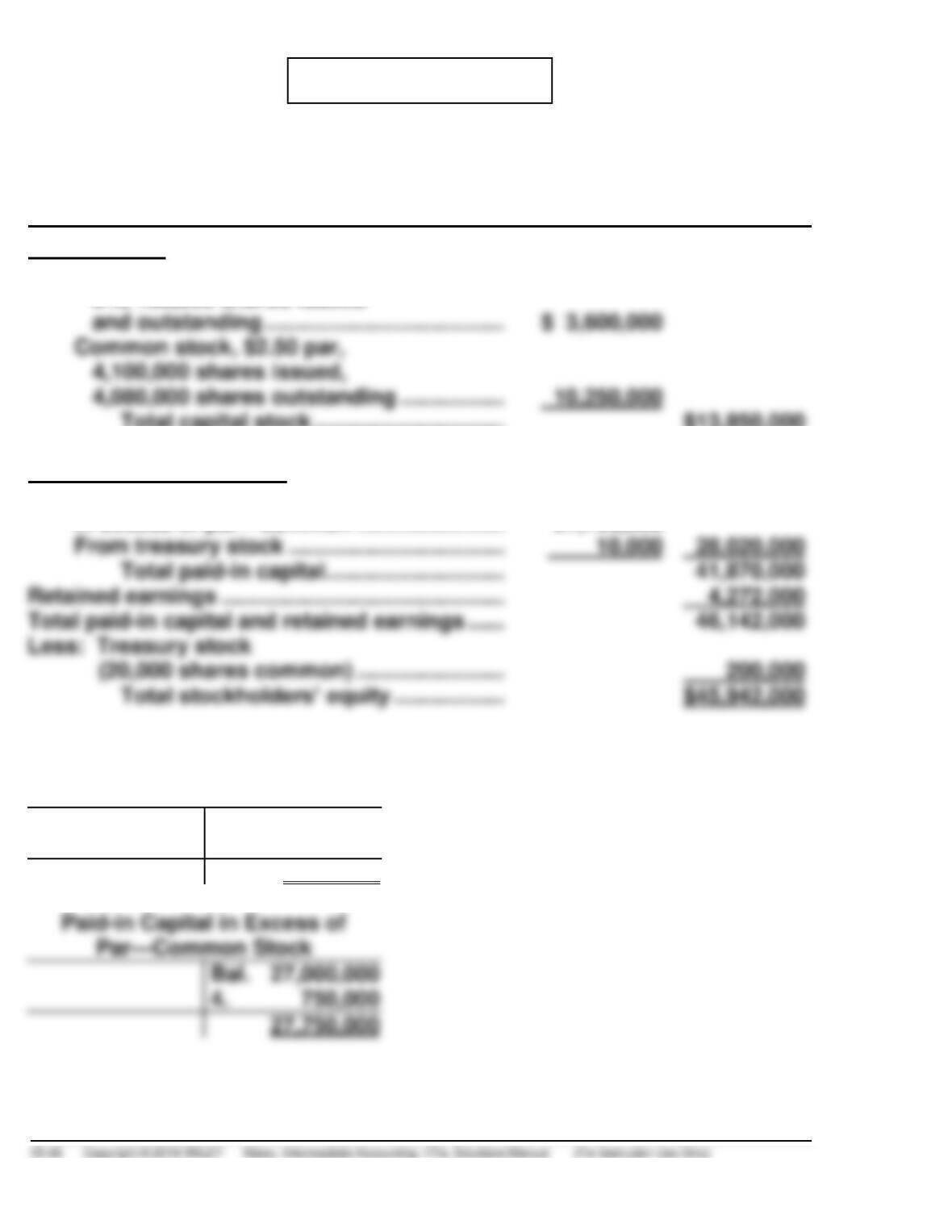
**Treasury stock (beginning balance) ………………. $ 0
PROBLEM 15.3
HATCH COMPANY
Stockholders’ Equity
December 31, 2021
Capital Stock
Preferred stock, $20 par,
8%, 180,000 shares issued
Total capital stock …………………………. $13,850,000
Additional paid-in capital
In excess of par—preferred …………………… $ 260,000
In excess of par—common …………………… 27,750,000
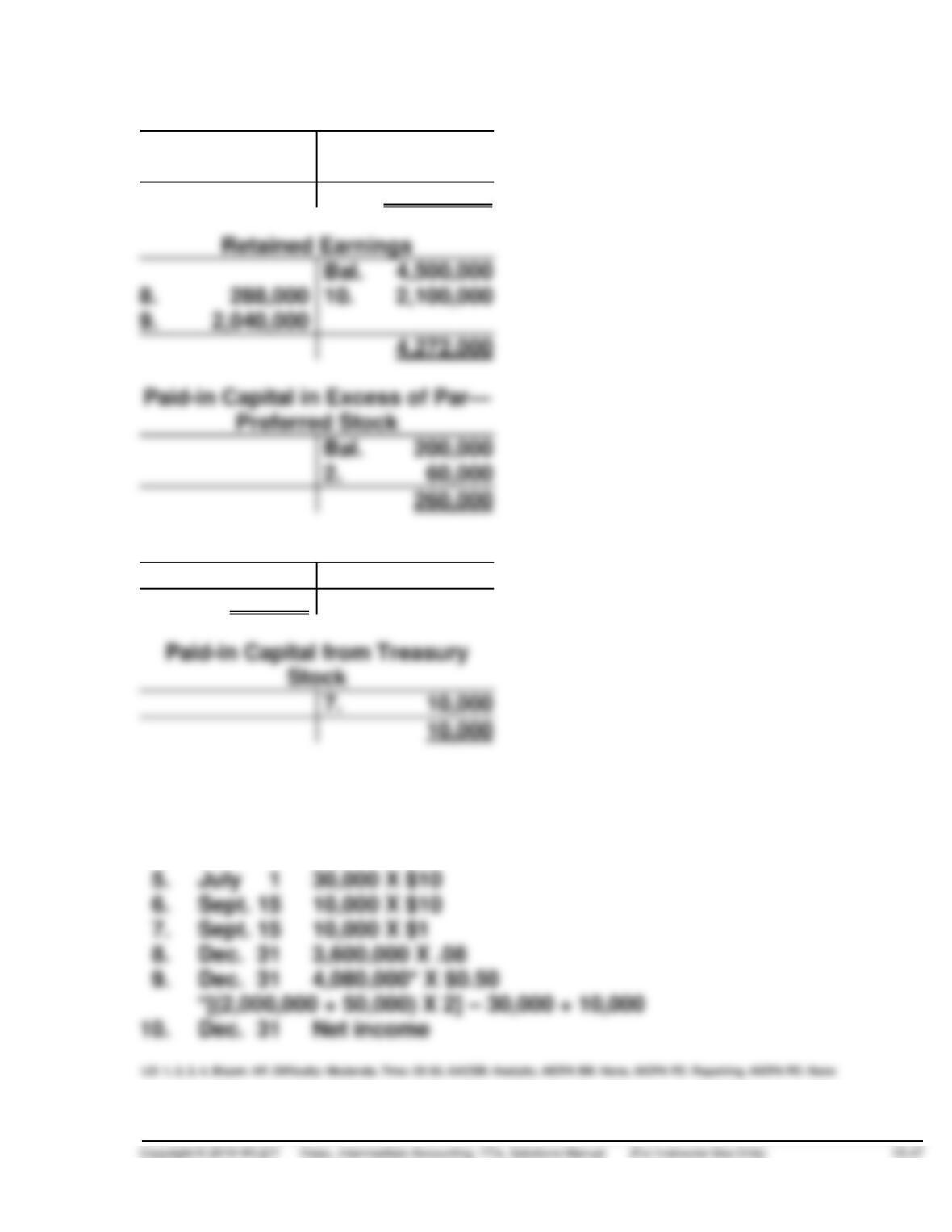
Supporting balances are indicated in the following T-accounts.
Preferred Stock
Bal. 3,000,000
1. 600,000
3,600,000
4. 750,000
PROBLEM 15.3 (Continued)
Common Stock
Bal. 10,000,000
3. 250,000
10,250,000
Bal. 4,500,000
10. 2,100,000
4,272,000
Bal. 200,000
2. 60,000
260,000
Treasury Stock
5. 300,000
6. 100,000
200,000
10,000
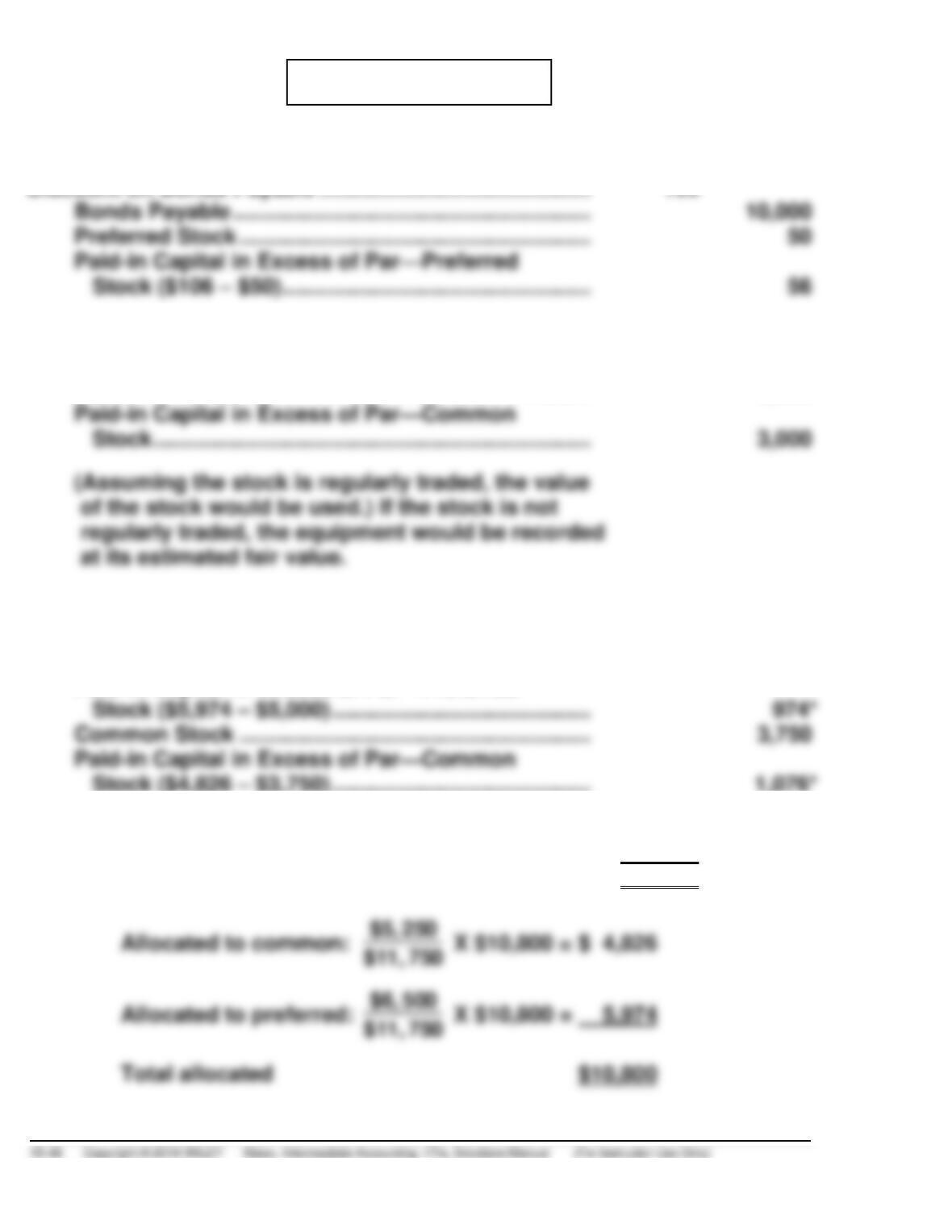
1. Jan. 1 30,000 X $20
2. Jan. 1 30,000 X $2
3. Feb. 1 50,000 X $5
4. Feb. 1 50,000 X $15
PROBLEM 15.4
-1-
Cash ………………………………………………………………………. 10,000
Discount on Bonds Payable …………………………………….. 106
-2-
Equipment (500 X $16) …………………………………………….. 8,000
Common Stock ………………………………………………… 5,000
-3-
Cash ………………………………………………………………………. 10,800
Preferred Stock ………………………………………………… 5,000
Paid-in Capital in Excess of Par—Preferred
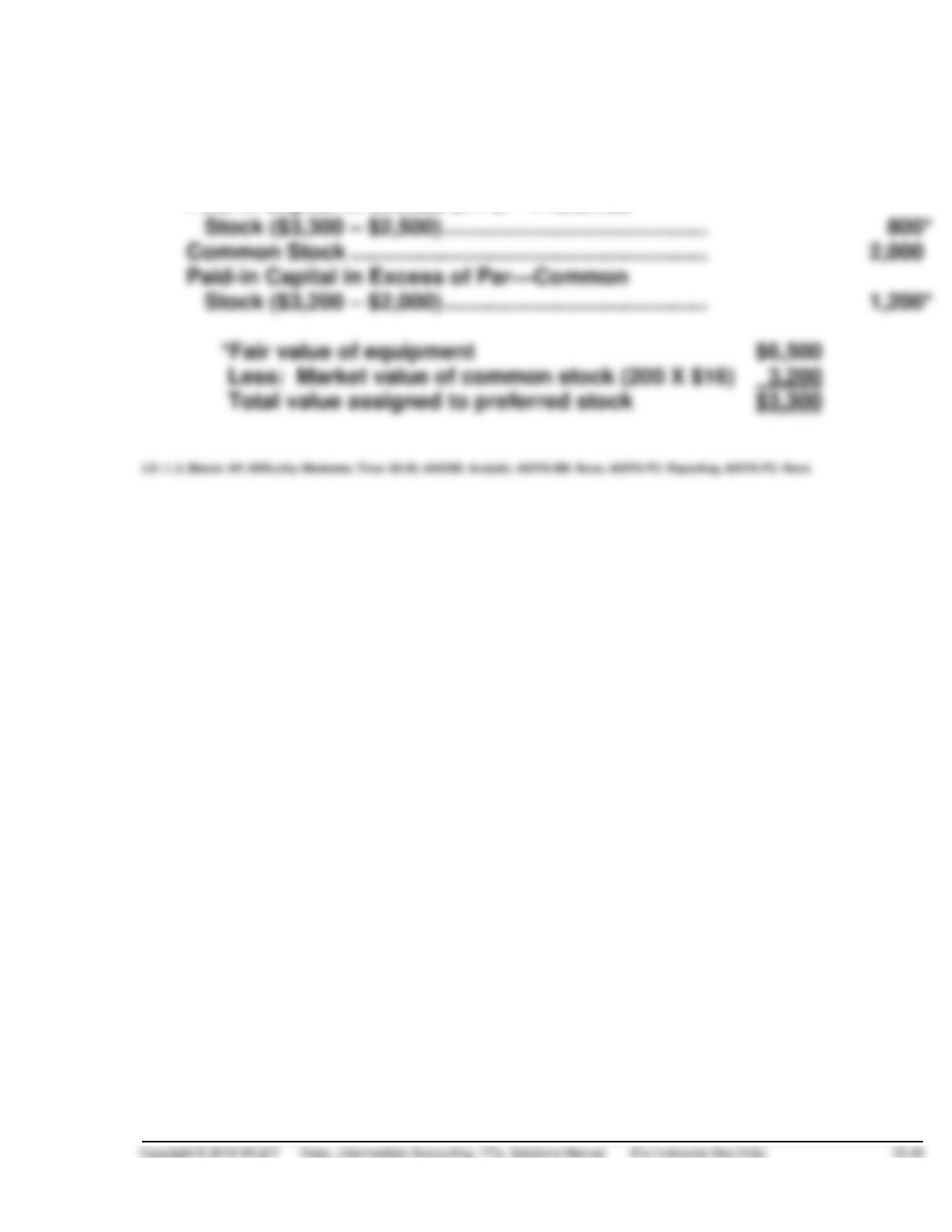
Stock ($4,826 – $3,750) …………………………………… 1,076*
*Fair value of common (375 X $14) $ 5,250
Fair value of preferred (100 X $65) 6,500
Aggregate $11,750
PROBLEM 15.4 (Continued)
-4-
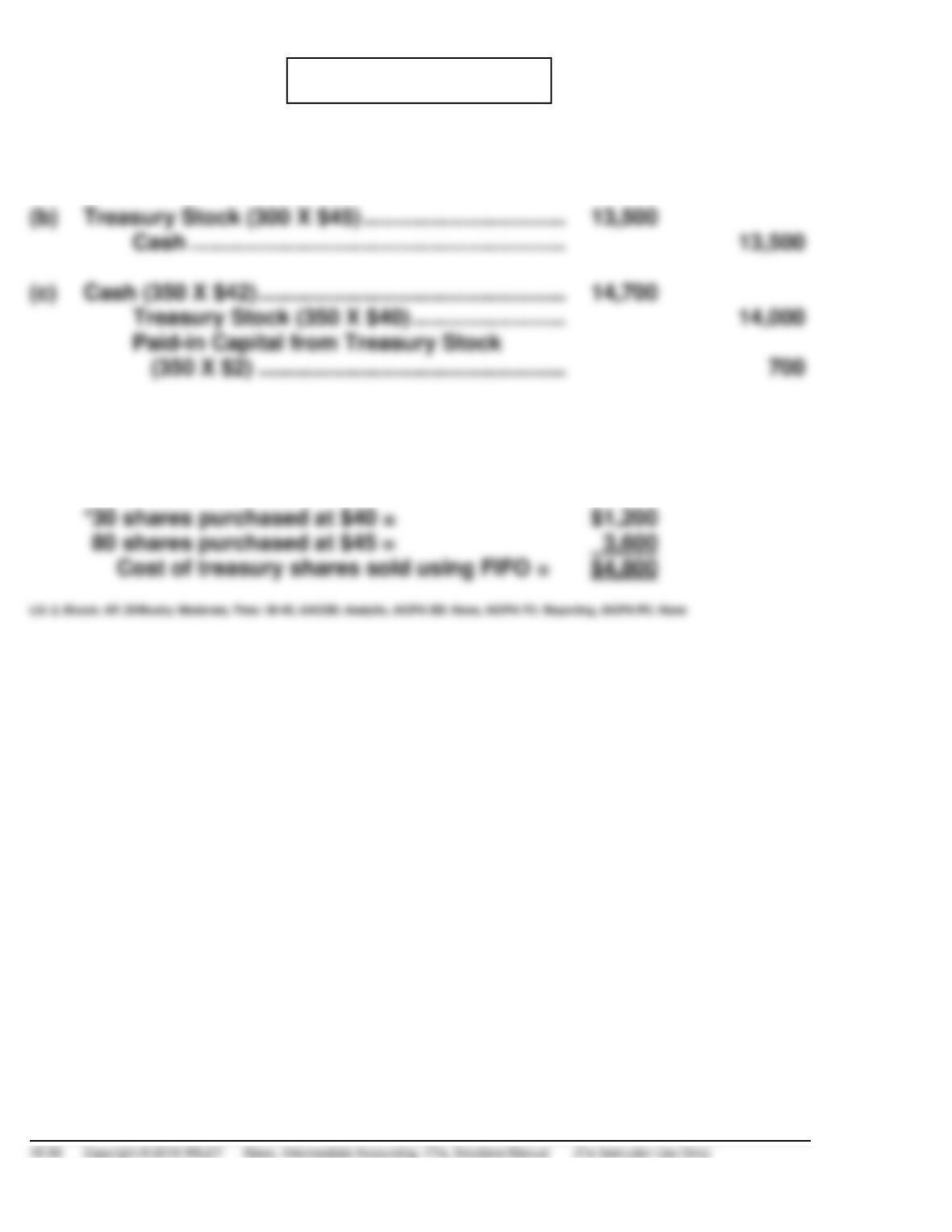
Equipment……………………………………………………………….. 6,500
Preferred Stock …………………………………………………. 2,500
Paid-in Capital in Excess of Par—Preferred
PROBLEM 15.5
(a) Treasury Stock (380 X $40) …………………………... 15,200
Cash ……………………………………………………. 15,200
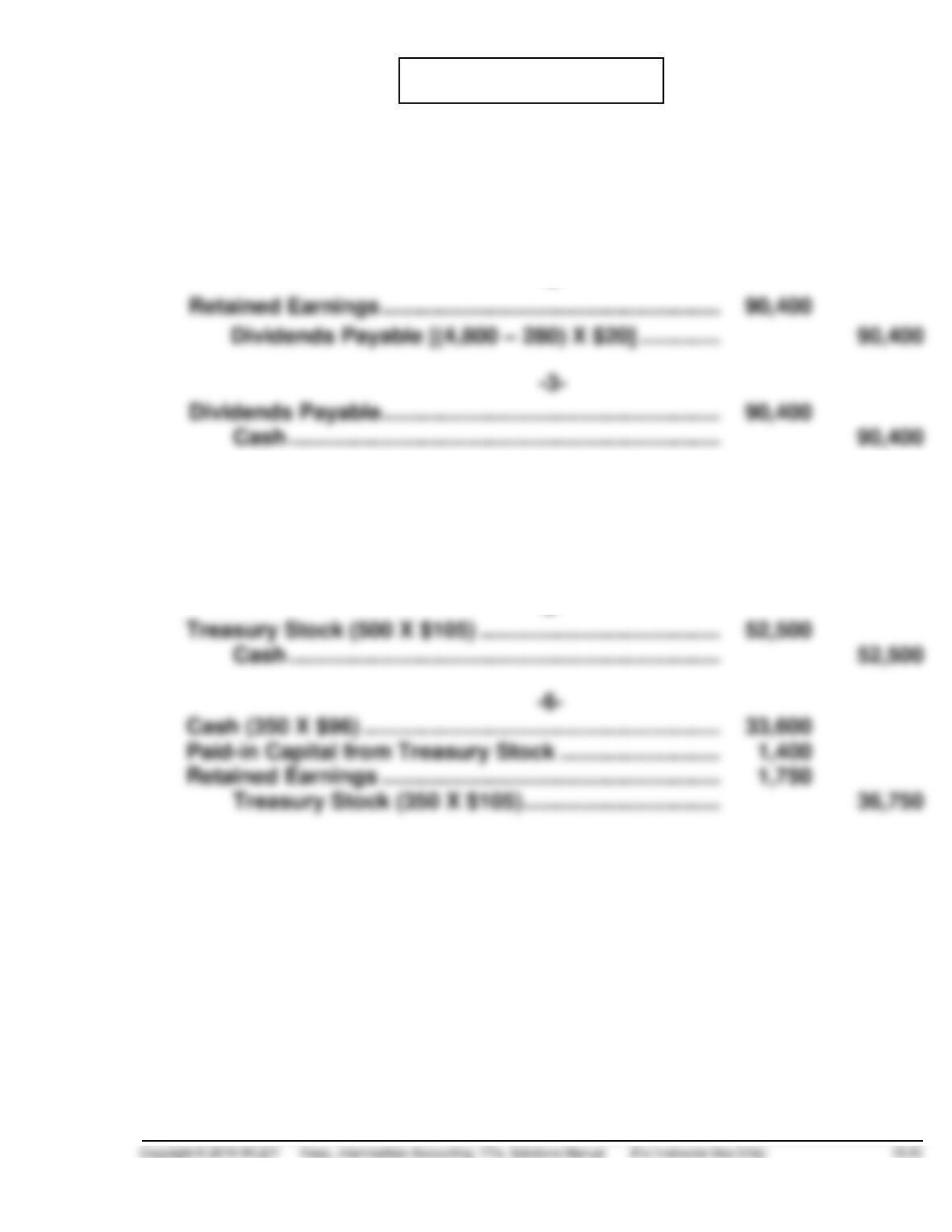
(d) Cash (110 X $38) ………………………………………….. 4,180
Paid-in Capital from Treasury Stock ……………… 620
Treasury Stock …………………………………….. 4,800*
PROBLEM 15.6
(a) -1-
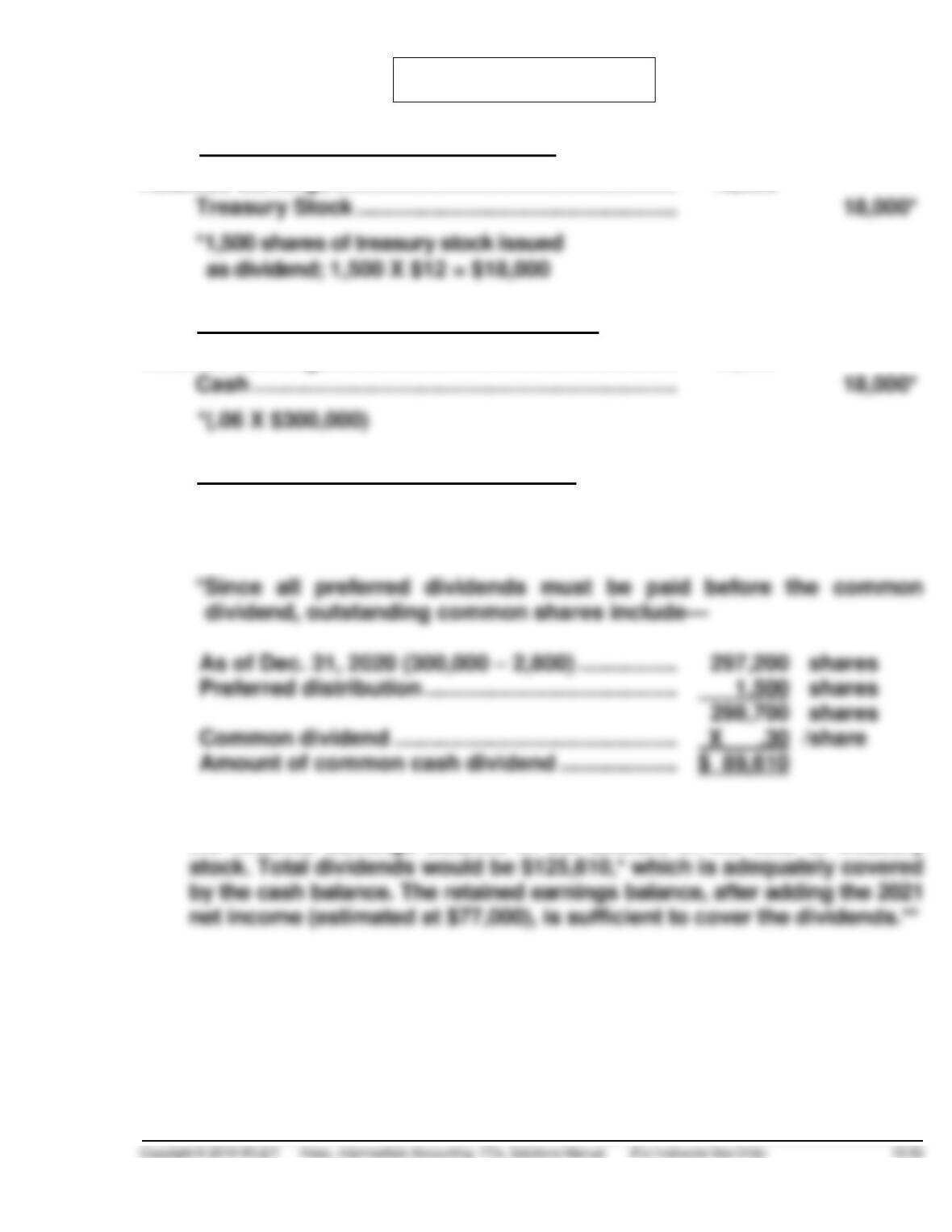
Treasury Stock (280 X $97) ………………………………….. 27,160
Cash ……………………………………………………………. 27,160
-2-
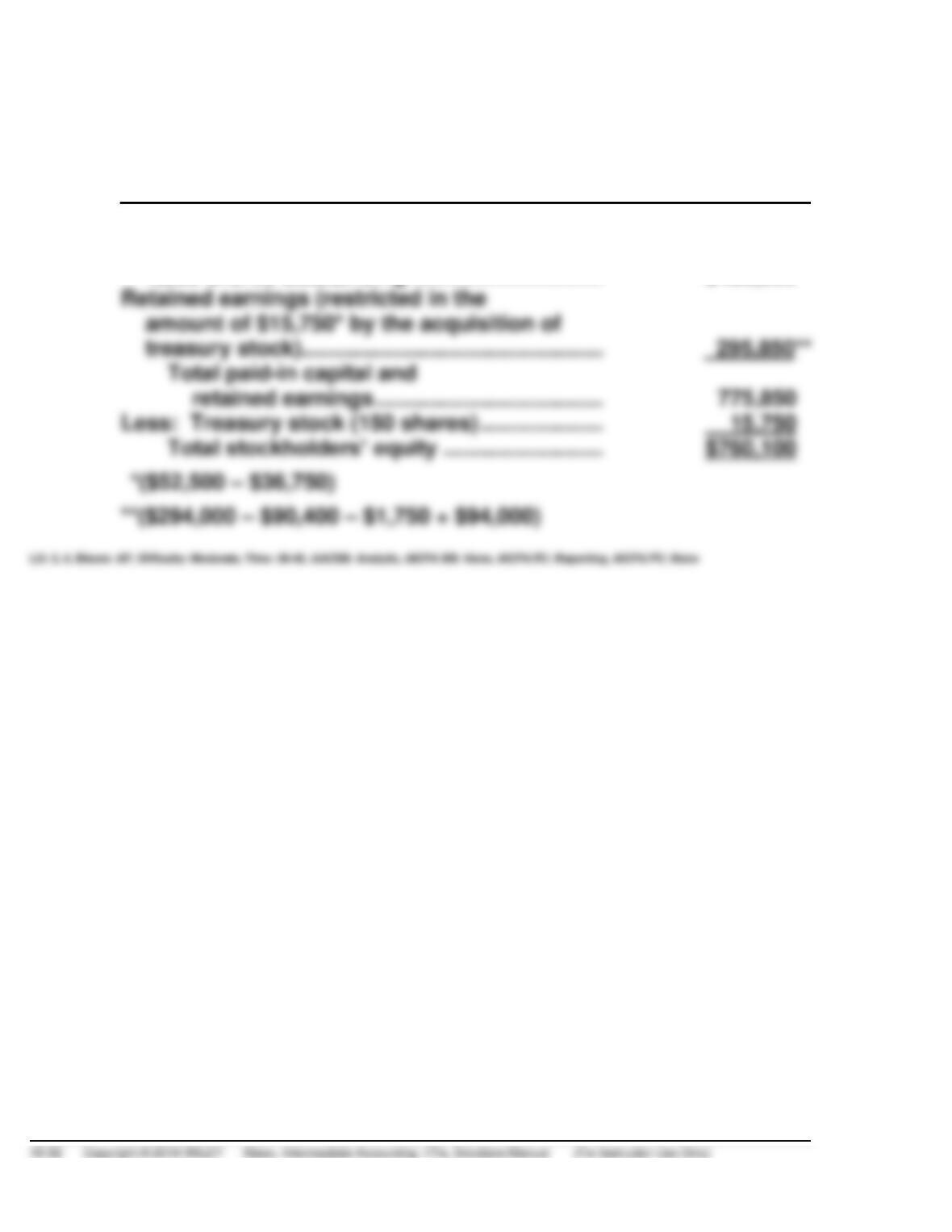
-4-
Cash (280 X $102) ……………………………………………….. 28,560
Treasury Stock …………………………………………….. 27,160
Paid-in Capital from Treasury Stock (280 X $5) …. 1,400
-5-
PROBLEM 15.6 (Continued)
(b) WASHINGTON COMPANY
Stockholders’ Equity
December 31, 2021
Common stock, $100 par value, authorized
8,000 shares; issued 4,800 shares,
4,650 shares outstanding …………………………. $480,000
PROBLEM 15.7
(a)
For preferred dividends in arrears:
Retained Earnings …………………………………………………..
18,000
Treasury Stock ……………………………………………….
18,000*
For 6% preferred current year dividend:
Retained Earnings ………………………………………………..
18,000
Cash ……………………………………………………………
18,000*
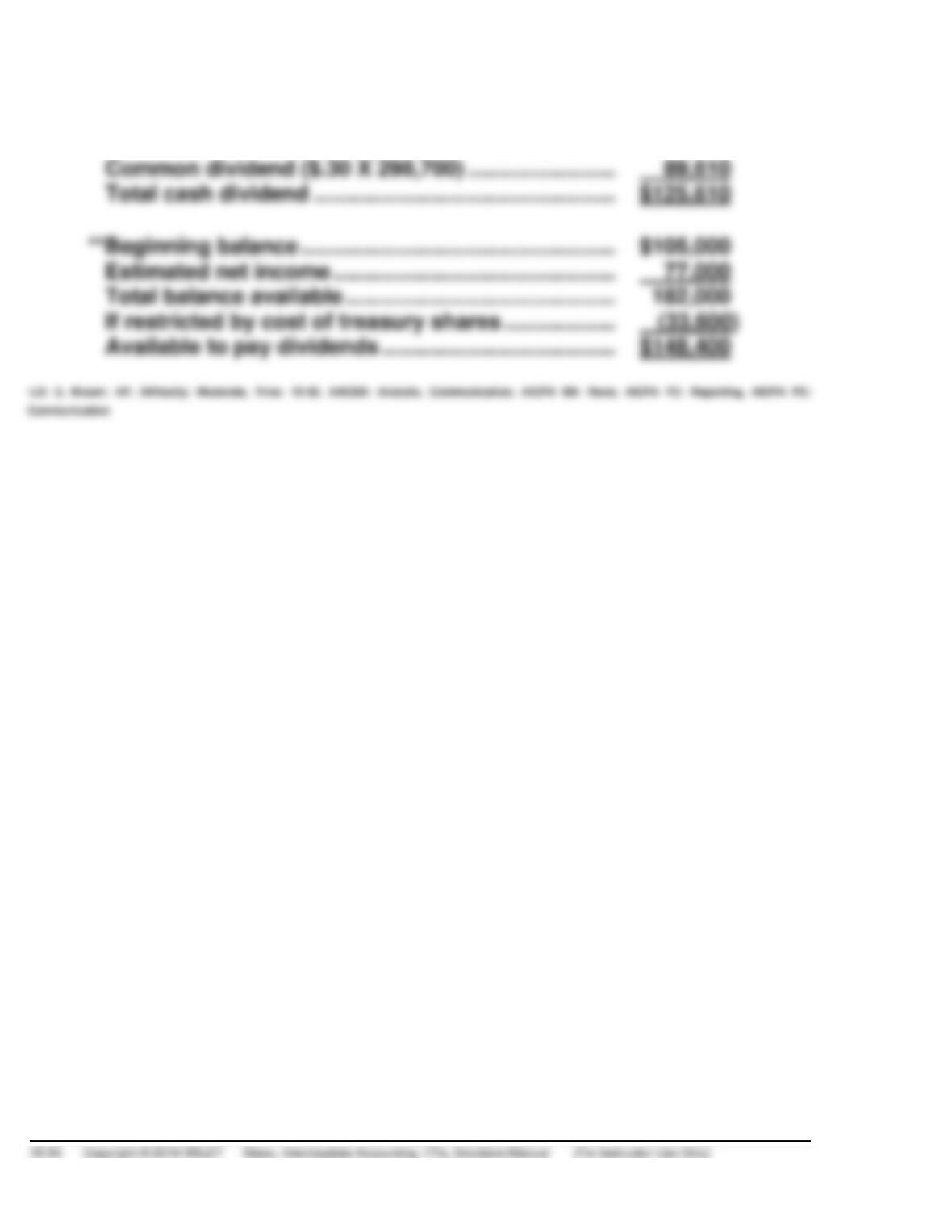
For $.30 per share common dividend:
Retained Earnings ………………………………………………..
89,610
Cash ……………………………………………………………
89,610*
(b) The suggested cash dividend could be paid even if state law did restrict
the retained earnings balance in the amount of the cost of treasury
PROBLEM 15.7 (Continued)
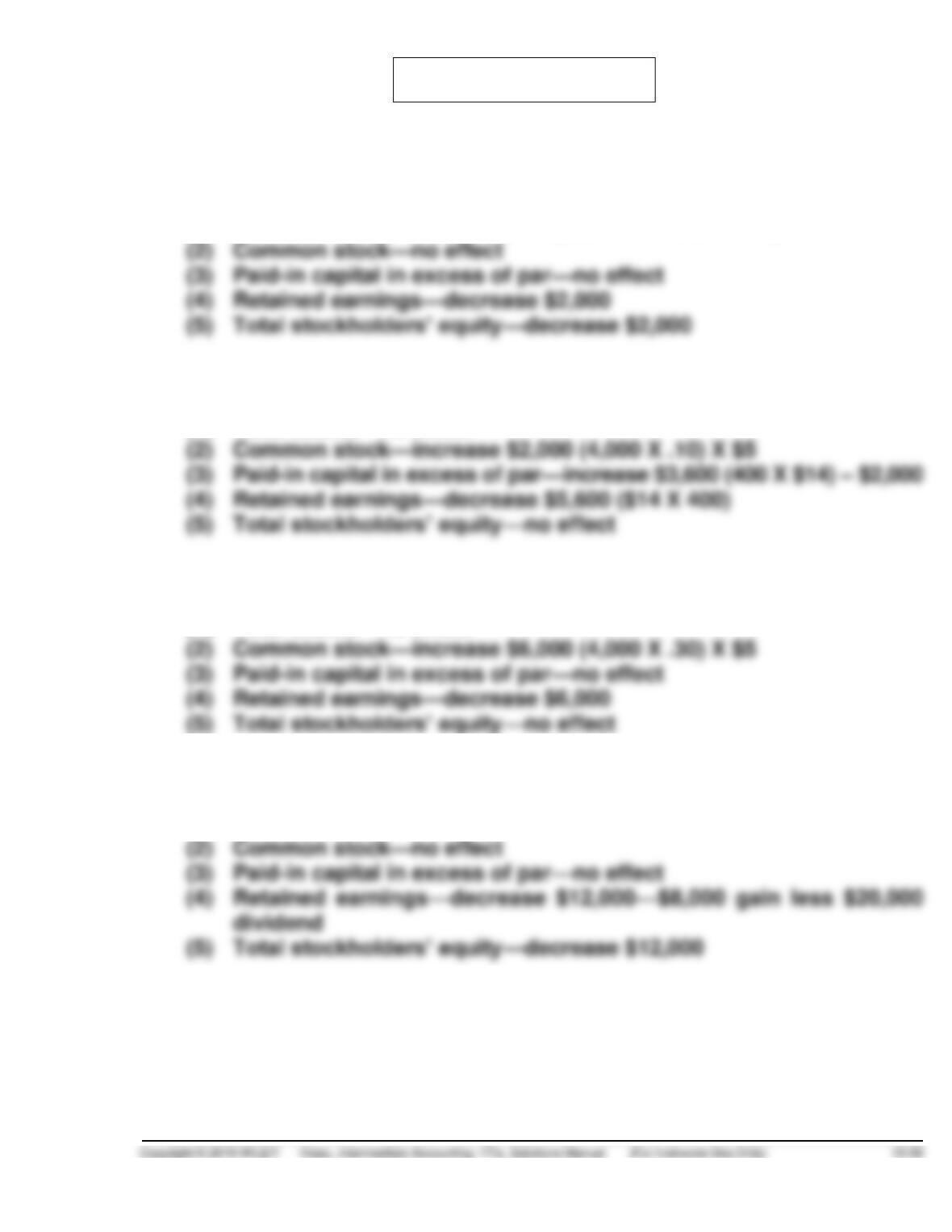
*Preferred dividends in arrears (.06 X $300,000) …..
$ 18,000
Current preferred dividend (.06 X $300,000) ……….
18,000
89,610
$105,000
77,000
Total balance available ……………………………………..
(33,600)
PROBLEM 15.8
Transactions:
(a) Assuming Myers Co. declares and pays a $.50 per share cash dividend.
(1) Total assets—decrease $2,000 [($20,000 ÷ $5) X $.50]
(b) Myers declares and issues a 10% stock dividend when the market price
of the stock is $14.
(1) Total assets—no effect
(c) Myers declares and issues a 30% stock dividend when the market price
of the stock is $15 per share.
(1) Total assets—no effect
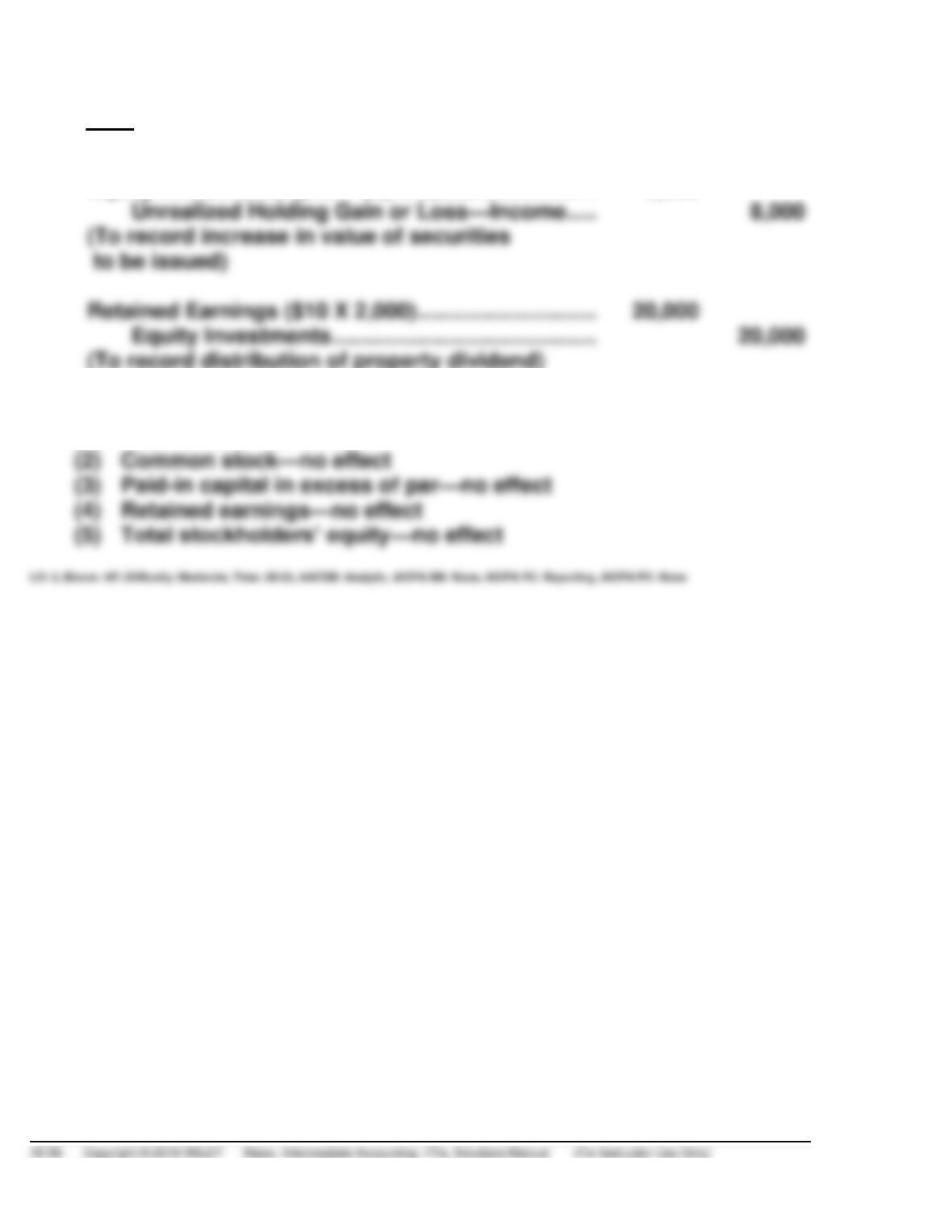
(d) Myers declares and distributes a property dividend.
(1) Total assets—decrease $12,000 (2,000 X $6)—$8,000 gain less
$20,000 dividend
PROBLEM 15.8 (Continued)
Note:
The journal entries made for the previous transaction are:
Equity Investments ($10 – $6) X 2,000 …………………….
8,000
Unrealized Holding Gain or Loss—Income ……….
Retained Earnings ($10 X 2,000) …………………………..
Equity Investments …………………………………………
(To record distribution of property dividend)
(e) Myers declares a 2-for-1 stock split
(1) Total assets—no effect
PROBLEM 15.9
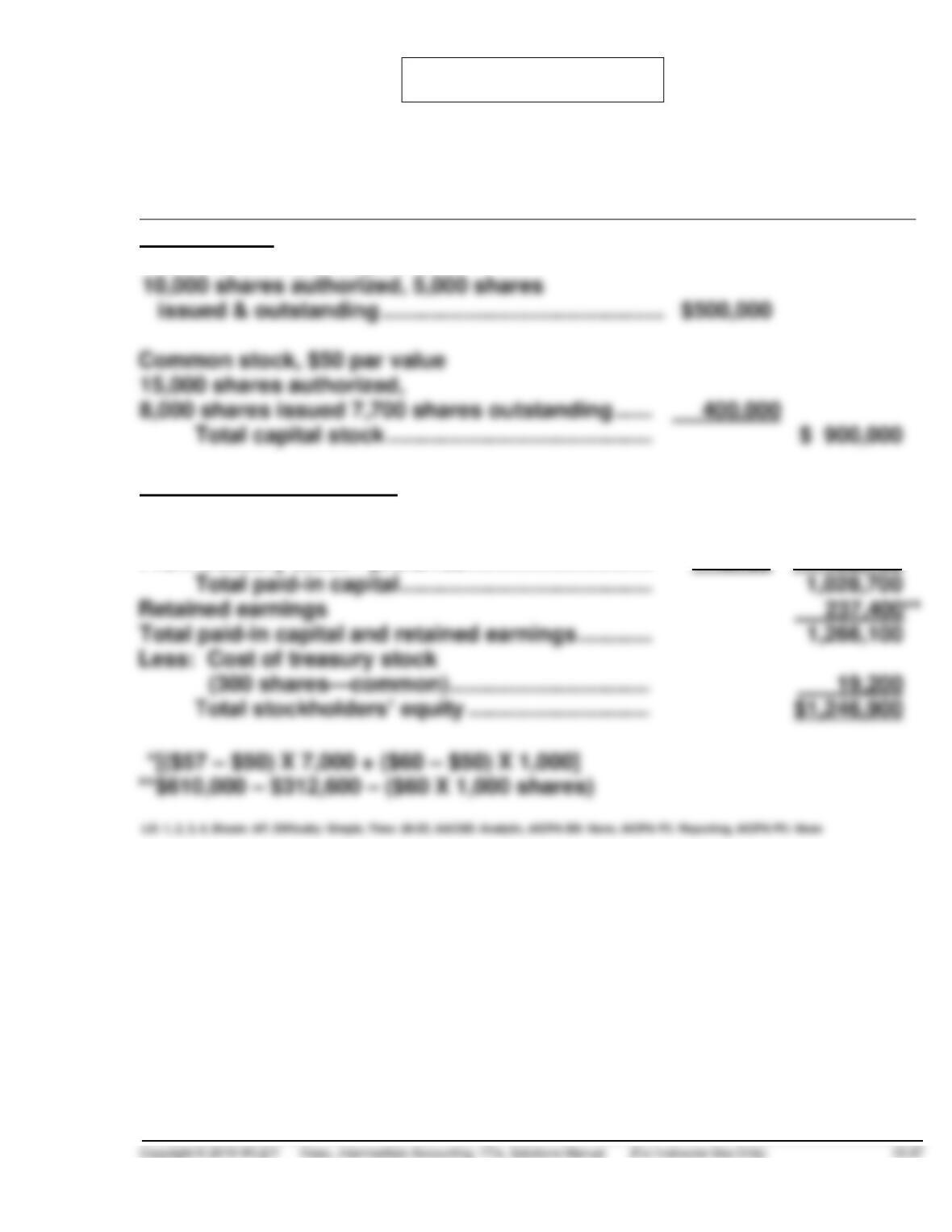
VICARIO CORPORATION
Stockholders’ Equity
December 31, 2022
Capital stock:
Preferred stock, $100 par value
Common stock, $50 par value
15,000 shares authorized,
8,000 shares issued 7,700 shares outstanding ……….
Total capital stock ………………………………………..
Additional paid-in capital:
In excess of par—preferred …………………………………..
65,000
In excess of par—common ……………………………………
59,000*
From treasury stock—preferred …………………………..
4,700
128,700
Total paid-in capital ………………………………………
Retained earnings
PROBLEM 15.10
To: Oregon Inc. Board of Directors
From: Good Student, Financial Advisor
Date: Today
Subject: Report on the effects of a stock dividend and a stock split
INTRODUCTION
As financial advisor to the Board of Directors for Oregon Inc., I have been
asked to report on the effects of the following options for creating interest
RECOMMENDATION
In order to meet the needs of Oregon Inc., the board should choose a
2-for-1 stock split. The stock split is the only option which would not change
DISCUSSION OF OPTIONS
The three above-mentioned options would all result in an increased
number of common shares outstanding. Because the shares would be
PROBLEM 15.10 (Continued)
A 20% STOCK DIVIDEND
This option would increase the shares outstanding by 20 percent, which
translates into 800,000 additional shares of $10 par value common stock.
A 100% STOCK DIVIDEND
This option would double the number of $10 par value common stock cur–
rently issued and outstanding. Because this type of dividend is considered,
in substance, a stock split, the shares do not have to be accounted for at
fair value. Instead, Retained Earnings is reduced only by the par value of
PROBLEM 15.10 (Continued)
A 2-FOR-1 STOCK SPLIT
This option doubles the number of shares issued and outstanding; however,
it also cuts the par value per share in half. No accounting treatment beyond
a memorandum entry is required for the split because the effect of splitting
CONCLUSION
To generate the greatest interest in Oregon Inc. stock while maintaining the