Chapter 15
Statement of Cash Flows
Solutions to Questions
15-1 The statement of cash flows highlights
the major activities that impact cash flows and
hence affect the overall cash balance.
15-2 Cash equivalents are short-term, highly
liquid investments such as Treasury bills,
commercial paper, and money market funds.
They are included with cash because
investments of this type are made solely for the
purpose of generating a return on temporarily
idle funds and they can be easily converted to
cash.
15-3 (1) Operating activities: Include cash
inflows and outflows related to revenue and
expense transactions that affect net income.
(2) Investing activities: Include cash
inflows and outflows related to acquiring or
disposing of noncurrent assets.
(3) Financing activities: Include cash
inflows and outflows related to borrowing from
15-7 The repayment of $300,000 and the
borrowing of $500,000 must both be shown
“gross” on the statement of cash flows. That is,
the company would show $500,000 of cash
provided by financing activities and then show
$300,000 of cash used by financing activities.
15-8 The direct method reconstructs the
income statement on a cash basis by restating
revenues and expenses in terms of cash inflows
and outflows. The indirect method starts with
net income and adjusts it to a cash basis to
determine the net cash provided by operating
activities.
15-9 Depreciation is not a cash inflow, even
though it is added to net income on the
statement of cash flows. Adding depreciation to
net income to compute the amount of net cash
provided by operating activities creates the
illusion
that depreciation is a cash inflow. It isn’t.
The Foundational 15
1. The net decrease in cash and cash equivalents would equal the $9,000
decrease in the cash balance (from $57,000 to $48,000) as shown on
the balance sheet.
2. The basic equation for stockholders’ equity accounts can be applied to
the Retained Earnings account to compute the net income of $2,000
as follows:
Beginning balance – Debits + Credits = Ending balance
$61,000 – $6,000 + Credits = $57,000
$55,000 + Credits = $57,000
Credits = $2,000
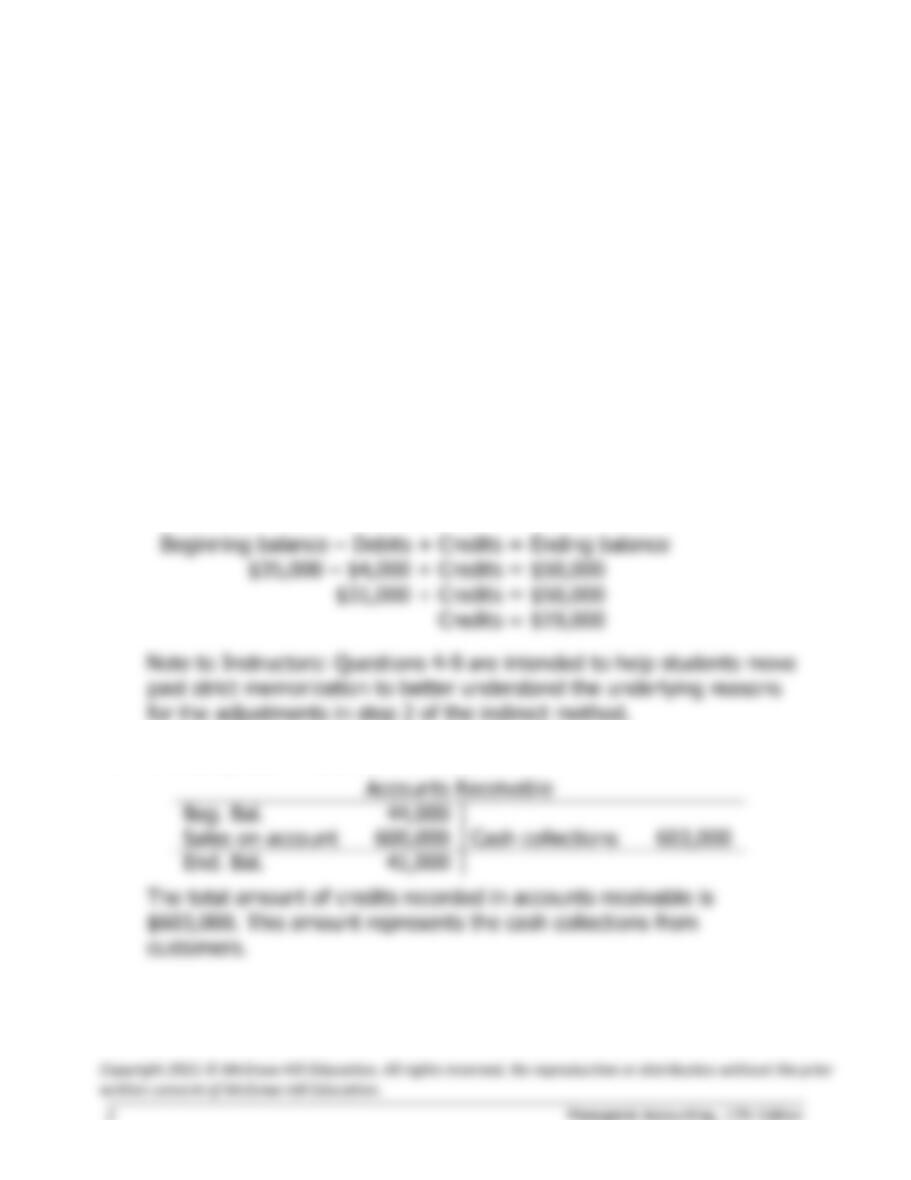
3. The basic equation for contra-asset accounts can be applied to the
Accumulated Depreciation account to compute the depreciation of
$19,000 that needs to be added to net income as follows:
4. The completed T-account is as follows:
The Foundational 15 (continued)
5. The accounts receivable balance decreased by $3,000; therefore, the
$3,000 decrease is added to net income. This adjustment reflects the
fact (as depicted in the solution to question 4) that cash collections
from customers of $603,000 were $3,000 higher than the credit sales
of $600,000 included in the income statement.
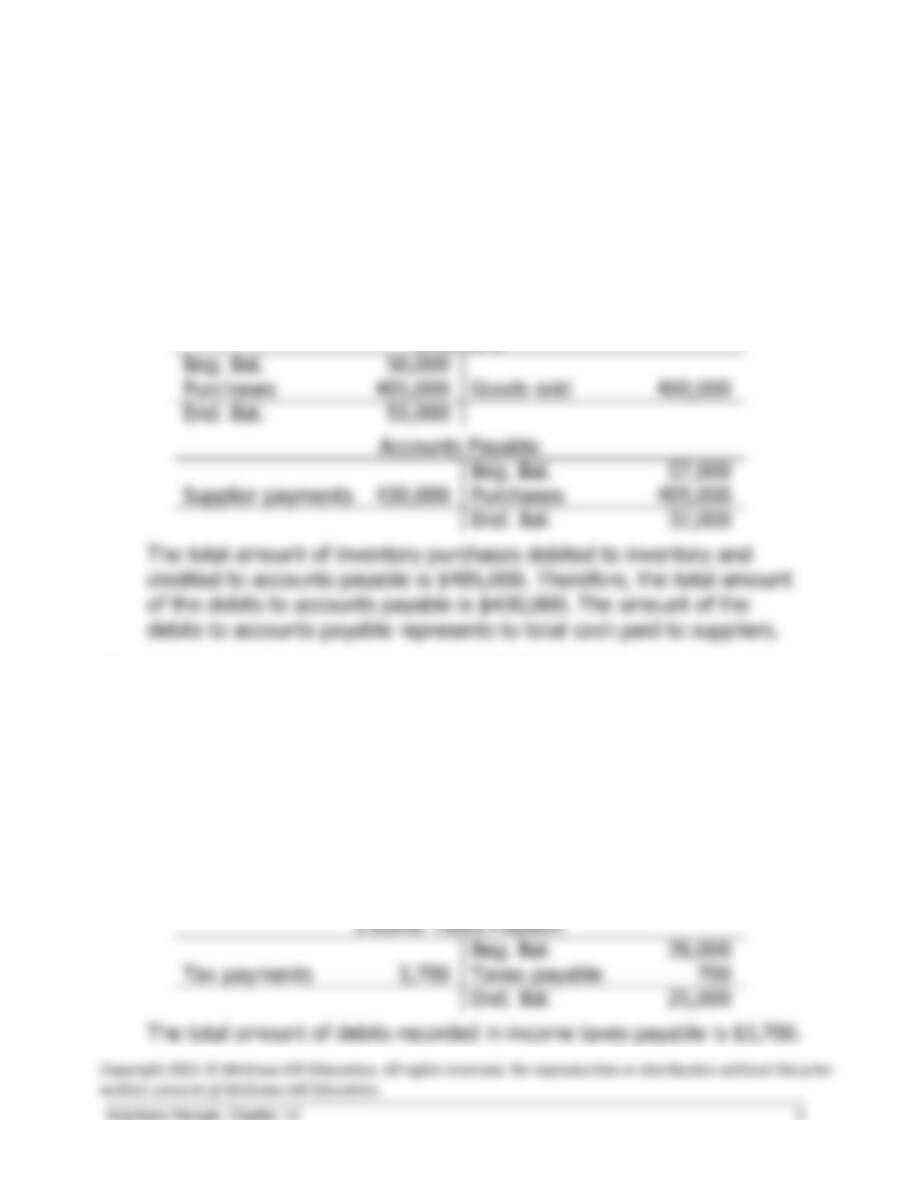
6. The completed T-accounts are as follows:
7. The inventory balance increased by $5,000; therefore, this amount is
subtracted from net income. The accounts payable balance decreased
by $25,000; therefore, this amount is also subtracted from net income.
The combined amount of these adjustments is a $30,000 deduction
from net income. This adjustment reflects the fact (as shown in the
solution to question 6) that cash paid to suppliers of $430,000 is
$30,000 higher than the cost of goods sold of $400,000 included in the
income statement.
8. The completed T-account is as follows;
This amount represents the cash paid for income taxes.
The Foundational 15 (continued)
9. The income taxes payable balance decreased by $3,000; therefore, the
$3,000 decrease is subtracted from net income. This adjustment
10. The operating activities section of the statement of cash flows would
contain an adjustment related to a gain on the sale of a piece of
equipment. The equipment was sold for $3,000 and it had a book
value at the time of its sale of $2,000 (= $6,000 original cost − $4,000
of accumulated depreciation); therefore, the company would record a
$1,000 gain on the sale (= $3,000 cash proceeds – $2,000 book
value). This amount would be subtracted from net income in the
operating activities section of the statement.
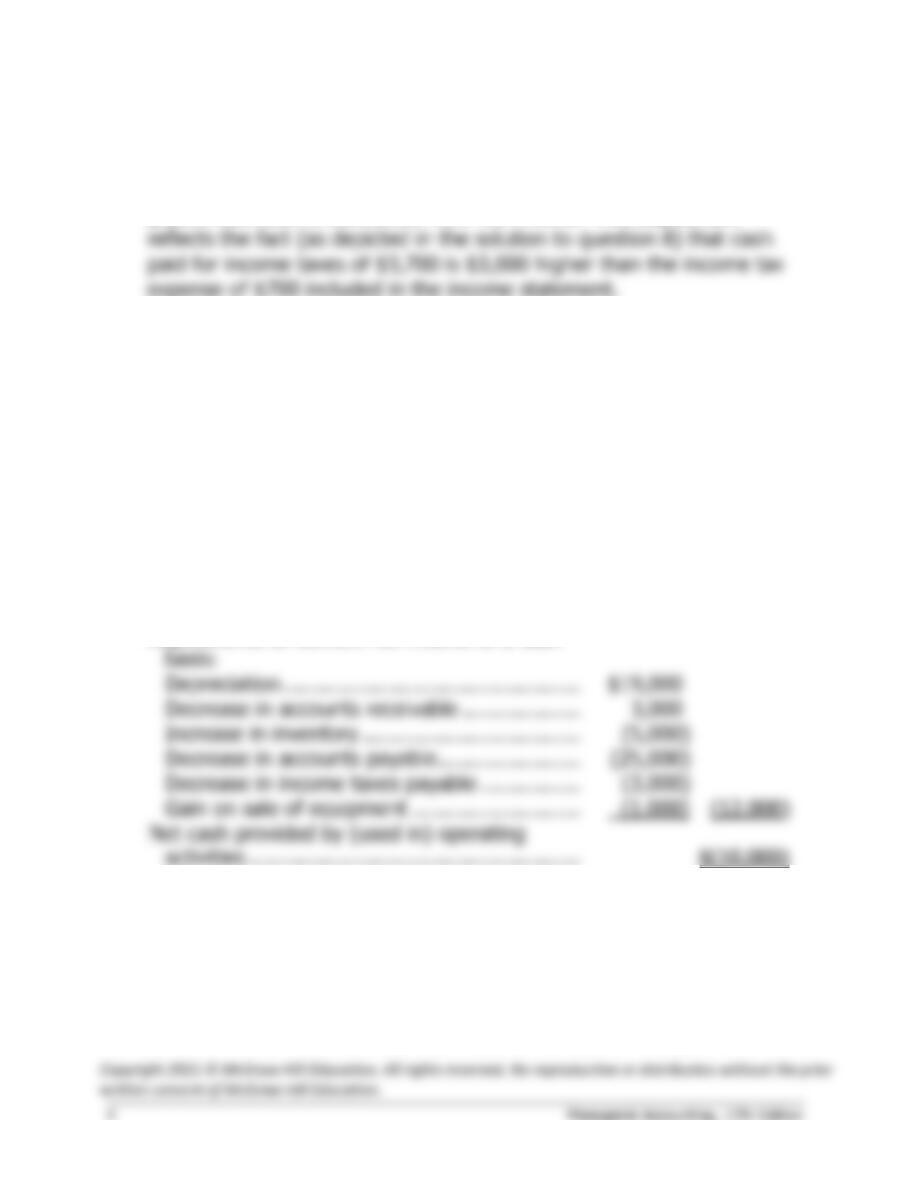
11. The net cash provided by (used in) operating activities would be
computed as follows:
Net income …………………………………………….
$ 2,000
12. The gross cash outflows of $16,000 can be computed by applying the
basic equation for assets to the Property, Plant, and Equipment
account as follows:
Beginning balance + Debits – Credits = Ending balance
$140,000 + Debits – $6,000 = $150,000
Debits = $150,000 – $140,000 + $6,000
Debits = $16,000
The Foundational 15 (continued)
13. The net cash provided by (used in) investing activities is $(13,000).
This amount includes the $(16,000) cash outflow related to the
purchase of property, plant, and equipment (as computed in question
12) and the $3,000 cash inflow from the sale of equipment.
14. The guidelines from Exhibit 15-3 can be used to analyze the changes
in noncash balance sheet accounts that impact financing cash flows as
follows:
Increase in
Decrease
15. The cash inflows of $20,000 from the issuance of bonds and common
stock (as computed in question 14) minus the cash dividend of $6,000
equals net cash provided by (used in) financing activities of $14,000.
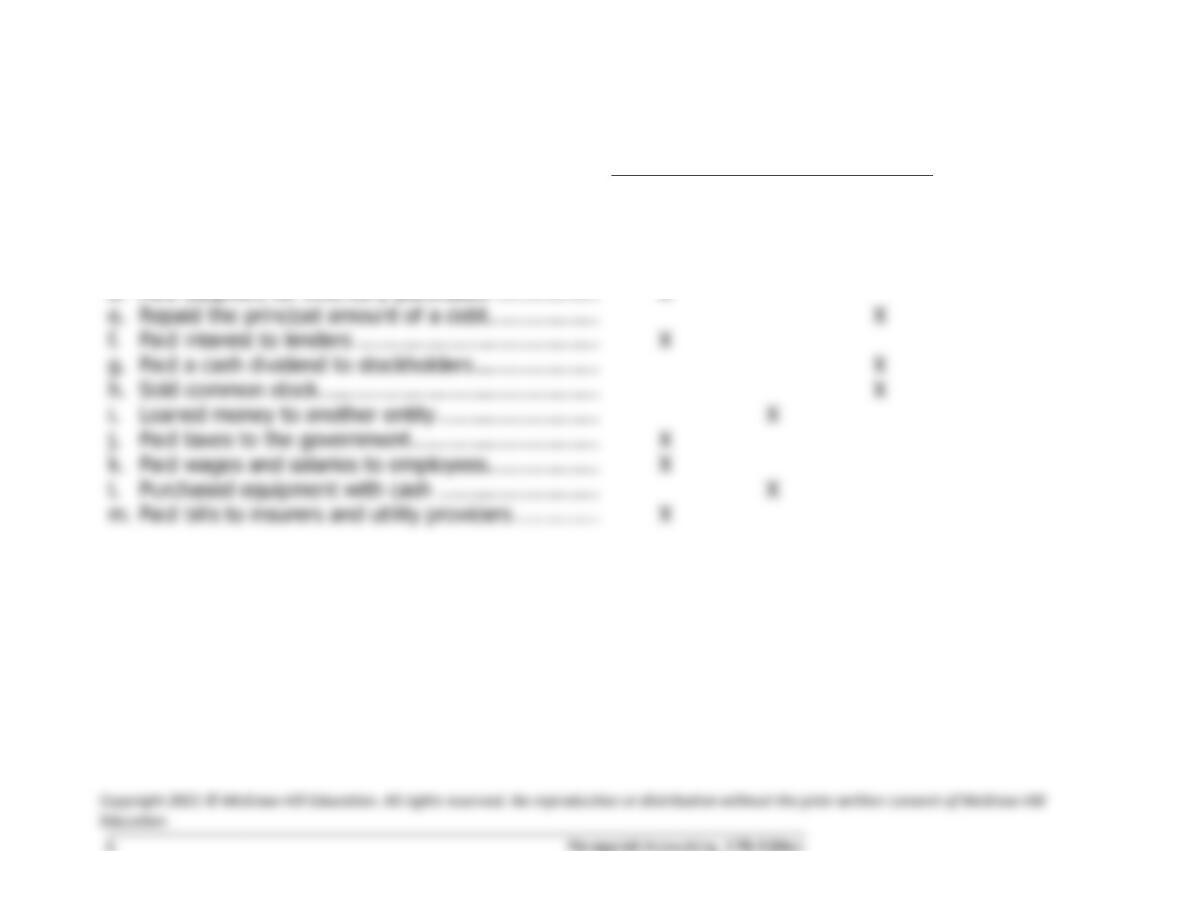
Exercise 15-1 (15 minutes)
Activity
Transaction
Operating
Investing
Financing
a.
Collected cash from customers ……………………….
X
b.
Paid cash to repurchase its own stock ………………
X
c.
Borrowed money from a creditor …………………….
X
Paid suppliers for inventory purchases ……………..
X
Repaid the principal amount of a debt ………………
X
Paid interest to lenders …………………………………
X
Paid a cash dividend to stockholders ………………..
X
Sold common stock ………………………………………
X
Loaned money to another entity ……………………..
X
Paid taxes to the government …………………………
X
Paid wages and salaries to employees ………………
X
Purchased equipment with cash ……………………..
X
Paid bills to insurers and utility providers …………..
X
Exercise 15-2 (15 minutes)
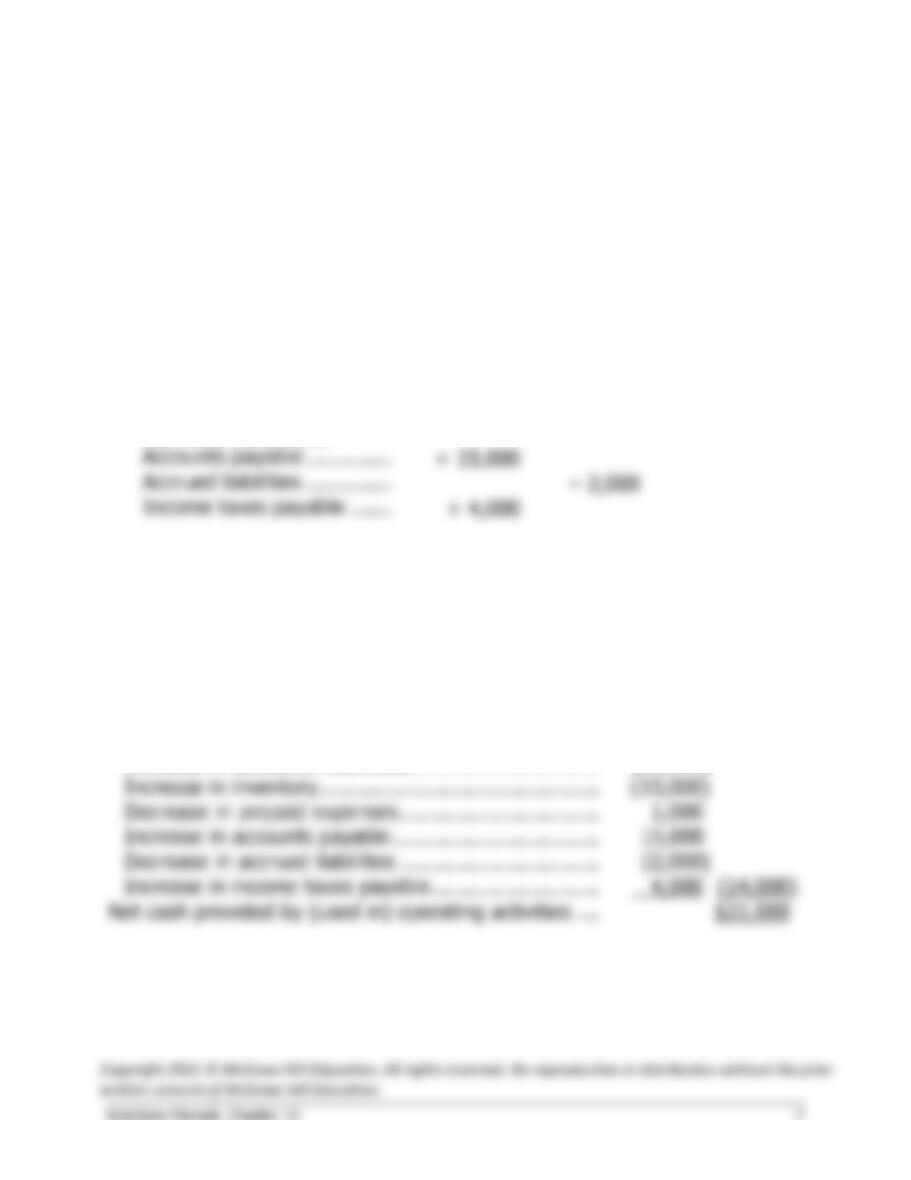
The guidelines from Exhibit 15-2 can be used to analyze the changes in
noncash balance sheet accounts that impact net income as follows:
Increase
in Account
Balance
Decrease
in Account
Balance
Current Assets
Accounts receivable ………..
– 19,000
Inventory …………………….
– 33,000
Prepaid expenses …………..
+ 1,000
Current Liabilities
Accounts payable …………..
Accrued liabilities …………..
Income taxes payable …….
The net cash provided by (used in) operating activities is computed as
follows:
Net income …………………………………………………….
$35,000
Adjustments to convert net income to a cash basis:
Depreciation …………………………………………………
$20,000
Increase in accounts receivable …………………………
Increase in inventory ………………………………………
Increase in income taxes payable ………………………
Net cash provided by (used in) operating activities ….

Exercise 15-3 (5 minutes)
Free cash flow computation:
Net cash provided by operating activities .
$ 34,000
Less:
Capital expenditures ………………………….
$(110,000)
Dividends ……………………………………….
(30,000)
(140,000)
Free cash flow ……………………………………
$(106,000)
Exercise 15-4 (30 minutes)
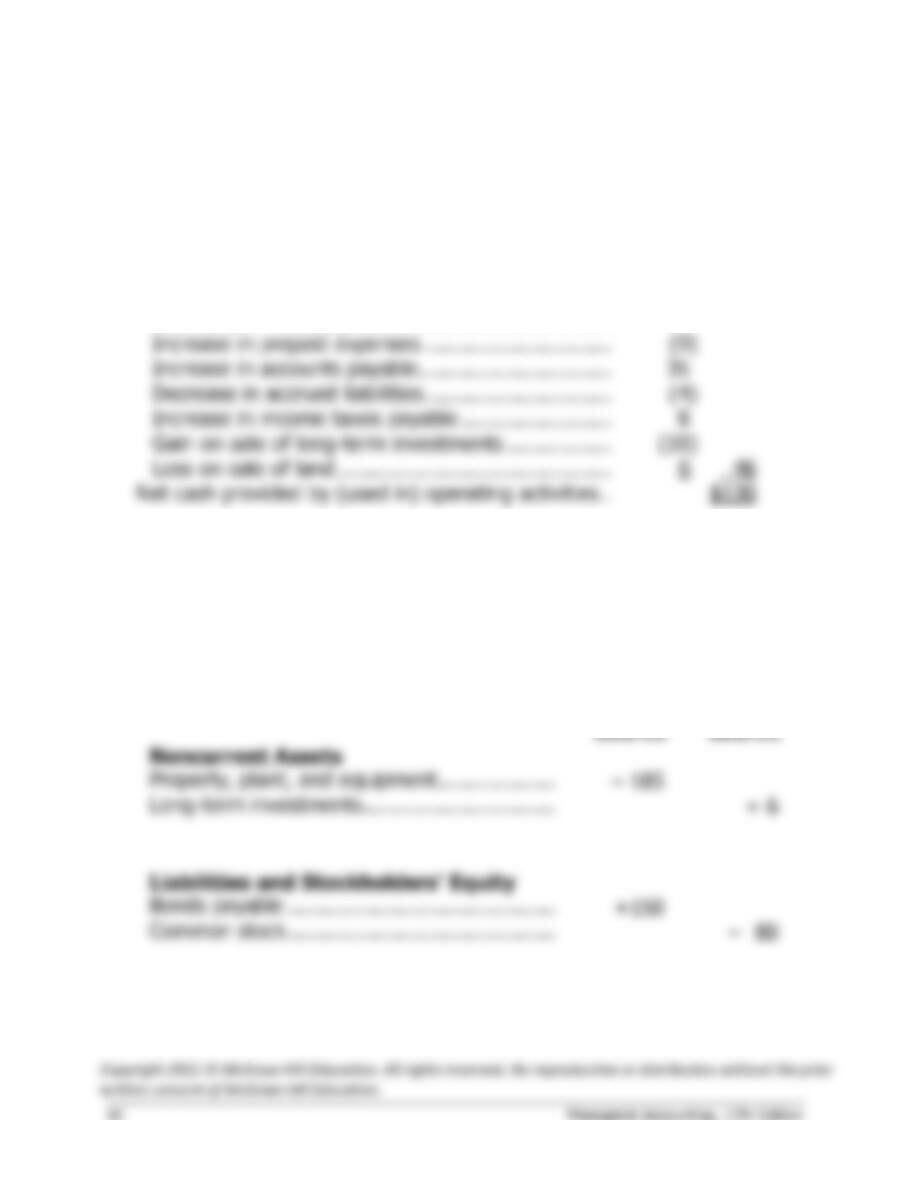
Net cash provided by (used in) operating activities:
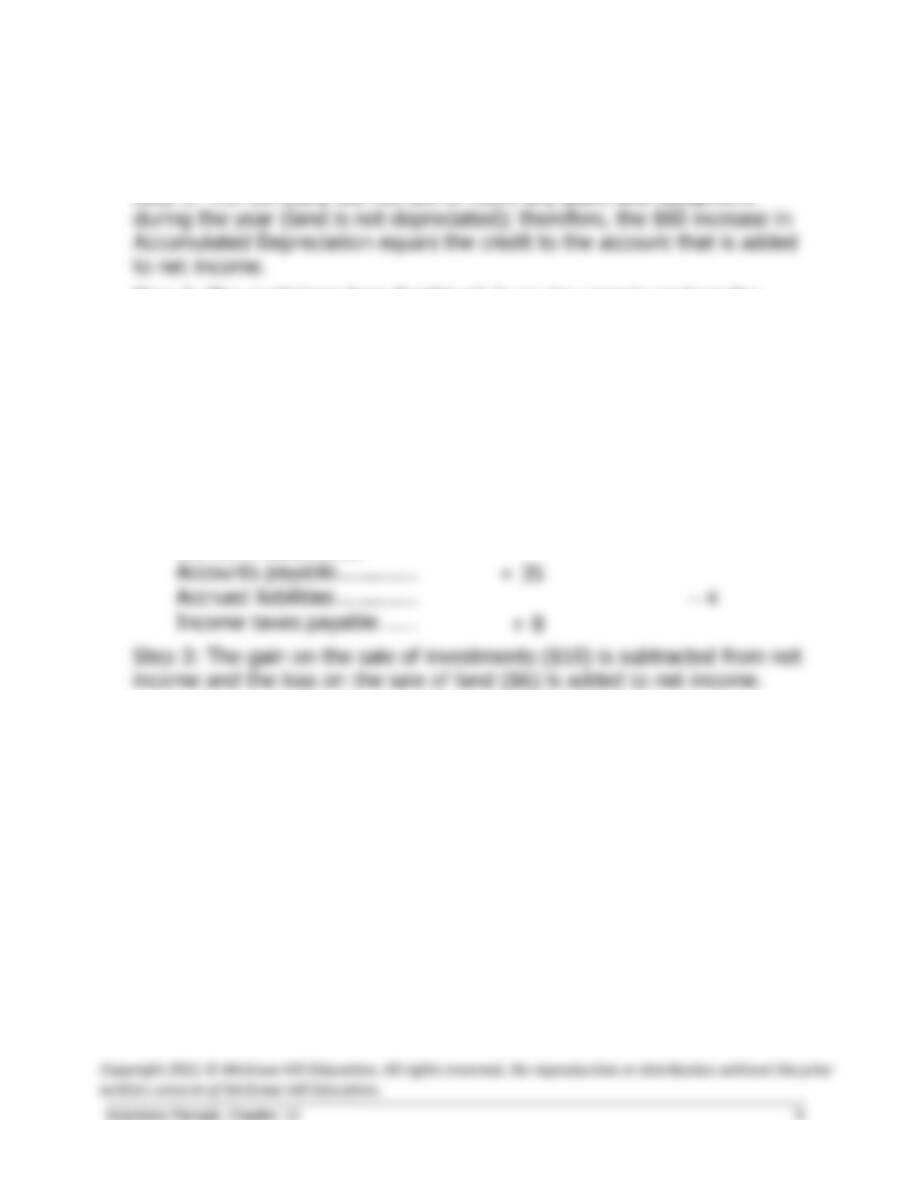
Step 2: The guidelines from Exhibit 15-2 can be used to analyze the
changes in noncash balance sheet accounts that impact net income as
follows:
Increase in
Account Balance
Decrease in
Account Balance
Current Assets
Accounts receivable ………
– 110
Inventory ……………………
+ 70
Prepaid expenses ………….
– 9
Current Liabilities
Accounts payable ………….
Accrued liabilities ………….
Income taxes payable ……
Exercise 15-4 (continued)
The net cash provided by (used in) operating activities is computed as
follows:
Net income …………………………..………………………
$ 84
Adjustments to convert net income to a cash basis:
Depreciation ……………………………………………….
$60
Increase in accounts receivable ………………………
(110)
Decrease in inventory …………………………………..
70
Increase in income taxes payable ……………………
Gain on sale of long-term investments ……………..
Loss on sale of land ……………………………………..
Net cash provided by (used in) operating activities ..
2. Prepare a statement of cash flows for the year
Investing and Financing activities:
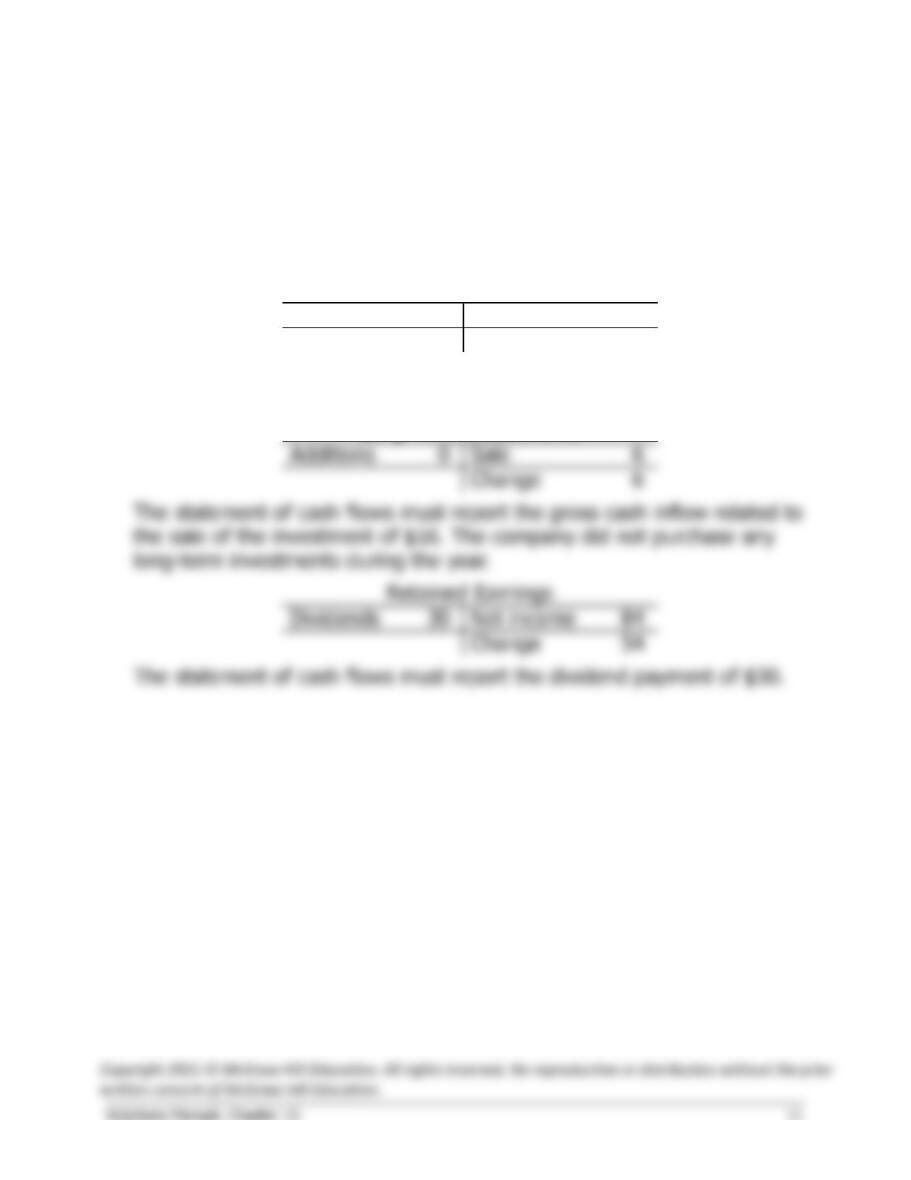
The guidelines from Exhibit 15-3 can be used to analyze the changes in
noncash balance sheet accounts that impact investing and financing
cash flows as follows:
Increase
in Account
Decrease
in Account
Exercise 15-4 (continued)
Because Pavolik did not retire any bonds or issue any of its own stock
during the year, the corresponding amounts in the table on the prior
page represent the gross cash flows that are included in the statement
of cash flows. Property, plant, and equipment, long-term investments,
and retained earnings require further analysis as follows:
Property, Plant, and Equipment
Additions
200
Sale of land
15
Change
185
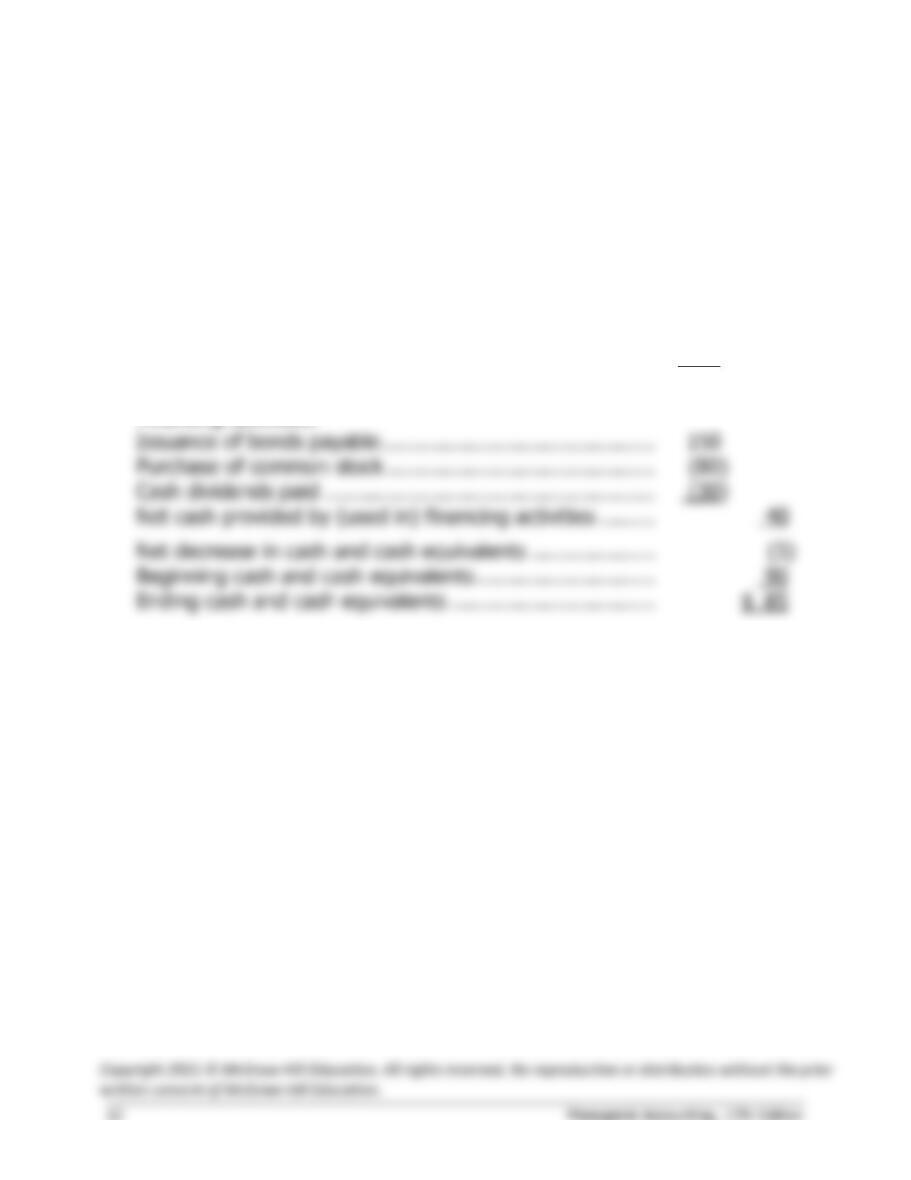
The statement of cash flows must report the gross cash outflow of $200
and the gross cash inflow related to the sale of land of $9.
Long-Term Investments
Change
Dividends
Net income
84
Change
54
Exercise 15-4 (continued)
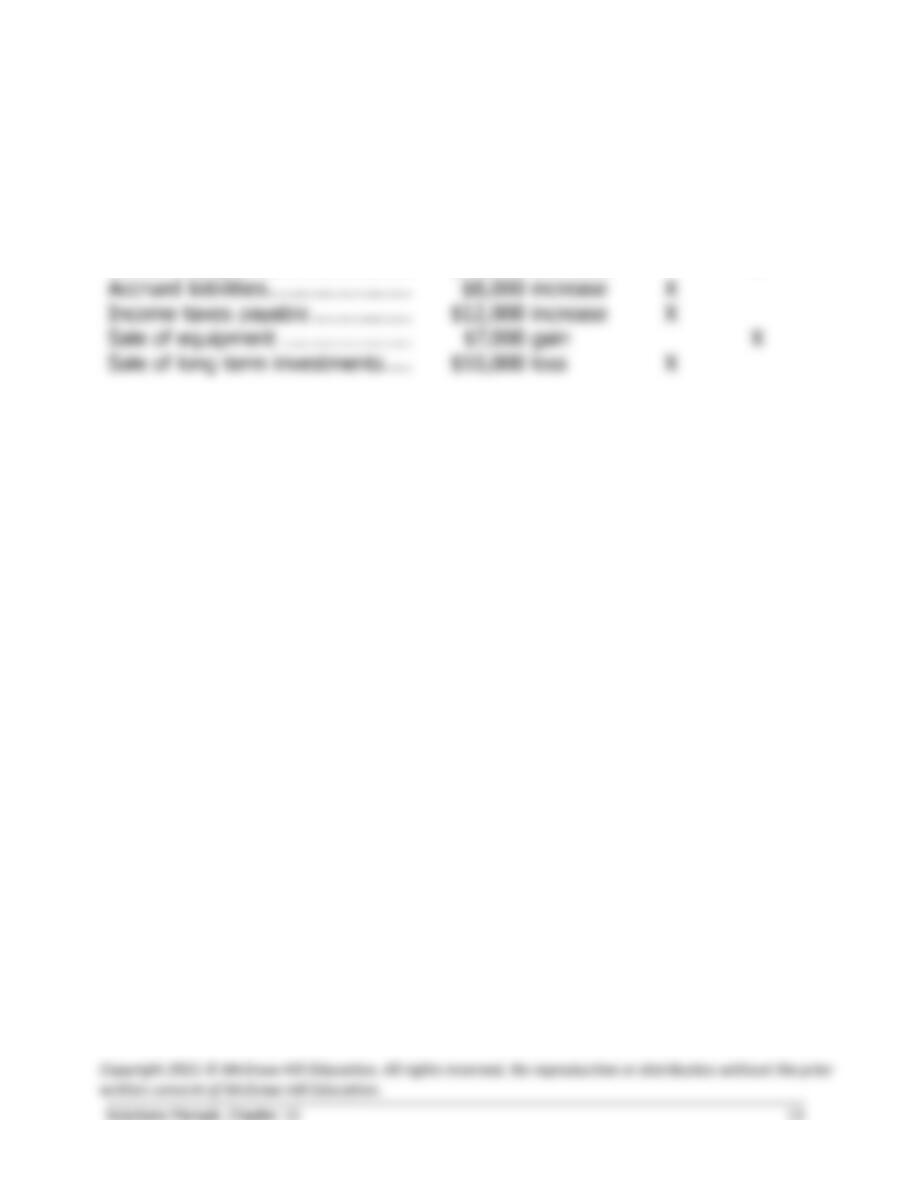
Pavolik Company
Statement of Cash Flows
Operating activities:
Net cash provided by (used in) operating activities ………
$ 130
Investing activities:
Proceeds from sale of long-term investments ……………..
$ 16
Proceeds from sale of land ……………………………………..
9
Additions to property, plant, & equipment ………………….
(200)
Net cash provided by (used in) investing activities ……….
(175)
Financing activities:
Issuance of bonds payable ……………………………………..
Purchase of common stock …………………………………….
Cash dividends paid ……………………………………………..
Net cash provided by (used in) financing activities ………
Net decrease in cash and cash equivalents ………………..
(5)
Beginning cash and cash equivalents ………………………..
Ending cash and cash equivalents …………………………...
Exercise 15-5 (10 minutes)
Item
Amount
Add
Subtract
Accounts receivable ……………….
$90,000
decrease
X
Inventory …………………………….
$120,000
increase
X
Prepaid expenses…………………..
$3,000
decrease
X
Accounts payable …………………..
$65,000
decrease
X
Accrued liabilities …………………..
$8,000
increase
X
Income taxes payable …………….
$12,000
increase
X
Sale of equipment …………………
$7,000
gain
X
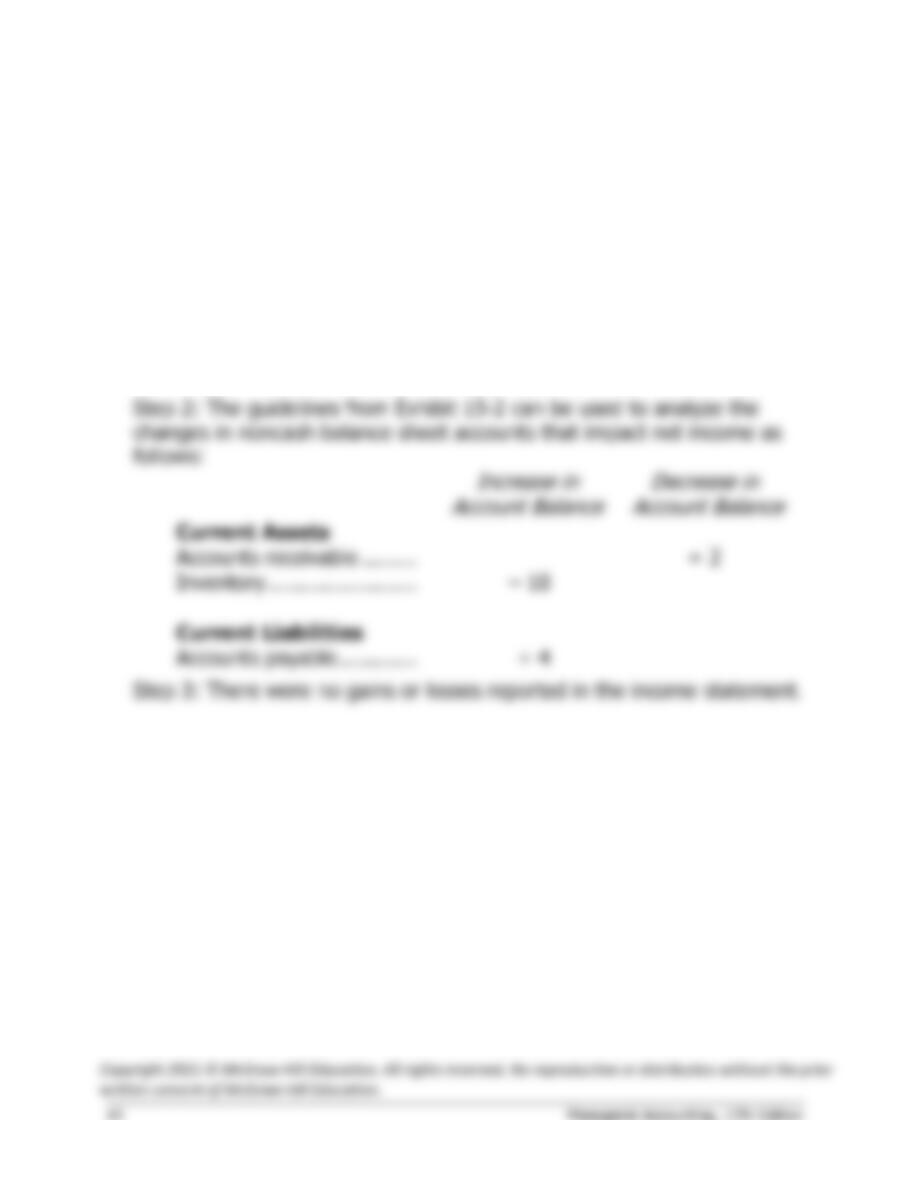
Exercise 15-6 (30 minutes)
1. Prepare a statement of cash flows:
Operating activities:
Step 1: The following equation can be applied to the Accumulated
Depreciation account to compute the depreciation to add back to net
income:
Beginning balance – Debits + Credits = Ending balance
$50 – $0 + Credits = $65
Credits = $65 – $50
Credits = $15
Exercise 15-6 (continued)
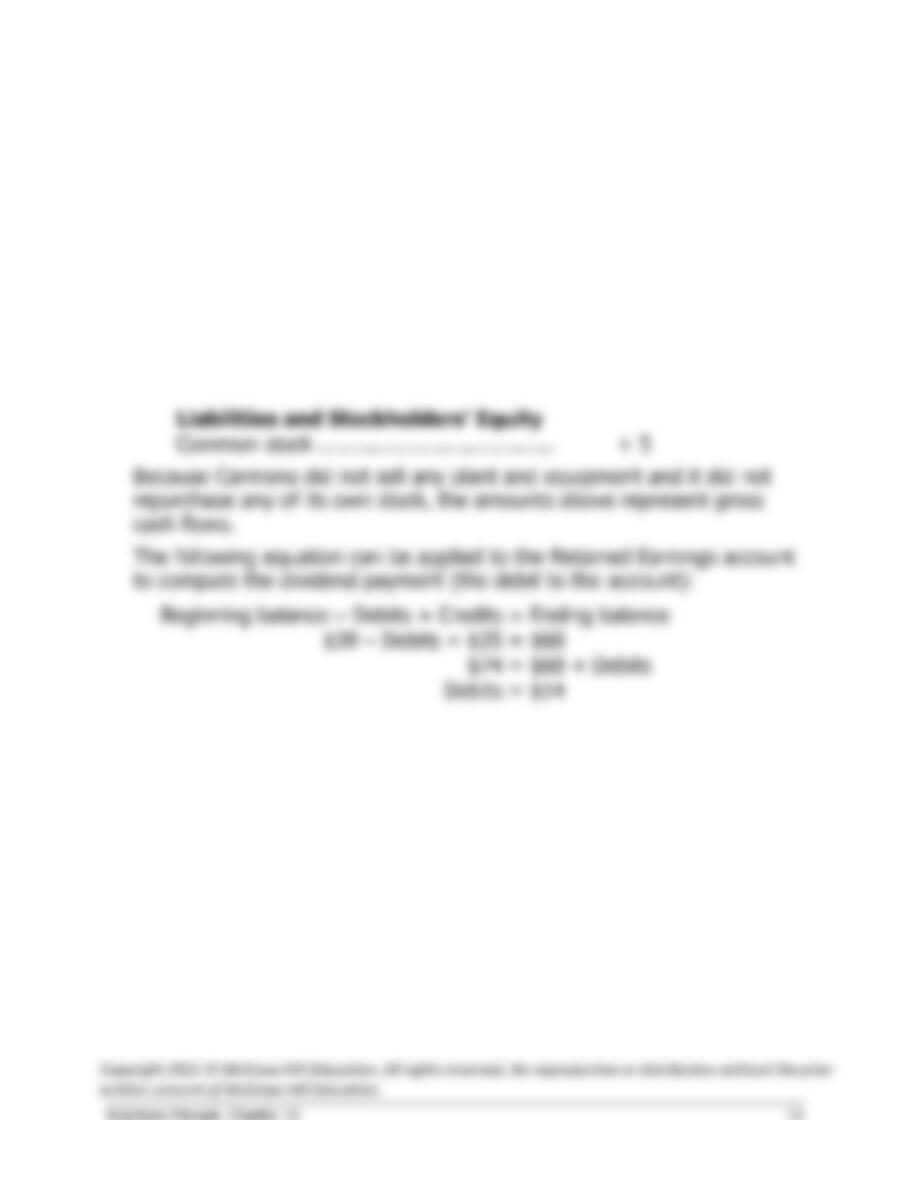
Investing and Financing activities:
The guidelines from Exhibit 15-3 can be used to analyze the changes in
noncash balance sheet accounts that impact investing and financing
cash flows as follows:
Increase
in Account
Balance
Decrease
in Account
Balance
Noncurrent Assets
Property, plant, and equipment …………..
– 40
Common stock ………………………………..
Exercise 15-6 (continued)
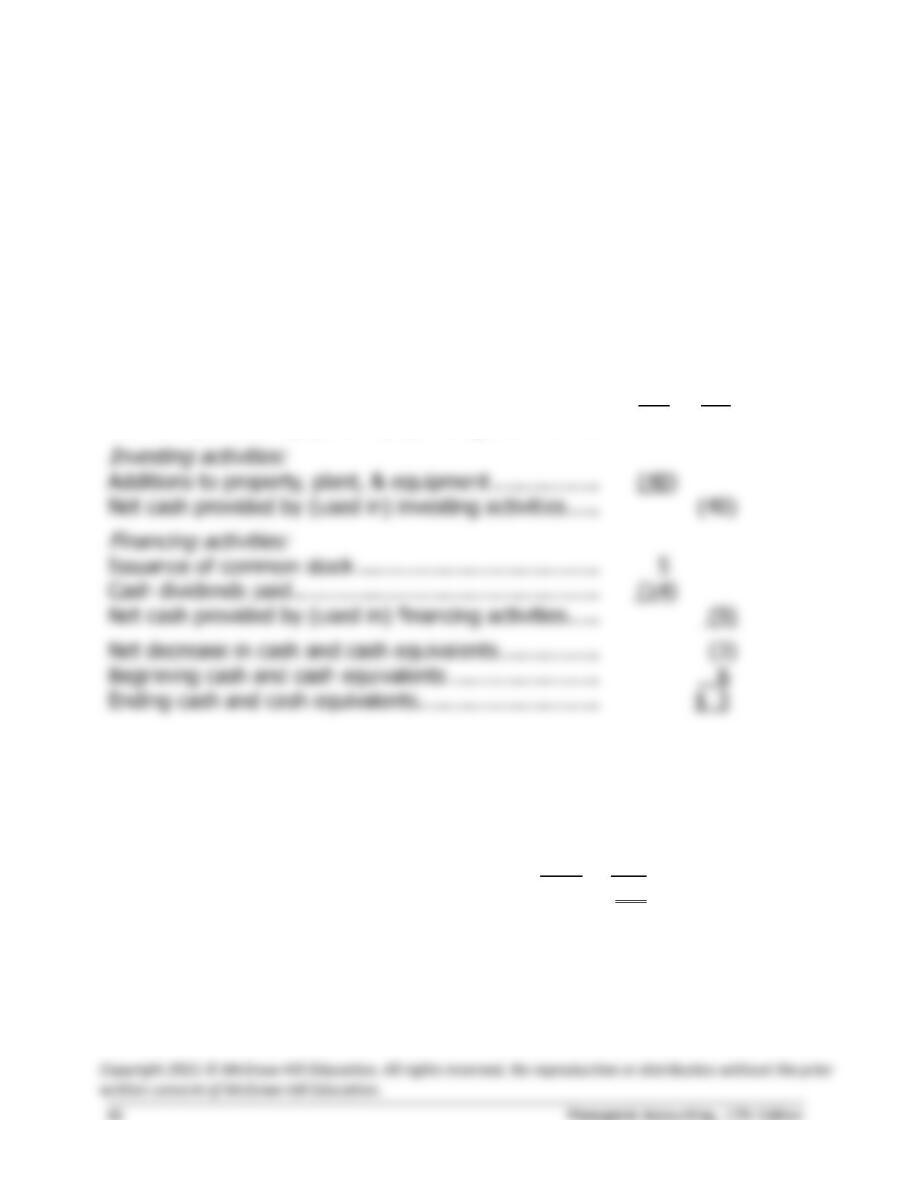
Carmono Company
Statement of Cash Flows
For This Year Ended December 31
Operating activities:
Net income …………………………………………………….
$35
Adjustments to convert net income to a cash basis:
Depreciation …………………………………………………
$15
Decrease in accounts receivable ………………………..
2
Increase in inventory ………………………………………
(10)
Increase in accounts payable …………………………...
4
11
Net cash provided by (used in) operating activities ….
46
Additions to property, plant, & equipment ……………..
Net cash provided by (used in) investing activities …..
Financing activities:
Issuance of common stock …………………………………
Cash dividends paid ………………………………………….
Net cash provided by (used in) financing activities …..
Net decrease in cash and cash equivalents …………….
Beginning cash and cash equivalents ……………………
Ending cash and cash equivalents ………………………..
$ 3
2. Free cash flow computation:
Net cash provided by operating activities …
$ 46
Less:
Capital expenditures ………………………….
$40
Dividends ……………………………………….
14
54
Free cash flow ……………………………………
$(8)
Problem 15-7 (30 minutes)
1. Net cash provided by (used in) operating activities:
Step 1: The following equation can be applied to the Accumulated
Depreciation account to compute the depreciation to add back to net
income:
Beginning balance – Debits + Credits = Ending balance
$85 – $16 + Credits = $93
Credits = $93 – $85 + $16
Credits = $24
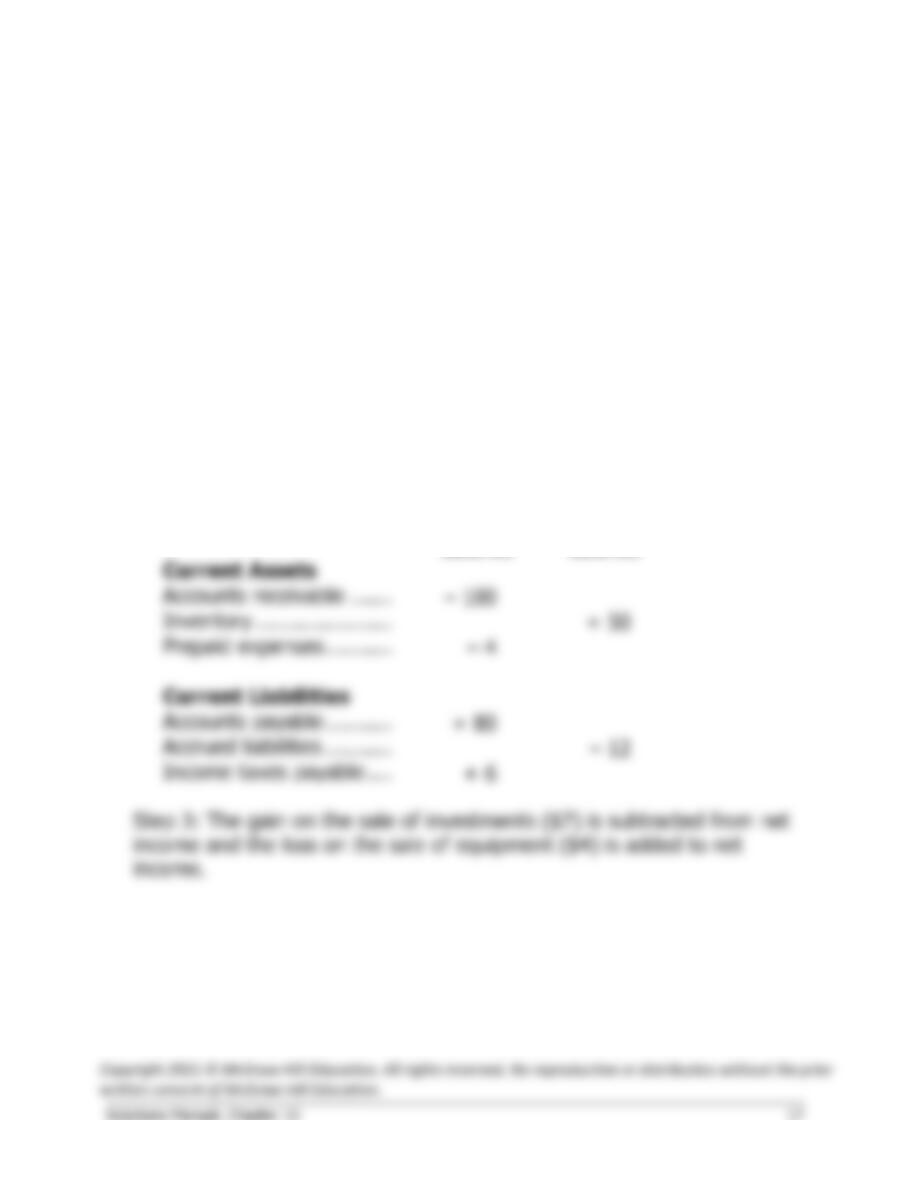
Step 2: The guidelines from Exhibit 15-2 can be used to analyze the
changes in noncash balance sheet accounts that impact net income as
follows:
Increase in
Account
Decrease in
Account
Problem 15-7 (continued)
The net cash provided by (used in) operating activities is computed as
follows:
Net income …………………………………………………
$ 63
Adjustments to convert net income to cash basis:
Depreciation …………………………..………………
$24
Increase in accounts receivable …………………..
(100)
Decrease in inventory ……………………………….
50
Increase in prepaid expenses ……………………..
(4)
Increase in income taxes payable ………………..
Gain on sale of investments ……………………….
(7)
Loss on sale of equipment …………………………
Net cash provided by (used in) operating activities
2. Prepare a statement of cash flows.
Investing and Financing activities:
The guidelines from Exhibit 15-3 can be used to analyze the changes in
noncash balance sheet accounts that impact investing and financing
cash flows as follows:
Increase
in Account
Balance
Decrease
in Account
Balance
Noncurrent Assets
Property, plant, and equipment……………..
–140
Long-term investments ……………………….
+ 3
Bonds payable …………………………………..
Common stock …………………………………..
Problem 15-7 (continued)
The decrease in the long-term investments account ($3) equals the cost
of the long-term investment sold; therefore, Weaver did not purchase
any long-term investments during the year. The proceeds from the sale
of a long-term investment ($10) should be recorded as a cash inflow in
the investing activities section of the statement.
Because Weaver did not retire any bonds during the year, the
corresponding amount in the table on the prior page (+110) represents
the gross cash inflow pertaining to a bond issuance. The company
repurchased $40 of its own stock, so the corresponding amount on the
prior page is reported as a cash outflow in the financing activities
section in the statement of cash flows. Property, plant, and equipment
and retained earnings require further analysis as follows:
Property, plant, and equipment:
Problem 15-7 (continued)
Weaver Company
Statement of Cash Flows
For This Year Ended December 31
Operating activities:
Net income …………………………………………………..
$ 63
Adjustments to convert net income to cash basis:
Depreciation …………………………………………….
$ 24
Increase in accounts receivable …………………….
(100)
Decrease in inventory …………………………………
50
Increase in prepaid expenses ……………………….
Increase in accounts payable ……………………….
80
Decrease in accrued liabilities ……………………….
Increase in income taxes payable ………………….
Gain on sale of investments …………………………
Loss on sale of equipment …………………………..
Net cash provided by (used in) operating activities ..
Investing activities:
Proceeds from sale of long-term investments ……….
10
Proceeds from sale of equipment ……………………….
20
Additions to property, plant, & equipment ……………
(180)
Net cash provided by (used in) investing activities …
(150)
Financing activities:
Issuance of bonds payable ……………………………….
110
Repurchase of common stock …………………………...
Cash dividends paid ………………………………………..
Net cash provided by (used in) financing activities …
Net decrease in cash and cash equivalents …………..
(6)
Beginning cash and cash equivalents ………………….
Ending cash and cash equivalents ………………………
$ 9