15-41
15-42
15-43
15-32 (25 min.) Common costs.
Taylor Inc. and Victor Inc. are two small clothing companies that are considering leasing a
dyeing machine together. The companies estimated that in order to meet production, Taylor
needs the machine for 600 hours and Victor needs it for 400 hours. If each company rents the
machine on its own, the fee will be $60 per hour of usage. If they rent the machine together, the
fee will decrease to $54 per hour of usage.
Required:
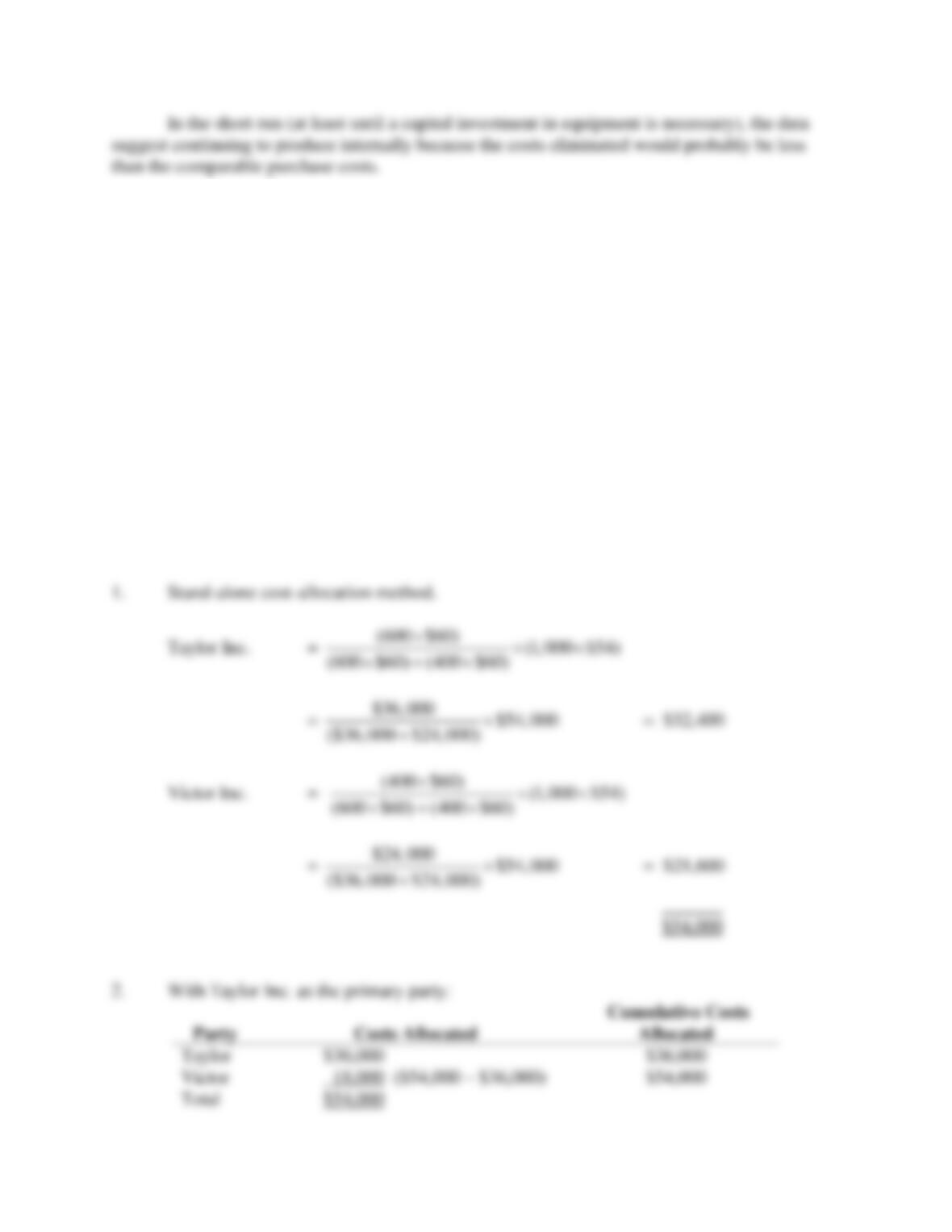
1. Calculate Taylor’s and Victor’s respective share of fees under the stand-alone cost-allocation
method.
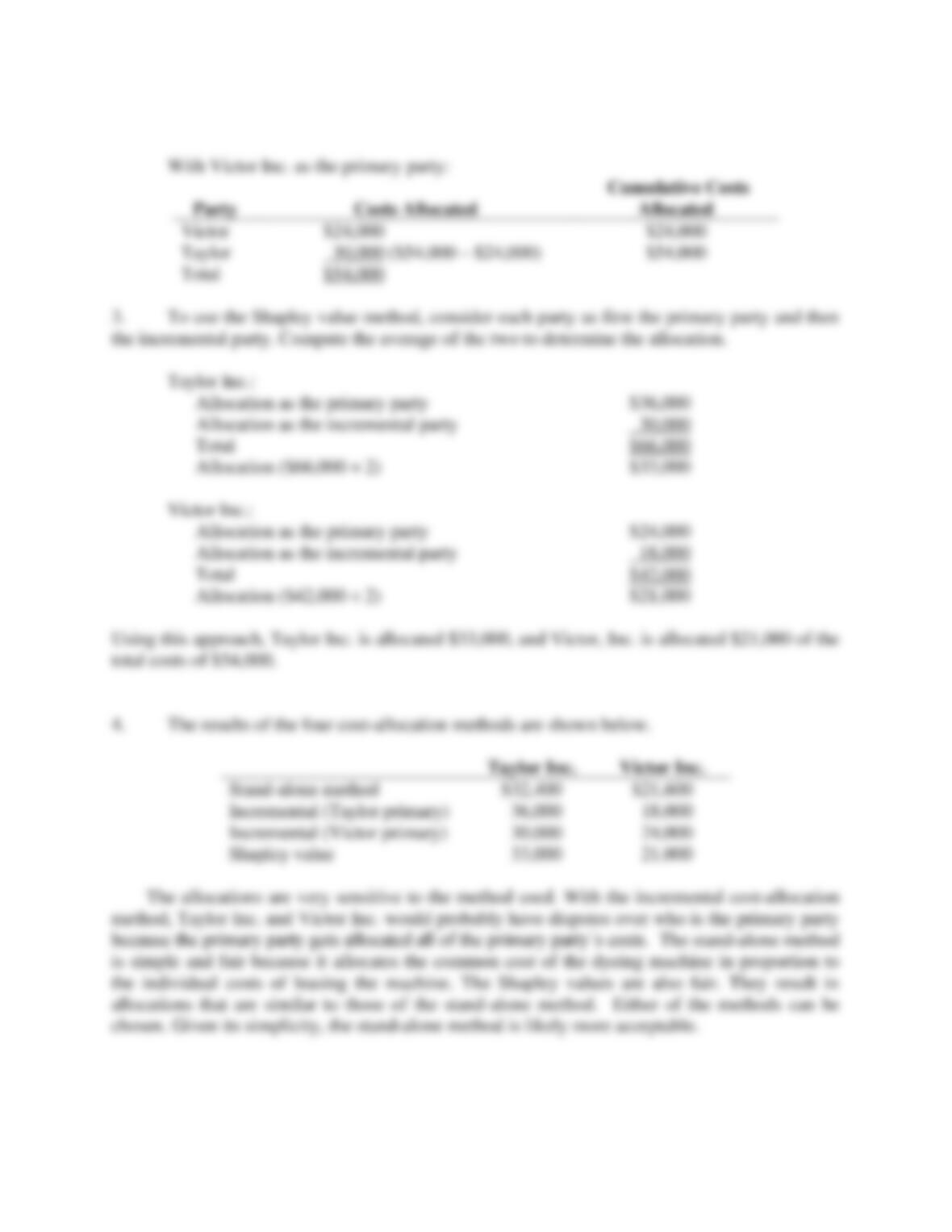
2. Calculate Taylor’s and Victor’s respective share of fees using the incremental cost-allocation
method. Assume Taylor to be the primary party.
3. Calculate Taylor’s and Victor’s respective share of fees using the Shapley value method.
4. Which method would you recommend Taylor and Victor use to share the fees?
SOLUTION
15-44
15-45
15-33 (20-25 mins.) Stand-alone revenue allocation
Office Magic, Inc., sells computer hardware to end consumers. Its most popular model, the
CX30 is sold as a “bundle,” which includes three hardware products: a personal computer (PC)
tower, a 26-inch monitor, and a color laser printer. Each of these products is made in a separate
manufacturing division of Office Magic and can be purchased individually as well as in a bundle.
The individual selling prices and per unit costs are as follows:
Required:
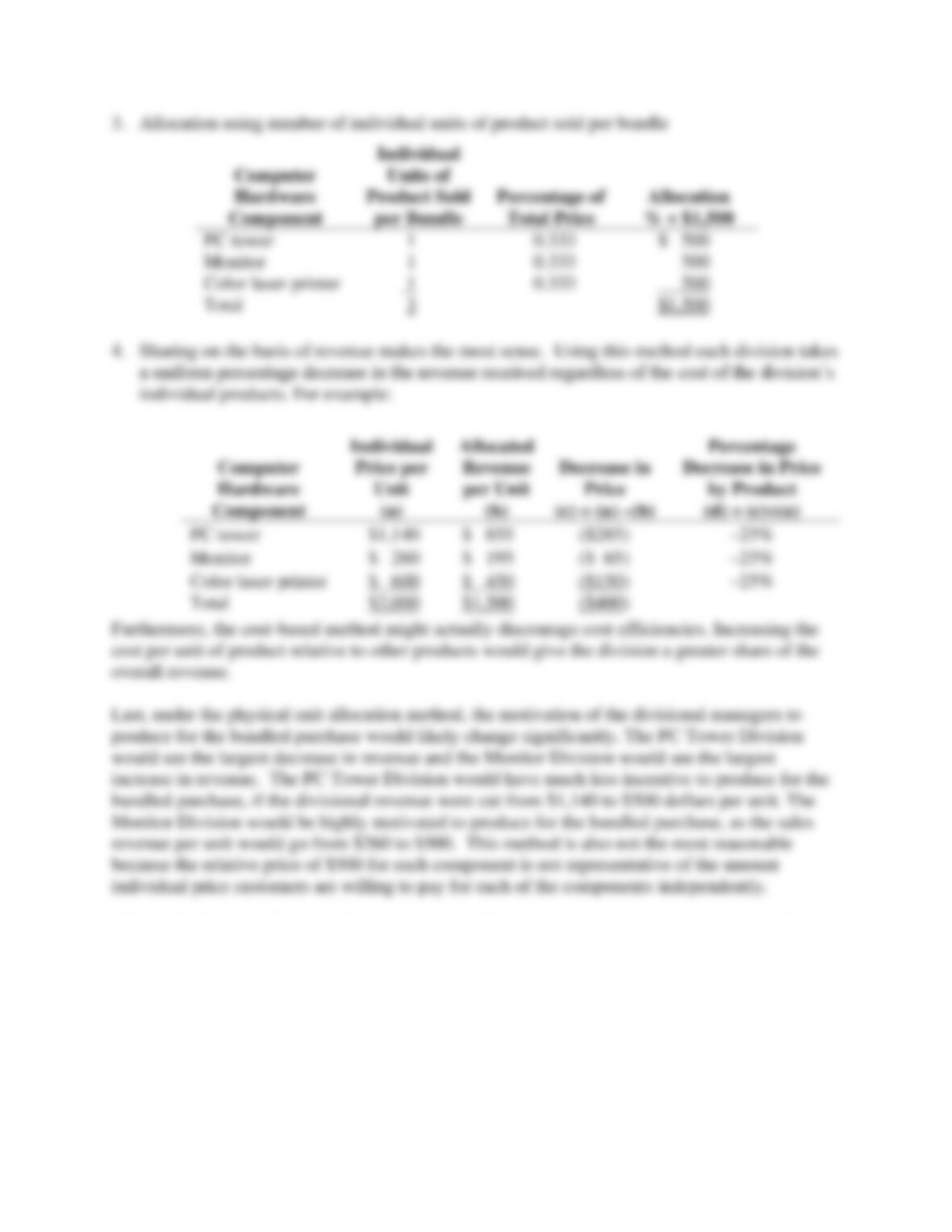
1. Allocate the revenue from the computer bundle purchase to each of the hardware products
using the stand-alone method based on the individual selling price per unit.
2. Allocate the revenue from the computer bundle purchase to each of the hardware products
using the stand-alone method based on cost per unit.
3. Allocate the revenue from the computer bundle purchase to each of the hardware products
using the stand-alone method based on physical units (that is, the number of individual units
of product sold per bundle).
4. Which basis of allocation makes the most sense in this situation? Explain your answer.
SOLUTION
15-46
15-34 (40-60 min.) Support-department cost allocations: single-department cost pools;
direct, step-down, and reciprocal methods.
Sportz, Inc., manufactures athletic shoes and athletic clothing for both amateur and professional
athletes. The company has two product lines (clothing and shoes), which are produced in
separate manufacturing facilities; however, both manufacturing facilities share the same support
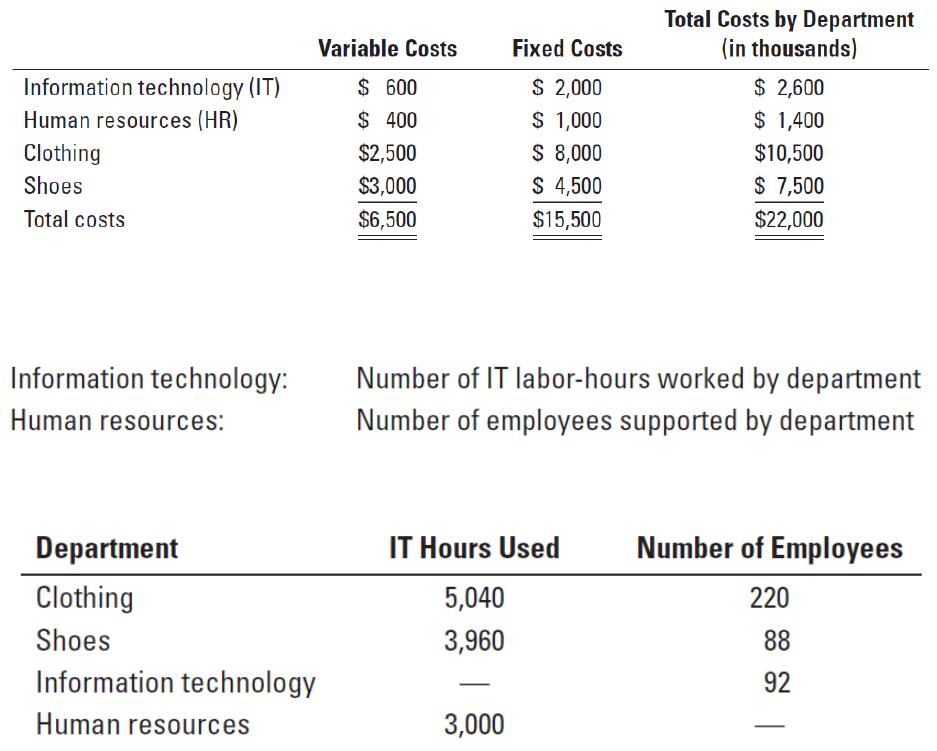
services for information technology and human resources. The following shows total costs for
each manufacturing facility and for each support department.
15-47
The total costs of the support departments (IT and HR) are allocated to the production
departments (clothing and shoes) using a single rate based on the following:
Data on the bases, by department, are given as follows:
Required:
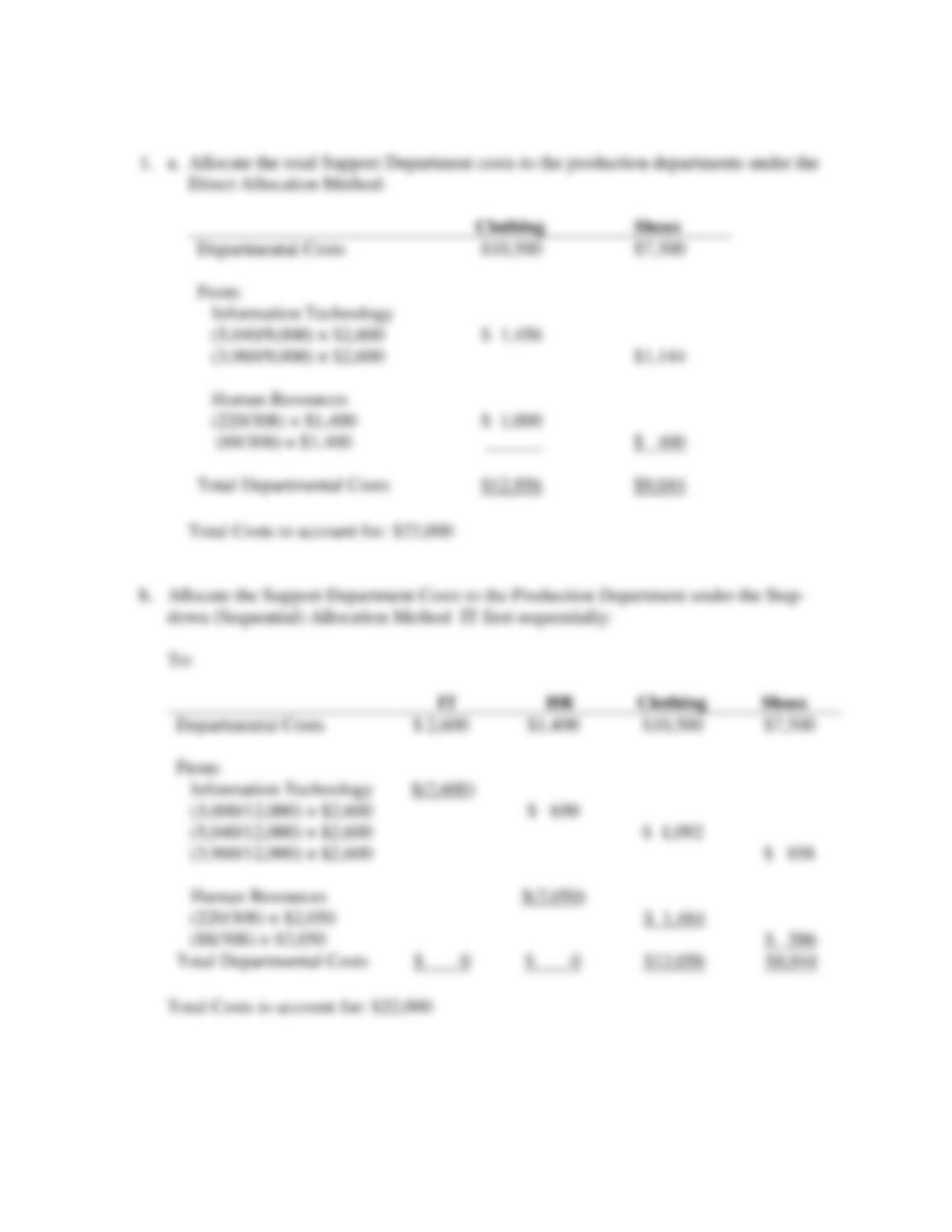
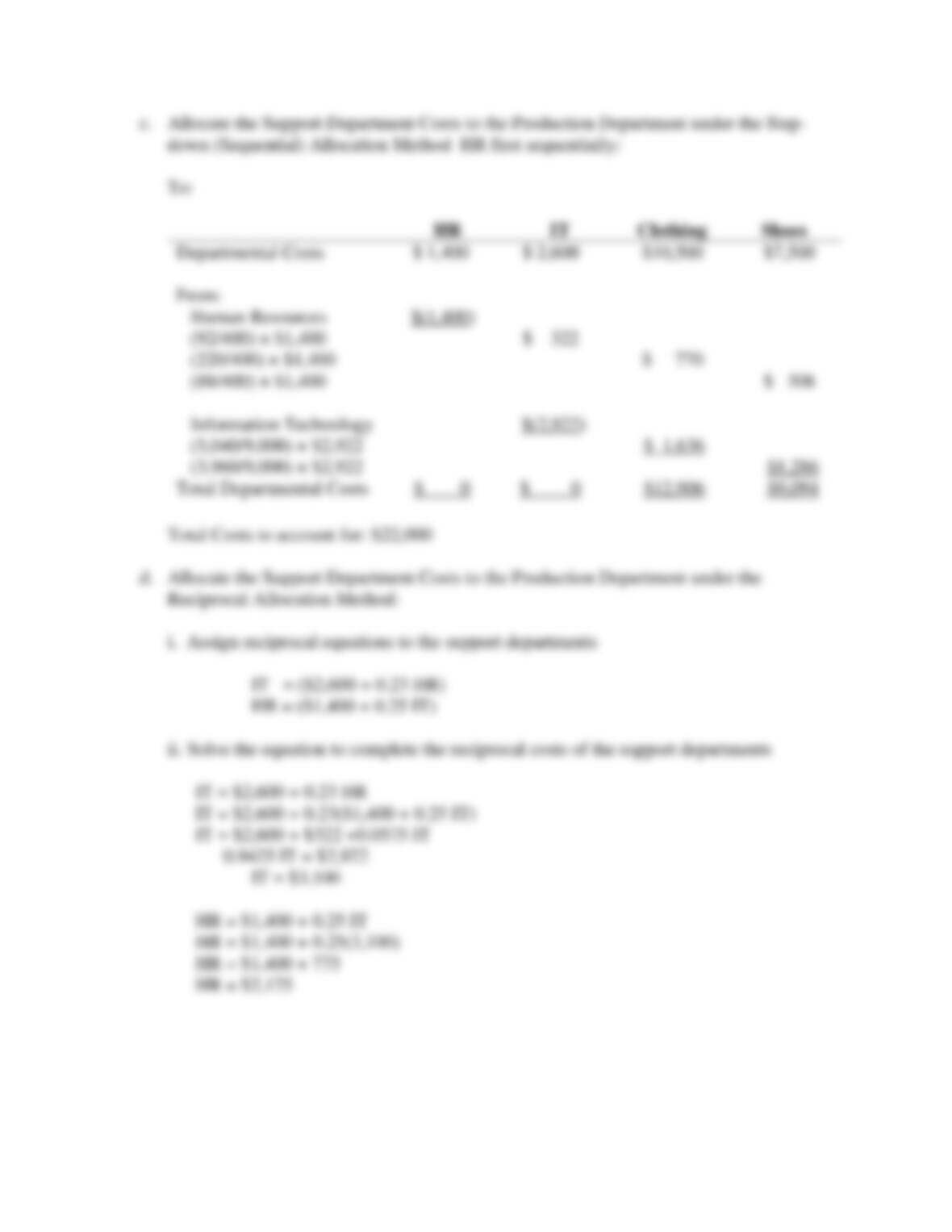
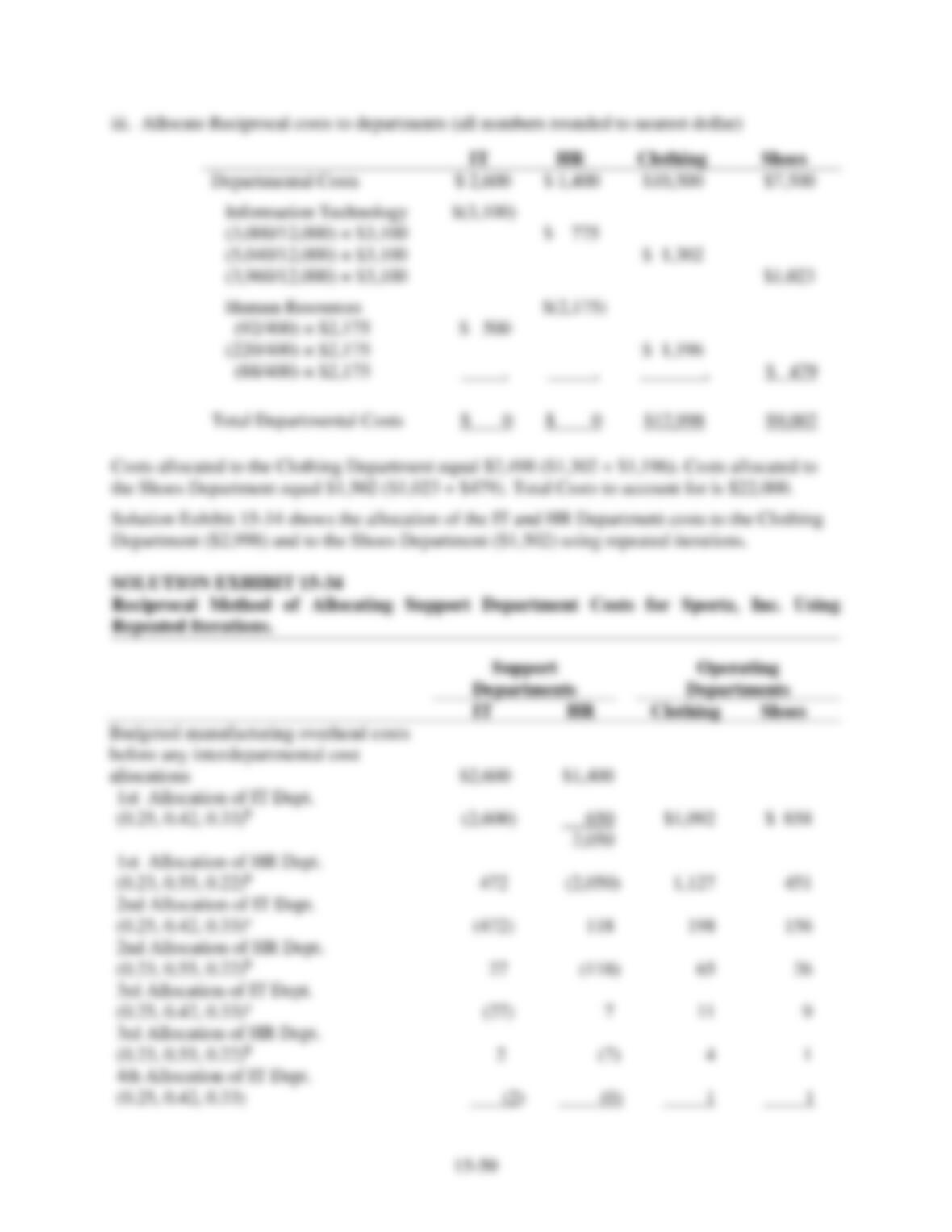
1. What are the total costs of the production departments (clothing and shoes) after the support
department costs of information technology and human resources have been allocated using
(a) the direct method, (b) the step-down method (allocate information technology first), (c)
the step-down method (allocate human resources first), and (d) the reciprocal method?
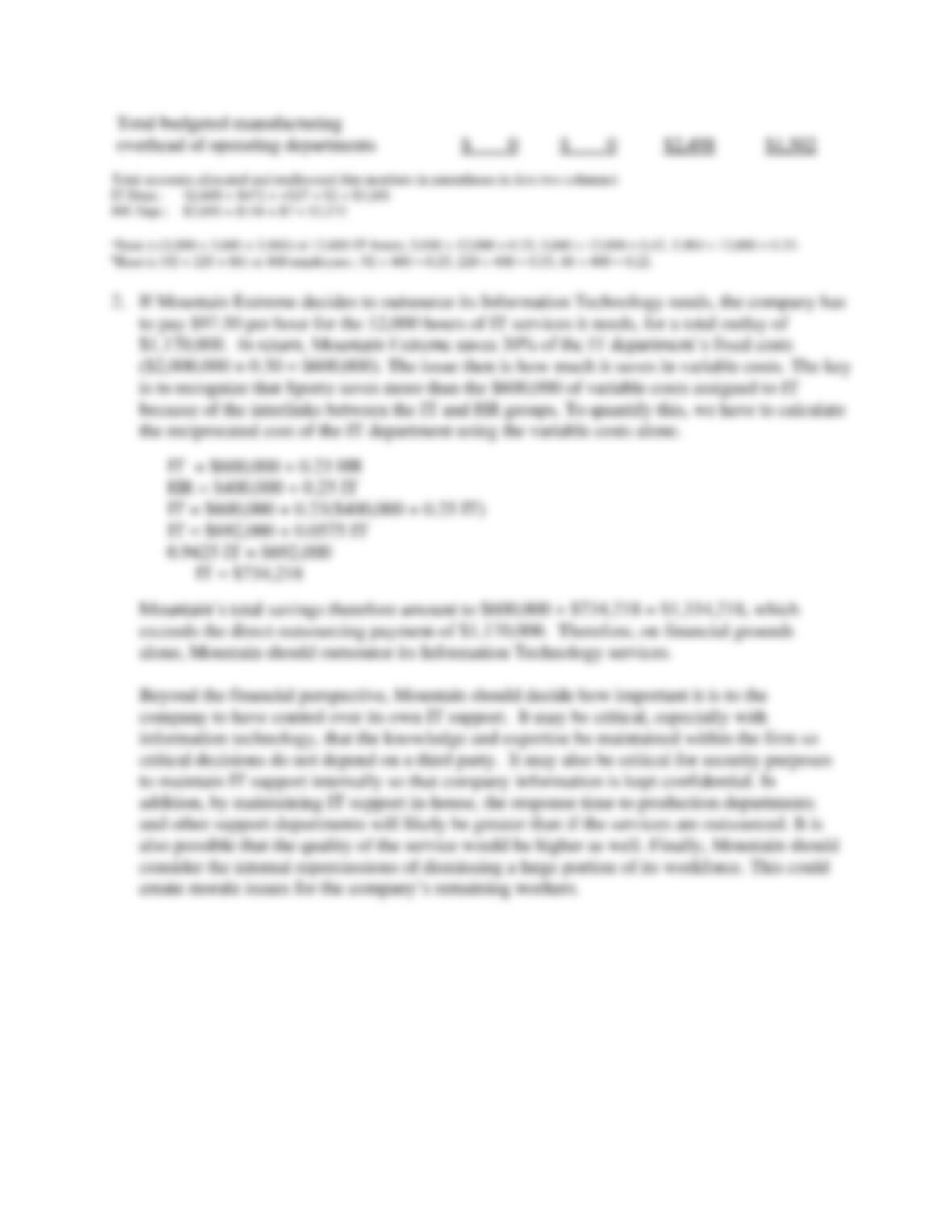
2. Assume that all of the work of the IT department could be outsourced to an independent
company for $97.50 per hour. If Sportz no longer operated its own IT department, 30% of the
fixed costs of the IT department could be eliminated. Should Sportz outsource its IT
services?
15-48
SOLUTION
15-49
15-51
15-52
Collaborative Learning Problem
15-35 (20–25 min.) Revenue allocation, bundled products.
Premier Resorts (PR) operates a five-star hotel with a championship golf course. PR has a
decentralized management structure, with three divisions:
▪ Lodging (rooms, conference facilities)
▪ Food (restaurants and in-room service)
▪ Recreation (golf course, tennis courts, swimming pool, and so on)
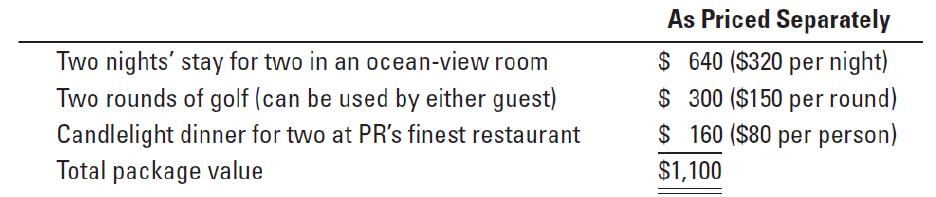
Starting next month, PR will offer a two-day, two-person “getaway package” for $800.
This deal includes the following:
Jenny Lee, president of the recreation division, recently asked the CEO of PR how her division
would share in the $800 revenue from the getaway package. The golf course was operating at
100% capacity. Currently, anyone booking the package was guaranteed access to the golf course.
Lee noted that every “getaway” booking would displace $300 of other golf bookings not related
to the package. She emphasized that the high demand reflected the devotion of her team to
keeping the golf course rated one of the “Best 10 Courses in the World” by Golf Monthly. As an
aside, she also noted that the lodging and food divisions had to turn away customers during only
“peak–season events such as the New Year’s period.”
Required:
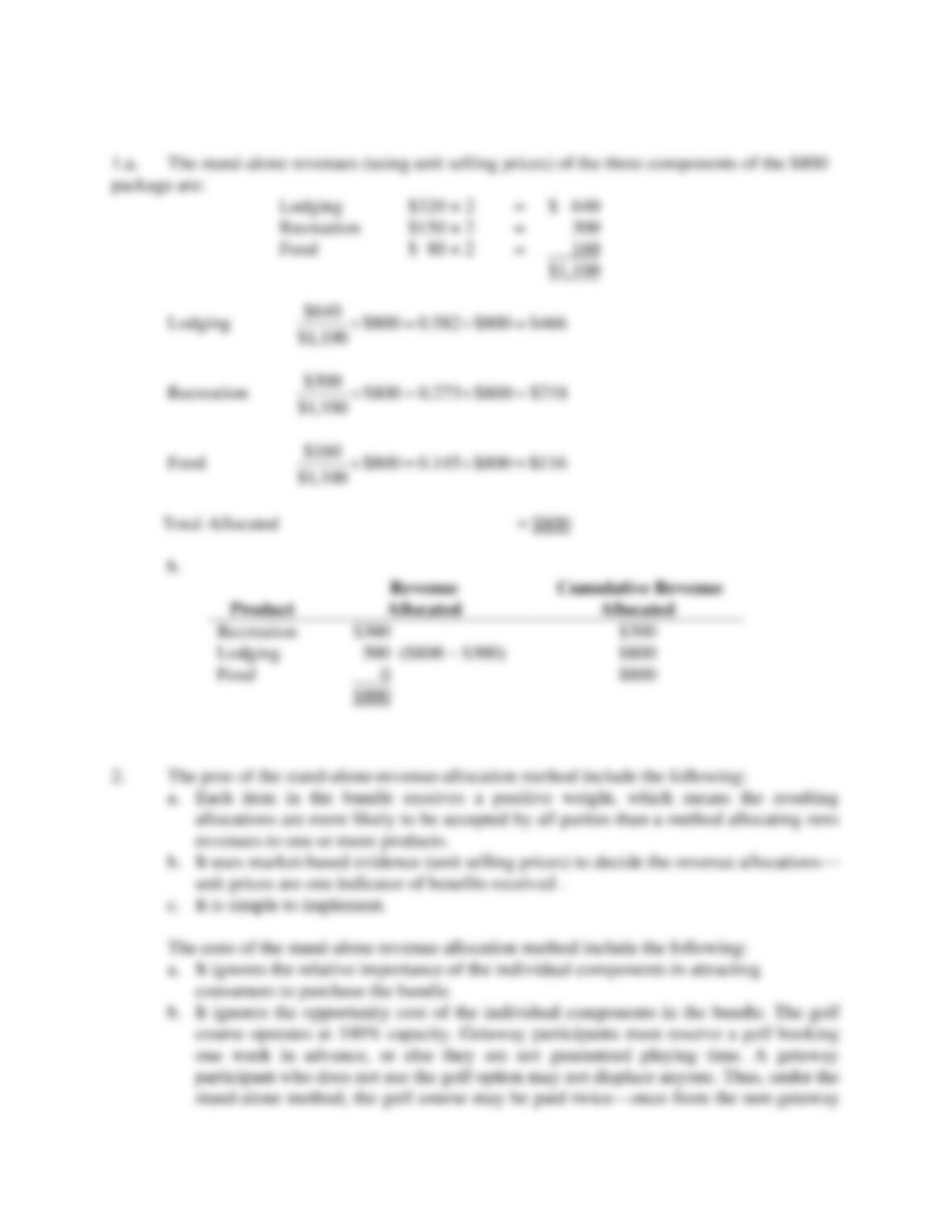
1. Using selling prices, allocate the $800 getaway-package revenue to the three divisions using:
a. The stand-alone revenue-allocation method
b. The incremental revenue-allocation method (with recreation first, then lodging, and then
food)
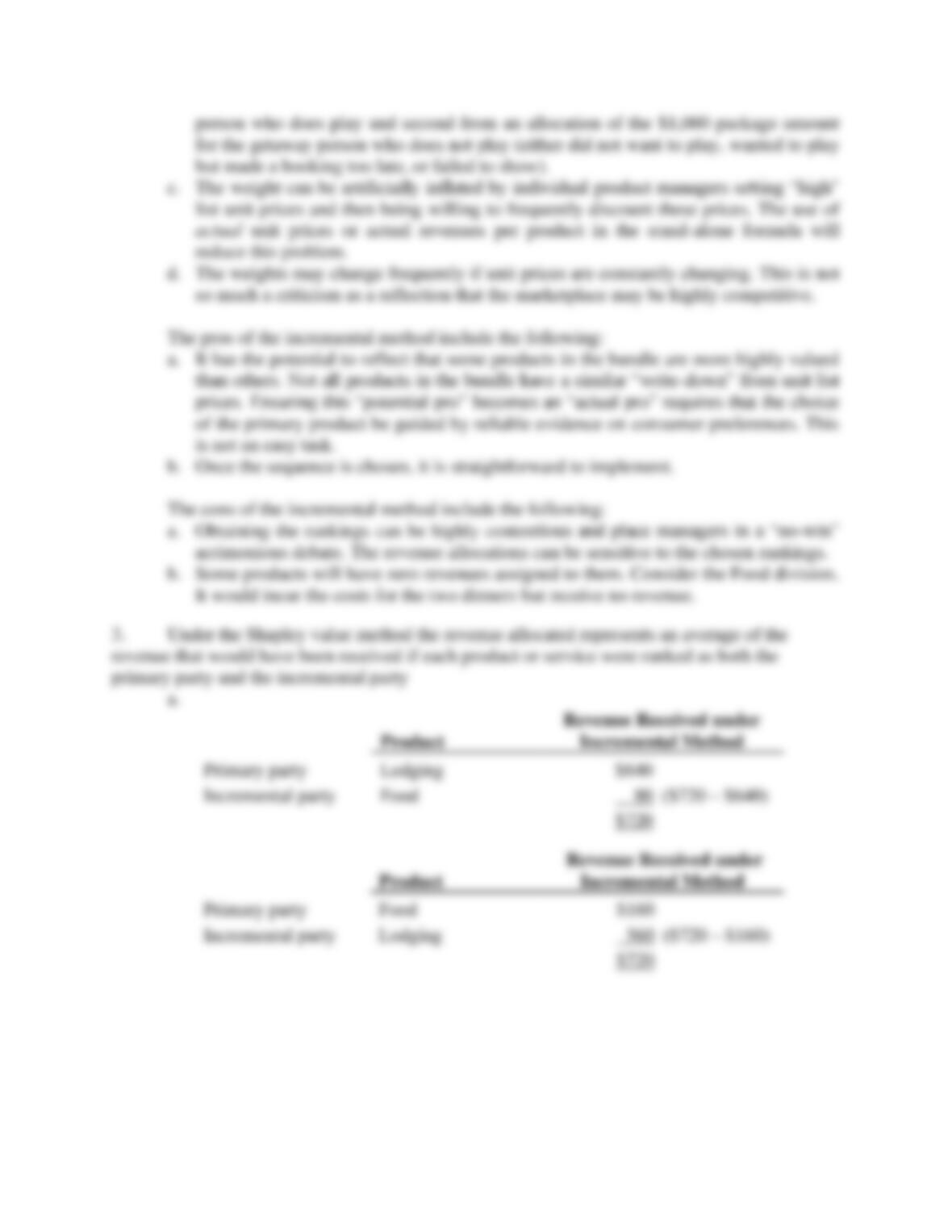
2. What are the pros and cons of the two methods in requirement 1?
3. Because the recreation division is able to book the golf course at 100% capacity, the
company CEO has decided to revise the getaway package to only include the lodging and
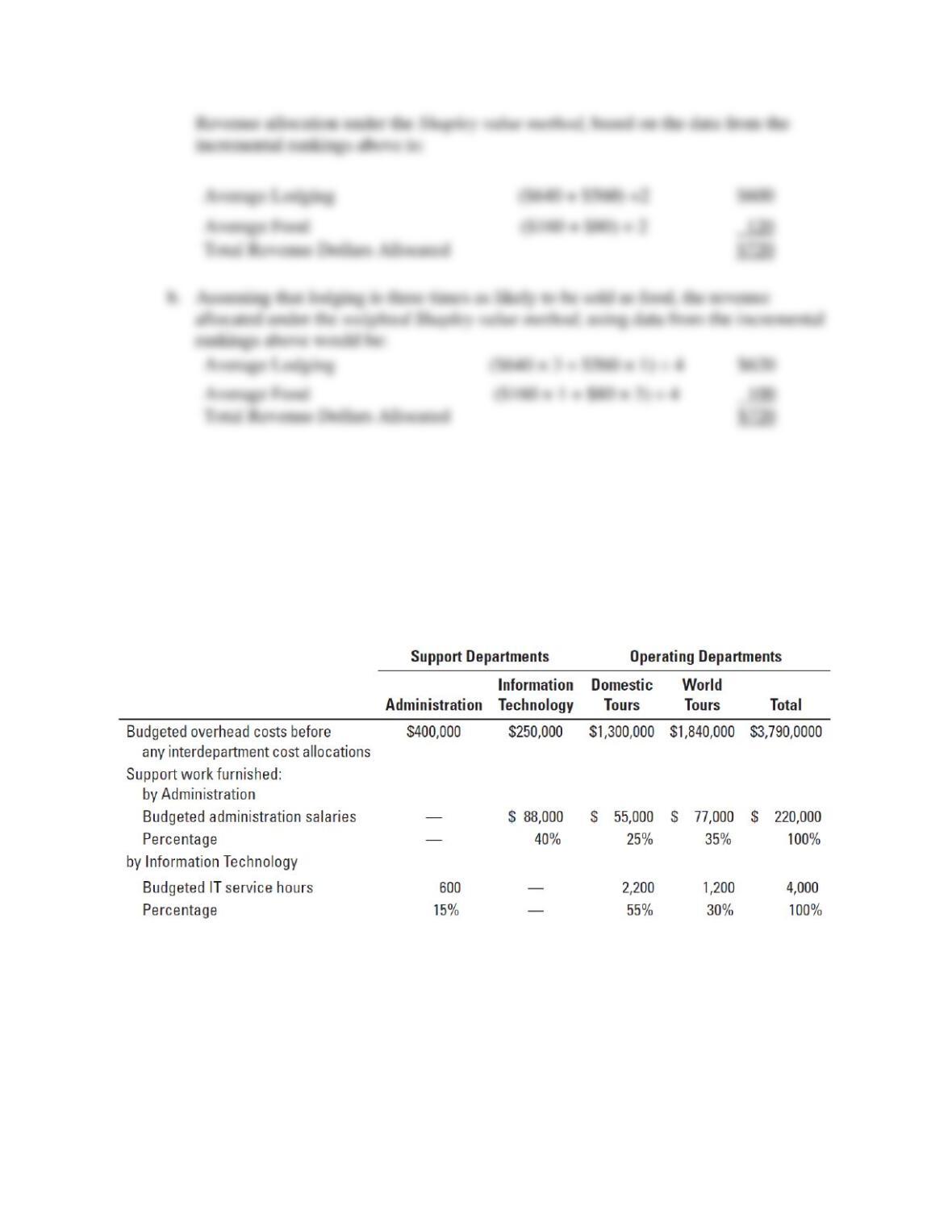
food offerings shown previously. The new package will sell for $720. Allocate the revenue to
the lodging and food divisions using the following:
a. The Shapley value method
b. The weighted Shapley value method, assuming that lodging is three times as likely to sell
as the food
15-53
SOLUTION
15-54
15-55
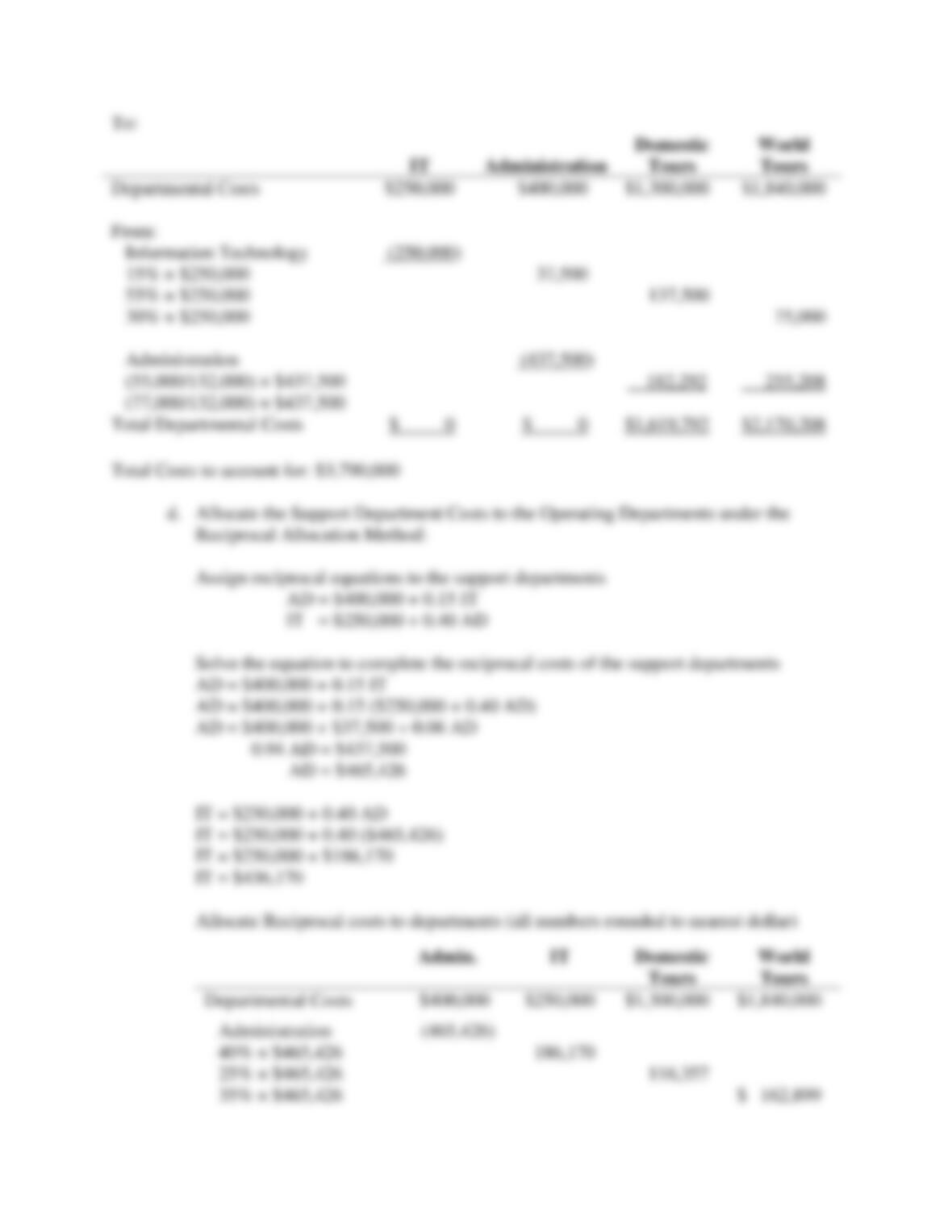
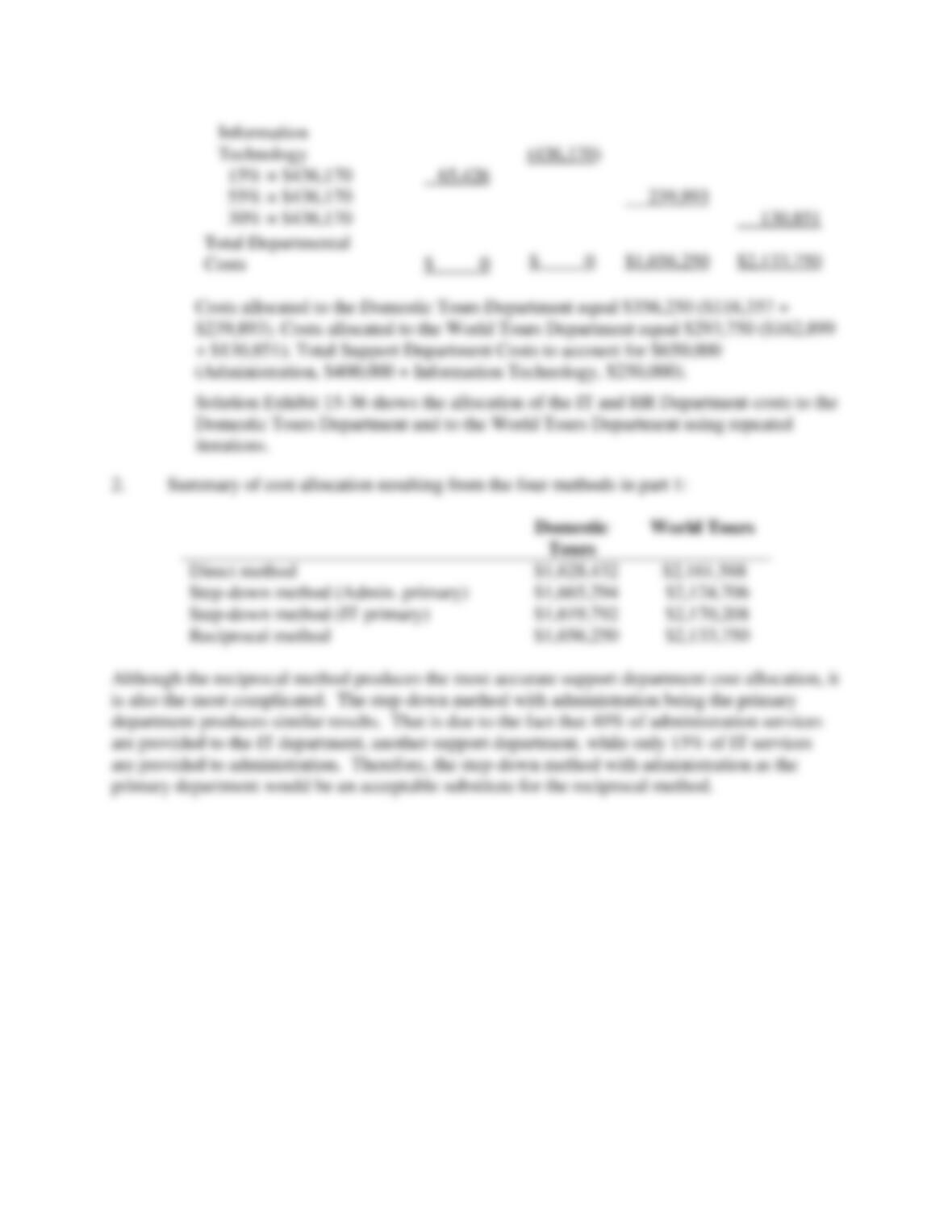
15-36 (20 min.) Support-department cost allocations: direct, step-down, and reciprocal
methods.
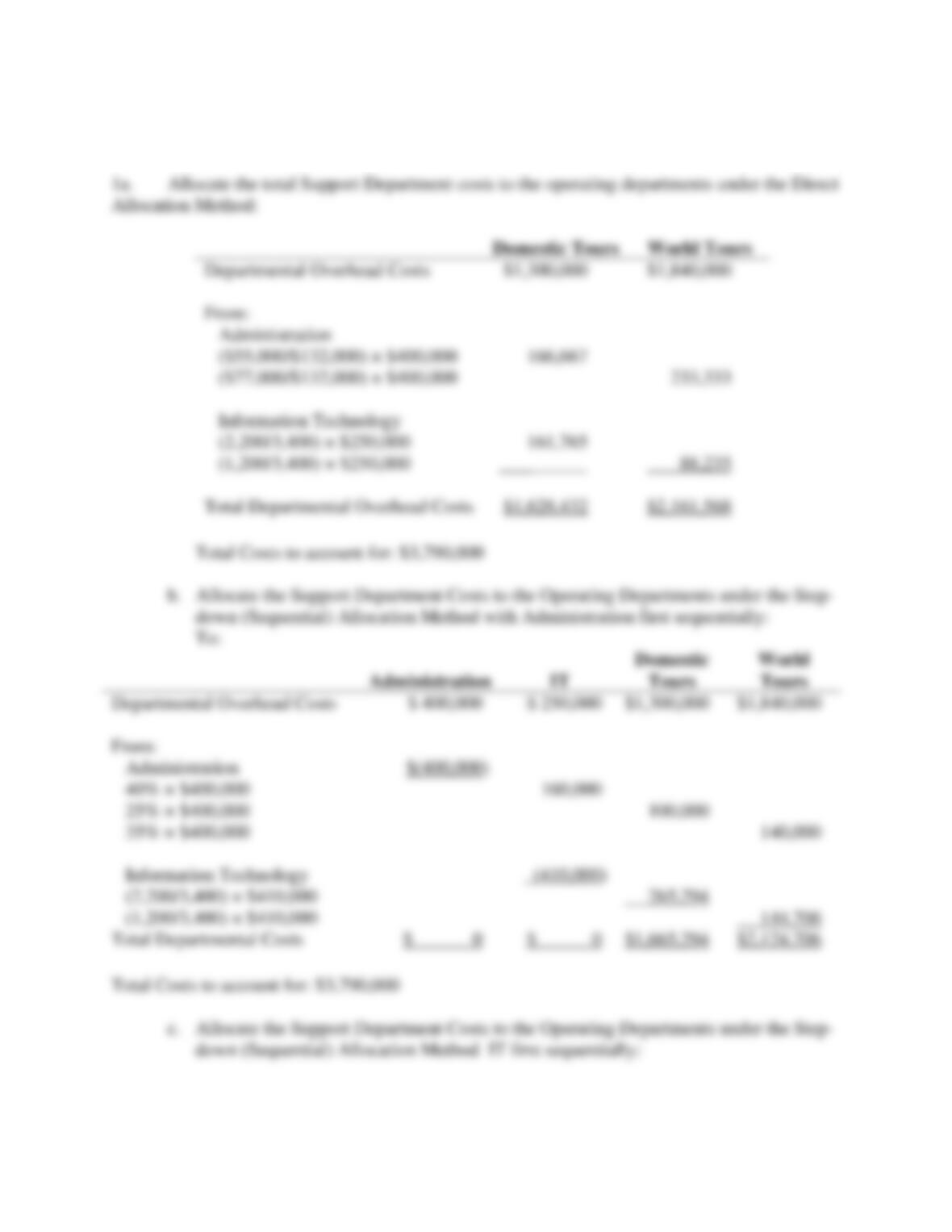
Montclair Tours provides guided educational tours to college alumni associations. The company
is divided into two operating divisions: domestic tours and world tours. Each of the tour
divisions uses the services of the company’s two support departments: Administration and
Information Technology. Additionally, the Administration and Information Technology
departments use the services of each other. Data concerning the past year are as follows:
Required:
1. What are the total overhead costs of the operating departments (domestic and world tours)
after the support department costs of Administration and Information Technology have been
allocated using (a) the direct method, (b) the step-down method (allocate Administration
first), (c) the step-down method (allocate Information Technology first), and (d) the
reciprocal method?
2. Which method would you recommend that Montclair Tours use to allocate service
department costs? Why?
15-56
SOLUTION
15-57
15-58
15-59
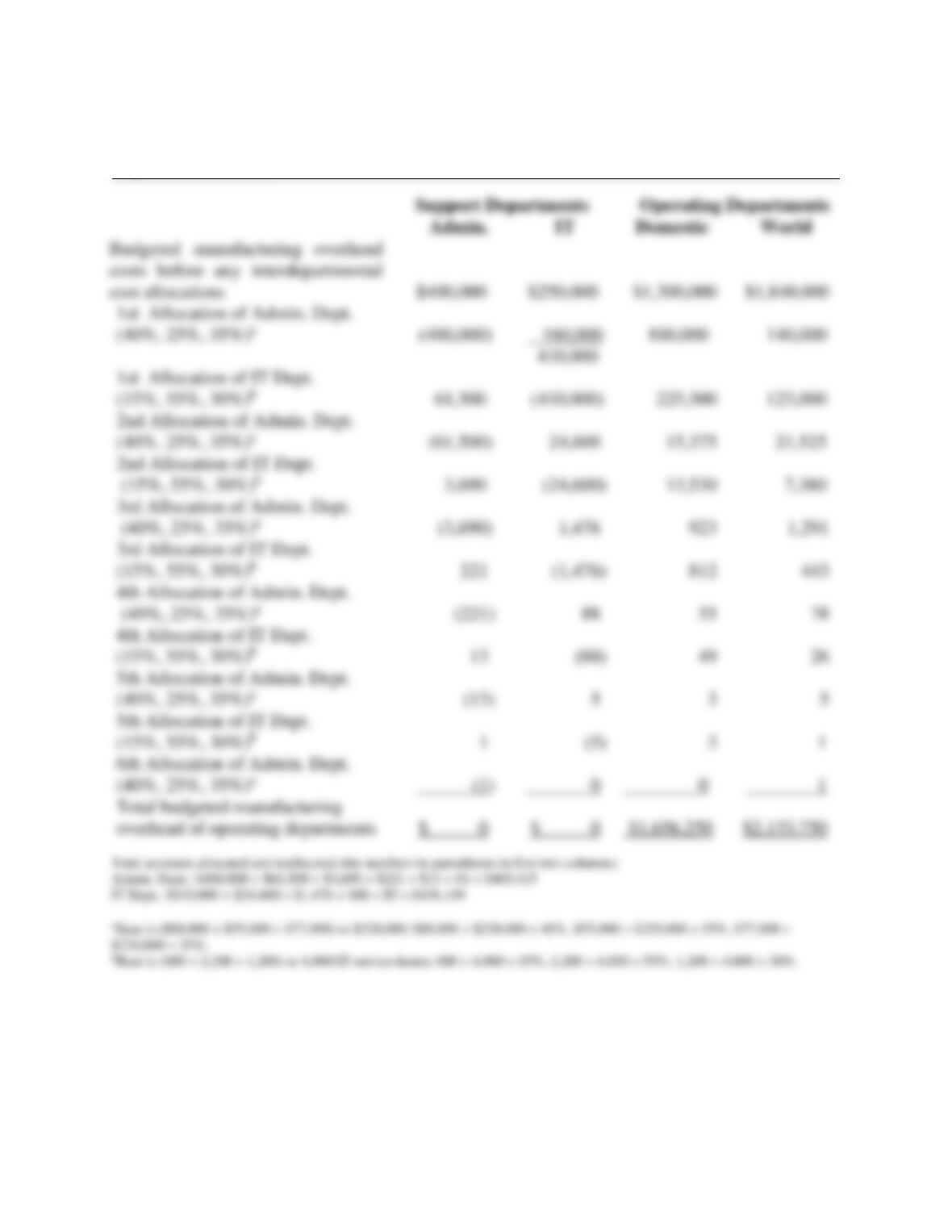
SOLUTION EXHIBIT 15-36
Reciprocal Method of Allocating Support Department Costs for Montclair Tours Using
Repeated Iterations.