15-21
15-25 (20 min.) Revenue allocation, bundled products.
Essence Company blends and sells designer fragrances. It has a Men’s Fragrances Division and a
Women’s Fragrances Division, each with different sales strategies, distribution channels, and
product offerings. Essence is now considering the sale of a bundled product called Sync
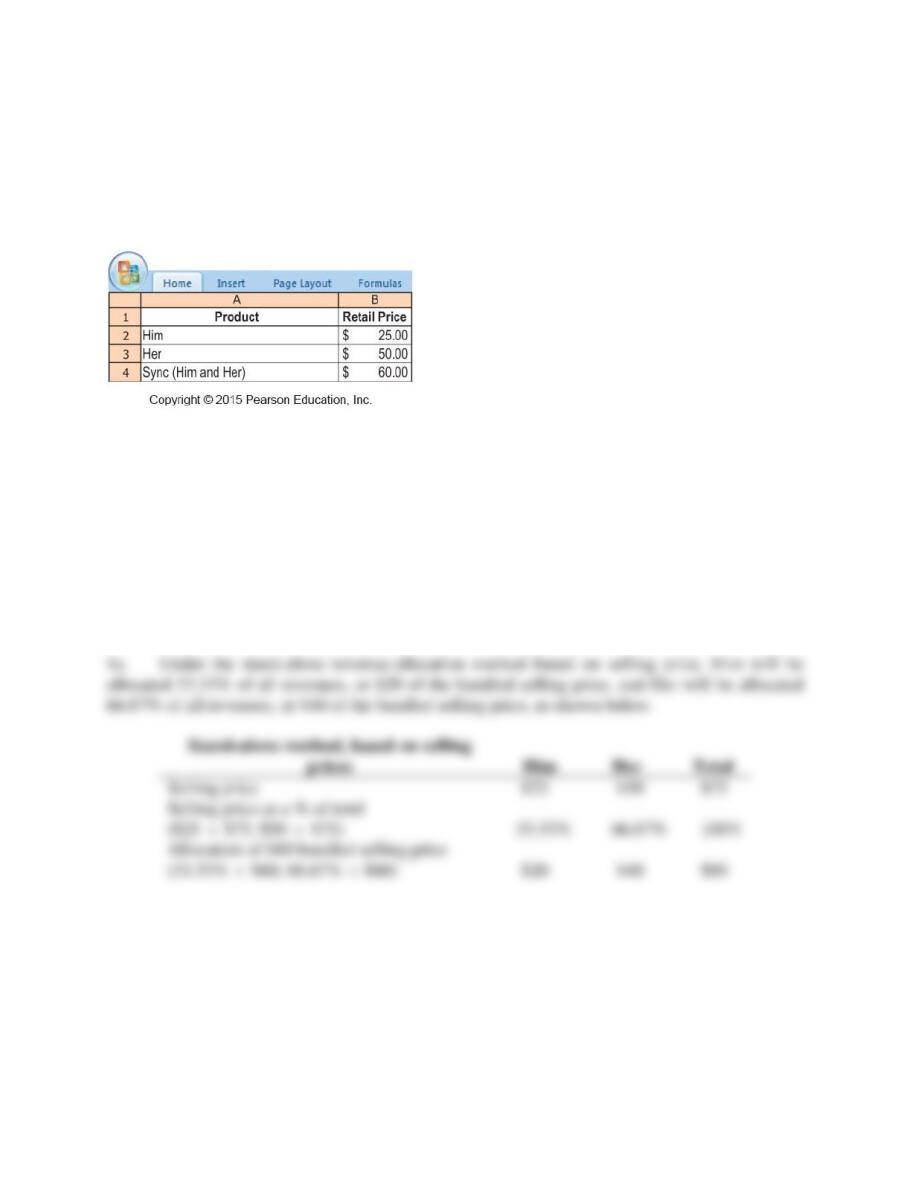
consisting of one bottle of Him, a men’s cologne, and one bottle of Her, a women’s perfume. For
the most recent year, Essence reported the following:
A
Required:
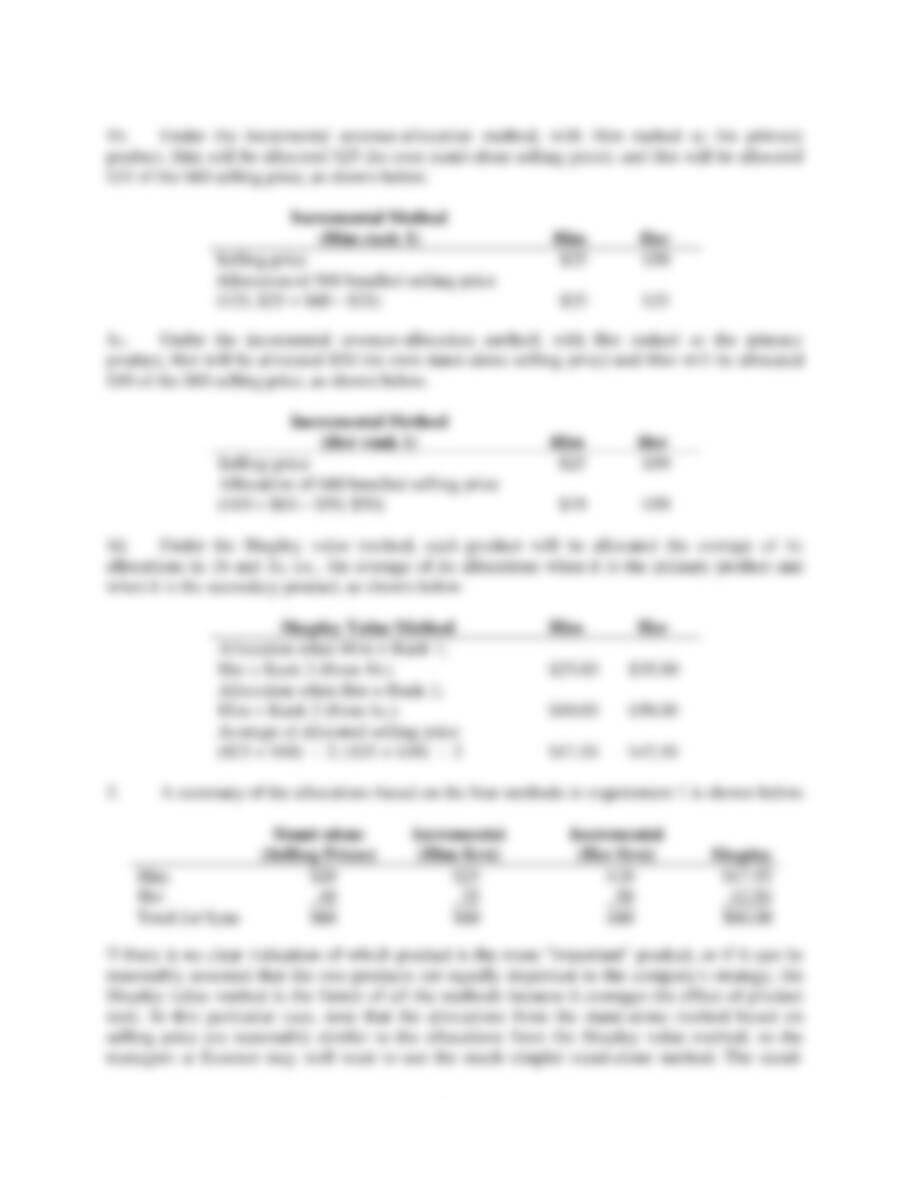
1. Allocate revenue from the sale of each unit of Sync to Him and Her using the following:
a. The stand-alone revenue-allocation method based on selling price of each product
b. The incremental revenue-allocation method, with Him ranked as the primary product
c. The incremental revenue-allocation method, with Her ranked as the primary product
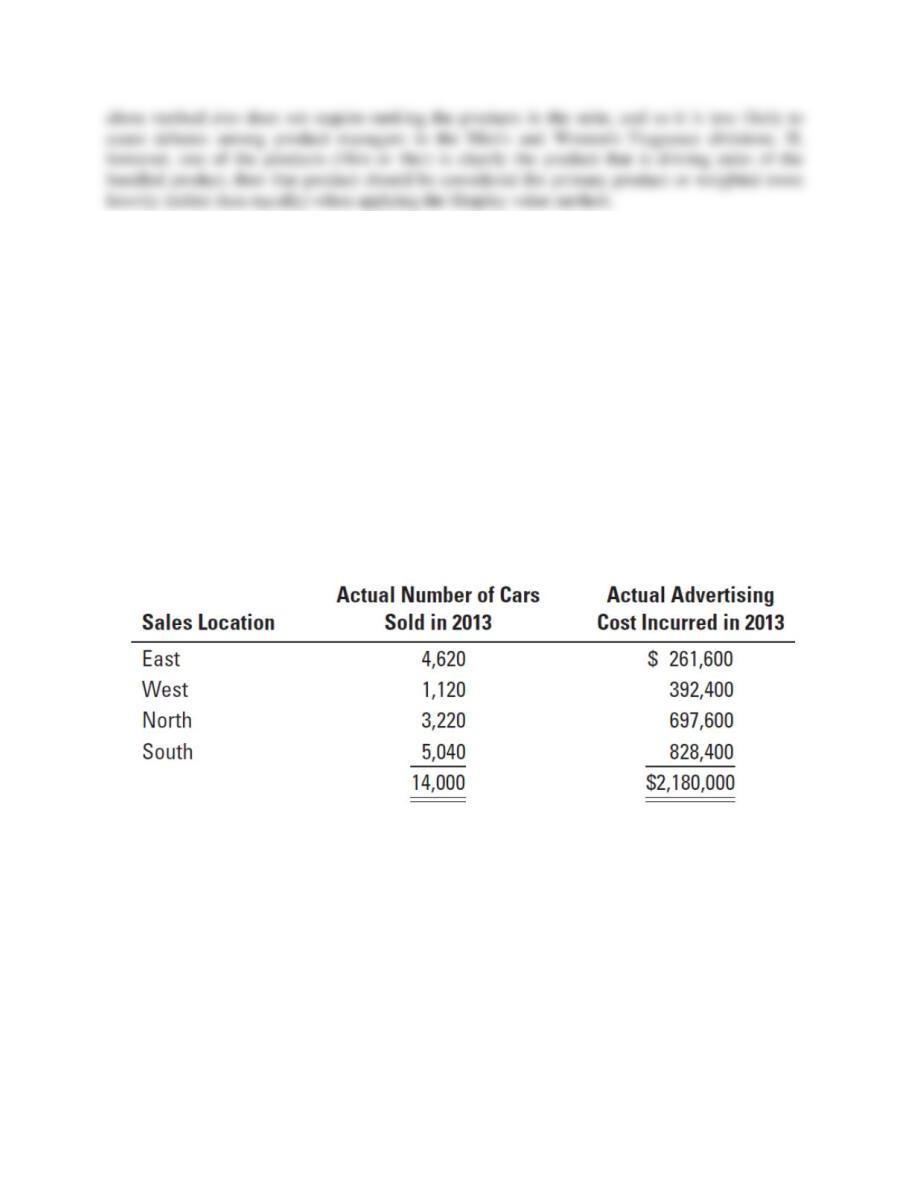
d. The Shapley value method, assuming equal unit sales of Him and Her
2. Of the four methods in requirement 1, which one would you recommend for allocating
Sync’s revenues to Him and Her? Explain.
SOLUTION
15-22
15-23
15-26 (20-25 min. ) Allocation of common costs.
Doug Dandy Auto Sales uses all types of media to advertise its products (television, radio,
newspaper, and so on). At the end of 2013, the company president, Doug Davenport, decided
that all advertising costs would be incurred by corporate headquarters and allocated to each of
the company’s four sales locations based on number of vehicles sold. Doug was confident that
his corporate purchasing manager could negotiate better advertising contracts on a corporate–
wide basis than each of the sales managers could on their own. Davenport budgeted total
advertising cost for 2014 to be $1.7 million. He introduced the new plan to his sales managers
just before the New Year.
The manager of the east sales location, Mike Samson, was not happy. He complained that the
new allocation method was unfair and would increase his advertising costs significantly over the
prior year. The east location sold high volumes of low-priced used cars and most of the corporate
advertising budget was related to new car sales.
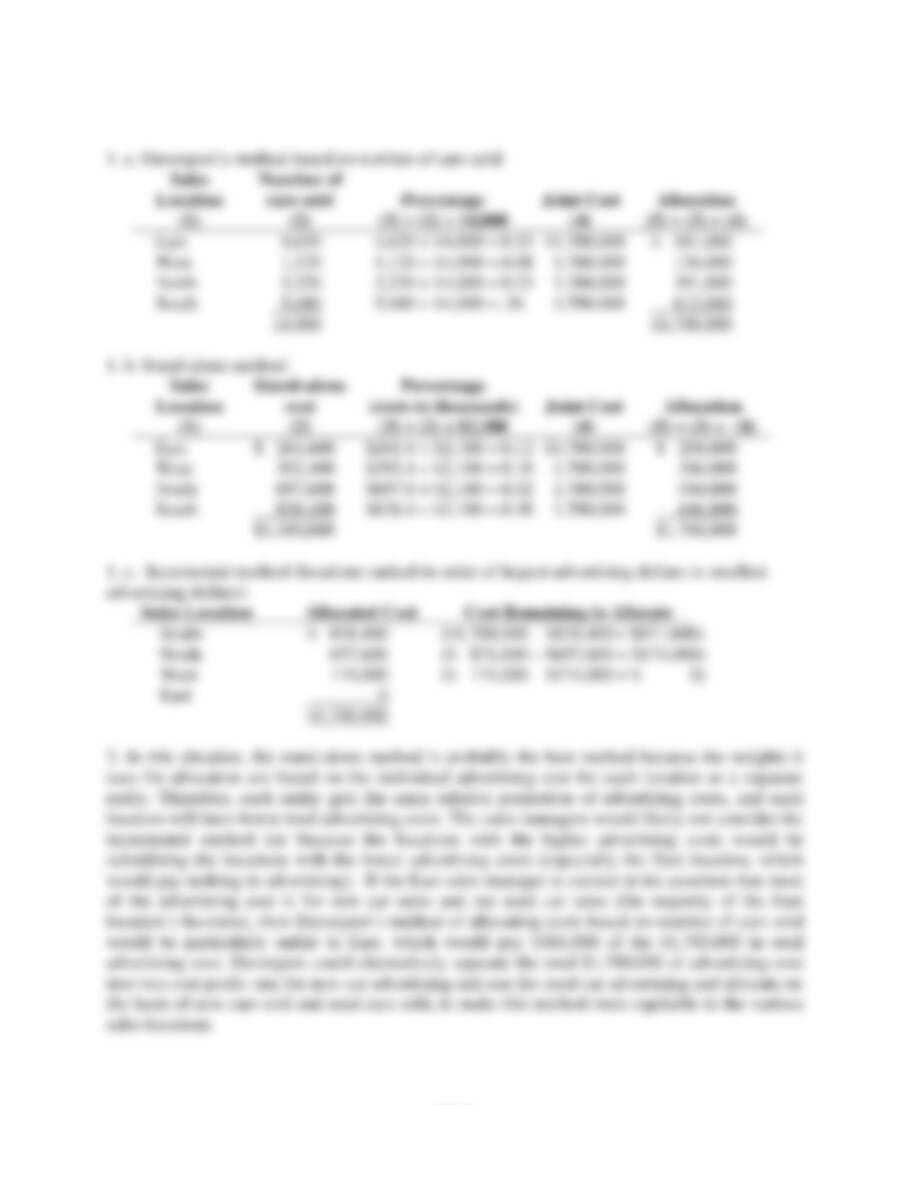
Following Mike’s complaint, Doug decided to take another hard look at what each of the
divisions was paying for advertising before the new allocation plan. The results were as follows:
Required:
1. Using 2013 data as the cost bases, show the amount of the 2014 advertising cost ($1,700,000)
that would be allocated to each of the divisions under the following criteria:
a. Davenport’s allocation method based on number of cars sold
b. The stand-alone method
c. The incremental-allocation method, with divisions ranked on the basis of dollars spent on
advertising in 2013
2. Which method do you think is most equitable to the divisional sales managers? What other
options might President Doug Davenport have for allocating the advertising costs?
15-24
SOLUTION
15-25
15-27 (20 min.) Single-rate, dual-rate, and practical capacity allocation.
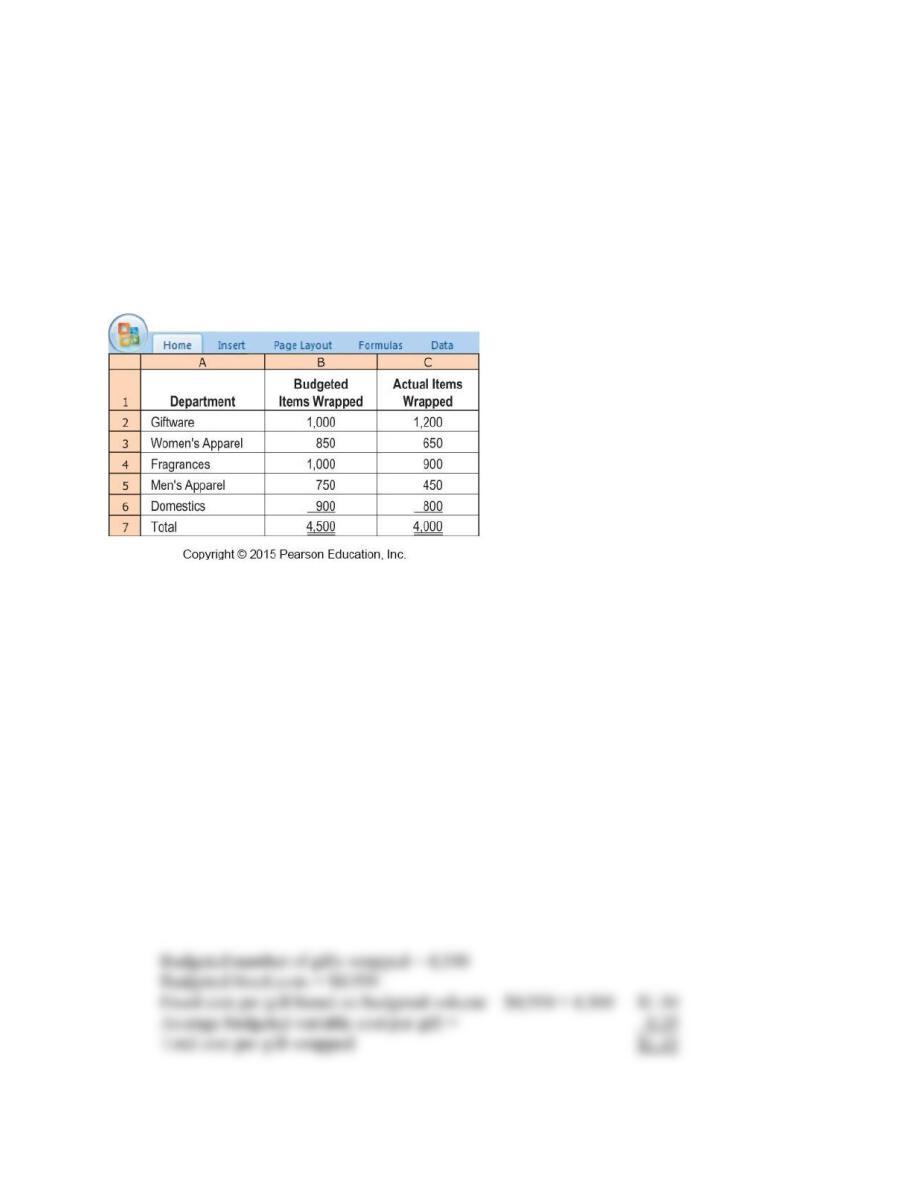
Preston Department Store has a new promotional program that offers a free gift-wrapping service
for its customers. Preston’s customer-service department has practical capacity to wrap 5,000
gifts at a budgeted fixed cost of $4,950 each month. The budgeted variable cost to gift-wrap an
item is $0.35. During the most recent month, the department budgeted to wrap 4,500 gifts.
Although the service is free to customers, a gift-wrapping service cost allocation is made to the
department where the item was purchased. The customer-service department reported the
following for the most recent month:
Required:
1. Using the single-rate method, allocate gift–wrapping costs to different departments in these
three ways:
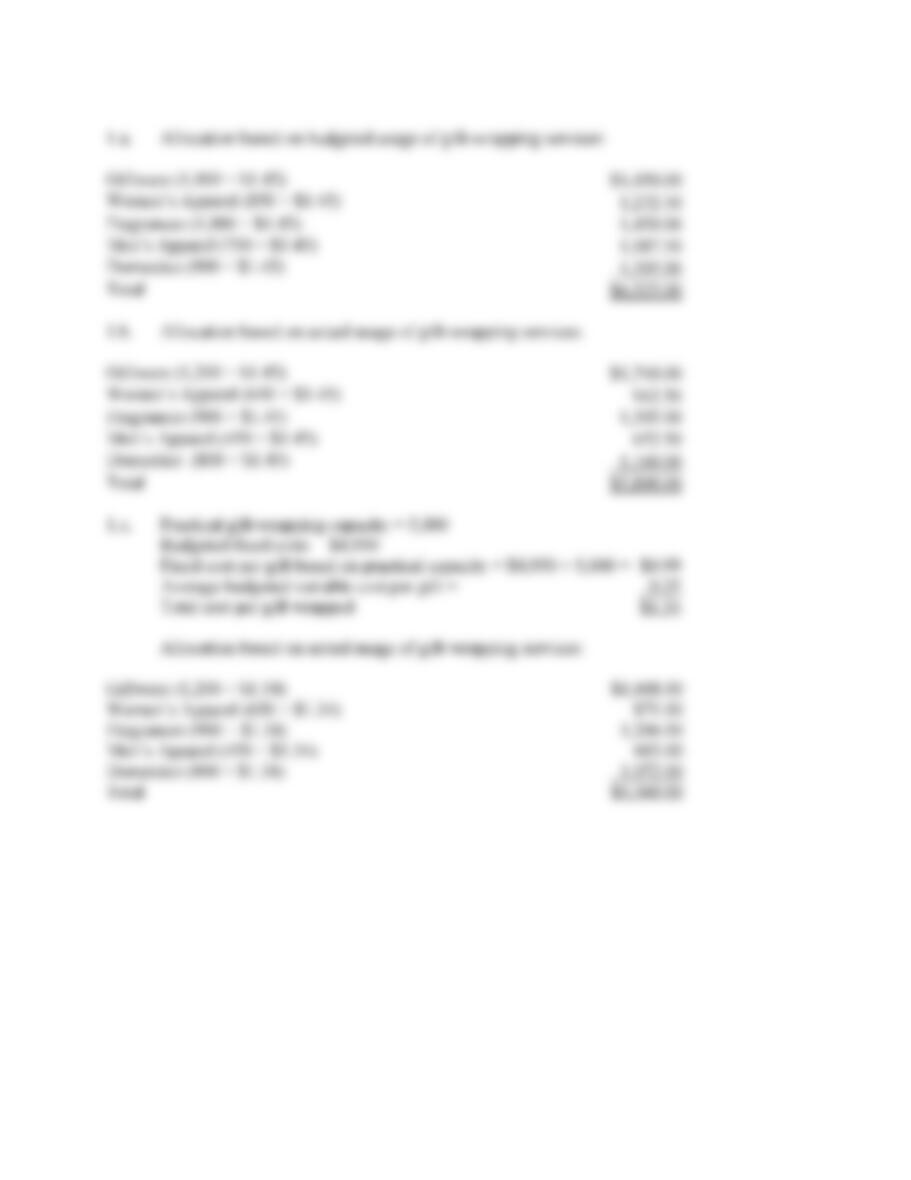
a. Calculate the budgeted rate based on the budgeted number of gifts to be wrapped and
allocate costs based on the budgeted use (of gift-wrapping services).
b. Calculate the budgeted rate based on the budgeted number of gifts to be wrapped and
allocate costs based on actual usage.
c. Calculate the budgeted rate based on the practical gift-wrapping capacity available and
allocate costs based on actual usage.
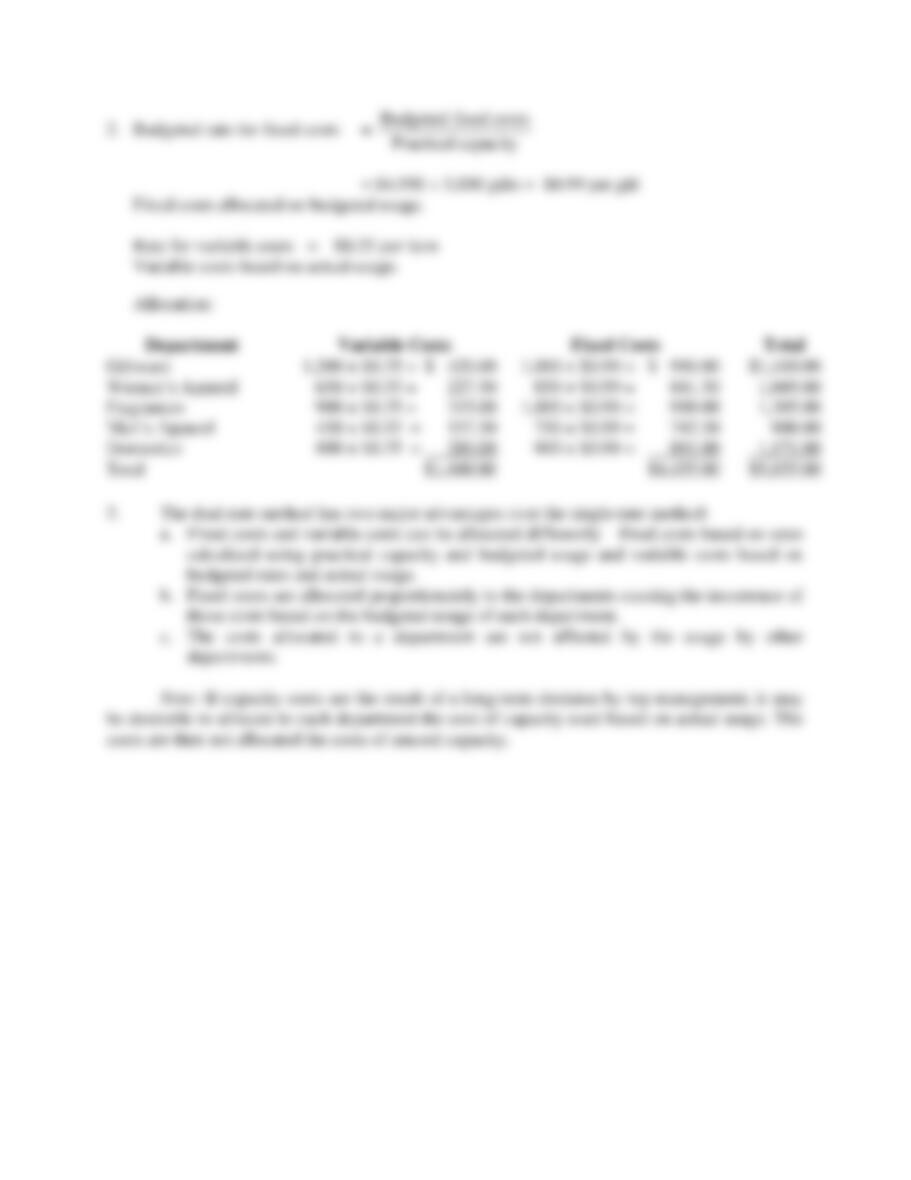
2. Using the dual-rate method, compute the amount allocated to each department when (a) the
fixed-cost rate is calculated using budgeted costs and the practical gift-wrapping capacity, (b)
fixed costs are allocated based on budgeted usage of gift-wrapping services, and (c) variable
costs are allocated using the budgeted variable-cost rate and actual usage.
3. Comment on your results in requirements 1 and 2. Discuss the advantages of the dual-rate
method.
SOLUTION
15-26
15-27
15-28
15-28 (20 min.) Revenue allocation
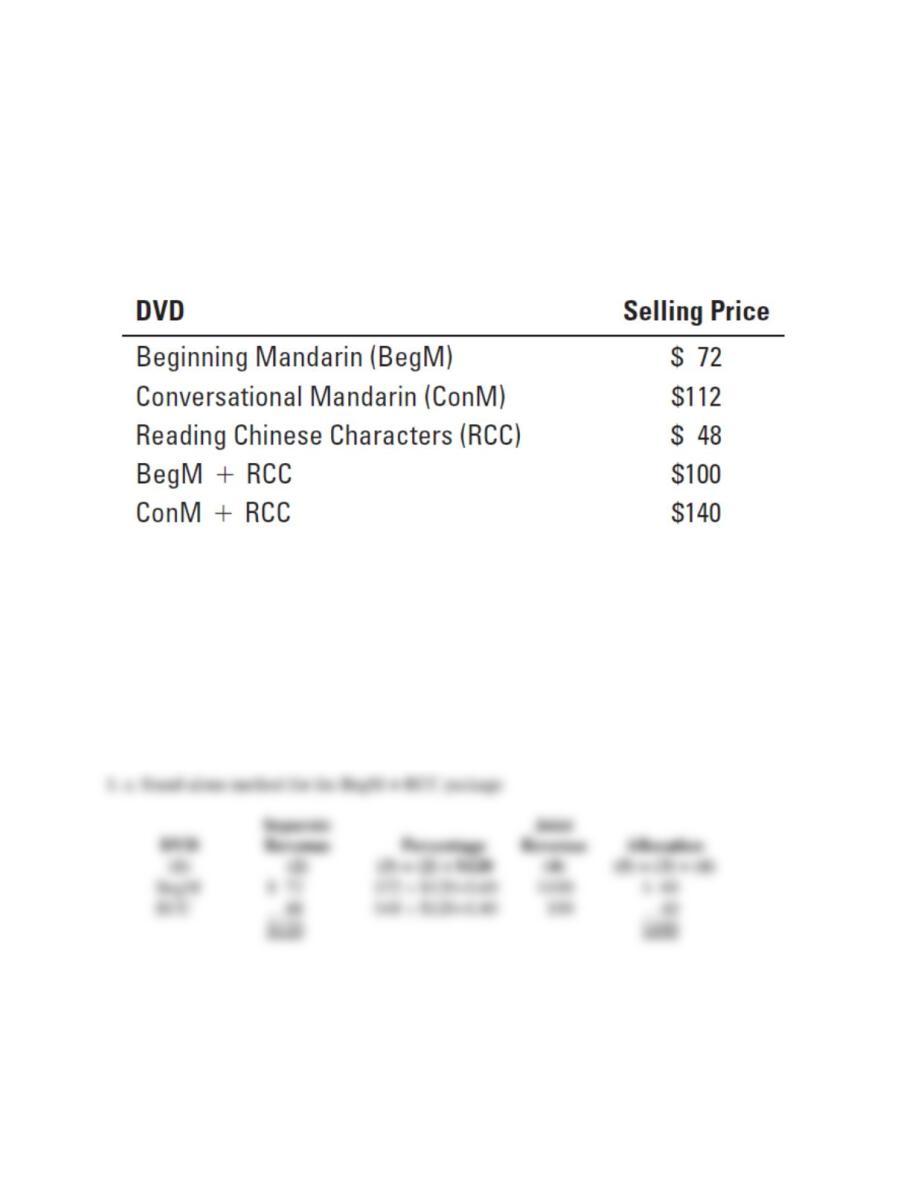
Yang Inc. produces and sells DVDs to business people and students who are planning extended
stays in China. It has been very successful with two DVDs: Beginning Mandarin and
Conversational Mandarin. It is introducing a third DVD, Reading Chinese Characters. It has
decided to market its new DVD in two different packages grouping the Reading Chinese
Characters DVD with each of the other two language DVDs. Information about the separate
DVDs and the packages follow.
Required:
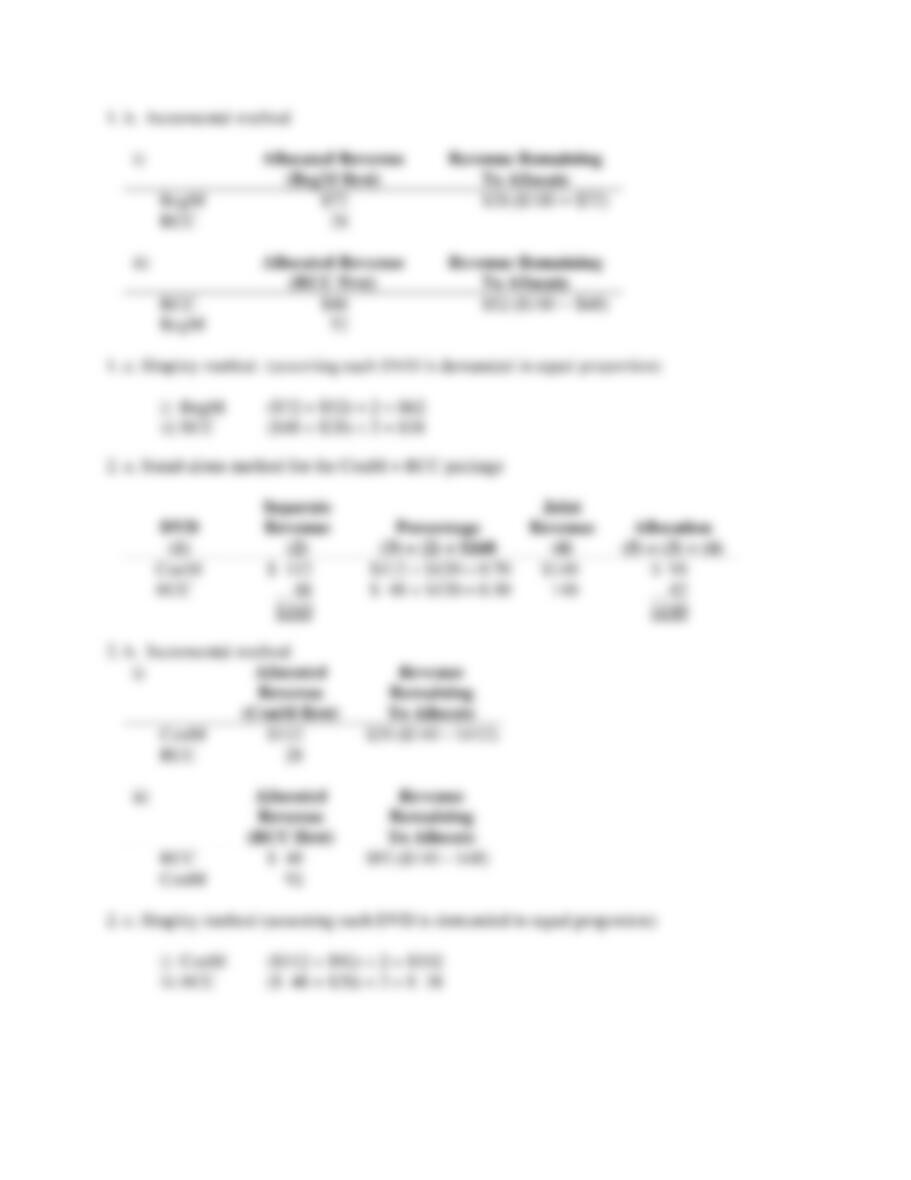
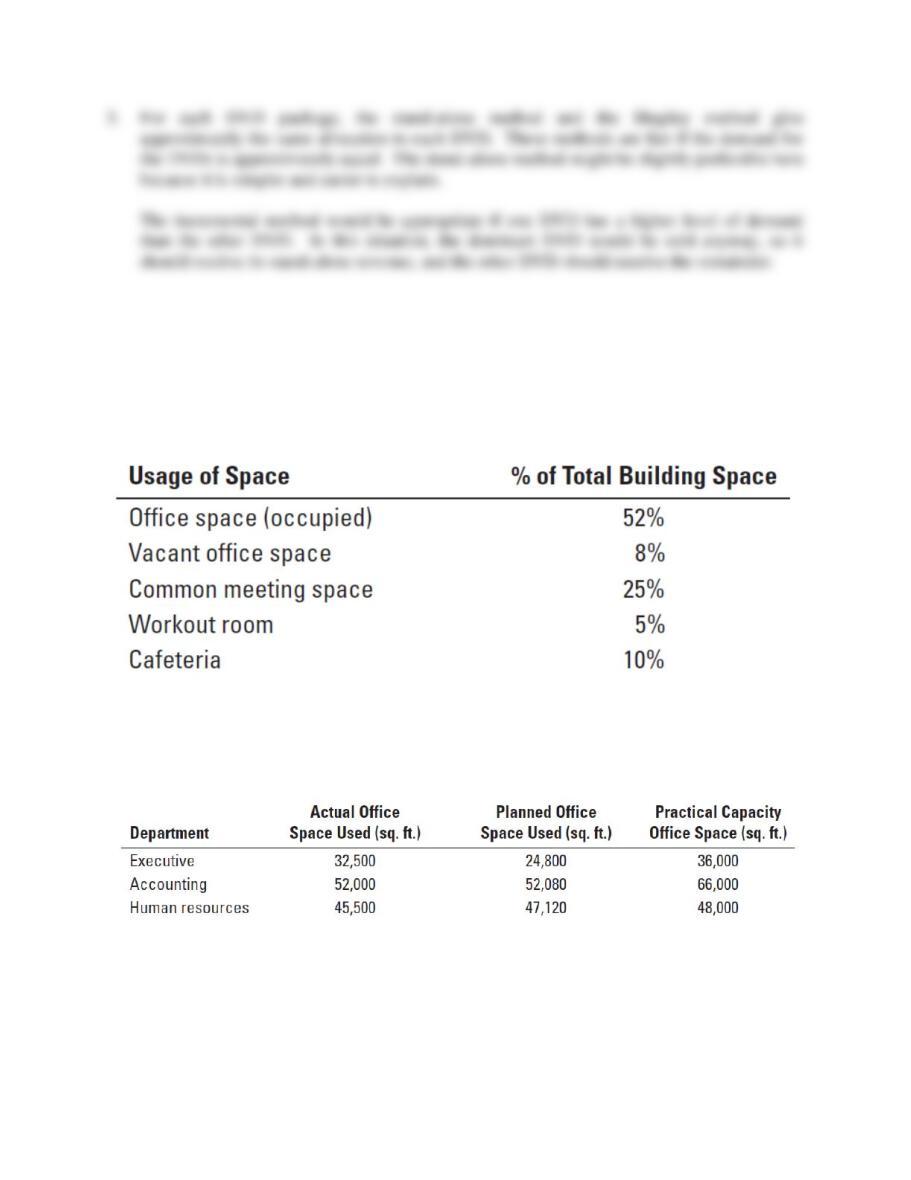
1. Using the selling prices, allocate revenues from the BegM + RCC package to each DVD in
that package using (a) the stand-alone method; (b) the incremental method, in either order;
and (c) the Shapley value method.
2. Using the selling prices, allocate revenues from the ConM + RCC package to each DVD in
that package using (a) the stand-alone method; (b) the incremental method, in either order;
and (c) the Shapley value method.
3. Which method is most appropriate for allocating revenues among the DVDs? Why?
SOLUTION
15-29
15-30
15-29 (20 min.) Fixed cost allocation.
Baker University completed construction of its newest administrative building at the end of
2013. The University’s first employees moved into the building on January 1, 2014. The building
consists of office space, common meeting rooms (including a conference center), a cafeteria, and
even a workout room for its exercise enthusiasts. The total 2014 building space of 250,000
square feet was utilized as follows:
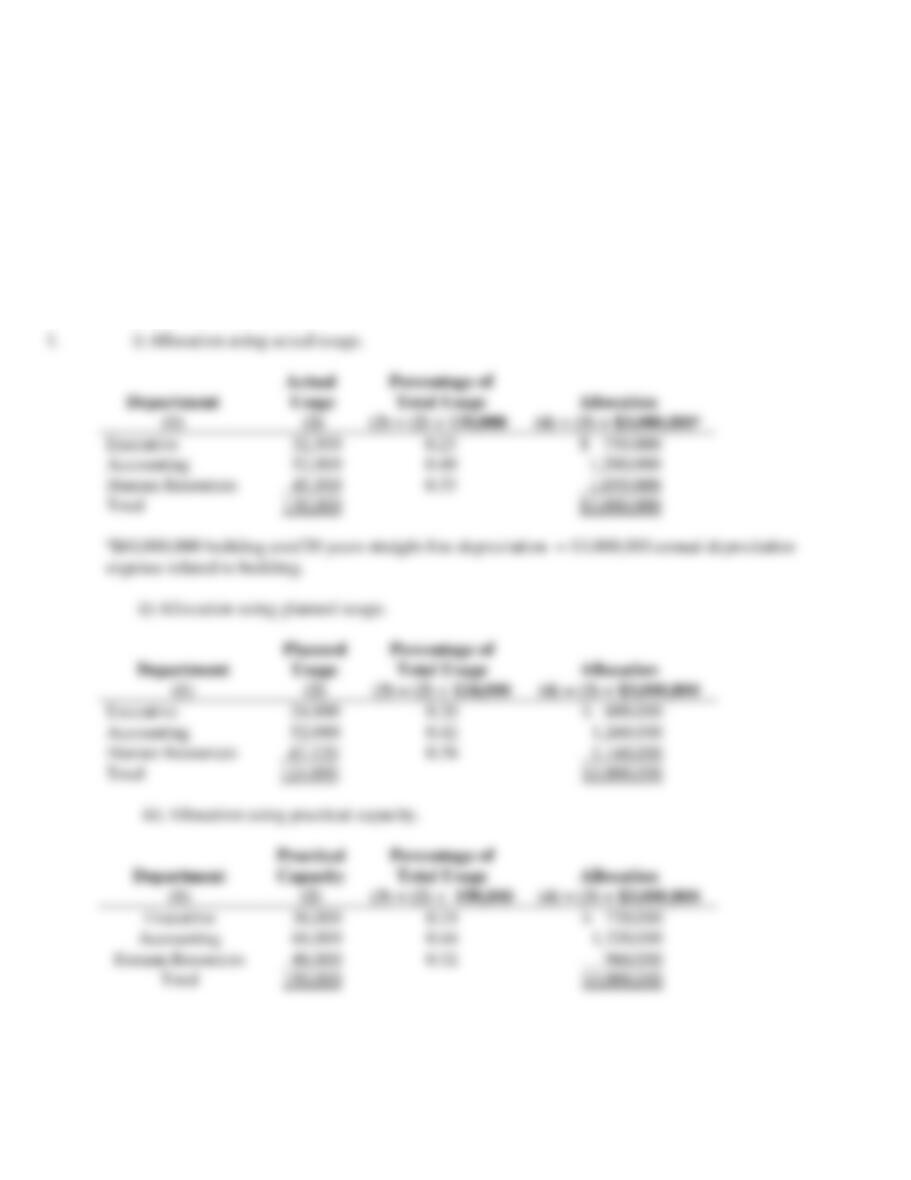
The new building cost the university $60 million and was depreciated using the straight-line
method over 20 years. At the end of 2014 three departments occupied the building: executive
offices of the president, accounting, and human resources. Each department’s usage of its
assigned space was as follows:
Required:
1. How much of the total building cost will be allocated in 2014 to each of the departments, if
the total cost is allocated to each department on the basis of the following?
a. Actual usage of the three departments
b. Planned usage of the three departments
c. Practical capacity of the three departments
15-31
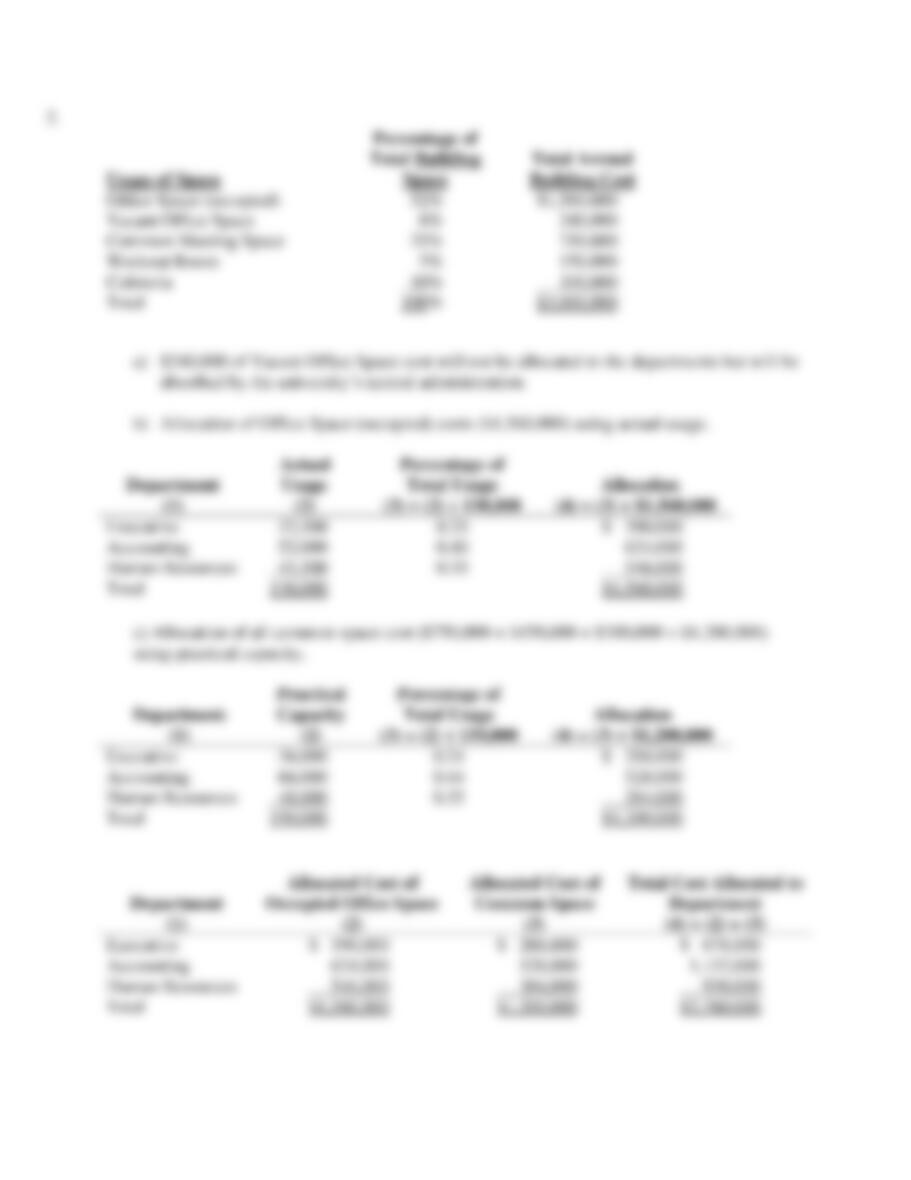
2. Assume that Baker University allocates the total annual building cost in the following
manner:
a. All vacant office space is absorbed by the university and is not allocated to the
departments.
b. All occupied office space costs are allocated on the basis of actual square footage used.
c. All common area costs are allocated on the basis of a department’s practical capacity.
Calculate the cost allocated to each department in 2014 under this plan. Do you think the
allocation method used here is appropriate? Explain.
SOLUTION
15-32
15-33
15-34
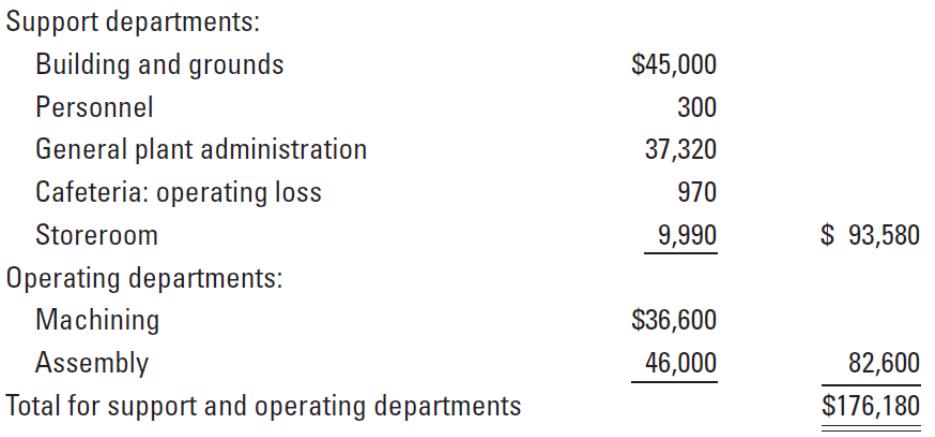
15-30 (45 min.) Allocating costs of support departments; step-down and direct methods.
The Central Valley Company has prepared department overhead budgets for budgeted-volume levels before allocations as follows:
Management has decided that the most appropriate inventory costs are achieved by using individual-department overhead rates. These
rates are developed after support-department costs are allocated to operating departments.
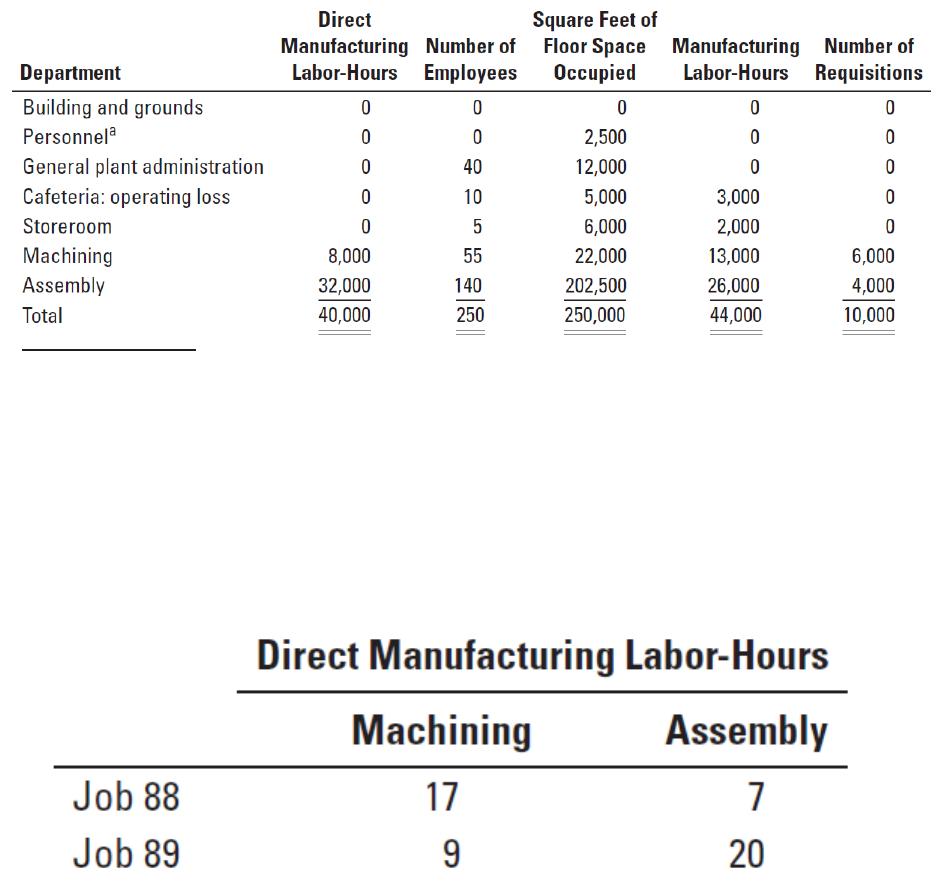
Bases for allocation are to be selected from the following:
15-35
aBasis used is number of employees.
Required:
1. Using the step-down method, allocate support-department costs. Develop overhead rates per direct manufacturing labor-hour for
machining and assembly. Allocate the costs of the support departments in the order given in this problem. Use the allocation base
for each support department you think is most appropriate.
2. Using the direct method, rework requirement 1.
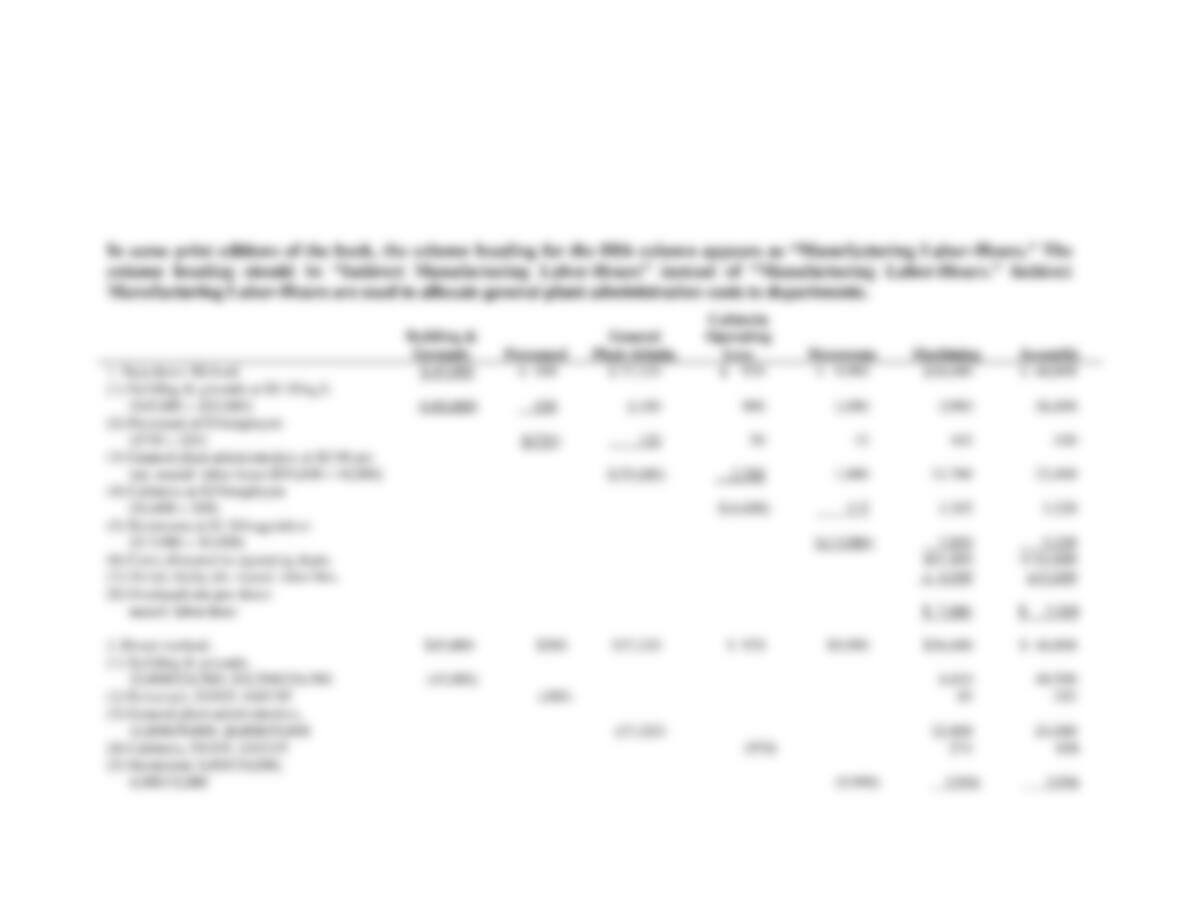
3. Based on the following information about two jobs, determine the total overhead costs for each job by using rates developed in (a)
requirement 1 and (b) requirement 2.
15-36
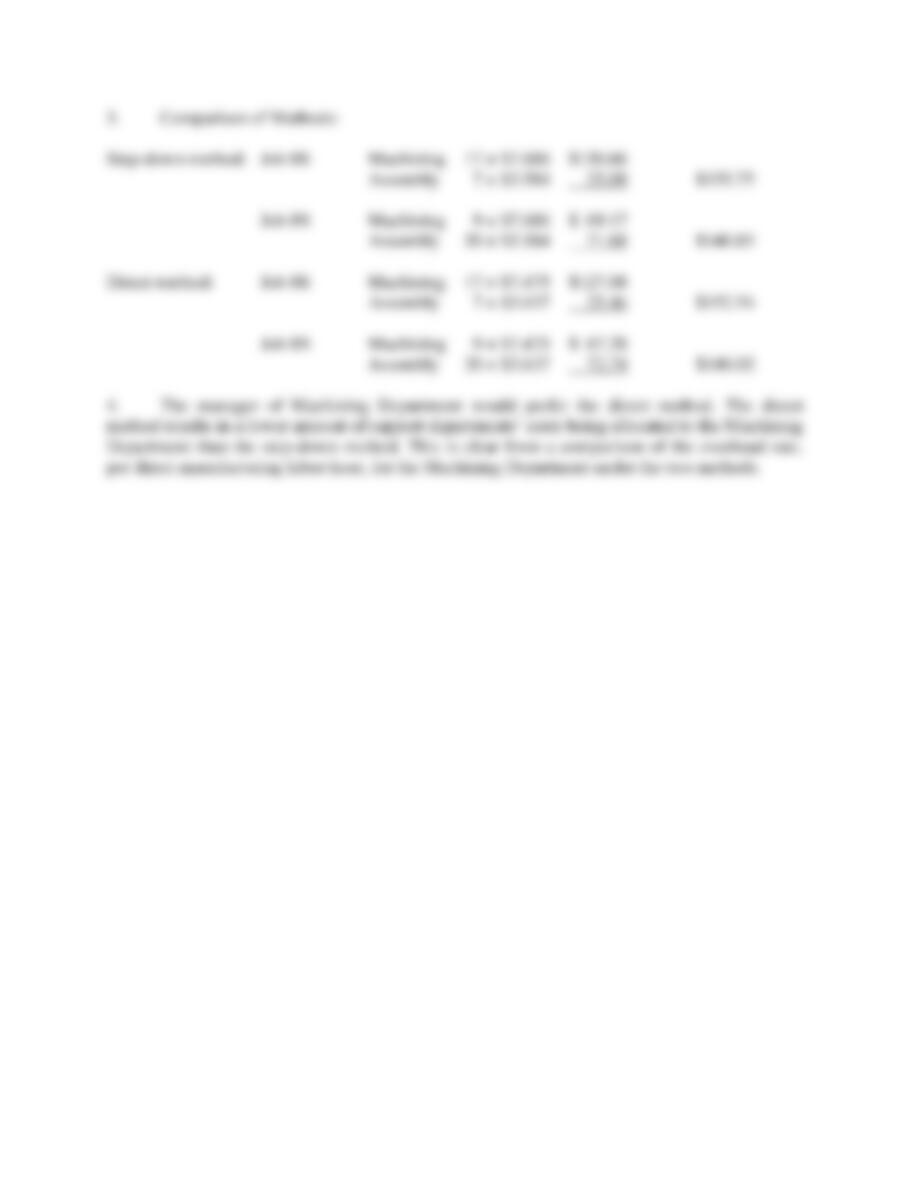
4. The company evaluates the performance of the operating department managers on the basis of how well they managed their total
costs, including allocated costs. As the manager of the Machining Department, which allocation method would you prefer from the
results obtained in requirements 1 and 2? Explain.
SOLUTION

15-37
15-38
15-39
15-31 (40-60 min.) Support-department cost allocations; single-department cost pools;
direct, step-down, and reciprocal methods.
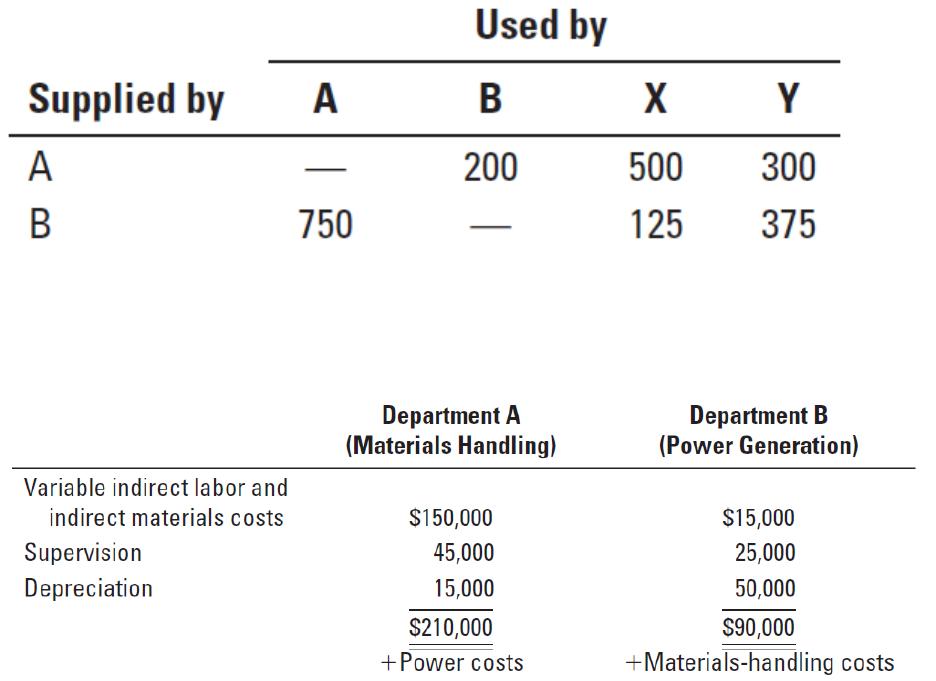
The Milton Company has two products. Product 1 is manufactured entirely in department X.
Product 2 is manufactured entirely in department Y. To produce these two products, the Milton
Company has two support departments: A (a materials-handling department) and B (a power–
generating department).
An analysis of the work done by departments A and B in a typical period follows:
The work done in department A is measured by the direct labor-hours of materials-handling
time. The work done in department B is measured by the kilowatt-hours of power. The budgeted
costs of the support departments for the coming year are as follows:
The budgeted costs of the operating departments for the coming year are $1,250,000 for
department X and $950,000 for department Y.
Supervision costs are salary costs. Depreciation in department B is the straight-line
depreciation of power-generation equipment in its 19th year of an estimated 25-year useful life;
it is old, but well-maintained, equipment.
Required:
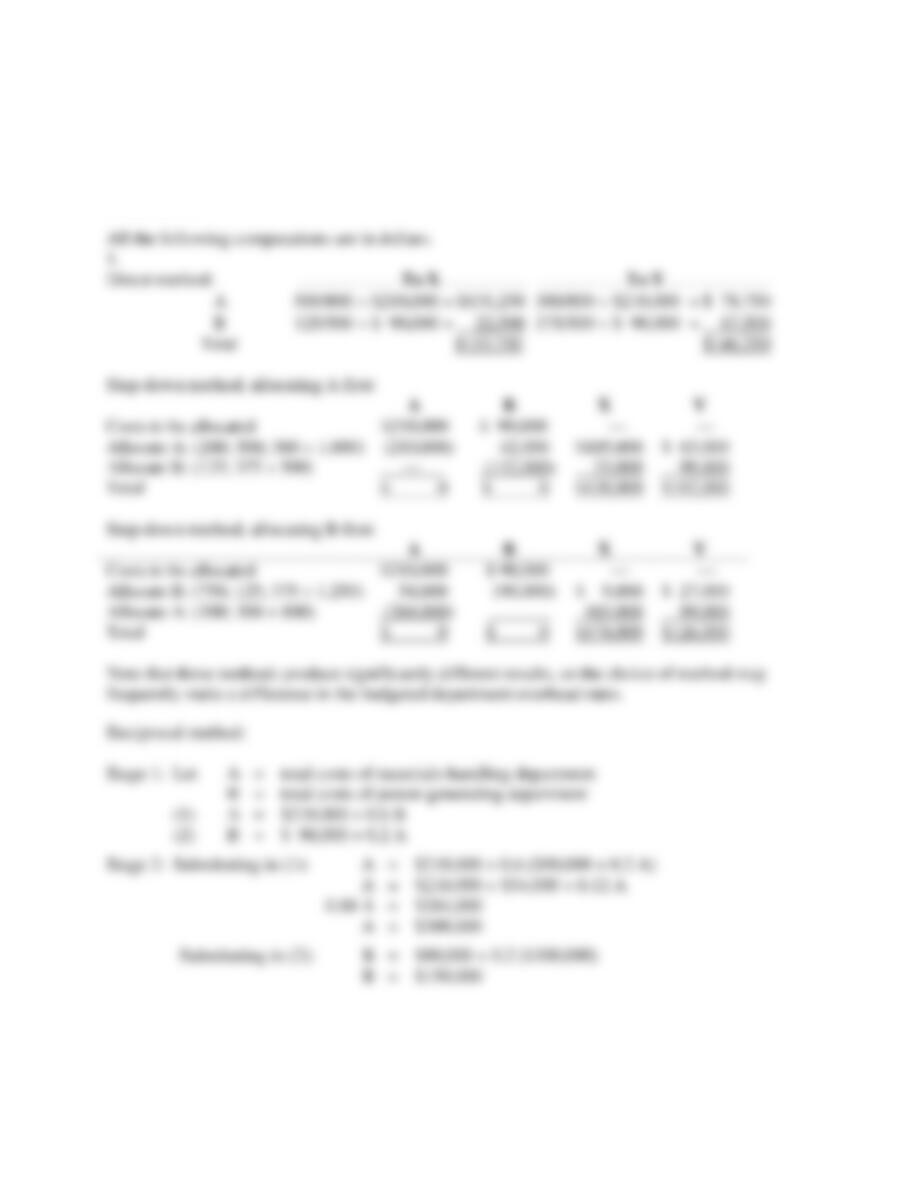
1. What are the allocations of costs of support departments A and B to operating departments X
and Y using (a) the direct method, (b) the step-down method (allocate department A first), (c)
the step-down method (allocate department B first), and (d) the reciprocal method?
15-40
2. An outside company has offered to supply all the power needed by the Milton Company and
to provide all the services of the present power department. The cost of this service will be
$80 per kilowatt-hour of power. Should Milton accept? Explain.
SOLUTION