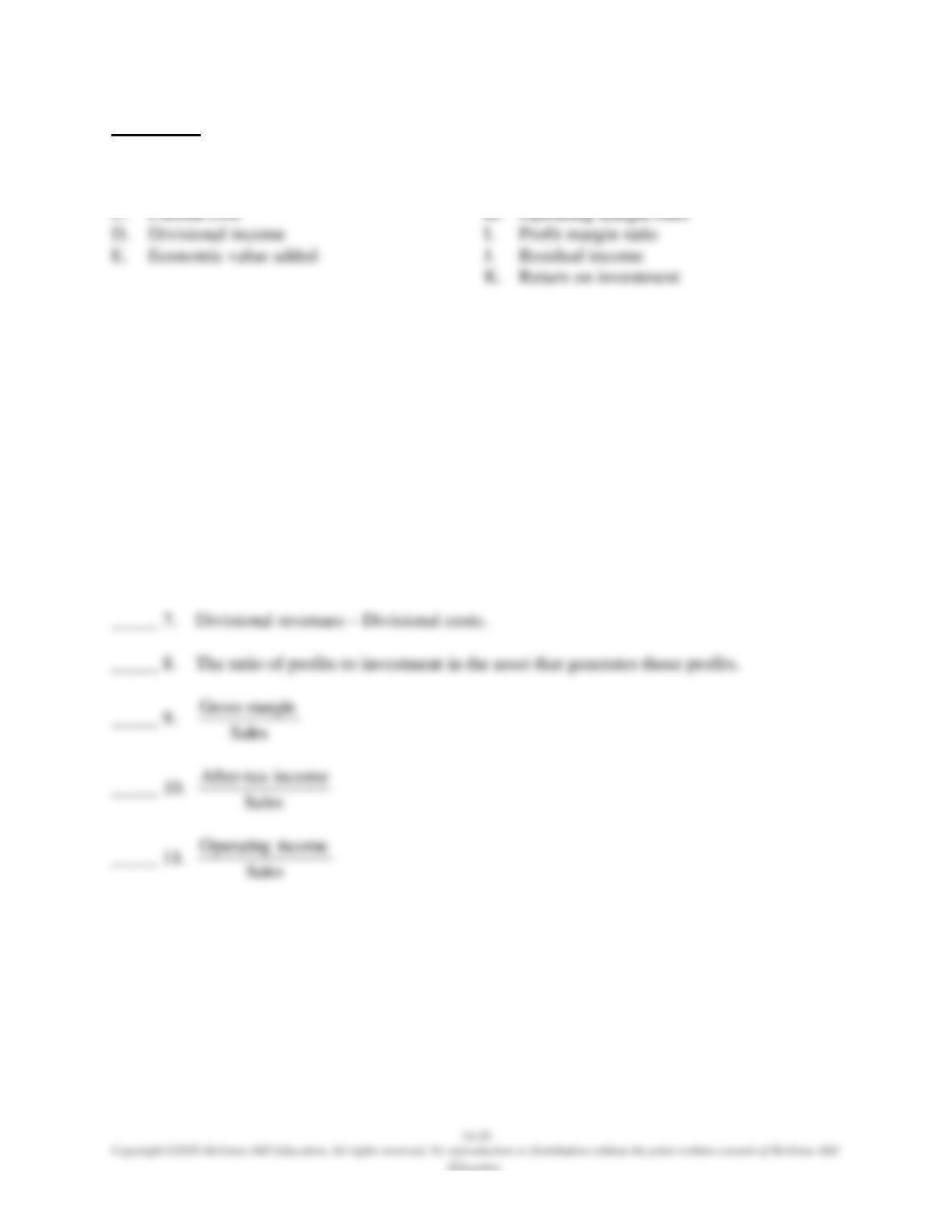
Matching
A.
Cost of capital
F.
Gross margin ratio
B.
Cost of invested capital
G.
Historical cost
C.
Current cost
H.
Operating margin ratio
D.
Divisional income
Profit margin ratio
Economic value added
Residual income
K.
Return on investment
_____ 1. The original cost to purchase or build an asset.
_____ 2. The cost to replace or rebuild an existing asset.
_____ 3. The annual after-tax (adjusted) divisional income minus the total annual cost of
(adjusted) capital.
_____ 4. The excess of actual profit over the cost of invested capital in the unit.
_____ 5. Measures the investment in the division.
_____ 6. Represents the opportunity cost of the resources invested (debt and equity capital) in
the business.
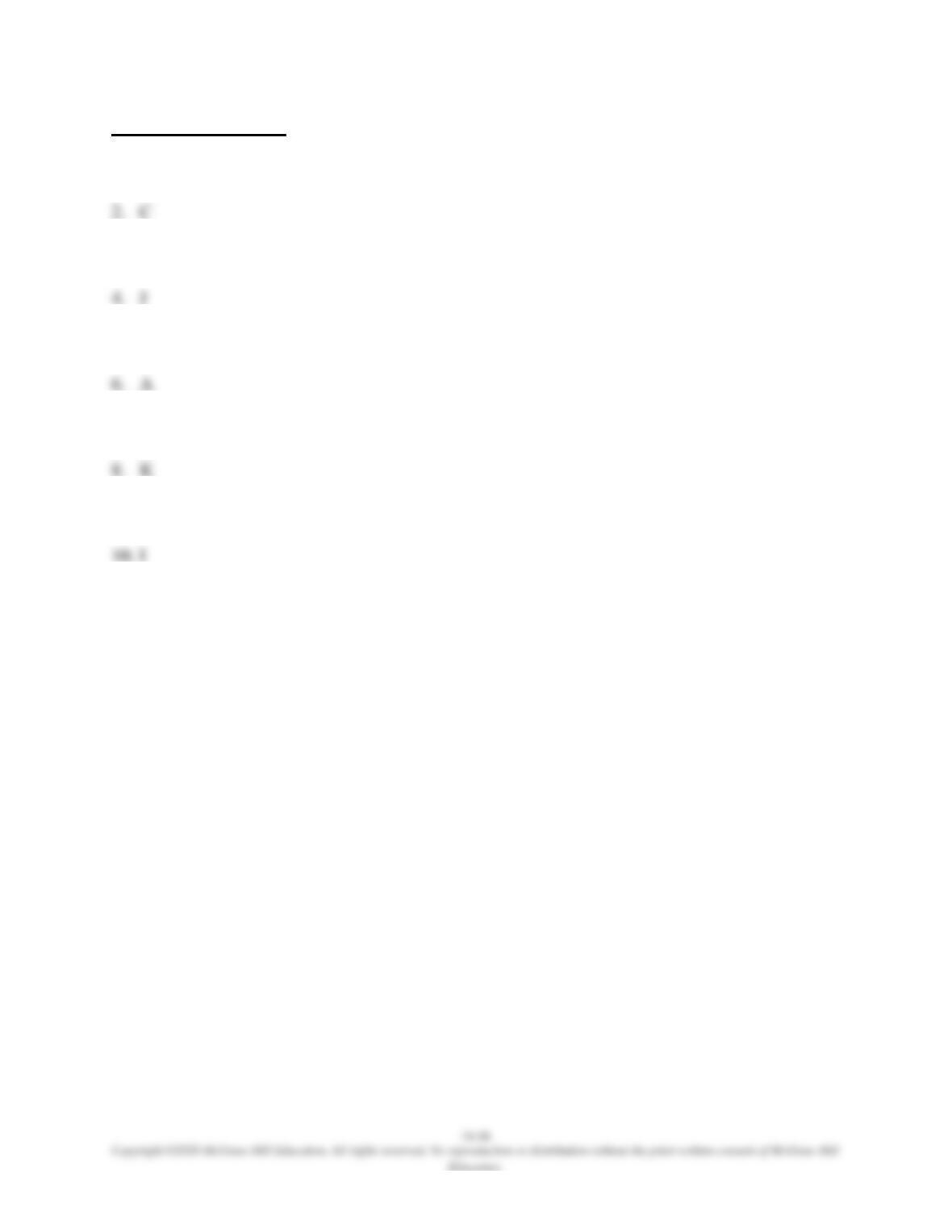
Matching Answers
1. G
3. E
5. B
7. D
9. F
11. H
Multiple Choice
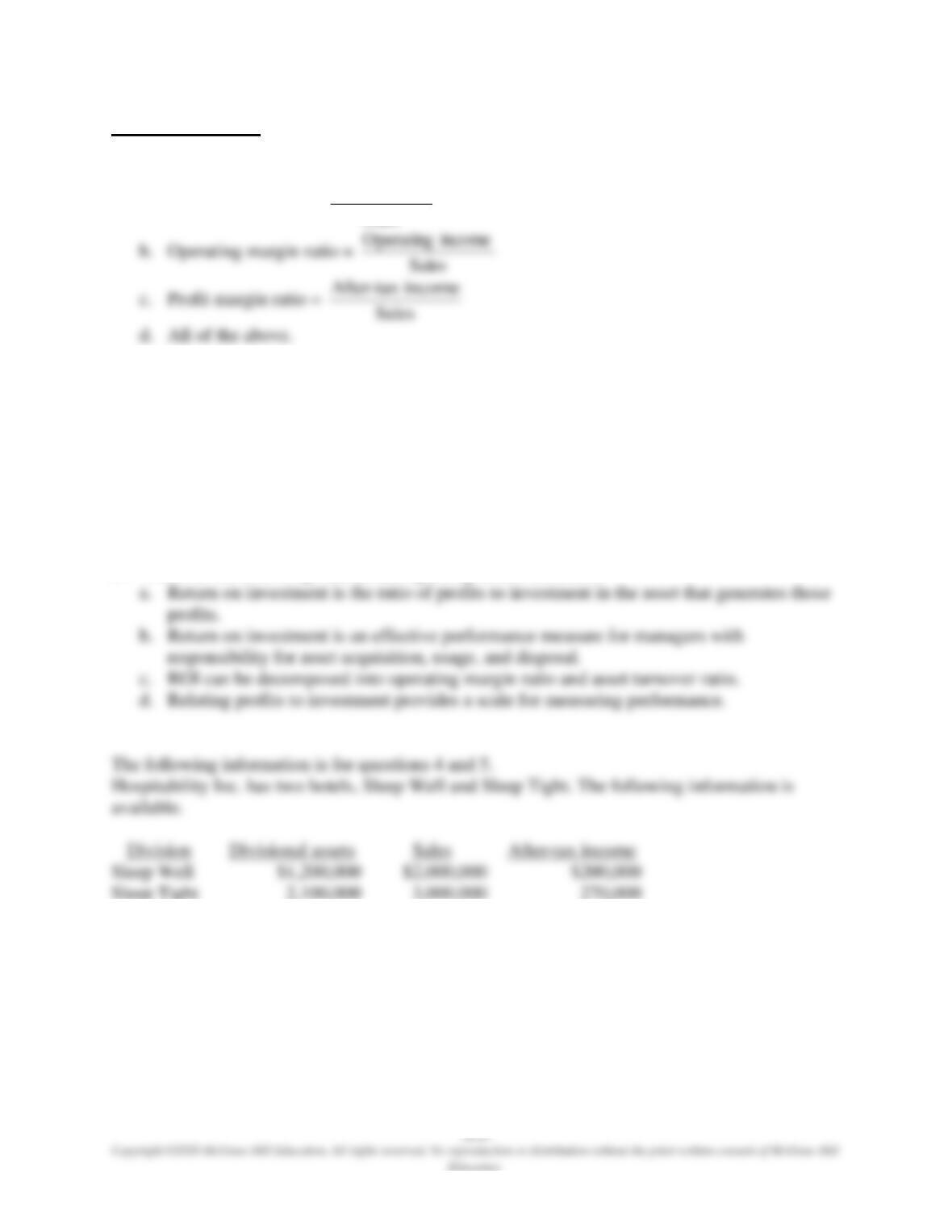
1. Which of the following is correct?
a. Gross margin ratio =
margin Gross
2. Which of the following statements is incorrect?
a. No performance measurement system perfectly aligns the manager’s and organization’s
interests.
b. Divisional income serves as a useful summary measure of performance.
c. Divisional income statements are subject to compliance with generally accepted
accounting principles (GAAP).
d. When the divisions are different in sizes, the use of financial ratios may improve
comparison.
3. Which of the following statements regarding ROI is incorrect?
4. What is Sleep Tight’s ROI?
a. 9.84%
b. 10.65%
c. 11.72%
d. 12.86%
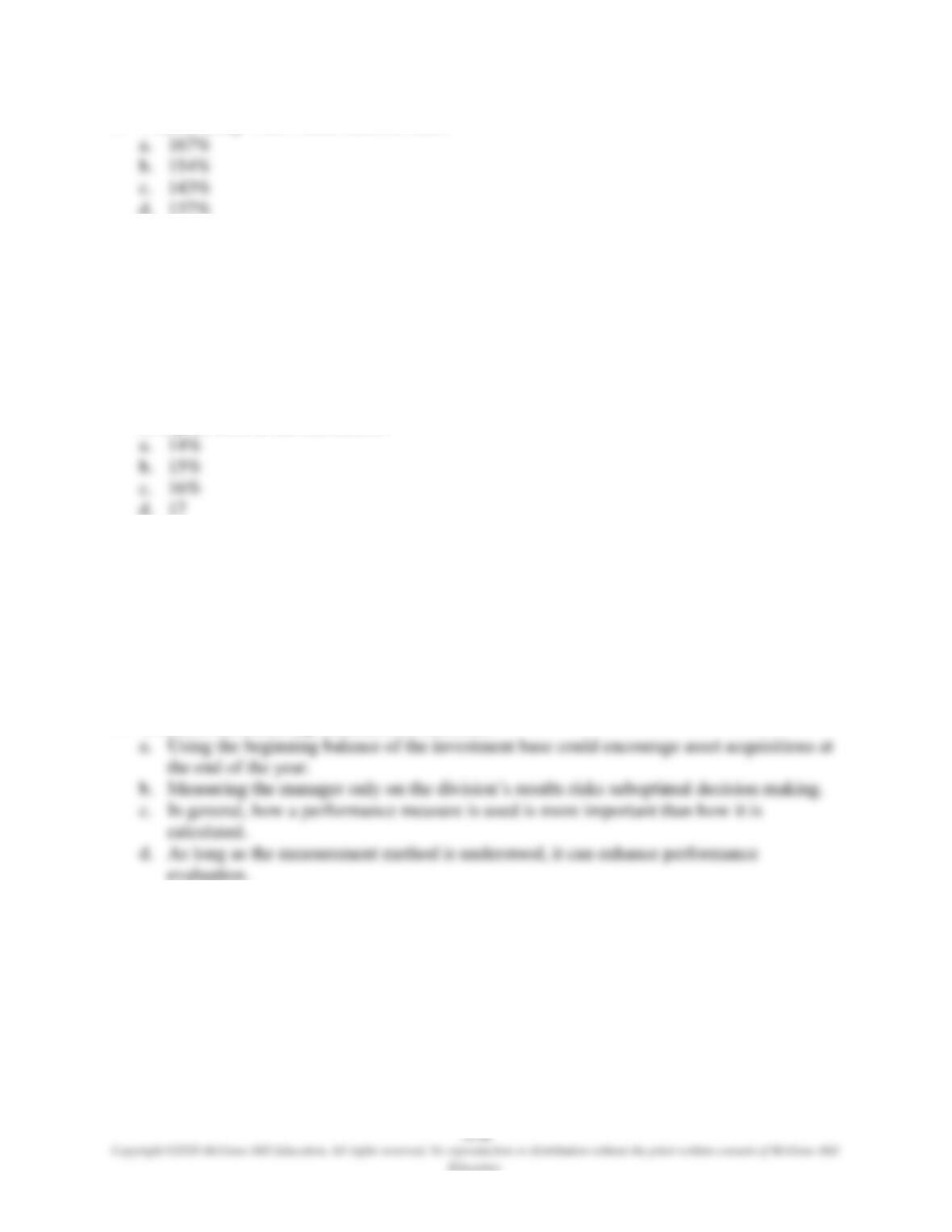
5. What is Sleep Well’s asset turnover ratio?
6. Which of the following formulas represents the residual income?
a. Residual income = Adjusted divisional income – Adjusted investment base
b. Residual income = Divisional income
c. Residual income = After-tax income – Cost of capital
d. Residual income = After-tax income – Cost of invested capital
7. A division reports the residual income in the amount of $95,000, after-tax income in the
amount of $410,000, and the investment base in the amount of $2,100,000. What is the cost
of capital used in the calculation?
8. Which of the following statements regarding EVA is incorrect?
a. EVA is a concept closely related to residual income.
b. EVA is a ratio.
c. EVA corrects for many of the accounting distortions that make the other measures
myopic.
d. It is difficult to implement EVA.
9. Which of the following statements is incorrect?
10. Which of the following statements regarding the measurement of the investment base is
correct?
a. Current cost is the original cost to purchase or build an asset.
b. When ROI is used in conjunction with the net book value method, the ROI increases each
year even though no operating changes take place.
c. ROI decreases each year under the historical cost method even though no operating
changes take place.
d. It is easier and less expensive to deal with current costs than to deal with historical costs.
Which of the following approaches will improve ROI?
e. Increase sales.
f. Reduce costs effectively.
g. Reduce the assets used to generate income.
h. All of the above.
11. Which of the following statements regarding suboptimization is incorrect?
Multiple Choice Answers
1. d (LO1)
3. c (LO2)
4. d (LO2)
5. a (LO2)
7. b (LO3)
8. b (LO4)
10. b (LO5)
12. c (LO2, LO3, LO4)
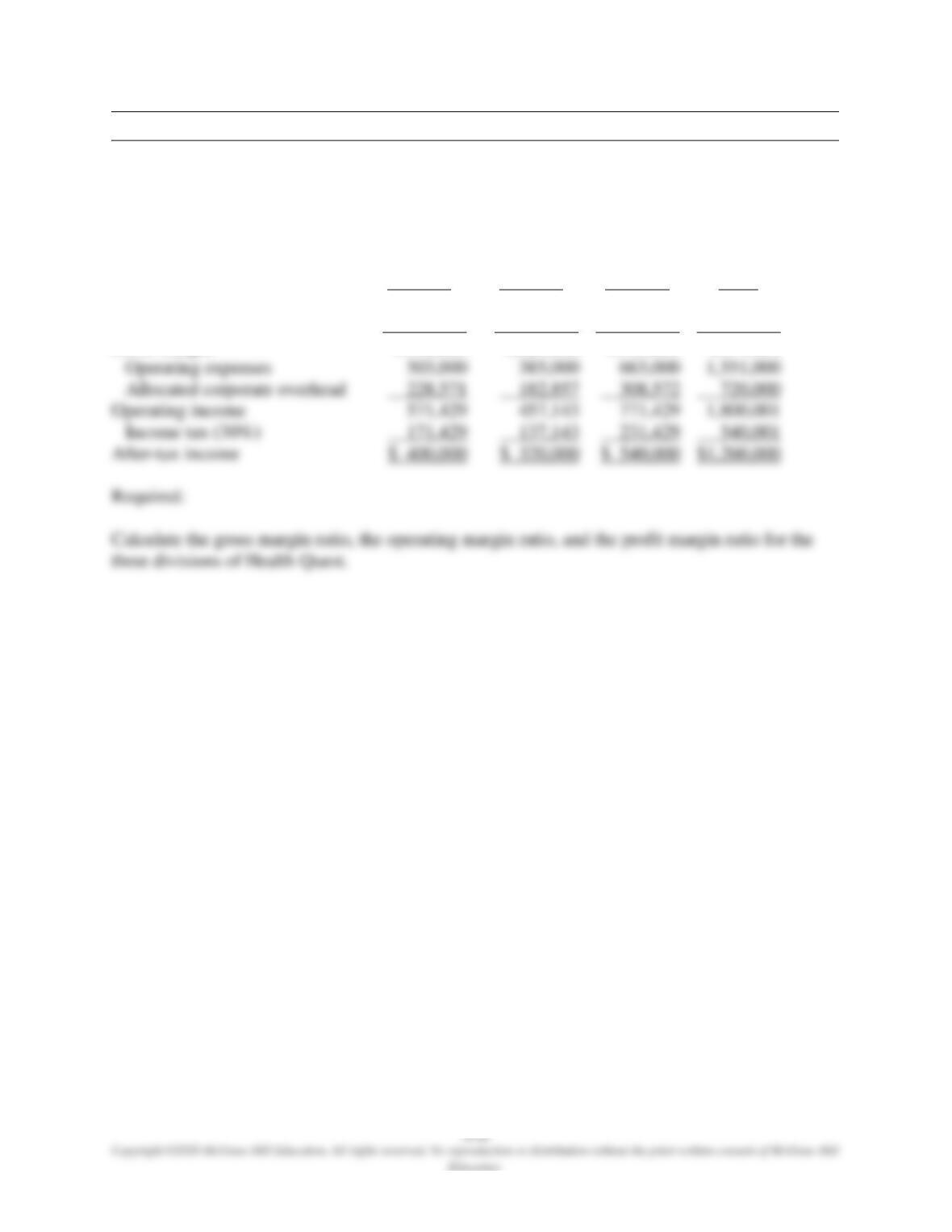
Demonstration Problem 1
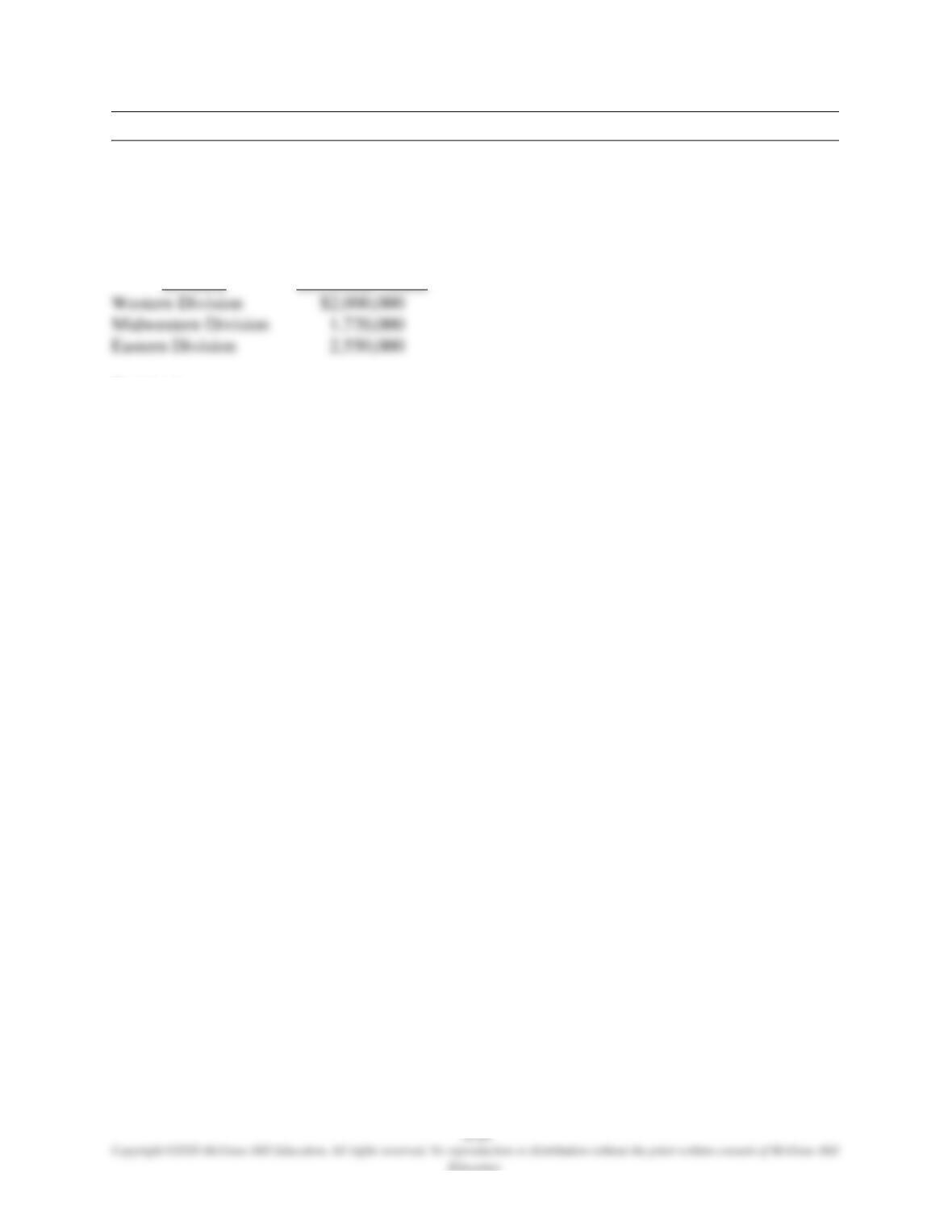
Health Quest operates fitness centers and organizes its operations into three geographical areas:
Western, Midwestern, and Eastern Divisions. The following shows Health Quest’s divisional
income statements from last year.
Western
Division
Midwestern
Division
Eastern
Division
Total
Sales
$2,800,000
$2,226,000
$3,391,060
$8,417,060
Cost of sales
1,497,000
1,201,000
1,648,059
4,346,059
Gross margin
1,303,000
1,025,000
1,743,001
4,071,001
Operating expenses
1,551,000
Allocated corporate overhead
228,571
182,857
720,000
Operating income
1,800,001
Income tax (30%)
171,429
137,143
540,001
After-tax income
$ 400,000
$ 320,000
$1,260,000
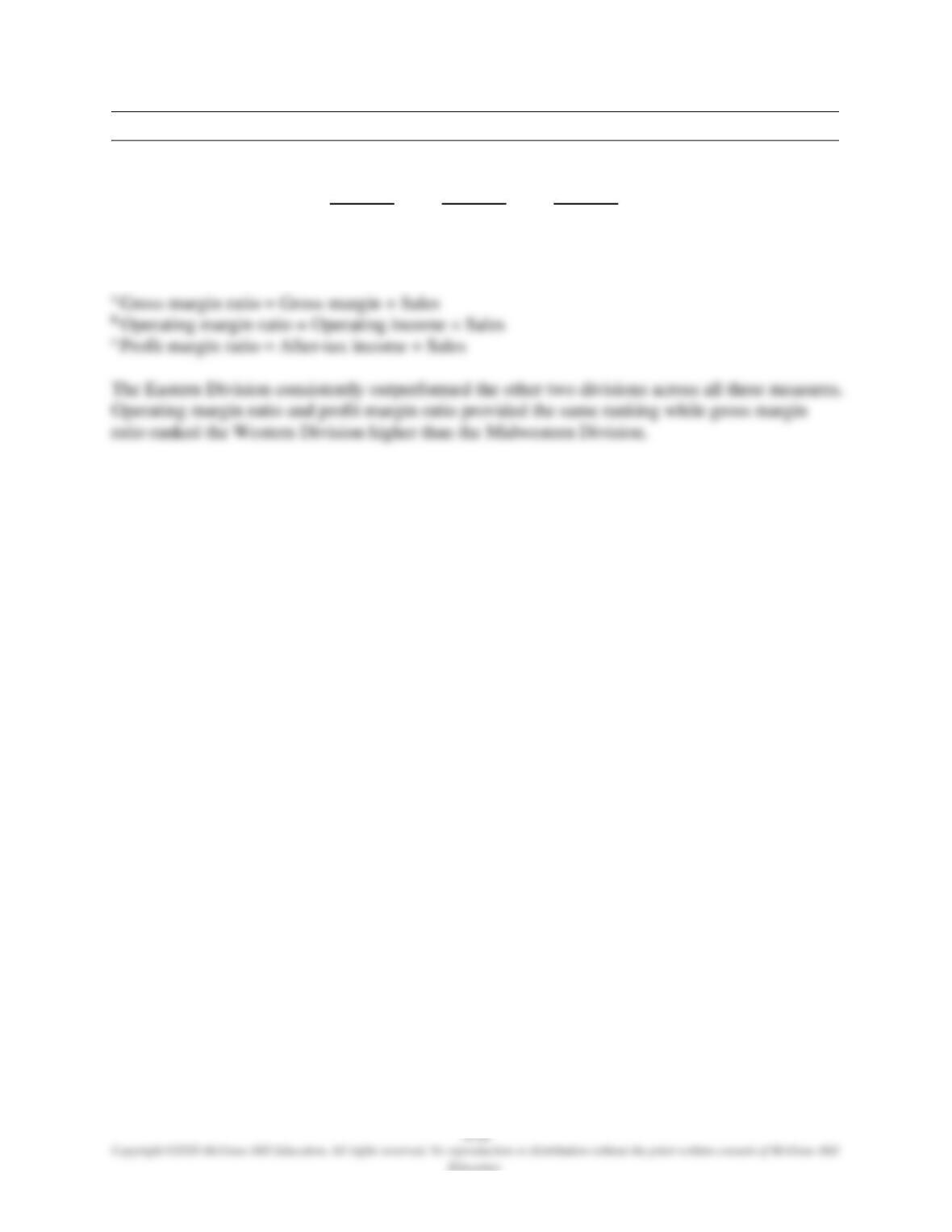
Demonstration Problem 1 – Solution
Western
Division
Midwestern
Division
Eastern
Division
Gross margin ratioa
46.54%
46.05%
51.40%
Operating margin ratiob
20.41%
20.54%
22.75%
Profit margin ratioc
14.29%
14.38%
15.92%
Demonstration Problem 2
(Continued from Demonstration Problem 1)
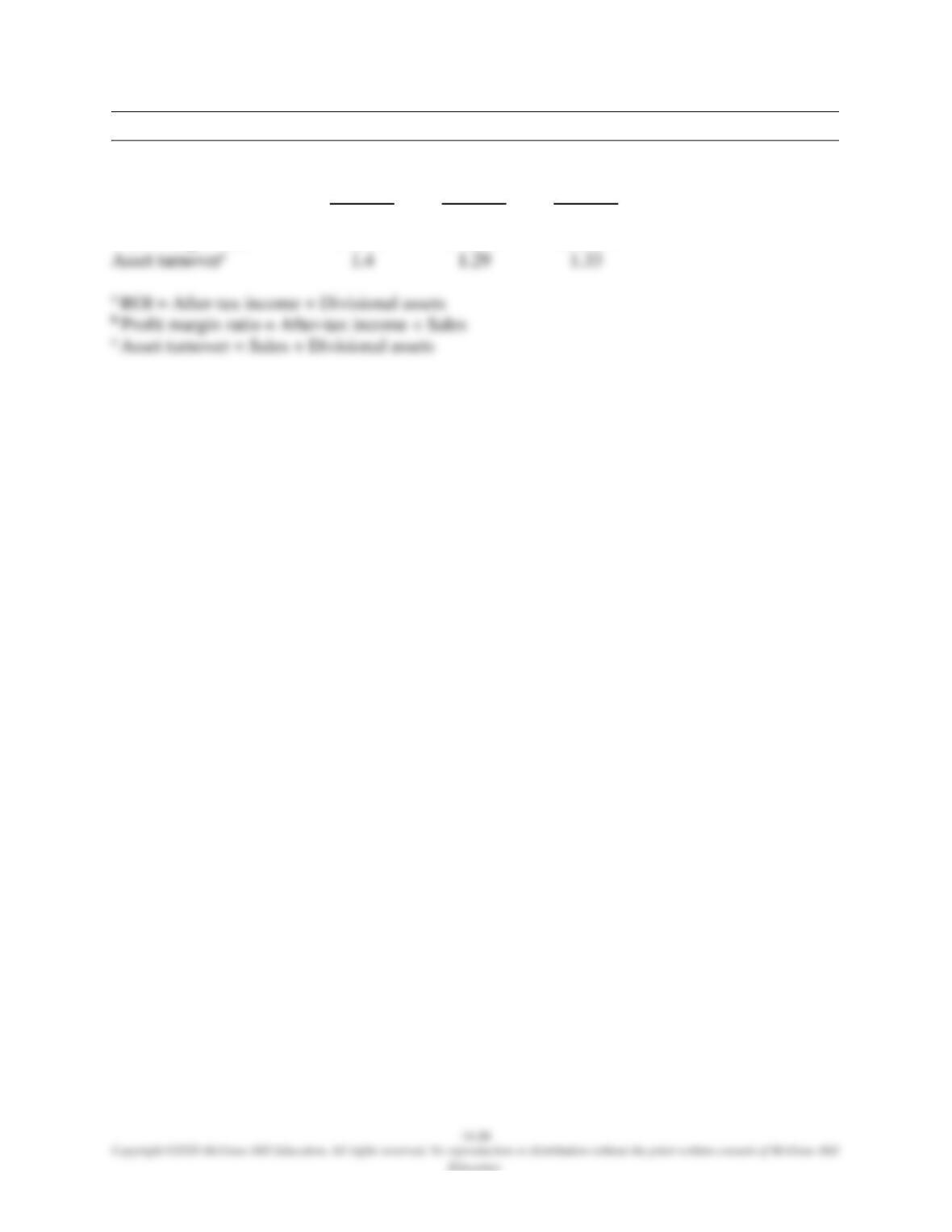
The divisional balance sheets of Health Quest showed the investment bases (divisional assets) as
follows.
Required:
Calculate ROI and its associated profit margin ratio and asset turnover ratio for the three
divisions of Health Quest.
Demonstration Problem 2 – Solution
Western
Division
Midwestern
Division
Eastern
Division
ROIa
20.00%
18.60%
21.18%
Profit margin ratiob
14.29%
14.38%
15.92%
Asset turnoverc

Demonstration Problem 3
(Continued from Demonstration Problems 1 and 2)
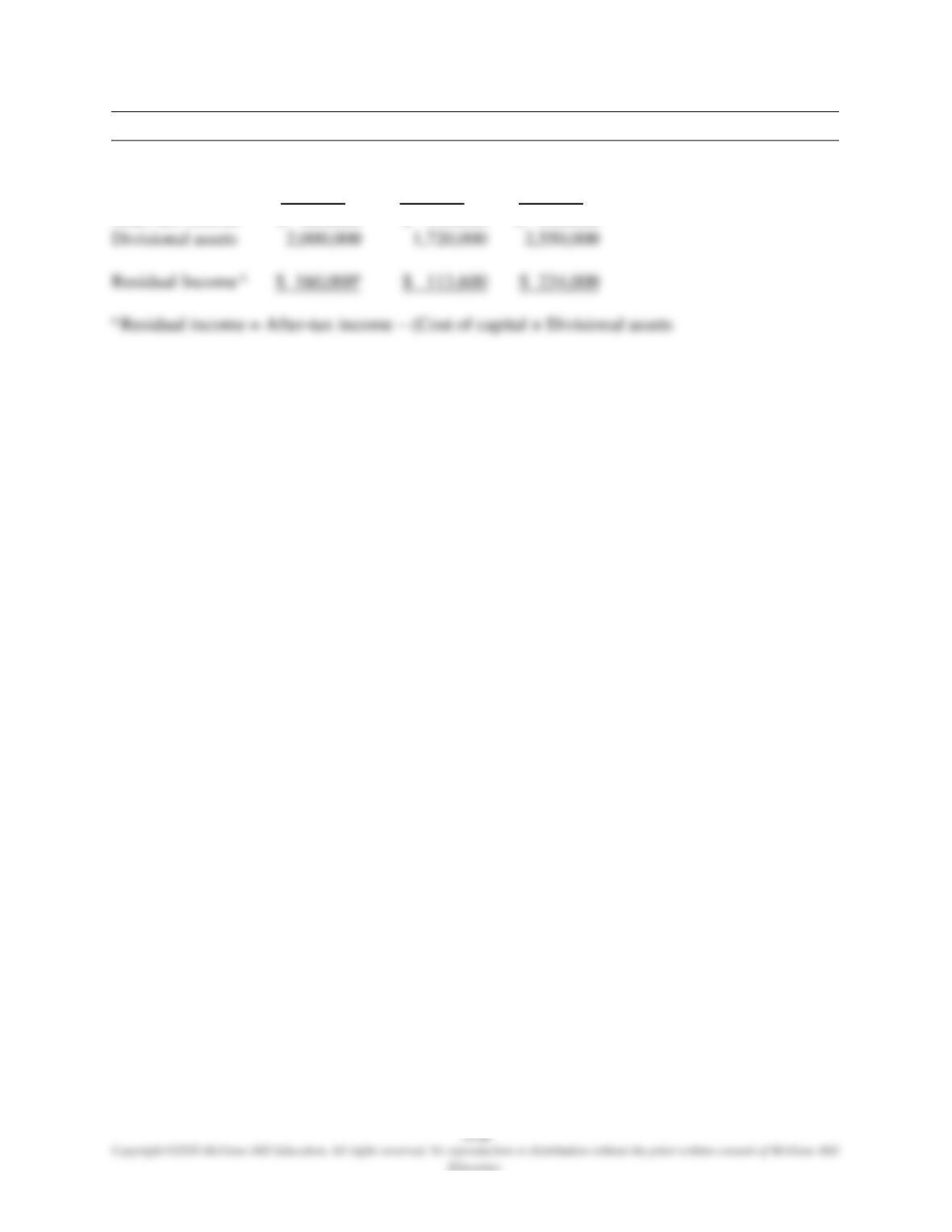
Required:
Calculate the residual income for the three divisions of Health Quest, assuming a 12% cost of
capital.
Demonstration Problem 3 – Solution
Western
Division
Midwestern
Division
Eastern
Division
Demonstration Problem 4
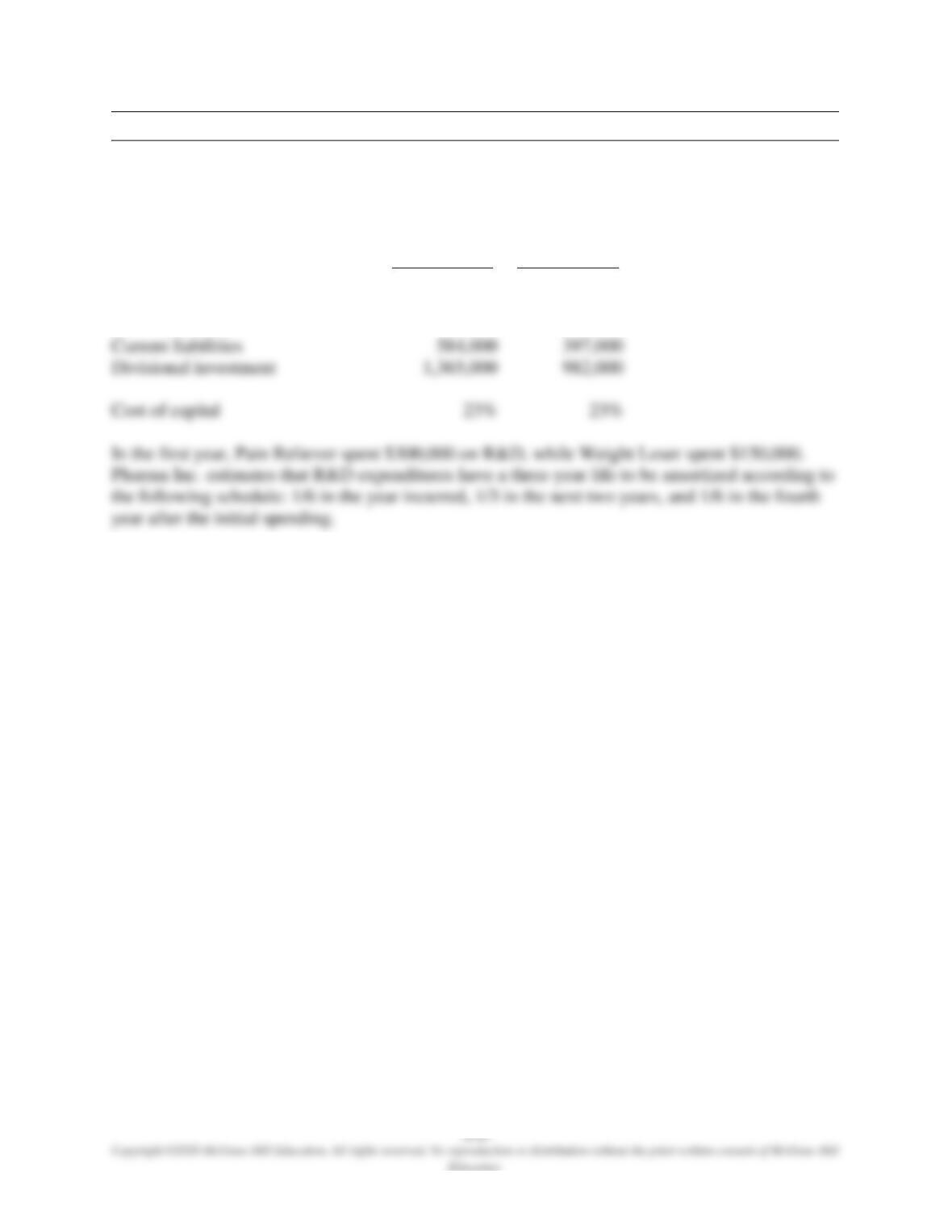
Pharma Inc. has two product lines organized as divisions (Pain Reliever and Weight Loser) and
spends heavily on research and development (R&D) activities. The following information is
related to Pharma Inc.’s second year of operations.
Pain Reliever
Weight Loser
R&D expenditures (second year)
$450,000
$300,000
After-tax income
275,000
$210,000
Current liabilities
584,000
397,000
Divisional investment
982,000
Cost of capital
Required:
Calculate EVA for the two divisions of Pharma Inc. for its second year of operations.
Demonstration Problem 4 – Solution
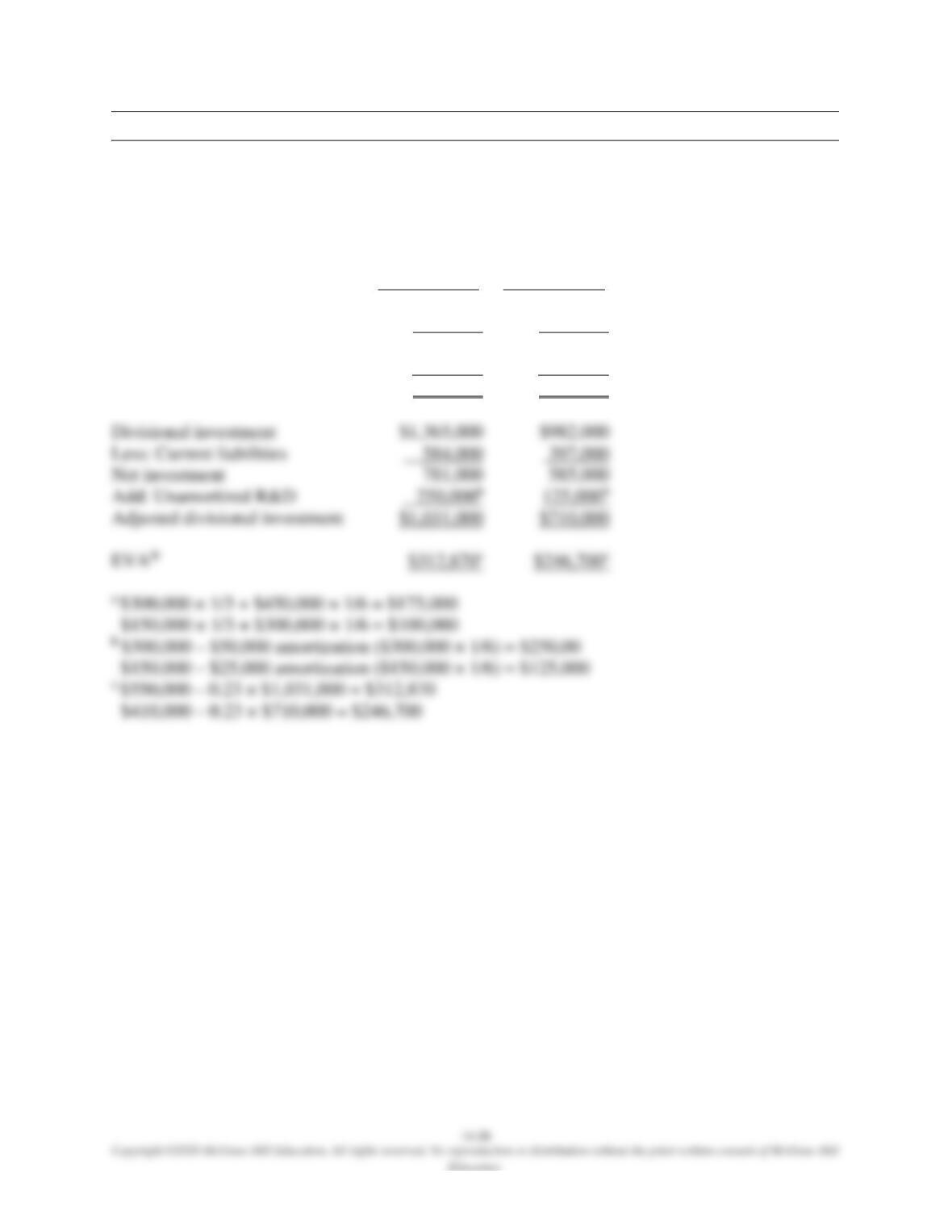
The after-tax income is adjusted for R&D expenditure to reflect its (potential) future benefits.
The capital is adjusted for current liabilities that do not represent debt from the calculation of
capital, as well as for the unamortized portion of R&D that represents additional investment in
the business unit.
Pain Reliever
Weight Loser
After-tax income
$275,000
$210,000
Add: R&D expenditure
450,000
300,000
Income before amortization
725,000
510,000
Less: Amortization of R&D
175,000a
100,000a
Adjusted divisional income
$550,000
$410,000
Divisional investment
$982,000
Less: Current liabilities
Net investment
781,000
585,000
Add: Unamortized R&D
Adjusted divisional investment
$710,000