CHAPTER 14
SOLUTIONS TO PROBLEMS: SET B
PROBLEM 14-1B
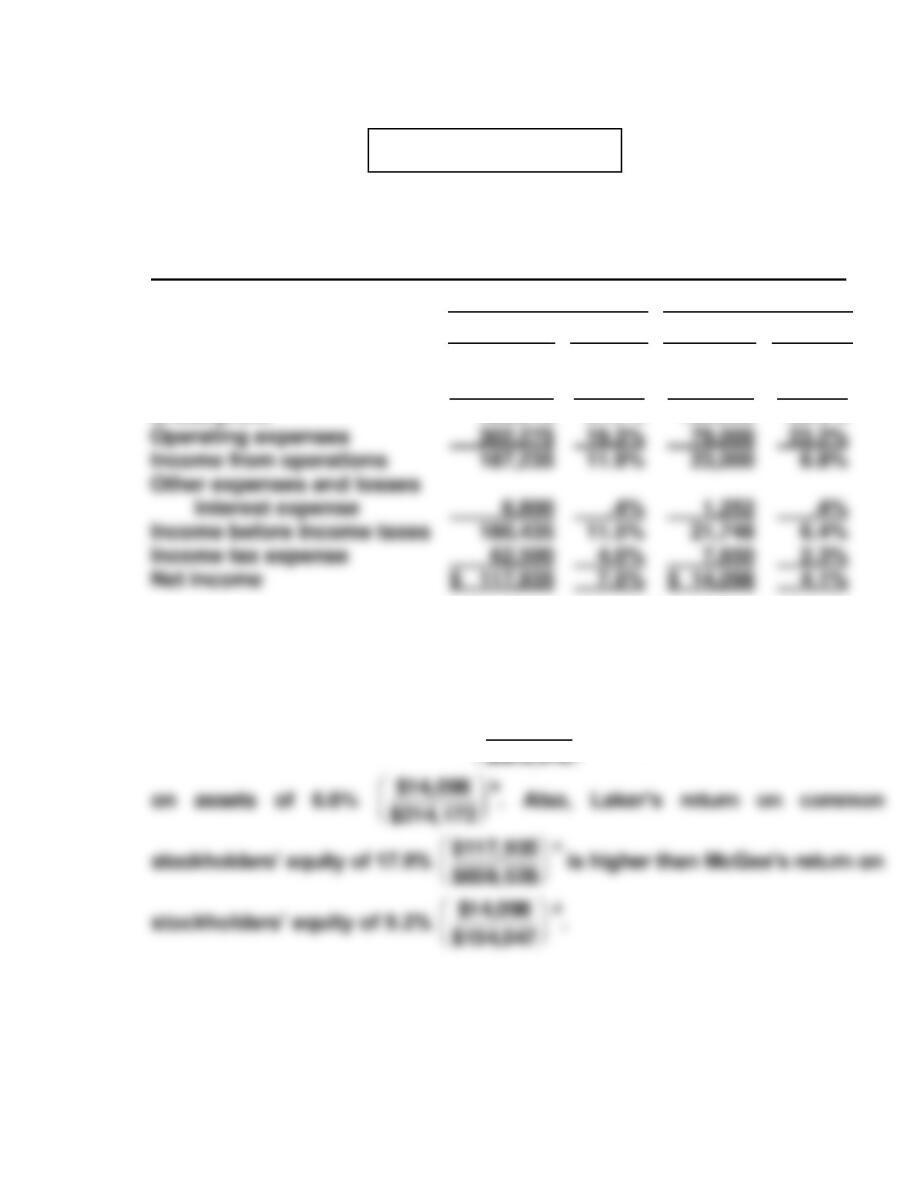
(a) Condensed Income Statement
For the Year Ended December 31, 2017
Laker Company
McGee Company
Dollars
Percent
Dollars
Percent
Net sales
Cost of goods sold
Gross profit
$1,570,000
1,080,490
489,510
100.0%
68.8%
31.2%
$340,000
238,000
102,000
100.0%
70.0%
30.0%
(b) Laker Company appears to be more profitable. It has higher relative
gross profit, income from operations, income before taxes, and net income.
Laker’s return on assets of 14.2%
$117,935
$117,935
a is higher than McGee’s return
PROBLEM 14-1B (Continued)
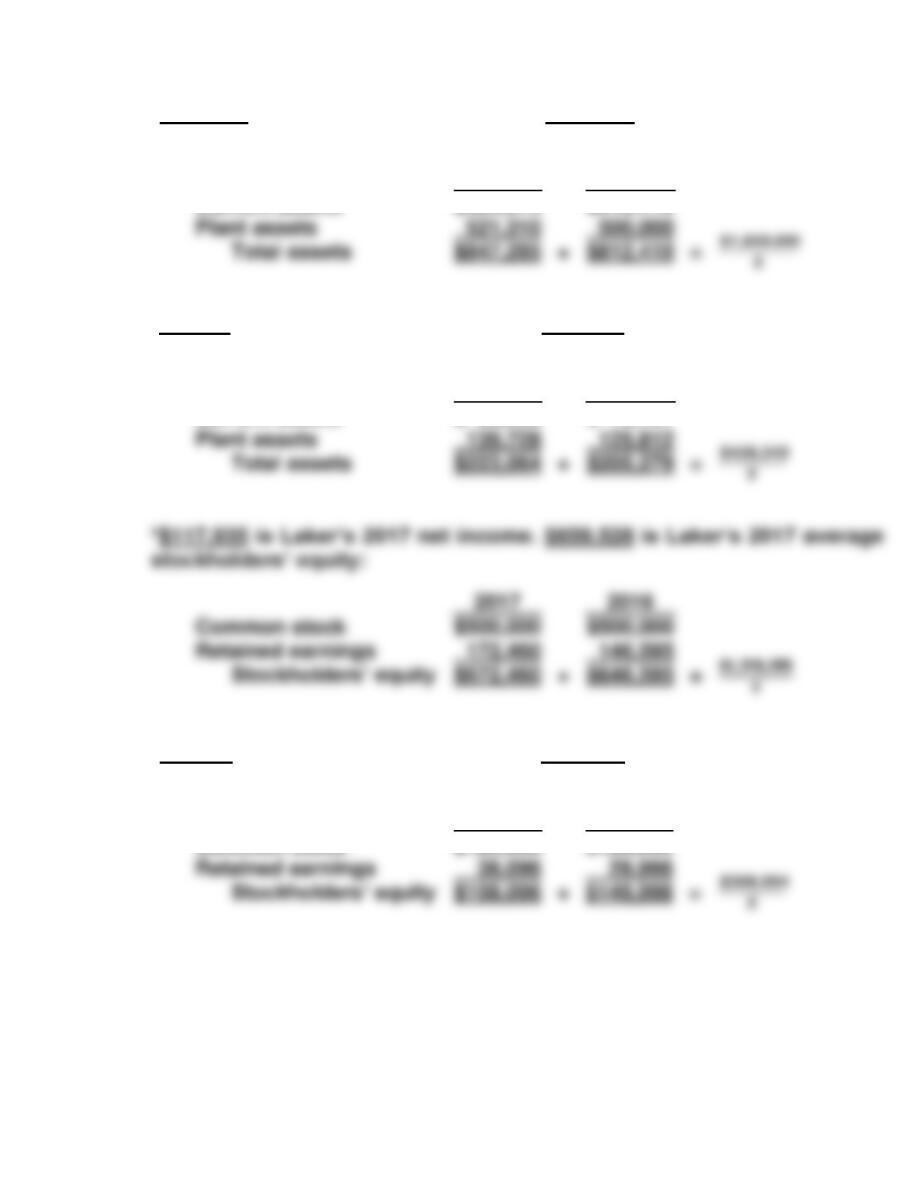
a$117,935 is Laker’s 2017 net income. $829,848 is Laker’s 2017 average
assets:
2017
2016
Current assets
$325,975
$312,410
b$14,098 is McGee’s 2017 net income. $214,172 is McGee’s 2017 average
assets:
2017
2016
2017
2016
Current assets
$ 83,336
$ 79,467
d$14,098 is McGee’s 2017 net income. $154,047 is McGee’s 2017 average
stockholders’ equity:
2017
2016
PROBLEM 14-2B
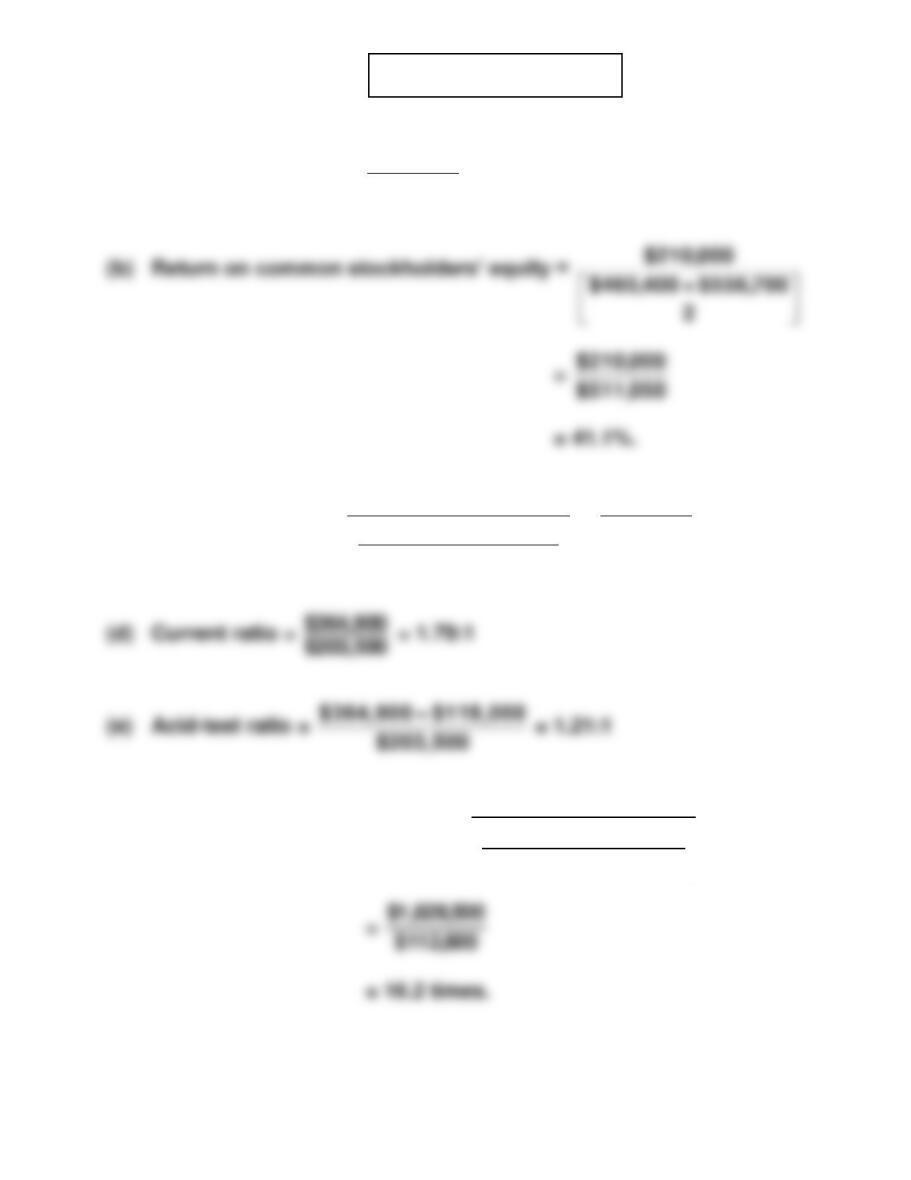
(a) Earnings per share =
$210,000
62,500
= $3.36.
(c) Return on assets =
$210,000
$852,800+$970,200
2
=
$210,000
$911,500
= 23.0%.
(f) Accounts receivable turnover =
$1,828,500
($102,800+ $122,800 )
2
$210,000
$465,400+$556,700
2
$210,000
$511,050
PROBLEM 14-2B (Continued)
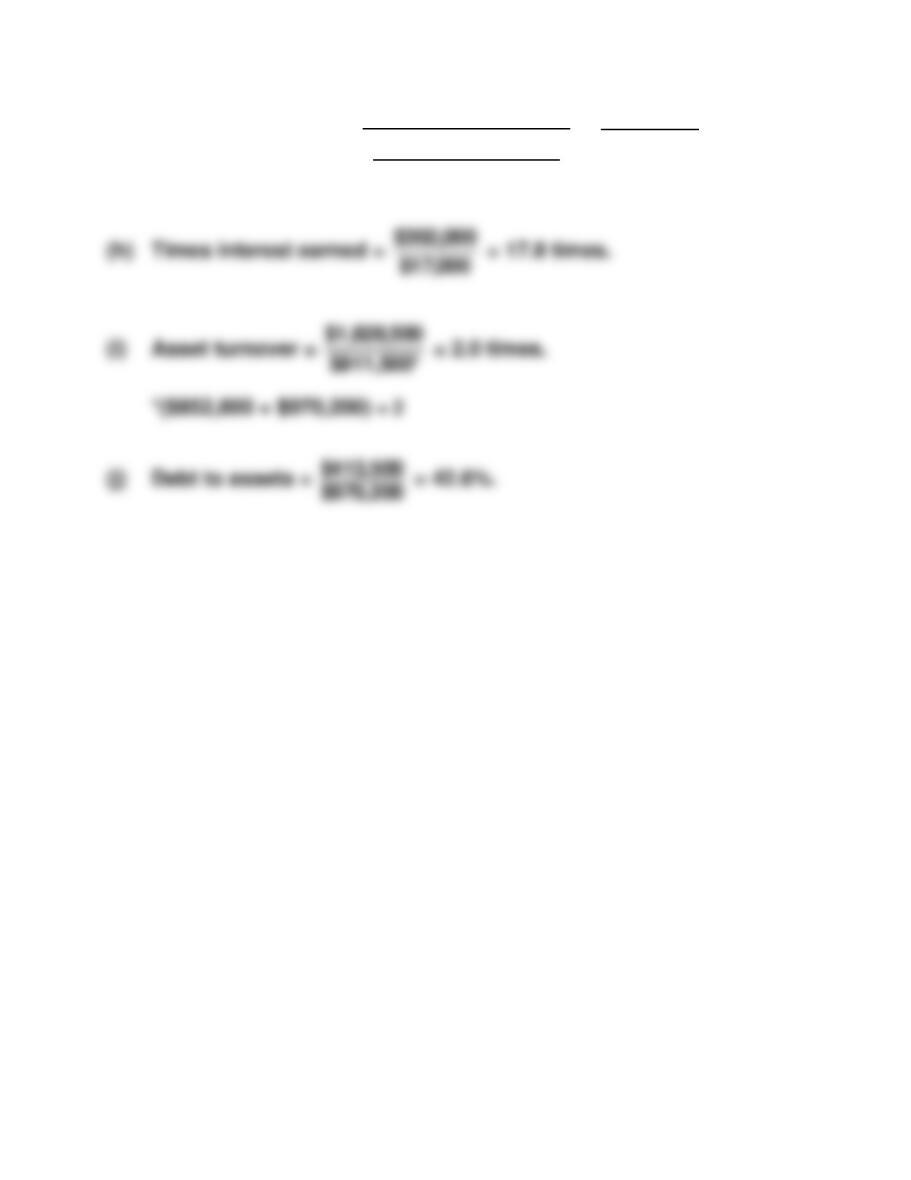
(g) Inventory turnover =
$1,010,500
$115,500 + $118,000
2
=
$1,010,500
$116,750
= 8.7 times.
PROBLEM 14-3B
(a)
2016
2017
(1)
Profit margin.
(2)
Asset turnover.
$650,000
$533,000+ $600,000
2
= 1.1 times
$700,000
$600,000+ $640,000
2
= 1.1 times
(3)
Earnings per share.
(5)
Payout ratio.
$18,000
$30,000
*
= 60.0%
*($113,000 + $30,000 – $125,000)
$25,000
$45,000
**
= 55.6%
**($125,000 + $45,000 – $145,000)
(6)
PROBLEM 14-3B (Continued)
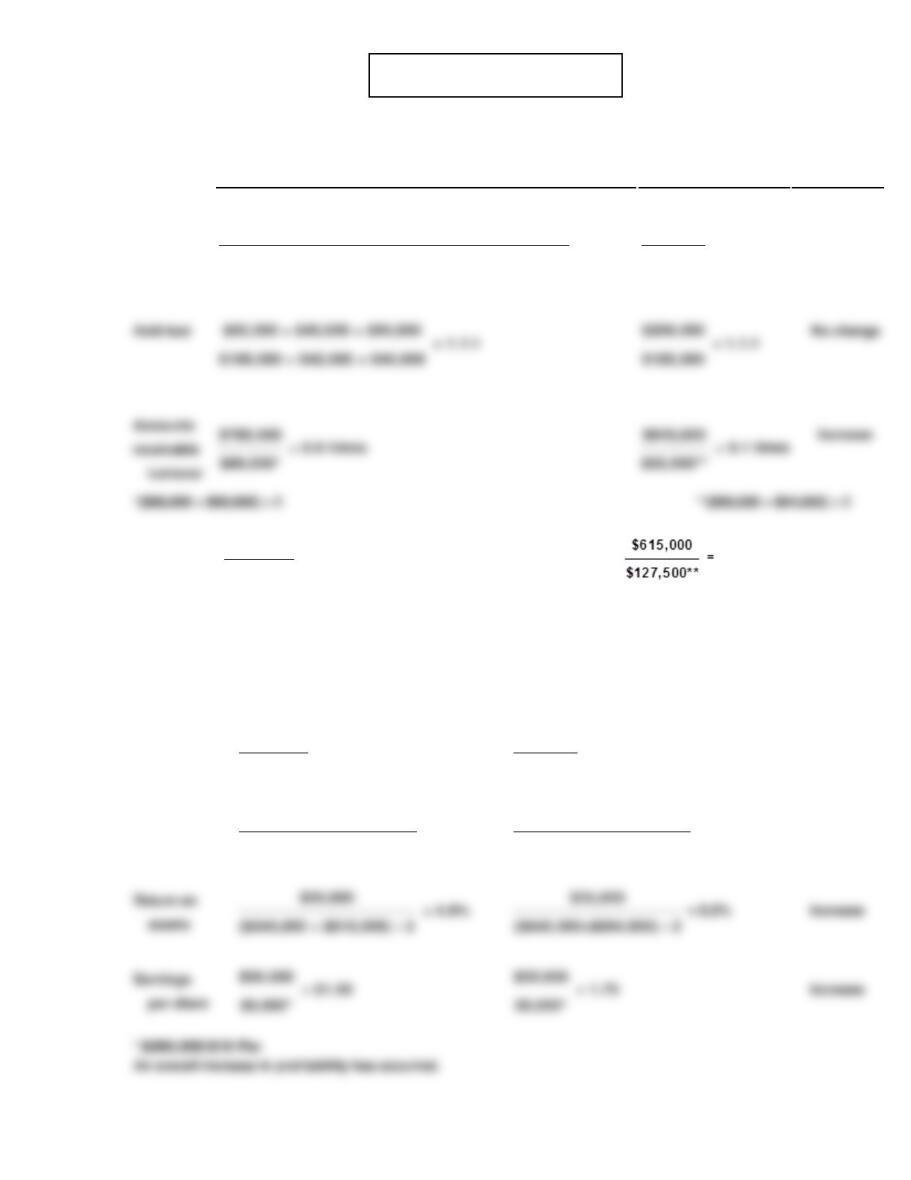
(b) The underlying profitability of the corporation appears to have improved. For
example, profit margin and earnings per share have both increased. In
PROBLEM 14-4B
(a) LIQUIDITY
2016
2017
Change
Current
$65,000 + $40,000 + $90,000 + $125,000 + $20,000 = 1.9:1
$100,000 + $42,000 + $40,000
$364,000 = 2.0:1
$185,000
Increase
$209,000 = 1.1:1
$185,000
Inventory
turnover
$570,000 = 4.7 times
$122,500*
Increase
*($120,000 + $125,000) ÷ 2 **($125,000 + $130,000) ÷ 2
An overall increase in short-term liquidity has occurred.
PROFITABILITY
Profit
margin
$30,000 = 3.8%
$780,000*
$35,000 = 4.2%
$840,000
Increase
Asset
turnover
$780,000 = 1.2 times
($645,000 + $615,000) 2
$840,000 = 1.3 times
($645,000 + $694,000) 2
Increase
4. 8 times
assets
Increase
Earnings
per share
Increase
PROBLEM 14-4B (Continued)
(b)
2017
2018
Change
1.
Return on
common
stockholders’
equity
$35,000 = 10.4%
$336,000 (a)
$40,000 = 8.5%
$469,000 (b)
Decrease
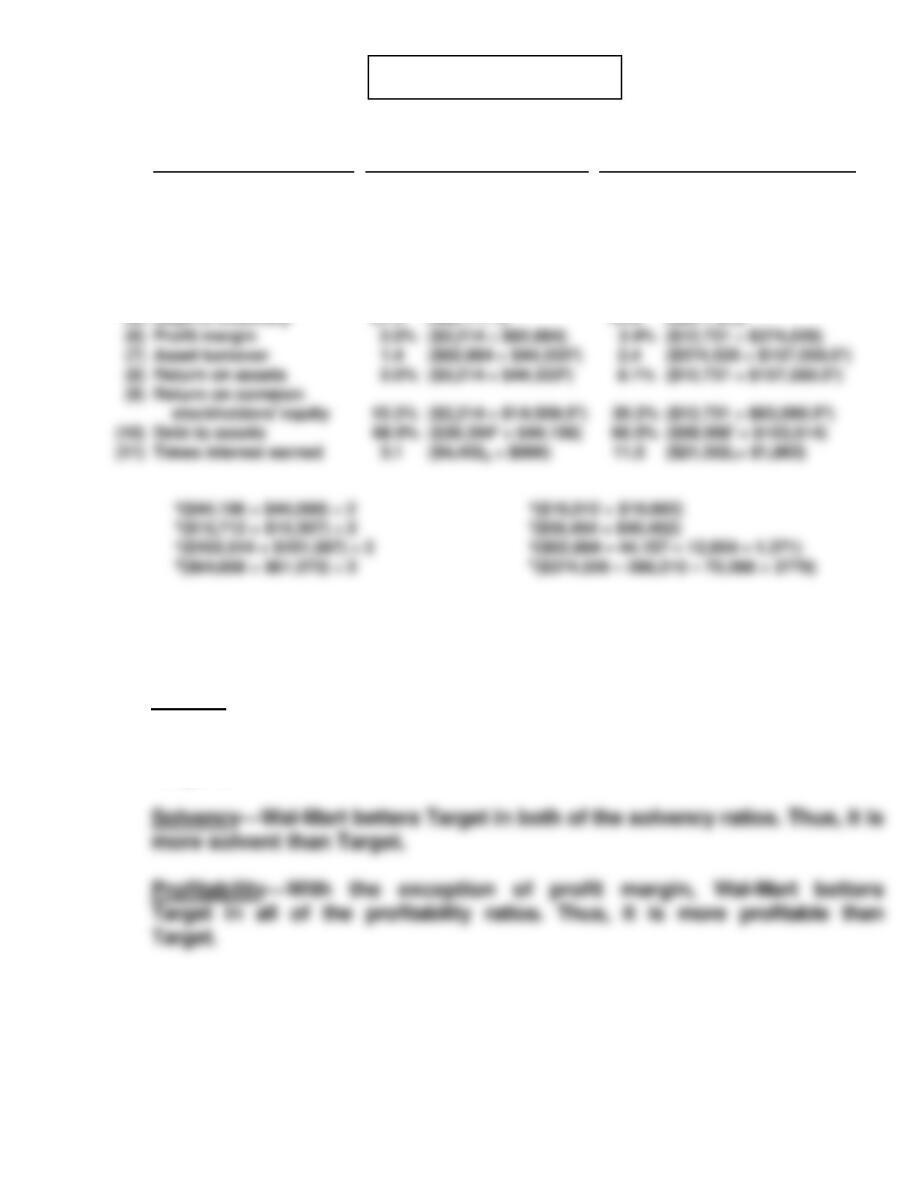
PROBLEM 14-5B
(a)
Ratio
Target
Wal-Mart
(All Dollars Are in Millions)
Times interest earned
5.1 ($4,402g ÷ $866)
11.5 ($21,502h÷ $1,863)
(1)
(2)
(3)
(4)
Current
Accounts receivable turnover
Average collection
period
Inventory turnover
1.7:1 ($17,488 ÷ $10,512)
7.8 ($62,884 ÷ $8,069)
46.8 (365 ÷ 7.8)
7.1 ($44,157 ÷ $6,243)
.8:1 ($47,585 ÷ $58,454)
115.3 ($374,526 ÷ $3,247)
3.2 (365 ÷ 115.3)
8.3 ($286,515 ÷ $34,433)
(b) The comparison of the two companies shows the following:
Liquidity—Target’s current ratio of 1.7:1 is significantly better than Wal-
Mart’s .8:1. However, Wal-Mart has a better inventory turnover ratio than
Target and its account receivable turnover is substantially better than
Target’s.
PROBLEM 14-6B
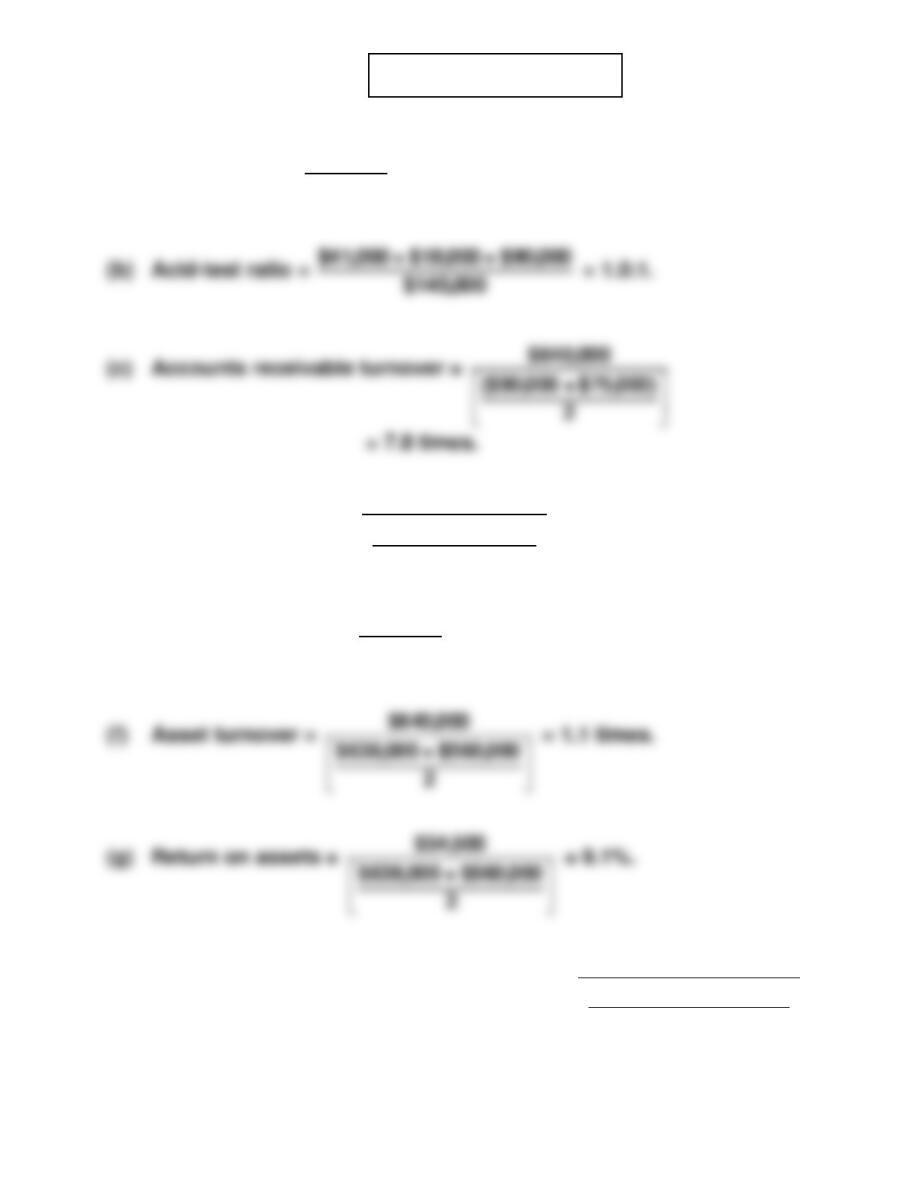
(a) Current ratio =
$235,000
$145,000
= 1.6:1.
(d) Inventory turnover =
$410,000
$86,000 +$69,000
2
= 5.3 times.
(e) Profit margin ratio =
$54,500
$640,000
= 8.5%.
(h) Return on common stockholders’ equity =
$54,500
$403,000+$350,000
2
= 14.5%.
PROBLEM 14-6B (Continued)
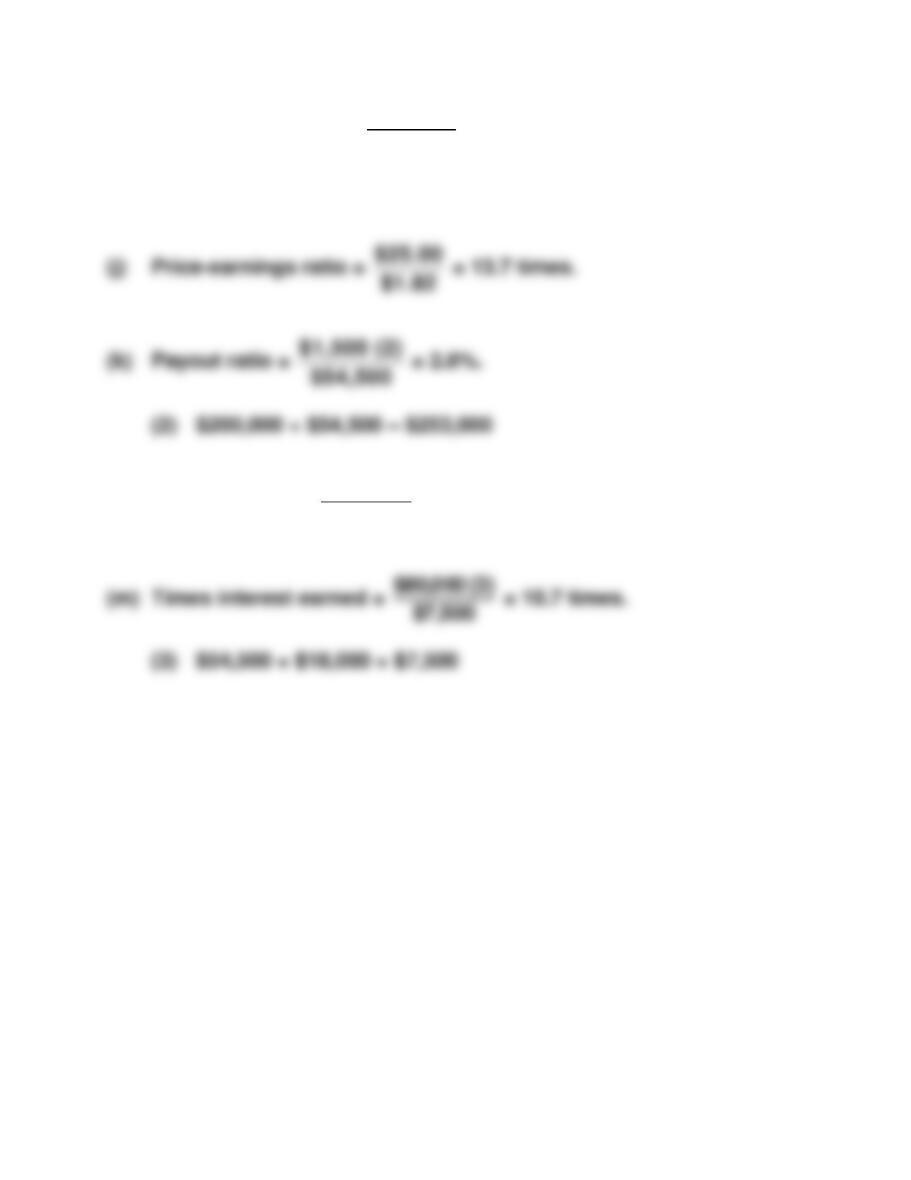
(i) Earnings per share =
$54,500
30,000 (1)
= $1.82.
(1) $150,000 ÷ $5.00
(l) Debt to assets =
$235,000
$638,000
= 36.8%.
PROBLEM 14-7B
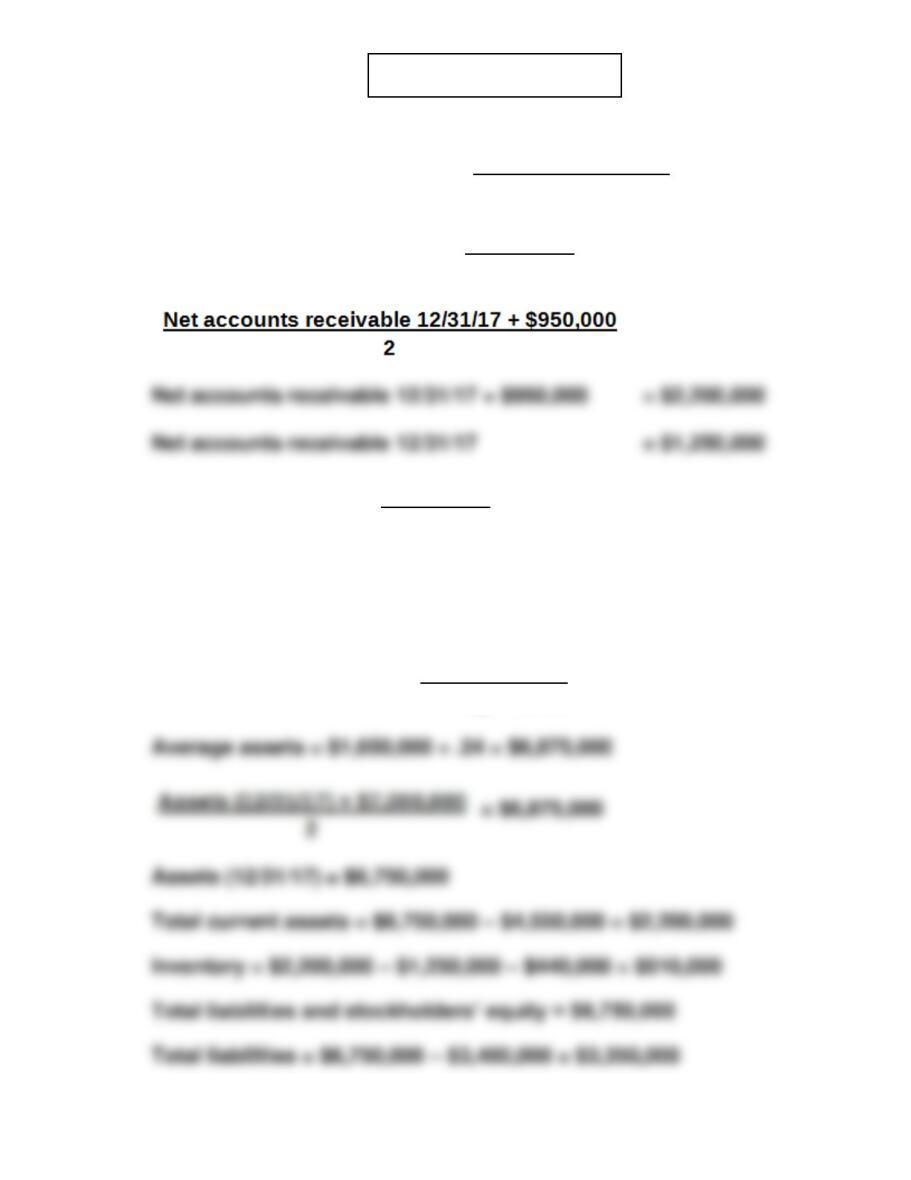
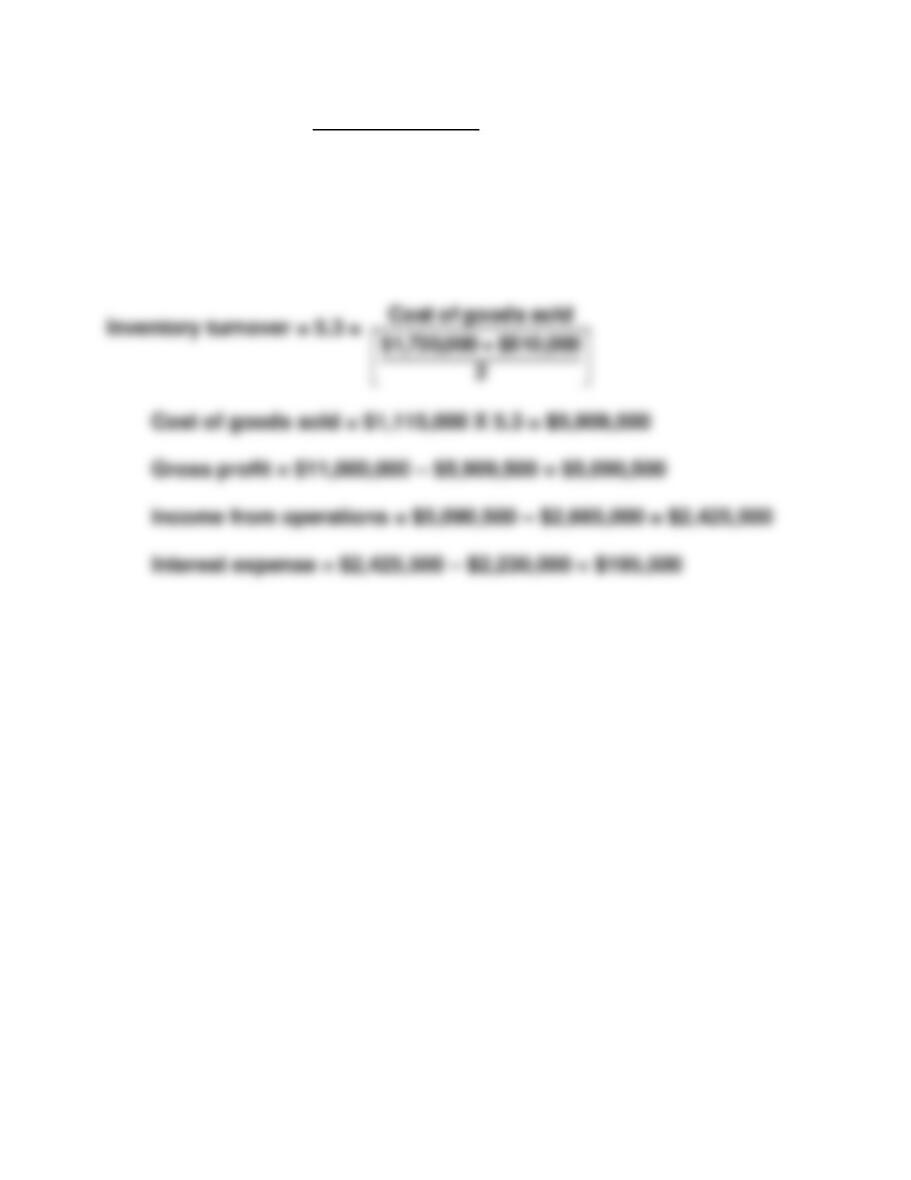
Accounts receivable turnover = 10 =
$11,000,000
Average receivables
Average accounts receivable =
$11,000,000
10
= $1,100,000
Profit margin = 15% = .15 =
Netincome
$11,000,000
Net income = $11,000,000 X .15 = $1,650,000
Income before income taxes = $1,650,000 + $580,000 = $2,230,000
Return on assets = 24% = .24 =
$1,650,000
Average assets
= $6,875,000
= $1,100,000
PROBLEM 14-7B (Continued)
Current ratio = 2.5 =
$2,200,000
Currentliabilities
Current liabilities = $2,200,000 ÷ 2.5 = $880,000
Long-term notes payable = $3,350,000 – $880,000 = $2,470,000
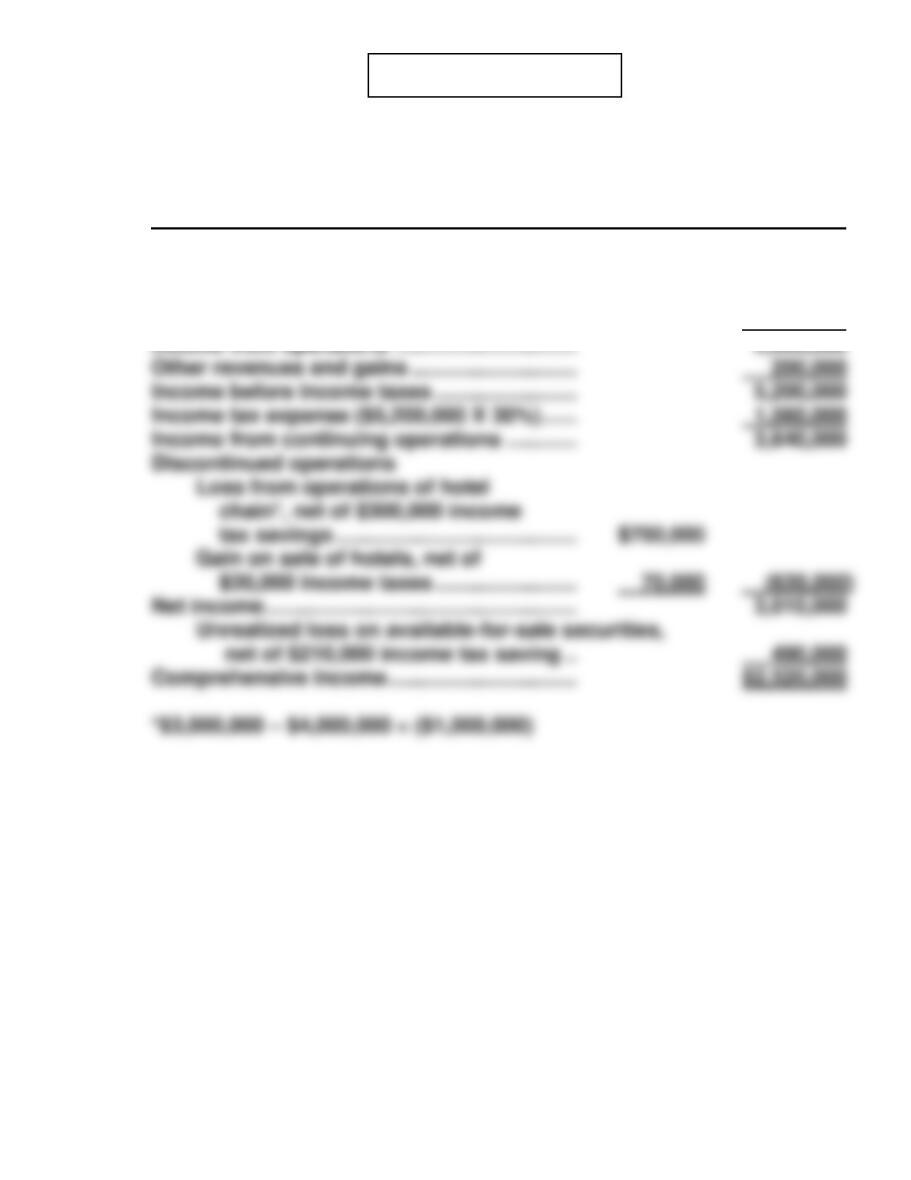
PROBLEM 14-8B
LARAMIE CORPORATION
Statement of Comprehensive Income
For the Year Ended December 31, 2017
Operating revenues
($12,700,000 – $3,000,000) …………………… $9,700,000
Operating expenses
($8,700,000 – $4,000,000) …………………….. 4,700,000
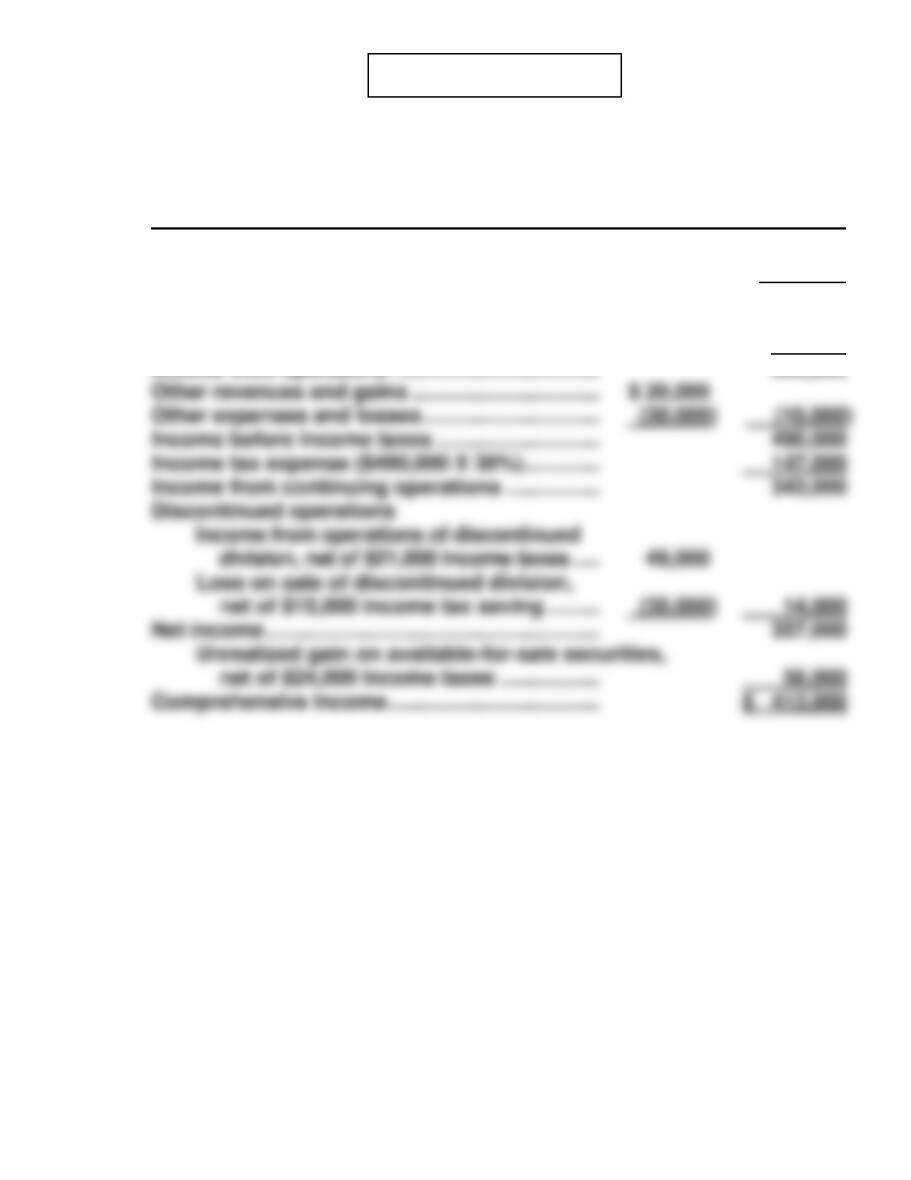
PROBLEM 14-9B
STARSHIP CORPORATION
Statement of Comprehensive Income
For the Year Ended December 31, 2017
Net sales …………………………………………………… $1,700,000
Cost of goods sold …………………………………….. 900,000
Gross profit……………………………………………….. 800,000
Selling and administrative expenses
($100,000 + $200,000) …………………………….. 300,000