14–54
Problem 14.39 (Concluded)
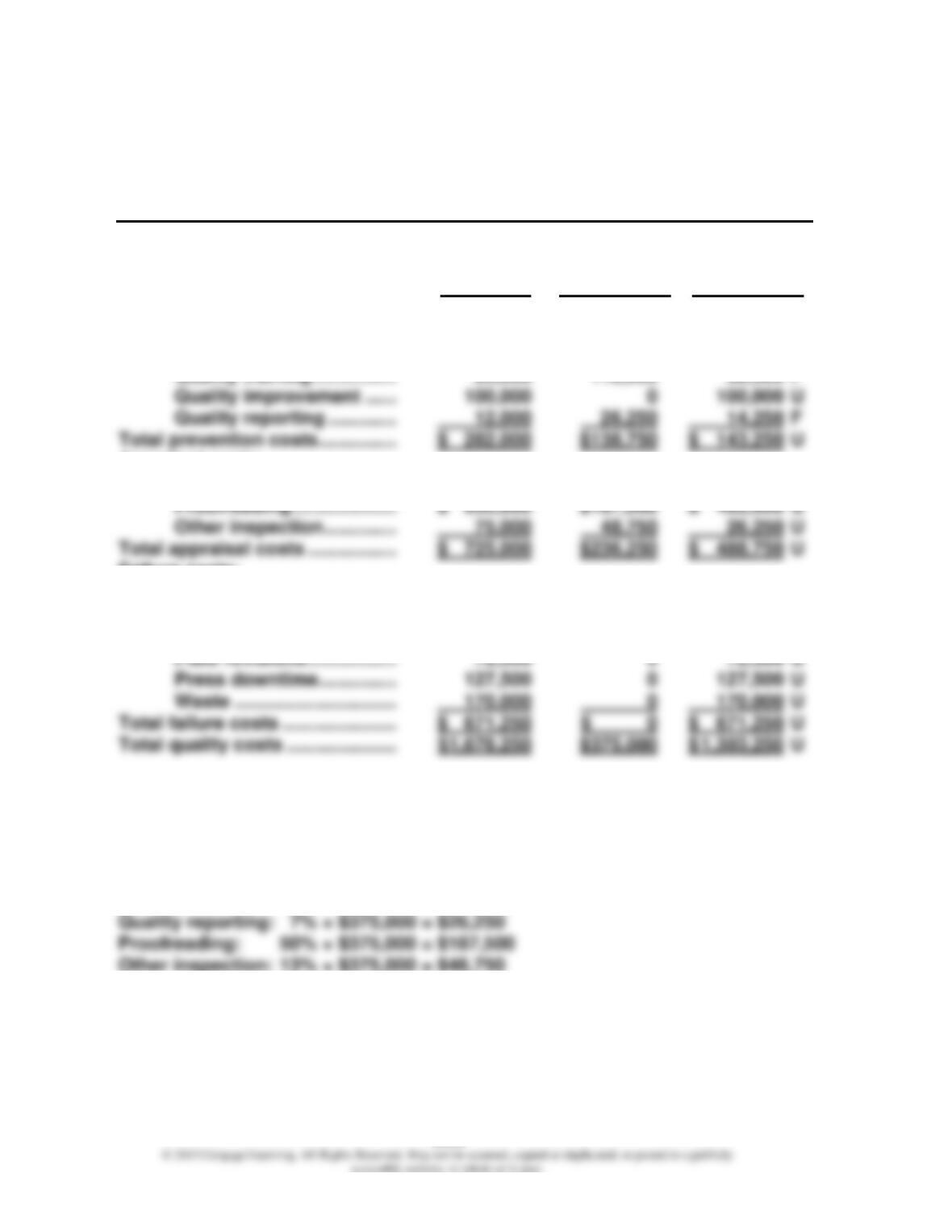
5. Iona Company
Long-Range Performance Report
For the Years Ended December 31, 2015 and 2020
Actual Long-Range
Costs Target
2015a Costsb Variance
Prevention costs:
Fixed:
Quality planning ………….. $ 150,000 $ 0 $ 150,000 U
Quality training ……………. 20,000 112,500 92,500 F
Appraisal costs:
Variable:
Failure costs:
Variable:
Correction of typos ……… $ 206,250 $ 0 $ 206,250 U
Rework ……………………….. 95,000 0 95,000 U
aExcept for prevention costs, which are fixed, actual costs of 2015 are adjust-
ed to a sales level of $15 million by multiplying the actual costs at $12 million
by 15/12. This report is prepared at the end of 2015.
b2.5% of $15,000,000 = $375,000
Quality training: 30% × $375,000 = $112,500
14–55
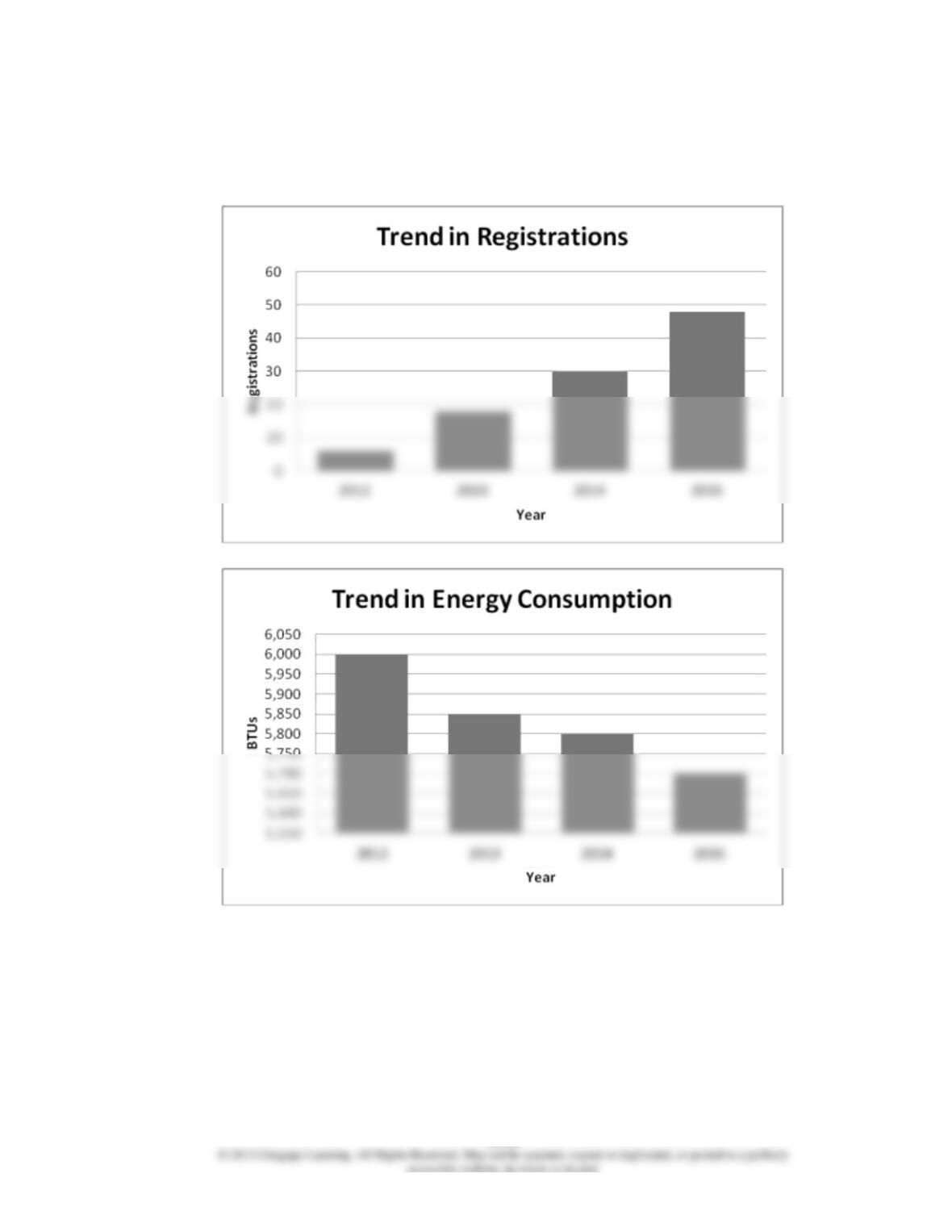
Problem 14.40
14–56
Problem 14.40 (Concluded)
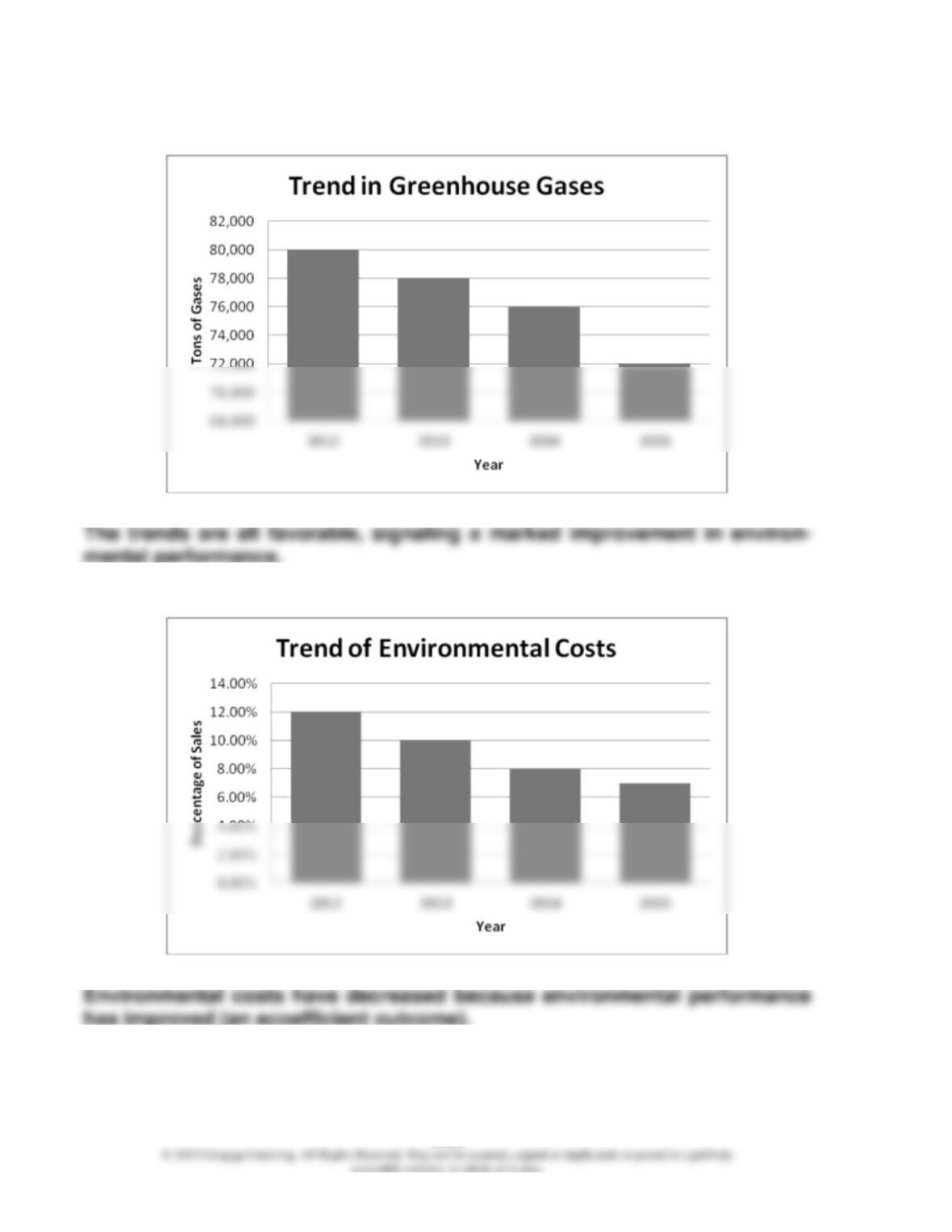
2.
14–57
Problem 14.40 (Concluded)
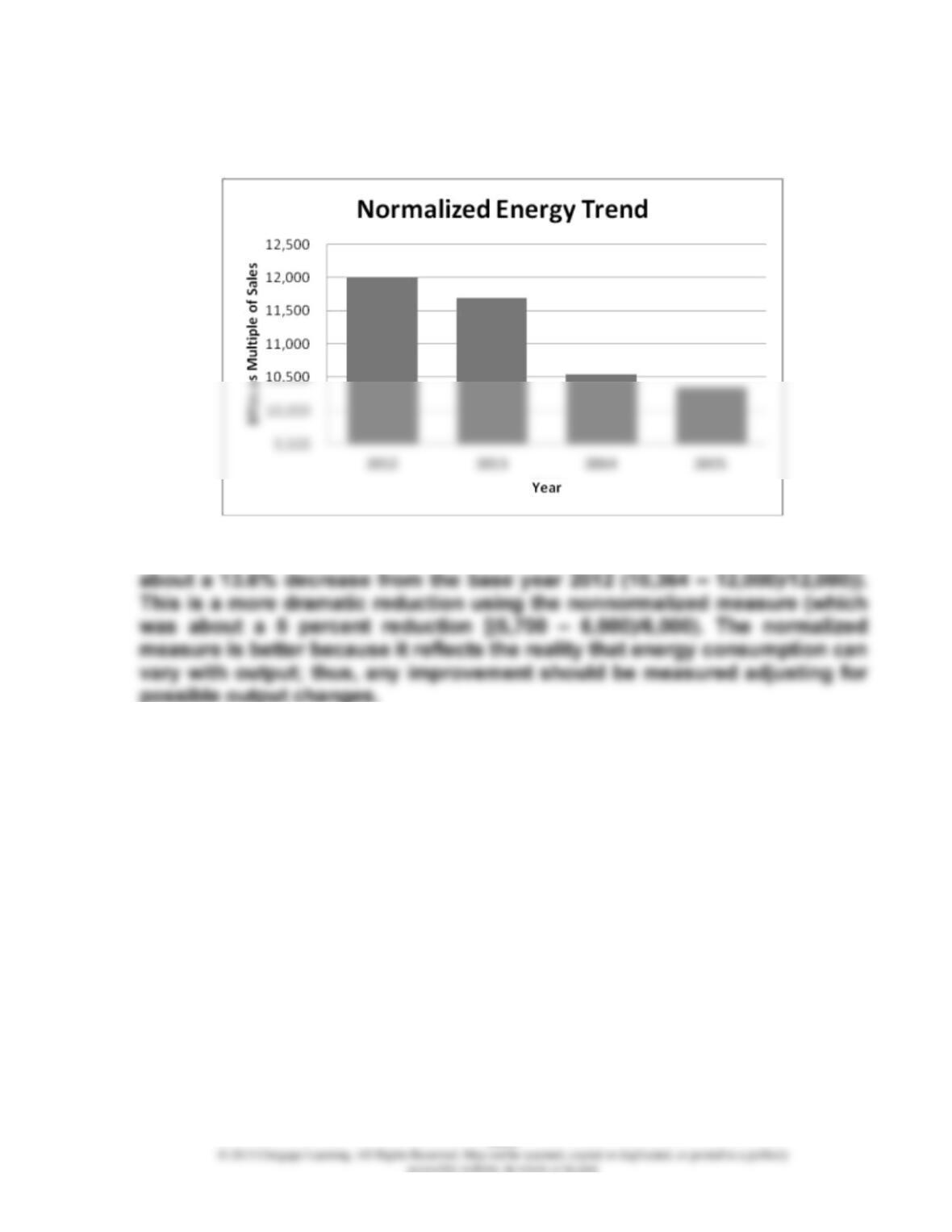
3.
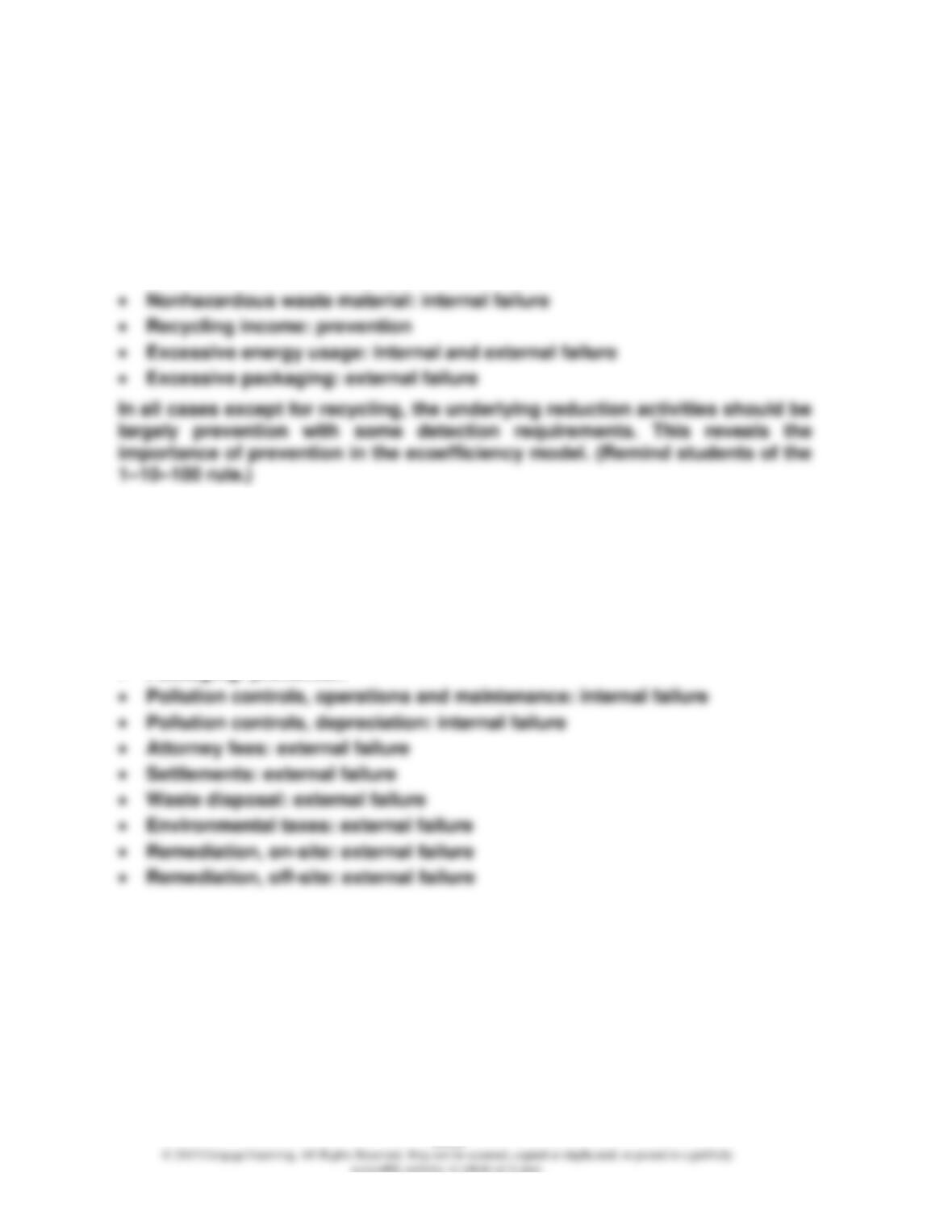
The progress in the reduction of energy consumption is positive (reflecting
14–58
Problem 14.41
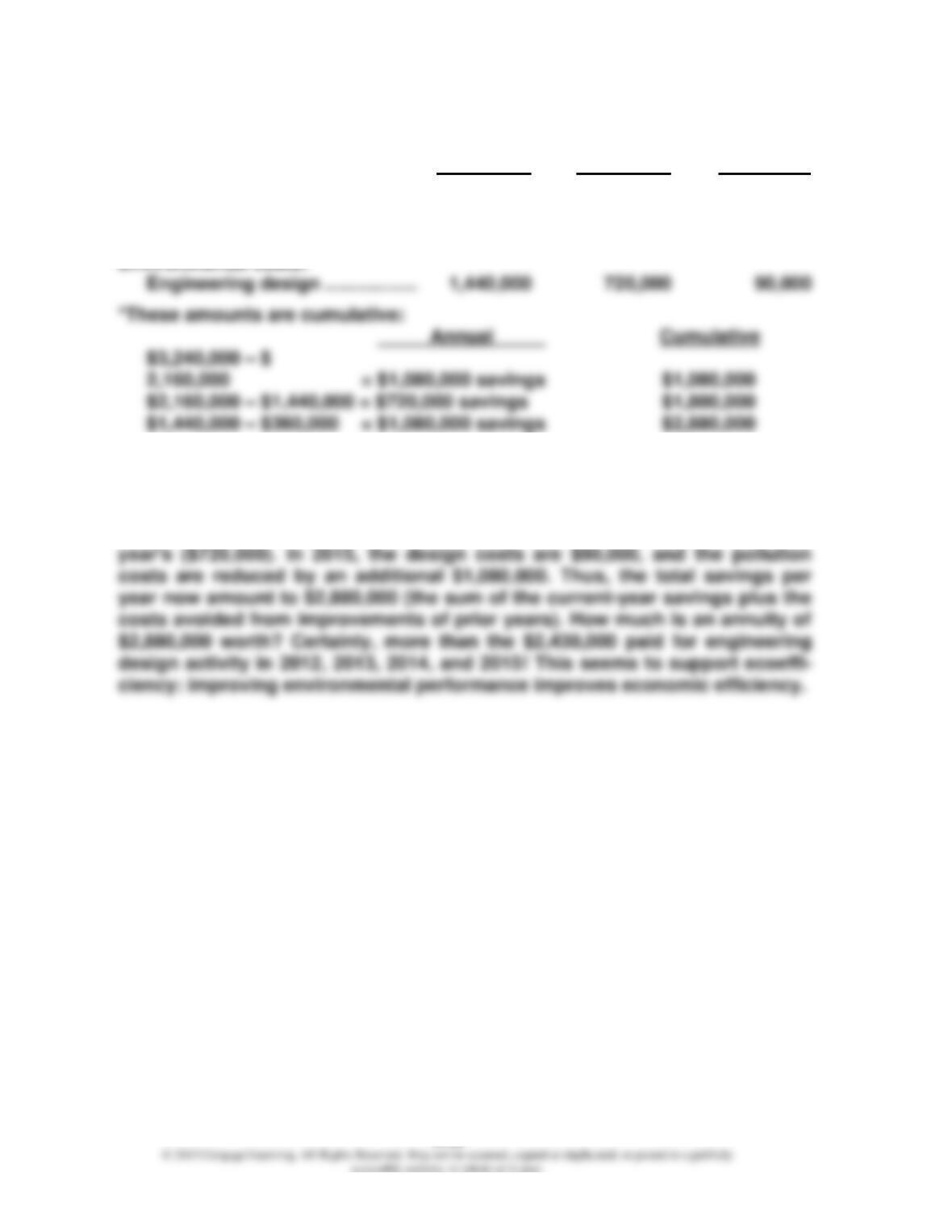
1. Benefits category:
• Ozone depletion: external failure
• Hazardous waste disposal: external failure
• Hazardous waste material: internal failure
• Nonhazardous waste disposal: external failure
Costs category:
• Corporate level: prevention
• Auditor fees: prevention and detection
• Environmental engineering: a cost that likely would be split among activi-
ties in four categories (using, for example, resource drivers)
• Facility: all four categories
• Packaging: prevention

14–59
Problem 14.41 (Concluded)
2. If ecoefficiency is true, then investing in prevention and control activities will
drive the failure costs to very low levels. Moreover, the reductions in failure
14–60
Problem 14.42
1. 2013 2014 2015
Environmental benefits:
Ozone-depleting substances,
cost reductions* ……………… $ 1,080,000 $ 1,800,000 $2,880,000
Environmental costs:
2. In 2013, the cost reductions were less than the design cost. However, in the
following year, the cost reduction achieved matched the design cost, and the
reductions achieved in the prior year are costs avoided in 2014 as well. Thus,
the total savings is $1,800,000, the sum of last year’s ($1,080,000) plus this
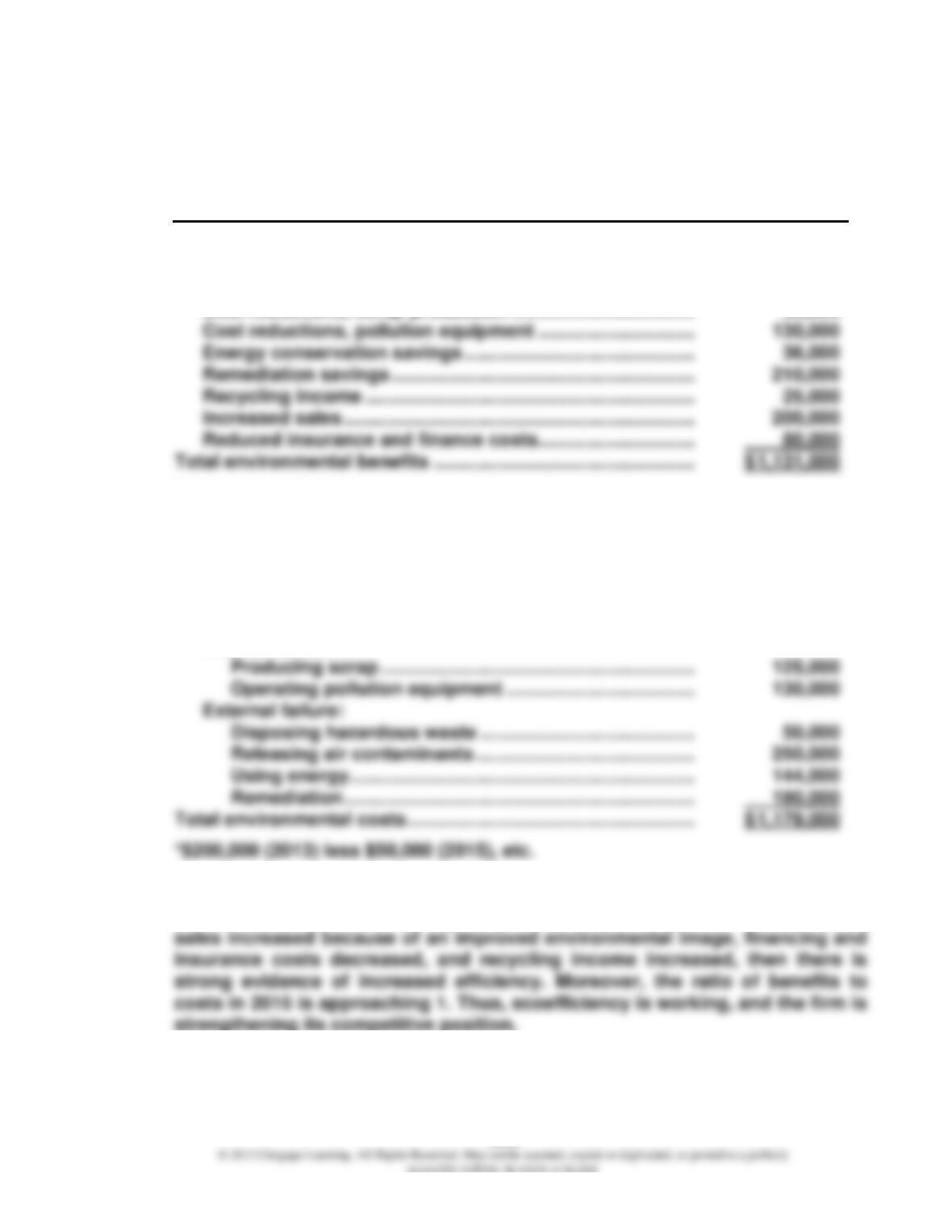
14–61
Problem 14.43
1. Kartel/Communications Products Division
Environmental Financial Statement
For the Year Ended December 31, 2015
Environmental benefits:
Cost reductions, hazardous waste ……………………………… $ 150,000*
Cost reductions, contaminant releases ………………………. 250,000
Cost reductions, scrap production …………………………….. 50,000
Environmental costs:
Prevention:
Designing processes and products ……………………….. $ 100,000
Training employees ………………………………………………. 40,000
Detection:
Measuring contaminant releases …………………………... 70,000
Inspecting processes ……………………………………………. 80,000
Internal failure:
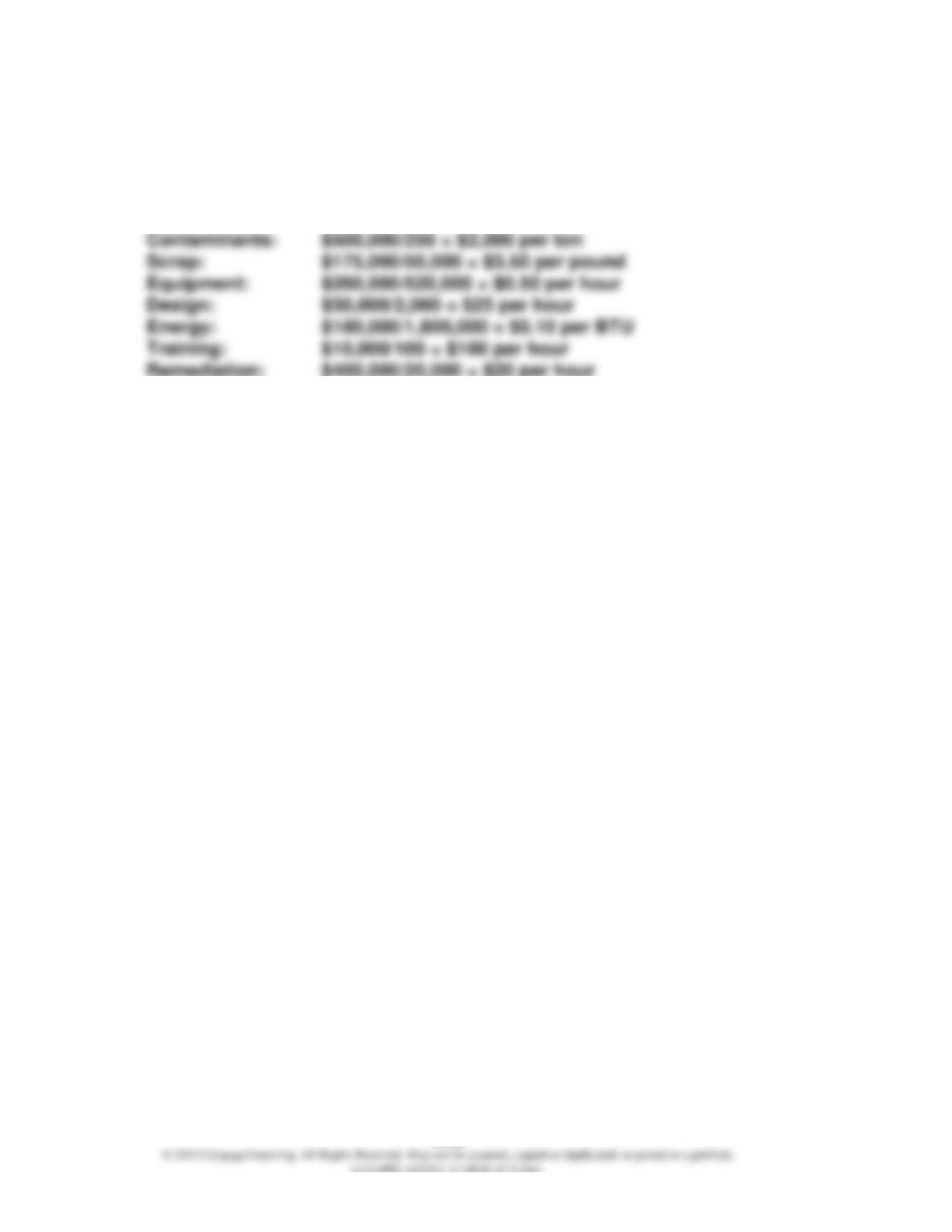
2. The total environmental costs in 2013 were $1,785,000. The total costs in 2015
were $1,179,000, which is a significant decrease. Adding to this the fact that
14–62
Problem 14.44
1. Activity rates:
Hazardous waste: $200,000/200 = $1,000 per ton
Measurement: $10,000/5,000 = $2 per transaction
14–63
Problem 14.44 (Continued)
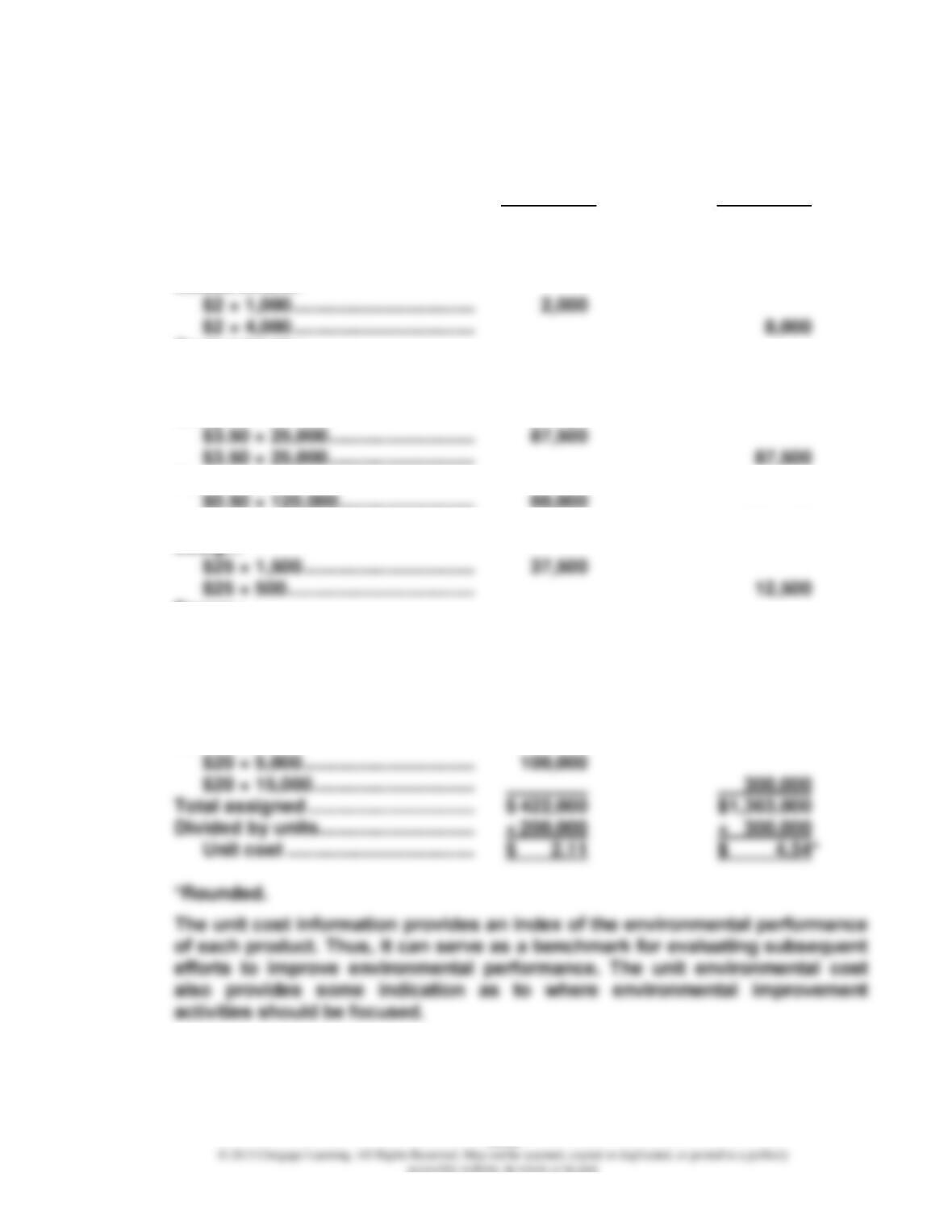
Unit cost calculation:
Model XA2 Model KZ3
Hazardous waste:
$1,000 × 20 …………………………... $ 20,000
$1,000 × 180 …………………………. $ 180,000
Measurement:
Contaminants:
$2,000 × 25 …………………………... 50,000
$2,000 × 225 …………………………. 450,000
Scrap:
Equipment:
$0.50 × 400,000 …………………….. 200,000
Design:
Energy:
$0.10 × 600,000 …………………….. 60,000
$0.10 × 1,200,000 ………………….. 120,000
Training:
$100 × 50 ……………………………… 5,000
$100 × 50 ……………………………… 5,000
Remediation:
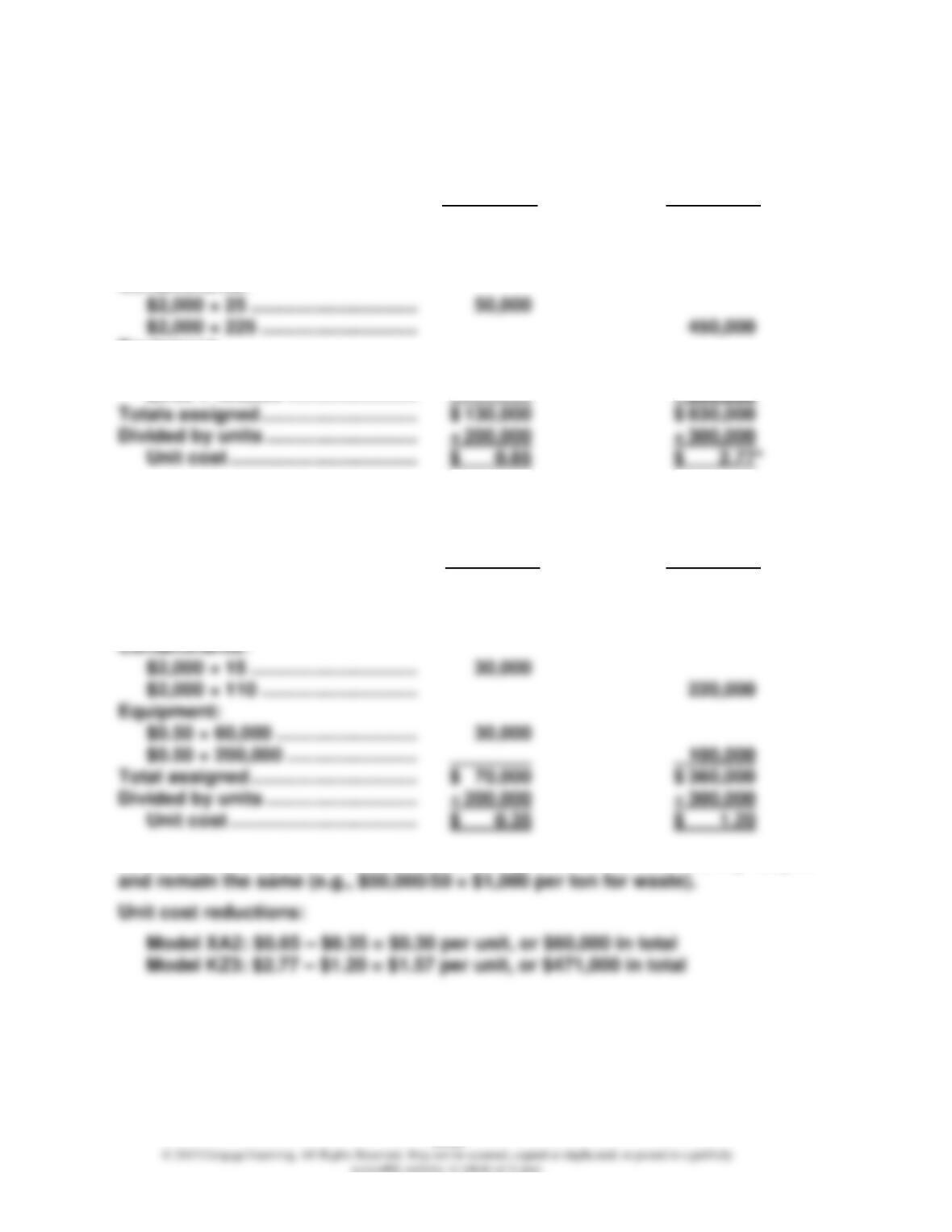
14–64
Problem 14.44 (Continued)
2. 2013 costs for the three relevant items:
Model XA2 Model KZ3
Hazardous waste:
$1,000 × 20 ………………………….. $ 20,000
$1,000 × 180 ………………………… $ 180,000
Contaminants:
Equipment:
$0.50 × 120,000 ……………………. 60,000
$0.50 × 400,000 ……………………. 200,000
*Rounded.
2015 unit costs for the three items:
Model XA2 Model KZ3
Hazardous waste:
$1,000 × 10 ………………………….. $ 10,000
$1,000 × 40 ………………………….. $ 40,000
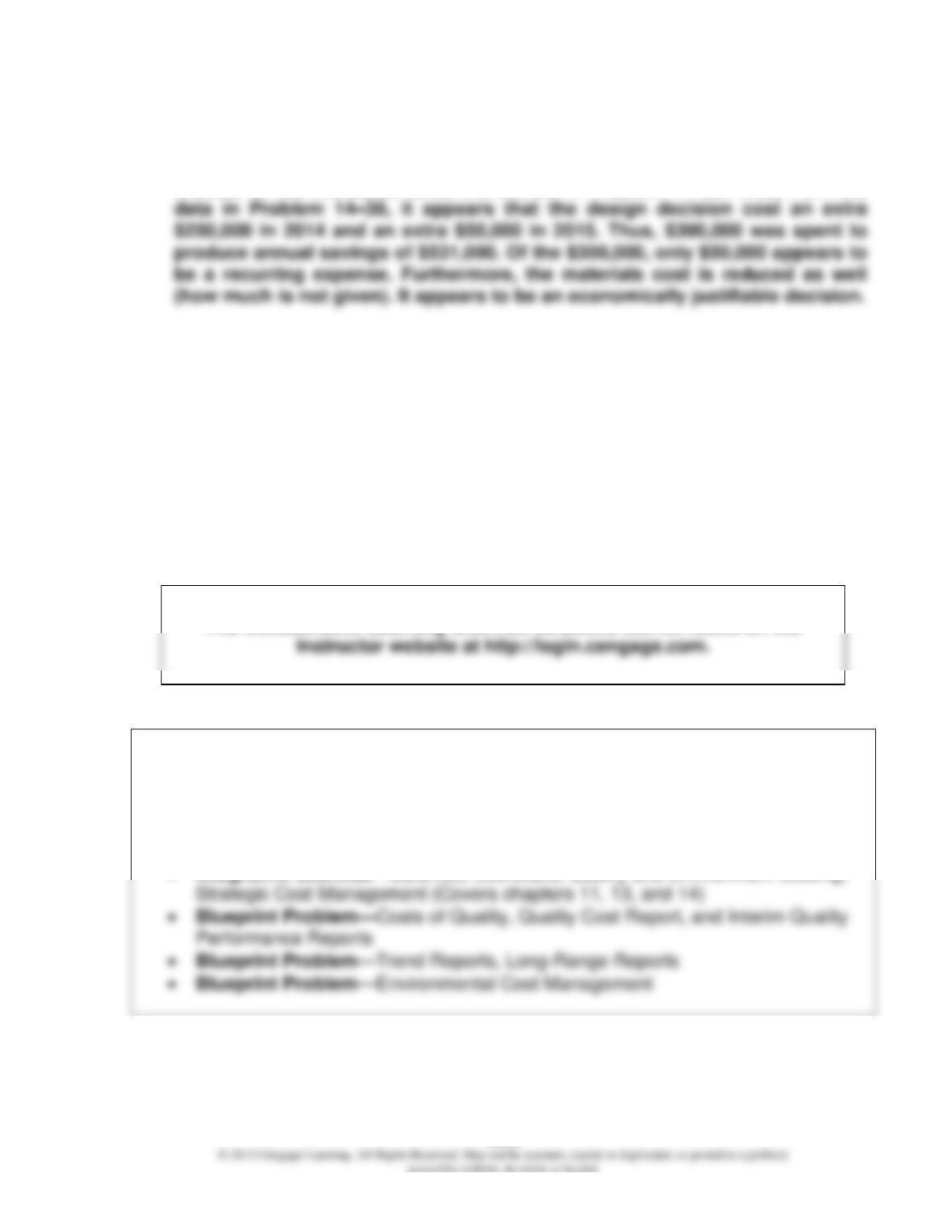
Note: The activity rates are calculated using 2015 costs and activity output
14–65
Problem 14.44 (Concluded)
Both products appear to be cleaner than before, and this may be what con-
tributed to the increased sales mentioned in Problem 14–38. Also, from the
CYBER RESEARCH CASE
14.45
Answers will vary.
The following problems can be assigned within CengageNOW and are auto-
graded. See the last page of each chapter for descriptions of these new assign-
ments.
• Integrative Exercise—Activity Based Costing, Quality and Environmental Cost-
ing, Lean and Productivity Costing (Covers chapters 4, 14, and 15)
• Integrative Exercise—Balanced Scorecard, Quality and Environment Costing,
The Collaborative Learning Exercise Solutions can be found on the