1. (1) To pay the face (maturity) amount of the bonds at a specified date. (2) To pay periodic
2. a. Bonds that may be exchanged for other securities under specified conditions.
3. More than face amount. Because comparable bonds provide a market interest rate (11%) that
is less than the rate on the bond being issued (12%), the bond will sell at a premium as the
4. a. Greater than $26,000,000
b. 1. $26,000,000
3. 9%
5. More than the contract rate
6. a. Premiu
m
7. A loss of $50,000 [($5,000,000 ×0.98) – ($5,000,000 – $150,000)]
8. A mortgage note is an installment note that is secured by a pledge of the borrower’s assets.
9. A bond is an interest-bearing note that requires periodic interest payments and repayment of
the face amount of the bonds at maturity. Bonds consist of two different components:
(1) interest payments made periodically over the life of the bond and (2) the face amount that
must be repaid at maturity. The periodic payments consist entirely of interest, and the final
10. a. As a current liability on the balance sheet.
CHAPTER 14
LONG-TERM LIABILITIES: BONDS AND NOTES
DISCUSSION QUESTIONS
14-1
CHAPTER 14 Long-Term Liabilities: Bonds and Notes
PE 14–1A
Earnings before bond interest and income tax………
…
$750,000 $750,000
Deduct interest on bonds…………………………………
…
350,000 238,000
PE 14–1B
Earnings before bond interest and income tax………
…
$2,000,000 $2,000,000
Deduct interest on bonds…………………………………
…
400,000 250,000
Income before income tax………………………………… $1,600,000 $1,750,000
…
PRACTICE EXERCISES
Plan 1 Plan 2
Plan 1 Plan 2
1
3
1
3
14-2
…
CHAPTER 14 Long-Term Liabilities: Bonds and Notes
PE 14–2A
a.
Cash 500,000
Bonds Payable 500,000
b.
PE 14–2B
a.
Cash 800,000
Bonds Payable 800,000
b.
PE 14–3A
Cash 1,153,670
PE 14–3B
Cash 2,889,599
PE 14–4A
Interest Expense 58,633
PE 14–4B
Interest Expense 176,040
PE 14–5A
Cash 2,170,604
PE 14–5B
Cash 8,308,869
14-4
CHAPTER 14 Long-Term Liabilities: Bonds and Notes
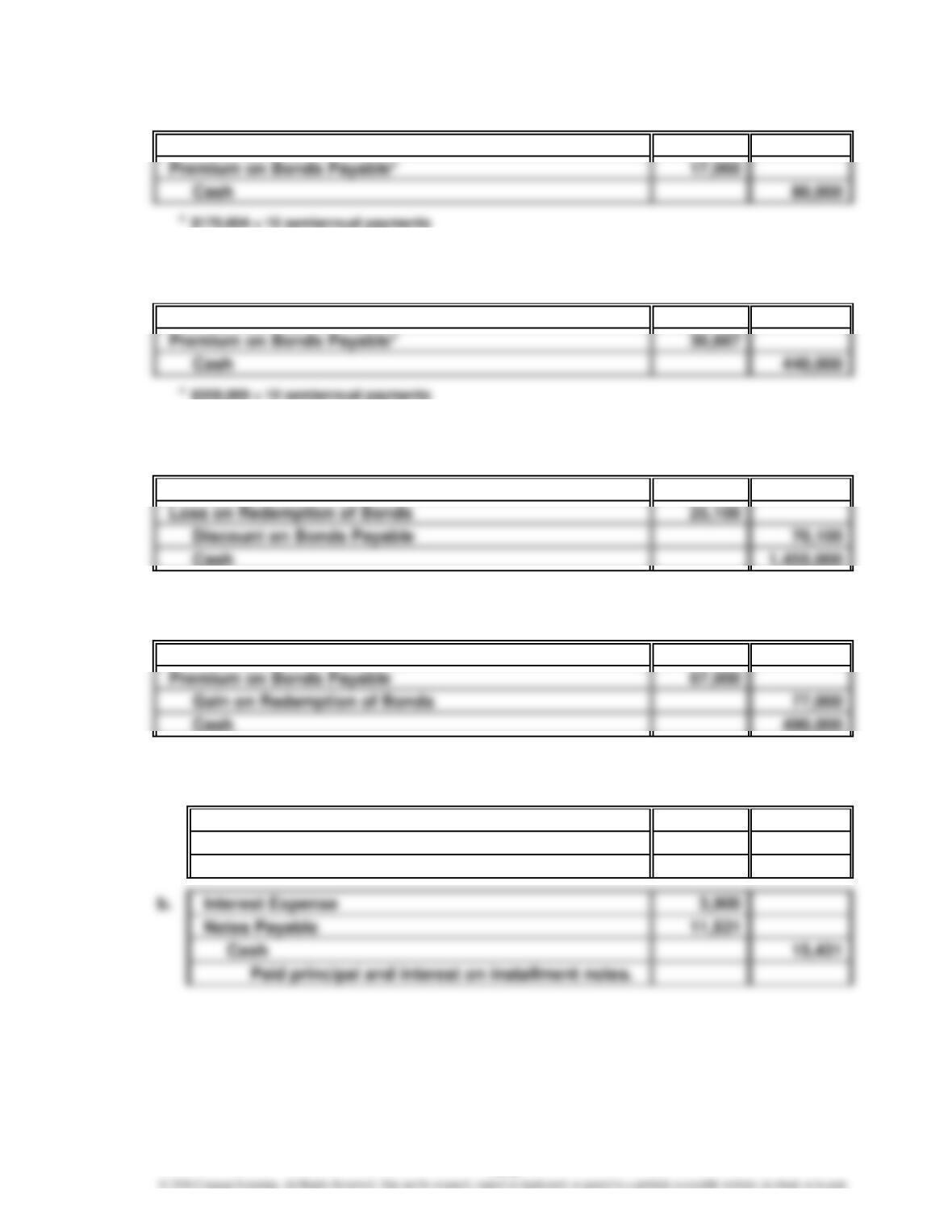
PE 14–6A
Interest Expense 62,940
*
PE 14–6B
Interest Expense 409,113
*
PE 14–7A
Bonds Payable 1,500,000
PE 14–7B
Bonds Payable 500,000
PE 14–8A
a. Cash 65,000
Notes Payable 65,000
Issued installment notes for cash.
14-5
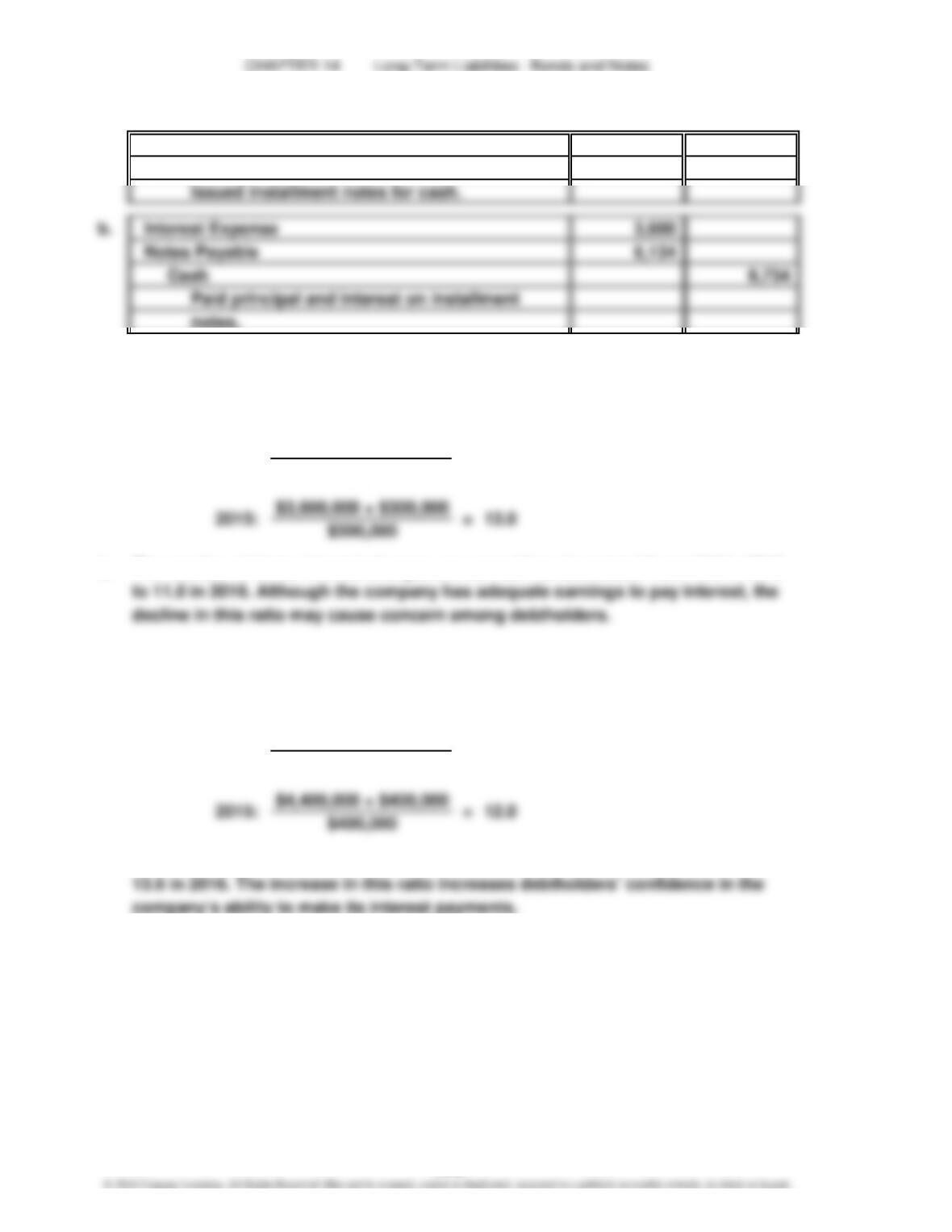
PE 14–8B
a. Cash 45,000
Notes Payable 45,000
PE 14–9A
a. Number of times interest charges earned:
$3,200,000 + $320,000
$320,000
b. The number of times interest charges are earned has decreased from 13.0 in 2015
PE 14–9B
a. Number of times interest charges earned:
$5,544,000 + $440,000
$440,000
b. The number of times interest charges are earned has increased from 12.0 in 2015 to
2016: = 11.0
2016: = 13.6
14-6
CHAPTER 14 Long-Term Liabilities: Bonds and Notes
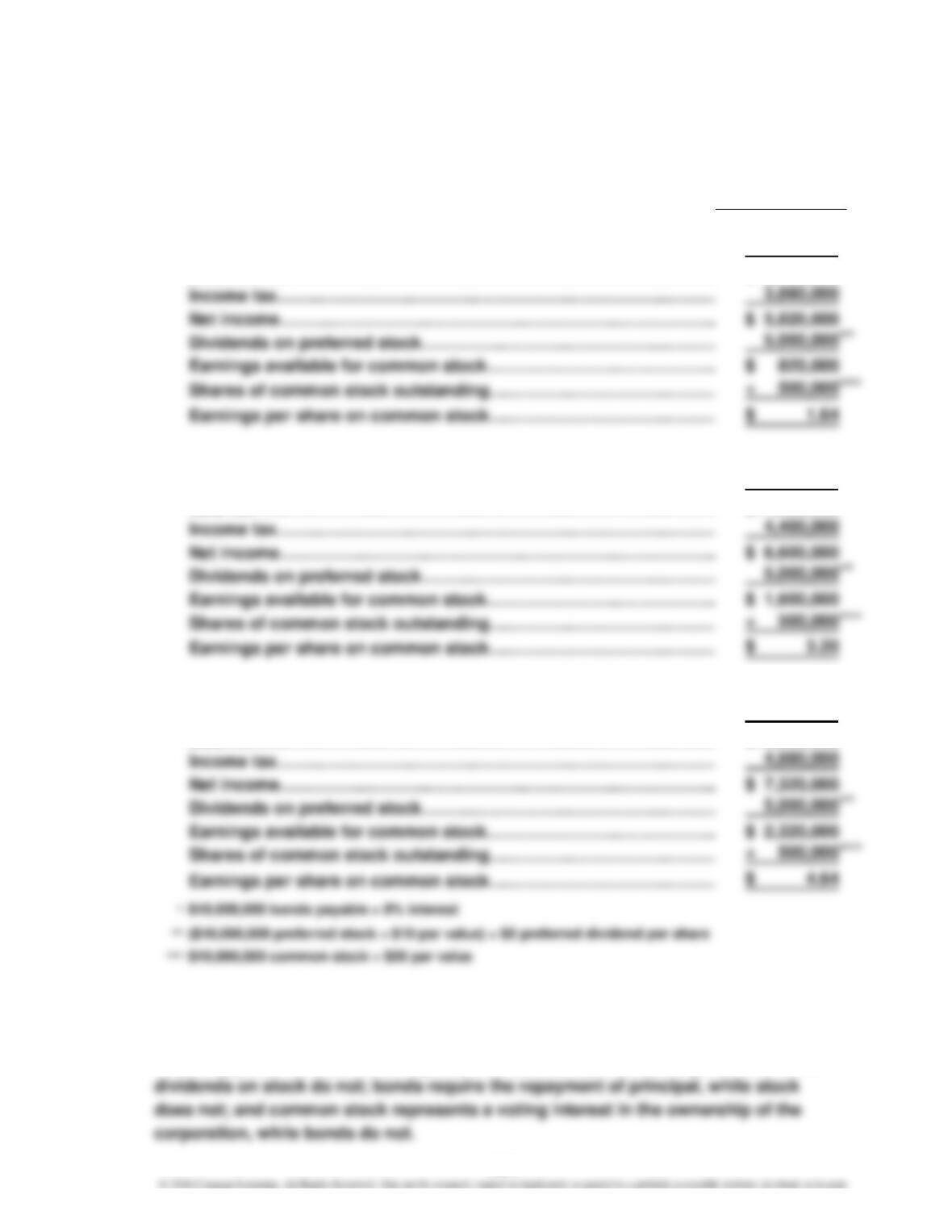
Ex. 14–1
Domanico
Co.
a. Earnings before bond interest and income tax………………………
…
$10,500,000
Bond interest………………………………………………………………
…
800,000
Balance………………………………………………………………………
…
$ 9,700,000
b. Earnings before bond interest and income tax………………………
…
$11,800,000
Bond interest………………………………………………………………
…
800,000
Balance………………………………………………………………………
…
$11,000,000
…
c. Earnings before bond interest and income tax………………………
…
$13,000,000
Bond interest………………………………………………………………
…
800,000
Balance………………………………………………………………………
…
$12,200,000
…
Ex. 14–2
Factors other than earnings per share that should be considered in evaluating
financing plans include: bonds represent a fixed annual interest requirement, while
EXERCISES
*
*
*
14-7
…
CHAPTER 14 Long-Term Liabilities: Bonds and Notes
Ex. 14–3
Nike’s major source of financing is common stock. It has relatively little long-term debt
Ex. 14–4
The bonds were selling at a premium. This is indicated by the selling price of 103.00,
which is stated as a percentage of the face amount and is more than par (100%). The
Ex. 14–5
1 Cash 600,000
Bonds Payable 600,000
Ex. 14–6
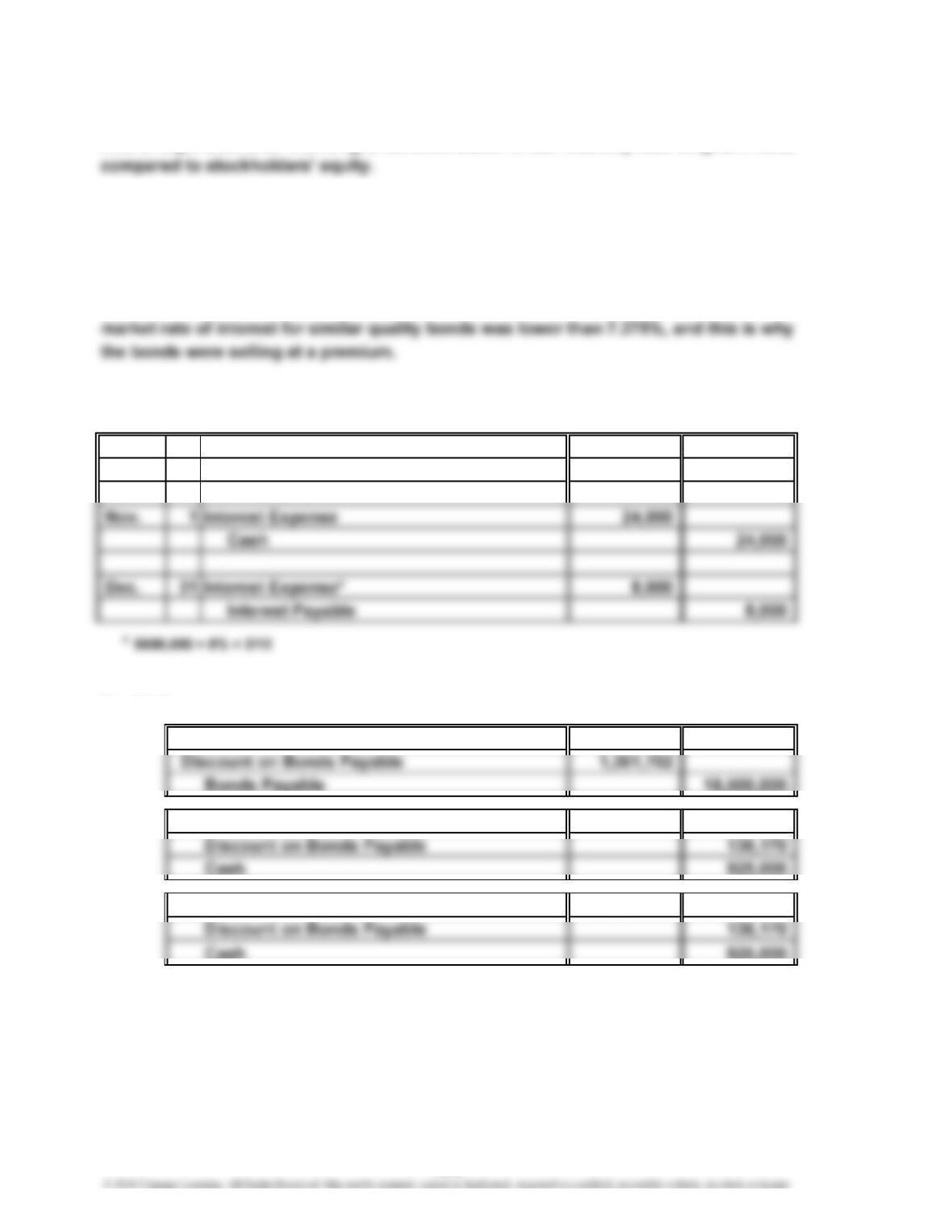
a. 1. Cash 17,138,298
2. Interest Expense 1,061,170
3. Interest Expense 1,061,170
May
14-8
CHAPTER 14 Long-Term Liabilities: Bonds and Notes
Ex. 14–6 (Concluded)
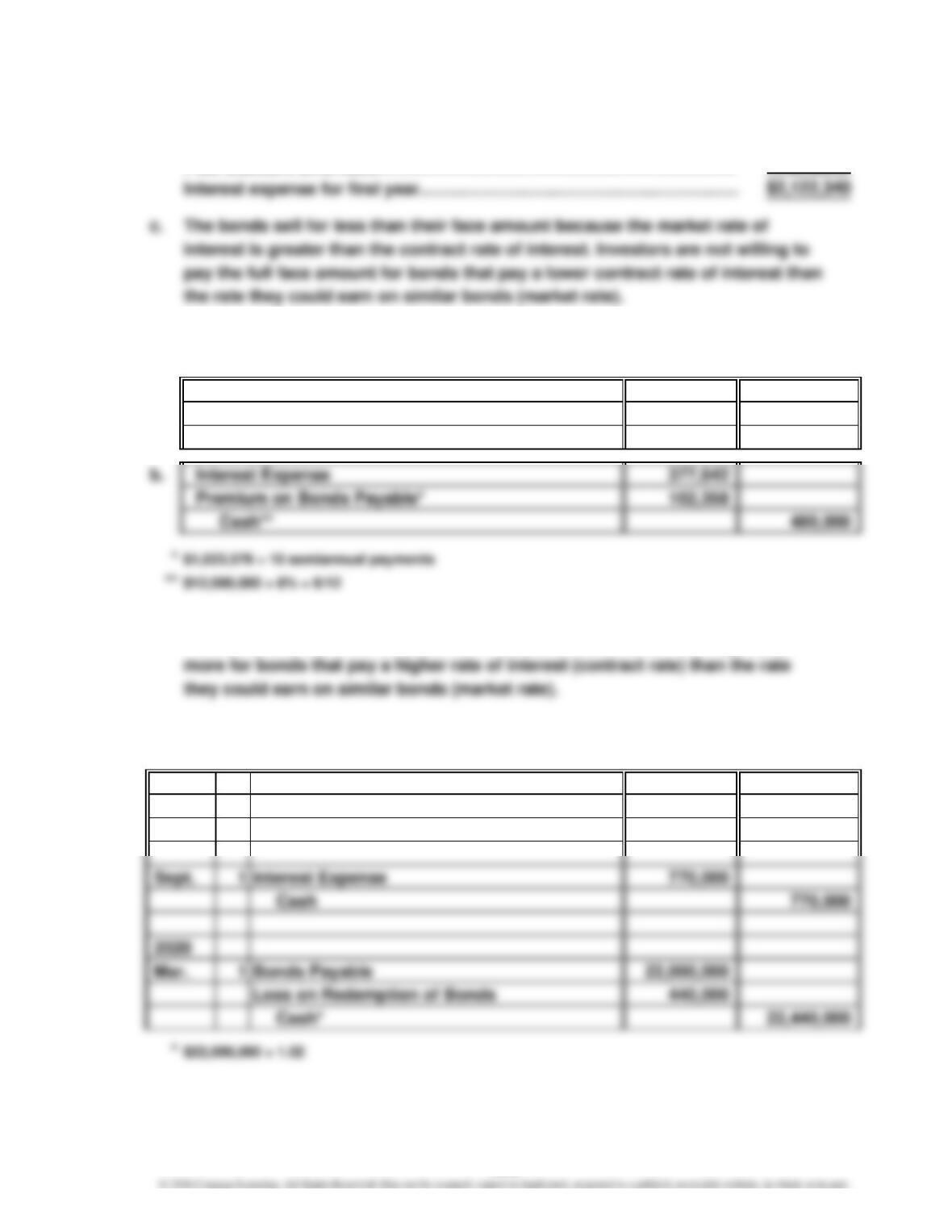
b. Annual interest paid……………………………………………………………
…
$1,850,000
Plus discount amortized………………………………………………………
…
272,340
Ex. 14–7
a. Cash 13,023,576
Premium on Bonds Payable 1,023,576
Bonds Payable 12,000,000
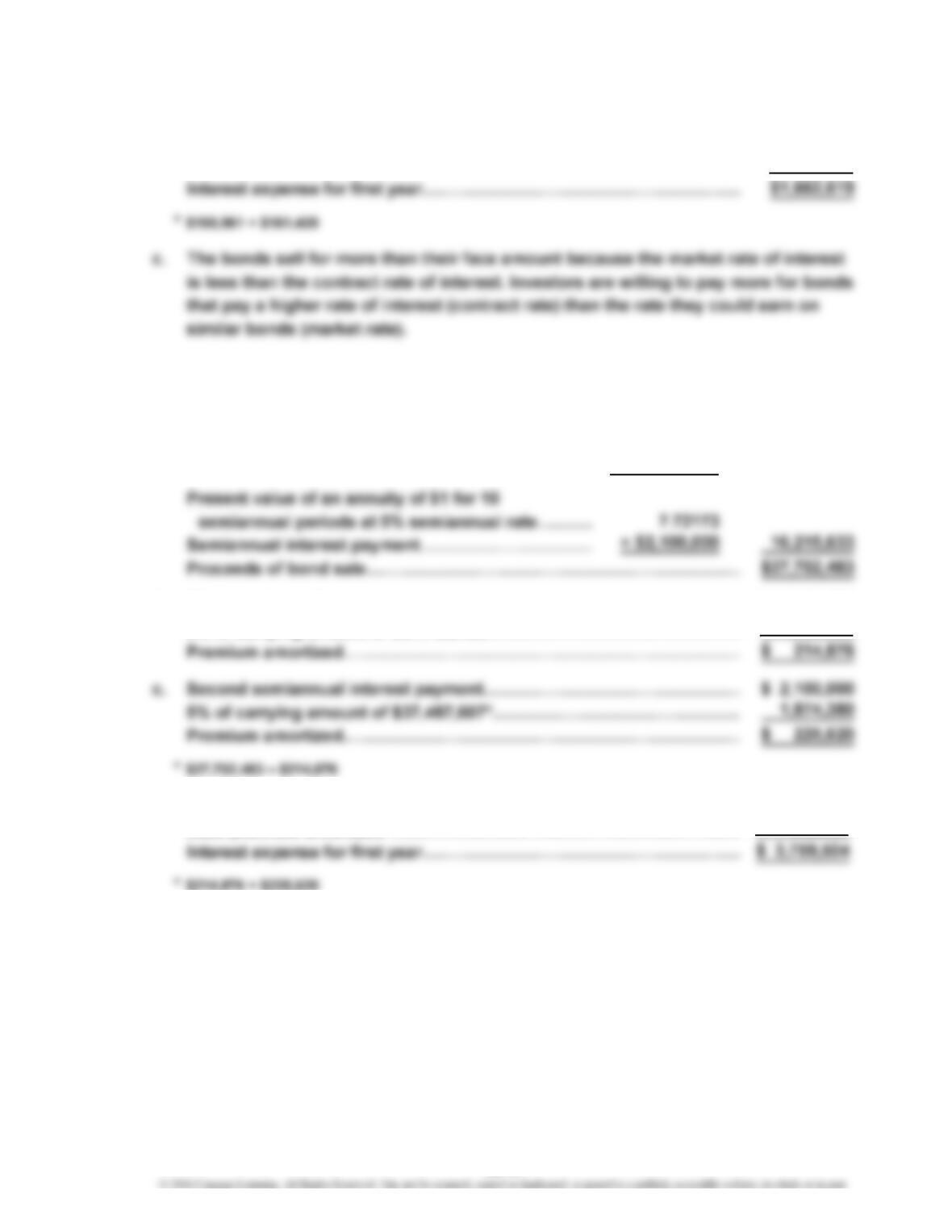
c. The bonds sell for more than their face amount because the market rate of
interest is less than the contract rate of interest. Investors are willing to pay
Ex. 14–8
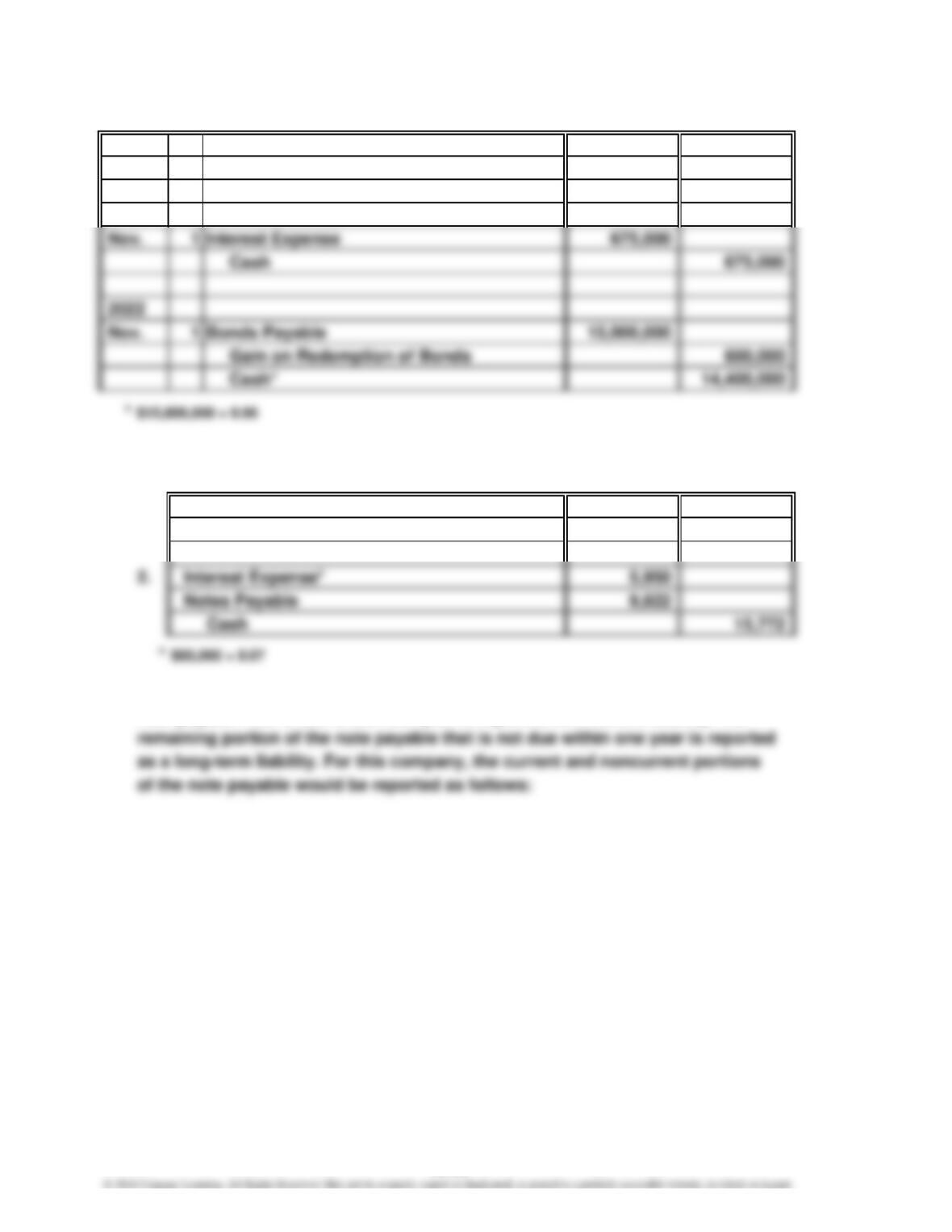
1 Cash 22,000,000
Bonds Payable 22,000,000
Mar.
2016
14-9
CHAPTER 14 Long-Term Liabilities: Bonds and Notes
Ex. 14–9
1 Cash 15,000,000
Bonds Payable 15,000,000
Ex. 14–10
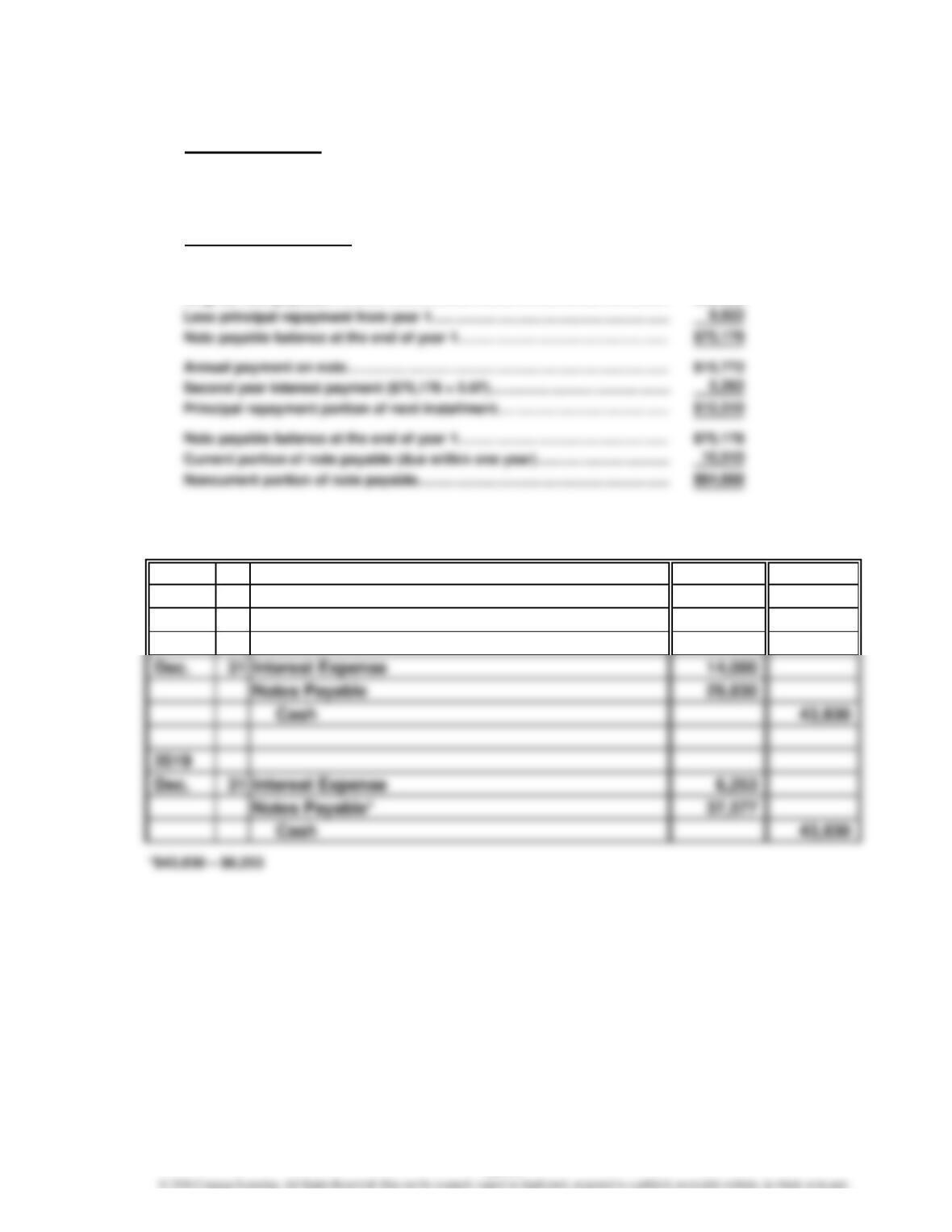
a. 1. Cash 85,000
Notes Payable 85,000
b. Notes payable are reported as liabilities on the balance sheet. The portion of the
note payable that is due within one year is reported as a current liability. The
May
2016
14-10
CHAPTER 14 Long-Term Liabilities: Bonds and Notes
Ex. 14–10 (Concluded)
Current liabilities:
Notes payable*………………………………………………………………………
…
$10,510
* The principal repayment portion of the next installment payment. See computation below.
Noncurrent liabilities:
Notes payable**……………………………………………………………………… $64,668
** Original note payable………………………………………………………………
…
$85,000
Ex. 14–11
1 Cash 175,000
Notes Payable 175,000
Jan.
2016
14-11
…
CHAPTER 14 Long-Term Liabilities: Bonds and Notes
Ex. 14–12
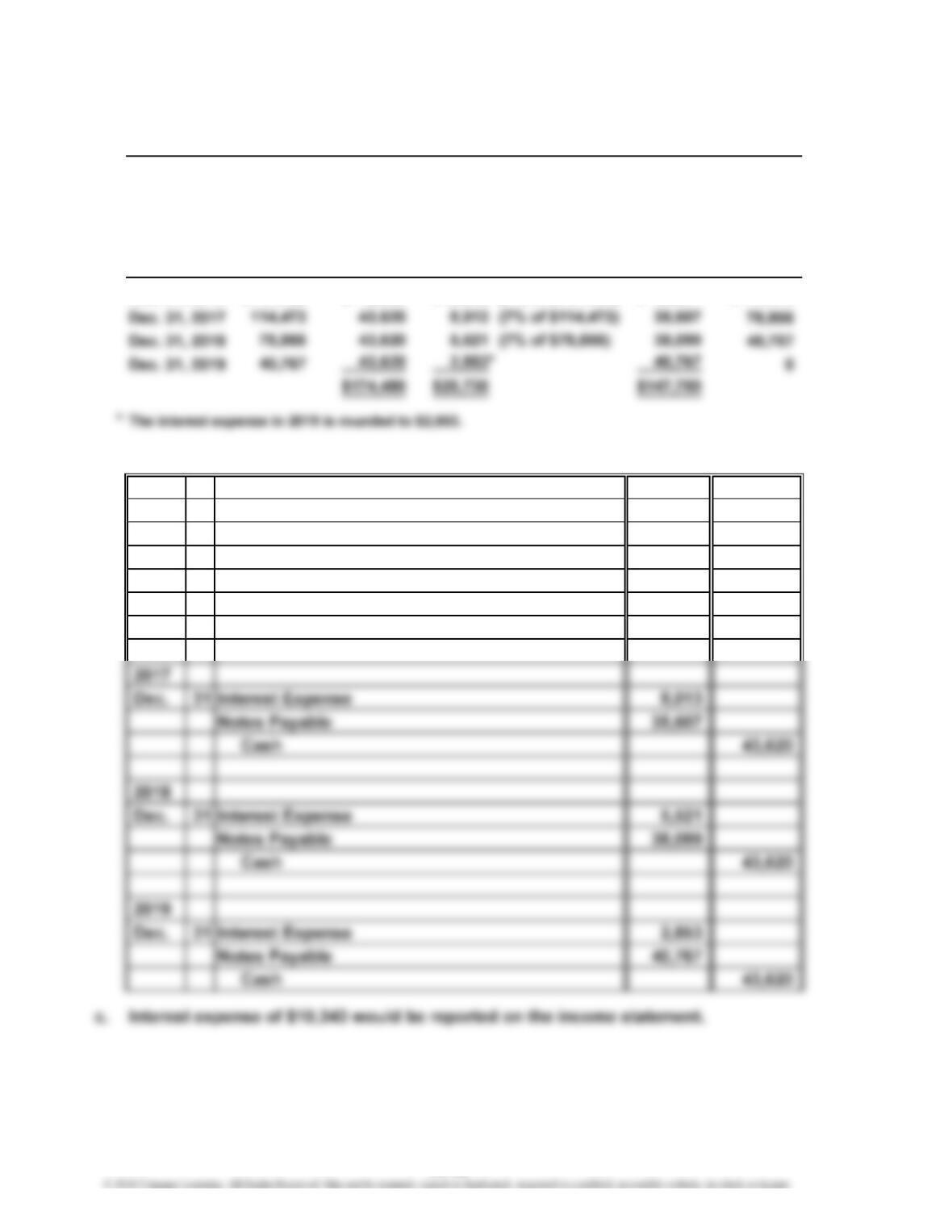
a.
AB DE
Decrease Dec. 31
January 1 Note in Notes Carrying
Carrying Payment Payable Amount
Amount (Cash Paid) (B – C) (A – D)
Dec. 31, 2016 $147,750 $ 43,620 $10,343 (7% of $147,750) $ 33,277 $114,473
b. 2016
Jan. 1 Cash 147,750
Notes Payable 147,750
Dec. 31 Interest Expense 10,343
Notes Payable 33,277
Cash 43,620
Interest Expense
Ending Note Carrying Amount)
(7% of January 1
Amortization of Installment Notes
For the
Year
C
14-12
CHAPTER 14 Long-Term Liabilities: Bonds and Notes
Ex. 14–13
1. The significant loss on redemption of the Simmons Industries bonds should be
2. The Hunter Corporation bonds outstanding at the end of the current year
Ex. 14–14
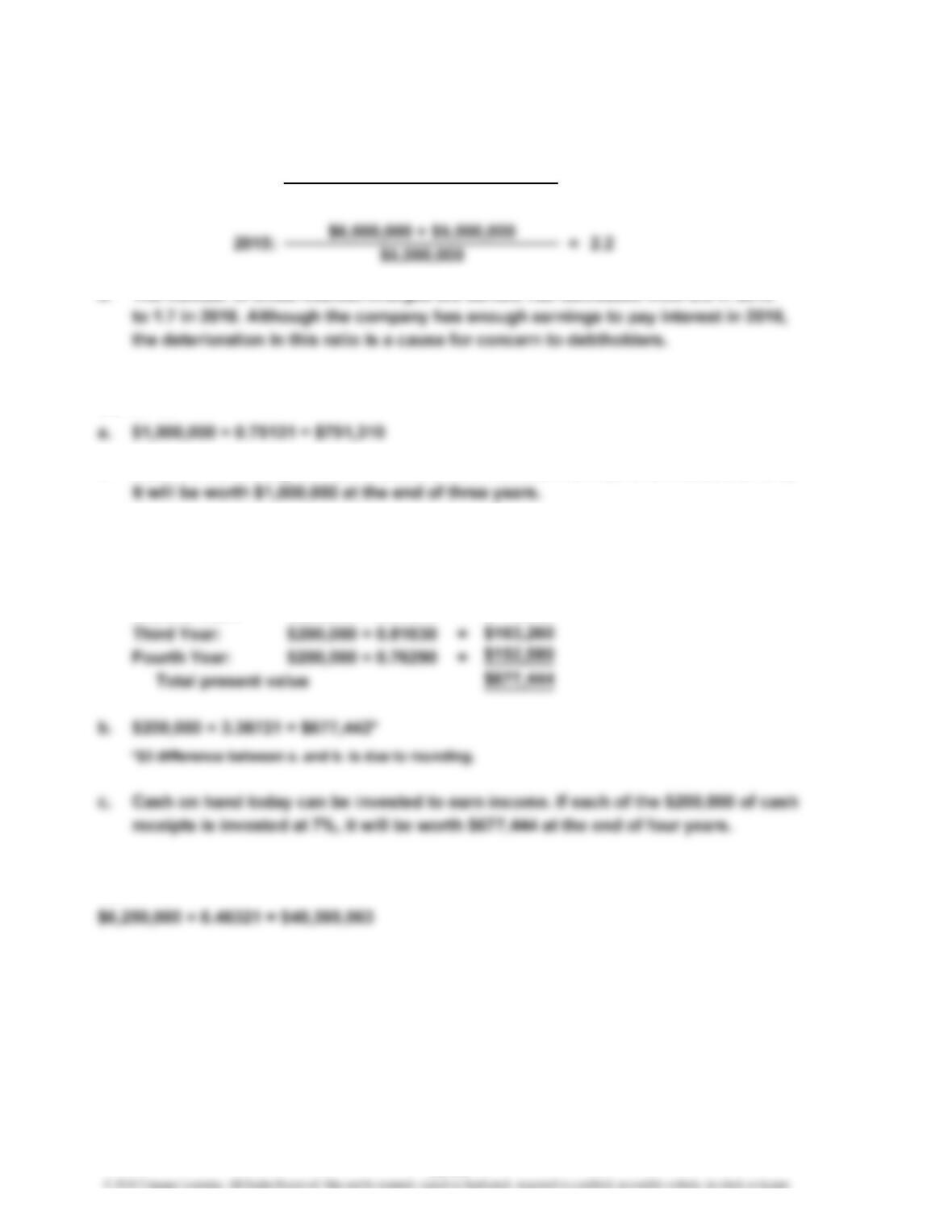
a. Number of times interest charges earned:
$685,000,000 + $147,000,000
$147,000,000
b. The number of times interest charges are earned has increased from 2.7 in the
prior year to 5.7 in the current year. Although Southwest Airlines had enough
Ex. 14–15
a. Number of times interest charges earned:
$310,500,000 + $13,500,000
$13,500,000
b. The number of times interest charges are earned has decreased from 28.0 in 2015
Current year: = 5.7
2016: = 24.0
14-13
CHAPTER 14 Long-Term Liabilities: Bonds and Notes
Ex. 14–16
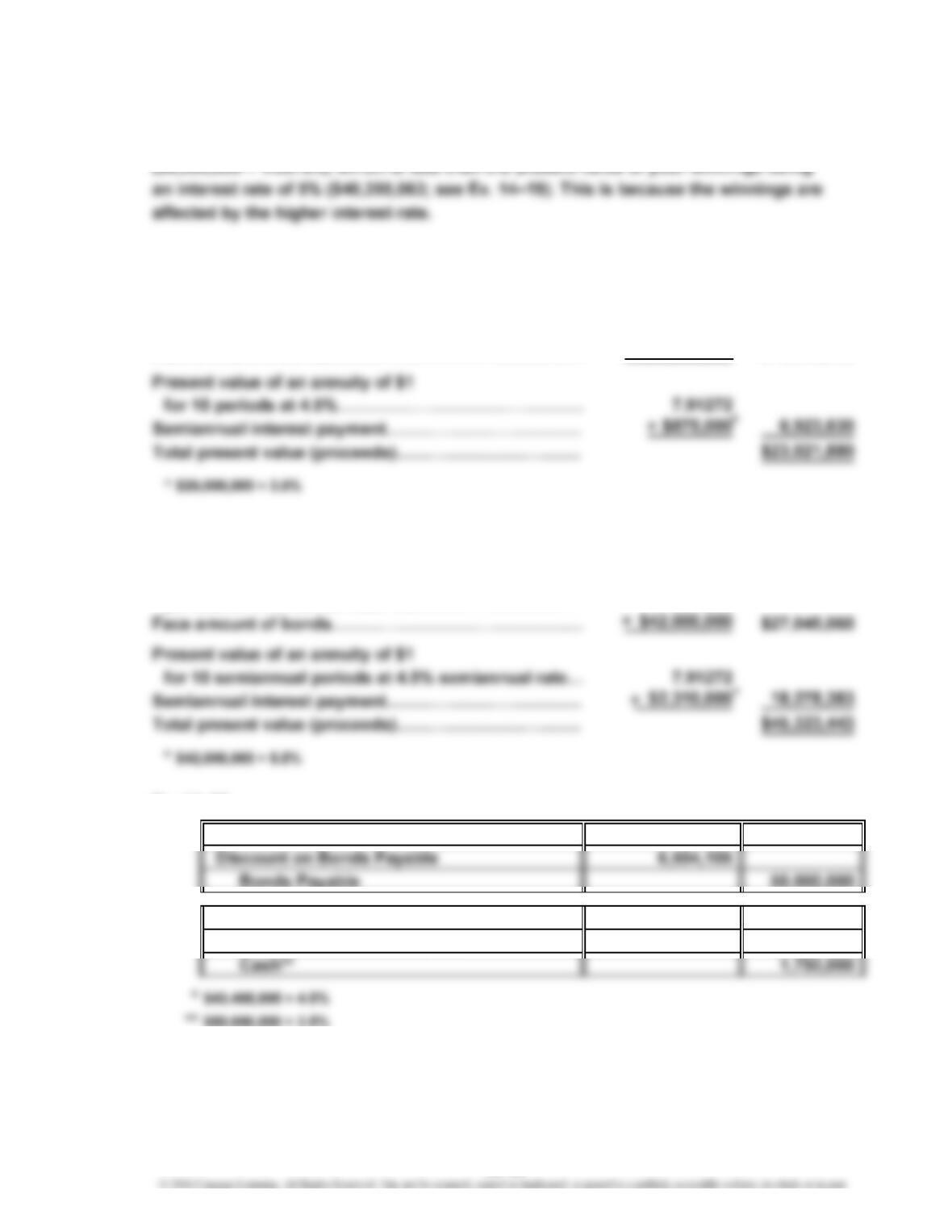
a. Number of times interest charges earned:
b. The number of times interest charges are earned has decreased from 2.2 in 2015
Ex. 14–17
b. Cash on hand today can be invested to earn income. If $751,315 is invested at 10%,
Ex. 14–18
a. First Year: $200,000 × 0.93458 =
Second Year: $200,000 × 0.87344 =
Ex. 14–19
2016: = 1.7
$3,500,000 + $5,000,000
$5,000,000
$186,916
$174,688
14-14
CHAPTER 14 Long-Term Liabilities: Bonds and Notes
Ex. 14–20
No. The present value of your winnings using an interest rate of 12% is $31,047,750
Ex. 14–21
Present value of $1 for 10 semiannual
periods at 4.5% semiannual rate………………………
…
0.64393
Face amount of bonds……………………………………… $25,000,000 $16,098,250
Ex. 14–22
Present value of $1 for 10 semiannual
periods at 4.5% semiannual rate………………………
…
0.64393
Ex. 14–23
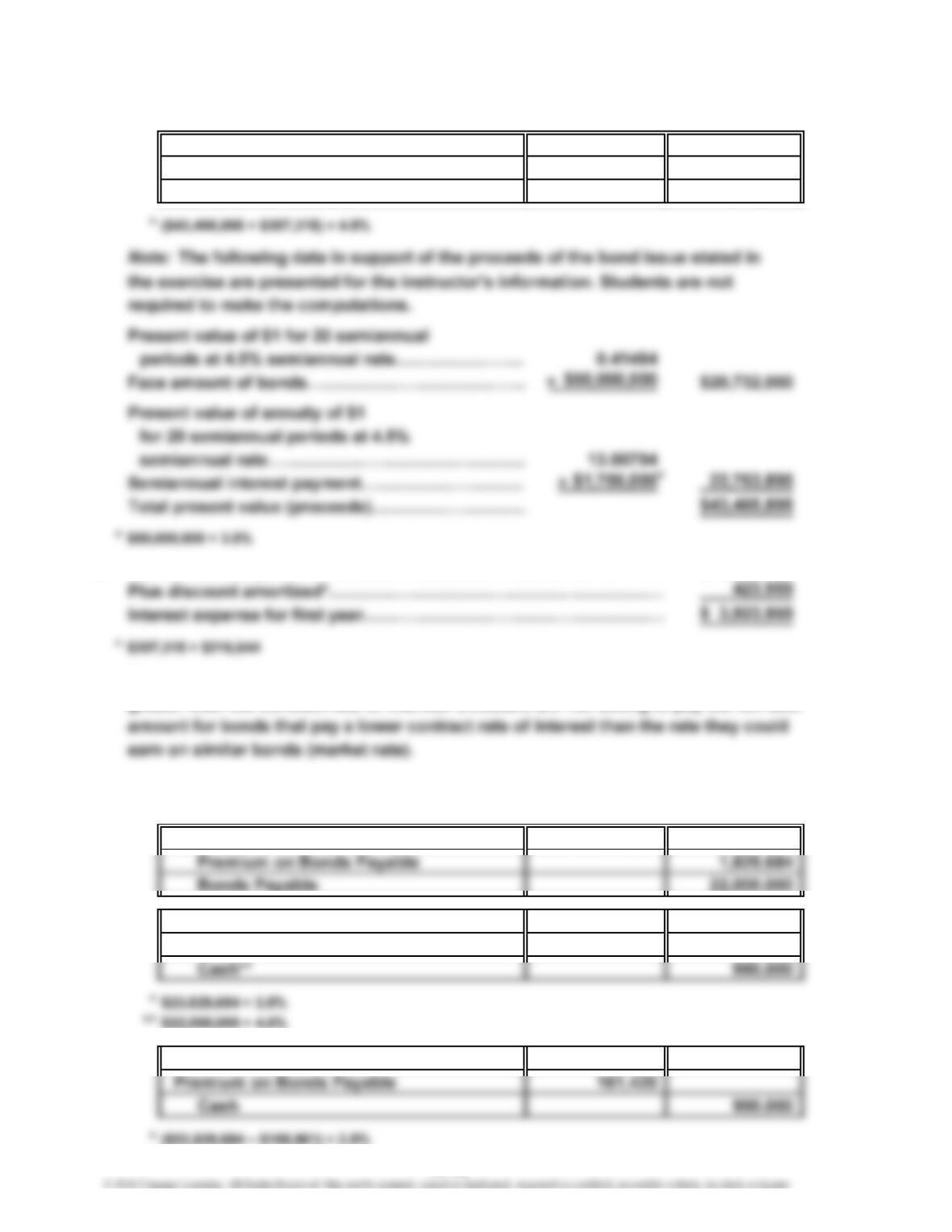
a. 1. Cash
2. Interest Expense*
Discount on Bonds Payable
207,315
43,495,895
1,957,315
×
14-15
CHAPTER 14 Long-Term Liabilities: Bonds and Notes
Ex. 14–23 (Concluded)
3. Interest Expense* 1,966,644
Discount on Bonds Payable
Cash
b. Annual interest paid…………………………………………………………
…
$ 3,500,000
c. The bonds sell for less than their face amount because the market rate of interest is
greater than the contract rate of interest. Investors are not willing to pay the full face
Ex. 14–24
a. 1. Cash 23,829,684
2. Interest Expense* 834,039
Premium on Bonds Payable 155,961
3. Interest Expense* 828,580
216,644
1,750,000
14-16
CHAPTER 14 Long-Term Liabilities: Bonds and Notes
Ex. 14–24 (Concluded)
b. Annual interest paid……………………………………………………………
…
$1,980,000
Less premium amortized*……………………………………………………
…
317,381
Ex. 14–25
a. Present value of $1 for 10 semiannual
periods at 5% semiannual rate……………………… 0.61391
Face amount of bonds…………………………………
…
$35,000,000 $21,486,850
b. First semiannual interest payment…………………………………………
…
$ 2,100,000
5% of carrying amount of $37,702,483………………………………………
…
1,885,124
…
…
d. Annual interest paid……………………………………………………………
…
$ 4,200,000
Less premium amortized*……………………………………………………
…
440,496
*
$214,876 + $225,620
×
14-17