CHAPTER 28 (FIN MAN); CHAPTER 14 (MAN) The Balanced Scorecard and Corporate Social Responsibility
Prob. 28–2A (FIN MAN); Prob. 14–2A (MAN) (Concluded)
Cost makeup of Procedure 2:
Labor (55%) ………………………………………………
$170,500
Materials (25%) …………………………………………
Overhead (20%) ………………………………………..
$310,000
3.
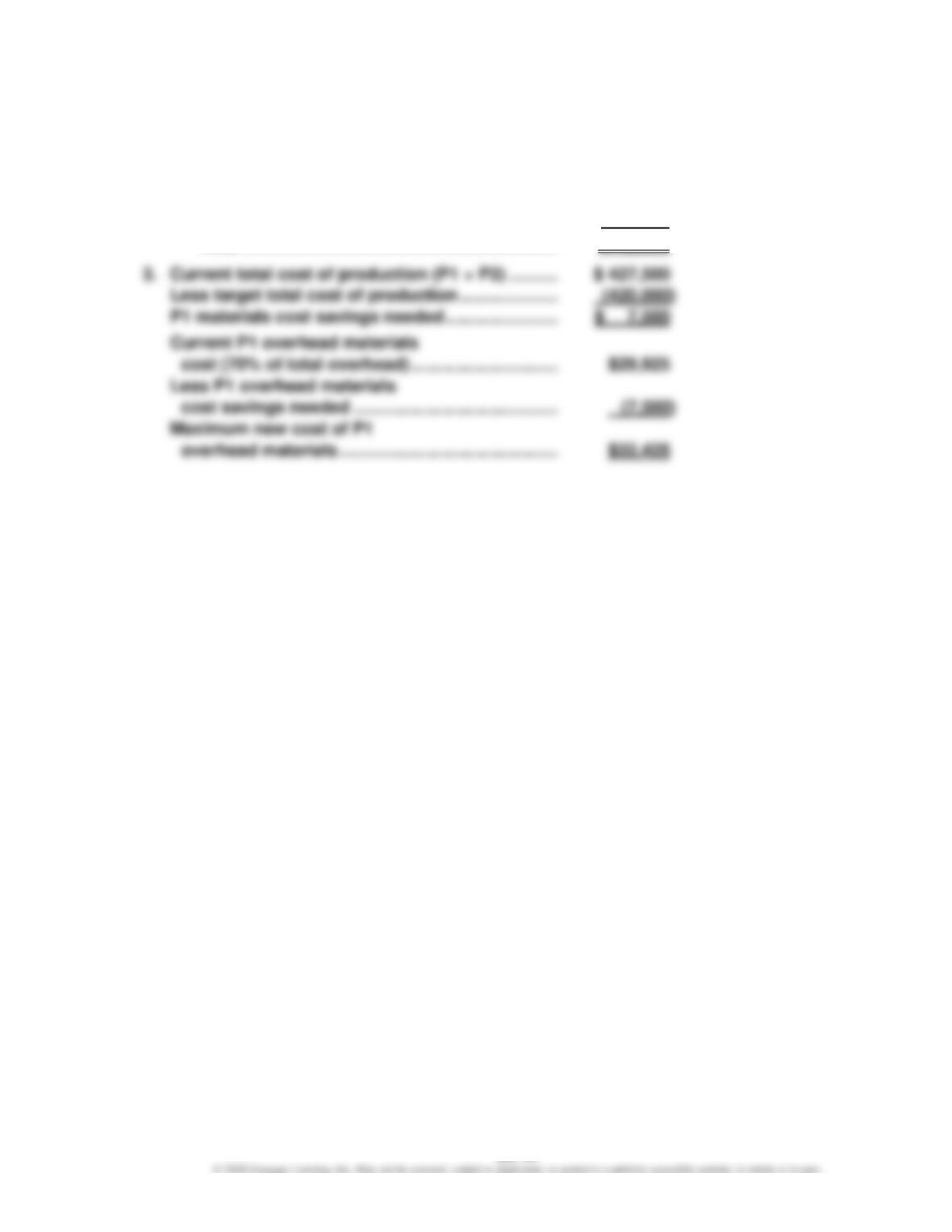
Current total cost of production (P1 + P2) ………..
$930,000
Less target total cost of production…………………
(900,000)
P2 materials cost savings needed …………………..
$ 30,000
Current P2 overhead materials
$ 37,200
Less P2 overhead materials cost
Maximum new cost of P2 overhead
CHAPTER 28 (FIN MAN); CHAPTER 14 (MAN) The Balanced Scorecard and Corporate Social Responsibility
Prob. 28–3A (FIN MAN); Prob. 14–3A (MAN)
1. The data show that while the online customer survey score increased (from 8.5 to
9.2), the company’s market share decreased (from 12.3% to 10.5%). This does not
2. Three possible reasons for the unsupported relationship between the online
customer survey score and market share are as follows:
Reason 1: Satisfying the customer has no effect on increasing market share.
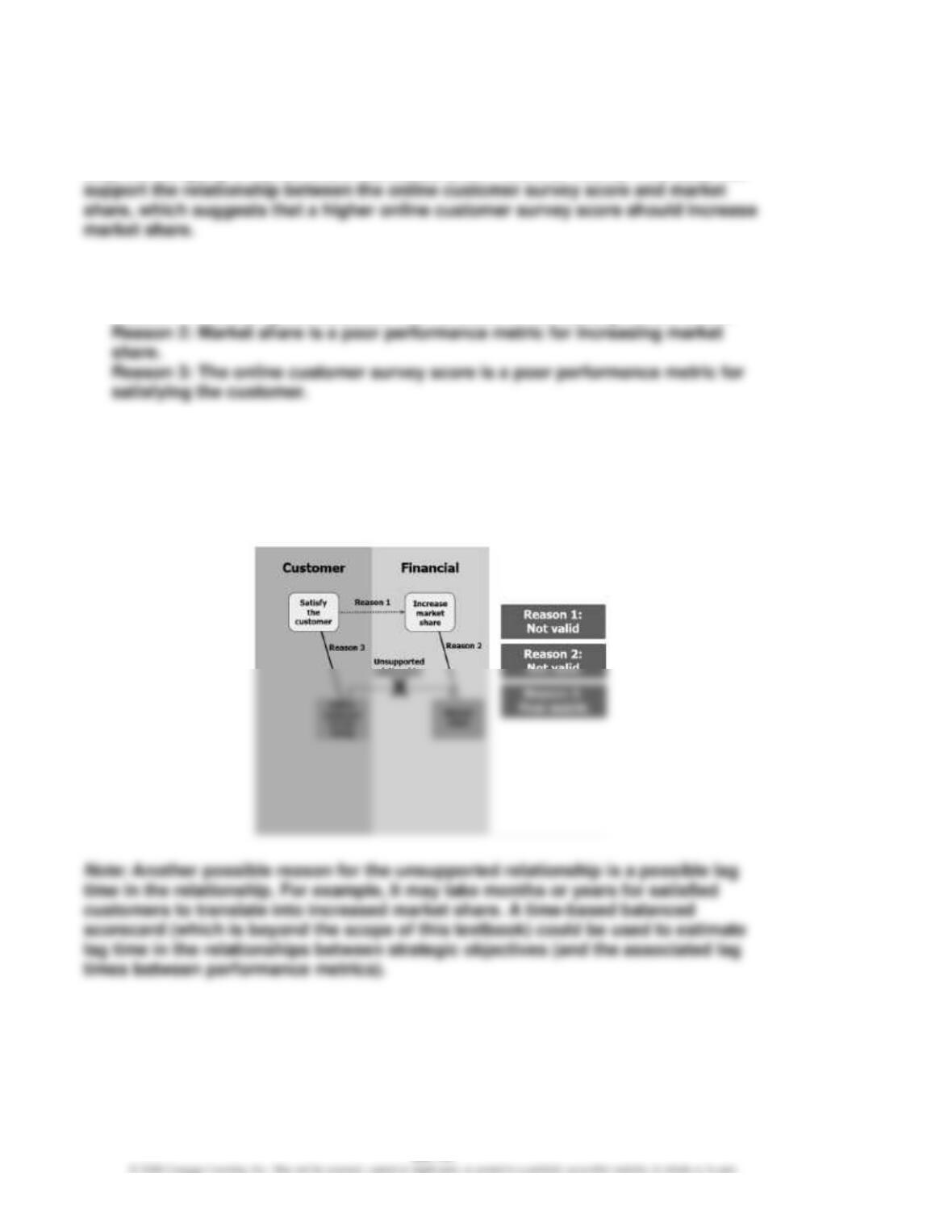
3. Reasons 1 and 2 do not seem logical. Customer satisfaction (Reason 1) should lead
to an increase in customers, sales, and market share. Likewise, market share
(Reason 2) is a direct measure of increasing market share. This leaves as the most
likely reason that the online customer survey rating (Reason 3) is a poor metric for
increasing market share. These findings are summarized as follows:
CHAPTER 28 (FIN MAN); CHAPTER 14 (MAN) The Balanced Scorecard and Corporate Social Responsibility
Prob. 28–1B (FIN MAN); Prob. 14–1B (MAN)
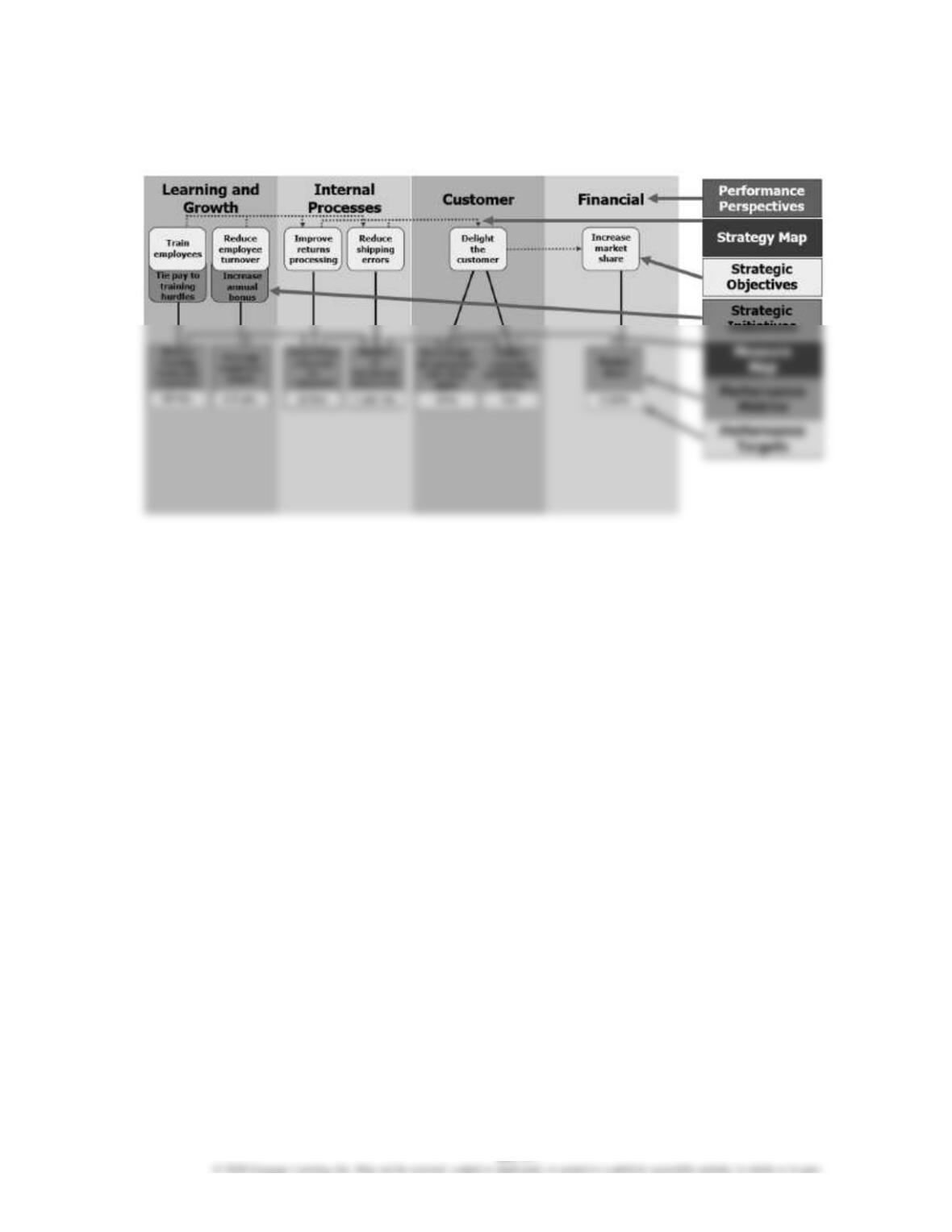
1.–3.
CHAPTER 28 (FIN MAN); CHAPTER 14 (MAN) The Balanced Scorecard and Corporate Social Responsibility
Prob. 28–2B (FIN MAN); Prob. 14–2B (MAN)
1.
Target gross profit percentage …………………..
30% of sales
Total cost of production percentage …………..
70% of sales
Total sales ……………………………………………….
$600,000
Total cost of production percentage ………….
× 70%
Target cost of production ………………………….
$420,000
P1 = 2(P2) = (2 × $140,000) = $280,000
Cost makeup of Procedure 1:
Labor (40%) …………………………………………
$112,000
Materials (45%) ……………………………………
126,000
Overhead (15%) …………………………………..
42,000
Total …………………………………………………..
$280,000
Cost makeup of Procedure 2:
Labor (60%) …………………………………………
Materials (30%) ……………………………………
Overhead (10%) …………………………………..
Total …………………………………………………..
$140,000
2.
Labor cost of Procedure 1 …………………………
$114,000
Labor cost = 40% of P1, so
P1 = $114,000 ÷ 40% =
$285,000
Procedure 1 cost twice as much
Cost makeup of Procedure 1:
Labor (40%) …………………………………………
$114,000
Materials (45%) ……………………………………
Overhead (15%) …………………………………..
Total ……………………………………………………
$285,000
CHAPTER 28 (FIN MAN); CHAPTER 14 (MAN) The Balanced Scorecard and Corporate Social Responsibility
Prob. 28–2B (FIN MAN); Prob. 14–2B (MAN) (Concluded)
Cost makeup of Procedure 2:
Labor (60%) ……………………………………………..
$ 85,500
Materials (30%) …………………………………………
42,750
Overhead (10%) ………………………………………..
14,250
Total …………………………..…………………………...
$142,500
CHAPTER 28 (FIN MAN); CHAPTER 14 (MAN) The Balanced Scorecard and Corporate Social Responsibility
Prob. 28–3B (FIN MAN); Prob. 14–3B (MAN)
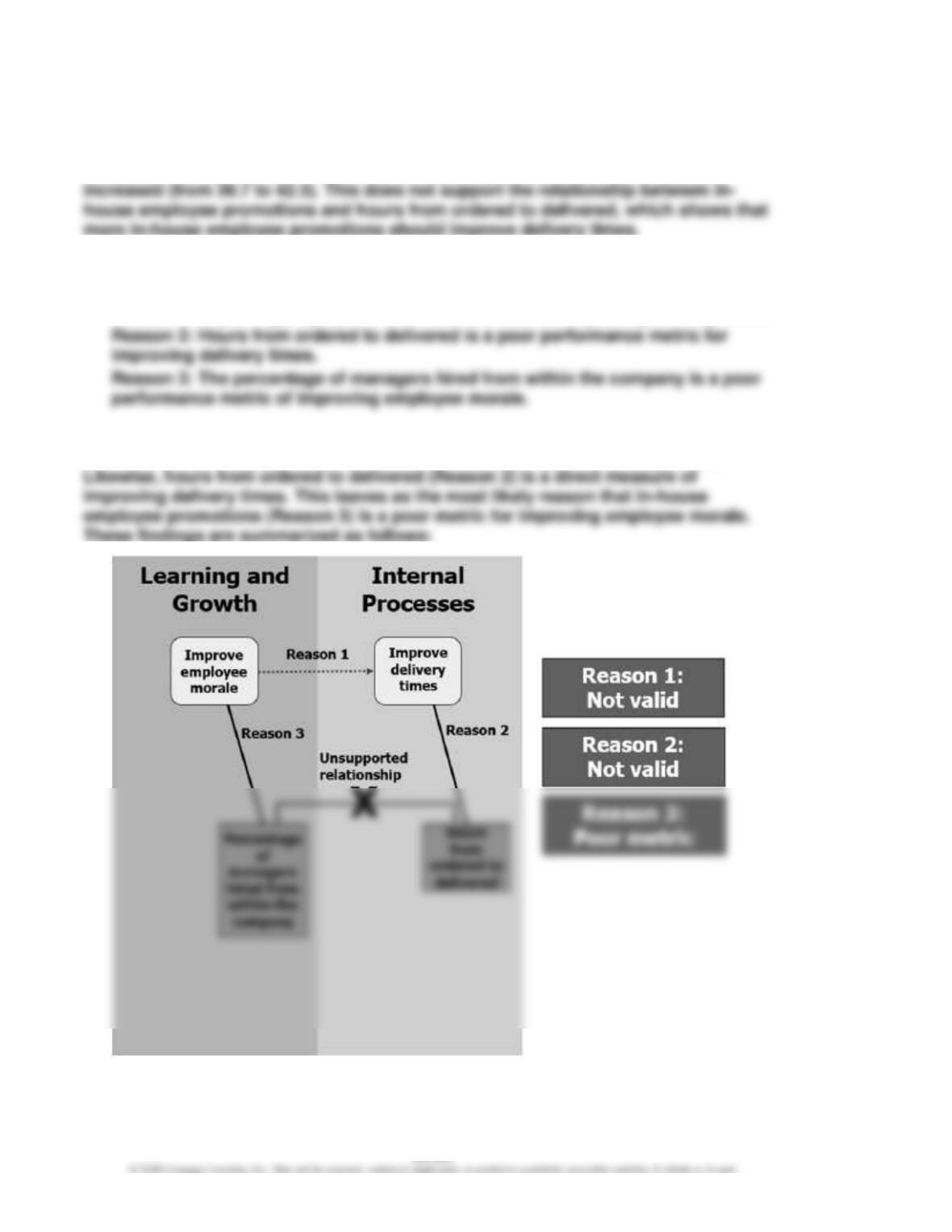
1. The statistics show that while the percentage of management hired from within the
company increased (from 7% to 10%), the hours from ordered to delivered also
2. Three possible reasons for the unsupported relationship between in-house
employee promotions and hours from ordered to delivered are the following:
Reason 1: Improving employee morale has no effect on improving delivery times.
3. Reasons 1 and 2 do not seem logical. Higher employee morale (Reason 1) should
lead to improved employee performance, and thereby improved delivery times.
CHAPTER 28 (FIN MAN); CHAPTER 14 (MAN) The Balanced Scorecard and Corporate Social Responsibility
MAKE A DECISION
MAD 28–1 (FIN MAN); MAD 14–1 (MAN)
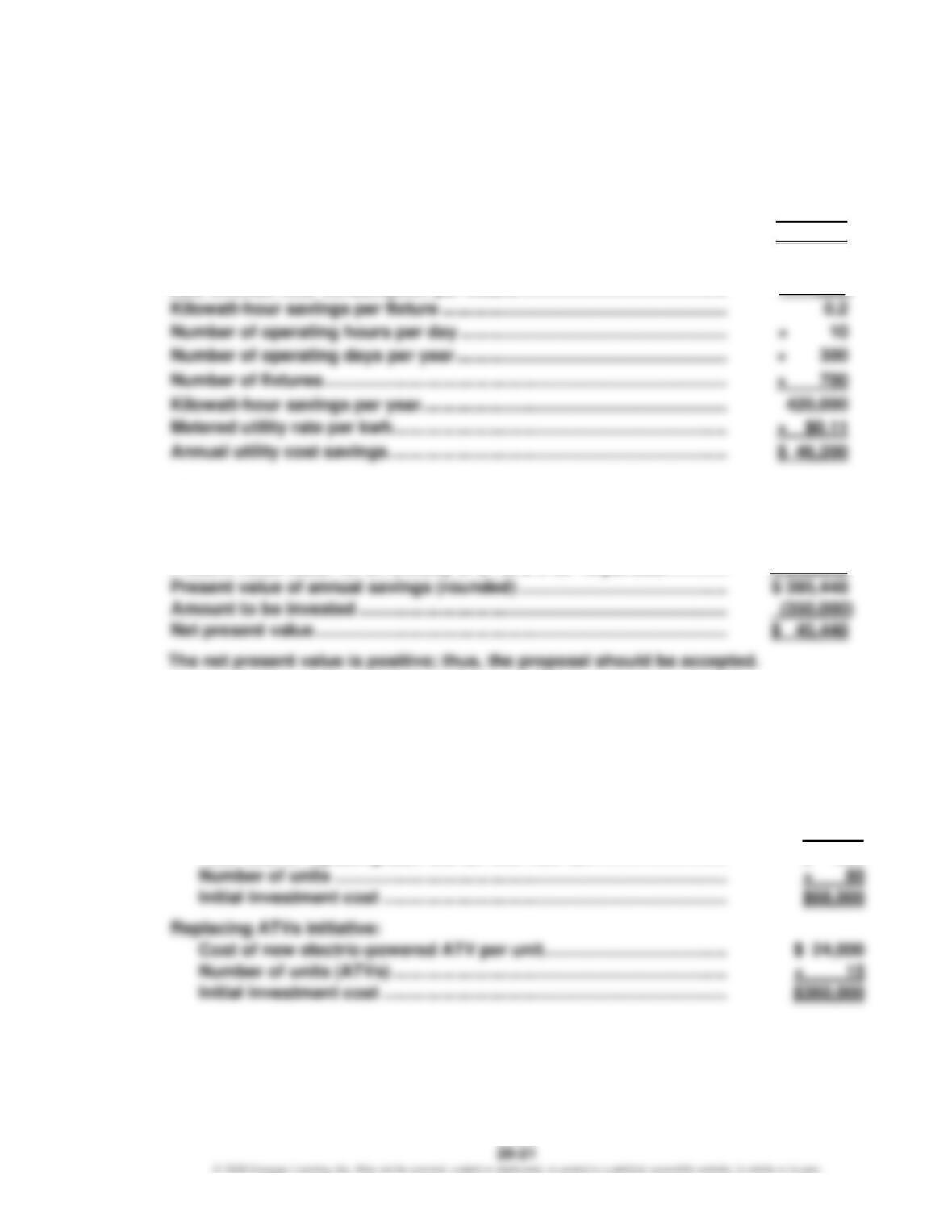
a.
Lifetime cost to replace each HID fixture with LED ………………………….
$ 500
Number of fixtures ………………………………………………………………………..
× 700
Investment cost ……………………………………………………………………………
$350,000
b.
HID kilowatt-hour consumption per fixture ……………………………………..
0.5*
LED kilowatt-hour consumption per fixture …………………………………….
*
500 watts ÷ 1,000 watts = 0.5 kilowatt
**
300 watts ÷ 1,000 watts = 0.3 kilowatt
c.
Annual net cash flow savings from installing LED …………………………..
$ 46,200
Present value factor for an annuity of $1 at 8% for 15 periods ………….
Present value of annual savings (rounded) …………………………………….
Amount to be invested ………………………………………………………………….
(350,000)
Net present value ………………………………………………………………………….
MAD 28–2 (FIN MAN); MAD 14–2 (MAN)
a. Both CSR initiatives best fit under the internal processes performance perspective.
b.
Replacing old fans initiative:
Cost of each new fan ……………………………………………………………….
$ 750
Cost of replacing each old fan with new fan ………………………………
100
Number of units ………………………………………………………………………
Initial investment cost ……………………………………………………………..
Replacing ATVs initiative:
Cost of new electric-powered ATV per unit ………………………………..
Number of units (ATVs) ……………………………………………………………
Total cost of replacing each old fan with new fan ………………………
$ 850
CHAPTER 28 (FIN MAN); CHAPTER 14 (MAN) The Balanced Scorecard and Corporate Social Responsibility
MAD 28–2 (FIN MAN); MAD 14–2 (MAN) (Concluded)
c.
Replacing old fans initiative:
Old fan kilowatt-hour consumption per unit……………………………….
0.8*
Kilowatt-hour savings per unit ………………………………………………….
Number of operating hours per day …………………………………………..
Number of operating days per year …………………………………………..
Number of units ……………………………………………………………………….
Kilowatt-hour savings per year …………………………………………………
Metered utility rate per kwh ………………………………………………………
Annual utility cost savings ……………………………………………………….
New fan kilowatt-hour consumption per unit ……………………………..
(0.5)**
* 800 watts ÷ 1,000 watts = 0.8 kilowatt
** 500 watts ÷ 1,000 watts = 0.5 kilowatt
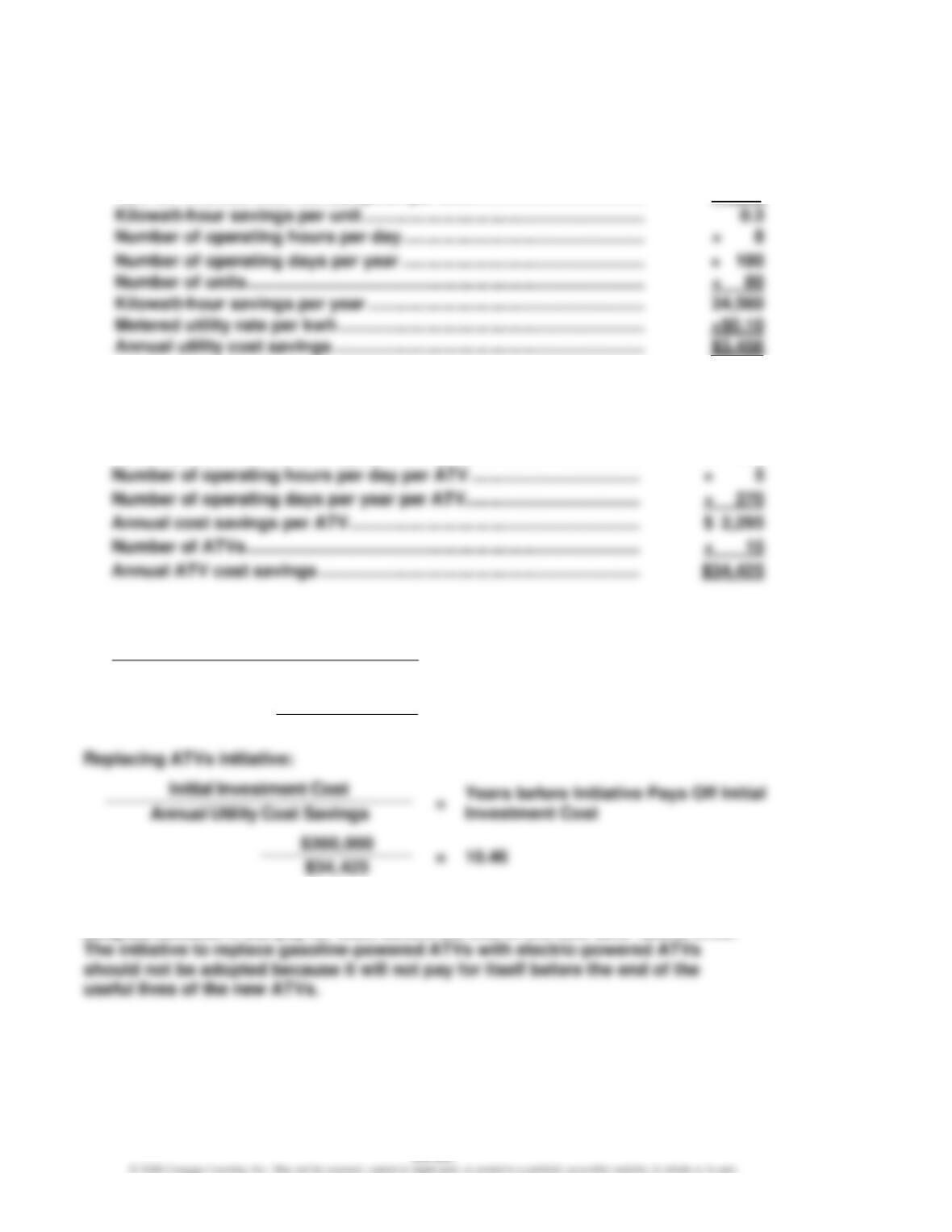
Replacing ATVs initiative:
Fuel, repair, other cost savings per ATV per hour of use ……………
$ 1.70
Number of operating days per year per ATV ………………………………
Annual cost savings per ATV ……………………………………………………
Number of ATVs ………………………………………………………………………
d. Replacing old fans initiative:
Initial Investment Cost
Annual Utility Cost Savings
=
Years before Initiative Pays Off Initial
Investment Cost
$68,000
$3,456
=
19.68
Years before Initiative Pays Off Initial
10.46
e. The initiative to replace old fans with new energy-efficient fans should be
CHAPTER 28 (FIN MAN); CHAPTER 14 (MAN) The Balanced Scorecard and Corporate Social Responsibility
MAD 28–3 (FIN MAN); MAD 14–3 (MAN)
a. Recycling and reuse of production materials:
Variable savings
$ 0.15
per lb. of recycled material
Recycled material required to pay back initial cost: $5,000 ÷ $0.05 = 100,000 lbs.
The company will make up its added initial cost by the time it recycles 100,000 lbs.
of materials, and then every pound recycled after that will result in net savings of
$0.05 per lb. Based on this analysis, and because it can carry on this activity
indefinitely, Green Manufacturing should implement this activity because it will lead
to savings in the long run.
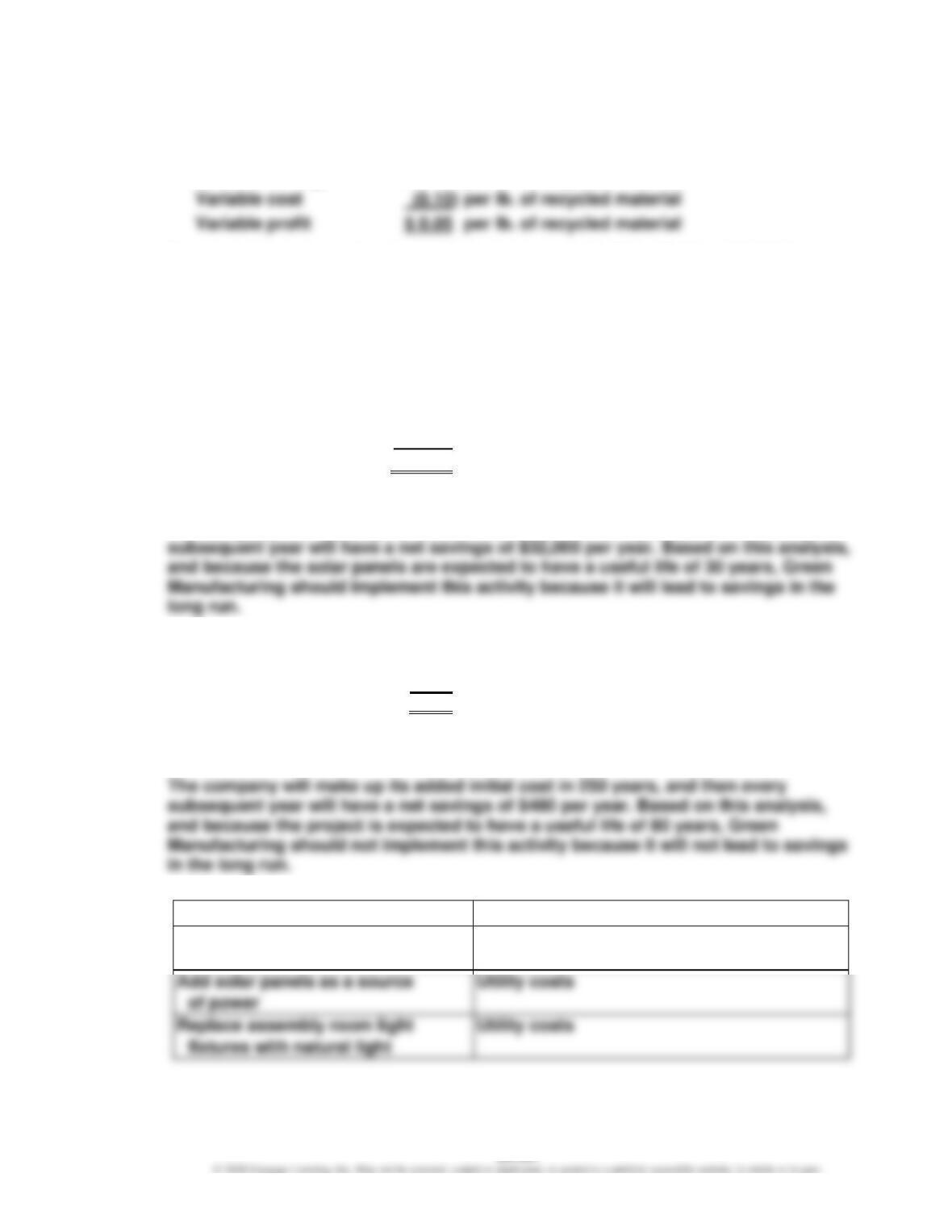
Adding solar panels as a source of power:
Variable savings
$33,000
per year
Variable cost
(1,000)
per year
Variable profit
$32,000
per year
Years until initial cost is paid back: $700,000 ÷ $32,000 = 21.875 years
The company will make up its added initial cost in 21.875 years, and then every
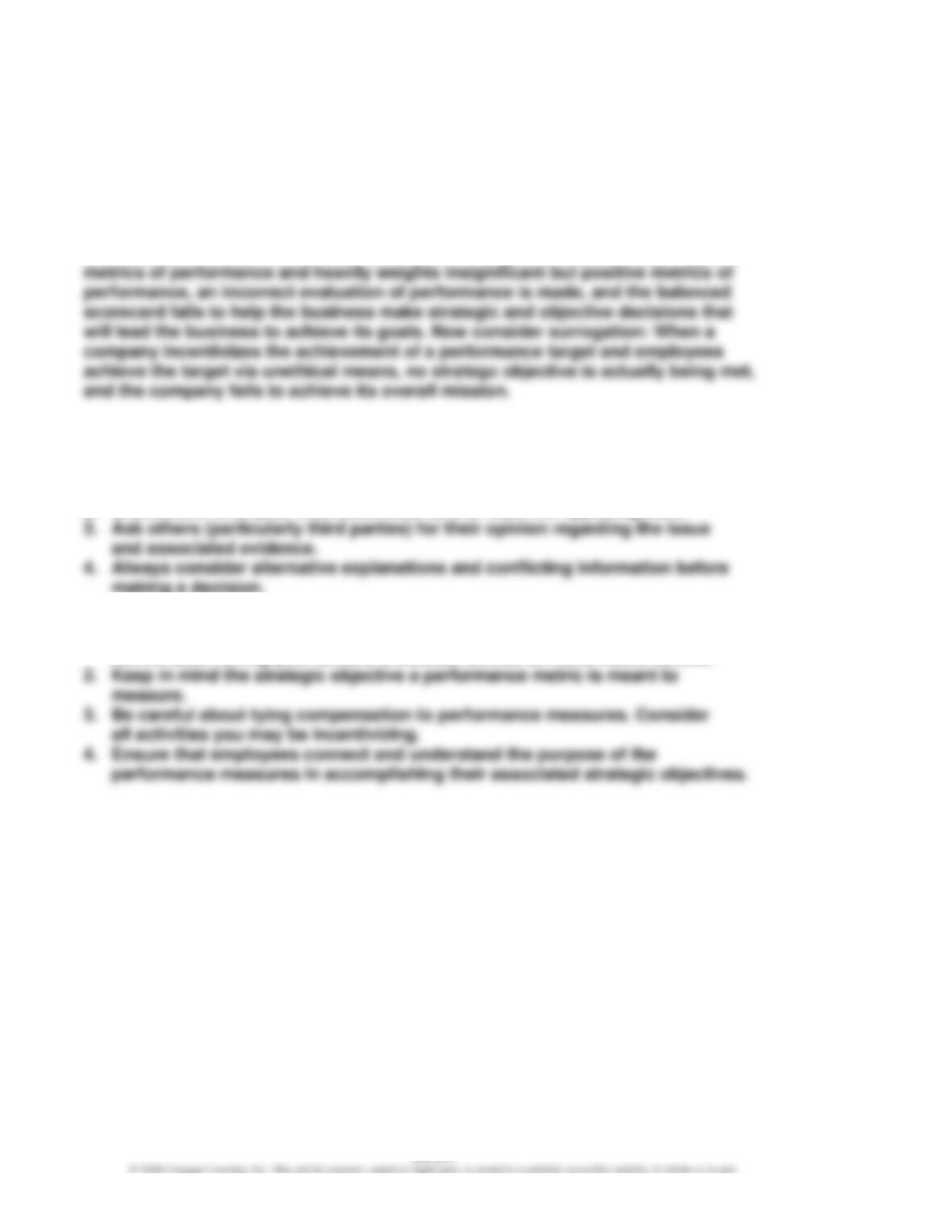
Replacing assembly room light fixtures with natural light:
Variable savings
$ 220
per month
Variable cost
(180)
per month
Variable profit
$ 40
per month
Years until initial cost is paid back: $120,000 ÷ $40 = 3,000 months
3,000 ÷ 12 = 250 years
b.
CSR Activity
Performance Metric
Recycle and reuse production
Pounds of material recycled
materials
Add solar panels as a source
Utility costs
Replace assembly room light
Utility costs
CHAPTER 28 (FIN MAN); CHAPTER 14 (MAN) The Balanced Scorecard and Corporate Social Responsibility
TAKE IT FURTHER
TIF 28–1 (FIN MAN); TIF 14–1 (MAN)
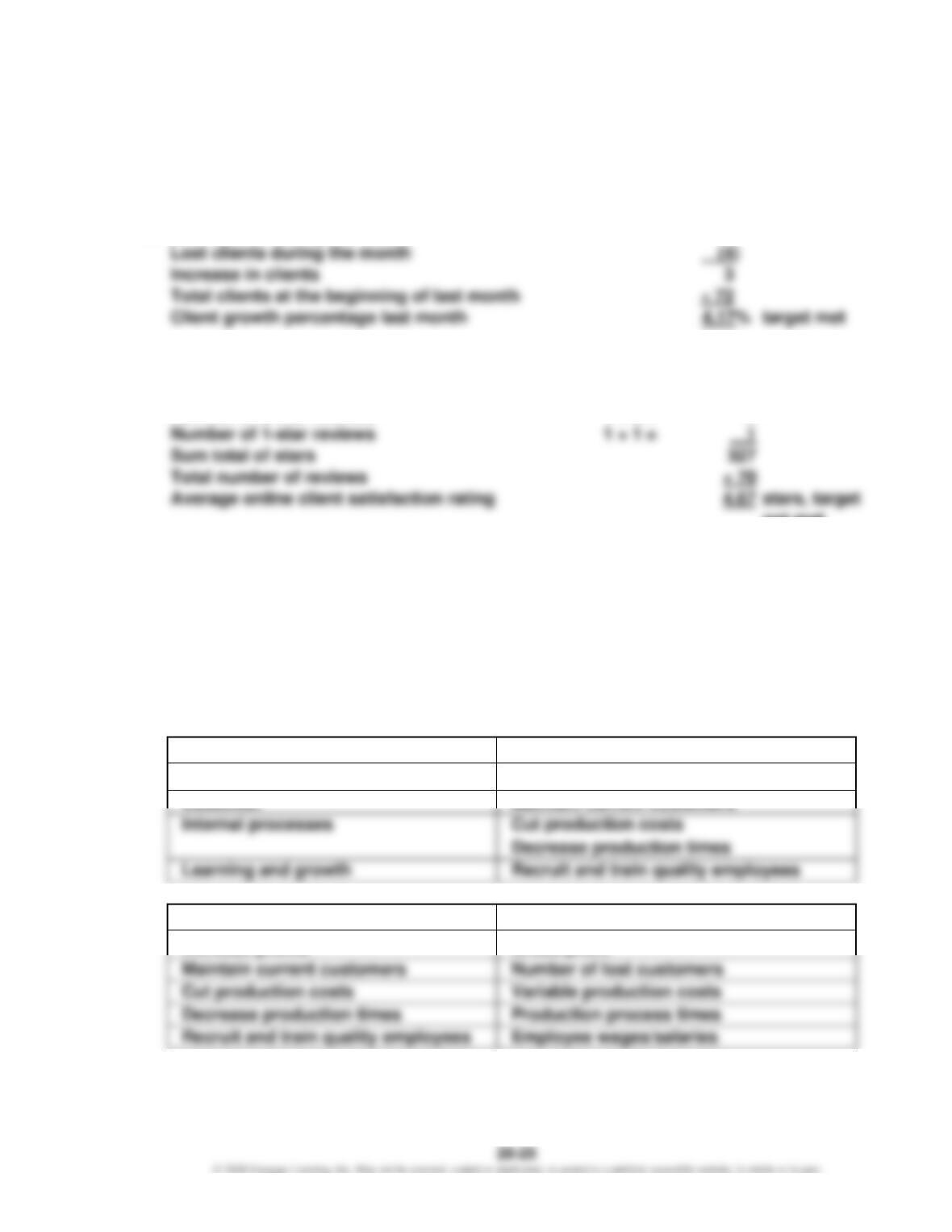
a. The motivated reasoning and surrogation biases can both have large negative
effects on the use of the balanced scorecard, even to the point that the balanced
scorecard becomes useless. Consider motivated reasoning: When a manager
motivated to evaluate his or her product positively ignores substantially negative
b. Some possible suggestions for avoiding or mitigating the motivated reasoning
bias:
1. Be aware of the tendency and incentive you have to be motivated to see
things favorably for yourself.
making a decision.
Some possible suggestions for avoiding or mitigating the surrogation bias:
1. Always act ethically and honestly. Ask yourself if you would feel
CHAPTER 28 (FIN MAN); CHAPTER 14 (MAN) The Balanced Scorecard and Corporate Social Responsibility
TIF 28–2 (FIN MAN); TIF 14–2 (MAN)
a. The online client review and client growth percentage metrics likely relate to a
strategic objective to satisfy and increase clients. The market share and profit
margin metrics likely relate to a strategic objective to increase profits.
b.
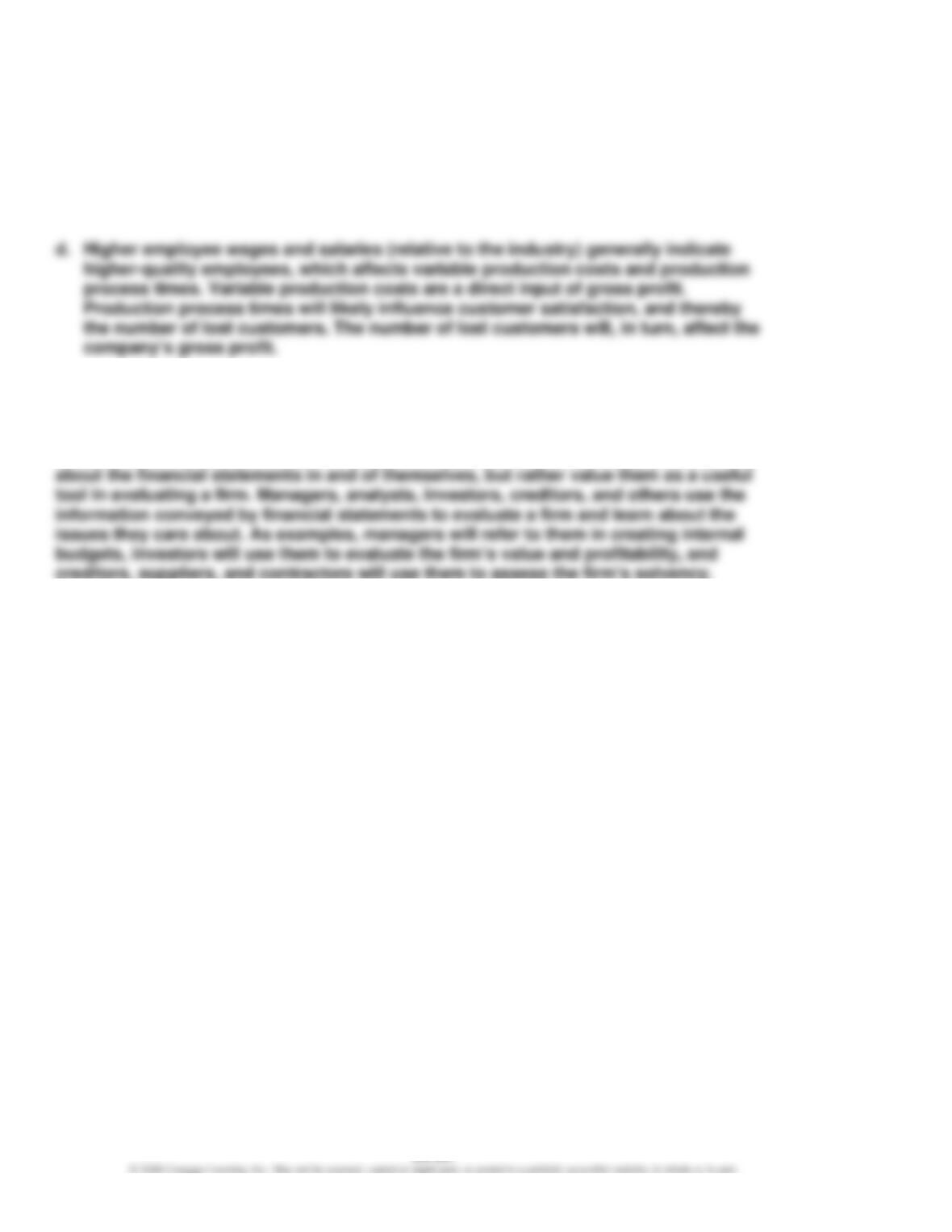
New clients during the month
7
Lost clients during the month
Increase in clients
3
Total clients at the beginning of last month
Client growth percentage last month
target met
c.
Number of 5-star reviews
55 × 5 =
275
Number of 4-star reviews
10 × 4 =
40
Number of 3-star reviews
3 × 3 =
9
Number of 1-star reviews
1 × 1 =
Sum total of stars
327
Total number of reviews
Number of 2-star reviews
1 × 2 =
2
not met
d. Possible strategic initiatives for the strategic objective to satisfy clients:
• Implement additional training course on serving and interacting with clients
• Invite clients to provide additional feedback through a brief online survey
• Have the company owner send a personal apology to any clients providing
a review of 2 stars or less, and offer them some kind of compensation; also
ask for their feedback regarding what caused them dissatisfaction
TIF 28–3 (FIN MAN); TIF 14–3 (MAN)
a.
Performance Perspective
Possible Strategic Objective(s)
Financial
Increase profits
Customer
Maintain current customers
b.
Possible Strategic Objective
Possible Performance Metric(s)
Increase profits
Gross profit
Maintain current customers
Number of lost customers
Cut production costs
Variable production costs
Decrease production times
Production process times
Recruit and train quality employees
Employee wages/salaries
CHAPTER 28 (FIN MAN); CHAPTER 14 (MAN) The Balanced Scorecard and Corporate Social Responsibility
TIF 28–3 (FIN MAN); TIF 14–3 (MAN) (Concluded)
c. High-quality employees would be expected to decrease production times and cut
production costs. Lower production costs would directly increase profits.
Decreased production times would likely satisfy and maintain current customers,
which would also contribute to increased profits.
TIF 28–4 (FIN MAN); TIF 14–4 (MAN)
People care about what is on the financial statements because of what these
statements communicate about the health and success of the firm. People do not care
CHAPTER 28 (FIN MAN); CHAPTER 14 (MAN) The Balanced Scorecard and Corporate Social Responsibility
CERTIFIED MANAGEMENT ACCOUNTANT (CMA®)
EXAMINATION QUESTIONS (ADAPTED)
1. d. The balanced scorecard is not based on scientific management theory but is a
flexible means of translating a company’s strategy into a comprehensive set
of performance measures.
2. a. The four perspectives of the balanced scorecard include options b, c, and d
plus the customer perspective. Competitor business strategies are not
included.