Study
Guide
14
Name Perfect
Score
Your
Score
Identifying Accounting Terms 22 Pts.
Analyzing Accounts Receivable and Notes Receivable 20 Pts.
Journalizing Accounts Receivable and Notes Receivable Transactions 21 Pts.
Total 63 Pts.
Part One—Identifying Accounting Terms
Directions: Select the one term in Column I that best fits each definition in
Column II. Print the letter identifying your choice in the Answers column.
Column I
A. aging of accounts
receivable
B. allowance method
C. book value
G. interest income
H. interest rate
I. maker of a note
J. maturity date
Column II
1. Accounts receivable that cannot be collected. (p. 412)
2. Crediting the estimated value of uncollectible accounts to
a contra account. (p. 412)
3. The difference between an asset’s account balance and its
related contra account balance. (p. 412)
7. A method used to estimate uncollectible accounts receivable
that uses an analysis of accounts receivable to estimate the
amount that will be uncollectible. (p. 413)
8. Analyzing accounts receivable according to when they are
due. (p. 414)
9. Canceling the balance of a customer account because the
customer does not pay. (p. 418)
10. Recording uncollectible accounts expense only when an
amount is actually known to be uncollectible. (p. 419)
Answers
1.
2.
3.
7.
8.
9.
10.
U
B
C
P
A
V
E
P. percent of accounts
receivable method
Q. percent of sales method
R. principal
16. The original amount of a note, sometimes referred to as the
face amount. (p. 425)
17. The percentage of the principal that is due for the use of
the funds secured by a note. (p. 425)
18. The date on which the principal of a note is due to be
repaid. (p. 425)
16.
17.
18.
Answers
Column I Column II
R
H
J
Part Two—Analyzing Accounts Receivable and Notes Receivable
Directions: Place a T for True or an F for False in the Answers column to show whether each
of the following statements is true or false.
1. The expense of an uncollectible account should be recorded in the accounting period that
the account becomes uncollectible. (p. 412)
2. The account, Allowance for Uncollectible Accounts, has a normal credit balance. (p. 412)
3. A business usually knows at the end of the fiscal year which customer accounts will become
uncollectible. (p. 412)
8. The percent of each age group of an accounts receivable aging that is expected to become
uncollectible is determined by the Securities and Exchange Commission. (p. 414)
9. The adjusting entry for uncollectible accounts does not affect the balance of the Accounts
Receivable account. (p. 415)
10. A business having a $300.00 credit balance in Allowance for Uncollectible Accounts and
estimating its uncollectible accounts to be $4,000.00 would record a $4,300.00 credit to
Allowance for Uncollectible Accounts. (p. 415)
11. When an account is written off as uncollectible, the business sends the customer a credit
memo. (p. 418)
12. When a customer account is written off under the allowance method, book value of accounts
receivable decreases. (p. 418)
13. The direct write-off method of accounting for uncollectible accounts does not comply with
GAAP. (p. 419)
14. When a previously written-off account is collected, Accounts Receivable is both debited
and credited for the amount collected. (pp. 421–422)
15. A note provides the business with legal evidence of the debt should it be necessary to go
to court to collect. (p. 426)
20. Interest income should not be recorded on a dishonored note receivable. (p. 429)
Answers
1.
2.
3.
8.
9.
10.
11.
12.
13.
14.
15.
F
T
F
F
T
F
F
F
T
T
T
Part Three—Journalizing Accounts Receivable and Notes Receivable
Transactions
Directions: In Answers Column l, print the abbreviation for the journal in which each transaction
is to be recorded. In Answers Columns 2 and 3, print the letters identifying the accounts to be
debited and credited for each transaction.
G—General journal CR—Cash receipts journal
Answers
123
Account Titles Transactions Journal Debit Credit
A. Accounts Receivable 1-2-3. Recorded adjusting entry for
uncollectible accounts expense. (p. 415)
1. 2. 3.
B. Allowance for
Uncollectible
Accounts
4-5-6. Wrote off Sanderson Company’s
past-due account as uncollectible. (p. 418)
4. 5. 6.
C. Cash Received cash in full payment of
Sanderson Company’s account, previously
written off as uncollectible. (Record two
entries, 7-8-9 and 10-11-12, below.)
G
G
G
B
B
A, F
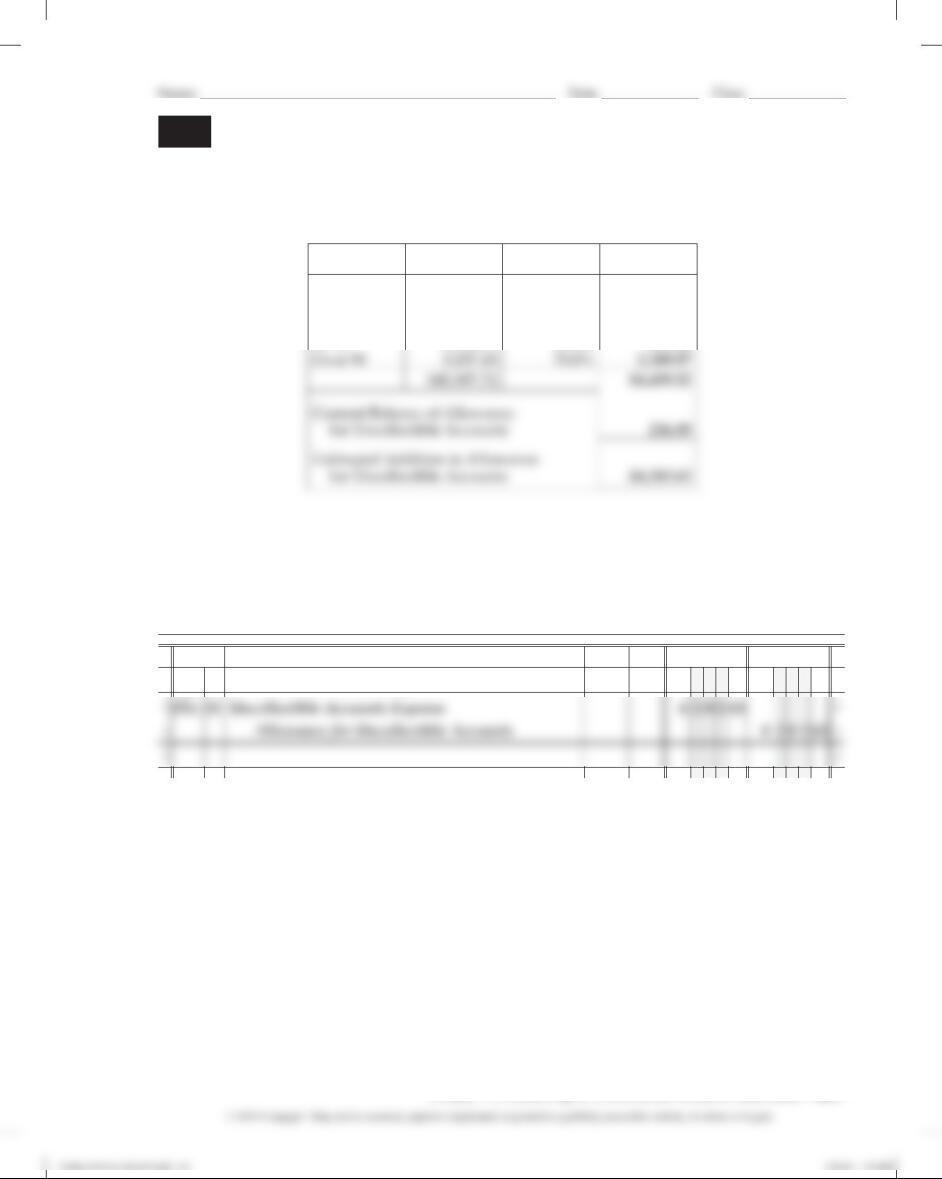
14-1 WORK TOGETHER, p. 417
Journalizing the adjusting entry for Allowance for Uncollectible Accounts
1.
Age Group Amount Percent Uncollectible
Current $16,485.18 2.0%
1–30 12,489.05 4.0%
31–60 6,958.18 8.0%
2.
GENERAL JOURNAL PAGE 13
DATE ACCOUNT TITLE DOC.
NO.
POST.
REF. DEBIT CREDIT
1 1
$ 329.70
499.56
556.65
Adjusting Entries
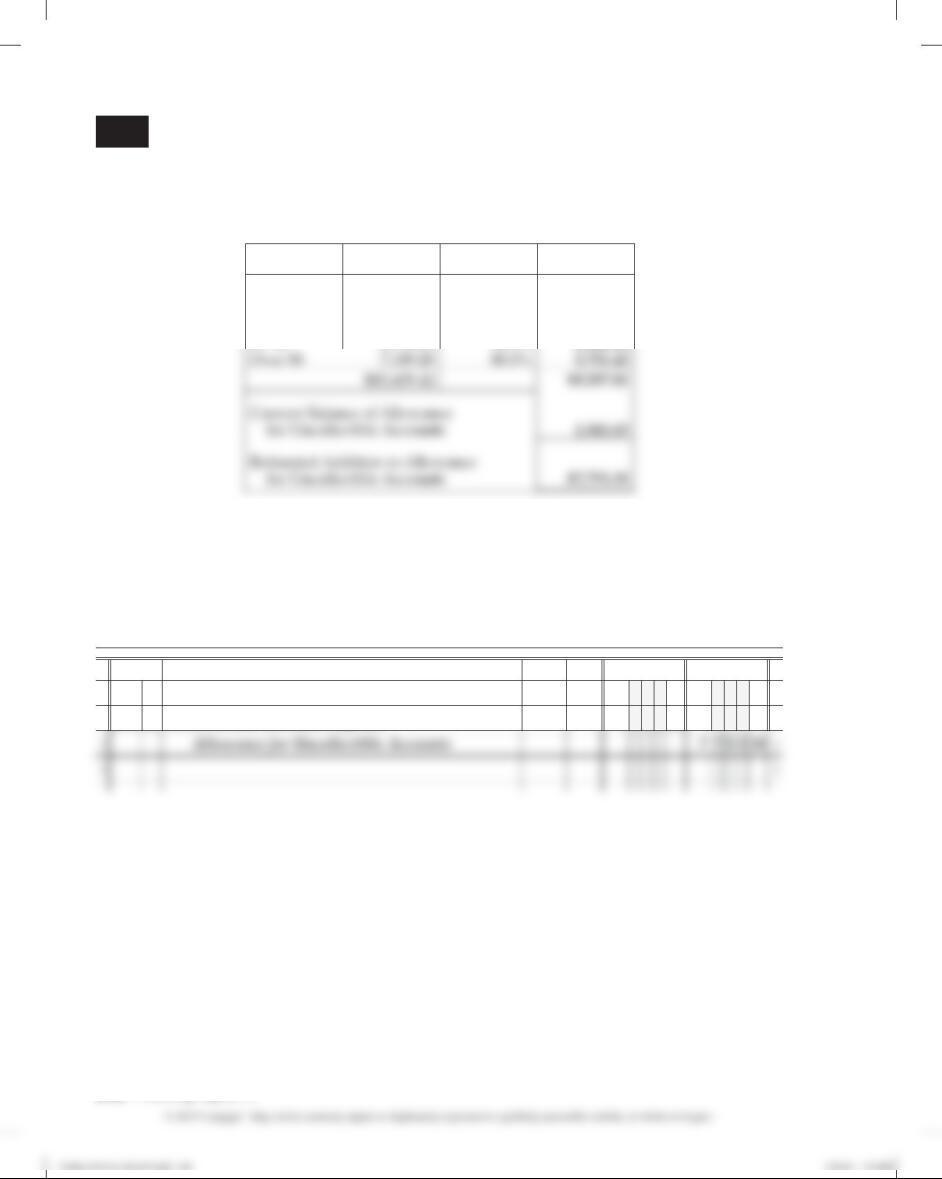
14-1 ON YOUR OWN, p. 417
Journalizing the adjusting entry for Allowance for Uncollectible Accounts
1.
Age Group Amount Percent Uncollectible
Current $25,114.16 1.0%
1–30 32,458.15 2.5%
31–60 12,489.58 7.5%
2.
GENERAL JOURNAL PAGE 13
DATE ACCOUNT TITLE DOC.
NO.
POST.
REF. DEBIT CREDIT
1 1
2 2
$ 251.14
811.45
936.72
Adjusting Entries
20–
Dec. 31 Uncollectible Accounts Expense 7 7 5 5 38
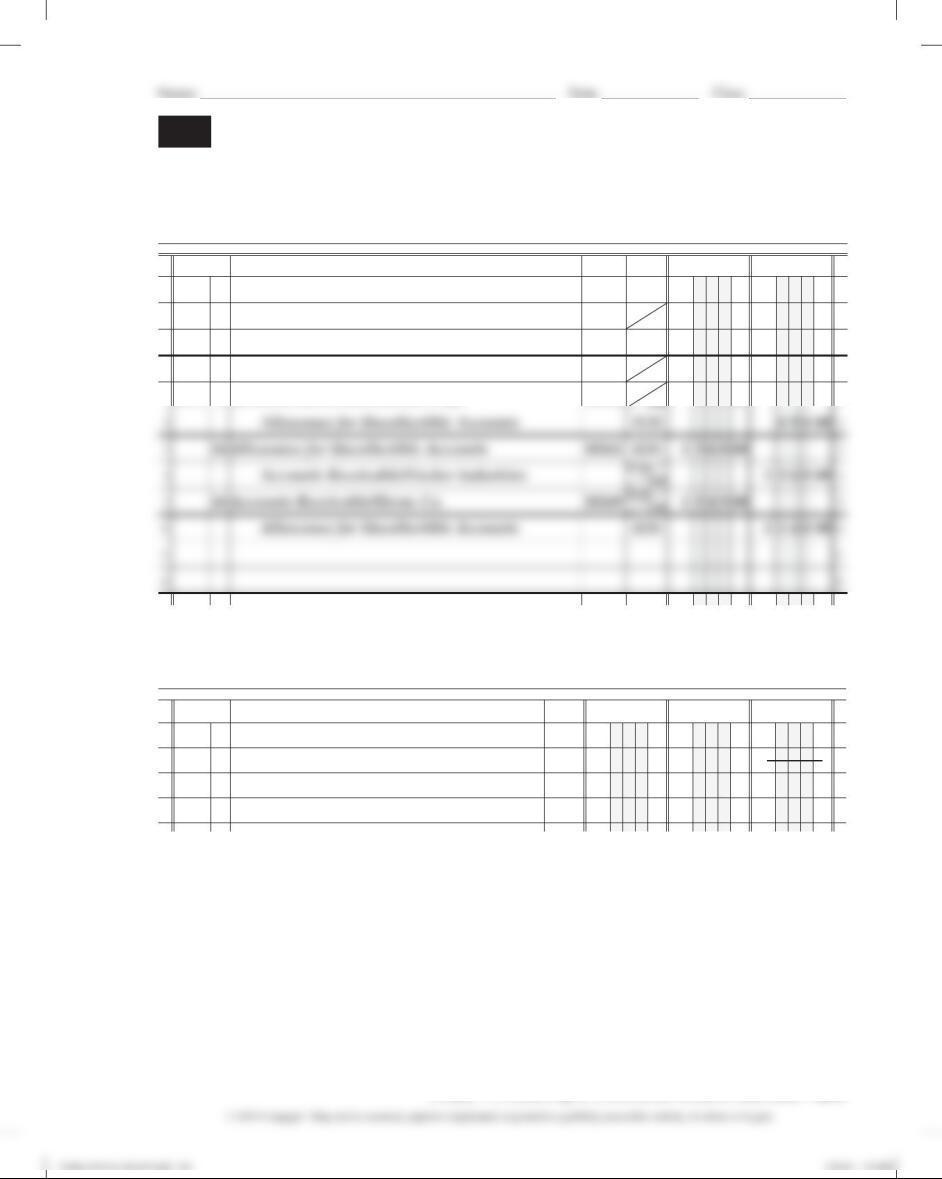
14-2 WORK TOGETHER, p. 424
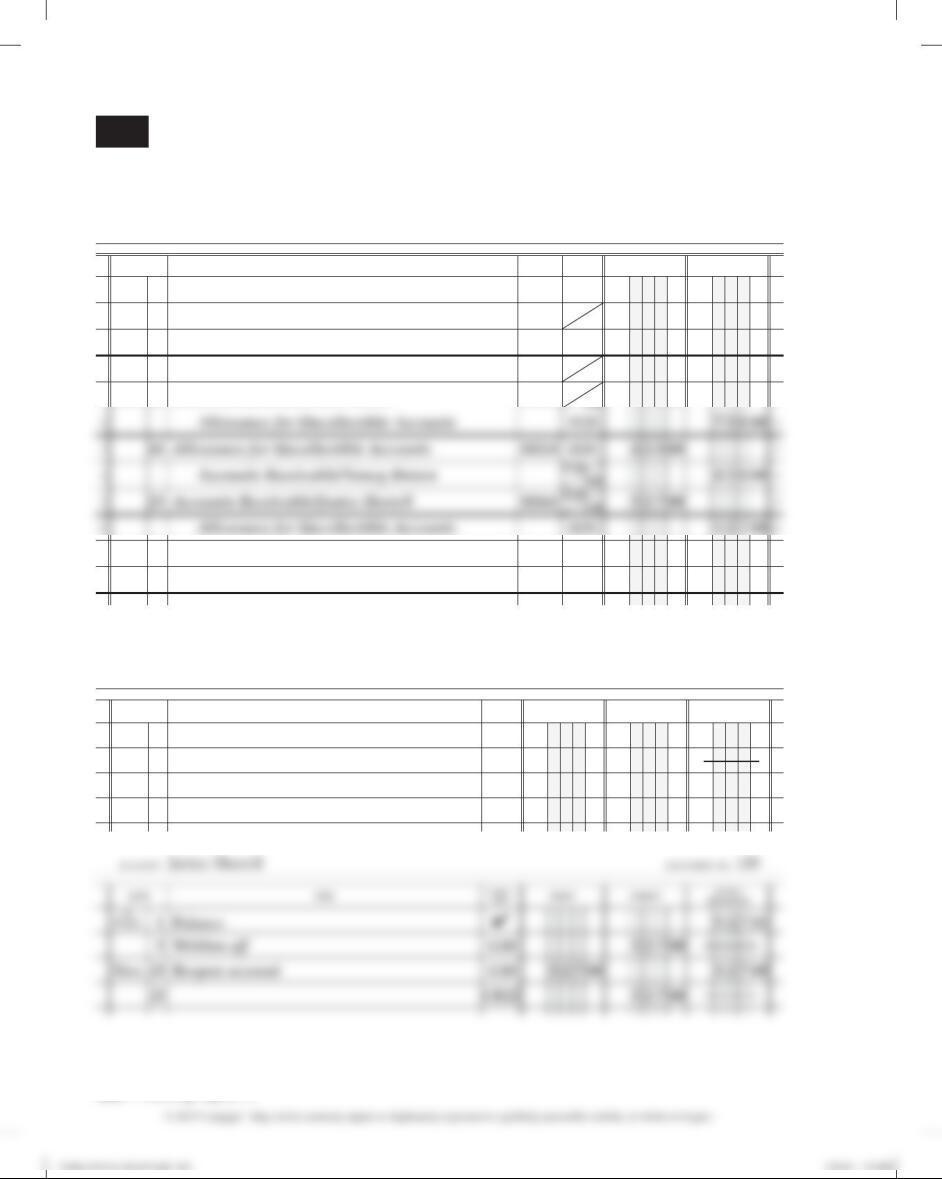
Recording entries related to uncollectible accounts receivable
1., 2.
GENERAL JOURNAL PAGE 15
DATE ACCOUNT TITLE DOC.
NO.
POST.
REF. DEBIT CREDIT
1 1
2 2
3 3
4 4
5 5
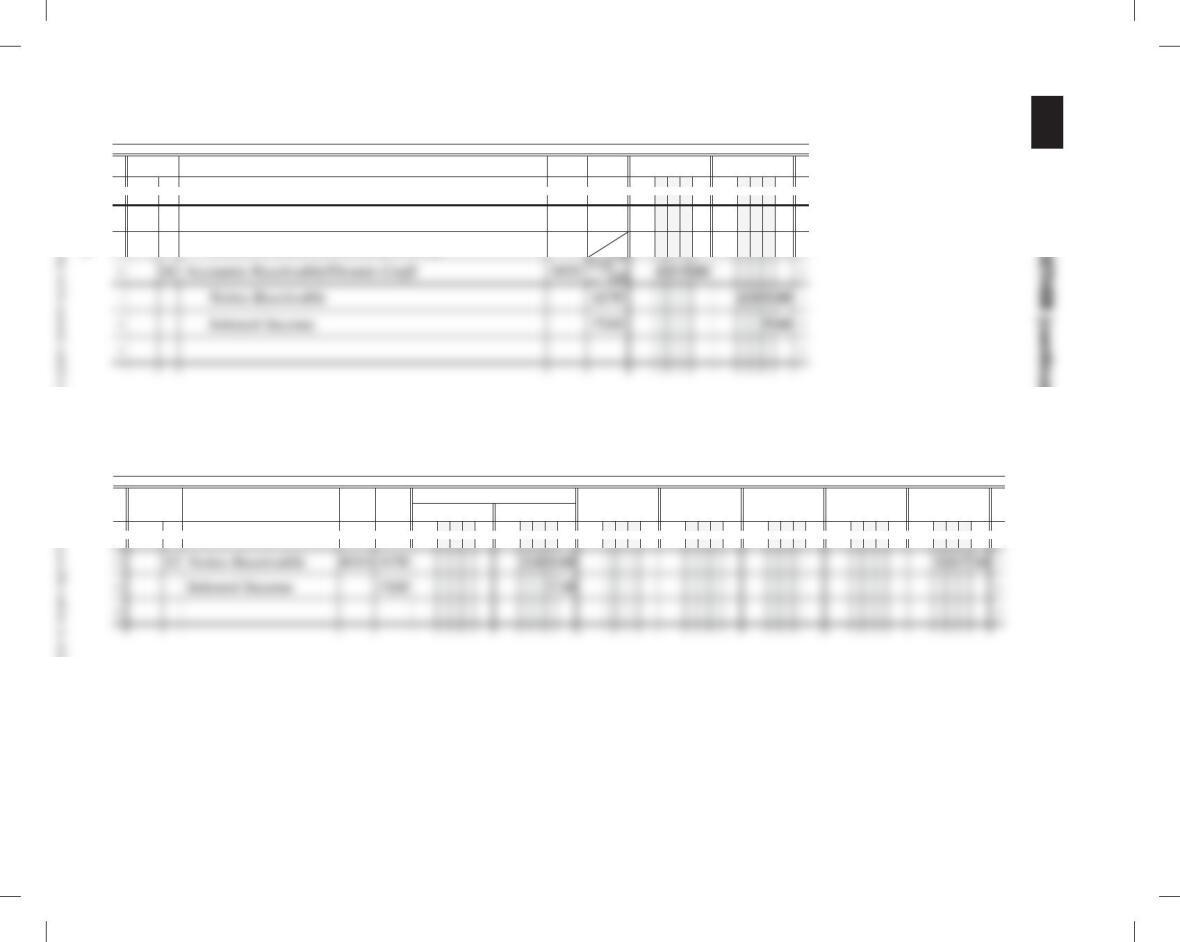
1. ACCOUNTS RECEIVABLE LEDGER
ACCOUNT Fischer Industries CUSTOMER NO. 110
DATE ITEM POST.
REF. DEBIT CREDIT DEBIT
BALANCE
20–
Nov. 1 Balance ✔1 3 6 0 00
20–
Nov. 4Allowance for Uncollectible Accounts M145 1135 4 9 4 00
Accounts Receivable/Mellon Corp. 1130
130 4 9 4 00
15 Allowance for Uncollectible Accounts M147 1135 1 5 4 8 00
Accounts Receivable/Horne Co. 1130
120 1 5 4 8 00
Dec. 8 Accounts Receivable/Mellon Corp. M158 1130
Dec. 14 Written off G15 1 3 6 0 00
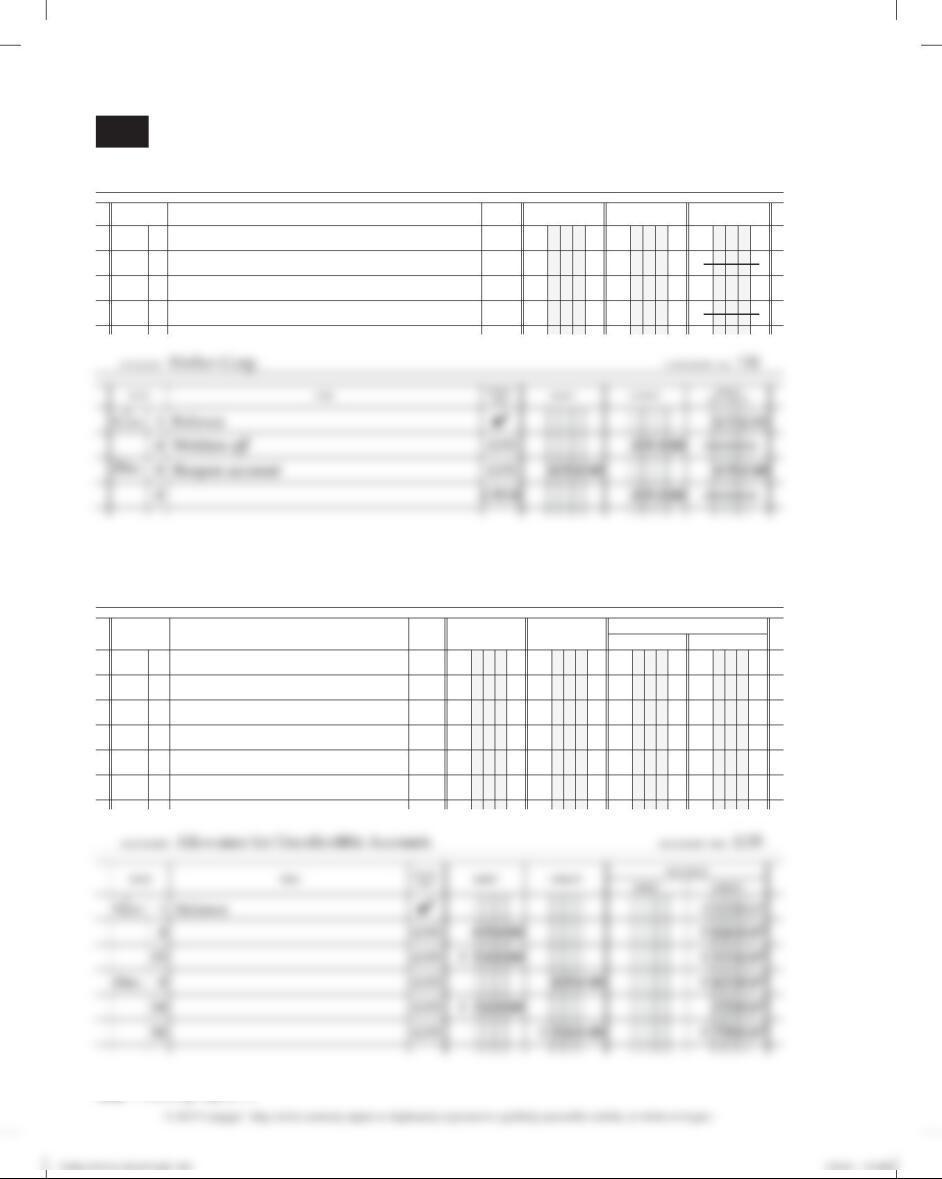
14-2 WORK TOGETHER (continued)
ACCOUNT Horne Co. CUSTOMER NO. 120
DATE ITEM POST.
REF. DEBIT CREDIT DEBIT
BALANCE
20–
Nov. 1 Balance ✔1 5 4 8 00
2. GENERAL LEDGER
ACCOUNT Accounts Receivable ACCOUNT NO. 1130
DATE ITEM POST.
REF. DEBIT CREDIT
BALANCE
DEBIT CREDIT
20–
Nov. 1 Balance ✔35 1 4 8 85
4 G15 4 9 4 00 34 6 5 4 85
15 G15 1 5 4 8 00 33 1 0 6 85
Dec. 8 G15 4 9 4 00 33 6 0 0 85
14 G15 1 3 6 0 00 32 2 4 0 85
16 G15 1 5 4 8 00 33 7 8 8 85
15 Written off G15 1 5 4 8 00
Dec. 16 Reopen account G15 1 5 4 8 00 1 5 4 8 00
16 CR24 1 5 4 8 00
Name Date Class
14-2 WORK TOGETHER (concluded)
1234567
DATE ACCOUNT TITLE DOC.
NO.
POST.
REF.
GENERAL ACCOUNTS
RECEIVABLE
CREDIT
SALES
CREDIT
CASH
DEBIT
DEBIT CREDIT
20–
14-2 ON YOUR OWN, p. 424
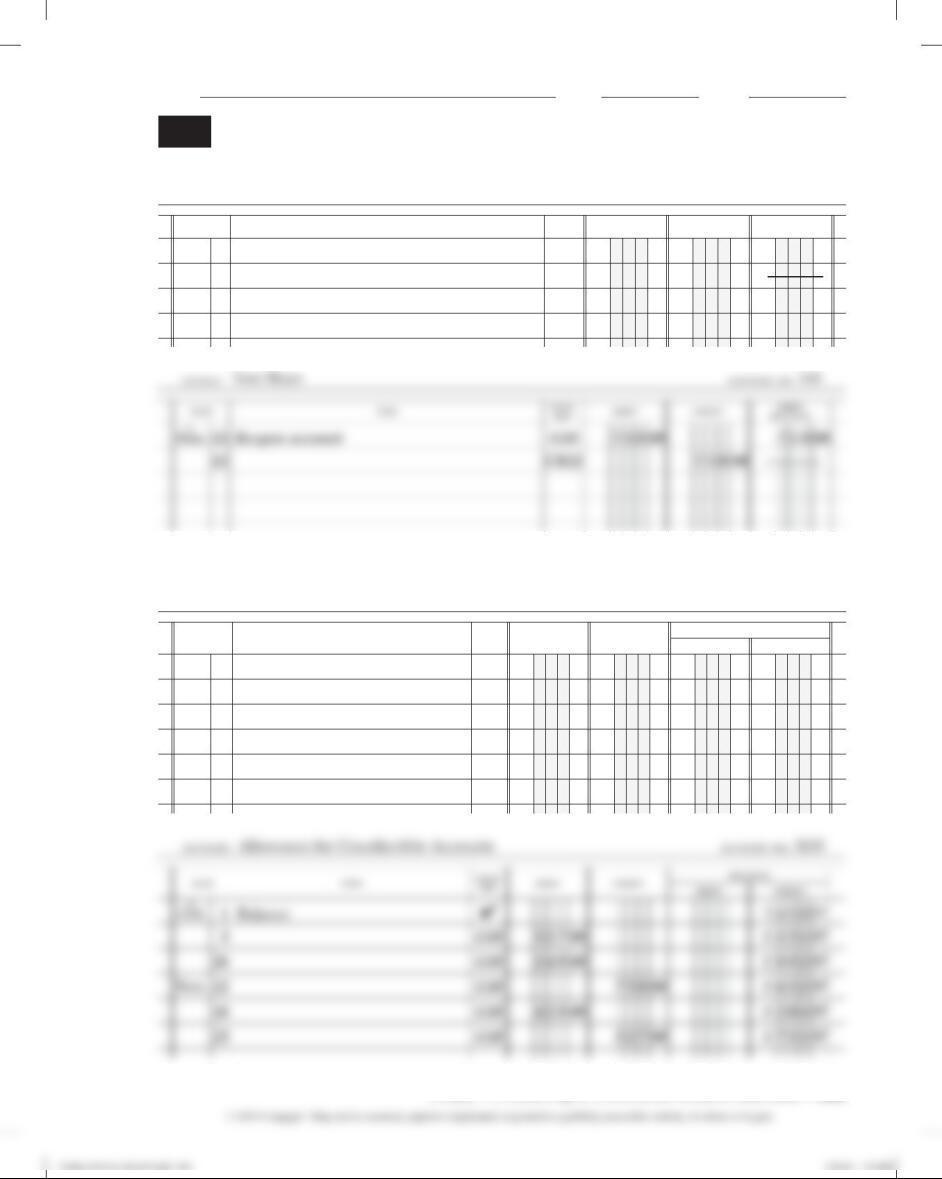
Recording entries related to uncollectible accounts receivable
1., 2.
GENERAL JOURNAL PAGE 10
DATE ACCOUNT TITLE DOC.
NO.
POST.
REF. DEBIT CREDIT
1 1
2 2
3 3
4 4
5 5
11 11
12 12
1. ACCOUNTS RECEIVABLE LEDGER
ACCOUNT Nancy Brown CUSTOMER NO. 110
DATE ITEM POST.
REF. DEBIT CREDIT DEBIT
BALANCE
20–
Oct. 1 Balance ✔4 2 8 00
20–
Oct. 5Allowance for Uncollectible Accounts M145 1135 5 2 7 00
Accounts Receivable/Janice Harrell 1130
120 5 2 7 00
26 Allowance for Uncollectible Accounts M147 1135 2 4 9 00
Accounts Receivable/Daniel Pruitt 1130
130 2 4 9 00
Nov. 12 Accounts Receivable/Tom Sloan M151 1130
Nov. 16 Written off G10 4 2 8 00
Name Date Class
14-2 ON YOUR OWN (continued)
ACCOUNT Daniel Pruitt CUSTOMER NO. 130
DATE ITEM POST.
REF. DEBIT CREDIT DEBIT
BALANCE
20–
Oct. 1 Balance ✔2 4 9 00
2. GENERAL LEDGER
ACCOUNT Accounts Receivable ACCOUNT NO. 1130
DATE ITEM POST.
REF. DEBIT CREDIT
BALANCE
DEBIT CREDIT
20–
Oct. 1 Balance ✔19 4 8 2 58
26 Written off G10 2 4 9 00
5 G10 5 2 7 00 18 9 5 5 58
26 G10 2 4 9 00 18 7 0 6 58
Nov. 12 G10 7 5 0 00 19 4 5 6 58
16 G10 4 2 8 00 19 0 2 8 58
23 G10 5 2 7 00 19 5 5 5 58
404 • Working Papers
© 2019 Cengage®. May not be scanned, copied or duplicated, or posted to a publicly accessible website, in whole or in part.
14-2 ON YOUR OWN (concluded)
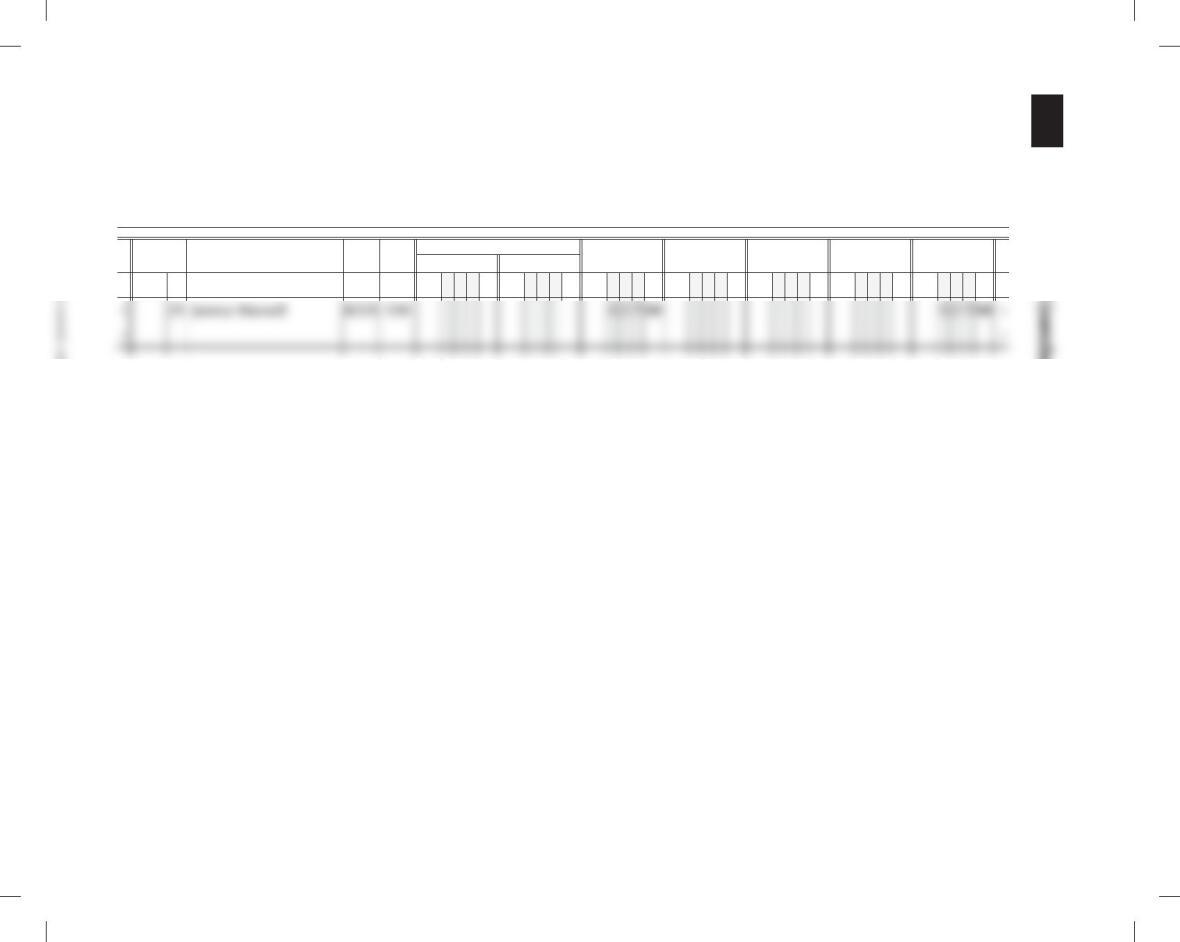
1., 2.
CASH RECEIPTS JOURNAL PAGE 22
1234567
DATE ACCOUNT TITLE DOC.
NO.
POST.
REF.
GENERAL ACCOUNTS
RECEIVABLE
CREDIT
SALES
CREDIT
SALES TAX
PAYABLE
CREDIT
SALES
DISCOUNT
DEBIT
CASH
DEBIT
DEBIT CREDIT
1 1
TE
20–
Nov. 12 Tom Sloan R213 140 7 5 0 00 7 5 0 00
23148_ch14_hr_393-422.indd 404 1/18/18 1:29 AM
Chapter 14 Accounting for Uncollectible Accounts Receivable • 405
Name Date Class
14-3 WORK TOGETHER, p. 430
Recording notes receivable
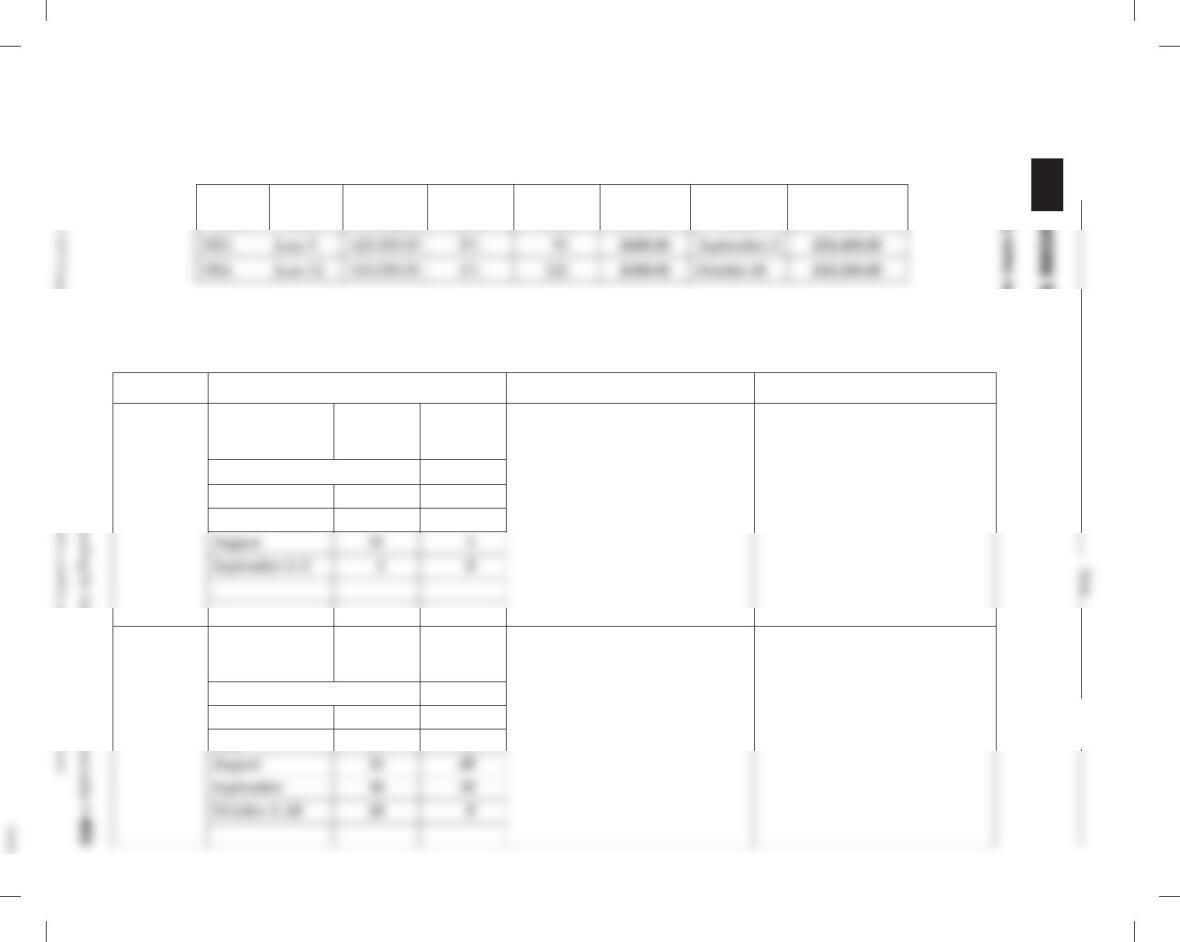
1.
Note Date Principal
Interest
Rate
Time in
Days Interest
Maturity
Date
Maturity
Value
Calculations:
Note Maturity Date Interest Maturity Value
NR3
Days from
the
Month
Days
Remaining
Term of the Note 90
NR4
Days from
the
Month
Days
Remaining
Term of the Note 120
$20,000.00 × 8% × 90/360 = $400.00 $20,000.00 + $400.00 = $20,400.00
June 5–30 25 65
July 31 34
$10,000.00 × 6% × 120/360 = $200.00 $10,000.00 + $200.00 = $10,200.00
June 12–30 18 102
July 31 71
23148_ch14_hr_393-422.indd 405 1/18/18 1:29 AM
406 • Working Papers
© 2019 Cengage®. May not be scanned, copied or duplicated, or posted to a publicly accessible website, in whole or in part.
14-3 WORK TOGETHER (continued)
2., 3.
GENERAL JOURNAL PAGE
DATE ACCOUNT TITLE DOC.
NO.
POST.
REF. DEBIT CREDIT
4 4
5 5
2., 3.
CASH RECEIPTS JOURNAL PAGE 8
1234567
DATE ACCOUNT TITLE DOC.
NO.
POST.
REF.
GENERAL ACCOUNTS
RECEIVABLE
CREDIT
SALES
CREDIT
SALES TAX
PAYABLE
CREDIT
SALES
DISCOUNT
DEBIT
CASH
DEBIT
DEBIT CREDIT
7
TE
5Notes Receivable NR5 1170 1 8 0 0 00
Accounts Receivable/Gary Kinney 1130
23148_ch14_hr_393-422.indd 406 1/18/18 1:29 AM
Name Date Class
14-3 WORK TOGETHER (concluded)
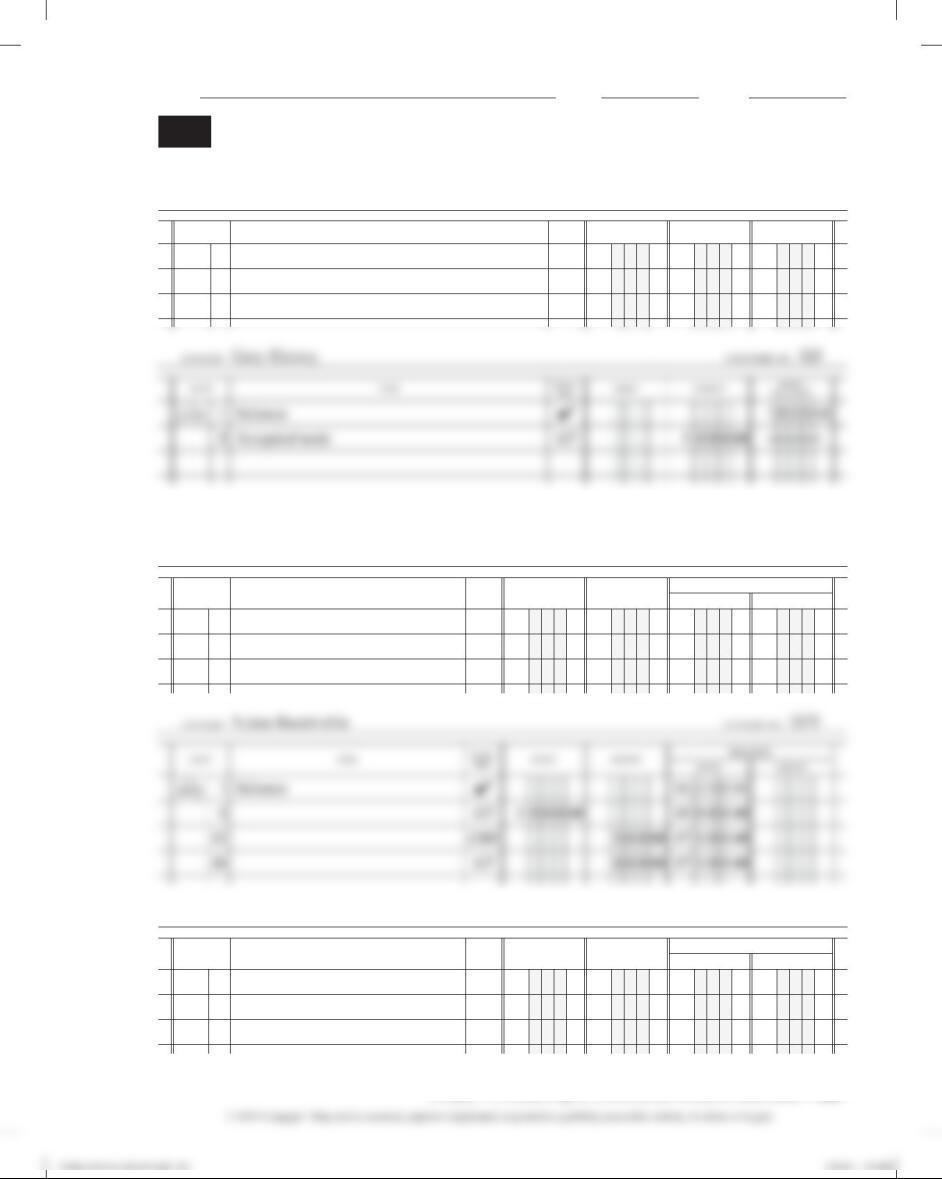
2., 3. ACCOUNTS RECEIVABLE LEDGER
ACCOUNT Dennis Craft CUSTOMER NO. 110
DATE ITEM POST.
REF. DEBIT CREDIT DEBIT
BALANCE
3. GENERAL LEDGER
ACCOUNT Accounts Receivable ACCOUNT NO. 1130
DATE ITEM POST.
REF. DEBIT CREDIT
BALANCE
DEBIT CREDIT
20–
July 1 Balance ✔42 1 8 1 97
ACCOUNT Interest Income ACCOUNT NO. 7110
DATE ITEM POST.
REF. DEBIT CREDIT
BALANCE
DEBIT CREDIT
20–
July 1 Balance ✔4 5 8 00
20–
July 26 Dishonored note G7 4 0 9 00 4 0 9 00
5G7 1 8 0 0 00 40 3 8 1 97
26 G7 4 0 9 00 40 7 9 0 97
12 CR8 7 50 4 6 5 50
26 G7 9 00 4 7 4 50