
SOLUTIONS MANUAL
Discrete-Time Signal Processing
Third Edition
Alan V. Oppenheim and Ronald W. Schafer

Solutions – Chapter 13
Cepstrum Analysis and Homomorphic Deconvolution
1
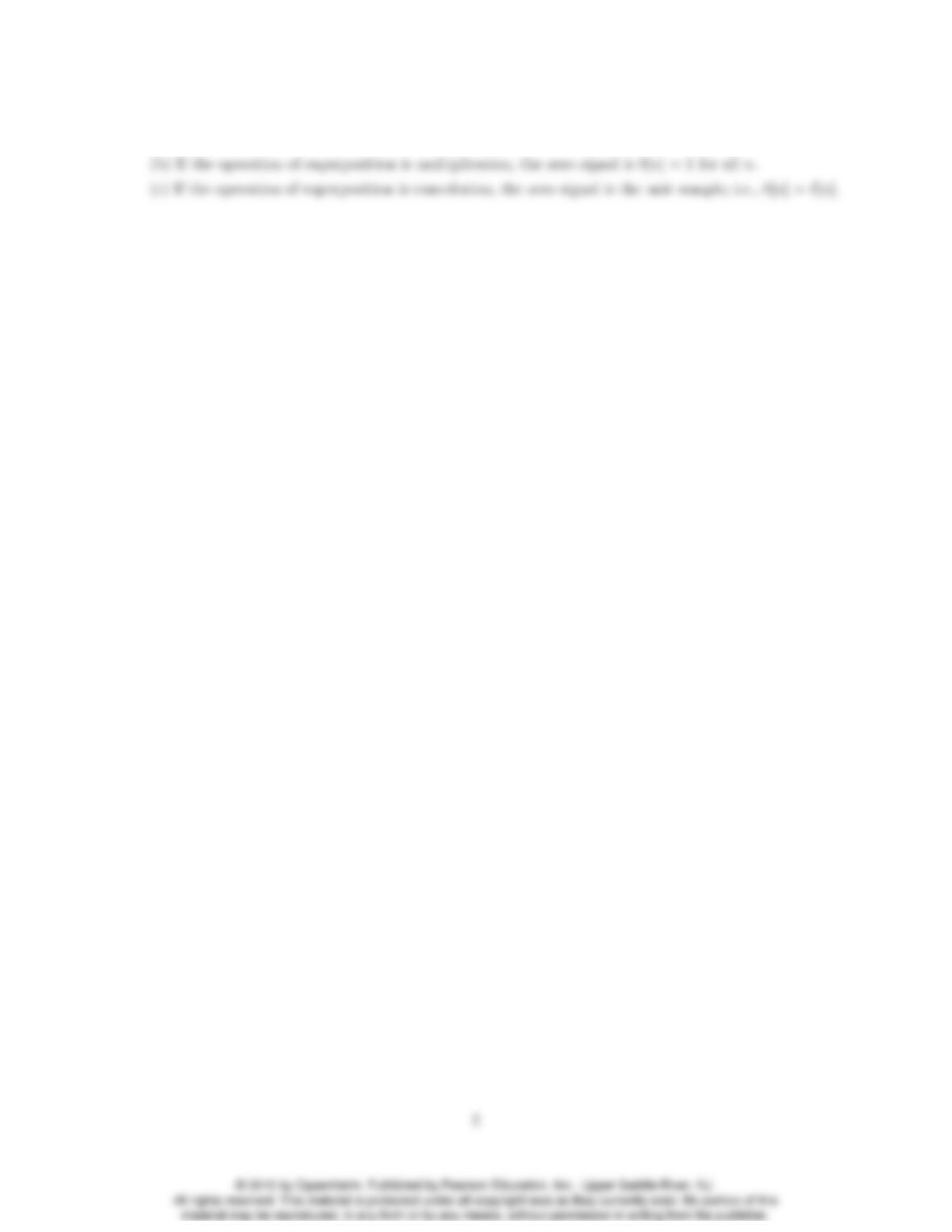
13.1. The identity element for generalized linear systems:
(a) For conventional linear systems, the zero signal is 0[n] = 0 for all n.
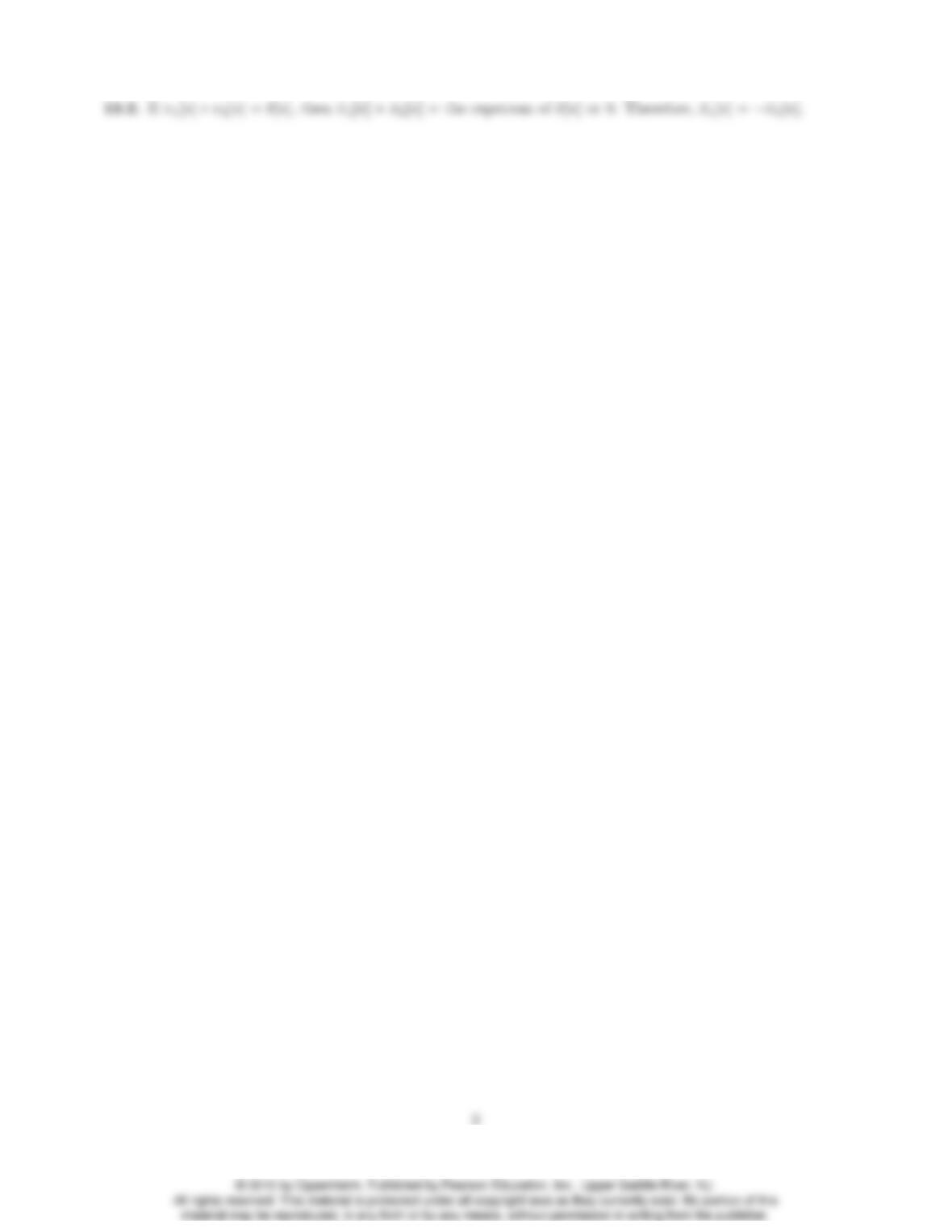
13.3. Since x[n] = δ[n]−2δ[n−1] and y[n] = αx[n−r], we have
Y(z) = αz−r(1 −2z−1)
4
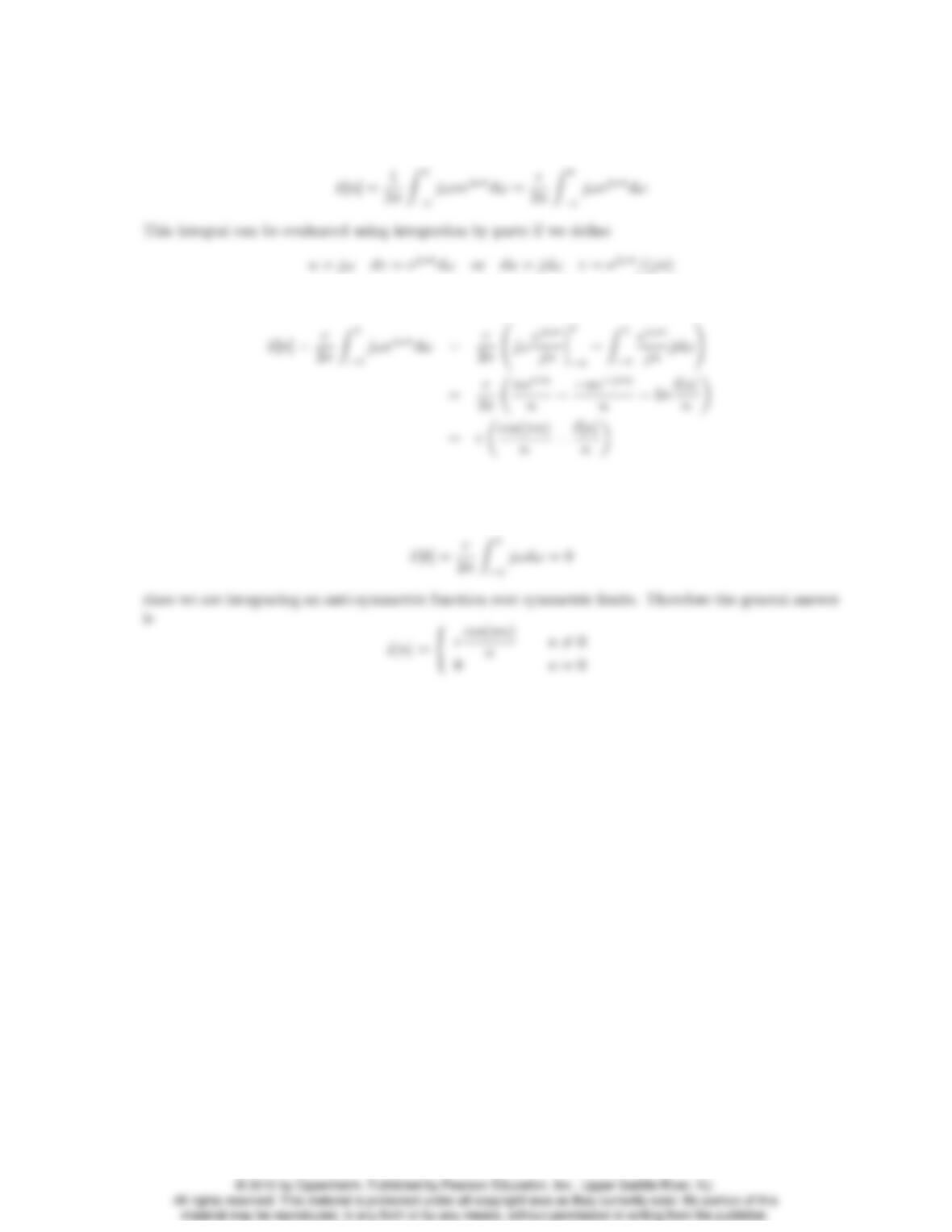
13.4. If x[n] = δ[n+r], then X(ejω ) = ejωr . Assuming appropriate computation of the complex logarithm,
we have, ˆ
X(ejω ) = log X(ejω )= log(ejωr ) = jωr. Therefore, the complex cepstrum of the shifted
impulse sequence is by definition,
Therefore, the integration by parts is as follows:
Now we have to be careful when n= 0 because we obtain the difference of two indeterminate forms.
Better to set n= 0 first and evaluate the integral as in
5
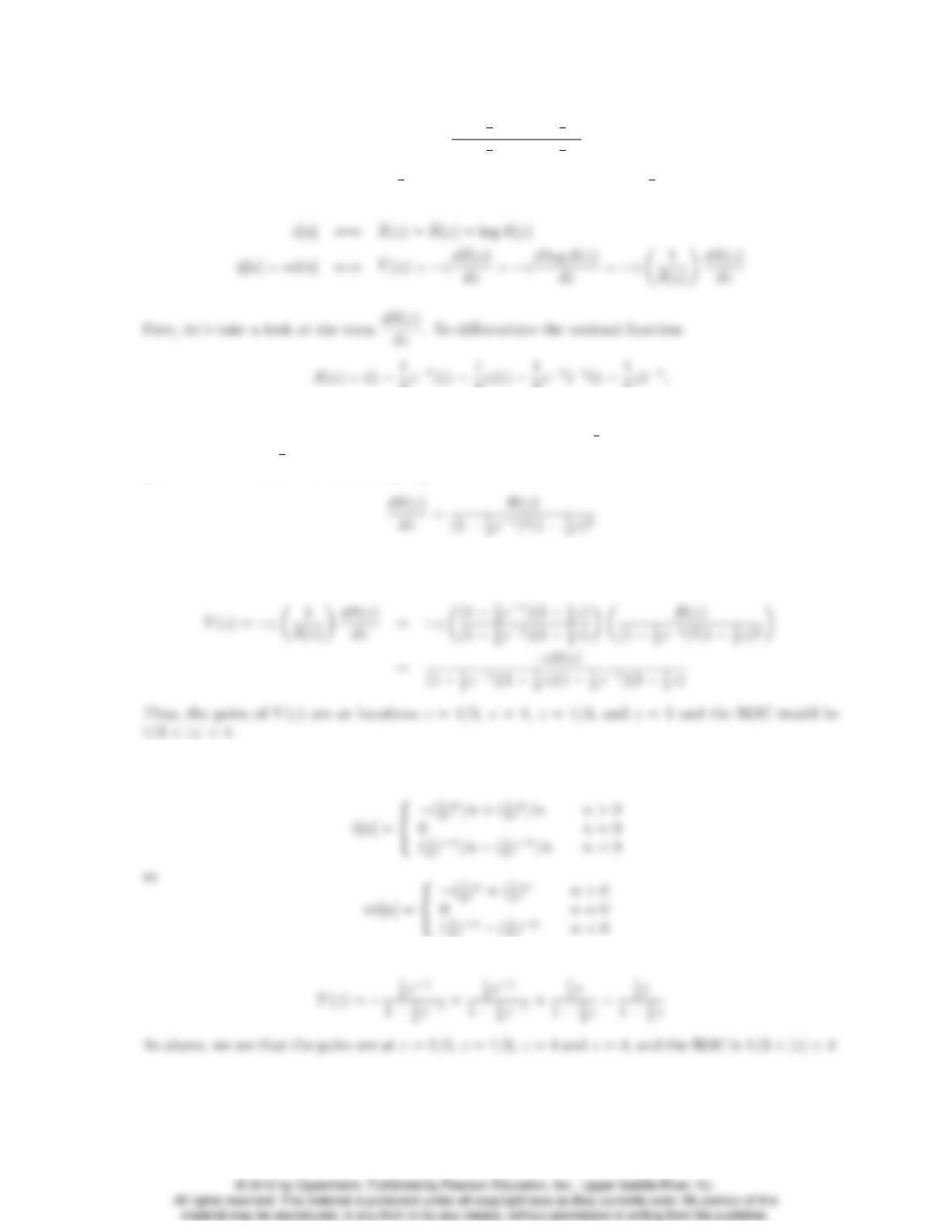
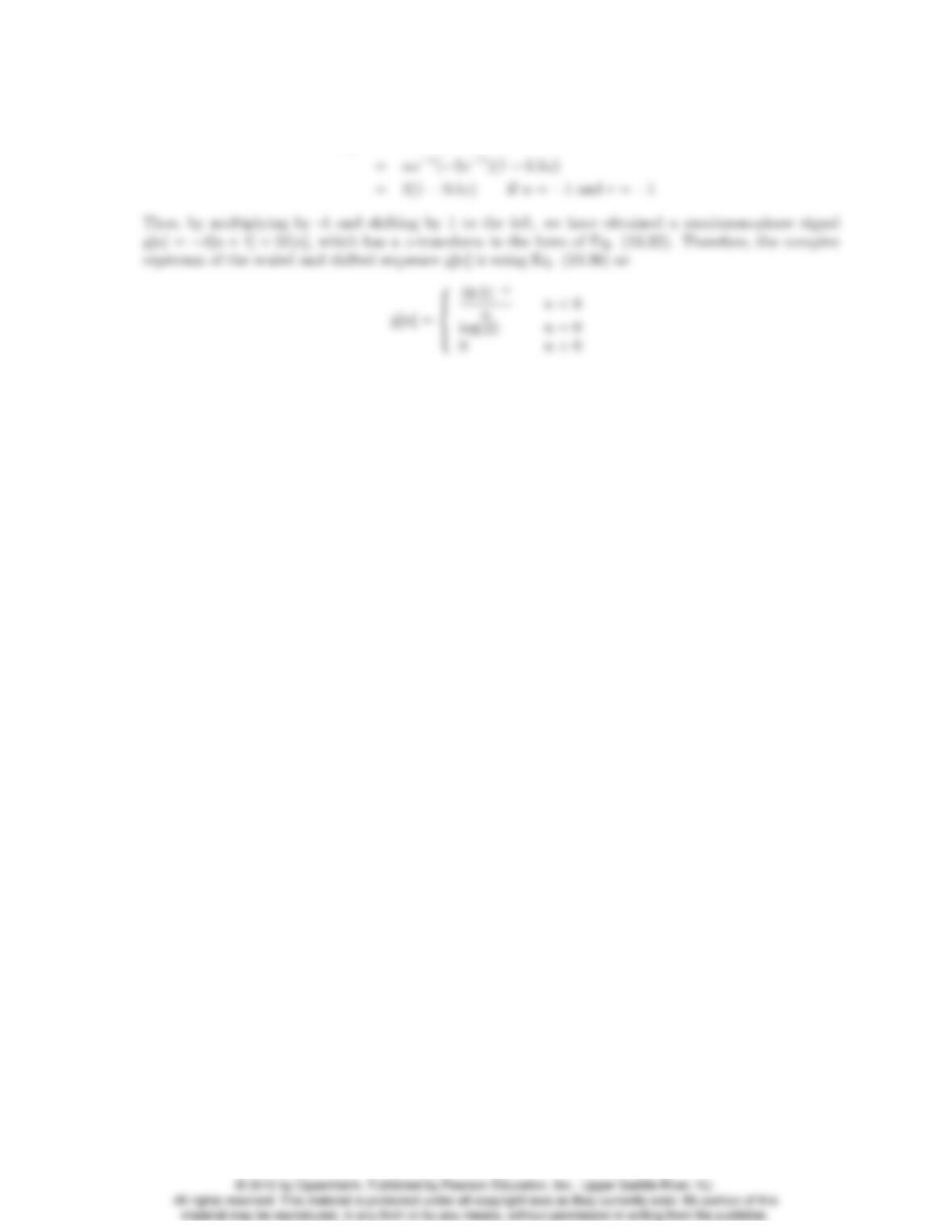
13.5. Given that s[n] has z-transform
S(z) = (1 −1
2z−1)(1 −1
4z)
(1 −1
3z−1)(1 −1
5z)
it follows that S(z) has zeros at z=1
2and z= 4 and it has poles at z=1
3and z= 5. Therefore, the
ROC for S(z) is 1/3<|z|<5. If we define ˆy[n] = nˆs[n], then we have
2z−1)(1 −1
4z)(1 −1
3z−1)−1(1 −1
5z)−1,
we would have to apply the chain rule to all the factors one by one obtaining a sum of rational functions.
Each of the pole terms would generate a term like this: N(z)(1 −1
3z−1)−2while the other three terms
would contain (1 −1
3z−1)−1. Thus, the four terms arising from the chain rule differentiation could be
placed over a common denominator giving
The exact form of the polynomial B(z) is not important since we are asked only to find the poles of the
z-transform of y[n] = ˆs[n]. Now we can see that
Another approach would be to find ˆs[n], multiply by nand then find the z-transform of the result.
That’s actually pretty easy. From Eq. (13.36) we get
4)−n−(1
5)−nn < 0
The corresponding z-transform is therefore,
6
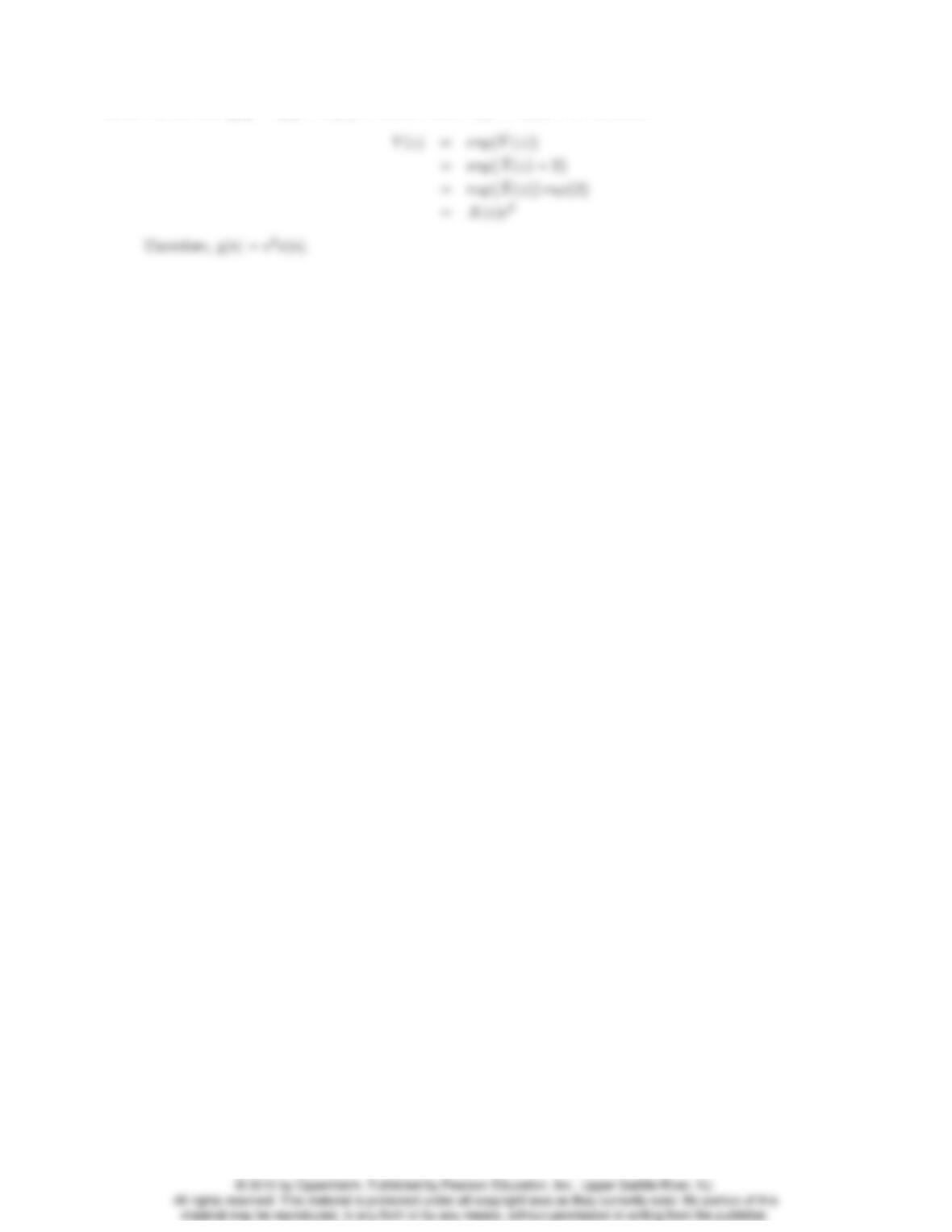
13.6. Given that ˆy[n] = ˆx[n] + 2δ[n], it follows that ˆ
Y(z) = ˆ
X(z) + 2. Therefore
7
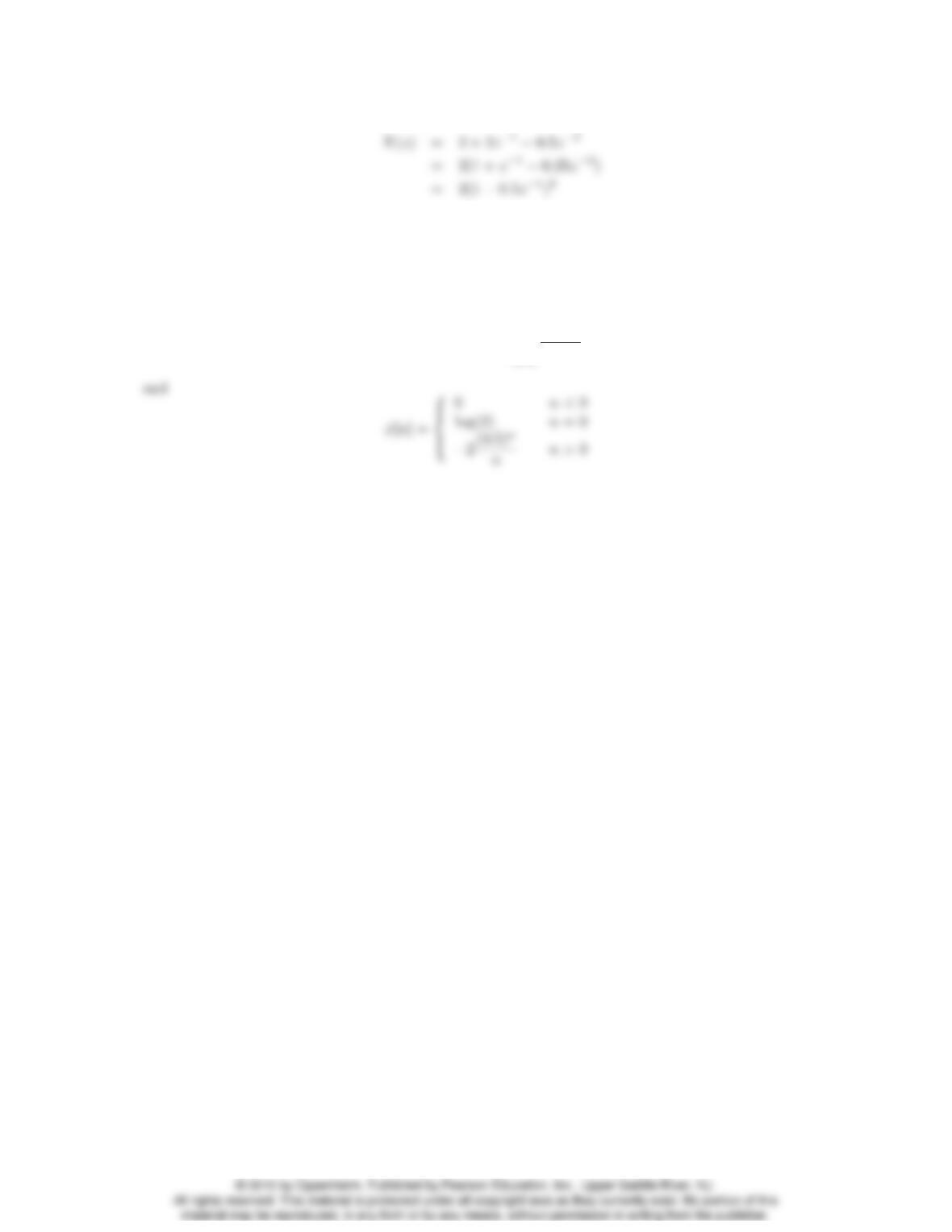
13.7. Given that x[n] = 2δ[n]−2δ[n−1] −0.5δ[n−2], it follows that
Therefore,
ˆ
X(z) = log (X(z))
= log 2(1 −0.5z−1)2
= log(2) + 2 log(1 −0.5z−1)
= log(2) −2
∞
X
n=1
(0.5)n
nz−n
8
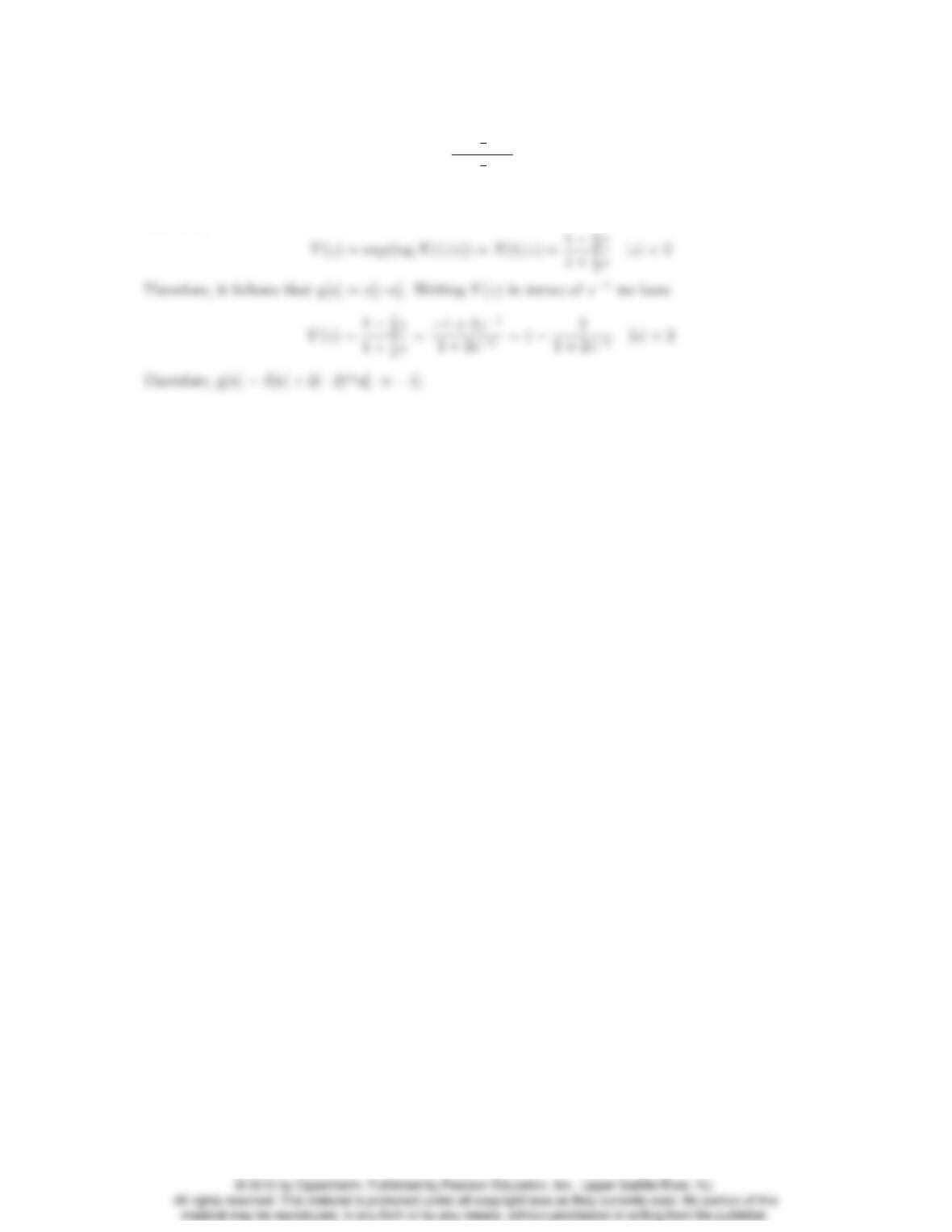
13.8. A stable sequence has complex cepstrum ˆy[n] = ˆx[−n], where
X(z) = 1−1
2z−1
1 + 1
2z−10.5<|z|
and ˆx[n] is the complex cepstrum of x[n]. Since ˆy[n] = ˆx[−n], ˆ
Y(z) = ˆ
X(1/z) = log X(1/z) and
therefore,
9
13.9. This problem uses the recursion formulas for minimum-phase and maximum-phase signals to compute
the complex cepstrum of specific signals.
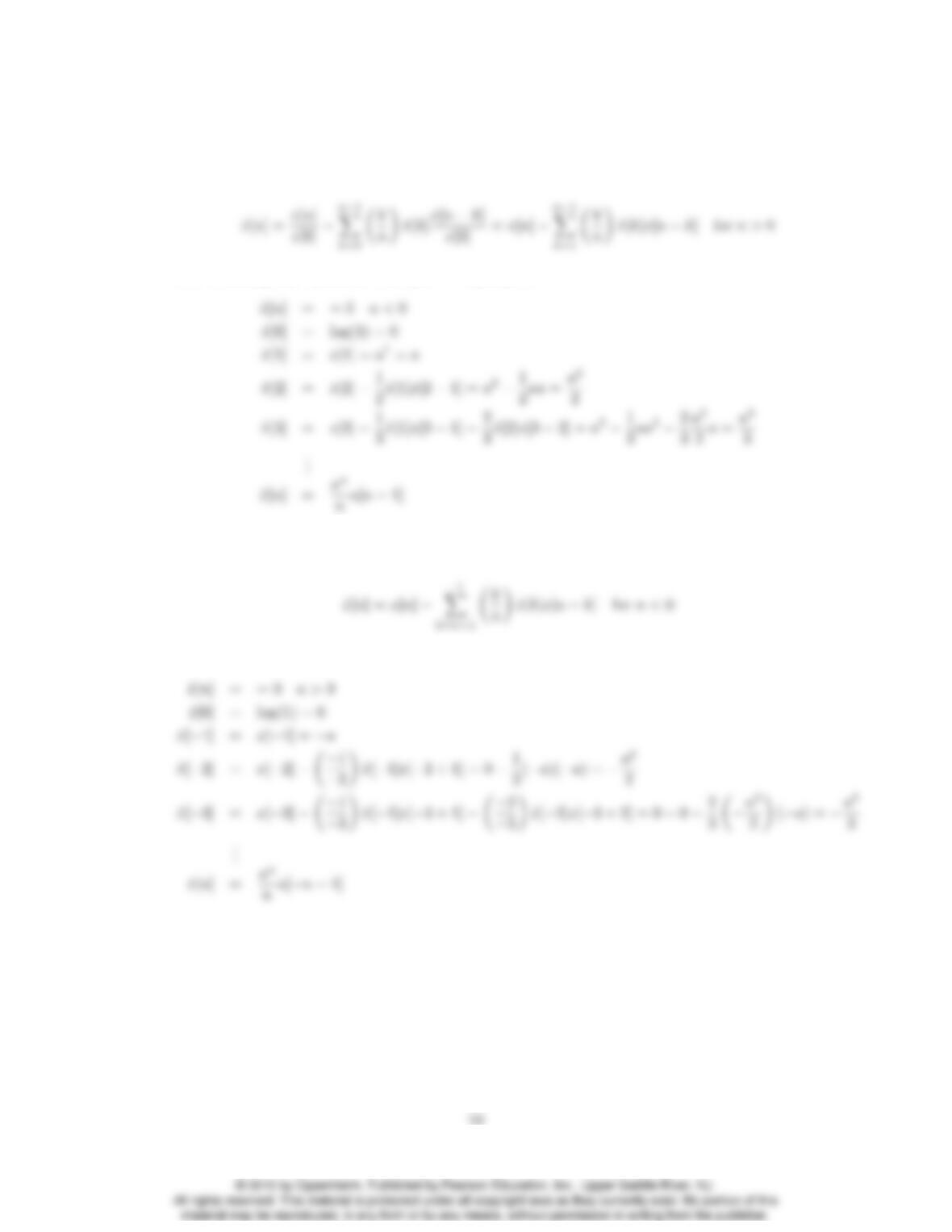
(a) The minimum-phase signal is x[n] = anu[n] where |a|<1. Since x[0] = 1, Eq. (13.66) gives
ˆx[0] = 0, and Eq. (13.65) simplifies to
Now iterating this equation with x[n] = anu[n] gives
(b) Now for the maximum-phase signal x[n] = δ[n]−aδ[n+1] we have to iterate Eq. (13.68) backwards.
Again, since x[0] = 1, we can simplify Eq. (13.68) to
Now iterating this equation with x[n] = δ[n]−aδ[n+ 1] gives
13.10. This problem concerns a simple example of unwrapping the principal value phase of the DFT X[k]
using the equation
arg(X[k]) = ARG(X[k]) + 2πr[k]
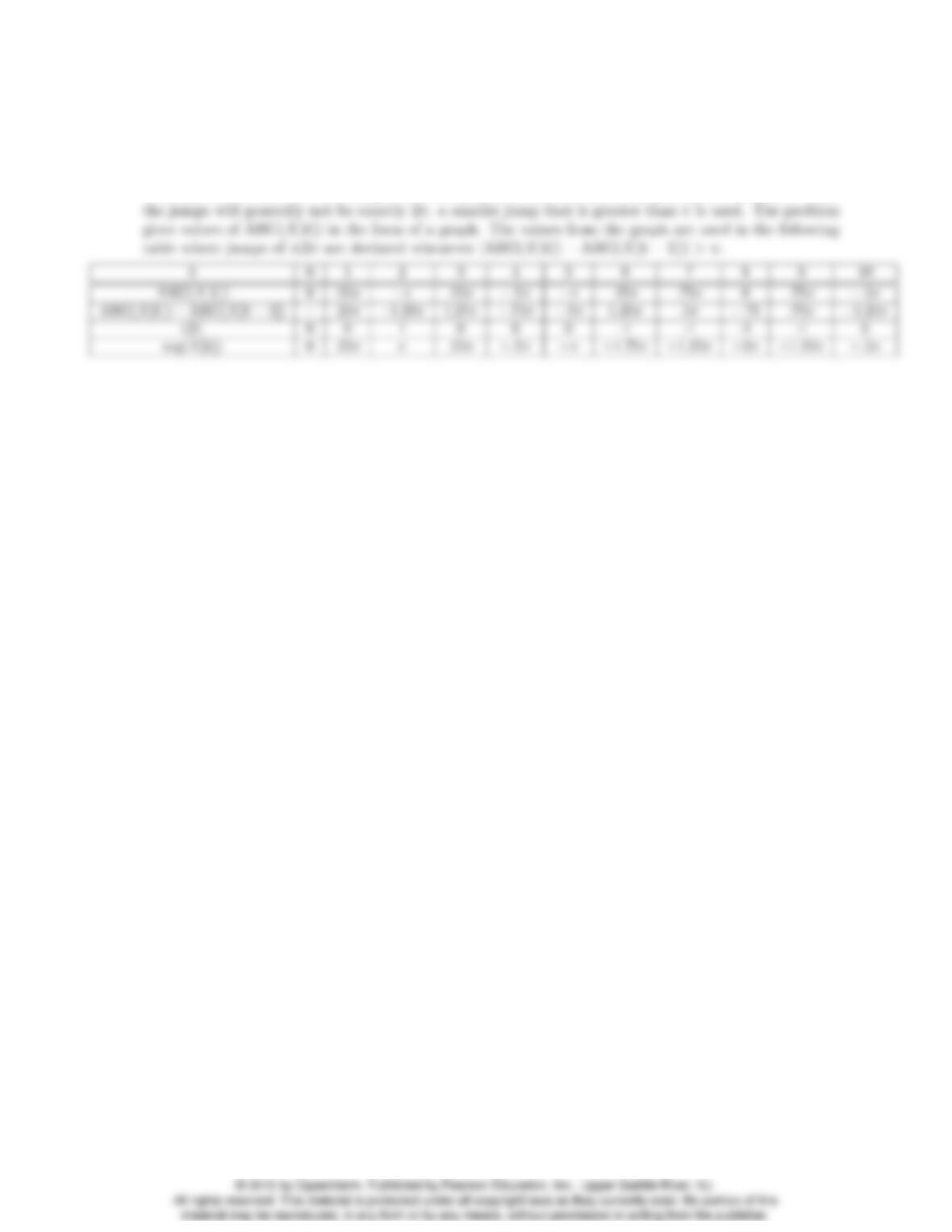
We determine the sequence r[k] by finding jumps greater than ±πradians in ARG(X[k]). The algorithm,
as detailed in Section 13.6.1, attempts to detect jumps of ±2πradians in the principal value phase. Since
11
13.11. Statement 1: If x1[n] = x[−n], then ˆx1[n] = ˆx[−n].
This statement is true. First note that ˆ
X(z) = log X(z). Also, the z-transform of x[−n] is X(1/z)
so ˆ
X1(z) = log X(1/z) = ˆ
X(1/z). Therefore, ˆx1[n] = ˆx[−n].
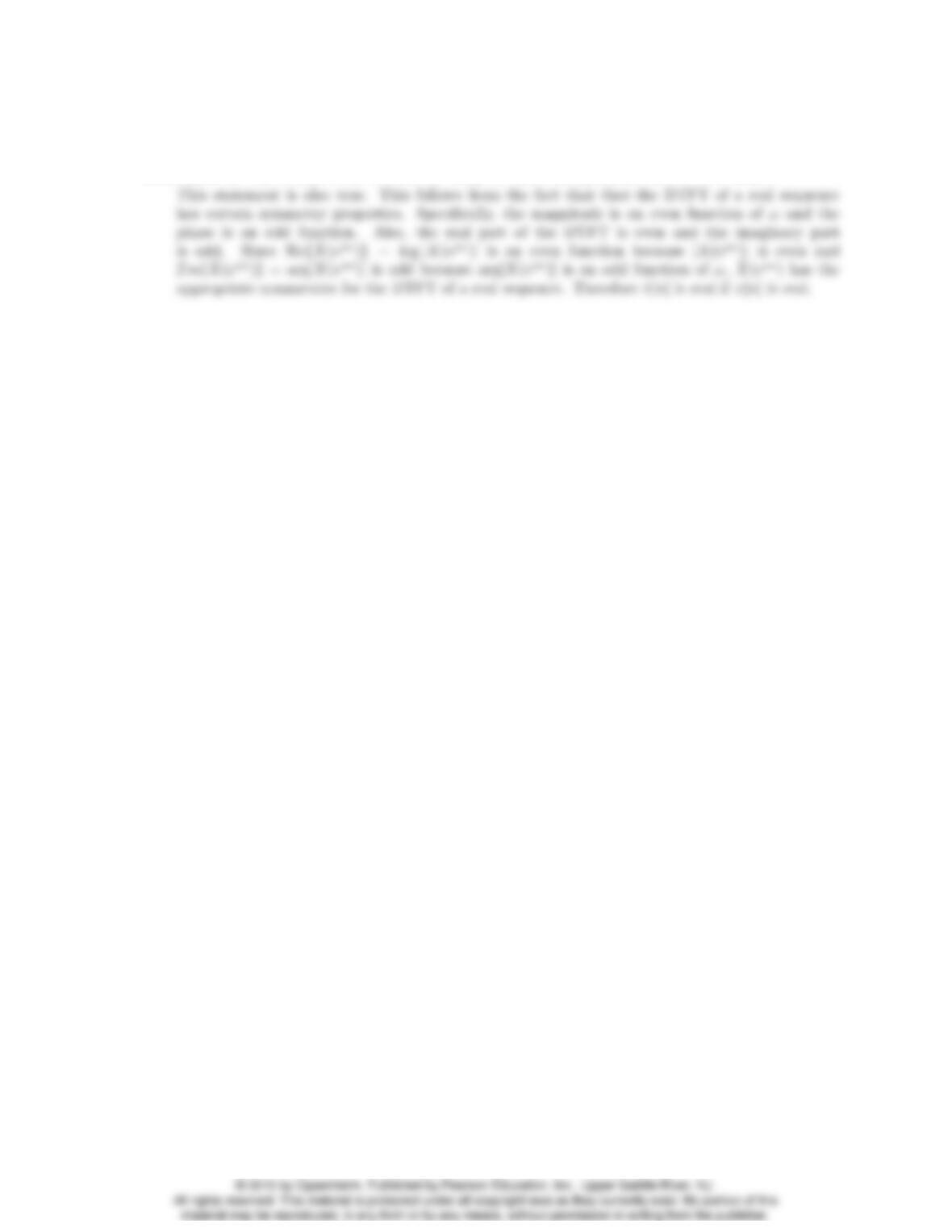
Statement 2: Since x[n] is real-valued, the complex cepstrum ˆx[n] must also be real-valued.
12
13.12. This problem requires that you have a good understanding of the ideas of homomorphic deconvolution.
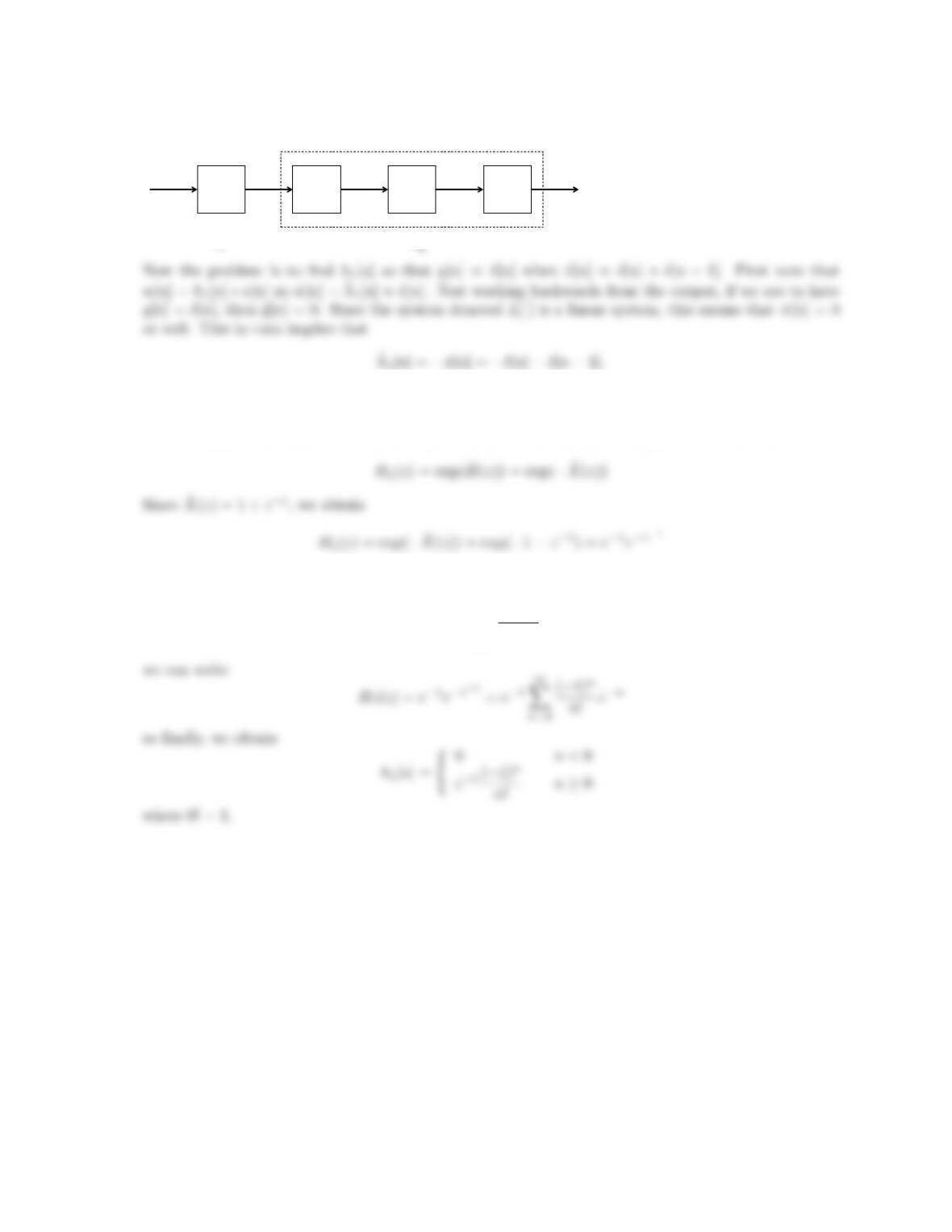
It is helpful to redraw Fig. P13.12 as follows:
LTI
h
1[n]
D∗[ ]
L[ ]
D∗
−1[ ]
x[n]
w[n]
ˆ
w[n]
ˆ
y[n]
y[n]
S
1
S2
Now we have and expression for ˆ
h1[n] in terms of ˆx[n], but we want to obtain an expression for h1[n]
that will produce the output y[n] = δ[n] when the input to the overall system is x[n]. Note that the
desired h1[n] is the output of the inverse system D−1
∗when its input is ˆ
h1[n]. Therefore we obtain
Recalling the power series expansion of the exponential,
e−x=
∞
X
k=0
(−1)n
n!xn
13
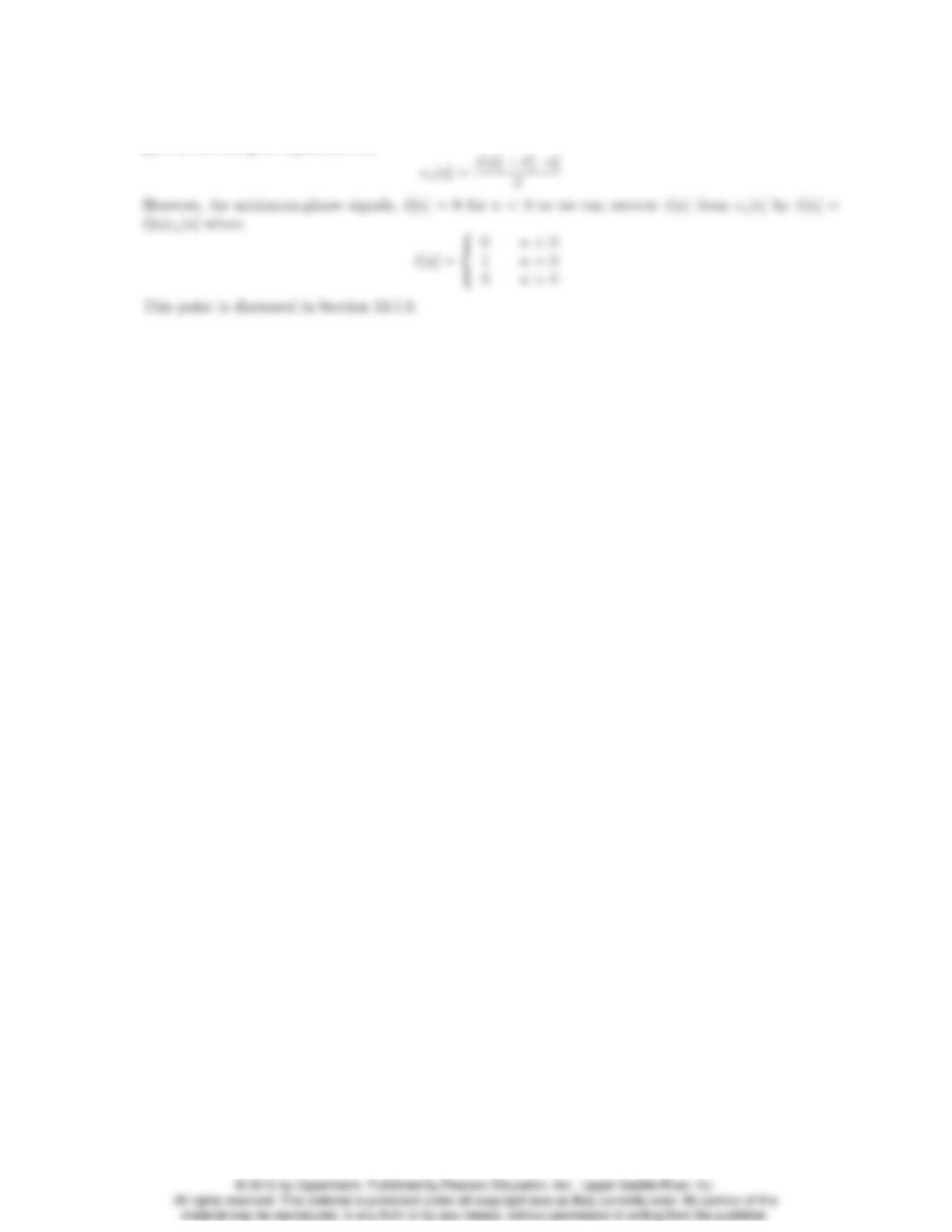
13.13. The real cepstrum cx[n] is simply the inverse DTFT of the log magnitude of the DTFT. Since the log
magnitude is the real part of the DTFT of the complex cepstrum ˆx[n], the real cepstrum is the even
part of the complex cepstrum; i.e.,
14
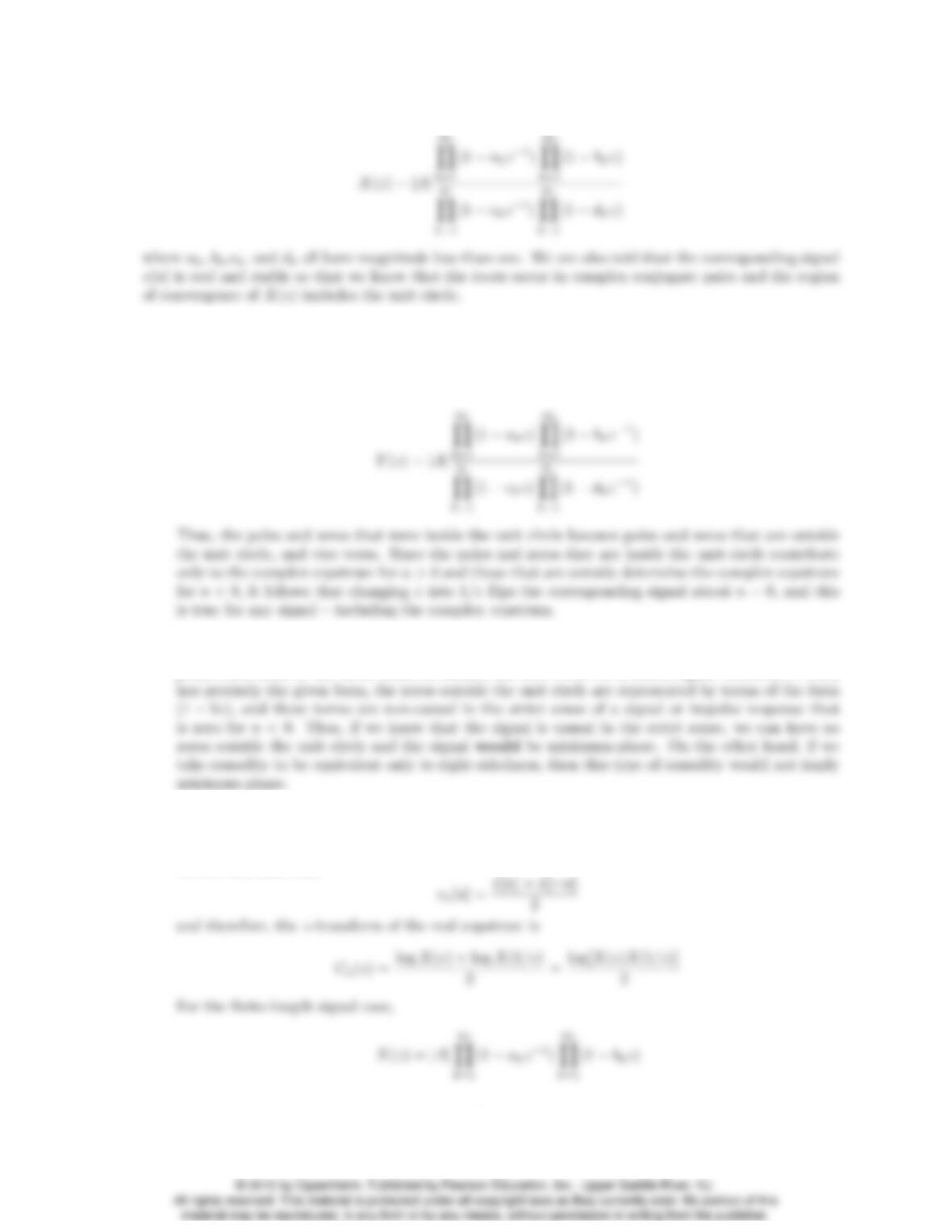
13.14. In this problem we consider signals whose z-transform have the form
(a) If y[n] = x[−n] then Y(z) = X(1/z). The complex cepstrum of x[n] has z-transform ˆ
X(z) =
log X(z) and the complex cepstrum of y[n] has z-transform ˆ
Y(z) = log Y(z) = log X(1/z) =
ˆ
X(1/z). Therefore, it follows that ˆy[n] = ˆx[−n] if y[n] = x[−n].
For the specific class of signals with the given X(z), we have
(b) We are given that x[n] is real and stable and causal. Stability together with causality implies that
there are no poles outside the unit circle. In general, causality would not be suffcient for minimum
phase since some of the zeros could be outside the unit circle for a stable signal. However, if X(z)
(c) The operations of Figure P13.14 compute the real cepstrum cx[n], then window (or lifter) it with ℓ[n],
and finally exponentiate the DTFT. The problem is to find ℓ[n] such that |Y(ejω)|=|X(ejω )|. The
solution is to extract the positive-time part of the real cepstrum with the lifter ℓ[n] = 2u[n]−δ[n].
To see this, note that
15
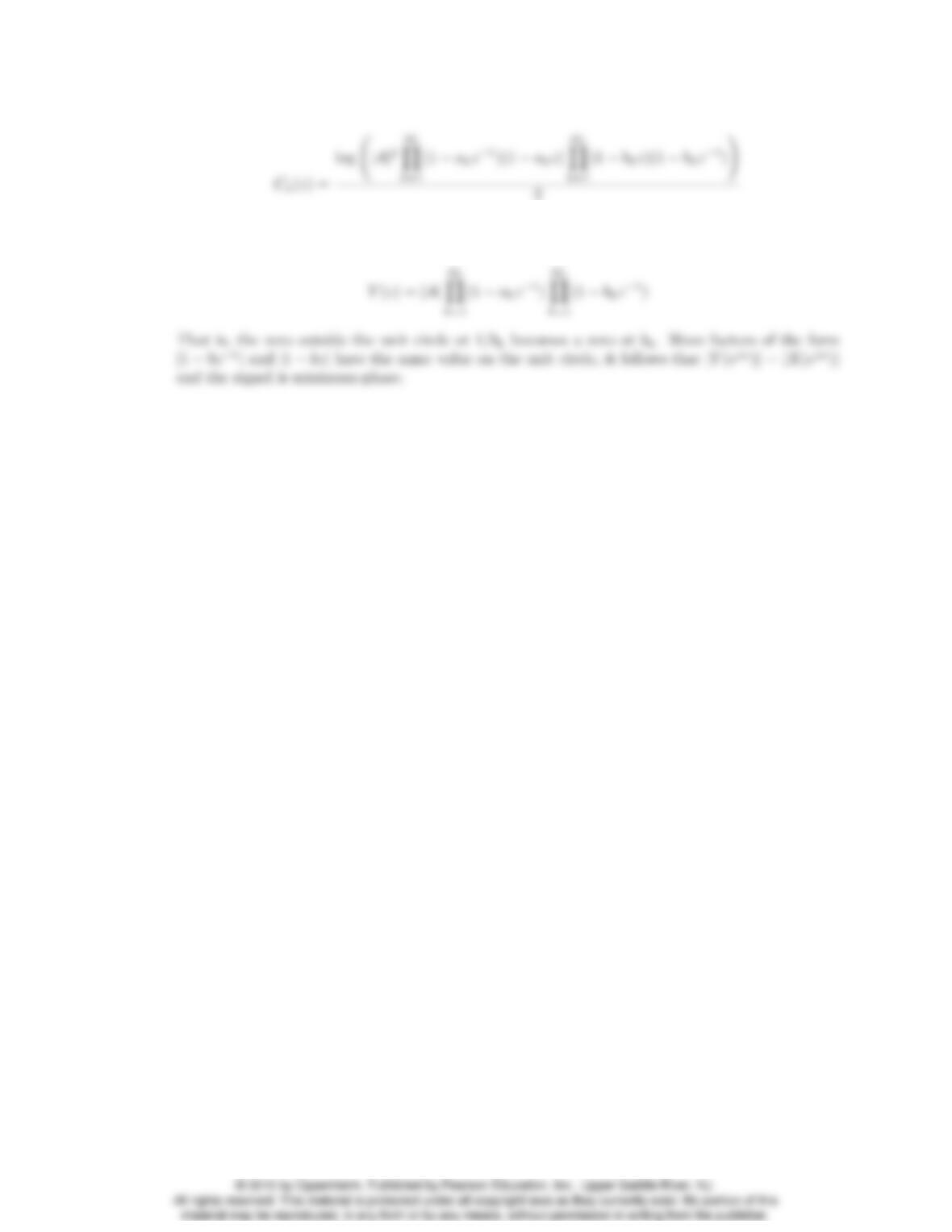
and therefore Cx(z) is
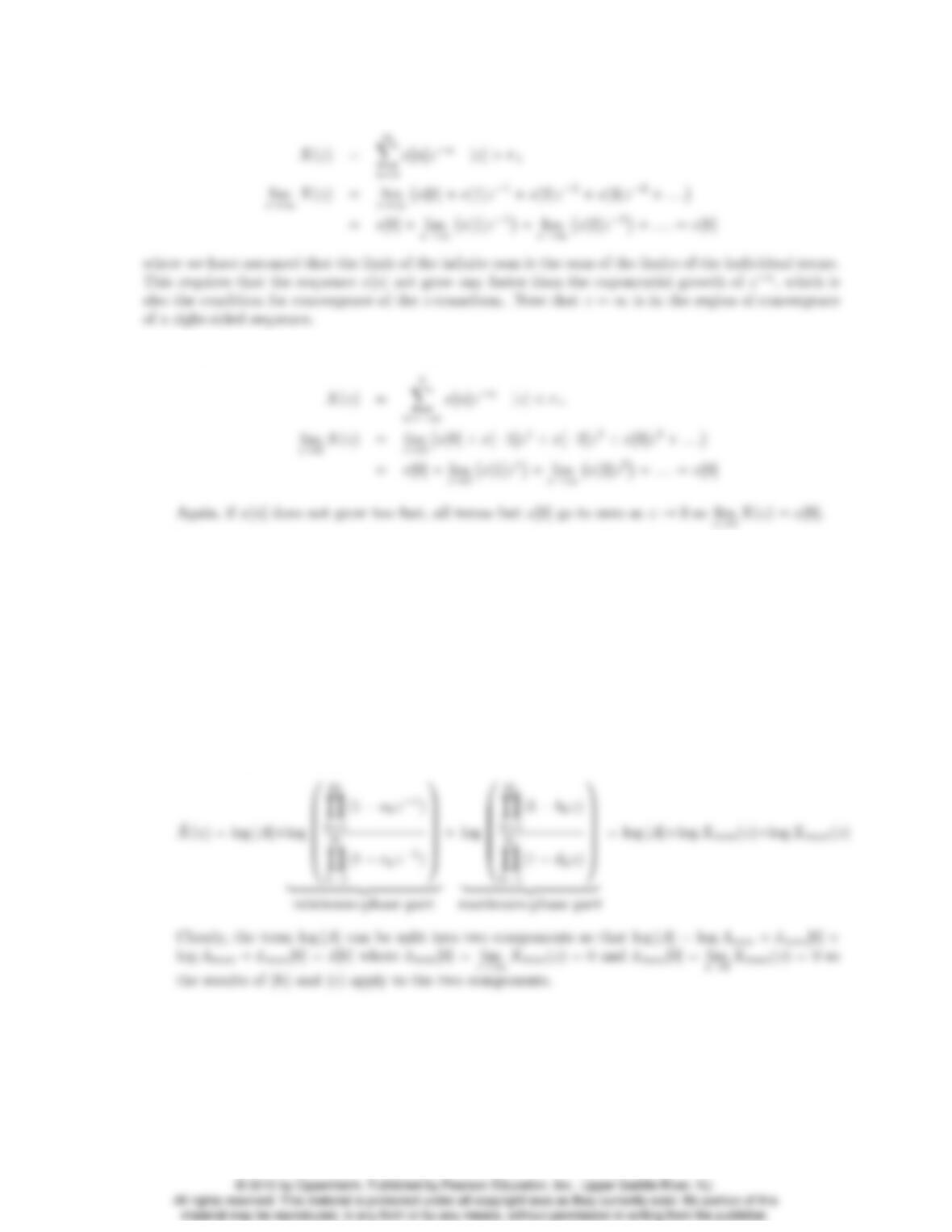
Since the positive-time part of the real cepstrum is formed by the factors involving z−1, it follows
that the z-transform of the output in Figure P13.14 is
16
13.15. If x[n] = 0 for n < 0,
(a) If x[n] = 0 for n > 0 the same idea applies except we let z→0.
(b) If x[n] is minimum-phase, both x[n] and ˆx[n] are zero for n < 0. Therefore, the initial value theorem
gives
ˆx[n] = lim
z→0
ˆ
X(z) = lim
z→∞ (log X(z))
= log lim
z→∞ X(z)= log(x[0])
In this case we have assumed that the order of the limit and the logarithm can be interchanged.
This again requires that the function X(z) be continuous and finite for z=∞.
(c) If x[n] is maximum-phase, both x[n] and ˆx[n] are zero for n > 0. Using the same type of argument
and assumptions it follows that ˆx[0] = log(x[0] for the maximum-phase sequence as well.
(d) If X(z) is given by Eq. (13.32), then
17
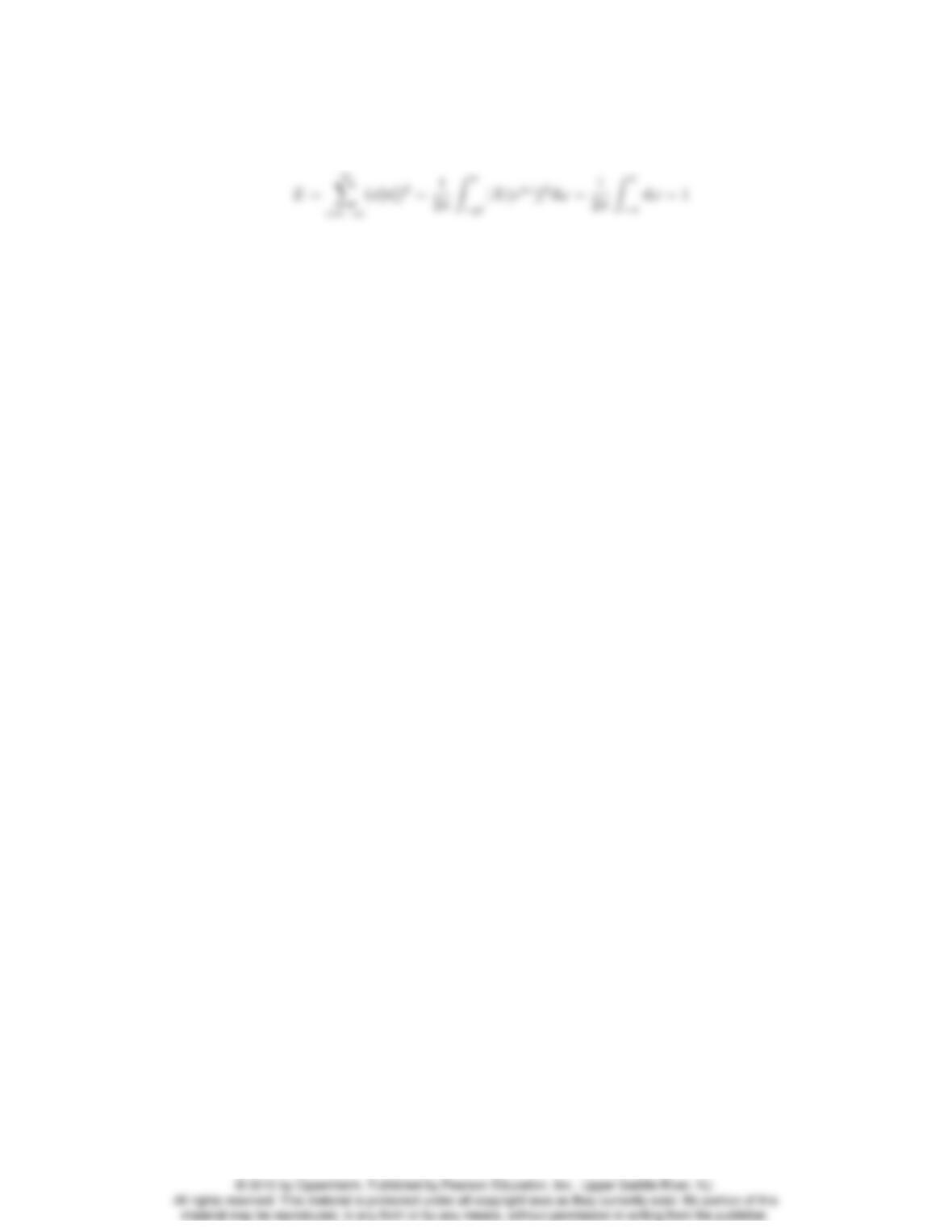
13.16. We are given that ˆx[n] = −ˆx[−n], which implies that ˆ
X(ejω ) is purely imaginary; i.e., ˆ
X(ejω ) =
jarg[X(ejω )]. Therefore, X(ejω) has magnitude 1 for all ωand X(ejω ) = exp[ ˆ
X(ejω )] = ejarg[X(ejω ].
By Parseval’s Theorem, we have
18