13-35
3. Comment on your answers to requirements 1 and 2. Why are they the same or different?
SOLUTION
13-36
13-31 Cost-plus and market-based pricing.
(CMA, adapted) Quick Test Laboratories evaluates the reaction of materials to extreme increases
in temperature. Much of the company’s early growth was attributable to government contracts,
but recent growth has come from expansion into commercial markets. Two types of testing at
Quick Test are Heat Testing (HTT) and Arctic-Condition Testing (ACT). Currently, all of the
budgeted operating costs are collected in a single overhead pool. All of the estimated testing-
hours are also collected in a single pool. One rate per test-hour is used for both types of testing.
This hourly rate is marked up by 30% to recover administrative costs and taxes and to earn a
profit.
George Barton, Quick Test’s controller, believes that there is enough variation in the test
procedures and cost structure to establish separate costing rates and billing rates at a 30%
markup. He also believes that the inflexible rate structure the company is currently using is
inadequate in today’s competitive environment. After analyzing the company data, he has
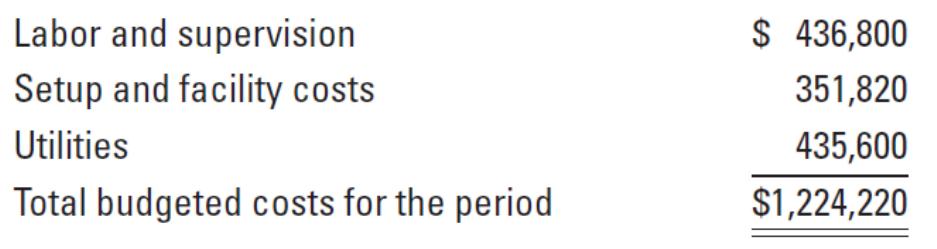
divided operating costs into the following three cost pools:
George Barton budgets 112,000 total test-hours for the coming period. Test-hours is also the cost
driver for labor and supervision. The budgeted quantity of cost driver for setup and facility costs
is 700 setup hours. The budgeted quantity of cost driver for utilities is 12,000 machine-hours.
George has estimated that HTT uses 70% of the test-hours, 20% of the setup-hours, and half
the machine-hours.
Required:
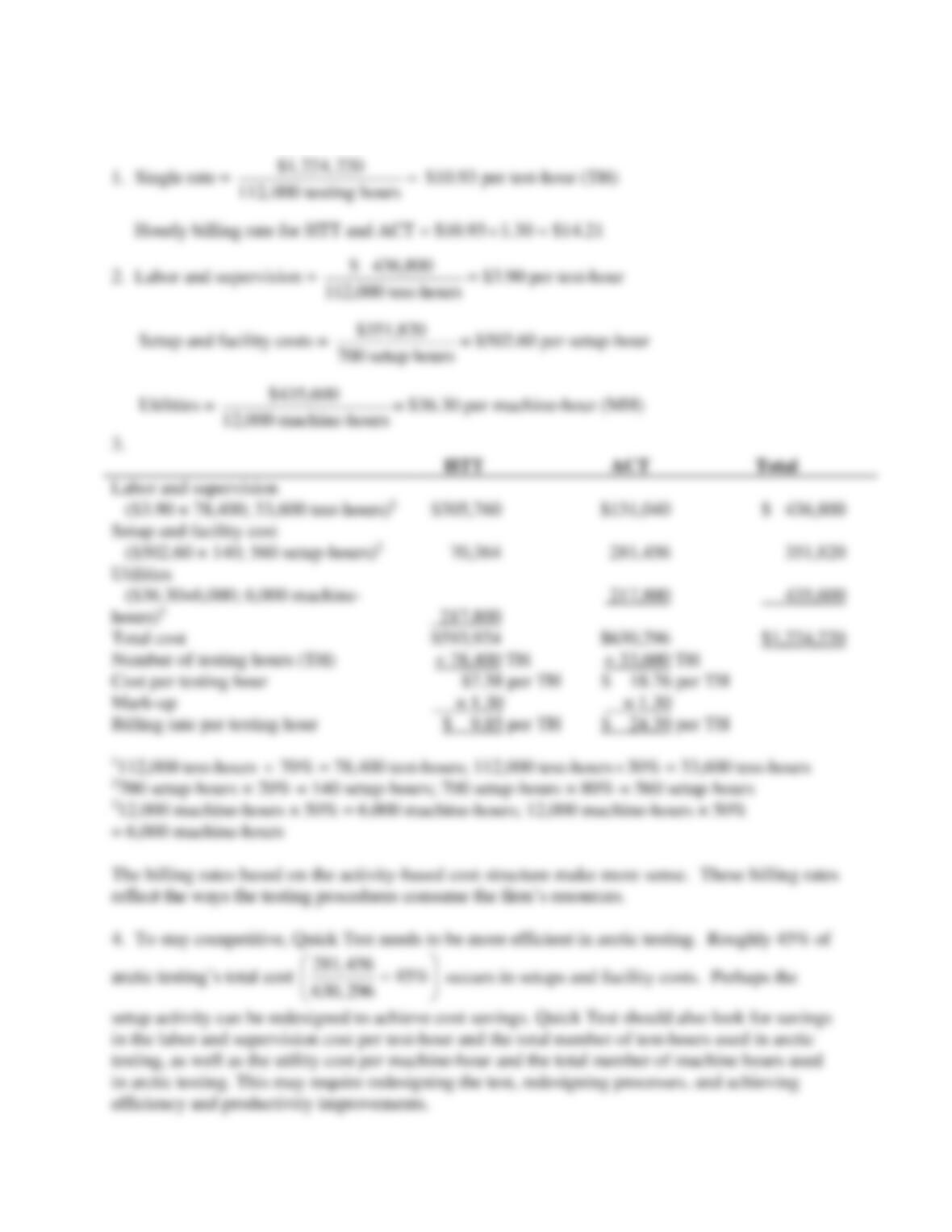
1. Find the single rate for operating costs based on test-hours and the hourly billing rate for
HTT and ACT.
2. Find the three activity-based rates for operating costs.
3. What will the billing rate for HTT and ACT be based on the activity-based costing structure?
State the rates in terms of test-hours. Referring to both requirements 1 and 2, which rates
make more sense for Quick Test?
4. If Quick Test’s competition all charge $23 per hour for arctic testing, what can Quick Test do
to stay competitive?
13-37
SOLUTION
13-38
13-32 (25–30 min.) Life-cycle costing.
Maximum Metal Recycling and Salvage receives the opportunity to salvage scrap metal and
other materials from an old industrial site. The current owners of the site will sign over the site to
Maximum at no cost. Maximum intends to extract scrap metal at the site for 24 months and then
will clean up the site, return the land to useable condition, and sell it to a developer. Projected
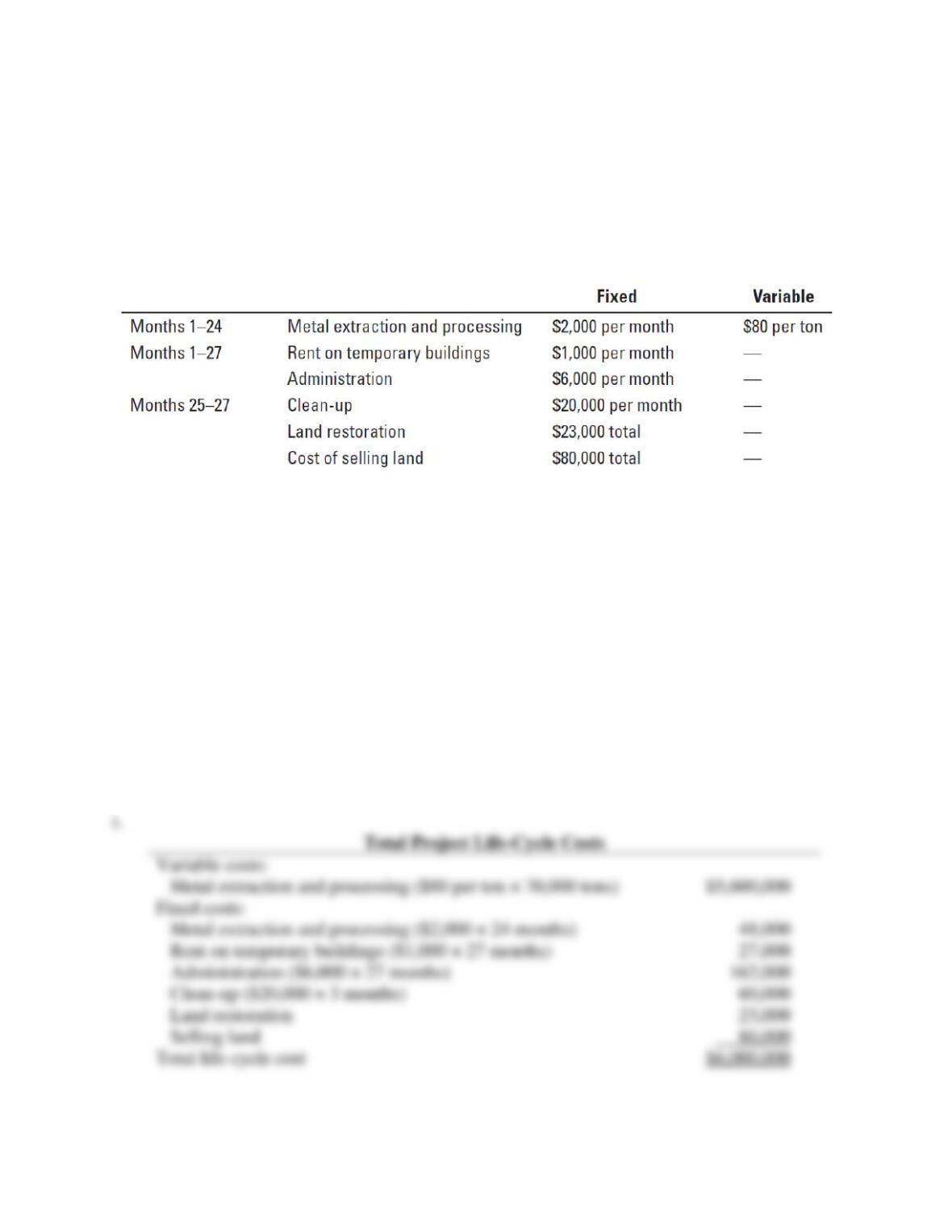
costs associated with the project follow:
Ignore time value of money.
Required:
1. Assuming that Maximum expects to salvage 70,000 tons of metal from the site, what is the
total project life cycle cost?
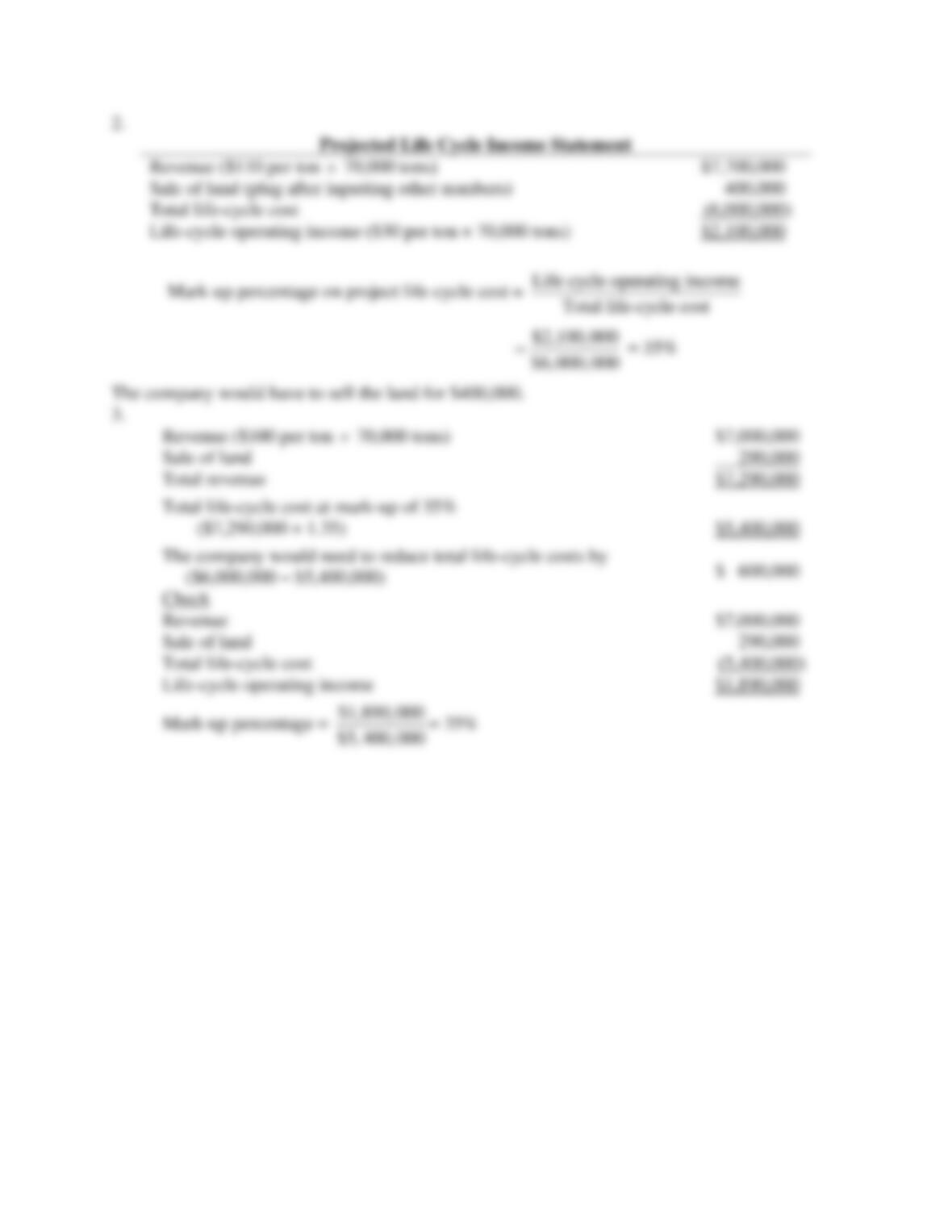
2. Suppose Maximum can sell the metal for $110 per ton and wants to earn a profit (before
taxes) of $30 per ton. At what price must Maximum sell the land at the end of the project to
achieve its target profit per ton?
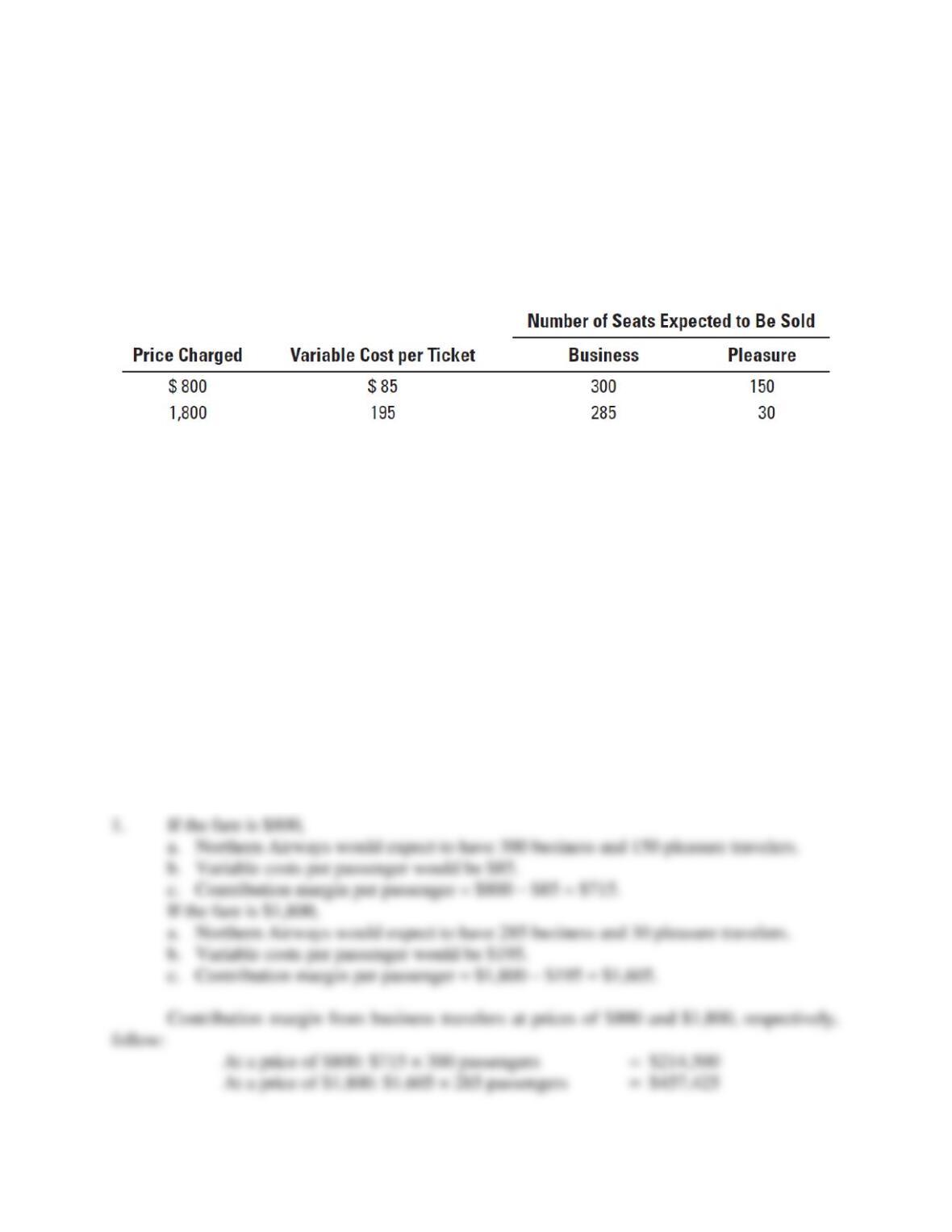
3. Now suppose Maximum can only sell the metal for $100 per ton and the land at $110,000
less than what you calculated in requirement 2. If Maximum wanted to maintain the same
markup percentage on total project life-cycle cost as in requirement 2, by how much would
the company have to reduce its total project life-cycle cost?
SOLUTION
13-39
13-40
13-33 (30 min.) Airline pricing, considerations other than cost in pricing.
Northern Airways is about to introduce a daily round-trip flight from New York to Los Angeles
and is determining how to price its round- trip tickets.
The market research group at Northern Airways segments the market into business and
pleasure travelers. It provides the following information on the effects of two different prices on
the number of seats expected to be sold and the variable cost per ticket, including the
commission paid to travel agents:
Pleasure travelers start their travel during one week, spend at least one weekend at their
destination, and return the following week or thereafter. Business travelers usually start and
complete their travel within the same work week. They do not stay over weekends.
Assume that round-trip fuel costs are fixed costs of $24,700 and that fixed costs allocated to
the round-trip flight for airplane-lease costs, ground services, and flight-crew salaries total
$183,000.
Required:
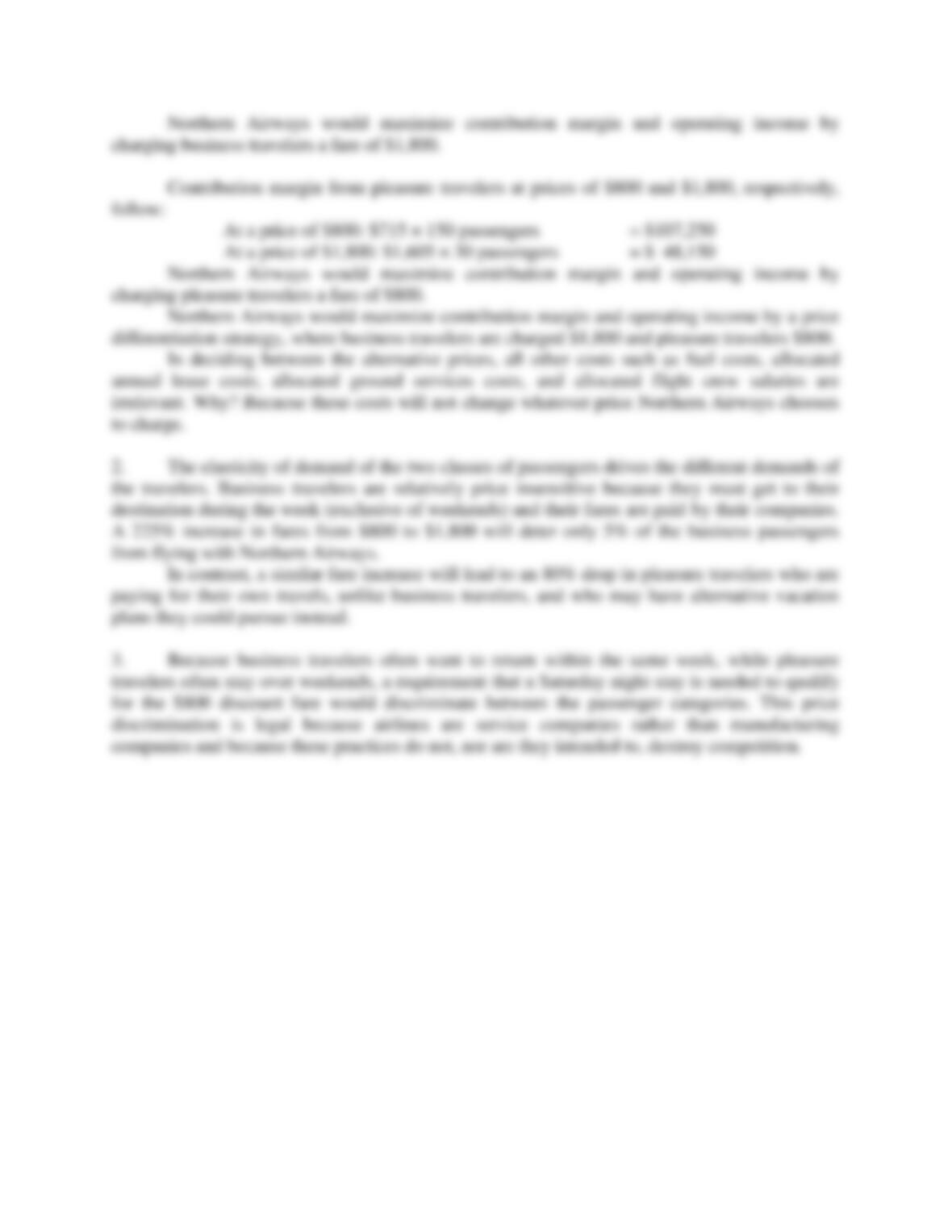
1. If you could charge different prices to business travelers and pleasure travelers, would you?
Show your computations.
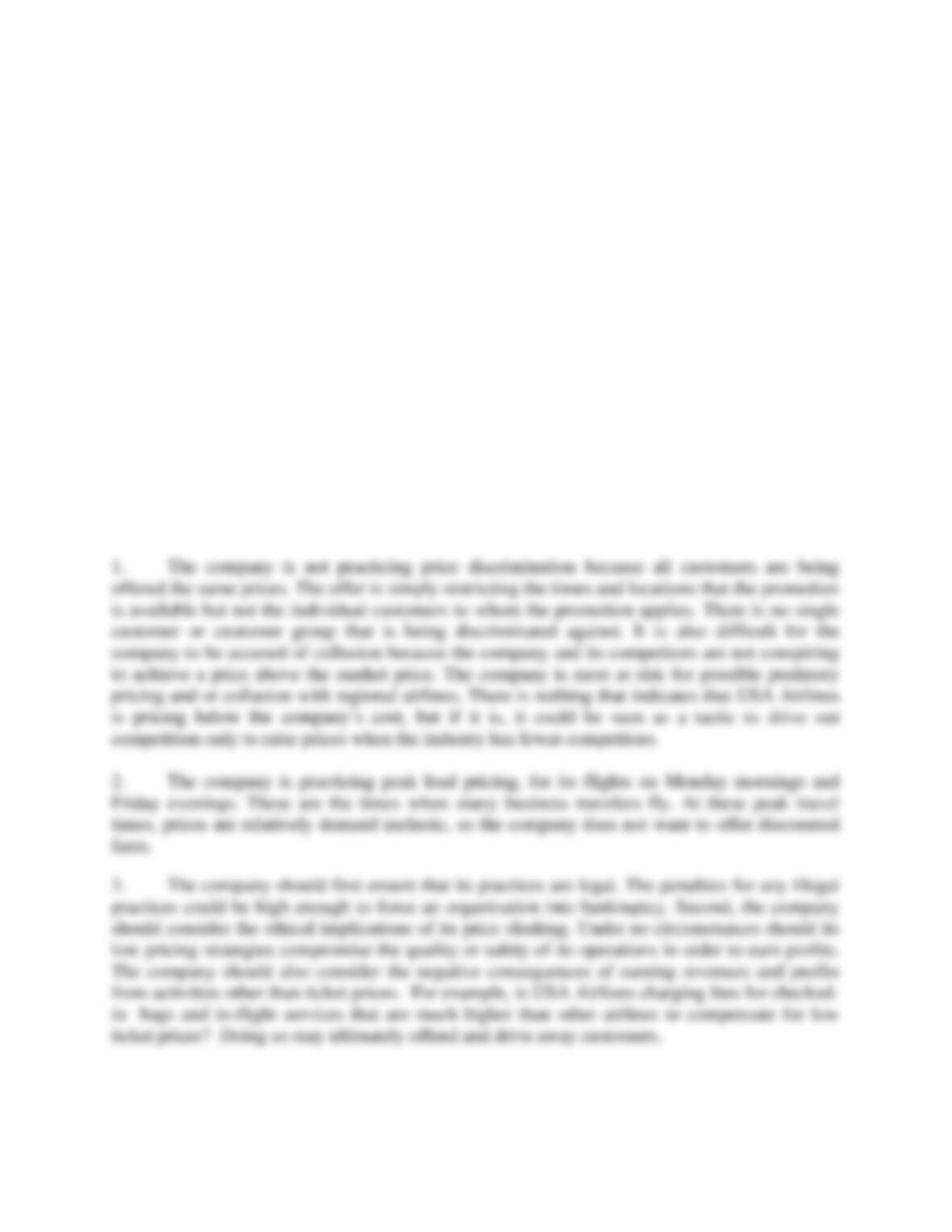
2. Explain the key factor (or factors) for your answer in requirement 1.
3. How might Northern Airways implement price discrimination? That is, what plan could the
airline formulate so that business travelers and pleasure travelers each pay the price the
airline desires?
SOLUTION
13-41
13-42
13-34 (20 mins.) Anti-trust laws and pricing.
USA Airlines is a major airline carrier for both domestic and international travel. The company
guarantees the “lowest price” ticket for travel within the United States. In order to get the lowest
price airfare, the customer needs to book a flight with USA Airlines and show the booking agent
a computer-generated quote from any other airline in the country for the same travel route at a
lower rate. USA Airlines will match the rate, plus give the customer an additional 10% discount.
USA Airlines has entered into a contract with several regional carriers, which requires them to
also price below the competition in order to do business with USA Airlines customers. The
“lowest price” ticket guarantee does not apply for travel on Monday mornings and Friday
evenings, which are busy travel times for business travelers.
Required:
1. Do these pricing practices of USA Airlines violate any anti-trust laws? Why or why not?
2. Why is USA Airlines not offering a price guarantee for flights on Monday mornings and
Friday evenings? Do you agree with this policy? Explain briefly.
3. What other factors should USA Airlines consider before implementing these pricing
policies?
SOLUTION
13-43
13-35 (20 min.) Ethics and pricing.
Instyle Interior Designs has been requested to prepare a bid to decorate four model homes for a
new development. Winning the bid would be a big boost for sales representative Jim Doogan,
who works entirely on commission. Sara Groom, the cost accountant for Instyle, prepares the bid
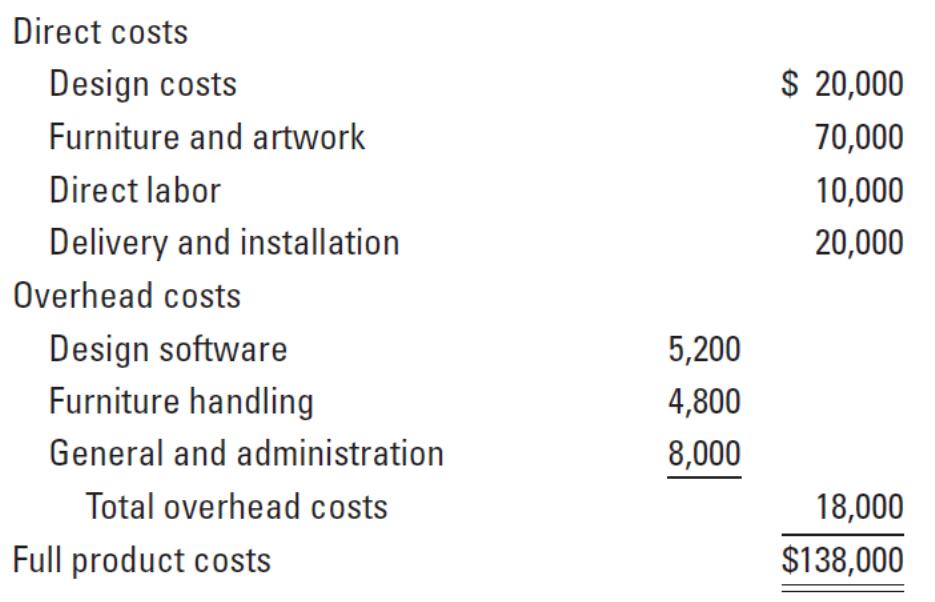
based on the following cost information:
Based on the company policy of pricing at 120% of full cost, Groom gives Doogan a figure of
$165,600 to submit for the job. Doogan is very concerned. He tells Groom that at that price,
Instyle has no chance of winning the job. He confides in her that he spent $600 of company
funds to take the developer to a basketball playoff game where the developer disclosed that a bid
of $156,000 would win the job. He hadn’t planned to tell Groom because he was confident that
the bid she developed would be below that amount. Doogan reasons that the $600 he spent will
be wasted if Instyle doesn’t capitalize on this valuable information. In any case, the company
will still make money if it wins the bid at $156,000 because it is higher than the full cost of
$138,000.
Required:
1. Is the $600 spent on the basketball tickets relevant to the bid decision? Why or why not?
2. Groom suggests that if Doogan is willing to use cheaper furniture and artwork, he can
achieve a bid of $156,000. The designs have already been reviewed and accepted and cannot
be changed without additional cost, so the entire amount of reduction in cost will need to
come from furniture and artwork. What is the target cost of furniture and artwork that will
allow Doogan to submit a bid of $156,000 assuming a target markup of 20% of full cost?
13-44
3. Evaluate whether Groom’s suggestion to Doogan to use the developer’s tip is unethical.
Would it be unethical for Doogan to redo the project’s design to arrive at a lower bid? What
steps should Doogan and Groom take to resolve this situation?
SOLUTION
13-45
13-36 (25 min.) Ethics and pricing.
2. The original cost of framing materials per unit was $80 ($40,000 ÷ 500 units). If the target
price is $145,000 and the markup is 25% of full cost, the target full cost is $116,000 ($145,000 ÷
1.25). The difference in full cost is $5,000 ($121,000 – $116,000). Therefore, the target cost of
framing materials is $35,000 ($40,000 – $5,000). The target cost of framing materials per unit
equals $70 ($35,000 ÷ 500)
3. It was unethical for Grant to use the basketball tickets to get the tip out of the purchasing
agent. Knowing about Grant’s action and suggesting a way to use it is unethical on the part of
Gomes. In assessing the situation, the specific “Standards of Ethical Conduct for Management
Accountants,” described in Chapter 1 that the management accountant should consider are listed
below.
Integrity
The management accountant has a responsibility to avoid actual or apparent conflicts of interest
and advise all appropriate parties of any potential conflict. Using unethically gathered
information to compromise a sealed bid arrangement is clearly a violation of this standard. The
Standards of Ethical Conduct require the management accountant to communicate favorable as
well as unfavorable information. In this regard, both Grant’s and Gomes’s behavior could be
viewed as unethical.
Credibility
The Standards of Ethical Conduct for Management Accountants require that information should
be fairly and objectively communicated and that all relevant information should be disclosed.
From a management accountant’s standpoint, revising a bid based on this kind of information
violates both of these precepts.
Grant and Gomes should leave the bid as it was originally produced, without using the
unethically obtained inside information. The company should clarify its policy on business
entertainment.
13-46
13-36 (25–30 min.) Value engineering, target pricing, and locked-in costs.
Wood Creations designs, manufactures, and sells modern wood sculptures. Sally Jensen is an
artist for the company. Jensen has spent much of the past month working on the design of an
intricate abstract piece. Jim Smoot, product development manager, likes the design. However, he
wants to make sure that the sculpture can be priced competitively. Alexis Nampa, Wood’s cost
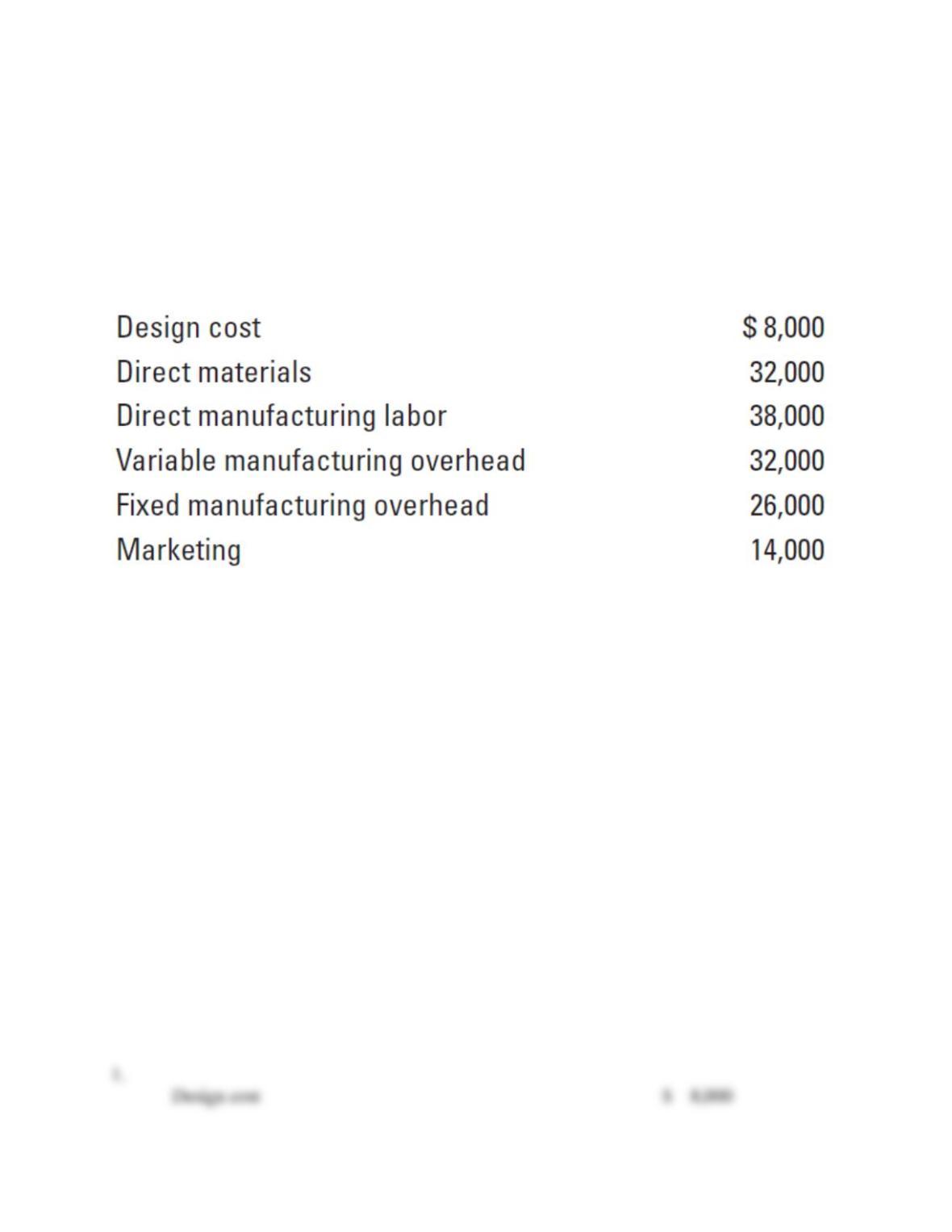
accountant, presents Smoot with the following cost data for the expected production of 75
sculptures:
Required:
1. Smoot thinks that Wood Creations can successfully market each piece for $2,500. The
company’s target operating income is 25% of revenue. Calculate the target full cost of
producing the 75 sculptures. Does the cost estimate Nampa developed meet Wood’s
requirements? Is value engineering needed?
2. Smoot discovers that Jensen has designed the sculpture using the highest-grade wood
available, rather than the standard grade of wood that Wood Creations normally uses.
Replacing the grade of wood will lower the cost of direct materials by 60%. However, the
redesign will require an additional $1,100 of design cost, and the sculptures will be sold for
$2,400 each. Will this design change allow the sculpture to meet its target cost? Is the cost of
wood a locked-in cost?
3. Jensen insists that the higher-grade wood is a necessity in terms of the sculpture’s design.
She believes that spending an additional $3,000 on better marketing will allow Wood
Creations to sell each sculpture for $2,700. If this is the case, will the sculptures’ target cost
be achieved without any value engineering?
4. Compare the total operating income on the 75 sculptures for requirements 2 and 3. What do
you recommend Wood Creations do, based solely on your calculations? Explain briefly.
5. What challenges might managers at Wood Creations encounter in achieving the target cost
and how might they overcome these challenges?
SOLUTION
13-47
13-48