1. A company may temporarily have excess cash that is not needed for use in its current
operations. Instead of letting excess cash remain idle in a checking account, most companies
2. A gain or loss can occur when the selling price of the bond differs from the book value (cost) of
3. The equity method is used for equity investments representing more than 20% and less than 50%
of the outstanding shares of the investee.
4. Under the cost method, a dividend received is treated as dividend revenue. Under the equity
5. An investment greater than 50% of the investee is considered to be an investment that exerts
6. Both portfolios are reported at fair value. However, changes in the fair value of trading securities
7. A credit balance in Valuation Allowance for Available-for-Sale Investments is subtracted from
Available-for-Sale Investments (at cost). The net reported amount is the available-for-sale securities
at fair value.
8. A debit balance in Unrealized Gain (Loss) on Available-for-Sale Investments would be reported as a
reduction in the Stockholders’ Equity section of the balance sheet, after Retained Earnings.
9. Over the past several decades, the financial statements of companies in most industries have
included more fair value measures. This is partially due to the Financial Accounting Standards
10. When an asset or a liability is reported at its fair value, any difference between the asset’s original
cost or prior period’s fair value must be recorded. The account, Valuation Allowance for Trading
CHAPTER 13
INVESTMENTS AND FAIR VALUE ACCOUNTING
DISCUSSION QUESTIONS
13-1
CHAPTER 13 Investments and Fair Value Accounting
PE 13–1A
a. Investments—Oates City Bonds 300,000
Interest Receivable 3,000
Cash 303,000
…
PE 13–1B
a. Investments—Iceline Inc. Bonds 120,000
Interest Receivable 1,000
Cash 121,000
…
PRACTICE EXERCISES
CHAPTER 13 Investments and Fair Value Accounting
PE 13–2A
10 Investments—Sting Company Stock* 375,150
*$0.40 per share × 15,000 shares
29 Cash* 191,880
PE 13–2B
12 Investments—Aspen Company Stock* 100,200
*$0.50 per share × 2,000 shares
10 Cash* 50,250
Feb.
May
Sept.
Nov.
13-3
CHAPTER 13 Investments and Fair Value Accounting
PE 13–3A
2 Investment in Gruden Company Stock 625,000
Cash 625,000
PE 13–3B
2 Investment in Fain Company Stock 500,000
Cash 500,000
PE 13–4A
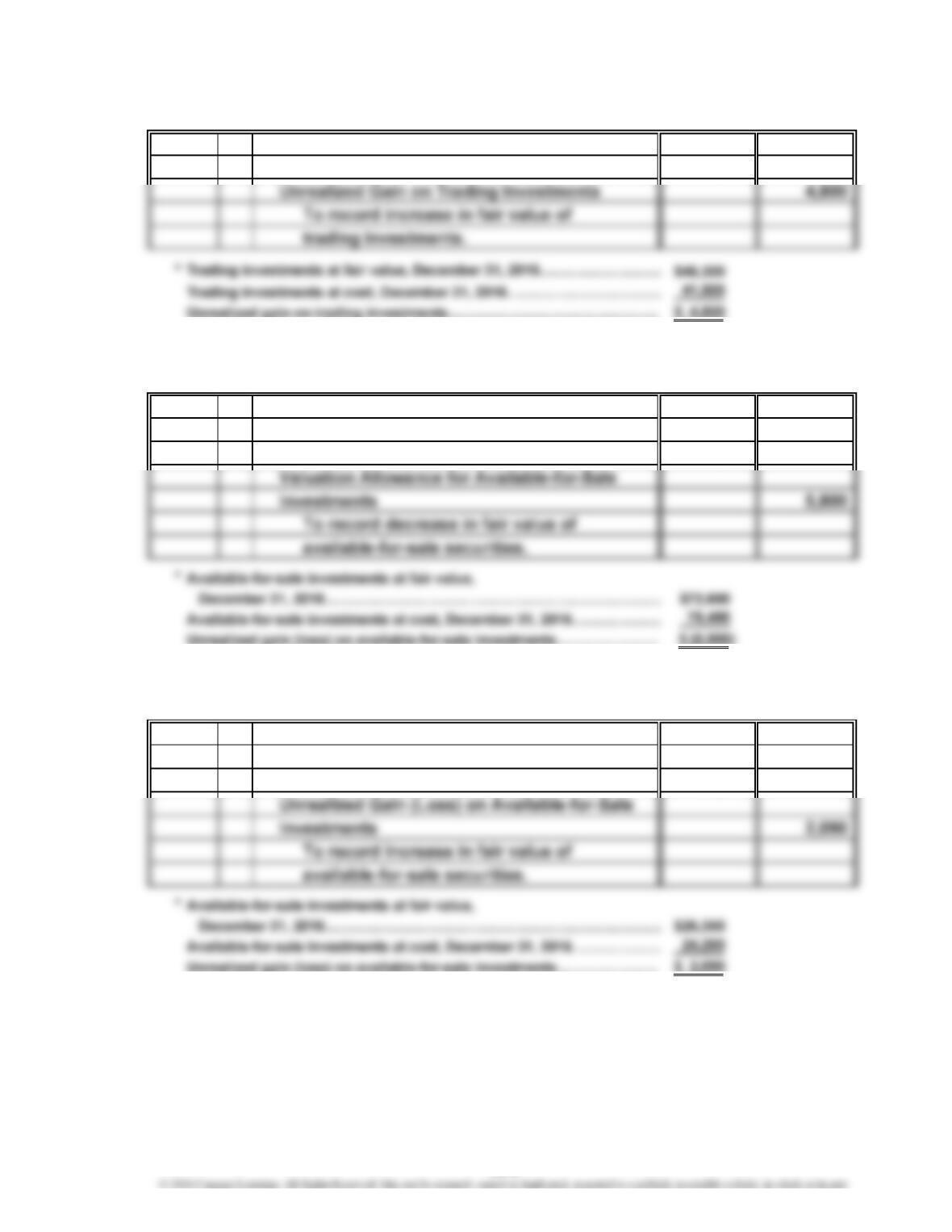
31 Unrealized Loss on Trading Investments* 27,600
2016
Dec.
Jan.
Jan.
CHAPTER 13 Investments and Fair Value Accounting
PE 13–4B
31 Valuation Allowance for Trading Investments*
PE 13–5A
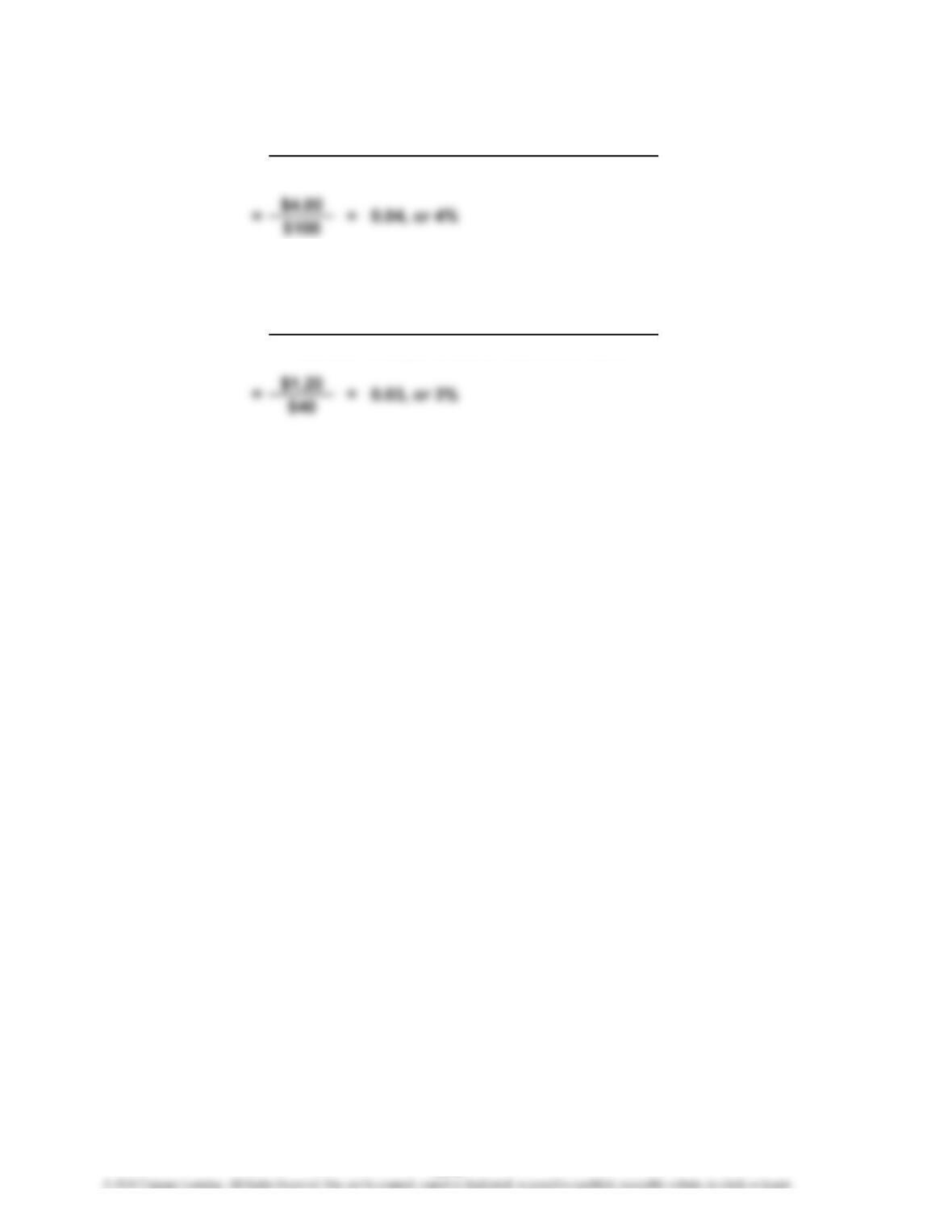
31 Unrealized Gain (Loss) on Available-for-Sale
Investments*
…
PE 13–5B
31 Valuation Allowance for Available-for-Sale
Investments*
…
Dec.
2,090
2016
5,800
2016
Dec.
2016
Dec. 4,800
13-5
CHAPTER 13 Investments and Fair Value Accounting
PE 13–6A
PE 13–6B
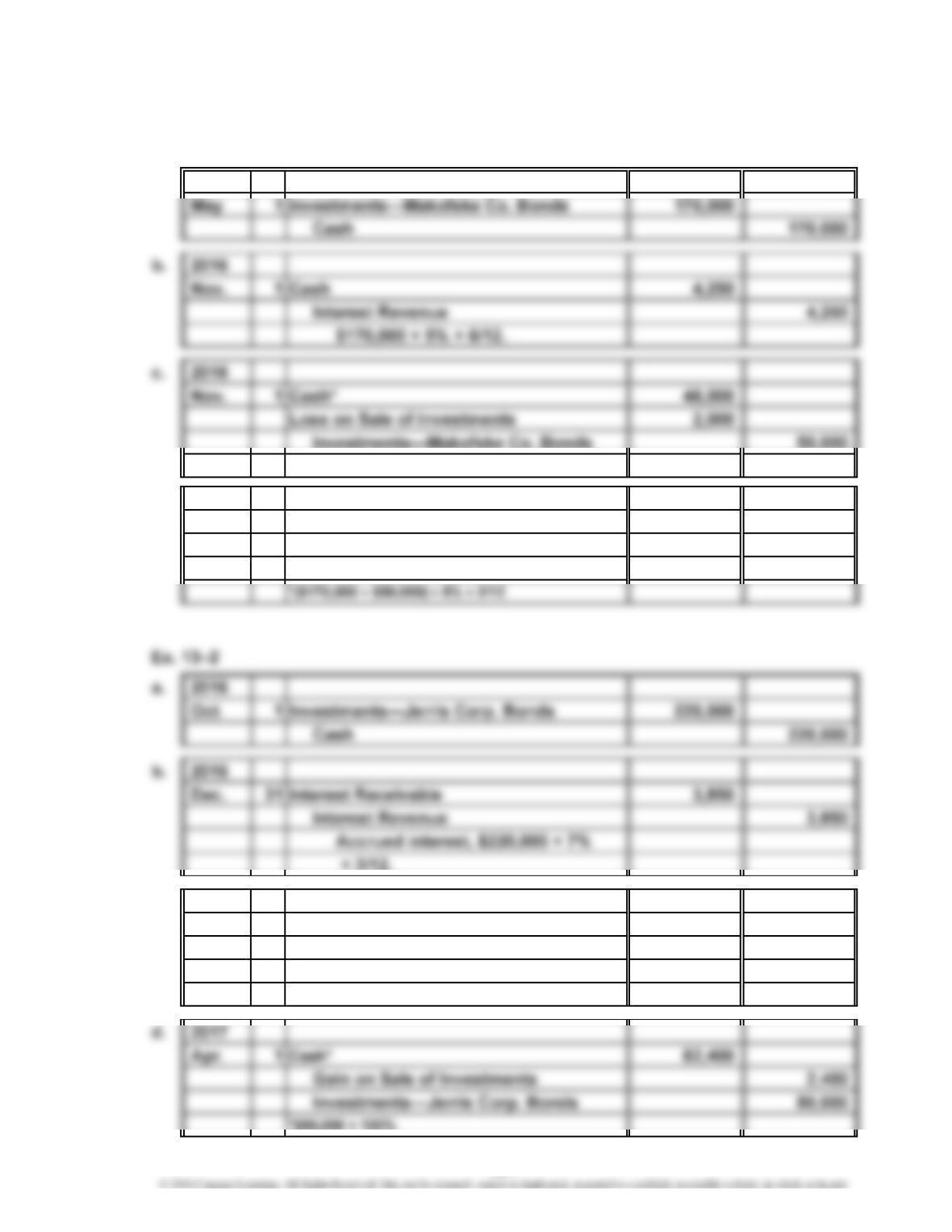
Dividend Yield Dividends per Share of Common Stock
Market Price per Share of Common Stock
=
Dividends per Share of Common Stock
Market Price per Share of Common Stock
Dividend Yield
=
13-6
CHAPTER 13 Investments and Fair Value Accounting
Ex. 13–1
a.
*$50,000 × 96%
d.
31 Interest Receivable* 1,000
Interest Revenue 1,000
Accrued interest.
c.
1Cash 7,700
Interest Receivable 3,850
Interest Revenue* 3,850
*$220,000 × 7% × 3/12
Apr.
2017
2016
Dec.
EXERCISES
2016
13-7
CHAPTER 13 Investments and Fair Value Accounting
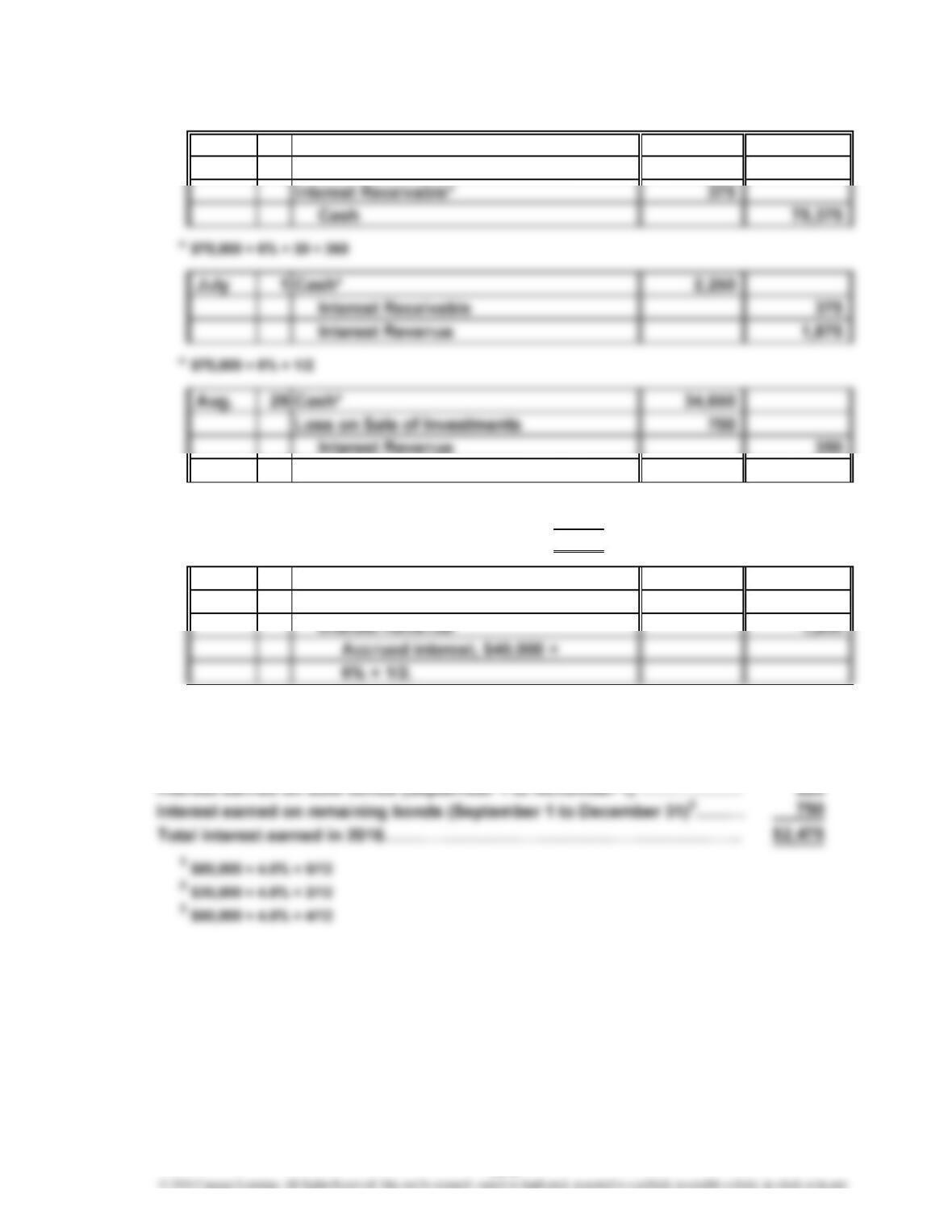
Ex. 13–3
a.
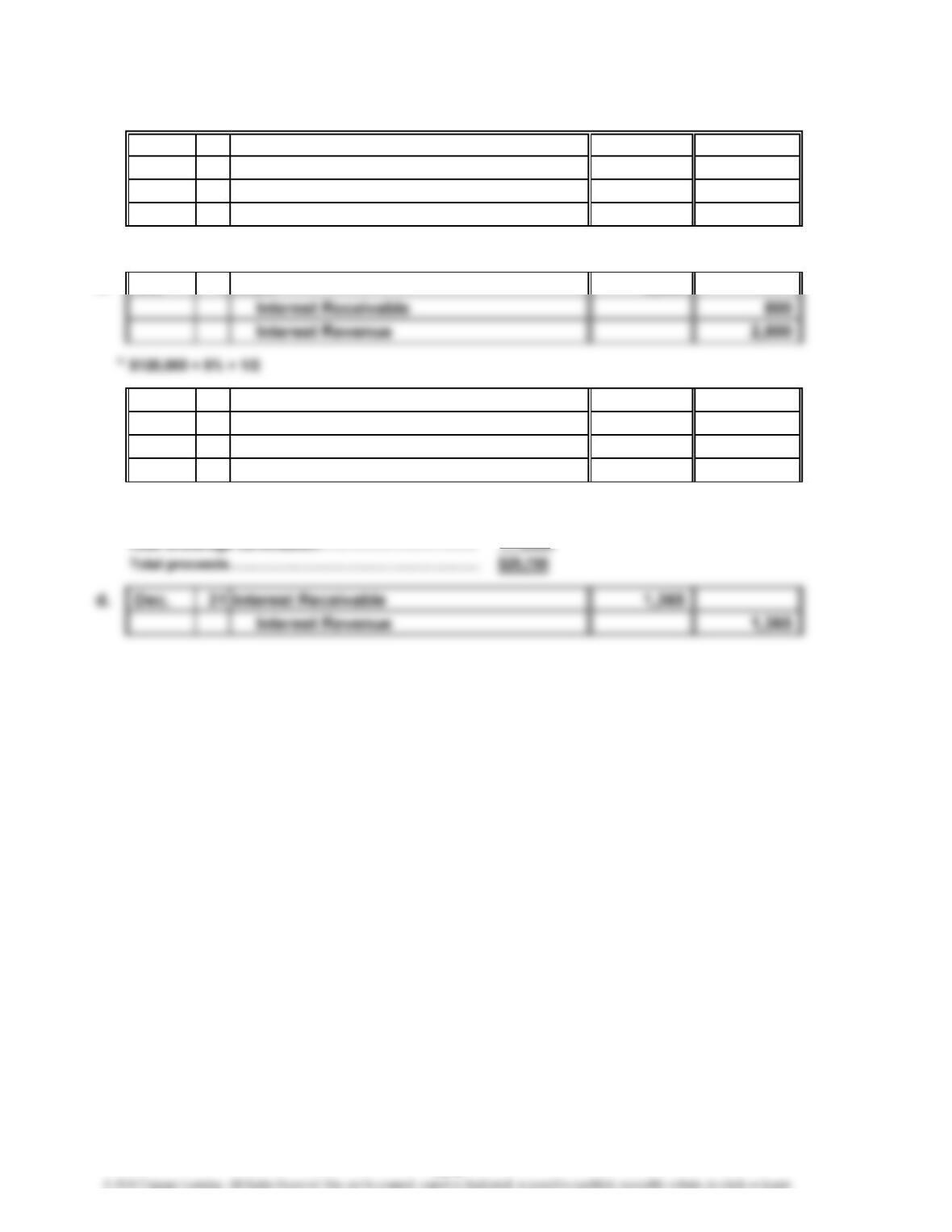
11 Investments—Sanz County Bonds 120,000
Interest Receivable* 800
Cash 120,800
*$120,000 × 6% × 40 ÷ 360
b. 1 Cash* 3,600
c. 31 Cash* 29,750
Loss on Sale of Investments 400
Interest Revenue 150
Investments—Sanz County Bonds 30,000
*Bond sale ($30,000 × 0.99)………………………………
…
$29,700
Accrued interest…………………………………………… 150
(100)
May
2016
Oct
Oct
13-8
CHAPTER 13 Investments and Fair Value Accounting
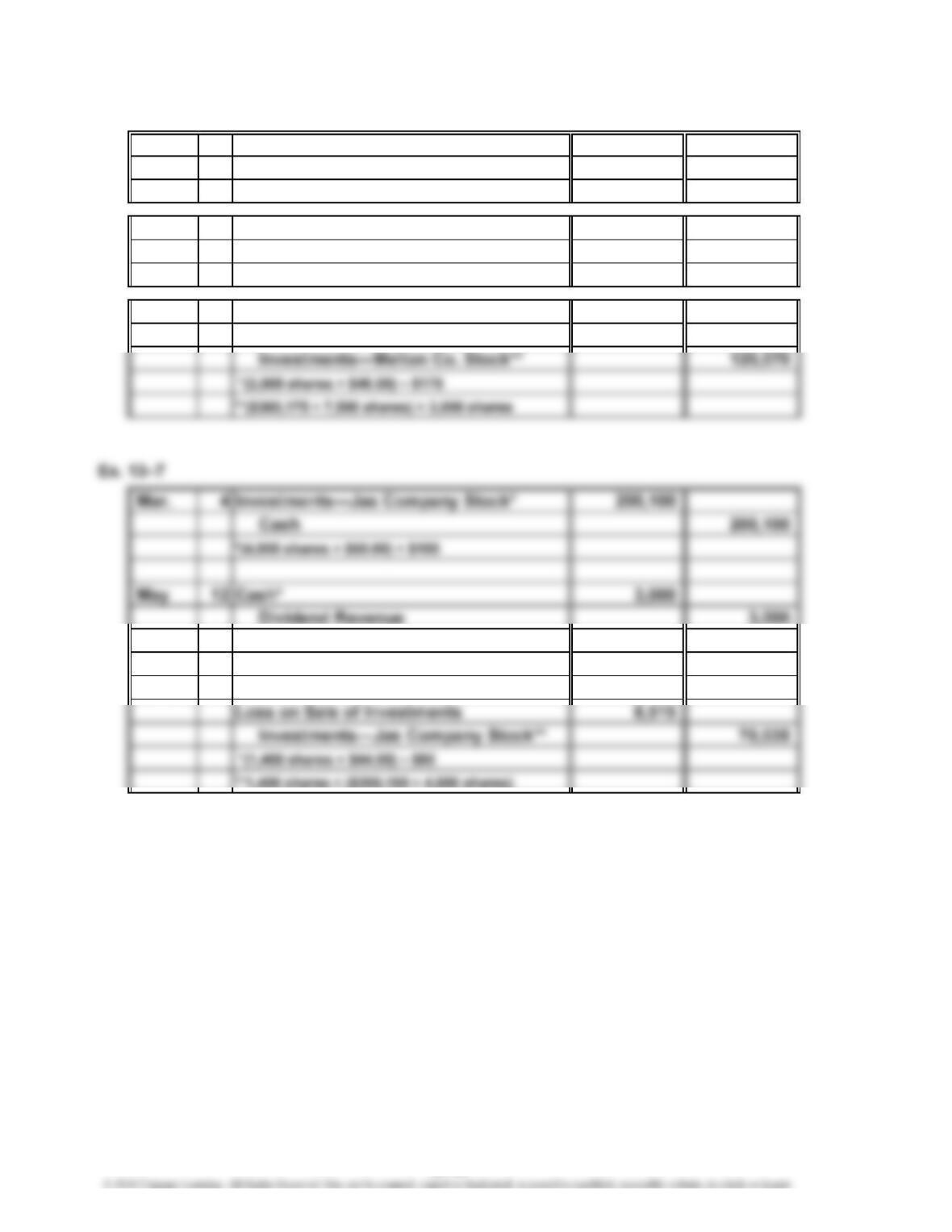
Ex. 13–4
a.
31 Investments—Government Bonds 75,000
Investments—Government Bonds 35,000
*Bond sale ($35,000 × 98%)………………………………
…
$34,300
Accrued interest…………………………………………… 350
Total proceeds from sale…………………………………
…
$34,650
b.
31 Interest Receivable 1,200
Ex. 13–5
Interest earned (April 1 to September 1)1………………………………………
…
$1,500
Jan.
2016
2016
Dec.
13-9
CHAPTER 13 Investments and Fair Value Accounting
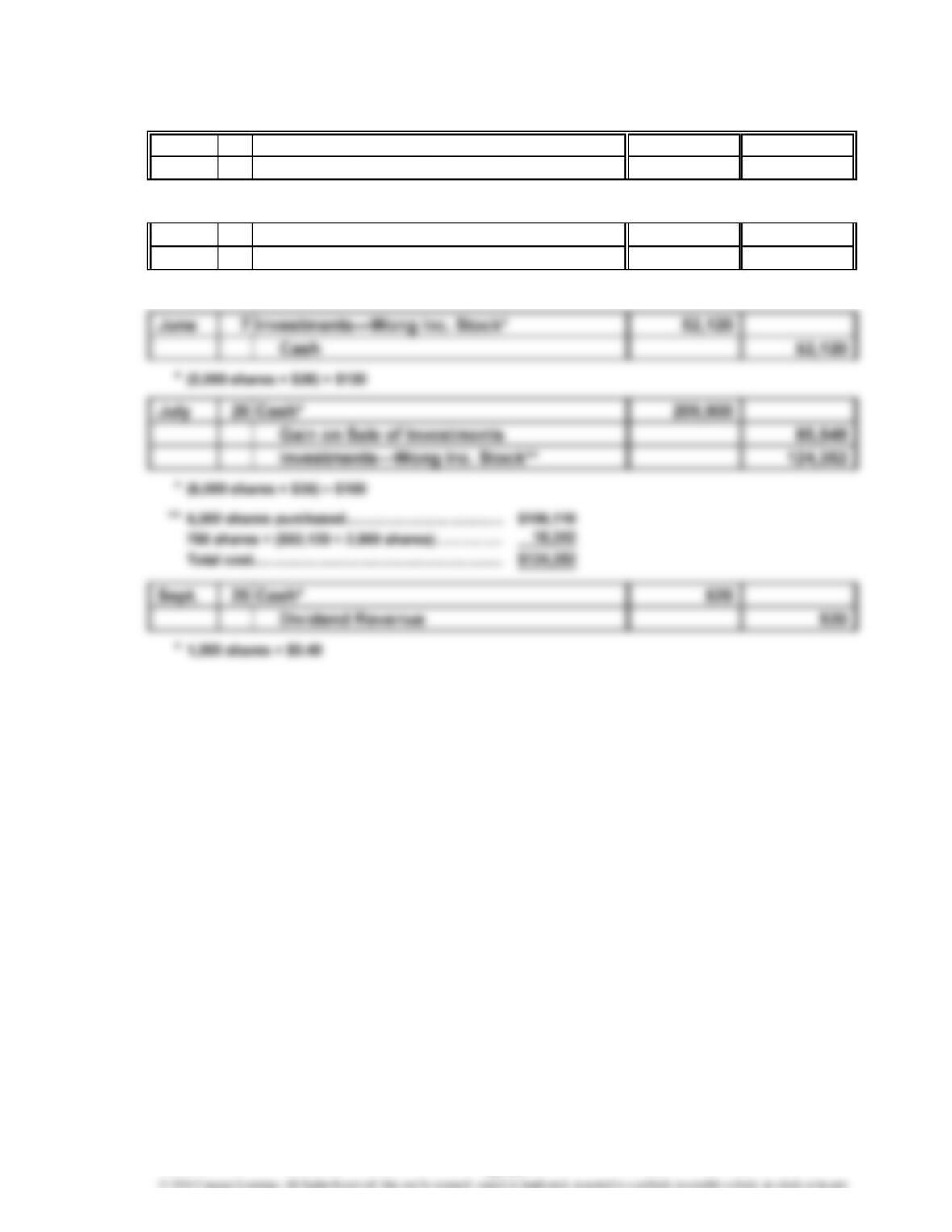
Ex. 13–6
a. 4 Investments—Melton Co. Stock* 300,175
Cash 300,175
*(7,500 shares × $40.00) + $175
b. 15 Cash* 15,750
Dividend Revenue 15,750
*$2.10 × 7,500 shares
c. 12 Cash* 137,825
Gain on Sale of Investments 17,755
*$0.75 per share × 4,000 shares
17 Cash* 61,520
June
Oct.
Mar.
June
13-10
CHAPTER 13 Investments and Fair Value Accounting
Ex. 13–8
2 Investments—Wong Inc. Stock* 106,110
Cash 106,110
*(5,300 shares × $20) + $110
6 Cash* 1,590
Dividend Revenue 1,590
*5,300 shares × $0.30
Feb.
Mar.
13-11
CHAPTER 13 Investments and Fair Value Accounting
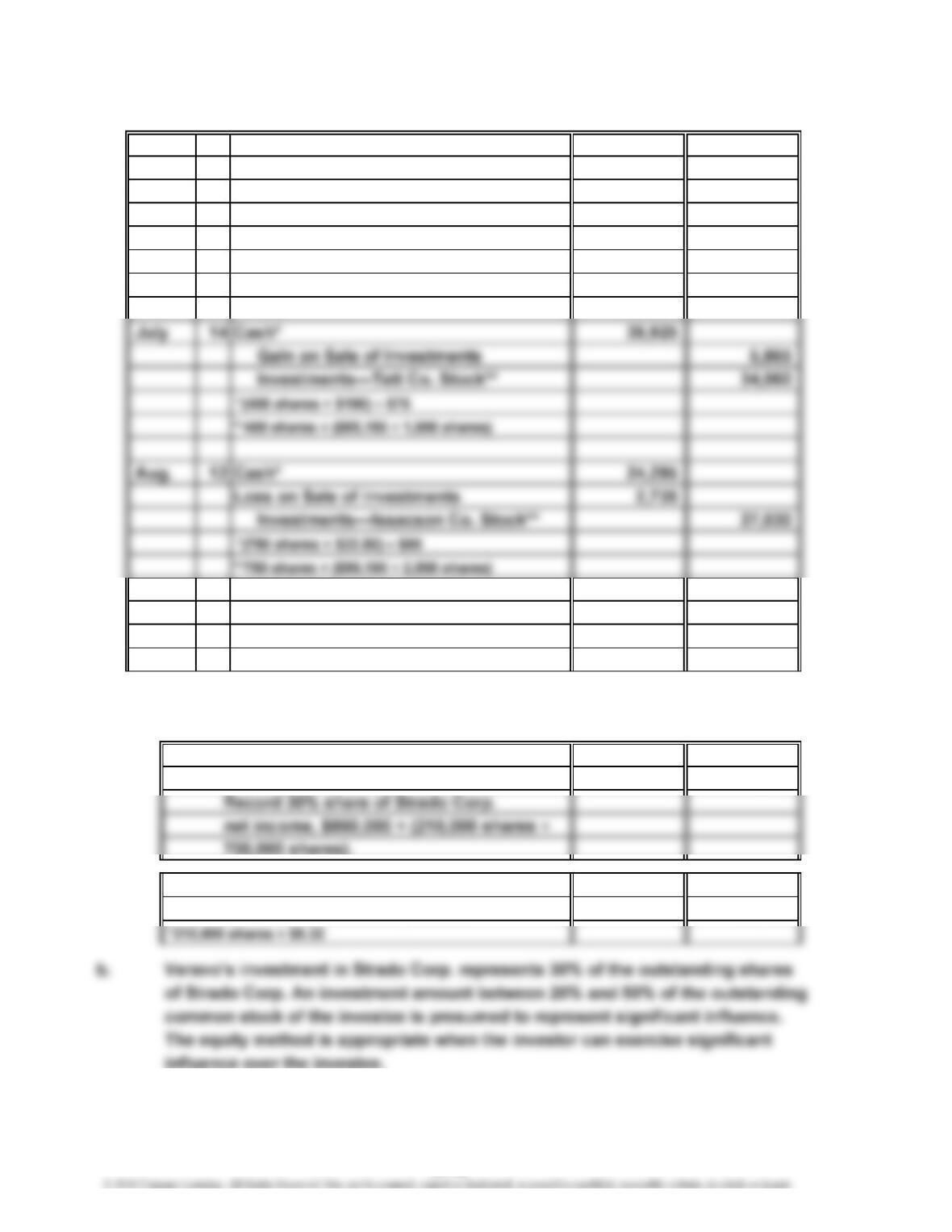
Ex. 13–9
Feb. 24 Investments—Tett Co. Stock* 85,150
Cash 85,150
*(1,000 shares × $85) + $150
May 16 Investments—Issacson Co. Stock* 90,100
Cash 90,100
*(2,500 shares × $36) + $100
Oct. 31 Cash* 240
Dividend Revenue 240
*(1,000 shares – 400 shares) × $0.40
Ex. 13–10
a. 1. Investment in Strado Corp. Stock 258,000
Income of Strado Corp. 258,000
2. Cash* 67,200
Investment in Strado Corp. Stock 67,200
13-12
CHAPTER 13 Investments and Fair Value Accounting
Ex. 13–11
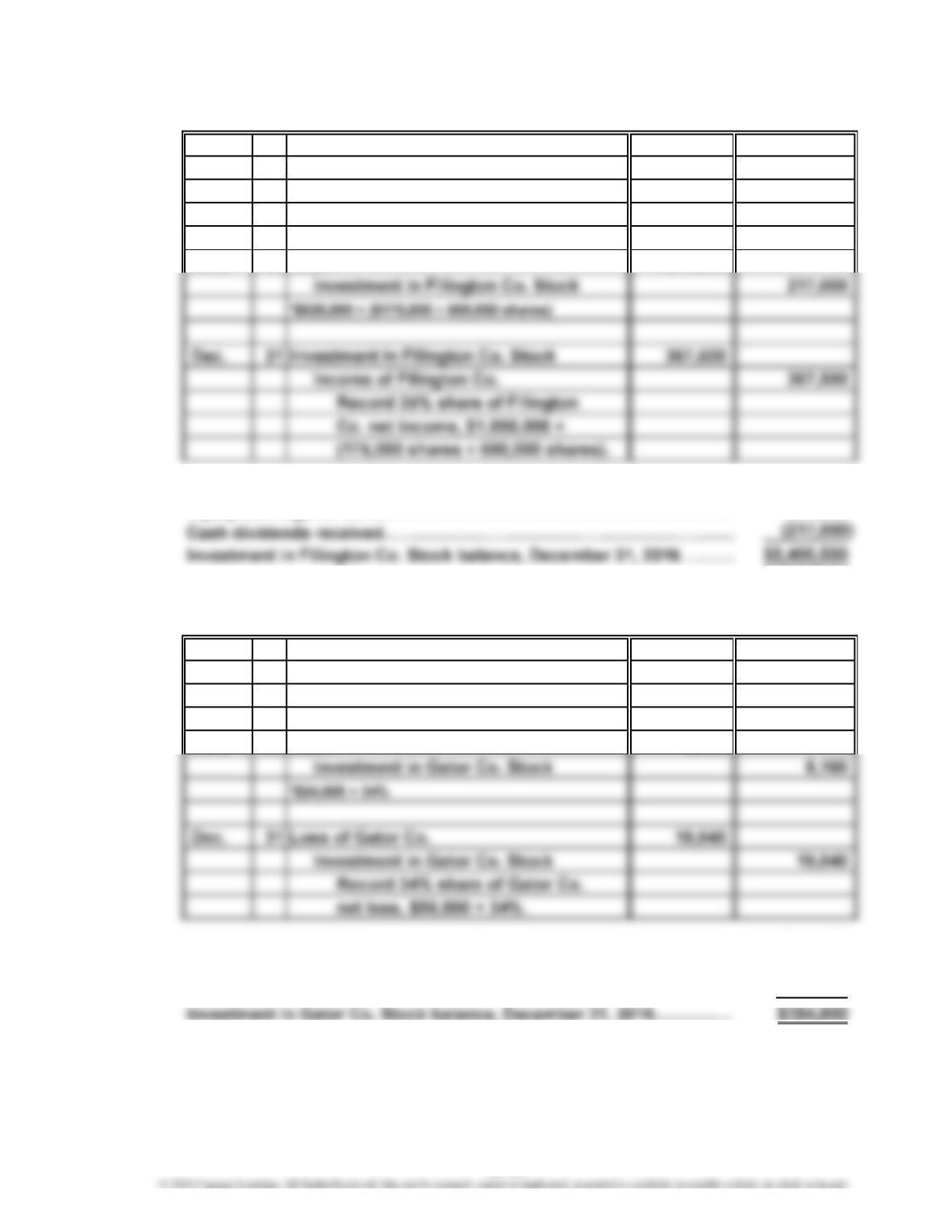
a.
14 Investment in Filington Co. Stock* 5,250,000
Cash 5,250,000
*175,000 shares × $30 per share
24 Cash* 217,000
b. Initial acquisition cost………………………………………………………… $5,250,000
Equity earnings for 2016……………………………………………………… 367,500
…
Ex. 13–12
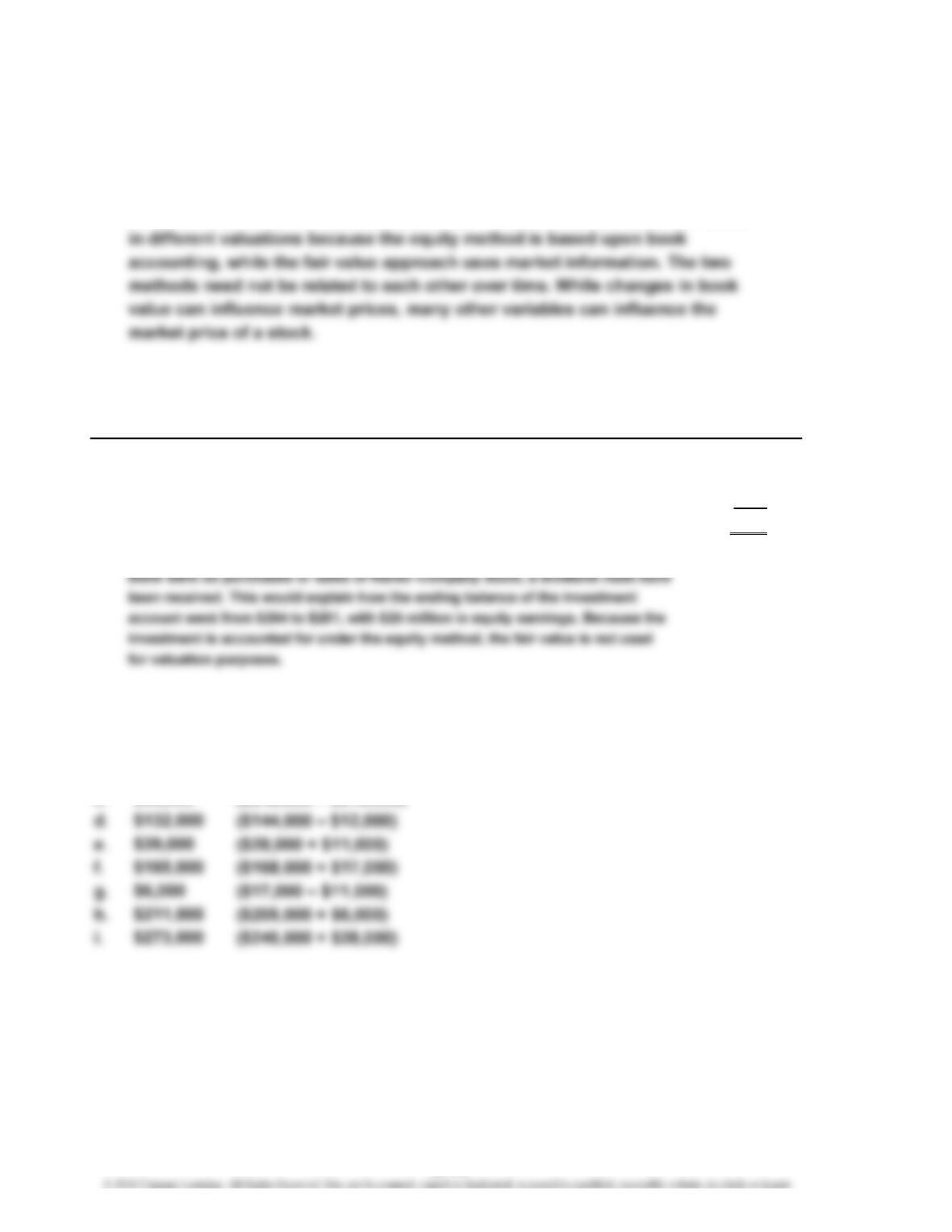
a.
6 Investment in Gator Co. Stock 212,000
Cash 212,000
30 Cash* 8,160
b. Initial acquisition cost………………………………………………………… $212,000
Equity loss for 2016……………………………………………………………
…
(19,040)
Cash dividends received……………………………………………………
…
(8,160)
June
2016
Jan.
2016
June
Jan.
13-13
CHAPTER 13 Investments and Fair Value Accounting
Ex. 13–12 (Concluded)
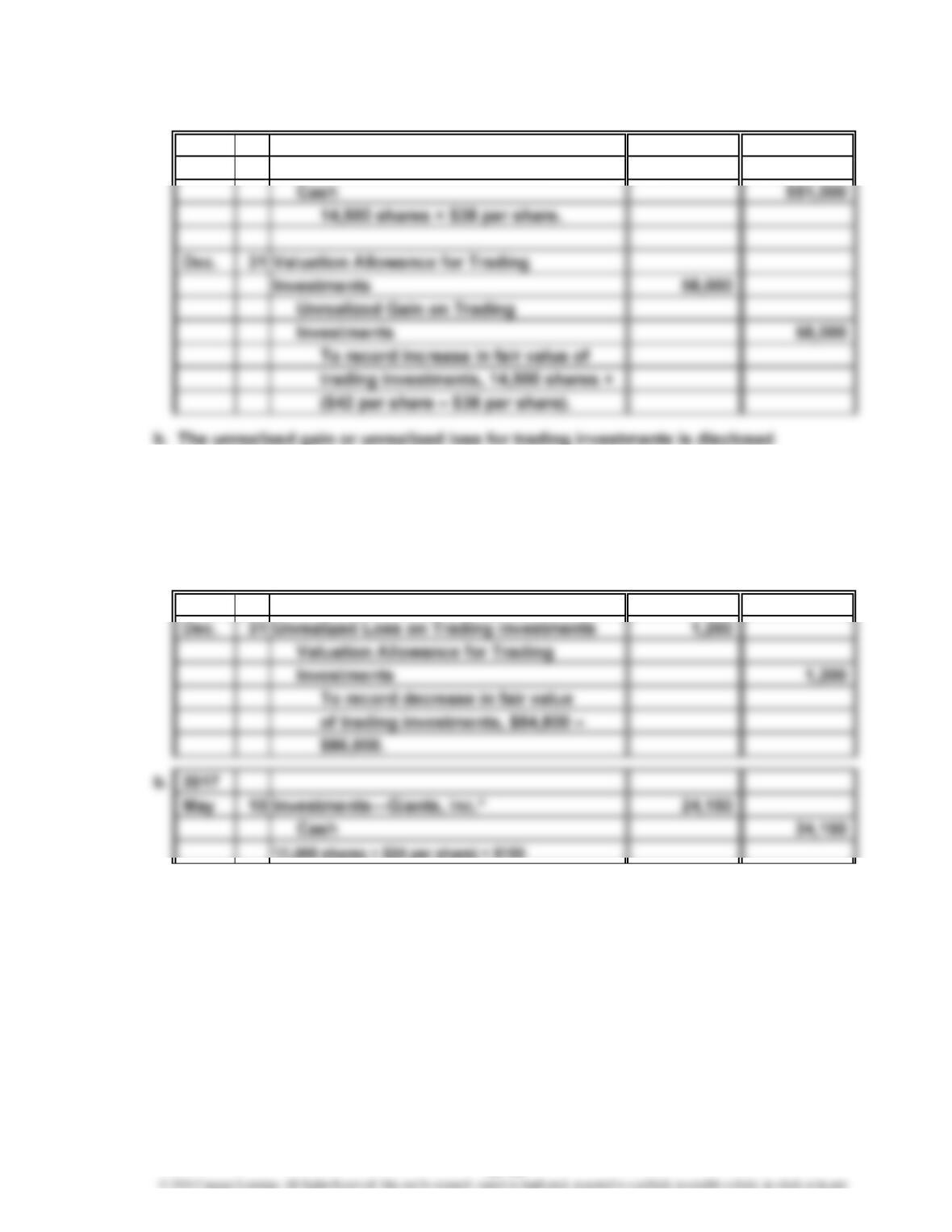
c. Under the equity method, the investor will record their proportionate share of
the net increase (or decrease) of the book value of the investee resulting from
earnings and dividend distributions. The fair value method uses market price
information to value the investment in the investee. These two methods result
Ex. 13–13
Investment in Raven Company stock, December 31, 2016……………………
…
Plus equity earnings in Raven Company…………………………………………
…
Less dividends received*……………………………………………………………
…
Investment in Raven Company stock, December 31, 2017……………………
…
*The Raven Company investment is accounted for under the equity method. Because
Ex. 13–14
a. $6,000 {$35,000 [from (c)] – $29,000 [from (b)]}
b. $29,000 [$17,000 – $(12,000)]
c. $35,000 ($245,000 – $210,000)
$281
(in millions)
$264
25
(8)
13-14
CHAPTER 13 Investments and Fair Value Accounting
Ex. 13–15
a.
24 Investments—Raiders, Inc. Stock 551,000
in the income statement as “other income” (or a separate item if significant).
Unrealized losses would be deducted in determining net income, while
unrealized gains would be added in determining net income.
Ex. 13–16
a.
Feb.
2016
2016
13-15
CHAPTER 13 Investments and Fair Value Accounting
Ex. 13–17
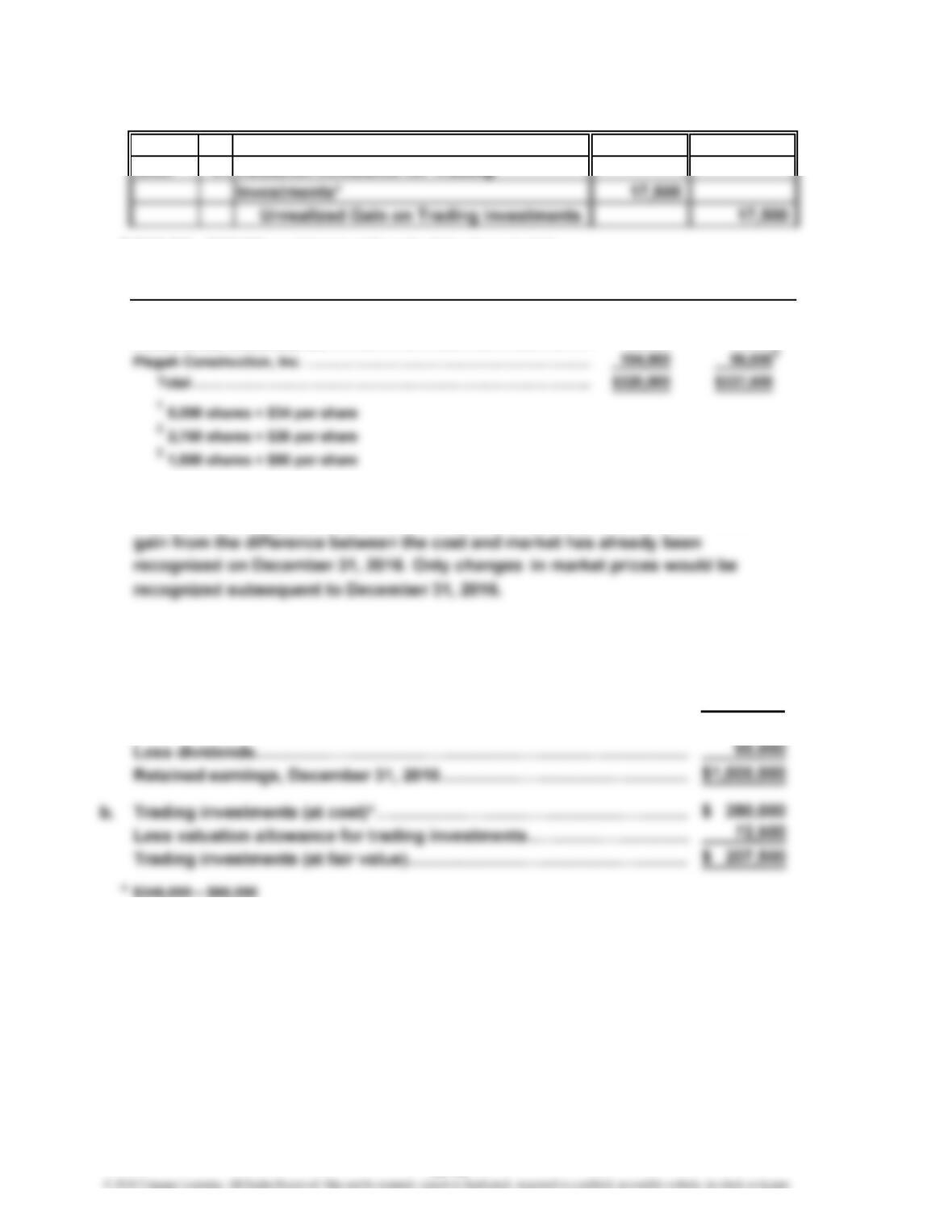
a.
31 Valuation Allowance for Trading
*
$337,500 – $320,000, as determined from the following schedule:
Cost
Arden Enterprises, Inc. ………………………………………………………
…
$150,000 $170,000
French Broad Industries, Inc. ………………………………………………
…
66,000 71,500
b. There would be no adjusting entry for December 31, 2017, if the market prices
remained unchanged from December 31, 2016. This is because the unrealized
Ex. 13–18
a. Retained earnings, December 31, 2015……………………………………
…
Plus net income…………………………………………………………………
…
…
…
$1,070,000
Fair Value
(Dec. 31, 2016)
$ 825,000
245,000
Dec.
2016
1
2
13-16
CHAPTER 13 Investments and Fair Value Accounting
Ex. 13–19
a. ($44,600 – $7,500)
b. ($220,000 – $175,400)
12 Investments—Bengals Inc. Stock 430,300
Cash 430,300
33,100 shares × $13 per share.
31 Unrealized Gain (Loss) on Available-for-
Dec.
$37,100
$44,600
2016
Sept.
13-17
CHAPTER 13 Investments and Fair Value Accounting
Ex. 13–21
a. 1.
2.
12 Investments—Rogue Wave Inc.* 65,350
2016
2017
June
13-18
CHAPTER 13 Investments and Fair Value Accounting
Ex. 13–22
a.
31 Unrealized Gain (Loss) on Available-for-
Sale Investments 4,250
Valuation Allowance for Available-for-
Sale Investments*
*
$259,450 – $263,700, as determined from the following schedule:
Cost
Dust Devil, Inc. …………………………………………………………………
…
$ 81,700 $ 76,000
b. There is no income statement impact from the December 31, 2016, adjusting
entry. Unrealized Gain (Loss) on Available-for-Sale Investments is reported
Fair Value
(Dec. 31, 2016)
4,250
2016
Dec.
1
2
13-19
CHAPTER 13 Investments and Fair Value Accounting
Ex. 13–23
a.
Current assets:
*Computation:
Market:
Hawking Inc.: 900 shares × $50…………………………………………
…
$45,000
Pavlov Co.: 1,780 shares × $24…………………………………………
…
42,720
b.
Retained earnings $300,000
Unrealized gain (loss) on available-for-sale
Ex. 13–24
Common stock $ 50,000
Paid-in capital in excess of par 250,000
Retained earnings* 520,000
Unrealized gain (loss) on available-for-sale investments** (25,000)
GALILEO COMPANY
Assets
GALILEO COMPANY
Balance Sheet (selected items)
December 31, 2016
December 31, 2016
Balance Sheet (selected items)
December 31, 2016
Stockholders’ Equity
COPERNICUS CORPORATION
Balance Sheet (selected Stockholders’ Equity items)