Chapter 13
Financial Statement Analysis
Solutions to Questions
13-1 Horizontal analysis examines how a
particular item on a financial statement such as
sales or cost of goods sold behaves over time.
13-2 By looking at trends, an analyst hopes
to get some idea of whether a situation is
improving, remaining the same, or deteriorating.
13-3 Price-earnings ratios reflect investors’
expectations concerning future earnings. The
higher the price-earnings ratio, the greater the
13-4 A rapidly growing tech company would
probably have many opportunities to make
investments at a rate of return higher than
13-5 The dividend yield is the dividend per
share divided by the market price per share. The
other source of return on an investment in stock
is increases in market value.
13-6 Financial leverage results from
borrowing funds at an interest rate that differs
from the rate of return on assets acquired using
13-7 If the company experiences big
variations in net cash flows from operations,
stockholders might be pleased that the company
has no debt. In hard times, interest payments
13-8 The market value of a share of common
stock often exceeds the book value per share.
13-9 A 2 to 1 current ratio might not be
adequate for several reasons. First, the
difficult to collect.
The Foundational 15
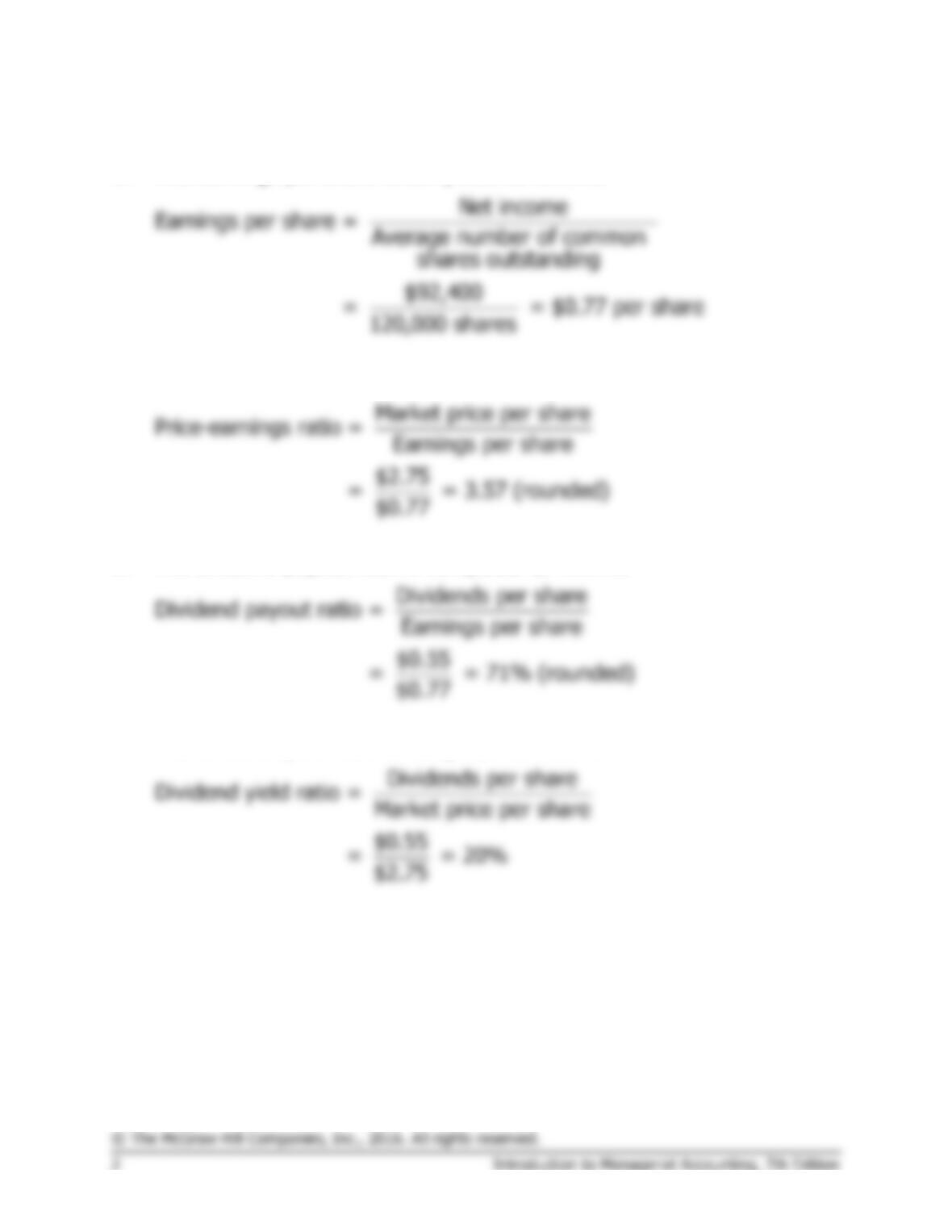
1. The earnings per share is computed as follows:
2. The price-earnings ratio is computed as follows:
3. The dividend payout ratio is computed as follows:
The dividend yield ratio is computed as follows:
The Foundational 15 (continued)
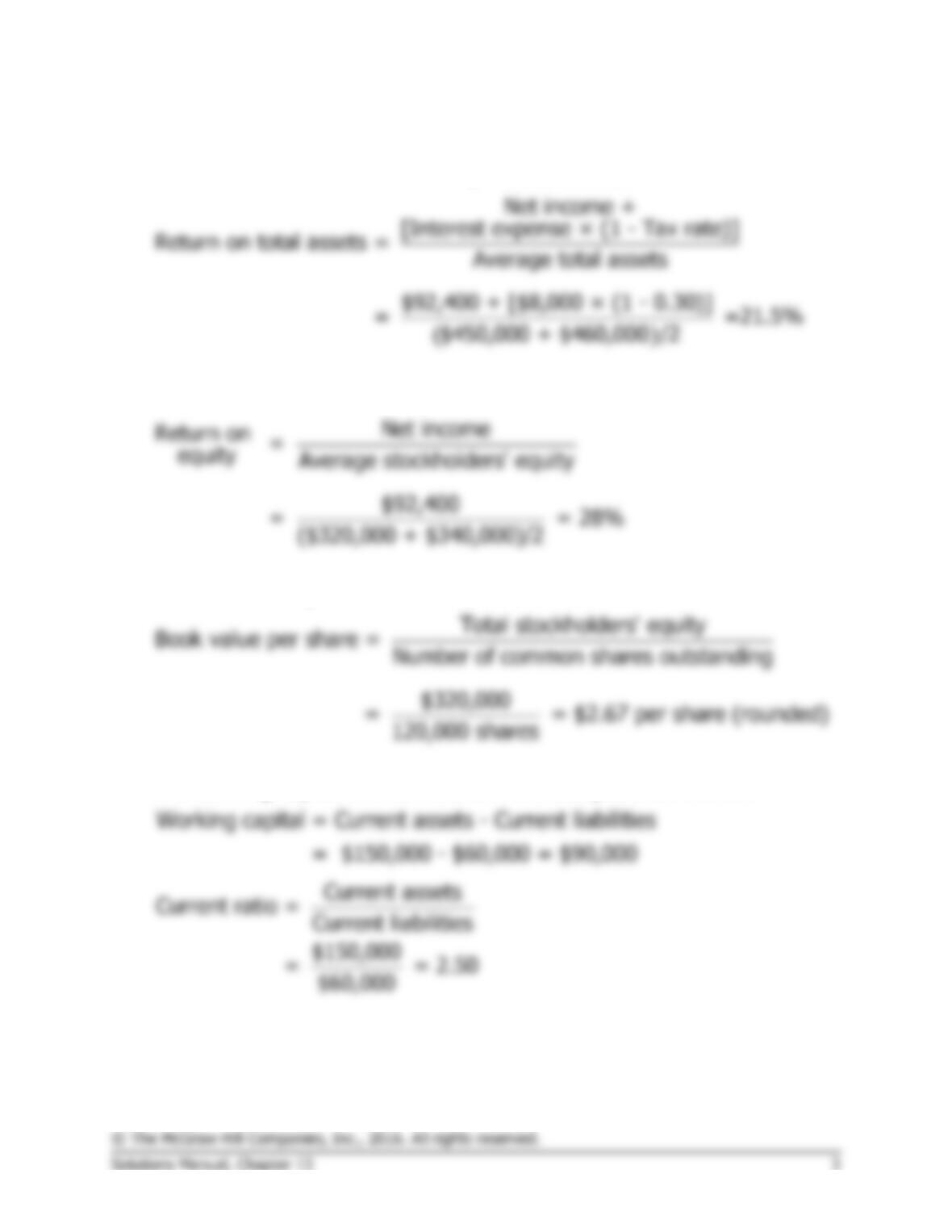
4. The return on total assets is computed as follows:
5. The return on equity is computed as follows:
6. The book value per share is computed as follows:
7. The working capital and current ratio are computed as follows:
The Foundational 15 (continued)
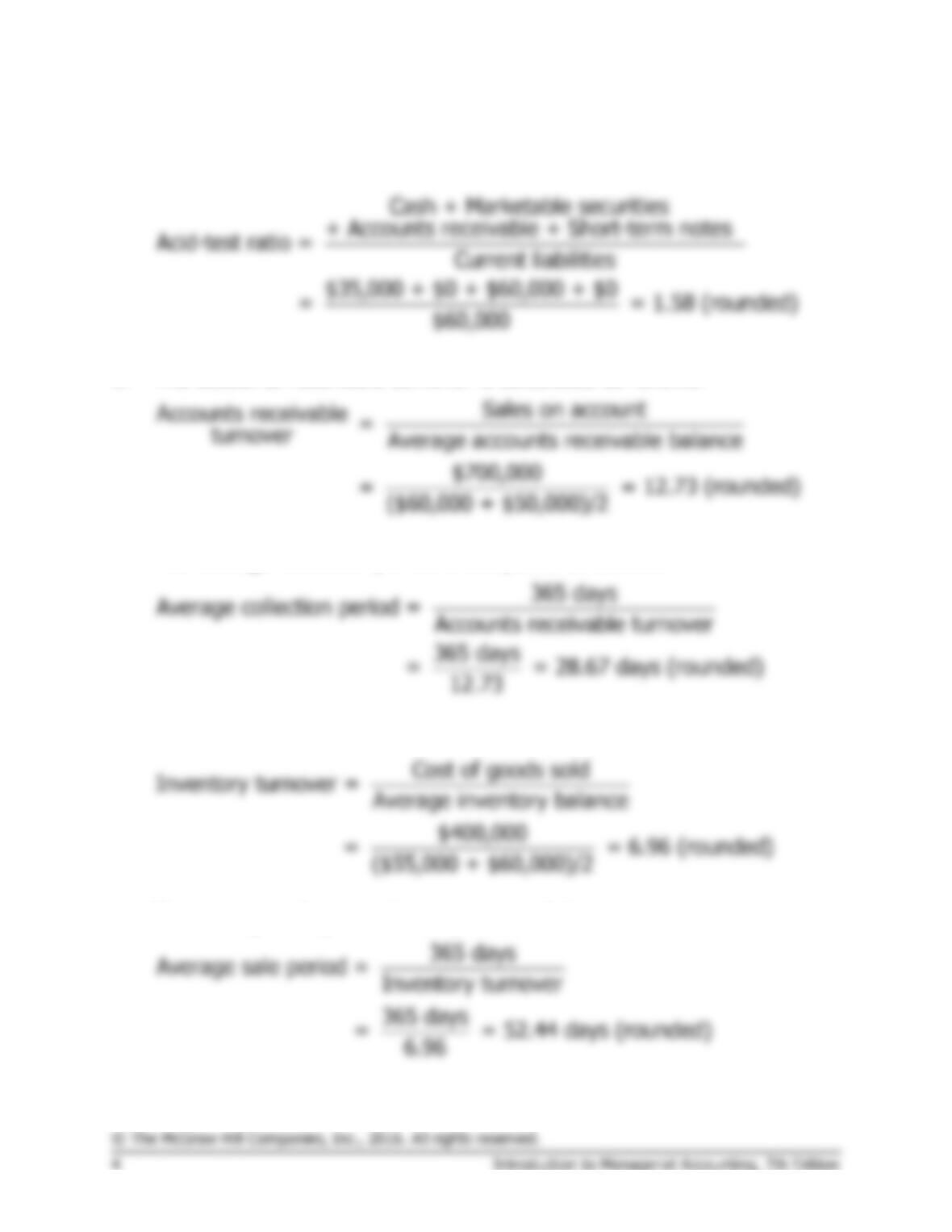
8. The acid-test ratio is computed as follows:
9. The accounts receivable turnover is calculated as follows:
The average collection period is computed as follows:
10. The inventory turnover is computed as follows:
The average sale period is computed as follows:
The Foundational 15 (continued)
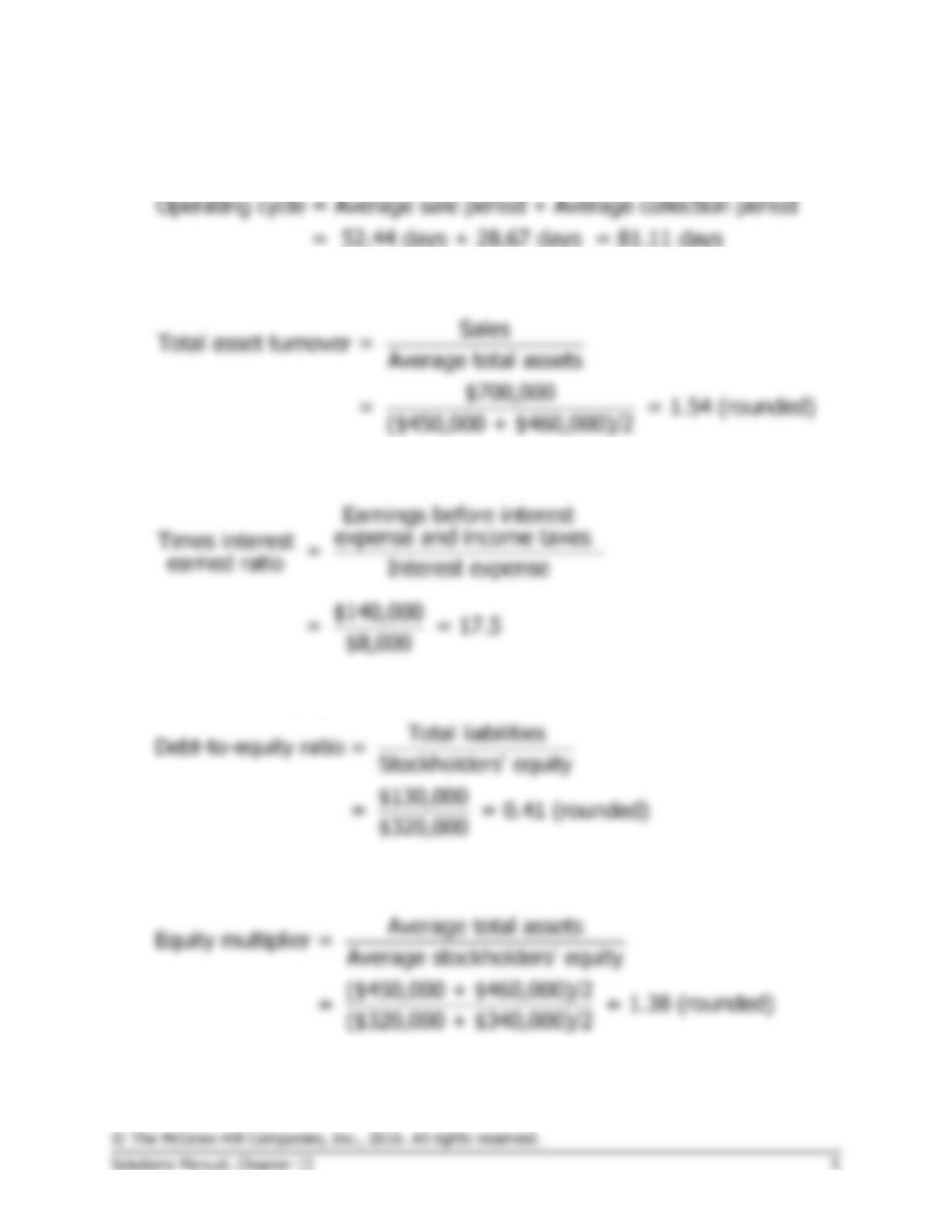
11. The operating cycle is computed as follows:
12. The total asset turnover is computed as follows:
13. The times interest earned ratio is computed as follows:
14. The debt–to-equity ratio is computed as follows:
15. The equity multiplier is computed as follows:
Exercise 13-1 (15 minutes)
1.
This Year
Last Year
Sales……………………………………………..
100.0
%
100.0
%
Cost of goods sold …………………………...
62.3
58.6
Gross margin …………………………………..
Selling and administrative expenses:
Total selling and administrative expenses
28.5
Net operating income ………………………..
Interest expense ……………………………..
Net income before taxes ……………………
%
%
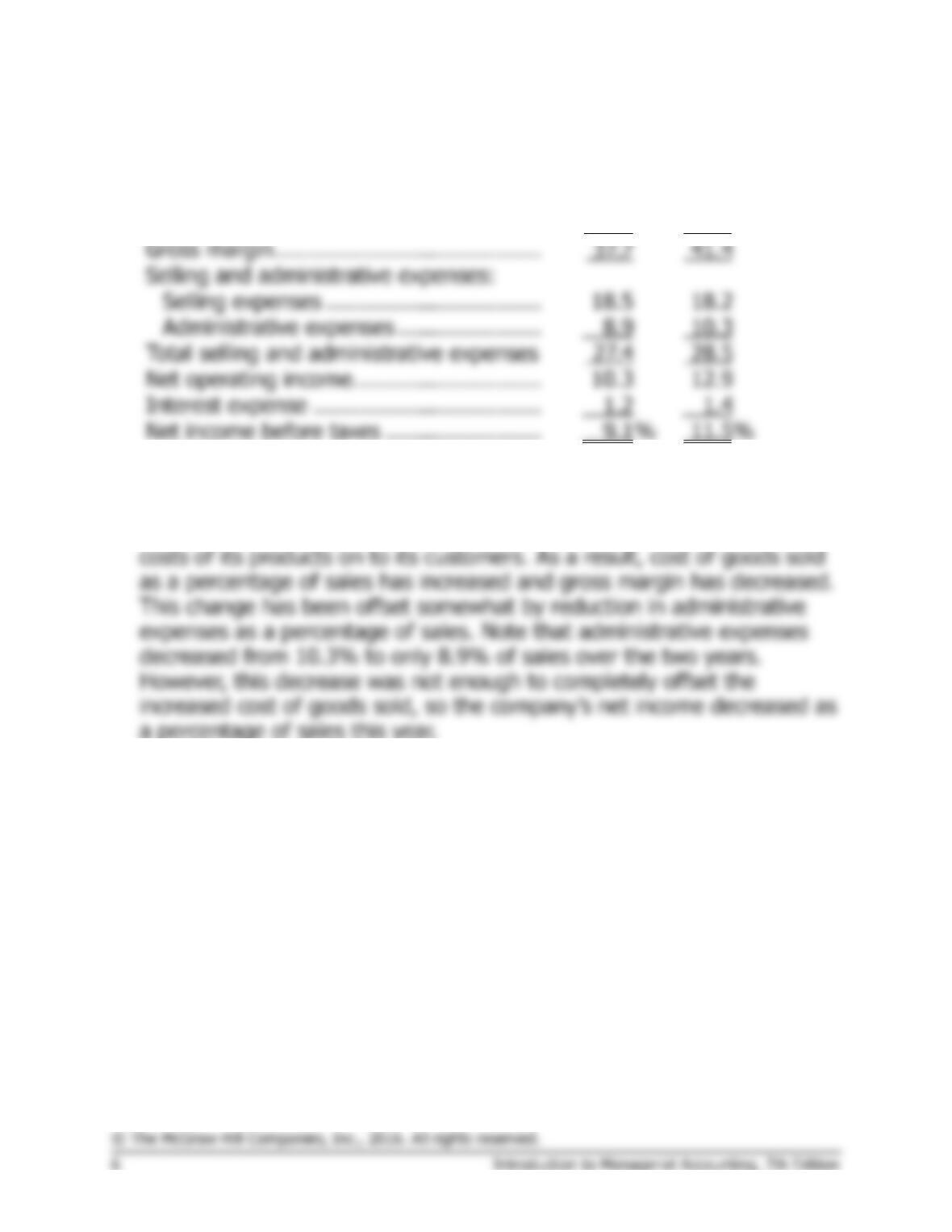
2. The company’s major problem seems to be the increase in cost of goods
sold, which increased from 58.6% of sales last year to 62.3% of sales
this year. This suggests that the company is not passing the increases in
Exercise 13-2 (10 minutes)
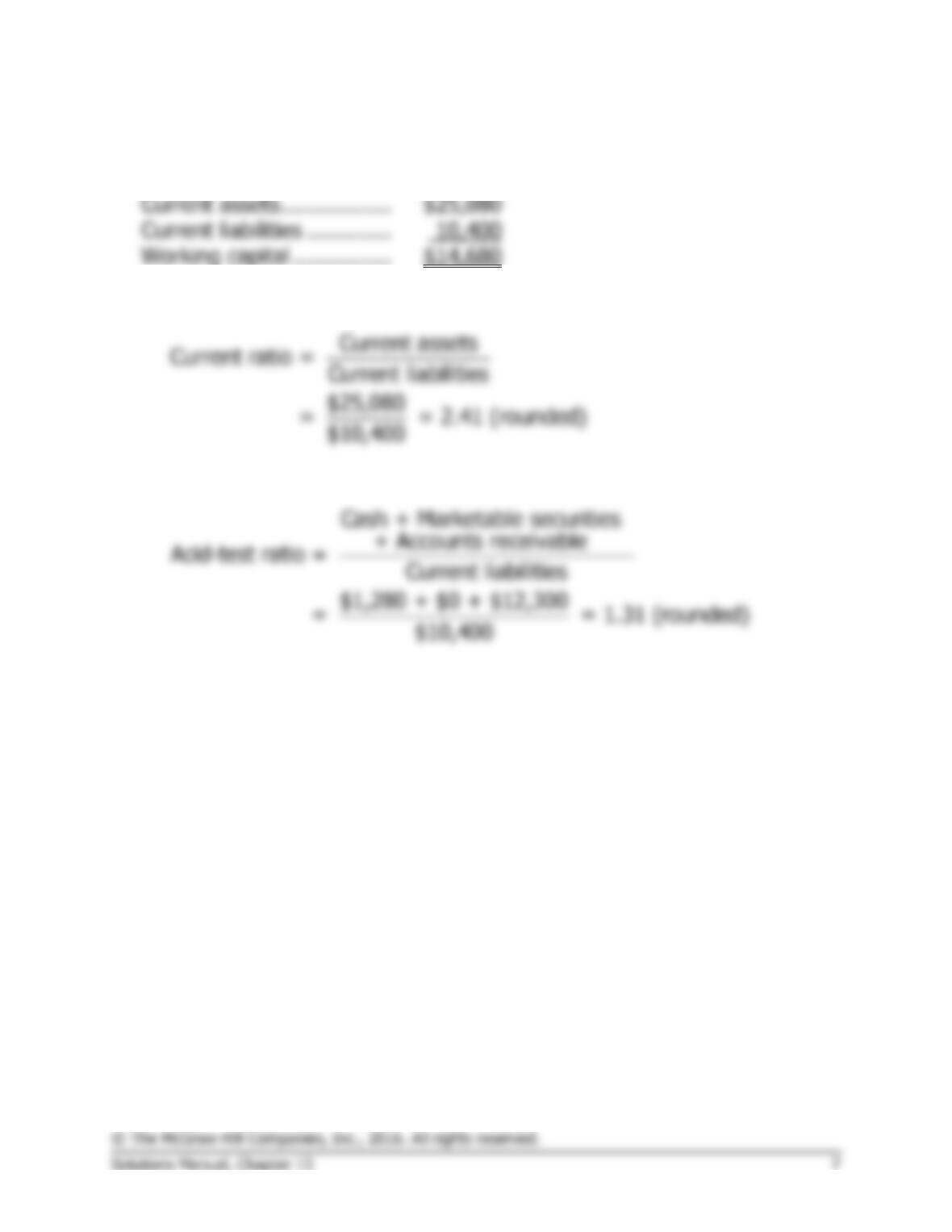
1. Calculation of working capital:
2. Calculation of the current ratio:
3. Calculation of the acid-test ratio:
Exercise 13-3 (20 minutes)
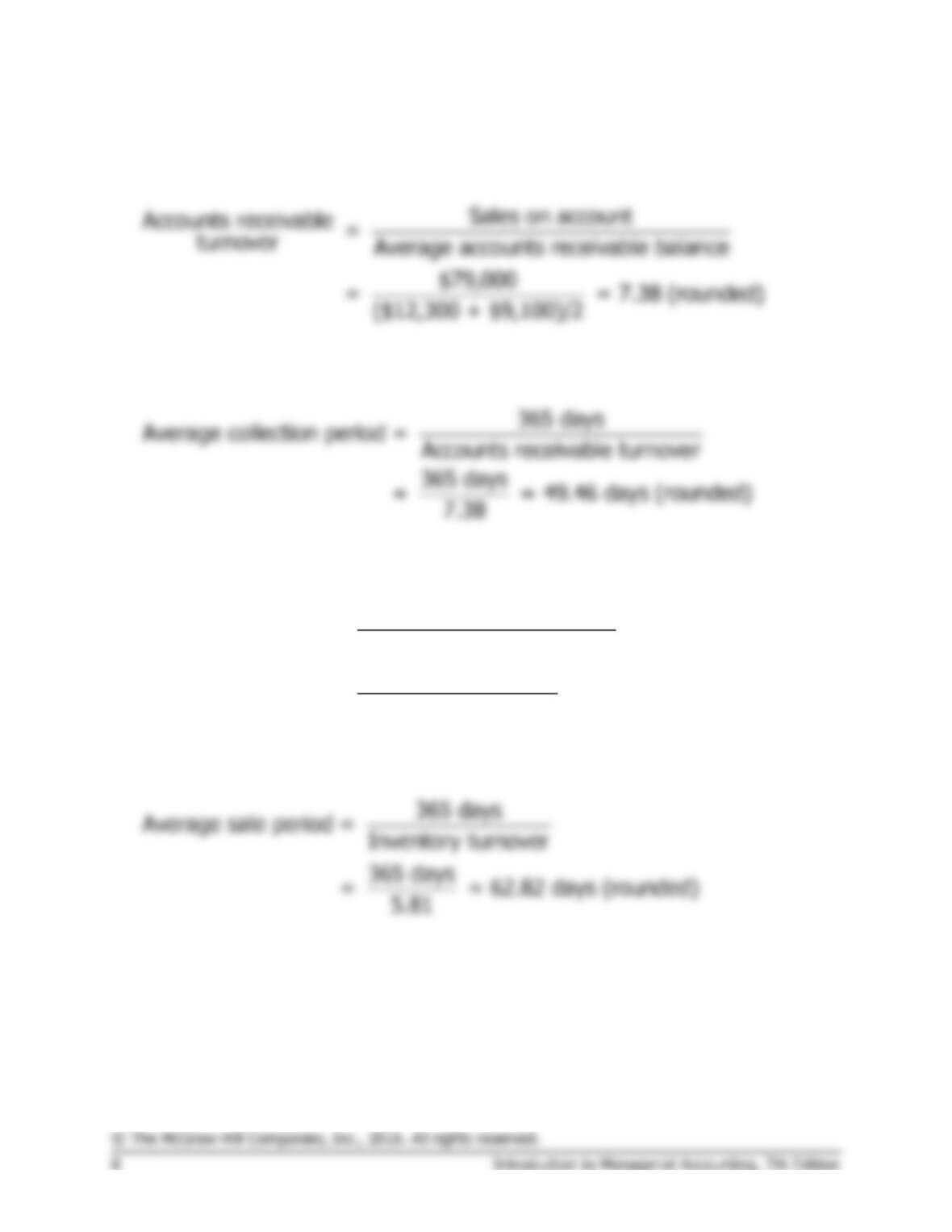
1. Calculation of accounts receivable turnover:
2. Calculation of the average collection period:
3. Calculation of inventory turnover:
Cost of goods sold
Inventory turnover = Average inventory balance
$52,000
= = 5.81 (rounded)
($9,700 + $8,200)/2
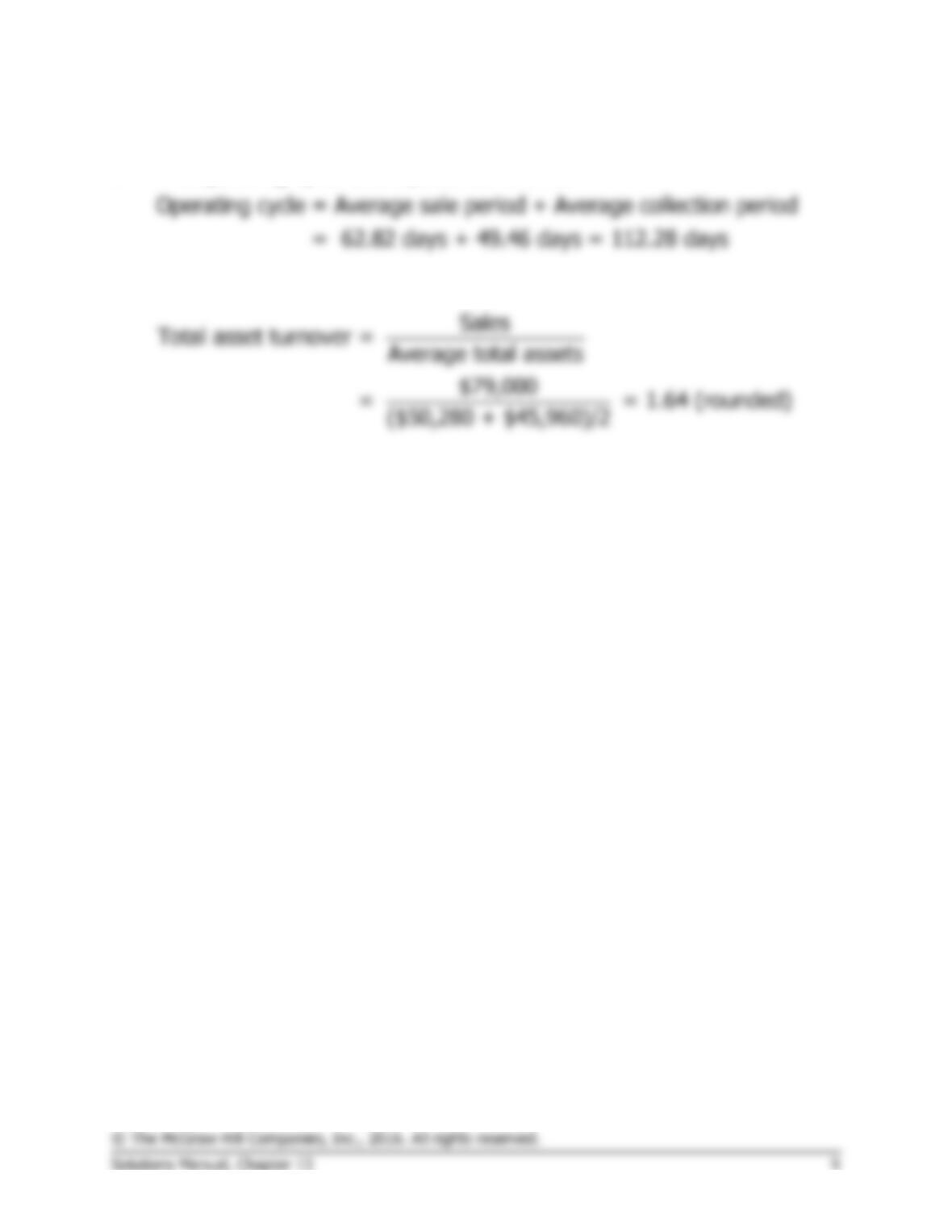
4. Calculation of the average sale period:
Exercise 13-3 (continued)
5. The operating cycle is computed as follows:
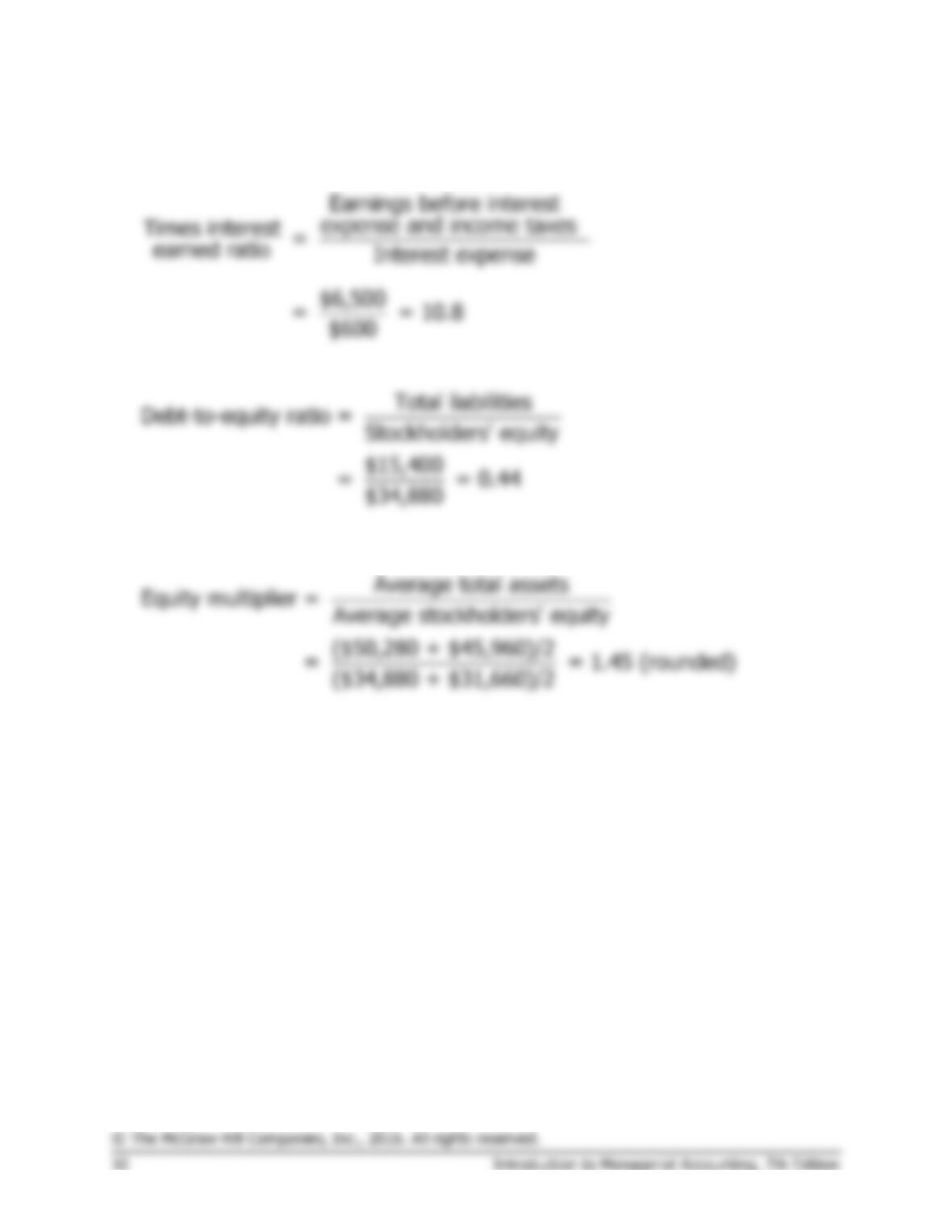
6. The total asset turnover is computed as follows:
Exercise 13-4 (10 minutes)
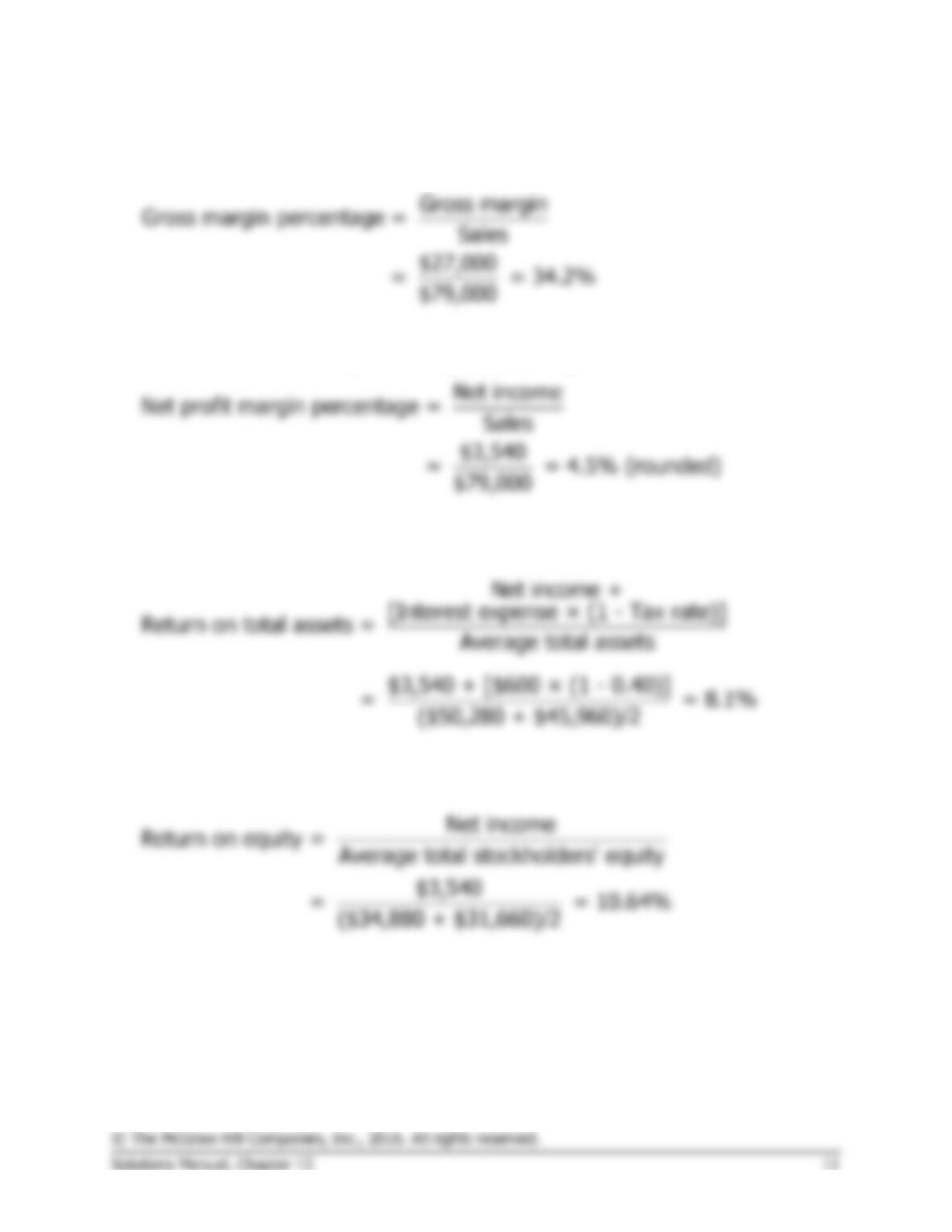
1. Calculation of the times interest earned ratio:
2. Calculation of the debt-to-equity ratio:
3. Calculation of the equity multiplier:
Exercise 13-5 (10 minutes)
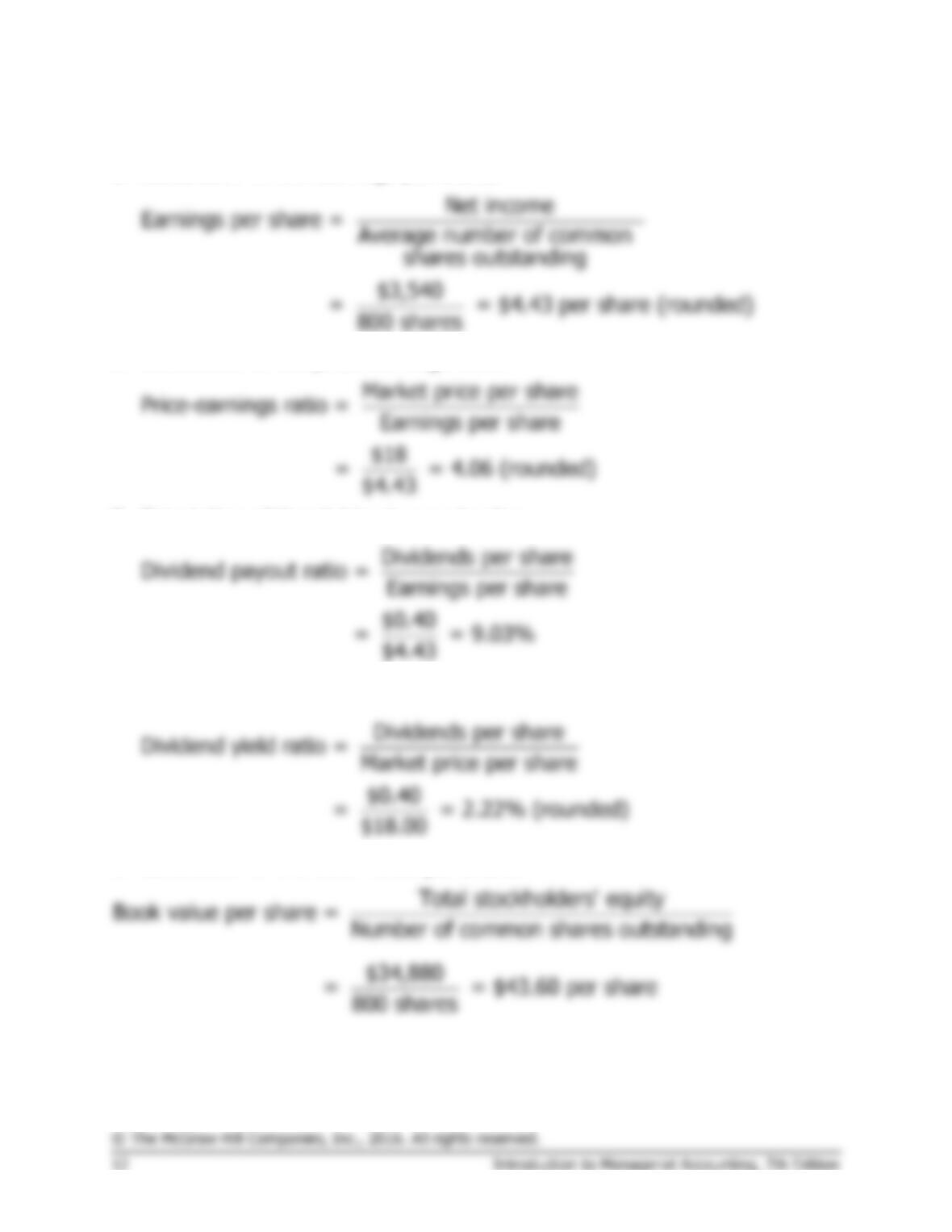
1. Calculation of the gross margin percentage:
2. Calculation of the net profit margin percentage:
3. Calculation of the return on total assets:
4. Calculation of the return on equity:
Exercise 13-6 (15 minutes)
1. Calculation of the earnings per share:
2. Calculation of the price-earnings ratio:
3. Calculation of the dividend payout ratio:
4. Calculation of the dividend yield ratio:
5. Calculation of the book value per share:
Exercise 13-7 (15 minutes)
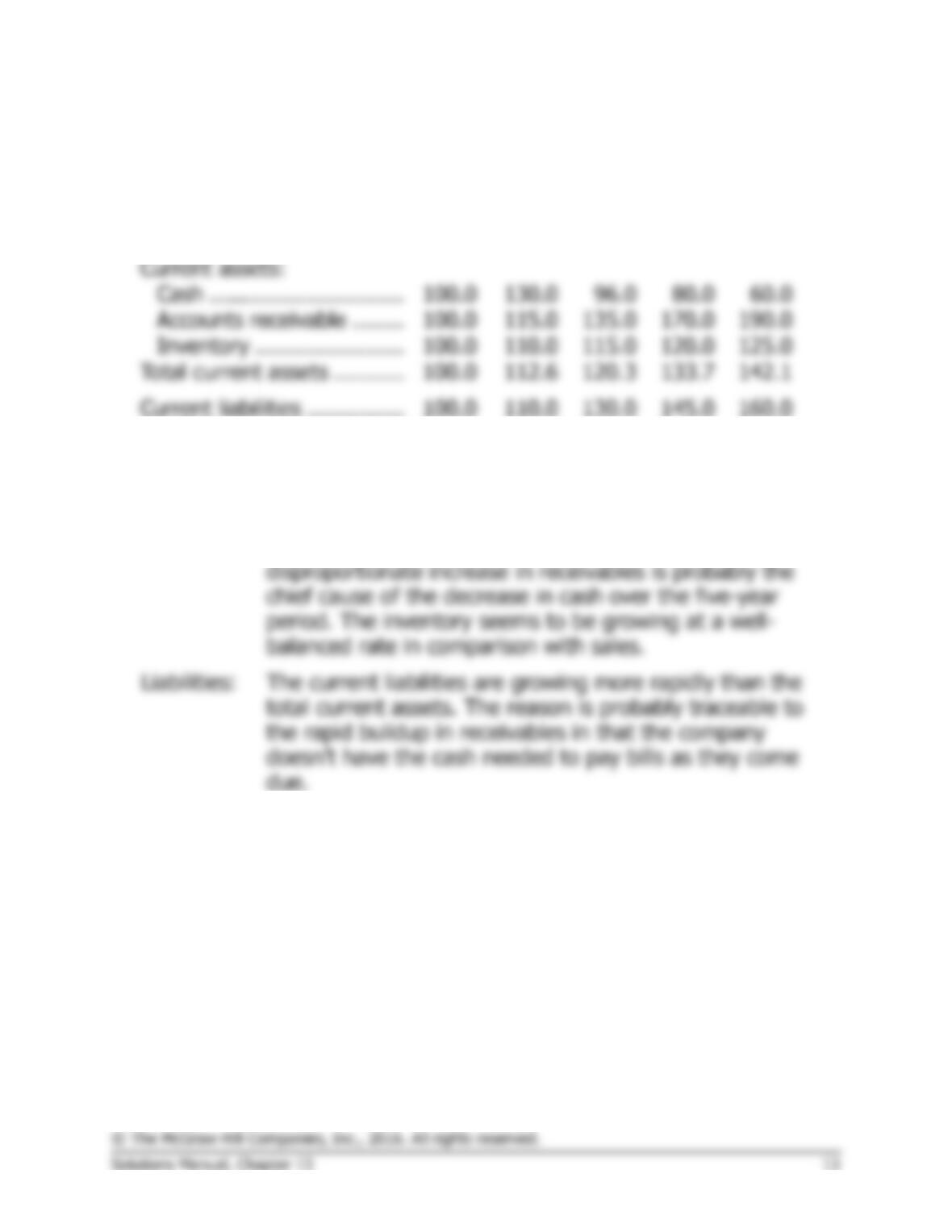
1. The trend percentages are:
Year 1
Year 2
Year 3
Year 4
Year 5
Sales …………………………..
100.0
110.0
115.0
120.0
125.0
Current assets:
100.0
130.0
100.0
115.0
135.0
170.0
190.0
100.0
110.0
115.0
120.0
125.0
2.
Sales:
The sales are increasing at a steady and consistent rate.
Assets:
The most noticeable thing about the assets is that the
accounts receivable have been increasing at a rapid
rate—far outstripping the increase in sales. This
Exercise 13-8 (20 minutes)
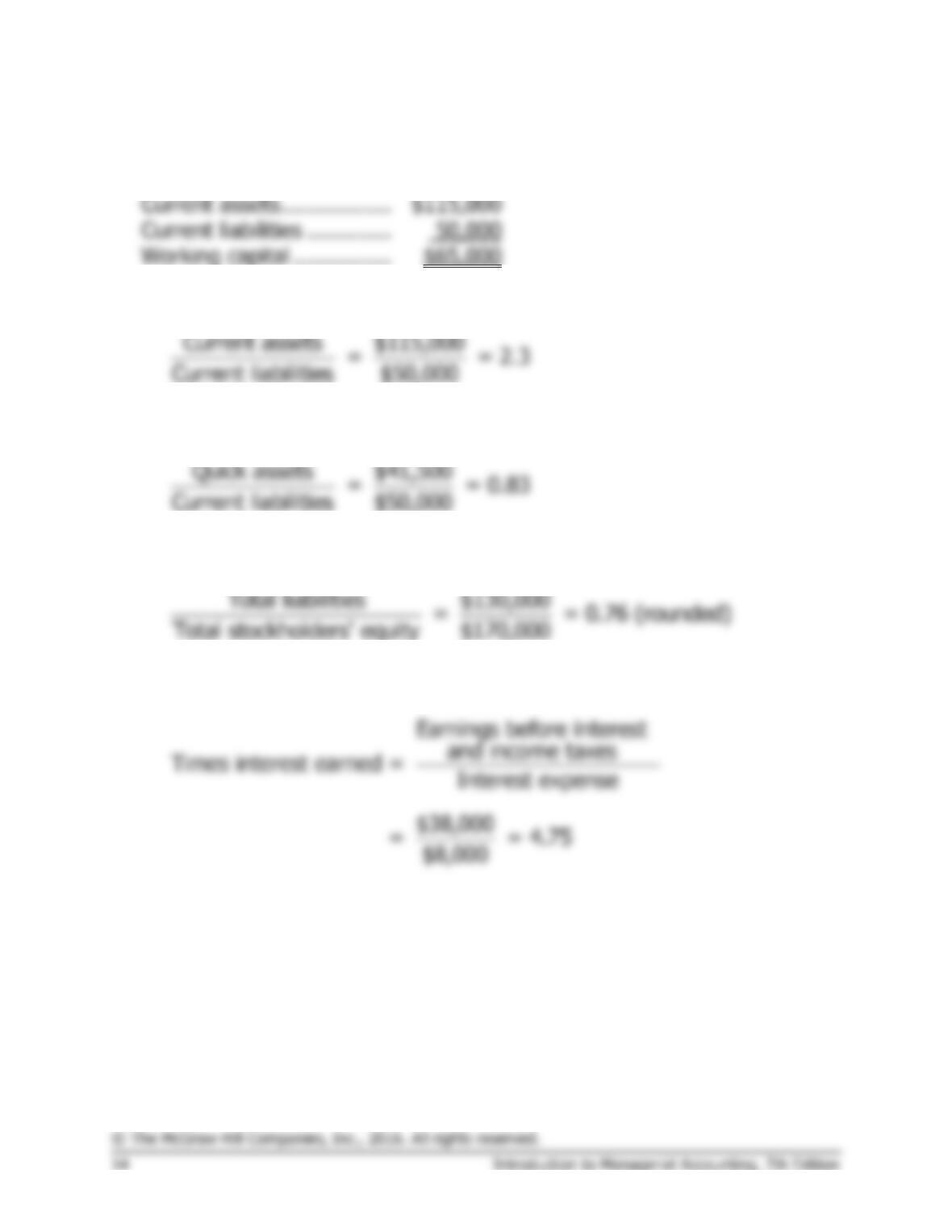
1. Calculation of working capital:
2. Current ratio:
3. Acid-test ratio:
4. Debt–to-equity ratio:
5. Times interest earned:
Exercise 13-8 (continued)
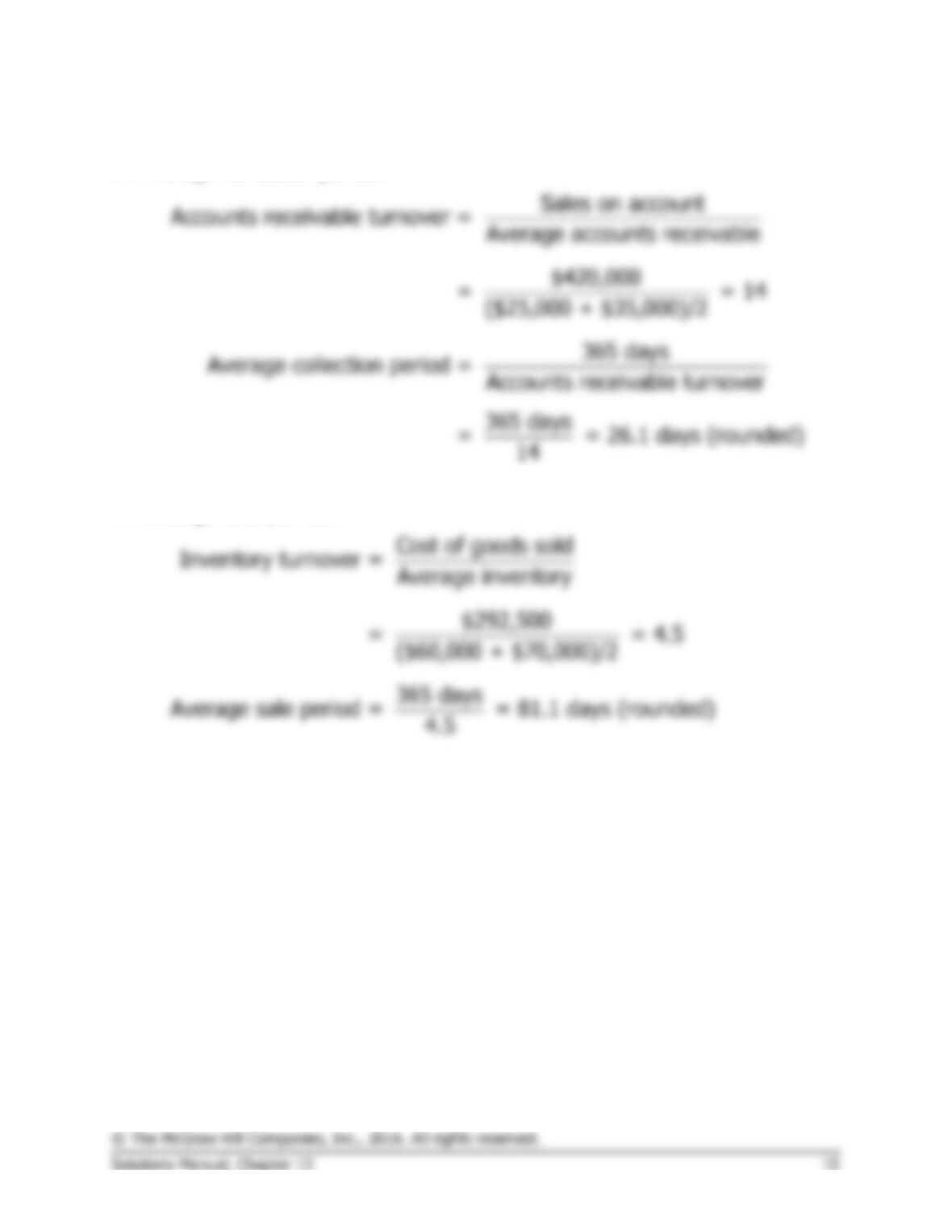
6. Average collection period:
7. Average sale period:
8. The operating cycle is computed as follows:
Operating cycle = Average sale period + Average collection period
= 81.1 days + 26.1 days = 107.2 days
Exercise 13-9 (20 minutes)
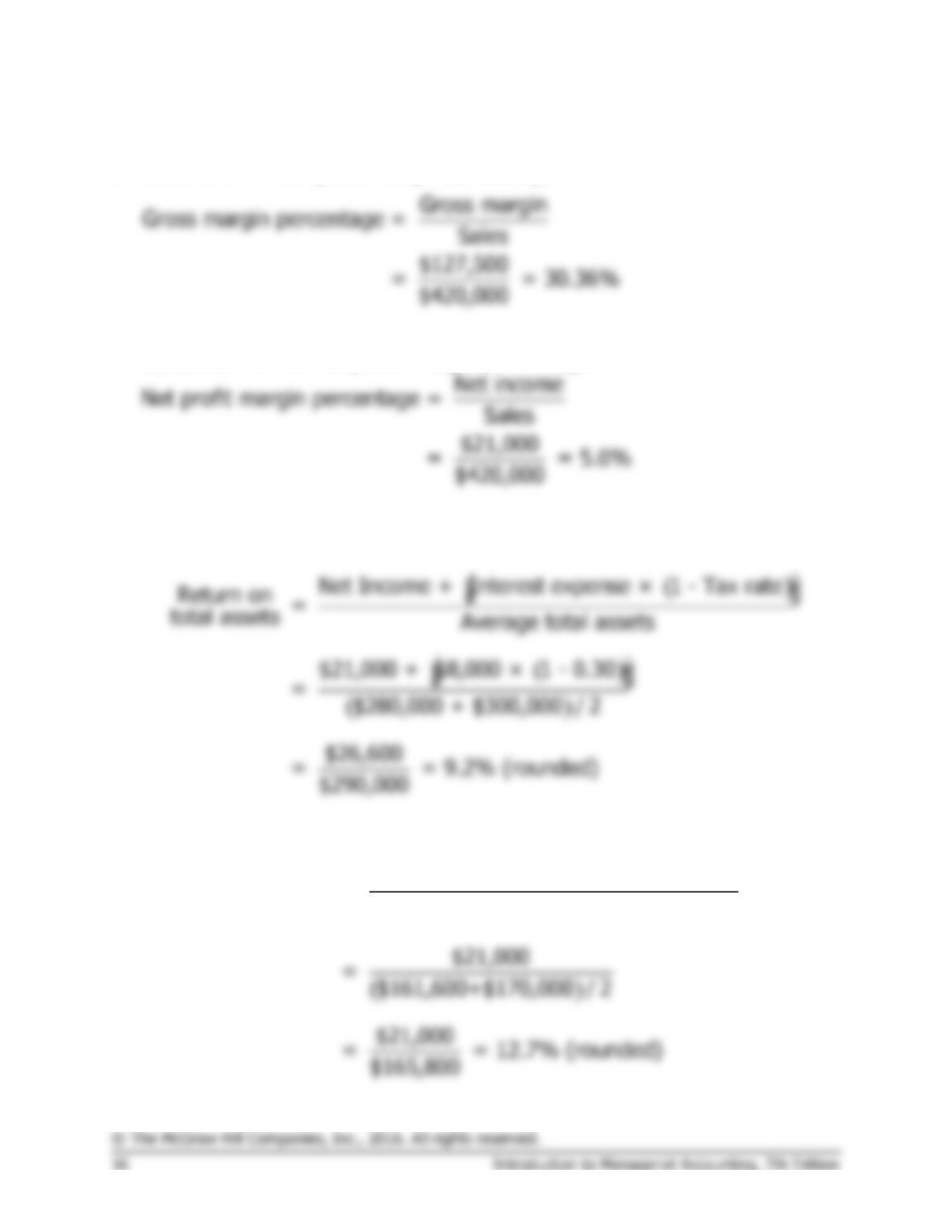
1. Calculation of the gross margin percentage:
2. Calculation of the net profit margin percentage:
3. Return on total assets:
4. Return on equity:
Net income
=
Return on equity Average common stockholders’ equity
Exercise 13-9 (continued)
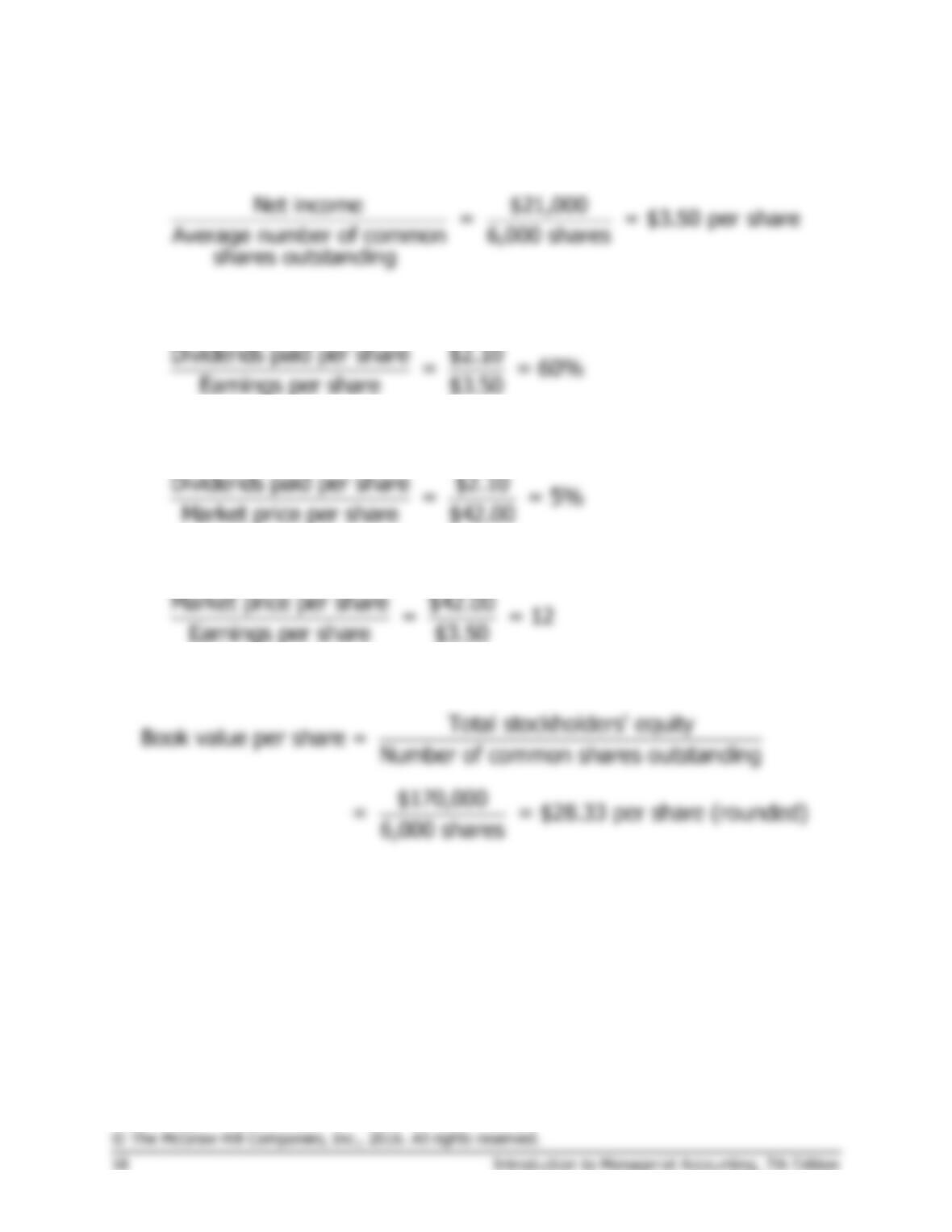
5. Financial leverage was positive because the return on equity (12.7%)
was greater than the return on total assets (9.2%). This positive
Exercise 13-10 (15 minutes)
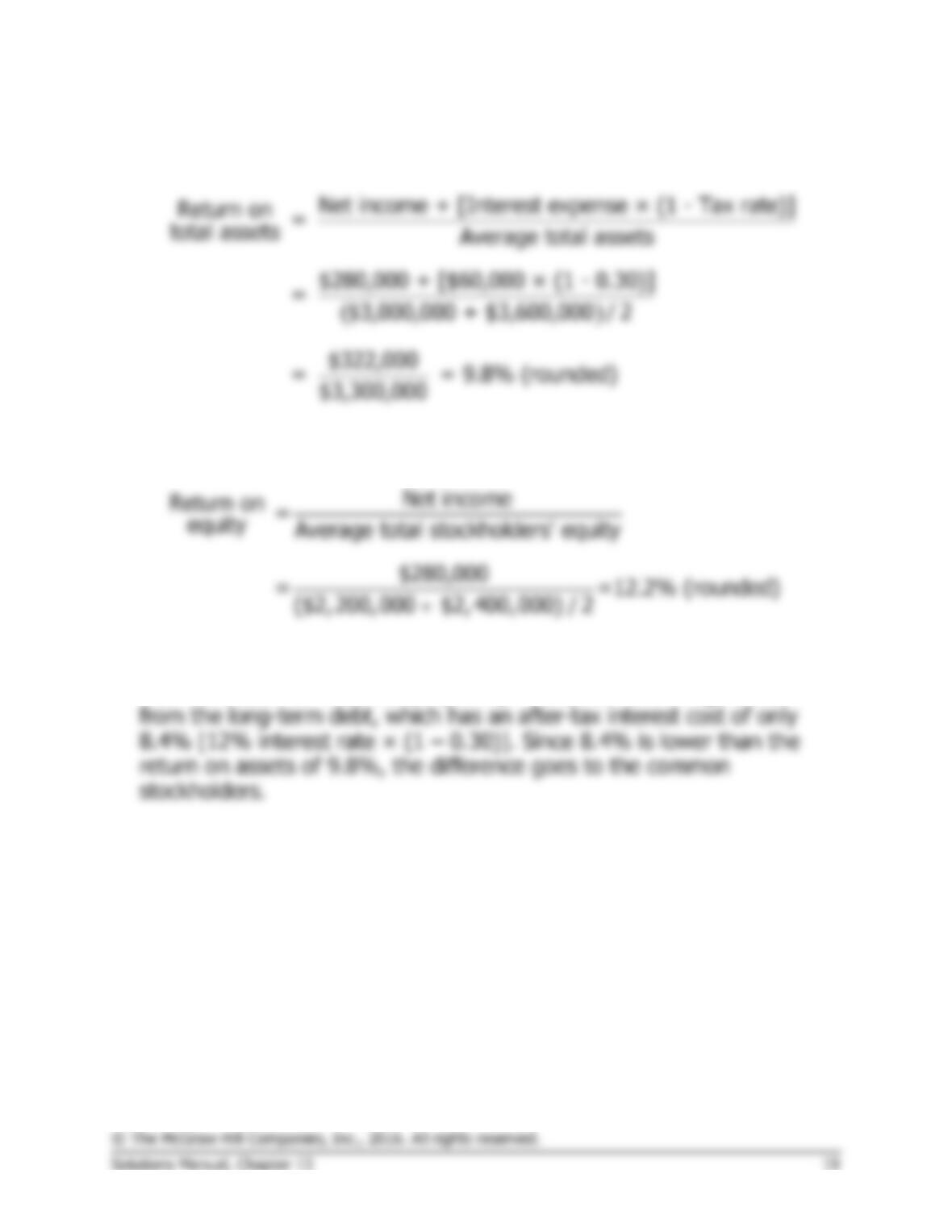
1. Earnings per share:
2. Dividend payout ratio:
3. Dividend yield ratio:
4. Price-earnings ratio:
5. Book value per share:
Exercise 13-11 (15 minutes)
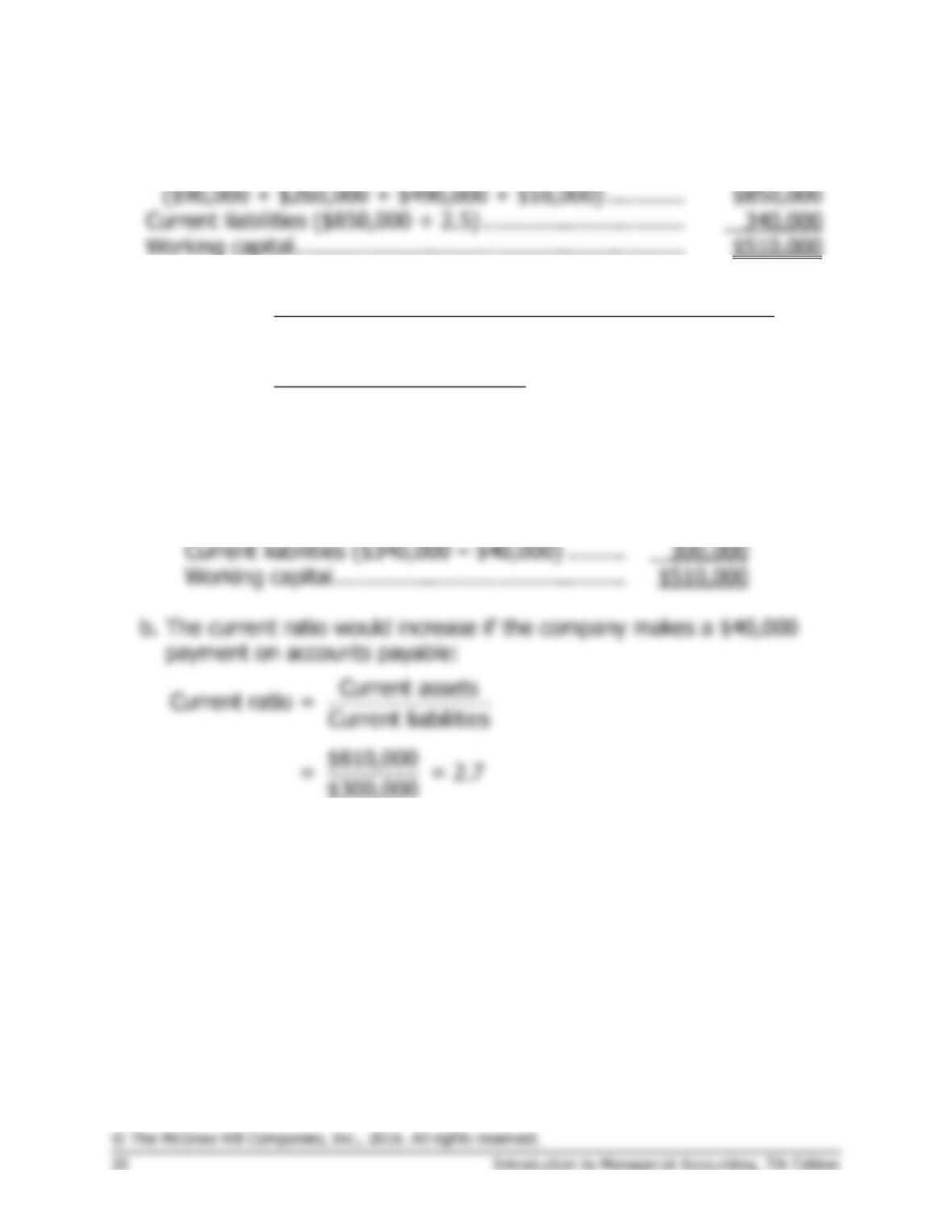
1. Return on total assets:
2. Return on equity:
3. Leverage is positive because the return on equity (12.2%) is greater
than the return on total assets (9.8%). This positive leverage arises
Exercise 13-12 (15 minutes)
1.
Current liabilities ($850,000 ÷ 2.5) ………………………….
Current assets
2.
Cash + Marketable securities + Accounts receivable
Acid-test =
ratio Current liabilities
$90,000 + $0 + $260,000
= = 1.03 (rounded)
$340,000
3. a. Working capital would not be affected by a $40,000 payment on
accounts payable:
Current assets ($850,000 – $40,000) ………….
$810,000
Current liabilities ($340,000 – $40,000) ………