EXERCISE 12.11 (20–25 minutes)
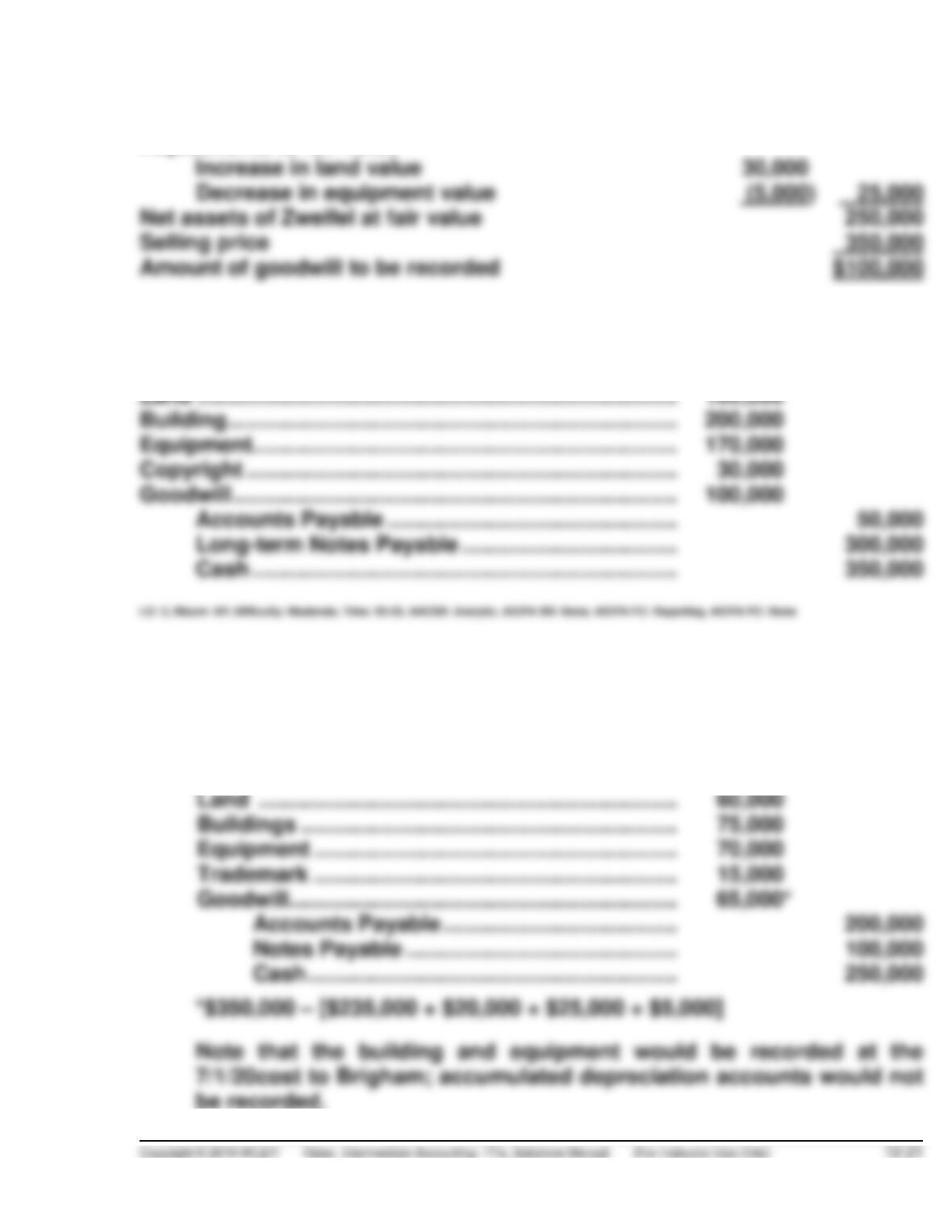
Net assets of Zweifel as reported ($575,000 – $350,000)
$225,000
Adjustments to fair value
Increase in land value
Decrease in equipment value
Net assets of Zweifel at fair value
Selling price
The journal entry to record this transaction is as follows:
Cash …………………………………………………………………….
100,000
Land …………………………………………………………………….
Building ………………………………………………………………..
200,000
Copyright ……………………………………………………………..
30,000
Goodwill ……………………………………………………………….
100,000
Accounts Payable …………………………………………
Long-term Notes Payable ………………………………
Cash …………………………………………………………….
EXERCISE 12.12 (10–15 minutes)
(a)
Cash ………………………………………………………………………
50,000
Receivables ……………………………………………………….
90,000
Inventory ……………………………………………………….
125,000
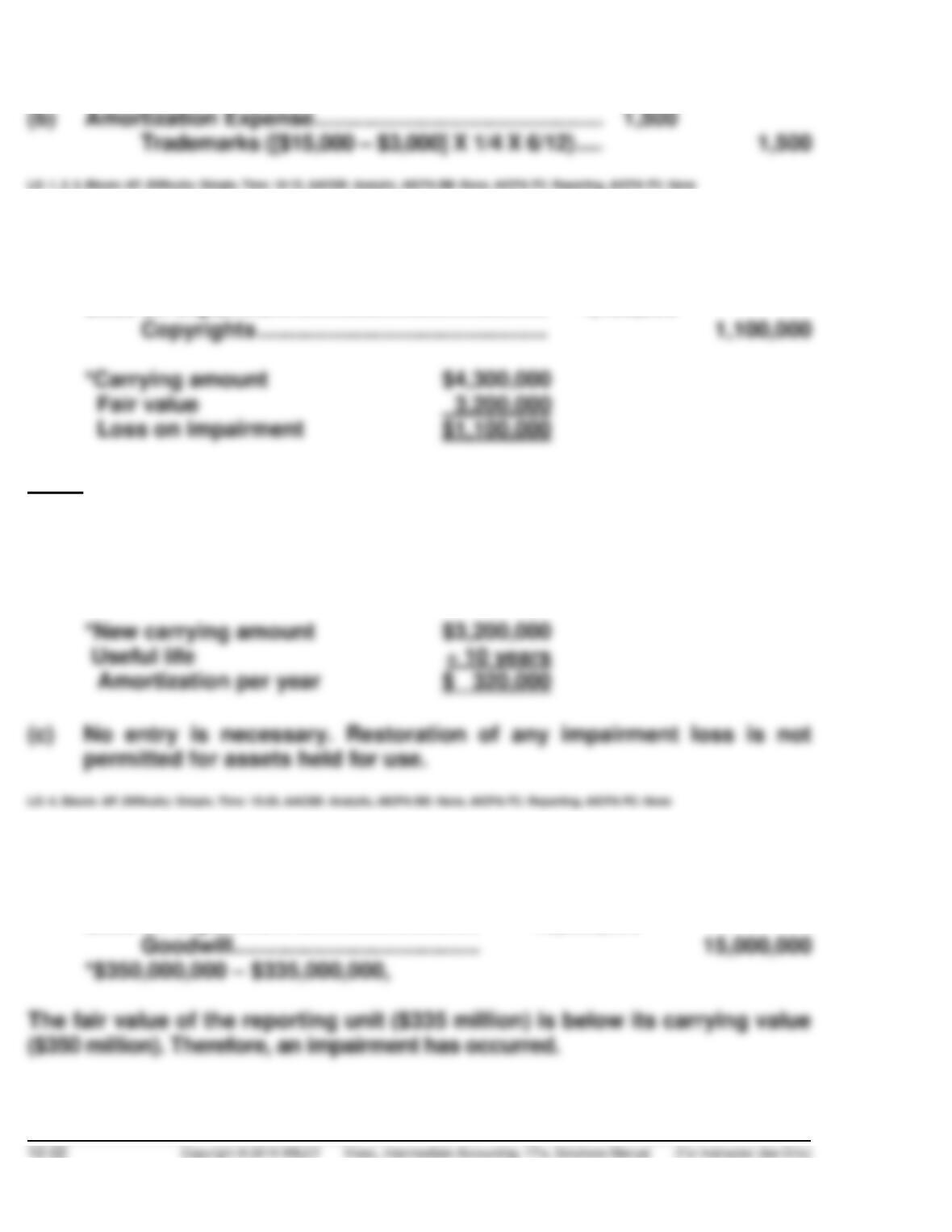
Land ……………………………………………………………………..
60,000
Buildings ……………………………………………………….
75,000
Equipment ……………………………………………………….
Trademark ……………………………………………………….
15,000
Goodwill ……………………………………………………….
65,000*
Accounts Payable …………………………………………..
Notes Payable ………………………………………………..
Cash ……………………………………………………….
EXERCISE 12.12 (Continued)
(b)
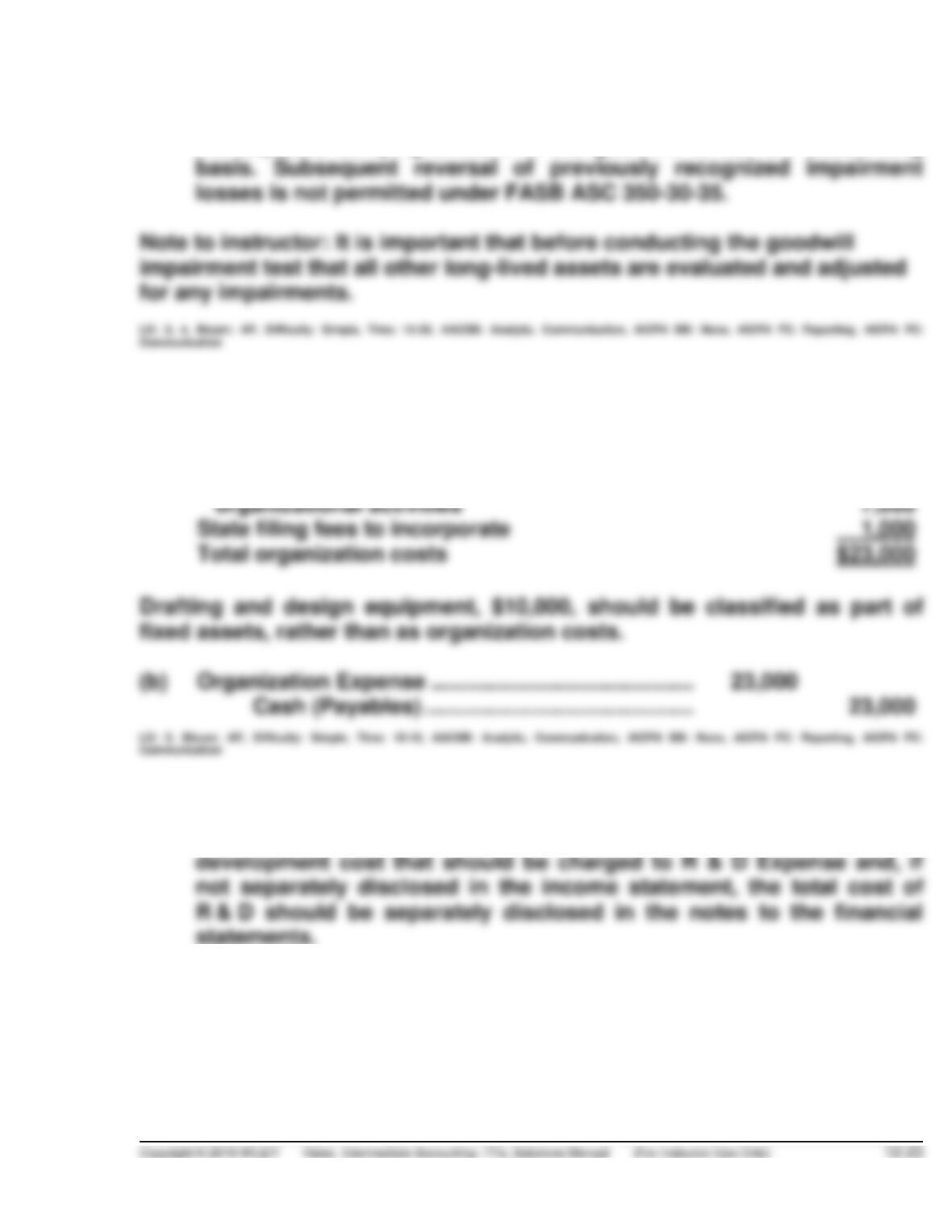
Amortization Expense ……………………………………………..
1,500
EXERCISE 12.13 (15–20 minutes)
(a)
December 31, 2020
Loss on Impairment …………………………………..
1,100,000*
Copyrights ………………………………………..
1,100,000
*Carrying amount
Note: Asset fails recoverability test because the expected net cash flows of
$4,000,000 are less than the carrying value of $4,300,000.
(b)
Amortization Expense ………………………………..
320,000*
Copyrights ………………………………………..
320,000
Useful life
EXERCISE 12.14 (15–20 minutes)
(a)
December 31, 2020
Loss on Impairment …………………………
15,000,000*
Goodwill ………………………………….
*$350,000,000 − $335,000,000,
EXERCISE 12.14 (Continued)
(b) No entry necessary. After a goodwill impairment loss is recognized,
the adjusted carrying amount of the goodwill is its new accounting
EXERCISE 12.15 (10–15 minutes)
(a)
Attorney’s fees in connection with organization
of the company
$15,000
Costs of meetings of incorporators to discuss
organizational activities
State filing fees to incorporate
1,000
(b)
Organization Expense …………………………………………….
Cash (Payables) ……………………………………………..
EXERCISE 12.16 (15–20 minutes)
(a) In accordance with GAAP, the $325,000 is a research and
EXERCISE 12.16 (Continued)
(b)
Research and Development Expense ……………………….
110,000
Cash, Accts. Payable, etc. …………………………..
110,000
(To record research and
development costs)
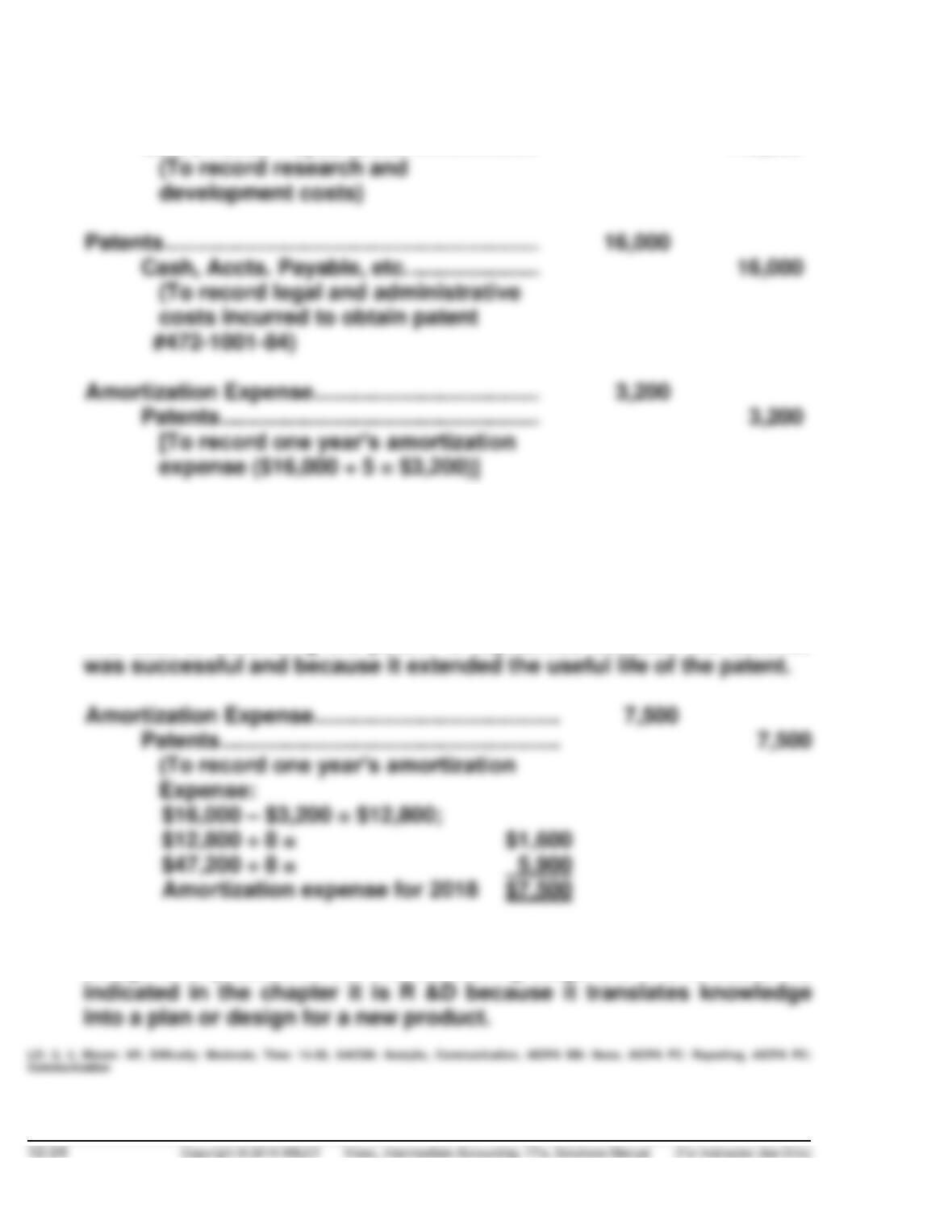
Patents ……………………………………………………….
Cash, Accts. Payable, etc. …………………………..
(To record legal and administrative
costs incurred to obtain patent
Amortization Expense ……………………………………………..
Patents ……………………………………………………….
expense ($16,000 ÷ 5 = $3,200)]
(c)
Patents ……………………………………………………….
47,200
Cash, Accts. Payable, etc. …………………………..
47,200
(To record legal cost of successfully
defending patent)
The cost of defending the patent is capitalized because the defense
Amortization Expense ……………………………………………..
Patents ……………………………………………………….
Expense:
$12,800 ÷ 8 =
$1,600
$47,200 ÷ 8 =
(d) Additional engineering and consulting costs required to advance the
design of a product to the manufacturing stage are R & D costs. As
EXERCISE 12.17 (10–15 minutes)
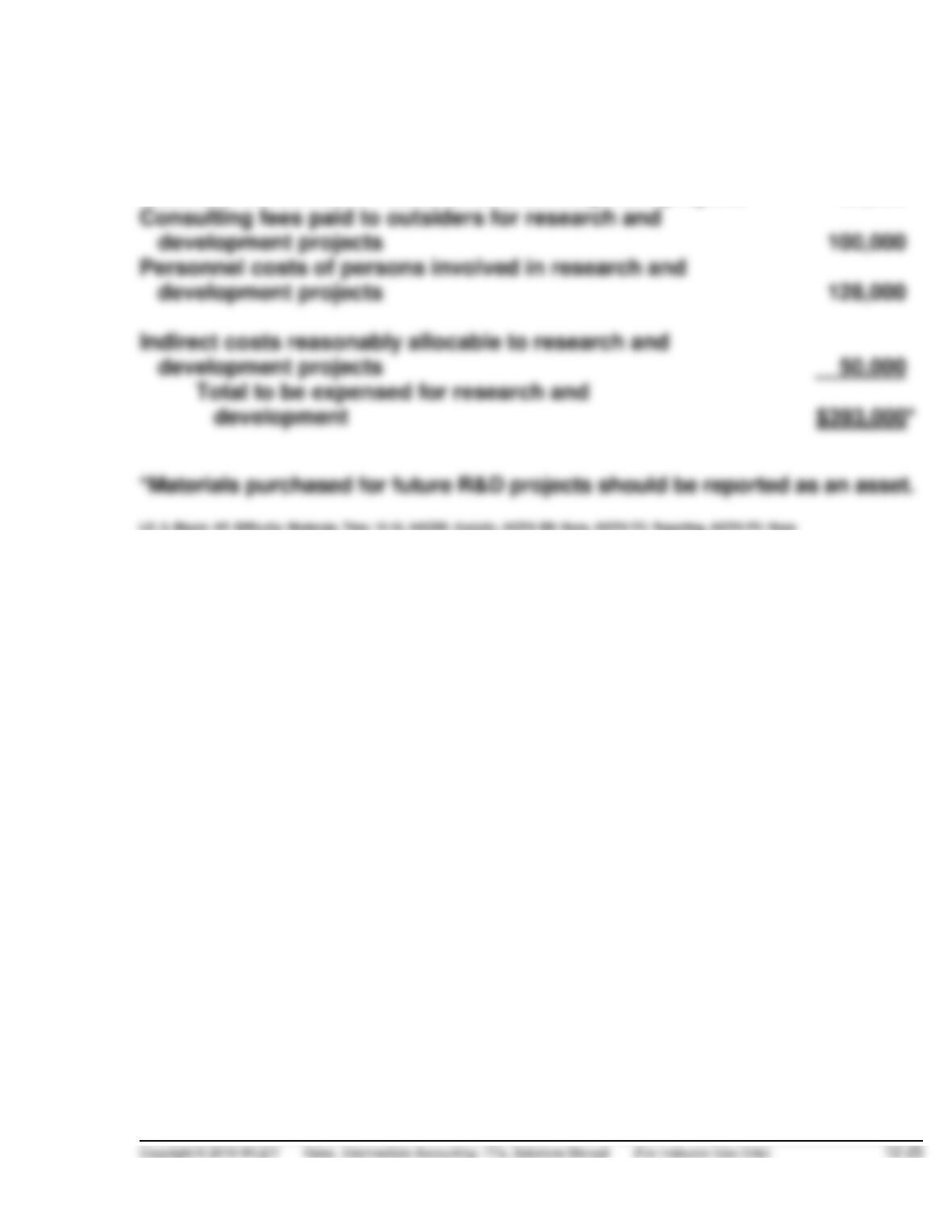
Depreciation of equipment acquired that will have alternate
uses in future research and development projects over
the next 5 years ($280,000 ÷ 5)
$ 56,000
Materials consumed in research and development projects
59,000
Consulting fees paid to outsiders for research and
development projects
Personnel costs of persons involved in research and
development projects
Indirect costs reasonably allocable to research and
development projects
Total to be expensed for research and
development
LO: 5, Bloom: AP, Difficulty: Moderate, Time: 10-15, AACSB: Analytic, AICPA BB: None, AICPA FC: Reporting, AICPA PC: None
TIME AND PURPOSE OF PROBLEMS
Problem 12.1 (Time 15–20 minutes)
Purpose—to provide the student with an opportunity to appropriately reclassify amounts charged to a
Problem 12.2 (Time 20–30 minutes)
Purpose—to provide the student with an opportunity to compute the carrying value of a patent at three
Problem 12.3 (Time 20–30 minutes)
Purpose—the student determines the cost and amortization of a franchise, patent, and trademark and
Problem 12.4 (Time 25–30 minutes)
Purpose—to provide the student with an opportunity to determine the amount of goodwill in a business
Problem 12.5 (Time 30–35 minutes)
Purpose—to provide the student with an opportunity to determine carrying value of intangible assets
Problem 12.6 (Time 15–20 minutes)
Purpose—to provide the student with an opportunity to determine income statement and balance sheet
SOLUTIONS TO PROBLEMS
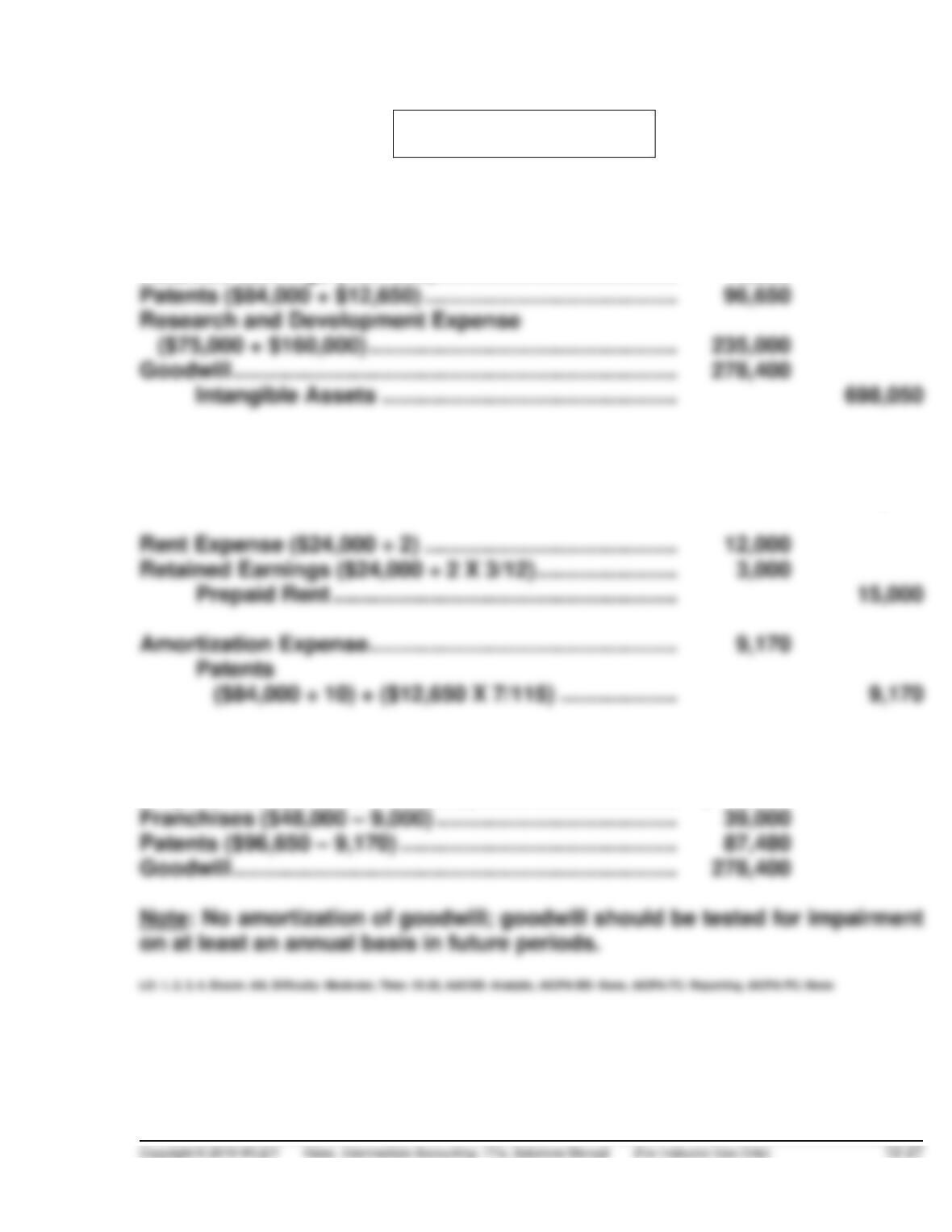
PROBLEM 12.1
Franchises ……………………………………………………………
48,000
Prepaid Rent …………………………………………………………
24,000
Retained Earnings (Net loss) ………………………………….
16,000
Patents ($84,000 + $12,650) ……………………………………
96,650
Research and Development Expense
($75,000 + $160,000) ……………………………………………
Intangible Assets ………………………………………….
Amortization Expense ($48,000 ÷ 8) ………………………..
6,000
Retained Earnings ($48,000 ÷ 8 X 6/12) ……………………
3,000
Franchises ……………………………………………………
9,000
Rent Expense ($24,000 ÷ 2) ……………………………………
12,000
Retained Earnings ($24,000 ÷ 2 X 3/12) ……………………
3,000
Prepaid Rent …………………………………………………
Amortization Expense ……………………………………………
9,170
Patents
($84,000 ÷ 10) + ($12,650 X 7/115) ………………..
Balances at 12/31/21
Prepaid Rent ($24,000 – $15,000) …………………………...
$ 9,000
Franchises ($48,000 – 9,000) ………………………………….
39,000
87,480
Goodwill ……………………………………………………………….
PROBLEM 12.2
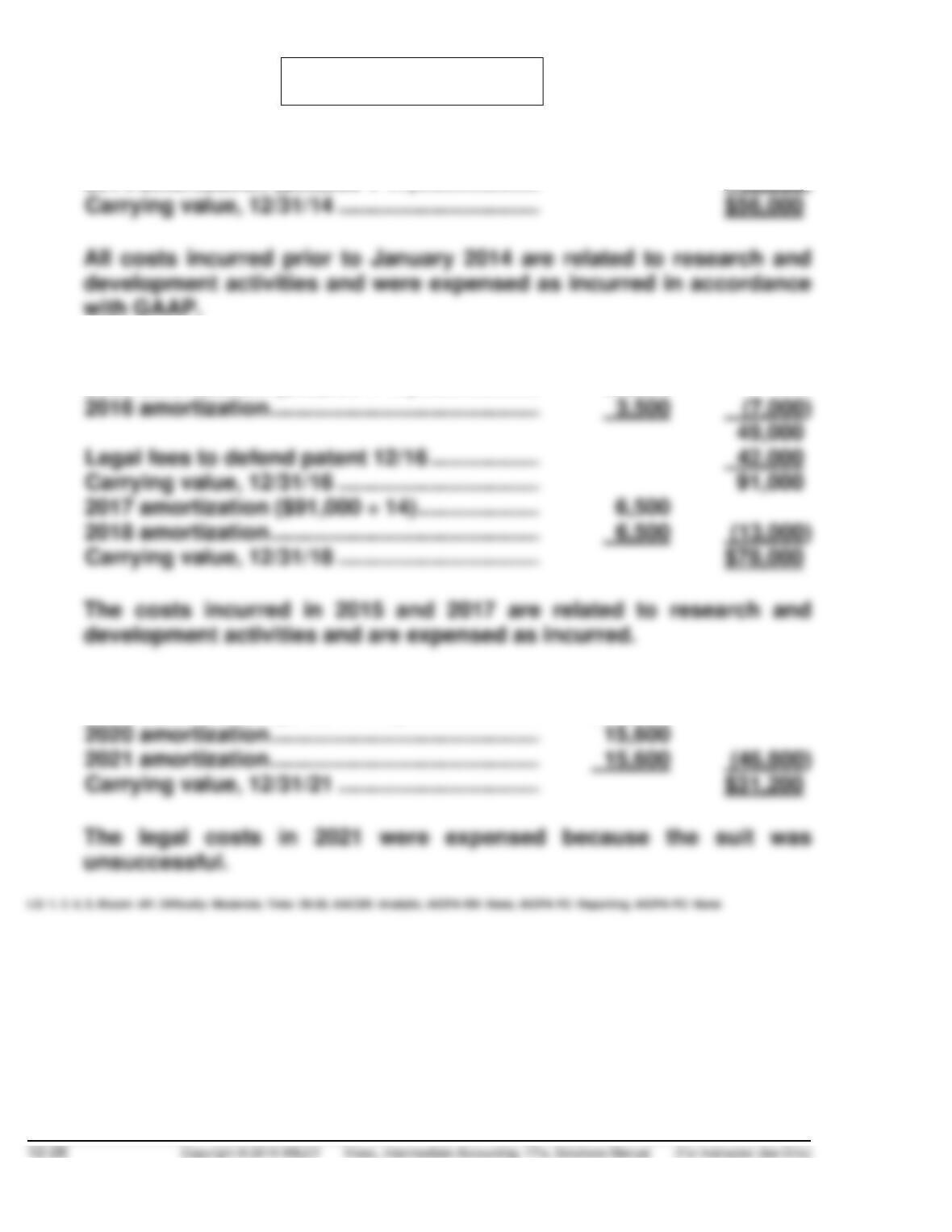
(a)
Costs to obtain patent Jan. 2014 ……………….
$59,500
2014 amortization ($59,500 ÷ 17) ………………..
(3,500)
(b)
1/1/15 carrying value of patent …………………………..
$56,000
2015 amortization ($59,500 ÷ 17) …………………………..
$3,500
2016 amortization ……………………………………………………
Legal fees to defend patent 12/16 …………………………..
Carrying value, 12/31/16 ………………………………………….
2017 amortization ($91,000 ÷ 14) …………………………..
2018 amortization ……………………………………………………
(c)
1/1/19 carrying value ……………………………………………….
$78,000
2019 amortization ($78,000 ÷ 5) …………………………..
$15,600
2020 amortization ……………………………………………………
15,600
2021 amortization ……………………………………………………
(46,800)
PROBLEM 12.3
(a)
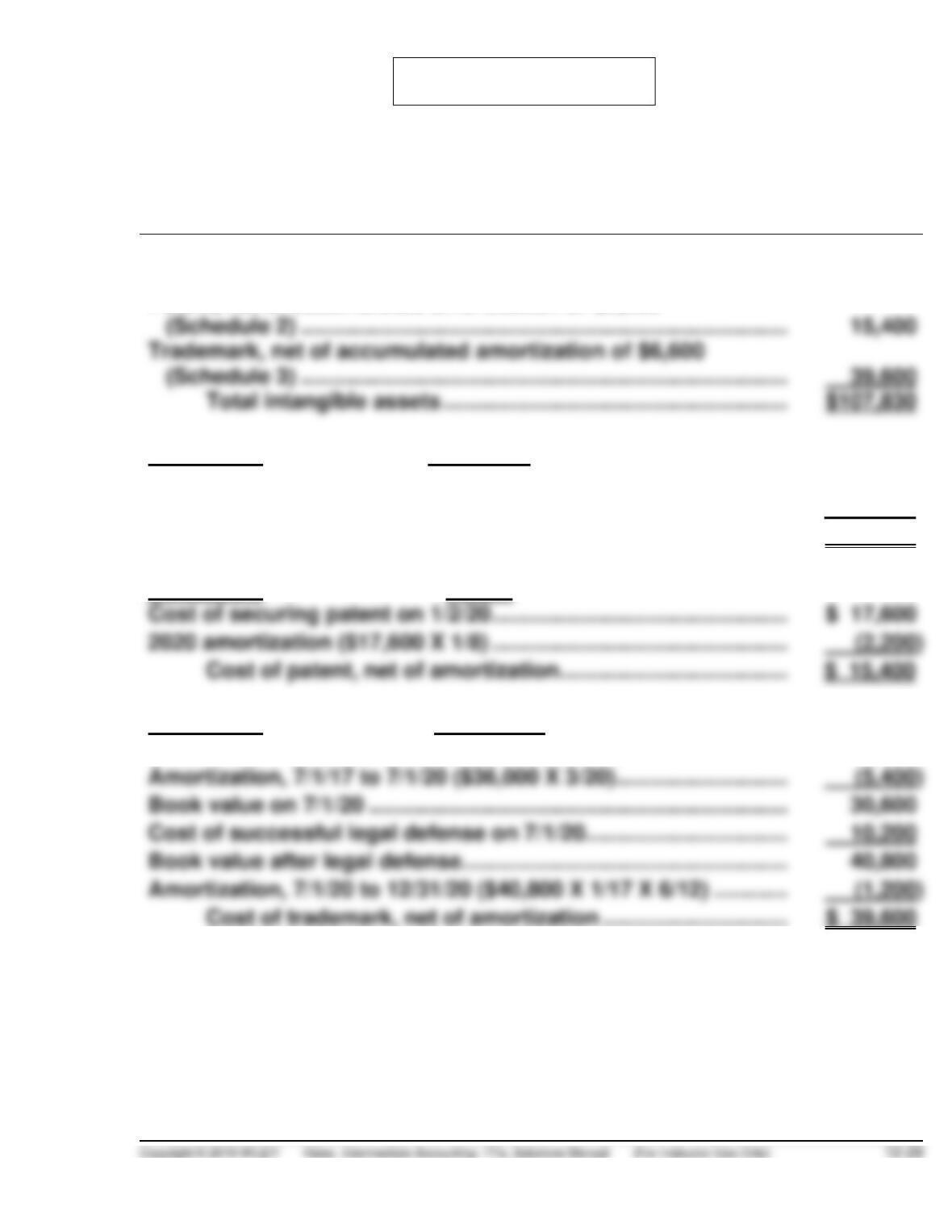
SANDRO CORPORATION
Intangible Assets
December 31, 2020
Franchise, net of accumulated amortization of $5,870
(Schedule 1) …………………………………………………………………….
$ 52,830
Patent, net of accumulated amortization of $2,200
(Schedule 2) …………………………………………………………………….
Trademark, net of accumulated amortization of $6,600
(Schedule 3) …………………………………………………………………….
Total intangible assets ………………………………………………..
$107,830
Schedule 1 Franchise
Cost of franchise on 1/1/20 ($15,000 + $43,700)……………………..
$ 58,700
2020 amortization ($58,700 X 1/10) ……………………………………….
(5,870)
Cost of franchise, net of amortization …………………………..
$ 52,830
Schedule 2 Patent
Cost of securing patent on 1/2/20 …………………………………………
$ 17,600
2020 amortization ($17,600 X 1/8) …………………………………………
Schedule 3 Trademark
Cost of trademark on 7/1/17 …………………………………………………
$ 36,000
Book value on 7/1/20 …………………………………………………………..
Cost of successful legal defense on 7/1/20…………………………...
10,200
Book value after legal defense……………………………………………..
Cost of trademark, net of amortization …………………………
$ 39,600
PROBLEM 12.3 (Continued)
(b)
SANDRO CORPORATION
Expenses Resulting from Selected Intangible Assets Transactions
For the Year Ended December 31, 2020
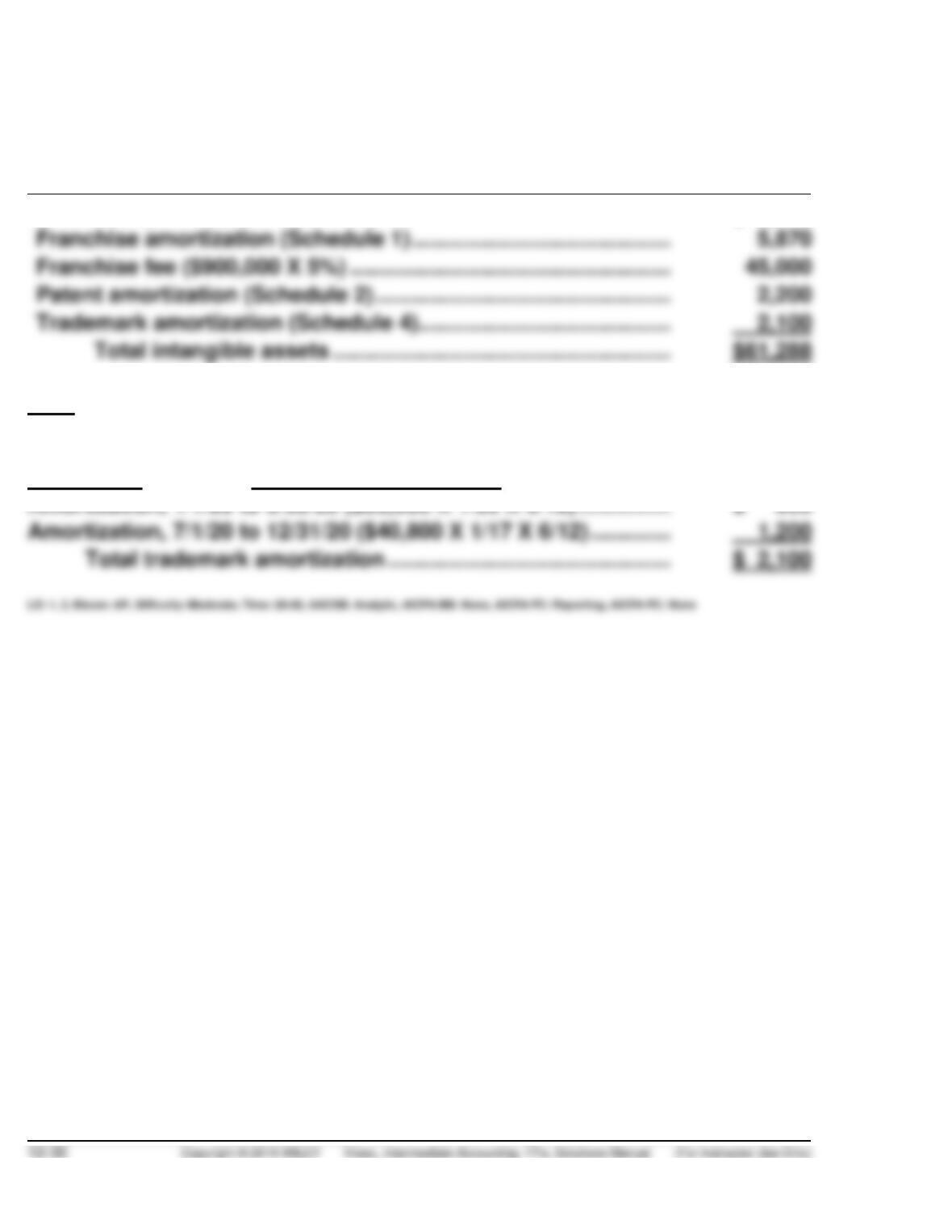
Interest expense ($43,700 X 14%) ………………………………………..
$ 6,118
Franchise amortization (Schedule 1) ……………………………………
Franchise fee ($900,000 X 5%) …………………………………………….
Patent amortization (Schedule 2) …………………………………………
Trademark amortization (Schedule 4)…………………………………..
2,100
Total intangible assets ……………………………………………….
$61,288
Note: The $65,000 of research and development costs incurred in developing
the patent would have been expensed prior to 2020.
Schedule 4 Trademark Amortization
Amortization, 1/1/20 to 6/30/20 ($36,000 X 1/20 X 6/12) ……………
$ 900
Amortization, 7/1/20 to 12/31/20 ($40,800 X 1/17 X 6/12) ………….
1,200
Total trademark amortization ……………………………………….
$ 2,100
PROBLEM 12.4
(a) Goodwill = Excess of the cost of the division over the fair value of the
identifiable assets:
(c) Computation of impairment:
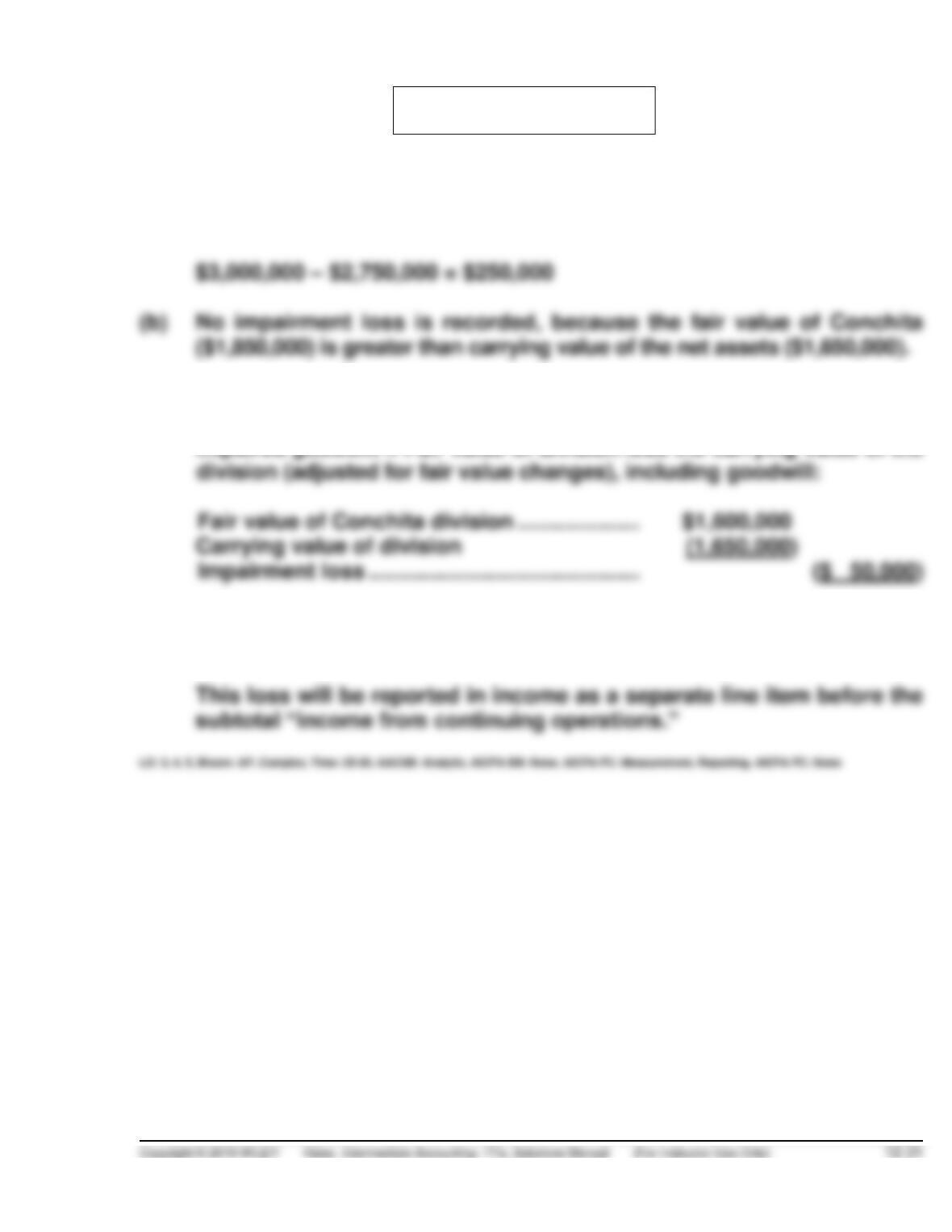
Impaired goodwill = Fair value of division less the carrying value of the
Fair value of Conchita division ………………..
(d) Loss on Impairment ………………………………..
50,000
Goodwill ……………………………………………………….
50,000
PROBLEM 12.5
(a)
MONTANA MATT’S GOLF INC.
Intangibles Section of Balance Sheet
December 31, 2019
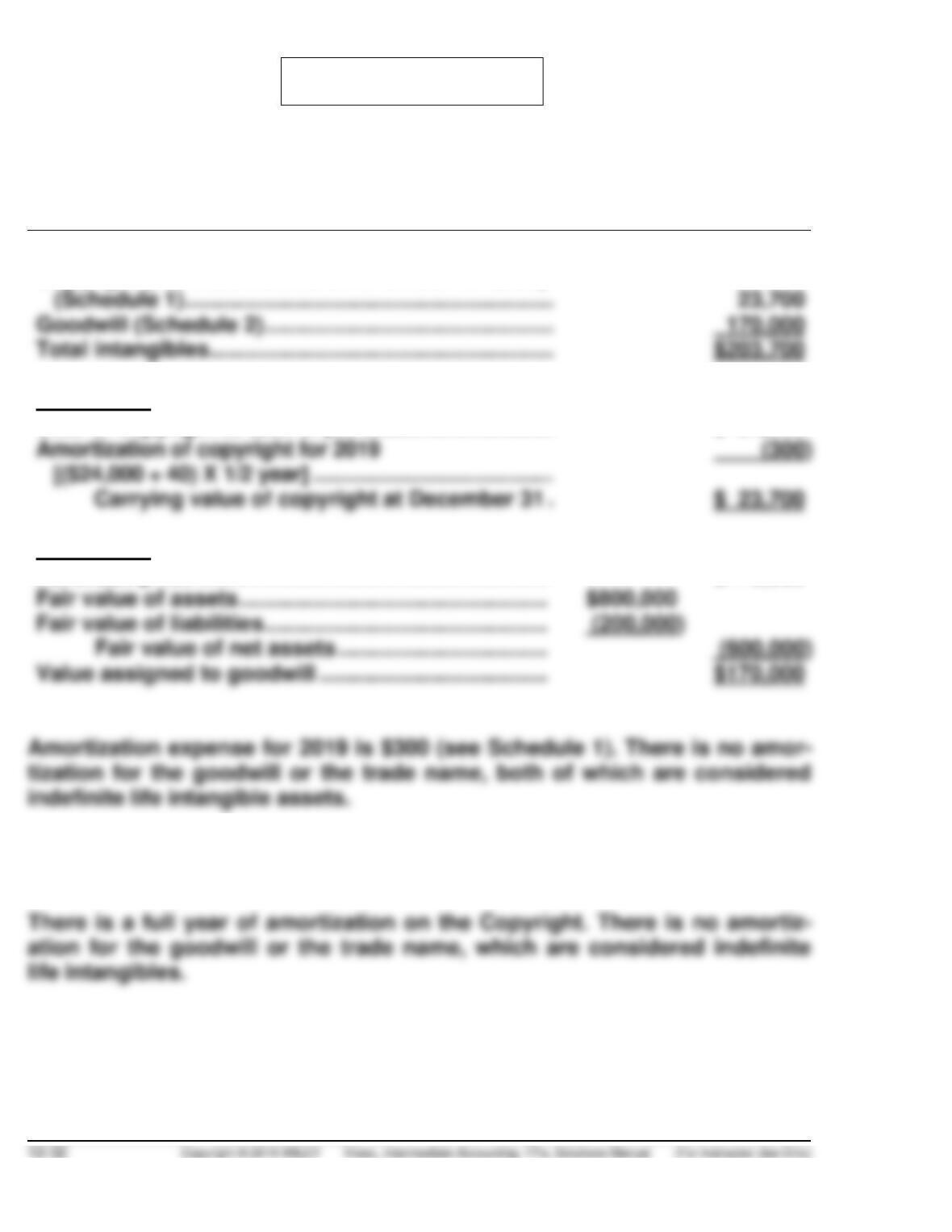
Trade name ……………………………………………………….
$ 10,000
Goodwill (Schedule 2) ……………………………………………………….
Total intangibles……………………………………………………….
$203,700
Copyright (net accumulated amortization of $300)
Schedule 1 Computation of Value of Old Master Copyright
Cost of copyright at date of purchase …………………………..
$ 24,000
Amortization of copyright for 2019
Carrying value of copyright at December 31 ………………….
$ 23,700
Schedule 2 Goodwill Measurement
Purchase price …………………………………………………
$770,000
Fair value of assets …………………………………………..
Fair value of liabilities ……………………………………….
Fair value of net assets …………………………....
(600,000)
Value assigned to goodwill ……………………………….
(b) Amortization Expense ……………………………………
600
Copyrights ($24,000 ÷ 40) …………………………..
600
Copyright © 2019 WILEY Kieso, Intermediate Accounting, 17/e, Solutions Manual (For Instructor Use Only) 12–33
PROBLEM 12.5 (Continued)
MONTANA MATT’S GOLF INC.
Intangibles Section of Balance Sheet
December 31, 2020
Trade name …………………………………………………………………………..
$ 10,000
Copyright (net of accumulated amortization, $900)
(Schedule 1) ………………………………………………………………………
23,100
Goodwill ……………………………………………………………………………..
170,000
Total intangibles …………………………………………………………………..
$203,100
Schedule 1 Computation of Value of Old Master Copyright
(c) Loss on Impairment …………………………………………….
87,000
Goodwill ………………………………………………………….
80,000
Trade names ($10,000 – $3,000) …………………………
7,000
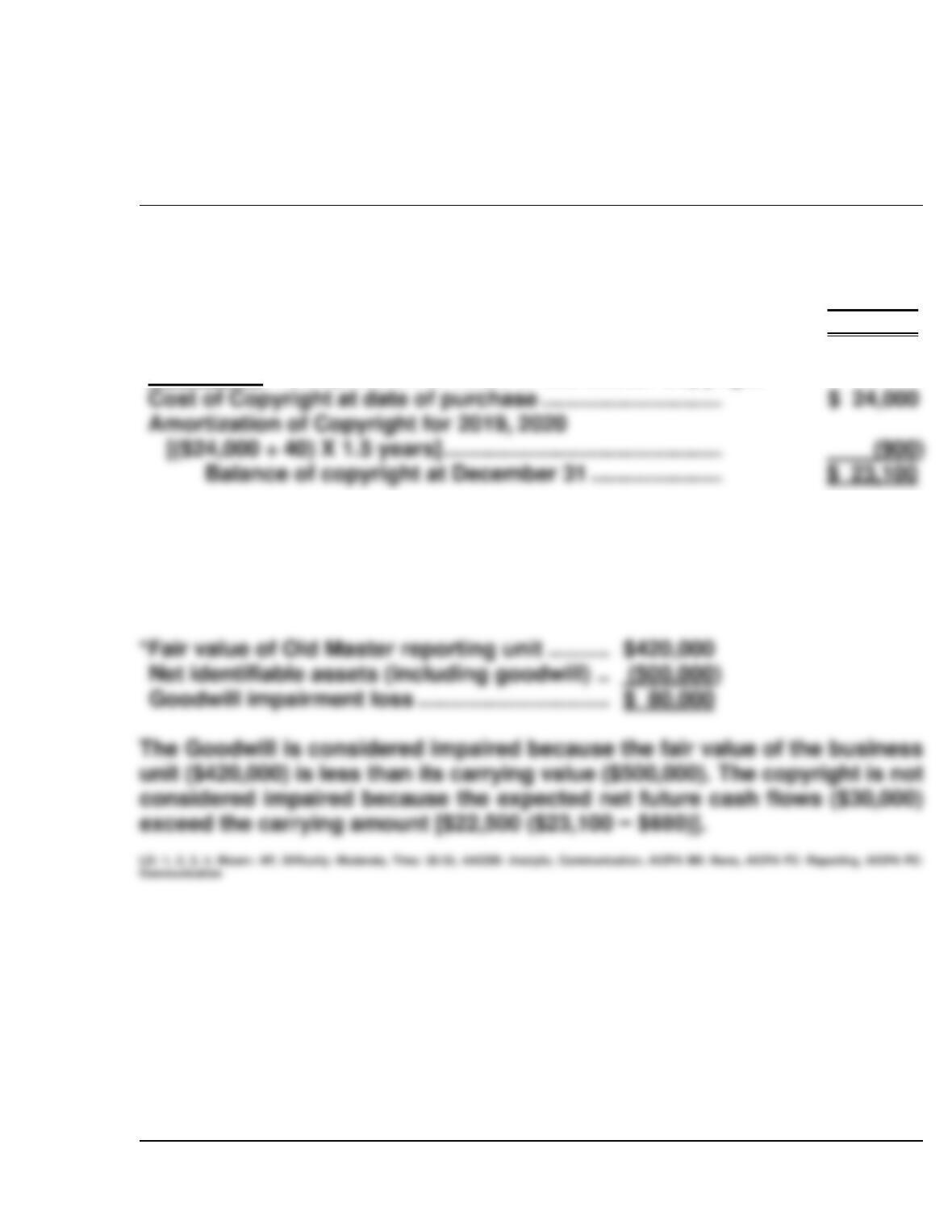
*Fair value of Old Master reporting unit ………. $420,000
Net identifiable assets (including goodwill) .. (500,000)
Goodwill impairment loss …………………………. $ 80,000
Cost of Copyright at date of purchase …………………………..
$ 24,000
Amortization of Copyright for 2019, 2020
Balance of copyright at December 31 …………………………..
PROBLEM 12.6
(a) Income statement items and amounts for the year ended December 31,
2020:
Research and development expenses* ……………………..
$288,000
Amortization of patent ($88,000 ÷ 10 years) ……………….
8,800
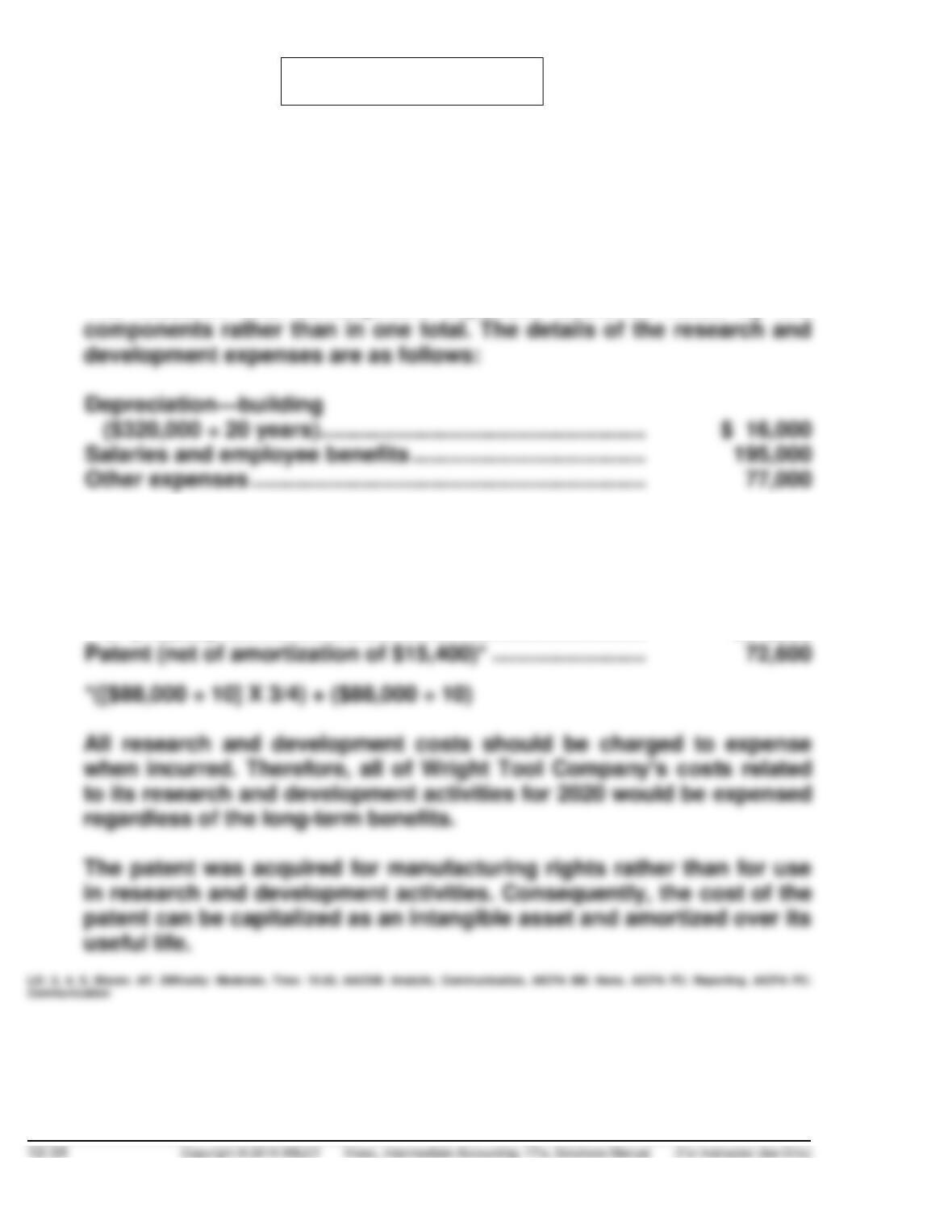
*The research and development expenses could be listed by the
($320,000 ÷ 20 years) ……………………………………………..
$ 16,000
Salaries and employee benefits ………………………………..
Other expenses ……………………………………………………….
(b) Balance sheet items and amounts as of December 31, 2020:
Land ……………………………………………………………………….
$ 60,000
Building (net of accumulated depreciation
of $16,000) ……………………………………………………………
304,000
Patent (net of amortization of $15,400)* …………………….
*([$88,000 ÷ 10] X 3/4) + ($88,000 ÷ 10)
TIME AND PURPOSE OF CONCEPTS FOR ANALYSIS
CA 12.1 (Time 20–25 minutes)
Purpose—to provide the student with an opportunity to determine the proper classification of certain
expenditures related to organizing a business. The student is required to deal with such issues as costs
CA 12.2 (Time 25–30 minutes)
Purpose—to present an opportunity for the student to discuss accounting for patents from a theoretical
and a practical viewpoint. The student is required to explain the “discounted value of expected net
CA 12.3 (Time 25–30 minutes)
Purpose—to provide the student with an opportunity to discuss the theoretical support for and practical
CA 12.4 (Time 20–25 minutes)
Purpose—to provide the student with an opportunity to examine the ethical issues related to expensing
SOLUTIONS TO CONCEPTS FOR ANALYSIS
CA 12.1
Interest on mortgage bonds. An amount equal to the interest cost incurred in 2019 ($720,000) is a
cost which can be associated with the normal construction period and can be regarded as a normal
element of the cost of the physical assets of the shopping center because the construction period would
have ended at the end of the year if the tornado had not occurred. The decision to use debt capital to
Note that interest must be capitalized in this situation (see chapter 10) because the building requires a
period of time to get it ready for its intended use.
The amount of interest cost for the first nine months of 2020 is the measure of the 2020 loss resulting
from the tornado. The extension of the construction period to October 2020 because of the tornado
does not warrant its capitalization as construction period interest. It is in effect an uninsured loss
resulting from the tornado. Had it not been for the tornado, the entire amount would have been a
normal operating expense chargeable against the rental revenue that would have been earned during
the first nine months of 2020.
Cost of obtaining tenants. Both the 2019 and 2020 costs of obtaining tenants should be expensed as
CA 12.2
(a) A dollar to be received in the future is worth less than a dollar received today because of an
CA 12.2 (Continued)
(b) If the royalty receipts are expected to occur at regular intervals and the amounts are to be fairly
constant, their discounted value can be calculated by multiplying the value of one such receipt by
the present value of an annuity of 1 for the number of periods the receipts are expected. On the
other hand, if receipts are expected to be irregular in amount or if they are to occur at irregular
intervals, each expected future receipt would have to be multiplied by the present value of 1 for the
(c) The basis of valuation for patents that is generally accepted in accounting is cost. Evidently the
cartons were developed and the patents obtained directly by the client corporation. Those costs
related to the research and development of the cartons must be expensed in accordance with
(d) Intangible assets represent rights to future benefits. The ideal measure of the value of intangible
assets is the discounted present value of their future benefits. For Ferry Company, this would
(e) The amortization policy is implied in the definition of intangible assets as rights to future benefits.
CA 12.2 (Continued)
(f) The litigation can and should be mentioned in notes to the financial statements. Some indication of
the expectations of legal counsel in respect to the outcome can properly accompany the statements.
It would be inappropriate to record a contingent asset reflecting the expected damages to be
CA 12.3
(a) Research, as defined in GAAP (FASB ASC 730-10–25), is “planned search or critical investigation
aimed at discovery of new knowledge with the hope that such knowledge will be useful in developing
(b) The current accounting and reporting practices for research and development costs were
promulgated by the Financial Accounting Standards Board (FASB) in order to reduce the number
of alternatives that previously existed and to provide useful financial information about research
and development costs. The FASB considered four alternative methods of accounting: (1) charge
all costs to expense when incurred, (2) capitalize all costs when incurred, (3) selective
capitalization, and (4) accumulate all costs in a special category until the existence of future