CHAPTER 26 (FIN MAN); CHAPTER 12 (MAN) Capital Investment Analysis
Prob. 26–6B (FIN MAN); Prob. 12–6B (MAN) (Continued)
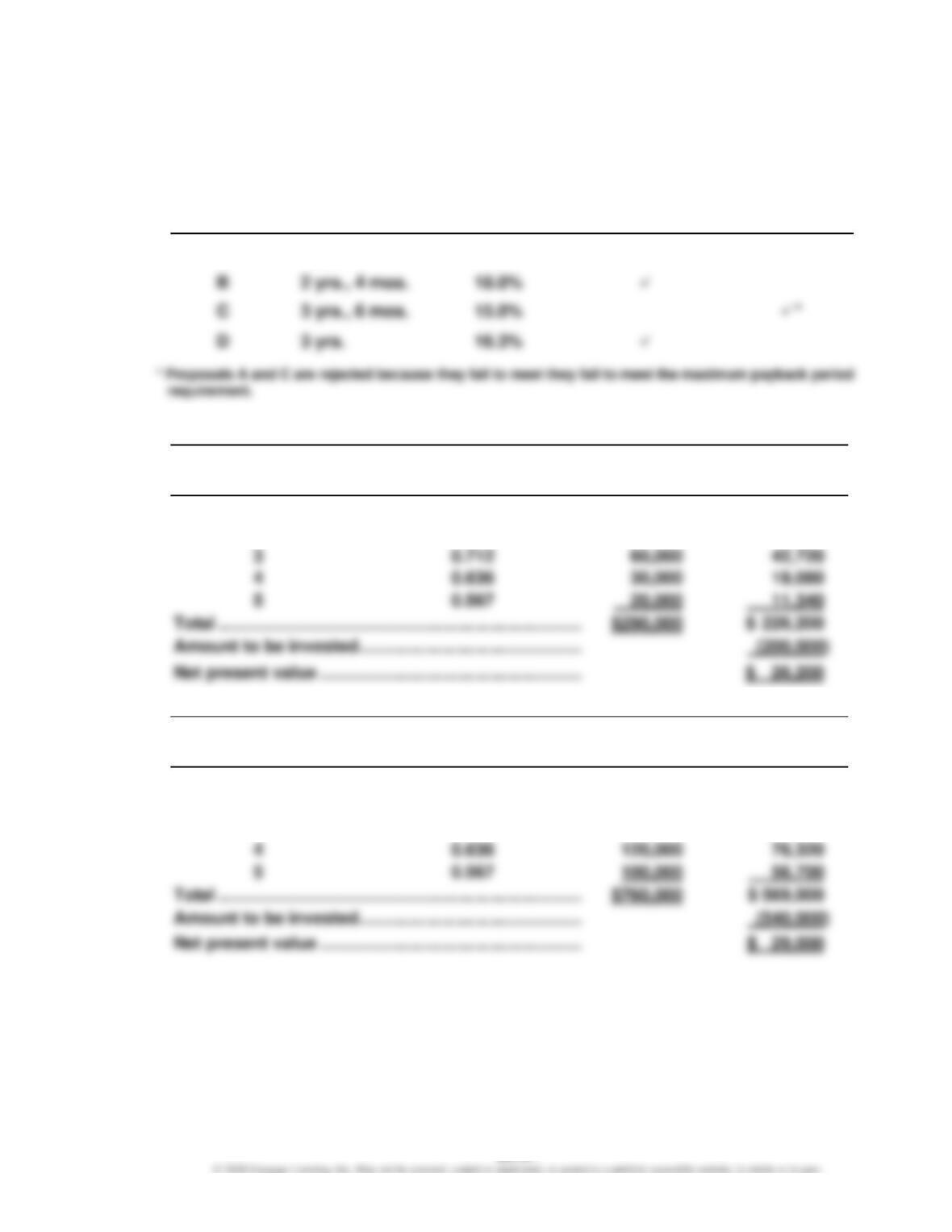
3. Of the four proposed investments, only Proposals B and D meet the company’s
requirements, as the following table indicates:
Cash Payback
Average Rate
Accept for
Proposal
Period
of Return
Further Analysis
Reject
A
4 yrs.
5.3%
✓*
4.
Proposal B
Present Value
Net Cash
Present Value of
Year
of $1 at 12%
Flow
Net Cash Flow
1
0.893
$100,000
$ 89,300
2
0.797
80,000
63,760
3
0.712
5
0.567
Proposal D
Present Value
Net Cash
Present Value of
Year
of $1 at 12%
Flow
Net Cash Flow
1
0.893
$200,000
$ 178,600
2
0.797
180,000
143,460
3
0.712
160,000
113,920
5
0.567
100,000
CHAPTER 26 (FIN MAN); CHAPTER 12 (MAN) Capital Investment Analysis
Prob. 26–6B (FIN MAN); Prob. 12–6B (MAN) (Concluded)
5.
Total Present Value of Net Cash Flow
Present Value Index = Amount to Be Invested
Proposal B:
$226,200 = 1.13 *
$200,000
6. Based on the net present value, the proposals should be ranked as follows:
Proposal D: $29,000
Proposal B: $26,200
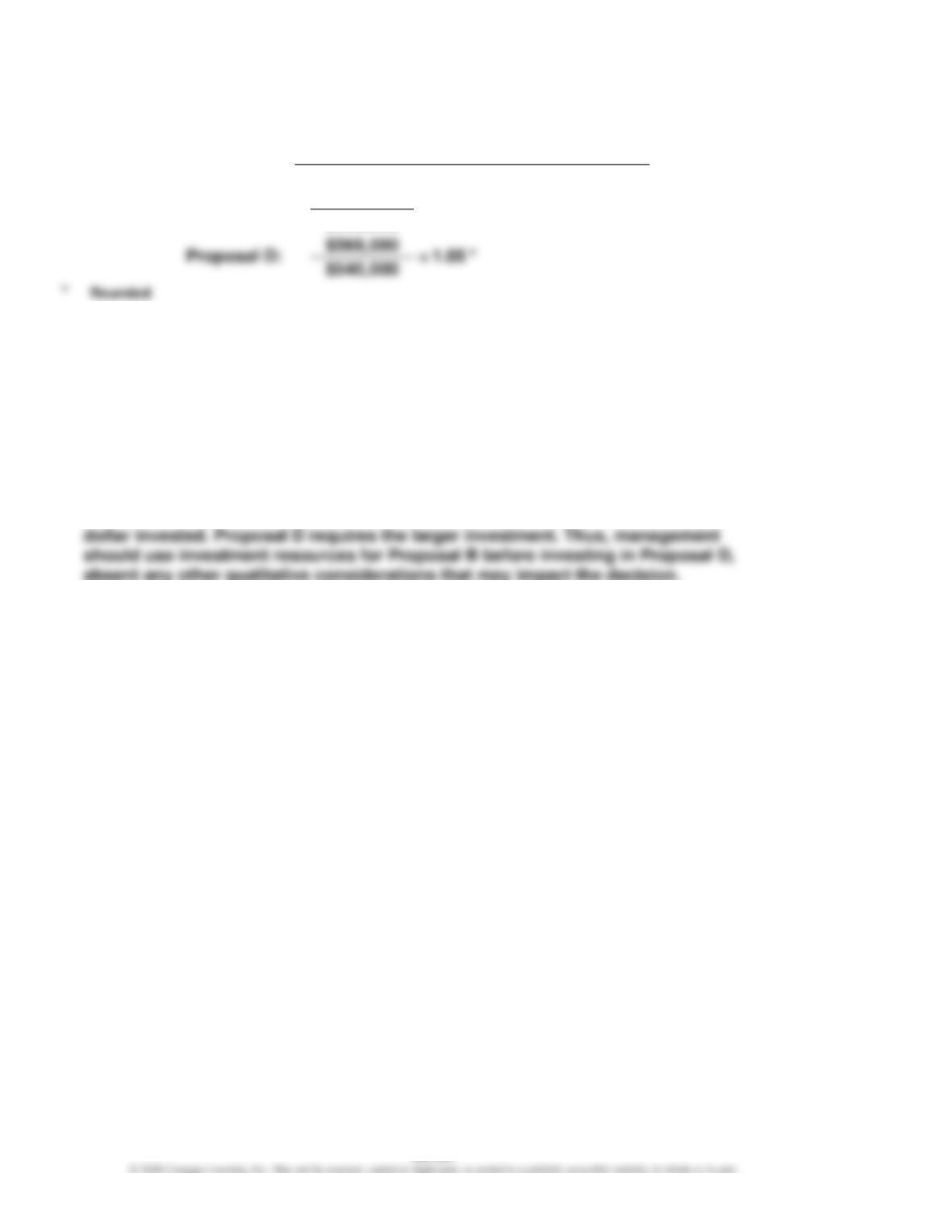
7. Based on the present value index (the amount of present value per dollar invested),
the proposals should be ranked as follows:
Proposal B: 1.13
Proposal D: 1.05
8. The analysis indicates that although Proposal D has the larger net present value,
it is not as attractive as Proposal B in terms of the amount of present value per
CHAPTER 26 (FIN MAN); CHAPTER 12 (MAN) Capital Investment Analysis
MAKE A DECISION
MAD 26–1 (FIN MAN); MAD 12–1 (MAN)
a.
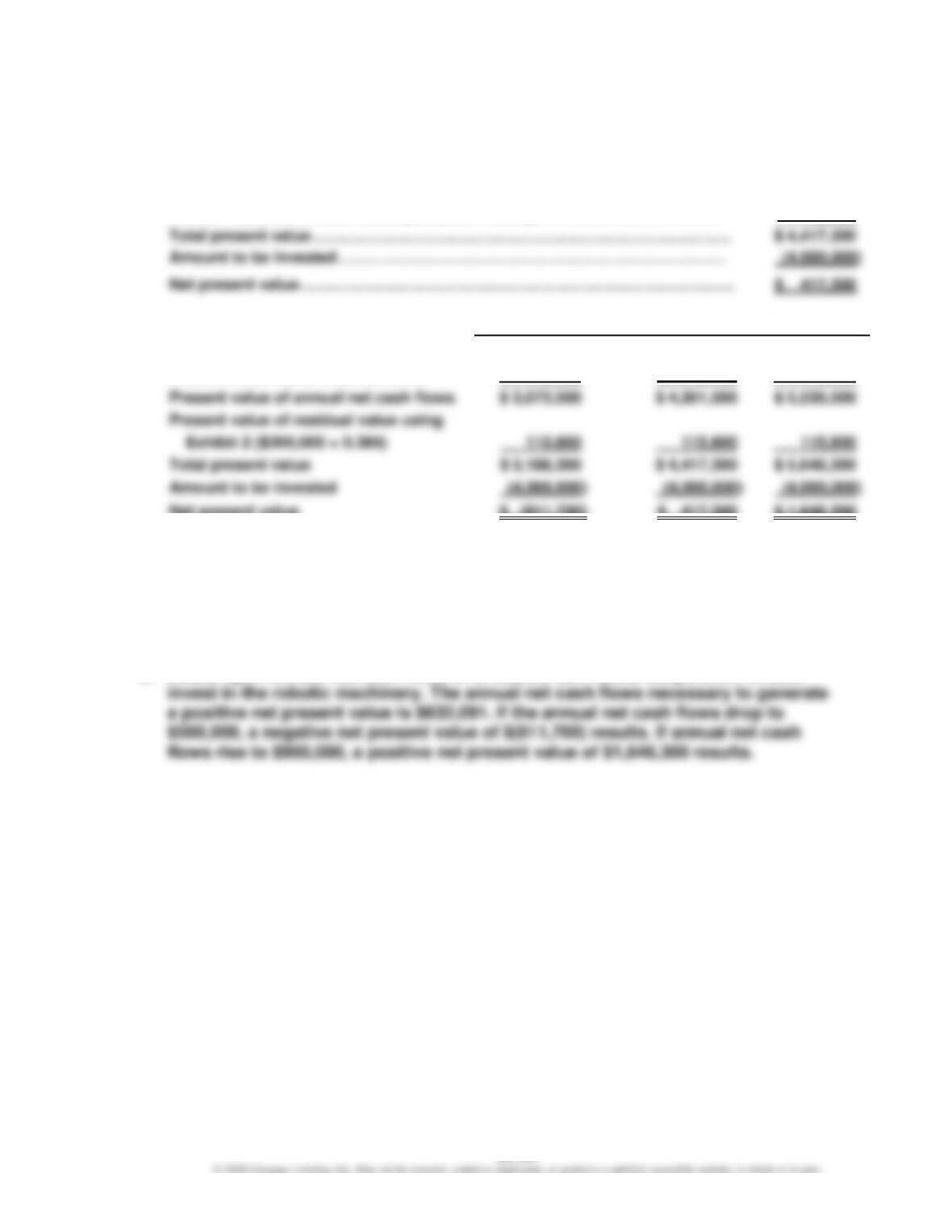
Present value of annual net cash flows ($700,000 × 6.145)………………………
$ 4,301,500
Present value of residual value ($300,000 × 0.386)………………………………
115,800
Total present value………………………………………………………………………
Amount to be invested…………………………………………………………………
b.
Estimated Annual Net Cash Flow
Estimated annual net cash flows
$ 500,000
$ 700,000
$ 900,000
Present value factor from Exhibit 5
× 6.145
× 6.145
× 6.145
Present value of annual net cash flows
$ 5,530,500
Present value of residual value using
Total present value
Net present value
$ (811,700)
$ 417,300
$ 1,646,300
c.
(Annual Net Cash Flow × 6.145) + $115,800 – $4,000,000
=
0
Annual Net Cash Flow × 6.145
=
$4,000,000 – $115,800
Annual Net Cash Flow × 6.145
=
$3,884,200
Annual Net Cash Flow
=
$3,884,200 ÷ 6.145
Annual Net Cash Flow
=
$632,091
CHAPTER 26 (FIN MAN); CHAPTER 12 (MAN) Capital Investment Analysis
MAD 26–2 (FIN MAN); MAD 12–2 (MAN)
a.
Annual Net
Probability
Expected
Cash Flow
×
of Occurring
=
Value
$900,000
0.10
$ 90,000
700,000
0.50
350,000
500,000
0.40
b.
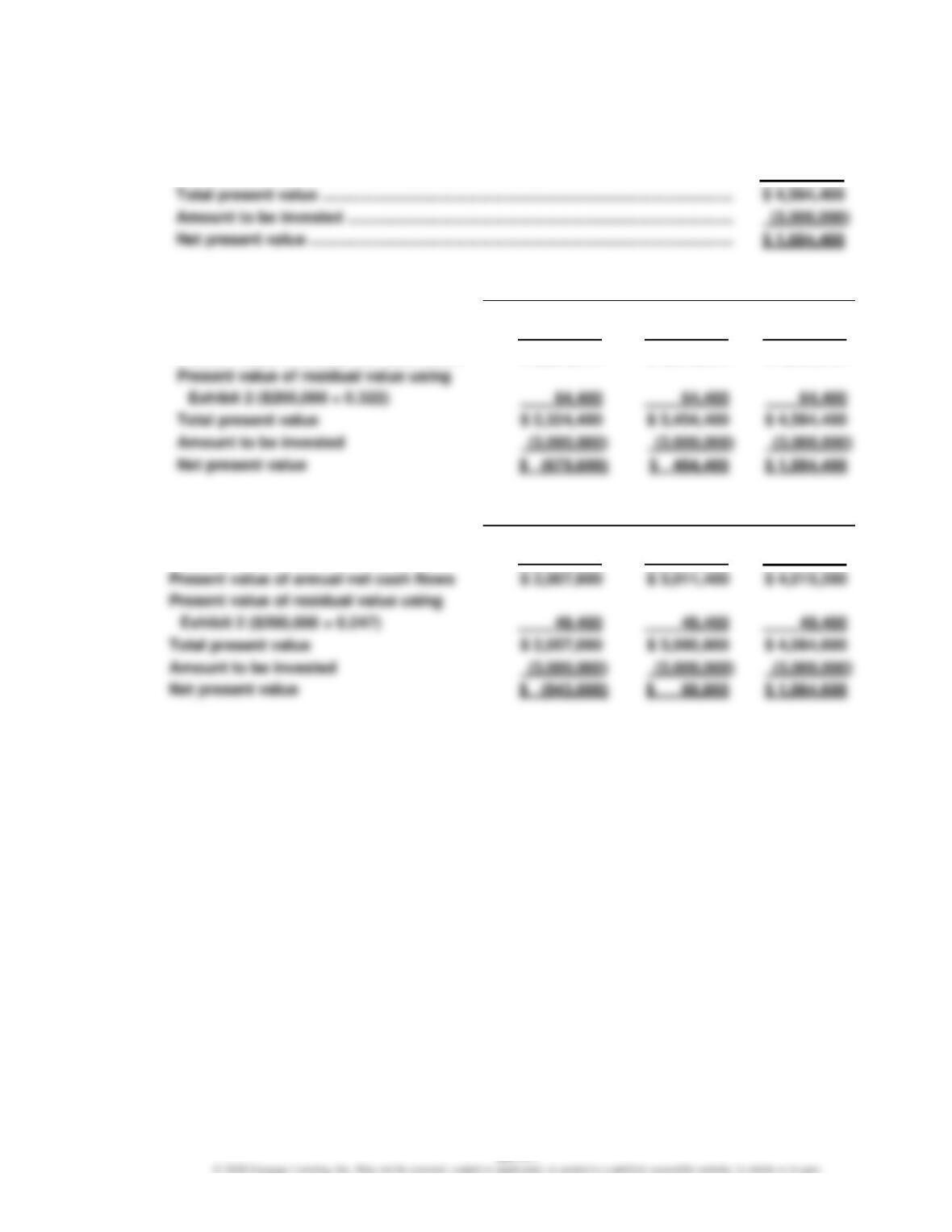
Present value of annual net cash flows ($640,000 × 6.145) ………………
$ 3,932,800
Present value of residual value ($300,000 × 0.386) ………………………….
115,800
Total present value ……………………………………………………………………….
$ 4,048,600
Amount to be invested ………………………………………………………………….
CHAPTER 26 (FIN MAN); CHAPTER 12 (MAN) Capital Investment Analysis
MAD 26–3 (FIN MAN); MAD 12–3 (MAN)
a.
Present value of annual net cash flows ($800,000 × 5.650) ………………………….
$ 4,520,000
Present value of residual value ($200,000 × 0.322)………………………………………
64,400
Amount to be invested ………………………………………………………………………………
b.
Estimated Annual Net Cash Flow
Estimated annual net cash flows
$ 400,000
$ 600,000
$ 800,000
Present value factor from Exhibit 5
× 5.650
× 5.650
× 5.650
Present value of annual net cash flows
$ 2,260,000
$ 3,390,000
$ 4,520,000
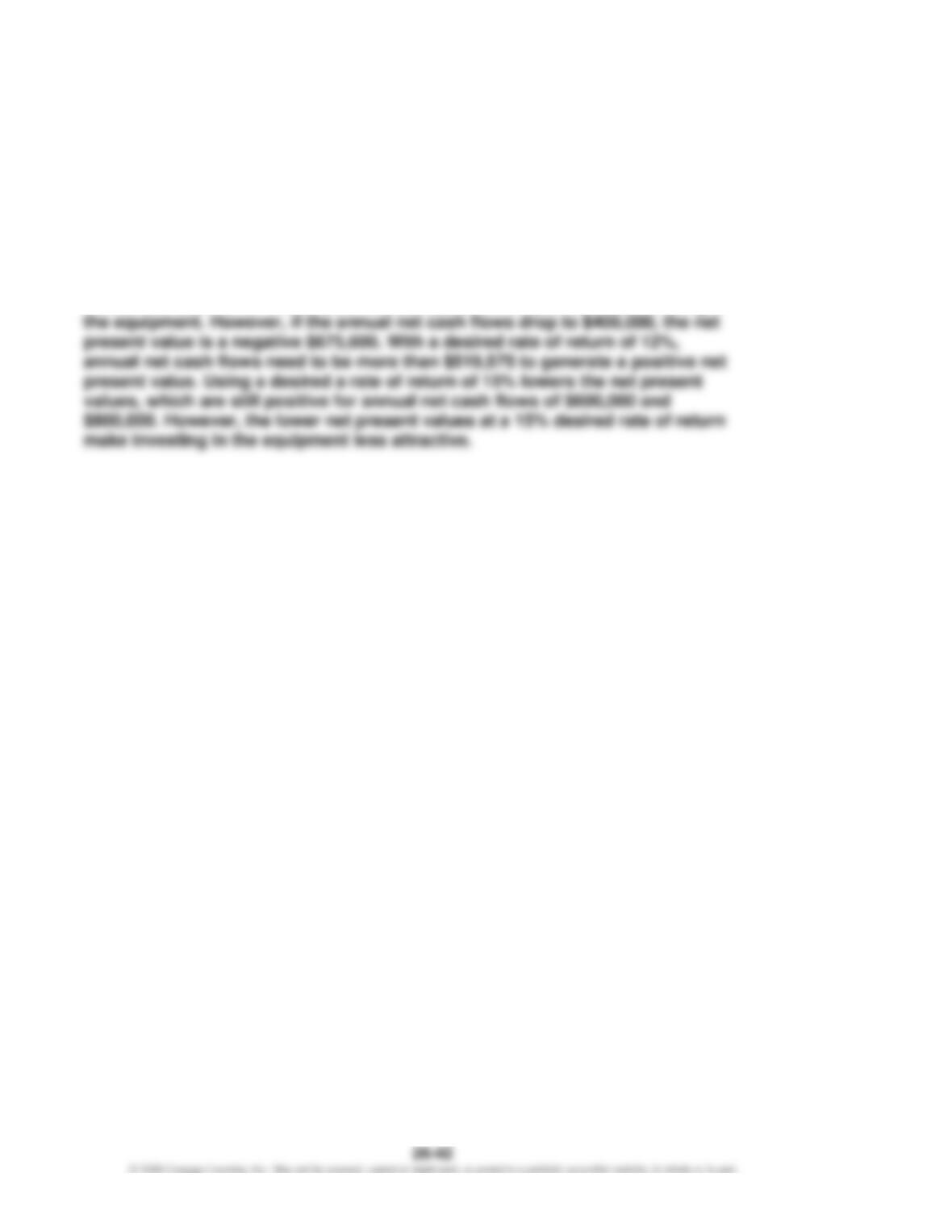
c.
Estimated Annual Net Cash Flow
Estimated annual net cash flows
$ 400,000
$ 600,000
$ 800,000
Present value factor from Exhibit 5
× .019
× 5.019
× 5.019
Present value of annual net cash flows
$ 2,007,600
Present value of residual value using
Amount to be invested
(3,000,000)
CHAPTER 26 (FIN MAN); CHAPTER 12 (MAN) Capital Investment Analysis
MAD 26–3 (FIN MAN); MAD 12–3 (MAN) (Concluded)
d.
(Annual Net Cash Flow × 5.650) + $64,400 – $3,000,000
=
0
Annual Net Cash Flow × 5.650
=
$3,000,000 – $64,400
Annual Net Cash Flow × 5.650
=
$2,935,600
Annual Net Cash Flow
=
$2,935,600 ÷ 5.650
Annual Net Cash Flow
=
$519,575
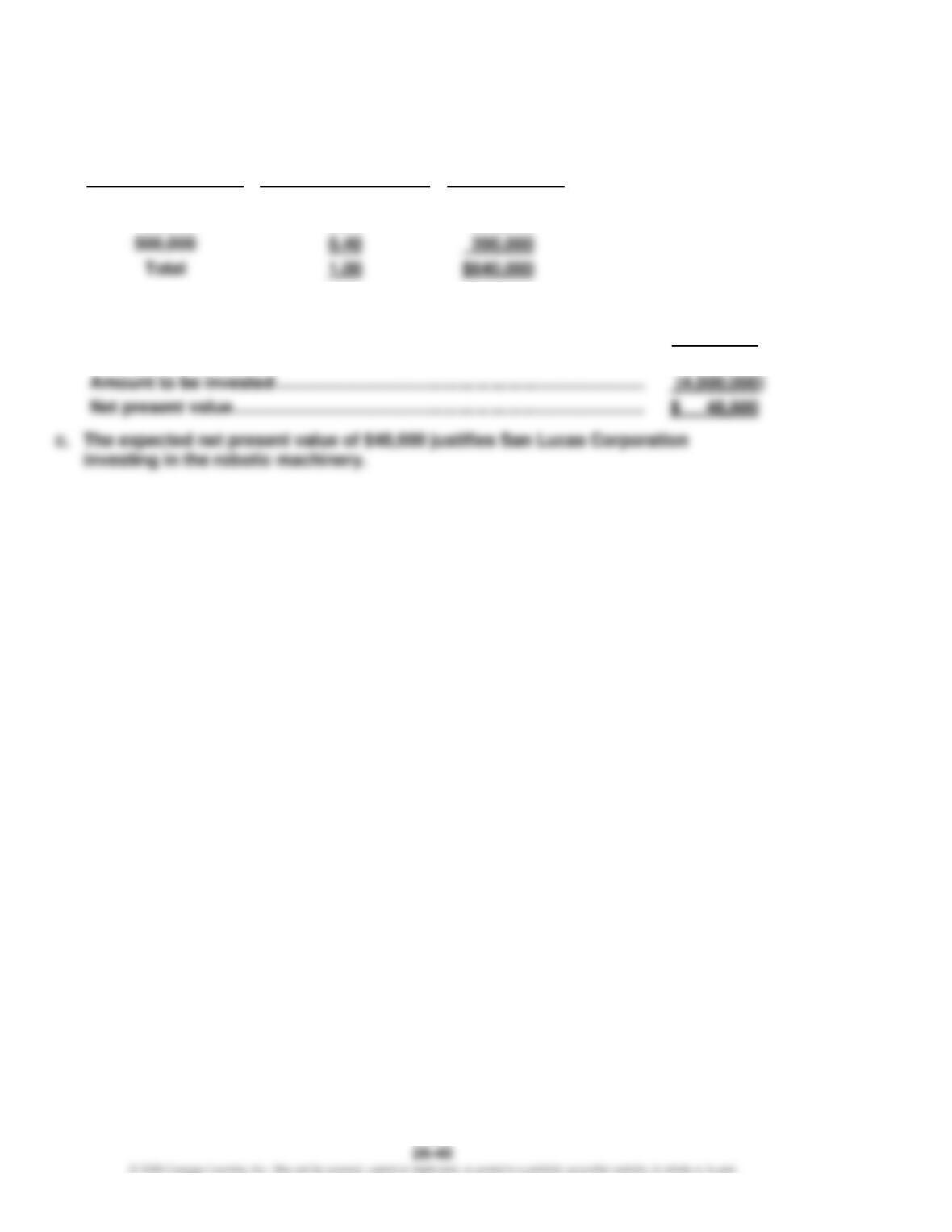
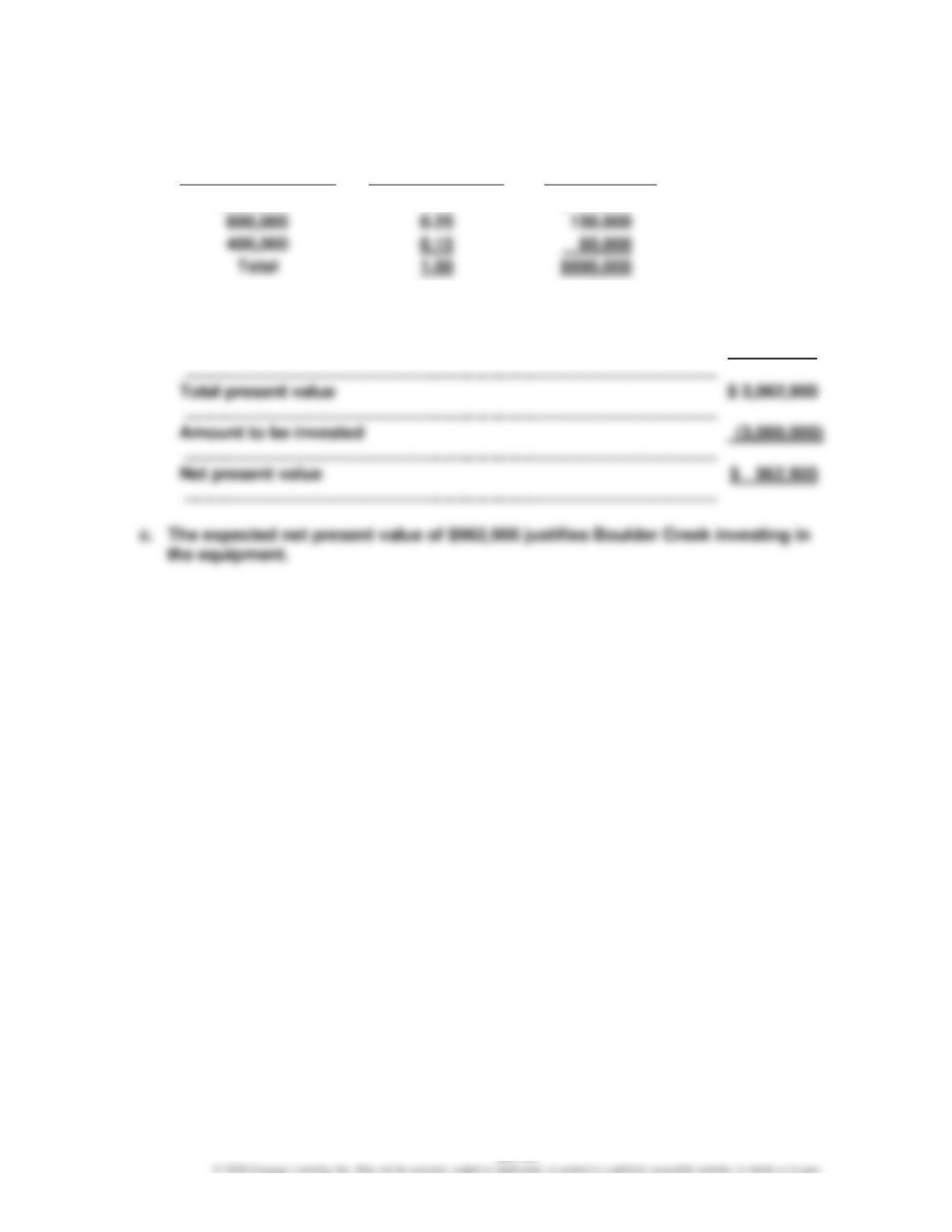
e. Using a desired rate of return of 12%, the net present values are positive for
annual net cash flows of $600,000 and $800,000, which justifies the investing in
CHAPTER 26 (FIN MAN); CHAPTER 12 (MAN) Capital Investment Analysis
MAD 26–4 (FIN MAN); MAD 12–4 (MAN)
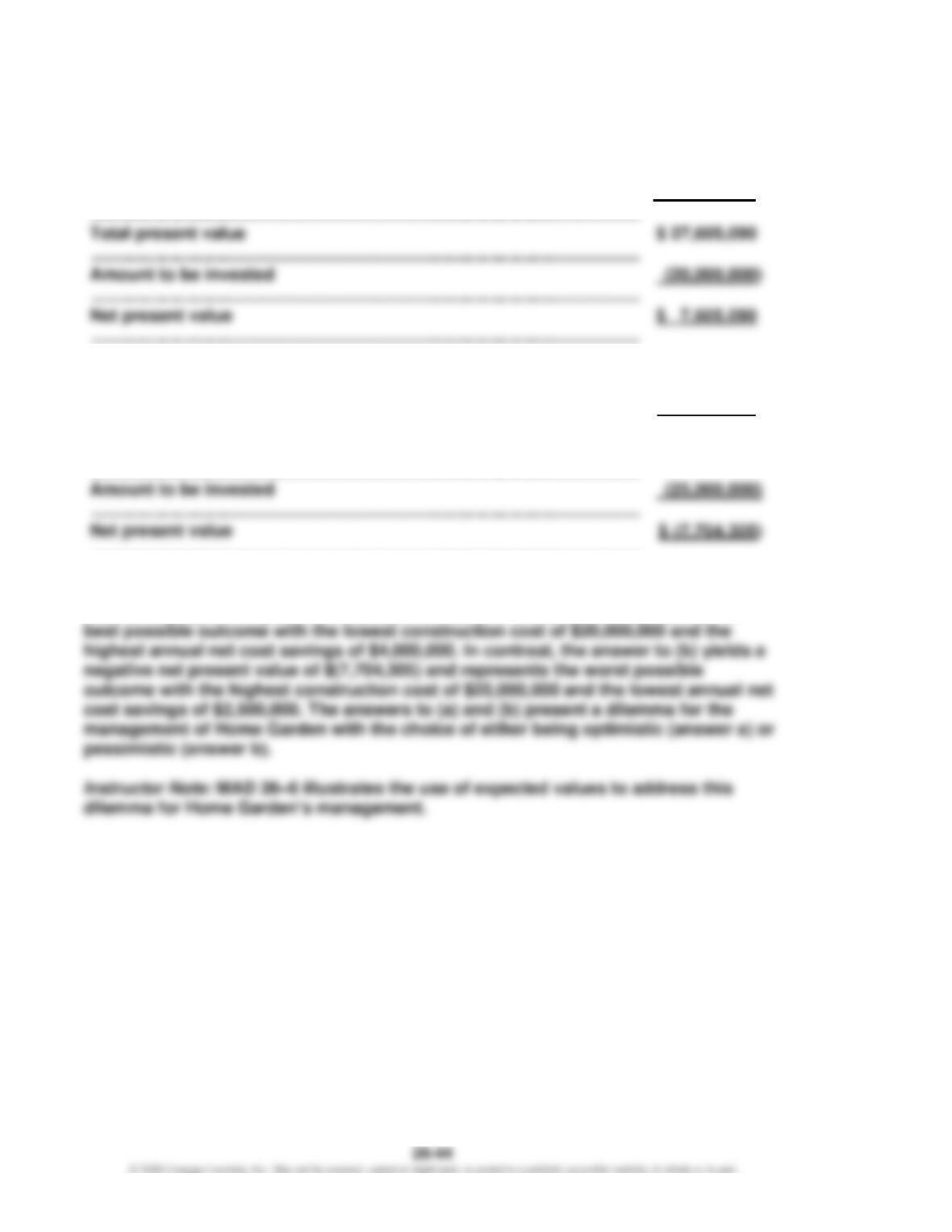
a.
Annual Net
Probability
Expected
Cash Flow
×
of Occurring
=
Value
$800,000
0.60
$480,000
b.
Present value of annual net cash flows ($690,000 × 5.650)
………………………………………………………………………………………………..
$ 3,898,500
Present value of residual value ($200,000 × 0.322)
………………………………………………………………………………………………..
Total present value
………………………………………………………………………………………………..
Amount to be invested
………………………………………………………………………………………………..
(3,000,000)
Net present value
………………………………………………………………………………………………..
64,400
CHAPTER 26 (FIN MAN); CHAPTER 12 (MAN) Capital Investment Analysis
MAD 26–5 (FIN MAN); MAD 12–5 (MAN)
a.
Present value of annual net cost savings ($4,000,000 × 6.87293)
…………………………………………………………………………………………………..
$ 27,491,720
Present value of residual value ($3,000,000 × 0.03779)
…………………………………………………………………………………………………..
Total present value
…………………………………………………………………………………………………..
$ 27,605,090
Amount to be invested
…………………………………………………………………………………………………..
Net present value
…………………………………………………………………………………………………..
113,370
b.
Present value of annual net cost savings ($2,500,000 × 6.87293)
…………………………………………………………………………………………………..
$ 17,182,325
Present value of residual value ($3,000,000 × 0.03779)
…………………………………………………………………………………………………..
113,370
Total present value
…………………………………………………………………………………………………..
Amount to be invested
…………………………………………………………………………………………………..
Net present value
$ 17,295,695
…………………………………………………………………………………………………..
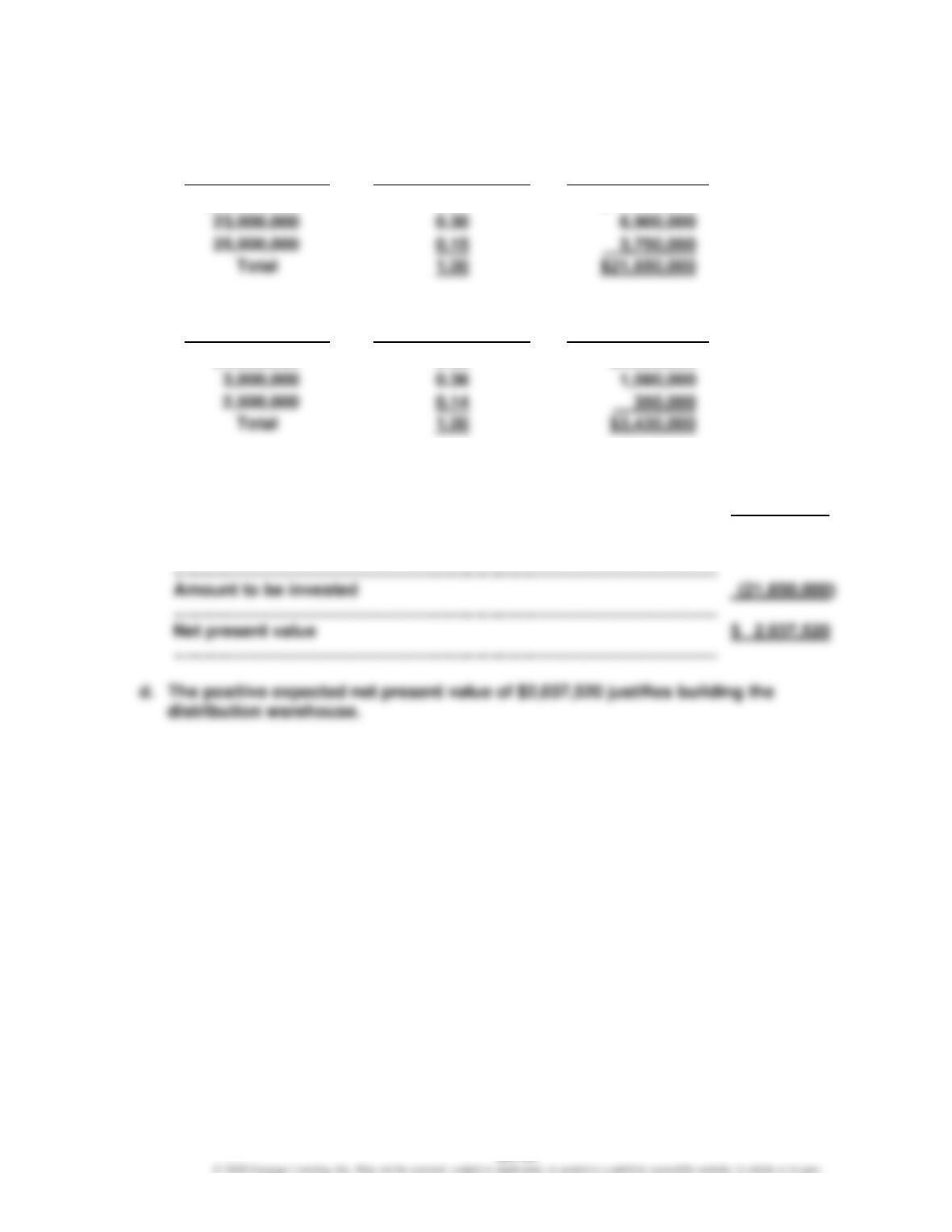
c. The answers to (a) and (b) represent opposite ends of the possible outcomes. The
answer to (a) yields a positive net present value of $7,605,090 and represents the
CHAPTER 26 (FIN MAN); CHAPTER 12 (MAN) Capital Investment Analysis
MAD 26–6 (FIN MAN); MAD 12–6 (MAN)
a.
Construction
Probability
Expected
Cost
×
of Occurring
=
Value
$20,000,000
0.55
$11,000,000
0.15
b.
Annual Net
Probability
Expected
Cash Flow
×
of Occurring
=
Value
0.50
0.14
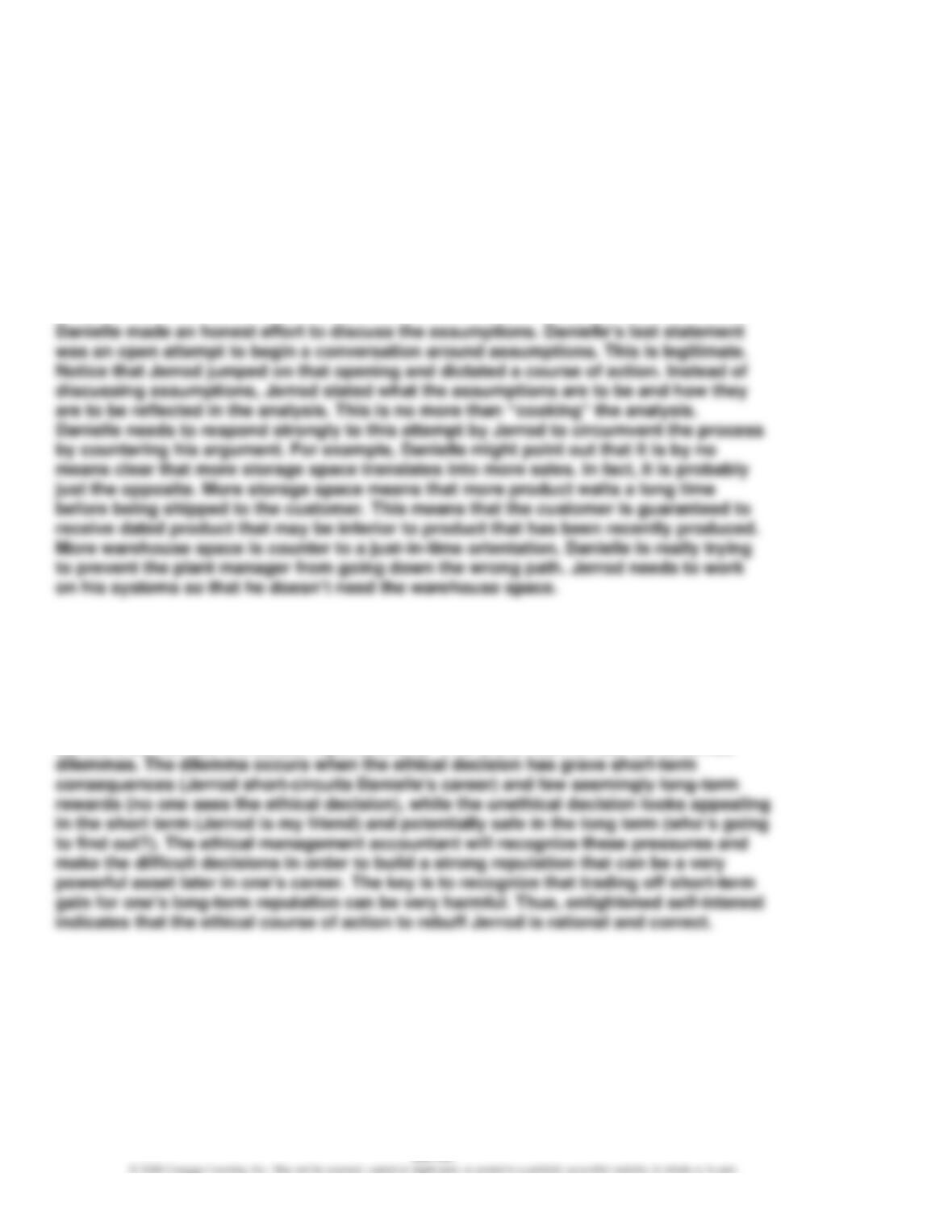
c.
Present value of annual net cost savings ($3,430,000 × 6.87293)
………………………………………………………………………………………………….
$ 23,574,150
Present value of residual value ($3,000,000 × 0.03779)
………………………………………………………………………………………………….
113,370
Total present value
………………………………………………………………………………………………….
Amount to be invested
………………………………………………………………………………………………….
(21,650,000)
………………………………………………………………………………………………….
$ 23,687,520
CHAPTER 26 (FIN MAN); CHAPTER 12 (MAN) Capital Investment Analysis
TAKE IT FURTHER
TIF 26–1 (FIN MAN); TIF 12–1 (MAN)
The plant manager wants a project to be accepted and places pressure on the analyst
to come up with the “right numbers.” Jerrod is right when he states that the net present
value analysis has many assumptions and room for interpretation. Many use this room
for interpretation to work the numbers until they satisfy the minimum return (hurdle)
rate. In fact, some analysts state that they start with the hurdle rate and work back into
the numbers. Clearly, this is not what should be expected of Danielle.
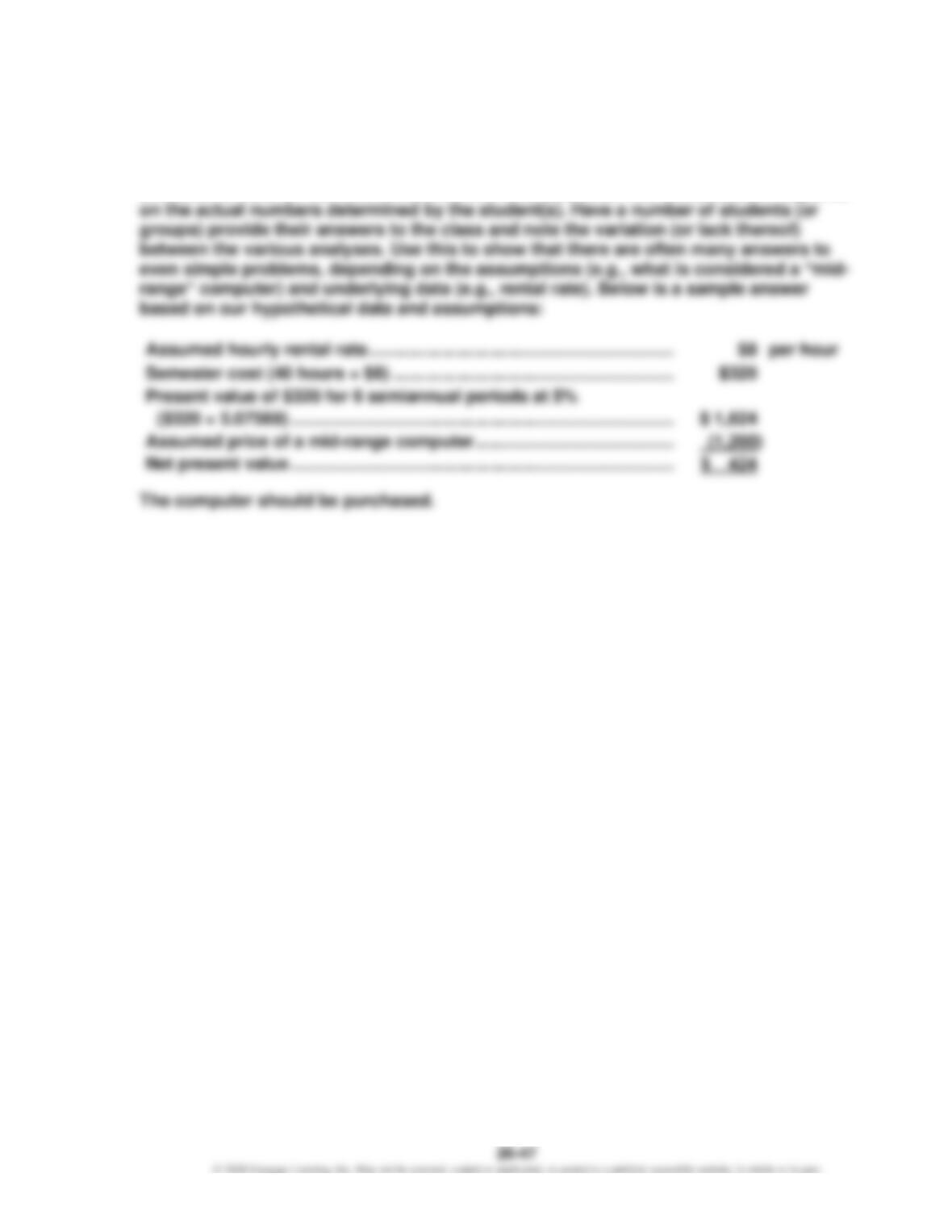
This very difficult issue revolves around the nature of ethical dilemmas. Danielle has
brief tenure with the organization. She has very little organizational clout and could
easily find her career short-circuited by crossing Jerrod. It might be tempting for Danielle
to slide on this one—after all, who would know? If the project is eventually a failure, it’s
unlikely that the decision would come back to haunt Danielle. Much time will have
passed, and Danielle will likely be in another job in the company. The decision to
confront Jerrod has immediate repercussions. This is the heart of real-world ethical
CHAPTER 26 (FIN MAN); CHAPTER 12 (MAN) Capital Investment Analysis
TIF 26–2 (FIN MAN); TIF 12–2 (MAN)
This activity could be assigned individually or in groups. This activity has the student(s)
perform a capital investment analysis for a desktop computer, using information
available to them on the Internet and from a local business. The actual answer depends

CHAPTER 26 (FIN MAN); CHAPTER 12 (MAN) Capital Investment Analysis
TIF 26–3 (FIN MAN); TIF 12–3 (MAN)
Memo
To: Tom Greene
From: Ima Student
Re: Effect of exchange rate changes on internal rate of return
I have reviewed the impact of possible exchange rate changes on the company’s internal
rate of return and determined that the impact will be significantly different depending on
where the product is ultimately sold. If the product is sold locally, it is likely that the
If, however, the plant produced for export only, then the expenses would be incurred in
local currency, while the revenues would be earned in U.S. dollars. This could work in
CHAPTER 26 (FIN MAN); CHAPTER 12 (MAN) Capital Investment Analysis
TIF 26–4 (FIN MAN); TIF 12–4 (MAN)
a.
Annual salary ……………………………………………………………………………….
$ 50,000
× Present value of $1 annuity for 10 years at 10% …………………………..
6.145
Present value of undergraduate option as of the end
of undergraduate degree (beginning of graduate
degree) ………………………………………………………………………………………
$307,250
b.
Annual tuition at the beginning of graduate year …………………………….
$ (12,000)
Annual salary ……………………………………………………………………………….
× Present value of $1 annuity for 9 years at 10% …………………………….
5.759
Note: The present values of parts (a) and (b) must both be determined as of
the beginning of the graduate year in order to be compared. Thus, the present
value of the salary at the end of graduate school must be brought back one
period to the beginning of the graduate year, since this salary stream is
delayed by one year of schooling. The timeline below shows the calculation.
CHAPTER 26 (FIN MAN); CHAPTER 12 (MAN) Capital Investment Analysis
TIF 26–5 (FIN MAN); TIF 12–5 (MAN)
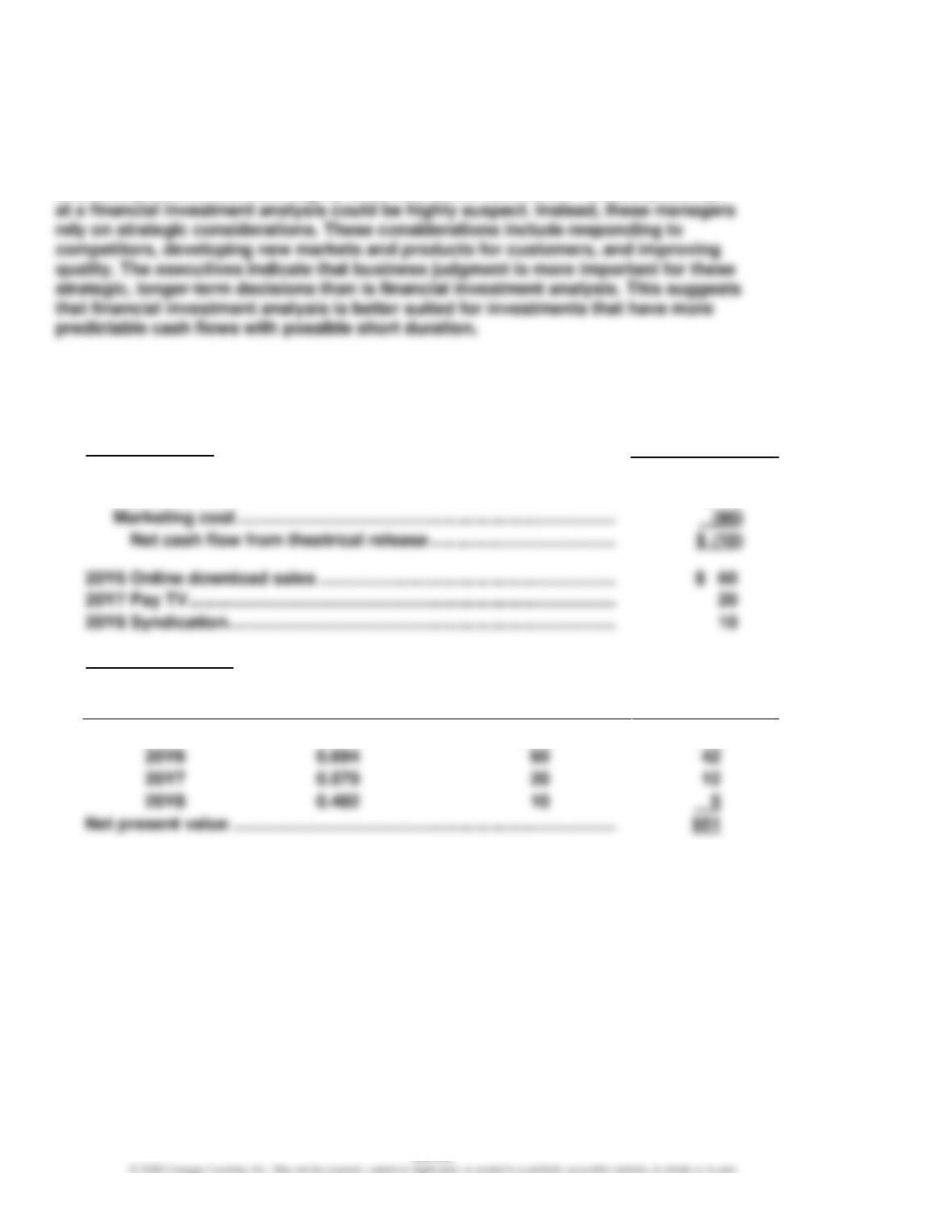
In all three companies, the executives indicate that financial investment analysis
plays a minor role in the selection of projects. The reason is that all three companies
deal with products that have highly uncertain future cash flows. Thus, any attempt
TIF 26–6 (FIN MAN); TIF 12–6 (MAN)
a.
All cash flows assumed to occur at the end of the year.
20Y5 cash flow:
in millions
Gross ticket sales ……………………………………………………………….
$ 420
Production cost …………………………..……………………………………..
(340)
20Y6 Online download sales …………………………………………………….
Net present value:
Present Value
Net Cash
Present Value of
Year
of $1 at 20%
Flow
Net Cash Flow
20Y5
0.833
$(10)
$ (8)
b. Even though the film lost money at the box office, the project was financially
successful as a whole, due to additional cash flows from online downloads, pay
TV, and network TV syndication.
CHAPTER 26 (FIN MAN); CHAPTER 12 (MAN) Capital Investment Analysis
CERTIFIED MANAGEMENT ACCOUNTANT (CMA®)
EXAMINATION QUESTIONS (ADAPTED)
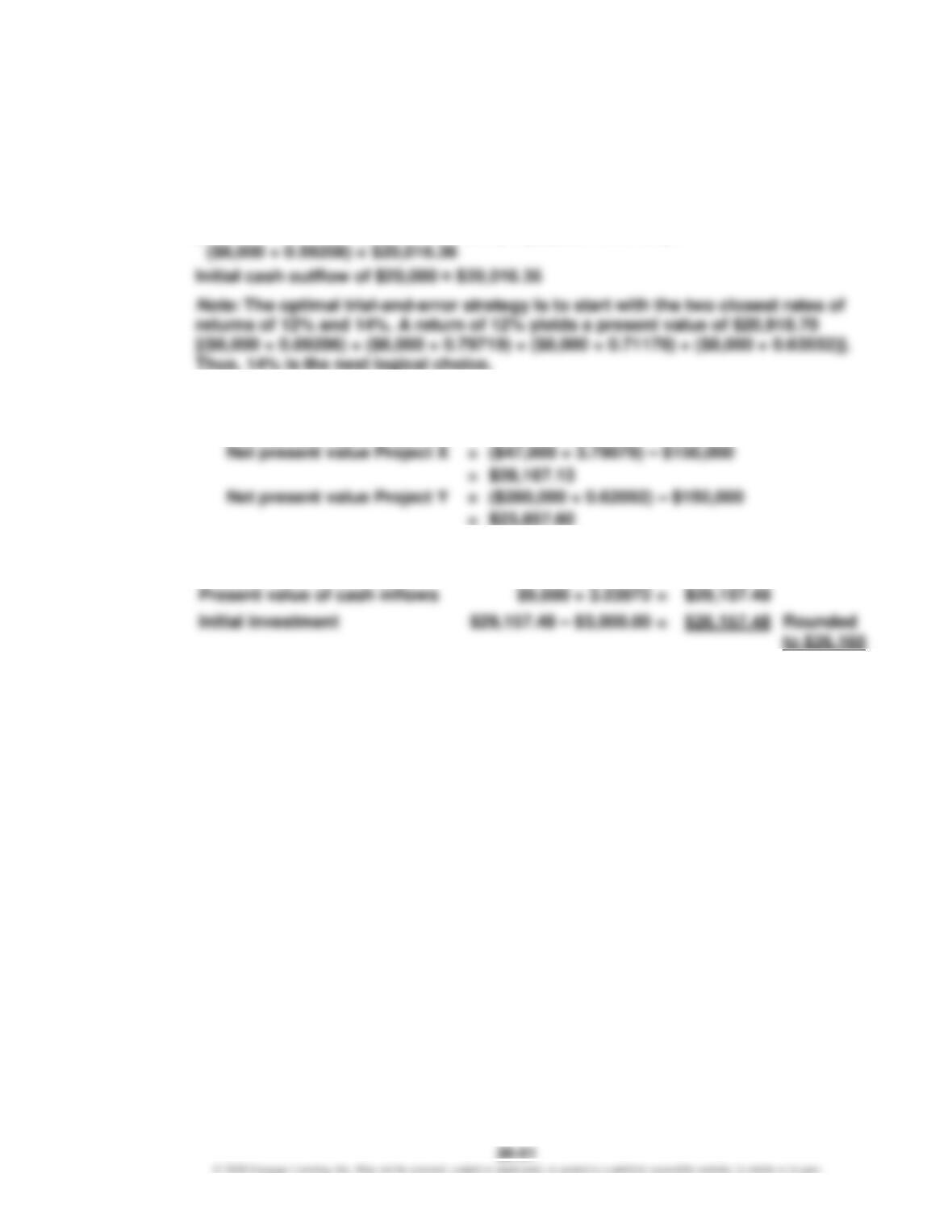
1. c. Using trial and error, an internal rate of return of 14% equates Foster’s cash flows to
the initial investment as follows:
($6,000 × 0.87719) + ($6,000 × 0.76947) + ($8,000 × 0.67497) +
2. a. Since the projects are mutually exclusive, Staten should accept Project X (higher net
present value) and reject Project Y.
3. c. Allstar’s initial investment is $26,160 as shown below.
4. c. The payback period for Foster’s project is 3.0 years ($20,000 – $6,000 –
$6,000 – $8,000 = $0).