2.
a
7.
c
3.
c
8.
a
5.
c
10.
d
Chapter 12
A Complete Accounting System for a Merchandising Company
Answers to Questions and Problems for Review
Multiple Choice Questions
Discussion Questions
The solutions presented here come from the textbook discussion. Your students may include other insight that is
relevant but not present in these solutions.
1. A query that is used in a subsequent query will be run when the subsequent query runs. For example,
2. The queries used to compute ending inventory would be used to compute the cost of goods sold. Use the
3. The statement of cash flows is divided into three types of activities: financing, investing, and operating. One
way to facilitate creating of a statement of cash flows is to create cash-flow type table. This table would be
4. Assets from the four business processes described in the textbook—cash, accounts receivable,
inventory—are all current assets. Assets acquired from support activities, non-inventory purchases, already
have a useful life attribute, so they can be easily classified into current and long-term based on their
5. The sophistication of students’ responses will depend on their level of accounting knowledge. Examples of
1.
c
6.
d

missing information include
• a field intblInflow-PurchaseNonInventory depreciation method.
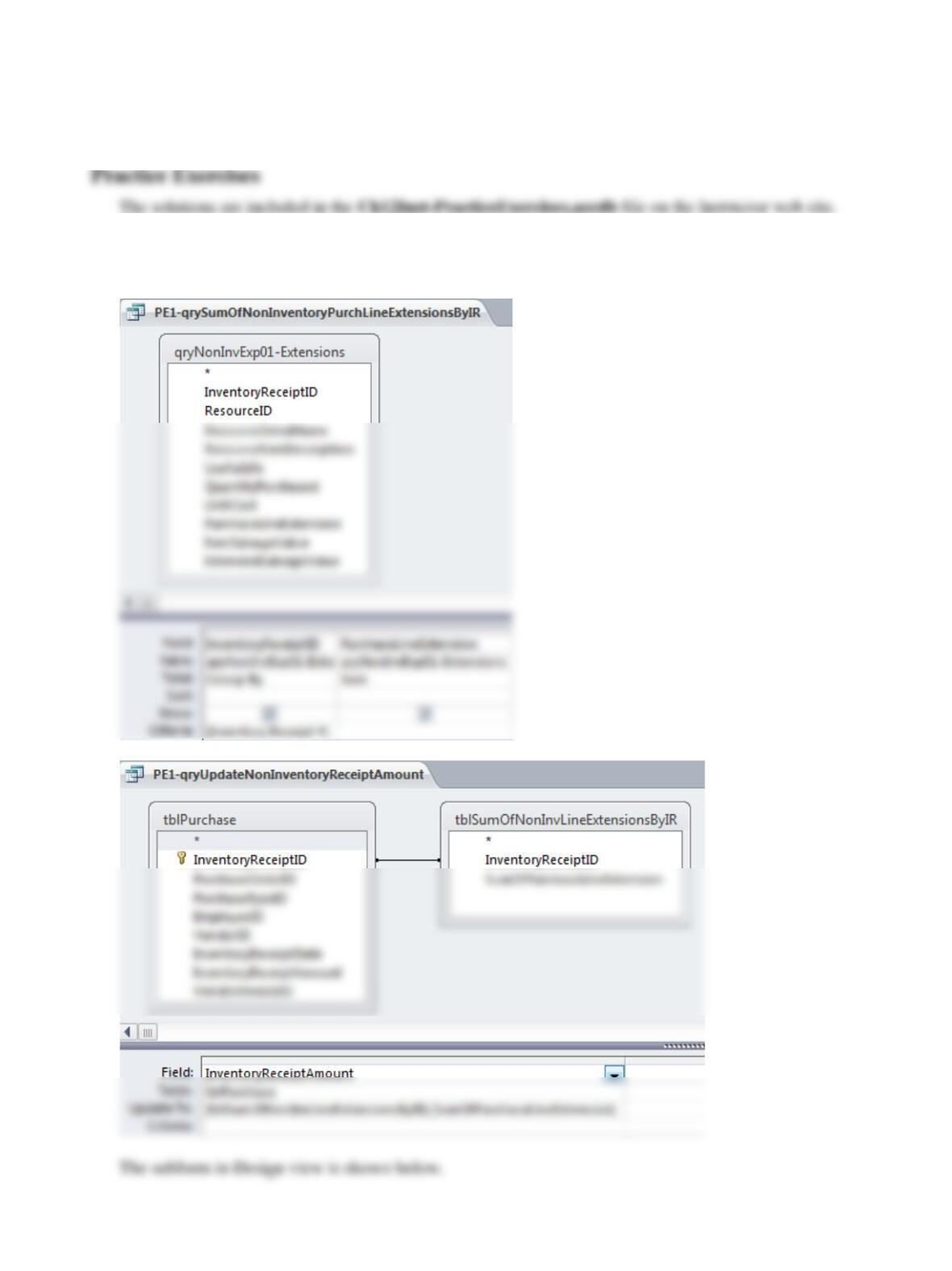
1. Students should use qryNonInvExp01-FsubPurchNonInventory as the queries for the form and subform are
shown below.
2. The assumption that goods available for sale are all items purchased through the end of period date makes it
easier for students to focus on the weighted average computations rather than being distracted by computing
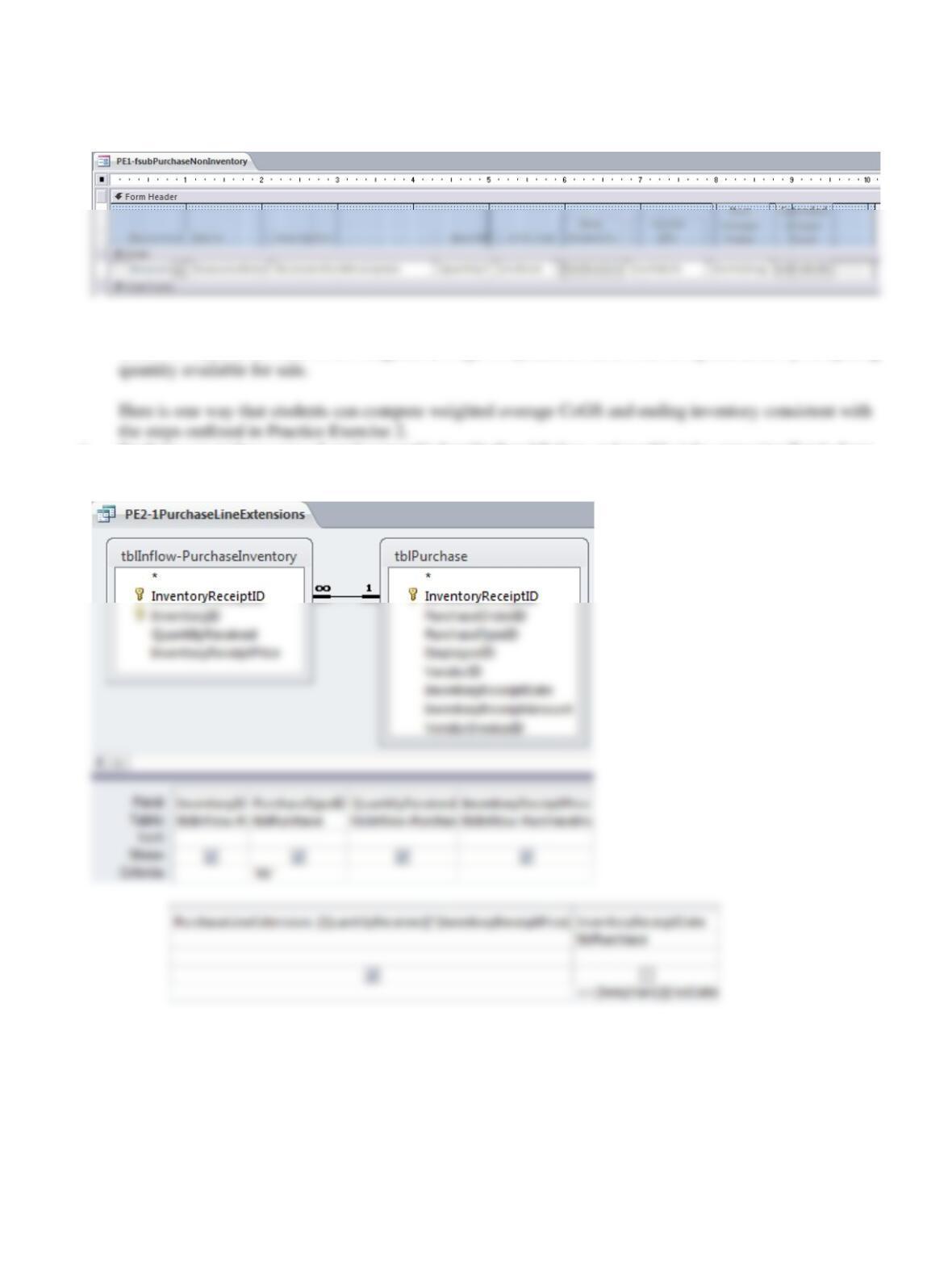
i. Students can make a copy of qryInentory01-SumQtyPurchByItem and modify it by removing Totals from
the QBE grid, adding InventoryReceiptPrice, and computing the purchase line extension.
ii. Sum QuantityReceived and PurchaseLineExtension by ItemID.
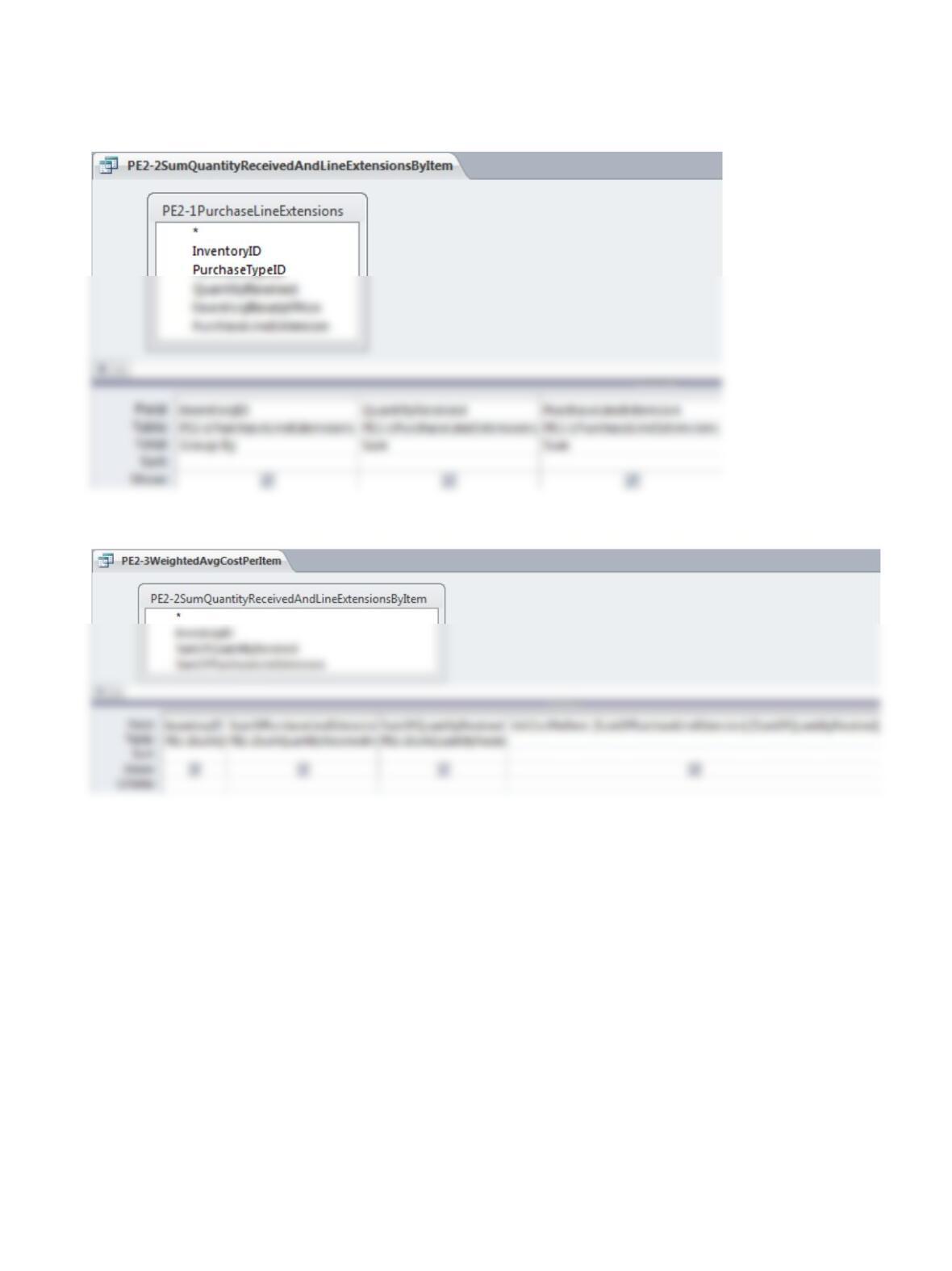
iii. Divide SumOfPUrchaseLineExtension by SumOfQuantityReceived to get the weighted average cost of
each item.
iv. Compute the quantity of items sold during the period. Students can just make a copy of
qryCoGS01-SummQtySoldByItem.
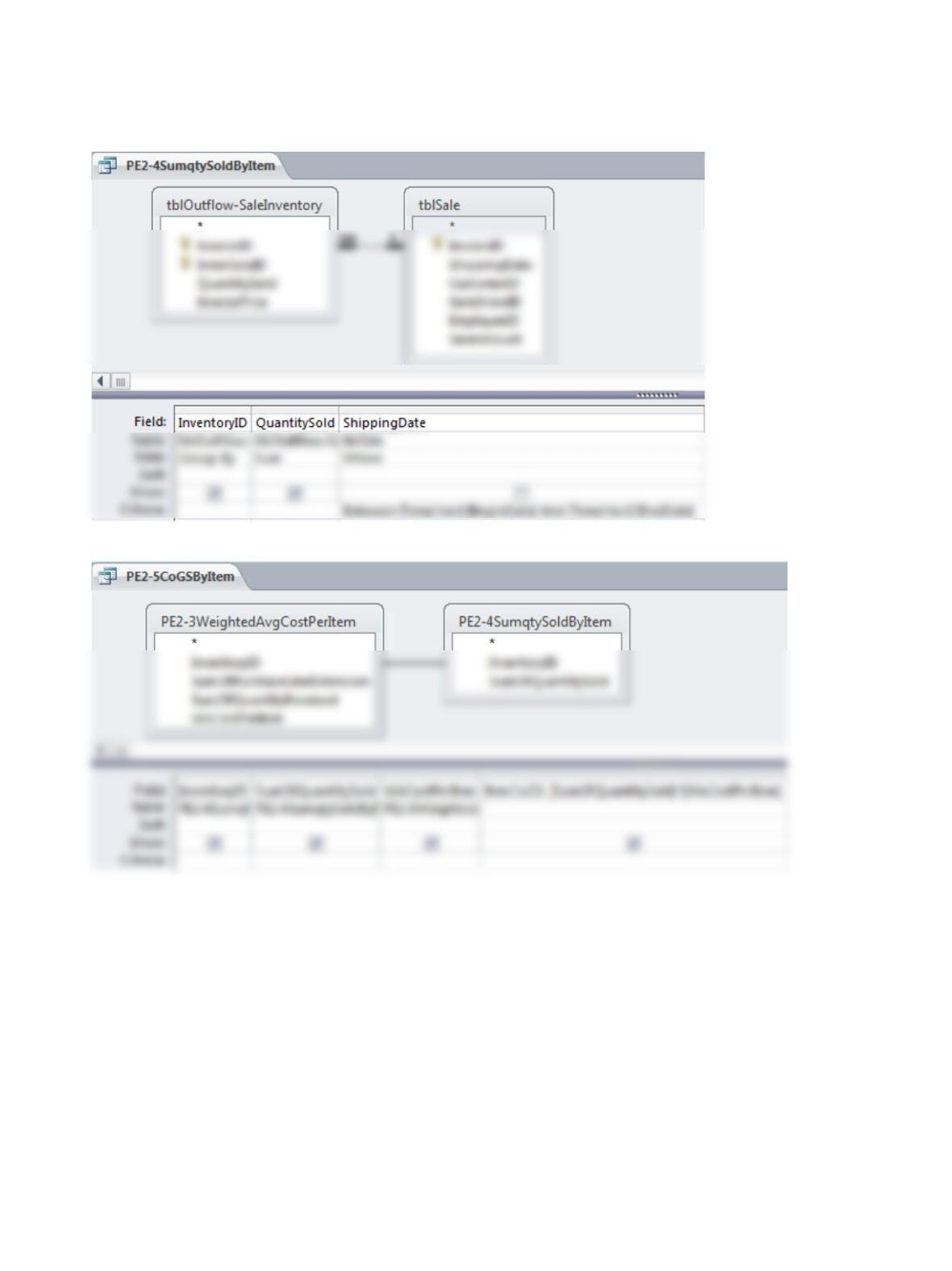
v. Compute the CoGS by item.
vi. Sum the CoGS by item to obtain the total CoGS.
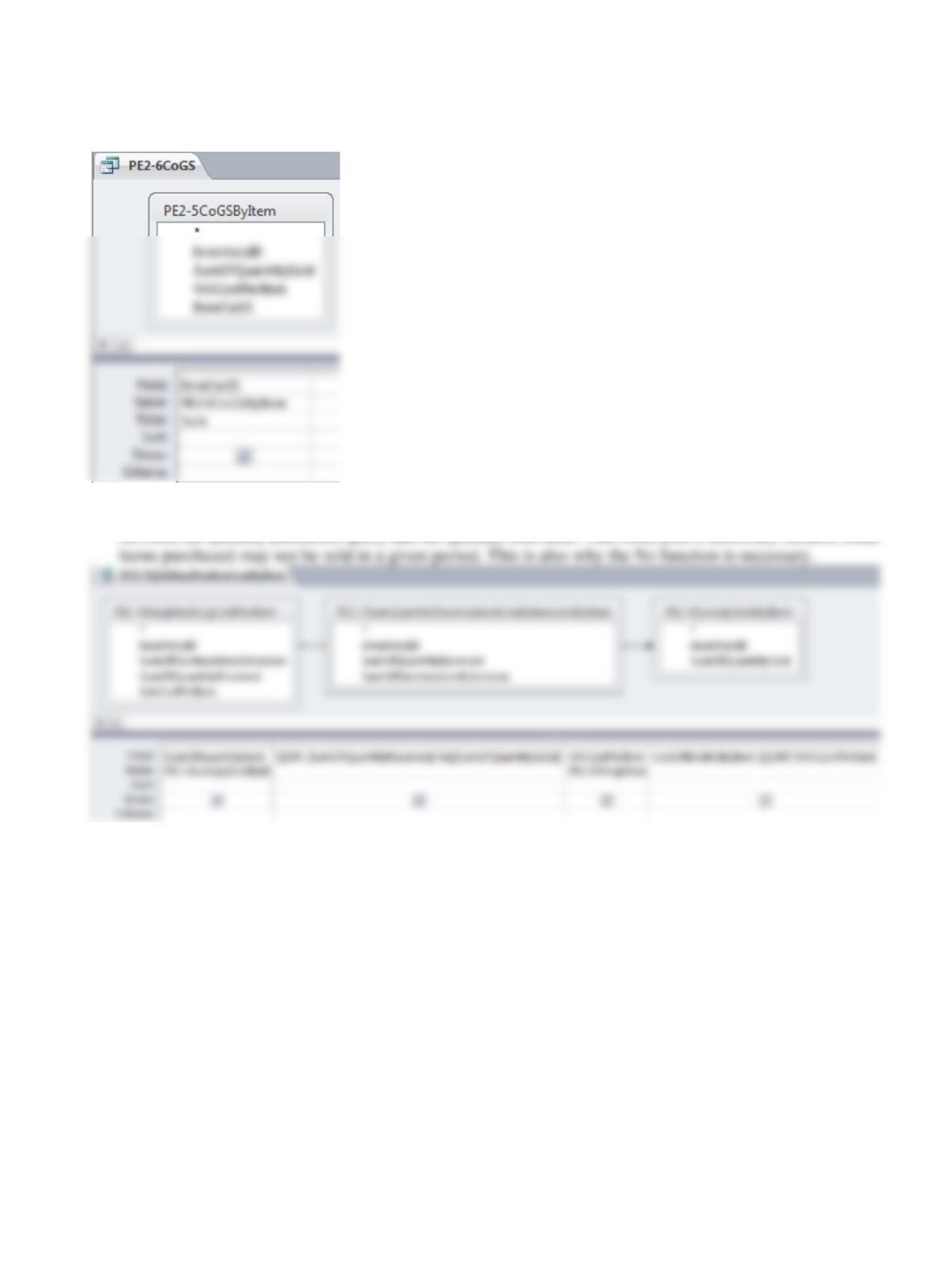
vii. Compute the quantity on hand by item and the cost of ending inventory by item. Notice the outer join
between the quantity purchased query and the quantity sold table. This outer join is necessary because some
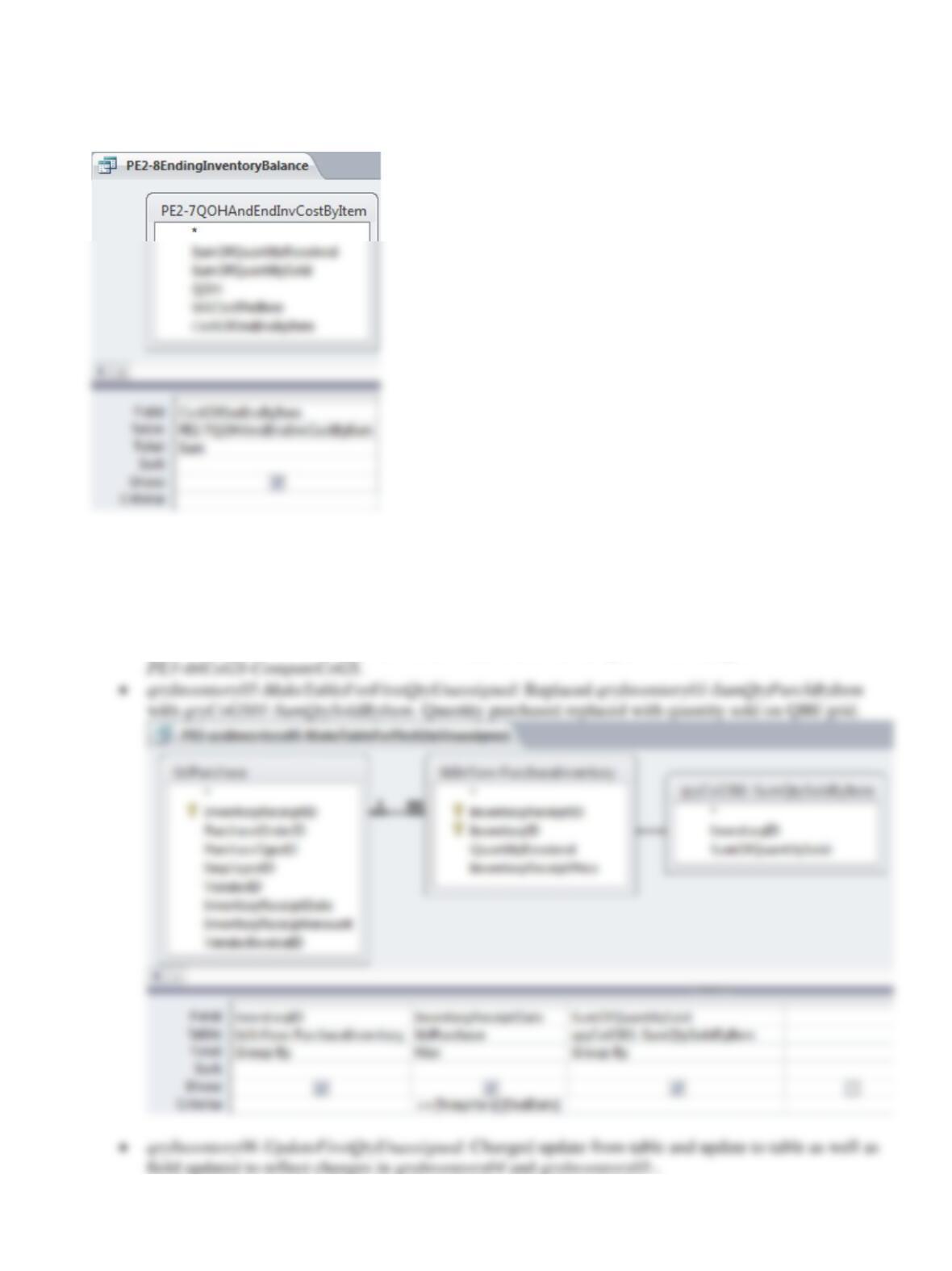
viii. Sum cost of ending inventory by item to obtain the ending inventory balance.
3. Since LIFO assigns the most recent goods purchased to CoGS, our solution will use the qryInventory
queries to compute CoGS and the qryCoGS queries to compute ending inventory.
The following queries were changed to accommodate the LIFO inventory cost flow assumption to compute
cost of goods sold:
• qryInventory04-MakeCostOfEndInvTable: Table name was changed to was changed to
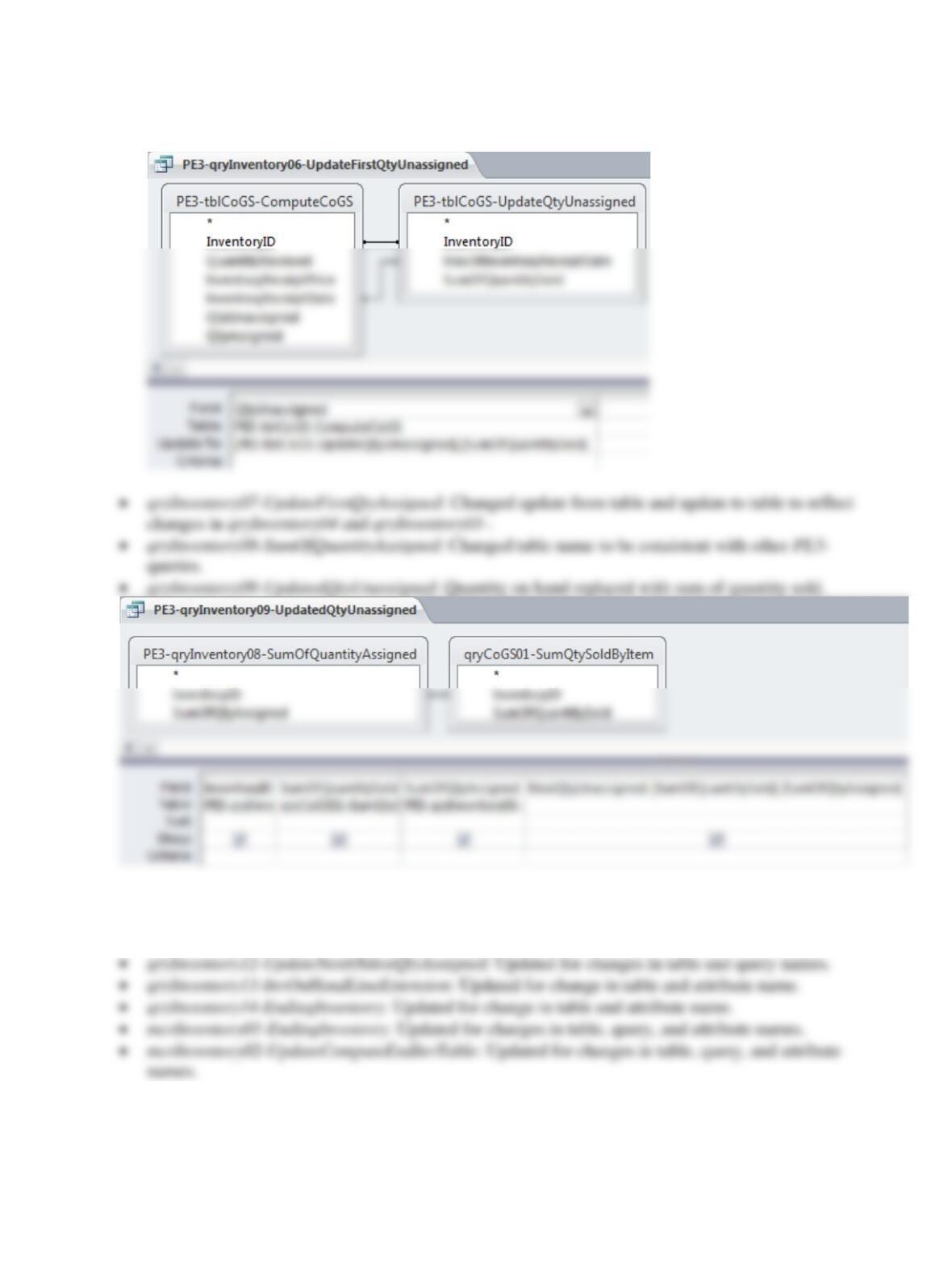
• qryInventory10-MakeTableForUpdatedQtyUnassigned: Updated for changes in table and query
names.
• qryInventory11-UpdateNextOldestQtyUnassigned: Updated for changes in table and query names.
The following queries were changed to accommodate the LIFO inventory cost flow assumption to compute
ending inventory:
• qryCoGS14-CostOfGoodsSold: Replaced inventory on hand with cost of goods sold.
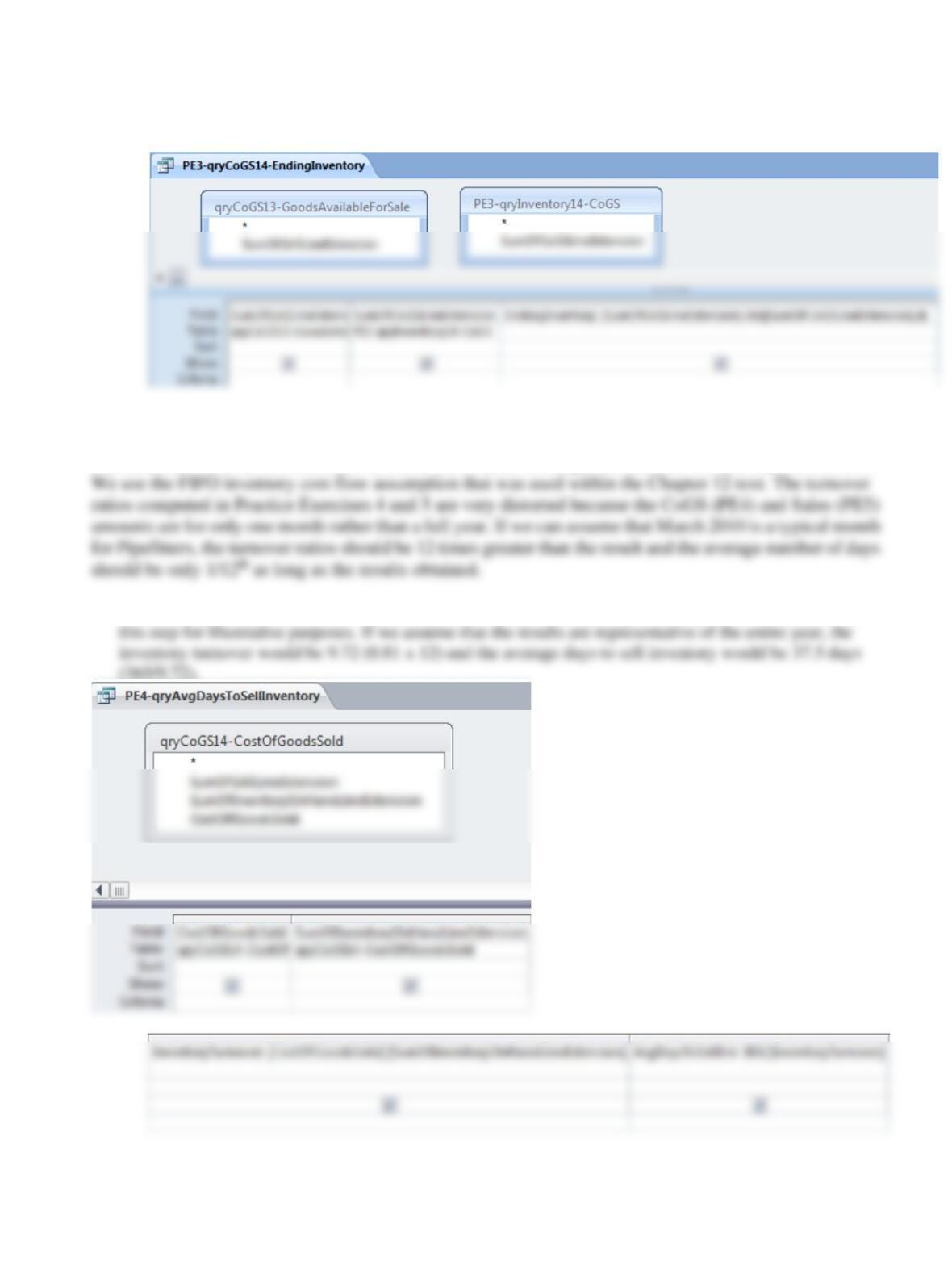
• mcrCoGS01-CoGS: Updated for changes in query names.
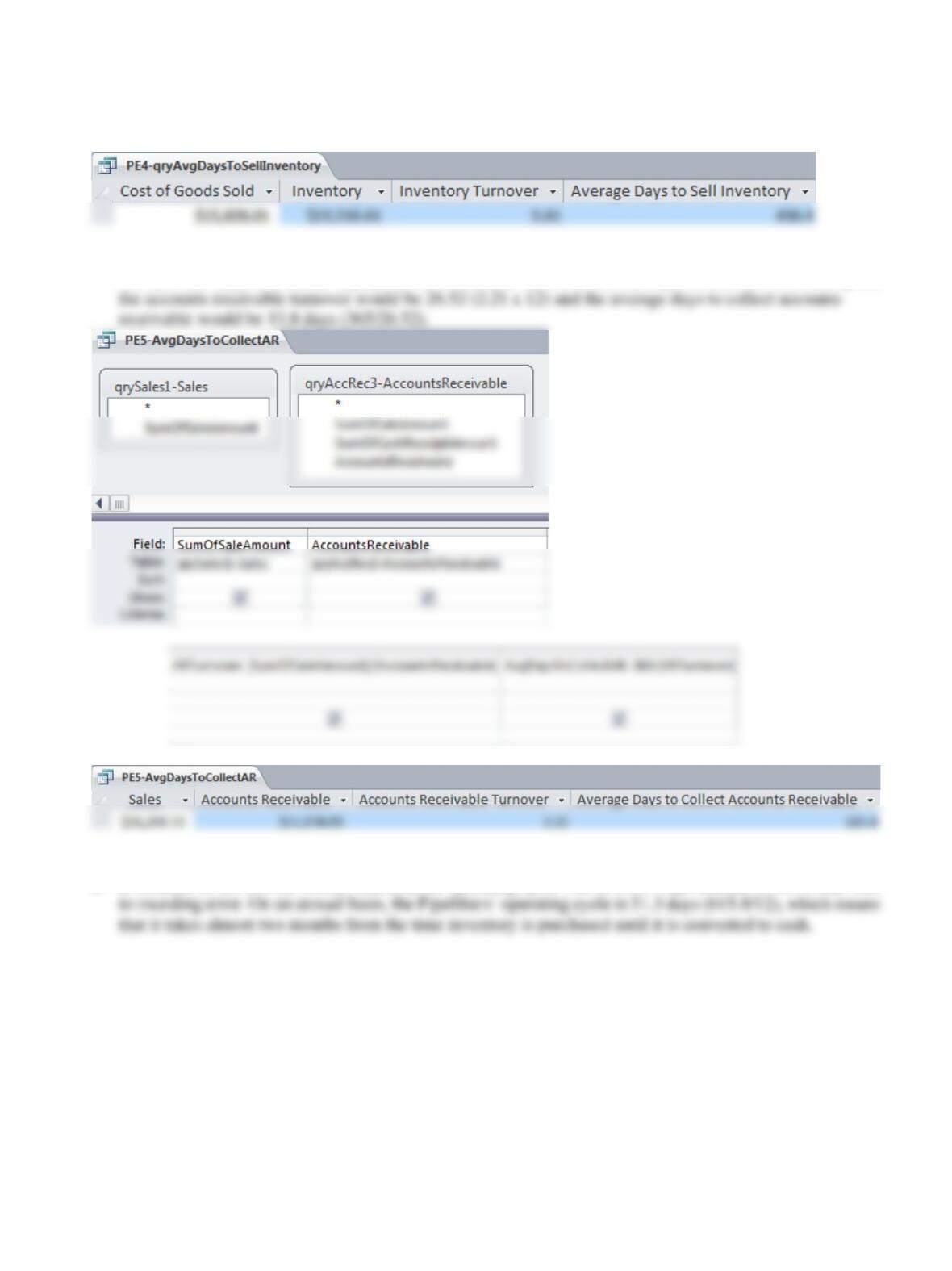
The solutions for Practice Exercises 4, 5, and 6 are based on the period between 3/1/2012 and 3/31/2012.
4. Students may not show the intermediate step in this query of computing inventory turnover. We included
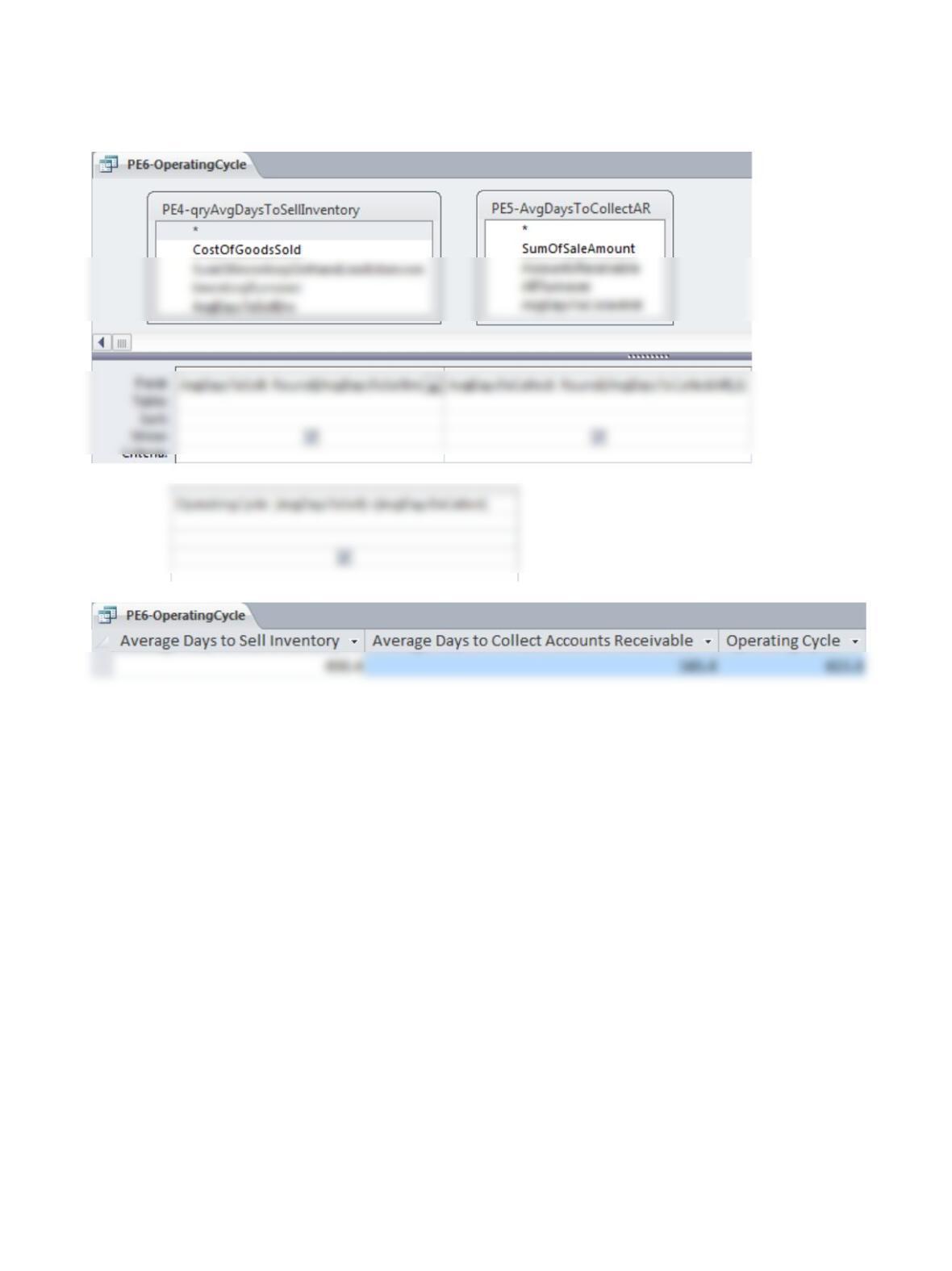
5. Students may not show the intermediate step in this query of computing accounts receivable turnover. We
included this step for illustrative purposes. If we assume that the results are representative of the entire year,
6. If students do not use the Round function, the operating cycle will be 615.7 days instead of 615.8 days due
Problems
The solutions are included in the Ch12Inst-Problems.accdb file on the Instructor web site.
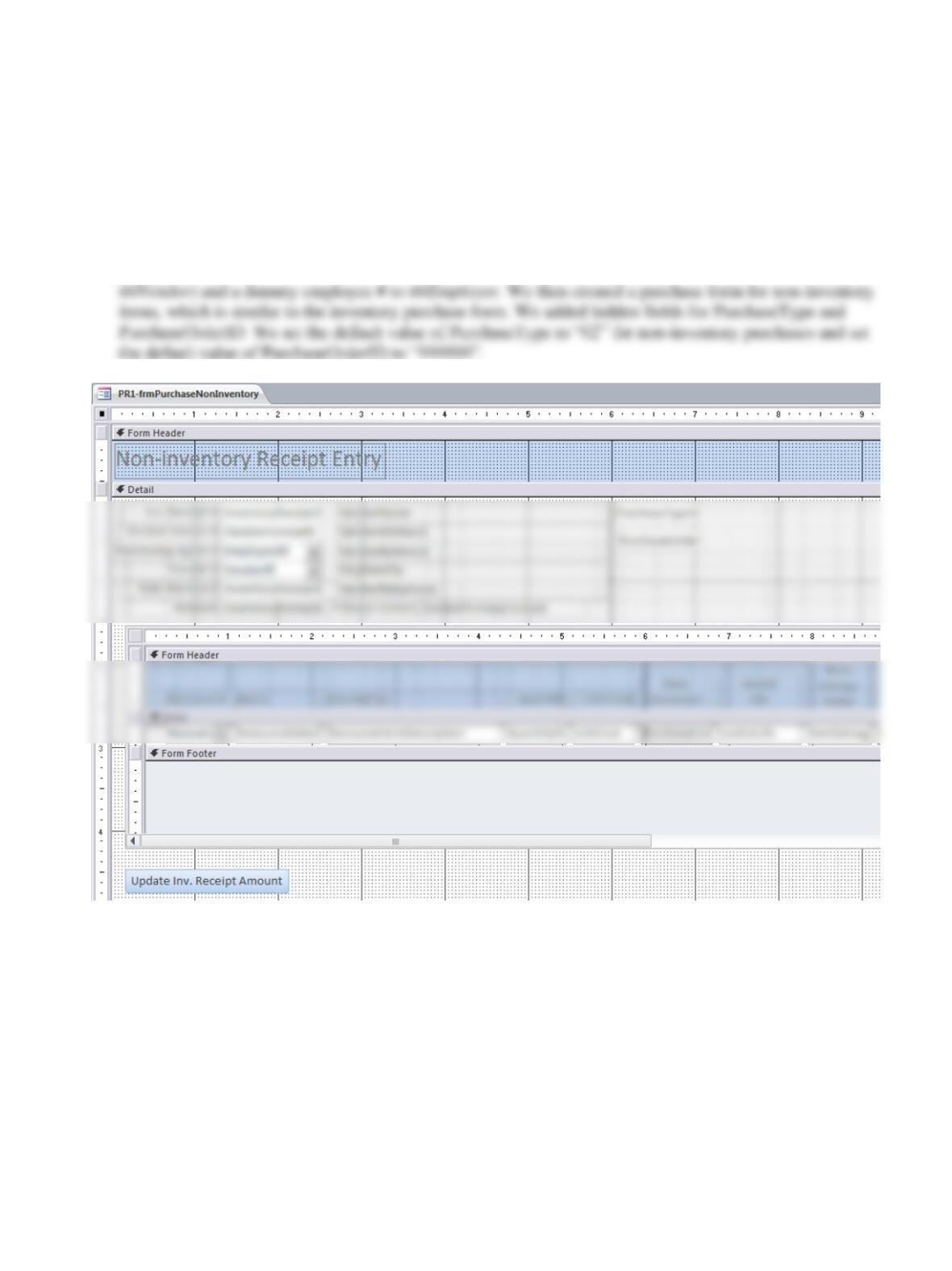
1. Solutions prepared by students might vary. Our solution below (and in the Access file) is based on adding a
dummy PO # to tblPurchaseOrder. This necessitated adding a dummy vendor # to the vendor table (see
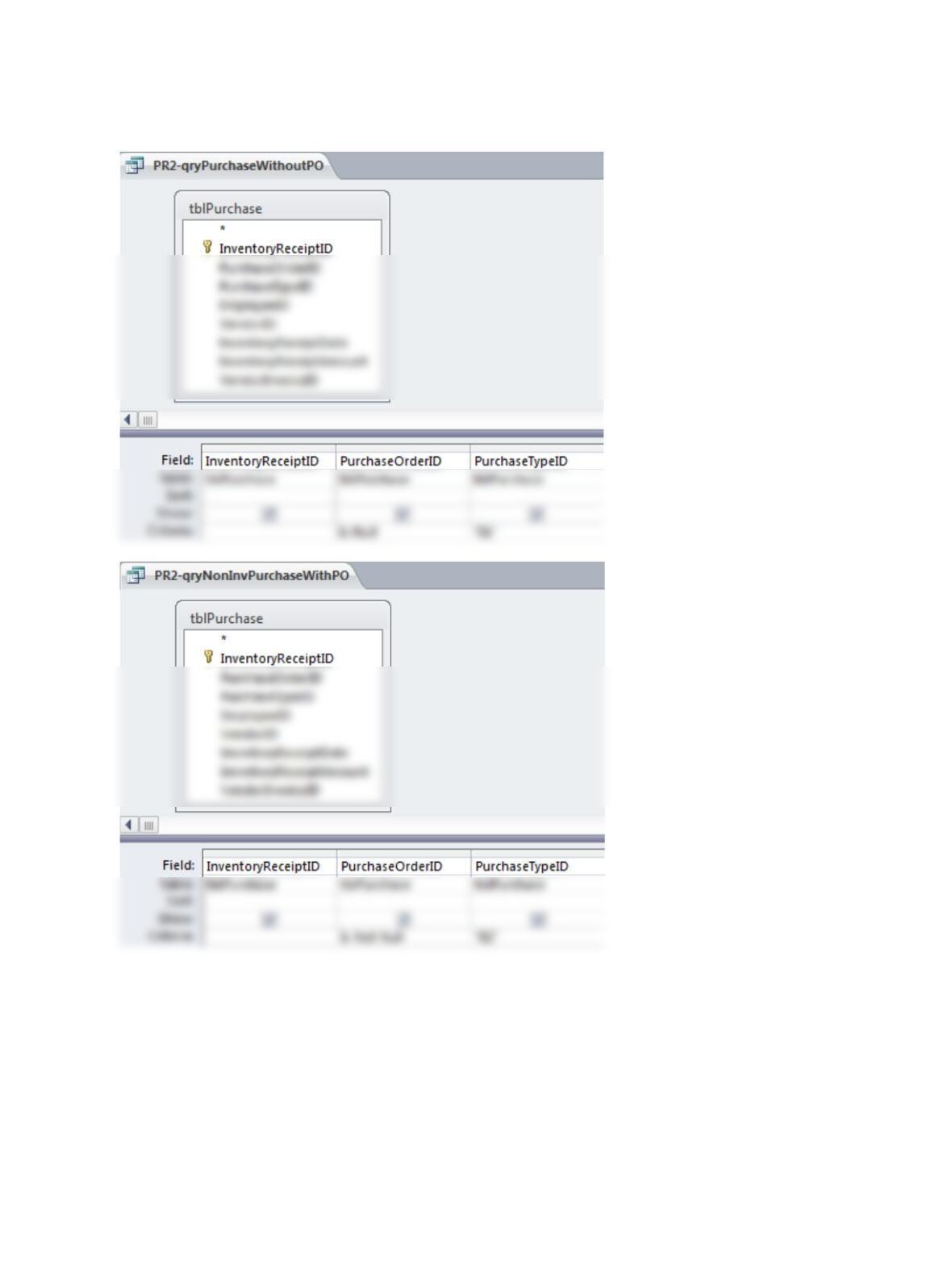
2. Solutions prepared by students may vary. Our solutions are presented below in Design view.