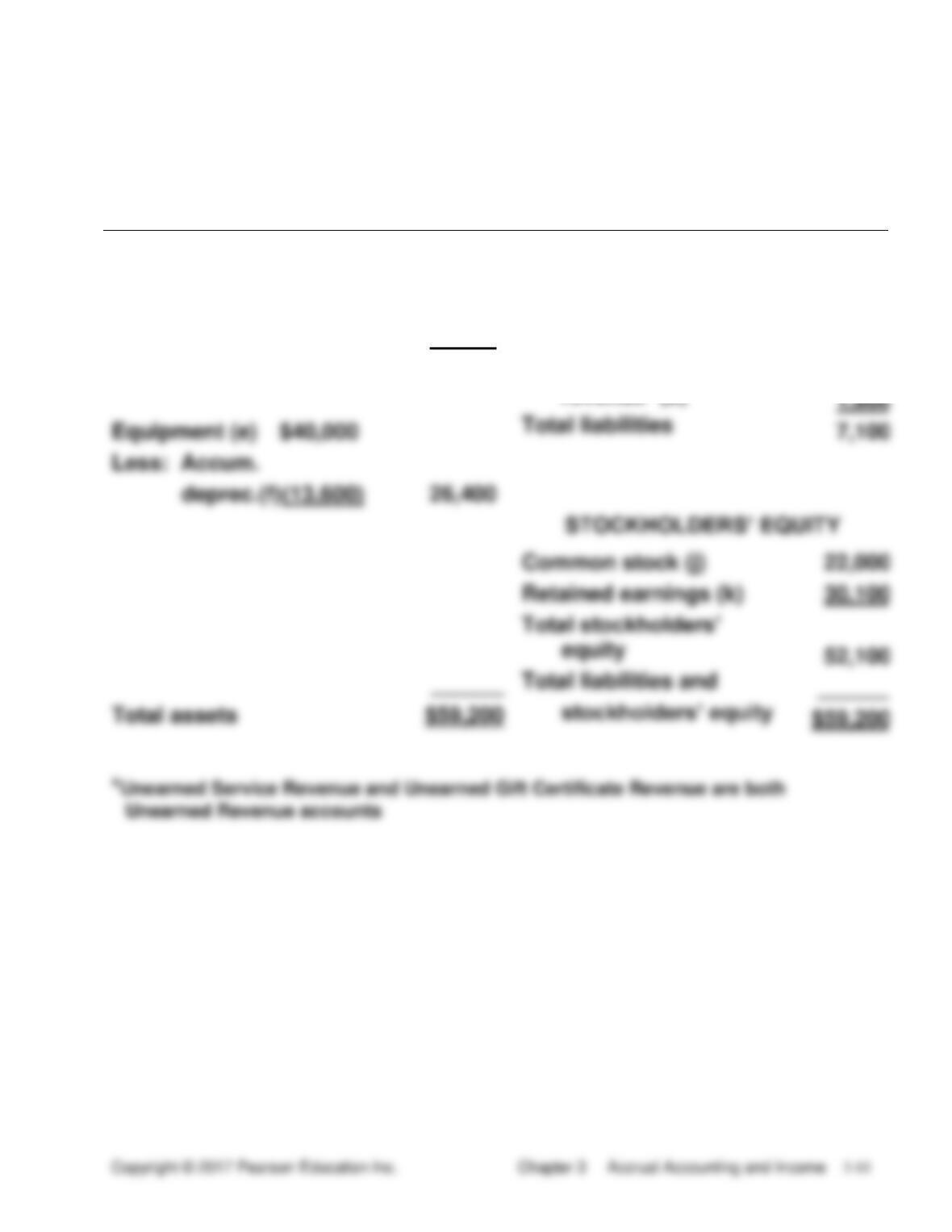
(20 min.) P 3-77
Tidy Car, Inc.
Balance Sheet
January 31, 2016
ASSETS
LIABILITIES
Cash (a)
$ 29,300
Accounts payable (g)
$ 5,000
Accounts receivable (c)
1,500
Advertising payable (h)
200
Supplies (d)
2,000
Salary payable (i)
300
Total current assets
32,800
Unearned gift certificate
revenue* (b)
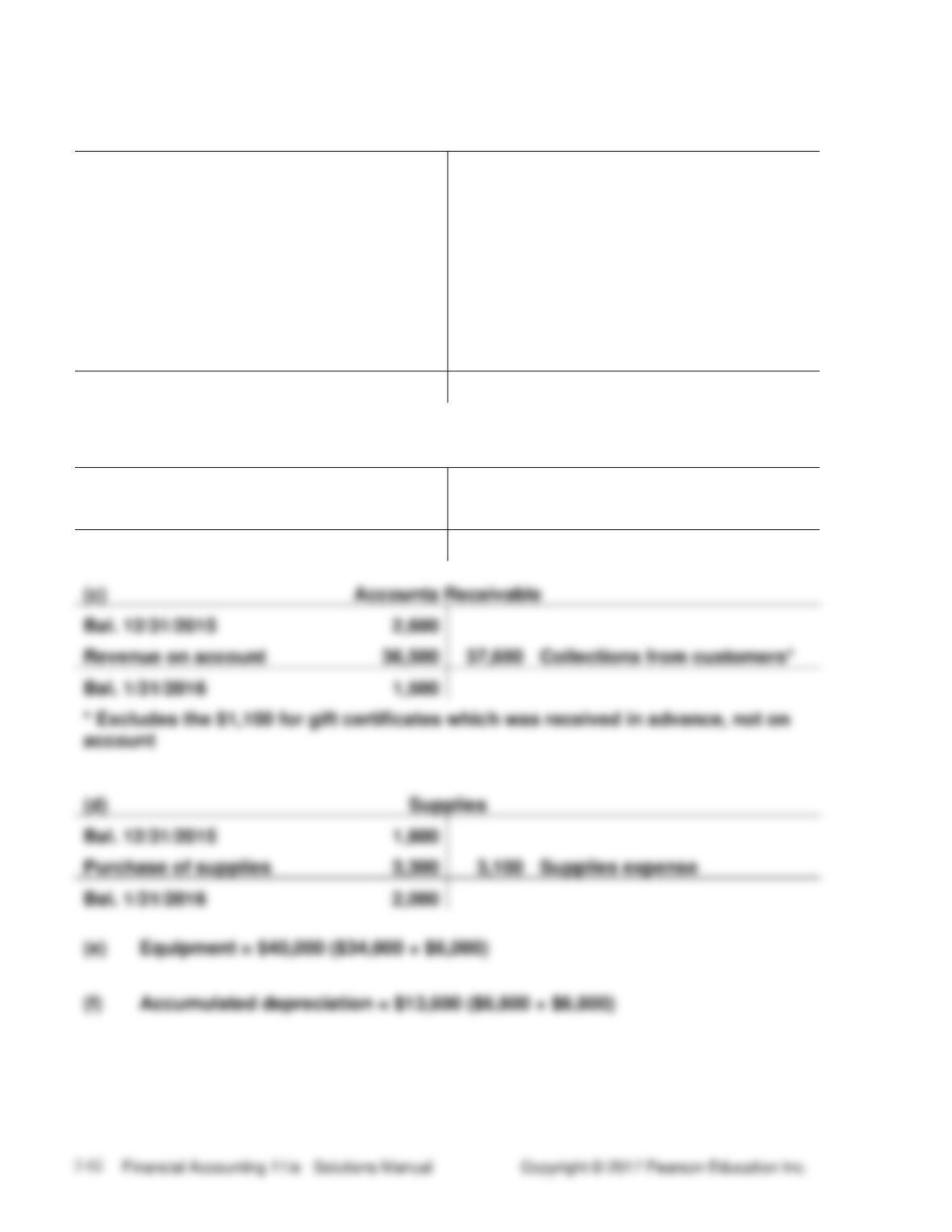
(continued) P 3-77
Supporting computations
(a) Cash
Bal. 12/31/2015
1,900
Cash collections from
customers
Issuance of common stock
38,700
12,000
11,400
1,300
6,000
Salaries paid
Dividends paid
Purchase of equipment
1,800
Payments of accounts
payable
2,800
Advertising paid
1,500
Bal. 1/31/2016
29,300
(b) Unearned Gift Certificate Revenue
1,200
Bal. 12/31/2015
Gift certificate revenue earned
700
1,100
Sale of gift certificates
1,600
Bal. 1/31/2016 (given)
Bal. 12/31/2015
Revenue on account
Collections from customers*
Bal. 1/31/2016
1,500
Bal. 12/31/2015
1,800
Purchase of supplies
3,300
3,100
Supplies expense
Bal. 1/31/2016
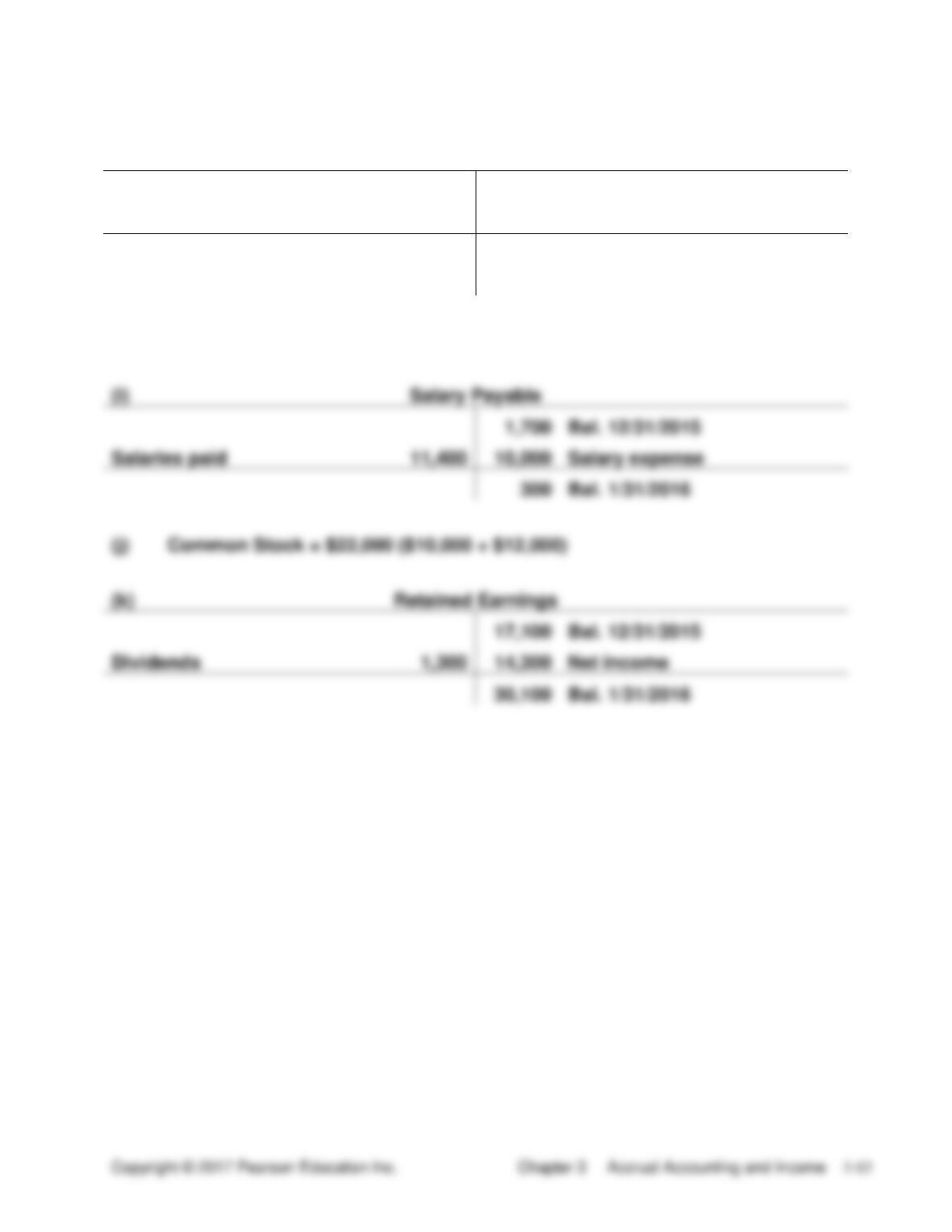
(continued) P 3-77
(g) Accounts Payable
3,500
Bal. 12/31/2015
Payments on account
1,800
3,300
Purchase of supplies
5,000
Bal. 1/31/2016
(h) $3,000 Advertising expense – $2,800 advertising paid
Bal. 12/31/2015
Salaries paid
Salary expense
Bal. 1/31/2016
Bal. 12/31/2015
Dividends
Net income
Bal. 1/31/2016
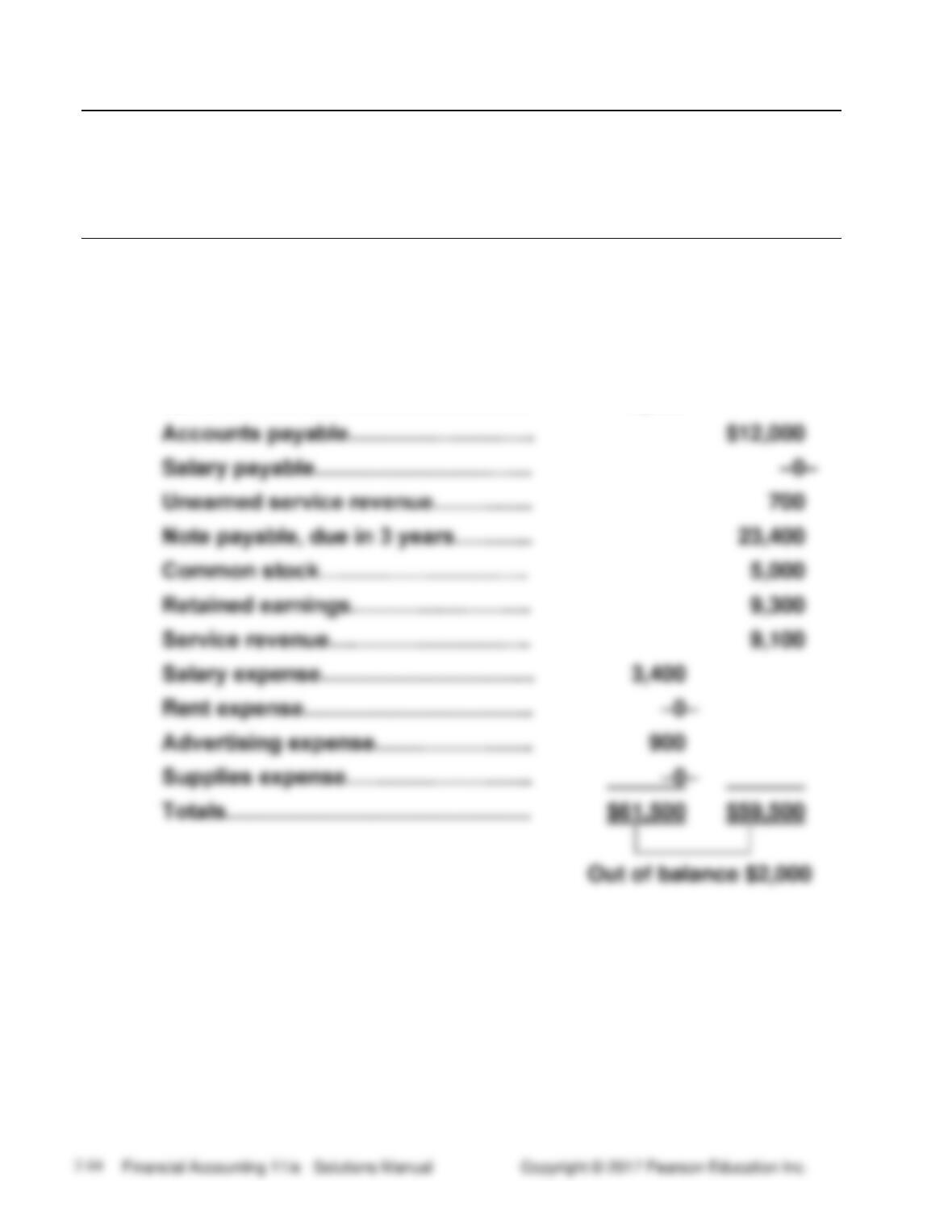
Decision Cases
(25 min.) Decision Case 1
Req. 1 Unadjusted trial balance:
Debit Credit
Cash……………………………………..
$ 8,000
Accounts receivable………………….
4,200
Supplies…………………………………
800
Prepaid rent……………………………
1,200
Land……………………………………..
43,000
Accounts payable……………………..
Unearned service revenue…………..
Note payable, due in 3 years………..
Common stock………………………..
Retained earnings…………………….
Salary expense………………………...
3,400
Advertising expense………………….
900
Supplies expense……………………..
(continued) Decision Case 1
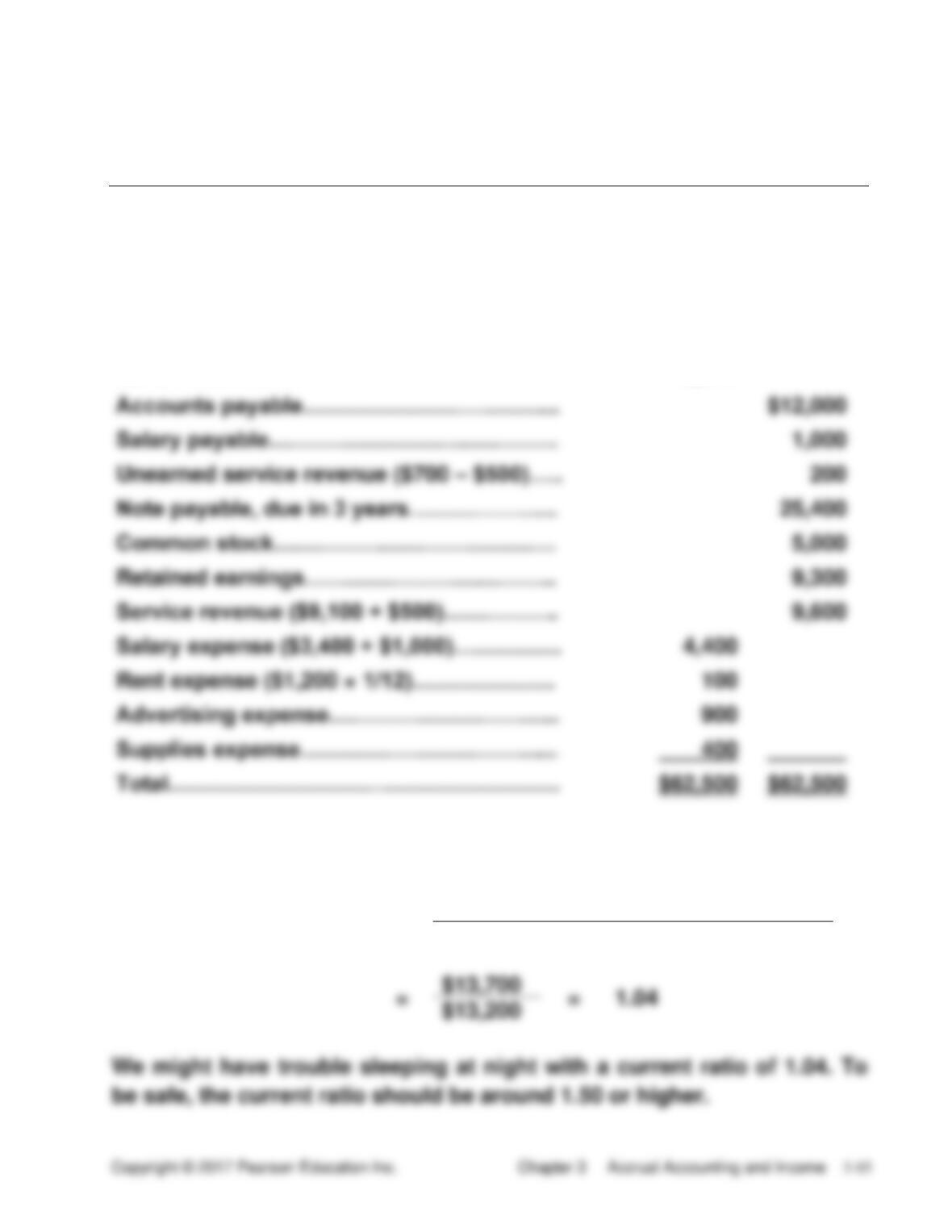
Req. 2 Adjusted trial balance:
Debit Credit
Cash………………………………………………
$ 8,000
Accounts receivable…………………………..
4,200
Supplies ($800 – $400)..……………………….
400
Prepaid rent ($1,200 × 11/12)…………………
1,100
Land ……………………………………………..
43,000
Retained earnings……………………………..
4,400
Rent expense ($1,200 × 1/12)………………..
100
Advertising expense…………………………..
Total………………………………………………
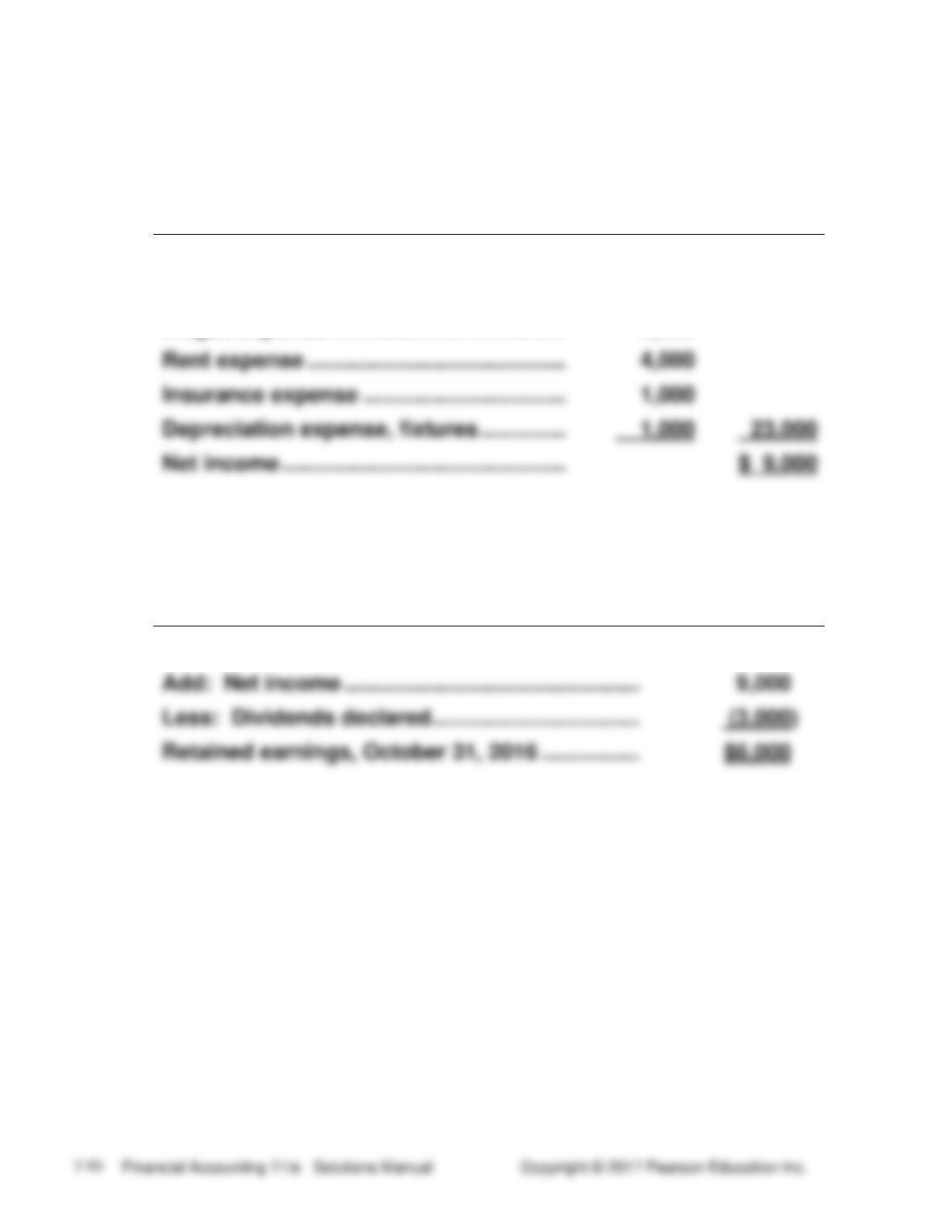
Req. 3
Current ratio
=
$8,000 + $4,200 + $400 + $1,100
$12,000 + $1,000 + $200
(20-30 min.) Decision Case 2
Req. 1
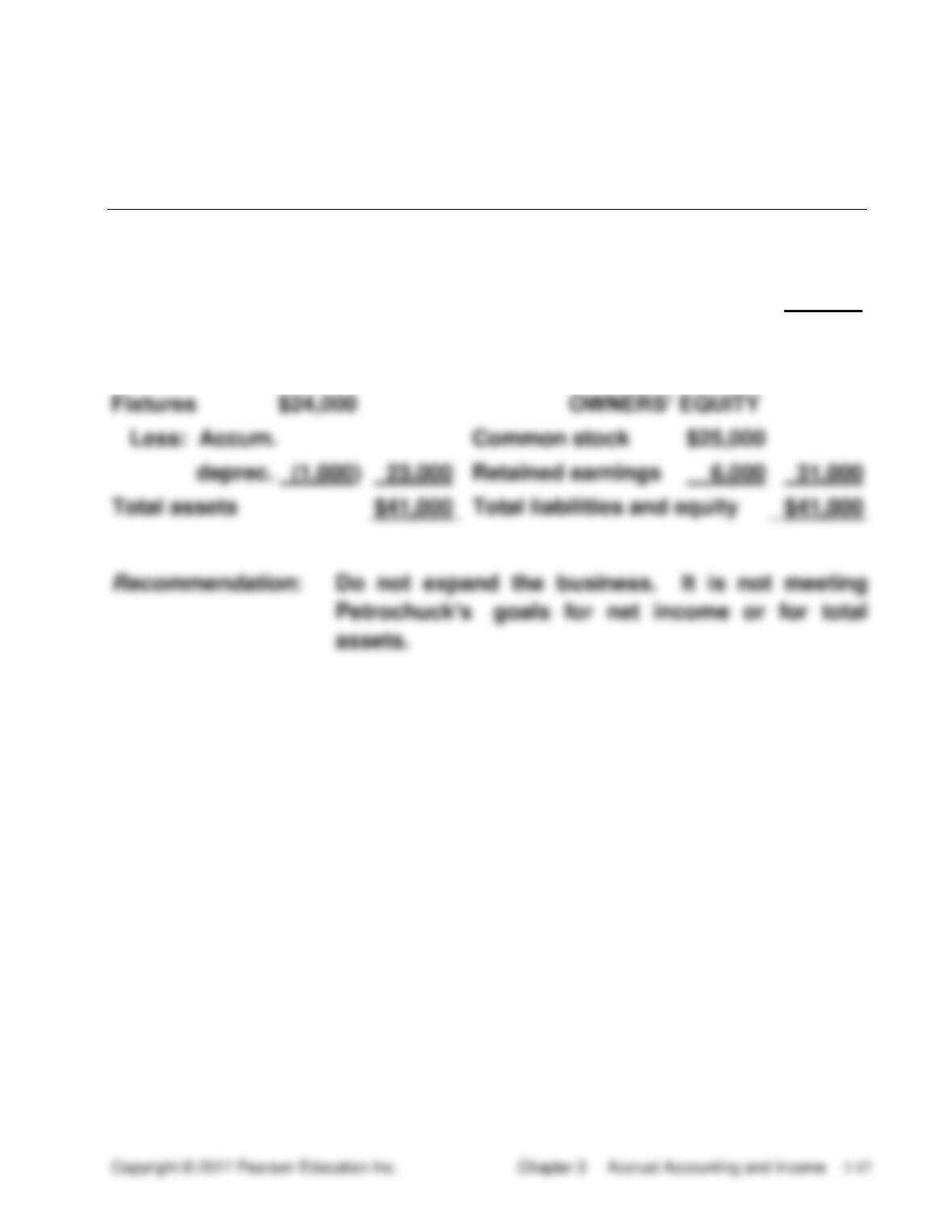
Hilda’s Coffee Shop, Inc.
Income Statement
Month Ended October 31, 2016
Sales revenue …………………………………..
$32,000
Cost of goods sold …………………………...
$12,000
Wages expense …………………………………
5,000
Rent expense ……………………………………
Insurance expense …………………………...
Depreciation expense, fixtures …………..
1,000
Net income ……………………………………….
$ 9,000
Hilda’s Coffee Shop, Inc.
Statement of Retained Earnings
Month Ended October 31, 2016
Retained earnings, October 1, 2016 ………………
$ 0
Add: Net income …………………………………………
Less: Dividends declared…………………………….
Retained earnings, October 31, 2016 …………….
$6,000
(continued) Decision Case 2
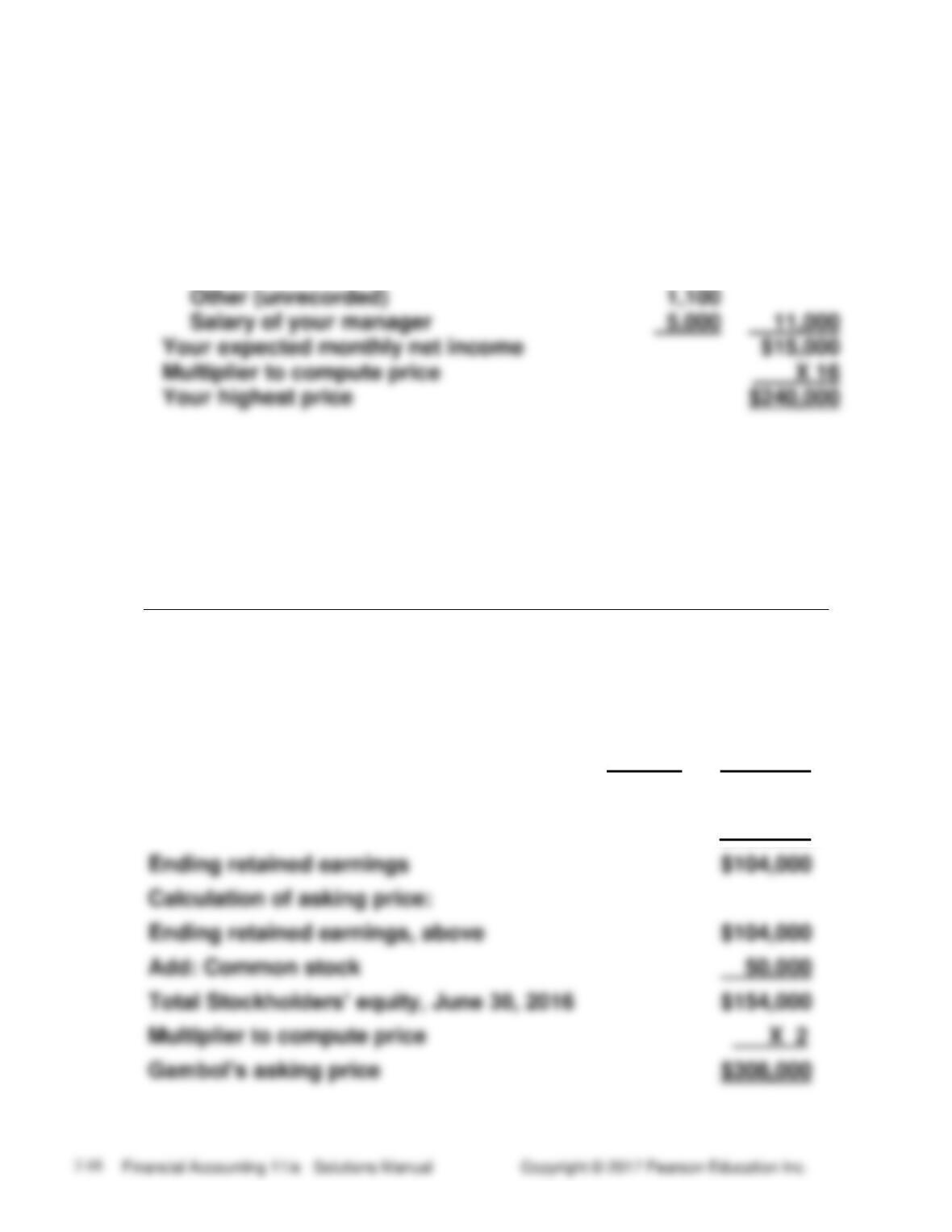
Hilda’s Coffee Shop, Inc.
Balance Sheet
October 31, 2016
ASSETS
LIABILITIES
Cash
$ 8,000
Accounts payable
$ 7,000
Food inventory
5,000
Unearned revenue
3,000
Prepaid insurance
1,000
10,000
Dishes, silver
4,000
Fixtures $24,000
Less: Accum.
Common stock
deprec. (1,000)
Retained earnings
Total assets
$41,000
Total liabilities and equity
(30-40 min.) Decision Case 3
Req. 1 (your highest price)
Advertising revenue ($22,000 + $4,000)
$26,000
Expenses:
Salary
$4,000
Utilities
900
Other (unrecorded)
Salary of your manager
Your expected monthly net income
Multiplier to compute price
X 16
Your highest price
Req. 2 (Gambol’s asking price)
Gambol Advertising, Inc.
Calculation of Asking Price Based on Stockholders’ Equity
On June 30, 2016
Beginning retained earnings
$ 93,000
Add: Net income
Revenue ($22,000 + $4,000)
$26,000
Less: Expenses
($4,000 + $900 + $1,100)
(6,000)
20,000
Subtotal
113,000
Less: Dividends declared
(9,000)
Ending retained earnings
Calculation of asking price:
Ending retained earnings, above
Add: Common stock
Multiplier to compute price
(continued) Decision Case 3
Req. 3
You may start by offering Gambol approximately $225,000 for the
business. Her asking price is $308,000 so you are starting out quite far
apart. If Gambol appears especially eager to sell out, you may be able to
buy the firm for closer to your highest price of $240,000. However, if she
is not so eager to sell and if you want the business badly enough, you
Ethical Issues
Ethical Issue 1
1. The journal entry to record the revenue is:
Dec.
Accounts Receivable…………
XXX
Sales Revenue……………..
XXX
The debit to Accounts Receivable will increase total current assets
and, as a result, increase (improve) the current ratio. The debit to
2. a. – c. The issue is whether it is ethical to record the revenue in the
current year. The contract has been signed, but the implication is that
the company will not have done everything it needs to do in order to
earn the revenue in the current year. The stakeholders are the
company, the bank, the stockholders, and the company’s other
creditors. From an economic standpoint, the entry would obviously
improve the company’s short term financial position. However, the
(continued) Ethical Issue 1
3. The authors would suggest either of two actions. Green Horizons can
either:
a. Report the current ratio of 1.47 and the debt ratio of .51 because
these are the true values. Then tell the bank of the signed contract
for additional work and the hope for a better set of ratio values next
Ethical Issue 2
1. These transactions overstate the reported income of the company by
$31,000 ($15,000 + $14,000 + $2,000).
2. It appears that Dusek wants to improve the company’s reported
income in order to borrow on favorable terms. Her action is unethical
and probably illegal as well because she is deliberately overstating
the company’s reported income.
Dusek appears to be letting the potential short term economic
advantage of these deliberate misstatements take precedence. She
needs to remember that these misstatements violate GAAP, and that,
depending on what use is made of the financial statements, could
(continued) Ethical Issue 2
3. Personal advice will vary from student to student. The purpose of
asking this question is to challenge students to take the high road
of ethical conduct by having nothing to do with Dusek’s scheme.
The authors would advise Loftus, the accountant, to take these
actions, in order:
a. Refuse to take any part in Dusek’s scheme, explaining that the
result is overstatement of reported income. This is both illegal