
Chapter 3
Accrual Accounting & Income
Ethics Check
(5-10 min.) EC 3-1
a. Integrity
b. Due care
c. Integrity
d. Objectivity and independence
Short Exercises
(10 min.) S 3-1
Millions
Sales revenue ……………………………………………………………
$ 900
Cost of goods sold …………………………………………………….
(280)
All other expenses …………………………………………………….
(325)
Net income ………………………………………………………………..
$ 295
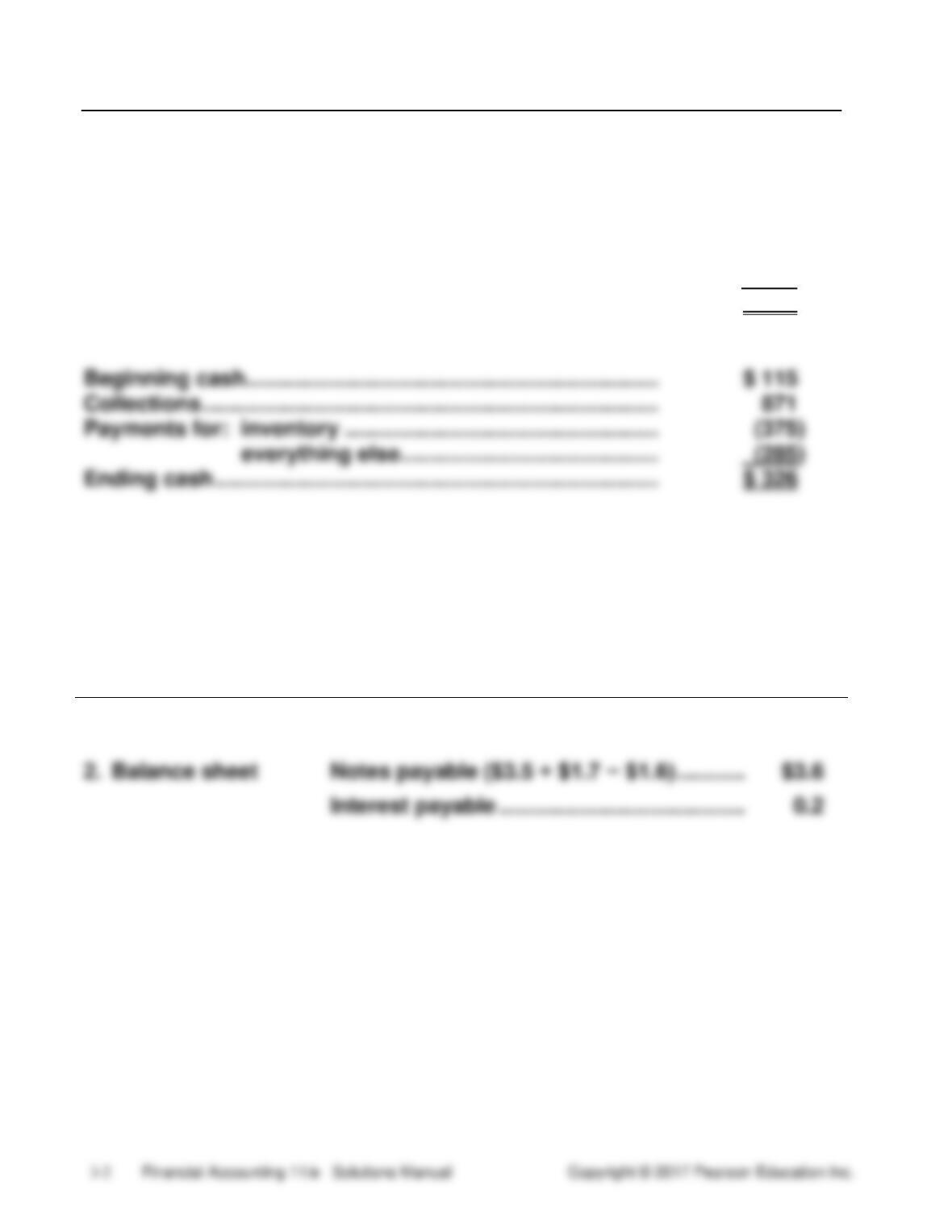
Collections ………………………………………………………………..
Payments for: inventory ……………………………………………
(375)
everything else ……………………………………
(285)
Ending cash ………………………………………………………………
$ 326
(10 min.) S 3-2
Statement
Reports (Amounts in millions)
1. Income statement
Interest expense …………………………………
$ 0.4
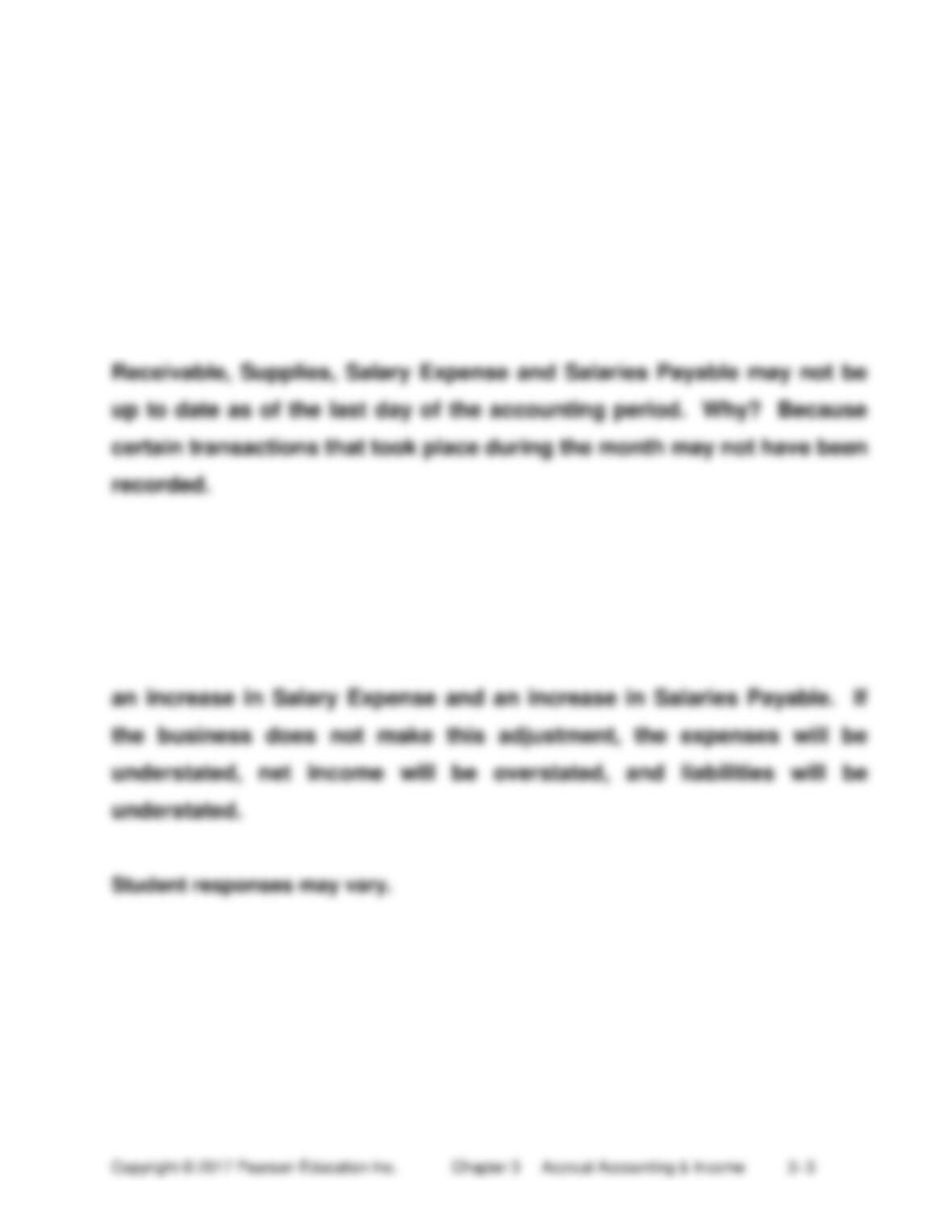
2. Balance sheet
Interest payable ………………………………….
(10 min.) S 3-3
At the end of each accounting period, the business reports its
performance through the preparation of financial statements. In order to
be useful to the various users of financial statements they must be up–
to-date. Accounts such as Cash, Equipment, Accounts Payable,
Common Stock and Dividends are up-to date and require no adjustment
at the end of the accounting period. Accounts such as Accounts
The accrued salaries, which are owed to the employees but have not
been paid, are an expense related to the current period but also
represent a liability or debt that is owed by the business. The business
must make an adjusting entry to record the accrued salary owed as both
(10 min.) S 3-4
The large auto manufacturer should record sales revenue when the
revenue is earned by delivering automobiles to Budget or Hertz. The
large auto manufacturer should not record any revenue prior to delivery
of the vehicles, because the large auto manufacturer hasn’t earned the
revenue yet. The revenue principle governs this decision.
(10 min.) S 3-5
Depreciation is the periodic allocation of the cost of a tangible long-
lived asset, less its estimated residual value, over its estimated useful
life. All long-lived or plant assets, except for land, decline in usefulness
during their life and this decline is an expense. Accountants must
(10 min.) S 3-6
a. The Expense Recognition Principle
b. The Time-Period Concept
c. The Revenue Principle
(10 min.) S 3-7
a.
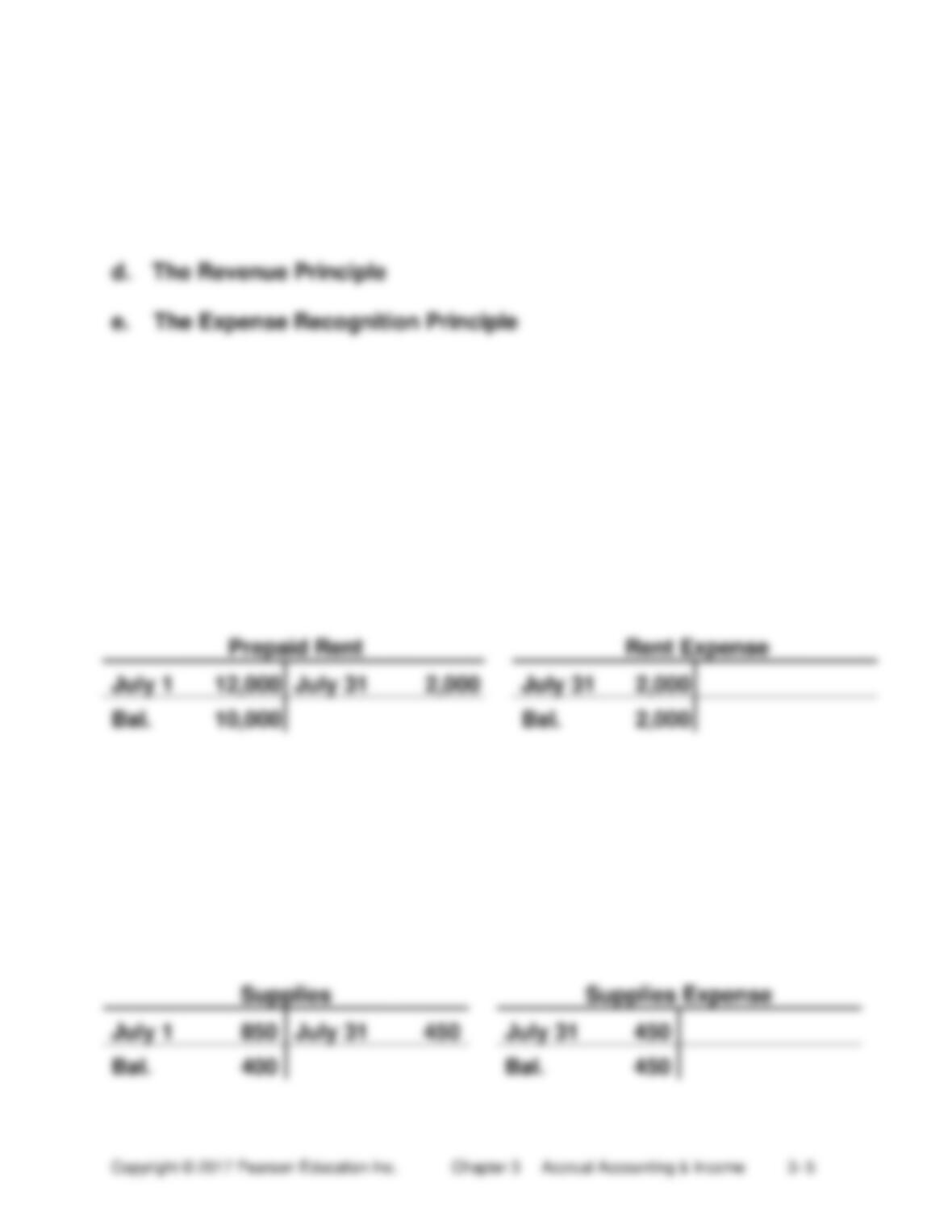
July 31
Rent Expense ($12,000 × 1/6) ………….
2,000
Prepaid Rent …………………………..
2,000
To record rent expense.
July 1
July 31
July 31
Bal.
Bal.
b.
July 31
Supplies Expense ($850 − $400)………..
450
Supplies …………………………………..
450
To record supplies expense.
July 1
July 31
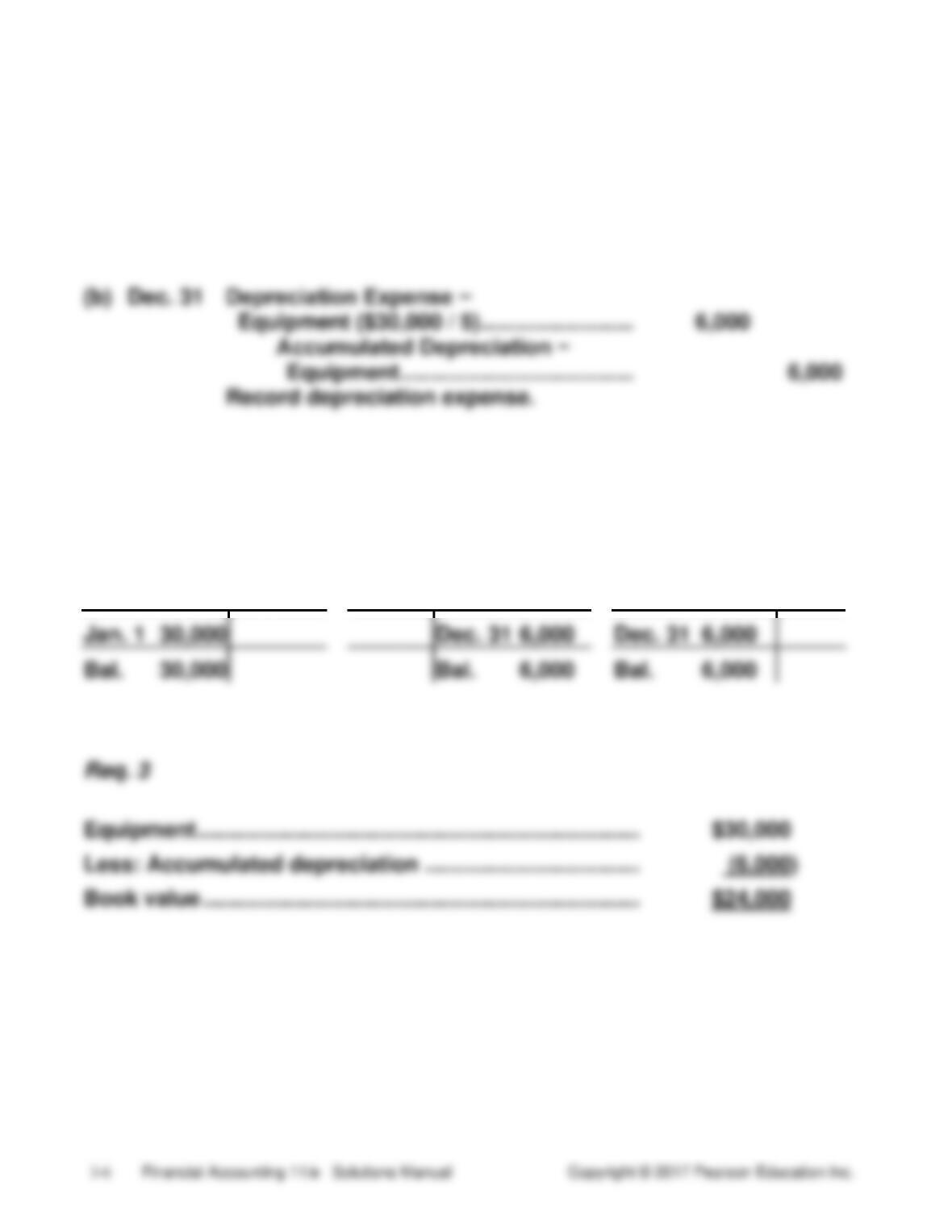
(10 min.) S 3-8
Req. 1
(a)
Jan. 1
Equipment …………………………………………
30,000
Cash …………………………………………..
30,000
Purchased equipment.
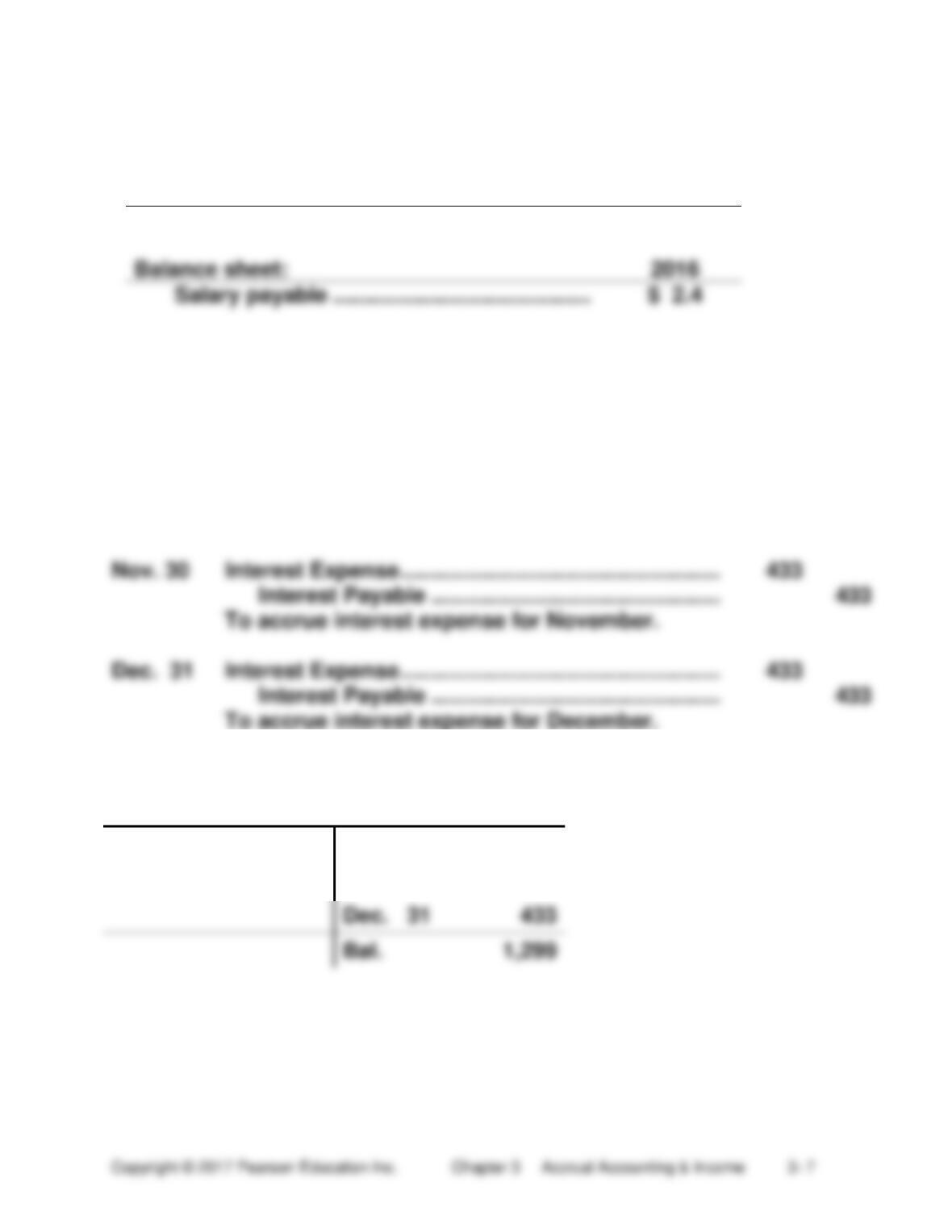
(b)
Dec. 31
Req. 2
Equipment
Accumulated
Depreciation −
Equipment
Depreciation
Expense −
Equipment
(10 min.) S 3-9
(Amounts in millions)
Income statement:
2016
Salary expense ($41.2 + $2.4) ………………
$43.6
Balance sheet:
Salary payable ……………………………………
(10 min.) S 3-10
Req. 1
Oct. 31
Interest Expense …………………………………………….
433
Interest Payable ………………………………………..
433
To accrue interest expense for October.
Nov. 30
Interest Expense …………………………………………….
433
Interest Payable ………………………………………..
433
To accrue interest expense for November.
Dec. 31
Interest Expense …………………………………………….
433
Interest Payable ………………………………………..
433
To accrue interest expense for December.
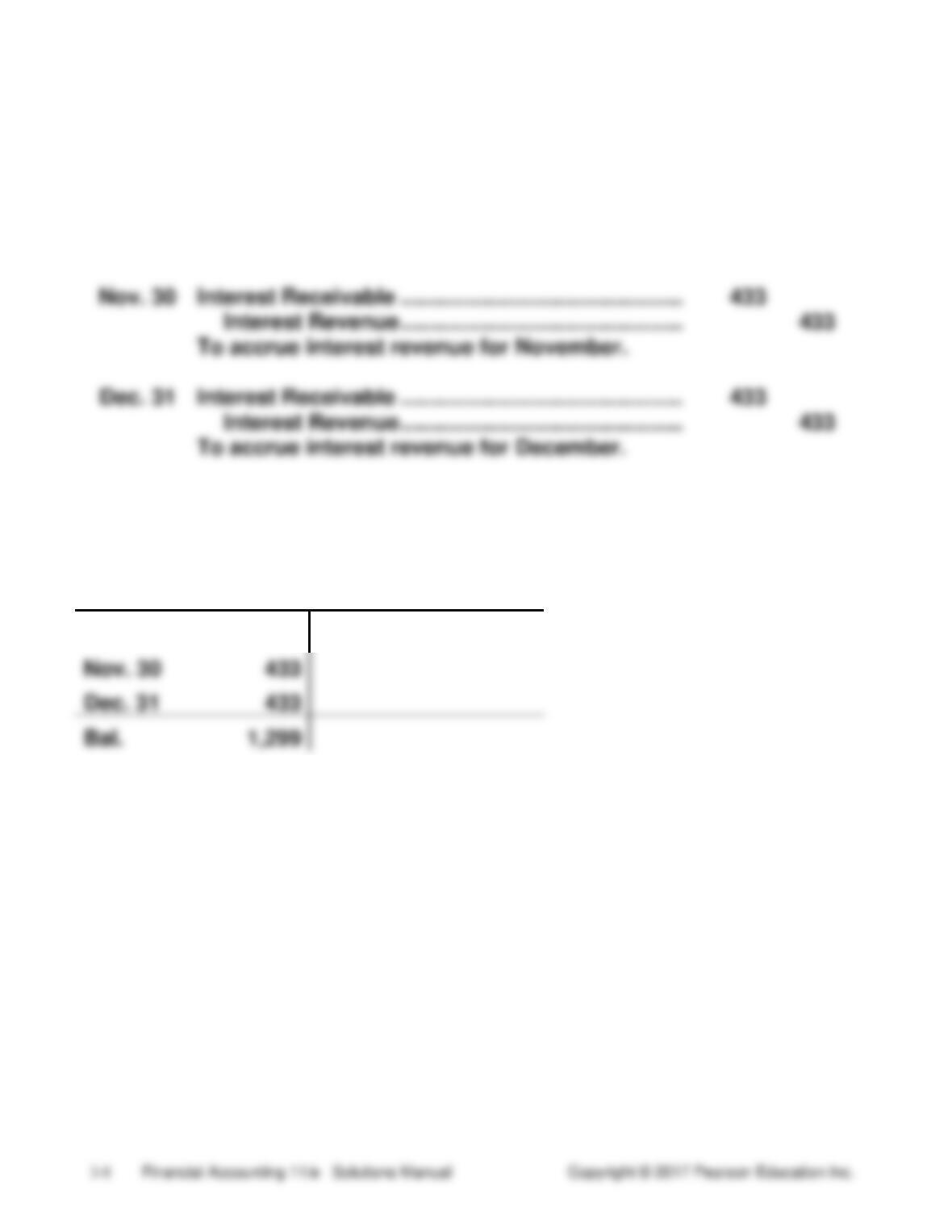
Req. 2
Interest Payable
Oct. 31
433
Nov. 30
433
Req. 3
Jan. 2
Interest Payable …………………………………………..
1,299
Cash ………………………………………………………
1,299
To pay interest.
(10 min.) S 3-11
Req. 1
Oct. 31
Interest Receivable ……………………………………….
433
Interest Revenue ……………………………………….
433
To accrue interest revenue for October.
Interest Receivable ……………………………………….
433
To accrue interest revenue for November.
Interest Receivable ……………………………………….
433
Interest Revenue ……………………………………….
433
To accrue interest revenue for December.
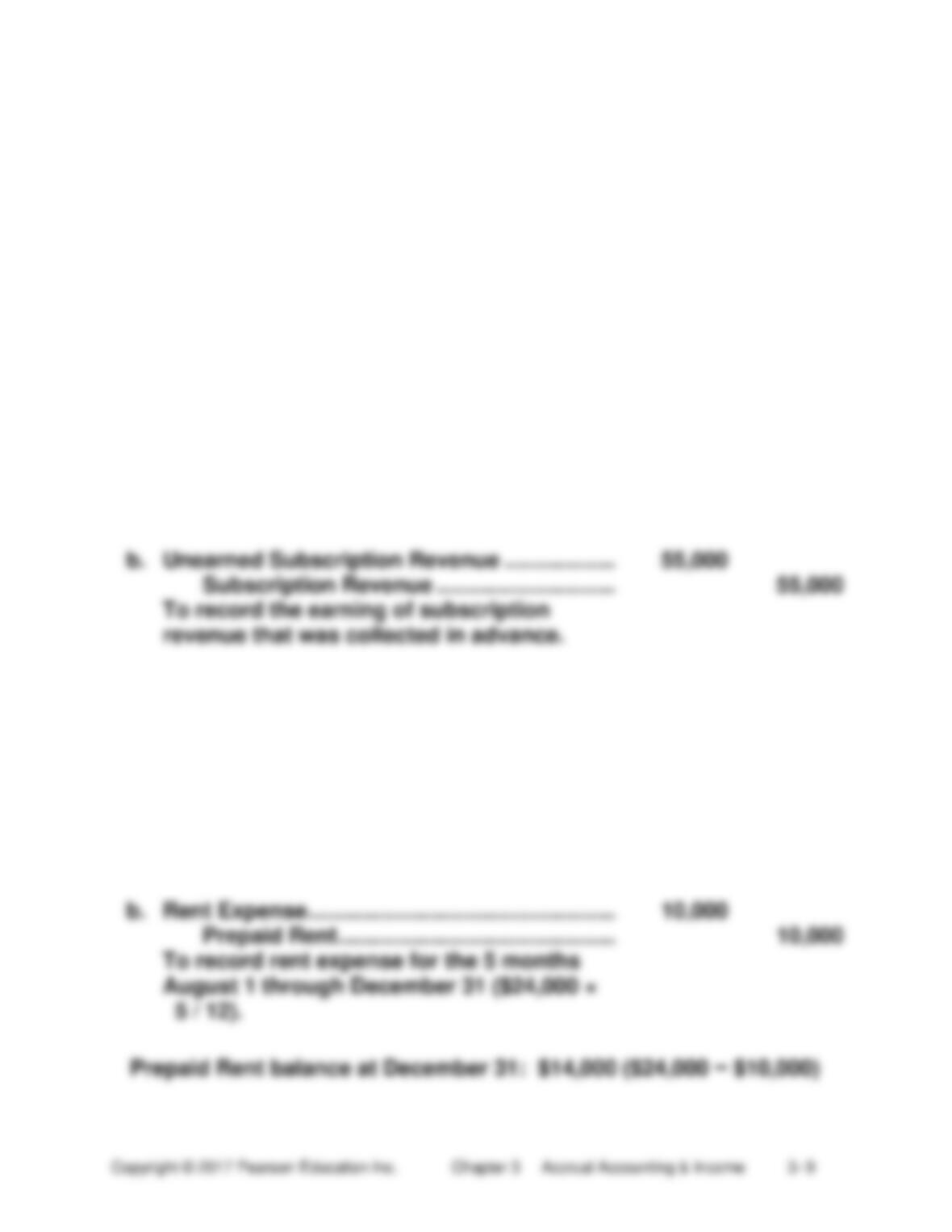
Req. 2
Interest Receivable
Oct. 31
433
Nov. 30
433
Dec. 31
433
Bal.
Req. 3
Jan. 2
Cash ………………………………………………………
1,299
Interest Receivable …………………………...
1,299
To collect interest.
(5-10 min.) S 3-12
Unearned revenues are liabilities because The New York Times has
received cash from subscribers in advance of providing them with
newspapers and online access. Receiving the cash in advance creates
an obligation (a liability) for The New York Times. As The New York
Times delivers newspapers to subscribers, The New York Times earns
the revenue, and the dollar amount of the unearned revenue then goes
into the revenue account.
a.
Cash …………………………………………………….
65,000
Unearned Subscription Revenue ……….
65,000
Received cash for revenue in advance.
Unearned Subscription Revenue ………………
55,000
Subscription Revenue ………………………..
55,000
To record the earning of subscription
revenue that was collected in advance.
(5-10 min.) S 3-13
a.
Prepaid Rent ……………………………………………
24,000
Cash ………………………………………………….
24,000
To record annual payment for rent.
Rent Expense …………………………………………..
10,000
Prepaid Rent ………………………………………
10,000
To record rent expense for the 5 months
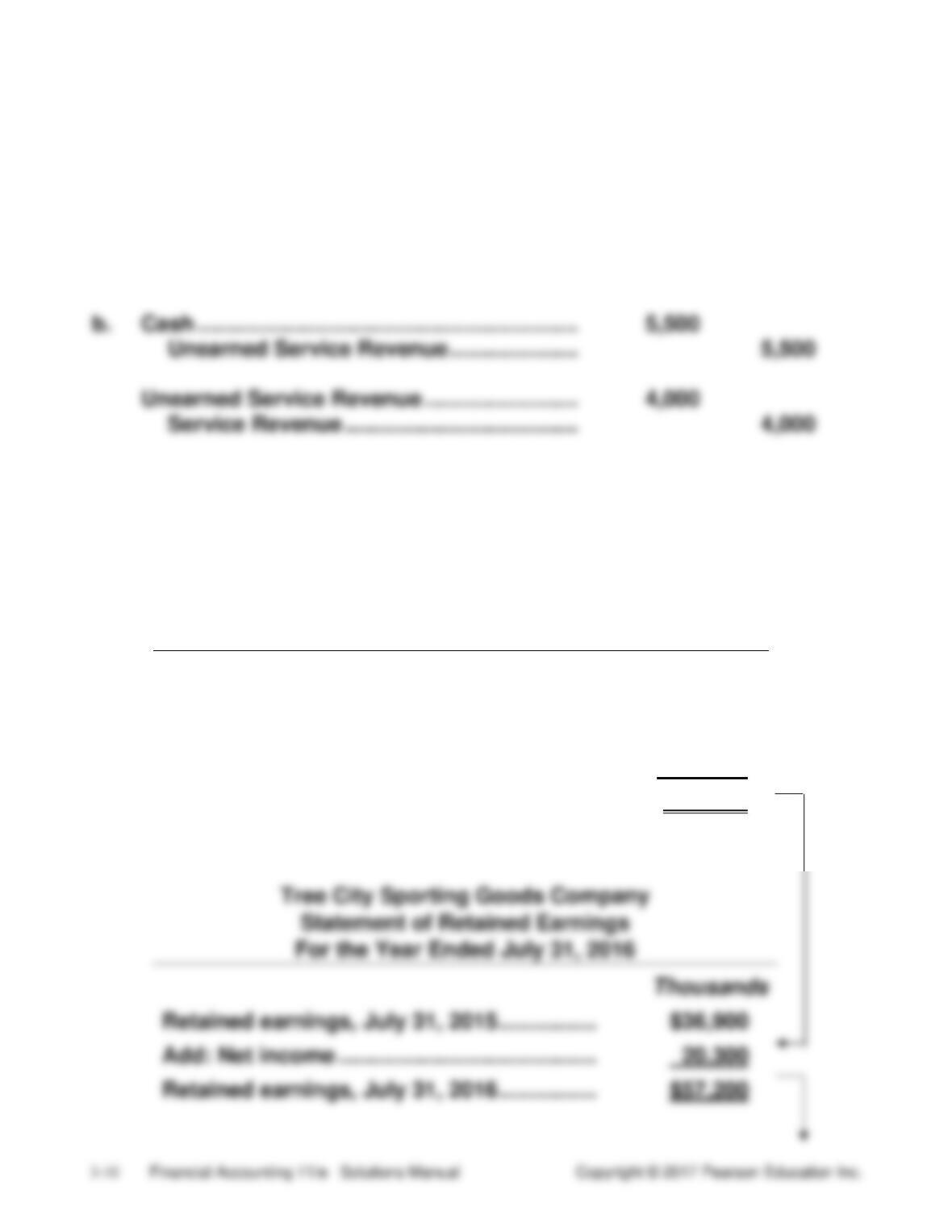
(10 min.) S 3-14
a.
Accounts Receivable ……………………………..
22,000
Service Revenue ……………………………….
22,000
Cash …………………………..…………………………
7,000
Accounts Receivable …………………………
7,000
Cash …………………………..…………………………
Unearned Service Revenue …………………
Unearned Service Revenue …………………….
Service Revenue ………………………………..
(15-30 min.) S 3-15
Tree City Sporting Goods Company
Income Statement
For the Year Ended July 31, 2016
Thousands
Net revenues ……………………………………….
$184,500
Cost of goods sold ………………………………
136,200
All other expenses ……………………………….
28,000
Net income ………………………………………….
$ 20,300
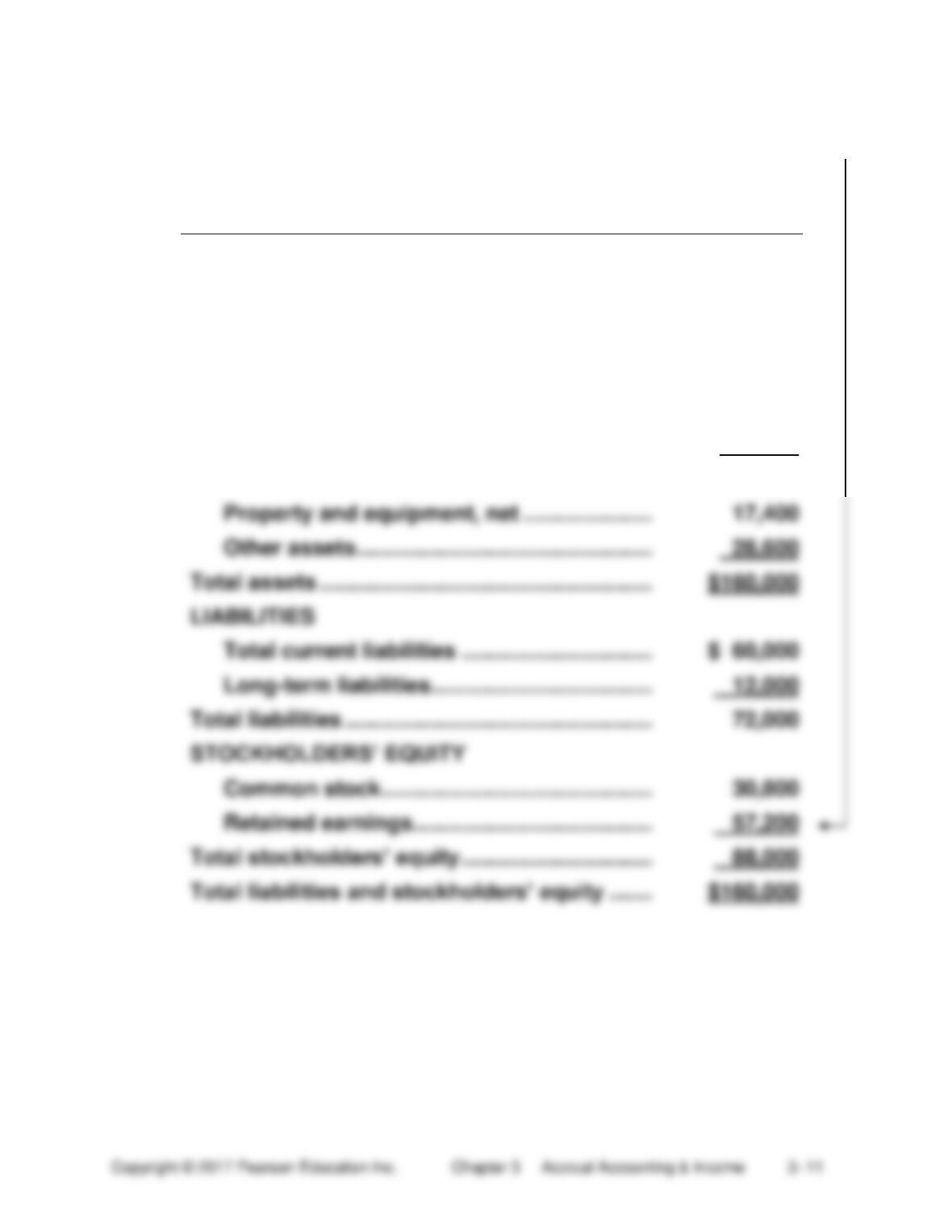
Retained earnings, July 31, 2015 …………….
Add: Net income ……………………………………
Retained earnings, July 31, 2016 …………….
(continued) S 3-15
Tree City Sporting Goods Company
Balance Sheet
July 31, 2016
Thousands
ASSETS
Current:
Cash…………………………………………………….
$ 43,100
Accounts receivable ……………………………..
28,500
Inventories …………………………………………..
37,000
Other current assets ……………………………..
5,400
Total current assets………………………….
114,000
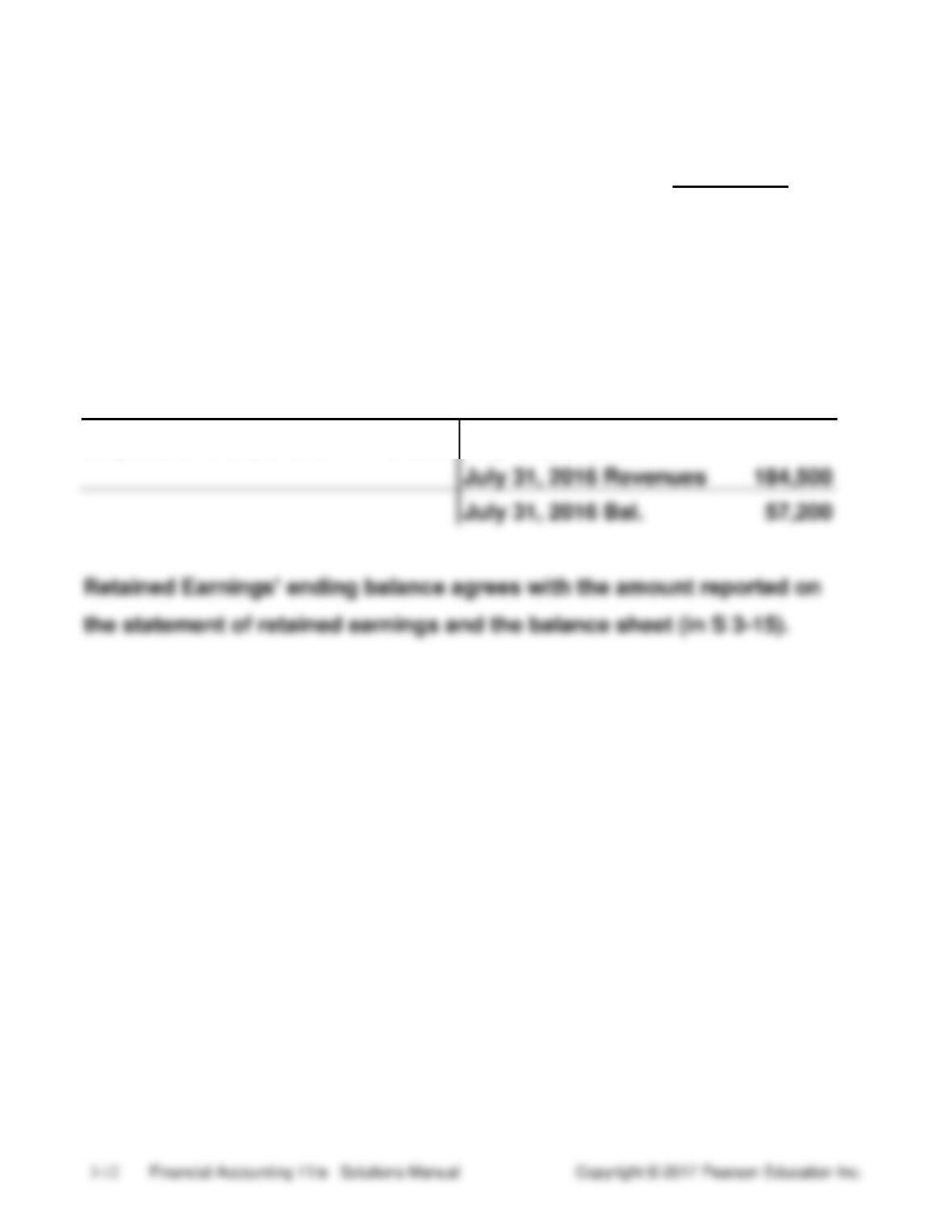
Property and equipment, net …………………
17,400
Other assets …………………………………………
Total assets ………………………………………………
LIABILITIES
Total current liabilities ………………………….
Long-term liabilities ………………………………
Total liabilities …………………………………………..
72,000
Common stock ……………………………………..
30,800
Retained earnings…………………………………
(5-10 min.) S 3-16
CLOSING ENTRIES
Thousands
July 31
Net Revenues ………………………………….
184,500
Retained Earnings ……………………
184,500
31
Retained Earnings …………………………...
164,200
Cost of Goods Sold ………………….
136,200
All Other Expenses ………………….
28,000
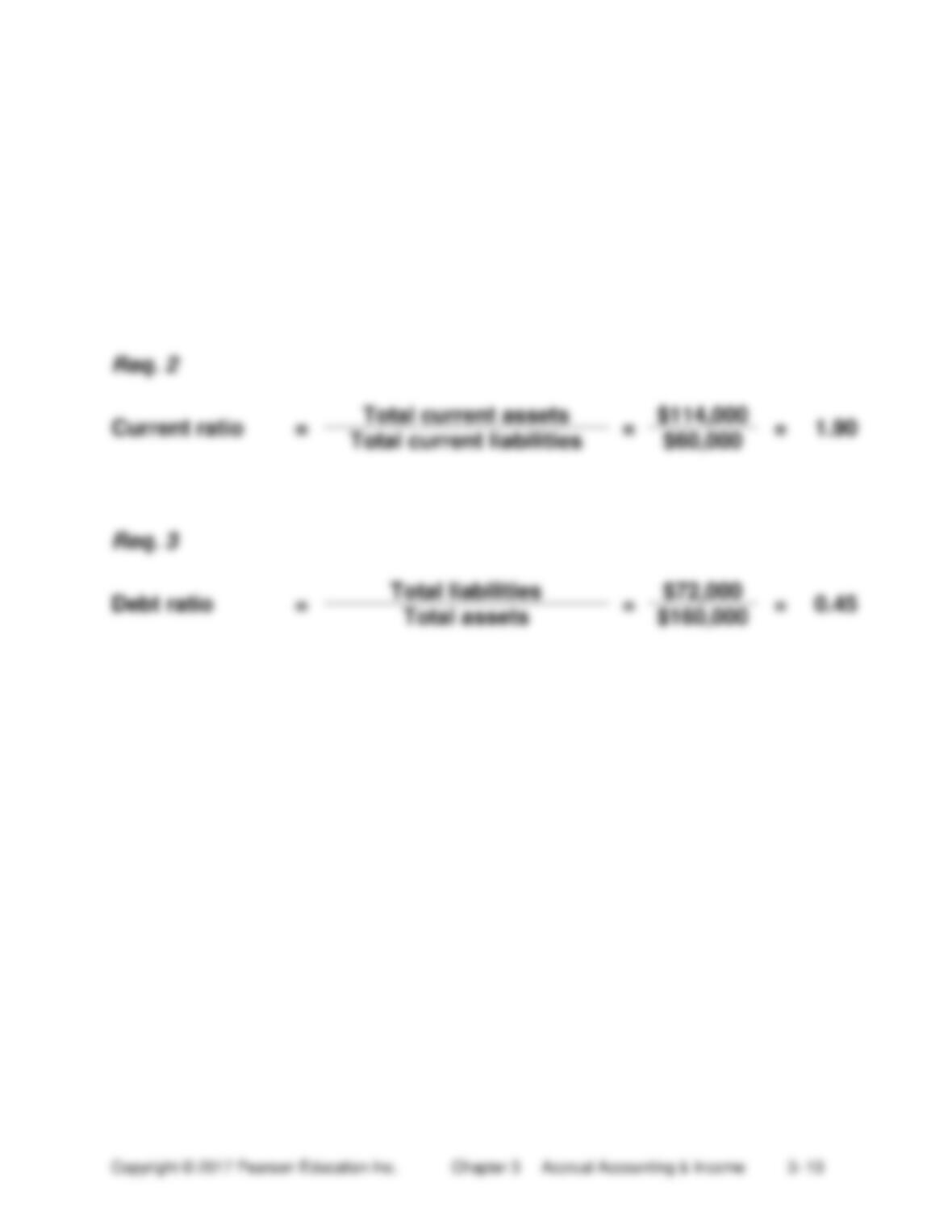
Retained Earnings
July 31, 2016 Expenses
164,200
July 31, 2015 Bal.
36,900
(5 min.) S 3-17
(Dollars in thousands)
Req. 1
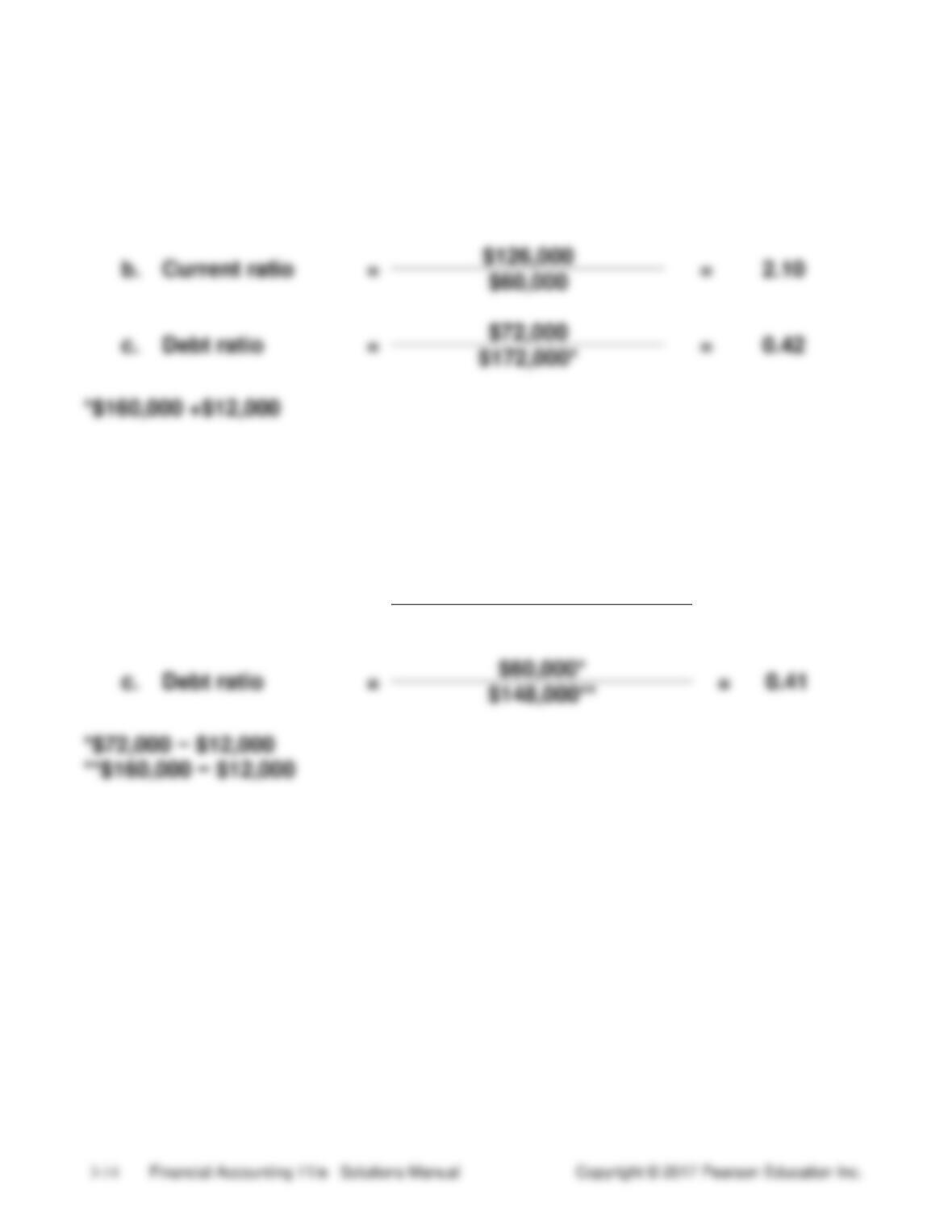
Net working capital = Total current assets − Total current liabilities
$54,000 = $114,000 − $60,000
Net working capital of $54,000 means current assets exceed current
liabilities—a positive sign. The current ratio and debt ratio values are
strong.
(10 min.) S 3-18
1.
Earned revenue of $12,000 on account:
a.
Net working capital = $66,000
[($114,000 + $12,000) − $60,000]
2.
Paid accounts payable of $12,000:
a.
Net working capital = $54,000 [($114,000 − $12,000) − ($60,000 − $12,000)]
b.
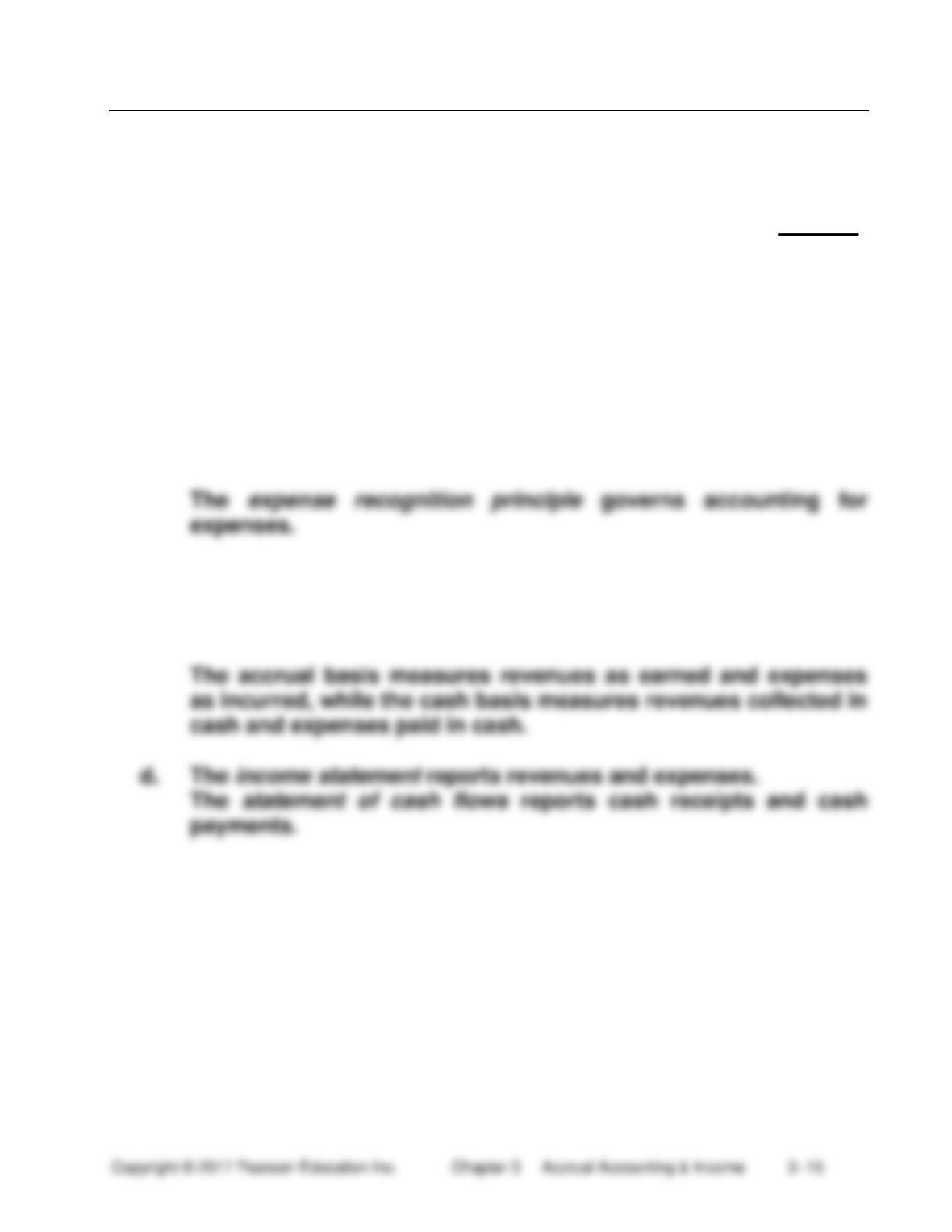
Current ratio
=
$102,000
=
2.13
$48,000
Exercises
(5-10 min.) E 3-19A
Millions
a.
Revenue ……………………………………………………….……….
$800
The revenue principle says to record revenue when it has been
earned, regardless of when cash is collected. Therefore, report
the amount of revenue earned, regardless of when the company
collects cash.
b.
Total expense ………………………………………………………..
$570
c.
Revenue ($800 − $21) ……………………………………………..
$779
Total expense ………………………………………………………..
$600
d.
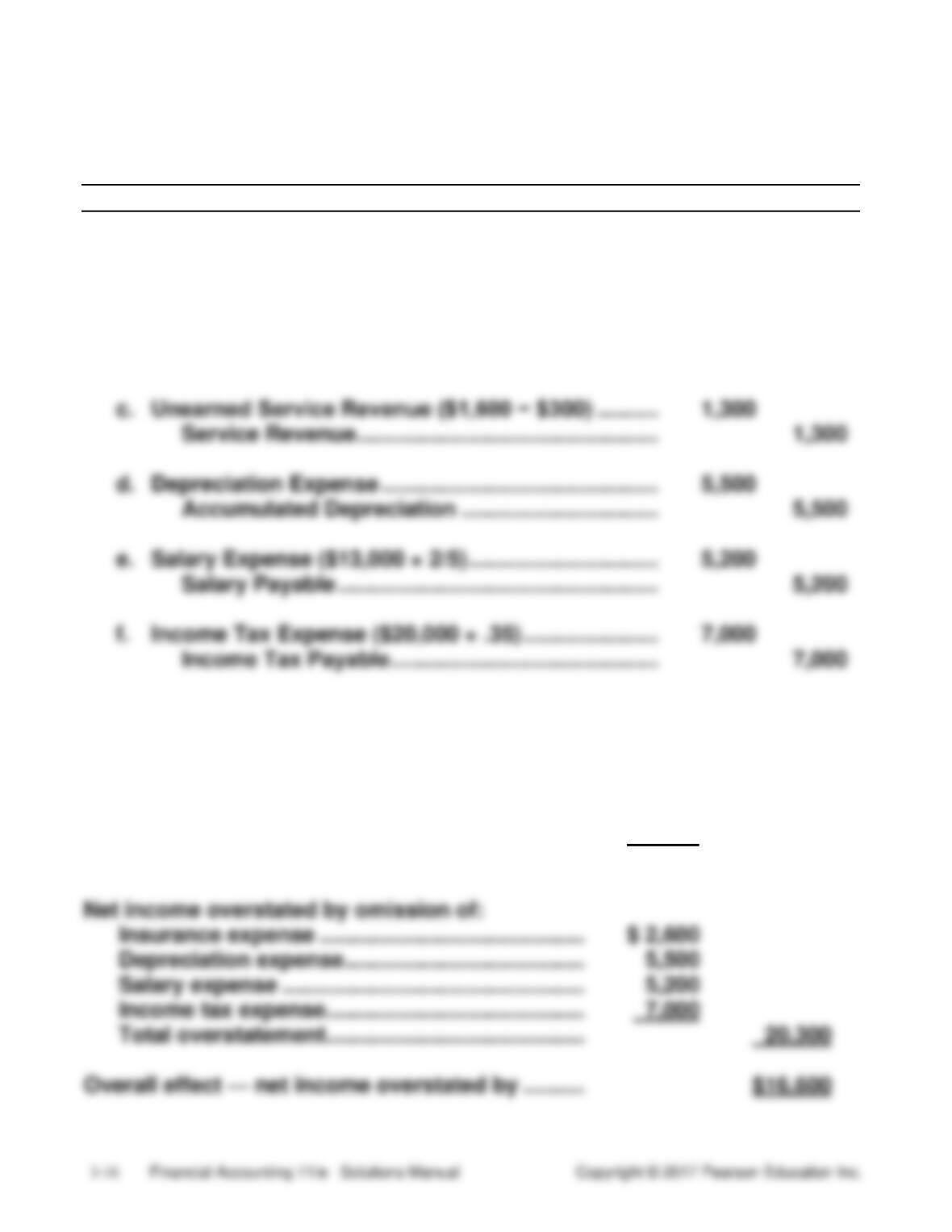
The income statement reports revenues and expenses.
(15-20 min.) E 3-20A
Req. 1
Adjusting Entries
DATE
ACCOUNT TITLES
DEBIT
CREDIT
a.
Insurance Expense …………………………………………..
2,600
Prepaid Insurance ($300 + $2,900 − $600) ……..
2,600
b.
Interest Receivable …………………………………………..
2,400
Interest Revenue …………………………………………
2,400
Service Revenue ………………………………………….
1,300
Depreciation Expense ………………………………………
Accumulated Depreciation …………………………..
Salary Expense ($13,000 × 2/5) ………………………….
5,200
Salary Payable …………………………..………………..
Income Tax Expense ($20,000 × .35) ………………….
7,000
7,000
Req. 2
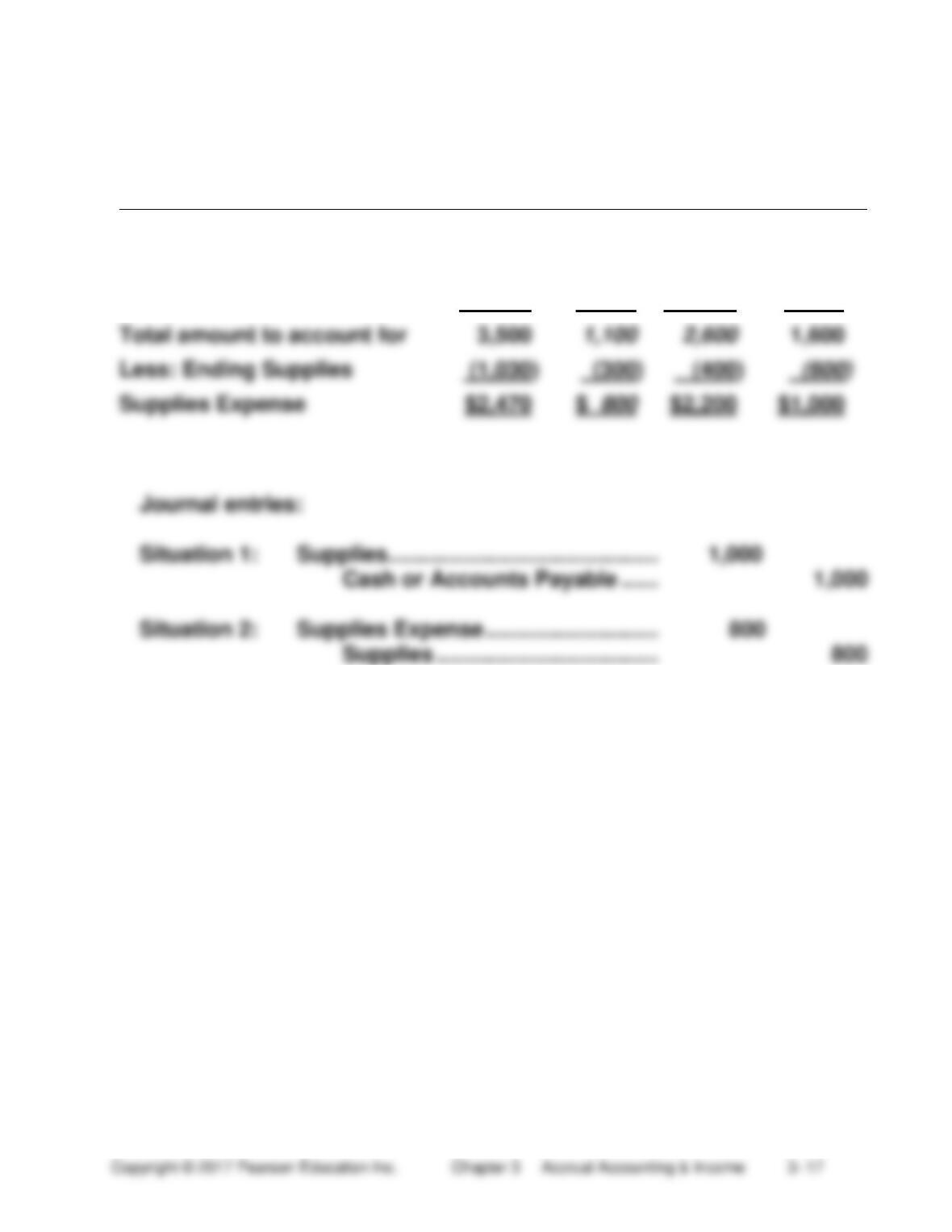
Net income understated by omission of:
Interest revenue …………………………………………
$ 2,400
Service revenue …………………………………………
1,300
Total understatement …………………………………
$ (3,700)
Net income overstated by omission of:
Insurance expense …………………………………….
$ 2,600
Depreciation expense …………………………………
Salary expense ………………………………………….
Income tax expense ……………………………………
Total overstatement ……………………………………
(10-15 min.) E 3-21A
Missing amounts in italics.
1
2
3
4
Beginning Supplies
$2,500
$ 600
$ 700
$ 700
Add: Purchases of supplies
during the year
1,000
500
1,900
900
Less: Ending Supplies
(400)
Supplies Expense
$ 800
(10-20 min.) E 3-22A
Adjusting Entries
DATE
ACCOUNT TITLES
DEBIT
CREDIT
a.
Interest Expense ……………………………………………….
3,200
Interest Payable …………………………………………
3,200
b.
Interest Receivable ……………………………………………
4,100
Interest Revenue… …………………………………….
4,100
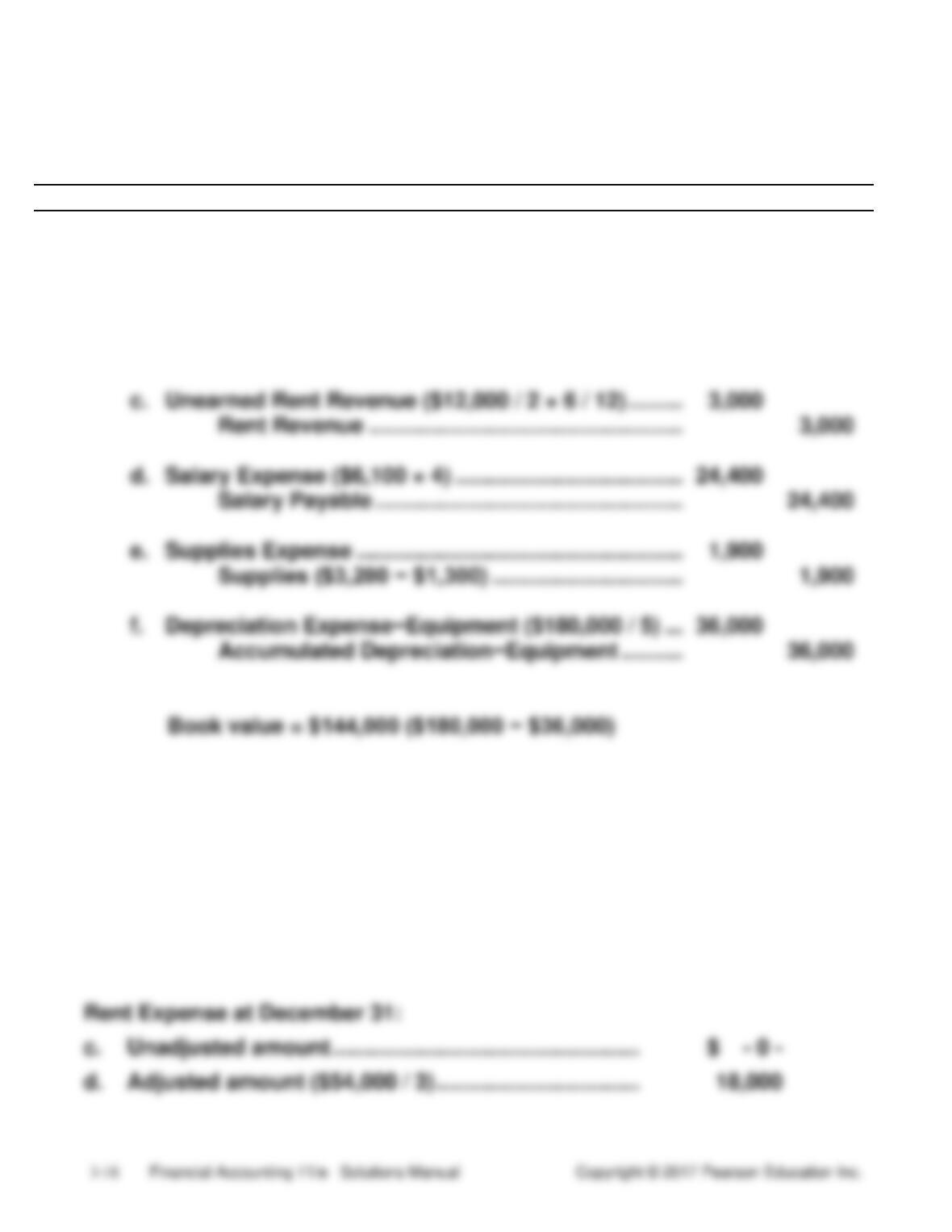
c.
Unearned Rent Revenue ($12,000 / 2 × 6 / 12) ………
Rent Revenue ……………………………………………
d.
Salary Expense ($6,100 × 4) ……………………………….
Salary Payable …………………………………………..
Supplies Expense ……………………………………………..
Supplies ($3,200 − $1,300) ………………………….
(10-15 min.) E 3-23A
Prepaid Rent at December 31:
a.
Unadjusted amount …………………………..………………
$54,000
b.
Adjusted amount ($54,000 − $18,000) …………………
36,000
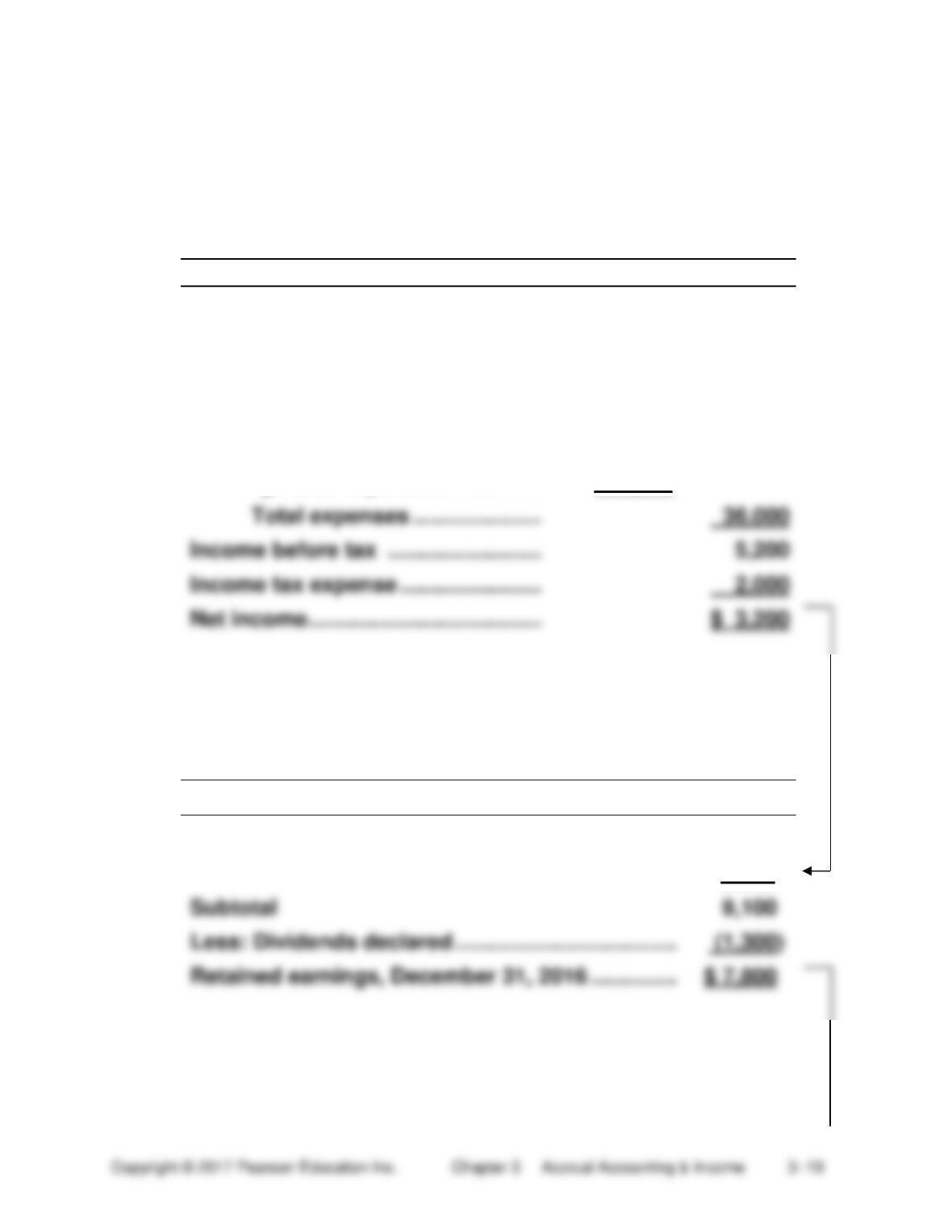
Rent Expense at December 31:
c.
Unadjusted amount …………………………..………………
d.
Adjusted amount ($54,000 / 3) …………………………...
(20-30 min.) E 3-24A
Req. 1
Honeybell, Inc.
Income Statement
Year Ended December 31, 2016
Thousands
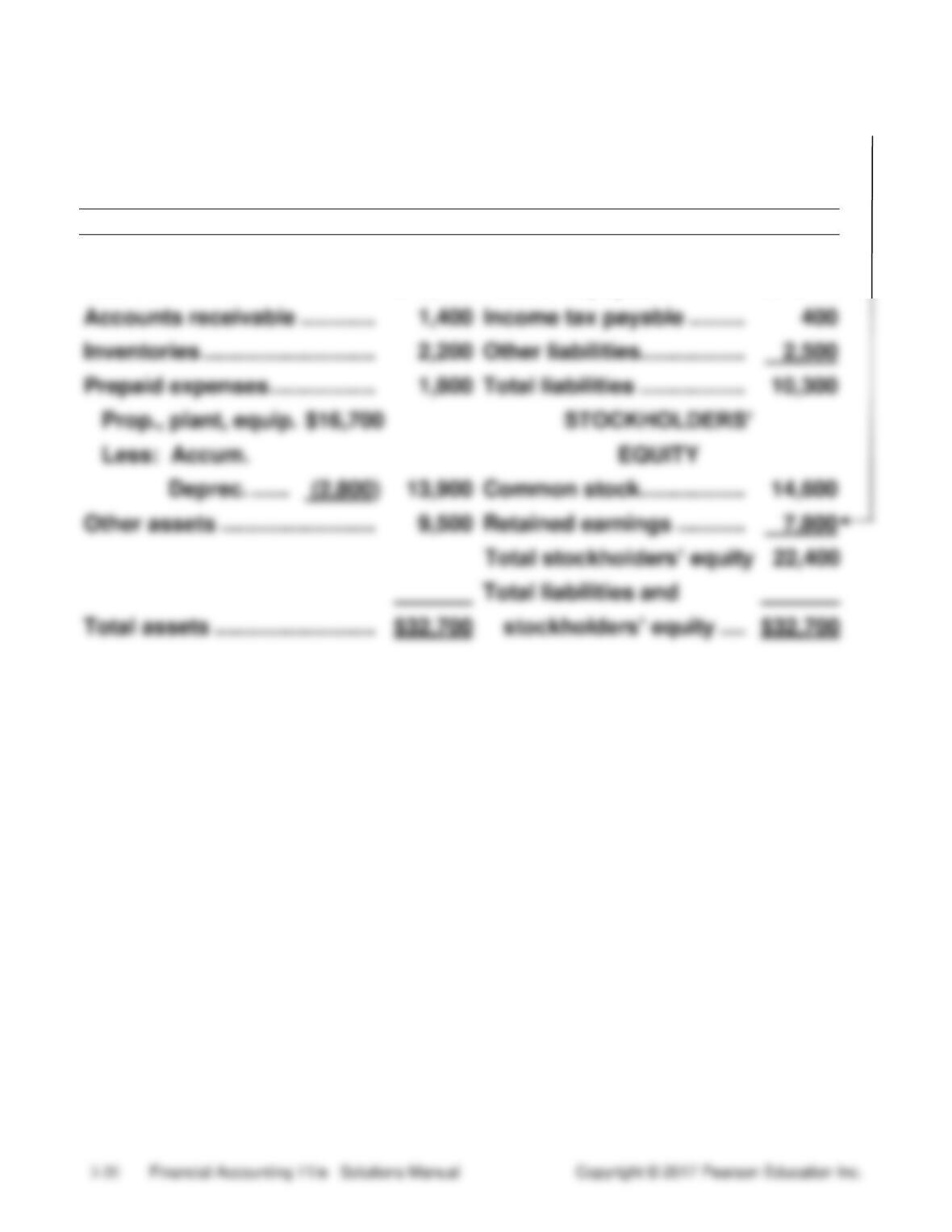
Revenues:
Sales revenue ………………………
$41,200
Expenses:
Cost of goods sold ……………….
$25,500
Selling, administrative, and
general expenses …………….
10,500
Total expenses …………………
36,000
Income before tax …………………….
Income tax expense …………………..
Net income ………………………………..
Honeybell, Inc.
Statement of Retained Earnings
Year Ended December 31, 2016
Thousands
Retained earnings, December 31, 2015 …………..
$ 5,900
Add: Net income……………………………………………
3,200
Subtotal
9,100
Less: Dividends declared ………………………………
Retained earnings, December 31, 2016 …………..
(continued) E 3-24A
Honeybell, Inc.
Balance Sheet
December 31, 2016
Thousands
ASSETS
LIABILITIES
Cash ………………………………..
$ 3,900
Accounts payable …………
$ 7,400
Deprec. ……
(2,800)
Common stock……………..
14,600