$100,000
*–=
$11,500 $980 $10,520
Chapter 11, P 8. (Continued)
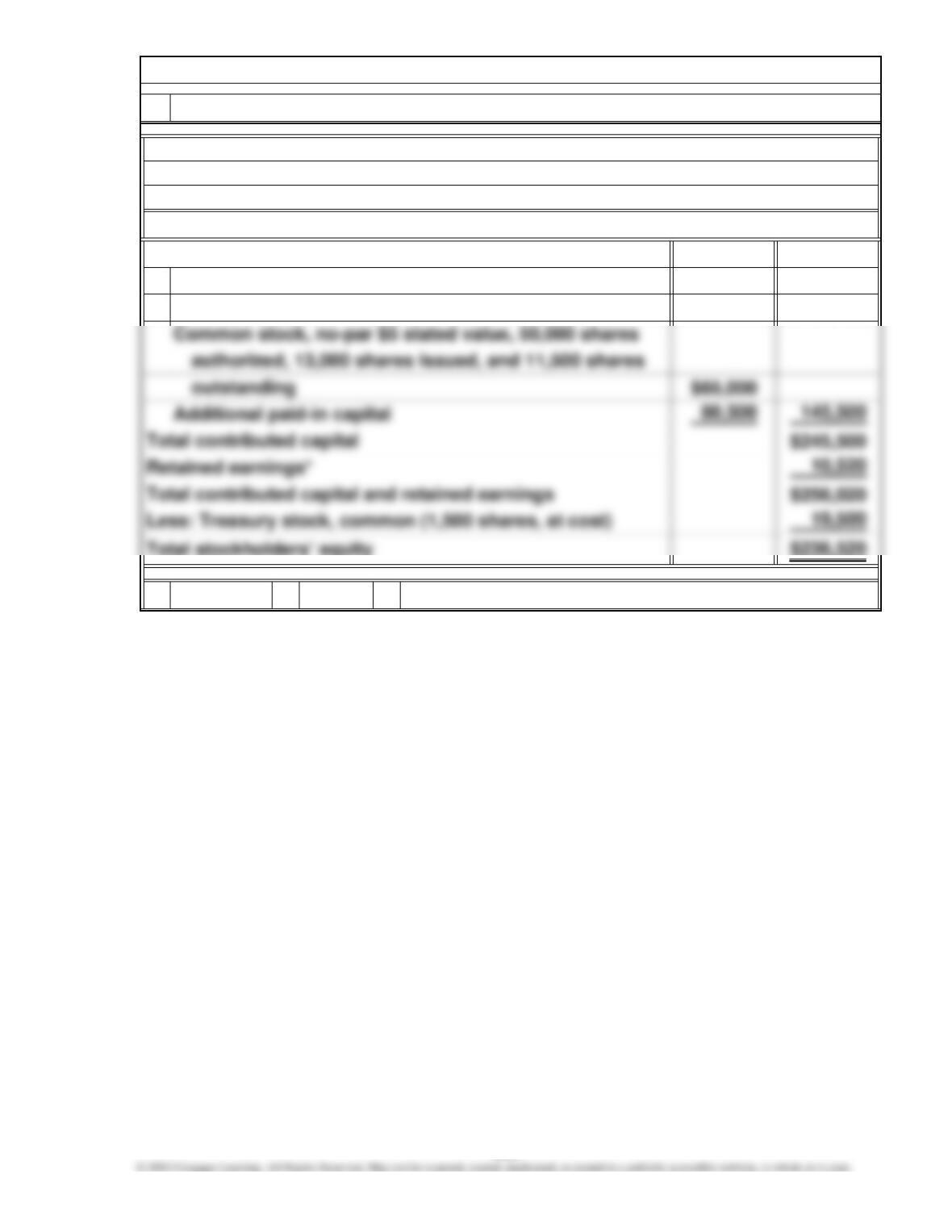
Contributed capital
Preferred stock, $100 par value, 9 percent, 5,000 shares
Stockholders’ equity section of the balance sheet prepared
Total stockholders’ equity
2.
Stockholders’ Equity
Java, Inc.
Balance Sheet
August 31, 2011
authorized, 1,000 shares issued and outstanding
555
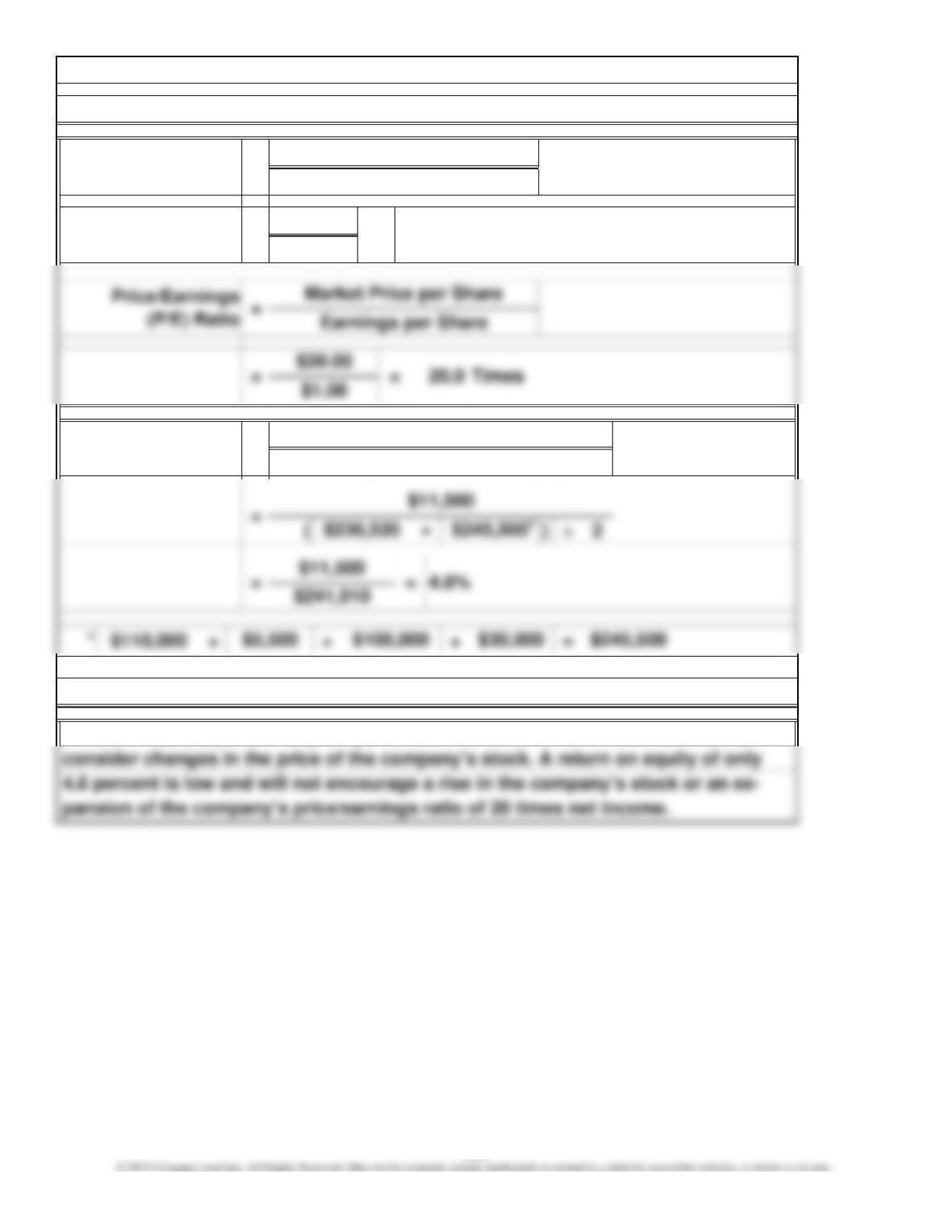
Java’s dividends yield is only 0.1 percent, which means that investors must also
4. User Insight: Investors’ return discussed
Return on Equity = Net Income
=
Average Stockholders’ Equity
0.1%
$20.00
3. User Insight: Performance ratios computed
Dividends Yield
Chapter 11, P 8. (Continued)
Dividends per Share
Market Price per Share
=$0.02 =
556
2012
Jan. 4
14 960,000
14 160,000
160,000
Apr. 20 72,000
72,000
May 4 32,000
24,000
25
Chapter 11, P 9.
No entry required
Preferred Stock
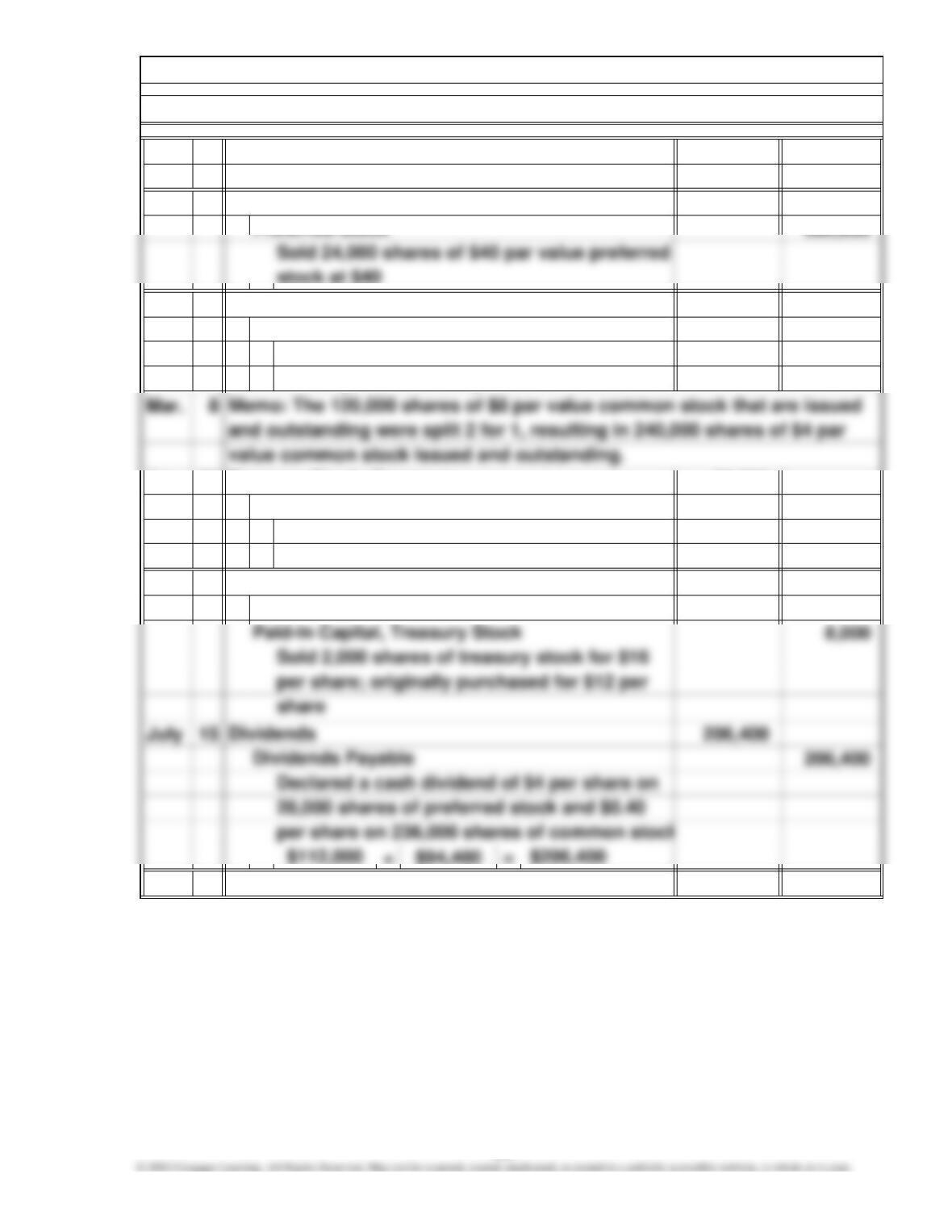
Issued 4,000 shares of preferred stock in
Preferred Stock
exchange for a building valued at $160,000
1. Journal entries prepared
the treasury at $12 per share
Cash
Building
Treasury Stock, Common
Cash
Purchased 6,000 shares of common stock for
No entry required
Treasury Stock, Common
Cash
557
2012
Aug. 15 206,400
206,400
Nov. 28 708,000
141,600
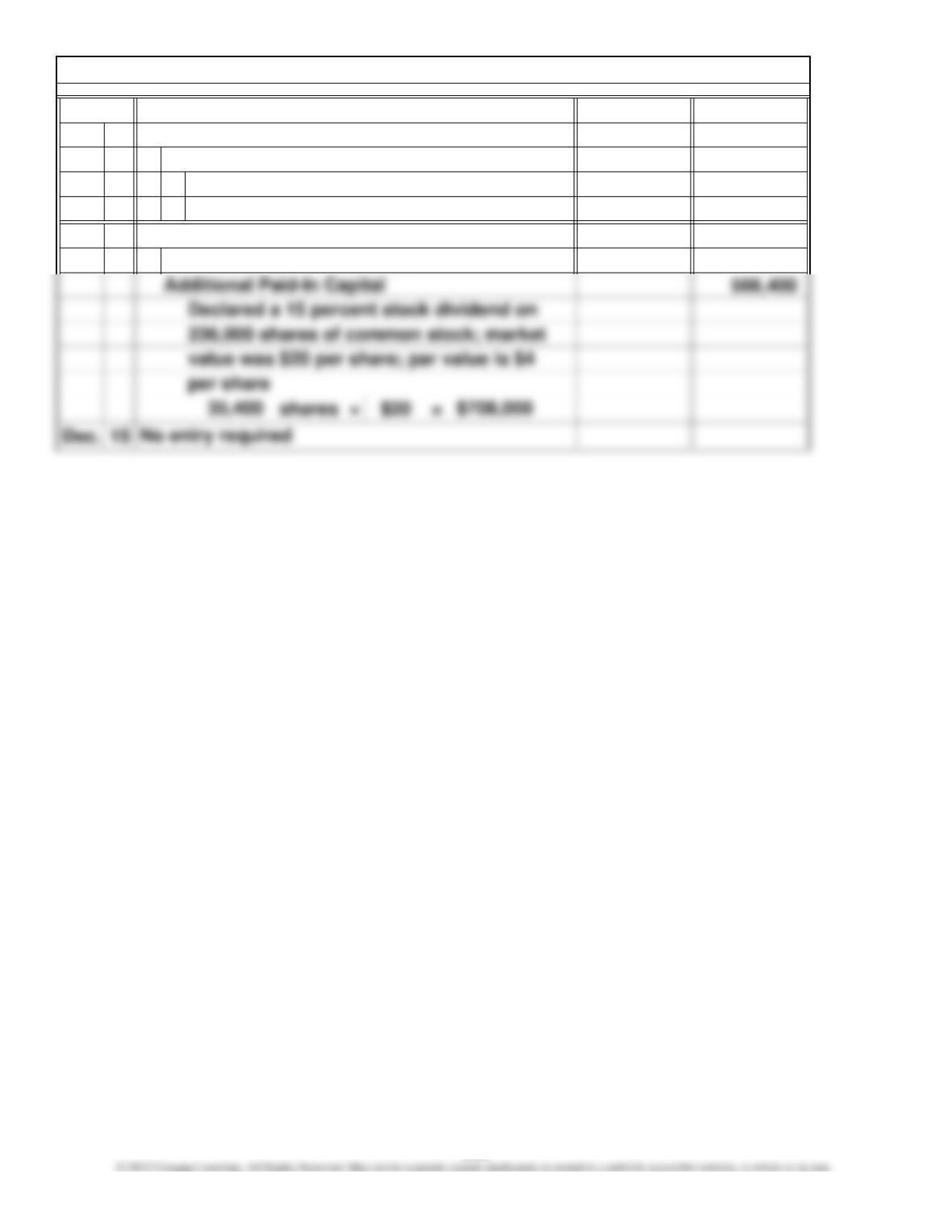
Paid cash dividends to preferred and
Dividends Payable
Stock Dividends
Cash
common stockholders
Common Stock Distributable
Chapter 11, P 9. (Continued)
558
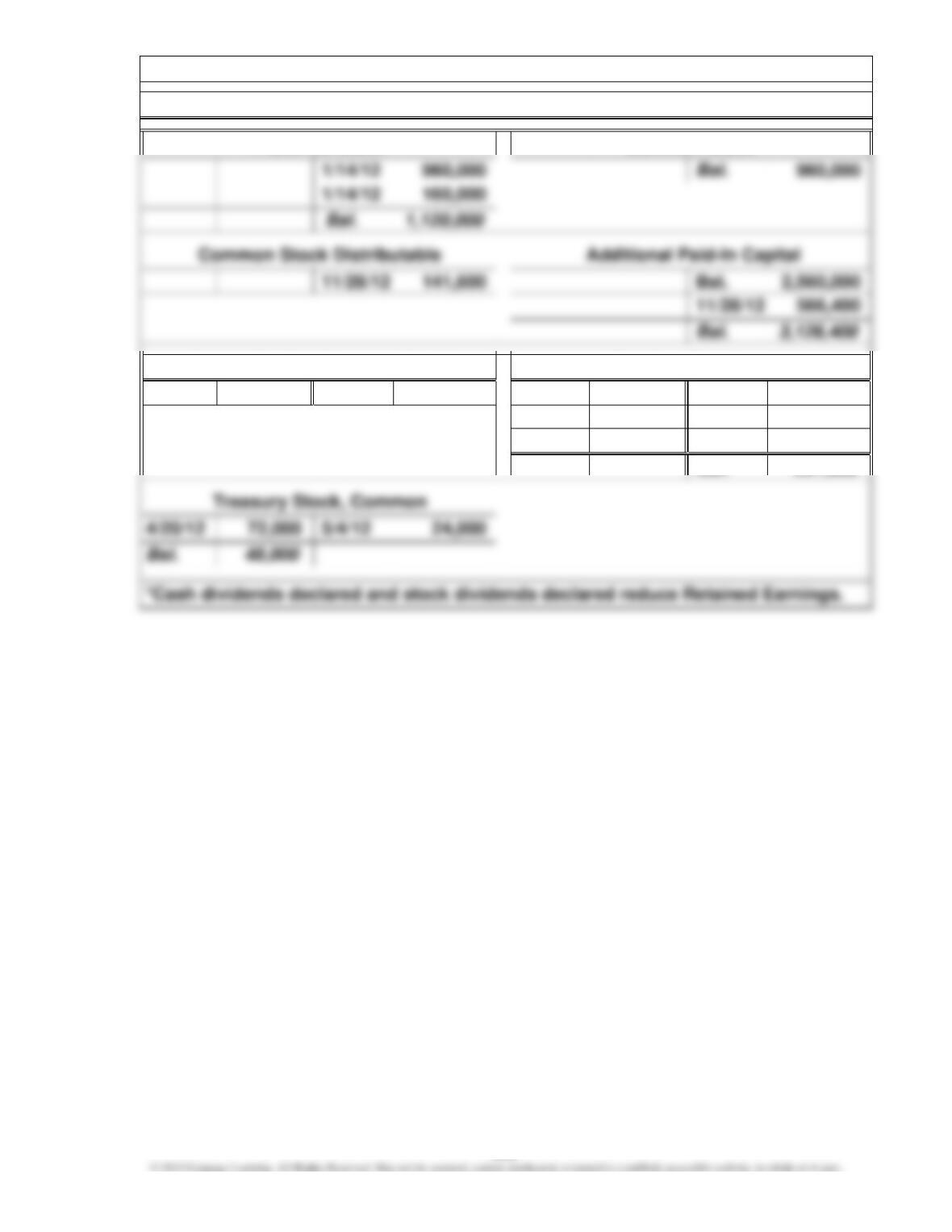
5/4/12 8,000 7/15/12 206,400 Bal. 1,648,000
11/28/12 708,000
12/31/12 436,000
Bal. 297,600
Retained Earnings
Preferred Stock Common Stock
Paid-In Capital, Treasury Stock
Chapter 11, P 9. (Continued)
T accounts for stockholders’ equity
*
*
559
÷=
**
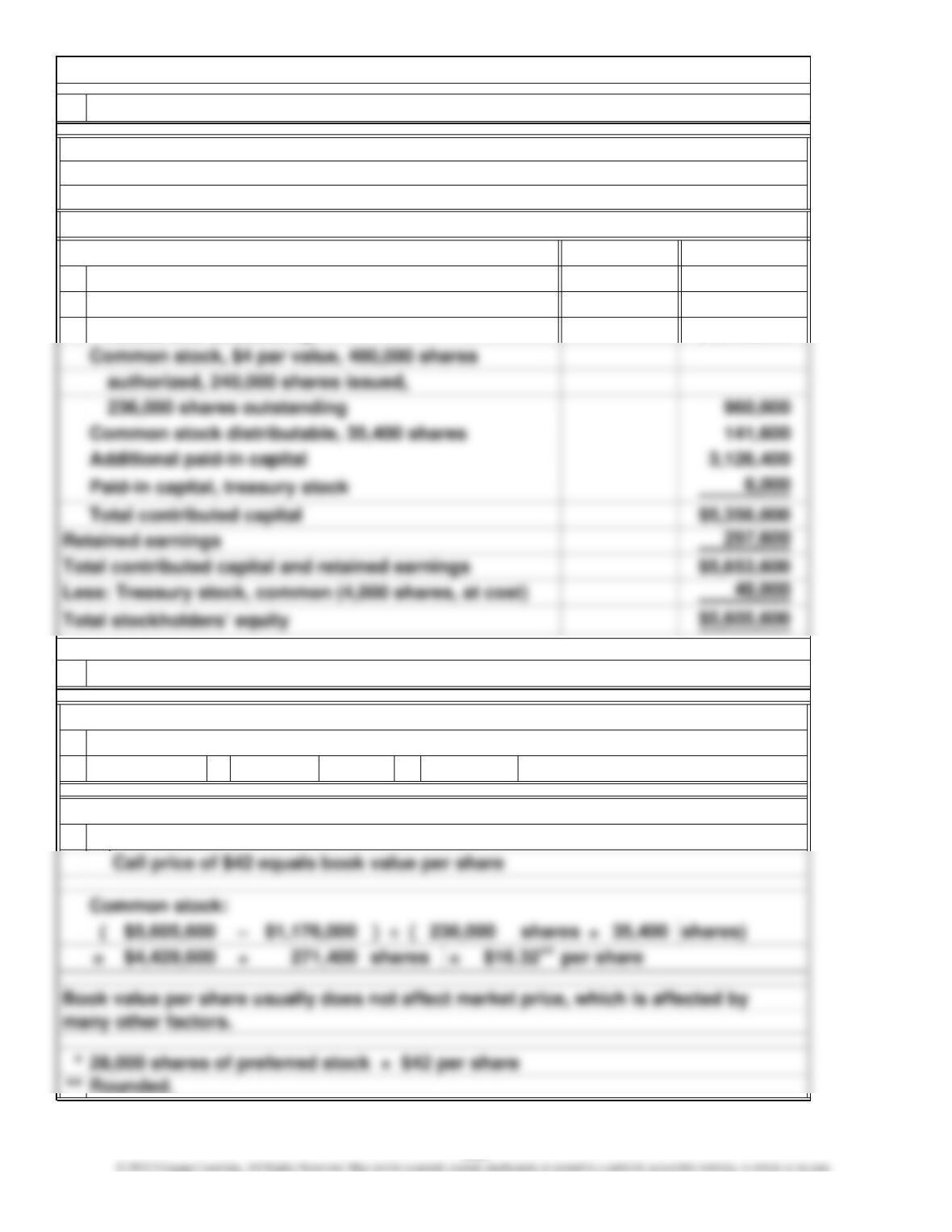
Stockholders’ Equity
shares $43.07
December 31, 2011
3.
$1,120,000
Contributed capital
40,000 shares authorized, 28,000 shares
issued and outstanding
User Insight: Book value per share computed
per share$5,168,000
Common stock:
Preferred stock:
120,000
Stockholders’ equity section of the balance sheet prepared2.
Sophia Company
Balance Sheet
Preferred stock, $40 par value, $4 dividend,
Chapter 11, P 9. (Continued)
December 31, 2012
December 31, 2012
*
**
560
5 400,000
400,000
17 1,400,000
200,000
1,200,000
5
17 200,000
200,000
Dividends Payable
Common Stock Distributable
June Stock Dividends
Additional Paid-In Capital
Dividends
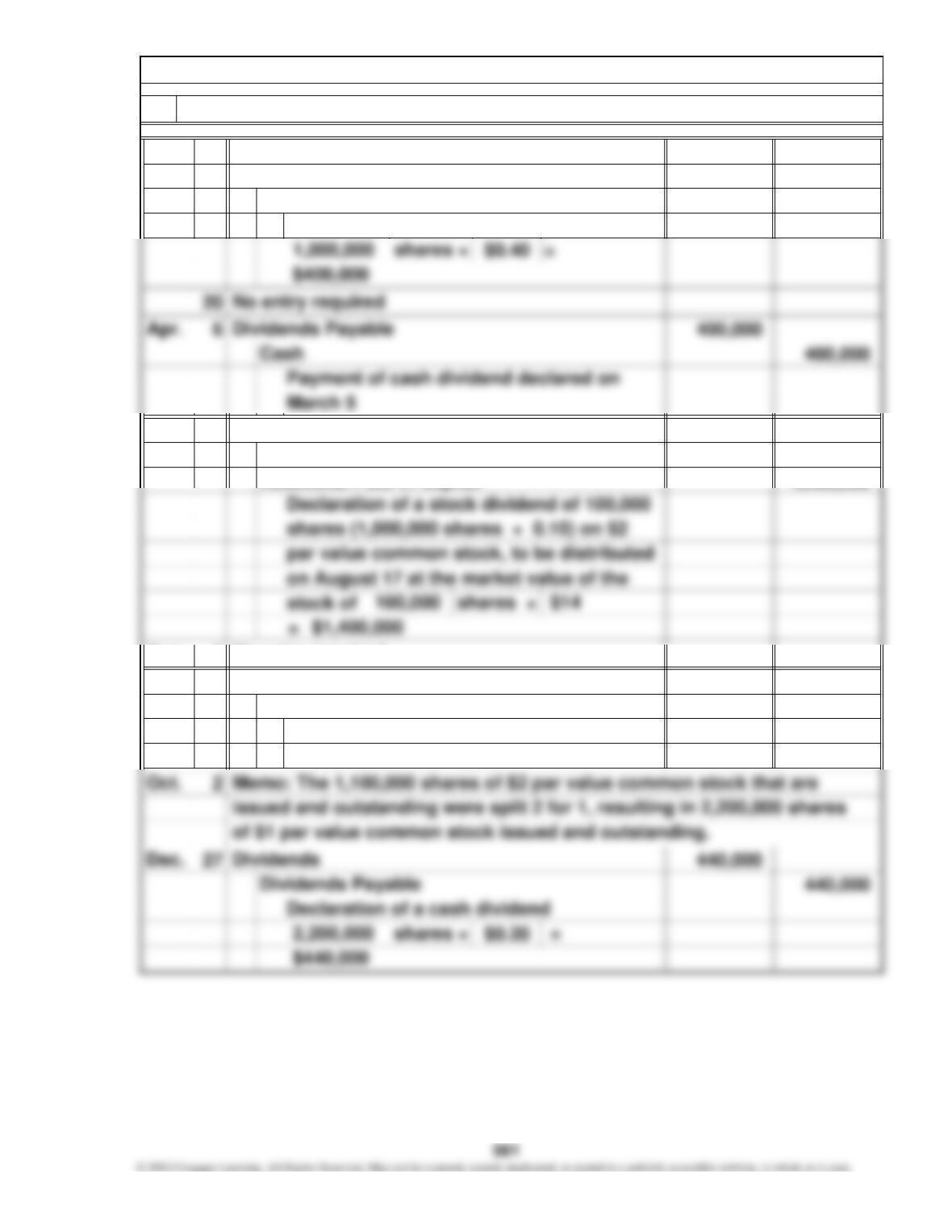
Declaration of a cash dividend
Mar.
Chapter 11, P 10.
Journal entries prepared1.
2012
Common Stock Distributable
Aug.
Distribution of stock dividend of 100,000
shares declared on June 17
Common Stock
No entry required
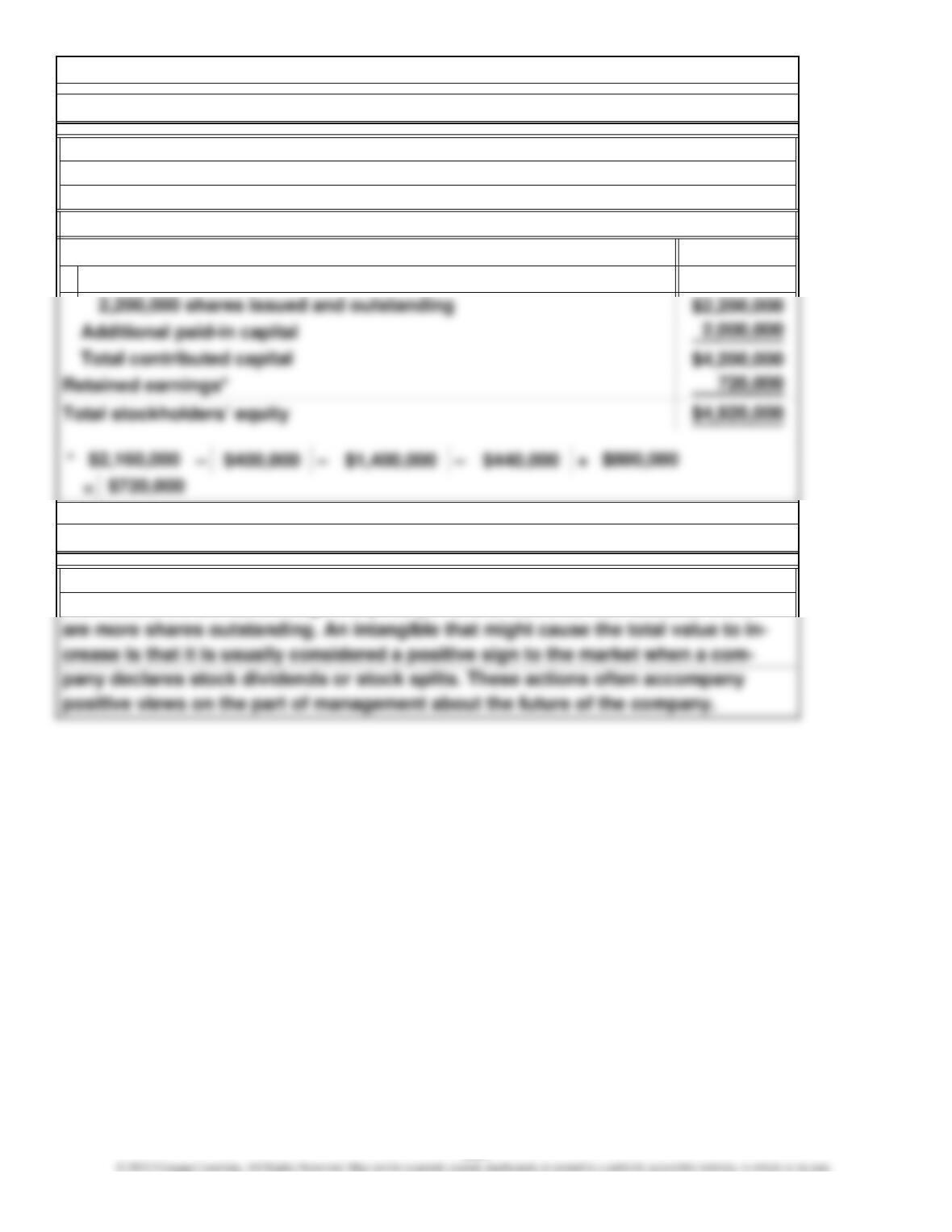
Jet Moving Company
Contributed capital
Stockholders’ Equity
Chapter 11, P 10. (Continued)
Balance Sheet
If you owned shares in Jet, you would expect the total value of your shares to re-
main about the same, although the price per share would be less because there
2. Stockholders’ equity section of the balance sheet prepared
3. User Insight: Effect of stock transactions on share price
Common stock, $1 par value, 6,000,000 shares authorized,
December 31, 2012
562
Chapter 11, C 2.
long-term debt. Another advantage is that issuing stock is less risky than issuing
dividend rate, they are classified on the balance sheet as equity. This is very im-
portant to companies that have suffered losses resulting in decreased stockhold-
assets. From the investor’s standpoint, the dividend is fixed, like bond interest.
An advantage of issuing common stock is that it improves the company’s debt to
Chapter 11, C 1.
equity ratio by increasing the amount of common stock outstanding in relation to
Even though preferred stocks have some characteristics of bonds, such as a fixed
ers’ equity and to banks, which must maintain minimum ratios of capital to total
bonds because dividends do not have to be paid on stock and there is no debt
563
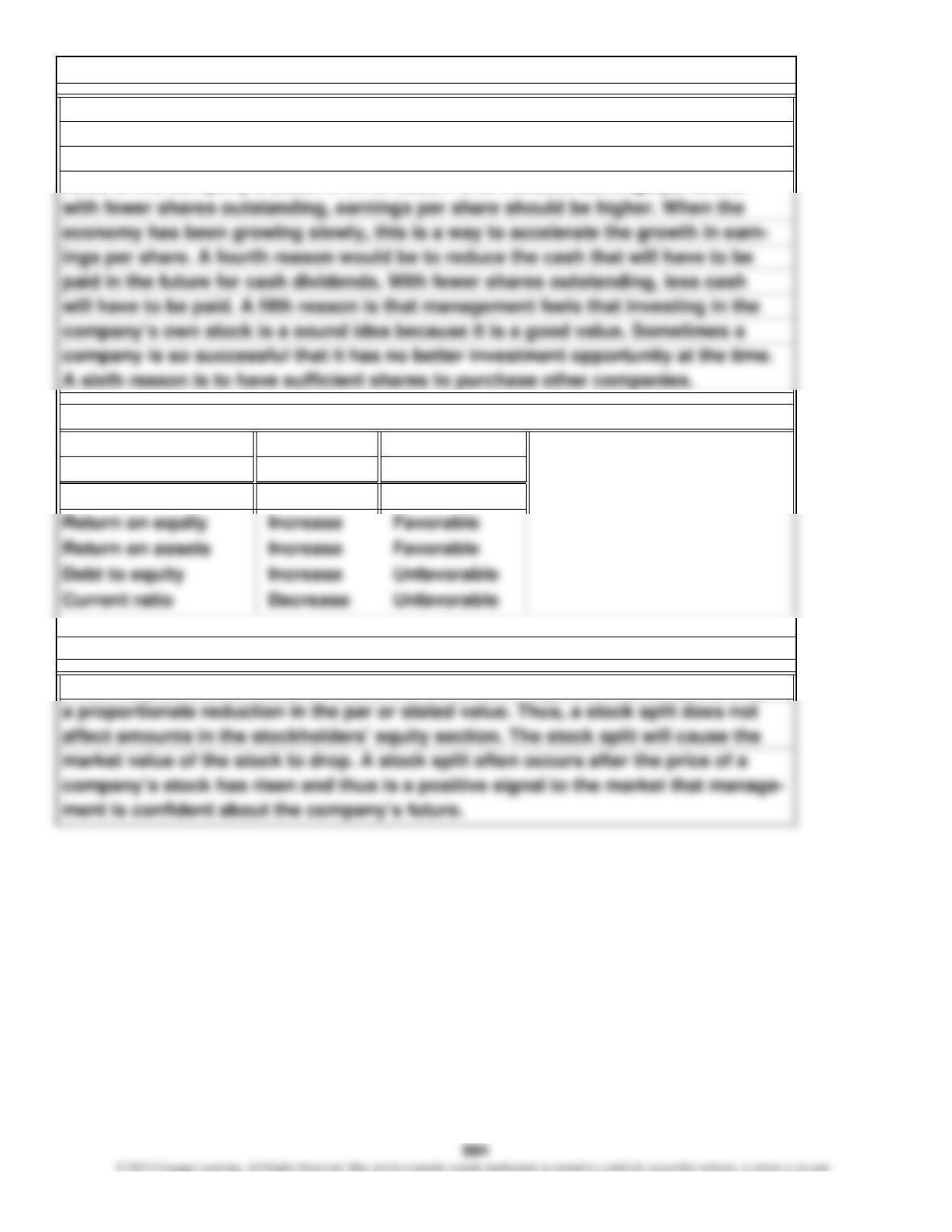
Favorable or
Ratio Effect Unfavorable
Earnings per share Increase Favorable
A stock split is an increase in the number of outstanding shares accompanied by
Chapter 11, C 3.
value of the company’s stock. A third reason is to increase earnings per share:
A company may have several reasons for buying back its own shares. One reason
ployee pension plan contributions. A second reason would be to increase the
is that it may have uses for the shares for employee stock purchase plans or em-
Chapter 11, C 4.
The effects of buybacks are as follows:
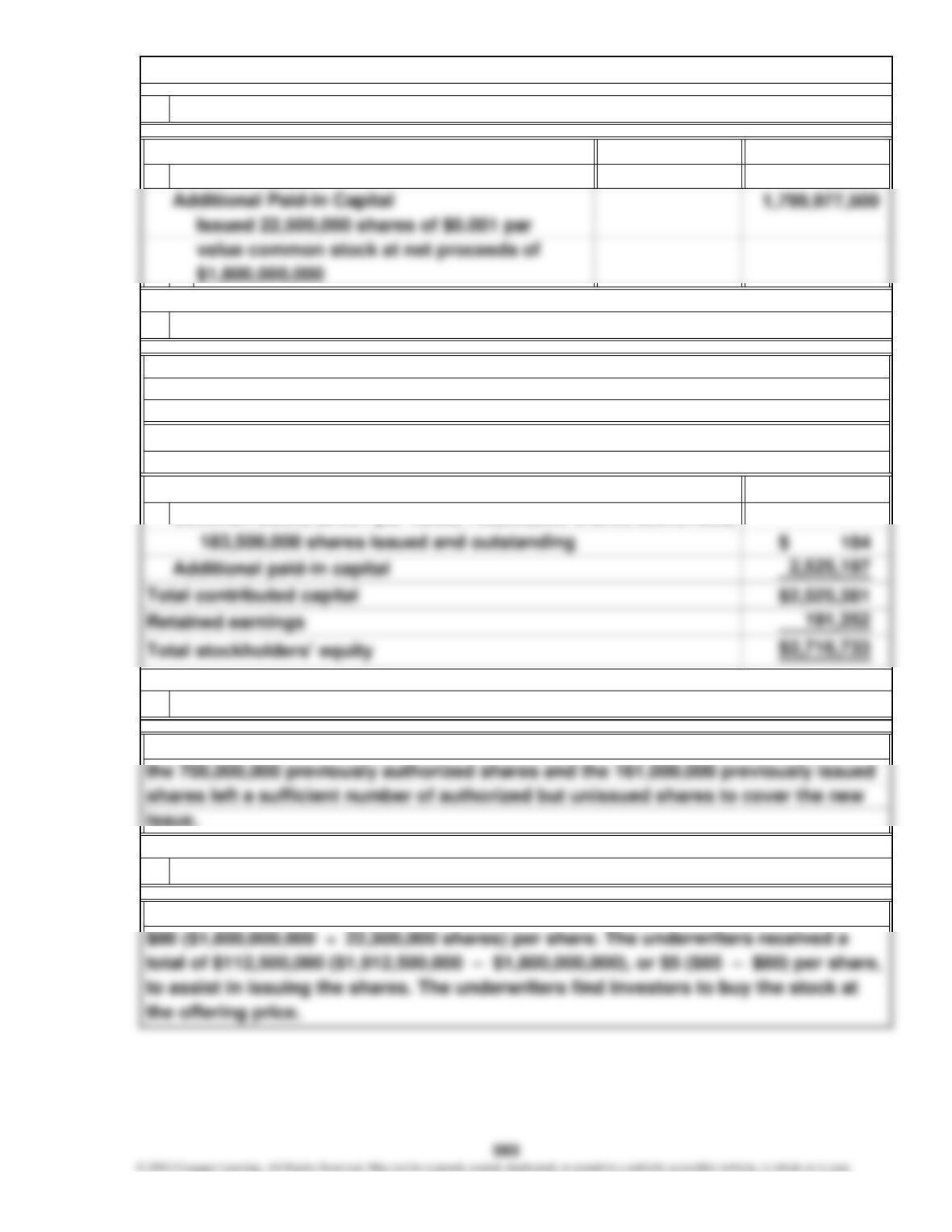
1,800,000,000
22,500
The total proceeds were $1,912,500,000 ($85 × 22,500,000 shares). Google received
4. Underwriters’ fee discussed
Google did not have to increase its authorized shares because management knew
Contributed capital
Balance Sheet
After Stock Offering
Google, Inc.
Stockholders’ Equity
3. Google’s need to increase the authorized shares discussed
Common stock, $0.001 par value, 700,000,000 shares authorized,
1. Stock issue recorded as journal entry
2. Stockholders’ equity section of the balance sheet prepared
Cash
Common Stock
Chapter 11, C 5.
(in thousands)
(1)
(5)
(6)
(7)
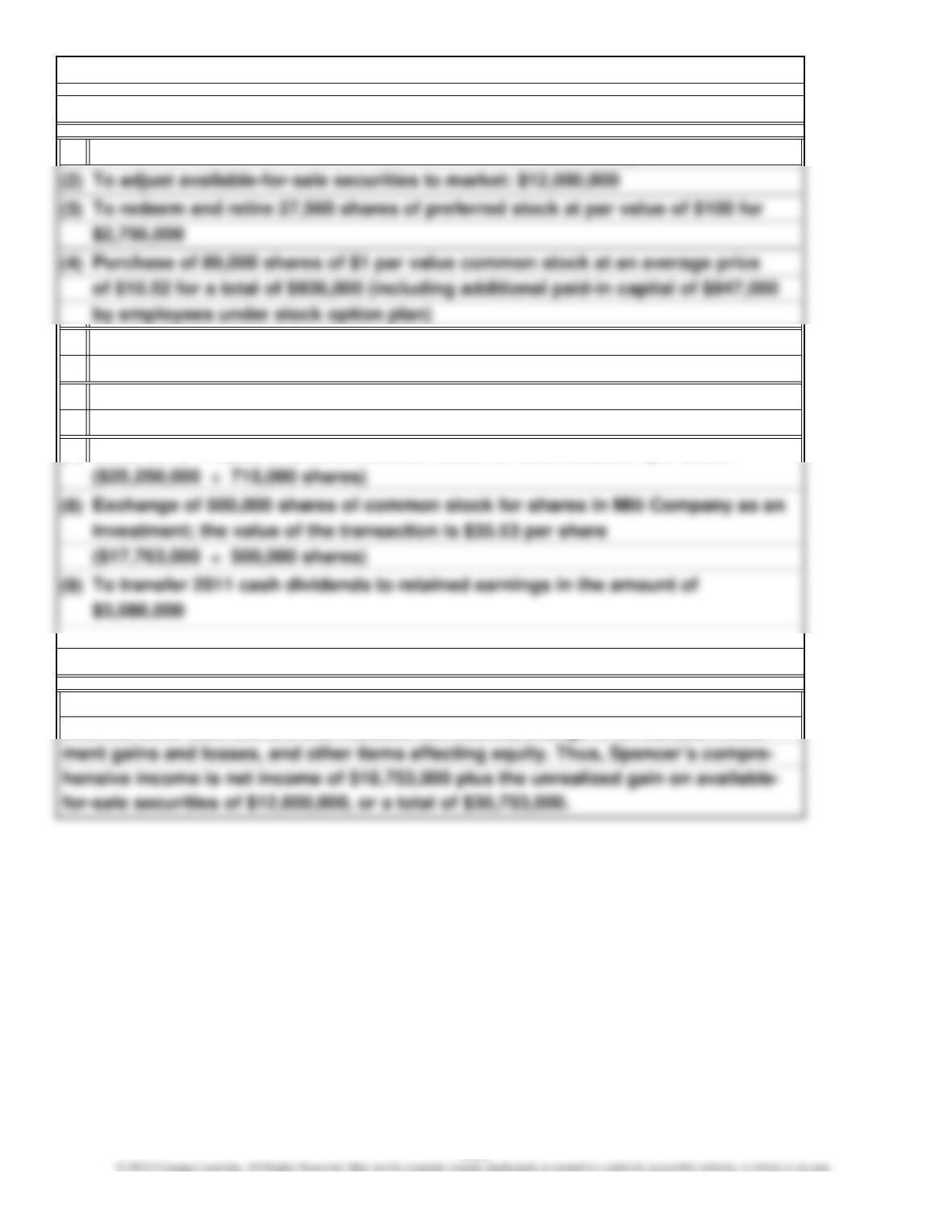
Issuance of 715,000 shares of common stock for cash at $35.31 per share
Purchase of 501,412 shares of common stock at an average price of $25.03 per
share ($12,552,000 ÷ 501,412 shares) for the treasury
2. Comprehensive income discussed
Conversion of convertible debentures into 148,000 shares of common stock at
an exchange rate of $25.56 per share ($3,783,000 ÷ 148,000 shares)
Chapter 11, C 6.
To transfer 2011 net income of $18,753,000 to retained earnings
sources other than owners and includes net income, change in unrealized invest-
Comprehensive income is the change in a company’s equity during a period from
1. Explanations of transactions
566
1.
2.
$0.305
$32.83
*
3.
4.
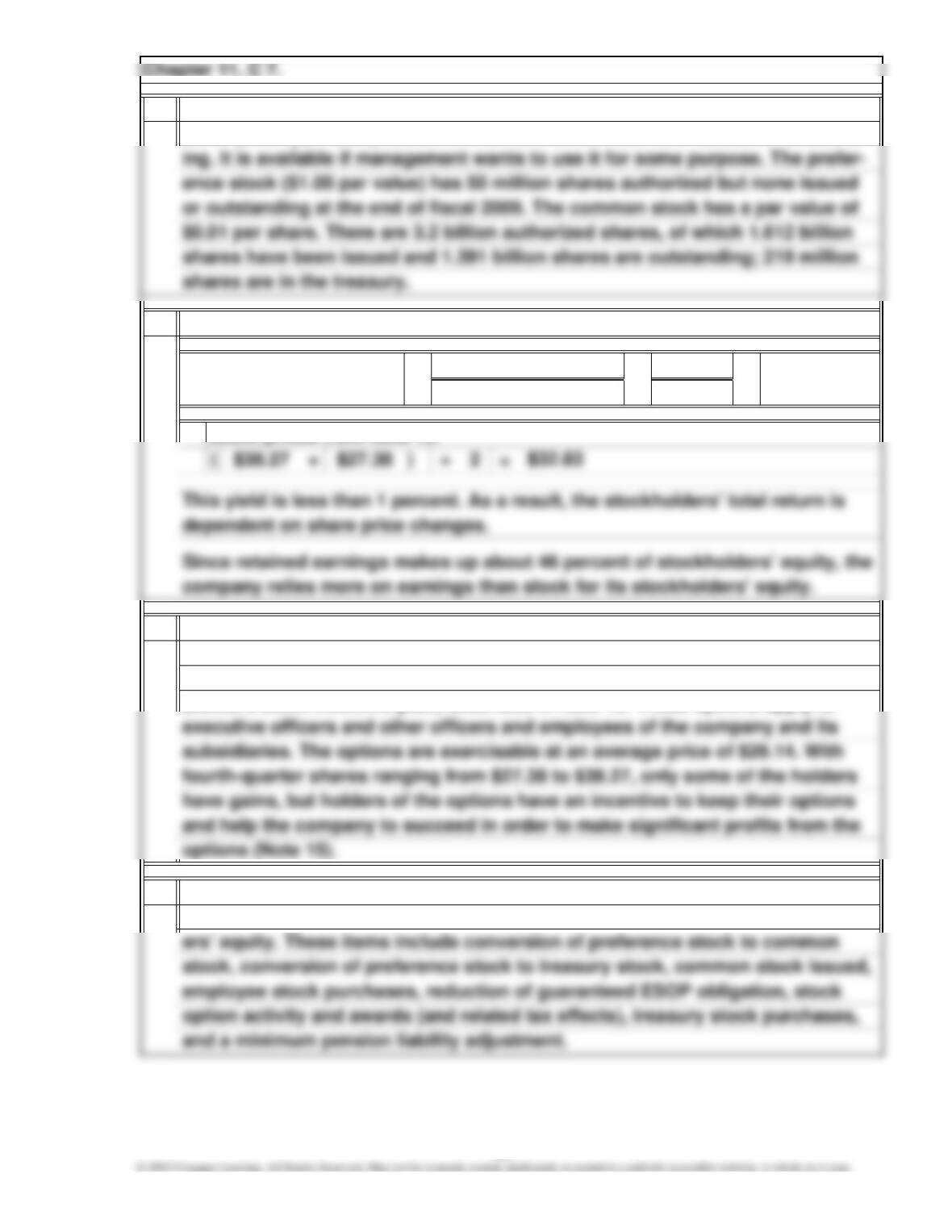
CVS has preferred stock, preference stock, and common stock. The preferred
Stock prices from Note 15.
=
(called a stock incentive plan) described in Note 10. These options apply to
stock ($0.01 par value) has 0.1 million authorized but none issued or outstand-
=Market Price
Dividends Yield
lates to the preference stock. In addition, the company has a stock option plan
The dividends yield for 2009 is as follows:
applies to full-time employees with at least one year of service. This plan re-
Dividends per Share
=
0.9%
CVS has an employee stock ownership plan (ESOP) described in Note 8, which
Aside from net earnings and dividends on preference and common stock, sev-
eral items appear on each of the three years of CVS’s statement of sharehold-
*
567
() ÷2
() ÷2
+ $6,941
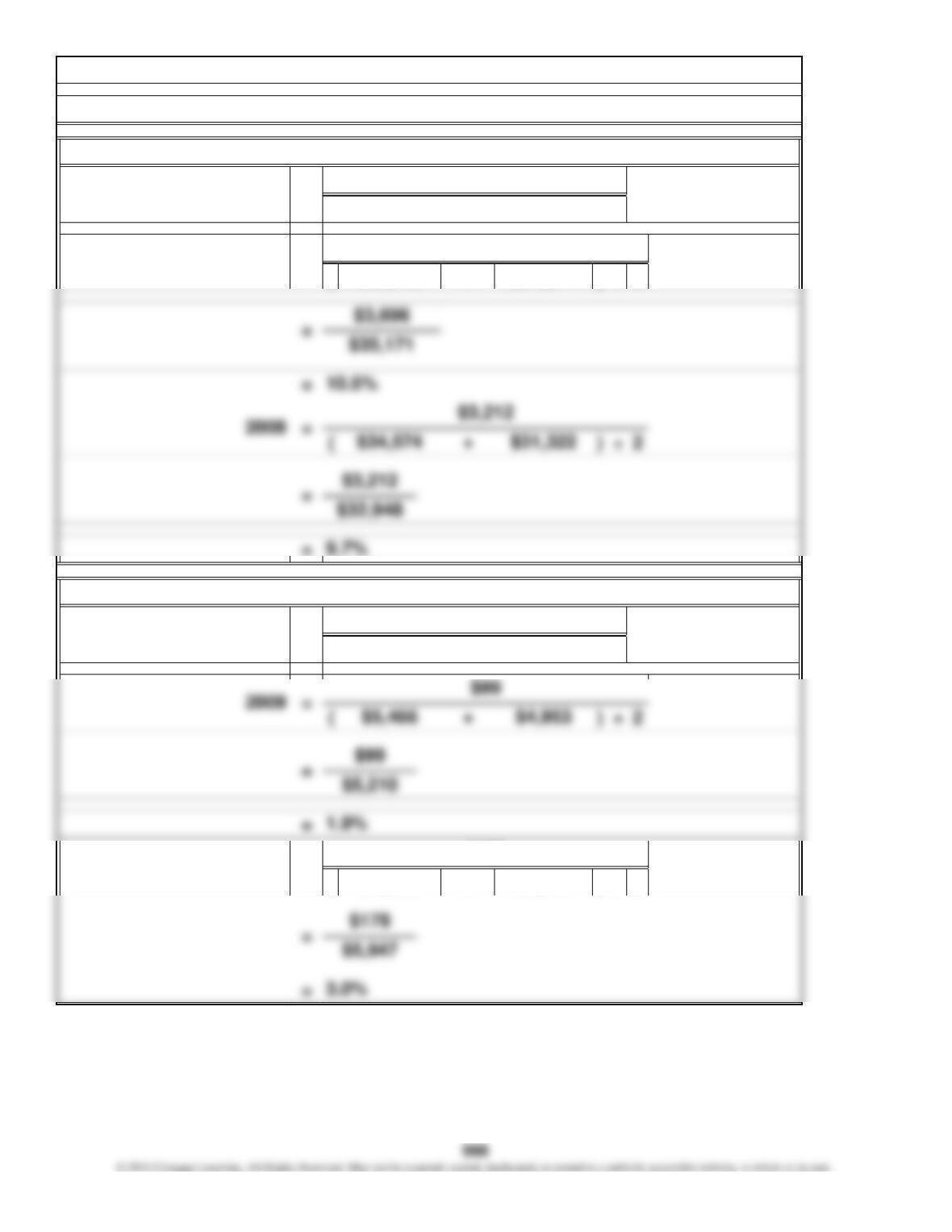
Return on Equity
Southwest’s Return on Equity Ratio:
=
Net Income
$4,953
Net Income
$3,696
Chapter 11, C 8.
1. Return on equity computed (dollars in millions)
CVS’s Return on Equity Ratio:
Return on Equity =
2009 =
Average Stockholders’ Equity
+ $34,574$35,768
2008 =
Average Stockholders’ Equity
$178
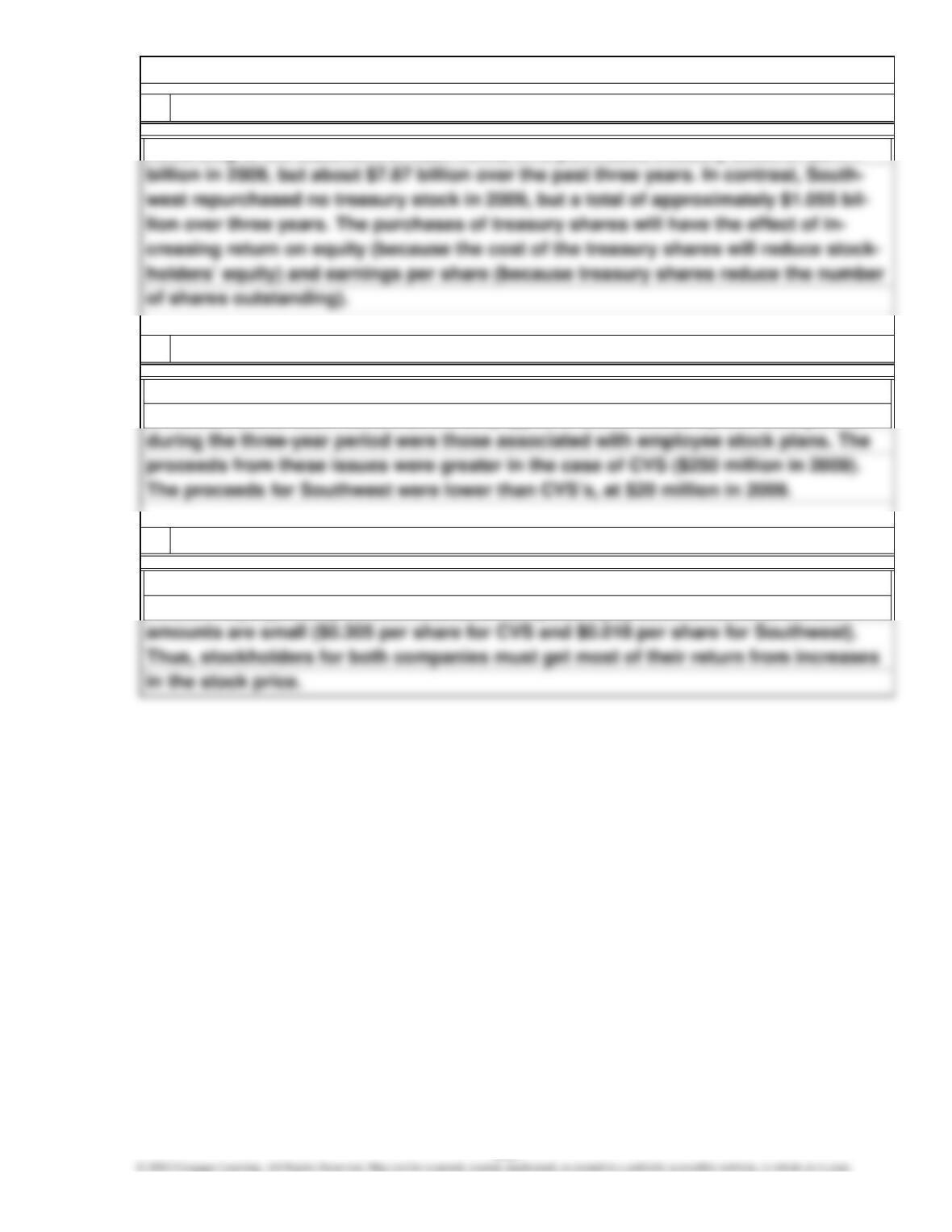
holders’ equity, it may be seen that both companies pay cash dividends, but the
Dividend policies discussed
From their income statements, statements of cash flows, and statements of stock-
4.
Neither company raised significant funds through stock issues. It may be seen in
the statement of cash flows that the only types of stock issued by both companies
According to the statement of cash flows, CVS purchased treasury stock of $2.477
3. Stock issues discussed
Chapter 11, C 8. (Continued)
2. Treasury stock purchases discussed
569
2009 2008
$35,768 $34,574
2009 2008
$5,466 $4,953
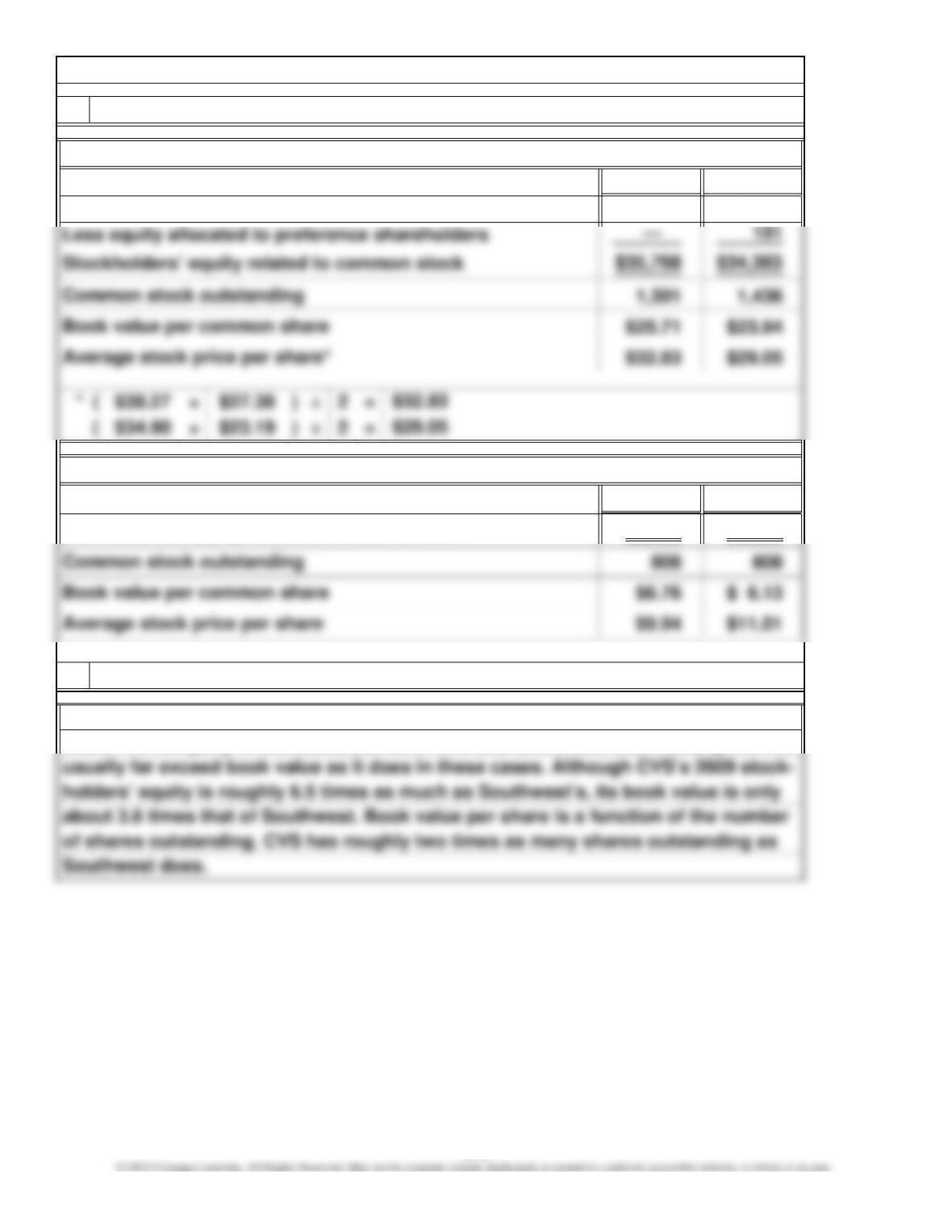
6. Book values per share and their relationship to market prices discussed
Total stockholders’ equity
Stockholders’ equity related to common stock
Chapter 11, C 8. (Continued)
5. Book values per share computed
CVS’s Book Value per Share (in millions except per share):
Southwest’s Book Value per Share (in millions except per share):
share. If a company is successful, as both CVS and Southwest are, market price will
In both cases, book value per share bears little relationship to market value per
570
are harmed by this action in at least two ways. Buying treasury stock is not unethi-
cal in and of itself. It is the borrowing to do it that is questionable. First, cash
Chapter 11, C 9.
Some may argue that if management were not prohibited from taking such action,
then its actions might be judged as acceptable. Others will clearly see that owners
571